
Your porch can feel stuck in winter long after the afternoons start warming up. The door looks a little dull, the chairs need a good wipe-down, and those empty planters aren’t giving you much reason to linger outside. A spring refresh doesn’t have to mean replacing everything or filling every step with flowers.
Often, a few deliberate changes are enough: a cheerful cushion, a lighter rug, or one container that brings color right up to the entry. The trick is choosing details that work with your house and the way you actually use the space. A tiny stoop needs a different approach than a covered porch with room for morning coffee.
These spring front porch ideas range from quick decorative swaps to a painted door worth planning a weekend around. Use one as your starting point, then borrow a second detail if the space needs it. You’ll find bright color, fresh greenery, and welcoming places to sit, without losing the clear path you need for everyday comings and goings.
1. Frame a Sunny Yellow Door with White Daisies
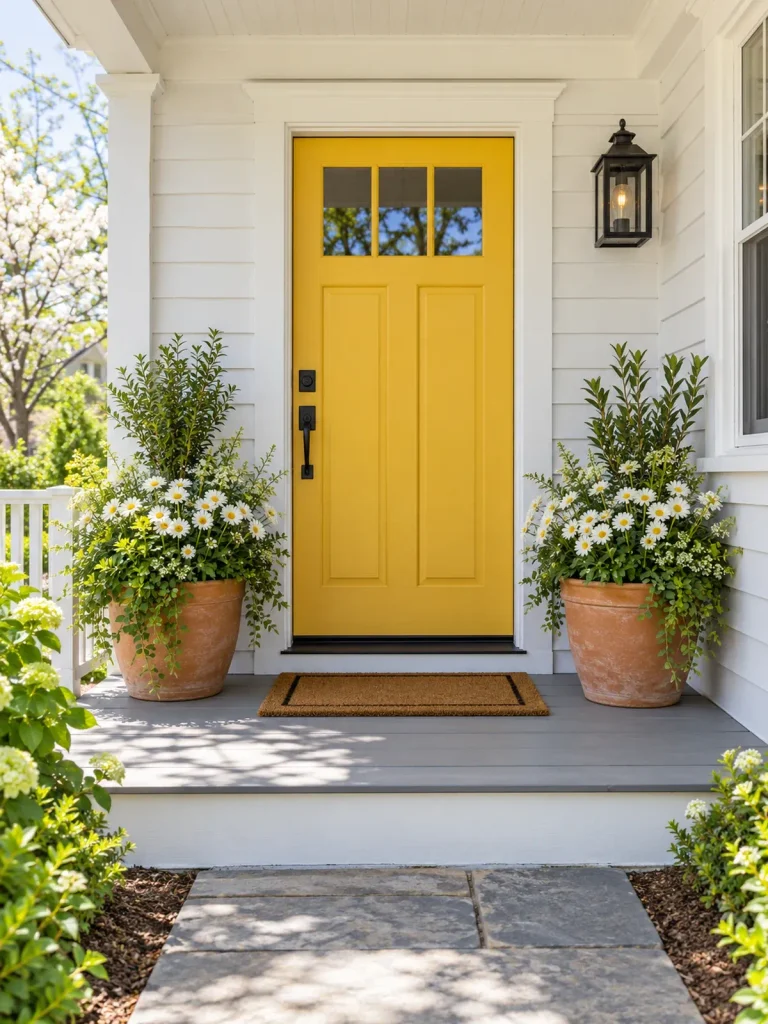
A yellow front door makes a simple porch feel sunny even before the flowers arrive. White daisies in terracotta pots keep the look fresh, while their yellow centers quietly repeat the door color. Against white siding, the combination feels cheerful without needing extra decorations.
Try a warm, buttery yellow if you prefer a softer effect, or a clearer golden shade for stronger contrast. Test paint samples outside before committing because porch shade changes how a color reads. Position the pots beyond the door’s swing and choose containers with drainage. If painting isn’t on the calendar, borrow the same yellow-and-white palette for flowers and an outdoor cushion instead.
2. Refresh a Porch Bench with Coral and Aqua
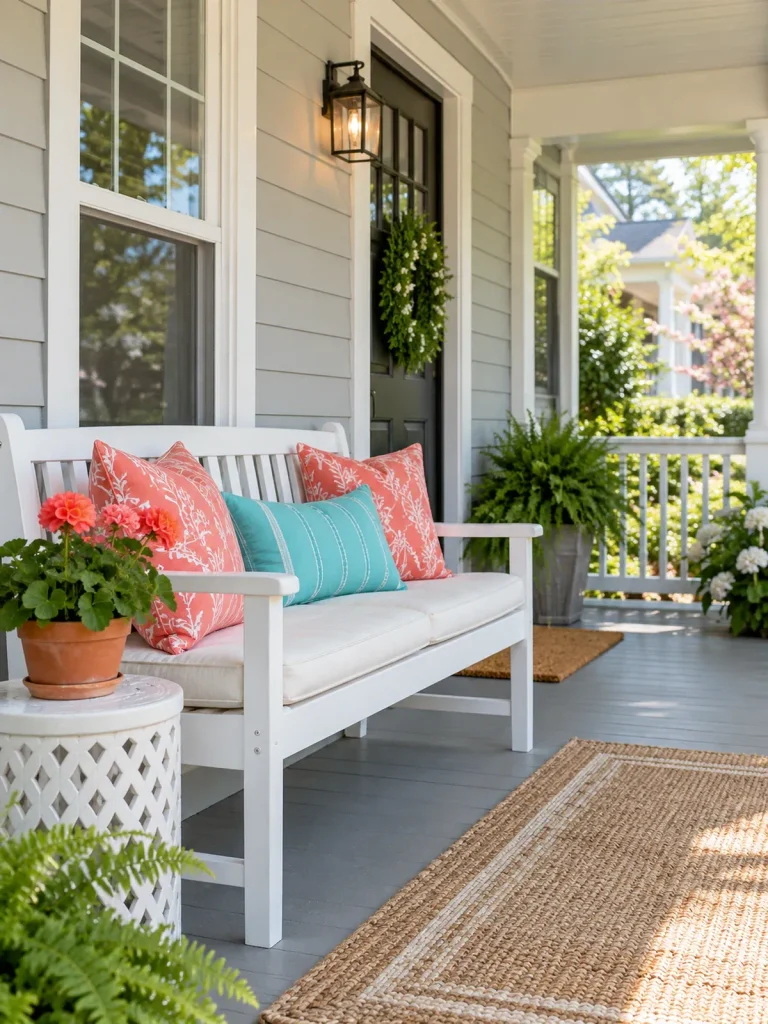
Coral and aqua bring a playful spring palette to a plain white bench. The warm pink-orange balances the cooler blue, so the seating area feels lively without depending on a large flower display. A small side table and one flowering pot finish the corner.
Start with two or three outdoor cushions rather than covering the whole bench. Mix a solid with a small-scale pattern, keeping the colors close enough to look intentional. This works especially well on gray or white porches that need a little warmth. Choose removable covers where possible, and bring cushions into dry storage during extended wet weather so the bench stays easy to use.
3. Fill a Vintage Crate with Spring Flowerpots
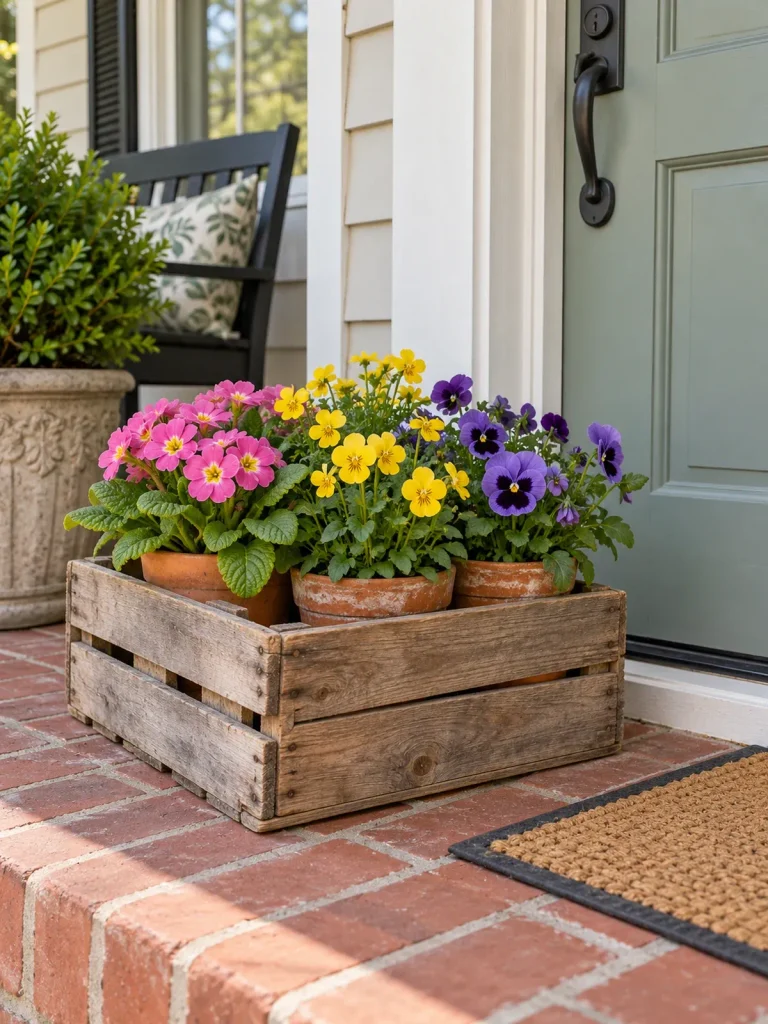
A weathered wooden crate gives several small flowerpots the presence of one larger arrangement. Pink primroses, yellow violas, and purple pansies create a gathered, cottage-style display, with the wood adding texture beside a painted door or brick wall.
Keep the flowers in their own pots rather than planting directly into a decorative crate. That makes it easier to swap a fading plant or adjust watering. Set the group beside the entry instead of in front of it, and use a sound crate without loose boards or protruding nails.
A sheltered porch suits this approach because untreated old wood can deteriorate when it stays wet. Leave enough space between pots to lift them out.
4. Give a Small Stoop a Blue-and-White Welcome
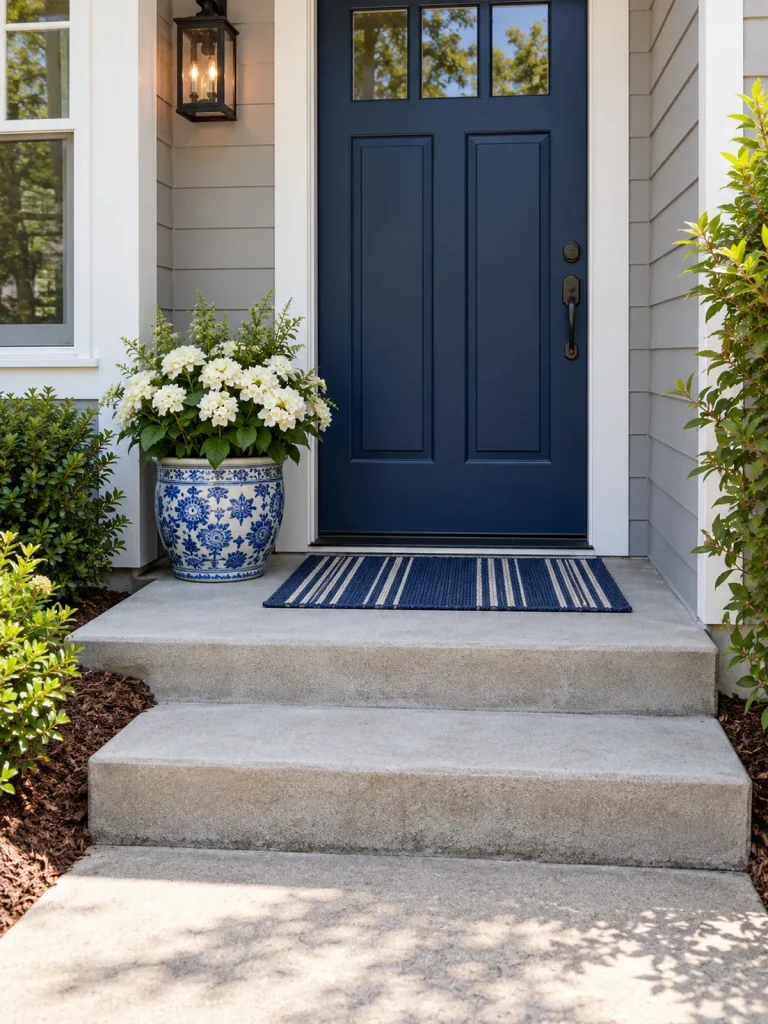
A narrow stoop benefits from a restrained palette and a small number of useful pieces. A blue-and-white planter beside a navy door adds pattern, while a flat striped mat repeats the colors at floor level. White flowers keep the arrangement light against a darker entrance.
Choose one generously sized pot that fits comfortably instead of squeezing several small ones around the steps. Measure the available landing with the door open before shopping. Keep the planter on a level surface and leave the stair tread clear. If the space is too tight for a pot, let the mat provide the pattern and move the flowers to a nearby ground-level bed or container.
5. Hang Ferns Above an Open Porch Rail
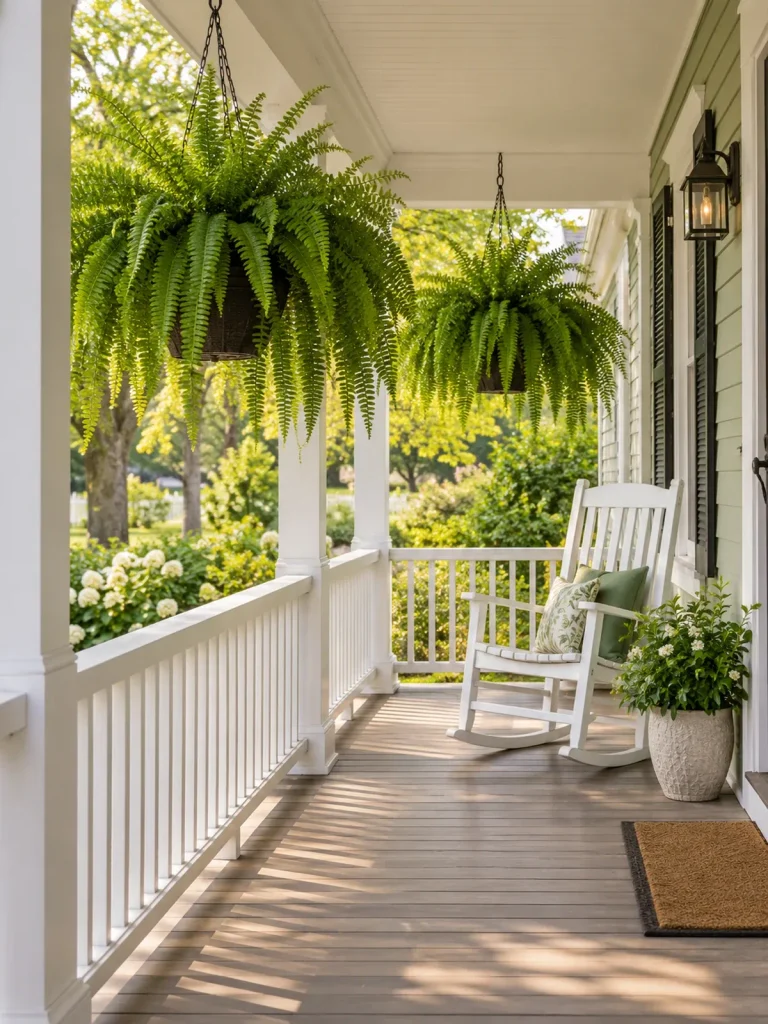
Hanging ferns add the leafy fullness of a garden without using the porch floor. On a porch with white posts and an open railing, their arching fronds soften the straight lines and make a single rocking chair feel part of a finished setting.
Place baskets where they won’t brush people’s heads or interfere with the steps. Use hanging hardware suited to the support and the basket’s watered weight; avoid assuming decorative trim can carry it. Fern care depends on the plant and exposure, so match the variety to your porch conditions. Keep a watering routine you can manage, and check baskets often because elevated containers can dry differently from pots on the floor.
6. Let a Tulip Wreath Carry the Color
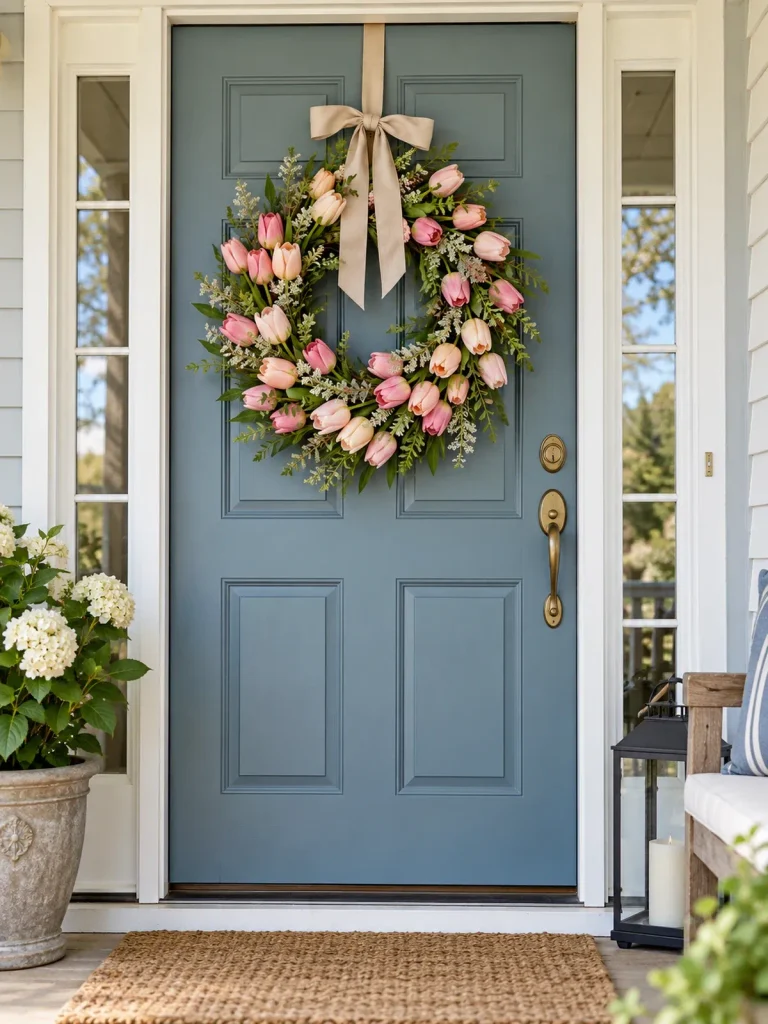
A full tulip wreath can do most of the decorating on a small entry. Pink and peach blooms look fresh against a dusty blue door, with a simple ribbon giving the arrangement a relaxed finish. Leaving the surrounding trim bare helps the flowers stand out.
A faux wreath works when you want the shape and color to last through the season without replacing cut stems. Check its suitability for a sheltered exterior location, since sun and moisture can affect decorative materials. Use a hanger that fits your door and allows it to close normally. On an exposed entry, choose a smaller arrangement that won’t repeatedly knock against the door in windy weather.
7. Roll Out a Cheerful Striped Outdoor Rug
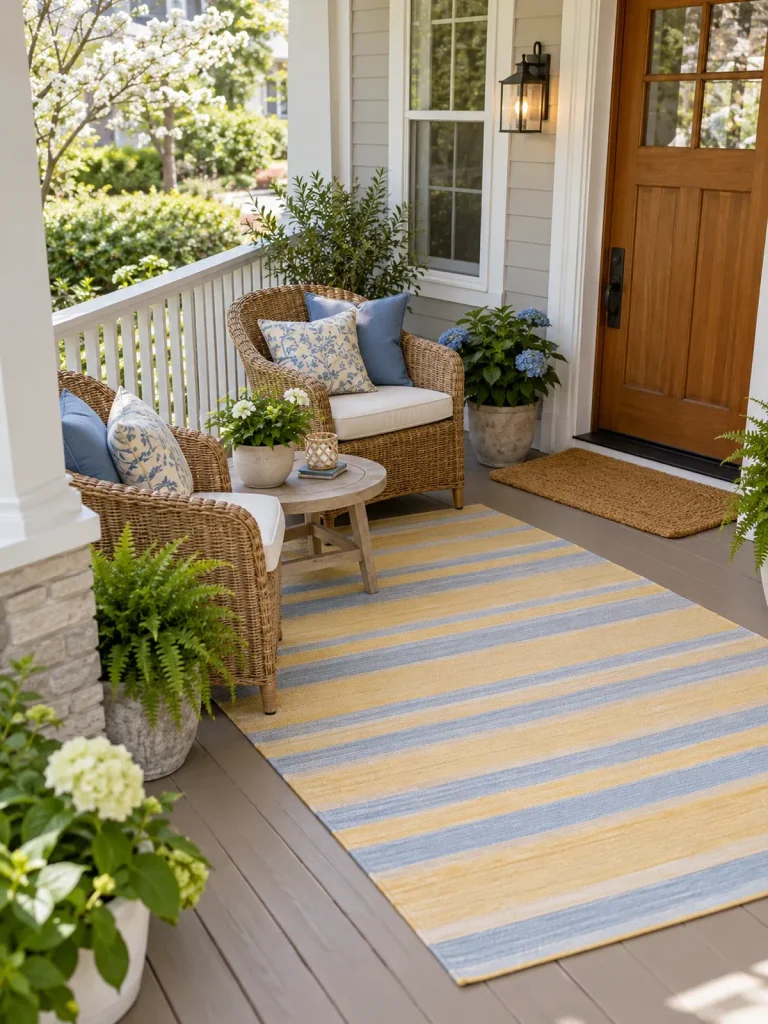
Wide stripes in pale yellow and sky blue can tie together a porch that otherwise feels like a collection of unrelated furniture. Beneath a pair of wicker chairs, the pattern creates a defined seating area and adds color where there may be little room for decorative objects.
Choose a rug made for outdoor use and size it to the seating arrangement, with edges away from the main walking route. Check that the door clears it before settling on placement. A low-profile weave is easier to work around than thick layered rugs. Lift it periodically to clean underneath and let the porch surface dry, especially after wind-driven rain reaches a covered space.
8. Style a Potting-Bench Corner for Spring
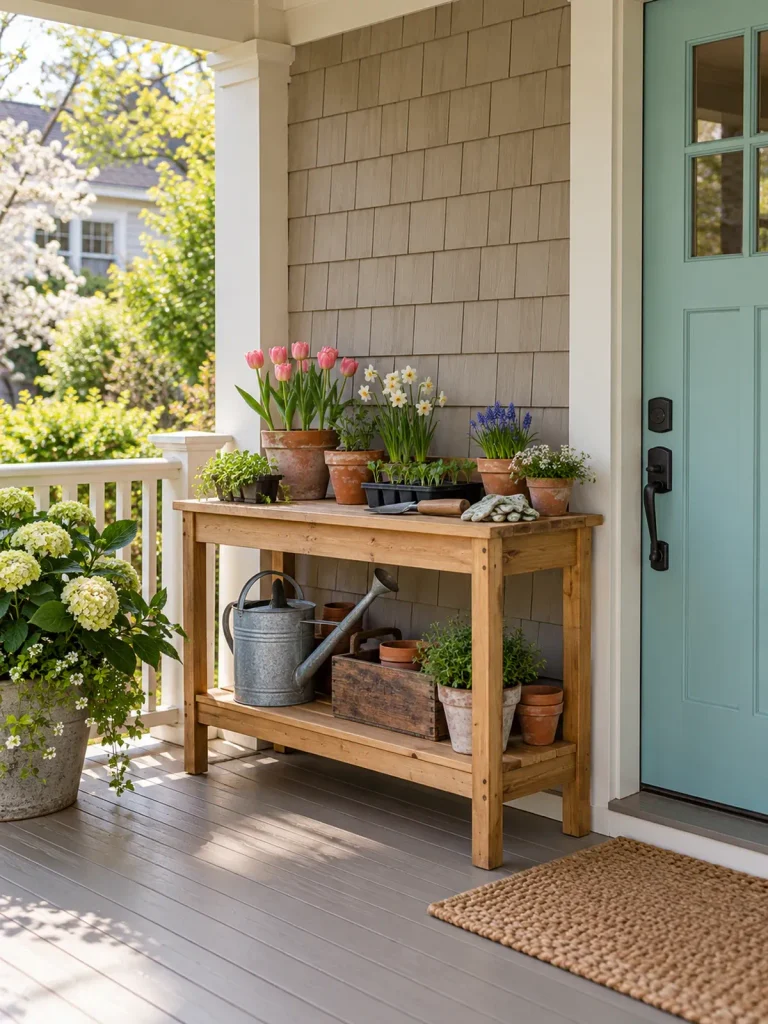
A slim potting bench brings a practical gardening mood to a covered porch. Small pots of seedlings and flowering bulbs provide the seasonal color, while a watering can on the lower shelf makes the setup feel useful rather than overly arranged. Natural wood looks especially good against shingle siding.
Use a bench shallow enough to leave comfortable room to pass. Keep soil bags and extra supplies in a separate storage area so the display doesn’t become a cluttered work zone. Protect the top from standing water and sweep up spilled potting mix promptly. If the bench holds seedlings, check that the location provides the light they need rather than treating a shaded porch as a growing space for every plant.
9. Pair Lemon Yellow with Fresh Green Foliage
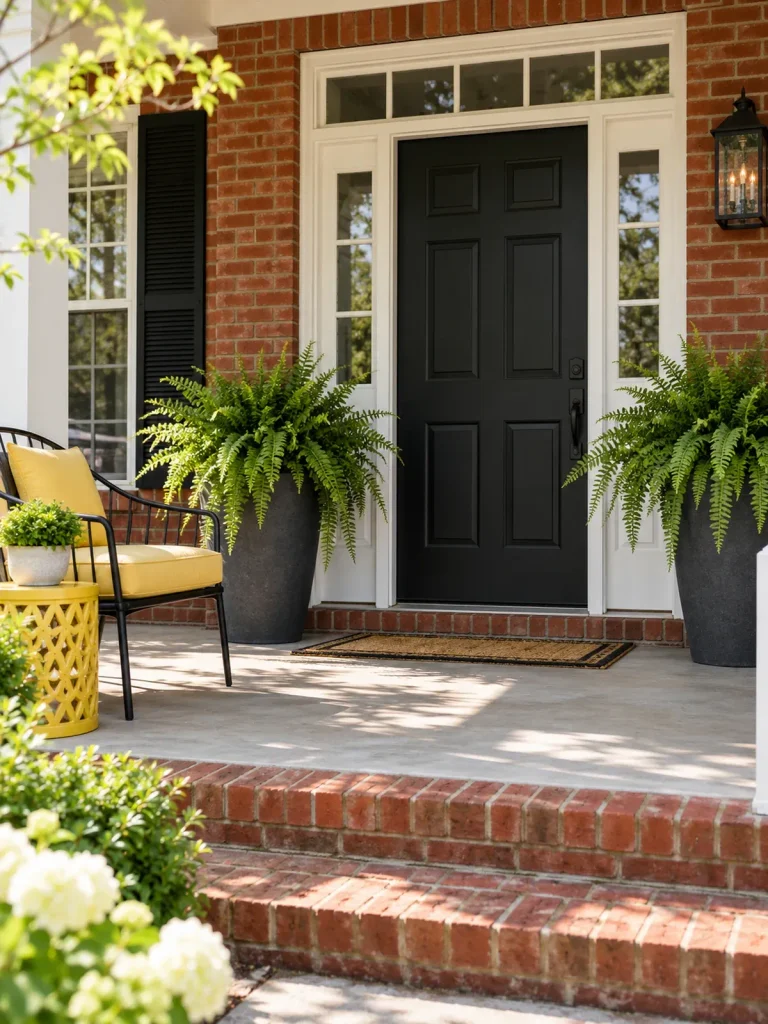
Lemon yellow looks crisp beside green foliage and dark accents. On a brick porch, a yellow chair cushion and small side table lift the heavier background, while charcoal planters connect the greenery to a black door. The effect is bright without needing lots of blooms.
Keep yellow to a few repeated accents so it reads clearly from the walkway. Use the existing brick, door, and furniture as the quieter foundation. Ferns suit the pictured leafy look, but choose plants based on the actual sun and temperatures at your entry. For a smaller porch, skip the table and let one cushion do the color work. Check that seating doesn’t narrow the path to the handle.
10. Turn a Bistro Set into a Morning Coffee Spot
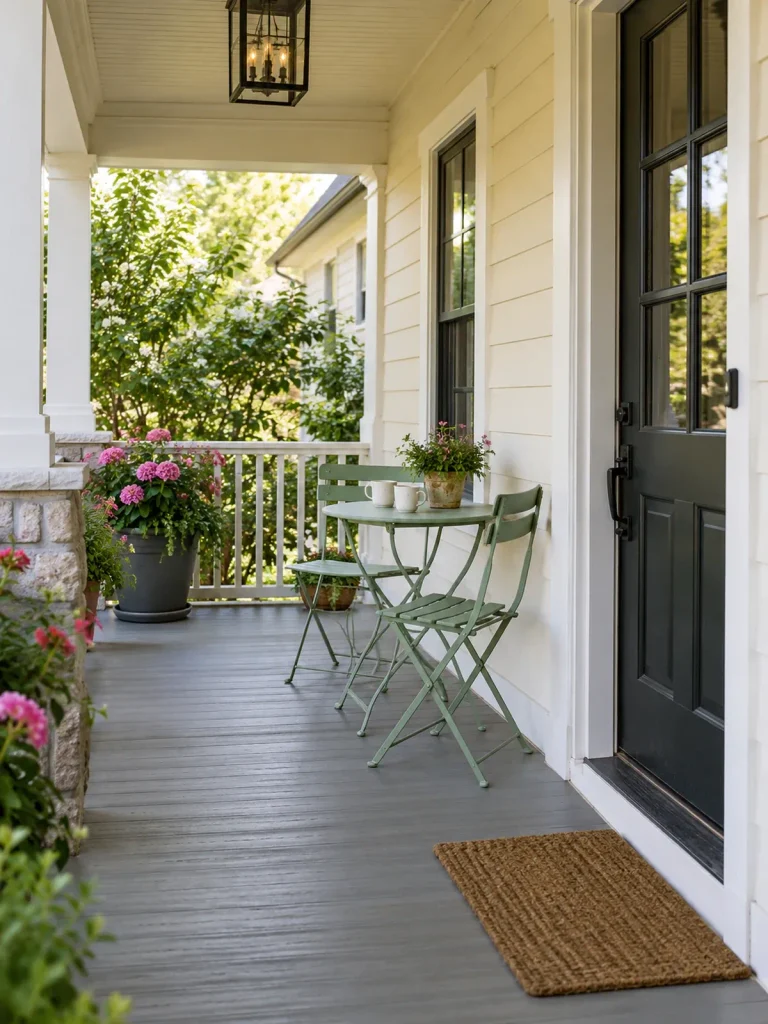
A mint-green bistro set makes a deeper front porch feel like a place to spend time. The small table gives you somewhere to set a mug, and matching chairs keep the arrangement visually tidy. Pink flowers near the railing add a warm contrast to the cool green metal.
Tuck the set along a side wall where seated people won’t block the route to the door. Check the footprint with the chairs pulled out, not just pushed under the table. Look for furniture intended for outdoor use and follow its care instructions, especially around joints and finishes. On a shallow porch, one chair with a small side table may be the more useful version of this look.
11. Brighten the Steps with Staggered Flowerpots
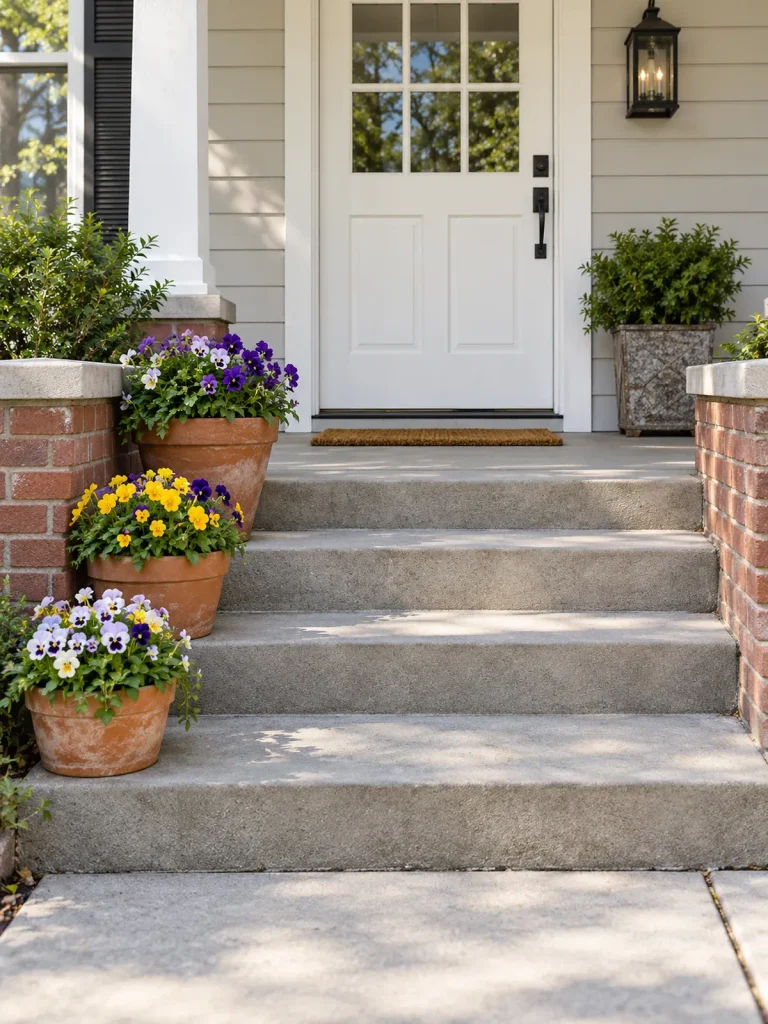
A short run of wide steps can become a spring flower display when pots stay grouped along one outer edge. Terracotta keeps the arrangement grounded, while mixed pansy colors give it the easy abundance of a small garden. The staggered heights make each pot visible from the walkway.
Use this only where the stairs are broad enough to preserve a generous, continuous passage and access to any handrail. Narrow steps are better left clear, with the pots placed beside them at ground level. Choose stable containers that sit fully on their supporting surface. Avoid trailing stems across the treads, and check after watering that runoff hasn’t left a slippery patch in the walking area.
12. Soften a Brick Porch with Lavender Curtains
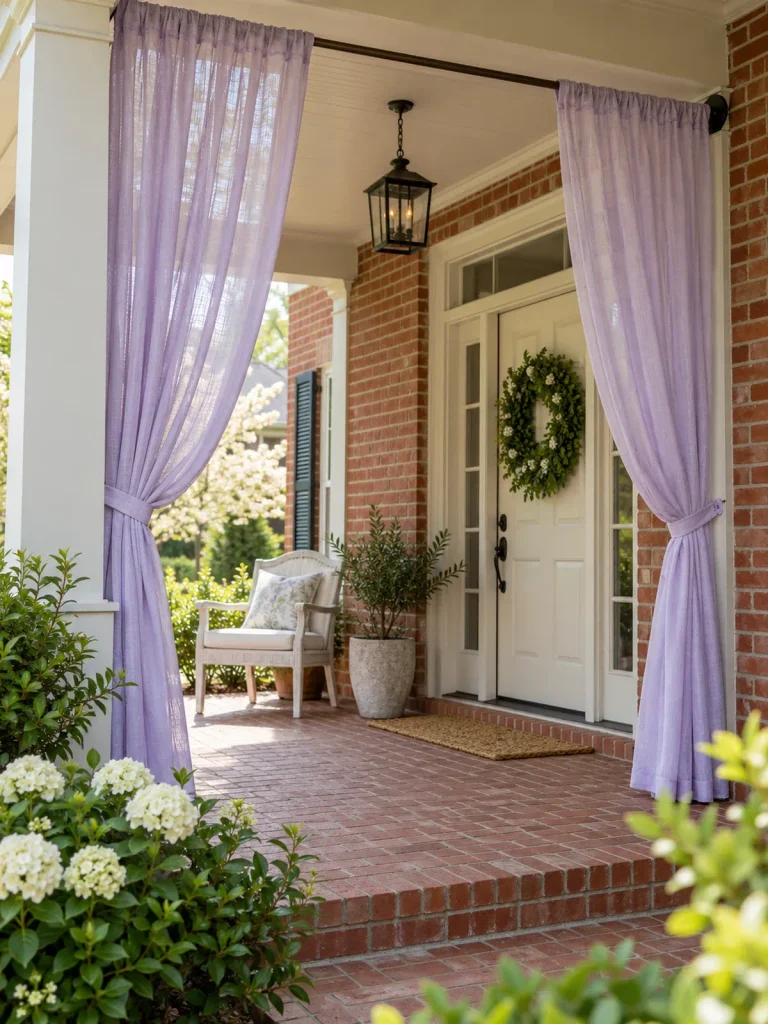
Pale lavender curtains add a soft, airy layer to a covered brick porch. Drawn back between porch posts, they frame the view and introduce spring color without crowding the floor with decorations. The gentle purple provides a cool contrast to warm red brick and cream trim.
Choose curtains intended for outdoor use and check how much light and privacy the fabric actually provides. Sheer panels are decorative rather than substantial weather protection. Use a rod and mounting method suited to the porch structure, and tie the panels back securely so they can’t drift into the entry or snag passing people. Take them down when strong winds are expected.
13. Use a Wall Pocket for a Tiny Entry
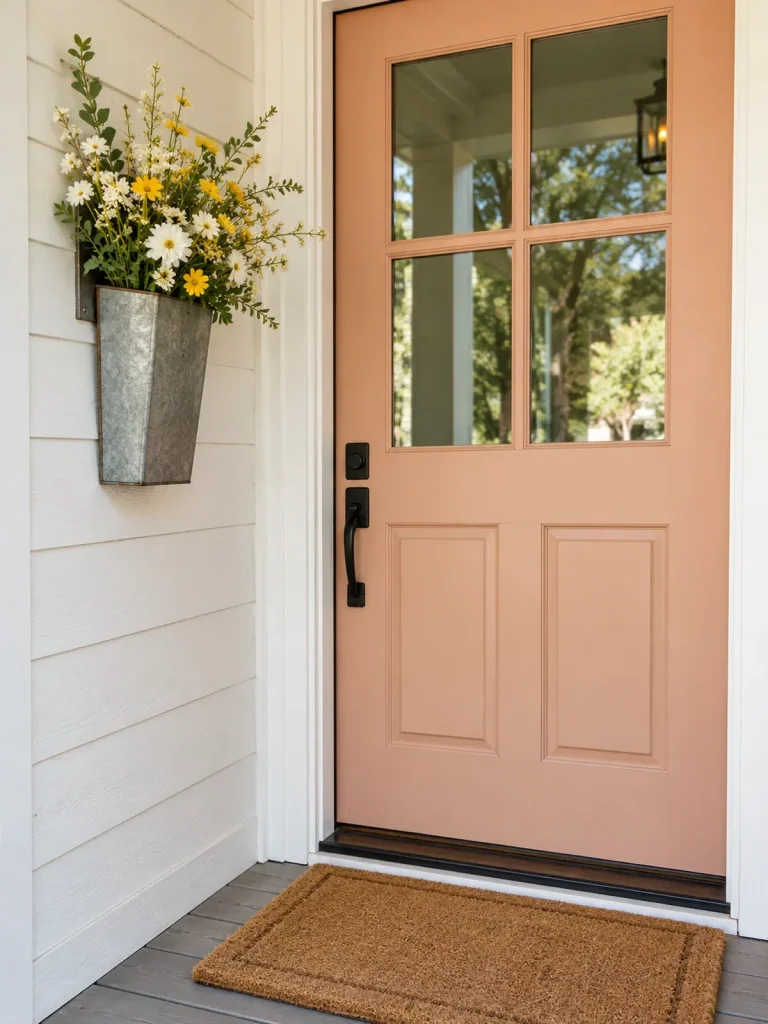
A wall pocket lifts the spring flowers off the floor, which is helpful when a narrow entry barely has room for a mat. Galvanized metal gives yellow and white stems a casual farmhouse touch, while a peach door provides a warm background. The result feels decorated without adding obstacles.
Mount the pocket to an appropriate surface with hardware suited to the wall and the filled container’s weight. Keep it clear of the door’s swing, handle, and everyday shoulder space. Faux stems simplify the pictured arrangement because they don’t require water at the wall. Choose pieces suitable for the exposure, and secure the stems so a breezy day doesn’t scatter them across the porch.
14. Add Cottage Charm with a White Flowering Window Box
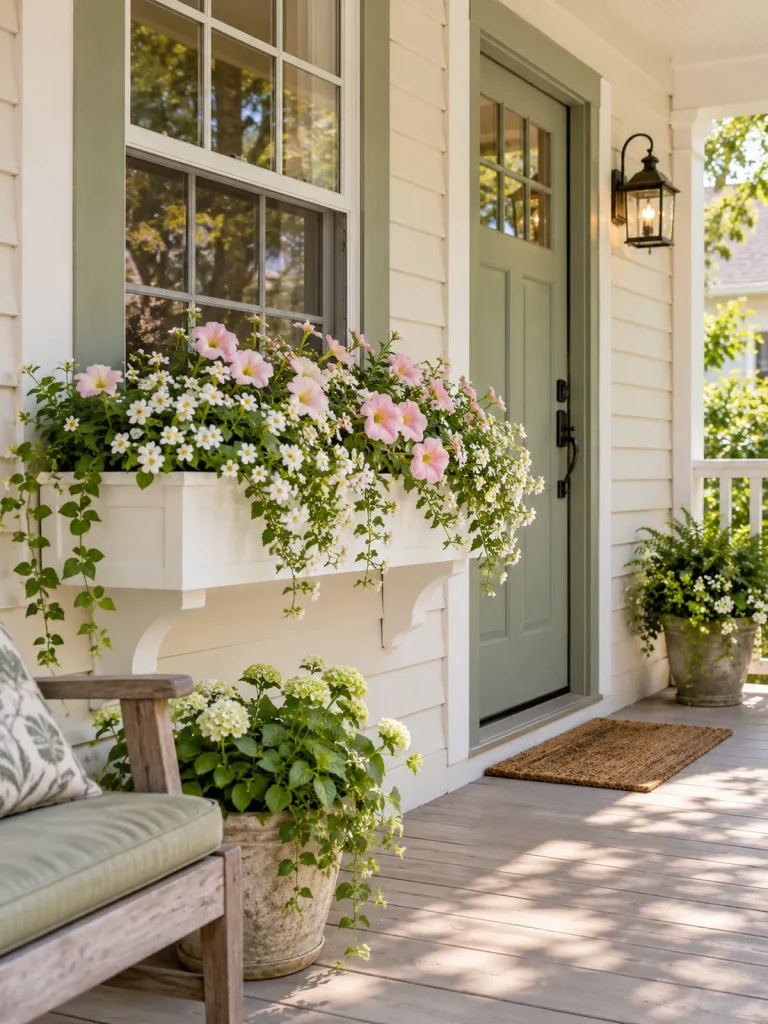
A white window box draws spring color across the wall instead of concentrating everything at the front door. White bacopa and pale pink petunias soften a cottage window, with sage trim giving the flowers a gentle green frame. It’s a useful approach when floor space is limited but the facade has a window beside the porch.
Treat a window box as a planted container that needs proper support, drainage, and access for care. Mount it using a method appropriate for the building surface and its full watered weight. Avoid allowing drainage to collect against siding. Match the flowers to the window’s light and your local planting season, and wait to set out tender plants until conditions suit them.
15. Wake Up Wicker with Gingham Cushions
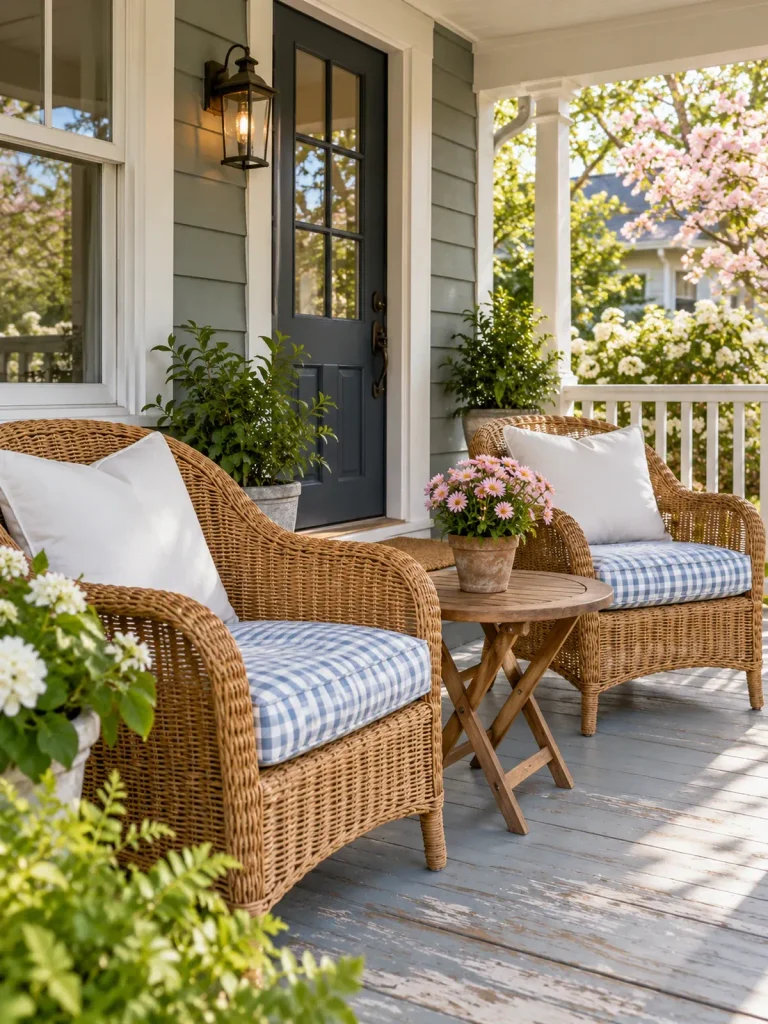
Sky-blue gingham gives honey-colored wicker a fresh spring look without hiding its natural texture. Two chairs with matching seat cushions feel coordinated, while plain white back cushions keep the pattern from taking over. A small table and a pot of pink flowers make the space ready for a quiet conversation.
Choose gingham in an outdoor fabric rather than relying on indoor cotton to handle porch exposure. Check whether the wicker itself is intended for outdoor use; some natural pieces need a well-protected location. A medium-scale check usually reads clearly beside woven furniture. Keep the table within easy reach of both chairs, and leave room to stand without stepping into the main route through the porch.
16. Make a Rainy-Day Umbrella Corner Look Intentional
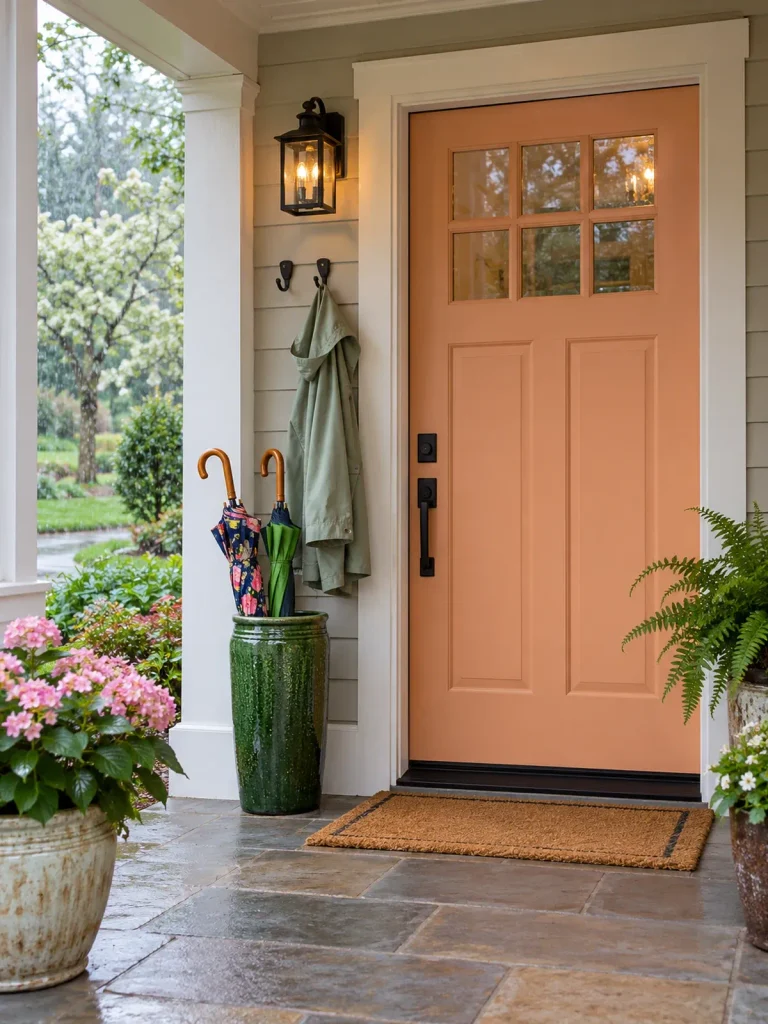
Spring isn’t all sunny afternoons, and a useful umbrella corner can still look cheerful. A green glazed stand, a couple of colorful umbrellas, and a peach door turn rainy-day storage into part of the entry’s palette. The rest of the floor stays open and easy to sweep.
Use a stable stand that won’t tip when an umbrella leans to one side. Place it in a protected corner away from the door’s swing, and empty collected water rather than leaving it to sit. Wall hooks can hold a light raincoat where there is enough cover, but avoid storing damp fabric tightly against the siding. This setup works best in a recessed porch with meaningful protection from blowing rain.
17. Celebrate Spring with a Pastel Terracotta Collection
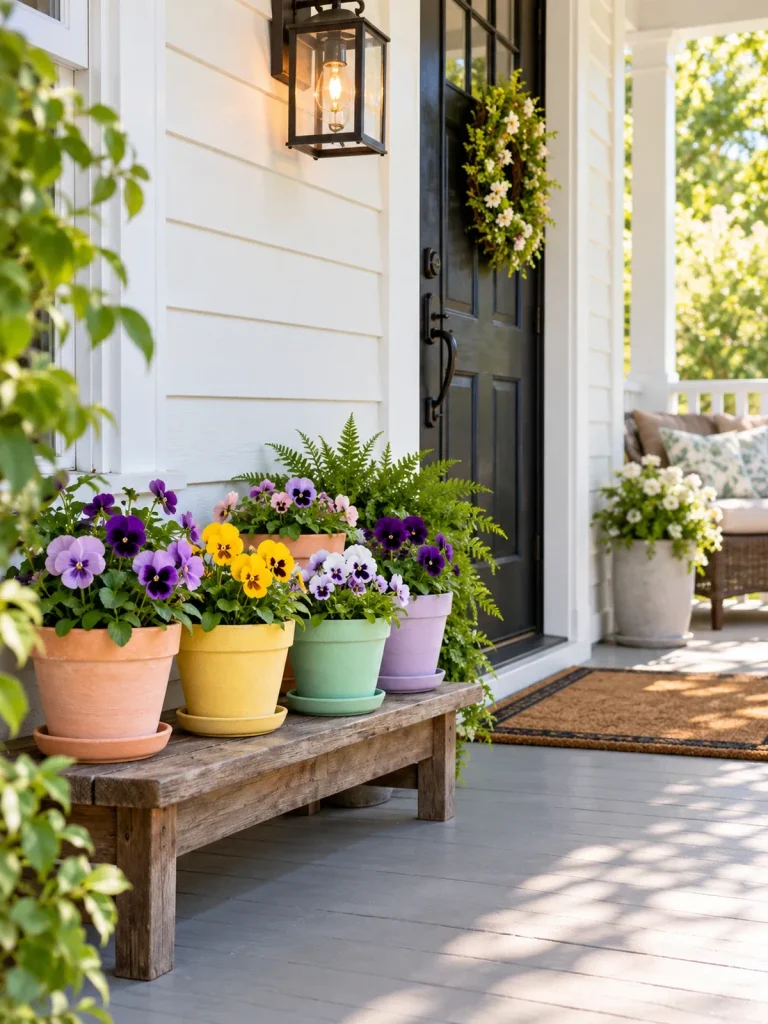
A small collection of painted terracotta pots brings several spring colors into one tidy display. Butter yellow, mint, peach, and lilac feel cohesive when the finishes are similarly soft. Grouped on a sturdy low shelf, the pots become a cheerful accent rather than scattered clutter.
Keep drainage openings clear and use a coating appropriate for the container material and intended exposure. Leave the interiors unpainted unless the product specifically supports that use. Small pots need regular attention, so choose a manageable number and place them where you can reach each one. Saucers help protect the shelf, but empty standing water after watering. Repeat one flower type across the group to give the varied colors a common thread.
18. Bring Warm Wood and Peach Together
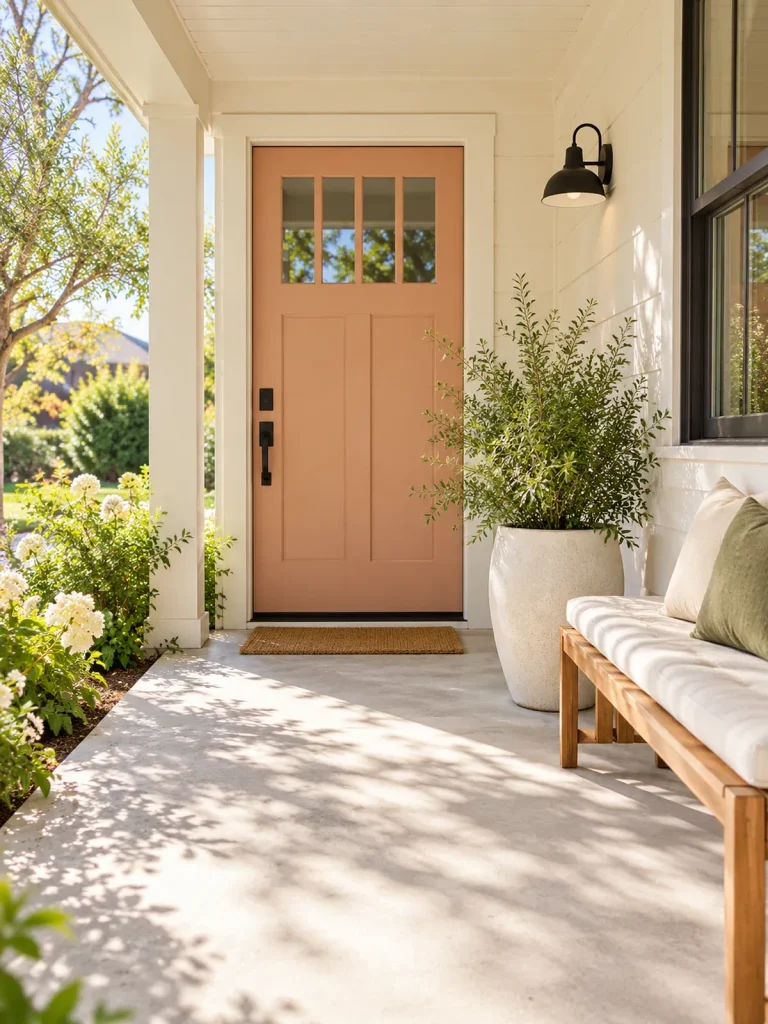
A peach front door and a natural wood bench give a modern porch a warmer spring personality. Cream upholstery and one generous foliage planter keep the composition simple, with black hardware adding definition. This combination suits a ranch-style entrance where clean lines are already part of the house.
Choose a peach shade that works with the siding rather than picking it in isolation. Pale concrete and warm whites can support a softer color; cooler gray finishes may call for a different sample. Keep a narrow bench against the wall and check the door clearance before adding it. Use a wood finish appropriate to the porch’s exposure and plan for maintenance according to the furniture maker’s instructions.
19. Create an Evening Glow Around Spring Flowers
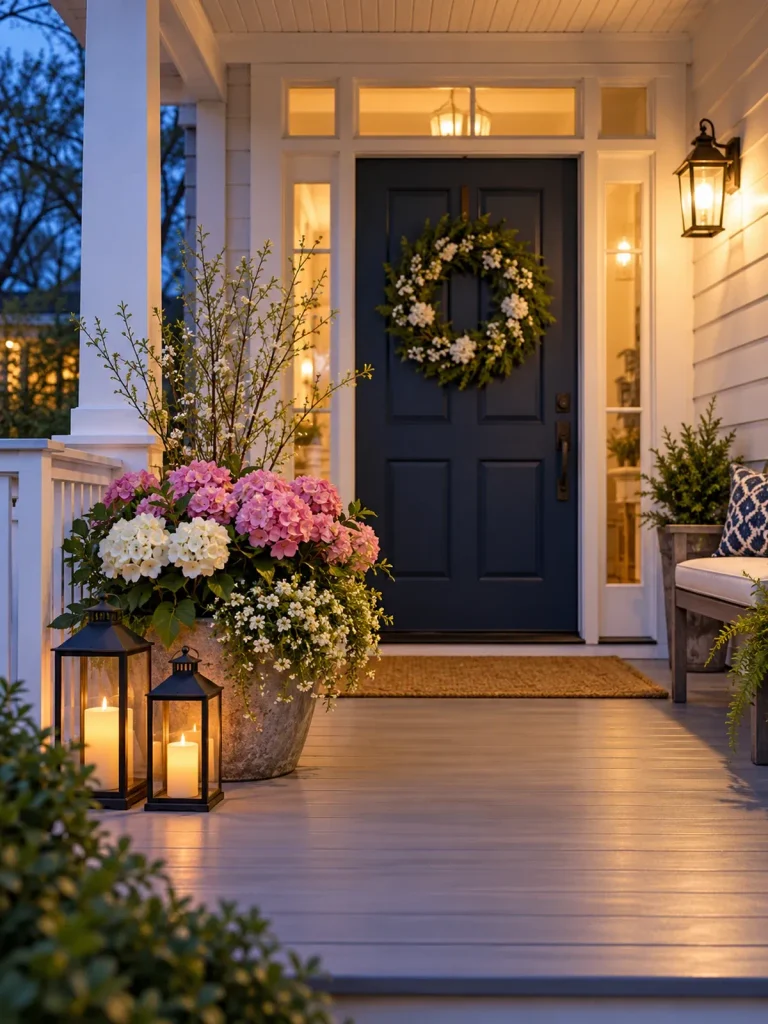
Warm lantern light makes a flower-filled porch feel welcoming after sunset. Set beside pink and white blooms, two substantial lanterns add height and a gentle glow without needing a large seating arrangement. A navy door gives the flowers and light a clear backdrop at blue hour.
Use battery-operated LED candles suited to the lanterns and the location. Decorative lanterns should sit on a stable surface outside the walking route, with handles and doors closed. Keep the normal porch light available for visibility; a decorative glow doesn’t replace useful entry lighting. On a very small landing, one lantern and one planter will achieve the same mood with less floor space and fewer objects to work around.
20. Let One Oversized Flowering Planter Be the Focal Point
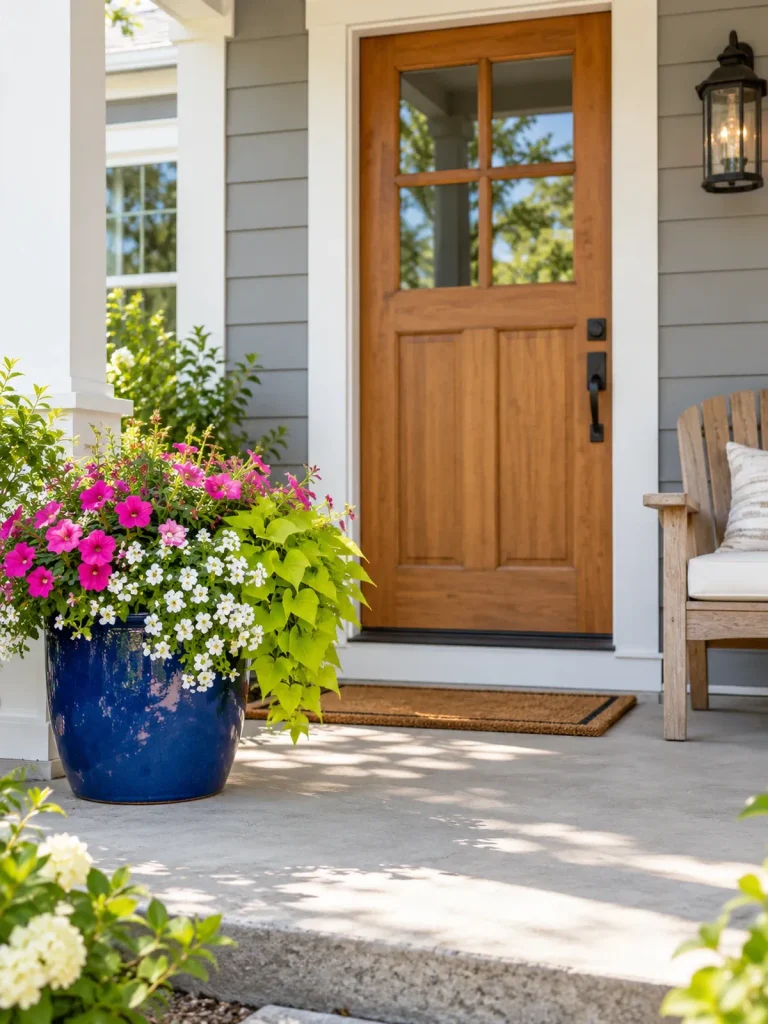
One large cobalt-blue planter can bring enough color to finish a simple porch. Pink petunias, white trailing flowers, and lime-green foliage create layers inside the container, while a wood door and plain mat keep the surrounding entry quiet. The bold pot gives the flowers a clear visual anchor.
Choose the container’s position before filling it because a large planted pot can be heavy. Check drainage, leave the doorway clear, and group plants with compatible light and watering needs. The pictured flowers suggest a later-spring display once local temperatures suit them. If you prefer less planting work, use a nursery container inside a decorative outer pot, making sure excess water has somewhere to drain.
Build a Spring Porch Palette Without Adding Clutter
Choose one feature to lead: the door, a seating area, or a flower display. Then repeat one of its colors in a smaller detail. A yellow door might need only white flowers; a blue rug can connect to a cushion or planter. Your siding, brick, and existing furniture already contribute colors, so count them as part of the palette.
Before adding anything, open the door fully and walk the route with a bag in each hand. Pull chairs out as though someone is sitting there. Move anything that makes normal entry awkward. On a tiny stoop, concentrate decoration on the door or wall. On a larger porch, let one seating corner carry the pattern and keep the entrance simpler.
Finally, plan for your actual weather. Set tender plants out when local conditions allow, bring vulnerable pieces under cover, and choose a number of containers you can comfortably maintain.
Frequently Asked Questions
How can I decorate a small front porch for spring?
Start with a door wreath or a wall-mounted floral accent and a flat, properly fitting mat. Add a single planter only if the landing still has clear door and walking space. Vertical color often works better than more floor decorations.
Can I refresh my porch without painting the front door?
Yes. Cushions, a small outdoor rug, a wreath, or a colorful container can establish a spring palette. Repeat one accent color in two places to make the changes feel connected to the rest of the porch.
Should I use real or faux spring flowers?
Use real flowers where the light and your maintenance routine suit them. Faux stems can be useful for a sheltered wreath or wall pocket. Check whether decorative materials are suitable for exterior exposure, and expect sunlight and weather to affect them over time.
When should spring flowers go outside?
There isn’t one date that works across the US. Timing depends on the species, local temperatures, and frost risk. Check the plant’s growing guidance and local conditions before moving it outside permanently, especially for tender flowers.
How do I keep porch decor manageable during spring rain?
Choose a few pieces you can clean or move easily, keep cushions in dry storage during prolonged wet spells, and empty water from saucers and umbrella stands. Lift outdoor rugs periodically so the surface beneath can dry.
A Cheerful Welcome Starts with One Change
Pick the area you’ll enjoy most: the door you walk through daily, a chair for morning coffee, or a pot of flowers beside the steps. Give that spot a clear spring color palette, then pause before adding more. A porch with a little breathing room, an open entrance, and one bright focal point can feel ready for warm weather without becoming another space to constantly rearrange.