
A plain concrete slab can make a front porch feel unfinished, even when the rest of the house looks cared for. There is that wide gray rectangle, a lonely doormat, and perhaps a chair that never quite looks like it belongs. You want a welcoming entrance, but replacing the entire porch feels like a much bigger project than you had in mind.
Fortunately, the concrete does not have to disappear for the space to look good. Sometimes it needs a warmer color or an interesting pattern. Other times, the bigger difference comes from giving the porch a purpose, softening its edges, or drawing attention toward the door.
These concrete front porch ideas range from movable accessories to more involved surface updates. Choose according to the slab’s condition, the space around your entrance, and how much maintenance you want to take on. The goal is a porch that feels intentional, with room to walk, open the door, and actually enjoy the result.
1. Warm Up the Slab with Greige Porch Paint
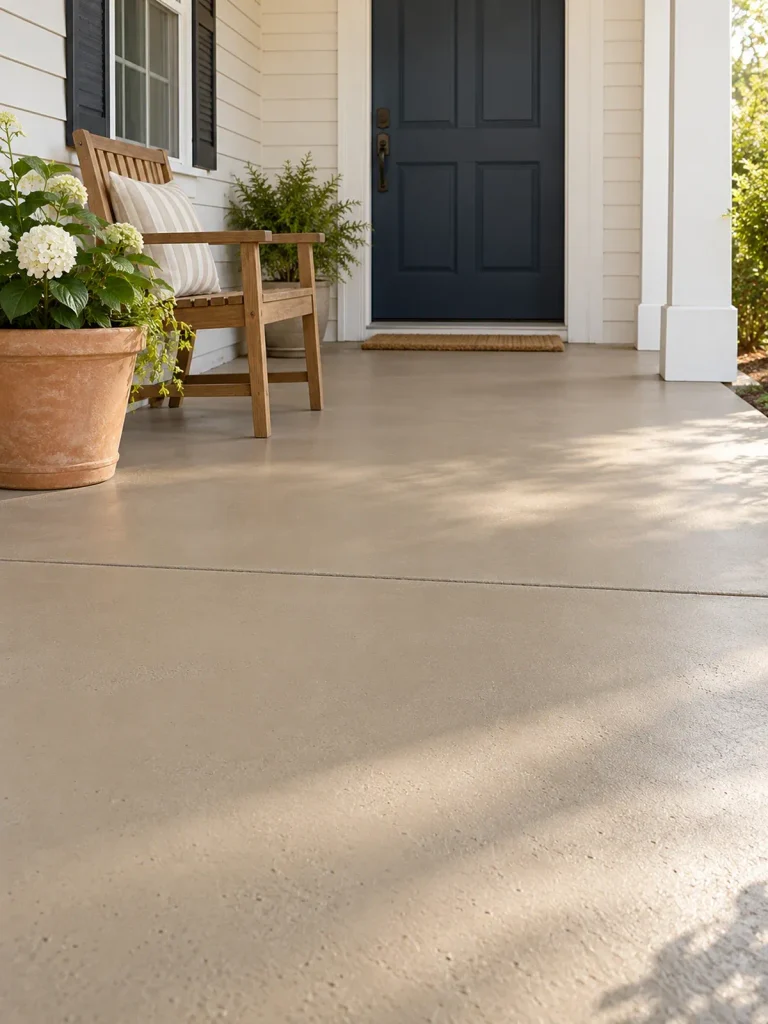
Warm greige takes the chill out of a gray concrete floor without demanding a completely new color scheme. Against white siding, brick, or a dark front door, the softer tone makes the slab feel like a deliberate part of the exterior. A low-sheen finish keeps the look understated.
Choose a coating specifically labeled for exterior concrete walking surfaces. Preparation depends on the existing surface and the coating system, so follow its [cleaning, testing, priming, and curing directions](https://www.behr.com/how-to/floor-coating/how-to-apply-behr-premium-porch-and-patio-floor-paint) rather than painting over whatever is already there. Consider the manufacturer’s traction options for wet areas. Even textured coatings can become slippery when wet, and paint will not resolve moving cracks or poor drainage.
2. Stencil a Tile Pattern Directly onto Concrete
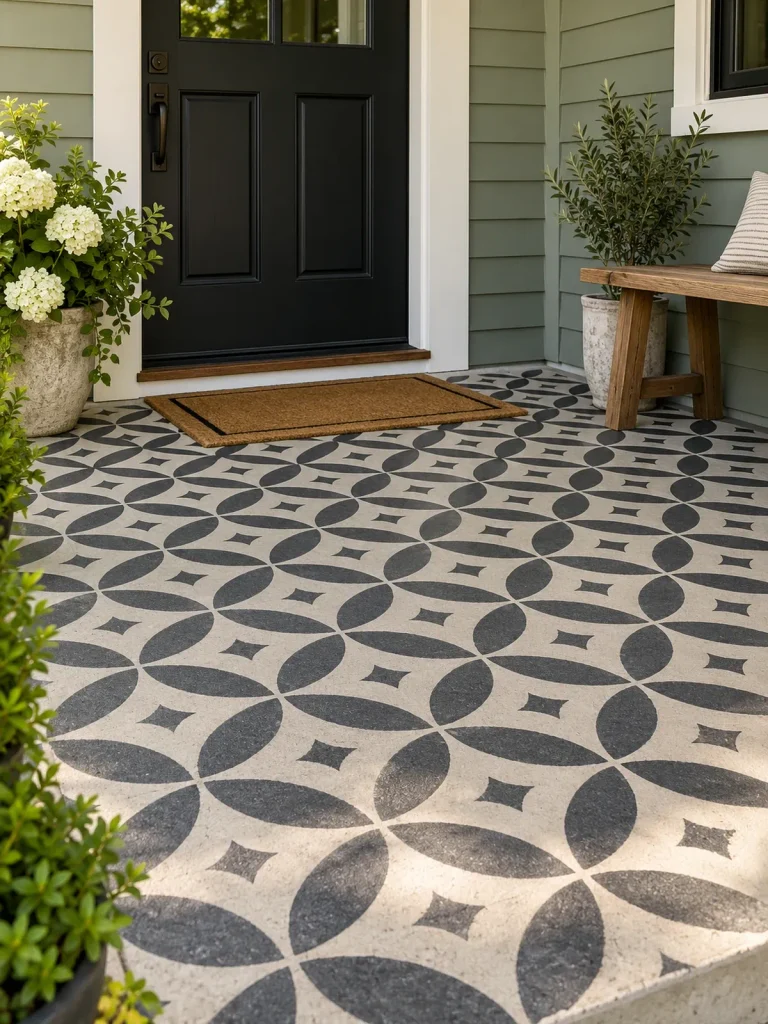
A repeating stencil gives a plain slab the visual rhythm of decorative tile without adding another flooring layer. Black and warm ivory create a crisp cottage entrance, while muted blue and cream feel softer. Let the pattern become the feature and keep nearby accessories restrained.
Start by laying out the repeat on paper and checking where it meets the doorway and edges. Larger motifs tend to read clearly from the sidewalk; tiny, intricate designs can look busy on a small front porch. Use compatible exterior concrete floor coatings throughout the system. Expect careful alignment and eventual touch-ups in traffic lanes, and keep existing movement joints functioning rather than filling them decoratively.
3. Give the Concrete a Rich, Earthy Stain
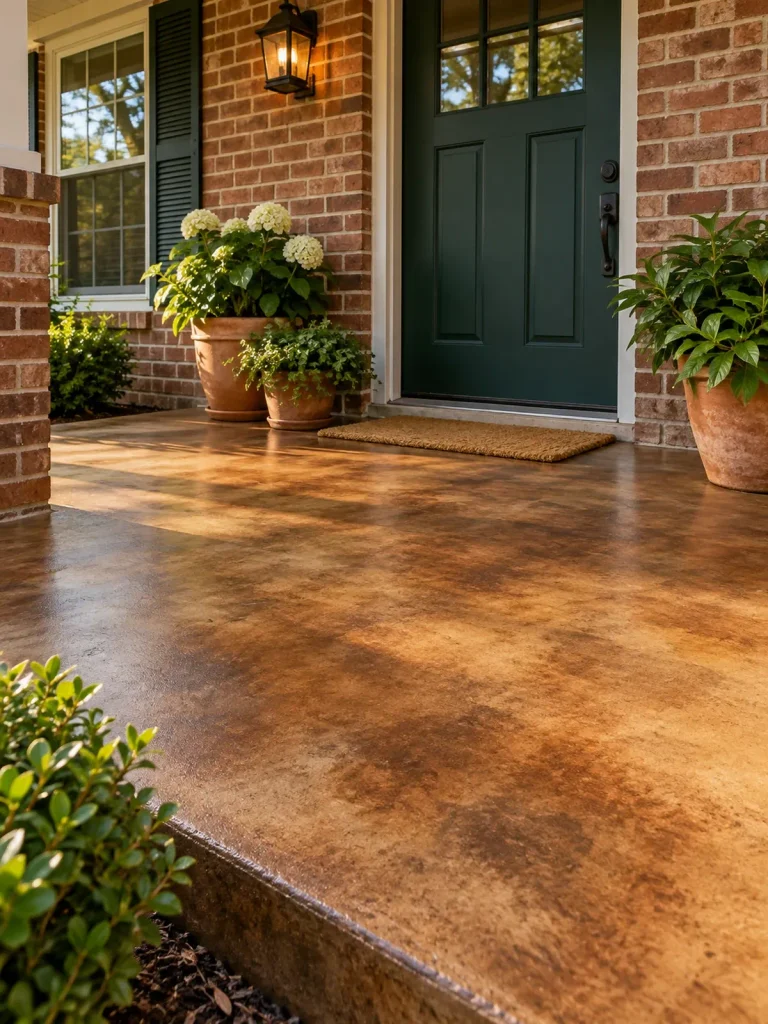
Translucent concrete stain can turn a cold-looking slab into a warmer, more textured surface. Tobacco, sandy brown, and soft terra-cotta tones work especially well beside brick, natural wood, and clay planters. The variation is part of the appeal: the concrete still looks like concrete, simply with more character.
This option deserves a small test area before committing. Existing sealers, old coatings, patches, and differences in the slab can affect compatibility and appearance. Choose an exterior-rated stain system and follow its preparation and sealing requirements. Stain should not be treated as an opaque disguise for mismatched repairs; those areas may remain visible or absorb color differently.
4. Soften the Floor with a Large Outdoor Rug
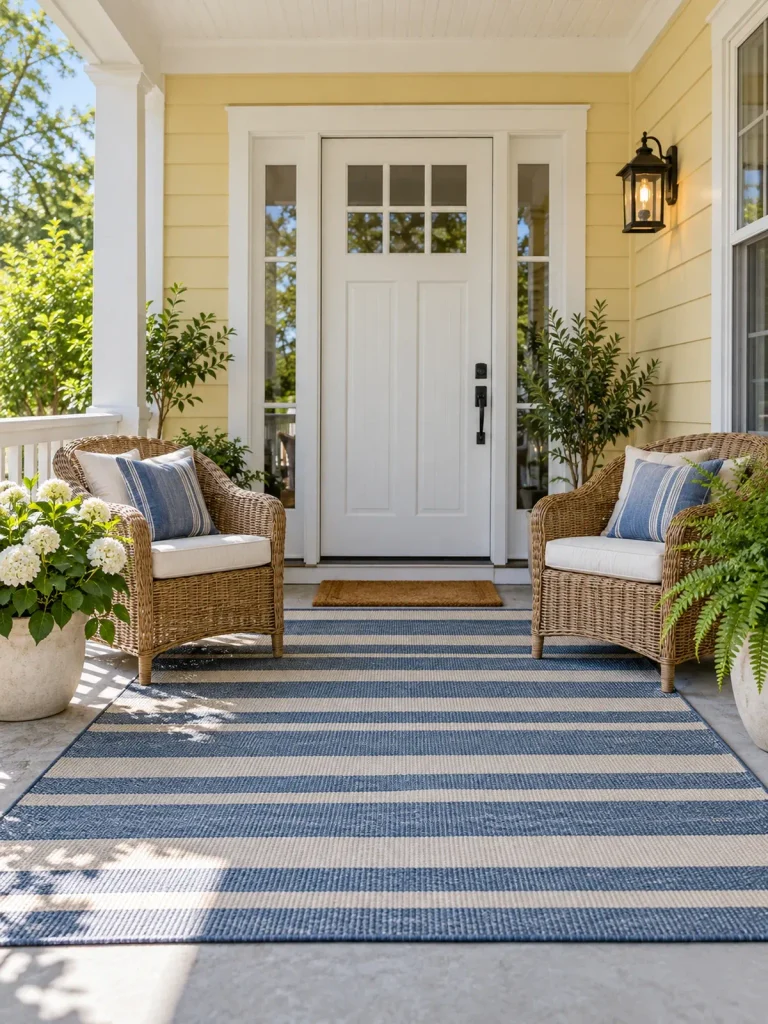
A large outdoor rug makes the slab feel more like a place to sit than a leftover landing. Try blue-and-cream stripes beneath a pair of wicker chairs, or a quiet woven pattern that connects the concrete with the house’s trim. Leave some floor visible around the perimeter so the arrangement has breathing room.
Measure the door swing and walking route before choosing a size. Pick a low-profile rug intended for outdoor use, with a compatible grip solution if the manufacturer recommends one. Check that its edges stay flat. Lift it periodically to clean and dry underneath, particularly on shaded porches where moisture lingers after rain.
5. Frame the Slab with a Painted Border
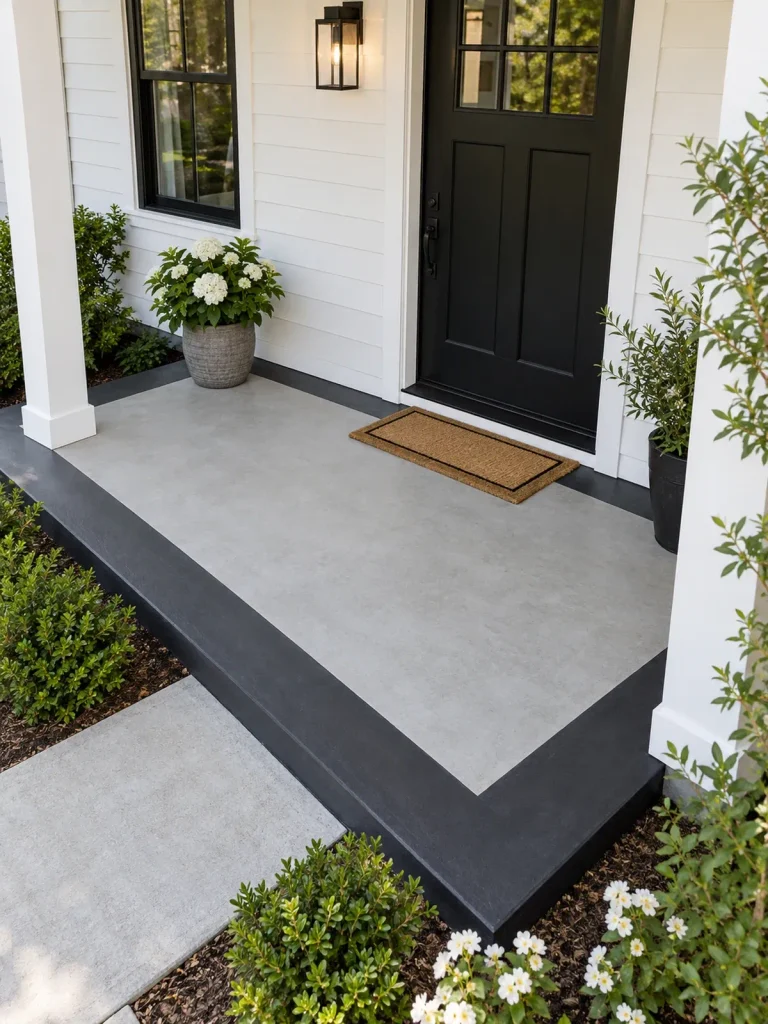
A painted perimeter can make a featureless rectangle feel designed without covering it in a full pattern. A charcoal border around a pale gray center creates definition, especially on a broad, simple slab. It also gives modest porch furniture a visual boundary to sit within.
Work out the proportions with removable layout tape before preparing and painting the surface. A border that looks balanced from the doorway may appear too thin from the front walk. Use an exterior concrete floor coating and follow its preparation instructions. Keep the contrast readable around steps, and do not let a decorative stripe obscure the actual edge of a change in level.
6. Choose a Professional Resurfaced Finish
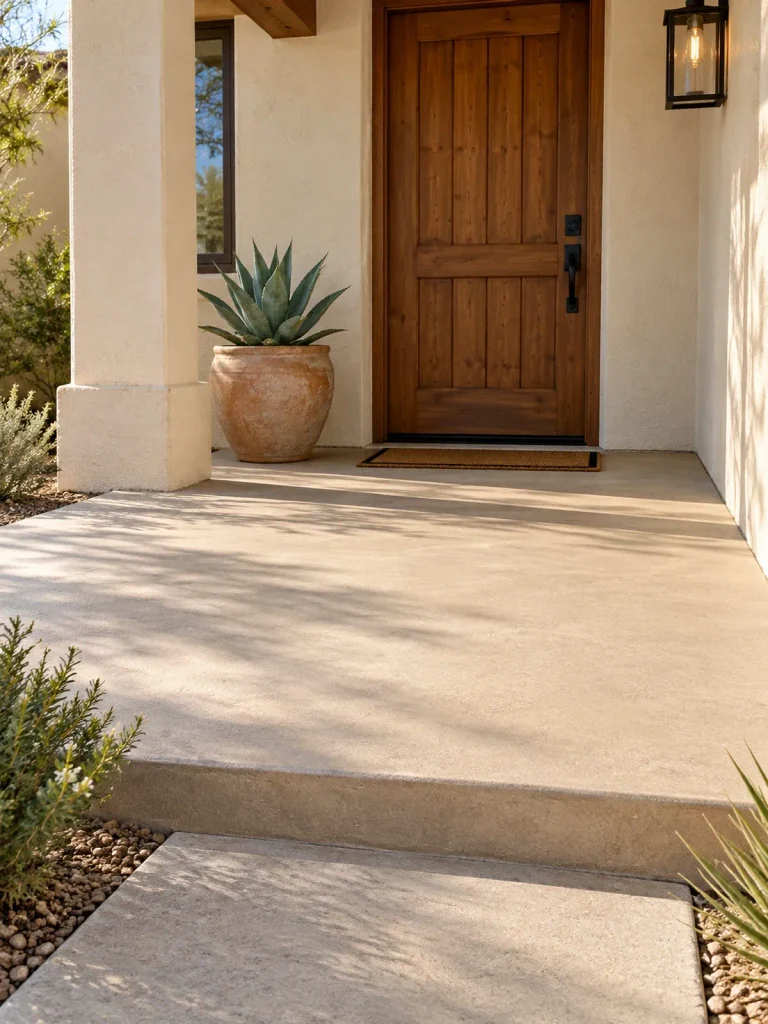
When the slab looks worn and patchy rather than simply gray, a compatible resurfacing system may offer a more cohesive starting point. A fine-textured sand-colored finish suits simple stucco homes, while a soft gray surface works with traditional siding. The appeal is a cleaner-looking floor without a strong decorative pattern.
Have the concrete assessed before choosing this route. A resurfacer is a finish layer, not a remedy for settlement, ongoing movement, or a drainage problem. Product suitability, preparation, joint treatment, and weather conditions all matter. Ask an experienced contractor what the existing slab can support, what texture is appropriate, and how the proposed system will handle the porch’s exposure.
7. Cover It with Outdoor-Rated Porcelain Tile
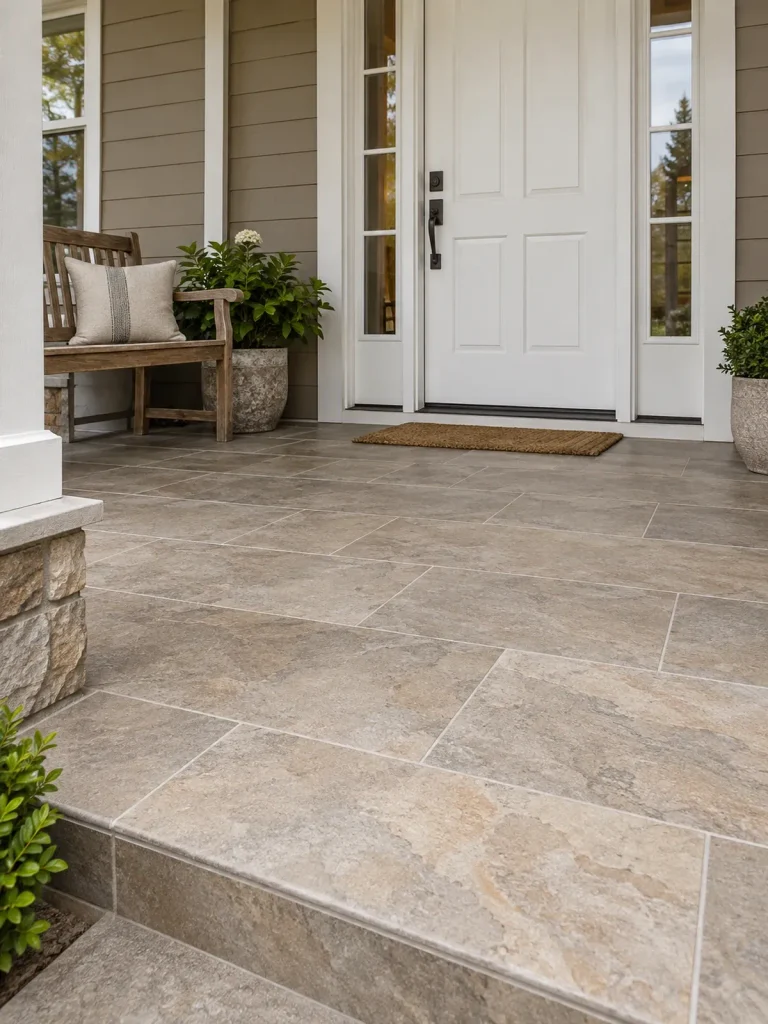
Matte porcelain tile can give a concrete porch the more finished appearance of an outdoor room. Warm stone-look rectangles pair easily with taupe siding and wood accents, while a restrained layout keeps a compact entrance from feeling crowded. Choose the tile for outdoor floor use, not just its color.
This is an installation project that needs more planning than attaching tile to a convenient flat surface. The slab’s condition, drainage slope, movement joints, setting materials, and finished height all affect the result. In freezing climates, [the entire assembly needs to suit those conditions](https://tcnatile.com/resource-center/faq/exteriors/). Have a qualified tile installer evaluate the porch, including door clearance and transitions, before buying materials.
8. Bring in Warmth with Low-Profile Deck Tiles
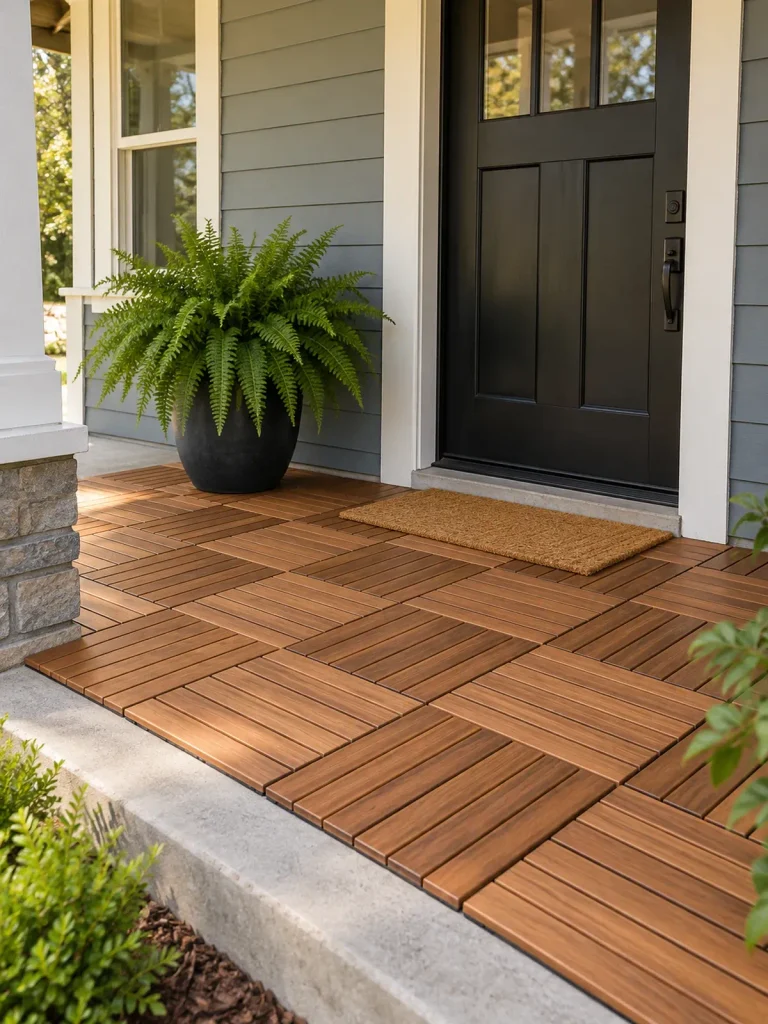
Interlocking deck tiles introduce the warmth and rhythm of wood over a utilitarian concrete floor. Alternating slat directions make the surface interesting without adding much decor. On a covered porch, the contrast between warm wood and cool siding can carry the whole design.
Check the tile manufacturer’s substrate, drainage, and exposure requirements first. Even a low-profile system raises the floor, which can interfere with a door threshold or create an awkward edge at a step. Confirm that doors open freely and transitions can be finished appropriately. Debris can collect underneath removable tiles, so allow for lifting and cleaning them; natural wood may also need periodic maintenance.
9. Make the Slab Edge Part of the Design
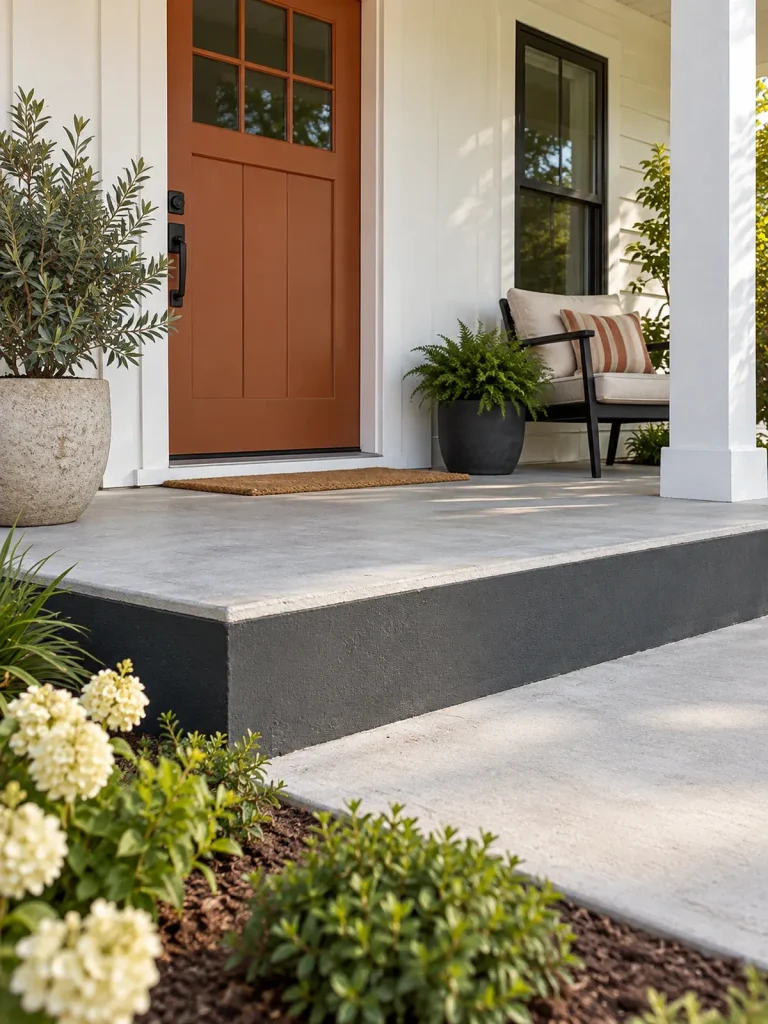
Sometimes the most noticeable part of a concrete porch is its stained or scuffed vertical face. Painting that face a deep charcoal can give the slab a neat outline while leaving the top surface a simple light gray. The result feels grounded, particularly against pale siding.
Keep the edge treatment visually clear and coordinated with the trim. Inspect damaged corners before decorating them; paint cannot stabilize crumbling concrete. Use an exterior masonry coating suitable for the specific location and follow its preparation requirements. Preserve the visibility of the step and its change in level. On a very low porch, this small detail can make a difference from the garden or sidewalk.
10. Give the Front Door a Confident Color
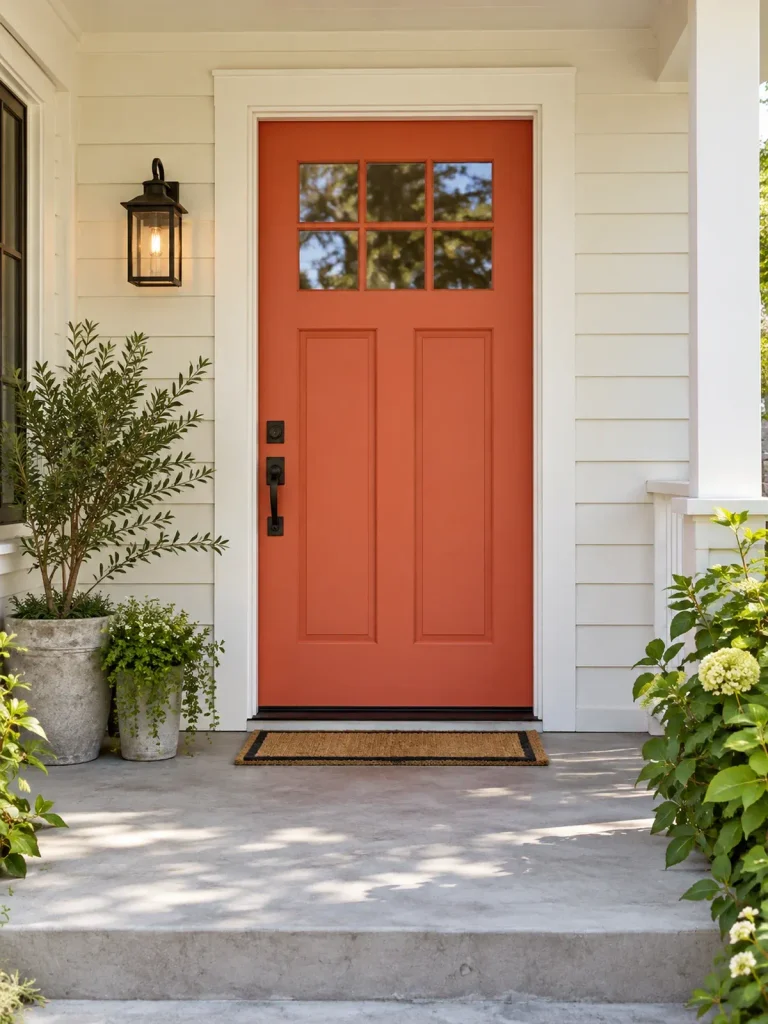
A distinctive front door gives the eye somewhere to land beyond the slab. Coral red looks lively against cream siding, deep green brings warmth to white trim, and a muted blue can soften red brick. The concrete becomes a quiet backdrop rather than the most noticeable feature.
Test paint samples outside at different times of day before committing. Colors that look restrained indoors can appear much brighter in direct sun. Choose a finish compatible with the door’s material and follow the manufacturer’s instructions, including any restrictions for storm doors or strong sun exposure. Repeat the color in one small accessory if you like, but let the entrance remain the focus.
11. Build a Seating Corner That Leaves the Door Clear
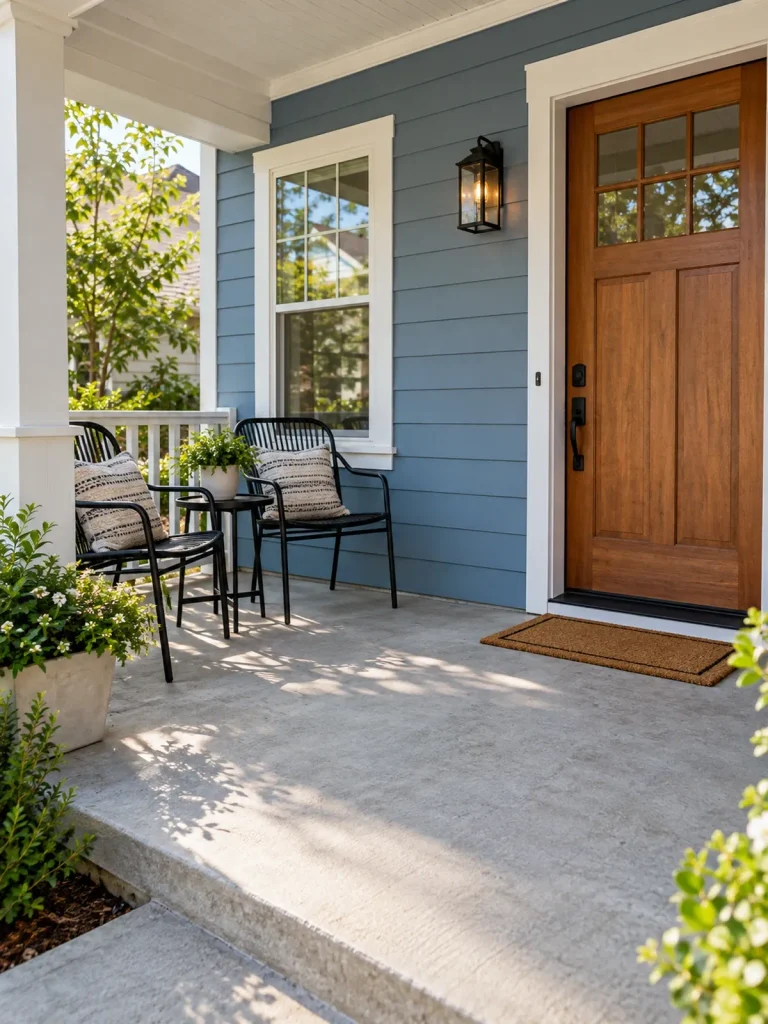
A pair of compact chairs can make a wide slab feel useful instead of empty. Group them at one end with a small side table, leaving the other end open as the route to the door. Slim metal frames help preserve the sense of space on a modest porch.
Check the arrangement with the chairs pulled out as they would be during use. A layout that only works when everything is pushed tightly against the wall will become frustrating quickly. Choose stable outdoor furniture and protective feet suited to the floor. On a narrow landing, one comfortable chair may serve the space better than forcing in a matching pair.
12. Add a Storage Bench for Everyday Clutter
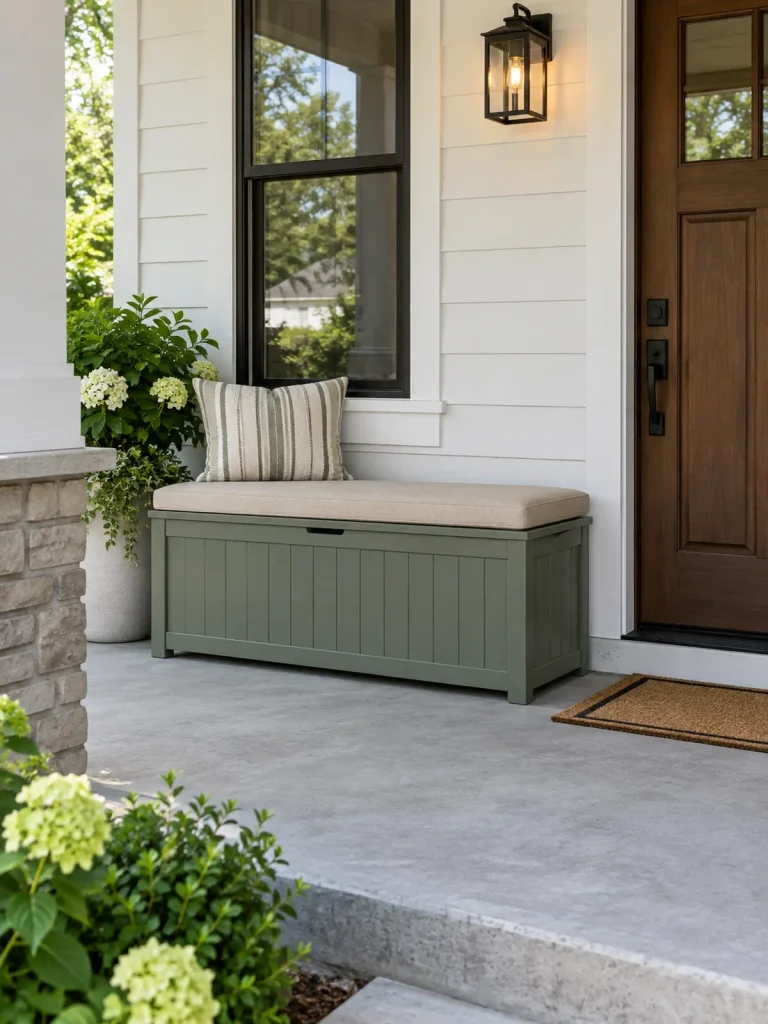
A closed outdoor storage bench gives a bare concrete porch a useful anchor while hiding the small items that make an entrance look untidy. A muted sage finish and one washable cushion feel welcoming without requiring a full furniture set. Position it along a blank wall where it does not compete with the door.
Measure both the bench footprint and the clearance needed to open its lid. Look for a model intended for outdoor conditions, and follow its limits for seating and storage. Covered does not necessarily mean dry, so keep moisture-sensitive belongings elsewhere unless the product provides suitable protection. Leave access for sweeping behind and beneath the bench.
13. Use Tall Planters to Give the Entry Height
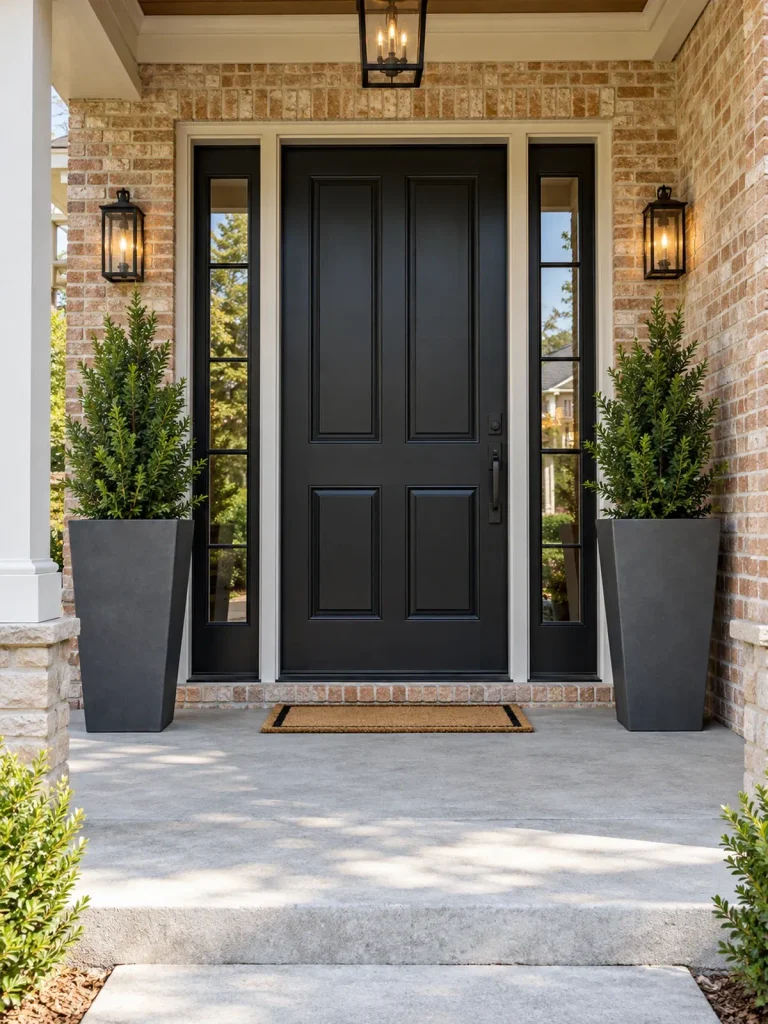
Two tall planters can balance a doorway and break up the long, low line of a concrete slab. Tapered charcoal containers with upright evergreens create a calm, structured entrance. They work especially well when the porch has little room for furniture but enough width beside the door.
Choose plants for the actual light, climate, and mature container size, rather than relying on their appearance at the nursery. Filled planters become heavy, so consider placement before planting. Provide drainage and use appropriate pot feet or protection to reduce prolonged wet contact with the floor. Keep foliage clear of handles, doorbells, and the walking route as it grows.
14. Green Up a Bare Wall with a Trellis
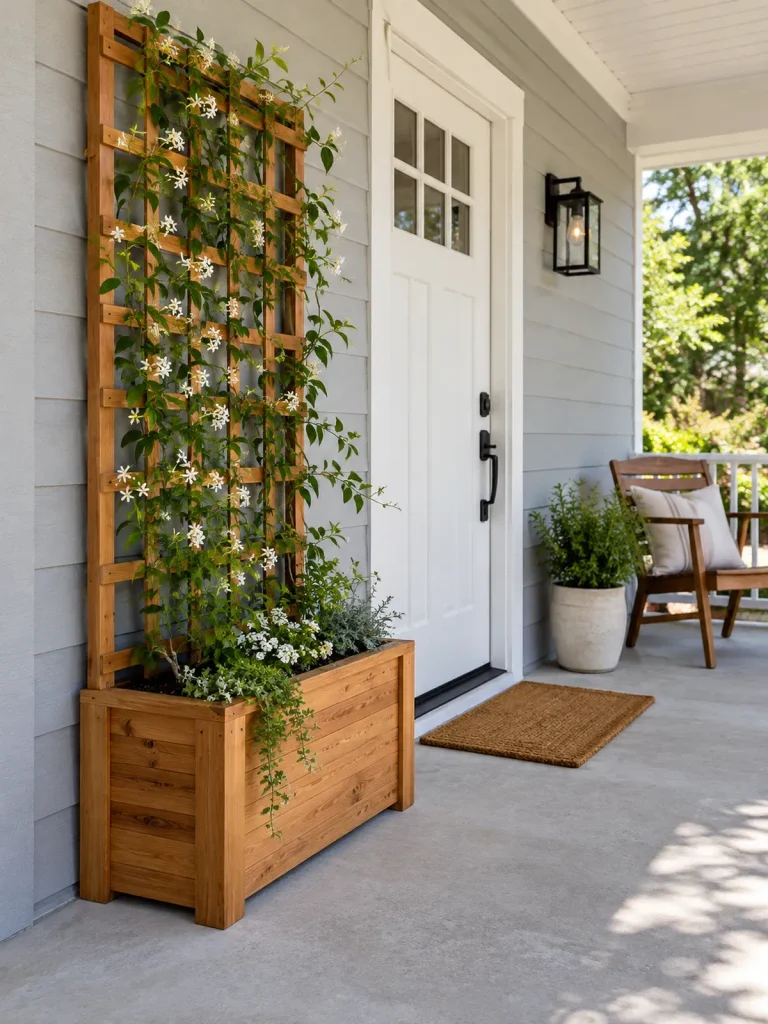
A planter with an attached trellis gives a blank porch wall texture and greenery without spreading pots across the floor. Cedar lattice feels at home beside light siding, and a restrained climbing plant softens the structure. It creates a vertical focal point while the concrete remains a simple base.
Choose a climber suited to the porch’s light and your willingness to prune. A small vine can become much larger than its initial container suggests. Follow the planter manufacturer’s stabilization or anchoring requirements, especially where wind reaches the porch. Keep growth away from siding, gutters, fixtures, and the doorway, and leave room to clean behind the unit.
15. Create a Private Corner with a Slatted Screen
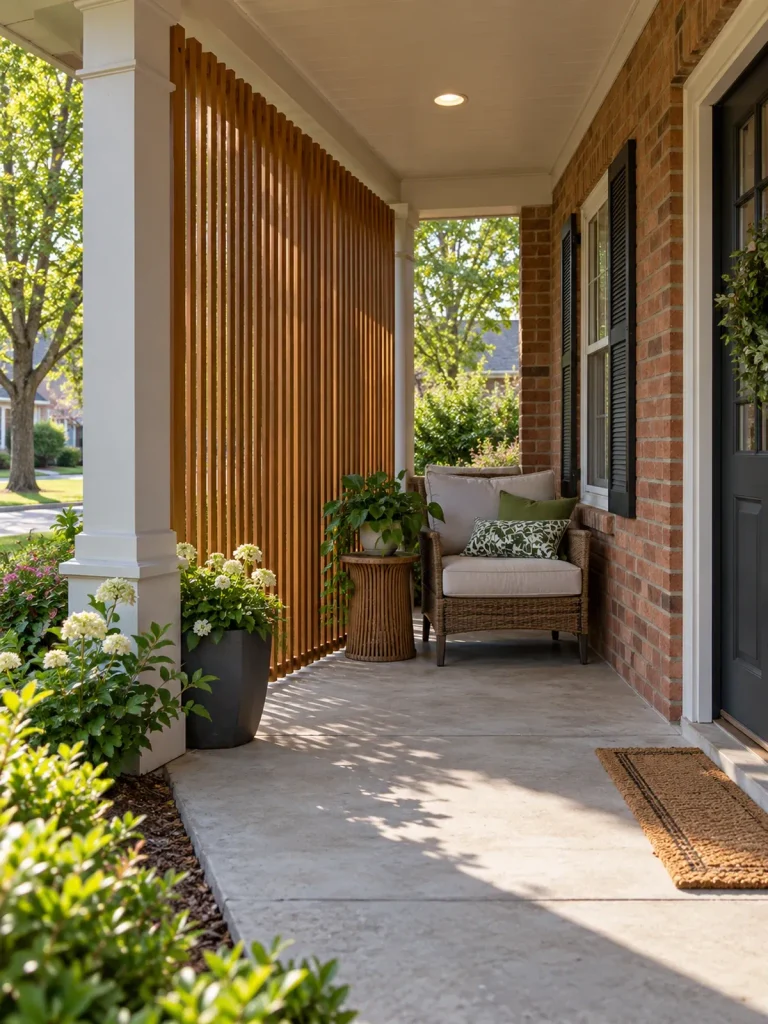
A slatted screen along one side can make a front porch seating area feel more sheltered from a close neighbor or driveway. Natural wood adds warmth to a plain slab, while the gaps preserve glimpses of light and greenery. Keep the front approach open so the entrance still feels welcoming.
Treat the screen as an exterior installation, with attachment and wind exposure considered before choosing its dimensions. An experienced installer can help determine suitable support and any local requirements. It should not replace a required guard or obstruct an exit. Pair it with a single chair or small seating group rather than enclosing every available edge of the porch.
16. Replace a Tired Porch Light with a Focused Fixture
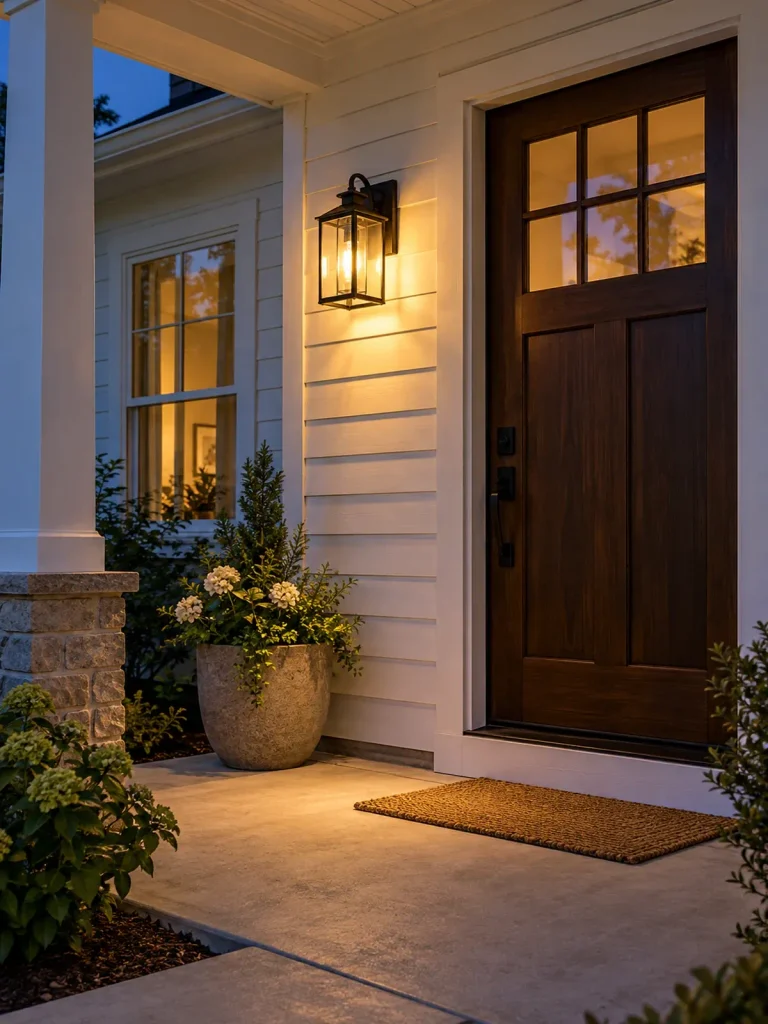
A well-proportioned wall lantern gives an undecorated entrance a stronger focal point after dark. Black metal against light siding creates definition, while a warm glow brings out the texture of concrete and nearby plants. A single attractive fixture can be enough on a small porch.
Choose a fixture listed for the location’s actual exposure, with a scale that suits the door and available wall space. Have electrical changes handled appropriately for your area. Aim for useful light at the lock and walking surface without harsh glare into the street or neighboring windows. Check the result at night; a decorative glow alone may not provide enough visibility at steps.
17. Use Outdoor Curtains to Soften a Covered Porch
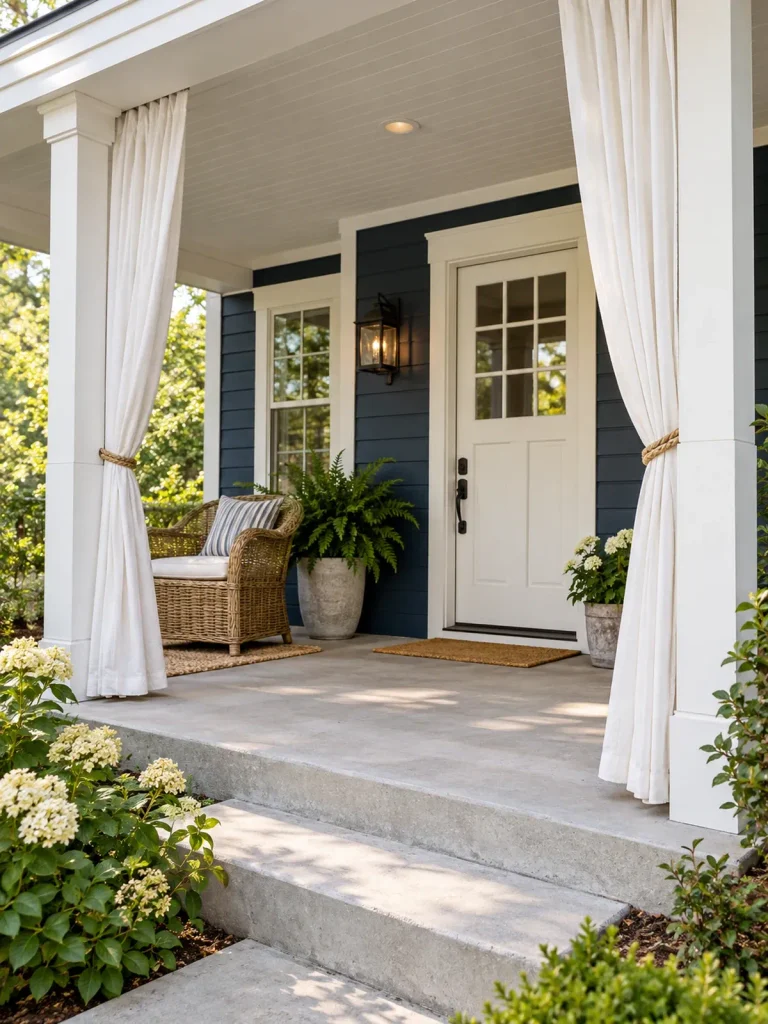
Curtain panels can make a concrete porch feel softer without changing the floor. White outdoor fabric beside simple posts creates an airy frame, particularly against navy or dark green siding. Tied-back panels give the space movement and texture while keeping the entrance visually open.
Use fabric and hardware intended for outdoor exposure, attached to suitable support according to the manufacturer’s directions. Position the panels away from steps, door swings, lights, and heat sources. Wind can make loose fabric troublesome, so secure it when needed and take it down in severe weather. This approach suits a covered porch with enough height and structure to support the installation comfortably.
18. Border the Slab with a Low Garden Bed
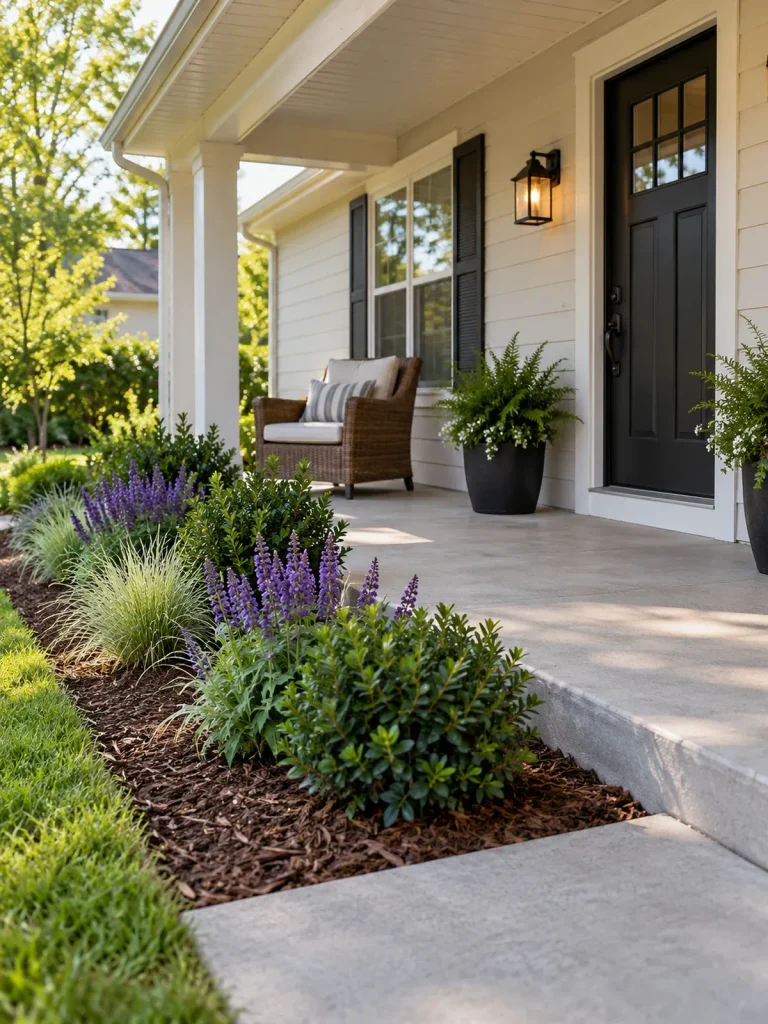
Soft planting beside the porch can change how the concrete looks without covering it at all. A low bed of ornamental grasses, flowering perennials, and compact shrubs breaks up the hard edge. Repeating a few plants usually looks calmer than collecting many unrelated varieties.
Plan for mature size so foliage does not spill across the approach or hide the step. Keep soil and mulch clear of siding and required foundation clearances, and preserve drainage away from the house. Select plants for your region and the bed’s sun exposure. On a small property, a narrow, well-maintained border can make the slab feel connected to the landscape rather than stranded beside it.
19. Add a Porch-Side Container Herb Garden
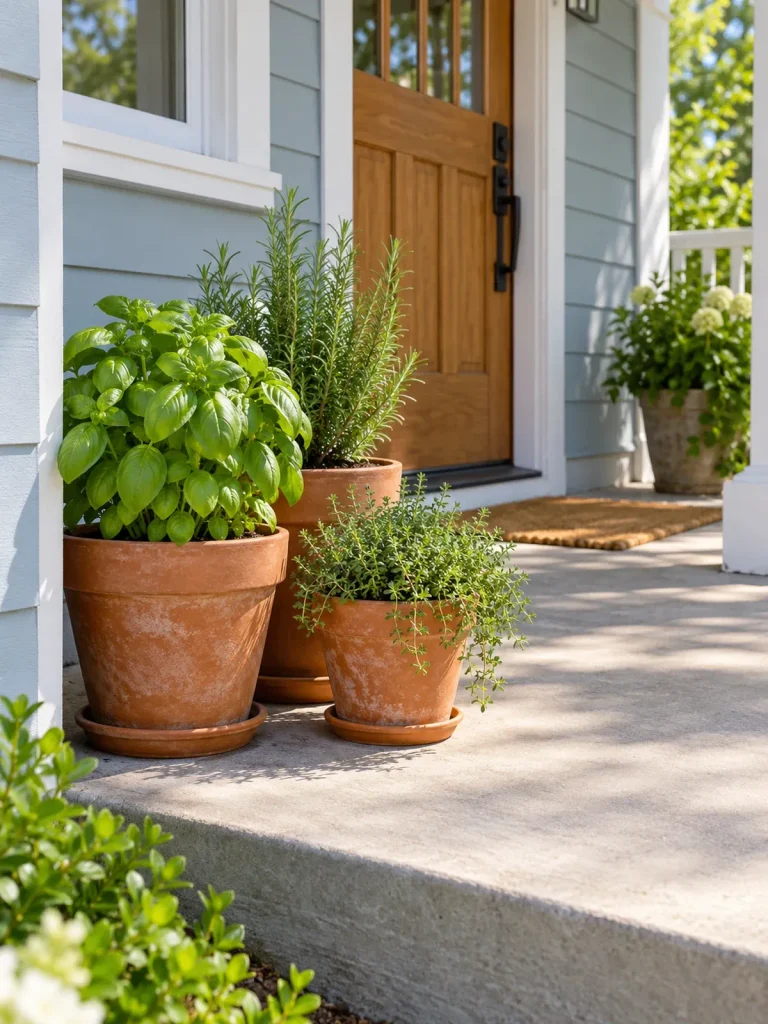
A small group of herb pots gives a sunny porch a practical reason to exist beyond the front door. Terra-cotta containers with basil, rosemary, and thyme bring varied leaf shapes to an otherwise plain slab. Keeping the display to one side makes it feel intentional and easy to tend.
Match the plants to the available sun and choose containers with drainage. Separate pots also let you adjust watering to each herb’s needs instead of treating them all alike. Use stable containers, keep runoff out of the walking route, and check beneath pots for trapped moisture. If the porch stays deeply shaded, choose a different planting scheme rather than forcing sun-loving herbs into it.
20. Give the Porch Ceiling Its Own Color
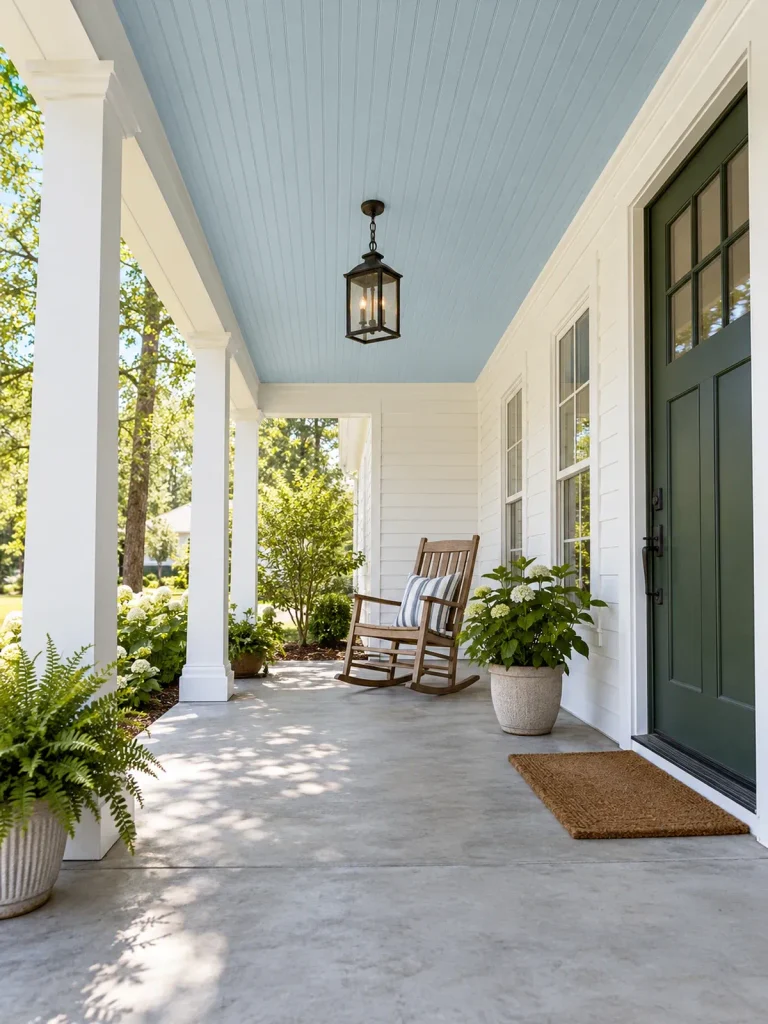
A pale blue ceiling draws attention upward and makes a plain concrete floor feel like one part of a considered space. The color is especially appealing on a covered cottage porch with white posts, a dark door, and a simple wooden chair. Keep the tone gentle so it complements the exterior.
Sample the paint overhead, where shade changes how colors appear. Choose a coating appropriate to the ceiling material and its outdoor exposure. Address peeling finishes or moisture problems before repainting, and use suitable access equipment for overhead work. A ceiling color is a decorative choice, so select it for its appearance rather than expecting it to repel insects or solve ventilation problems.
Choose One Main Change, Then Add Two Supporting Details
Start with the slab’s condition. A sound surface that mainly looks dull may need only a rug, a color update, or better styling. Persistent puddles, uneven movement, or deteriorating concrete need assessment before a decorative covering goes on top.
Next, choose where the visual emphasis belongs. A stenciled floor already supplies plenty of pattern, so pair it with simple pots and quiet seating. A plain painted floor can support a brighter door and taller plants. If you want to leave the concrete untouched, combine a useful seating corner with a garden border or a distinctive light.
Before buying anything, mark furniture and container footprints on the porch. Open the door fully and walk through carrying groceries. Keep the route comfortable, and check steps, thresholds, and drainage again after making changes. A porch looks more welcoming when the layout works as naturally as the colors do.
FAQ
What is an easy way to improve a concrete front porch without painting it?
Start with cleaning appropriate to the surface, then add an outdoor rug or a compact seating arrangement. A colorful door and a few well-placed containers can also shift attention away from the slab without changing its finish.
Can I paint over previously painted concrete?
Possibly, but compatibility and condition matter. Identify loose coating, moisture issues, and the preparation requirements of the new product. Follow its directions for testing and removal where necessary rather than assuming another coat will bond to the old surface.
Is tile suitable for a porch in a freezing climate?
It can be, but the whole installation must suit exterior exposure and freezing conditions. The tile rating alone is not enough. Drainage, substrate condition, setting materials, joints, and installation details also matter, so have a qualified installer assess the project.
What should I do about cracks before decorating the slab?
Determine whether they are stable surface imperfections or signs of movement. Widening cracks, uneven edges, settlement, or recurring drainage problems warrant professional assessment. Decorative coatings and coverings should not be used to conceal an unresolved problem.
How can I decorate a very small concrete front porch?
Use the door, walls, and overhead space before adding furniture. A new door color, an appropriately sized light, or a narrow planter can create interest. Keep the door swing, steps, and approach clear, even if that means skipping seating entirely.
Start with the Part That Bothers You Most
Choose a floor update if the concrete itself feels unfinished. Choose seating or storage if the porch lacks a purpose, or work with plants and lighting if you want to keep the slab as it is. One well-chosen change, supported by a few coordinated details, can give a plain entrance a much more welcoming presence without requiring an entirely new porch.