
That strip of grass along your fence can be awkward to mow, and a long run of bare boards can make the yard feel unfinished. Landscaping along a fence gives you a chance to put that edge to work.
You could make a sunny spot productive with herbs, give a shady stretch a softer edge with ferns, or use plants to screen the spot where you actually sit.
Start by noticing how much light each section gets and where you need room to open a gate or maintain the fence. The ideas below range from narrow planting strips to deeper beds that change how you use the yard.
1. Layer a Deep Border in Three Heights
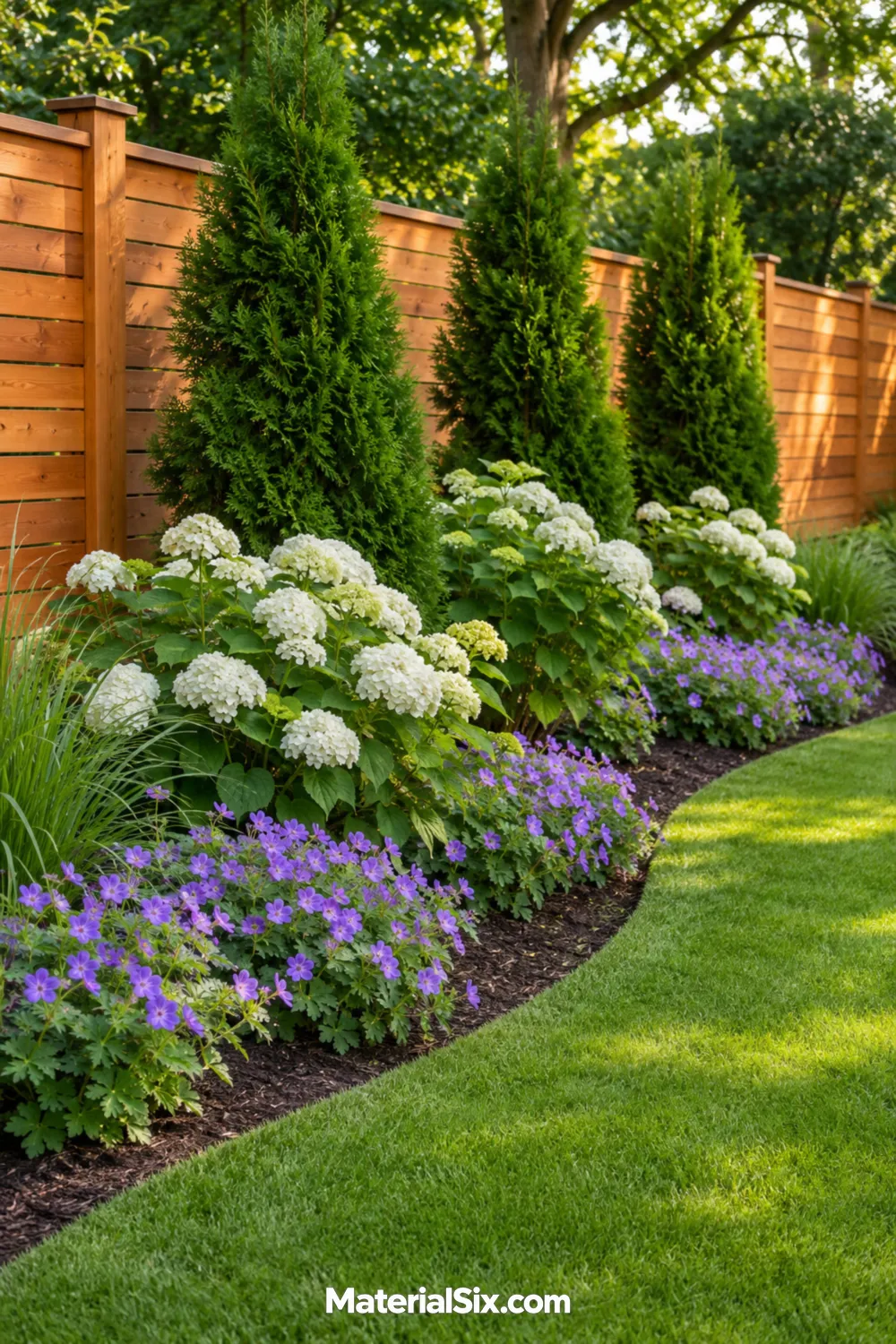
Build the border from the yard inward. Mark where you want the front edge, then use low plants along that line, rounded flowering plants behind them, and taller evergreen shrubs toward the fence. The repeated height changes make a long stretch of boards feel less flat.
A three-layer border needs room for the plants to spread. Sketch their mature widths before buying, and keep a way to reach boards and posts for maintenance. Where the bed narrows, repeat just the front two layers. The border will still feel connected if the same low plant carries through.
2. Plant an Evergreen Screen in Groups
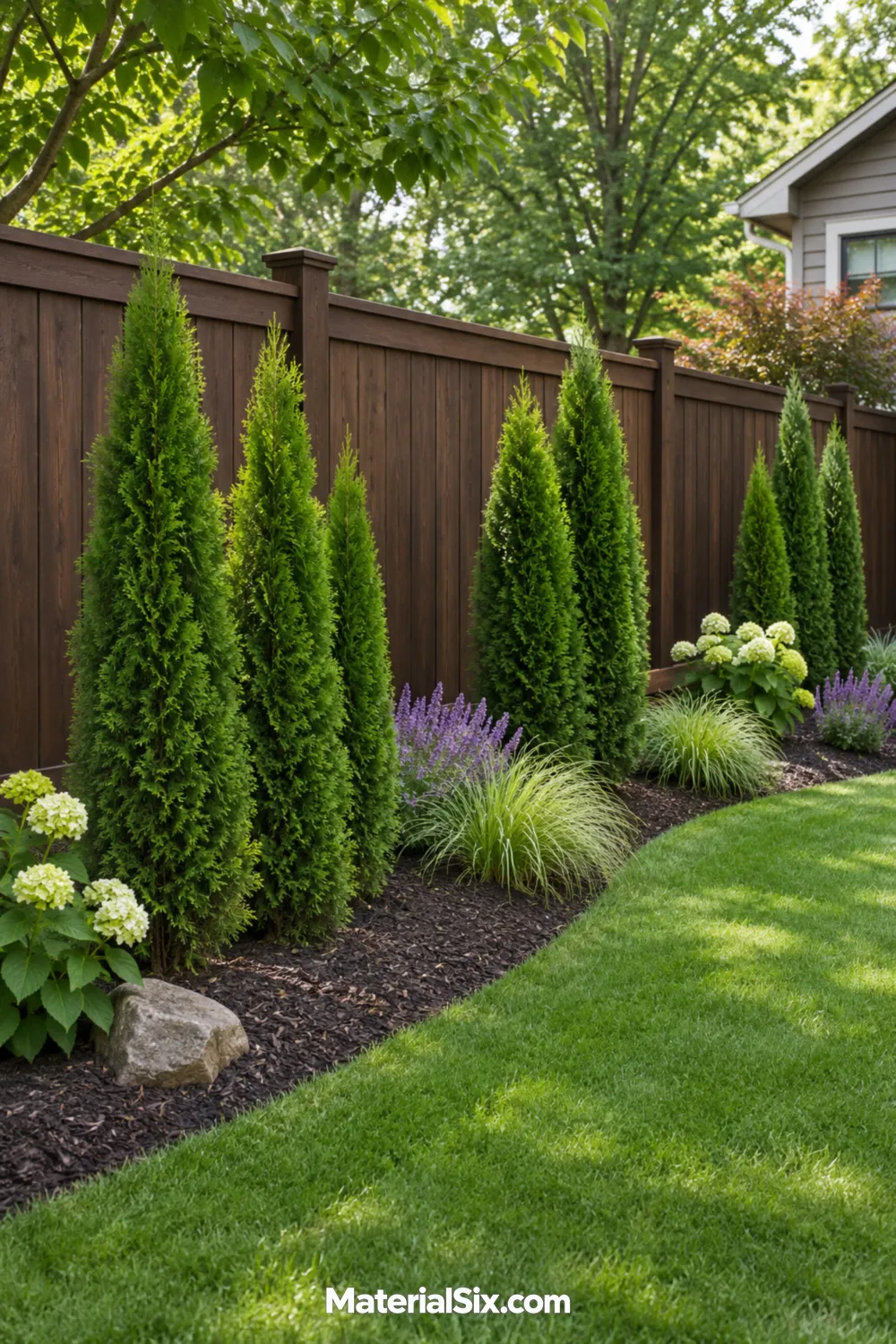
Think about where you want privacy before planting the entire property line. Sit at the patio table or stand by the back door and identify the views you want to soften. A few groups of upright evergreens can cover those sightlines while leaving space for lower planting and views you want to keep.
Set out the pots and look at them from your usual seat before planting. Pick shrubs based on their mature width and height, and leave clearance behind them so you can reach the fence. Offsetting the groups also gives the bed a more relaxed outline.
3. Give a Flowering Vine Its Own Trellis
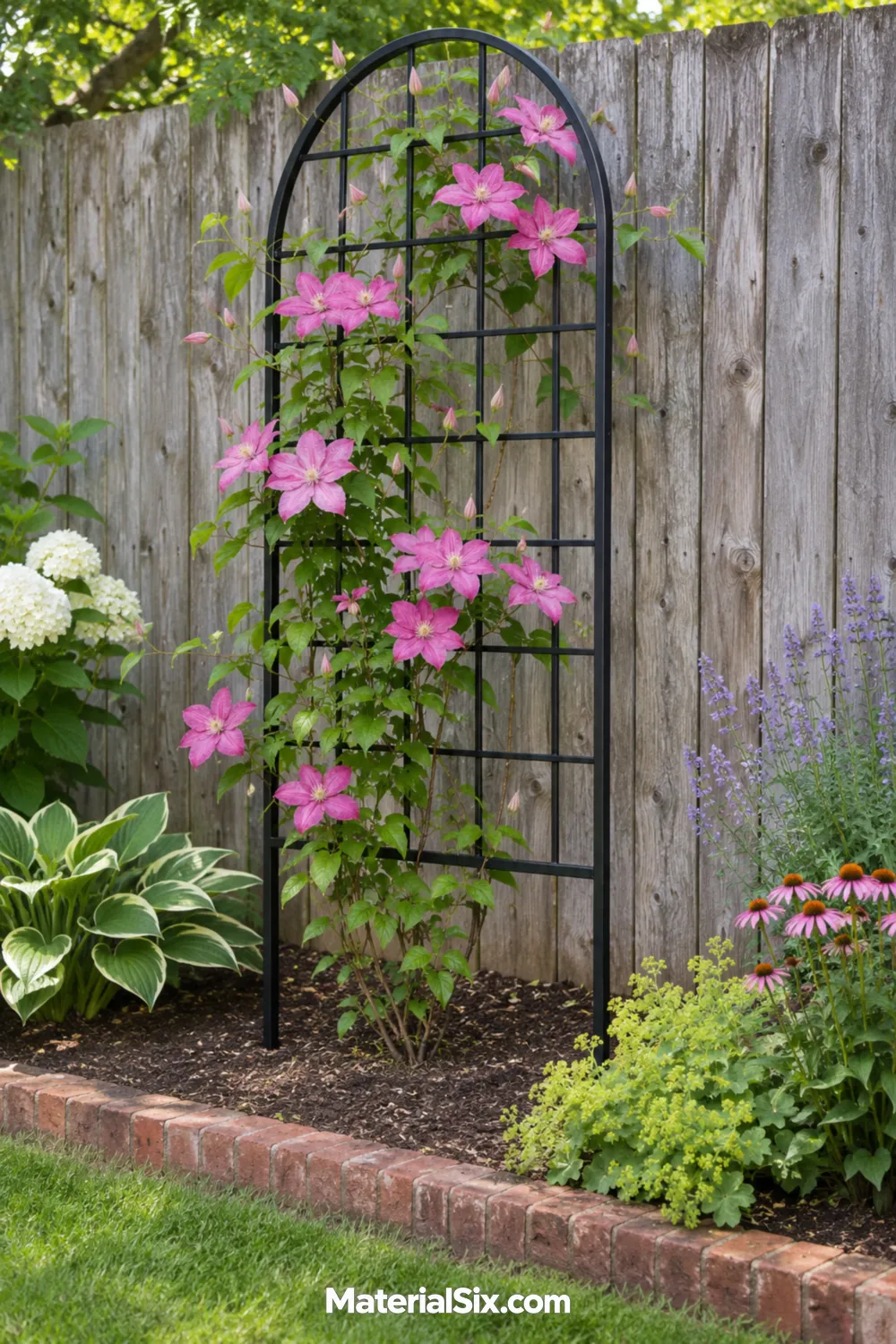
A freestanding trellis lets you put flowers in front of a fence while keeping the boards accessible. Place one panel where you can see it from a window or patio chair, or use two to interrupt a long blank stretch. A dark metal trellis against pale wood gives the vine a clear outline before it fills in.
Choose the support to suit the mature vine and install it according to its instructions. Look for a flowering climber suited to your light and region, and plan for room to reach both sides of the trellis when you tie in new growth.
4. Repeat Ornamental Grasses Along the Fence
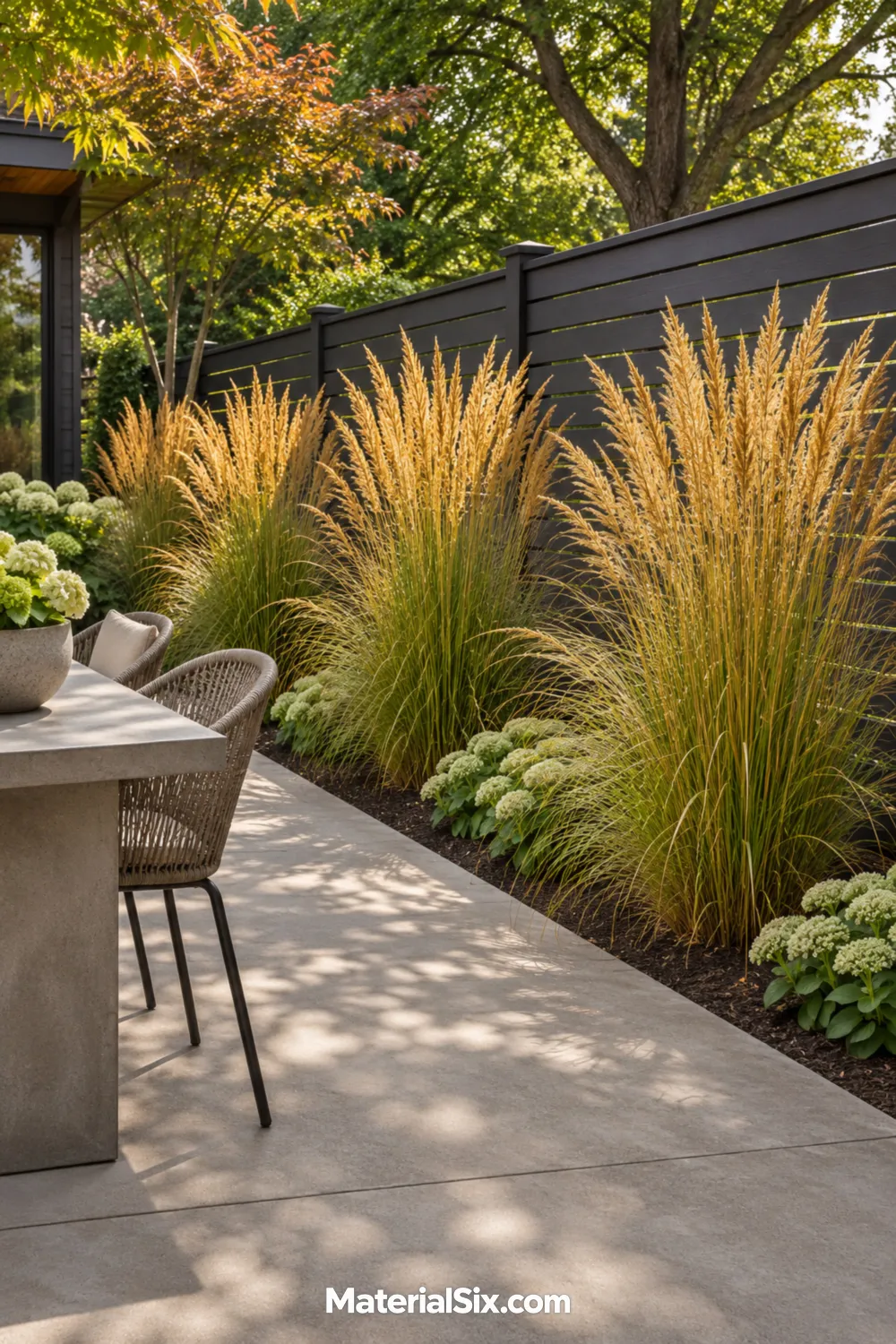
Repeat one ornamental grass at intervals to give a plain fence a rhythm you can see from across the yard. Upright clumps suit a straight modern patio edge, where their seed heads and arching blades stand out against dark horizontal boards. Leave enough open space for each clump to read as its own shape.
Look for a clumping variety suitable for your region and check its mature size before you set the spacing. If the grass leans over a walkway at full width, move the planting line farther into the bed or choose a narrower variety.
5. Make a Shade Border With Foliage
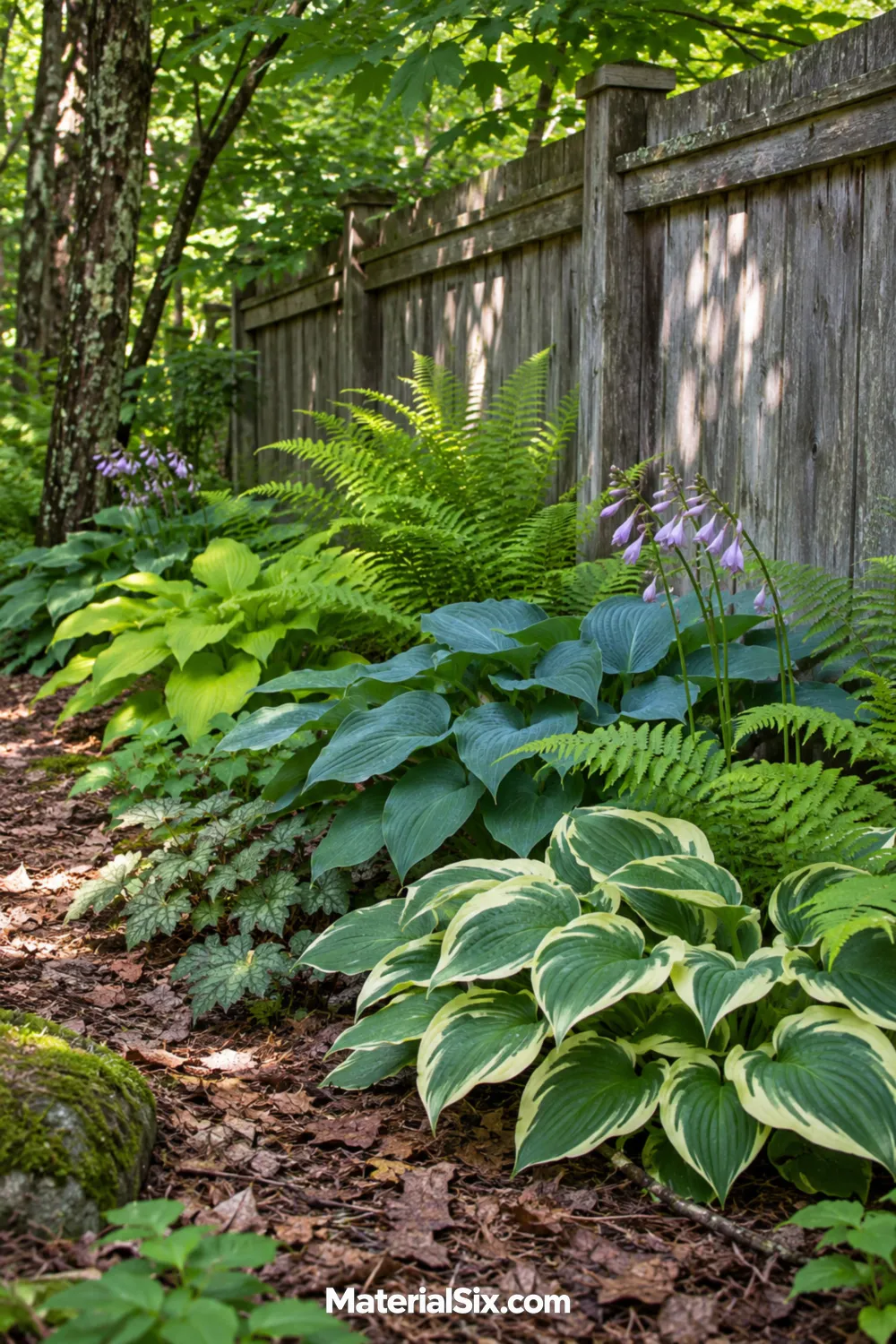
Start with leaf shape where flowers would have to compete with shade. Broad hosta leaves and finely divided fern fronds give you an easy pairing to repeat along a sheltered wood fence. Use a few larger plants at intervals and tuck smaller ones around the front, where you can see the contrast up close.
Check the soil as well as the light. A shady area under a tree can be dry, while a low stretch elsewhere may stay damp. Choose foliage plants suited to the conditions you actually have, and give them room to open out over the mulch.
6. Soften a Picket Fence With Cottage Flowers
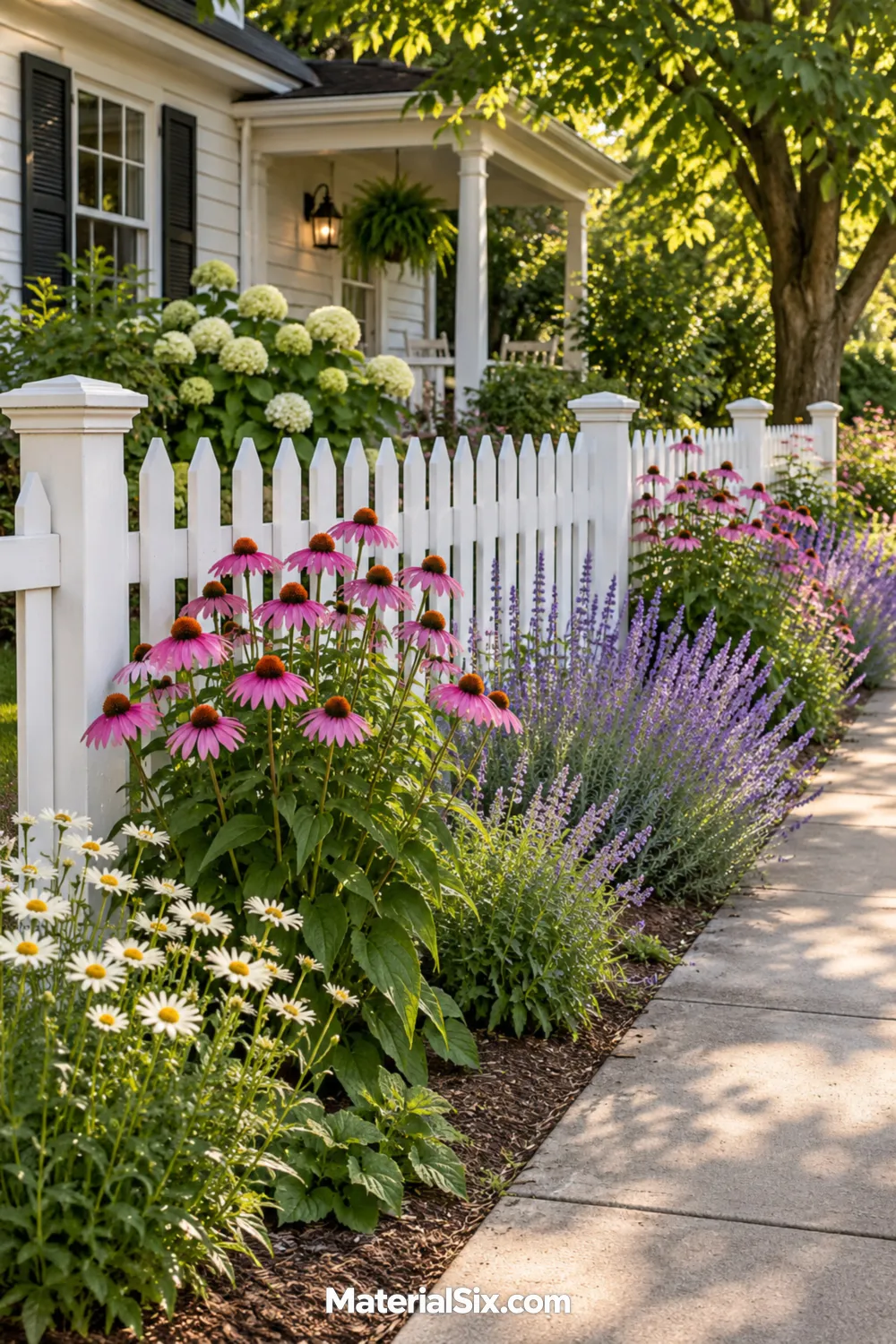
A picket fence makes a natural backdrop for an informal mix of flowering plants. Place taller blooms where they can rise between or above the pickets and group lower flowers at the front. Repeating the same two or three colors ties the bed together even when different plants take turns blooming.
Keep the planting low and tidy around the latch and sidewalk. From the street, look for gaps that would benefit from one more group of flowers. From inside the yard, check that you can still swing the gate and get to the fence for painting.
7. Build a Gravel Garden With Open Space
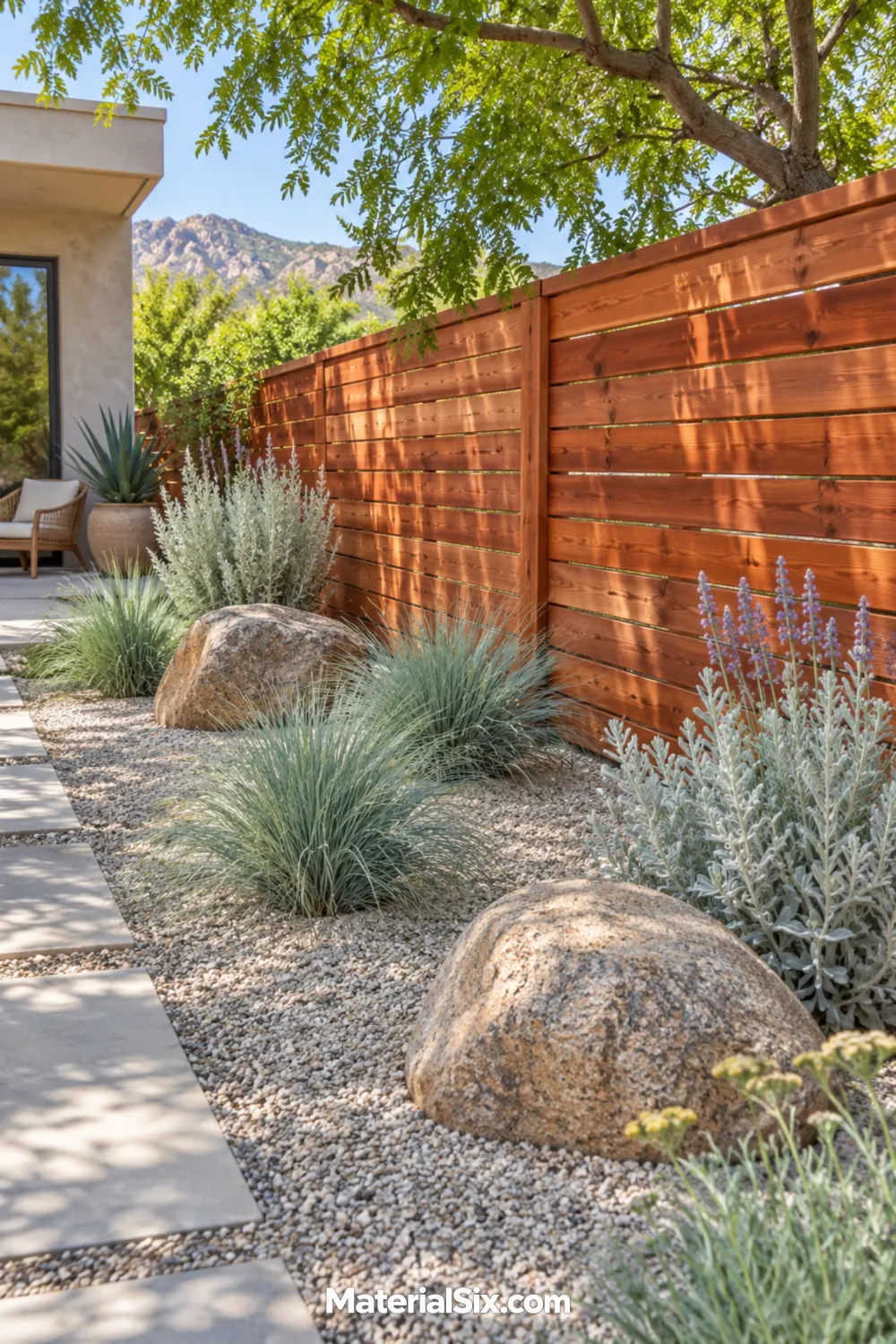
Let the gravel show between plants so the bed reads as a gravel garden. Group plants with similar water needs and use a couple of larger rocks to give the open patches a sense of purpose. A restrained mix of blue-green grasses and silver foliage looks particularly crisp beside a warm wood fence.
Check how water moves through the site before committing to the layout. Choose plants suited to the actual drainage and sun exposure. Along the lawn, a defined edge makes it easier to keep the gravel where you put it and gives you a clean line to mow along.
8. Use a Stone Retaining Bed on a Slope
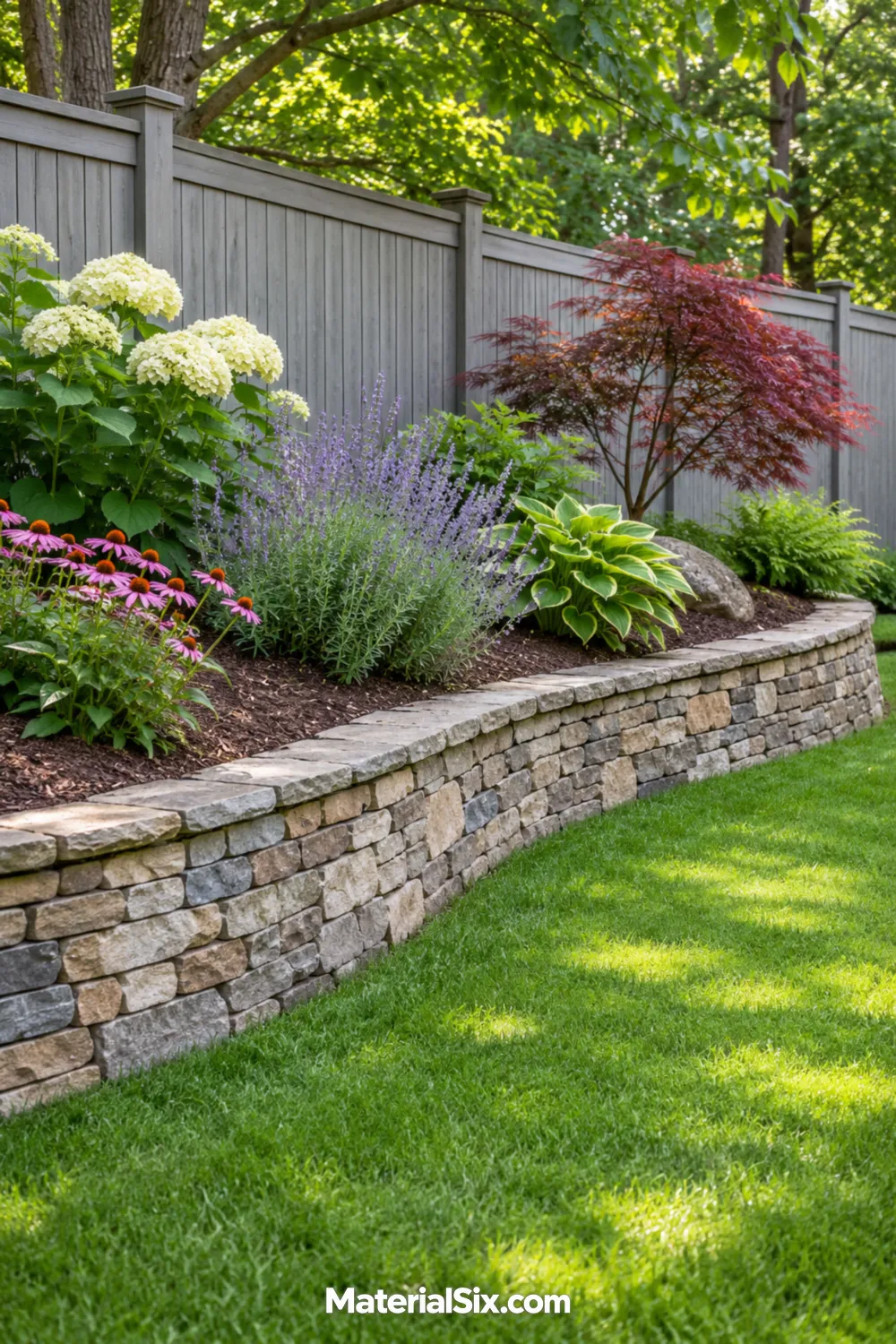
Where a slope makes a flat-looking border hard to achieve, a low stone retaining bed can give the planting its own visible level. Follow the natural contour and let the stone edge curve out where you have room for a wider group of plants. Check the line from the lower yard, where you will see both the stone and the planting.
Work out where water will go and preserve access to the fence posts before settling on the layout. If the wall would hold a substantial slope or sit close to a structure, have a landscape professional assess the site and design.
9. Line a Patio Fence With Oversized Pots
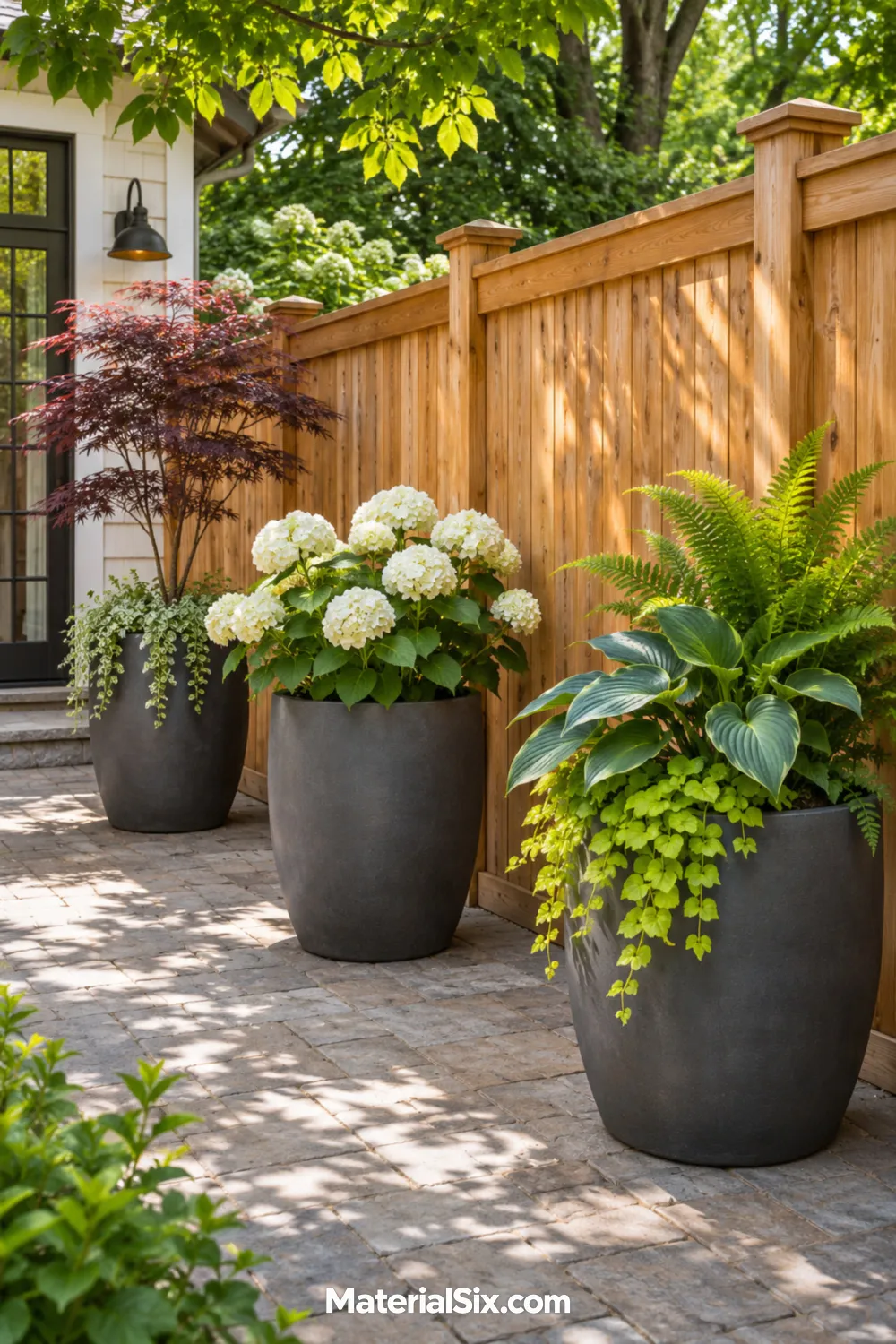
Oversized pots can give a paved fence edge the presence of a planted border. Set them in loose groups, with a larger foliage plant at one end and lower containers where you want to keep the view open. Repeating the pot finish makes it easy to mix plant textures without making the patio look busy.
Pick each container for the plant’s mature size, and make sure the pot has drainage. Test the arrangement before filling the pots. You want enough space to move chairs, reach the plants with a watering can, and clear the gate when it swings open.
10. Grow Fruit Flat Against a Support
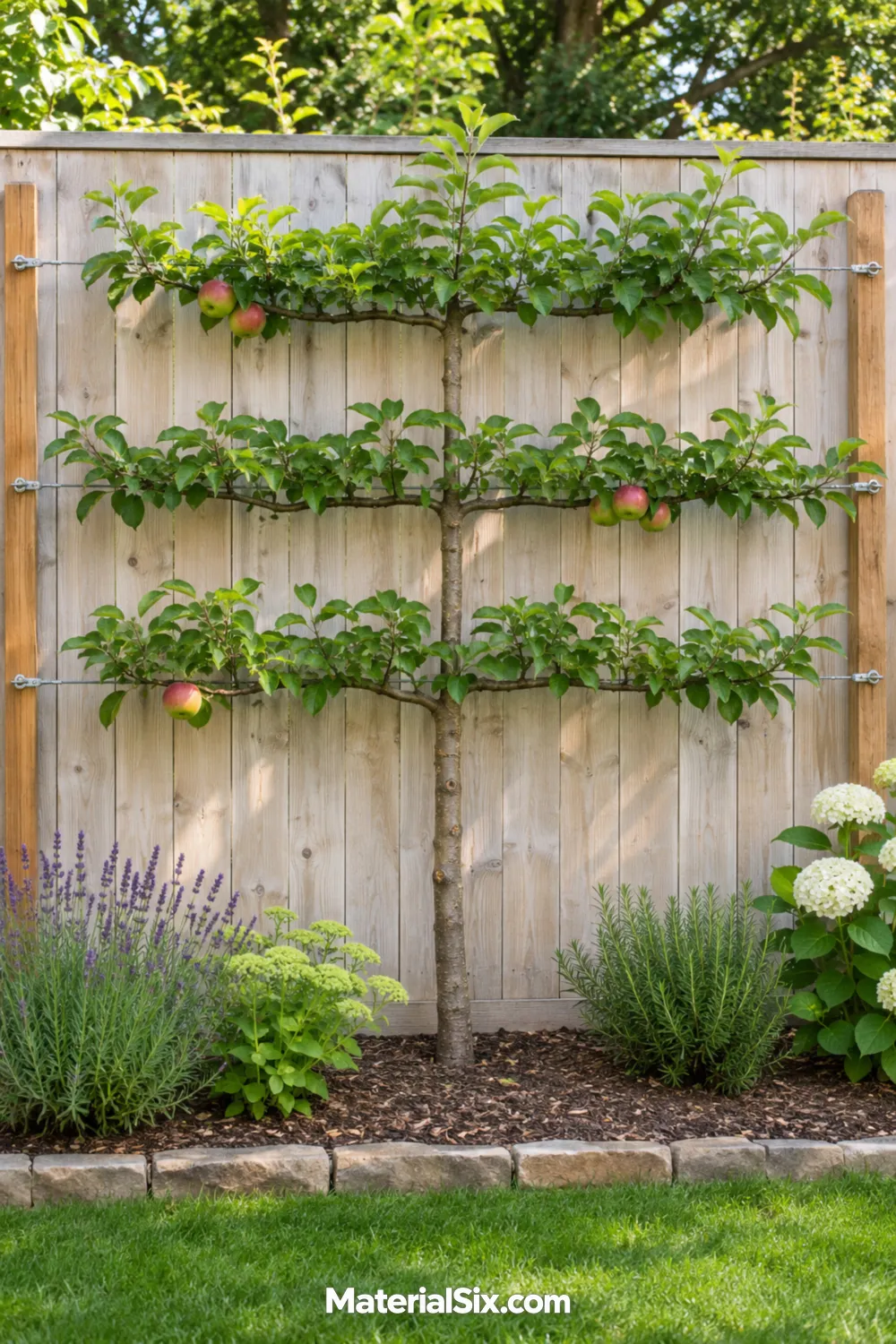
An espaliered fruit tree makes the fence line feel intentional even if you have only a shallow bed. Horizontal branches show clearly against plain boards, and the plant reads as a living feature through the seasons. Choose a suitable fruit variety for your local conditions and look for a young tree already trained in the form you want.
Give the branches a support you can reach for tying and pruning. An independent support also makes fence repairs easier. Decide whether you enjoy the regular training and upkeep before choosing this layout for a long stretch of fence.
11. Set a Slim Herb Planter Beside the Fence
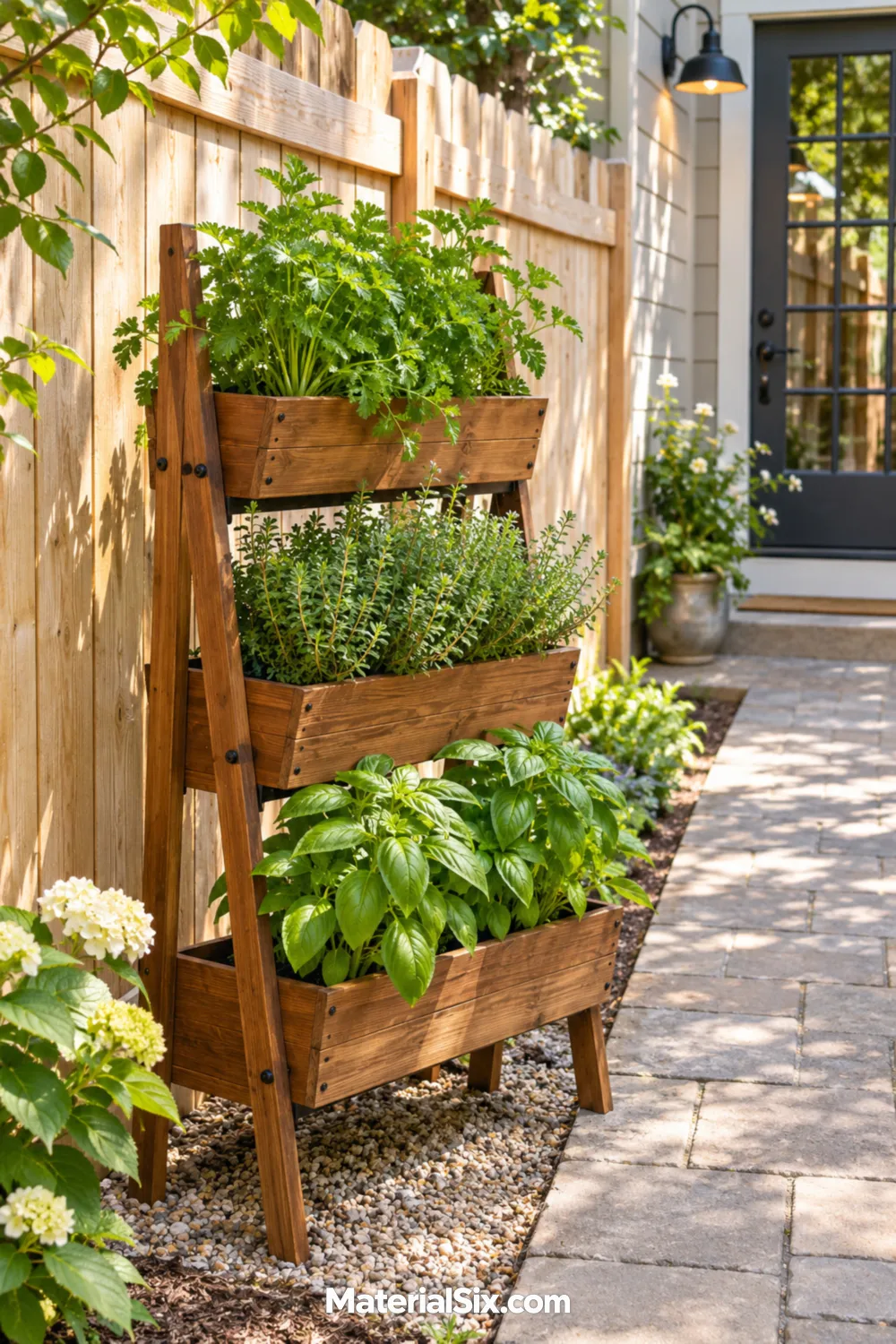
A tiered herb planter makes sense where the sunny side of the fence is also close to your kitchen. Place the pots you snip most often at a comfortable height and keep the unit clear of the path. You can lift out individual pots to replant or move them as the season changes.
Put herbs with similar watering needs together, or give each its own container. Watch where water drains from the upper tiers, especially when the planter sits on paving. Leave a gap behind it so you can clean up leaves and inspect the fence.
12. Fit Raised Vegetable Beds Along a Sunny Fence
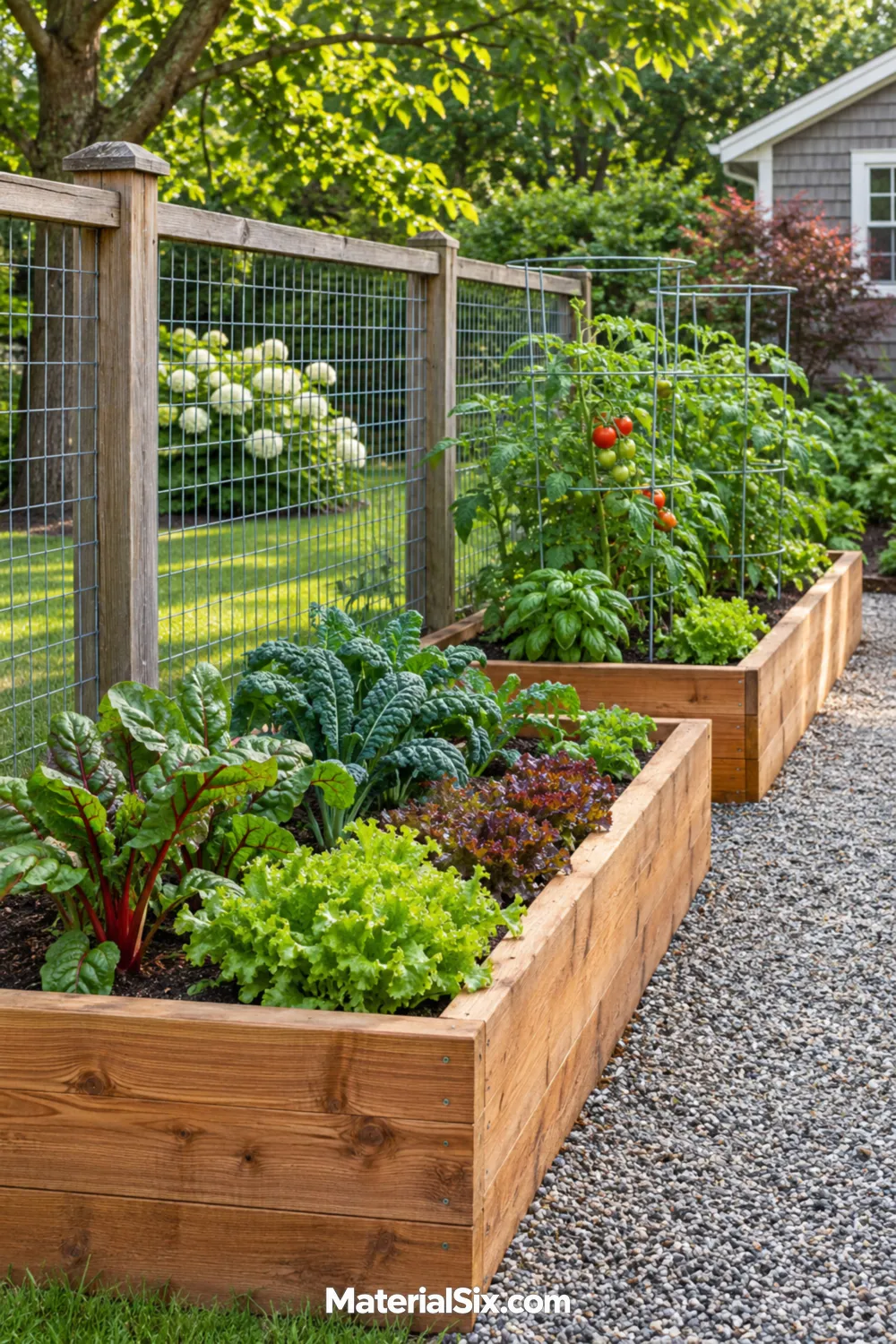
Use the sunny side of a fence for a short row of raised beds. An open fence keeps the vegetable patch visually connected to the rest of the yard. A gravel path on the working side gives you a clear place to stand when you water, harvest, or reach for tomato supports.
Check where the fence casts shade during the day before choosing what to grow. Keep the beds freestanding and size them so you can comfortably reach the crops from the access side. Reserve some room around the ends for carrying a basket or replacing a trellis.
13. Make a Stepping-Stone Route to the Gate
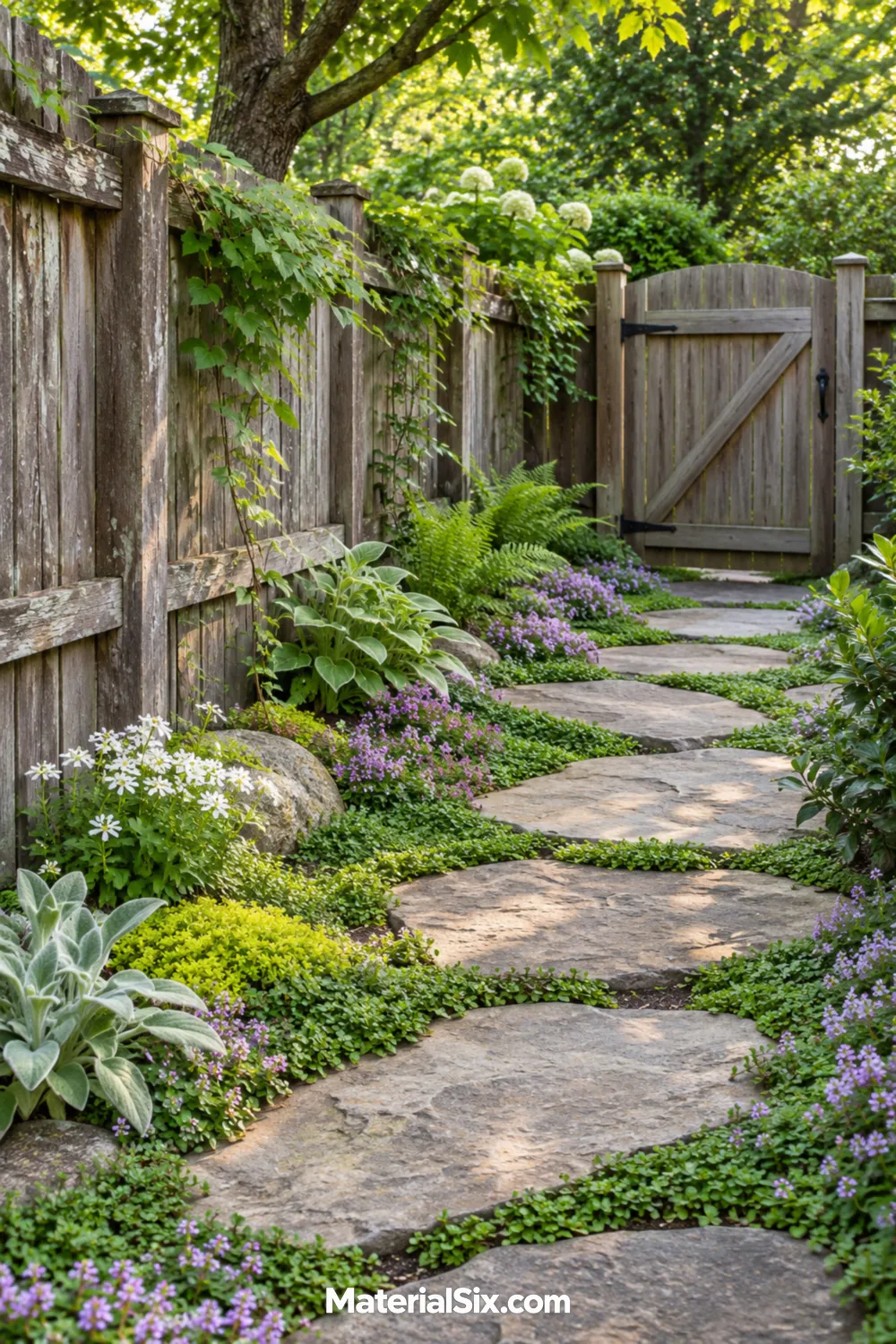
Turn the route you already take to the gate into a narrow garden path. Lay out broad, flat stepping stones to match a comfortable stride, then place low groundcover at the edges. The plants soften the stones while leaving a clear route through the border.
Walk the route before setting the stones. Take the turns you make while carrying garden tools and check how much room the gate needs. Choose groundcover suited to the site’s light and moisture, and leave the main walking surfaces clear as the plants spread.
14. Give Runoff a Planted Place to Settle
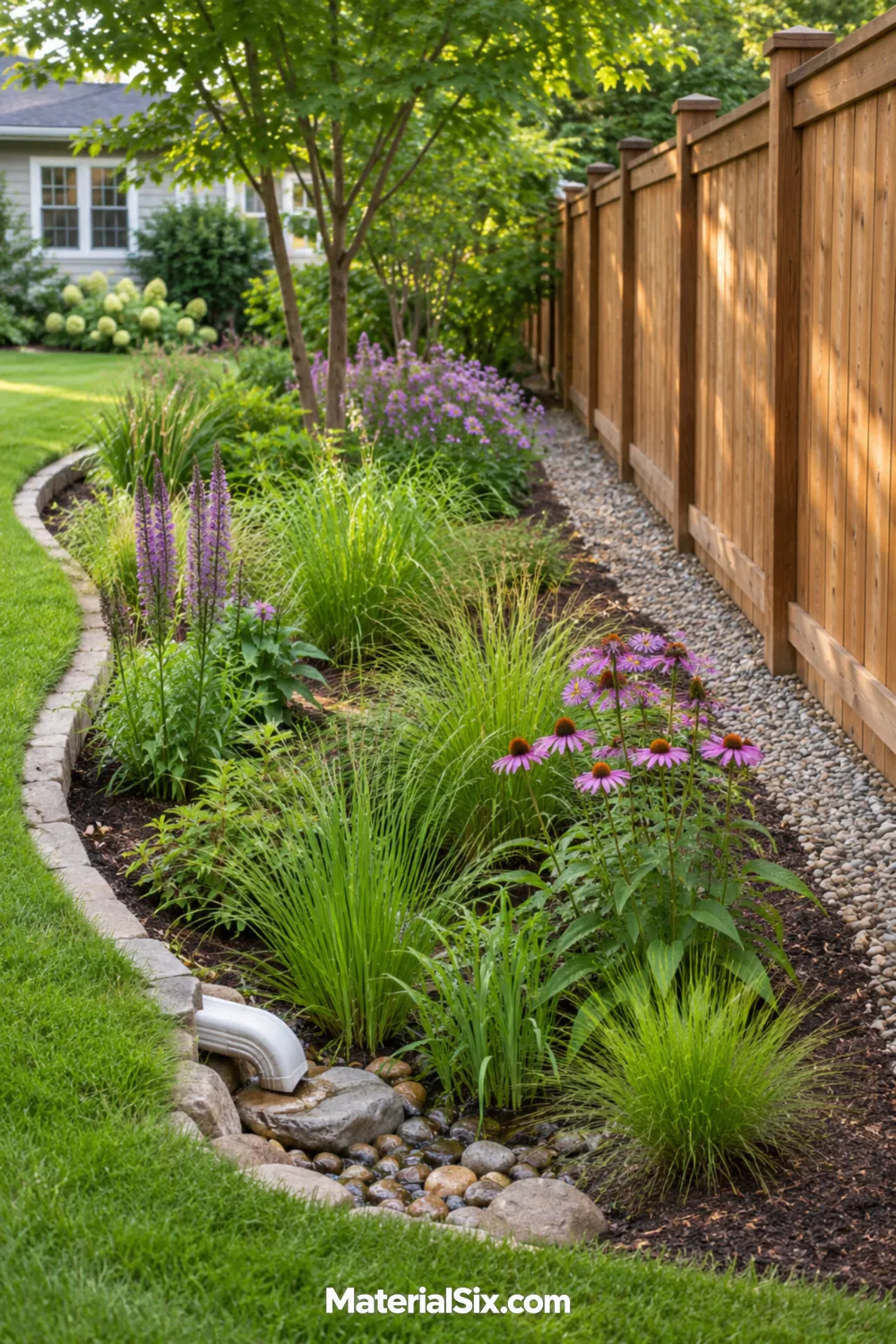
If runoff already crosses the yard near the fence, first watch where it comes from and where it goes. A shallow planted basin can give that water a place to settle where site conditions allow. Put it within your yard with a dry access strip along the fence, and choose plants for the basin floor and the drier edges separately.
Treat this as a drainage project before you plan the planting. Check local rain-garden guidance for setbacks and soil infiltration, and get site-specific advice if water is already pooling near a building, fence footings, or a neighboring property.
15. Plant Low in Front of an Open Metal Fence
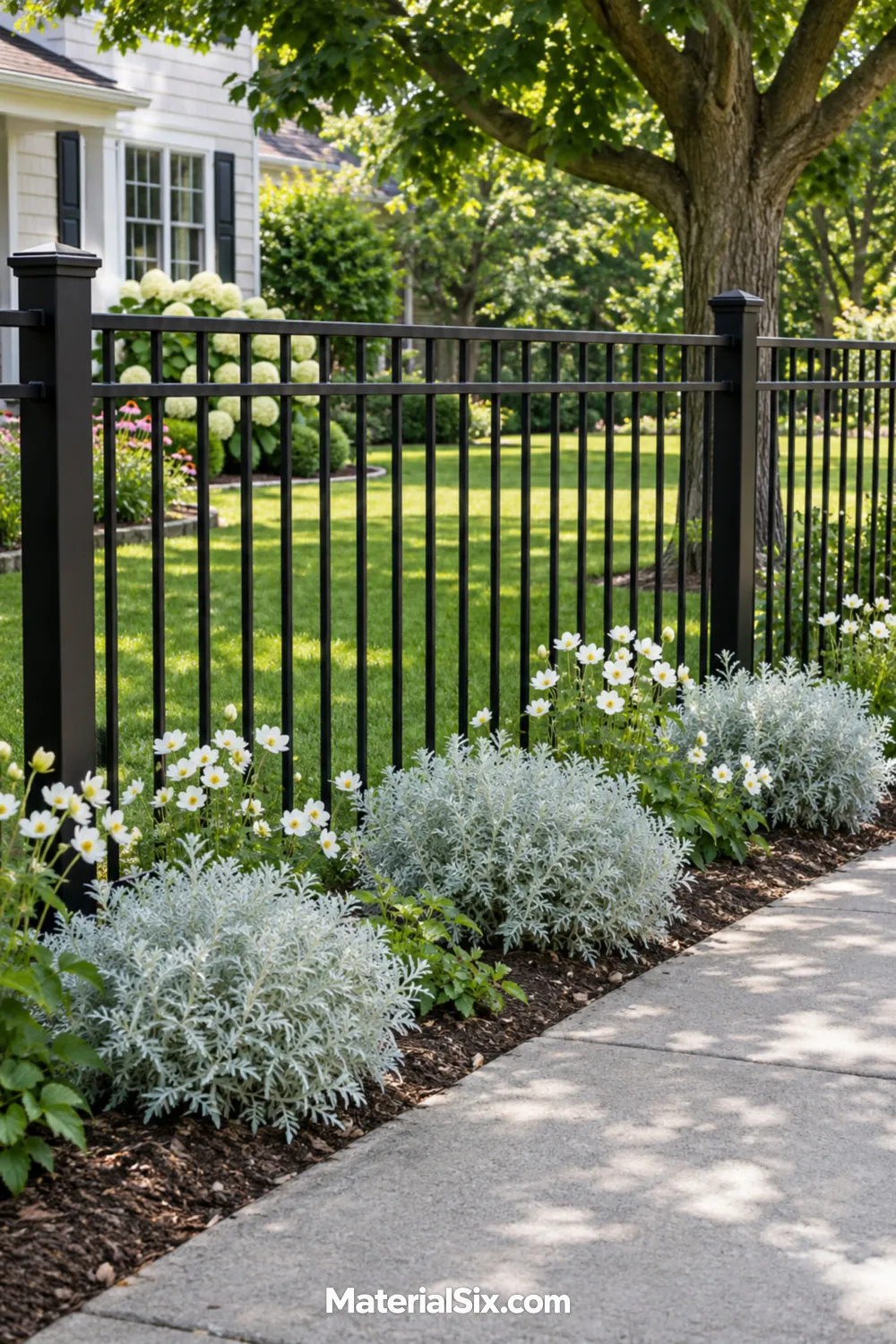
Open metal fencing can look especially sharp with a low planting line. Try repeating low silver-leaved plants or white-flowering mounds so the garden adds texture around the base while the black bars stay visible. A small set of plants also works well when you can see both faces of the fence from the yard and street.
Choose varieties that keep their shape at maturity. Walk the outside edge to check that the leaves will stay clear of the sidewalk, and keep the gate area low enough to preserve sightlines where people come and go.
16. Anchor a Bare Fence Corner With a Small Tree
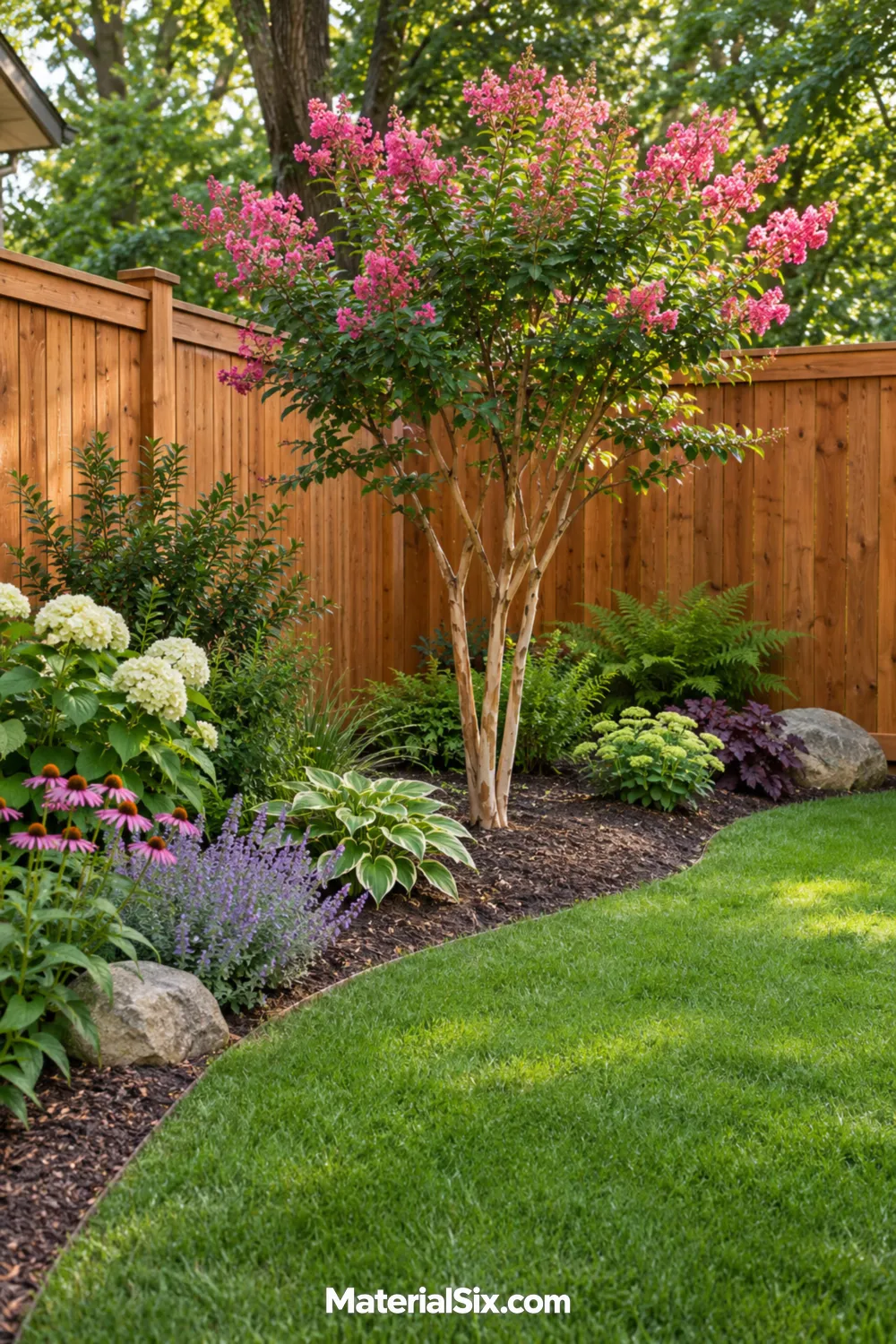
One small tree can make an empty fence corner feel like a destination. Set it forward from the junction and shape the bed around its canopy, allowing the bed to curve out toward the lawn. You can fill the foreground with a few low plants so the trunk stays visible and the corner feels open.
Check the tree’s mature height and spread before deciding where it belongs. Look up for overhead obstacles and leave clearance from both runs of fence. Then stand where you normally see the corner and shift your planting marker until the tree frames the view naturally.
17. Weave a Pollinator Strip Through a Sunny Border
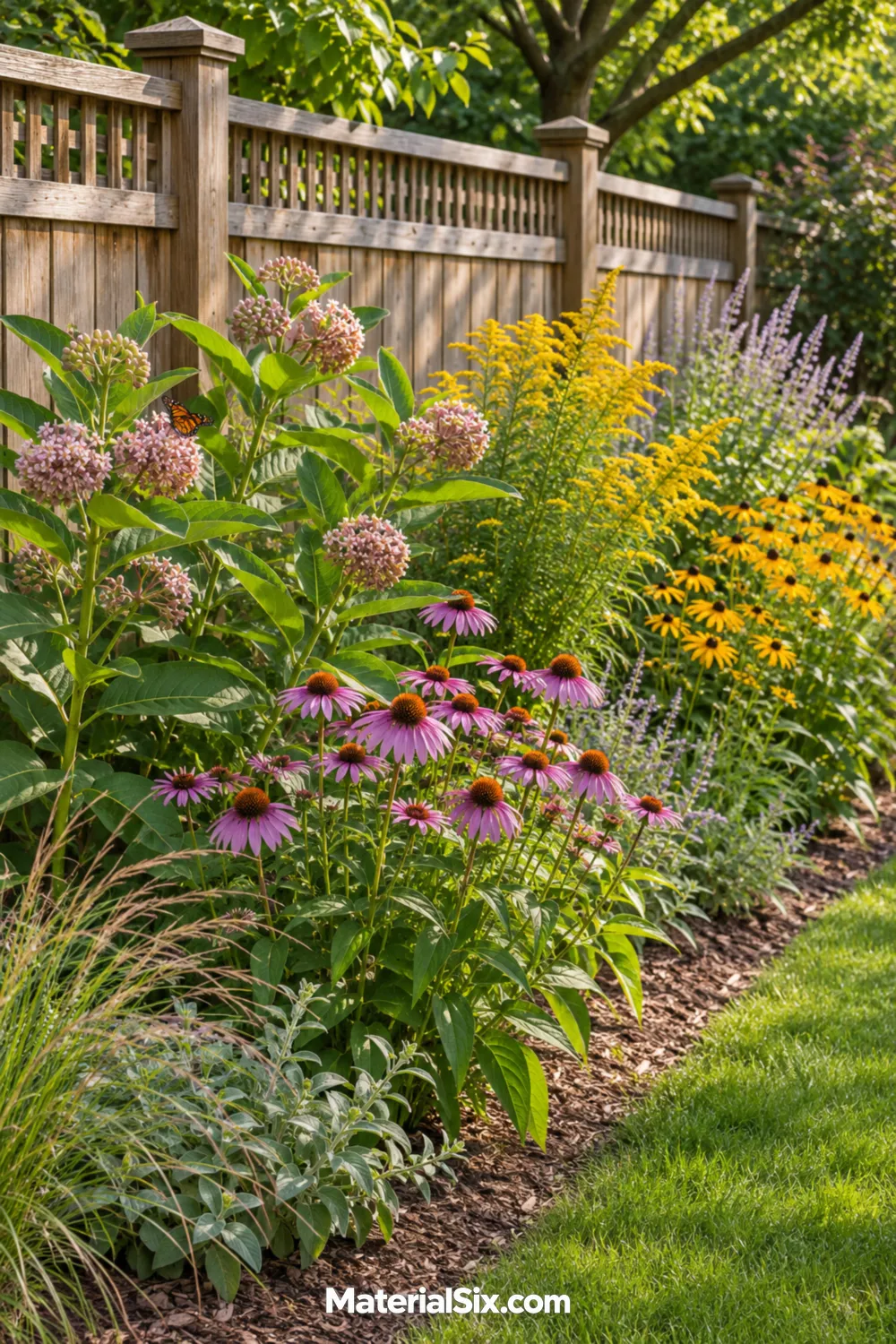
Use a sunny fence border to carry flowers across the growing season. Pick a few regionally appropriate plants with overlapping bloom times, then group each in visible patches. The result is easier to read from a patio or window than a single specimen of every variety, and it gives you a clear plan for replacing anything that struggles.
Choose plants for the space they will occupy after they fill out. Leave a narrow access point at one end so you can tend the back of the bed. Put the flowers you most enjoy watching near the spot where you tend to pause.
18. Frame a Bench With Planting and Soft Light
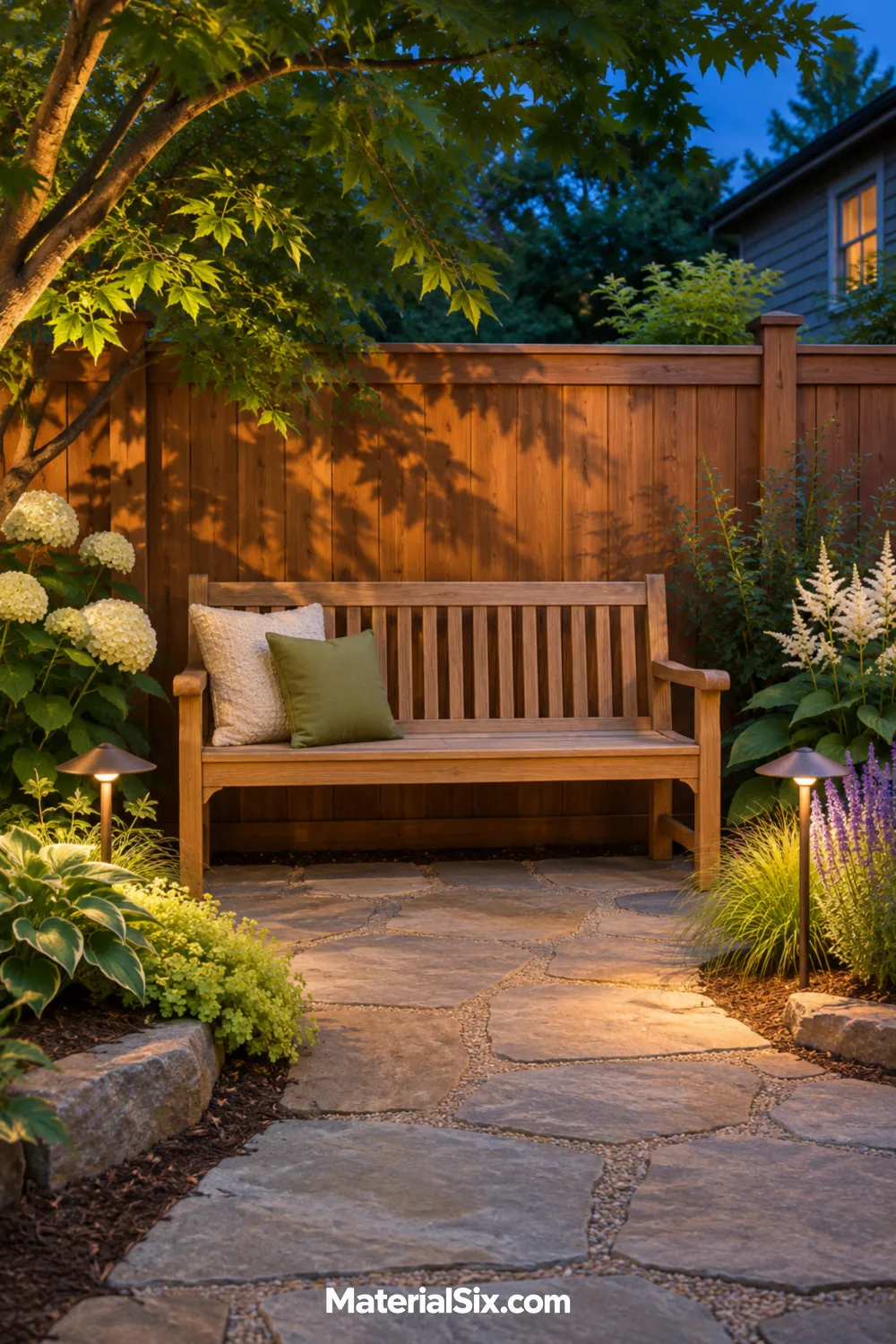
A bench turns a fence line into somewhere you can sit. Start with a firm, level place for the seat, then plant on either side to frame the view. Taller foliage can give the ends of the bench a sense of enclosure while lower plants keep the route in and out open.
Try the seat position at the time of day you expect to use it. Look for shade, a comfortable view, and space to move past the bench. If you add lighting, use low outdoor-rated fixtures where they can illuminate the walking surface without shining up at you.
Start with the stretch of fence you see or use most often. Mark the bed, planter line, or path with a garden hose and live with the outline for a day. You’ll quickly see whether you have enough room to turn the mower, open the gate, and enjoy the part of the yard you’re planning around.