
An old brick fireplace can feel too orange for your new floors, too dark for a small room, or simply disconnected from the furniture around it. Before you decide to paint or cover it, look at what you want to change: the brick color, the shape of the surround, the opening, or the wall around it.
These brick fireplace makeover ideas cover all four, from finishes that leave the original brick visible to new mantels, hearth surfaces, and inserts. Use them to find a direction before you buy materials or start removing anything.
1. Soften Red Brick with a Translucent Whitewash
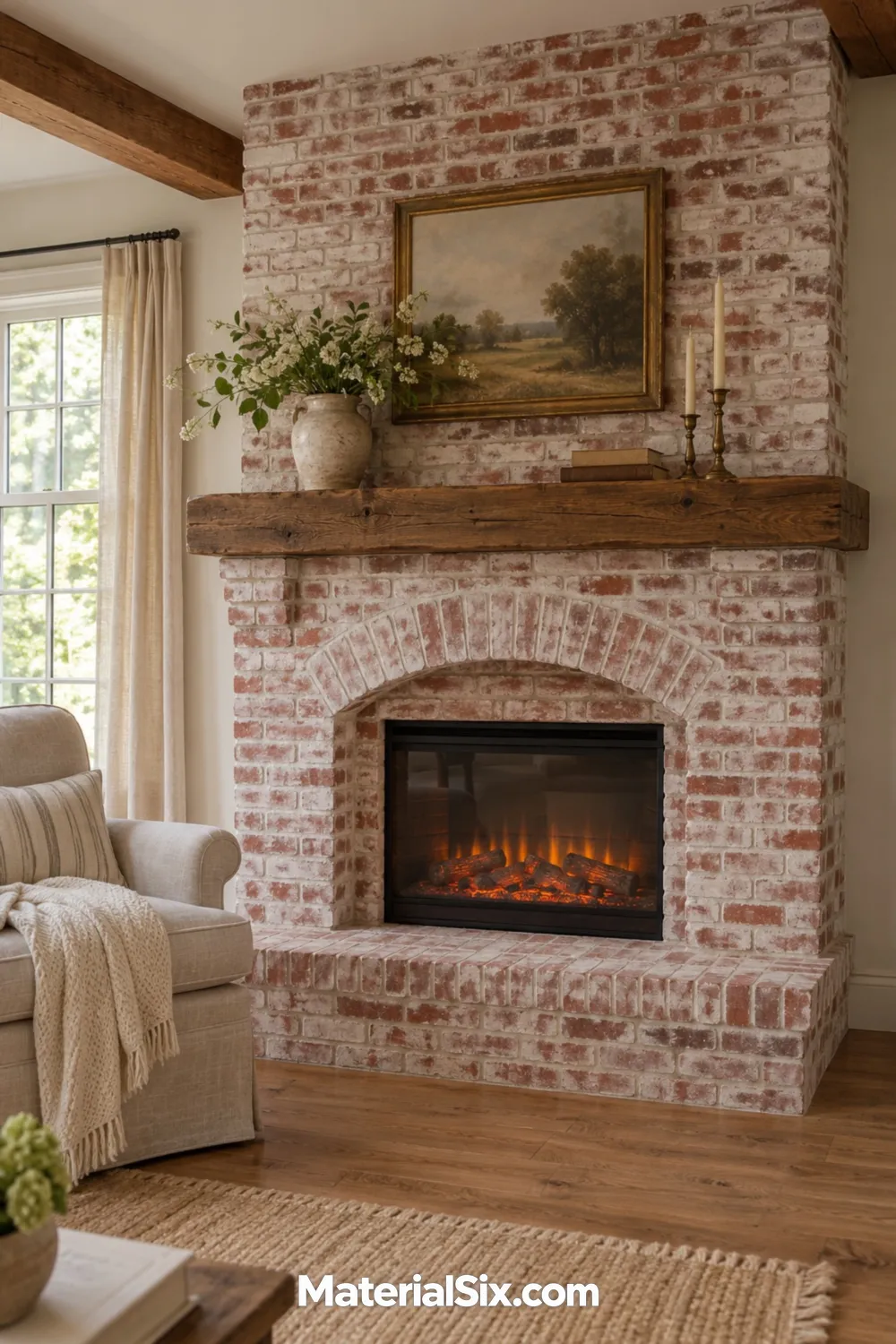
A thin, translucent finish can tone down bright red brick while keeping the darker bricks and mortar lines visible. That middle ground works well when you like the fireplace’s texture but want it to sit more quietly beside pale upholstery or light oak floors.
Start with a sample on an inconspicuous section of the exterior brick. Look at it from across the room in daylight and after the lamps are on. A wash that looks barely there up close may read as much paler when the entire fireplace is in view.
2. Give Old Brick a Chalky Limewash Finish
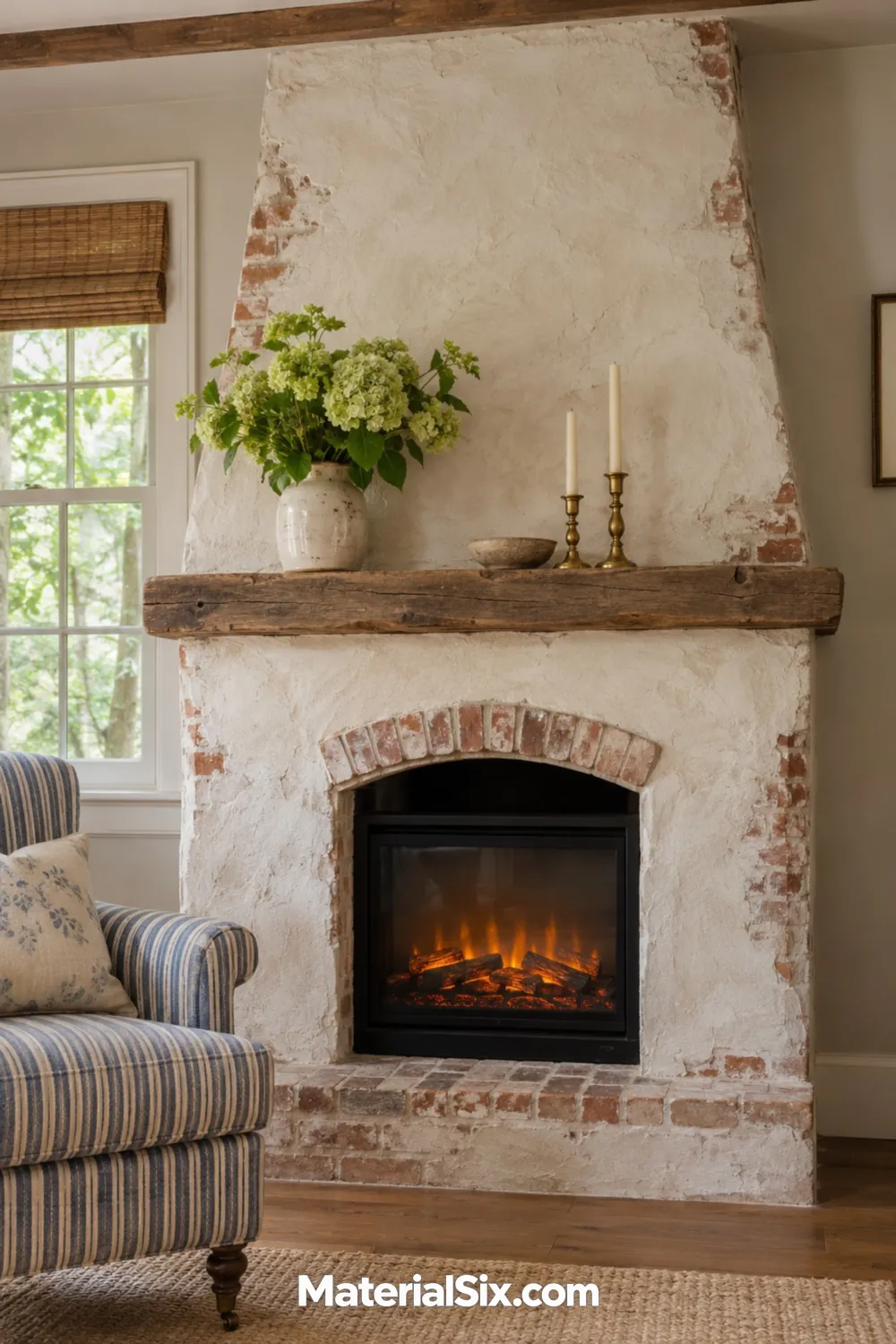
Limewash suits a fireplace where the uneven color is part of the appeal. On compatible porous masonry, you can choose a chalky finish with subtle variations from brick to brick. Leave more color showing near the edges for a worn-in cottage look, or choose a denser finish for a softer ivory wall.
Check the product’s substrate requirements before buying. An old sealer or paint can change how the surface accepts a mineral finish. Sample the wash beside your wall color so you can see whether the two whites agree.
3. Shift Orange Brick Toward Taupe with Masonry Stain
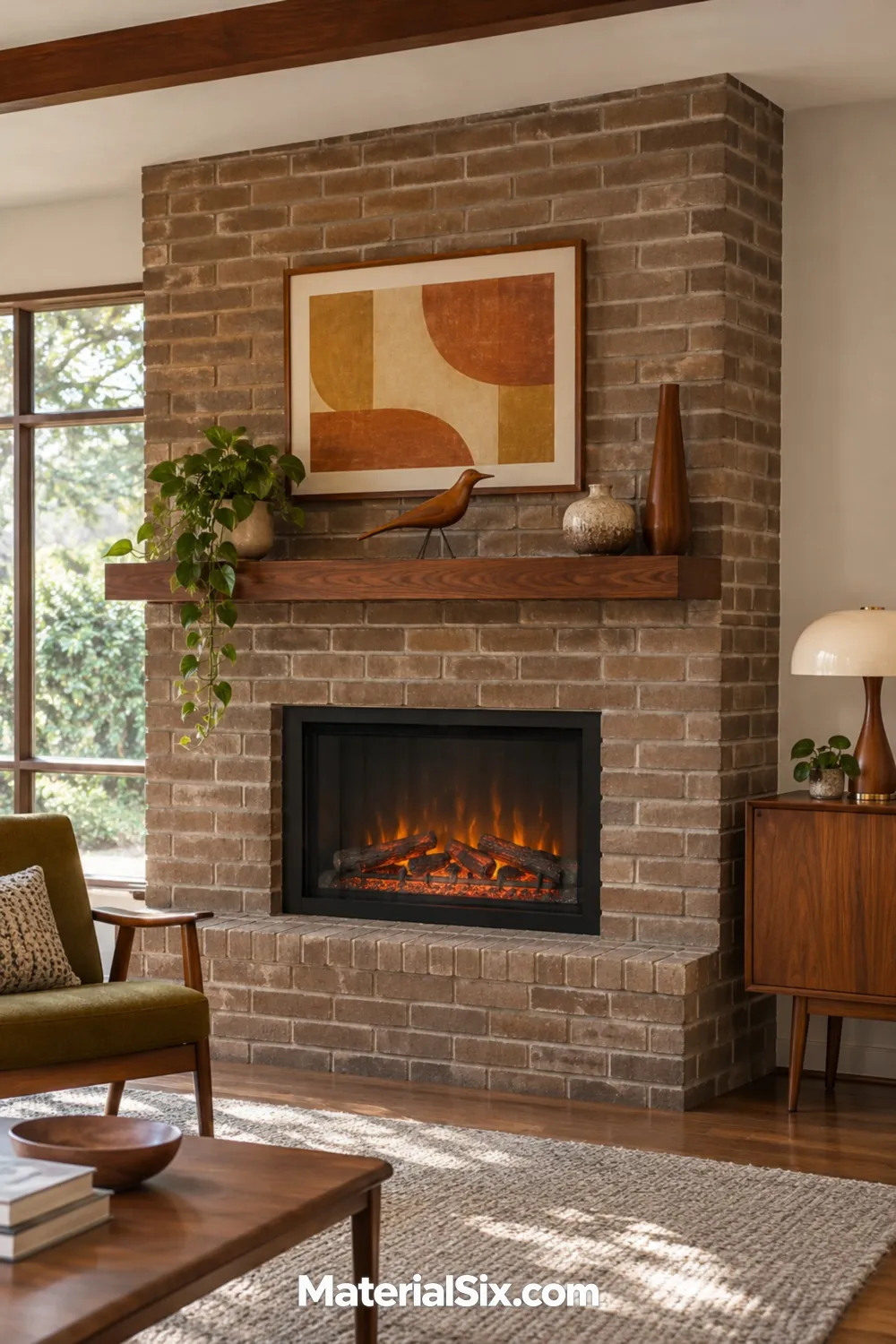
When orange undertones compete with your floors or furniture, a compatible masonry stain can give the brick a quieter color while retaining its visible variation. A warm taupe is especially useful beside walnut, tobacco leather, and off-white walls. The look still depends on the starting color, so a swatch card alone gives you limited information.
Test across a few bricks with different tones and decide how you want the mortar to read. Keeping the joints lighter preserves a crisp grid. Bringing them closer to the brick color creates a calmer field.
4. Paint the Surround a Solid Warm White
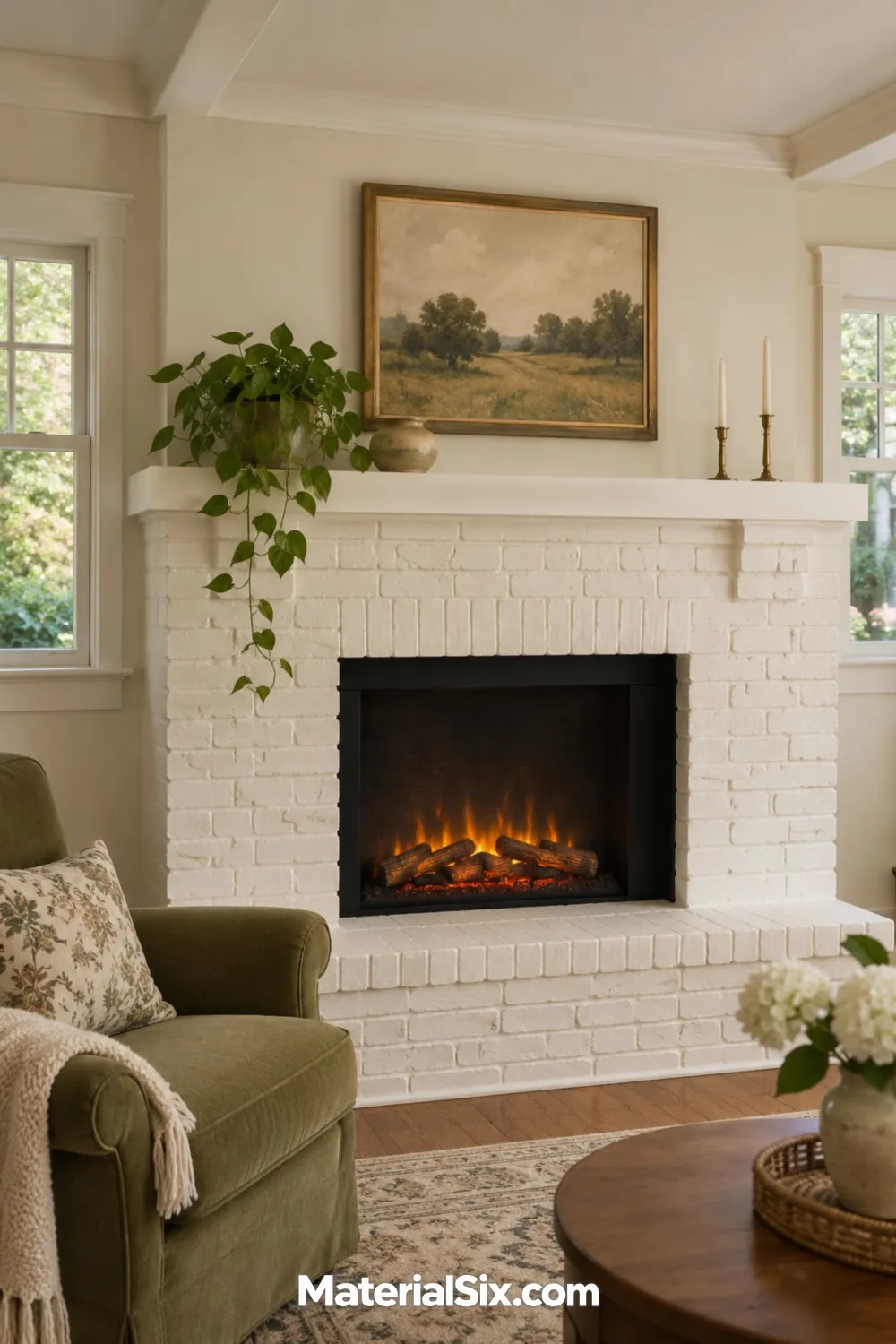
An opaque warm white finish makes sense when the existing brick has several competing colors or when a small room already has plenty of pattern. The joints still supply texture, and the dark opening becomes a clear focal point. Choose a white that relates to your trim or adjacent walls so the surround feels intentional.
Compare large swatches in morning and evening light. Keep the paint plan to the exterior facing and choose a coating suitable for that surface and its exposure. The inside of the firebox is a separate material decision.
5. Make a Bold Statement with Charcoal Brick
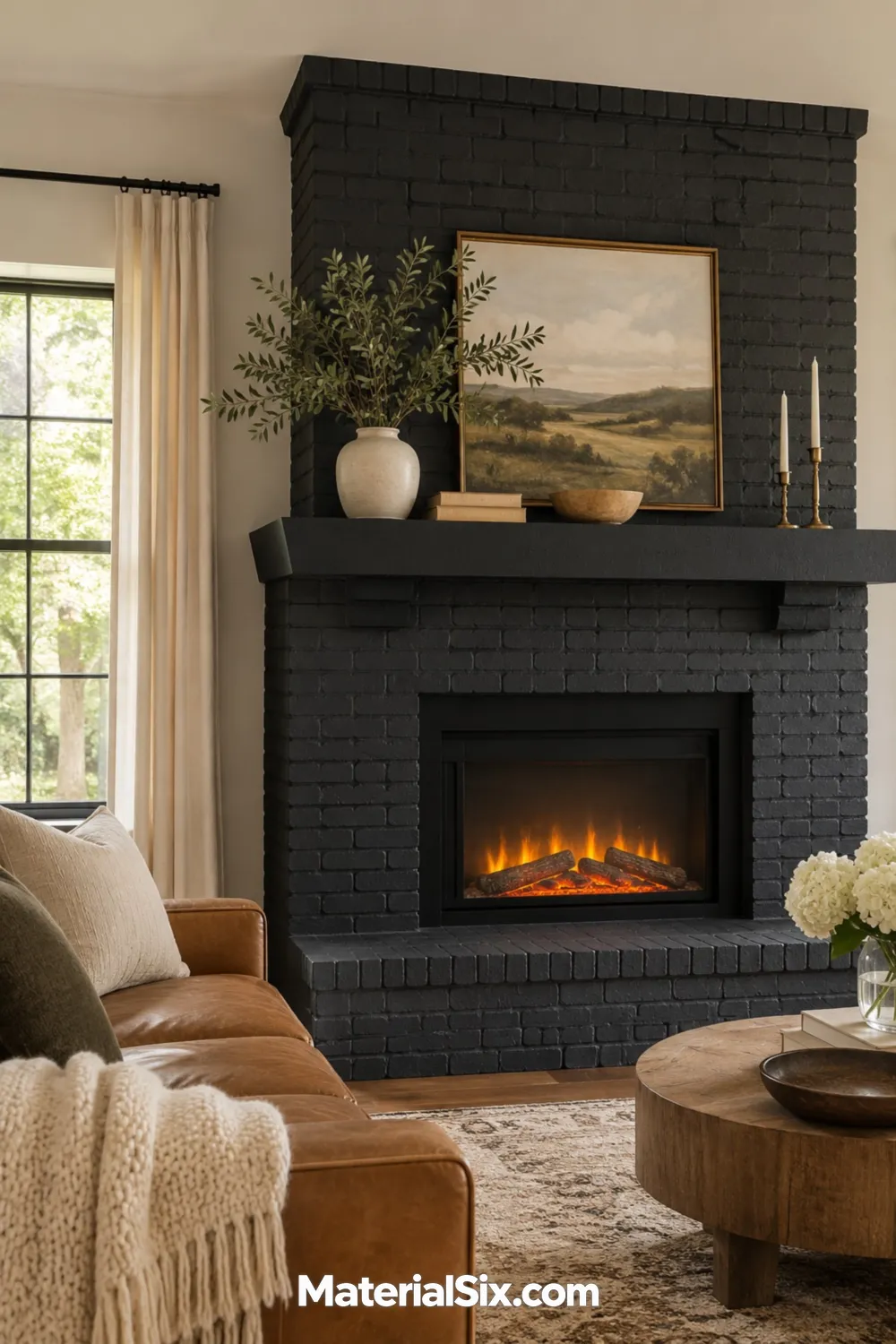
A charcoal fireplace can anchor a room that feels washed out, especially if you have cream walls, pale floors, and a wide opening. A softer charcoal also gives you a little more separation between the painted bricks and a black screen or insert.
Take a sample across the mortar and brick faces so you can judge how the texture reads. Pick up the dark color in one other part of the room, such as a picture frame or a lamp base, to connect the fireplace to the rest of your furniture.
6. Make Sage Brick Part of the Room’s Palette
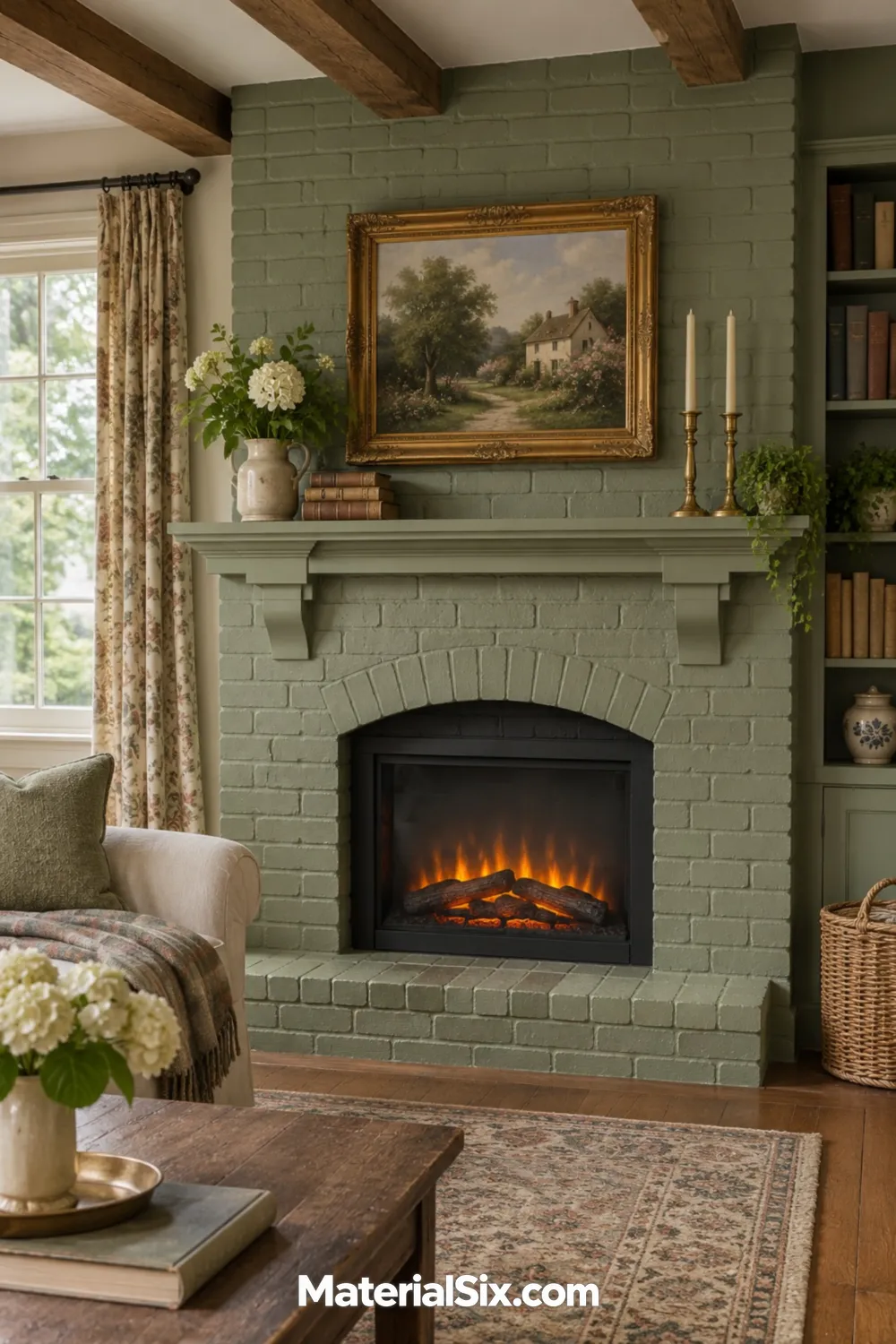
Muted sage gives a brick fireplace its own color without making the entire room feel busy. It fits especially well when you already have botanical prints, a faded rug, or warm wood furniture. The color can also connect the fireplace to nearby built-ins or a view of the garden.
Compare a gray-leaning sage with an earthier olive in your actual room. The color that looks restful on a paint chip can read surprisingly cool on a shaded chimney breast. Bring a nearby textile into the room when you make the final choice.
7. Keep the Red Brick and Refresh the Mortar
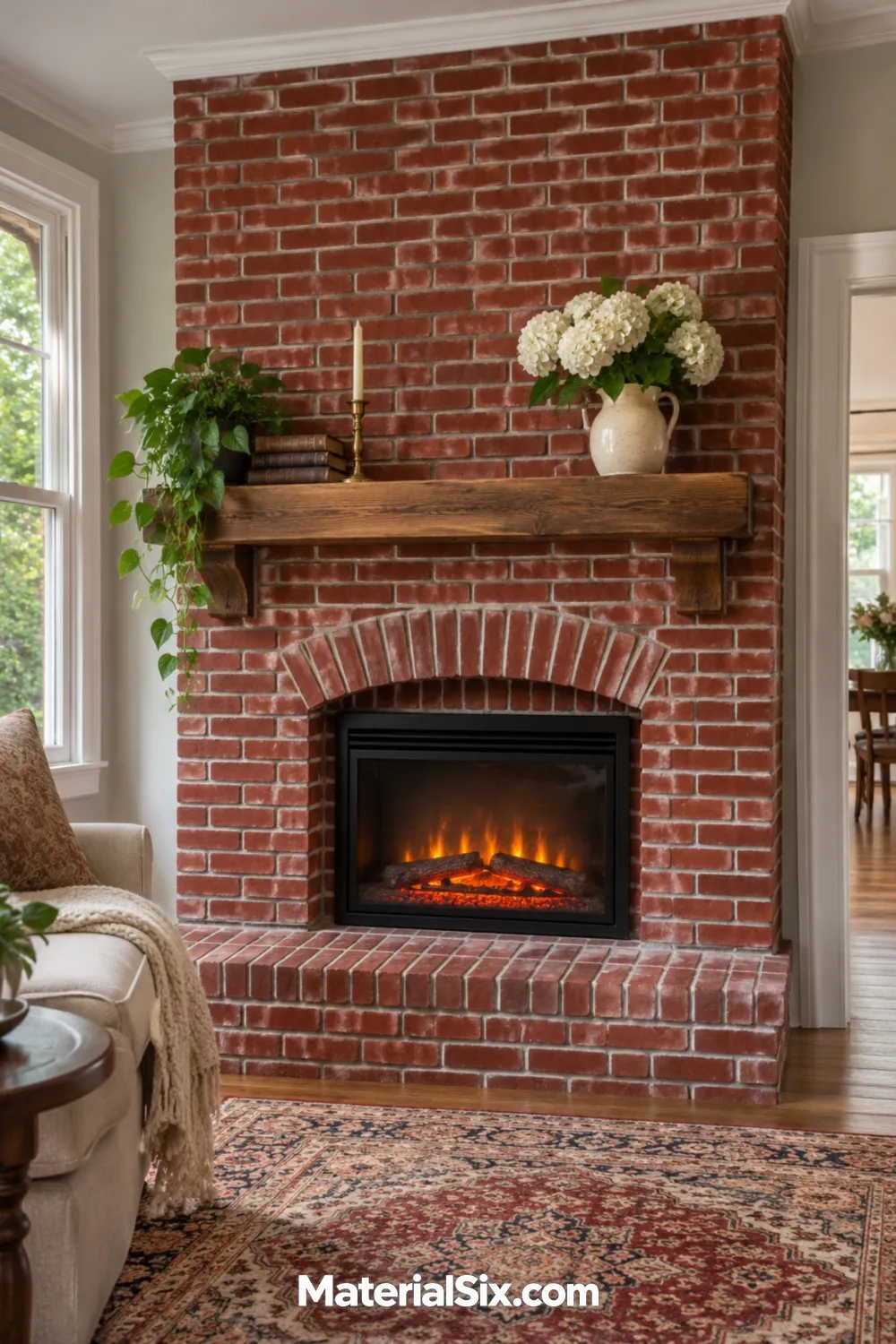
If the red brick still suits the room, look closely at the joints. Tidy mortar lines can give an old surround a clearer pattern and bring out the variation in the brick. A gray close to the existing mortar makes for a quieter finish, while a lighter tone emphasizes each course.
Treat loose or crumbling mortar as masonry work. Ask a mason to assess the joints and match the repair material to the brick and existing mortar. If the masonry is sound, you may get the visual change you want from appropriate cleaning and simpler styling.
8. Swap a Narrow Shelf for a Reclaimed Beam
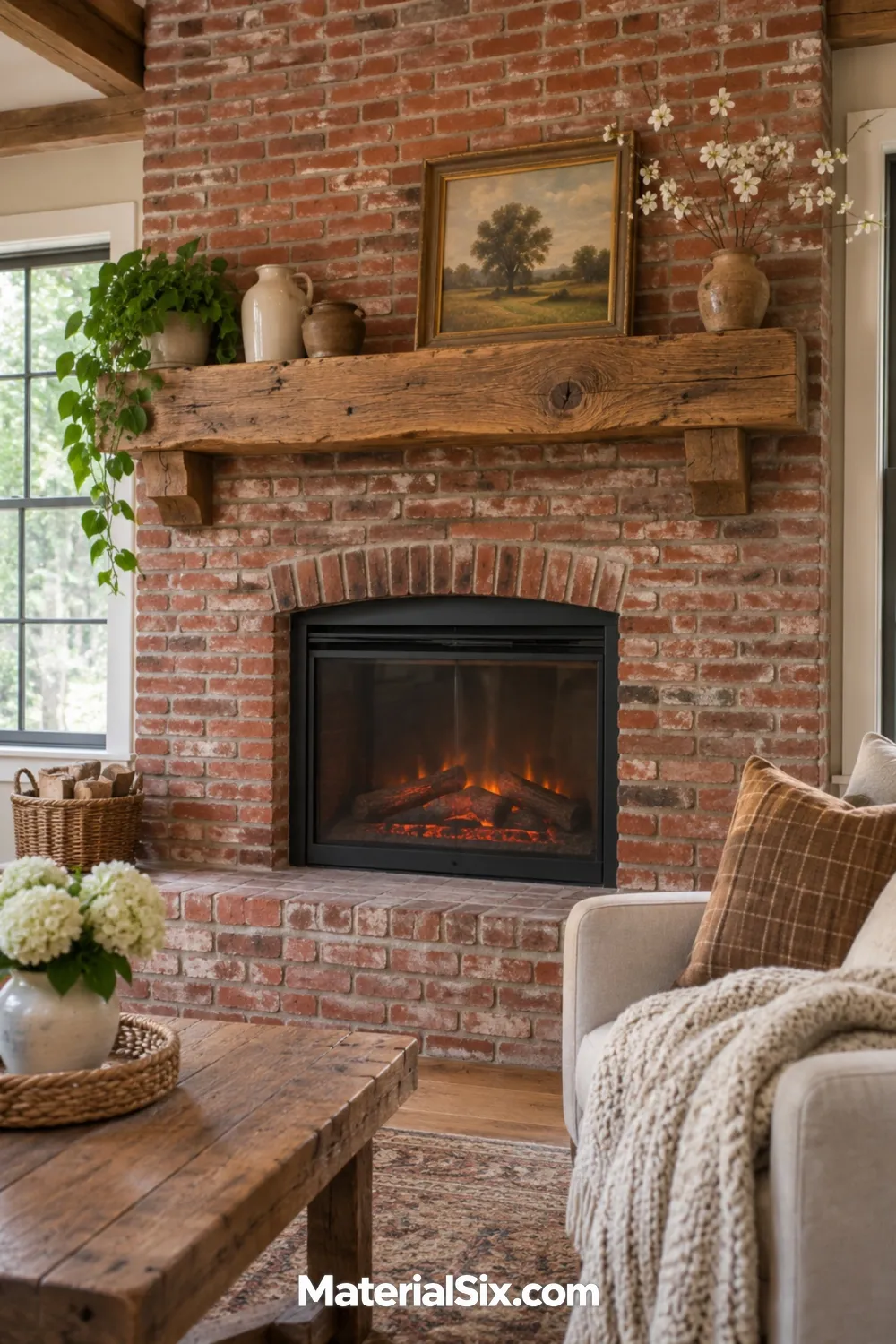
A reclaimed oak beam draws attention to the horizontal line across a tall fireplace. Its knots and grain have enough character on their own, so a pair of simple objects can be plenty. Check the beam from your sofa as well as from the doorway. A deep projection can look heavier when seen from the side.
Have the mounting and clearances checked for your specific fireplace before ordering the beam. Projection matters as well as height. You can mark out the proposed outline with painter’s tape on a cold fireplace to compare proportions first.
9. Frame the Brick with a Traditional Mantel
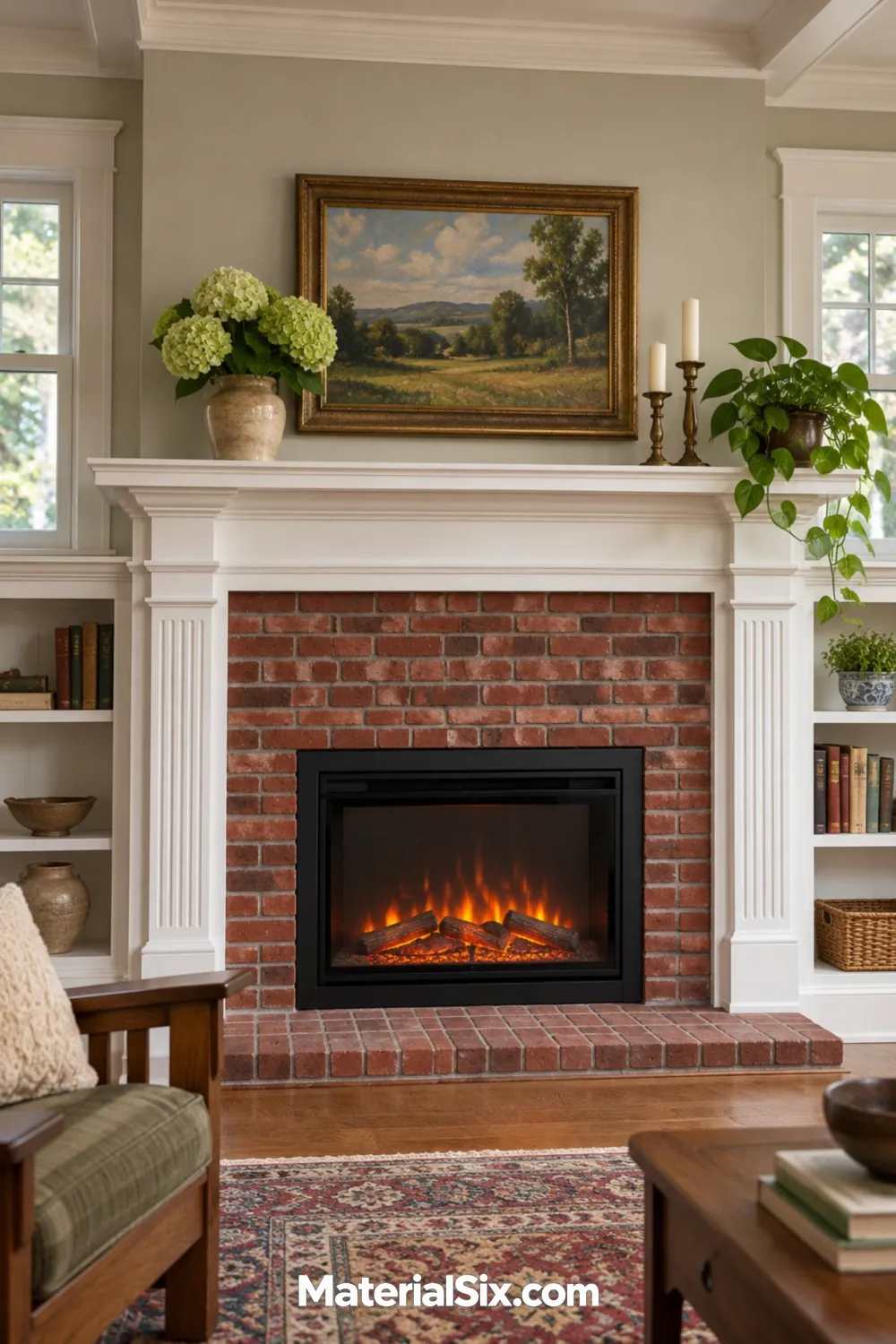
A mantel with pilasters gives a wide expanse of brick a more formal shape. Paint the millwork to match your baseboards and window trim, then leave a generous panel of brick visible between the trim and the opening. In a bungalow, straightforward profiles can look right at home beside existing door casings.
Plan the side trim and shelf together. Their depth affects how much of the brick you see from an angle. Have a qualified installer confirm the position and permissible projection of any combustible trim around the opening.
10. Round Off the Surround with Smooth Plaster
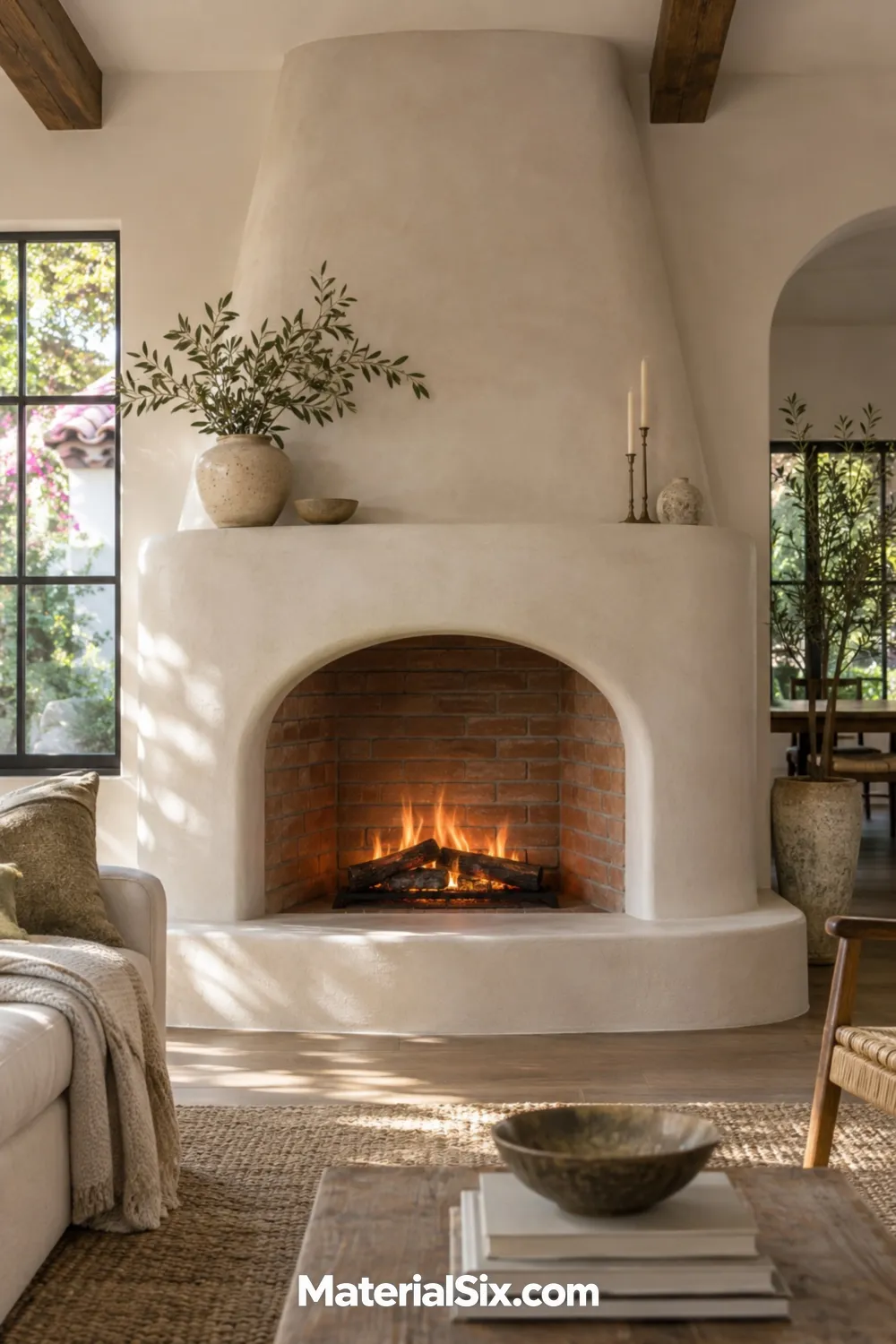
Smooth plaster changes the outline of the fireplace and makes the wall feel quieter. A gentle curve across the upper corners works well when the rest of the room already has simple forms, such as a low sofa or rounded coffee table. The remaining brick at the opening can give the pale surface some depth.
Take inspiration photos to a fireplace professional and ask which parts of the existing masonry can be covered. Discuss the complete facing system, including the backing and the finish around the opening, before you settle on a plaster sample.
11. Pair a Limestone Frame with Exposed Brick
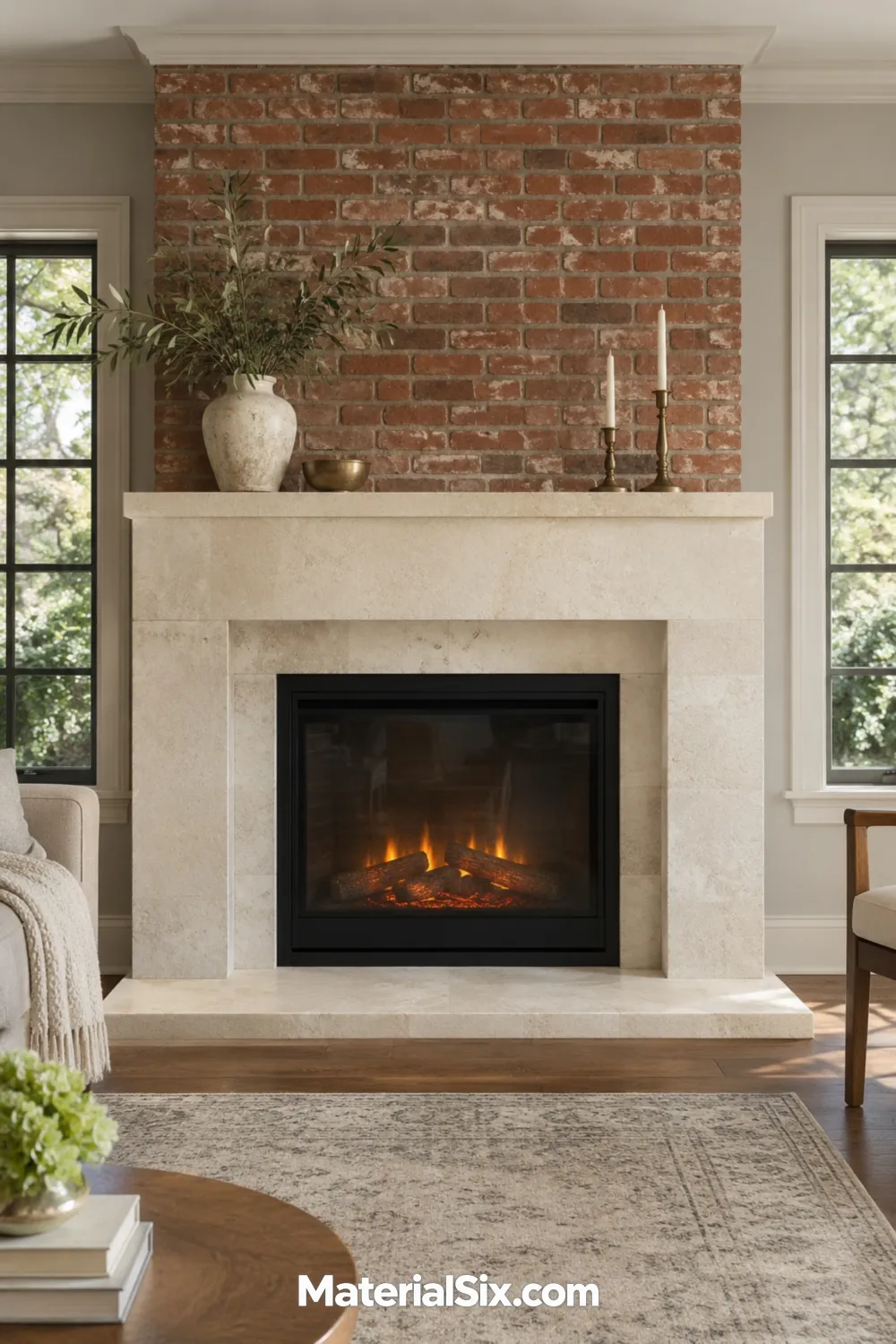
For a material change that still shows off the original masonry, frame the opening in pale limestone and leave the brick above visible. A few larger pieces create a calm border beside the smaller brick courses. A warm stone looks especially natural with softer red and brown bricks.
Ask the fabricator to show where the joints will land and how the stone returns at the sides. Check the sample next to several bricks. One piece of stone can look quite different against a red brick, a darker brick, and a gray mortar joint.
12. Set Glossy Green Tile Inside a Brick Border
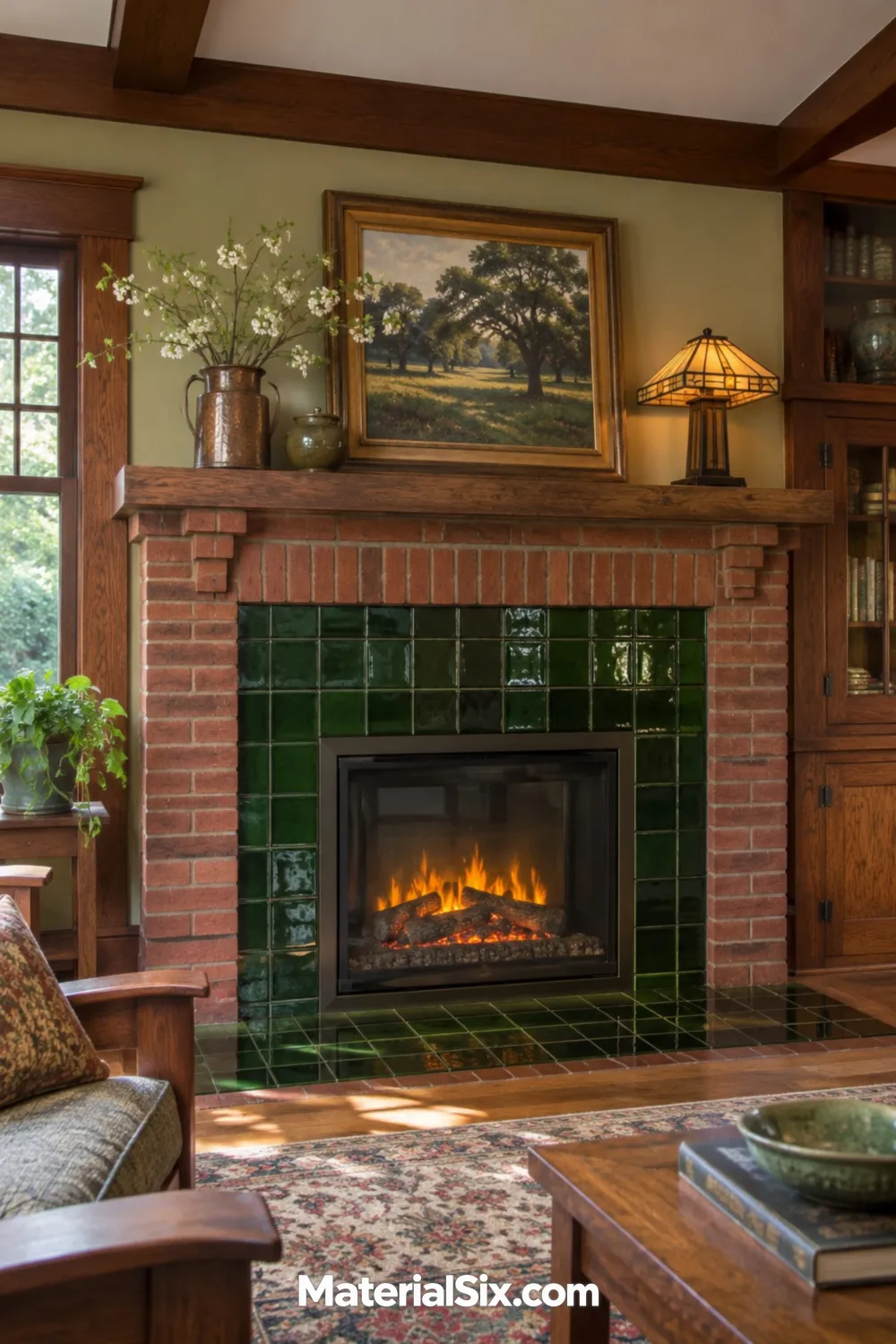
A band of glossy green tile can give an Arts and Crafts room a richer focal point while leaving plenty of original brick in view. Forest green works particularly well with red-brown brick and warm metal hardware. Let the tile take center stage by keeping surrounding mantel decor simple.
Sketch the layout before selecting the tile size. It helps to know where the grout joints will meet the opening and whether you will end up with awkward slivers at the corners. Ask your installer which facing materials and setting system suit your fireplace.
13. Give the Hearth a Slate Surface
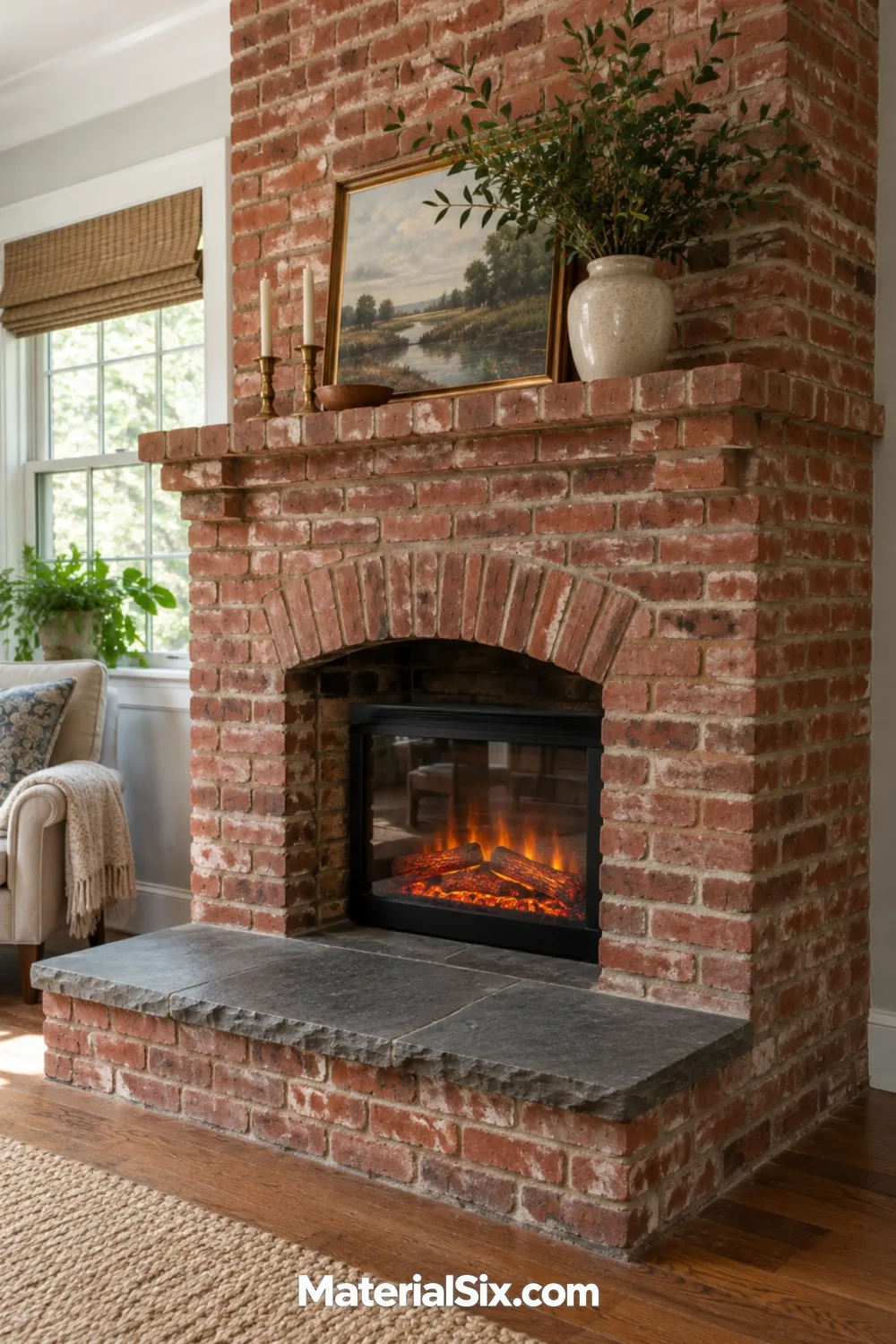
A dark slate hearth can change the balance of a fireplace even when the brick wall stays as it is. Viewed from the side, the slab gives the base a clean line. In a room with darker floors or an iron screen, slate can tie the surround to those nearby finishes.
Have the hearth extension evaluated before choosing how to surface it. Discuss the transition to the floor, the finished height, and the edge profile. A sample with a little texture can help you judge how the slate will look in low light and how easily ash will show.
14. Break Up a Full Brick Wall with Shiplap Above
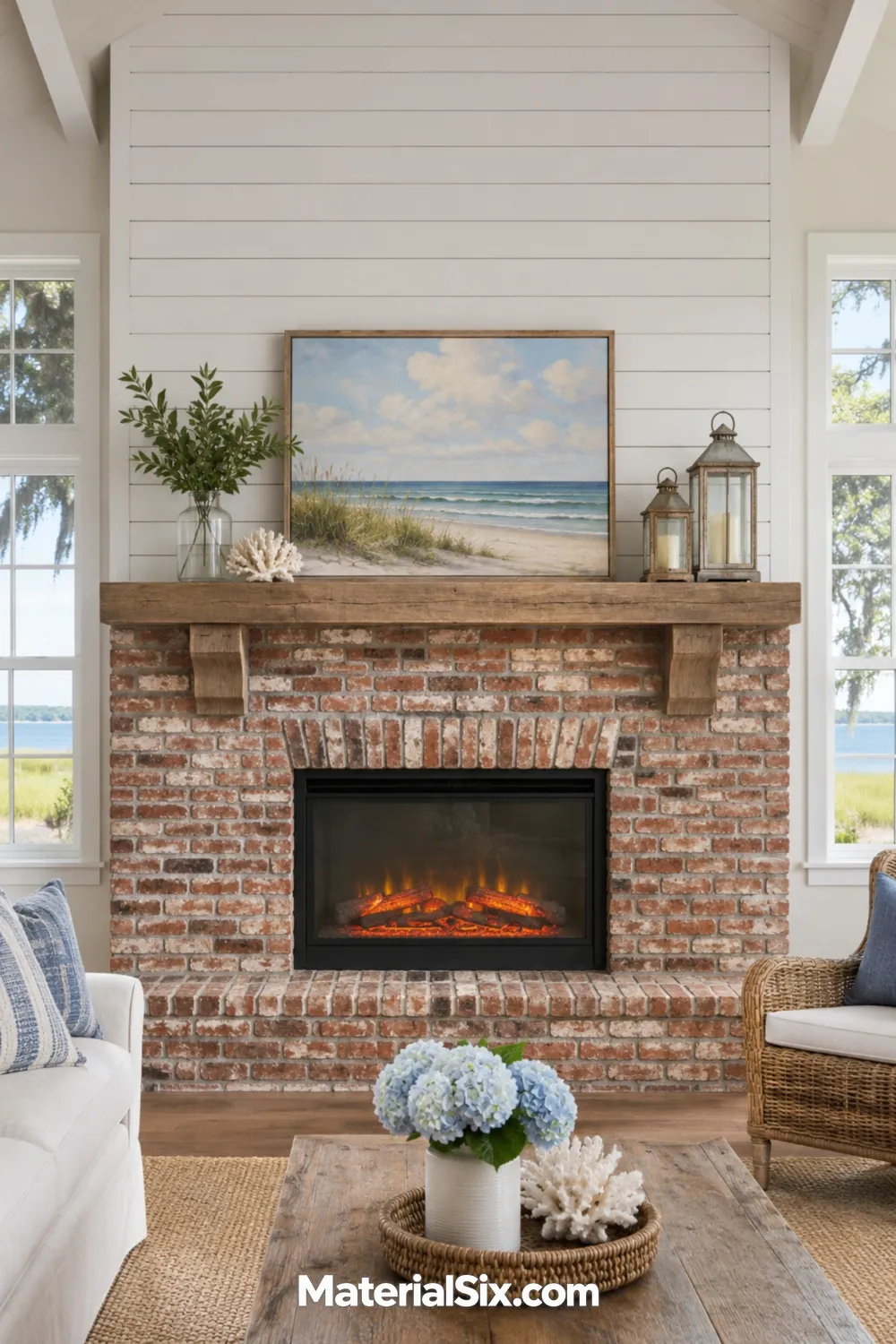
On a floor-to-ceiling brick fireplace, consider visually dividing the chimney breast into an upper and lower section. White horizontal shiplap above a substantial field of brick can bring the fireplace into a coastal or cottage room without losing the character at floor level.
Mark the proposed transition at several heights before committing. A line that aligns with a nearby window head or shelf may look more deliberate. Ask an installer where combustible boards and framing can be used with your fireplace and what access needs to remain available.
15. Balance the Fireplace with Built-In Storage
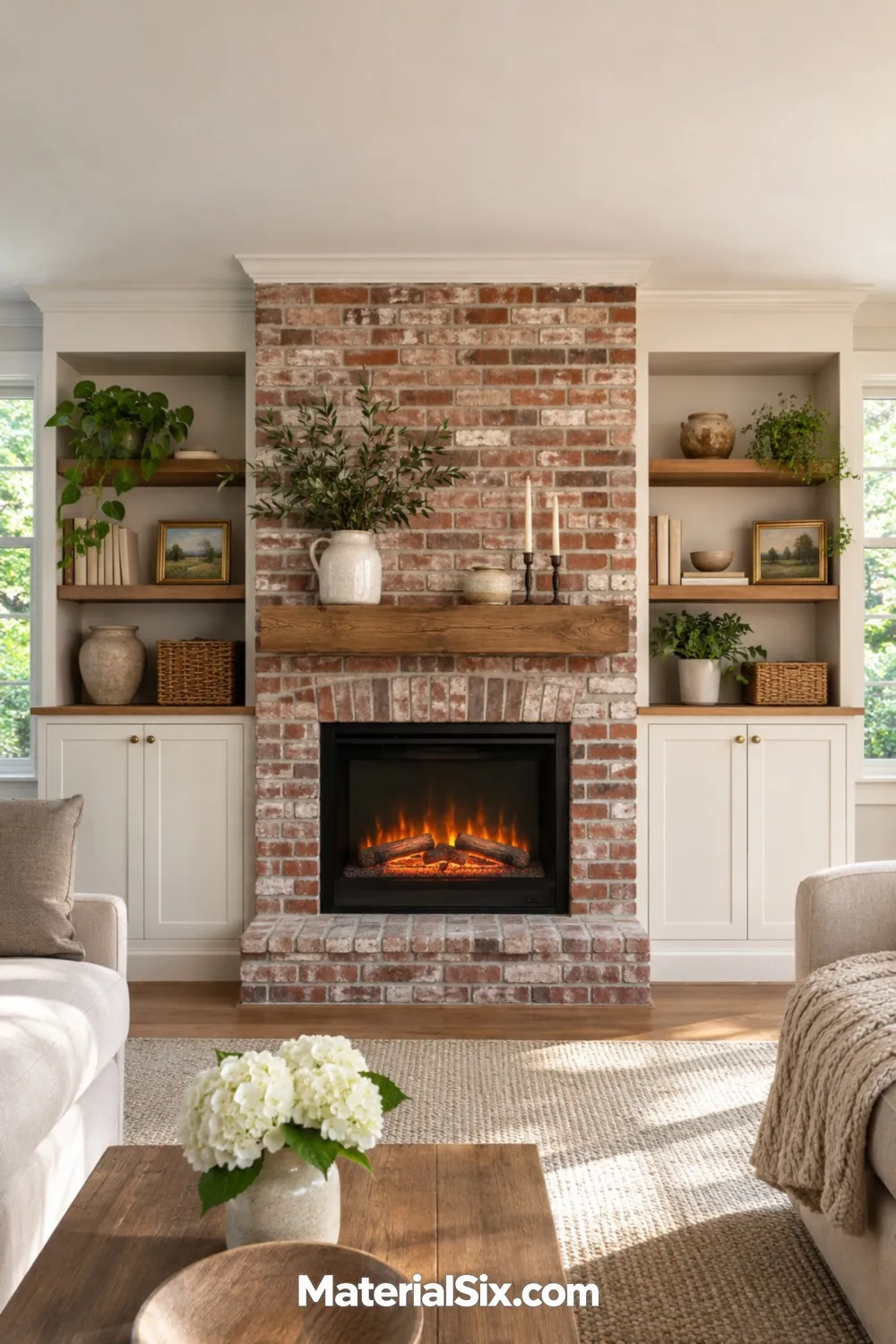
When a brick fireplace looks isolated on a long wall, built-ins on either side can give the arrangement a clear center. Closed lower cabinets hold the items you want out of sight. Open shelves make room for books and pottery while leaving the upper wall feeling lighter.
Use the existing room to decide whether the units should match. Equal widths suit a centered fireplace. Unequal openings can still feel balanced when the cabinet tops line up and the finish repeats on both sides. Check the proposed placement against fireplace clearances before the cabinet design is finalized.
16. Update a Wood-Burning Opening with an Insert
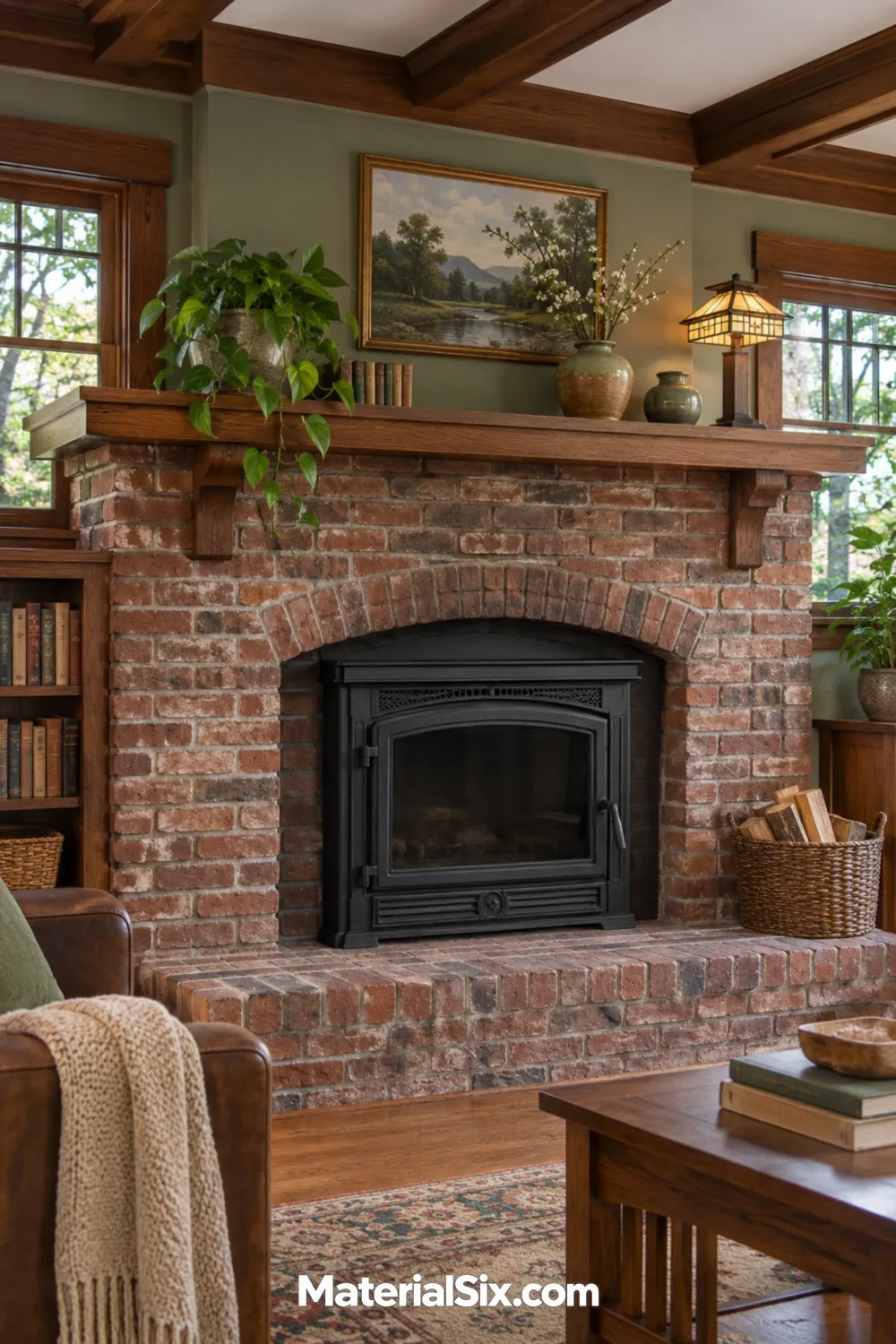
A black insert changes the look of a large open firebox with a tighter glass front and a defined frame. It can be a good visual fit for a Craftsman living room where you want to keep the old brick and give the opening a more finished appearance.
Start by deciding whether you want to continue burning wood. If so, ask a qualified fireplace installer to assess the chimney, existing opening, venting requirements, and fit before choosing a unit. Look at the manufacturer’s surround options in person. The trim can cover more of the brick than you expect from the unit’s photos.
17. Fit an Electric Insert into an Old Opening
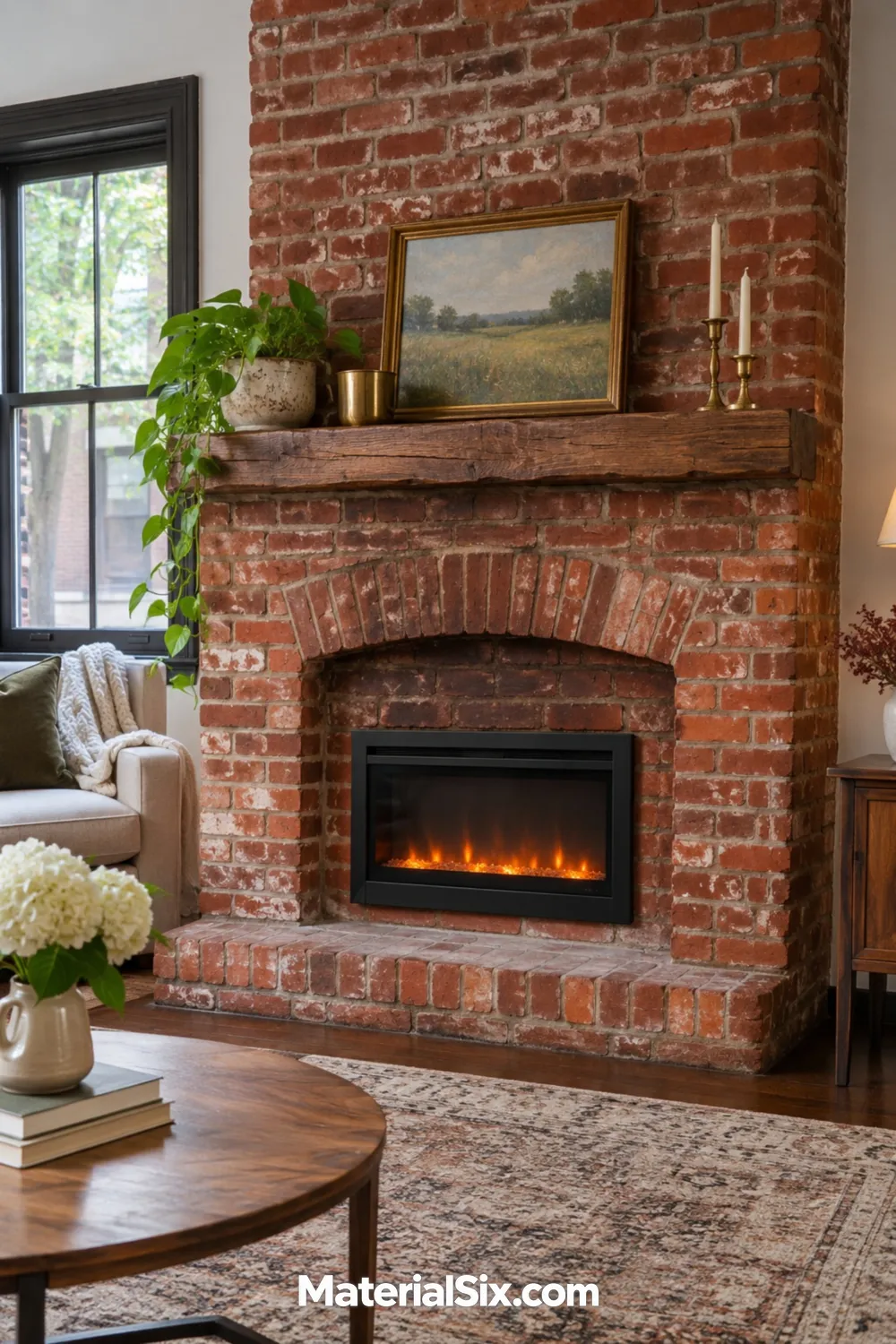
If you mainly want the look of a fire in a room with an unused brick opening, an electric insert offers a different approach. A shallow black frame can sit neatly inside the old surround, allowing the brick and mantel to stay in view. Check how the simulated flames look with the room lights on as well as off.
Measure the opening at multiple points and compare it with the manufacturer’s installation dimensions. Plan for power, access to controls, and required clearances before you decide whether a trim kit is needed. Discuss any changes to the existing fireplace or wiring with the appropriate professional.
18. Highlight an Arched Opening with a Simple Screen
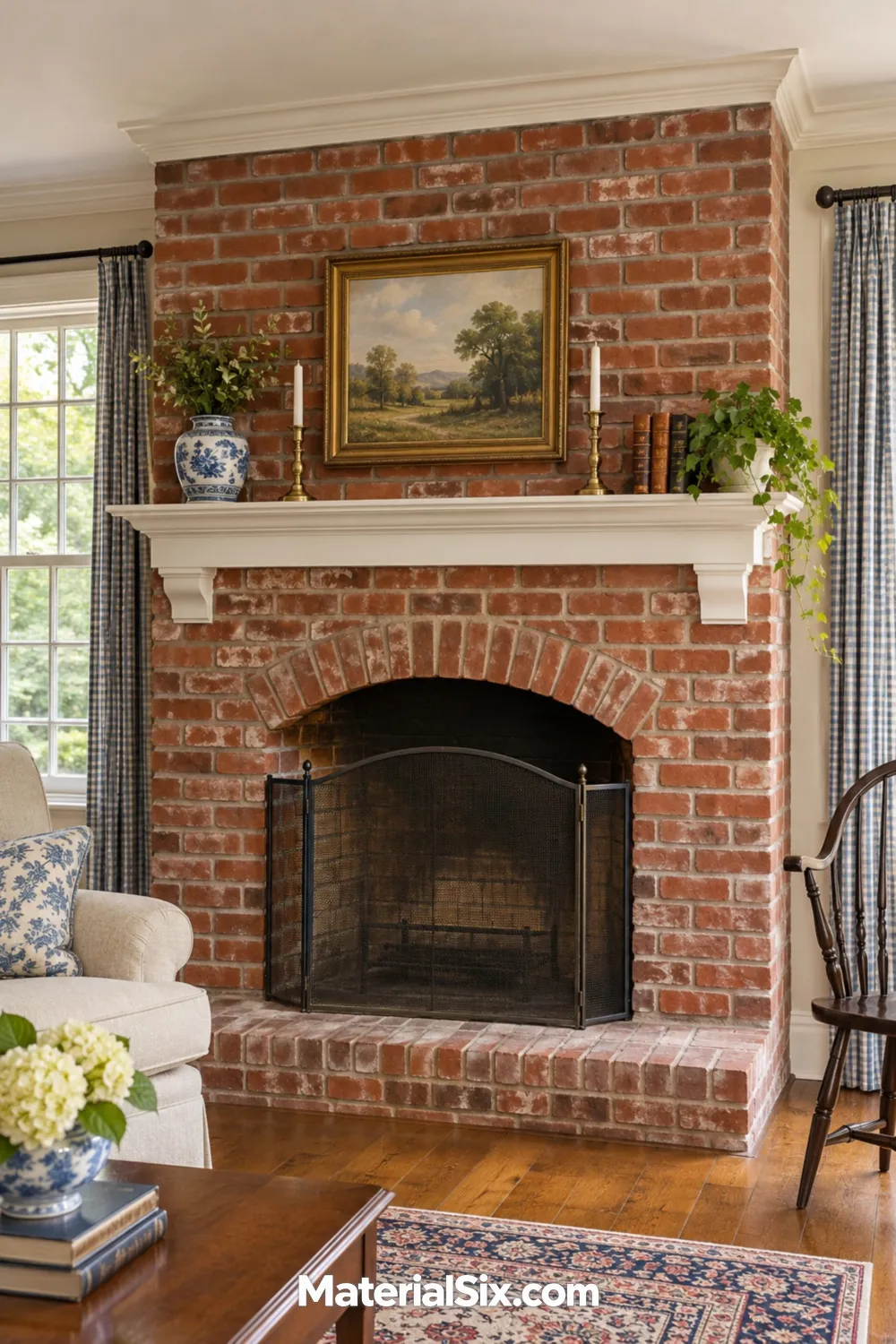
An arch is worth showing off. A simple black mesh screen can echo the iron details in the room and allow the curve to remain visible. On a compact hearth, a low-profile design also makes the fireplace feel less crowded from the sofa.
Measure the full opening and the hearth depth before shopping. Consider how you will move the screen for access and how the feet will sit on the surface. For a fireplace in use, choose a screen designed for that application and check the fit against its instructions.
19. Style a Full Brick Wall with One Large Artwork
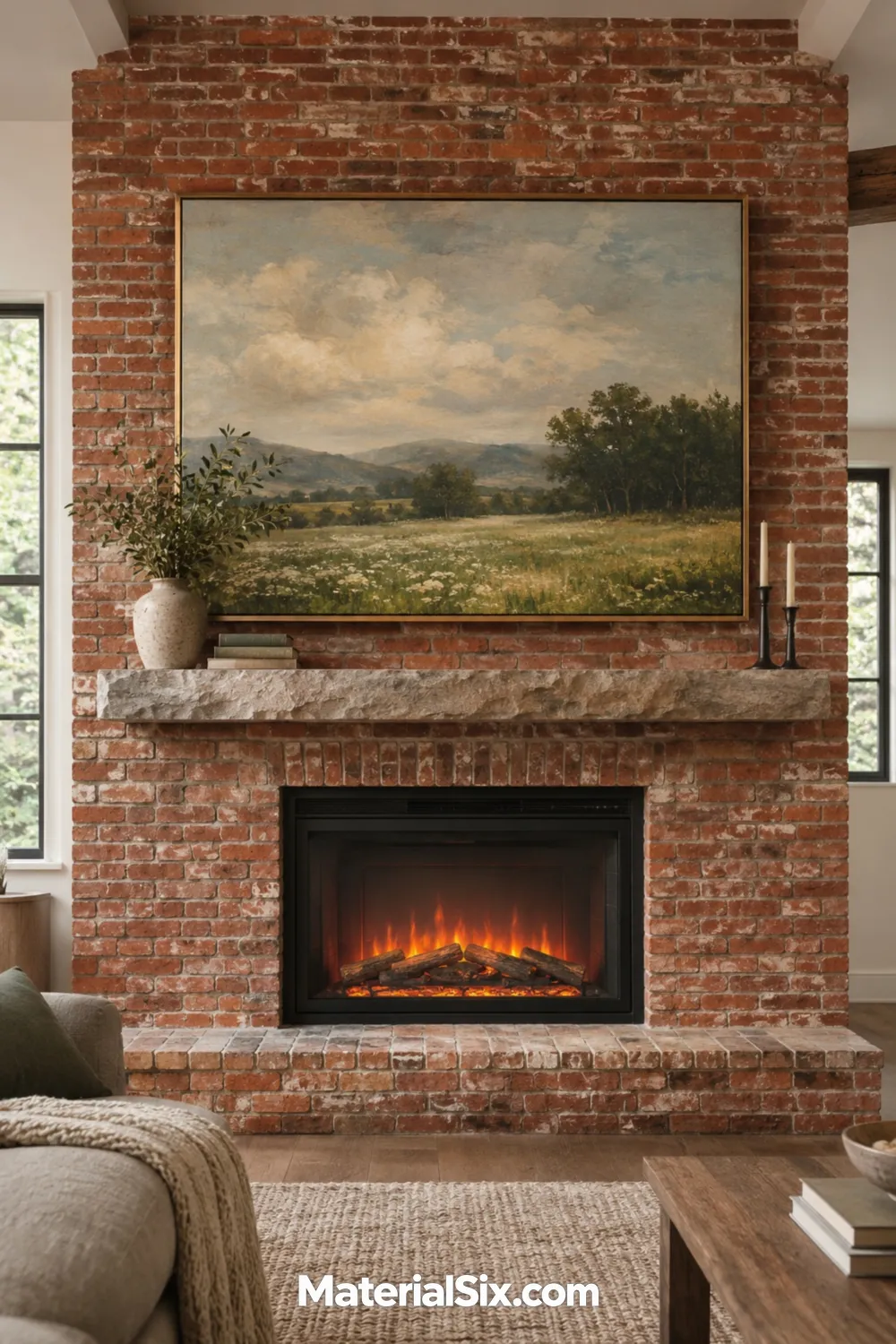
A tall brick wall already has a strong pattern. One large landscape above the mantel can give your eye a resting place and help the brick feel like part of the room. Pick up one of the brick’s quieter tones in the artwork or frame, then give the piece enough open space around it.
Tape a paper outline to test the scale when the fireplace is cold. View it from where you usually sit. For an active fireplace, confirm where heat-sensitive art and its mounting materials can safely go before hanging anything.
Pick two ideas that solve the part of the fireplace you notice first. Then compare samples or taped outlines from your usual seat. If your plans touch the hearth, the opening, or anything close to an active fireplace, have the proposed design checked for your fireplace and local requirements before ordering materials.