
You can feel exposed on a patio even when the rest of your yard feels private. Sometimes the problem is one window across the fence or a clear view from the sidewalk to your favorite chair.
Start by figuring out where that view comes from. Then you can choose a DIY privacy screen that fits the spot, whether you want a leafy divide, a solid backdrop, or something you can open and close.
These 15 ideas cover patios, decks, porches, and garden paths, with practical details to help you decide how much coverage you need.
1. Horizontal Cedar Slats Beside the Patio
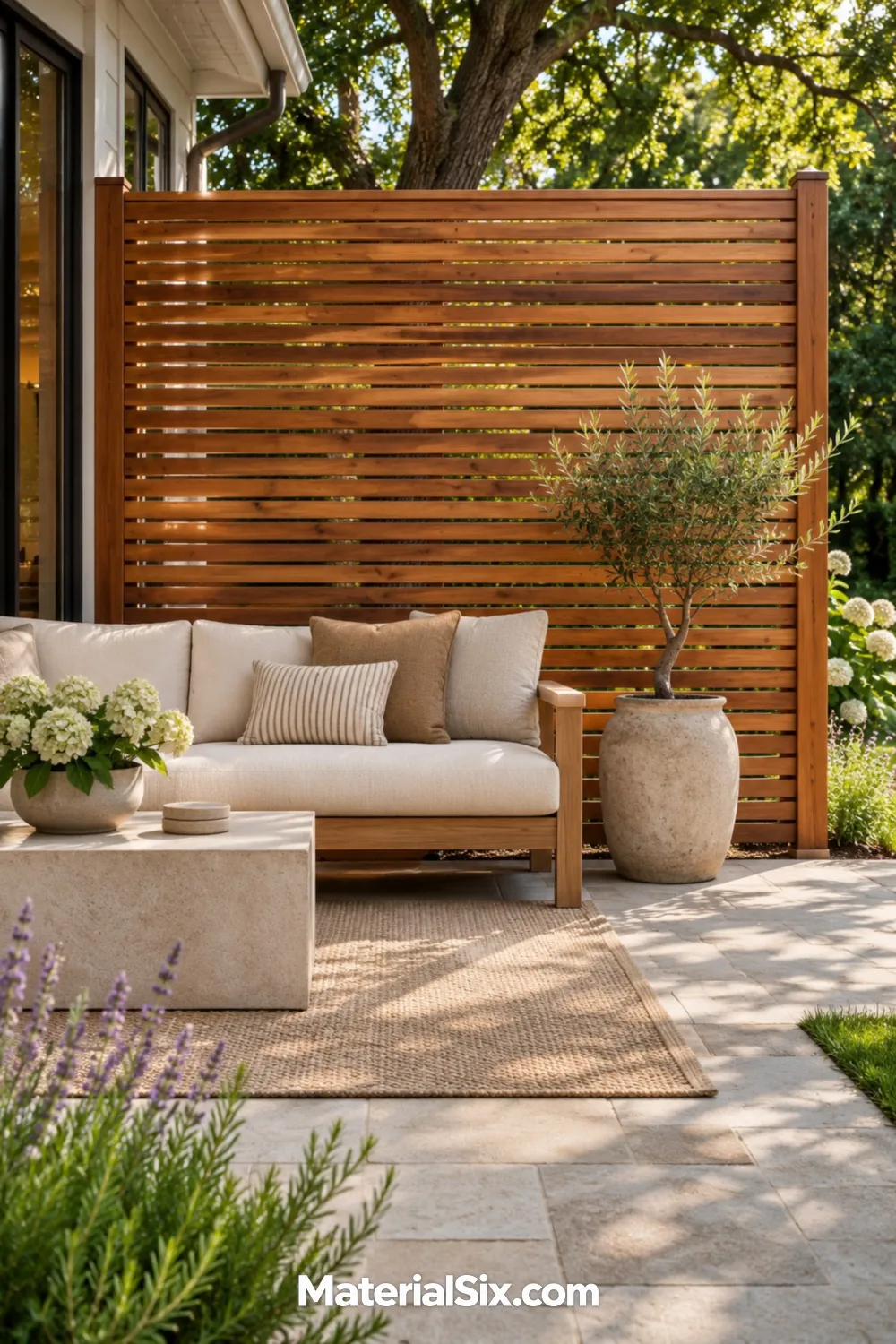
Frame horizontal cedar slats behind the seating area to make an exposed patio feel more like an outdoor room. A single run behind the sofa can screen the view from a neighboring window while leaving the sides open to the garden. The repeating lines also give you a clean backdrop for large pots or a simple bench.
Mock up the gaps with a few scrap pieces before settling on the spacing. Stand in the neighboring sightline if you can, then sit where you normally have coffee. Wider gaps let more light through, while narrower gaps give you more coverage when the view is straight on.
2. Vertical Boards Around a Deck Corner
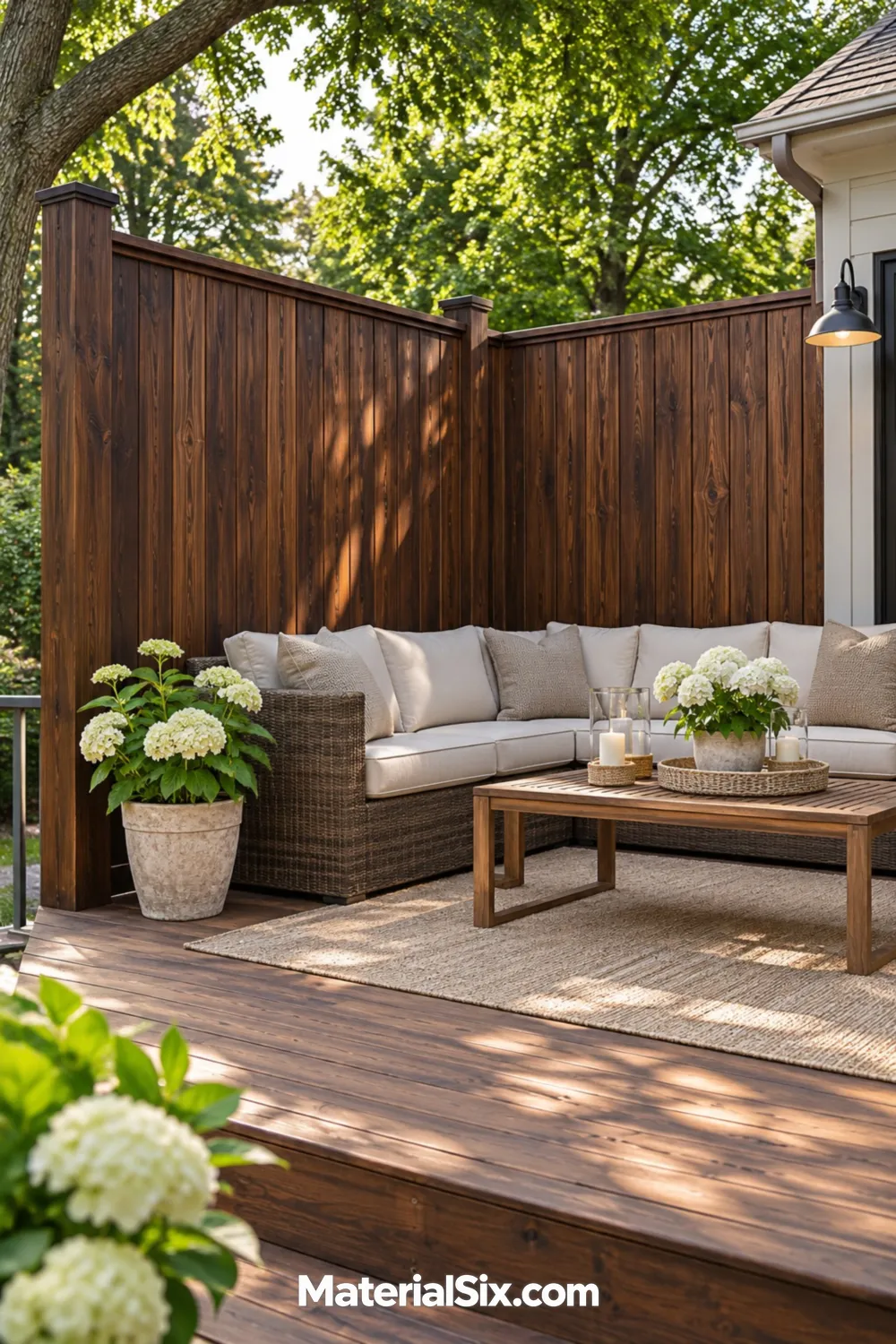
Wrap two short runs of vertical boards around the corner where you tend to sit. This arrangement helps when you can see the house next door from one side and the street from another. The vertical lines draw your eye upward, which can make the corner feel less boxed in than it would with a broad, uninterrupted wall.
Keep the opening toward the view you actually enjoy. You can soften the inside corner with a low pot and leave space between the furniture and screen so you can clean behind the seating. On an existing deck, have the attachment points and supporting framing checked before adding a tall panel.
3. Framed Lattice for a Porch
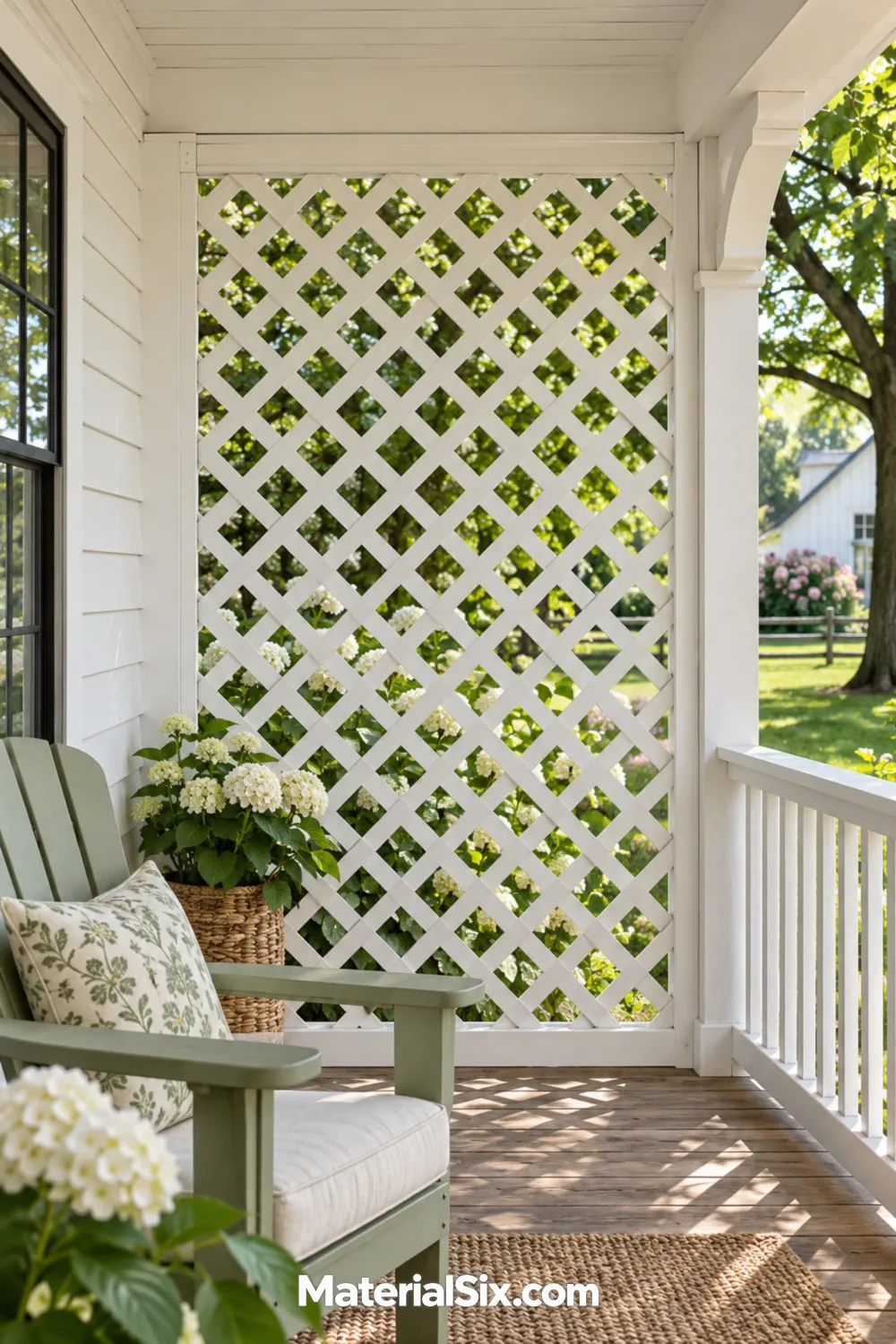
White diamond lattice can make a porch chair feel more sheltered while keeping the porch bright. Fit a framed panel into the side bay closest to the sidewalk and leave the front bay open. That gives you a lighter-looking alternative to filling the entire opening with boards.
Check the pattern from the seat you actually use. Larger openings are visually airy, but smaller ones provide more screening when pedestrians pass close to the house. A contrasting frame can highlight the pattern, while a frame painted to match the trim helps the panel blend into the porch.
4. Reed Mat Over an Existing Fence
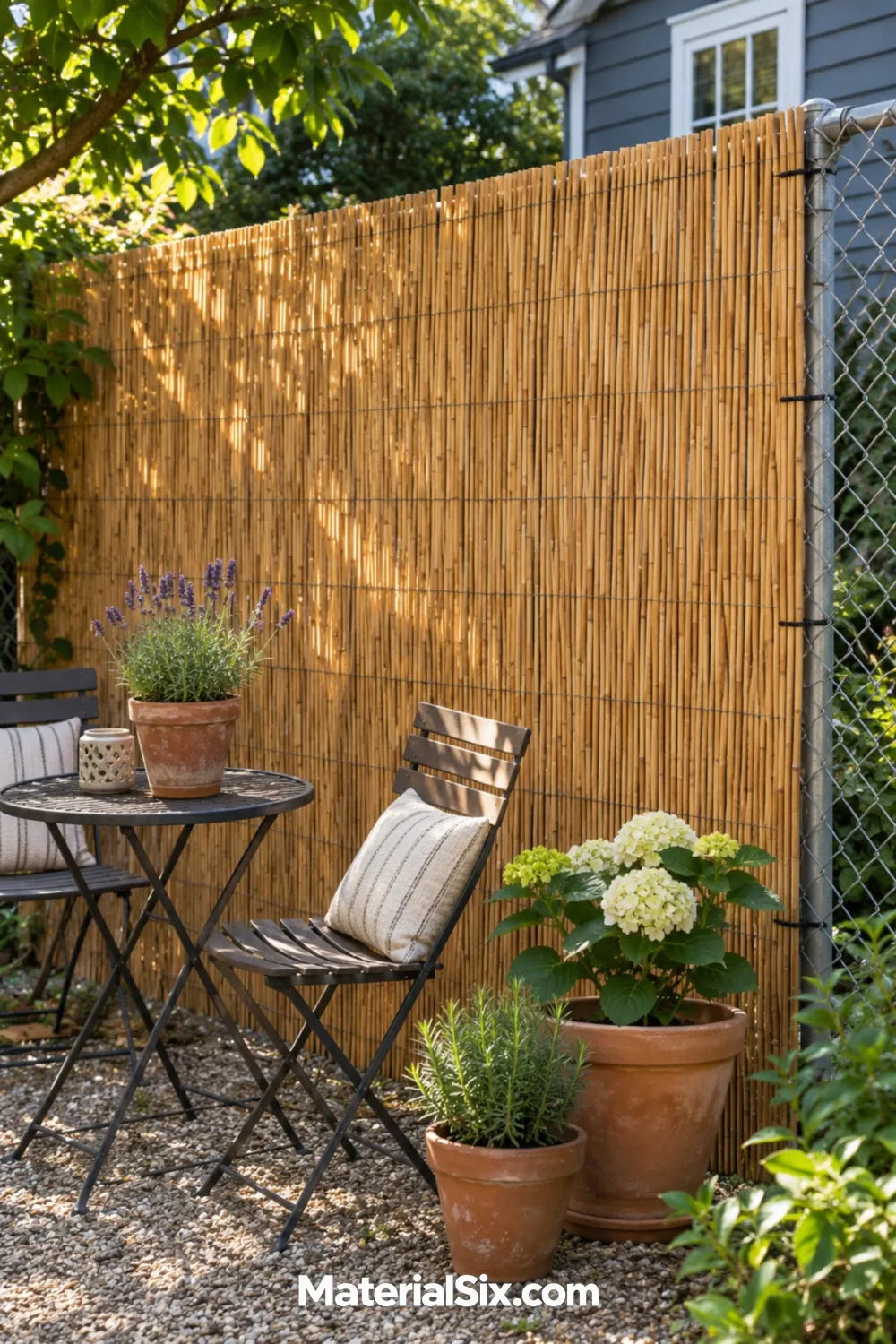
An outdoor reed mat can soften the look of a chain-link fence behind a sitting area. Choose a section behind your table or chairs and run the reeds vertically for a warm, woven backdrop. It pairs especially well with terracotta containers and unpainted wood.
Check the condition of the fence and confirm you can attach materials to it before you buy the roll. Look at the mat from the seating side in bright light to see how much shows through. Natural reeds can weather unevenly, so choose an arrangement that lets you replace one section later.
5. Bamboo Poles in a Wood Frame
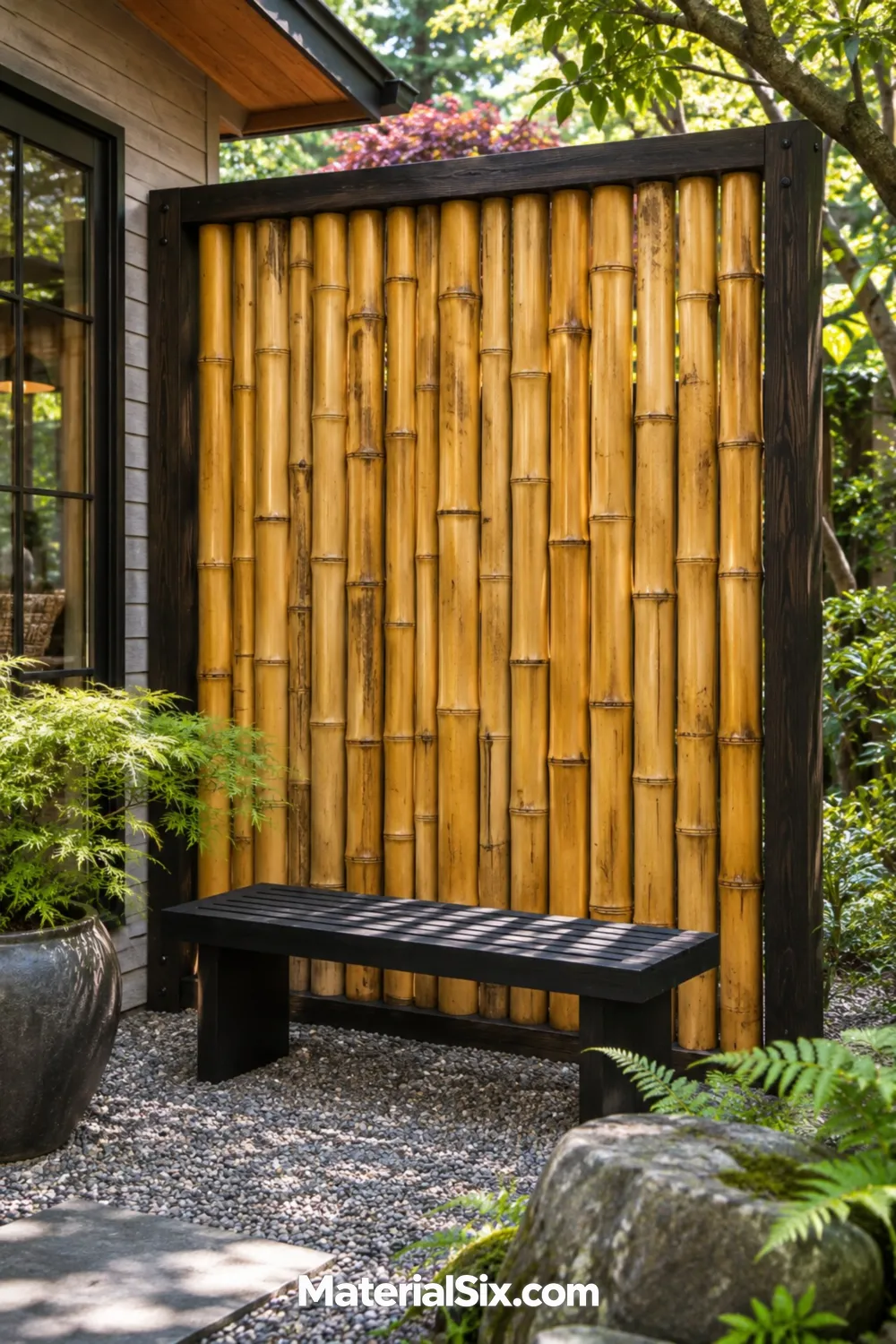
Whole bamboo poles have a rounded profile and visible joints that give a compact screen more texture than a rolled mat. A wood frame makes the edges feel intentional, especially beside a gravel seating nook where the poles are seen up close.
Pick poles with a similar thickness where they meet the frame, and compare how the different diameters affect the view through the panel. A dark stain on the frame can bring out the bamboo’s golden color. Leaving the base clear of pooled water also makes it easier to sweep around the screen.
6. Woven Willow Garden Panel
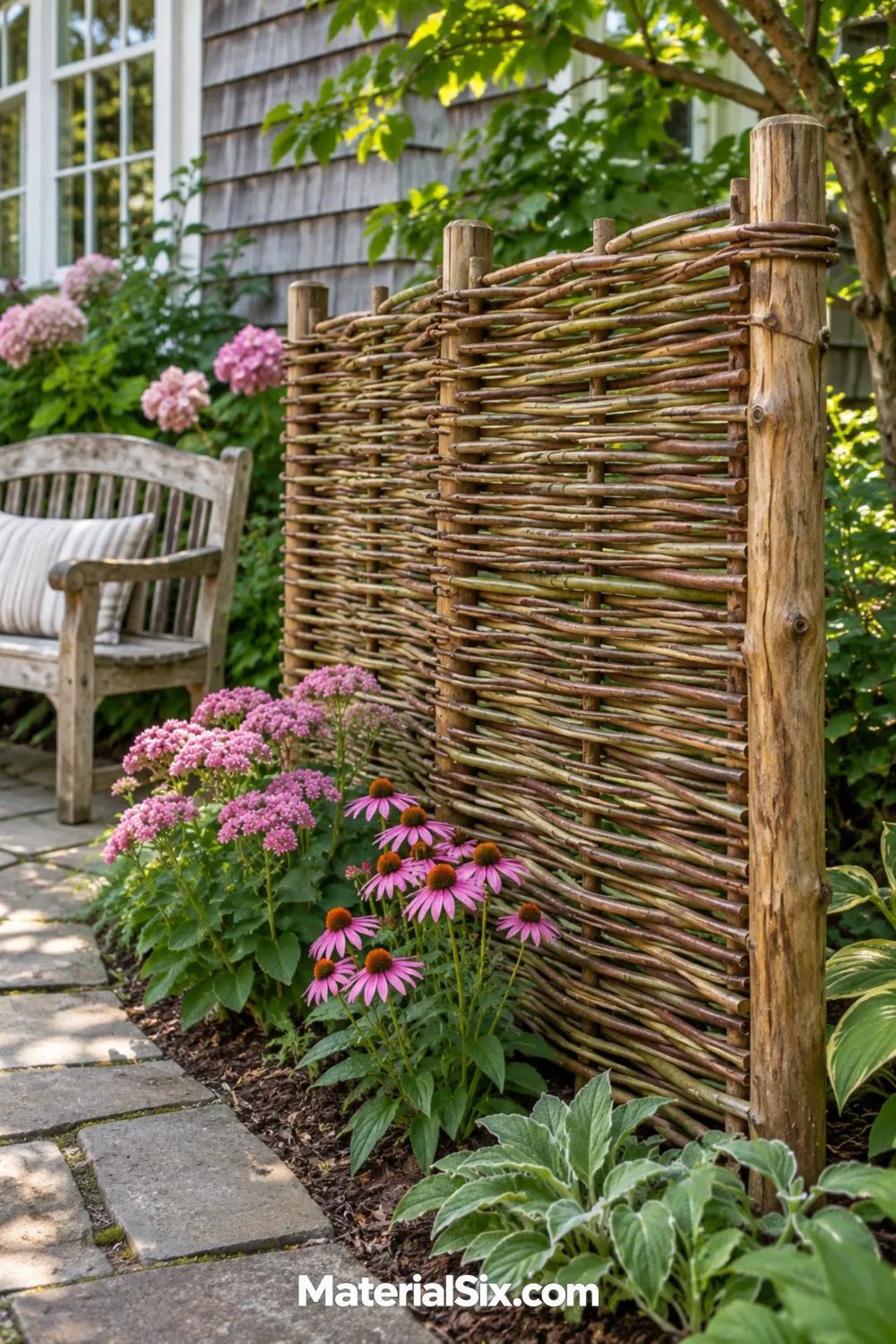
A woven willow panel fits naturally beside a garden path or a bench tucked into a planting bed. The visible weave breaks up views at seated height and gives you a backdrop that still looks interesting in months when your flowers are sparse.
Let the path or bed edge determine where the panel begins and ends. You can use a short panel to hide a bench from the entrance while keeping the planting bed visible beyond it. Leave enough working space around the weave to trim plants and replace damaged branches.
7. Trellis Planters with Climbing Vines
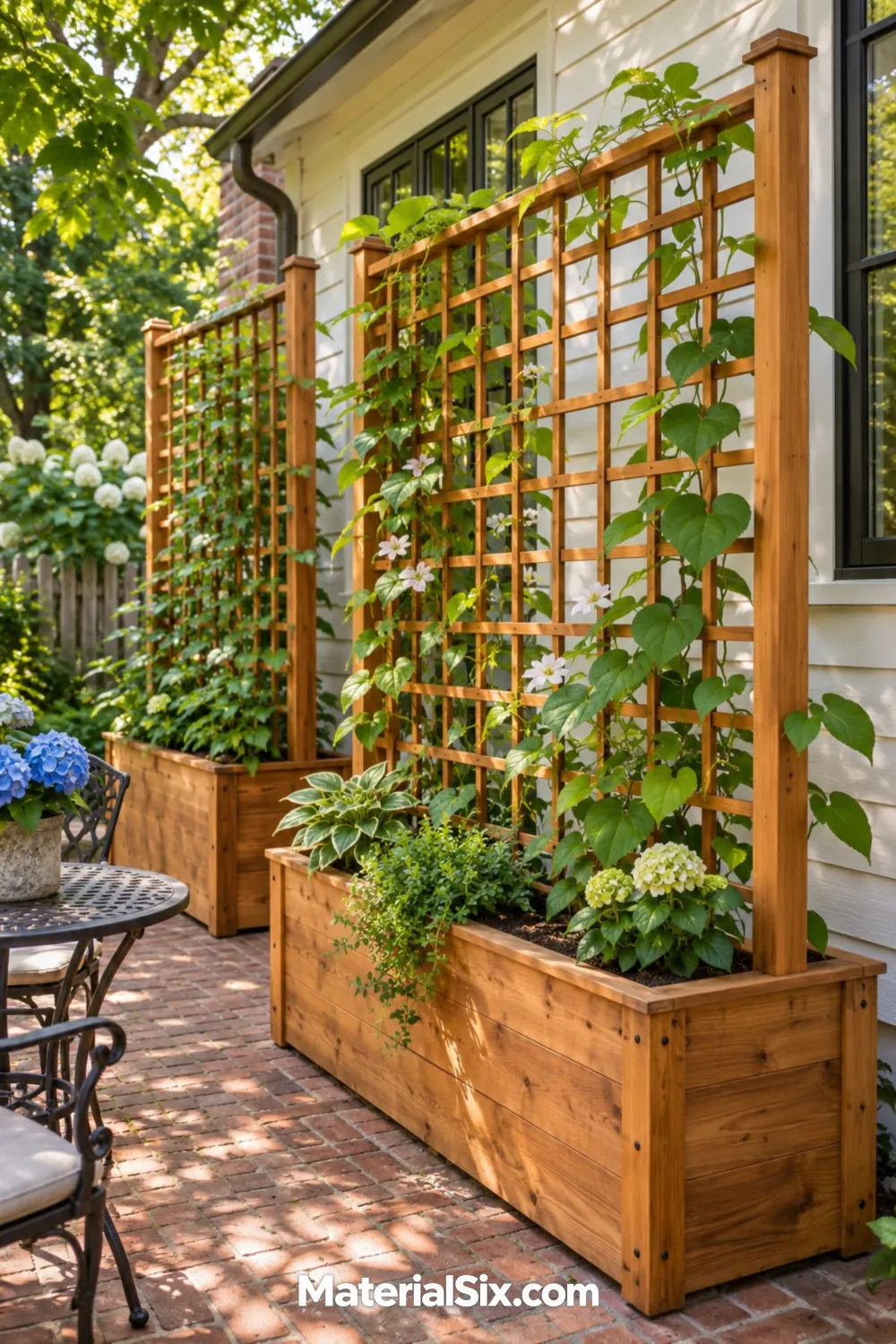
When you want foliage to do some of the screening, pair a roomy planter with an upright trellis. Set the leafy side toward the view you want to soften, and choose a climber suited to the light and climate of your yard. A trellis already has some visual presence while the plant fills in.
Think about watering and access before positioning the planter. A full container is awkward to move, and you’ll want room to guide new growth back onto the trellis. Choose an evergreen or seasonal climber based on when you use the patio and how much coverage you want in cooler months.
8. Tall Grasses in Matching Containers
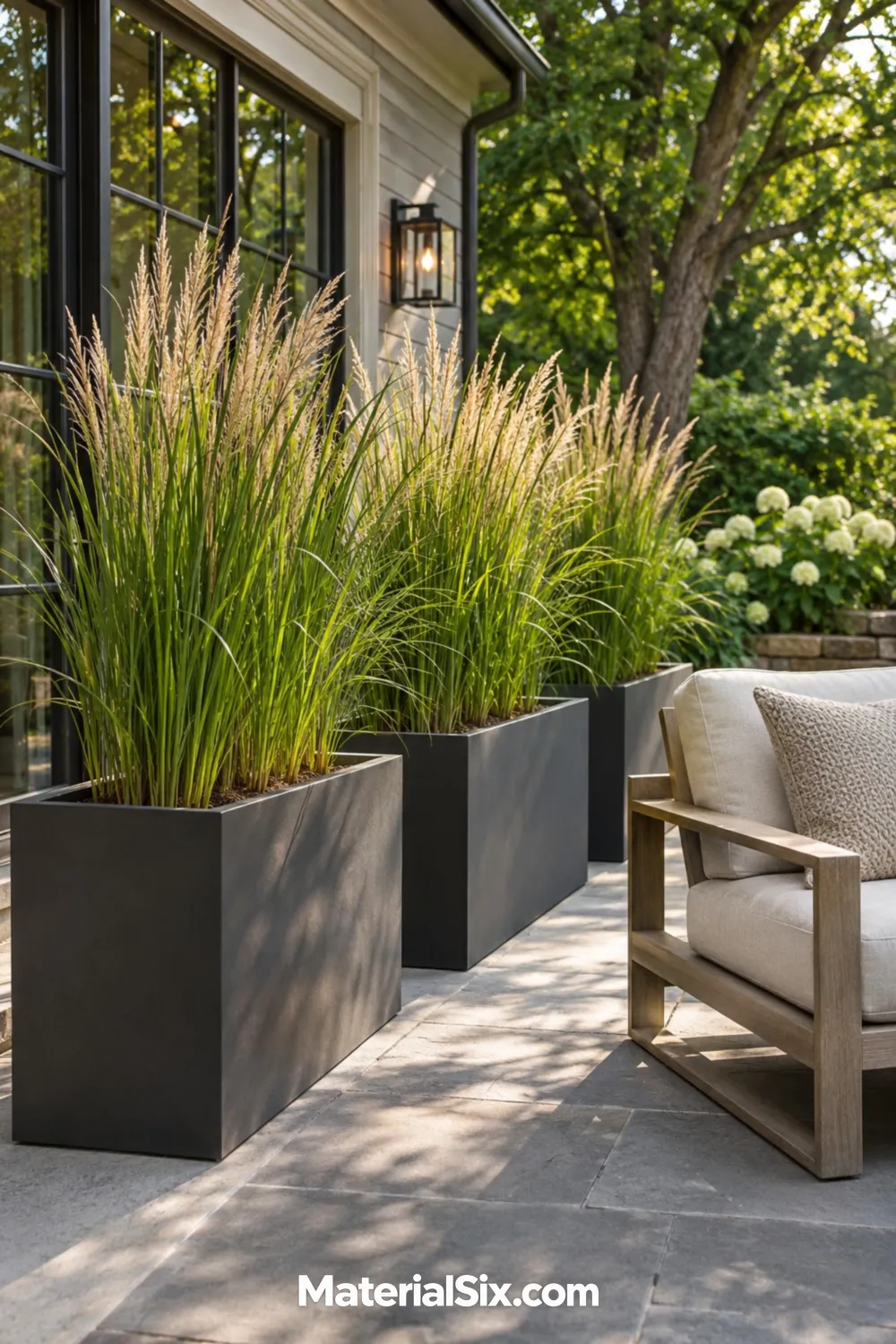
A row of upright ornamental grasses can blur a low fence or the view across adjoining patios. Repeating the same tall container gives the arrangement a clean line, while the grasses still move in the breeze. It’s especially effective next to a low chair where the foliage reaches your seated sightline.
Choose container-suitable grasses with an upright habit and check their mature size. Leave a gap between pots if you like the look of individual clumps, or place the pots closer for a more continuous band. Keep enough room to water and trim from your side.
9. Outdoor Curtains on a Pergola
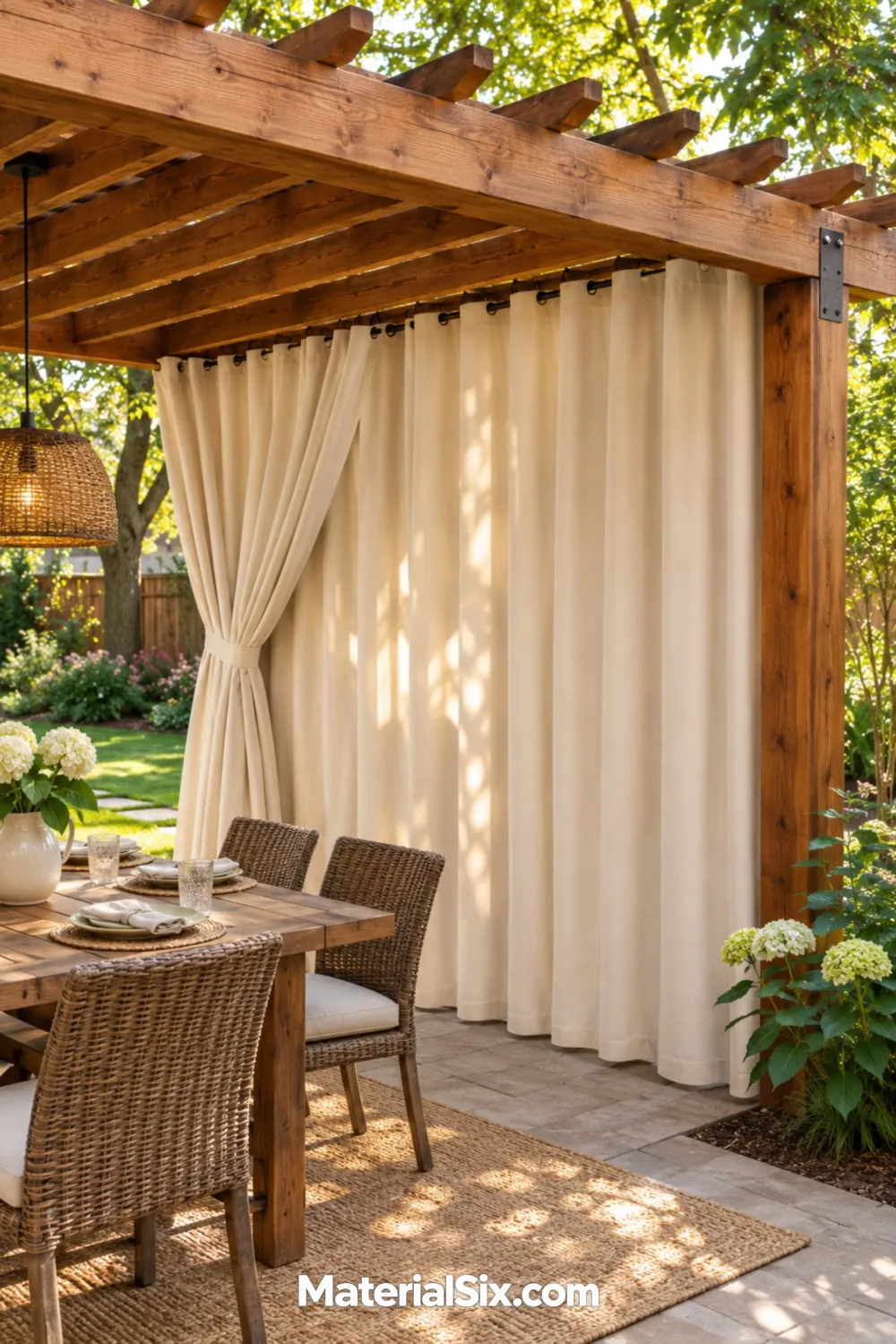
Outdoor curtains give you privacy you can adjust throughout the day. Hang a panel along the side of a pergola that faces neighboring windows, then draw it back when you want an open view. Opaque outdoor fabric offers more coverage than a sheer weave, especially when the patio is backlit.
Think about where the fabric stacks when open. A tieback near a post can keep the curtain away from the walkway and leave room for the dining chair nearest the edge. Choose a setup that allows you to secure or remove the fabric when needed.
10. Folding Outdoor Screen
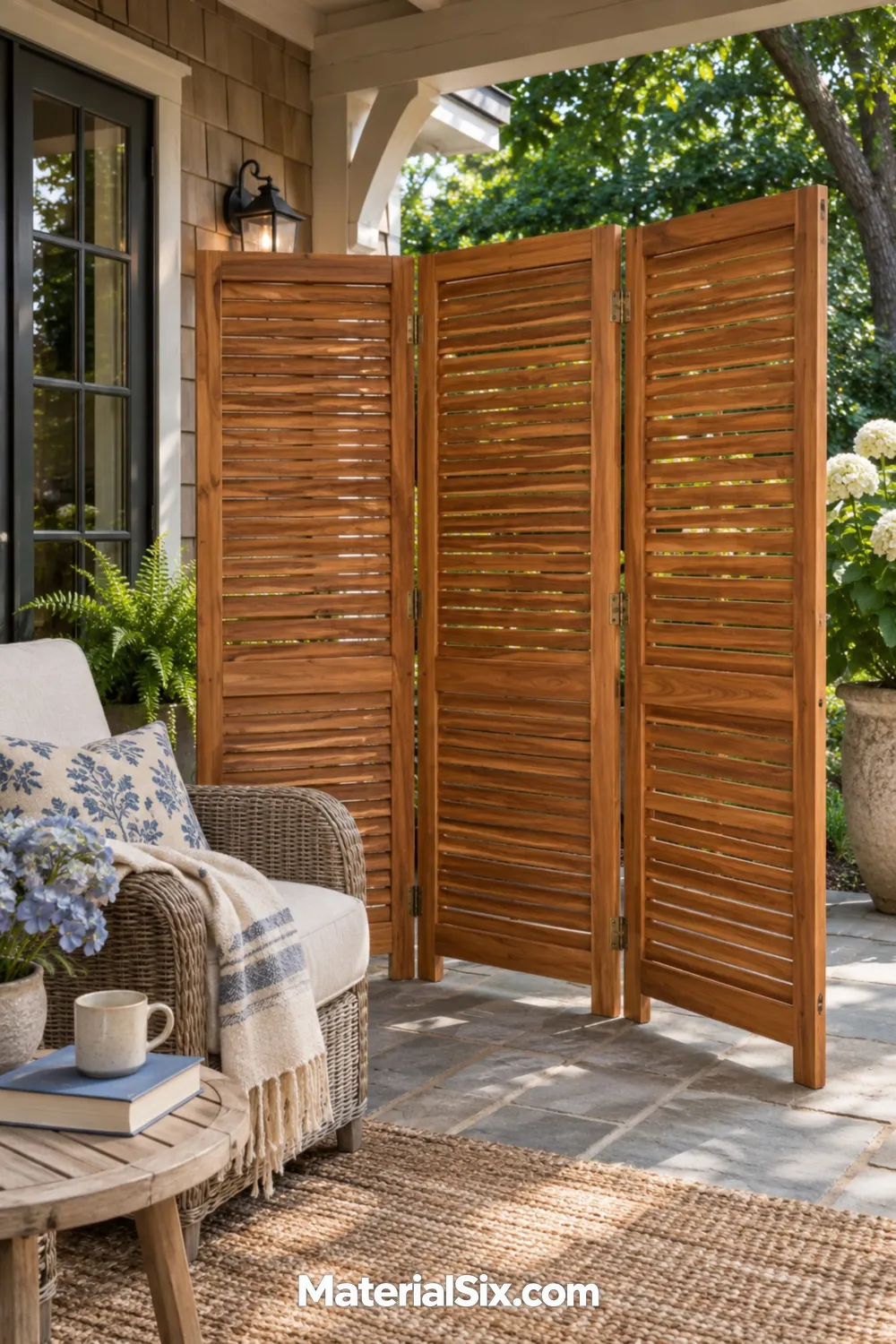
A hinged screen can give a sheltered patio a temporary backdrop for reading, working, or having lunch outside. Open the sections in a zigzag so you get coverage from more than one angle, then fold them together for storage. Three narrow sections are also easier to reposition around furniture than one wide panel.
Look for outdoor-rated materials and consider how you’ll stabilize the screen during use. Set it where people can pass comfortably and where you have a convenient place to store it when the patio is empty.
11. Laser-Cut Panels in a Simple Frame
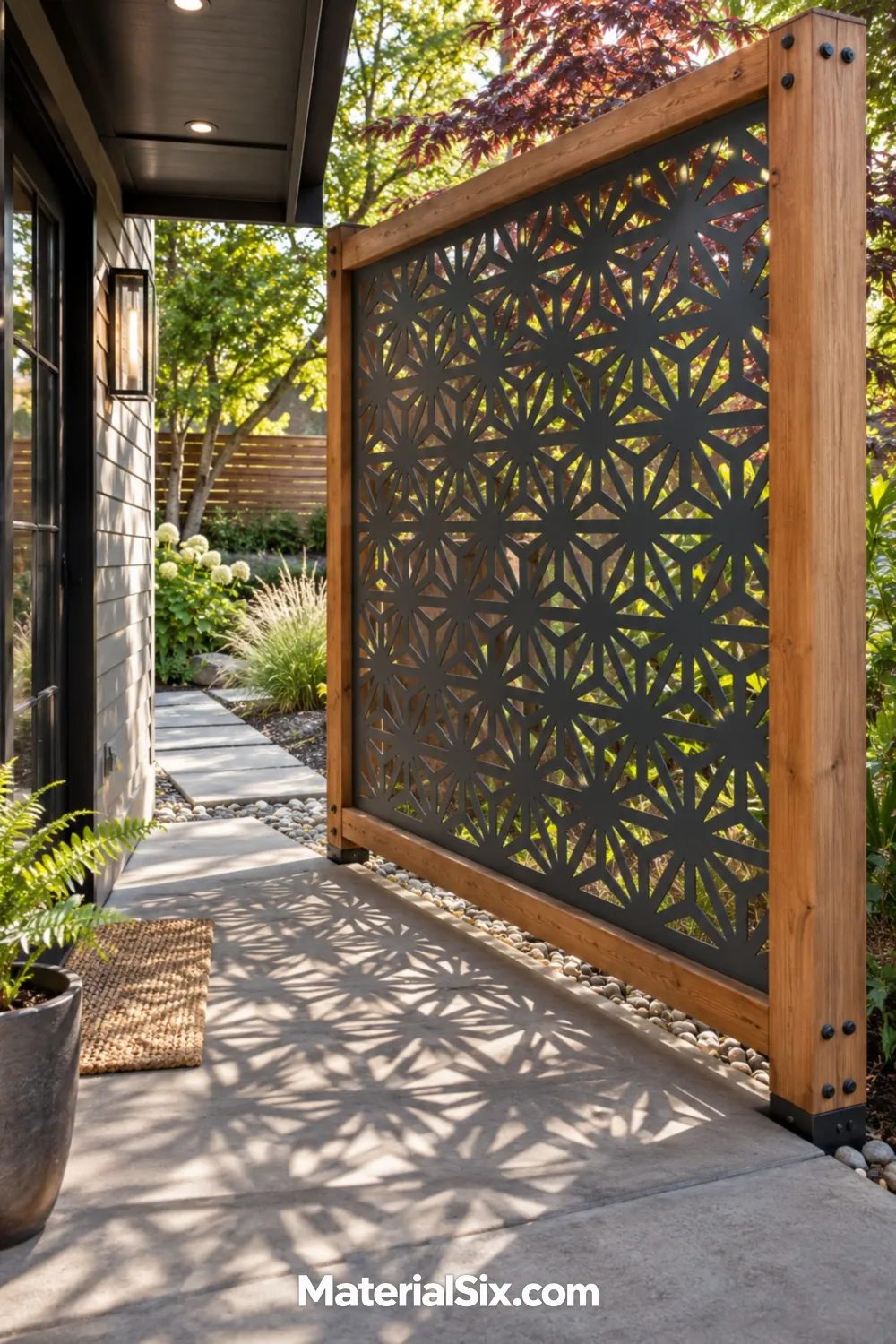
A patterned metal insert gives you a strong graphic detail beside a side door or along one edge of a patio. A fine geometric pattern reads as texture from the seating area, while a bolder cutout casts more noticeable shadows as the sun moves.
Compare patterns by the amount of open space, since two panels of the same size can offer very different coverage. Choose exterior-rated inserts and compatible hardware. A restrained frame lets the cutouts stand out, especially when the rest of the patio uses simple shapes and plain finishes.
12. Overlapping Corrugated Panels
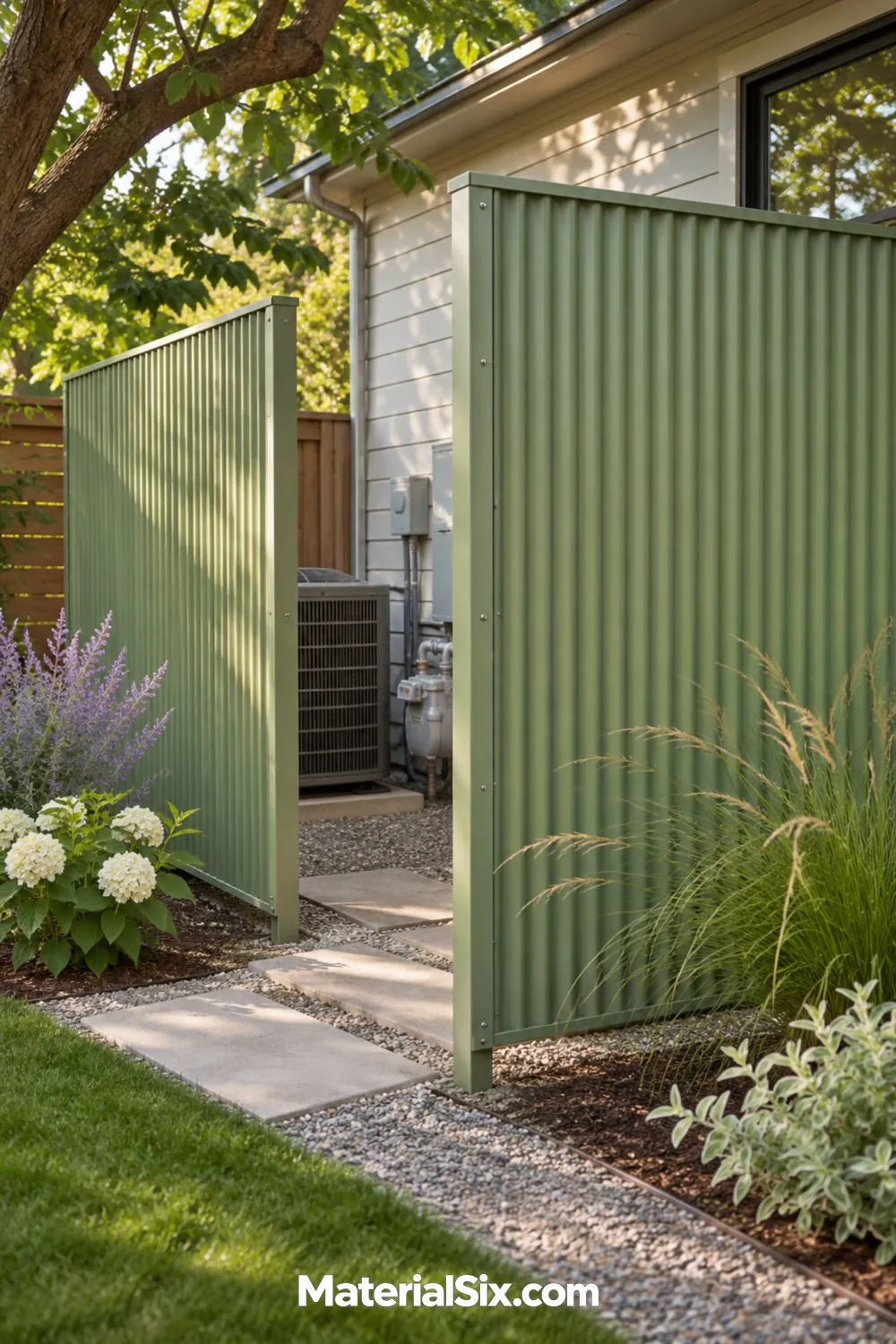
Corrugated metal gives you a more opaque option near a utility area or an exposed section of patio. A pair of offset panels can hide bins or equipment from the seating area while leaving a clear way to reach them. The ridged surface adds texture even when the screen is painted a muted color.
Before choosing the offset, walk the route with anything you need to move through it. Compare the view from both ends of the patio. A small change in placement can hide the utility area without making the path feel narrower than it needs to be. Around mechanical equipment, follow the manufacturer’s clearance and service-access instructions.
13. Staggered Slat Panels Along a Path
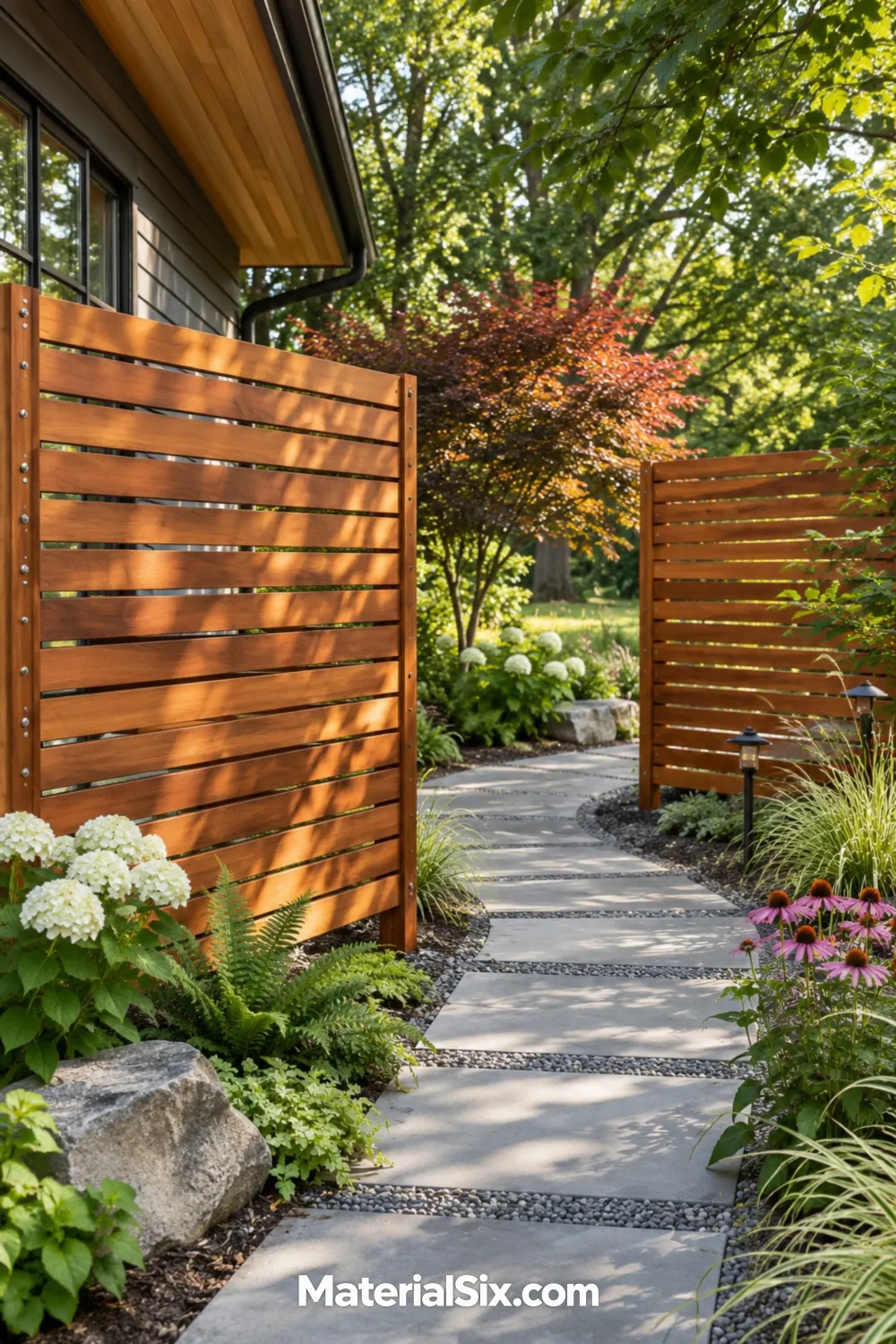
Two short screens can create privacy across a diagonal view while leaving a garden path open between them. Put one panel closer to the patio and the other farther along the path so the ends overlap in your line of sight. Each panel reads as a separate garden feature when you walk past it.
Lay out the positions with stakes or chairs first, then check the view from the house and from the outdoor seat. If you need to get a wheelbarrow through, test the turn before deciding where each screen ends.
14. Pallet Wood Screen with Mixed Tones
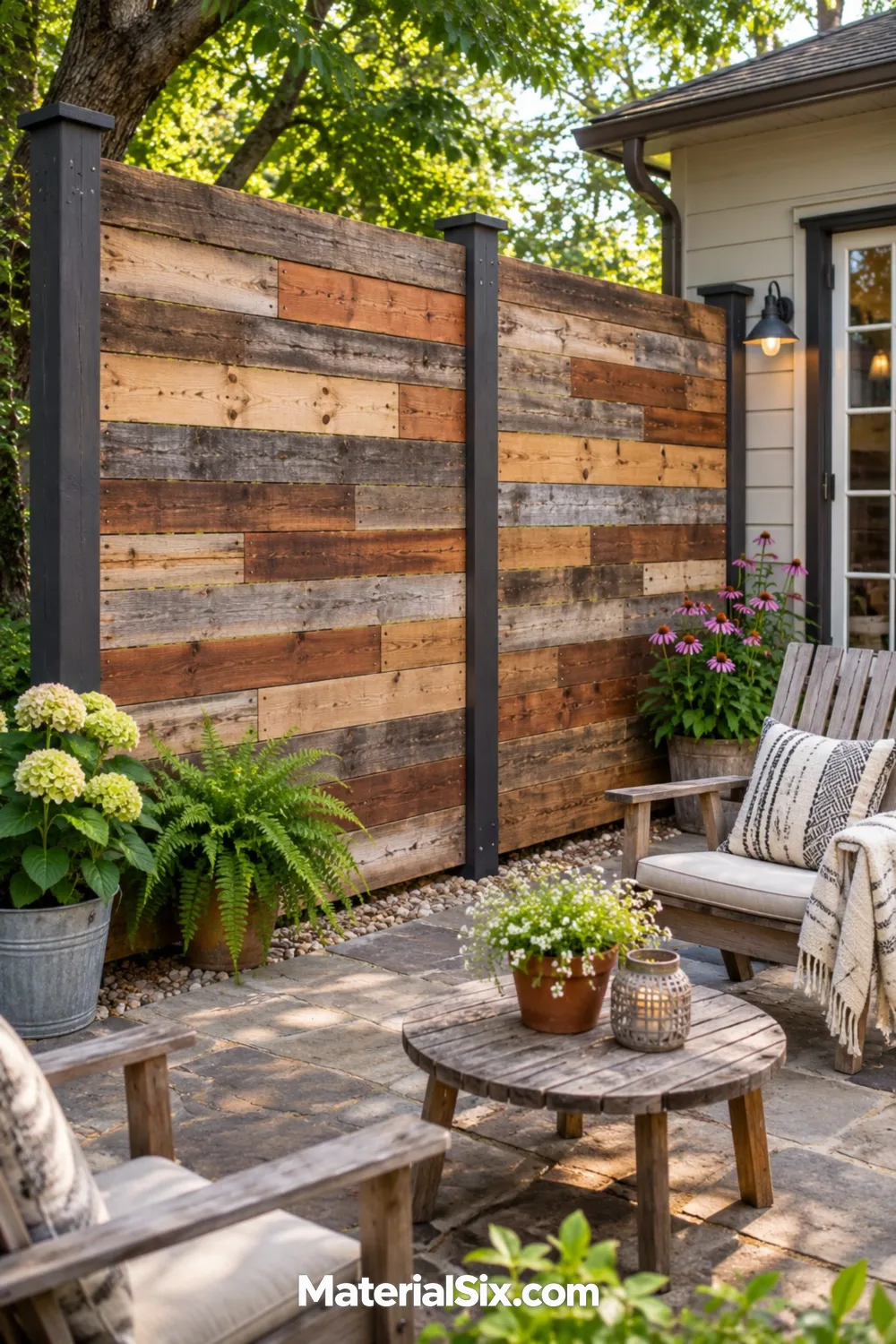
Salvaged boards can add texture to a casual sitting area, especially when the furniture and paving are already simple. Arrange mixed shades across a separate frame and use a dark stain on the posts to give the composition a clear outline.
Use boards with a known history that are clean and in good condition. Sort them by width and thickness before arranging them, and discard damaged pieces. Try laying the boards flat first so you can spread the darkest tones across the screen instead of ending up with one dark patch.
15. Angled Louvers for a Side Yard
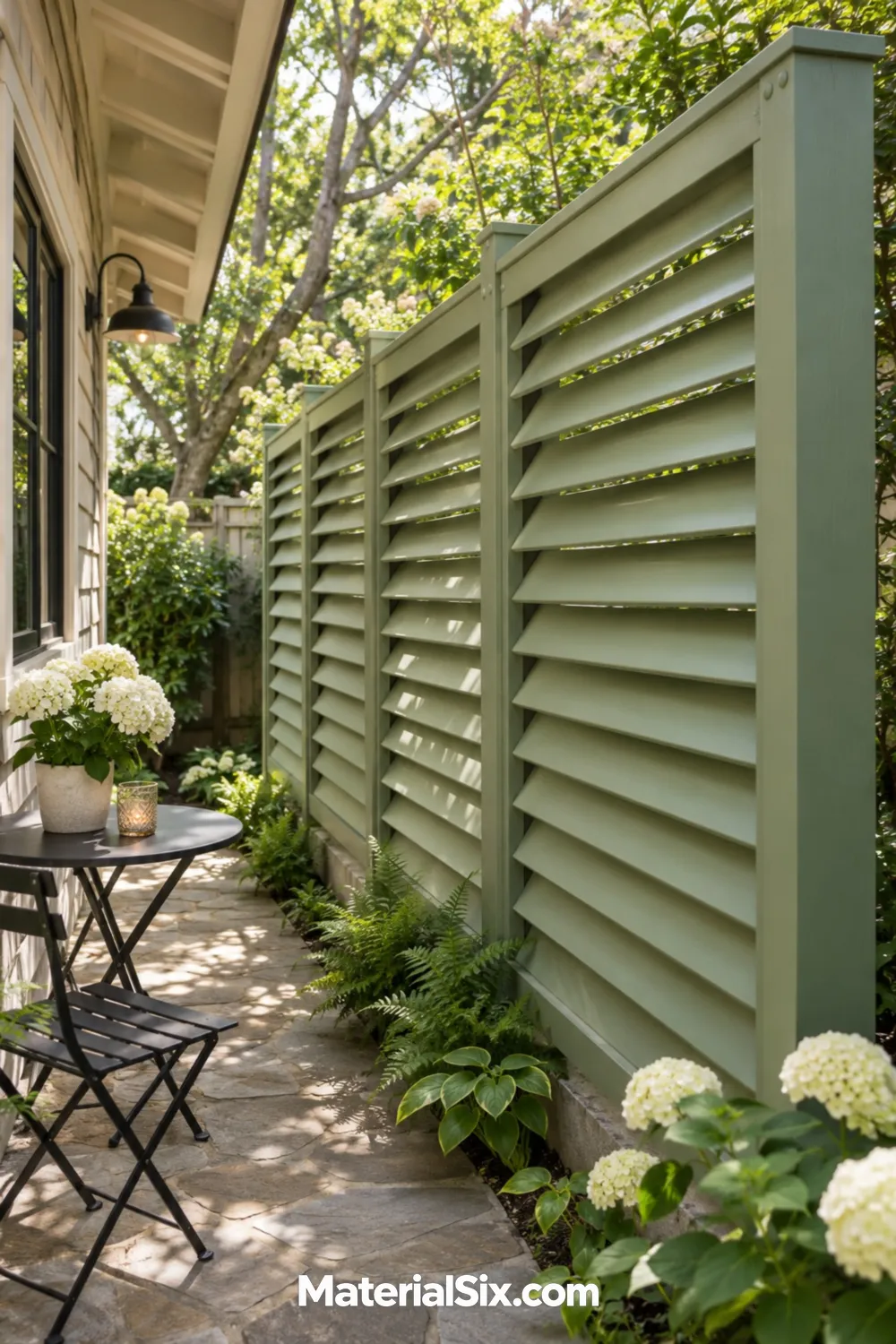
Angled louvers are useful when you want to screen one particular view, such as a neighboring window across a narrow side yard. The gaps still admit light, while the angle changes what you can see through them. A painted panel can also work as a backdrop to a small table and chairs.
Make a small mockup and hold it at the height you have in mind. Check it from the chair and from either end of the path. Louver direction matters more than color if the point is to interrupt a specific line of sight.
Sit in the spot you want to screen and note what you can see at eye level. Use that line of sight to test where a panel or row of planters would go. Once the location makes sense, you can narrow down your options by how much light you want to keep and whether the screen needs to move.