
The washer door is open, the hamper is at your feet, and the closet door swings straight into your path. The right front for your laundry closet can change how the whole space works, especially when the machines sit in a hallway or share a room with the rest of the house.
These laundry closet door ideas cover folding and sliding options, finishes that blend into the surrounding walls, and a couple of ways to skip rigid doors altogether. Start with how you load the machines, then choose a look you’ll enjoy seeing every day.
1. Louvered Bifold Doors
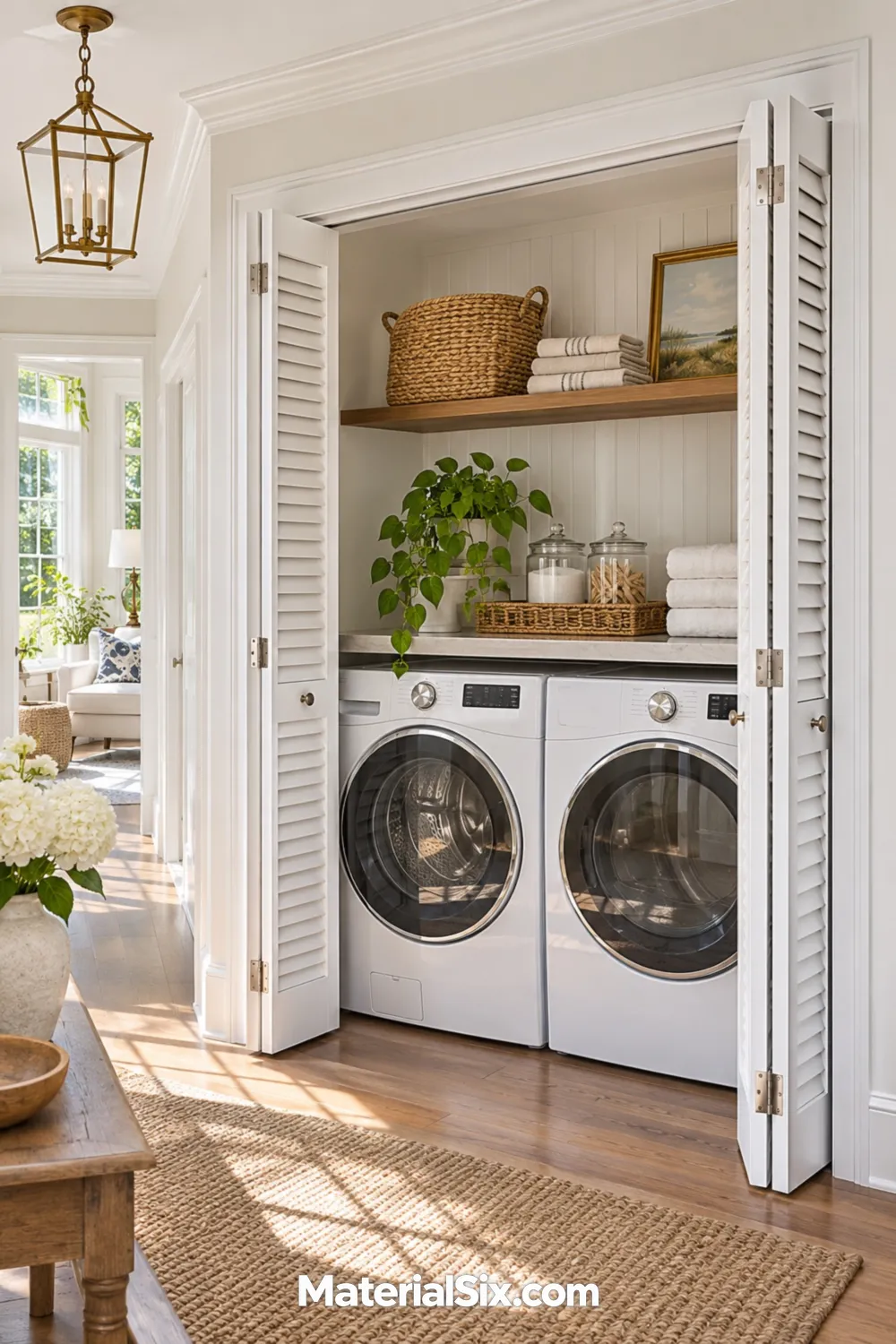
White louvered bifolds give a hallway laundry closet a familiar, light look. The panels fold toward the sides, leaving less door projecting into the hall than a full-width swinging leaf. With the panels open, you can reach both machines without stepping around a big slab.
Look at how much space the folded panels take up at each jamb, especially if your appliances fit closely against the sides. The louvers let air pass through the door, but check your appliance manuals for the closet’s required ventilation and clearances before settling on a door.
2. Double Shaker Swing Doors
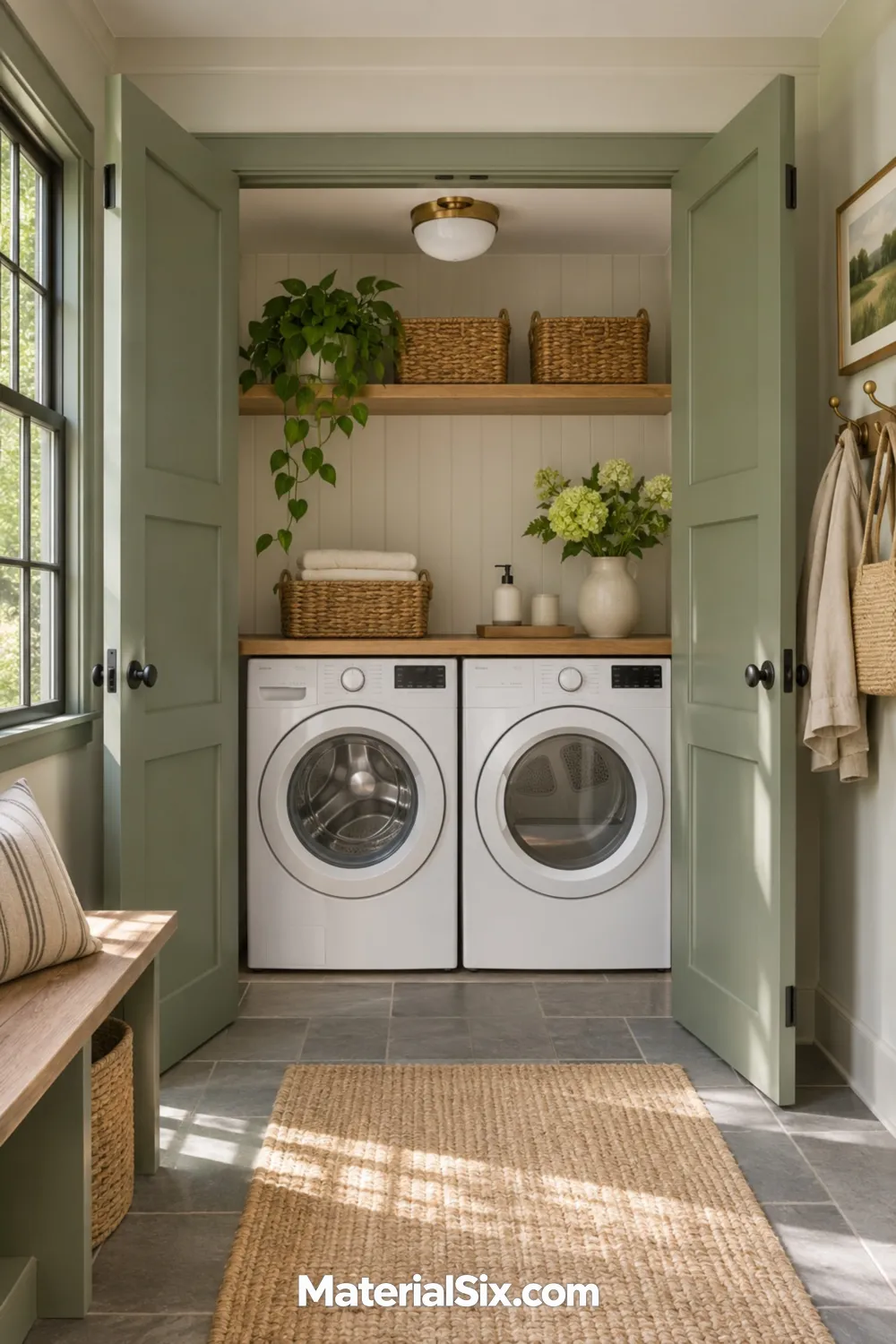
If you have room to stand back from the opening, a pair of Shaker doors can give you access to both machines at once. Soft sage paint makes the doors feel more like part of a mudroom’s cabinetry, while plain knobs keep the recessed panels in focus.
Before choosing this setup, mark each door’s swing on the floor with painter’s tape. Set a hamper where you usually put it and see whether you can walk around the open doors. It’s also worth checking how the handles land in relation to nearby cabinets, walls, and switches.
3. Light Oak Bypass Doors
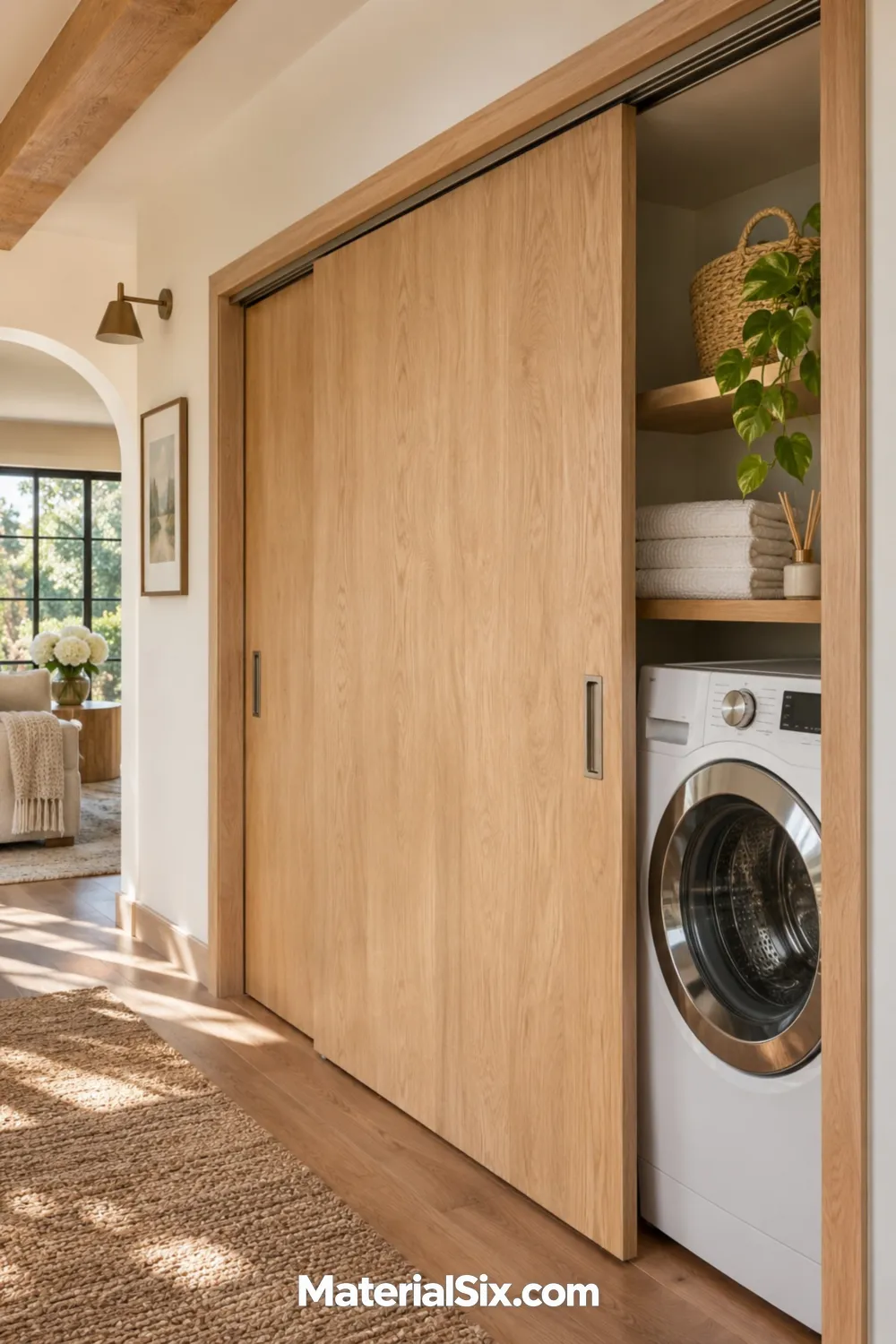
Bypass panels slide past one another on parallel tracks, so you don’t need space in the hallway for a swinging door. Flat oak panels and recessed pulls give the front a clean look that works well where the laundry closet is visible from a living area.
The trade-off is access. One panel always overlaps the other, so measure the usable opening on each side and compare it with the swing of your machine doors. For side-by-side appliances, it helps if each machine can be reached comfortably from its own half. Think about how you’d get a bulky appliance in or out, too.
4. Reclaimed-Wood Barn Door
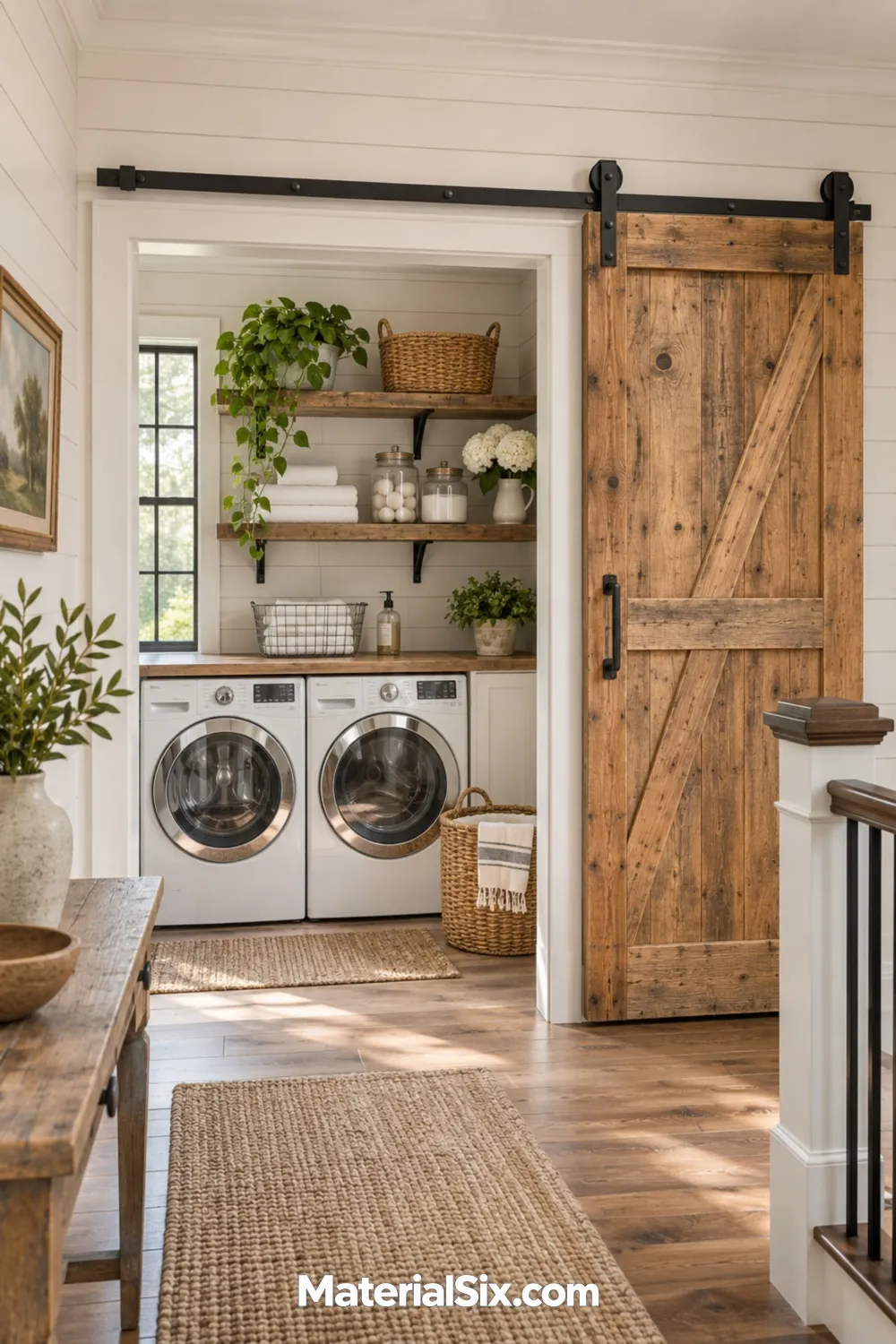
A surface-mounted barn door can make a simple laundry closet feel at home in a farmhouse-style hall. Reclaimed pine brings texture and variation, while a dark overhead rail turns the hardware into part of the design. You can also use a clean painted slab on the same kind of track for a quieter look.
Stand in front of the closet and look at the wall where the door would park. That space needs to stay clear across the door’s travel. Note switches, trim, and anything hanging on the wall. Account for the visible gaps around the slab if you want the door to muffle laundry sounds.
5. Painted Pocket Door
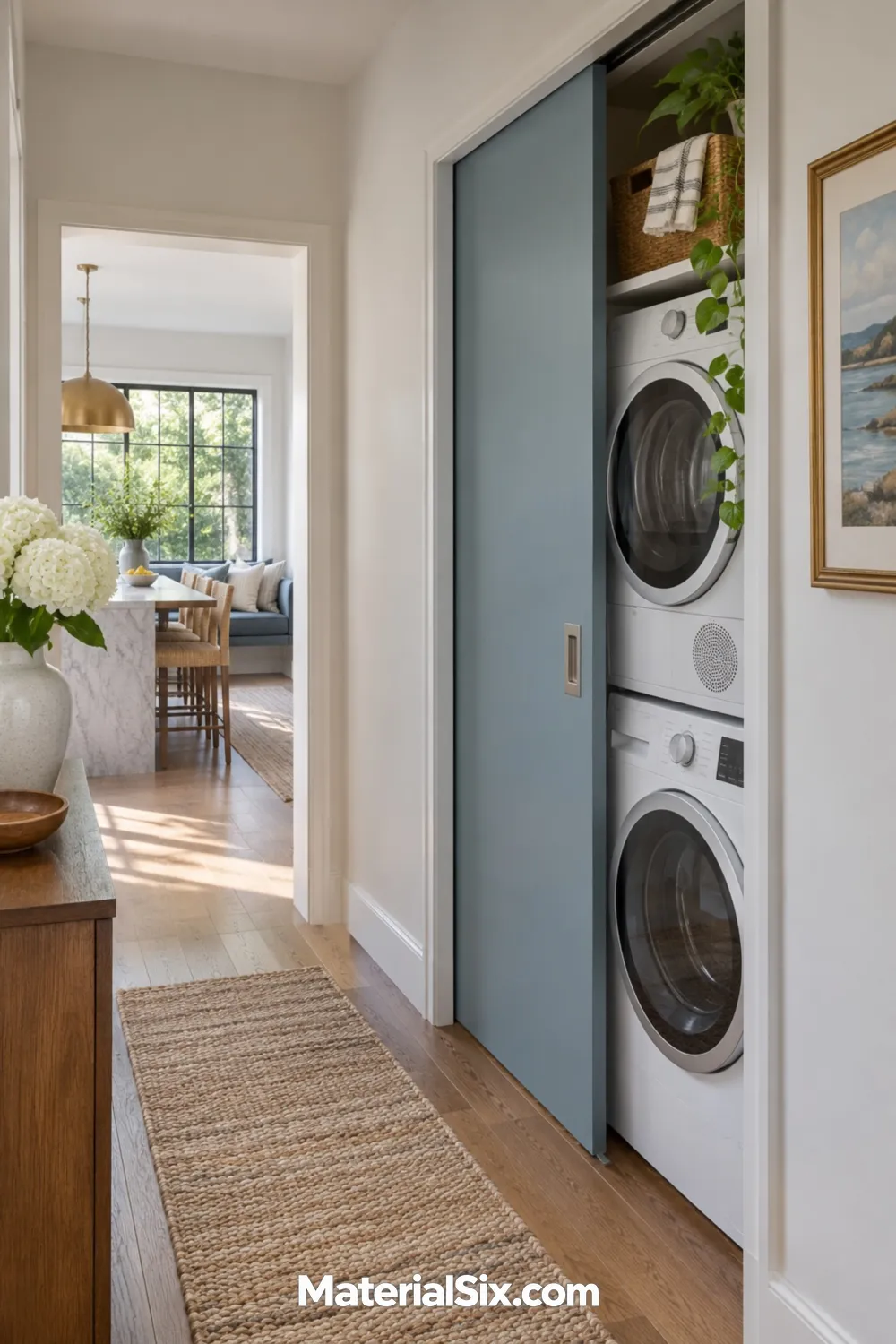
In a narrow passage, a pocket door keeps the slab out of your way by sliding into the wall. A dusty blue finish adds a little color when the closet is closed, and a recessed pull lets the slab tuck in farther than projecting hardware would.
Consider this option while you’re planning a remodel, especially if the closet is already being reframed. Have the wall checked for plumbing, wiring, and structural constraints before committing. For a stacked washer and dryer, confirm that the clear opening gives you room to reach the controls, open both appliance doors, and move the equipment when needed.
6. Linen Curtain on a Ceiling Track
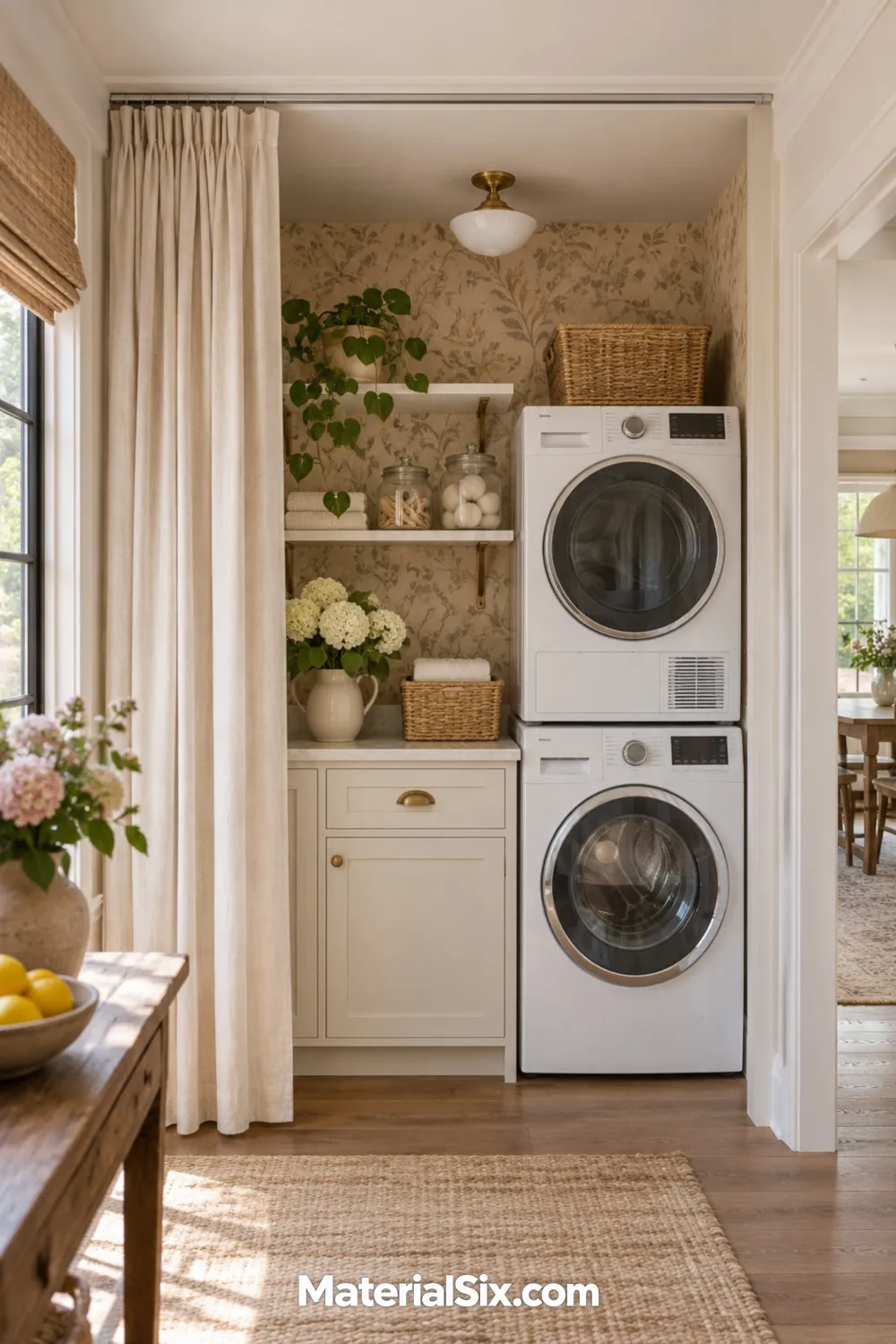
A ceiling-track curtain softens the look of a shallow laundry alcove. Ivory linen works with white machines and a warm patterned wall, while a denser weave gives you more coverage if you want to hide shelves and detergent bottles. Park the fabric to one side for an uninterrupted opening on laundry day.
Check where the curtain bunches when open. Give the fabric somewhere to gather clear of the machines and follow appliance instructions for placement and clearances. A washable fabric and detachable track hooks make the curtain easier to take down for cleaning.
7. Reeded Glass Double Doors
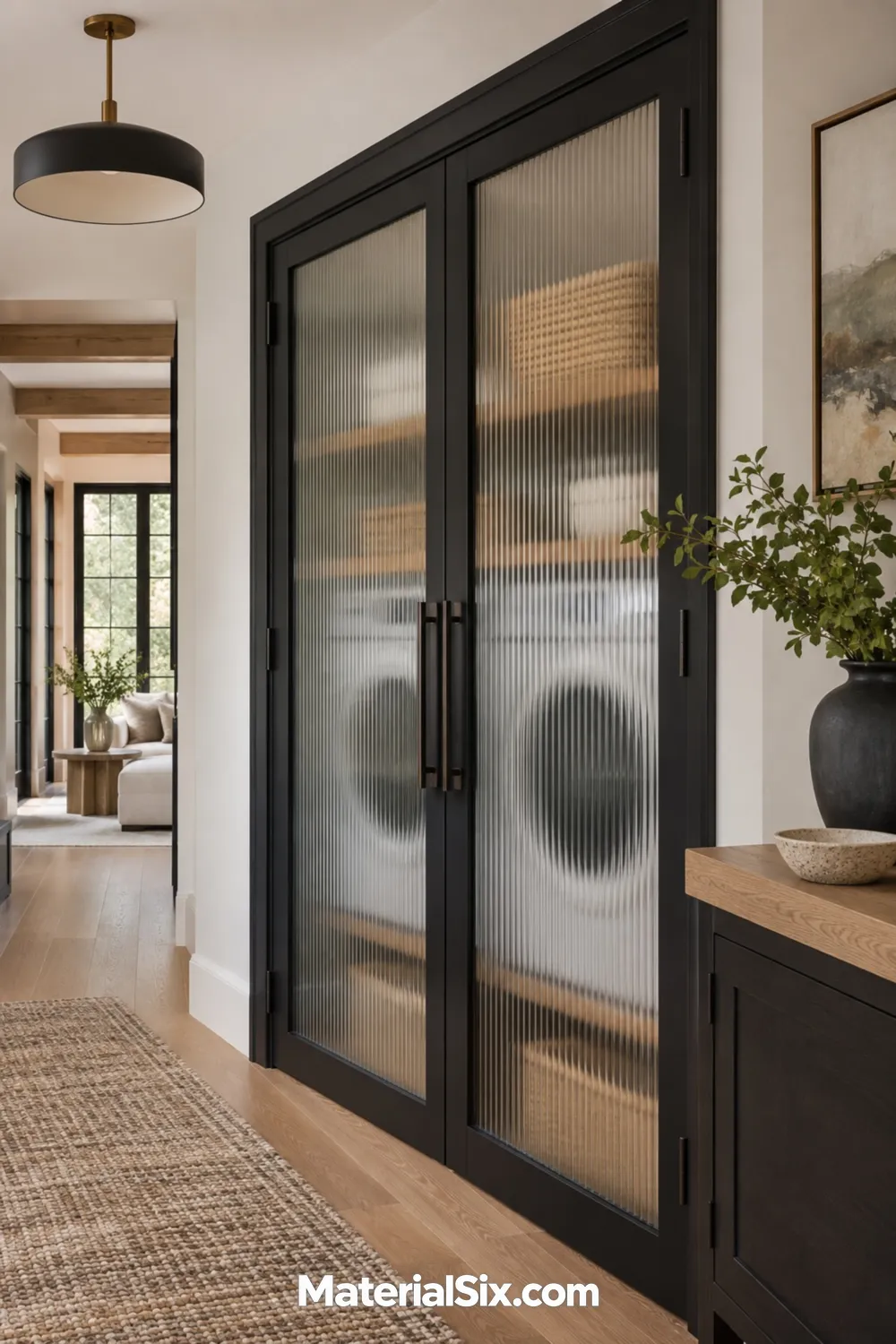
Reeded glass is a good fit when you want the laundry closet to look lighter from the hall. Vertical ridges blur the shapes behind the doors, and slim dark frames echo nearby black hardware. You can pair them with oak flooring or warm white walls to keep the contrast from feeling too stark.
Look at a sample with the closet light on and off. The glass may obscure appliance details while still revealing bright objects or busy shelves in a lit closet. A couple of matching bins behind the doors can give the view a calmer silhouette.
8. Flush Oak Slat Doors
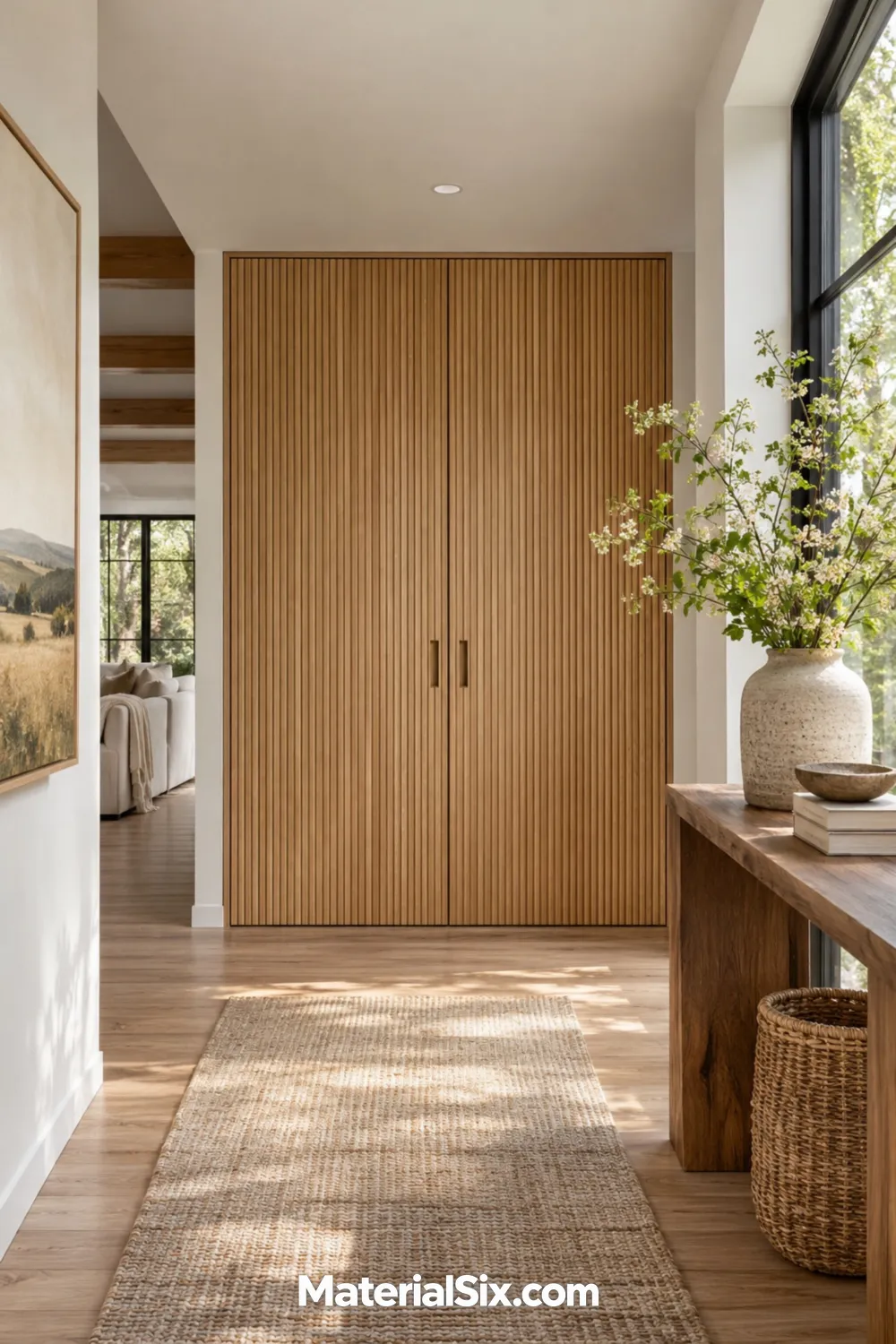
When the laundry closet is in a prominent spot, a continuous oak slat pattern makes its doors read more like wall paneling. Carry the rhythm across both leaves and use discreet pulls so the center seam is easy to find without taking attention away from the wood.
Plan how the slats meet at the center and along the edges. Uneven spacing at the seam will stand out against an otherwise steady pattern. If you’re adding slats to existing doors, check that the hinges and frames can handle the extra weight and thickness. Treat the slats as a finish and check ventilation separately.
9. Compact Accordion Door
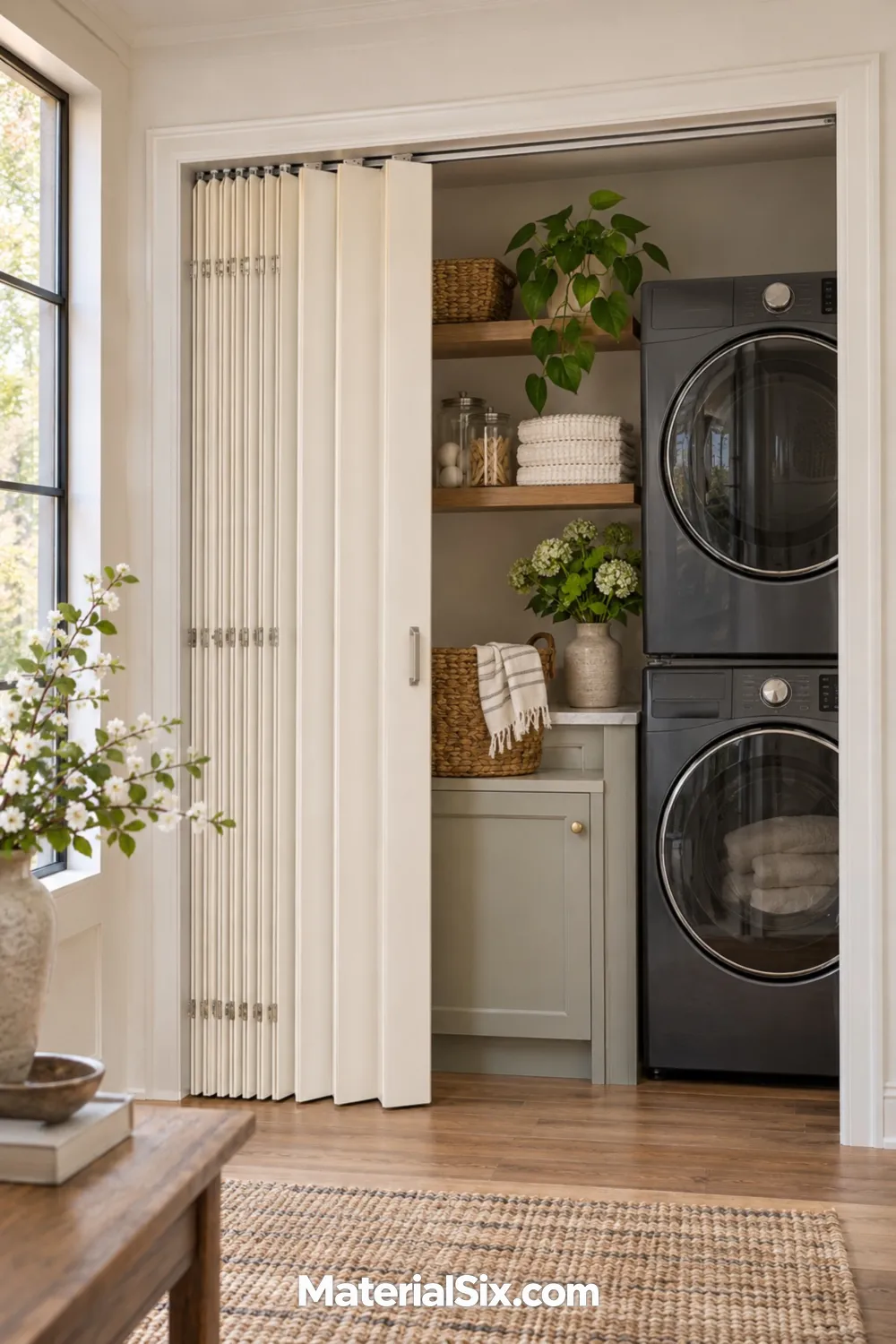
An accordion door folds into a series of narrow pleats at the side of the opening. That small stack can suit a laundry closet where a swing door would crowd the hallway and there’s no wall space for an exposed slider. An ivory finish keeps the folds visually quiet.
Ask for the folded width of the exact model and subtract it from the opening before you buy. A stacked laundry pair can put both appliance handles near the same side, so it matters where the accordion door gathers. Check that the folded door also leaves enough room to bring a basket in and out comfortably.
10. Swing Doors With a Fold-Down Ironing Board
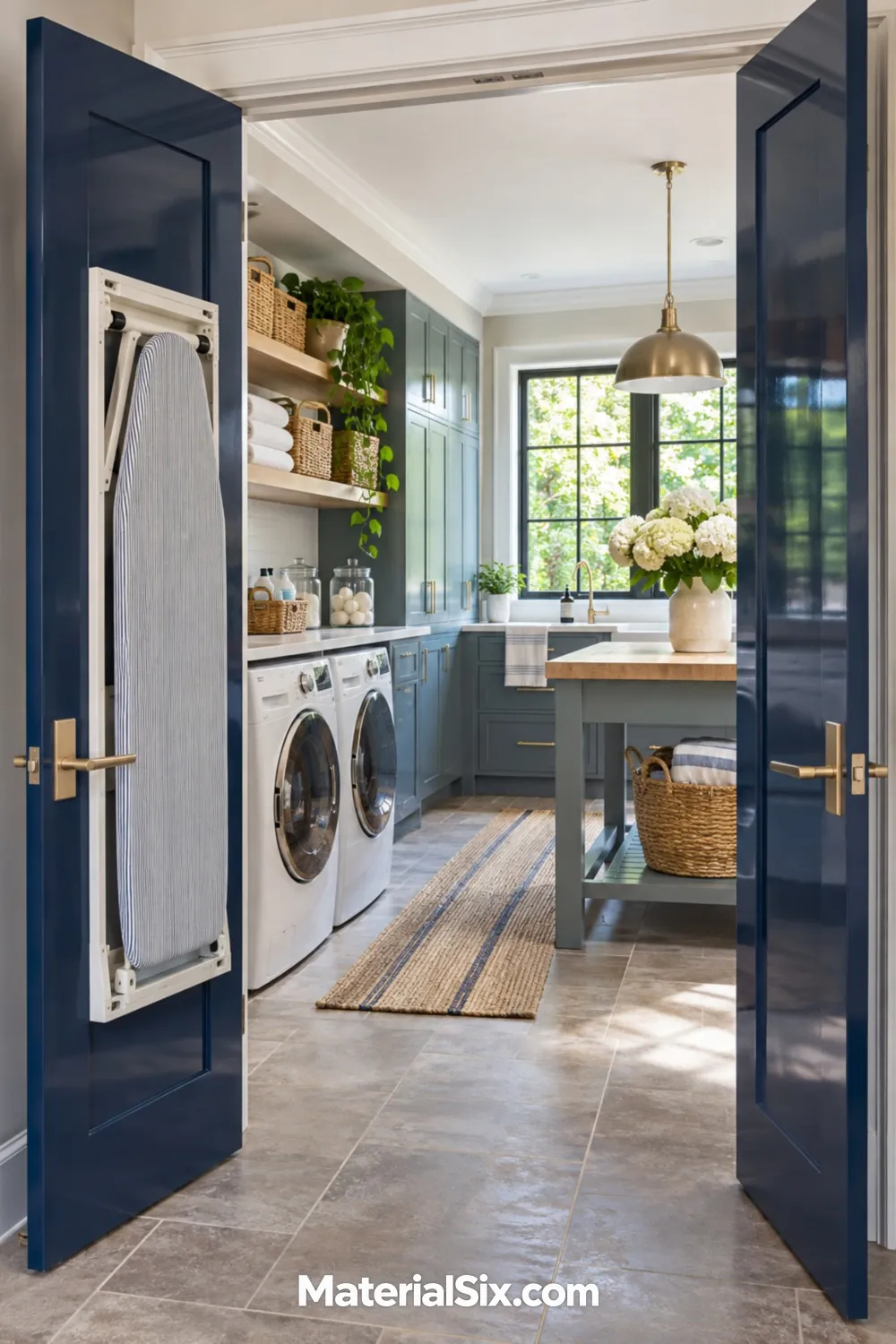
Wide laundry closet doors offer a place to hang a slim fold-down ironing board. Mounting the board on the inner face gives it a dedicated spot right beside the machines. Glossy navy doors add color on the outside and hide the board when you’re done.
Before choosing a door-mounted board, check the manufacturer’s requirements for the door construction, fasteners, and load. Then check the swing with the board folded and the working space with it down. The board should open into a spot where you can stand comfortably and still reach the laundry you’re working on.
11. Doorless Alcove With Wallpaper
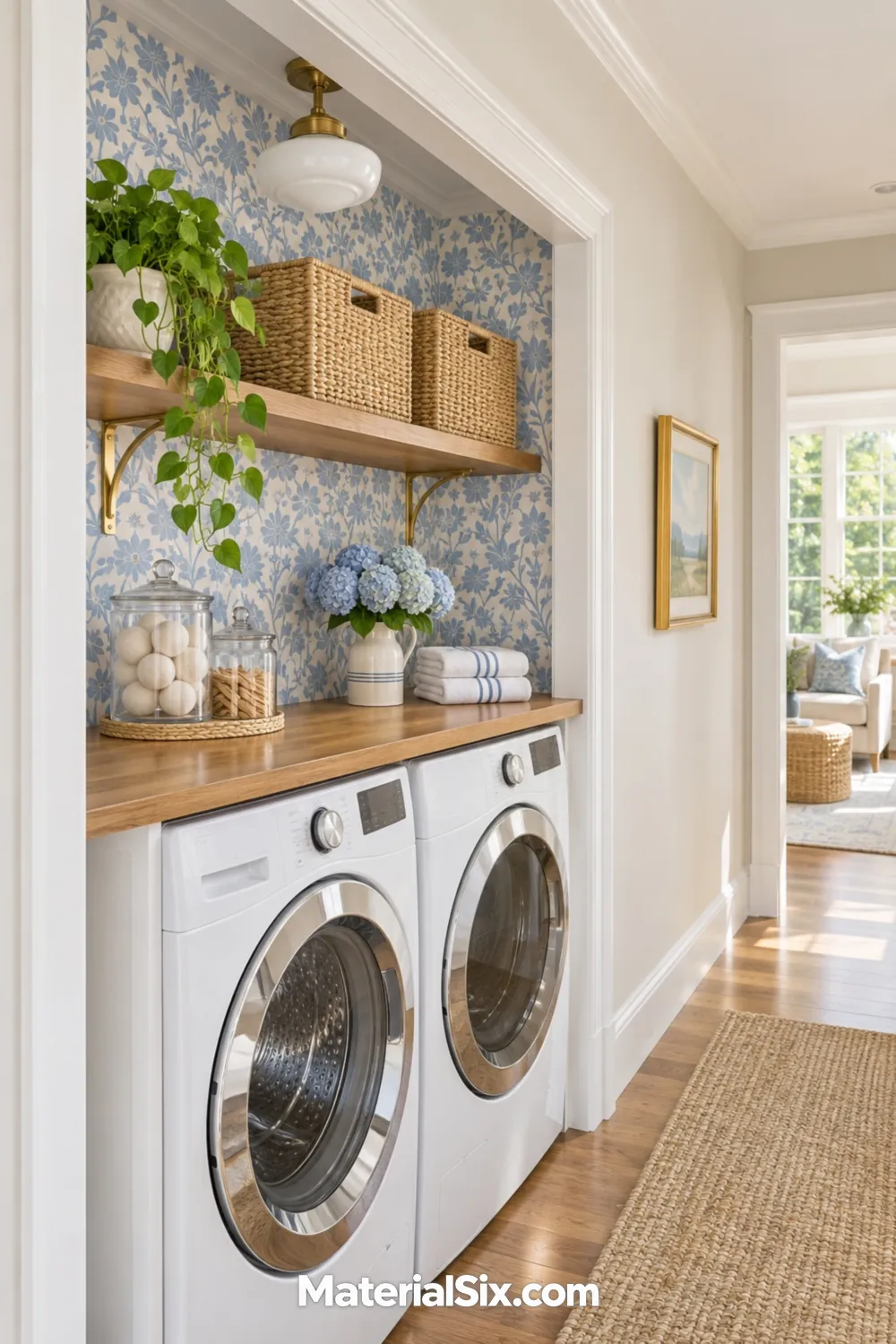
Sometimes the best use of a shallow opening is to leave it clear. Treat the laundry alcove like a built-in with patterned wallpaper, a wood counter, and a shelf with matching baskets. Blue and white wallpaper draws the eye beyond the machines, while simple trim gives the opening a deliberate edge.
Keep the items you reach for daily on the shelf and tuck refills into baskets. Plan counter height and placement around access to the machines and their installation clearances. Since the alcove stays on display, pick storage you can put back in order with a quick pass.
Before ordering a door, stand at the closet with an empty laundry basket and open each machine the way you normally would. Mark where the new panels will swing, fold, slide, or gather. That quick walkthrough tells you which designs will feel comfortable in your space.