
A small mudroom has to handle a surprising amount of traffic. Shoes land wherever they come off, the door swings into the best spot for a bench, and a stack of bags can swallow the little floor space you have.
These small mudroom ideas use the space your entryway actually offers, whether that’s a narrow stretch of wall, an underused closet, or a corner by the back door.
Start with the thing you trip over or lose most often, then give it a spot you can reach without blocking the way inside.
1. Float a Bench Above Everyday Boots
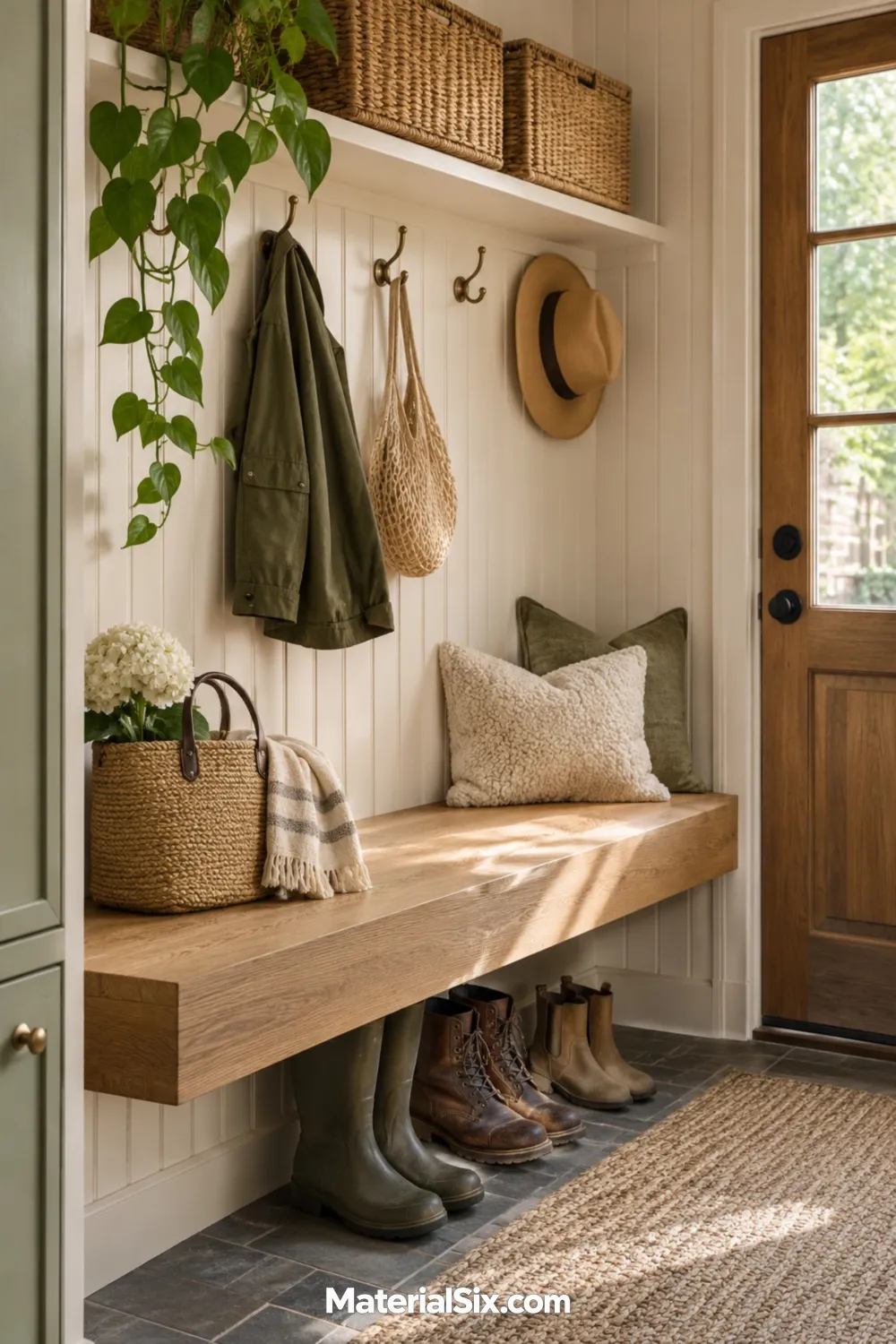
A floating oak bench gives you a seat and leaves the floor beneath open for shoes. That open stretch makes it easier to see which pairs are still there and sweep grit out from behind them. A strip of painted beadboard behind the seat gives damp coats and scuffed heels a surface you can wipe.
Mark out the seat with painter’s tape before settling on the depth. Try opening the door fully and walking past the taped area with a bag in each hand. For a wall-mounted seat, use a system designed for seating and have the wall and mounting checked for the intended load.
2. Give Coats a Slim Peg Rail
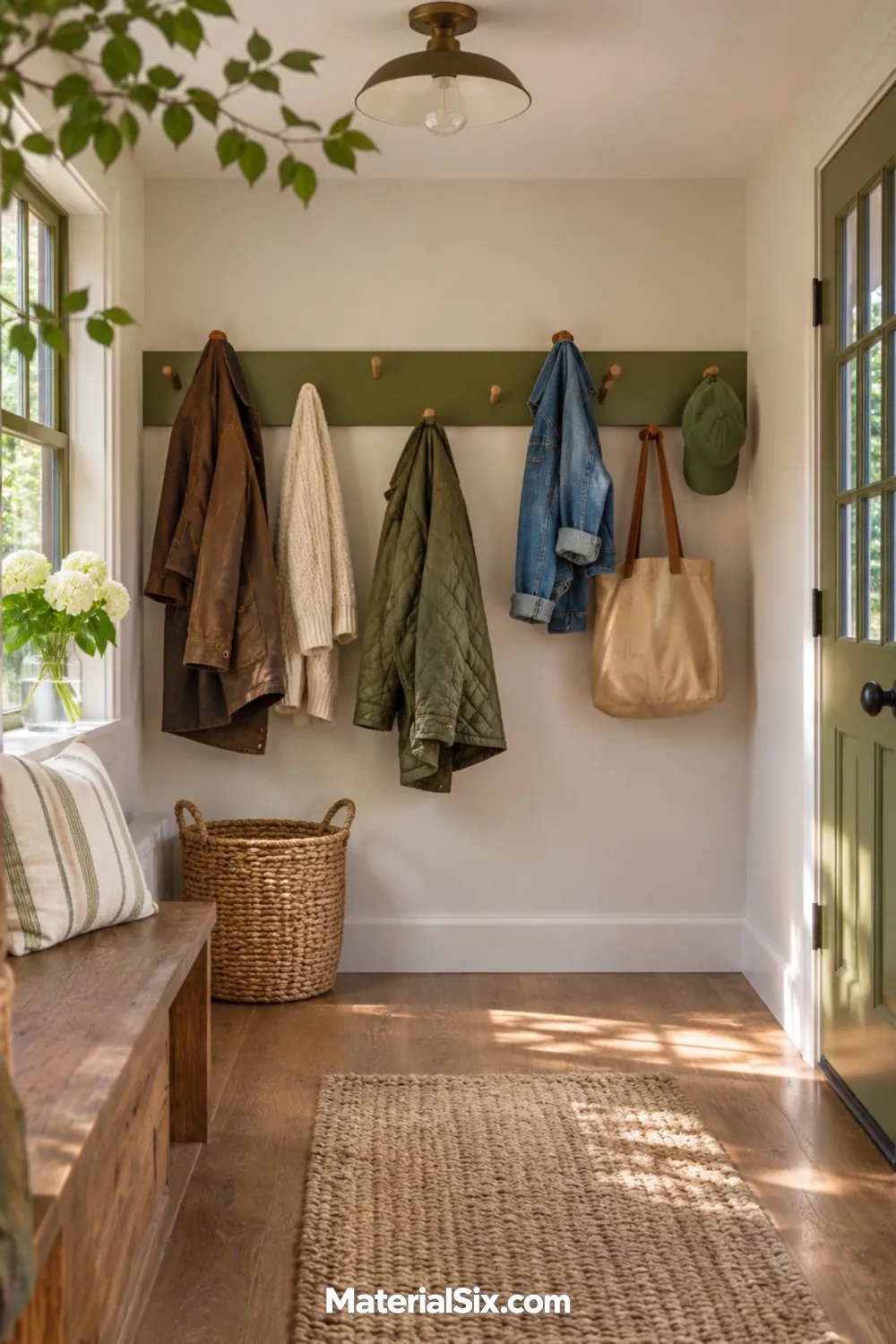
An olive peg rail can turn a blank wall into a coat area without a piece of furniture on the floor. In a tight entry, how far the coats stick out matters more than the depth of the rail itself. Leave a gap between the busiest pegs so a bulky coat and a backpack can hang without bunching up in the walkway.
Keep a peg nearest the door free for the jacket you wear every day. When summer rolls around, switch out heavy outerwear and use that same strip of wall for hats or a small market tote.
3. Hide Shoes in a Flip-Down Cabinet
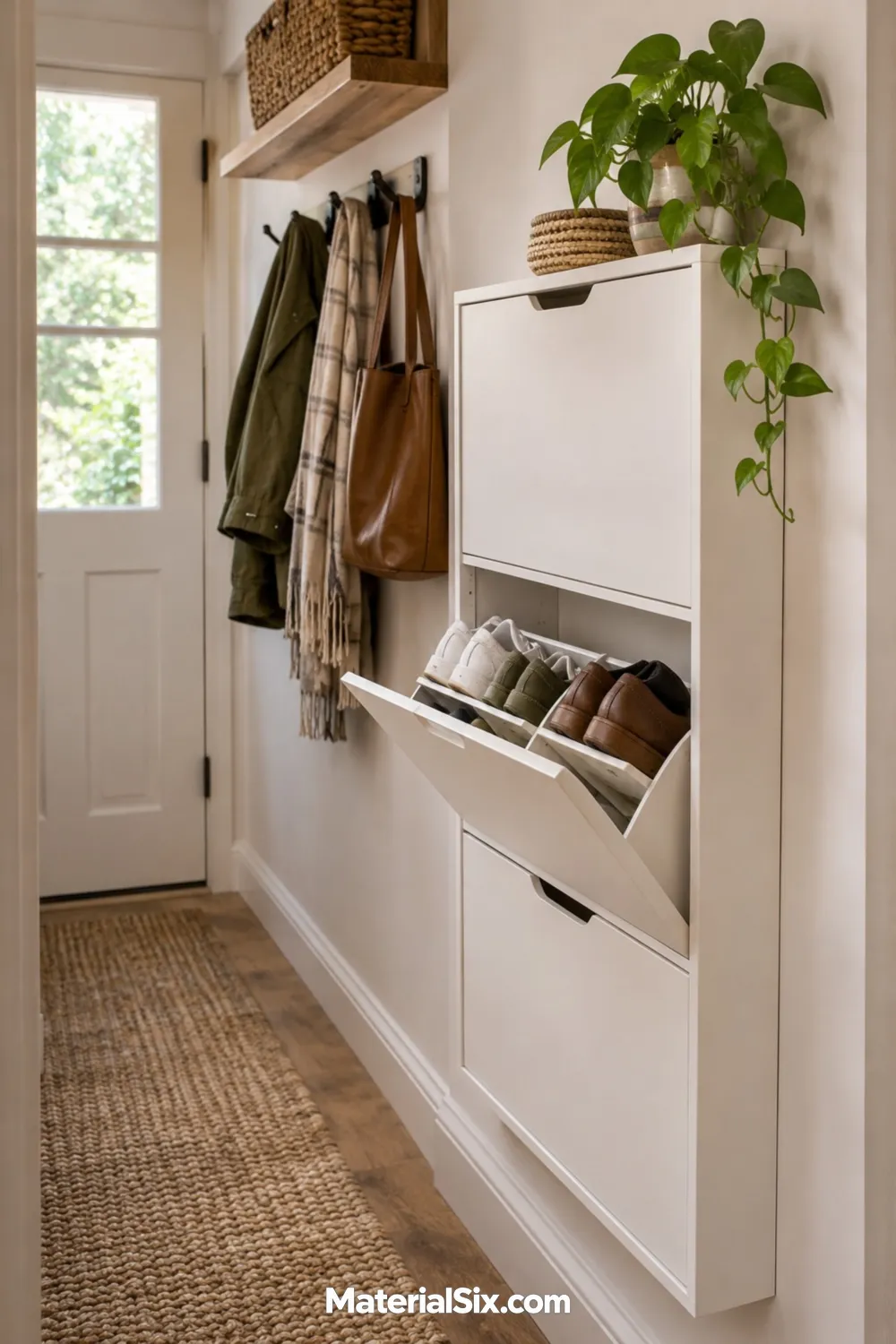
In a narrow hallway mudroom, a shallow tilt-out shoe cabinet can give everyday sneakers a place to go without a deep cabinet projecting into the hall. Choose one with a top just wide enough for a catchall, so it earns its spot even on days when everyone wears the same shoes.
Check the usable depth inside with the largest pair you plan to store. If the cabinet will sit across from a door, test the space with the door open and allow room to tilt the compartments forward. Follow the manufacturer’s anchoring directions.
4. Choose a Compact Hall Tree
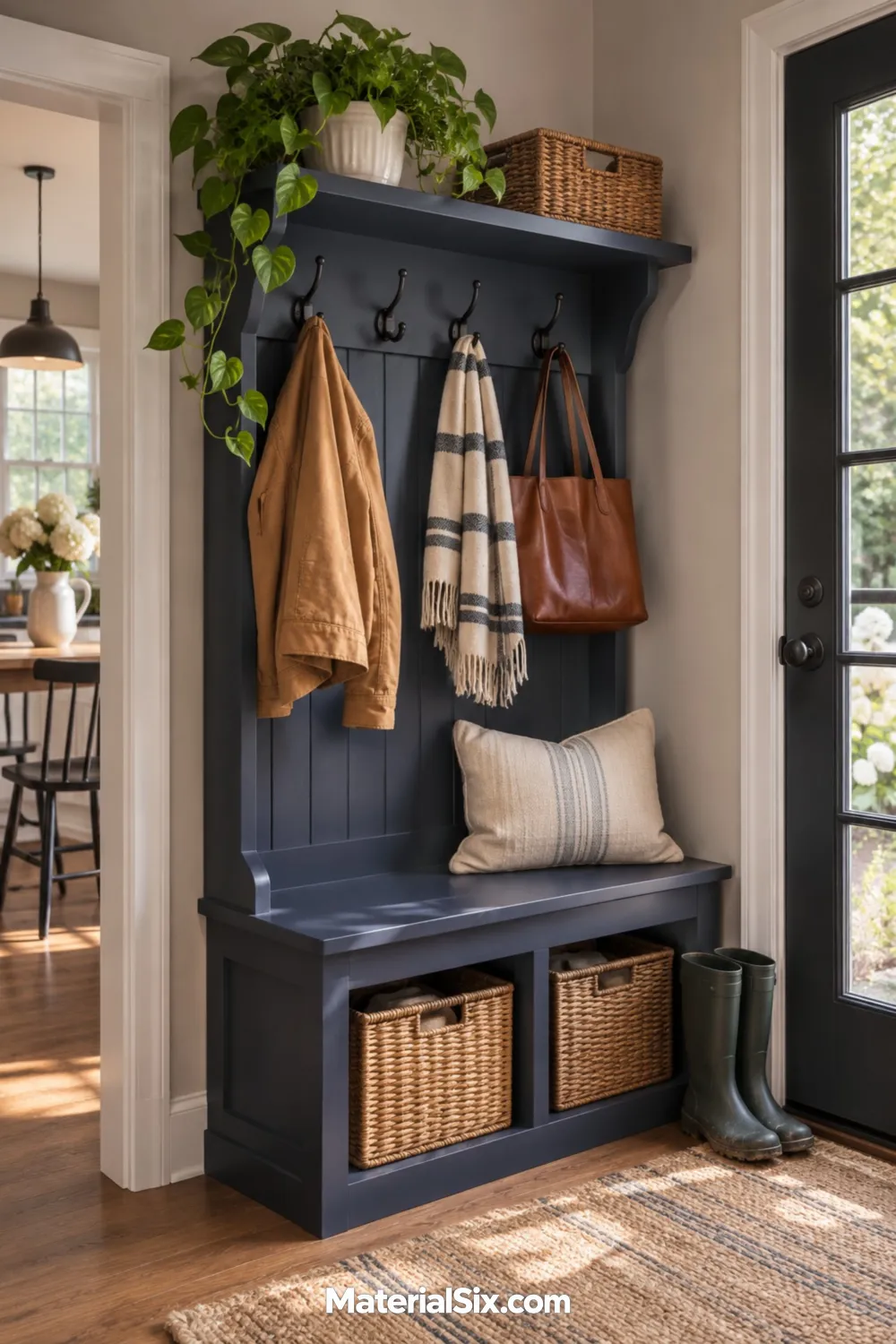
A compact hall tree groups a seat, hooks, and a place for a basket in a single piece. A navy finish gives the little zone a defined edge, especially in an open entryway where the landing area otherwise blends into the next room.
Start by deciding which pieces you reach for when you walk in. If the hooks will hold everyday bags, sit on the bench before buying and see whether there’s room for your shoulders with a bag hanging above. Keep the top shelf for lightweight extras you only need once in a while.
5. Turn a Hall Closet Into an Open Mudroom
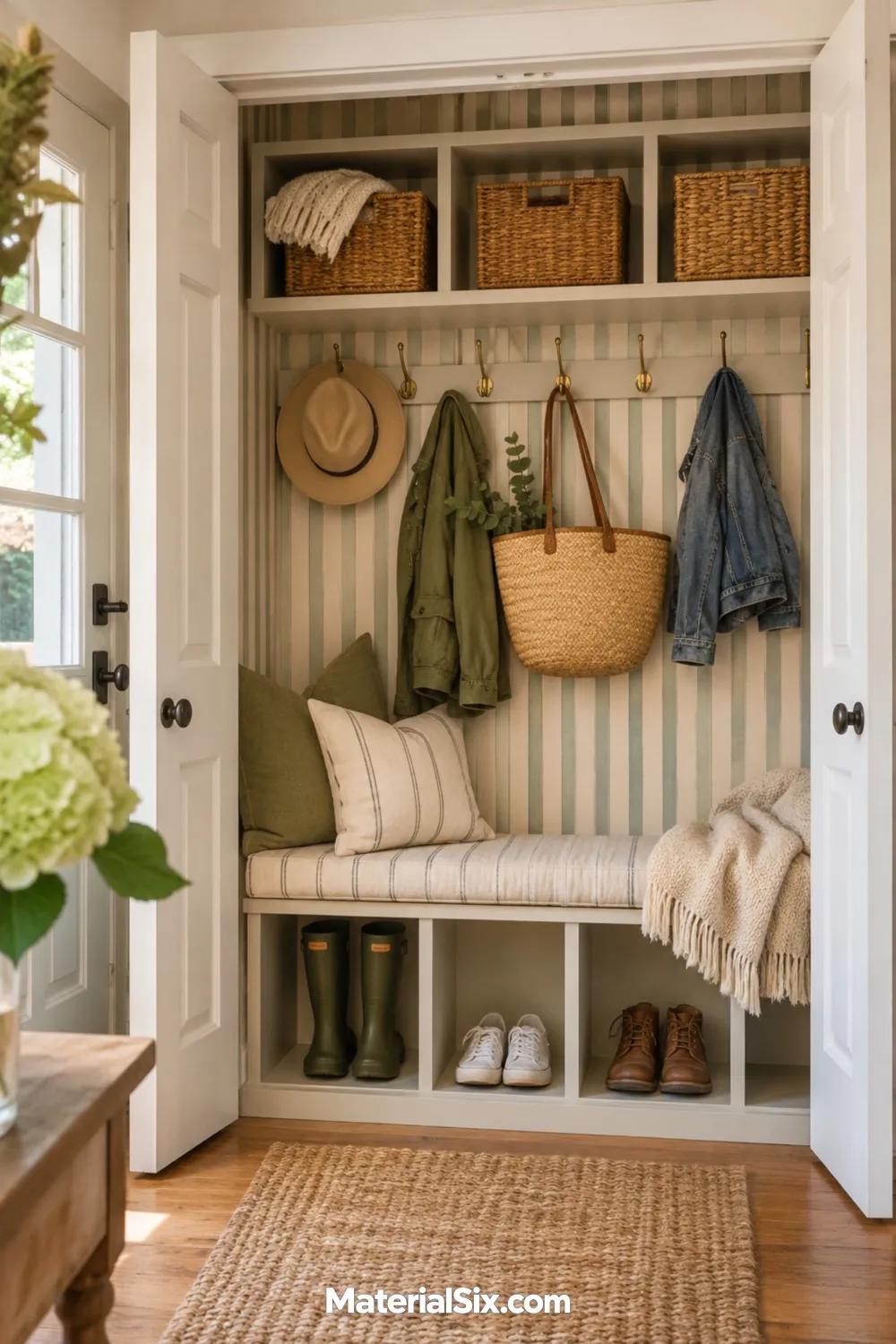
An underused coat closet can become a mudroom nook with a seat inside the opening, cubbies below, and hooks across the back. The closet walls create a natural boundary for the drop zone. Striped wallpaper behind the hooks adds interest when the cubbies are empty and gives the nook its own identity.
Before giving up the closet rod, figure out where long coats and anything bulky will go. Save one cubby for things that travel together, such as shoes and a small sports bag. Check the recess depth with a full backpack hanging at the back.
6. Put Basket Storage on a Floating Shelf
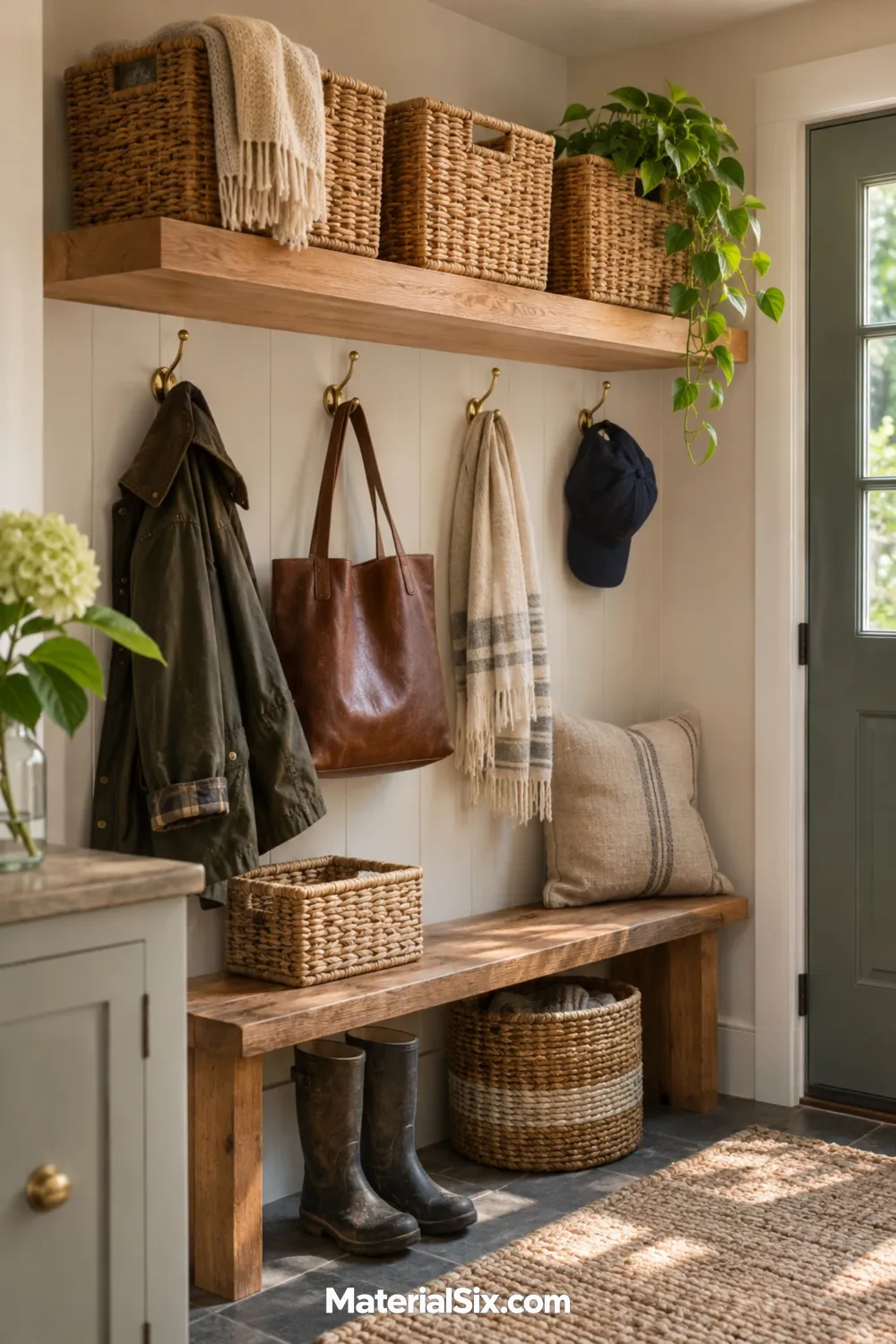
A single oak shelf above a row of brass hooks gives loose accessories a home while the wall below handles jackets. Woven baskets soften a plain entry and make it easy to bring a whole category down at once. Try one for hats and another for dog-walking gear.
Set the shelf where you can comfortably retrieve the baskets. If you need to reach on tiptoe, reserve it for occasional items and keep everyday essentials lower. Pick shallow baskets you can see into from the floor so small gloves and spare keys stay easy to find.
7. Fit a Locker Tower Beside the Door
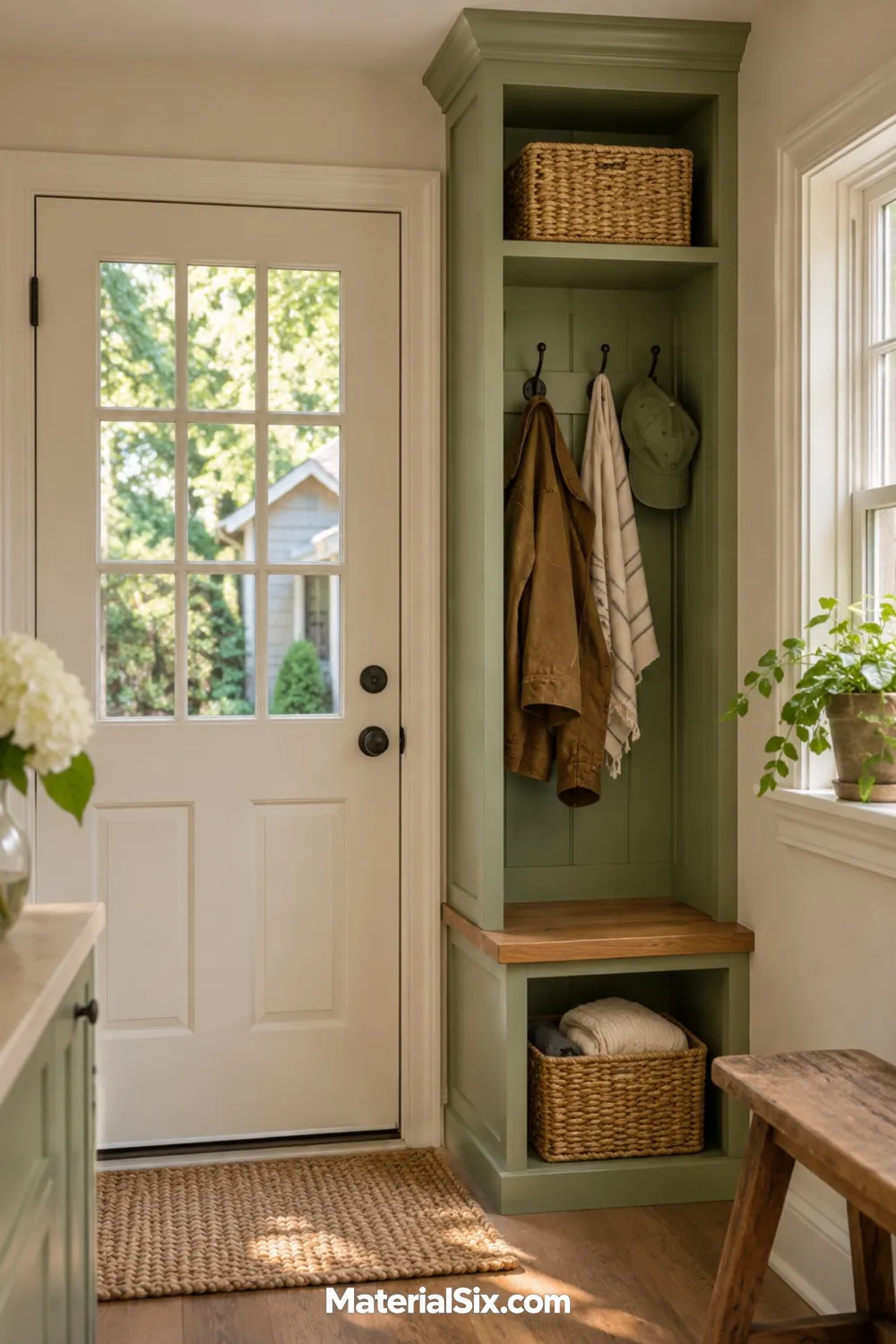
A narrow built-in locker can use the strip of wall between a back door and a corner. A tall middle section makes room for bags and coats, with a shoe cubby below and an upper shelf for seasonal gear. A sage finish makes a slim tower feel like part of the room, particularly when the nearby trim shares the same color.
Plan around the bag with the widest straps and the longest coat you’ll hang. A locker that fits the wall still needs room for you to get the bag in and out in one motion.
8. Catch Mud With a Slatted Boot Tray
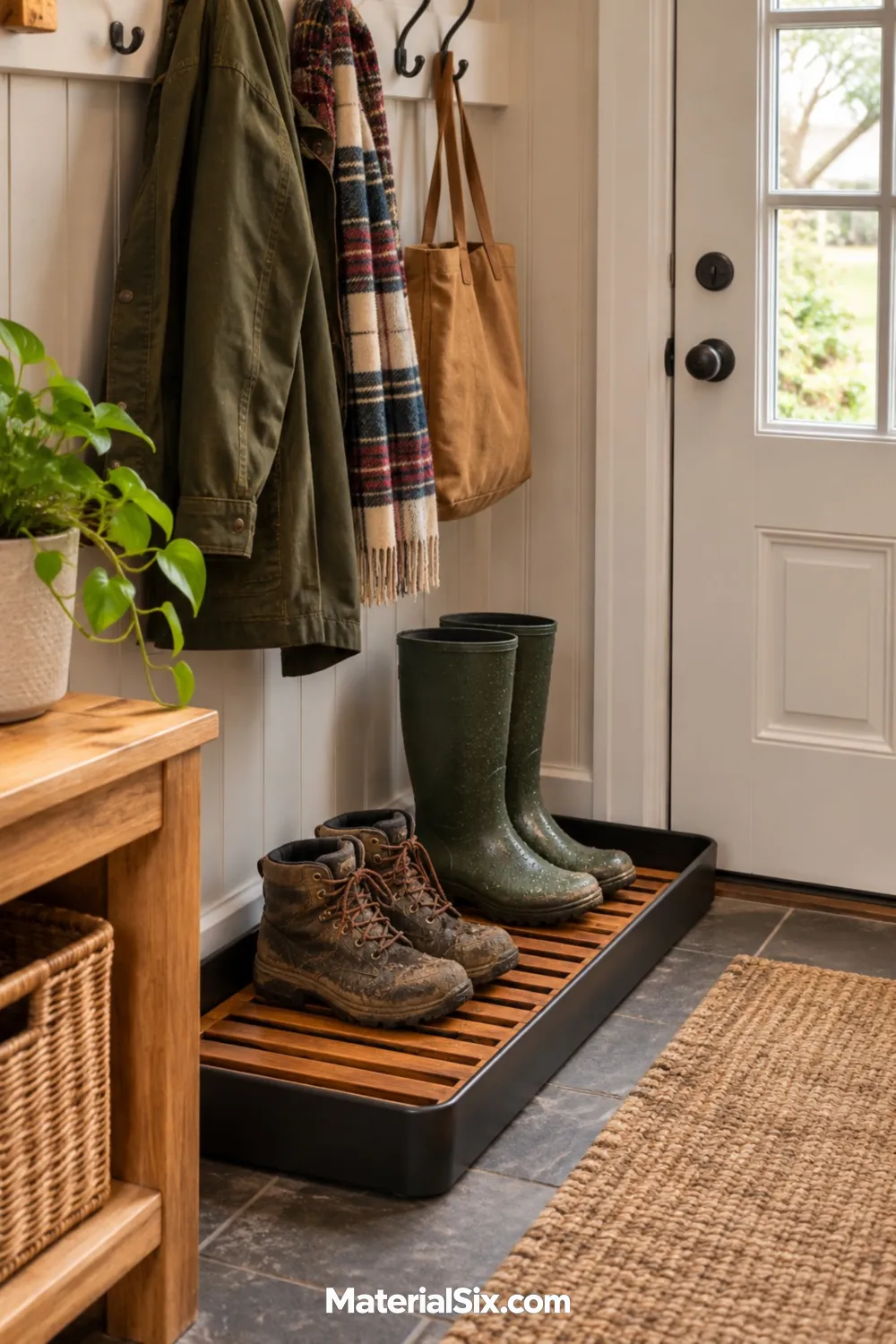
A slatted insert keeps boots above the muck that collects at the bottom of a tray. The setup works well by a back entrance where wet shoes arrive before anyone has time to wipe them down. A dark tray also gives you a defined landing spot against a pale floor.
Size it for the pairs you regularly remove at that door. Leave enough room to lift out the insert and carry the tray to the sink or outside. Set it off the main walking line so you can step around a pair of boots while carrying groceries.
9. Add Pull-Out Shoe Drawers to the Bench
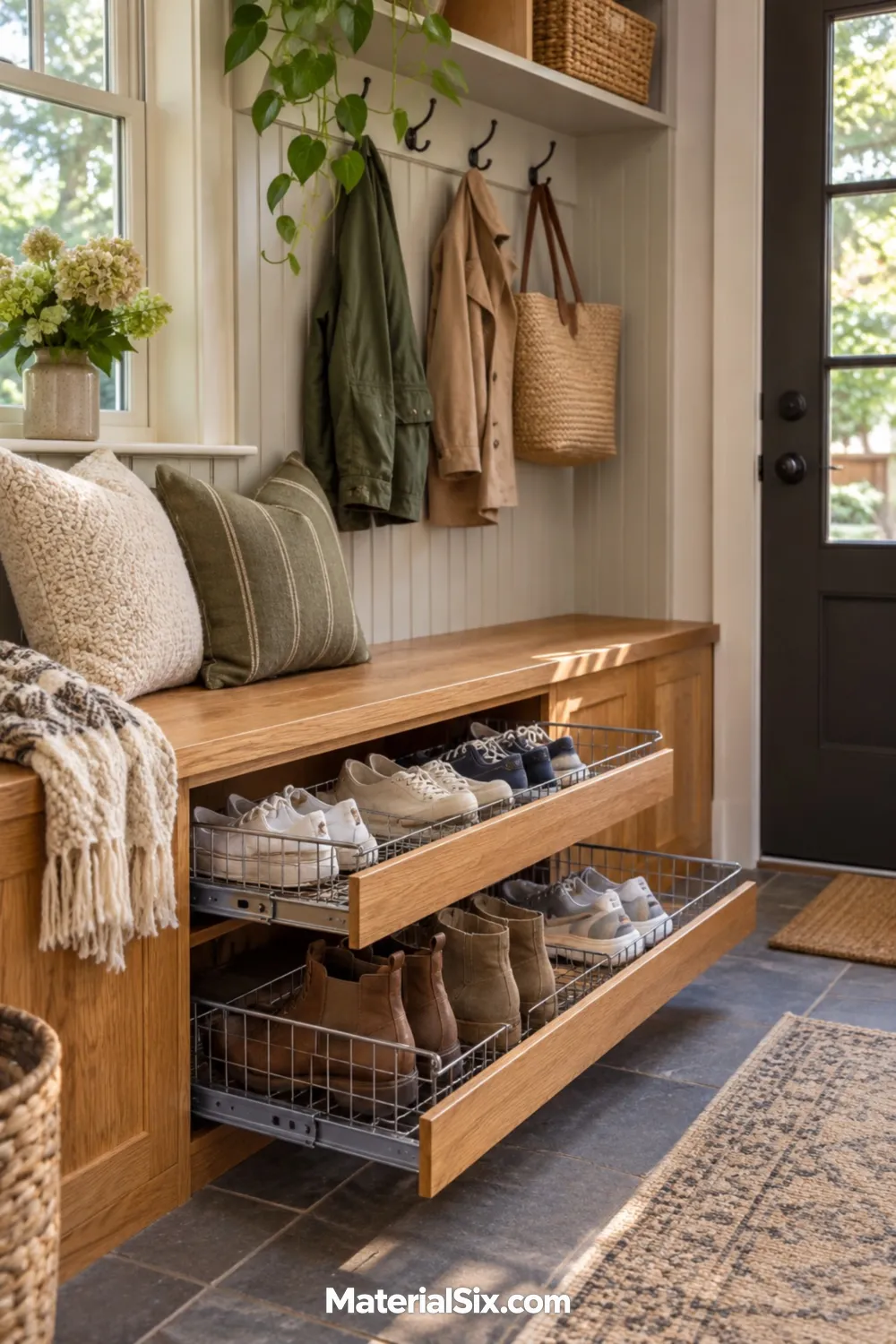
A shallow pull-out wire drawer uses the depth beneath a bench without making you crouch to find shoes at the back. You can separate everyday sneakers by person or assign each drawer to a category, such as slippers and walking shoes. An open basket also gives you a quick view of what is inside.
Make sure the drawers extend far enough to lift out a pair in one motion. Check the clearance in front with the drawer fully open, especially if the seat faces another door. A washable mat underneath can catch loose dirt.
10. Roll Canvas Bins Under a Slim Bench
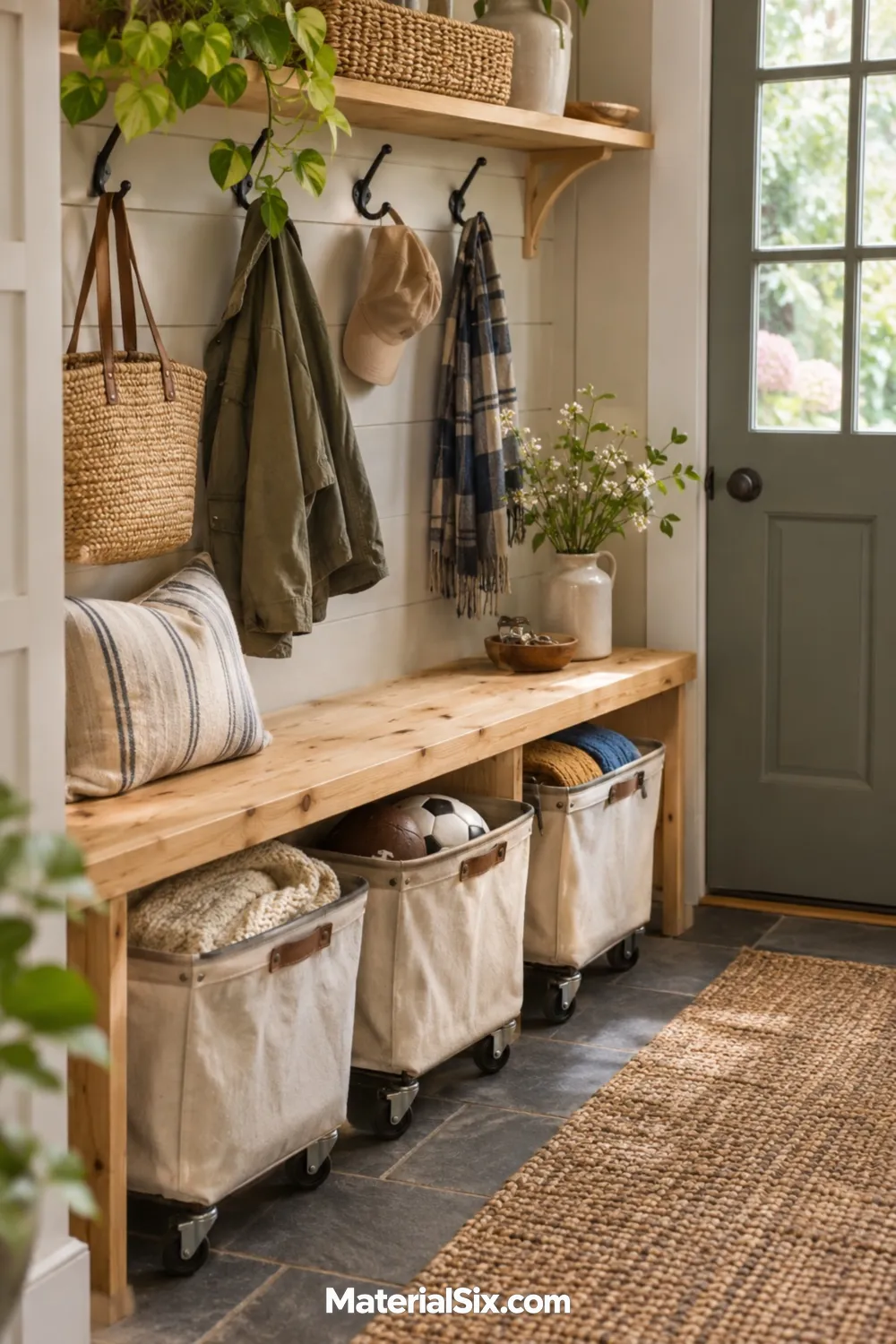
Wheeled bins can hold awkward gear like balls, garden clogs, and spare tote bags. Roll one out, drop things in, then push it back beneath the bench. A fabric bin with a sturdy handle is particularly handy if you want to take a whole load of gear to another room.
Choose bins you can pull out from the front and park completely beneath the seat. Check that the wheels roll smoothly over your floor and any nearby threshold. Use a separate tray for dripping footwear.
11. Give a Small Dresser a Second Job
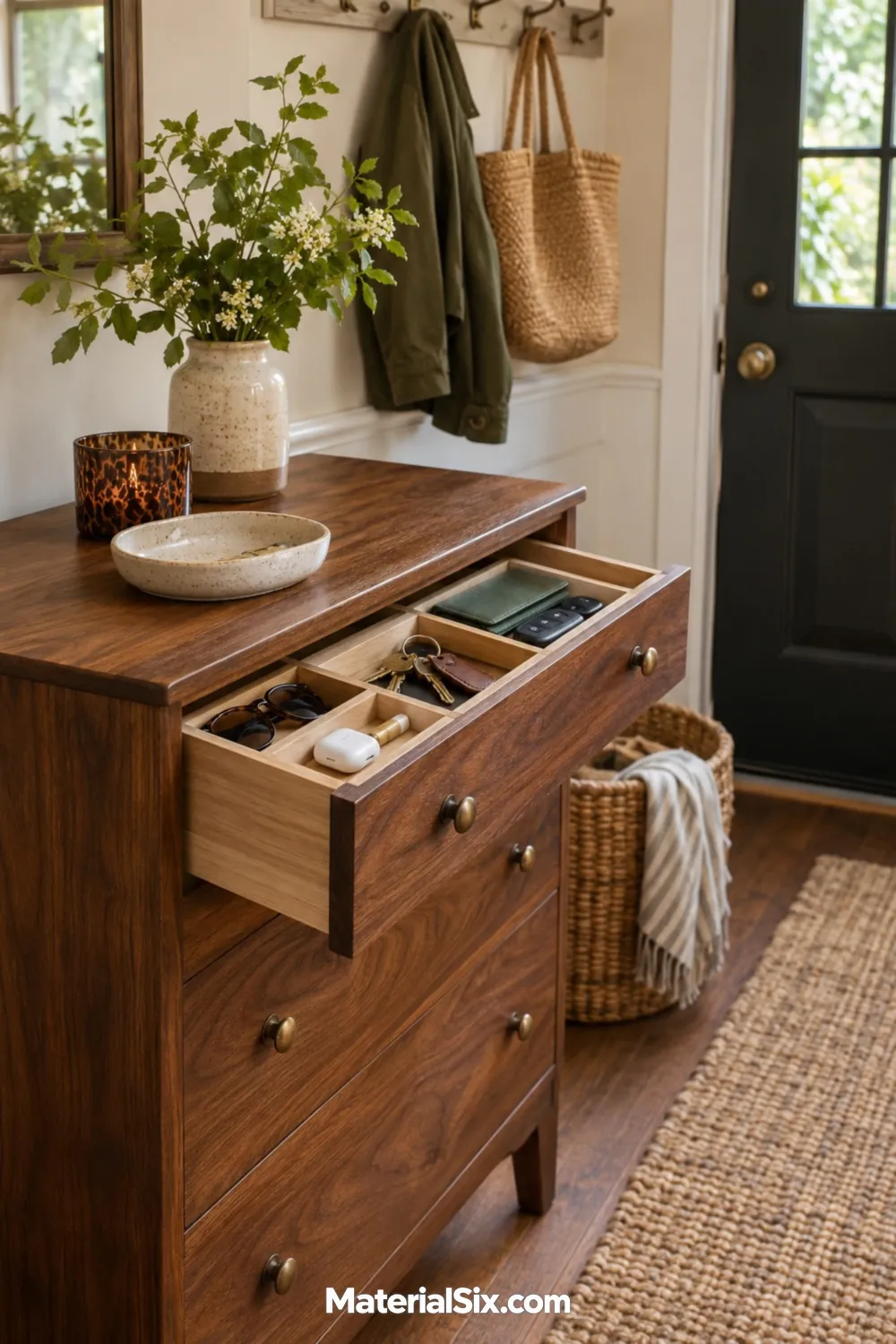
A compact dresser can store the things that make an entry look busy, from gloves and scarves to pet supplies. An older walnut chest brings warm grain into a simple mudroom and leaves you room for a shallow bowl on top. Use that bowl for items you actually grab on the way out.
If the dresser has deep drawers, use a few small dividers to keep keys and gloves from vanishing in the corners. Keep the most-used gear in the drawers you can reach while standing and follow the furniture’s anchoring directions.
12. Move the Mail Drop Zone Onto the Wall
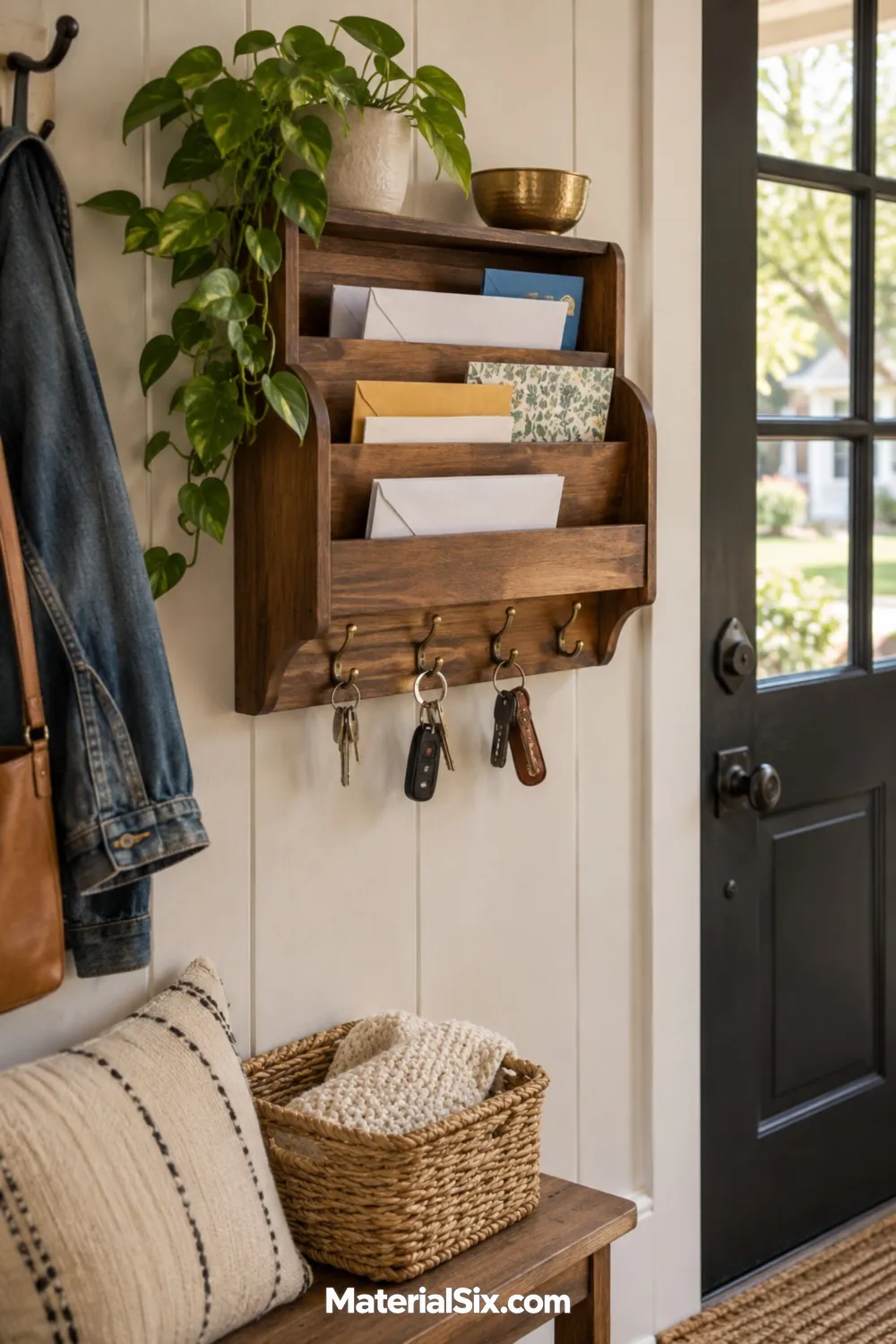
When a console would make the entry too tight, use a wall-mounted mail pocket with hooks below. One slot can hold the mail you still need to deal with, while a hook keeps your keys in the same place every time. Install it near the side you naturally pass after coming inside.
Keep the organizer small enough that you can see and clear what’s in it. A deep pocket can swallow envelopes for weeks. If several people use the same door, assign each person a hook and keep a single shared spot for outgoing mail.
13. Hide Tall Gear in a Narrow Cupboard
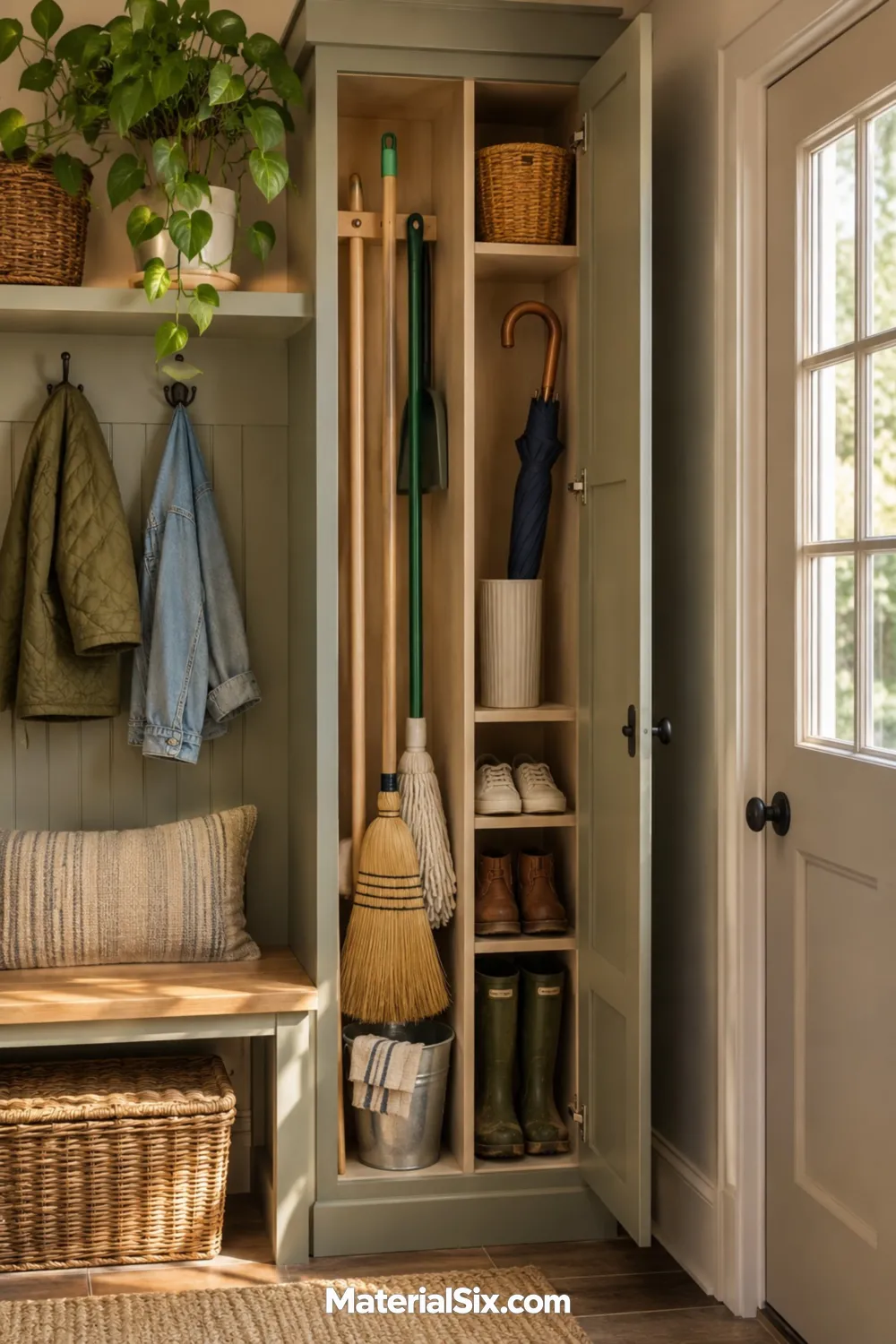
A slim closed cupboard makes sense when umbrellas, a broom, and spare shoes need to share the mudroom. Keep one vertical section clear for long items and give the rest shallow shelves. That layout puts awkward tools out of sight while leaving a separate spot for footwear.
Measure your longest item, including the handle. Then check how far the cupboard door opens relative to the entry door. Store dry shoes and umbrellas inside, and set a drip tray near the door for wet items.
14. Give Kids Cubbies They Can Reach
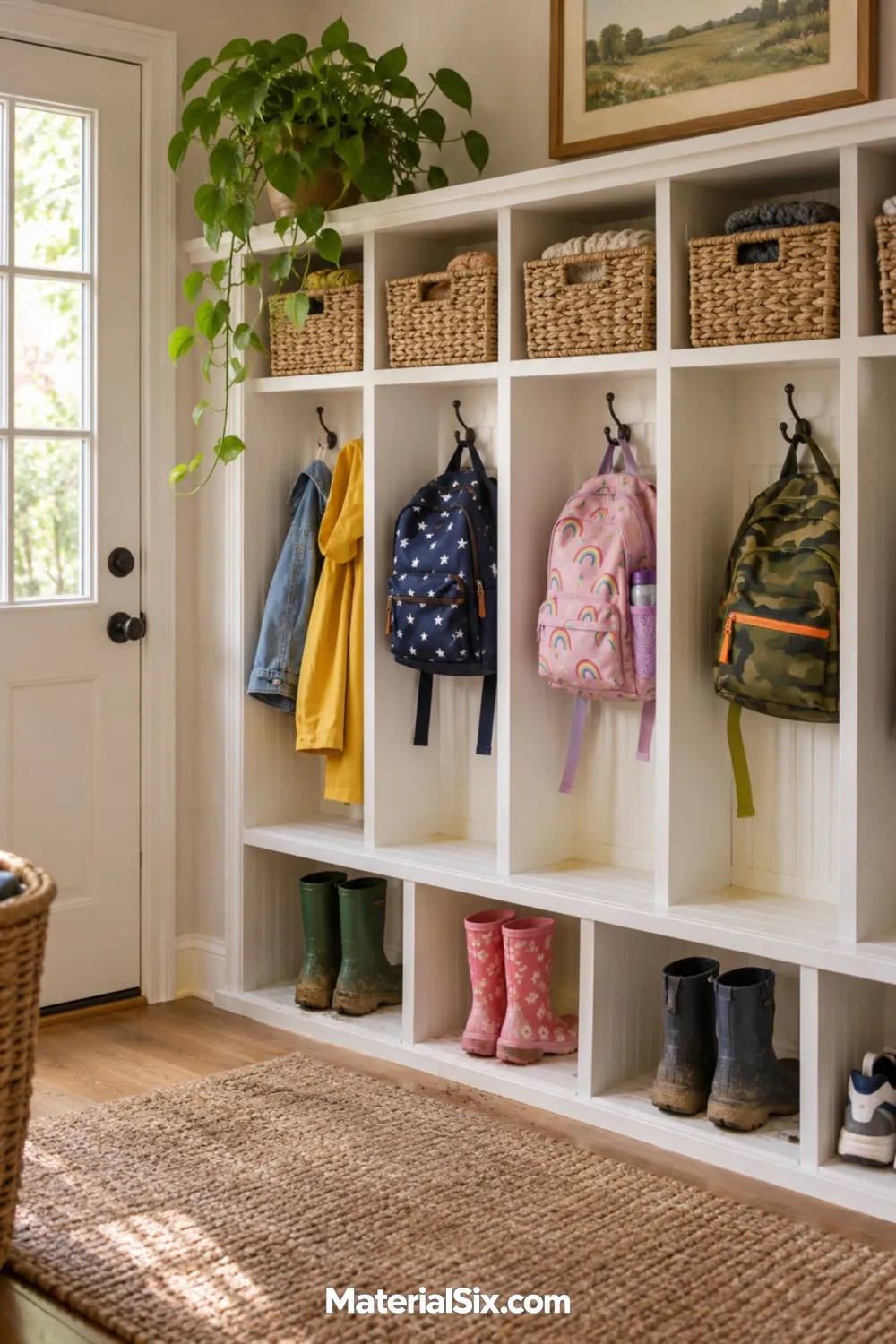
Low open cubbies let children put away their own shoes and bags as soon as they come through the door. Make each compartment wide enough for a backpack to sit naturally, with a lower opening for boots. White cubbies and a few colored bins make the individual spots easy to distinguish.
Try assigning one space per child and keeping spare supplies elsewhere. With fewer things inside, a child can see whether their gym shoes are ready for tomorrow. Keep the floor in front of the unit clear so there’s room to sit or crouch.
15. Hang Wet Gloves on a Swing-Out Rack
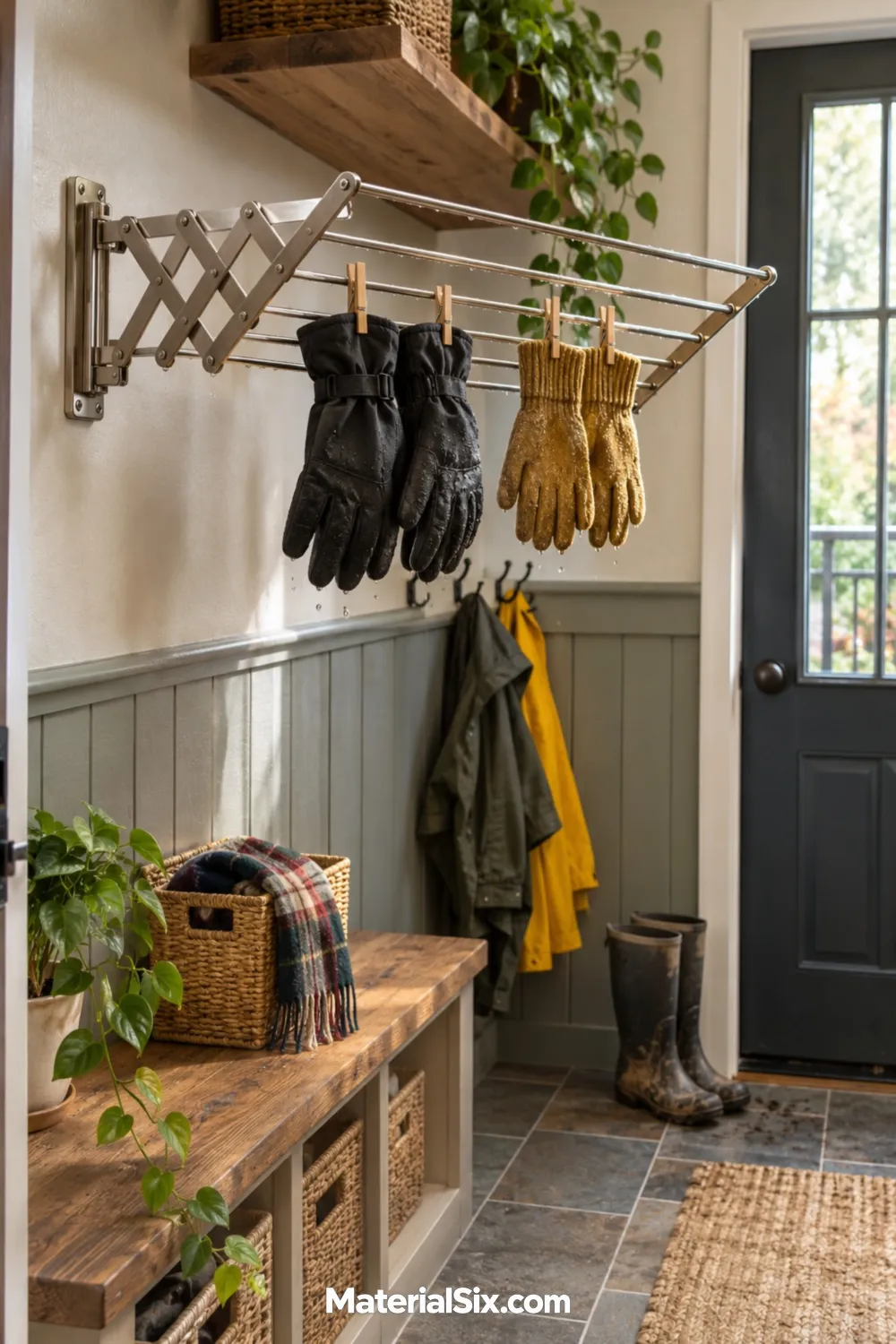
A small swing-out drying rack gives wet gloves and hats some breathing room near the door. Mount it above a washable surface, with enough space between pieces for air to circulate. When everything is dry, fold the rack back toward the wall.
Look for a spot outside the door’s swing and away from the busiest part of the walkway. Hang wet outerwear somewhere with more clearance, and let the small rack handle the pieces that tend to end up in a soggy pile.
16. Tuck a Seat Under the Stair Slope
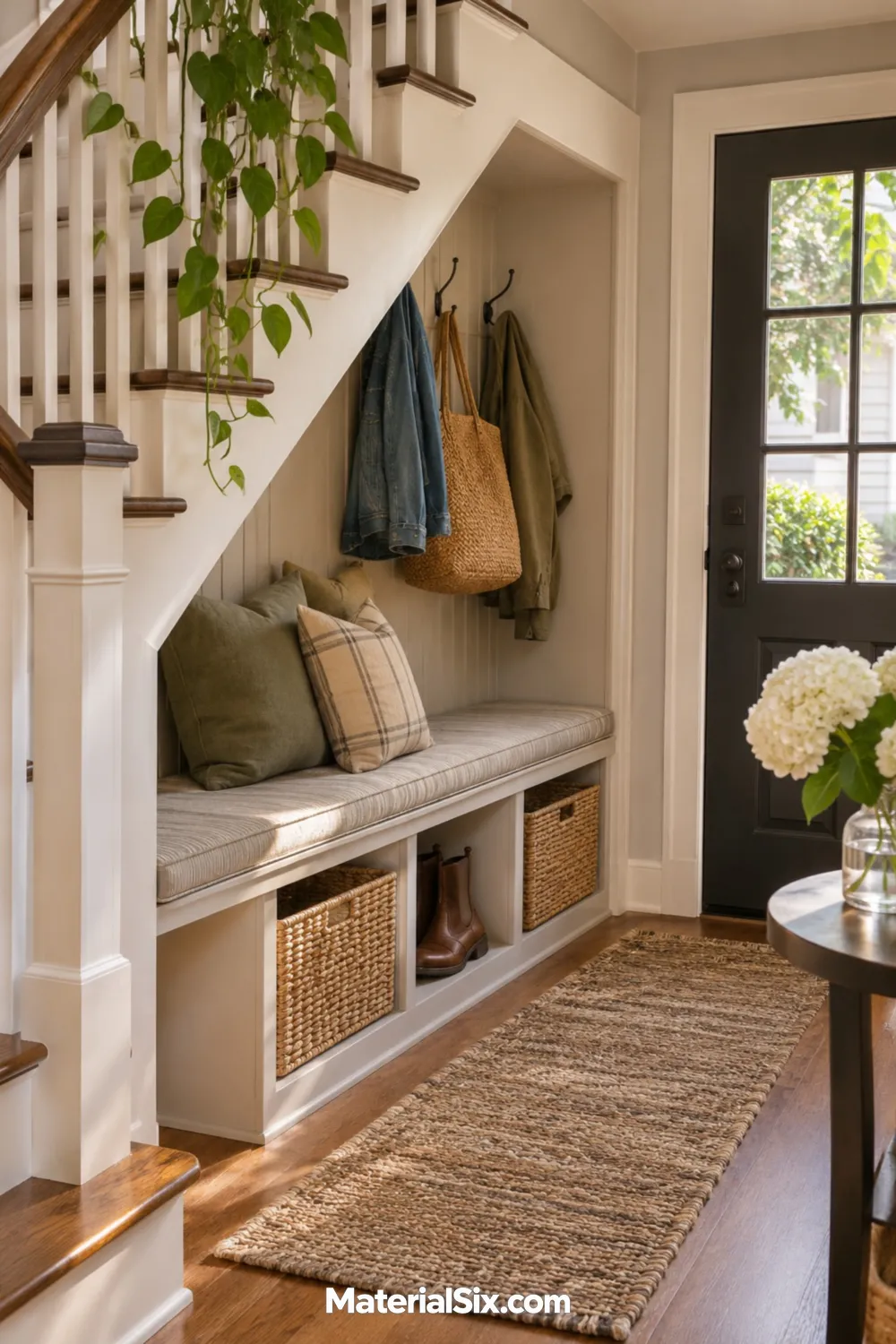
Where the entry meets a staircase, the low end of the slope can take a shallow bench and a place for shoes. Keep hooks and bags at the taller end where you can stand comfortably. That gives each part of an awkward wall a job suited to its height.
Test the seat location with a chair of similar height before committing. Sit, stand, and lean forward to take off your shoes to see where you need headroom. Give the base of the stairs and the route between rooms a clear path.
17. Give a Basement Entry a Washable Landing
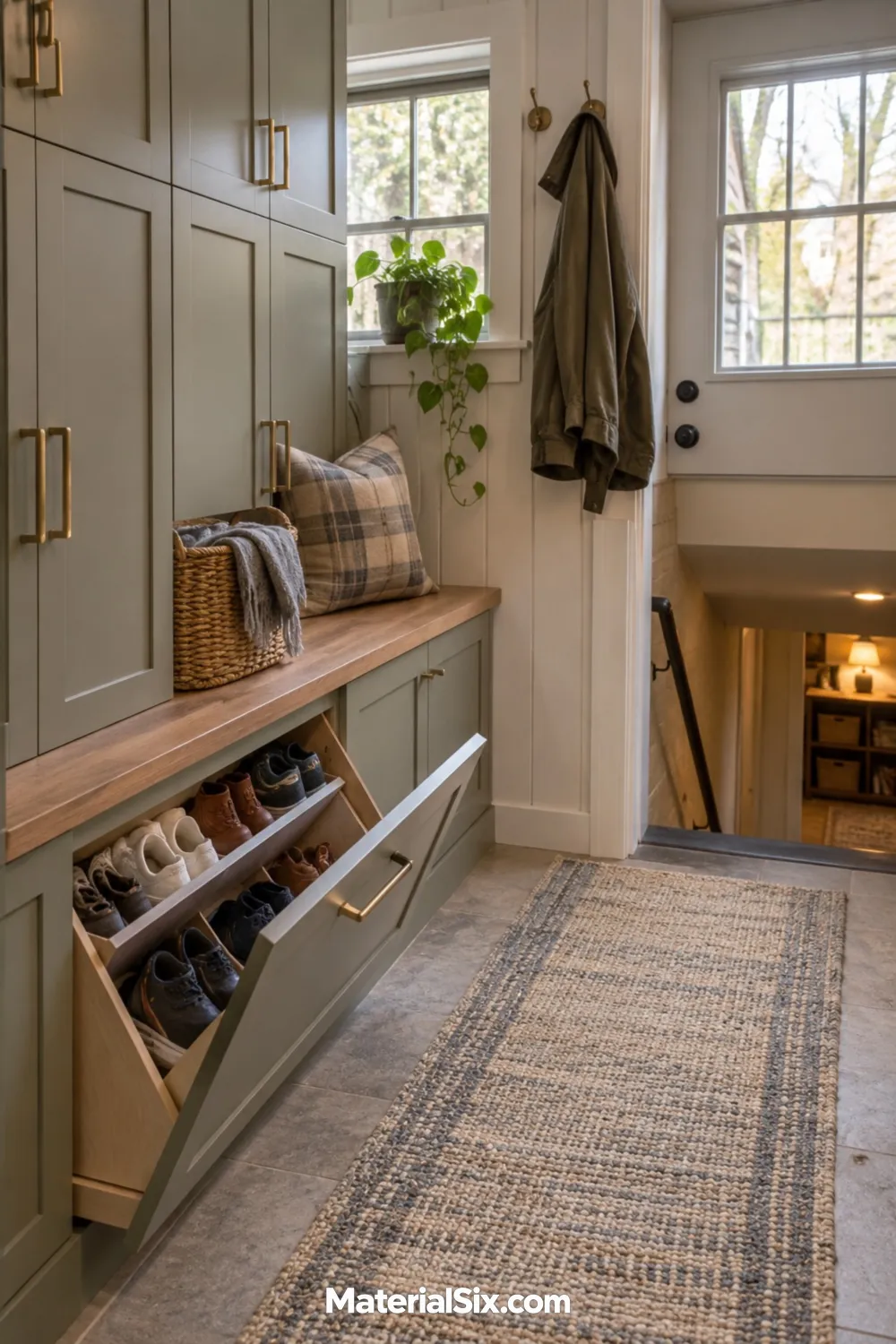
A basement entry may do double duty as the route from the yard and the way to the laundry room. A washable runner gives shoes a landing strip, while a closed cabinet holds dry gear and spare bags. Look for a runner you can lift and clean easily, with a backing suited to your floor.
Keep the landing simple where it meets the stairs. An upright cabinet beside a clear path takes up less walking room than storage spread across the floor. Check that the runner lies flat and the door clears it before using it there.
18. Use Both Walls of a Corner Nook
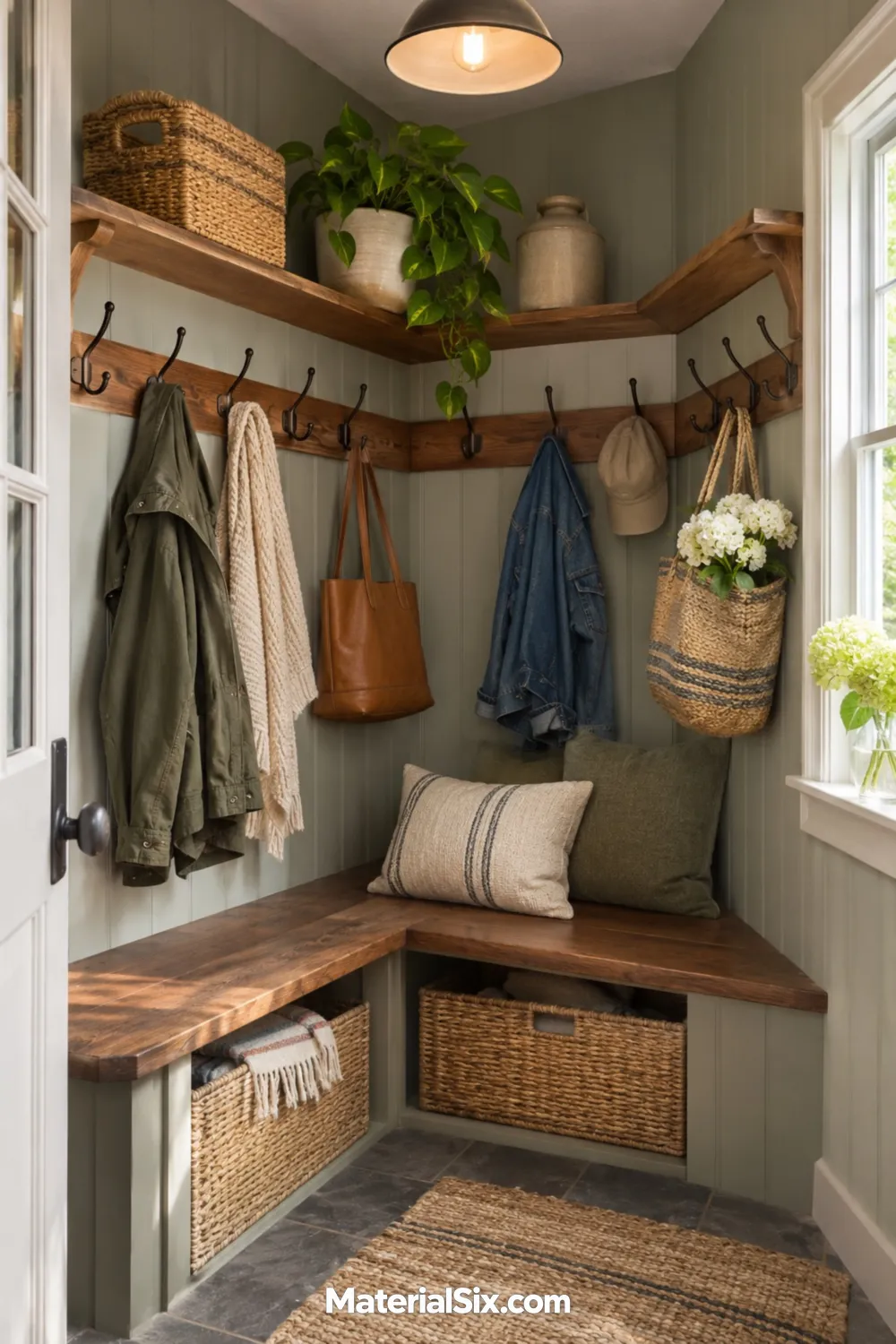
A tight corner can work harder when hook rails wrap around two adjoining walls. Put flat things like hats and leashes on the shorter side, then use the longer run for coats and bags. This approach leaves the floor open and can fit an entry that has no single long wall.
Leave the innermost part of the corner open so bags on one wall don’t collide with jackets on the other. Before choosing hook locations, hang your largest bag temporarily and check how far it projects into the route from the door.
19. Install a Fold-Down Perch
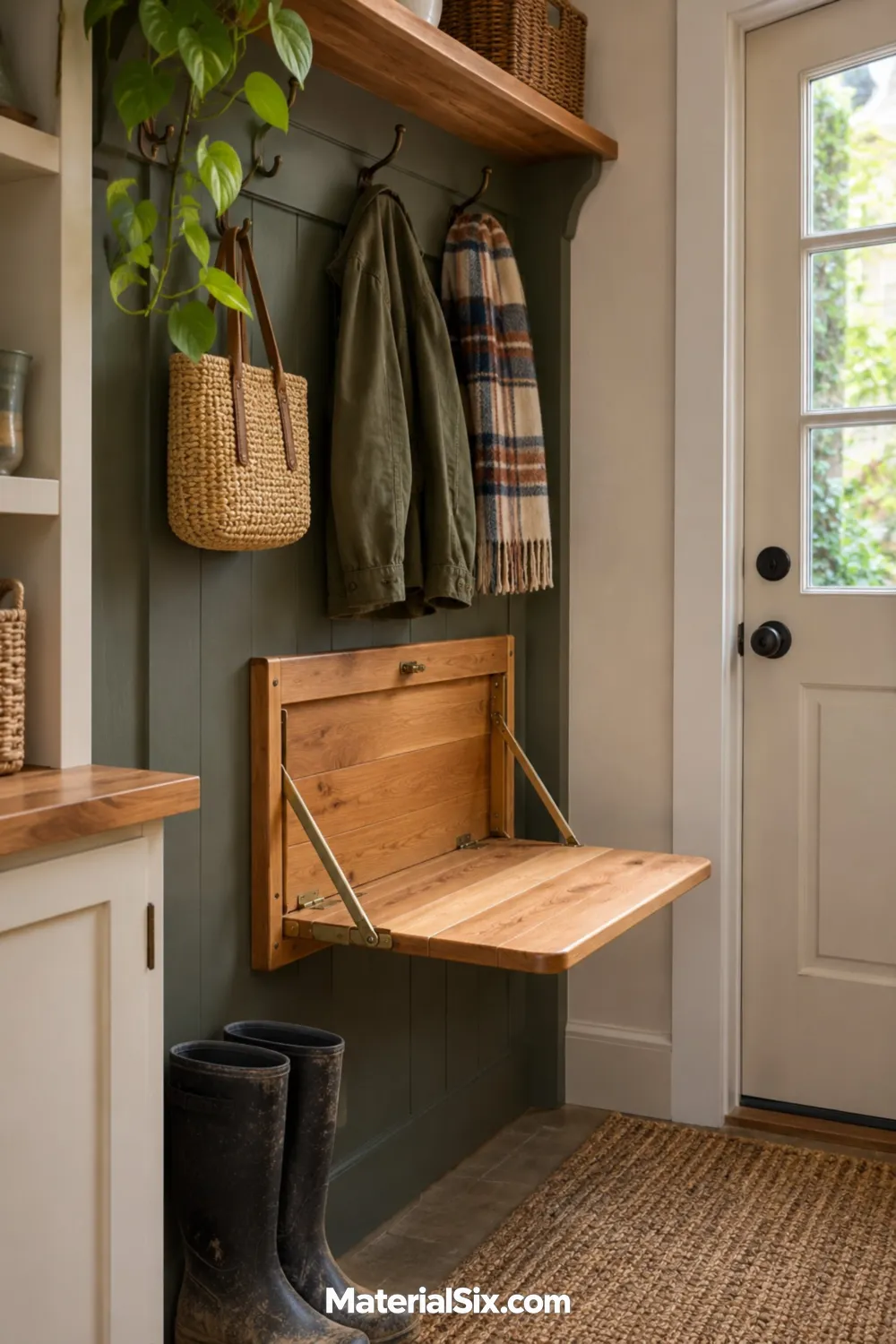
A wall-mounted folding perch can give you a place to sit in an entry too small for a bench. It folds away once the shoes are on, making sense in a tiny-house entry or a hall people pass through all day. A simple wood finish brings some warmth without adding more furniture.
Check the clearance with the seat open and confirm that you can stand up safely. Use a folding seat designed for this purpose, follow its installation requirements, and have the mounting checked for the intended load.
20. Stack Footwear on a Freestanding Boot Rack
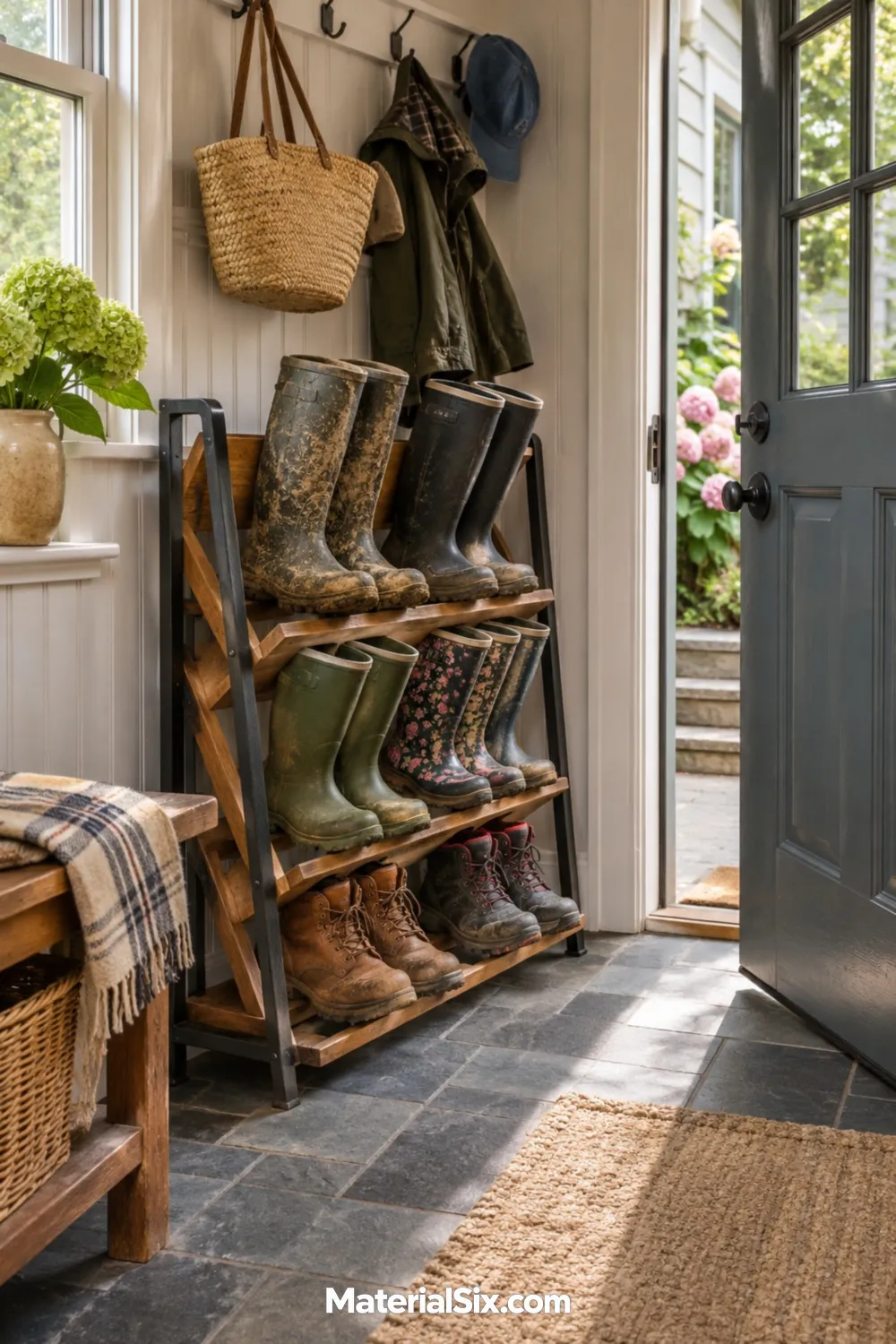
A freestanding boot rack keeps shoes in one footprint near the back door. Look for adjustable spacing if you need the lower shelf for tall boots and an upper shelf for sneakers. A washable slate or tile floor beneath it makes the surrounding area simple to clean.
Try placing the rack along the wall that receives the most traffic from the yard. Put a removable tray on or beneath the lowest tier for drips, and leave room to reach the back row. Keep the top open for footwear you use several times a week.
21. Pair a Slim Console With an Arched Mirror
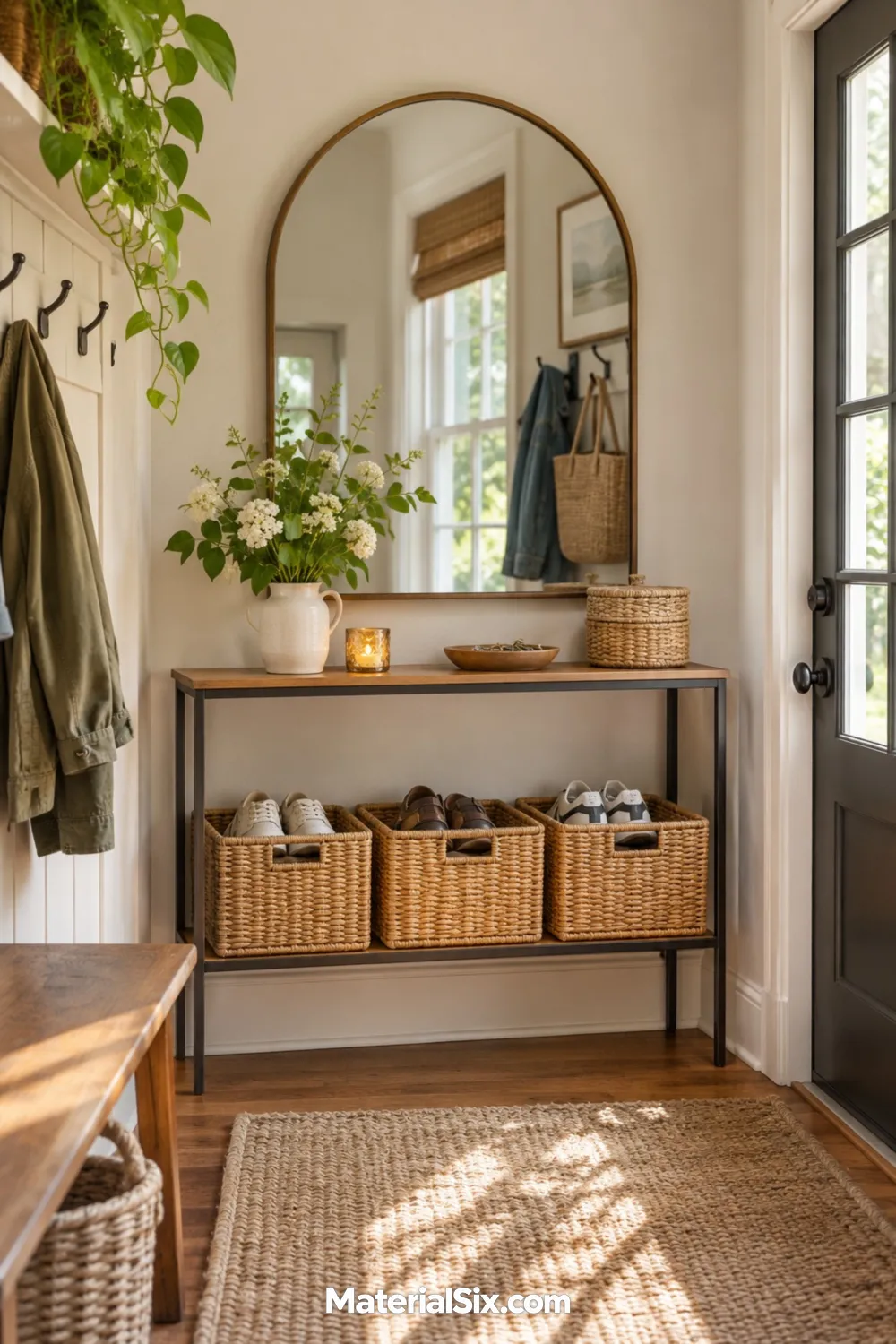
A narrow console can turn a front entry into a mudroom drop zone while keeping the look of a foyer. Slip a pair of shoe baskets beneath the console, add a small key dish on top, and place an arched mirror above it where you can use it before heading out.
Check that the baskets come out easily around the console legs. Leave a bit of extra room at the top so you can drop shoes in without pulling the basket all the way out. A small rug in front can define where shoes come off.
Stand at the door you use most and walk through what you carry in on an ordinary day. If shoes pile up before anything else comes off, start with a tray or rack. If you keep walking into the house with your keys and bag, try a wall drop zone right where you pause. The right mudroom starts with the part of your routine you can make easier today.