
The space below a raised deck can feel like the leftover part of the backyard, even when it’s the shortest walk from the house to the lawn. Start by noticing what you need most down there: a better floor, a place to sit out of view, or somewhere to eat close to the walkout door.
These under deck patio ideas include small styling changes and bigger layout decisions. You’ll find ways to work with a bare concrete slab, use the edges for planting or privacy, and give the covered area a job that fits your daily routine.
1. Build a Lounge on a Paver Patio
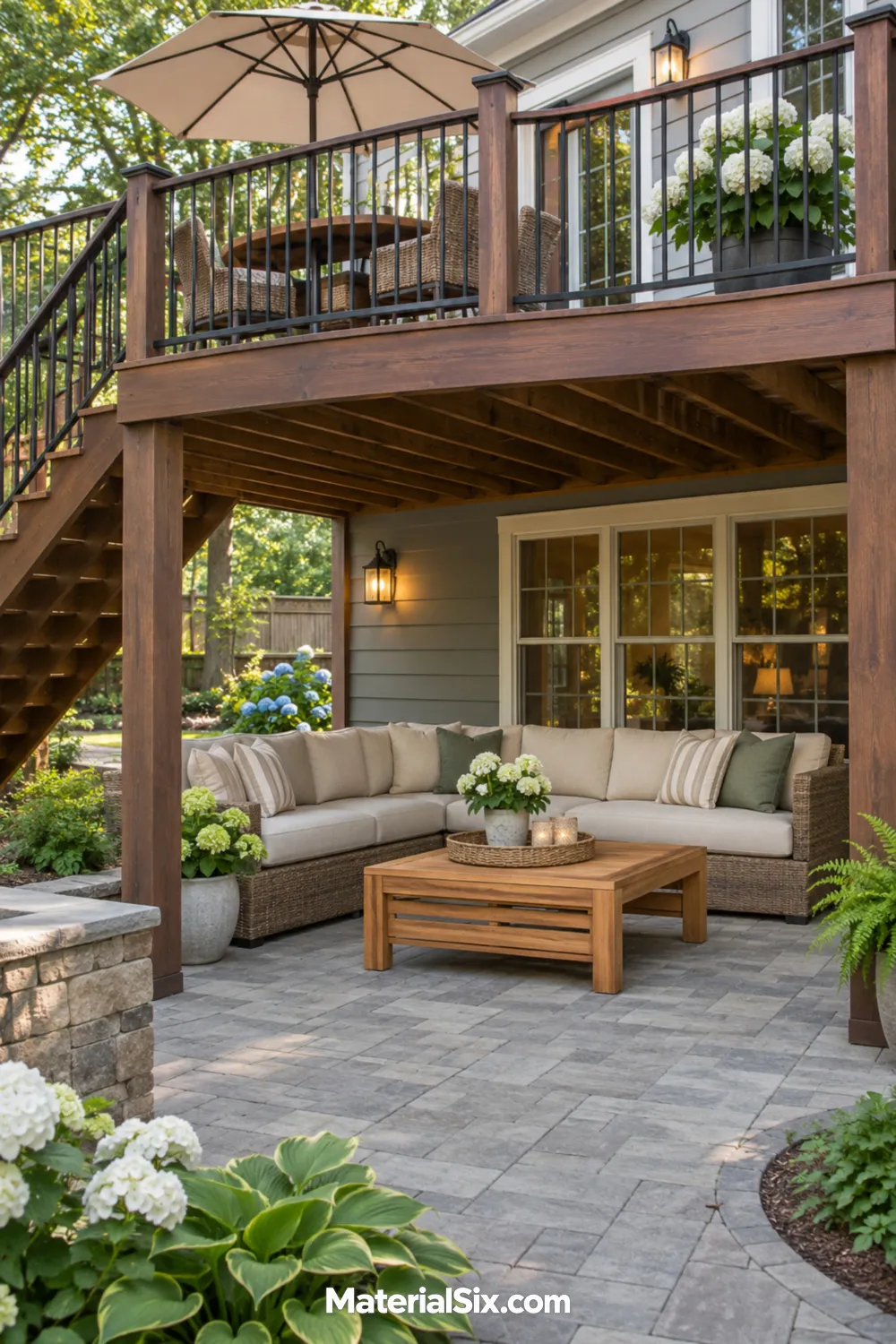
Start with a paver layout that gives your seating group a clear footprint. A running-bond pattern in soft gray lets a warm wood coffee table and oatmeal cushions stand out.
Place the longest side of an L-shaped sectional toward the house so the yard-facing edge stays open. Before choosing the furniture, mark its outline and the positions of the deck posts. Leave yourself a route from the door to the yard that still works when someone is sitting at the end of the sectional.
2. Set Up a Pea-Gravel Bistro Corner
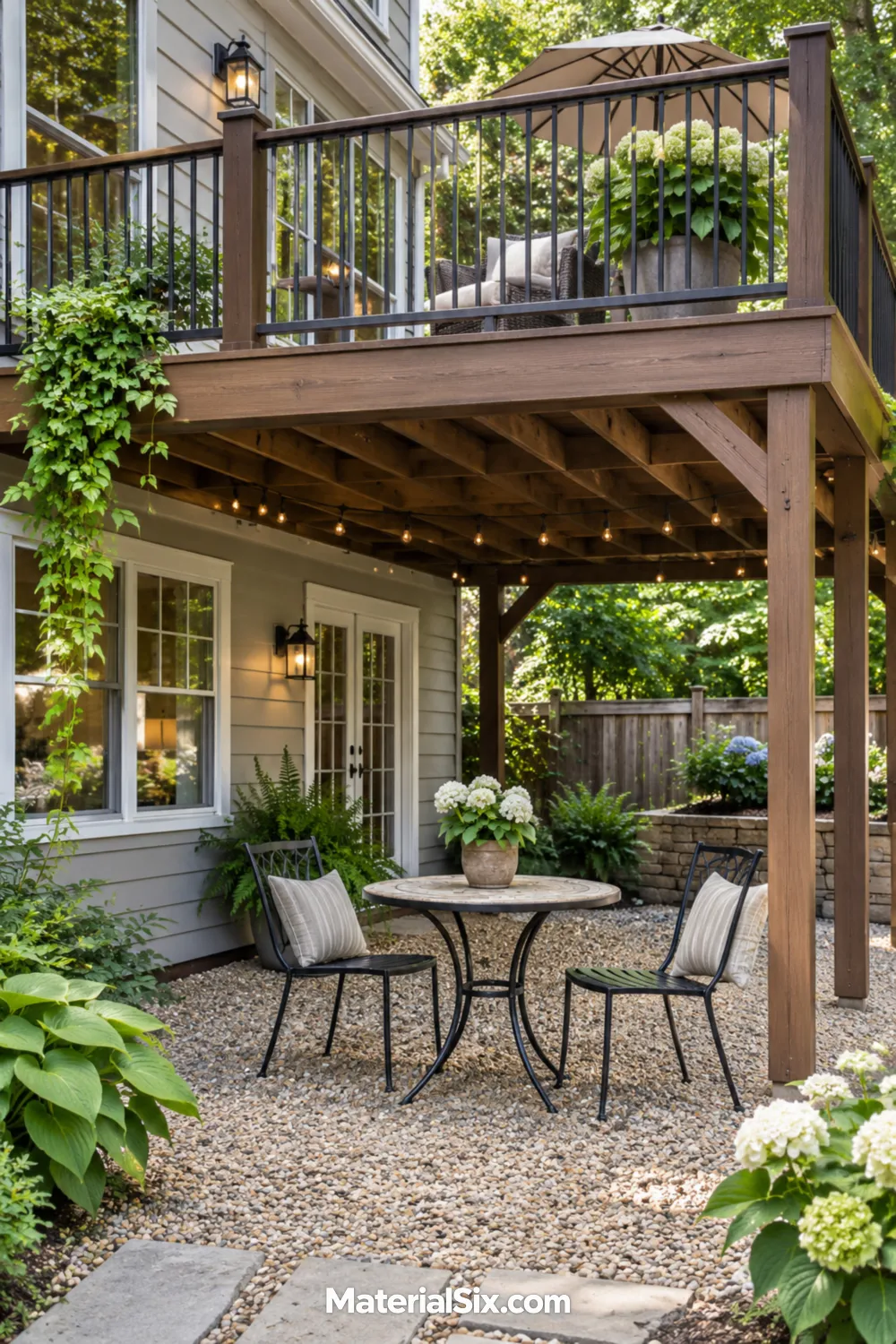
A round café table and two metal chairs can make a little-used corner feel like a destination. Pea gravel gives the surrounding area a softer look than a wide expanse of paving.
Add a firm, level spot for the furniture if the chair legs sink or wobble, and keep loose stone away from the doorway with a defined edge. Set the table where you can pull out both chairs without backing into a deck post.
3. Give Plain Concrete a Painted Pattern
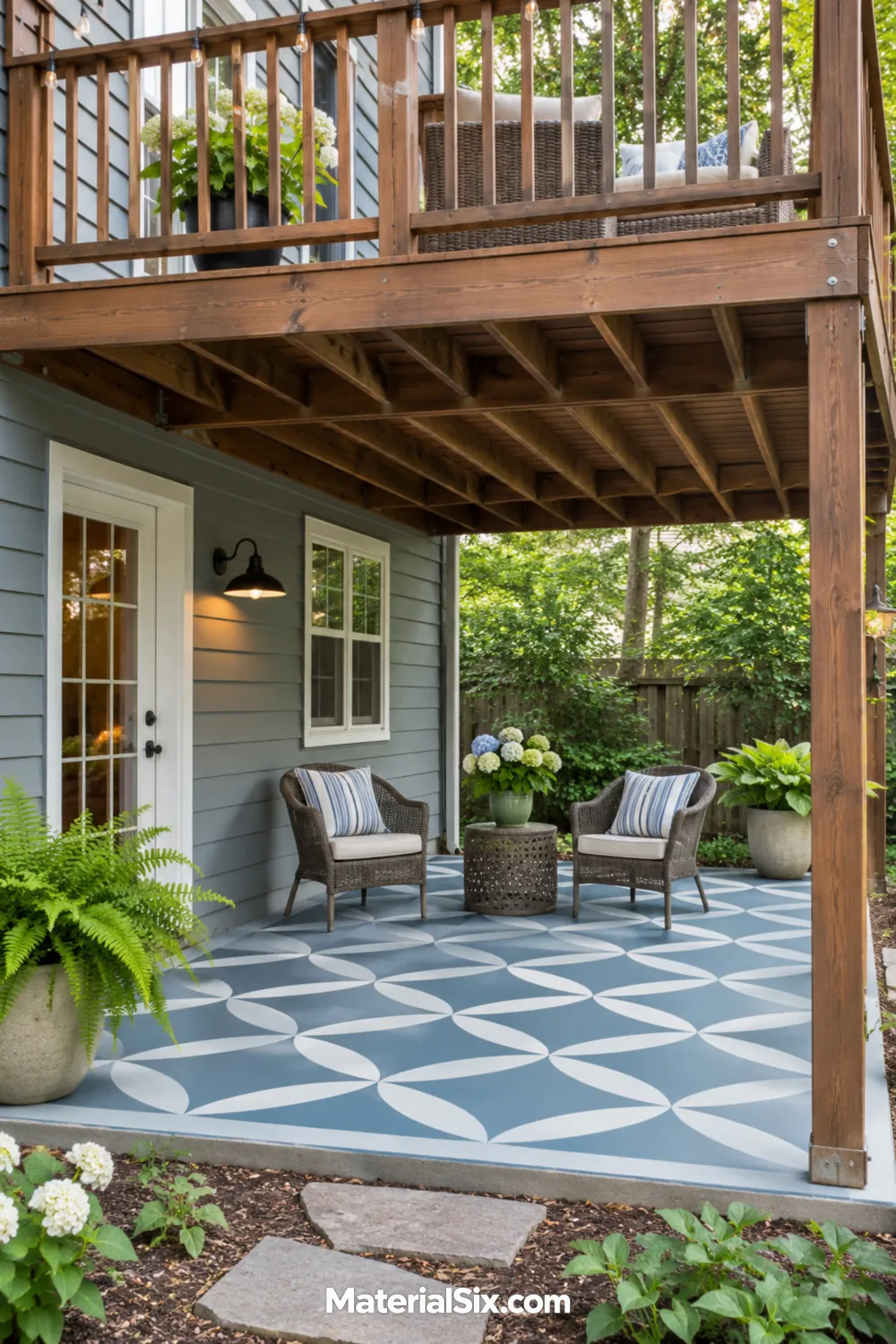
Use a simple geometric repeat to make a sound concrete slab feel like an outdoor room. Slate blue and a warm off-white give the pattern definition without making the shaded floor feel too dark.
Lay out the repeat with chalk first so awkward cuts end up along the house or behind furniture. Check the coating manufacturer’s instructions for exterior concrete, surface prep, and traction before you choose a product. Keep the seating solid-colored so the floor can carry the pattern.
4. Use Large-Format Porcelain for a Clean Look
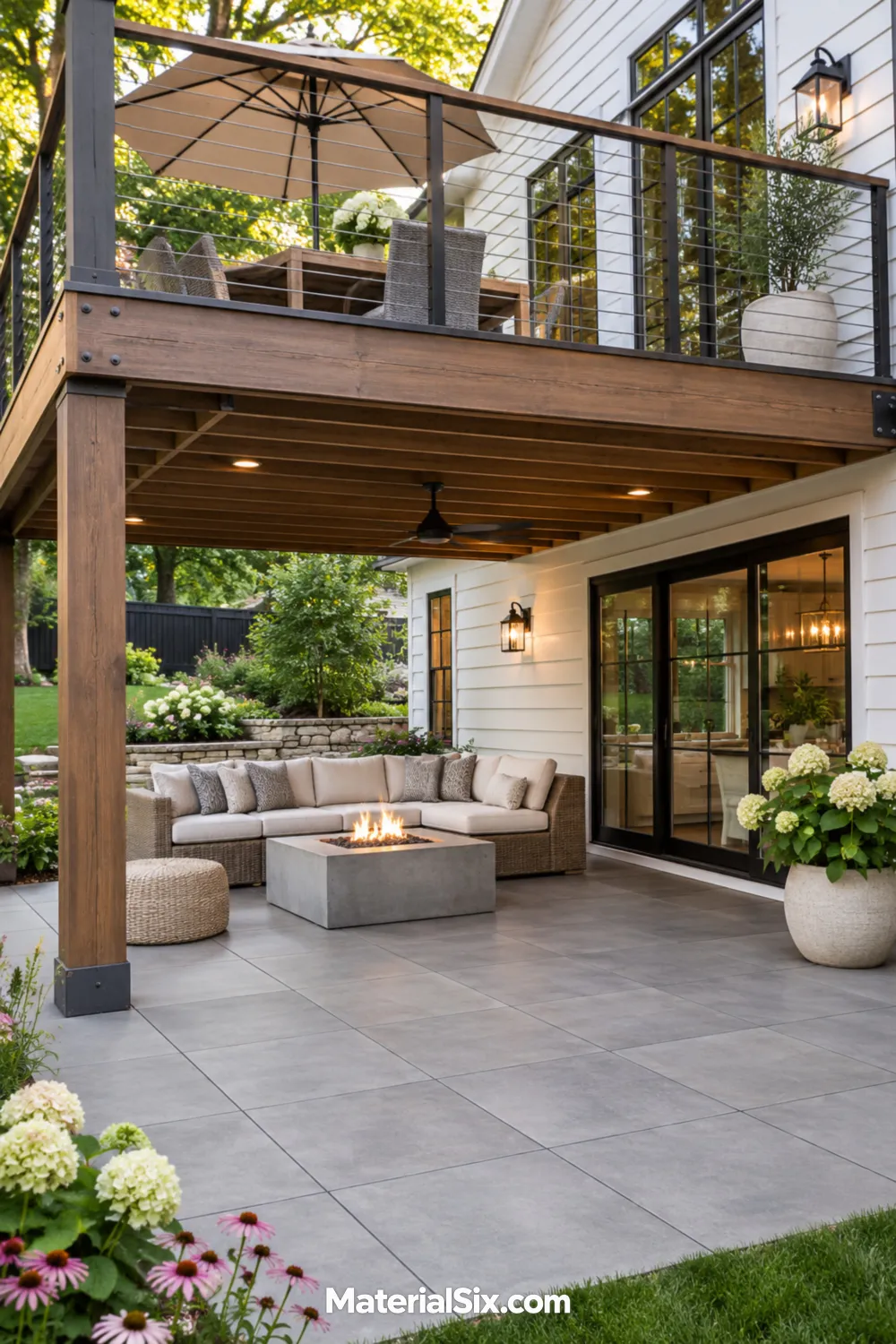
Large square tiles and slim joints give a modern walkout patio a quiet backdrop. Bring in warmth with woven chairs or a wood bench, especially if the siding and floor are both pale.
Compare samples in the actual shade under the deck, where gray can look cooler than it did at the store. For a permanent tile installation, choose a product rated for your outdoor conditions and ask the installer how the assembly will handle drainage, traction, and freeze-thaw cycles where relevant.
5. Add a Cedar Slat Privacy Wall
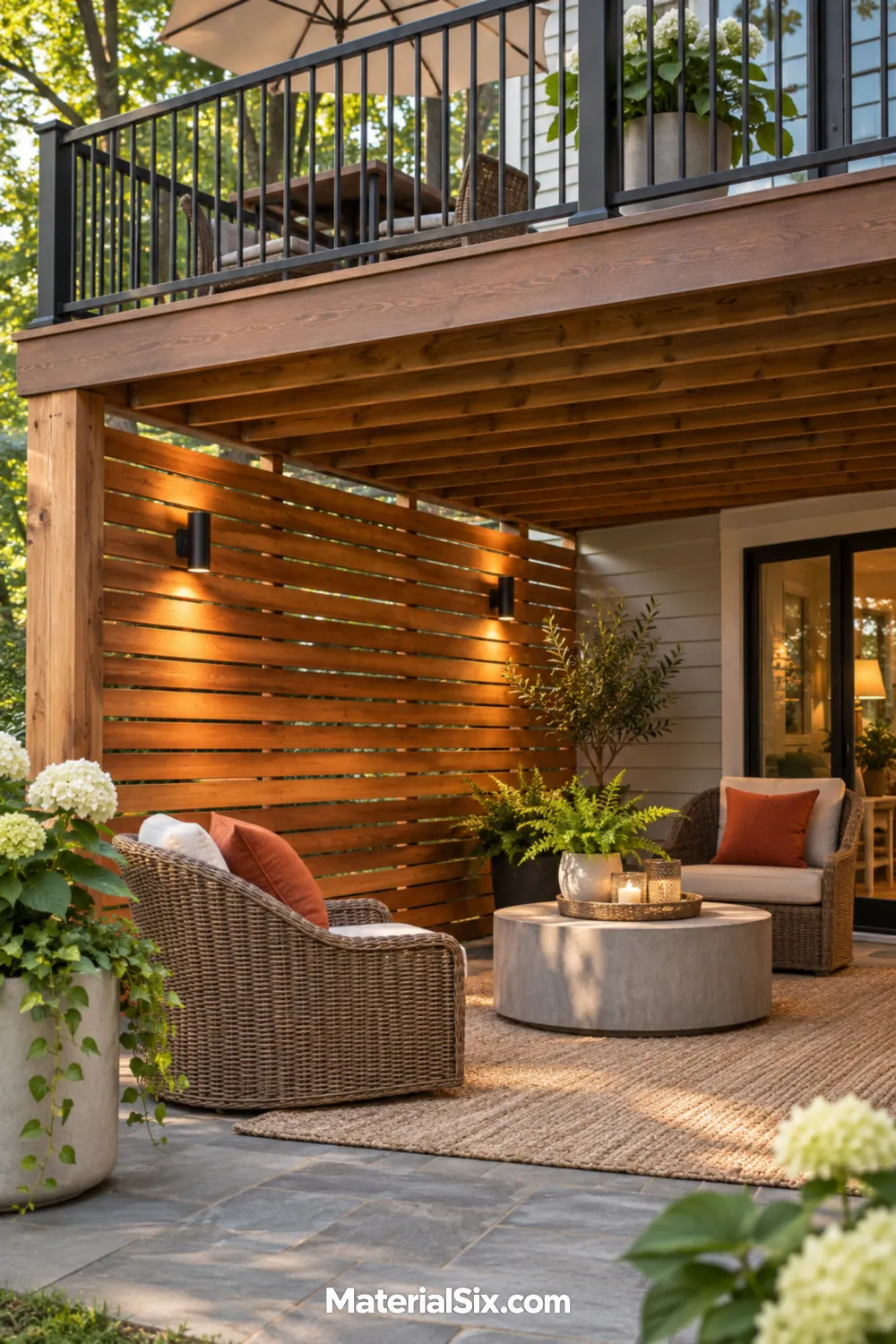
Close off the sightline that bothers you most with a cedar slat screen on one side. Keeping the yard-facing opening clear lets you retain a view from the seating area.
Test the screen position from a chair before settling on its location: the view at seated height can be quite different from the view when you stand. Add a woven chair and one rust-colored cushion to pick up the warmth of the cedar without crowding the corner.
6. Create a Screened Porch Under the Deck
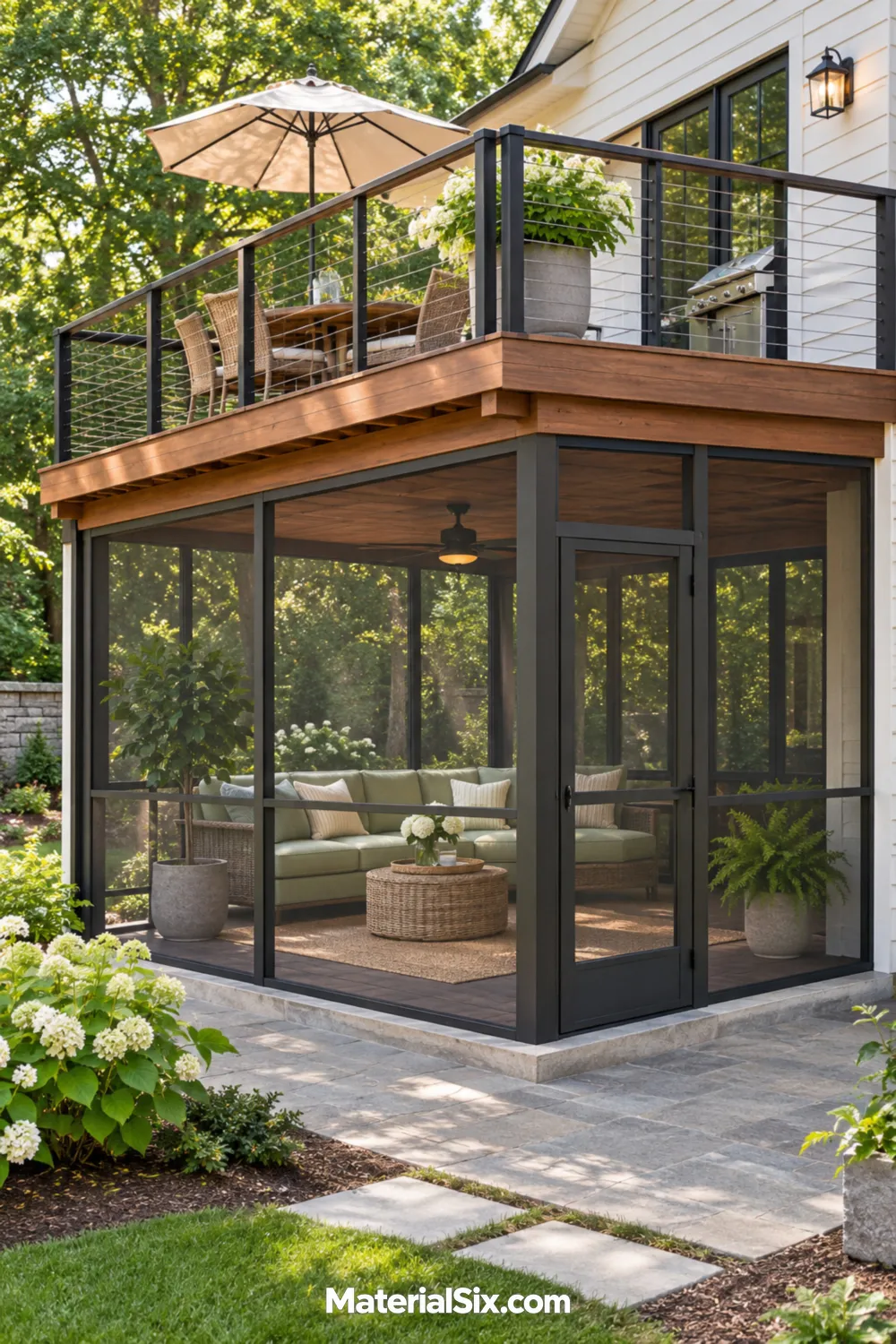
A screened enclosure gives you a defined spot for reading or visiting when bugs are active. Use dark mesh and simple trim to keep the view into the yard clear.
Plan the door location around the path you already take from the house, and check that the door swing clears the furniture. Think through what happens above the screen walls as well. Discuss rain protection and the enclosure details together if water also comes through the deck overhead.
7. Define an Open Edge With Shade Planters
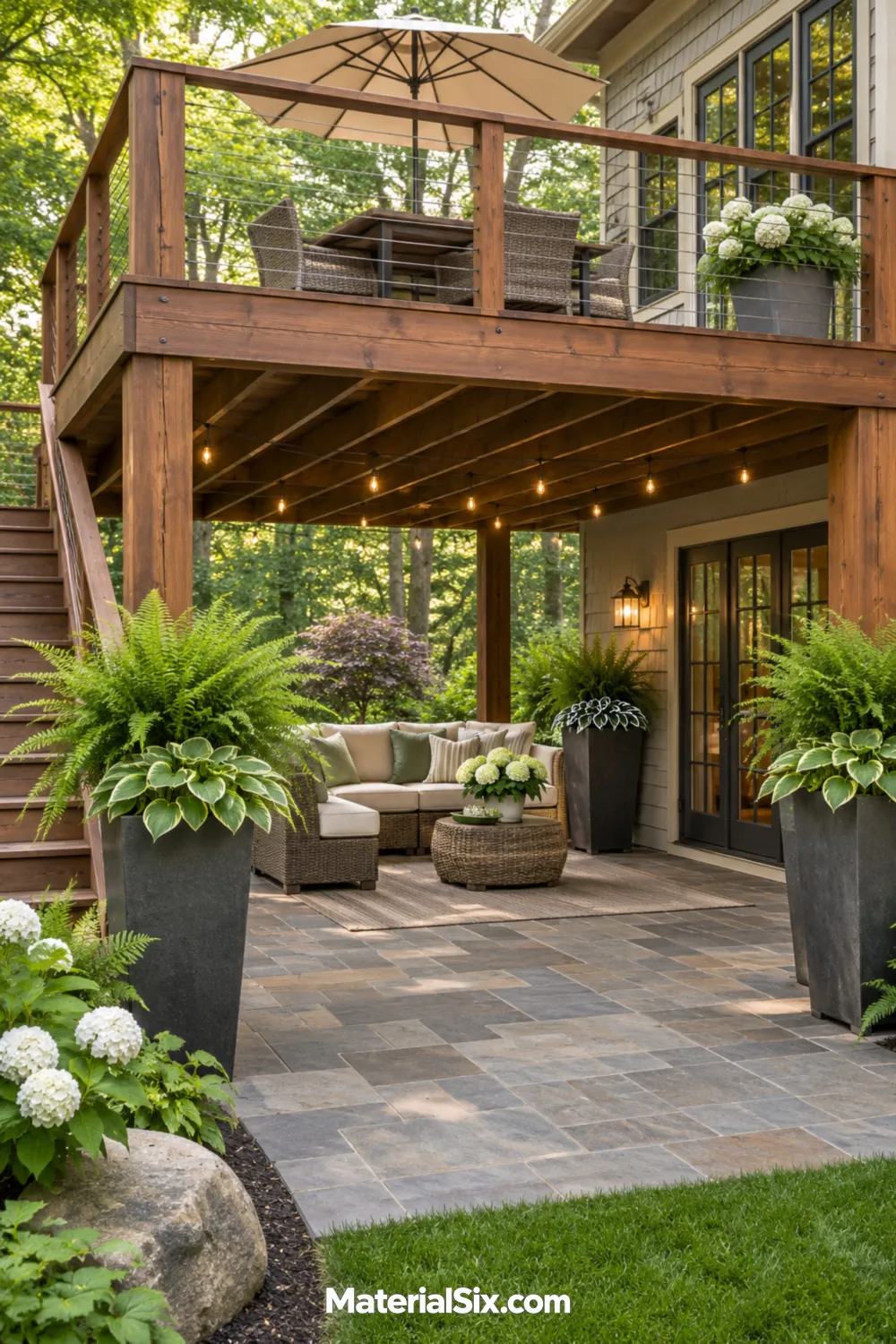
Set a few tall containers along one open side of the patio to give seating a leafy backdrop. Ferns add movement and broad-leaved hostas give the grouping a different texture.
Choose plants for the light and climate you actually have. Check containers under the deck after a rain because the ones tucked farthest back may still need watering. Leave a gap in the grouping where you naturally step onto the lawn.
8. Put a Dining Table Outside the Walkout Door
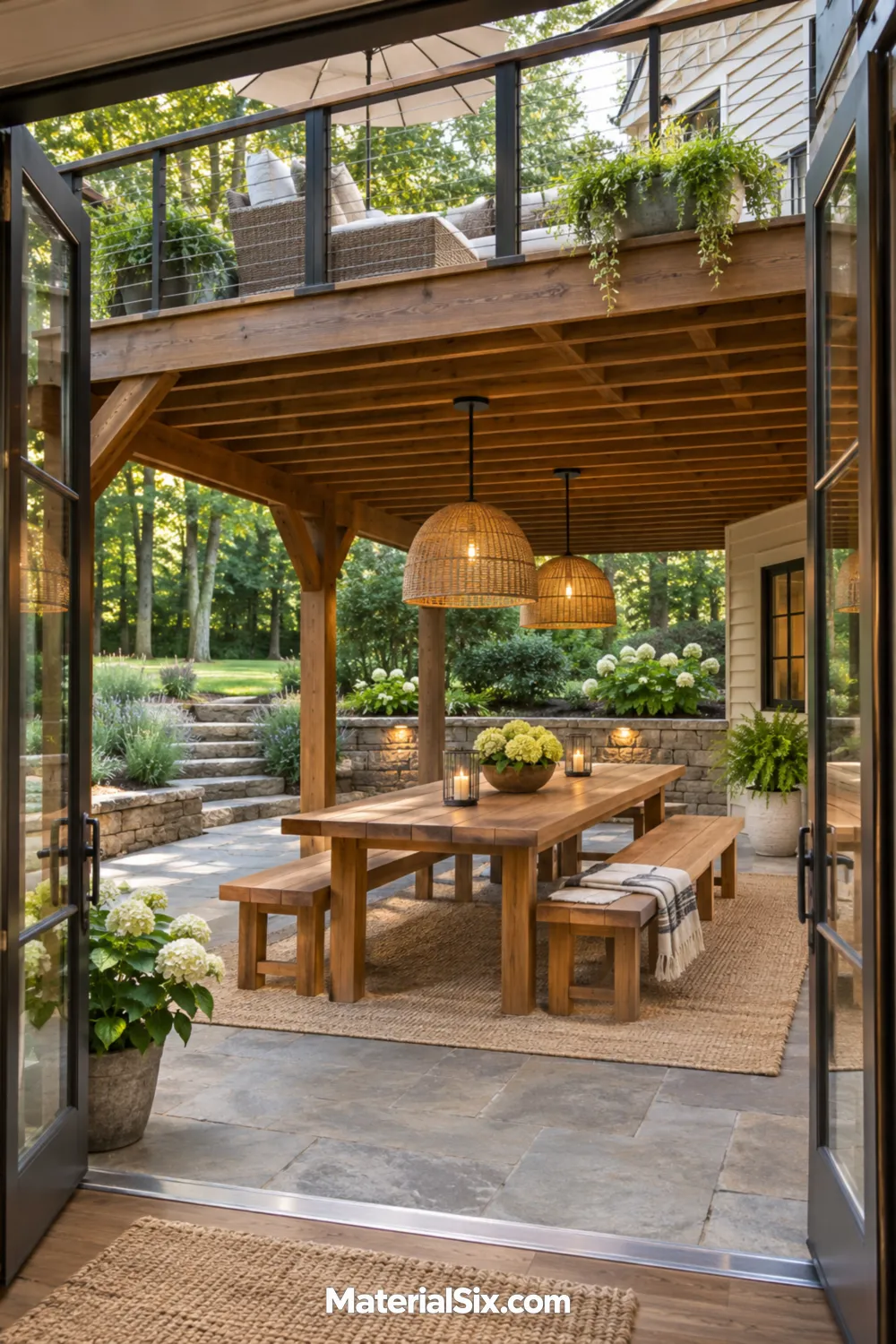
Make dinner trips easier by positioning a long outdoor table within a short walk of the basement door. Benches tuck in neatly on the long sides, and keeping the door end open gives you a place to set down dishes before everyone sits.
Mark out the table and seating at full size before buying. The usable space is the tabletop plus the room people need to sit, get up, and pass behind one another.
9. Fit a Bench Into a Tight Corner
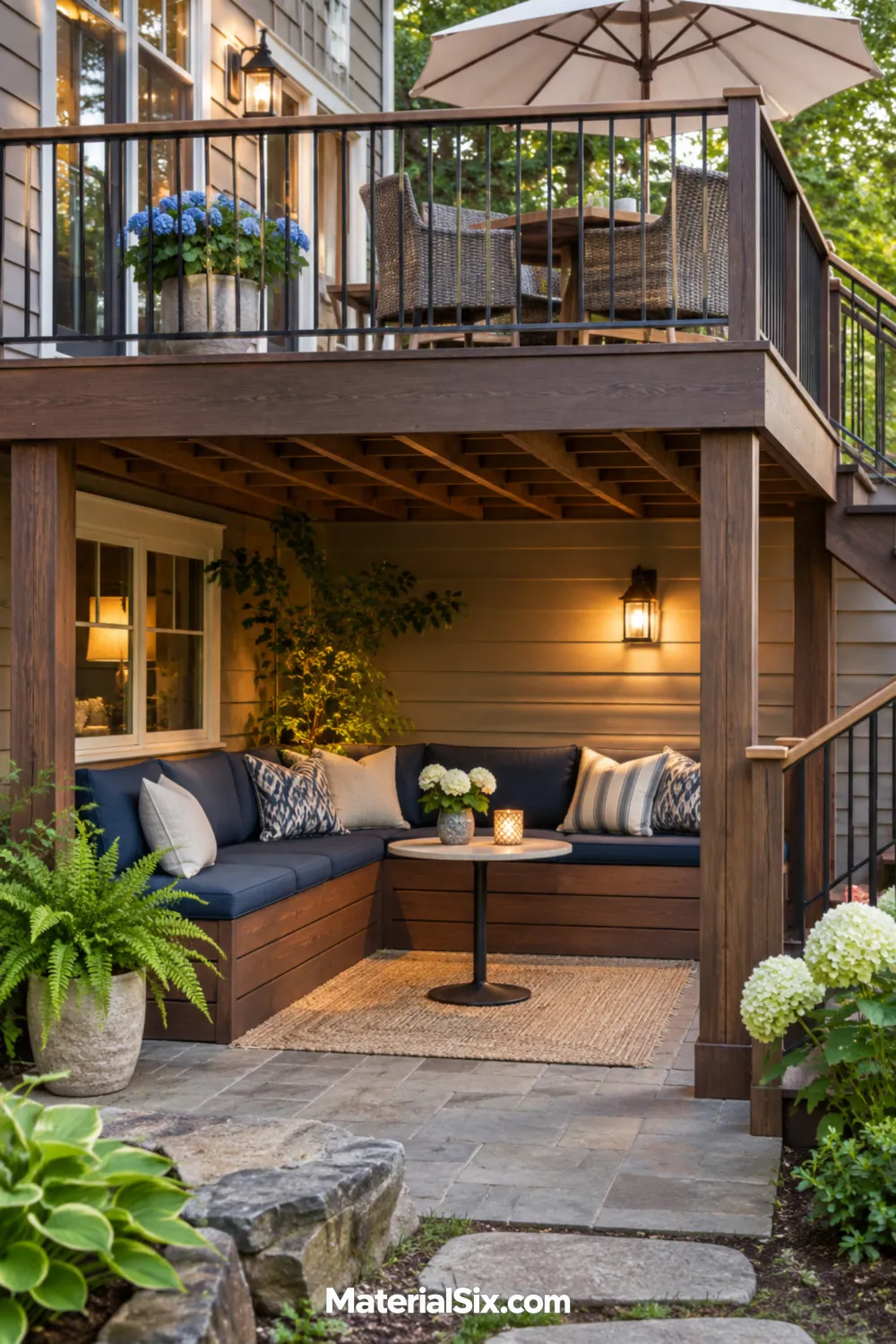
A bench that follows two patio edges can give a compact area more seating without scattering chair legs across the floor. Pair it with a small round table that you can pull aside for extra room.
Start with the depth of cushions you can store and replace easily, then work out the seat proportions. A back cushion in a mid-tone blue stands out against wood and lets the little nook read as its own spot from the yard.
10. Group Two Freestanding Hanging Chairs
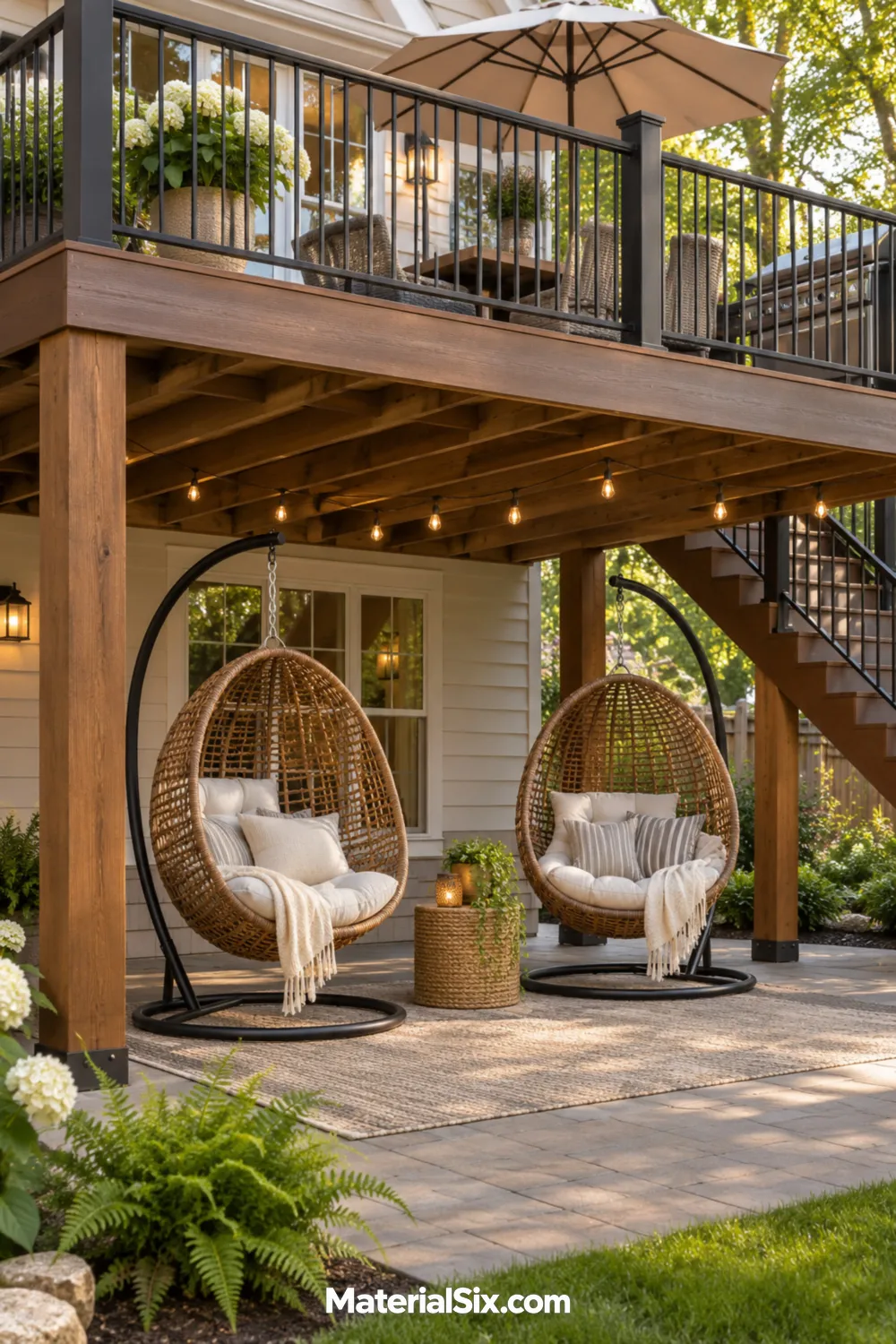
Set two hanging egg chairs on freestanding stands where you can see the garden. The curved wicker shells create a distinct seating spot without relying on overhead mounting.
Measure the full footprint of each stand and allow for the movement specified by the manufacturer. Angle the chairs slightly toward each other for conversation, or point them toward the yard and share a small drink table between them.
11. Park a Bar Cart by the Seating Area
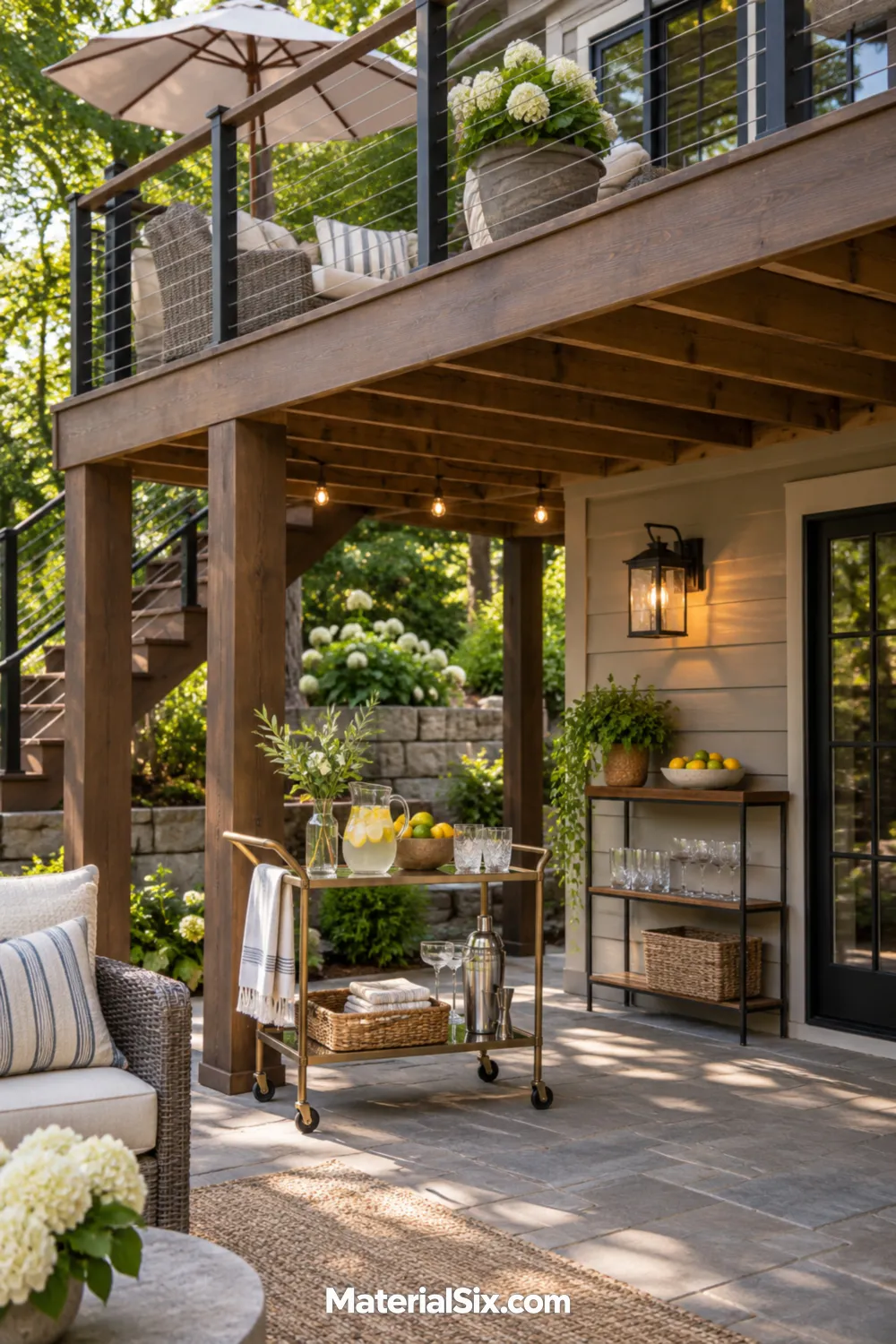
A rolling cart can serve drinks when company comes over and tuck against the wall afterward. Look for a spot where the cart stays clear of door swings and where you can reach both shelves.
A shallow serving surface above or beside it gives you room to set out cups without leaving everything on the cart. Use a tray to carry glasses back indoors together, and bring linens and supplies inside between gatherings.
12. Set Up a Backyard Movie Spot
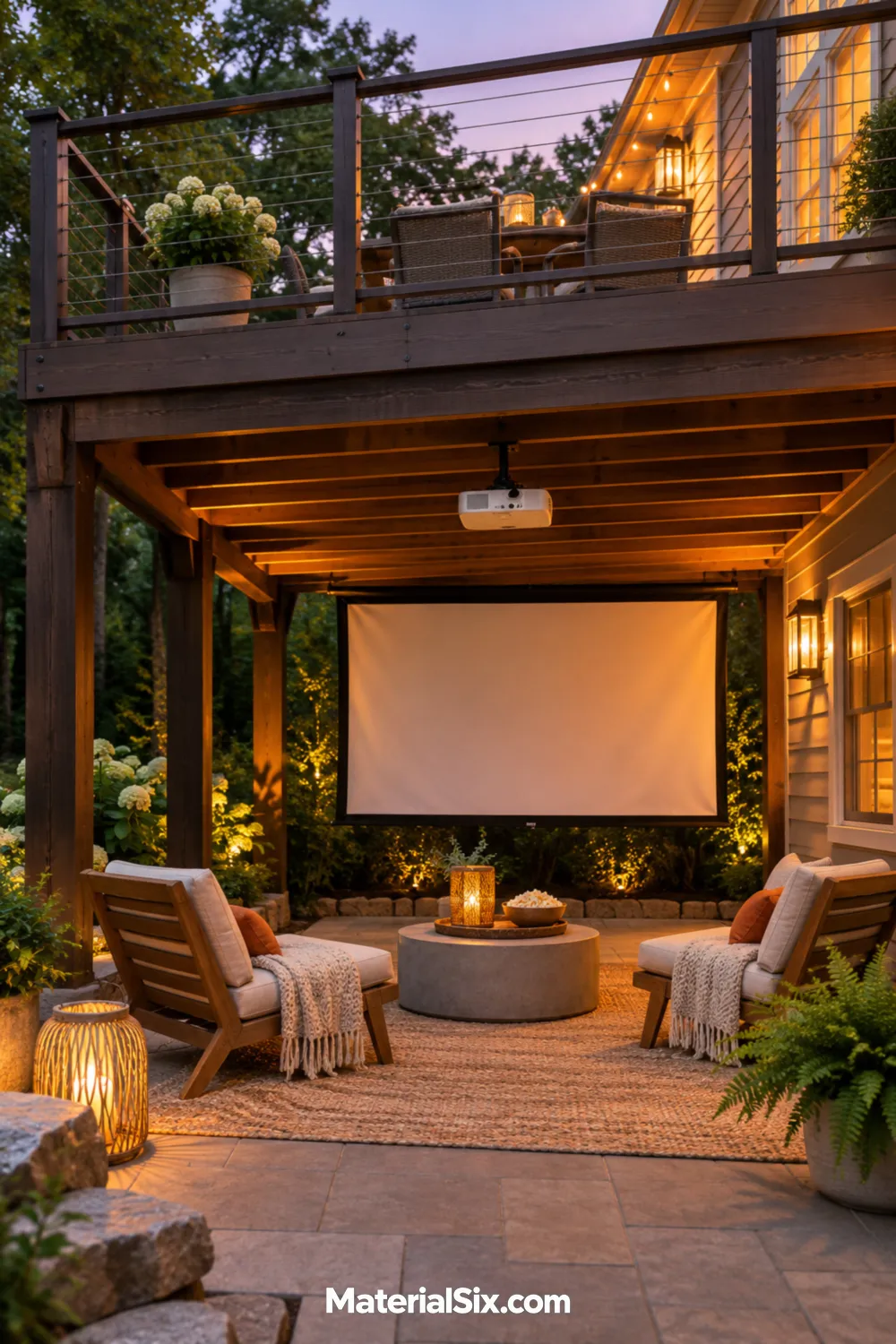
Pick one end of the patio for a portable screen, then face a few low chairs toward it and leave a side aisle to the house. Check the view from every chair before you settle on the screen height.
Test your layout after sunset, when nearby porch lights and windows are easier to judge. Keep the projector and screen portable so the seating can return to conversation mode between movie nights.
13. Give Evening Seating Its Own Lighting
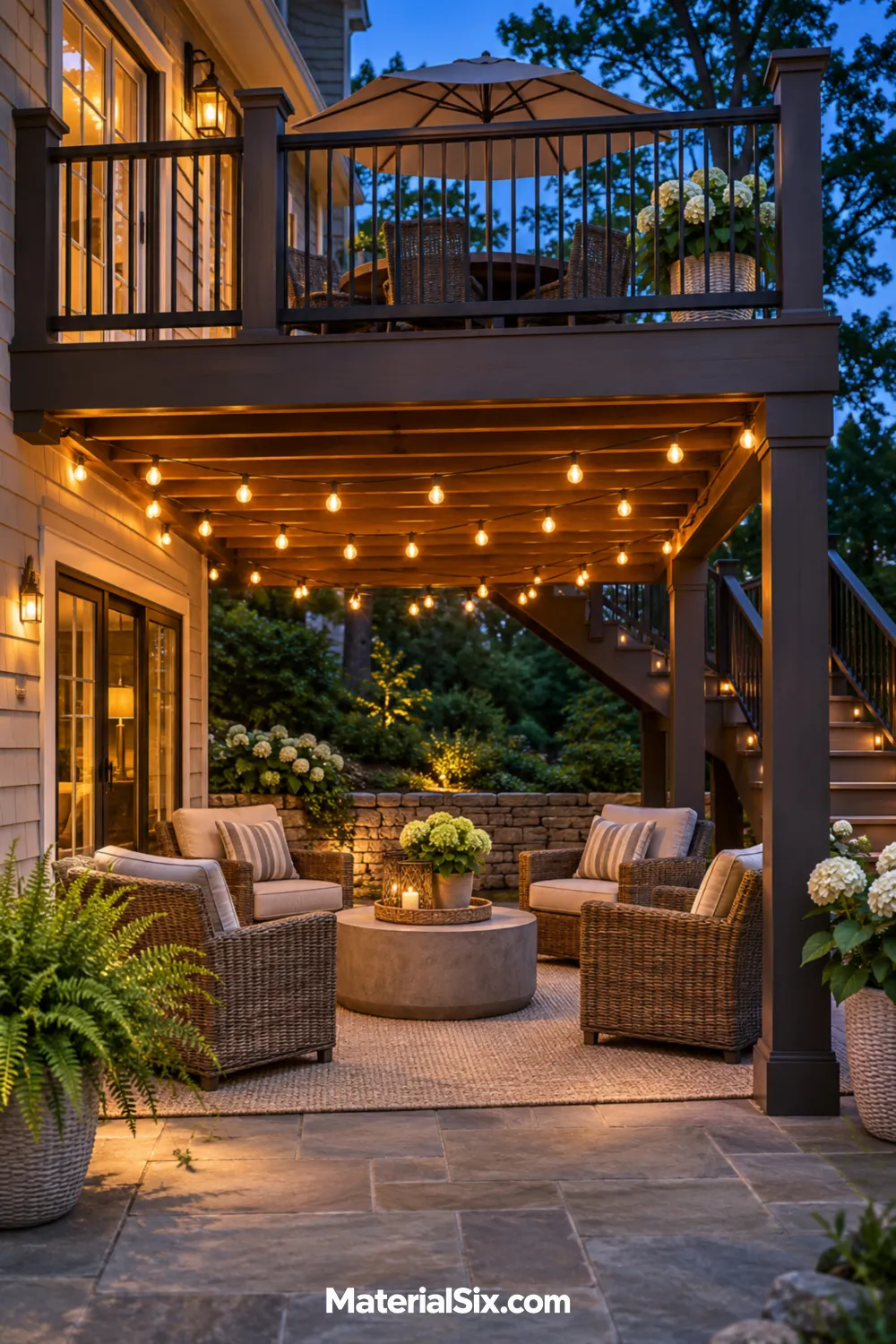
Warm string lights can make the lower patio inviting at dusk, especially if most of the light comes from an upstairs fixture. Hang the visual focus over the conversation group and keep nearby walkways clearly lit.
Choose lighting intended for the outdoor conditions it will face and follow the product’s installation directions. A dark cord recedes against stained beams, while spaced amber bulbs can highlight the depth of the patio in the evening.
14. Finish the Overhead View With a Drainage Ceiling
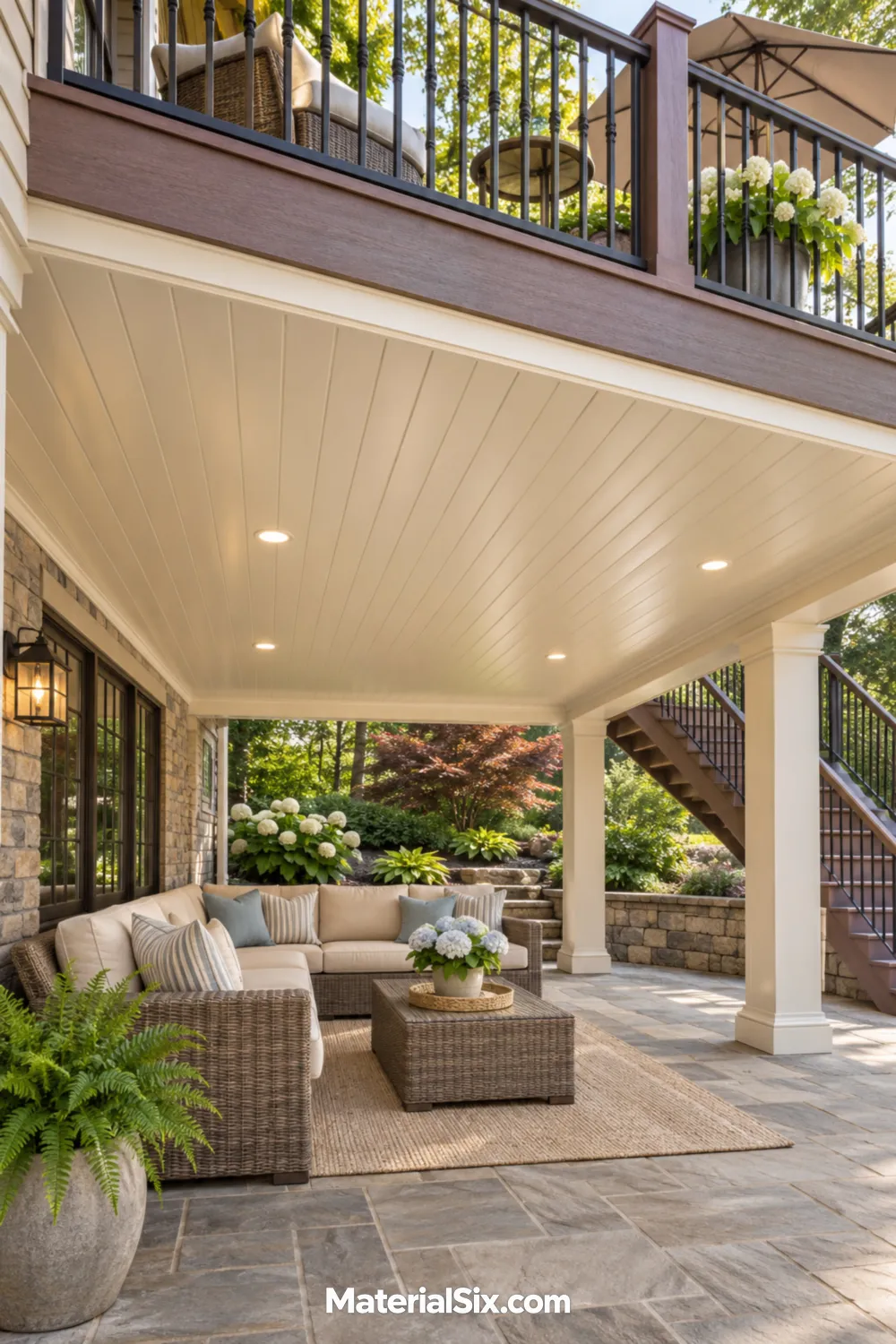
If the ceiling is the first thing you notice when you sit down, a finished under-deck drainage system may address the view and the water coming through deck-board gaps. Pale panels brighten the overhead plane, and trim that picks up the house color makes it feel connected to the exterior.
Before choosing a system, ask a qualified installer to assess the existing deck and where the collected water would discharge. Keep access for inspection and maintenance in the plan.
15. Use a Roll-Down Shade for Low Sun
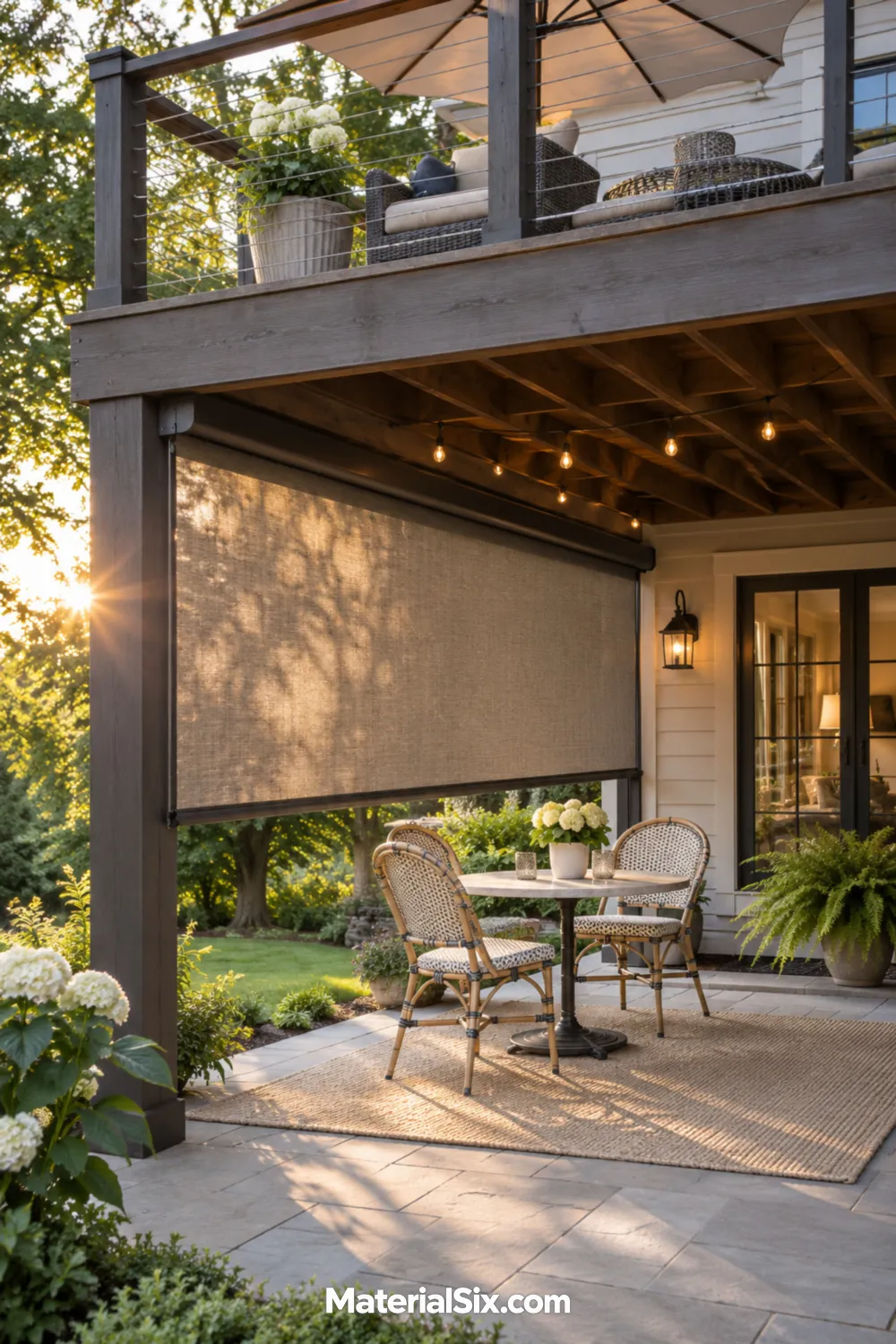
The upper deck can cast shade at noon while leaving you in glare later in the afternoon. Watch where the low sun reaches the patio and put an exterior roller shade on the opening that gets the most exposure.
Compare mesh openness if you want some view through it when it is lowered. Choose a mounting location that clears furniture, check the manufacturer’s wind guidance, and leave the other openings free so you can still see the yard.
16. Connect a Lower Patio to a Tiered Shade Garden
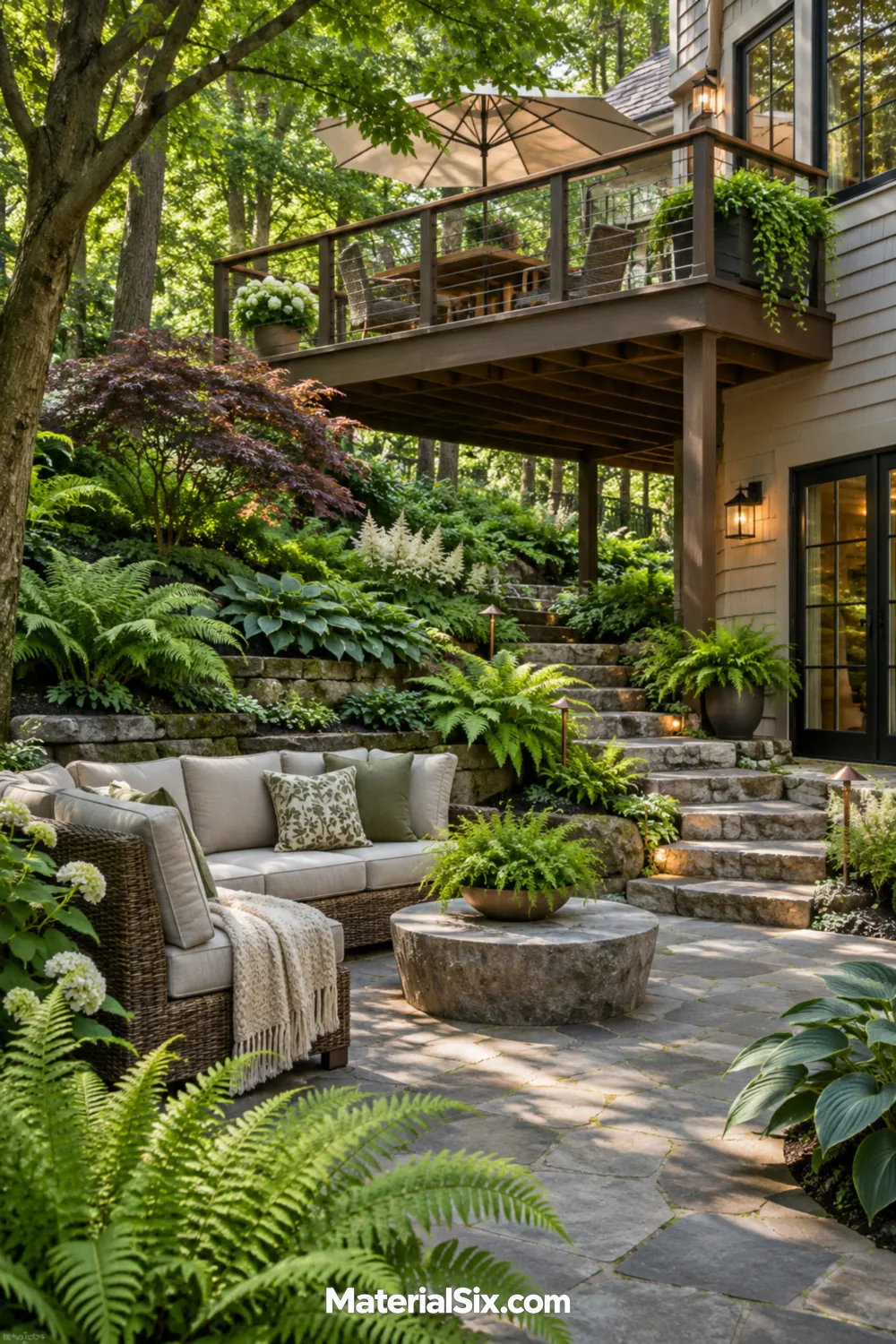
Use planting levels to connect a walkout patio to the yard when the grade changes beside the house. Repeating a foliage texture on more than one level can tie the beds together without making the planting feel busy.
Let the steps remain visually clear from the patio, and keep the tallest plants where they will soften the edge without narrowing the route. Select plants for the actual shade and moisture on each level.
17. Set Up a Small Outdoor Play Table
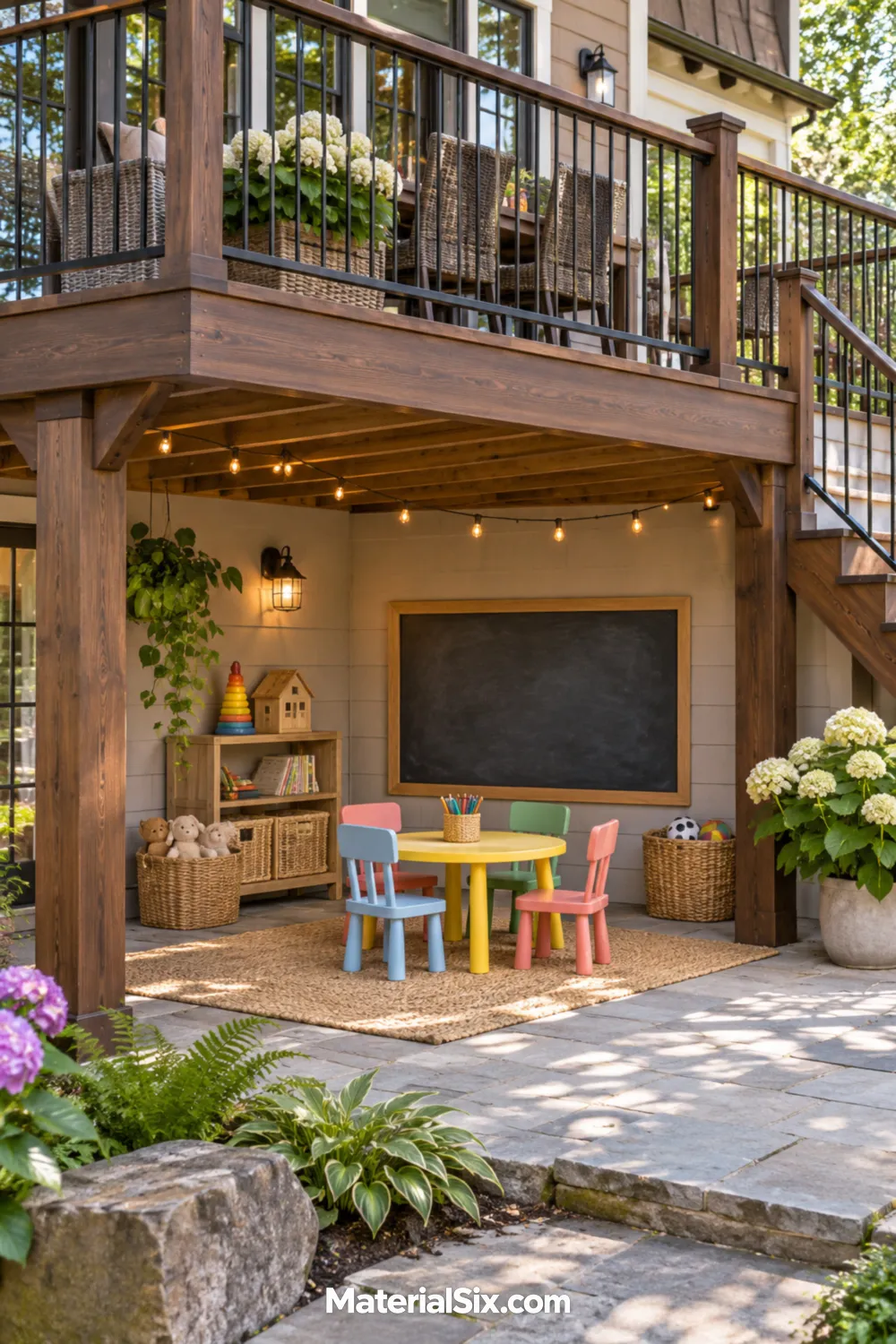
A child-height table gives sidewalk chalk, drawing paper, and washable toys a place to land. Put it where you can see it from your regular seat and where it leaves the route to the yard clear.
Keep frequently used supplies in a carry bin so they can go indoors after play. A compact freestanding chalkboard or easel lets the layout change as kids grow, while a splash of bright color makes the play area easy to spot.
18. Keep a Potting Bench Close to the Garden
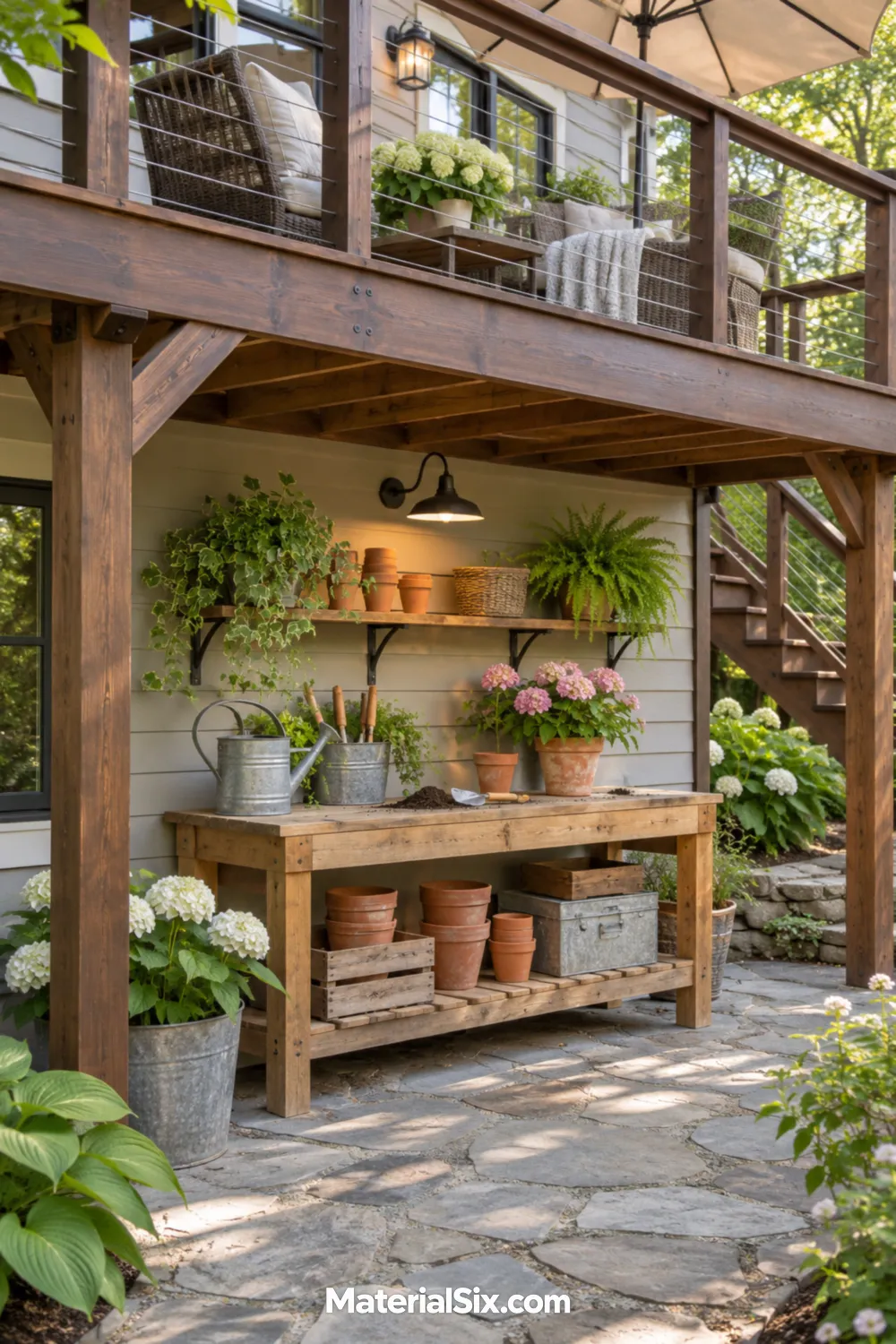
Put a workbench at the yard-facing end of the patio so plants can go straight from bench to bed. Keep the working surface clear and stack empty terracotta pots on a lower shelf.
Add a tray to catch spilled potting mix, especially if the bench sits near the basement entrance. Hooks keep small hand tools within reach, and a spot at the end of the bench gives your watering can somewhere to live between jobs.
19. Keep a Clear Path From the Walkout to the Lawn
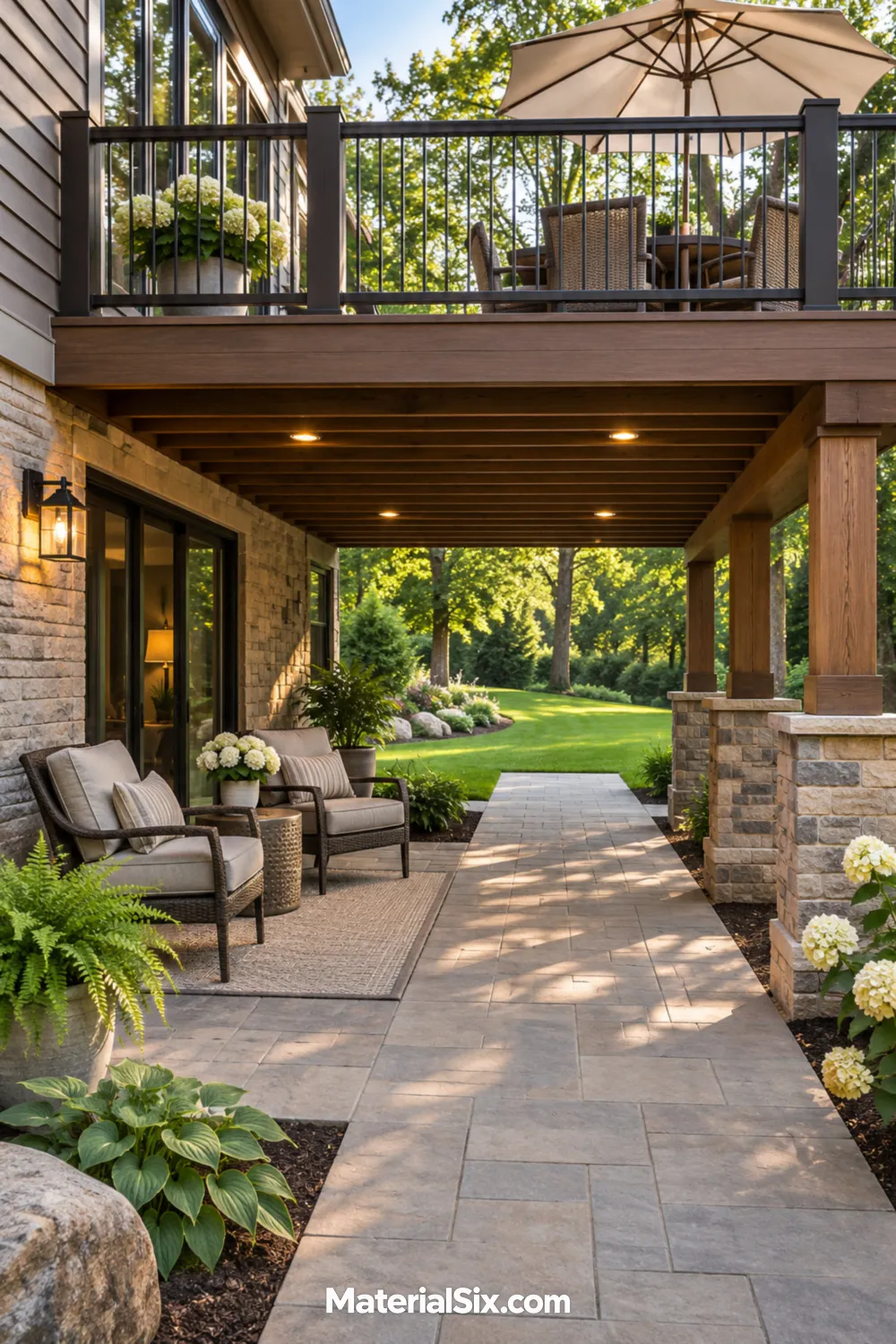
The route from the lower door to the backyard often determines how much of the patio you can furnish. Start by tracing the path people already use, then place the seating group to one side.
Aim the chairs inward so guests can talk without facing everyone who walks past. Take a few test trips carrying a tray or yard supplies before adding planters. If you have room for a second group, use the open path to define the two zones.
20. Separate Closed Storage From the Lounge
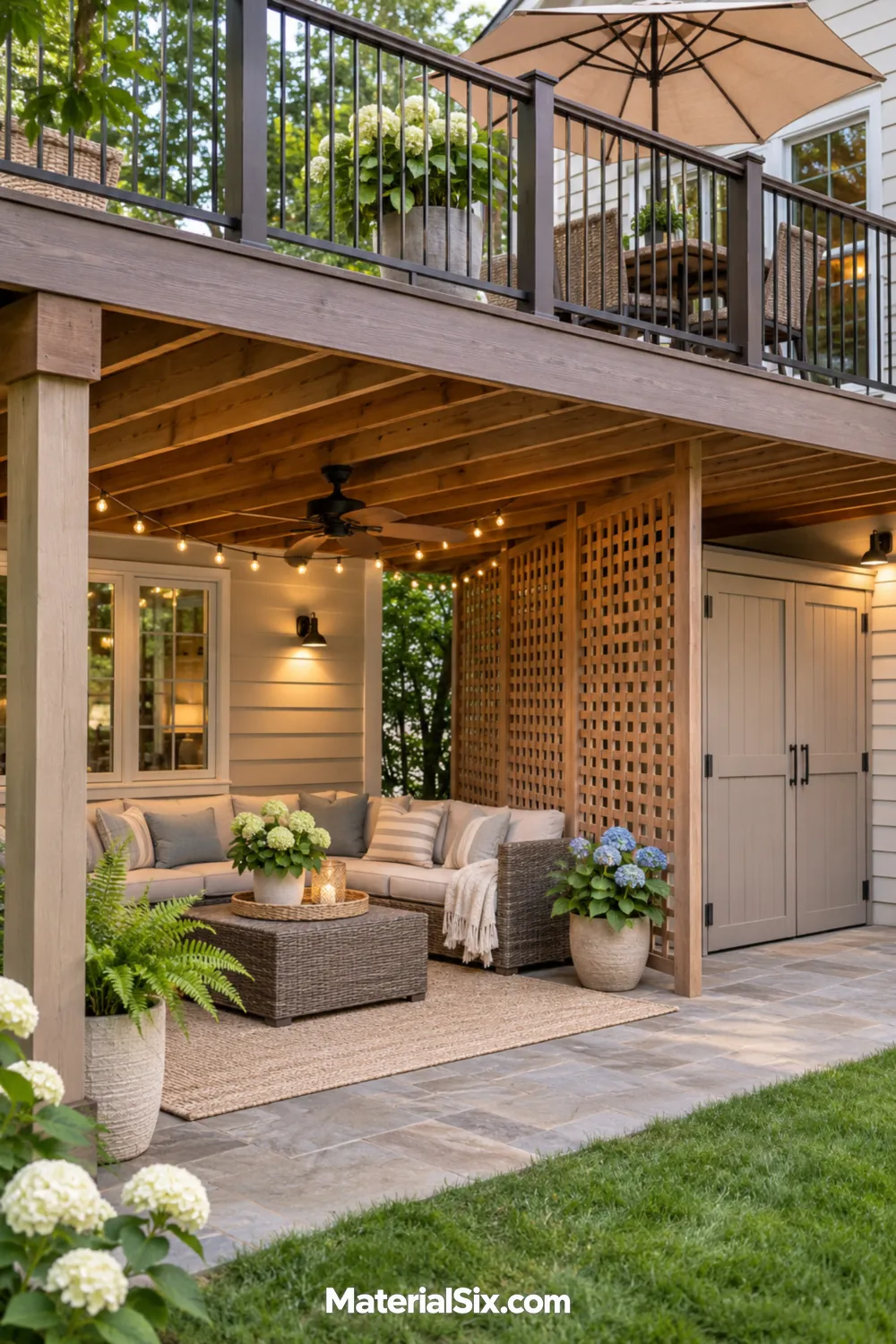
Dedicate the back corner to outdoor cushions or yard supplies, then use a short lattice divider to take storage out of the main seating view. A cabinet or storage box gives the loose items a home.
Set the divider so you can still open every lid and door fully. Store only items suited to the moisture conditions in that corner, and keep access to any utility fixtures clear.
21. Anchor Simple Seating With a Striped Rug
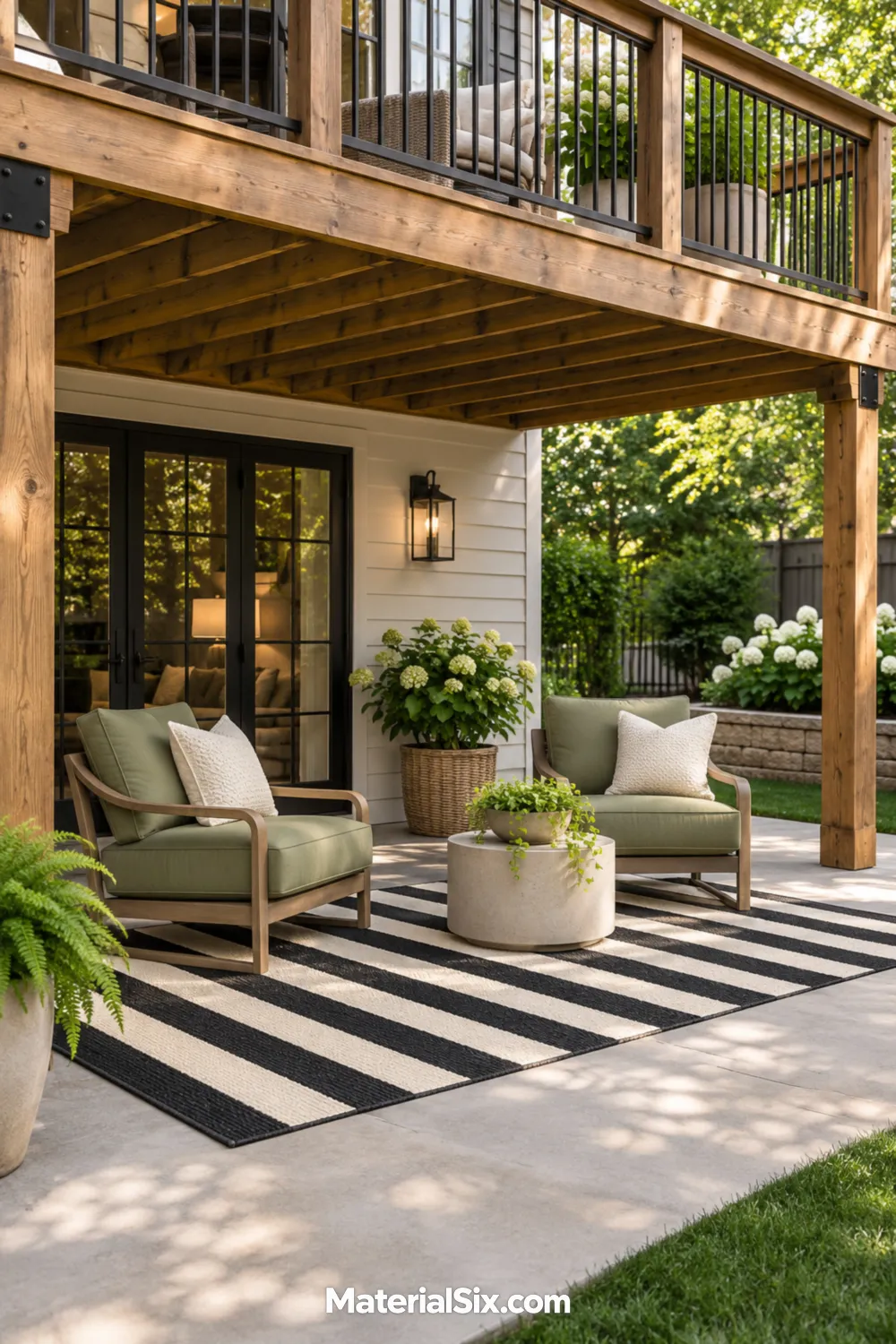
Lay a striped outdoor rug over an existing slab and set two sage chairs on its edges. The pattern draws your eye to the seating while leaving the rest of the concrete visible.
Check the rug’s care instructions against the way the patio gets wet and dries. Leave its corners outside the busiest walking line, and use a rug pad suitable for your exterior surface if the manufacturer recommends one.
Stand at the walkout door and trace the path you use most often. Once you know how much space needs to stay open, sketch the one activity you want the patio to handle first. That will give you a better starting point for choosing the floor, furniture, and extras.