
You want to sit outside with your coffee, but your front porch feels a little too public. Every dog walker has a clear view of your chair, the neighbors can see straight across, and opening a book somehow turns into an invitation to chat. Wanting a quieter corner does not mean you have to give up the porch altogether.
The most useful private front porch ideas start with one question: where do you actually feel exposed? A screen beside your chair may solve more than a barrier across the entire entrance. Plants, fabric, furniture, and existing architectural details can all help create separation, with very different levels of coverage.
These 15 ideas focus on making an ordinary porch feel more sheltered and comfortable for solo downtime. Some block direct views; others offer a softer buffer. Choose the amount of privacy you need while keeping daylight, airflow, and a clear route to the front door.
1. Build a Cedar Slat Screen Around One Seating Bay
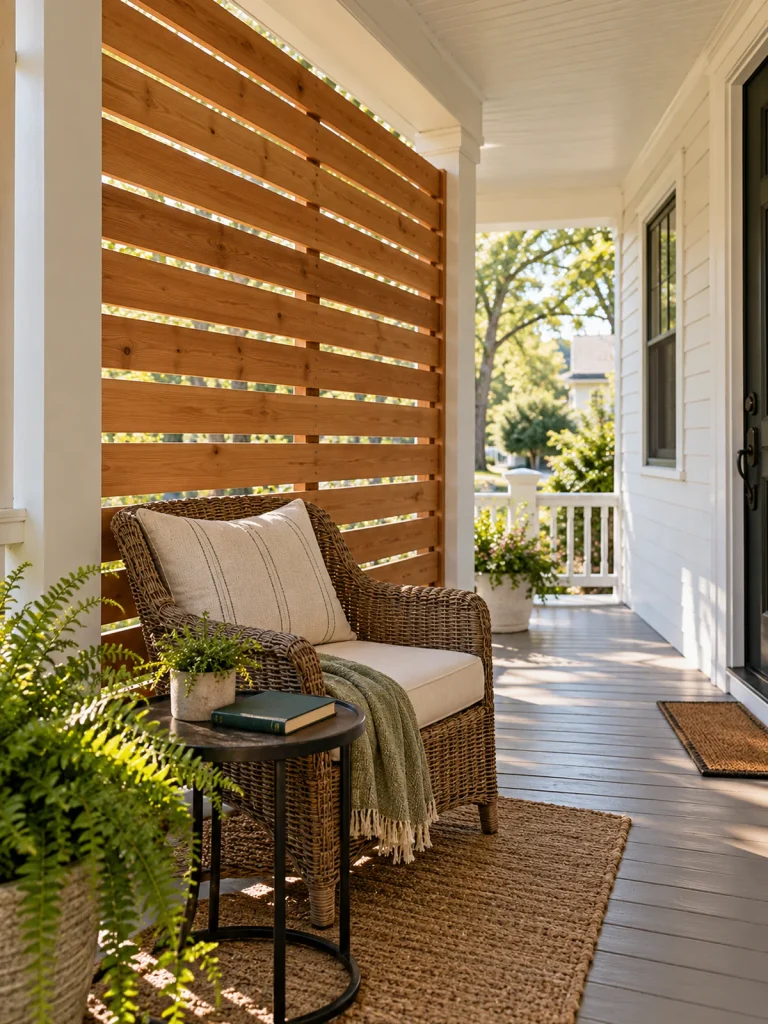
A cedar slat screen can give one end of an open porch the feeling of a small outdoor room. Keep the wood warm and natural, then soften it with a woven chair, a cream cushion, and a side table just large enough for a book.
Position the screen between the seat and the view you want to interrupt, rather than closing every porch opening. Narrow gaps still allow glimpses through, especially from an angle, so check the view from the sidewalk before settling on spacing. Treat mounting and wind exposure as part of the project, with suitable support rather than decorative attachments alone.
2. Draw Outdoor Curtains Around Your Quiet Corner
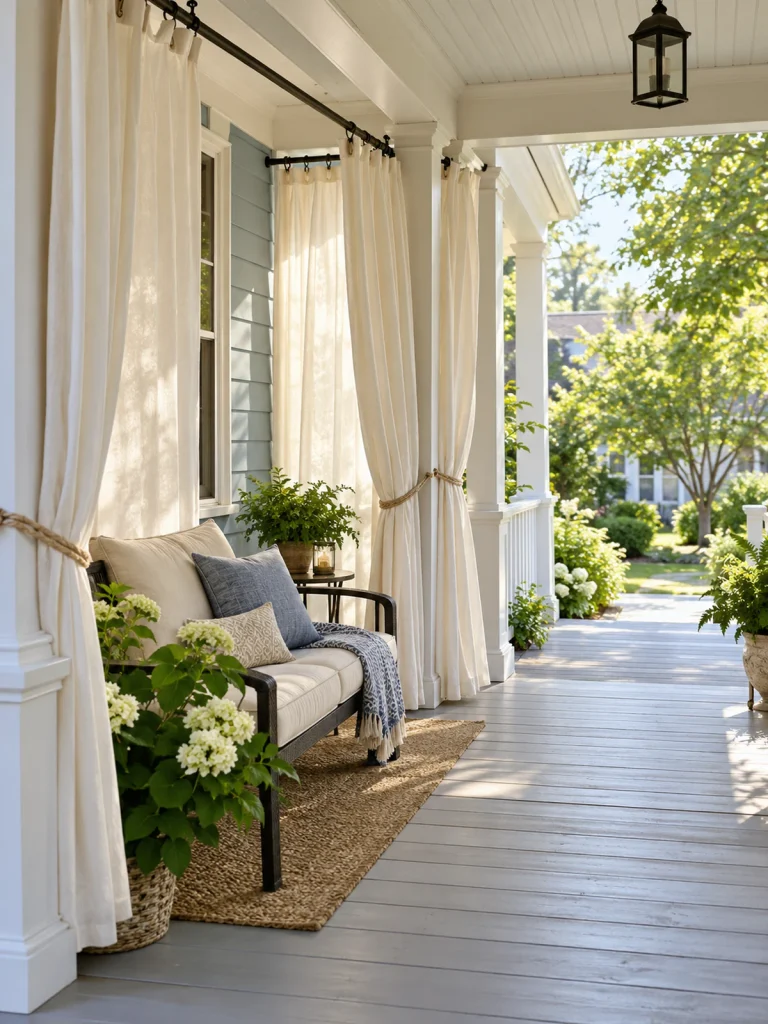
Outdoor curtains let your porch shift between open and tucked away. Cream panels paired with blue cushions feel light and relaxed, while a heavier, opaque outdoor fabric provides more visual coverage than decorative sheers.
Arrange the panels around a seating corner and draw the exposed side when you want to read without feeling watched. Keep the entrance outside the curtain enclosure, and choose a hem length that clears the floor. Curtains can billow and collect moisture, so plan tiebacks, follow the hardware’s installation guidance, and let damp fabric dry before bunching it together. They suit covered porches where flexible privacy matters more than a fixed barrier.
3. Use Evergreen Planters as a Living Side Screen
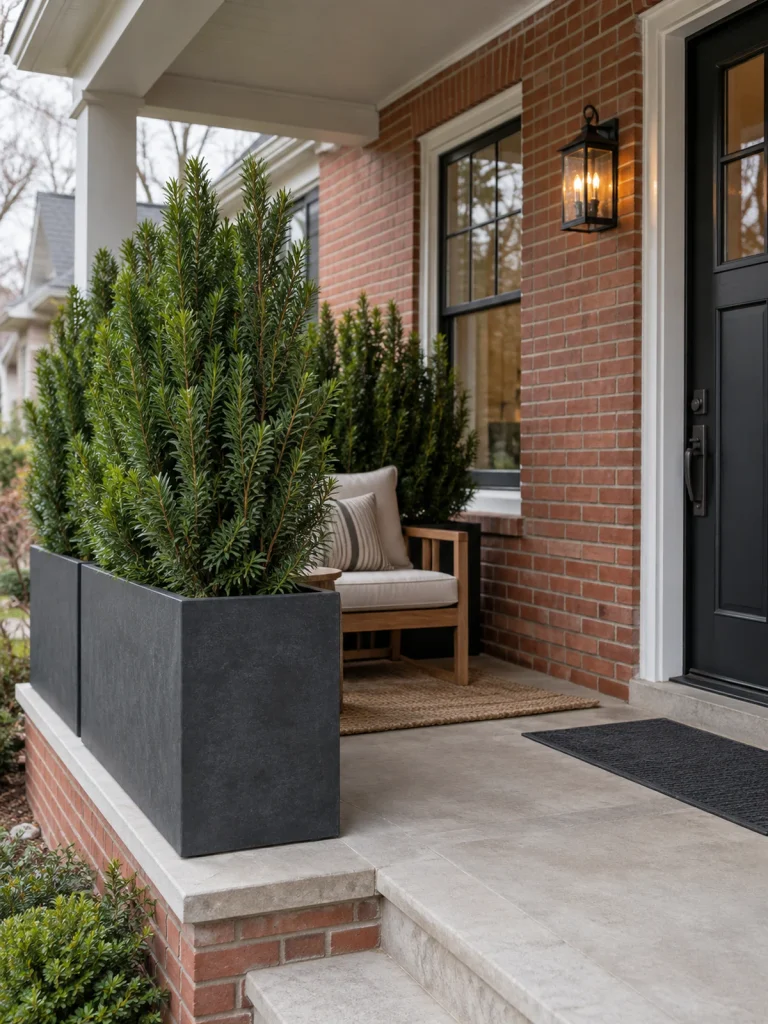
Tall evergreen planters create a leafy buffer without adding a new porch wall. Dark, simple containers look especially good against brick, and dense upright foliage can screen a chair while leaving the doorway visually open.
Start with the view from your actual seat, then position the planters to interrupt that line. Choose shrubs for the porch’s light, local climate, and container conditions, rather than buying by height alone. Allow room for growth and watering access. Large planted containers become heavy, so consider the porch’s capacity and drainage before placing them. A pair of well-positioned plants may serve a small sitting area better than a crowded row.
4. Train a Flowering Vine Across Lattice
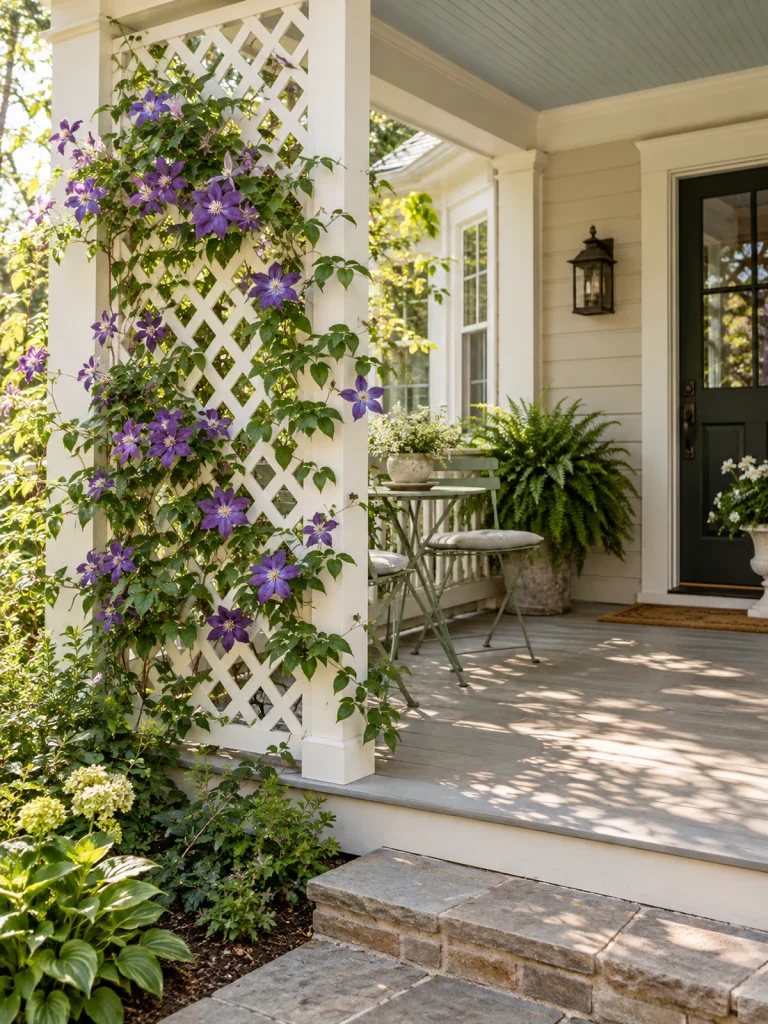
White lattice with a flowering vine gives a private porch corner a softer cottage character. The framework offers immediate visual interruption, while leaves gradually fill some of the openings around a small bistro set or reading chair.
Place the trellis on the side facing a neighboring porch, leaving the main approach open. Select a manageable climber suited to your region and sunlight, and train it onto the support instead of allowing it to spread across siding or gutters. Coverage changes with growth and season, so bare lattice should still look intentional. Keep pruning access available; an attractive living screen also needs room for regular care.
5. Lower a Woven Shade When You Need a Break
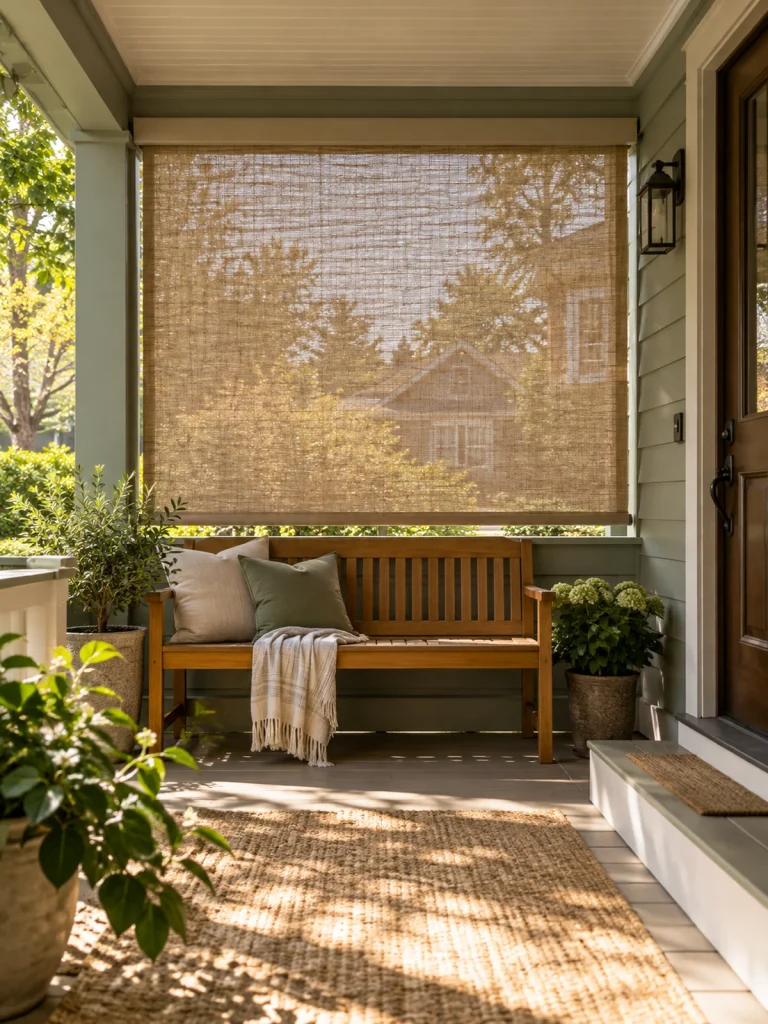
A woven roll-down shade works well when your porch feels exposed only at certain times. Lower it across one seating bay for an afternoon reading session, then raise it to enjoy an unobstructed garden view.
The natural texture pairs easily with a wood bench, neutral pillows, and simple planters. Look carefully at openness and privacy information before choosing a material: the translucent weave shown here softens views but does not hide everything. Follow the manufacturer’s wind and retraction instructions, and choose a child-safe operating system. Keep the shade clear of the entry route so privacy does not require walking through a lowered panel.
6. Wrap an Open Railing With Reed Screening
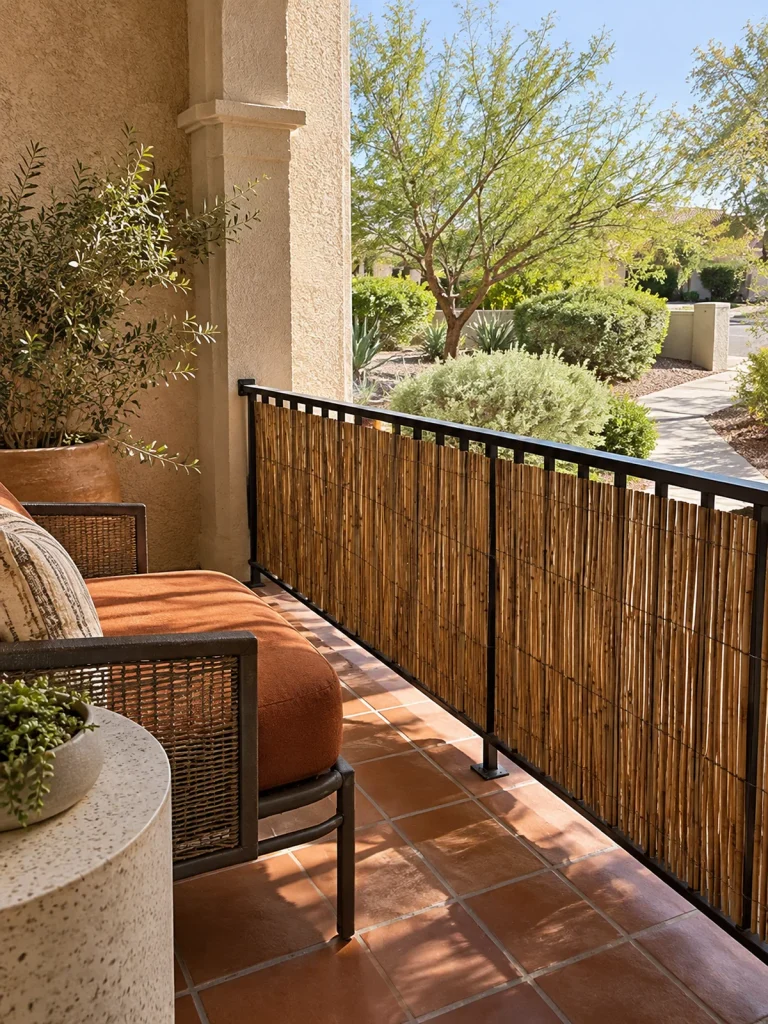
Reed screening brings earthy texture to an otherwise open railing. Against terracotta tile and rust-colored cushions, it creates a relaxed sitting spot that feels more sheltered without adding a full-height enclosure.
Fit the screening along the inside of an existing railing, using an attachment method suitable for that railing and outdoor exposure. Its lower coverage can conceal legs and reduce views into a low seat, but it will not hide your face from every angle. Keep required guards intact and avoid loose edges near the walkway. Natural reed can weather unevenly, making this a better choice for readers who appreciate a casual, changing finish.
7. Add Louvered Panels on the Neighbor-Facing Side
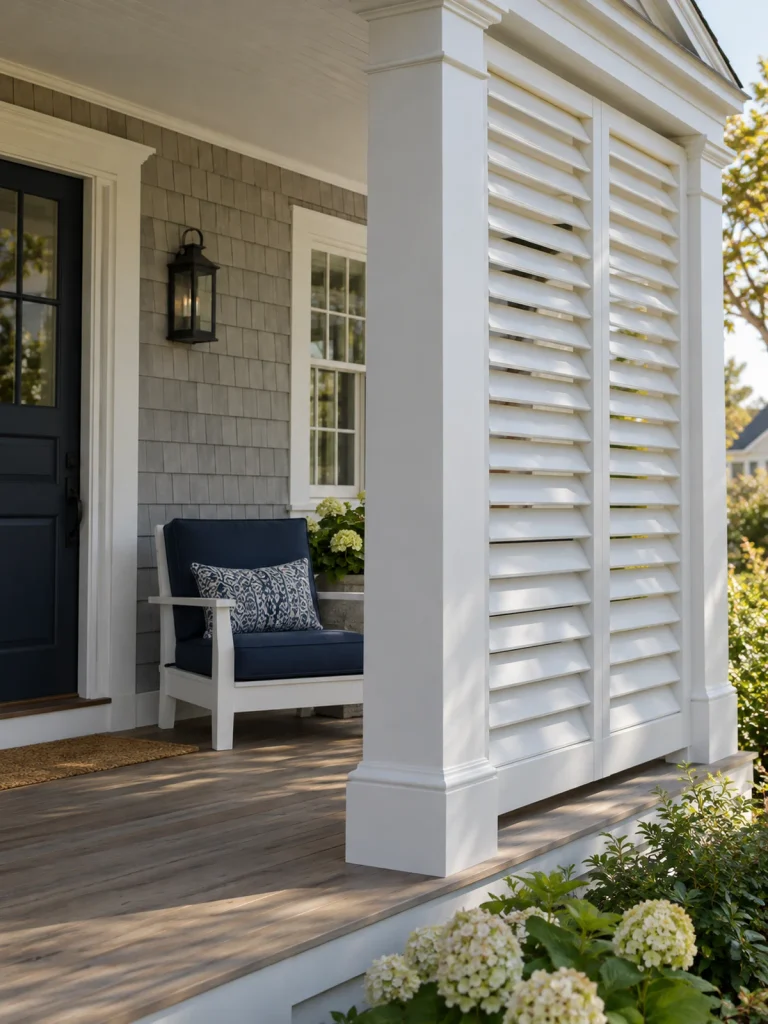
Louvered panels can make a porch feel settled and intentional, especially when their frame matches the existing trim. White louvers beside gray shingles create a coastal look, with a navy cushion providing a quiet touch of color.
Use them to screen the side facing a nearby house instead of enclosing the entire front. Blade angle affects both visibility and airflow, so check the relevant sightline from each side before committing. Choose exterior-rated components and have substantial panels properly supported. Operable designs also need secure stops or latches. This is a more involved option than rearranging furniture, but it can suit a porch you use regularly.
8. Keep Daylight With a Frosted Privacy Panel
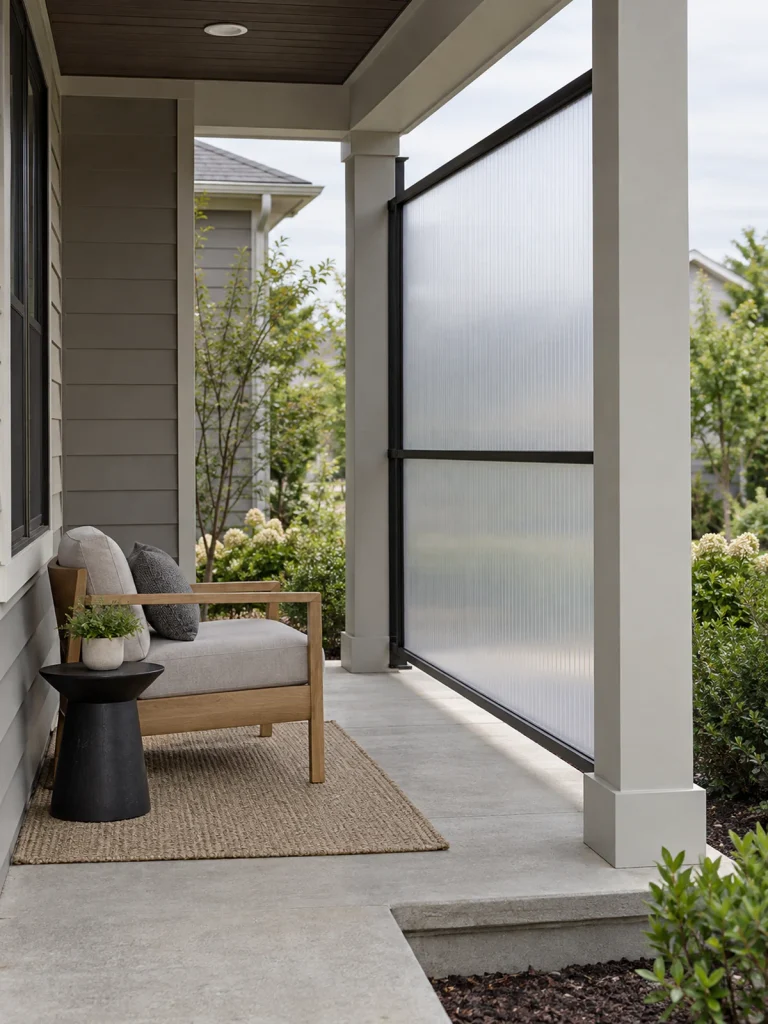
A frosted panel offers a clean way to obscure neighboring views while admitting diffuse daylight. A slim black frame, pale wood chair, and restrained gray palette give a small porch a calm contemporary feel.
Consider an exterior-rated translucent panel system, such as suitable frosted polycarbonate, for one side of the seating area. Material choice, framing, expansion allowances, and wind exposure need proper planning; this is a design direction rather than a shortcut construction method. Test a sample under evening lighting, because silhouettes may remain visible. The panel works best where you want more coverage than open lattice without the visual weight of a dark wall.
9. Plant a Trough of Airy Ornamental Grasses
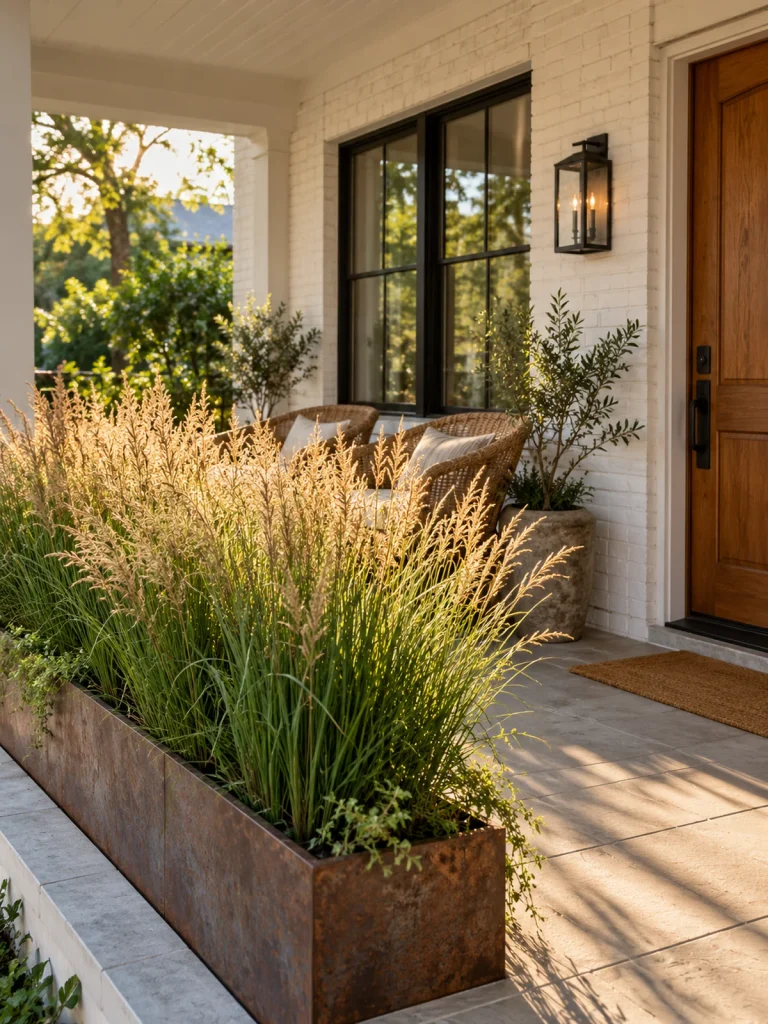
A long trough of ornamental grasses creates a softer boundary than a solid panel. Fine foliage and seed heads catch the light, giving a tucked-away chair a garden setting even on a simple paved porch.
Choose a locally suitable, noninvasive variety with a mature size that fits both the container and the view you want to soften. A sunny porch may offer more choices than a deeply shaded one. Grasses provide seasonal, shifting coverage rather than dependable year-round concealment, and many need cutting back. Keep the trough outside the walking lane, provide drainage, and check the weight of the planted container before positioning it.
10. Hang Ferns to Break Up Higher Sightlines
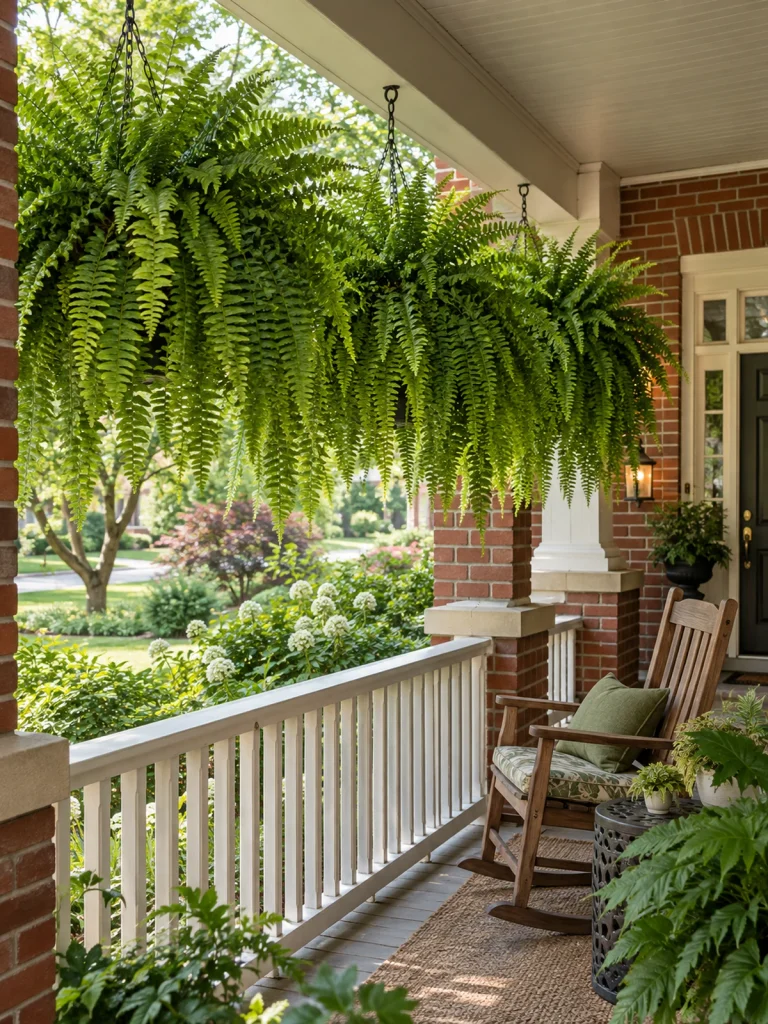
Hanging ferns can interrupt some higher or diagonal views without taking up the floor space needed for a chair. Their arching fronds look lush against brick and white trim, especially when several baskets frame the outer edge of a covered porch.
Use this approach where a leafy fringe overlaps the troublesome view; it will not create full privacy below the baskets. Suspend containers from appropriate supports, accounting for their wet weight, and keep them away from heads and the entry path. Match the plants to the exposure and climate, and leave room to water them without dripping onto cushions. Seasonal replacement or winter protection may be necessary.
11. Turn an Existing Alcove Into an Inward-Facing Retreat
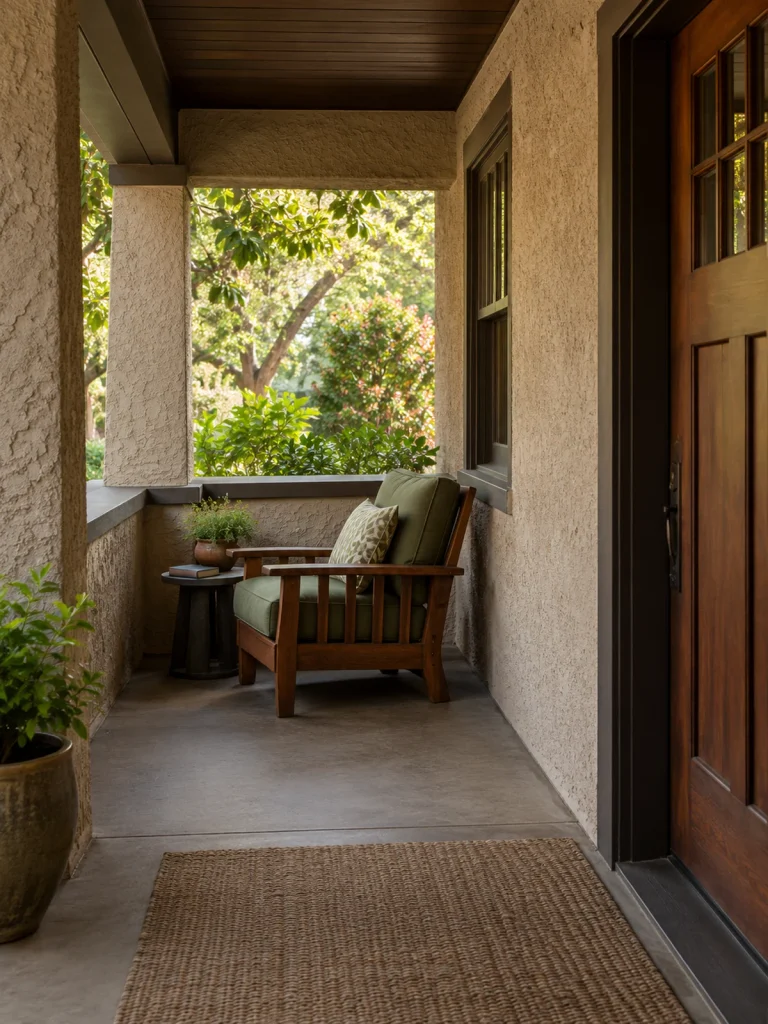
Before adding a screen, look for a porch recess that already blocks part of the street view. A side alcove with a solid lower wall can become a sheltered reading spot simply by moving one comfortable chair into it.
Angle the seat toward the garden or along the porch instead of directly toward passing pedestrians. A small table and one cushion are enough to make the nook useful without crowding it. This approach suits homes with an existing setback or wing wall; furniture alone cannot recreate that protection on a completely open slab. Check the view while seated, and leave the door swing and main approach clear.
12. Choose a Cocoon Chair With a Sheltering Back
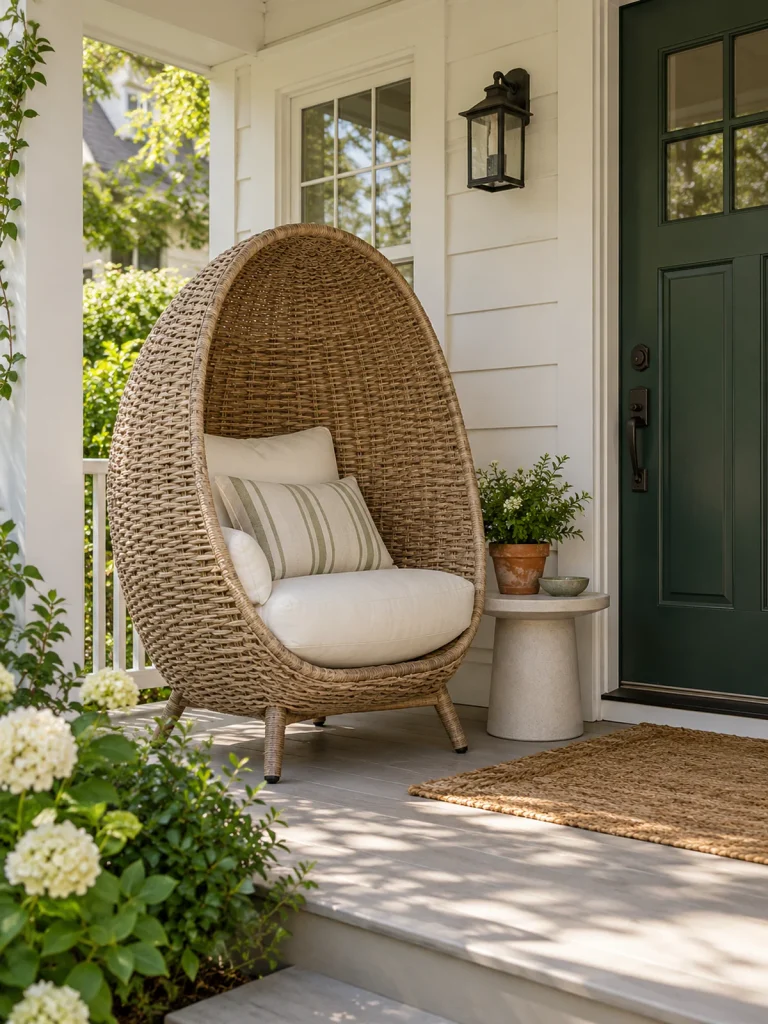
A high-back cocoon chair gives one person a sheltered place to settle without changing the porch structure. Tightly woven sides and an enveloping back can reduce sideways exposure while making a modest corner feel comfortably contained.
Choose an outdoor-rated model on a stable base and turn its opening toward the house or garden, away from the most direct street view. Measure the entire footprint, not just the seat, so the rounded shell does not intrude into the doorway. Open weave still allows views through, and the front remains exposed. Think of this as personal screening for one reading spot rather than privacy for the whole porch.
13. Grow a Hedge Outside the Porch Footprint
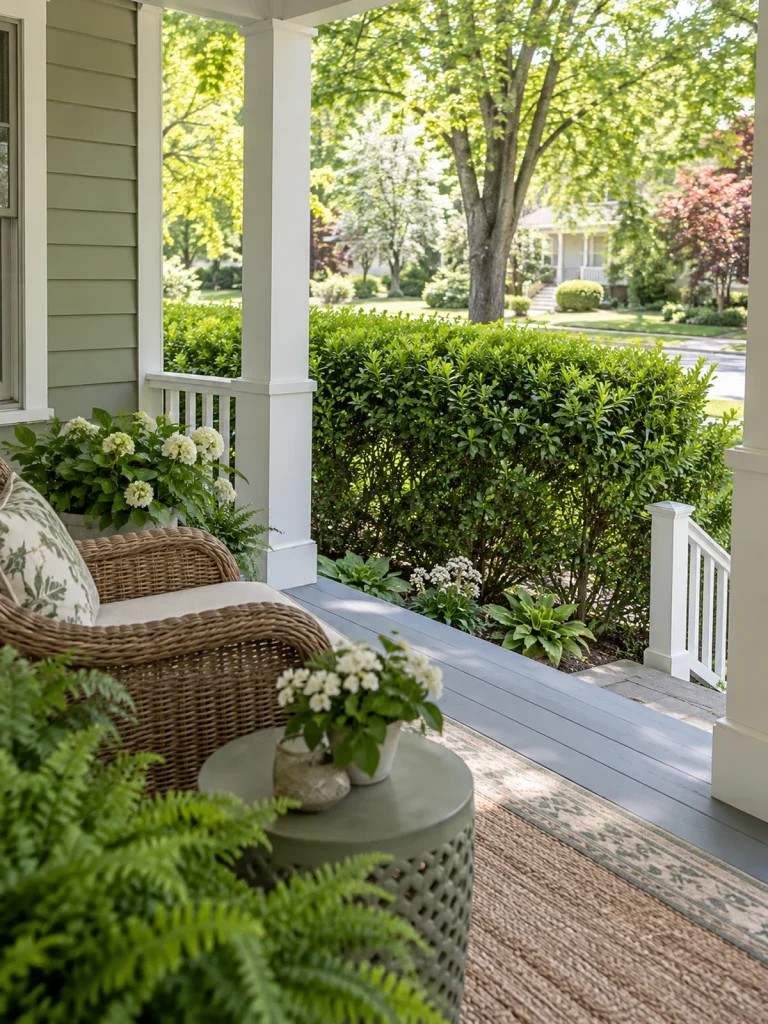
A hedge in the garden bed can screen your sitting area while keeping the porch floor available for furniture. From inside, the green boundary becomes the backdrop to a chair and table, giving a street-facing porch a more enclosed garden feel.
Choose plants for local conditions and their mature width, allowing enough space between foliage, the house, and the approach. Position the hedge to protect the seating bay while keeping steps and relevant traffic sightlines clear. Growth takes time, and deciduous choices lose coverage in winter. Start with a realistic maintenance plan, including pruning access, rather than selecting a fast-growing plant that will overwhelm the space.
14. Raise a Flowering Screen With Railing Planters
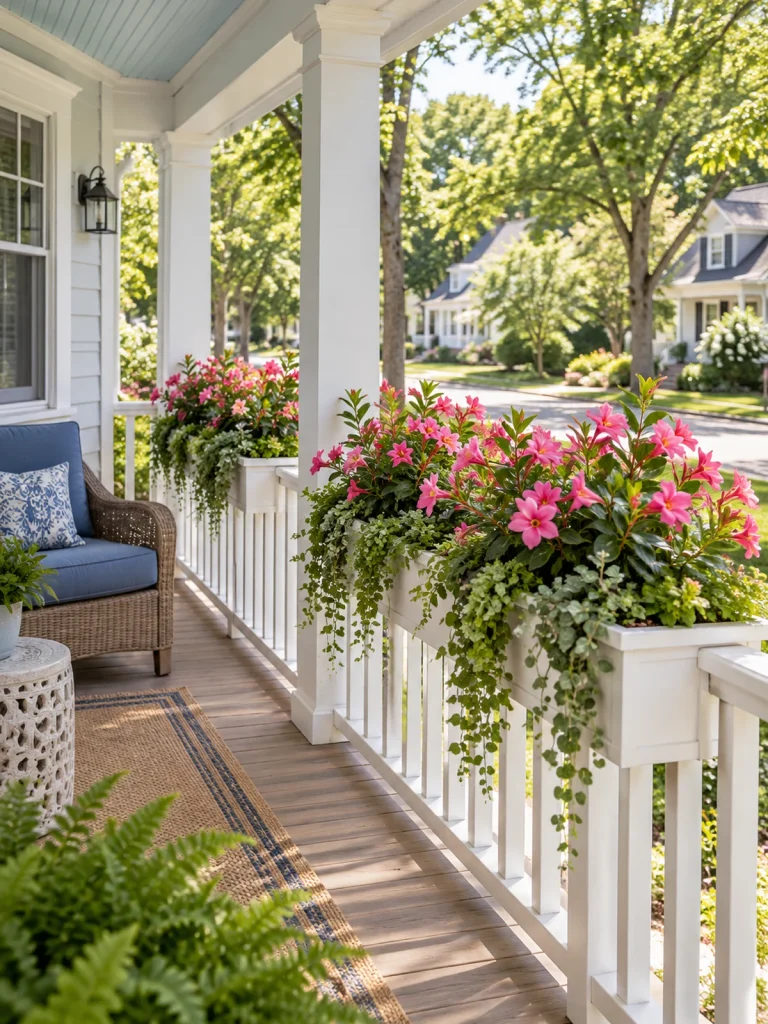

Railing planters can lift flowers and foliage into the sightline around a low chair without consuming much floor space. Deep white boxes, pink blooms, and trailing greenery create a cheerful boundary that still feels open from the street.
Use upright plants to interrupt views above the railing and trailing plants to soften the containers below. Coverage will be partial and seasonal, so this suits readers who want a little separation rather than concealment. Select brackets designed for the railing and loaded planter weight, and direct drainage away from the walkway. Keep planters away from climbing opportunities for children and avoid interfering with the railing’s protective function.
15. Make a Plant Shelf Double as a Side Divider
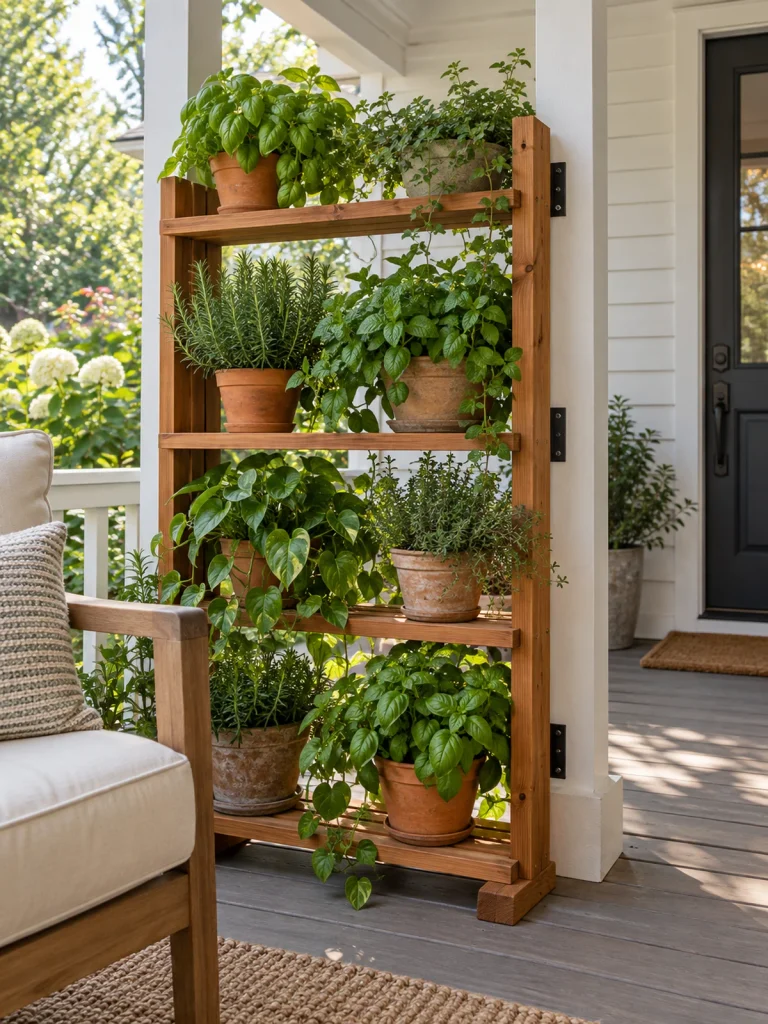
A plant shelf placed beside your chair can soften the view from a neighboring porch while giving herbs and greenery a useful home. Cedar shelves and terracotta pots feel warm and informal, with staggered foliage breaking up some of the open gaps.
Choose an outdoor unit that can be secured appropriately, then place heavier pots low and keep everything within easy watering reach. Use plants that share the available light rather than mixing incompatible care needs for appearance alone. This divider offers selective screening, not a solid wall. Leave space around the shelf for air circulation and cleaning, and keep its feet outside the route to the door.
Find the Sightline Before You Buy the Screen
Put your chair where you would like to use it, then sit down. Notice whether the exposure comes from the sidewalk, a neighboring porch, or an elevated window. Check that same view from outside where you can do so appropriately. A railing-height planter may help with one angle while doing very little for another.
Choose one primary screen for the most exposed direction, then add a softer layer only where it helps. A side panel with flowers along the front often leaves the porch feeling lighter than barriers on every side. Plant choices should follow the actual light and temperature conditions, not just the look of an inspiration photo.
Check front porch privacy again after dark. Open weaves, translucent panels, and foliage gaps can reveal more when the sitting area is illuminated. Keep necessary entrance and step lighting, but avoid aiming a bright decorative light straight at your seat.
Before installing panels, changing railings, or adding large loads, check the requirements that apply to your home, including landlord or HOA approval where relevant. Keep door swings, steps, and the walking route clear. These ideas address visual privacy; open porch screens do not provide soundproofing.
Frequently Asked Questions
How can I make a small front porch private without crowding it?
Screen the single most exposed side and choose furniture that fits behind it. A shallow panel or approved railing planter usually leaves more walking space than several large floor pots. Measure the entry route with the chair in use, not pushed out of the way.
What can renters use for front porch privacy?
Start with furniture placement, an outdoor cocoon chair, or suitable planters if the lease allows them. Curtains and screens may still need permission because their supports or attachments can affect the property. A freestanding product also needs to be stable in the actual wind conditions.
Which options work better for privacy after dark?
Opaque exterior curtains and solid or overlapping screening generally provide more visual coverage than sheers or open lattice. Gaps, side angles, and lighting still matter. Check the view with the porch lights on before assuming a daytime solution also works at night.
Can I keep the porch bright while screening the neighbors?
Leave the front opening clear and screen only the neighbor-facing side. Light-colored louvers or a translucent panel can retain a brighter feel, although translucent materials may show silhouettes. Position plants to interrupt the troublesome view rather than filling every opening.
Your Own Quiet Corner
Start with the seat you want to use and the one view that makes it feel exposed. Moving a chair into an existing recess may be enough; an open porch may benefit more from a curtain, panel, or leafy buffer. Choose one manageable change first, check it from the street and after dark, and build a quiet corner you will actually enjoy using.