
A chair looks lovely in the store, then swallows half your porch when you bring it home. Add a couple of flowerpots, and suddenly carrying groceries to the front door feels like navigating an obstacle course. Decorating a small, narrow front porch takes a little more editing than arranging a roomy outdoor sitting area.
The good news is that a welcoming entrance doesn’t need much furniture. A colorful door, a well-placed planter, or a textured wall accent can give a tight space personality while leaving the floor open. The trick is choosing where you want the eye to land, then making everything around that feature feel intentional.
These small front porch decor ideas work with long walkways, shallow landings, and awkward corners. Some add a place to pause; others rely entirely on vertical space and simple finishes. Choose the ones that suit your actual layout, and leave yourself enough room to use the entrance comfortably every day.
1. Let a Slim Bench Anchor the Far End
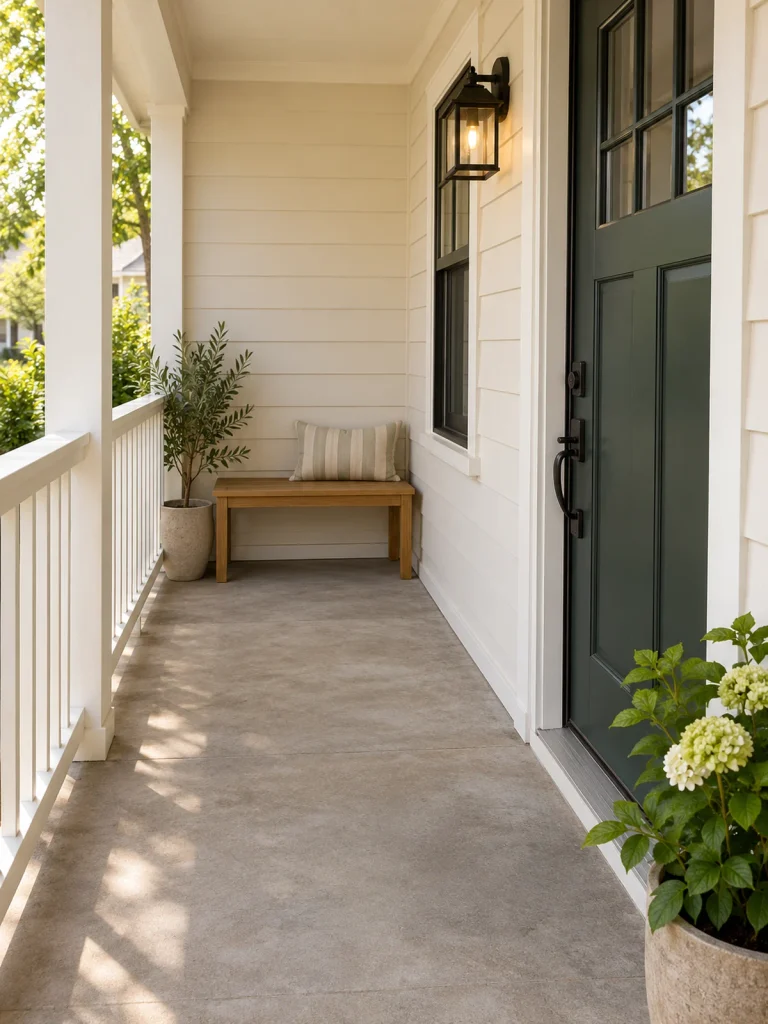
A short wood bench across the far end of a porch creates a destination without turning the whole walkway into a seating area. Look for a simple frame with open space beneath it, which keeps the arrangement visually light. A single striped outdoor cushion adds softness without a pile of pillows.
Use this approach only when that end is outside the route to the door and steps. Measure the bench’s full depth, then account for knees and feet when someone sits down. Skip the coffee table, and choose a bench finish suited to the porch’s exposure. A shallow porch may be better served by wall decor instead.
2. Give the Walkway Definition With an Outdoor Runner
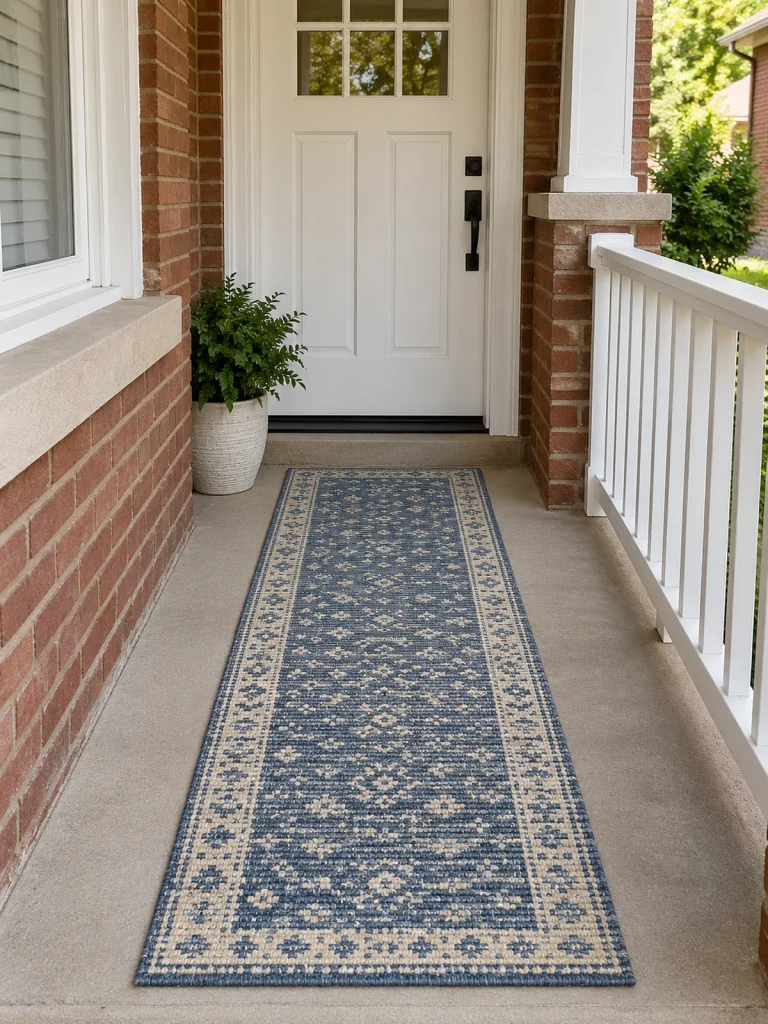
A blue-and-ivory outdoor runner adds pattern to a narrow concrete porch without introducing another piece of furniture. Its long shape follows the layout, creating an intentional path between the porch entrance and front door. Choose a quieter pattern when the surrounding brick or siding already has plenty of texture.
Leave a visible strip of floor along both sides, and keep the ends away from stair edges and thresholds. The runner should lie flat, stay put, and allow any outward-opening door to move freely. Check beneath it after wet weather, and lift it regularly so trapped dirt and moisture don’t become part of the decorating scheme.
3. Grow Upward With Wall-Mounted Planters
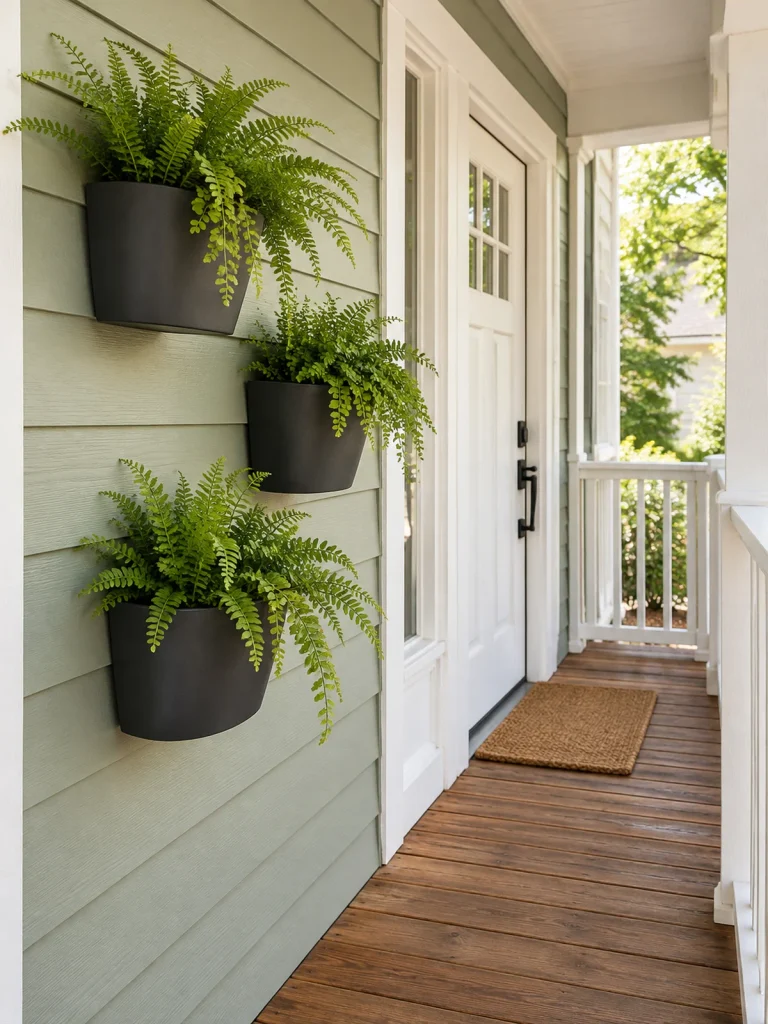
Wall-mounted planters bring greenery into a narrow entry while leaving the floor available for walking. Three small containers arranged vertically can make a blank section of siding feel considered. Dark pots against a light wall give the foliage definition without requiring bright flowers or extra accessories.
Place the grouping on an unused stretch of wall, beyond the door swing and away from shoulders passing through. Keep mature plant size in mind, since trailing stems can reach farther than the container. Select plants for the light your porch actually receives. Use mounting hardware appropriate for the wall and loaded planter weight, and manage drainage so water doesn’t repeatedly soak the siding.
4. Dress the Outer Edge With Railing Planter Boxes
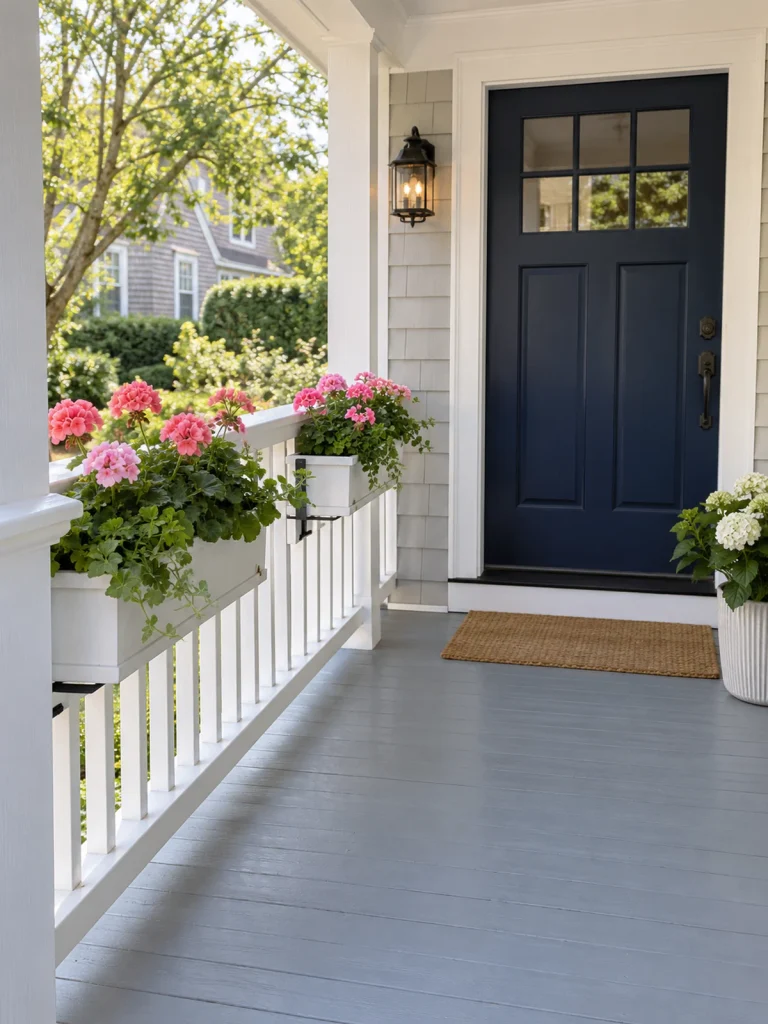
Railing planter boxes turn the porch boundary into a ribbon of color. A pair of white boxes filled with pink flowers feels cheerful against a navy door, while keeping the center of the porch visually open. Repeating one container style looks calmer than mixing several unrelated hanging pots.
Check how far the boxes project before choosing their position. An inward-facing box still takes up space, and outward mounting may be unsuitable above a walkway or shared area. Use a mounting system made for your railing profile and the filled weight. Keep handrails usable, allow drainage, and prune plants before they spill into the route to the entrance.
5. Make the Front Door Your Main Color Statement
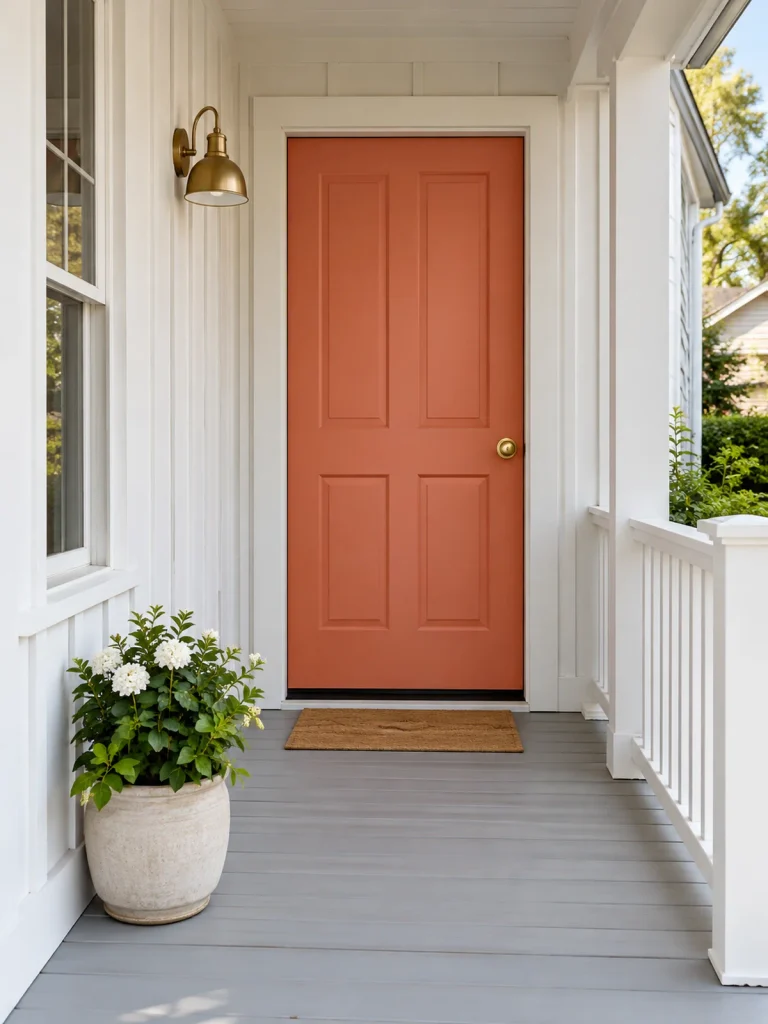
A coral front door gives a narrow white porch a focal point without taking up a single inch of floor. The surrounding trim, siding, and mat can stay simple, allowing the color to carry the arrangement. Brushed brass hardware brings a warm accent without adding decorative objects around the threshold.
Try paint samples on the door and check them in morning light and porch shade before committing. A color that feels soft outdoors may look much stronger beneath a deep roof. Use a coating compatible with the door material and follow the preparation instructions. Renters should confirm painting permission before planning the rest of the palette around a new shade.
6. Add Softness With a Simple Greenery Wreath
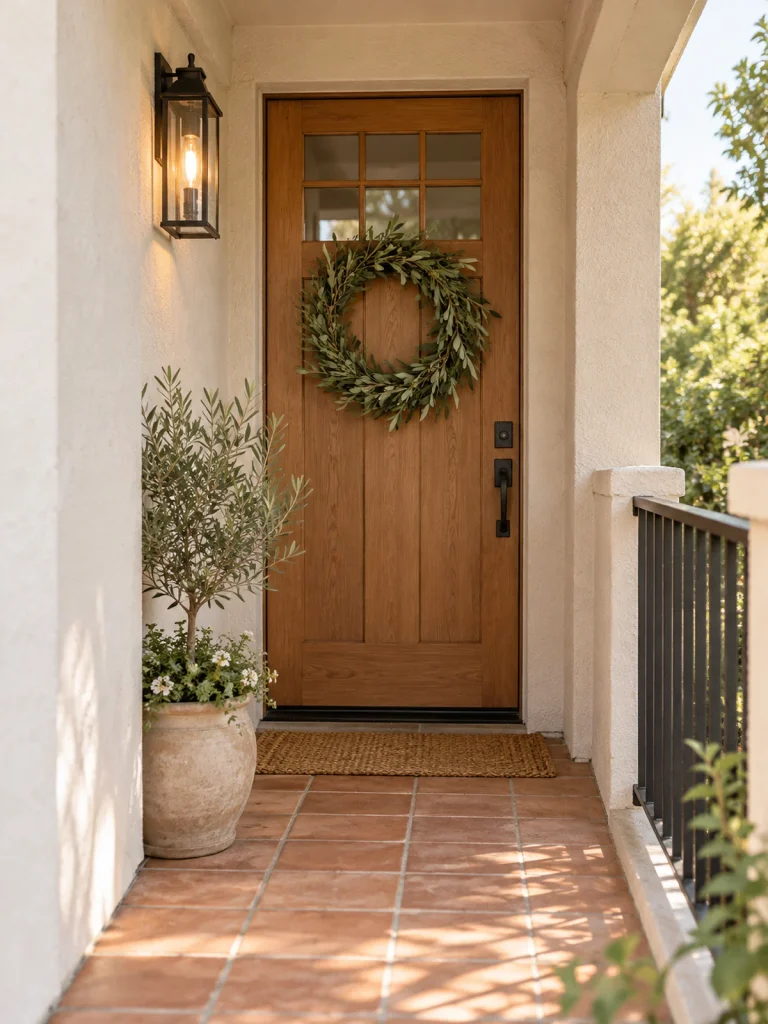
A loose leafy wreath adds texture to a wood front door while keeping the porch itself uncomplicated. Olive-style foliage works well with warm wood, cream walls, and earthy tile because it adds a gentle green layer rather than another competing color. Keep ribbons minimal if the space already feels busy.
Choose a diameter that leaves the door hardware and any important glazing clear. A relatively flat wreath is easier to accommodate behind a storm door than a thick arrangement. Use a door-compatible hanger that won’t interfere with closing. Fresh foliage needs refreshing, while artificial foliage should be rated for the exposure and cleaned when it collects dust or pollen.
7. Lift Greenery Off the Floor With One Hanging Basket
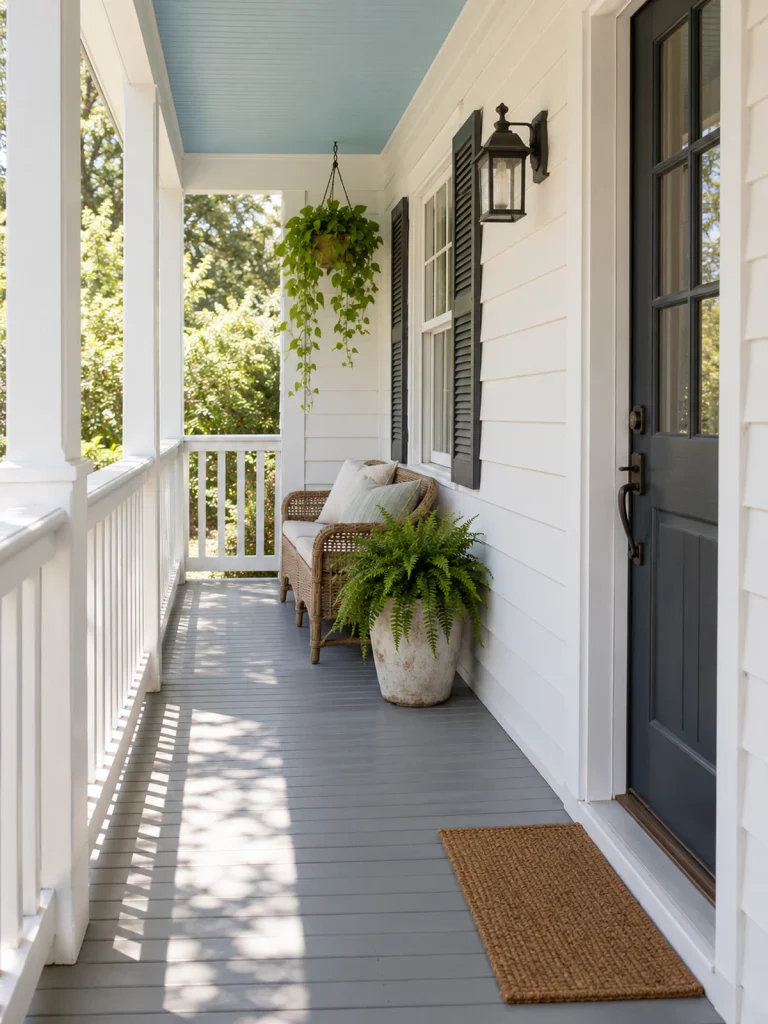
A single hanging basket draws attention upward and adds a leafy finish to the end of a narrow porch. Trailing greenery looks especially inviting against pale siding, where individual stems remain visible. Keeping the display to one basket helps the overhead space feel open rather than crowded.
Locate it over an unused corner, outside the walking route, with room for the plant to grow. The support must suit the basket’s watered weight, not just its weight when empty. Make watering practical before choosing the location, and avoid runoff onto seating or the entrance. Trim trailing growth as needed, and bring tender plants indoors when local temperatures require it.
8. Use One Tall Planter Instead of Several Small Pots
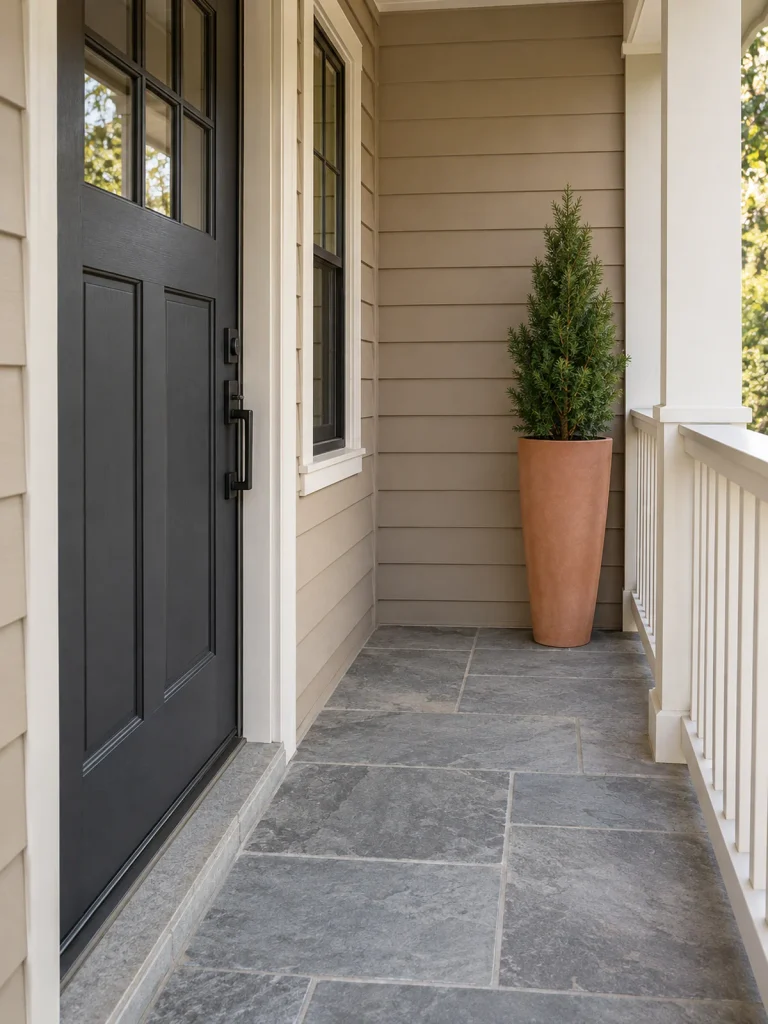
One tall terracotta planter can give a narrow porch the greenery it needs without scattering containers across the floor. A slender upright evergreen draws the eye toward an unused end corner, while the warm pot adds contrast to gray stone and neutral siding. The result feels planted rather than cluttered.
Measure the pot at its widest point and consider the plant’s mature spread. A narrow base doesn’t help if branches brush everyone walking past. Choose a stable container with drainage and a plant suited to the light, climate, and root space. Keep the surrounding floor clear so the planter reads as a deliberate focal point rather than the start of a collection.
9. Create a One-Chair Perch at the End
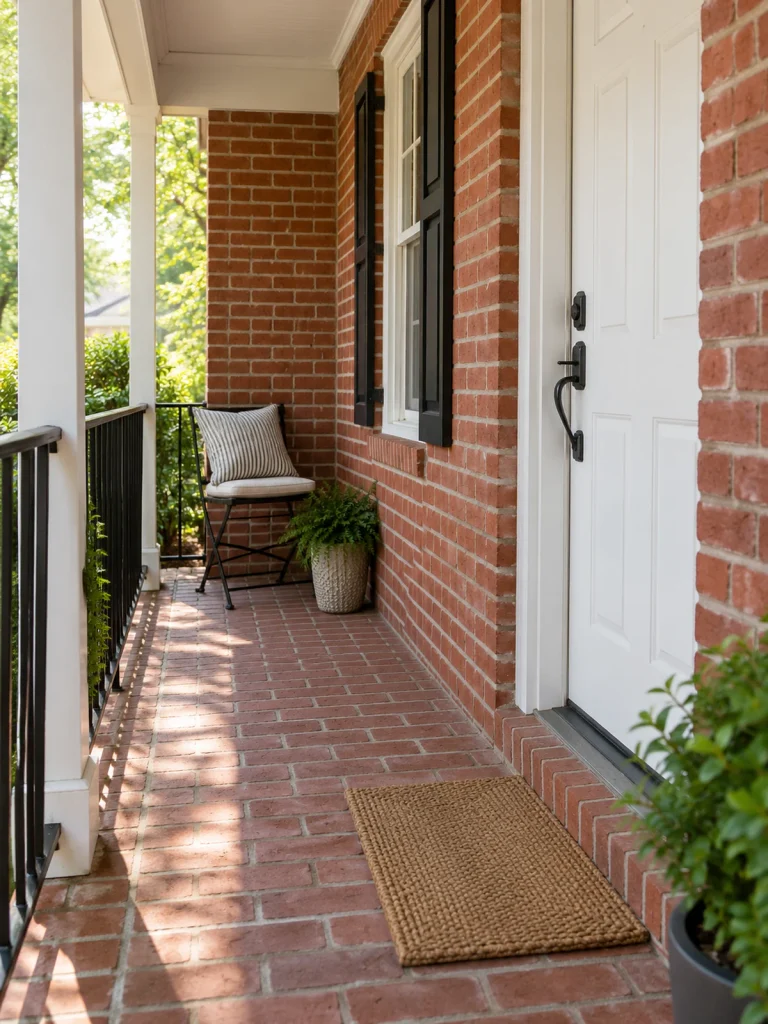
A compact folding chair offers a place to sit without committing the porch to a full furniture arrangement. Black metal looks crisp against red brick, and a pale seat cushion softens the outline. Positioning the chair at the far end leaves the main entrance area available for everyday comings and goings.
Test the layout with someone actually seated before deciding it fits. Feet, knees, and the chair’s open frame need more room than its folded dimensions suggest. Choose outdoor-rated seating and a cushion you can bring inside during wet weather. Fold and store the chair when extra access is needed, and skip a side table if it narrows the passage.
10. Style a Shallow Wall Shelf Above Floor Level
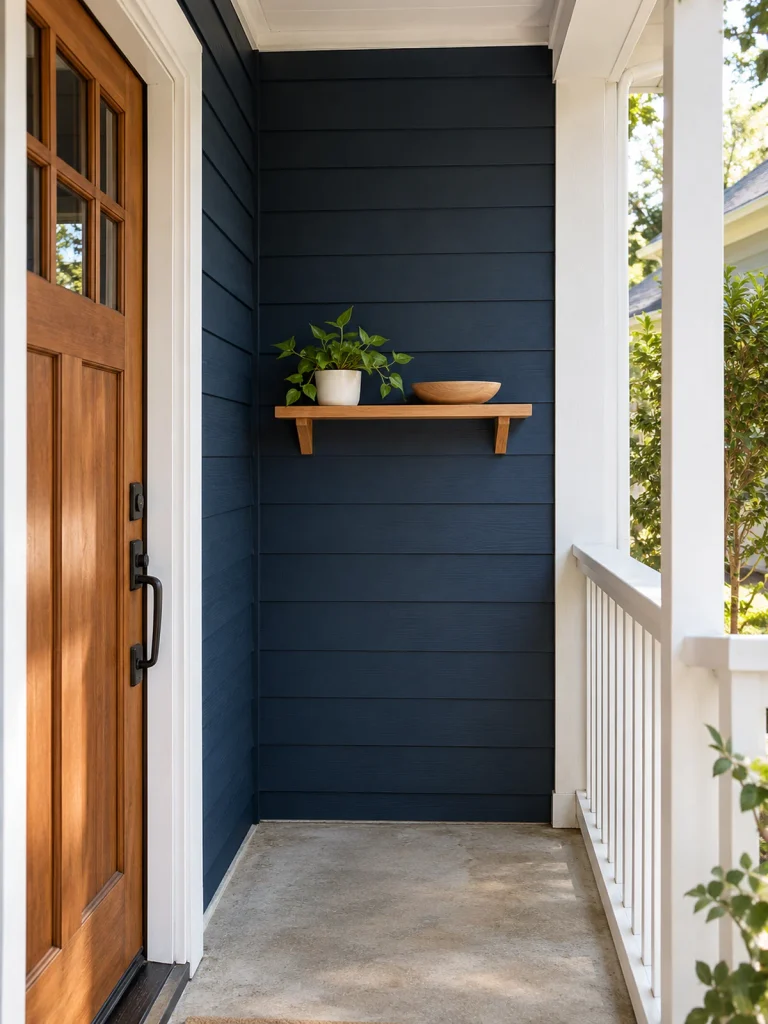
A small wall shelf gives decorative objects a home without introducing a console table. Natural wood against navy siding creates a warm little display, especially with just one potted plant and a simple bowl. The empty floor beneath is part of what makes the arrangement work in a tight space.
Install the shelf on an unused end wall rather than where people squeeze past it. Even a shallow projection can catch an arm or bag in a narrow passage. Choose materials and fasteners appropriate for outdoor exposure and the wall construction. Keep the display sparse, use stable objects, and remove loose accessories before windy weather instead of letting the shelf become overflow storage.
11. Bring in Texture With Woven Wall Decor
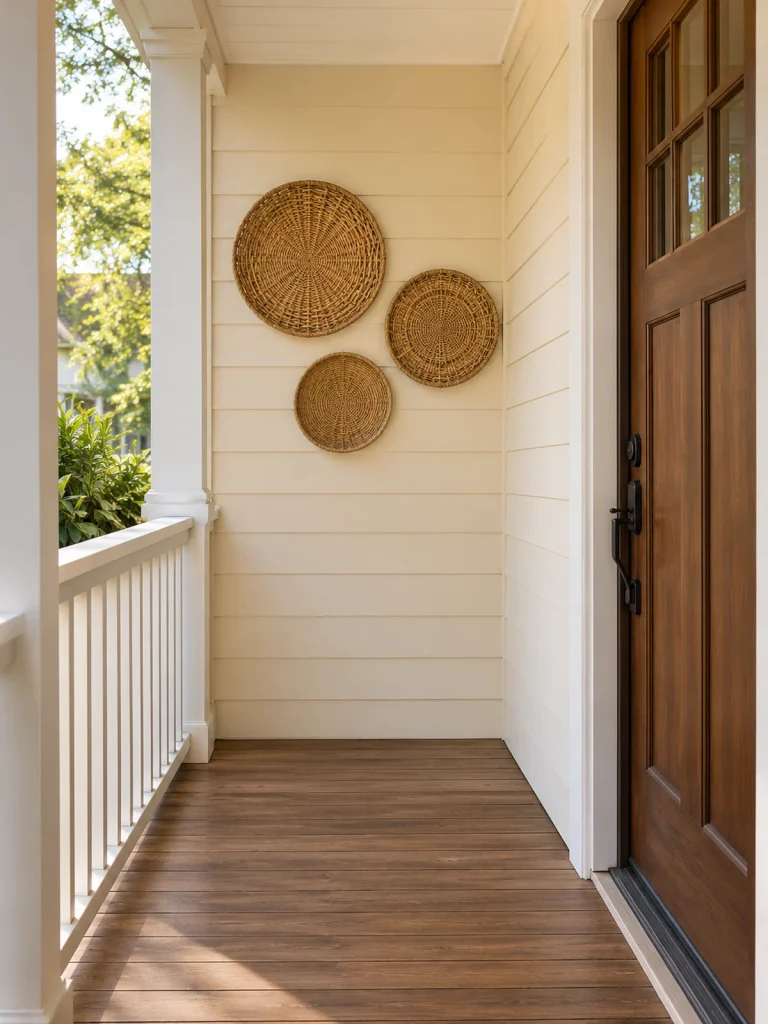
Flat woven wall accents add the warmth of wicker without the footprint of a wicker chair. A loose grouping of three round pieces gives a sheltered end wall some movement, particularly against plain cream siding. Their natural tones connect easily with a wood door, coir mat, or existing timber floor.
Keep the arrangement compact enough to read as one feature, with breathing room around each piece. Natural fibers can weather, mildew, or fade, so reserve indoor-style basket decor for genuinely protected locations. For an exposed porch, look for pieces specifically intended for outdoor use. Secure each accent individually, and keep the grouping clear of lights, door hardware, and opening windows.
12. Frame the Entrance With a Compact Wall Sconce
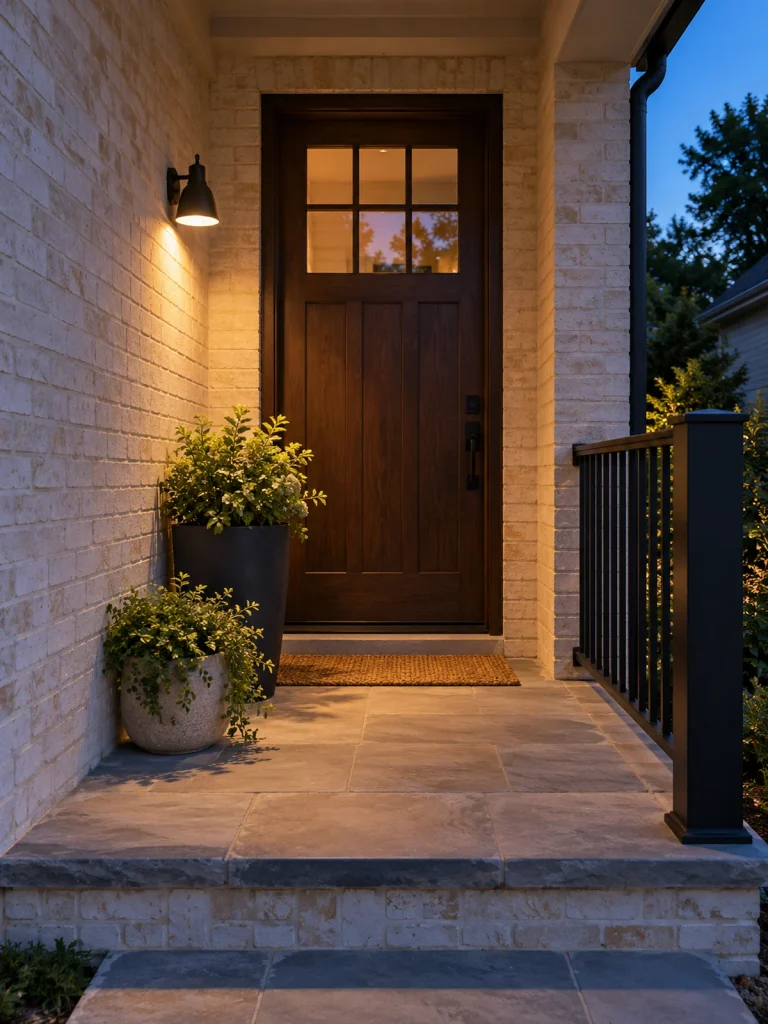
A compact wall sconce adds a finishing detail that becomes especially noticeable after sunset. A dark fixture beside a wood door contrasts neatly with pale brick, while a warm pool of light gives the entry a softer evening appearance. A close-fitting shape also avoids the bulk of a large projecting lantern.
Judge the fixture by its projection as well as its height. It should suit the doorway without interfering with movement, opening doors, or nearby accessories. Choose a fixture rated for the location’s exposure and use a qualified electrician for installation or wiring changes. Check the result after dark so the light helps reveal the landing without shining harshly into approaching eyes.
13. Paint the Ceiling a Soft, Airy Color
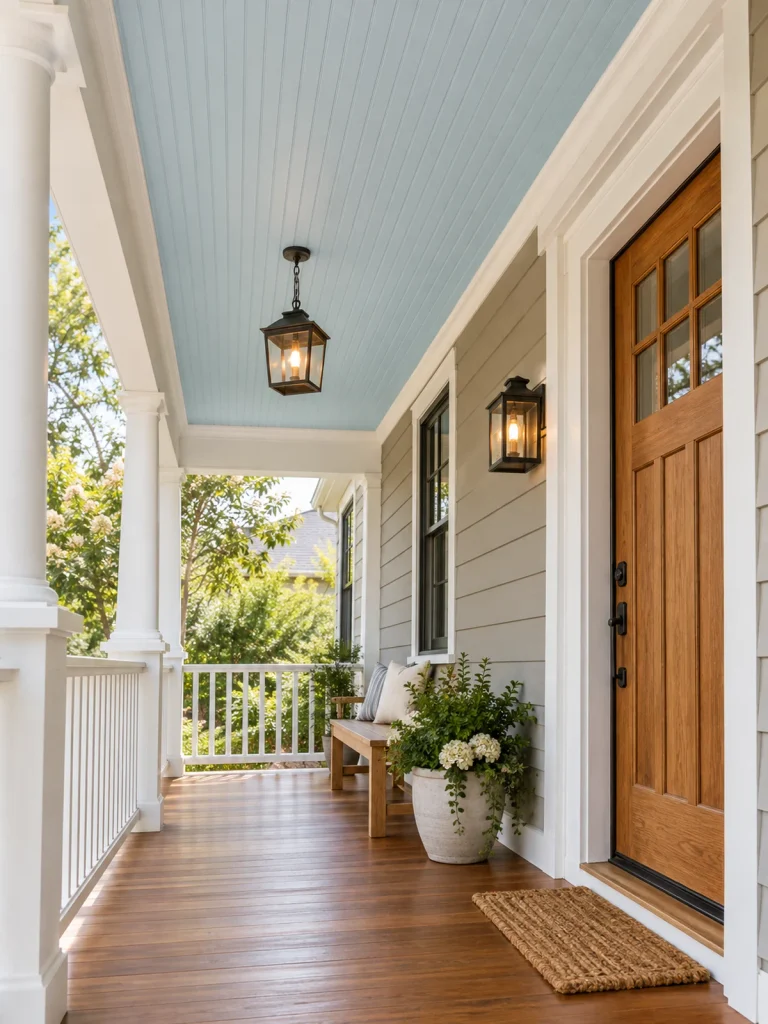
A pale blue porch ceiling introduces color above the walkway, leaving walls and floors free for daily use. On beadboard, the subtle shade brings out the ceiling’s texture without competing with a natural wood door. White trim keeps the change gentle enough for a small covered entrance.
Sample the color overhead before painting the full surface. Porch shade can make a blue read grayer or cooler than it did on the swatch. Use a finish suited to the ceiling material and outdoor conditions, and address peeling paint or moisture problems first. Keep the surrounding decor restrained so the ceiling becomes a pleasant detail rather than one more busy surface.
14. Repeat a Quiet Two-Color Palette
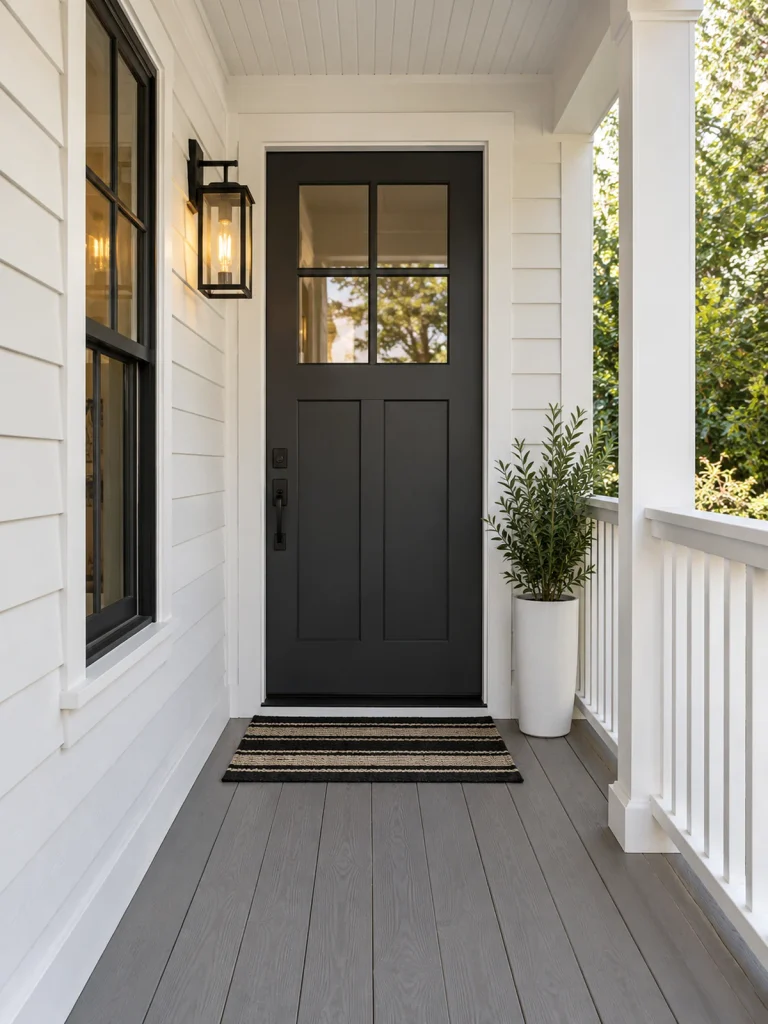
A white-and-charcoal palette gives a narrow porch a coordinated look through repetition. A charcoal door, dark window trim, and a striped mat feel connected, while a white planter blends into the siding. Green foliage adds a natural accent without requiring another large block of color.
Start with finishes already on the house, then repeat those tones in the pieces you add. You don’t need to repaint every surface or replace usable hardware. Keep patterns limited and leave sections of wall and floor undecorated. This approach is especially useful when a small entry has several competing details, because fewer unrelated colors make the arrangement easier to take in at a glance.
15. Soften One Open End With an Outdoor Curtain
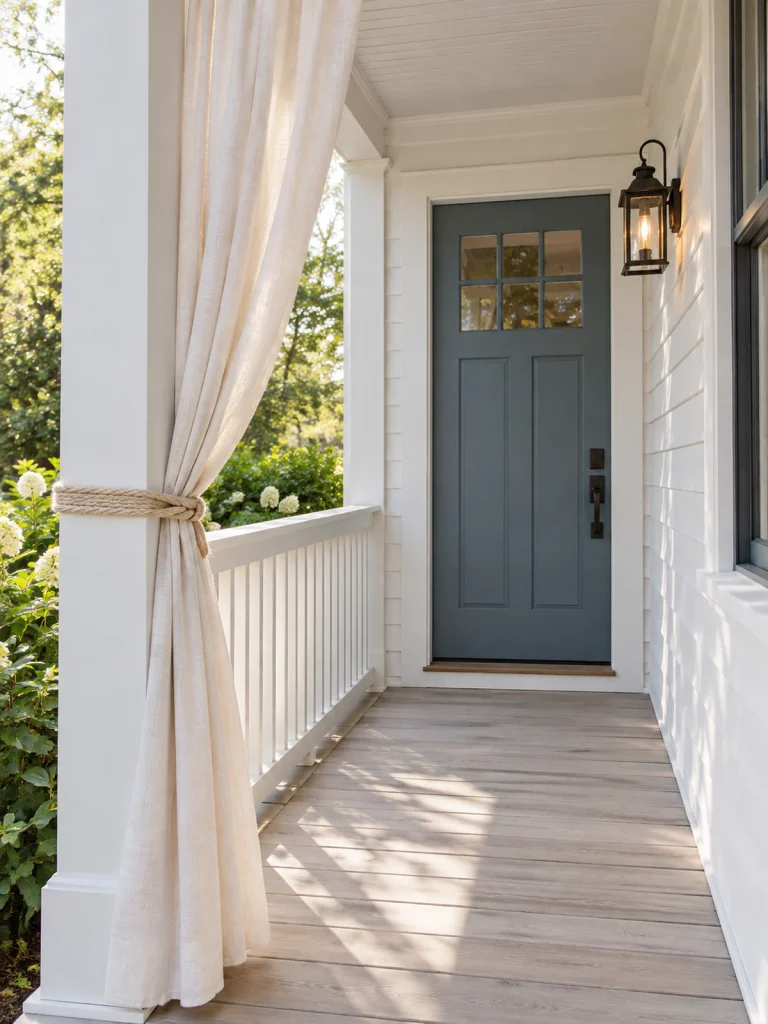
A cream curtain gathered against a porch post adds softness to a narrow entrance without enclosing the whole space. The fabric creates a gentle contrast with straight railings and siding, giving an open corner a more finished appearance. One panel is often enough when the goal is texture rather than full screening.
Choose outdoor fabric and keep it securely tied outside the walking route. Position the hem so it doesn’t drag across a wet floor, and leave door hardware, lights, and handrails accessible. A tied panel offers limited privacy, so don’t expect it to function like a closed screen. Take it down when strong winds could pull at the fabric or its mounting hardware.
16. Brighten a Blank Stretch With a Window Box
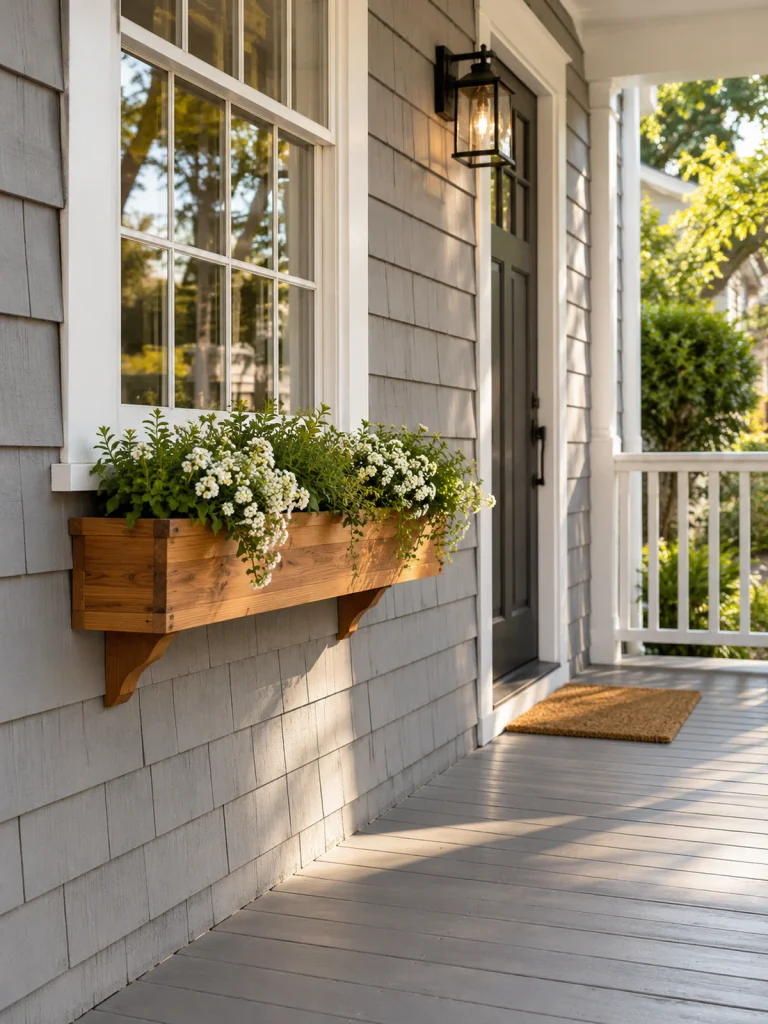
A cedar window box beneath an existing porch window adds a horizontal band of flowers without creating a row of floor pots. Small white blooms keep the arrangement light against gray shingles, while the wood introduces warmth. The window above gives the planter a natural visual anchor.
Check the box’s depth against the remaining passage before installing it. Keep window operation, drainage openings, and trim accessible, and use brackets appropriate for the wall and the saturated container weight. Choose compact plants for the porch’s actual sun exposure. A removable liner can simplify planting and cleaning, while regular trimming keeps foliage from extending farther into the walkway than you planned.
17. Treat a Patterned Doormat as a Small Focal Point
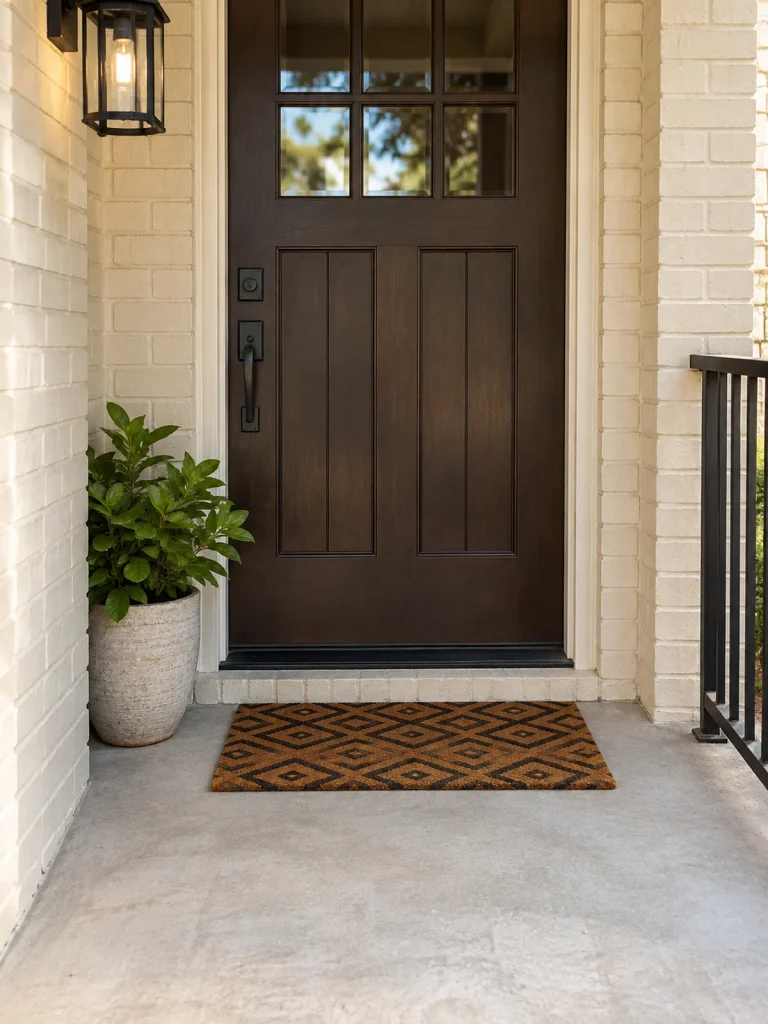
A rust-and-black geometric doormat can provide enough pattern for an entire small entry. Against cream brick and a dark wood door, the simple diamond design feels lively without filling the porch with accessories. Leaving bare floor around the mat makes its shape and color easier to appreciate.
Choose one appropriately sized, low-profile mat rather than stacking several layers beneath the door. Check that it stays flat, resists shifting, and doesn’t catch the door or curl near a step. Consider how exposed the porch is when selecting the material. Shake or clean it as directed, and replace it when worn edges become a nuisance underfoot rather than part of the welcome.
18. Swap Small Accessories With a Seasonal Door Basket
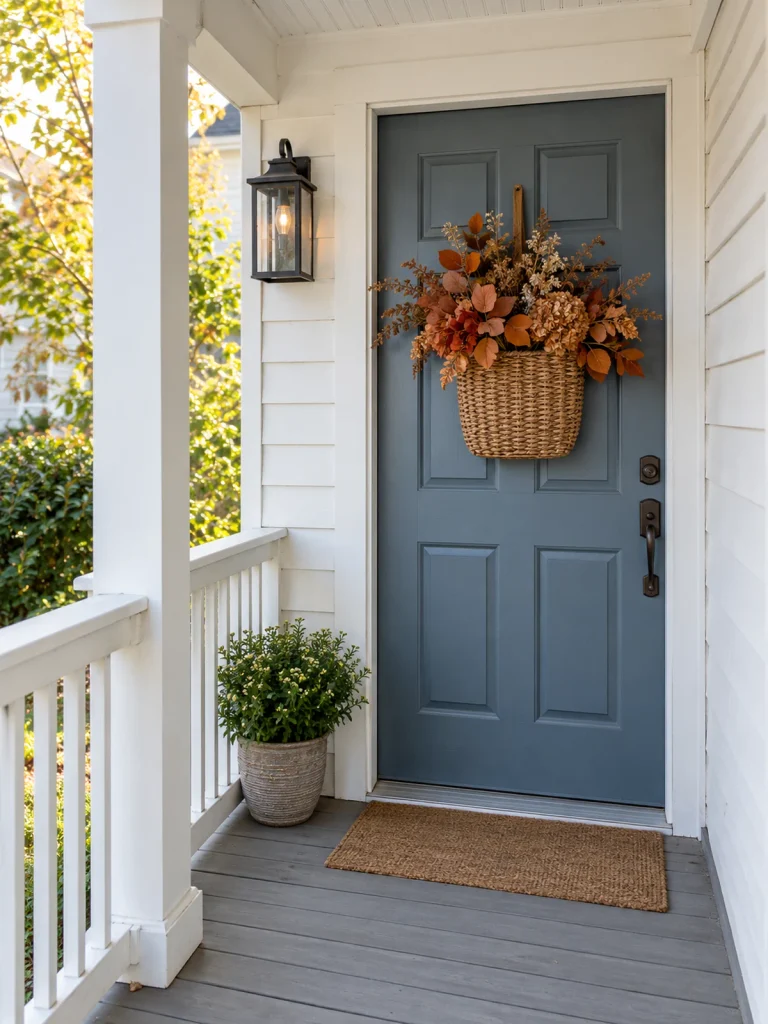
A shallow woven door basket makes seasonal decorating manageable on a narrow porch. Copper leaves and dried stems bring an autumn mood to a blue-gray door without placing pumpkins beside the steps. Later, the same general approach can use different foliage while the rest of the entrance stays simple.
Keep the arrangement light and relatively flat, with stems contained away from the handle, lock, and door edges. Check clearance behind a storm door before hanging it. Dried materials need shelter from rain, and loose stems may shed as the door moves. Use a secure hanger compatible with the door finish, and swap the display instead of accumulating seasonal decorations around it.
Choose a Focal Point Before Adding Anything Else
Start by opening every door fully, including any storm or screen door, and walking the route you use with groceries or bags. Note where people turn, where deliveries land, and which corners remain unused. Those observations matter more than fitting every attractive accessory into the space.
Then choose one main feature and one supporting detail. A colorful door and plain mat may be enough for a shallow landing. A long porch might accommodate a runner and wall planters. Where an unused end provides genuine seating room, try either a bench or a chair before buying additional pieces.
Measure the full footprint of anything that projects, including plant growth, shelf edges, and occupied seating. Keep step edges, handrails, and the route through the entrance unobstructed. Treat the images as styling inspiration; the layout still needs to work for your household’s access needs and the conditions at your home.
FAQ
How do you decorate a front porch that’s too narrow for furniture?
Use the door, an unused wall, or the ceiling as your decorative surface. A wreath, door color, flat wall accent, or pale painted ceiling can add character while leaving the floor open. A single doormat may be all the floor decor you need.
Should a small porch have matching planters on both sides of the door?
Only if both sides have room without restricting access. One planter in an unused corner often fits a narrow layout more comfortably. You can balance it visually with a door accent or existing wall light rather than forcing symmetry.
Can an outdoor rug stay on a covered porch all year?
That depends on the rug, exposure, and local weather. A roof doesn’t prevent wind-driven rain or dampness beneath a rug. Follow its care instructions, check the floor underneath regularly, and store it when conditions prevent it from drying properly.
What should renters choose for a narrow porch makeover?
Start with movable pieces such as a doormat, one container plant, or a compact chair where space allows. A removable door decoration may also work. Confirm permission before painting, drilling, or attaching anything to siding, railings, or ceilings.
How can you tell whether a chair really fits?
Measure it open, then test the arrangement with someone sitting in it and another person using the entrance. Account for feet, bags, and the door swing. If people must turn sideways or move the chair to pass, choose a smaller piece or skip seating.
Make the Most of the Porch You Have
A small, narrow front porch can feel welcoming with just a few well-placed details. Start with the surface that offers the most freedom: the door, an empty wall, or an unused end corner. Add one feature, live with the layout for a few days, and check that the entrance still feels easy to use. That practical starting point gives you room to add personality without crowding the porch.