
A boulder can give a front bed a focal point, make a path feel more inviting, or bring texture to a corner where plants do most of the work. The challenge is figuring out where a large rock actually belongs.
Start by deciding what the space needs. You might want a clearer edge, a stronger view from the sidewalk, or a way to connect two areas of the yard.
These ideas for landscaping with boulders show how stone can work alongside plants, gravel, paving, and water. You’ll find ideas for both quiet garden corners and places that call for a more noticeable feature.
1. Anchor a Front Bed With One Granite Boulder
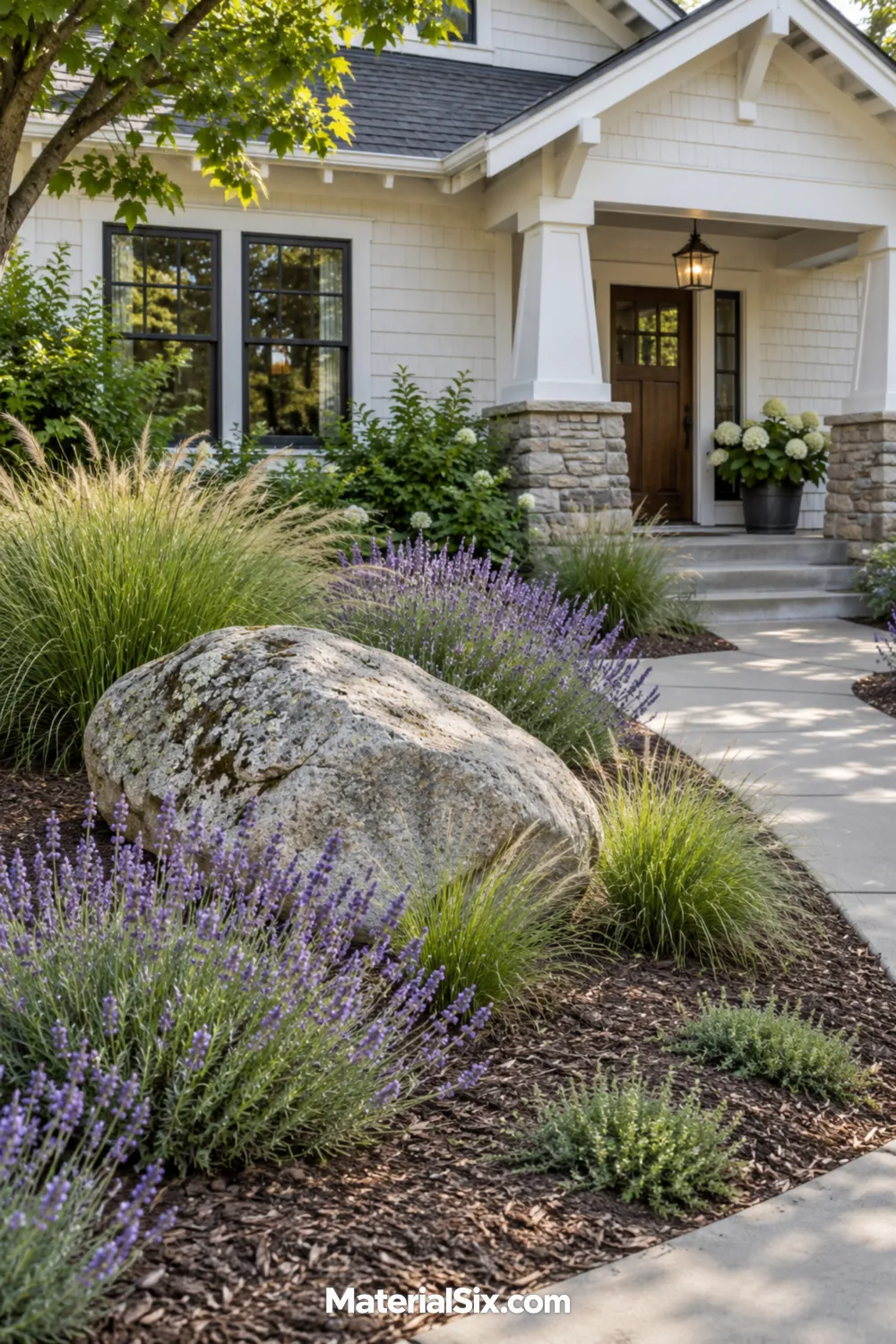
A single boulder can give a front yard planting bed a focal point before the flowers even come into view. Try placing it off-center in a broad bed near the front walk, where you can see its most interesting face from the sidewalk. Arrange low plants around one side and repeat a few of them farther along the bed so the stone feels connected to the planting.
Leave a little breathing room in front of the rock. That open patch of mulch or low ground cover gives its outline room to show and keeps the bed from looking crowded as plants fill in.
2. Group Three Boulders in a Gravel Garden
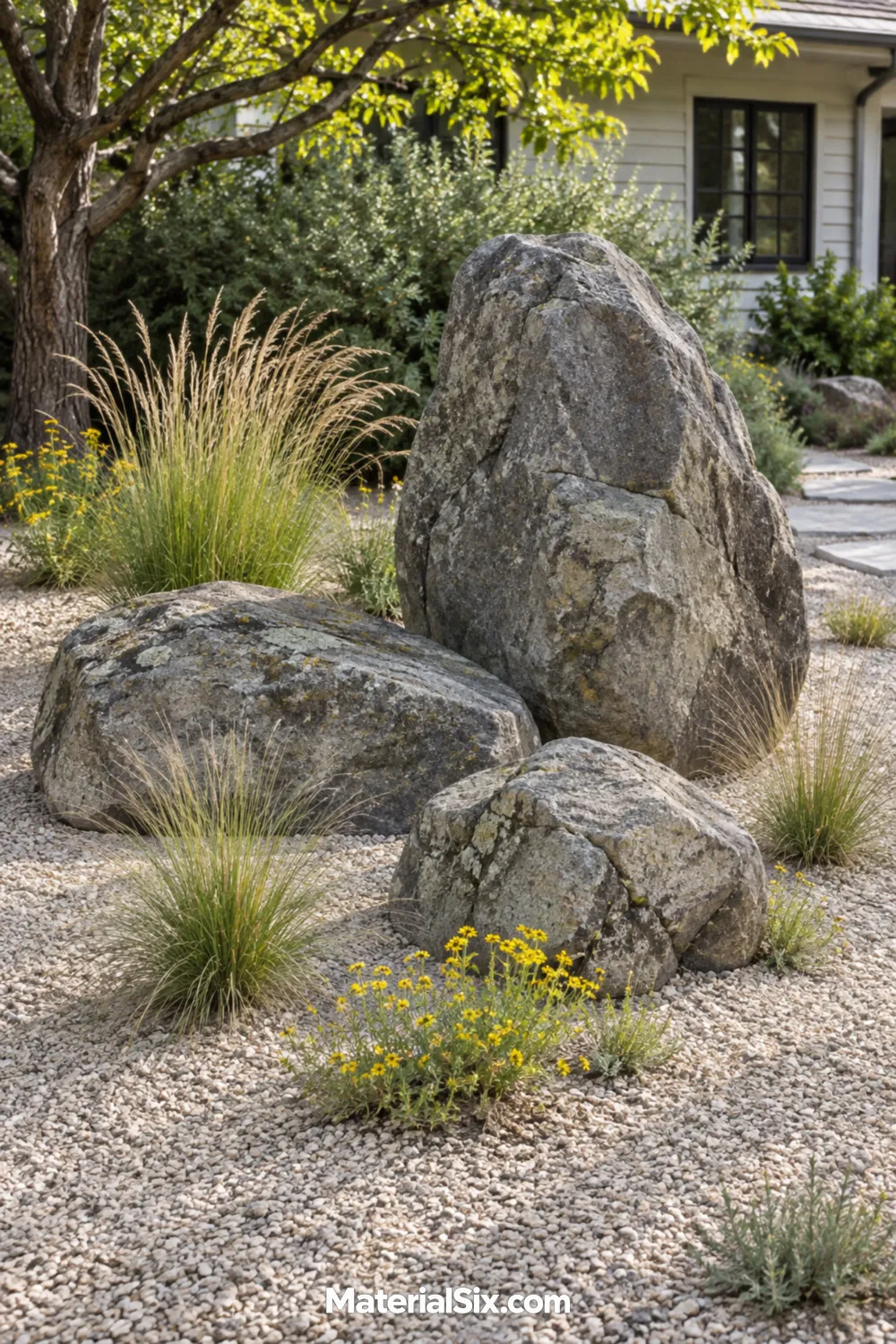
Think of a group of boulders as one composition. Choose stones with a similar color and texture but give each one a different silhouette. In a gravel garden, a dominant rock and two smaller companions can create a loose grouping without taking up the entire planting area. Set the smaller stones at different distances from the biggest one to avoid an evenly spaced row.
Add a few repeated clumps of grasses or flowering plants between the groups of stone. Keep some gravel visible around the planting pockets so the garden still reads clearly from across the yard.
3. Soften a Path Bend With an Off-Center Boulder
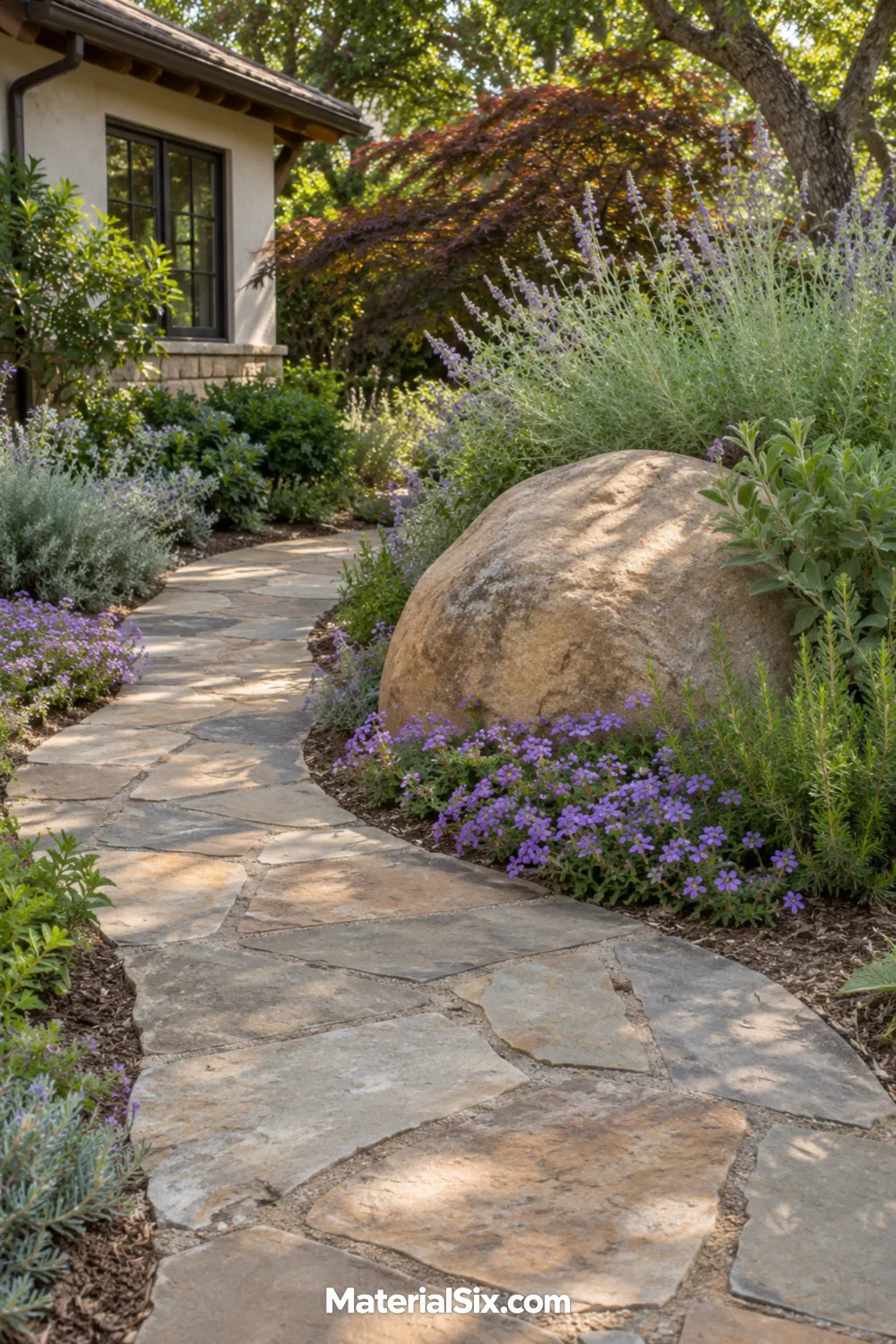
Where a garden path turns, use one rounded rock just beyond the bend as a visual marker. It gives your eye somewhere to land and makes the curve feel deliberate. This works especially well with irregular flagstones and soft planting that follows the outside of the turn.
Walk the path from both directions while planning the location. Leave enough clearance for the full walking surface and for nearby plants at their mature size. Low flowering plants in front and a taller clump behind the stone can frame it without hiding the curve you want to highlight.
4. Edge a Long Bed With Spaced Sandstone Boulders
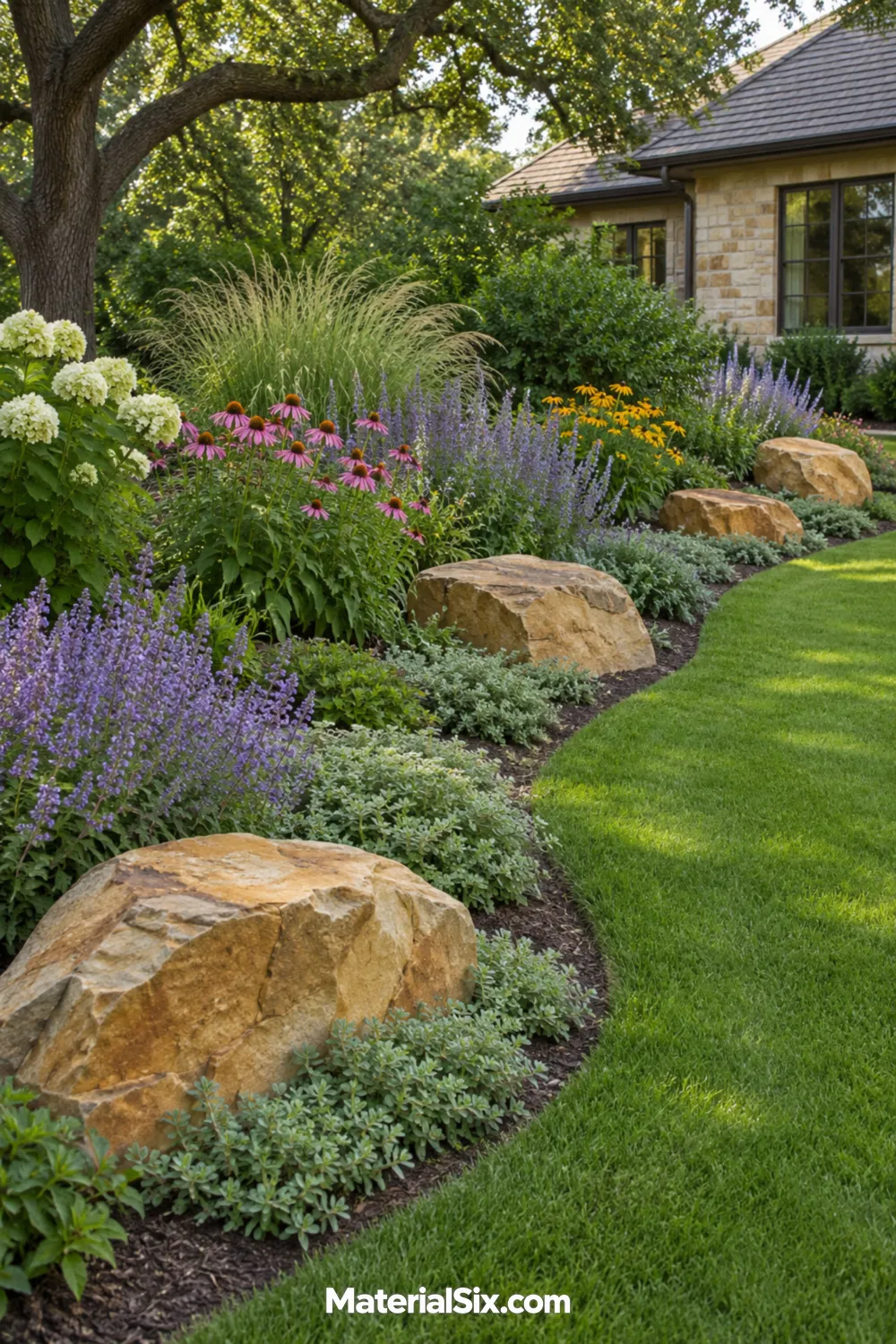
You can use boulders as occasional markers along a long planting bed. Place them where the edge turns or where a group of perennials begins, then leave planted gaps between them. The result feels more like a natural landscape edge than an unbroken row of identical rocks.
Repeat a warm sandstone color or a similar stone shape to tie the border together. A few low, spreading plants can overlap the edge visually while leaving the stone tops exposed. If the bed meets a lawn, consider how much room you want along the border for mowing and trimming.
5. Break Up a Front-Yard Slope With Planted Rock Pockets
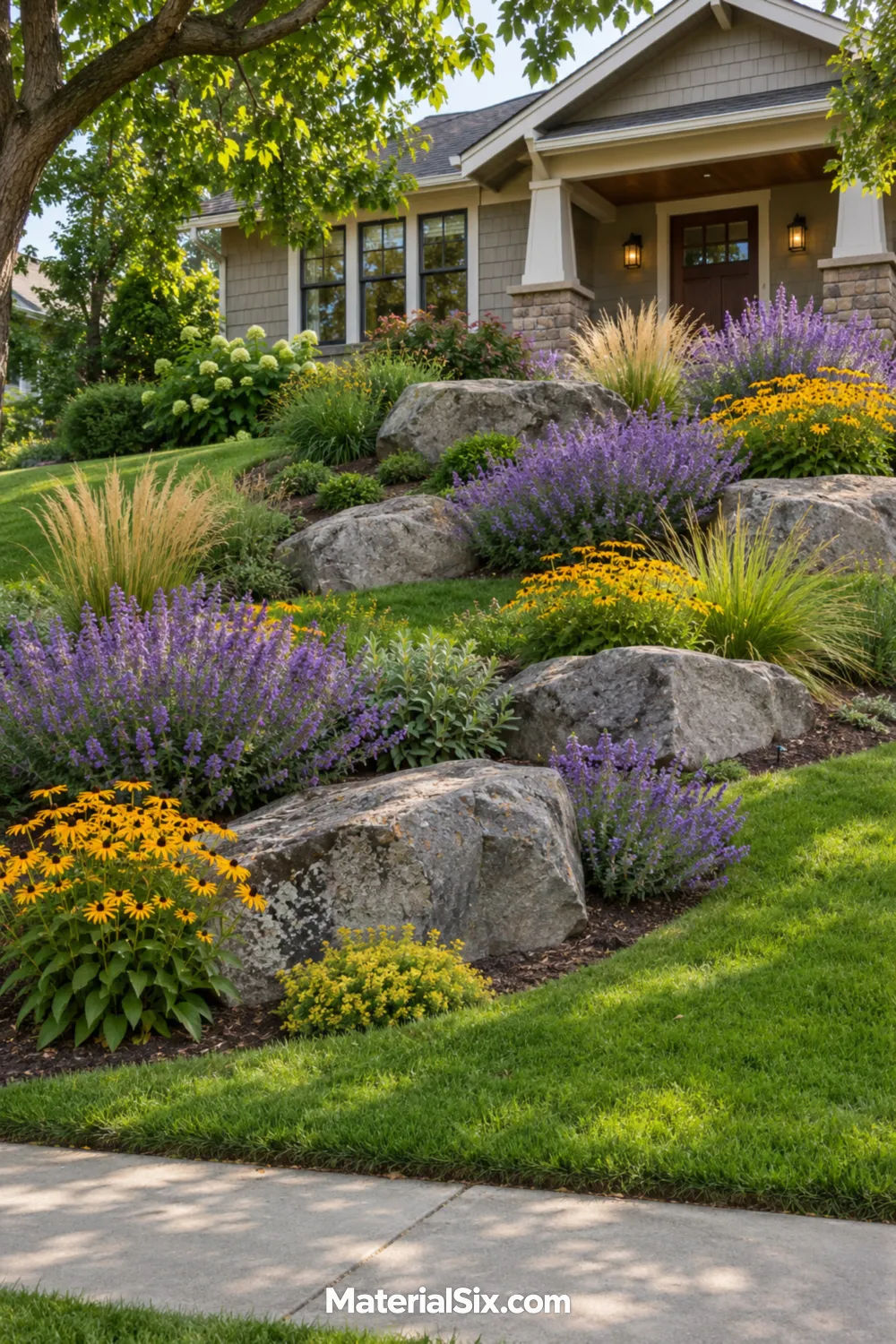
On a sloped front yard, several stones can make a planting feel connected from the bottom of the hill to the top. Think in staggered groups and use low plants around the rocks, leaving a few broad faces visible from the street. Repeat a plant or two across the slope so the separate pockets look like part of one garden.
Sketch the arrangement from the sidewalk and from the front door. A stone that looks prominent from below may disappear behind taller plants when viewed from above. This idea is about visual placement in a planted slope. Structural retaining work calls for a site-specific plan.
6. Give a Dry Creek Bed a Rocky Curve
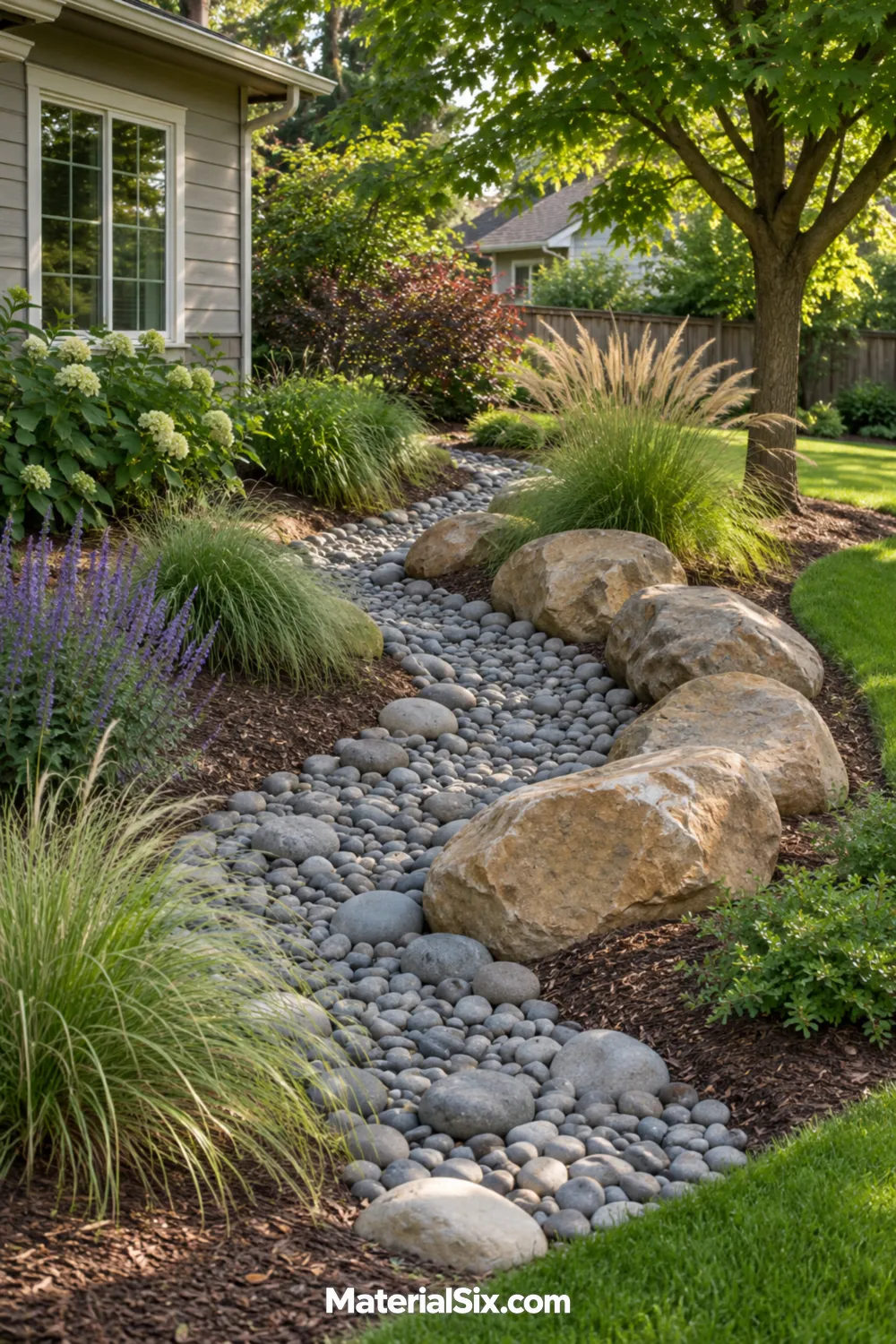
A winding channel of rounded river stones can bring a clear line to a broad garden bed. Place a few larger rocks outside the channel where it bends, then let the smaller stones fan out around them. The change in scale makes the arrangement look more like a creek and gives the boulders a reason to be there.
Keep the channel edges uneven and let grasses or other clumping plants interrupt the outline in a few places. You can borrow the look for a decorative bed. If the channel needs to carry runoff, plan its route and outlet for your site before choosing the stone layout.
7. Let a Boulder Interrupt the Edge of a Patio
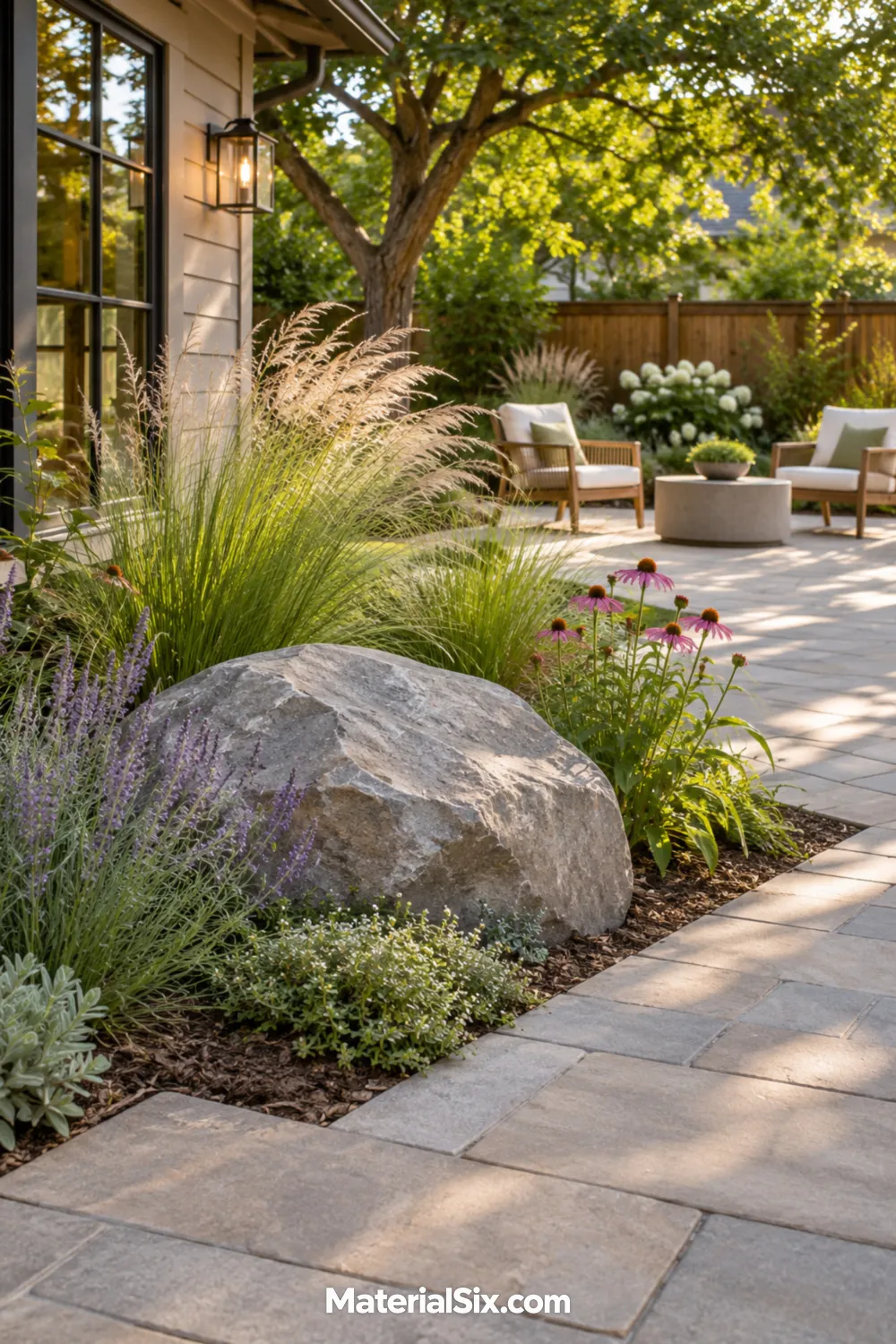
At the corner of a paved patio, a boulder can provide a visual transition from hardscape to planting. Choose a broad stone that complements the pavers, then position it in the planting bed where it feels close to the patio without getting in the way of chairs or foot traffic. Plants with airy stems can soften the junction and let the rock show through.
Look at the arrangement from your usual seat. You may prefer a low rock if the patio faces the rest of the garden, or a taller face if that corner could use more definition.
8. Frame a Pond Edge With Flat-Topped Rocks
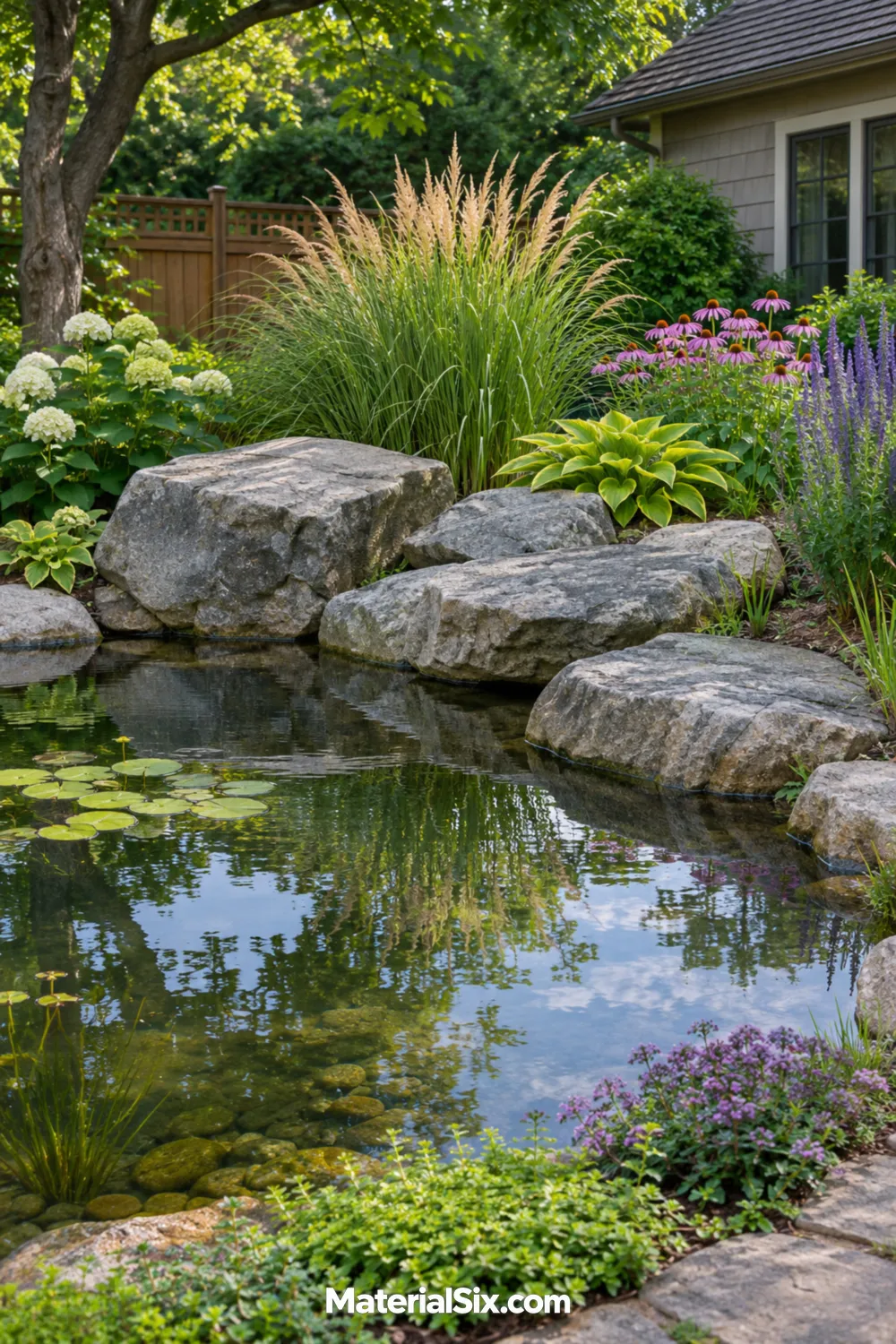
A few broad, flat-topped boulders can draw attention to the outline of a small pond. Group the largest stones along one stretch of the bank and leave another stretch more open. That contrast gives you a clear view of the water and keeps the pond from looking like a ring of evenly sized stones.
Use nearby planting to soften the joins where the rock meets the shore. You might tuck upright plants behind the largest rock and leave the front face exposed. Choose a spot where the boulders are visible from a path or seating area you already use.
9. Make a Quiet Focal Point in a Shade Garden
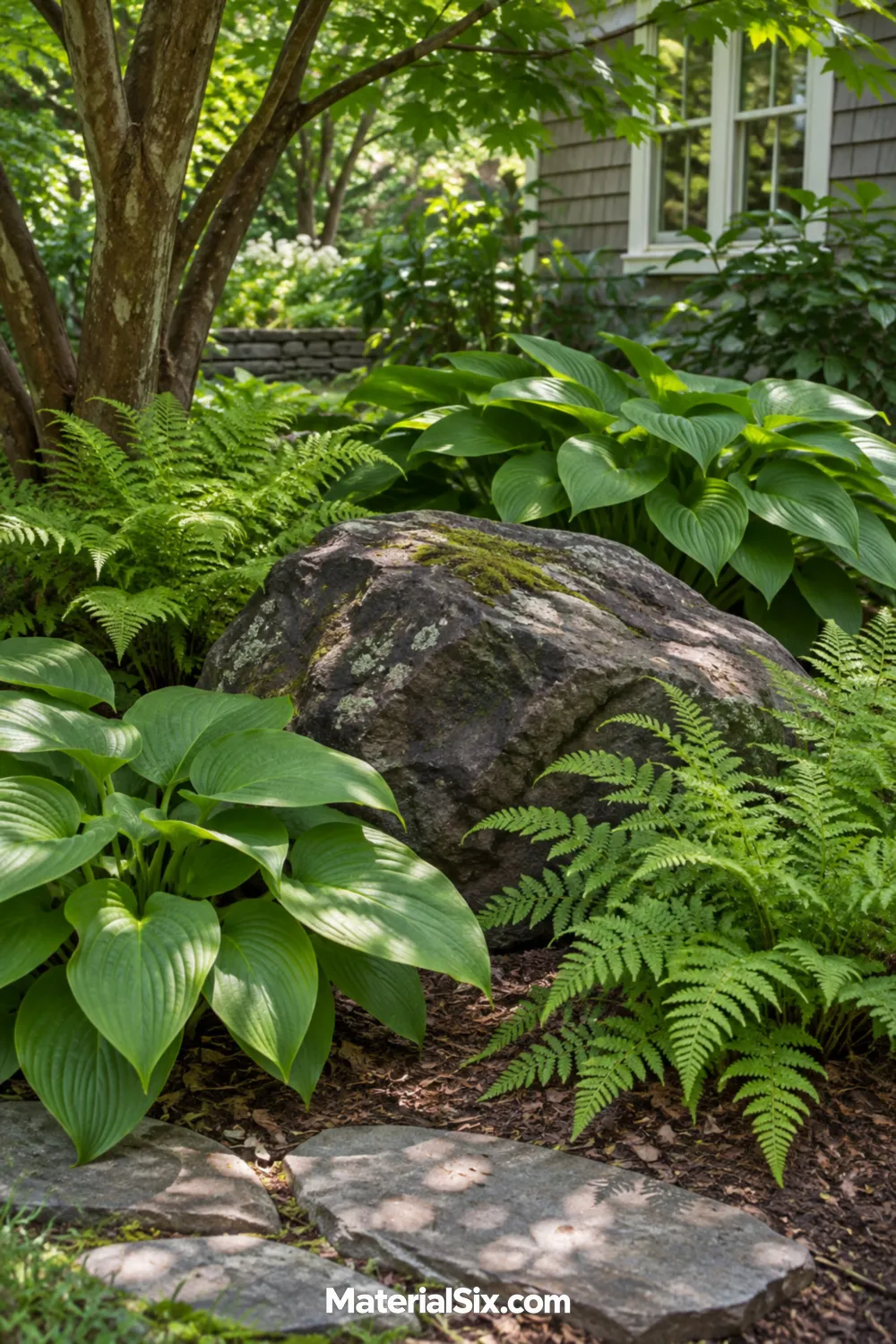
A dark boulder can bring structure to a garden where foliage carries most of the color. Set the stone among plants with contrasting leaf shapes, such as broad hosta leaves and fine fern fronds in a site that suits them. View the rock from a path or window before settling on which face to emphasize.
Keep the area immediately around its best face simple. A single kind of low ground cover lets the texture of the stone stand out, especially after rain. Leave enough space for your chosen plants to spread without covering the rock you placed for the view.
10. Pair Sculptural Boulders With Desert Plants
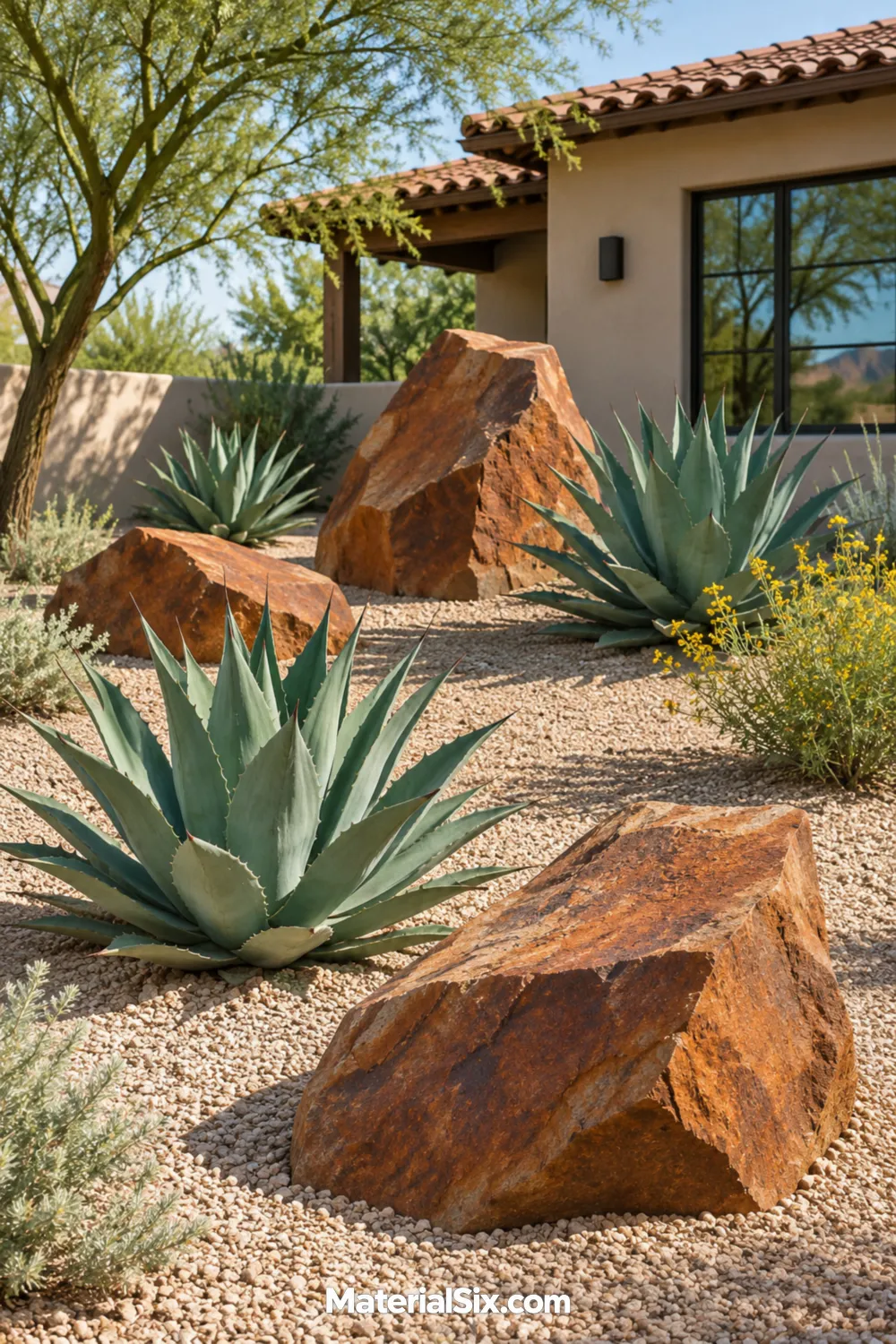
In a sunny, dry-climate yard, pair the angular forms of a few warm-toned boulders with the pointed leaves of a rosette plant. Keep the materials simple so the different silhouettes stand out. A single gravel color can connect the planting pockets, while a few smaller stones near the largest one make the grouping feel less isolated.
Check your plants’ mature spread and leave plenty of space around spiky foliage near paths. Arrange the stones so they read from the street, then use smaller plants to add rhythm between those focal points.
11. Nestle Boulders Beside Broad Garden Steps
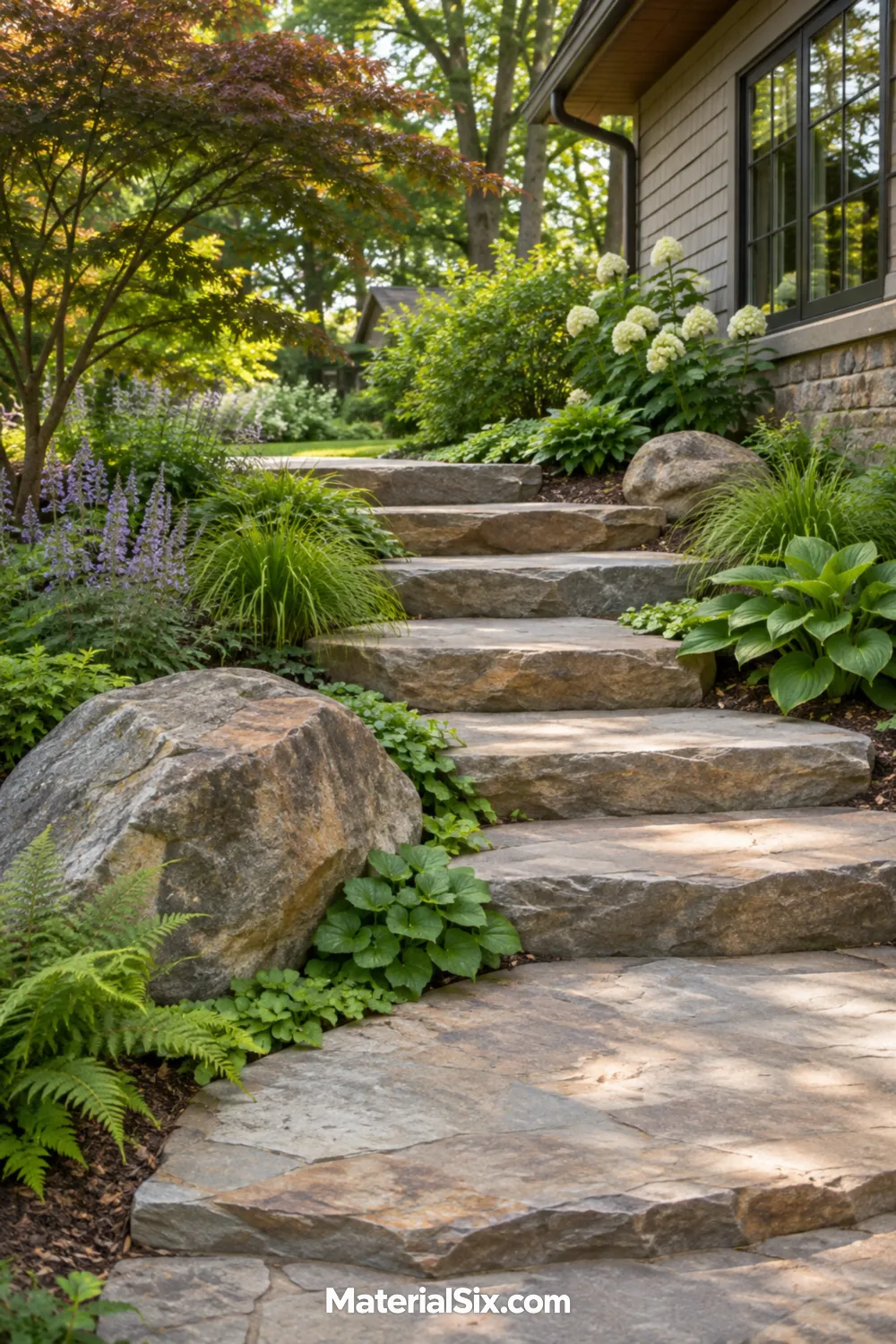
Stone beside a short run of steps can connect the stairway to the planting on either side. Try a larger boulder near the bottom landing and a smaller one higher up, with planting between them. The change in size draws your eye up the steps without creating a rigid, matched pair.
Choose stones that share a color with the stair treads, or pick a similar texture if the colors differ. Keep the treads and landings visually clear by placing the boulders in adjacent beds. The most interesting rock face may be the one you see while approaching the stairs.
Start with the view you want to improve and decide whether it needs a single focal point, a repeated edge, or a transition between spaces. Save the ideas that fit your yard, then sketch the placement from the angles you see most often.