
A yard can have lovely plants and still feel unfinished when its paths, beds, and seating areas lack a clear outline. Boxwood landscaping gives you a way to connect those spaces with repeated green shapes, whether you prefer a crisp entry walk or a softer mixed border. The choices go beyond a straight hedge in front of the house.
These 13 ideas show how rounded shrubs, low borders, containers, and topiary forms can work in different garden layouts. Use them as visual starting points, then choose varieties and spacing around your climate, available room, and willingness to maintain the planting.
1. Frame a Brick Walkway With Low Boxwood Hedges
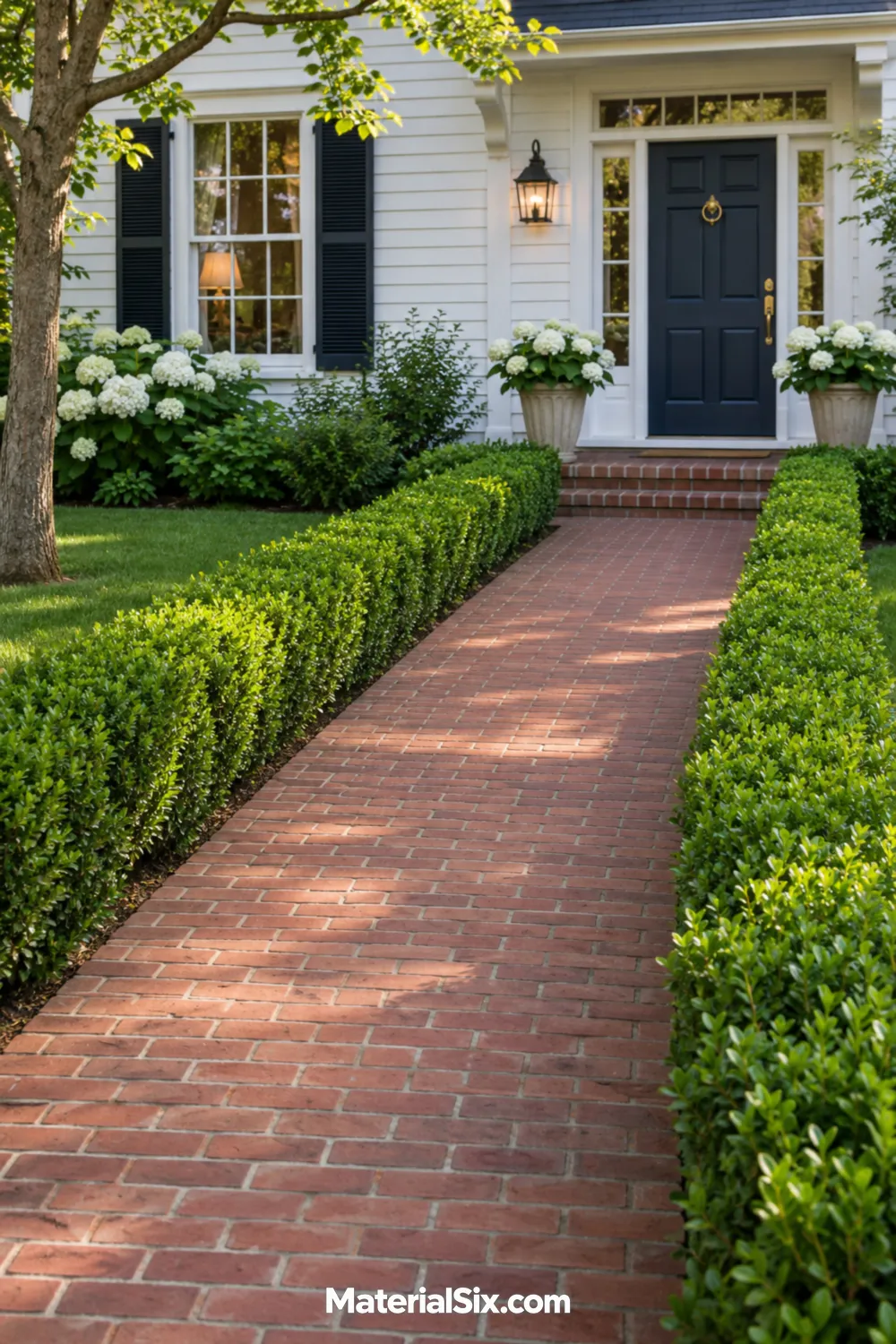
A low hedge on each side of a brick walk creates a clear route to your front door without competing with the house. Keep the planting simple so the warm paving and green border carry the design. You can repeat the same rhythm along a straight walk or use it to emphasize a short approach from the sidewalk.
Choose a compact boxwood suited to the finished height you want, then plan spacing from its mature width. Leave enough setback for foliage to grow without narrowing the path. Before committing to a continuous hedge, check local disease guidance and decide whether you can maintain the air circulation this close planting needs.
2. Repeat Rounded Shrubs Across the Foundation
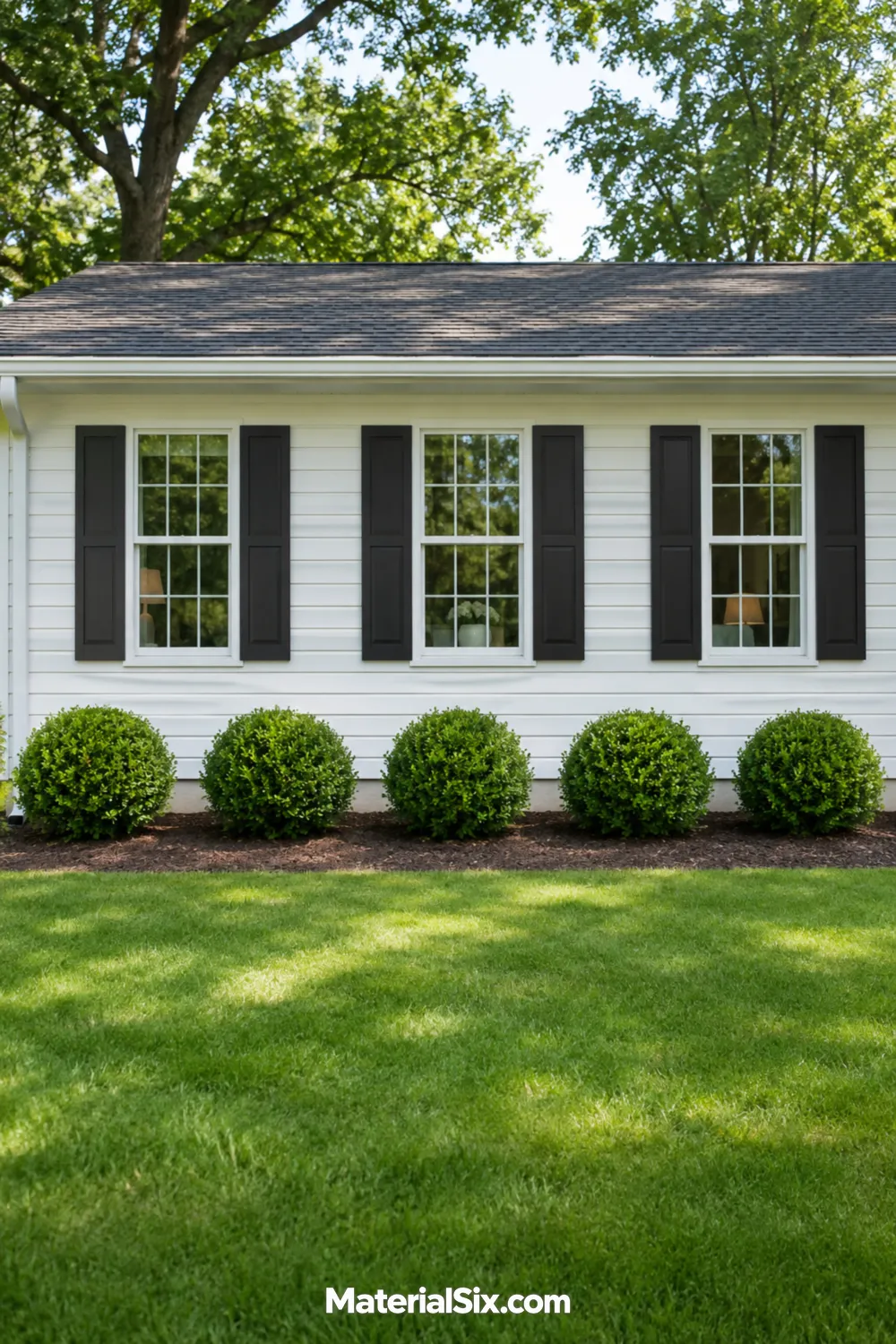
Rounded boxwoods can give the front of your house a steady rhythm while leaving windows and architectural details visible. Arrange individual mounds with breathing room instead of pressing a solid green wall against the siding. A simple bed of dark mulch makes the repeated shapes easy to read from the street.
Sketch the mature outline of each shrub before planting. Leave room between the house and foliage for access, and keep plants clear of vents and downspout outlets. Choose naturally compact varieties that fit below the windows rather than relying on constant trimming. This approach works especially well when your facade already has strong horizontal lines.
3. Mark the Entry With Matching Boxwood Planters
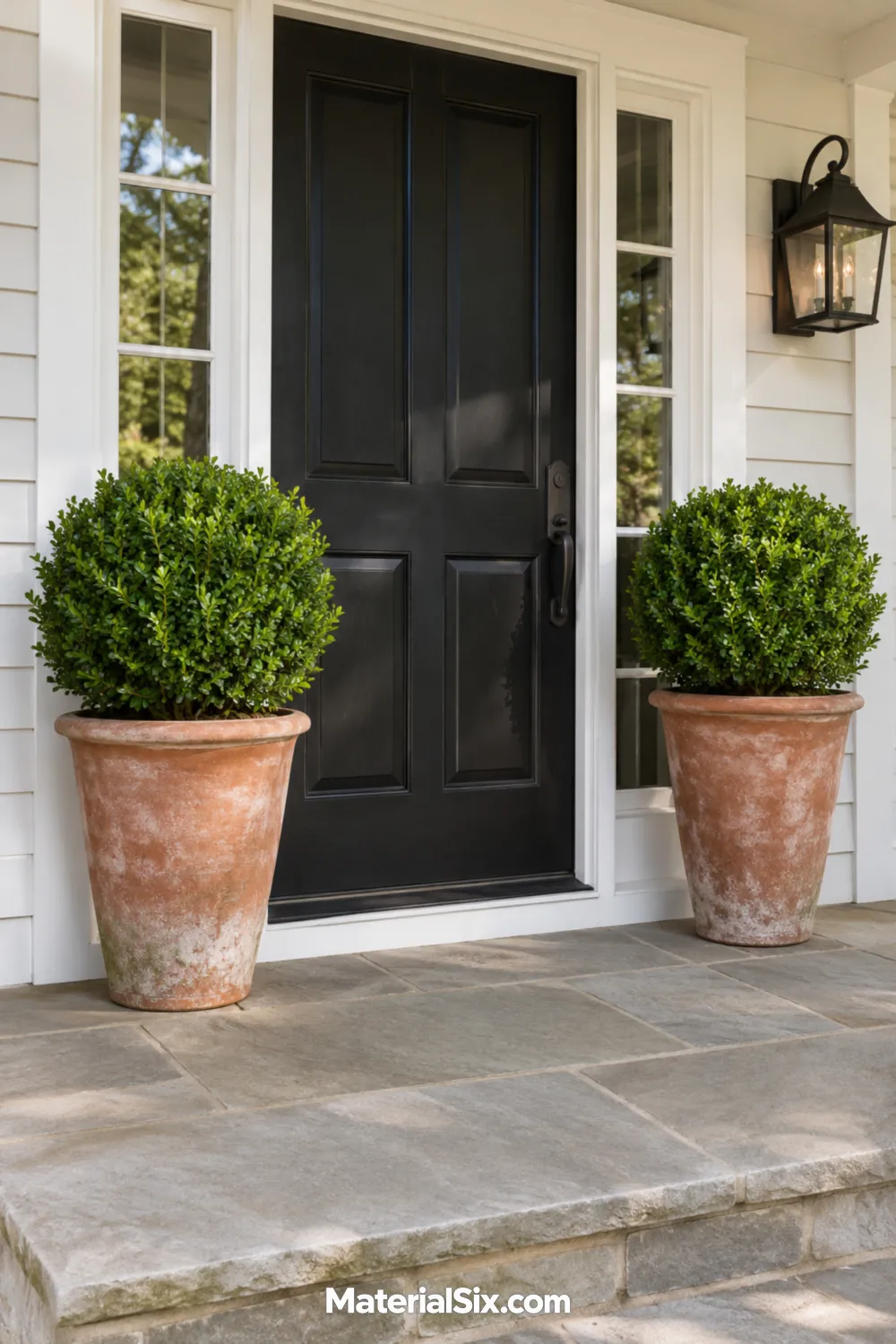
Matching containers let you bring boxwood structure right up to the entry without adding another in-ground bed. Place one substantial pot on each side of the door or at the bottom of a wide set of steps. Rounded plants look balanced against tall doors, while restrained containers keep the greenery as the main feature.
Measure the available landing before choosing pots, leaving a comfortable route through the door. Use containers with drainage holes and choose a boxwood appropriate for your climate and container conditions. Container plantings need ongoing watering checks and a winter plan where necessary. Keep the pair visually equal even if the surrounding architecture is asymmetrical.
4. Outline a Rose Garden With a Low Green Frame
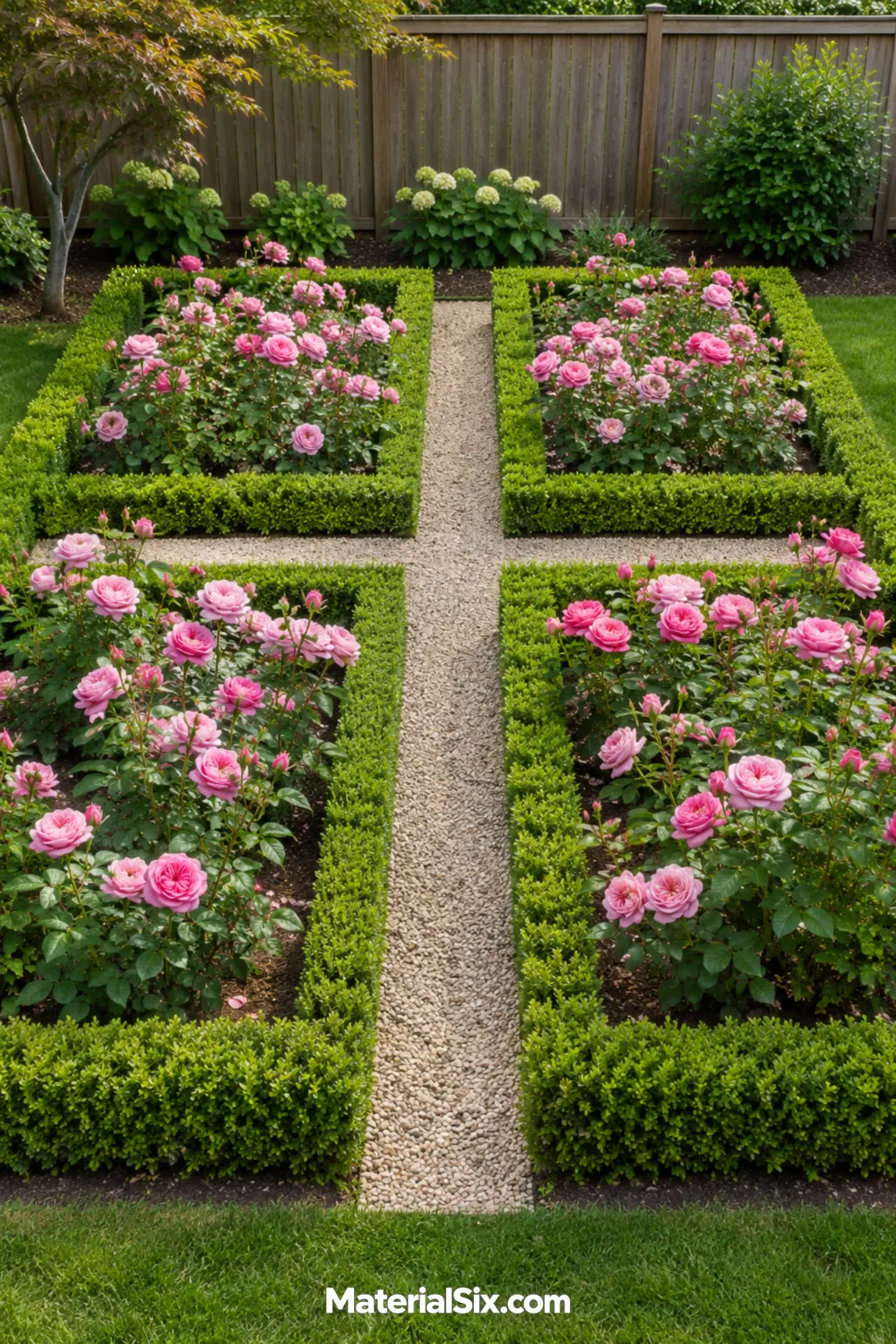
A low boxwood outline gives a rose garden a defined shape even when the flowers are between blooms. Use the evergreen border to trace a square, rectangle, or a few generous planting compartments. Inside, let the roses supply the softer outlines and seasonal color rather than adding several competing edging materials.
Draw both plants at mature size so rose stems do not spill heavily over the boxwoods. Leave a practical route for pruning and maintenance, and choose companions whose light and soil needs fit the site. The contrast comes from distinct layers: a low green perimeter, a visible interior bed, and roses with enough space to show their natural form.
5. Layer Boxwoods in Front of Hydrangeas
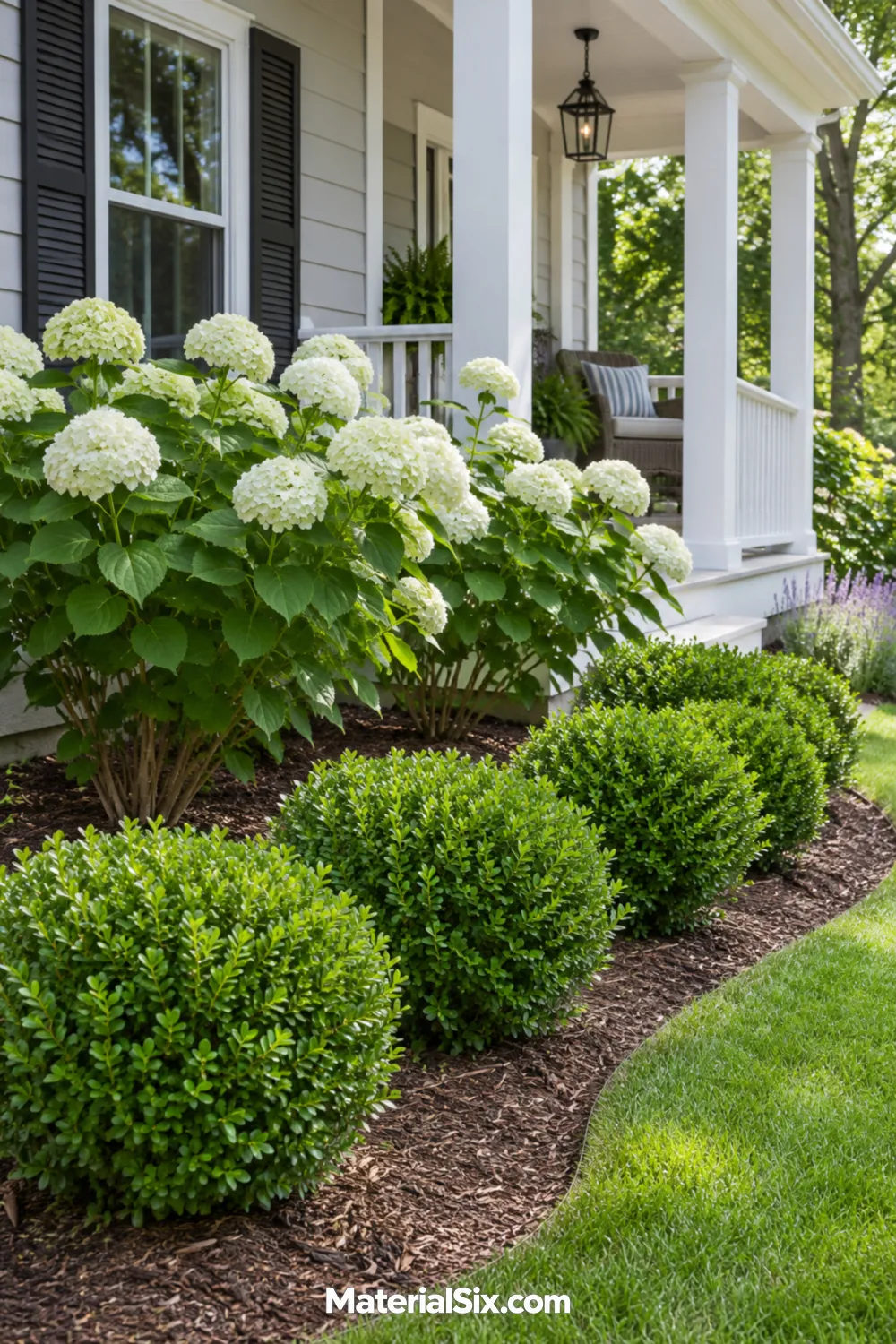
Pairing lower boxwoods with taller hydrangeas creates a readable foreground and background. The smaller evergreen forms anchor the bed while the flowering shrubs bring a looser outline behind them. This arrangement can soften a porch or a long fence without making every plant the same height.
Choose the hydrangea type and boxwood variety for the actual light, climate, and soil conditions, not just a picture of the combination. Allow room for both mature spreads and leave access between layers where possible. Offset the shrubs rather than stacking every plant in a rigid straight line. A restrained green-and-white palette keeps the different textures easy to appreciate.
6. Scatter Boxwood Spheres Through a Gravel Garden
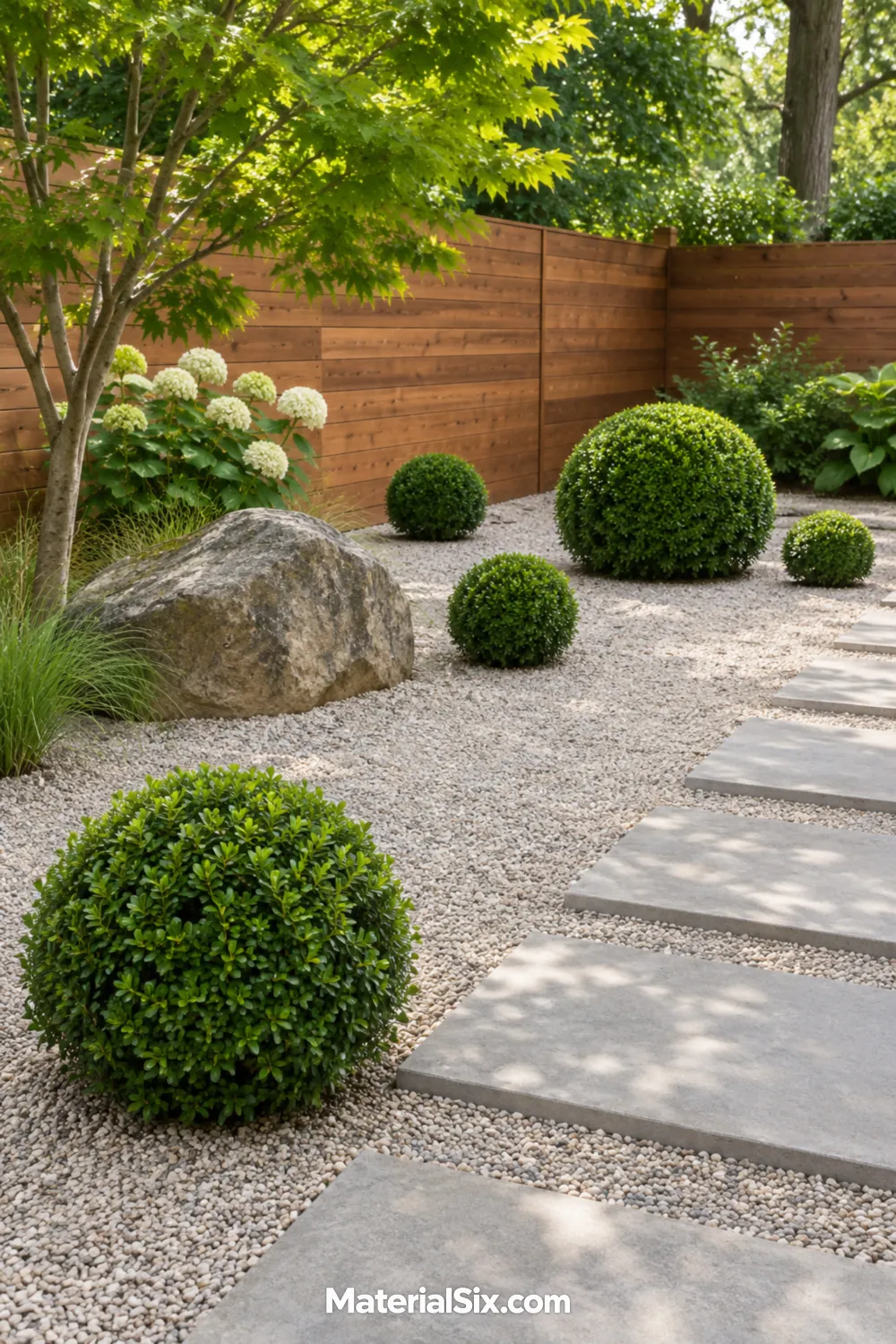
Separate rounded boxwoods can create a sculptural garden without a continuous hedge. Set them in a gravel-surfaced bed at varied distances, leaving broad areas of open material between the plants. Repeating a few sizes feels more intentional than filling every gap with another shrub.
Start with a small group and view it from the main window or approach before expanding the layout. Gravel is a surface treatment, not a cure for poorly draining soil, so assess the planting area underneath. Keep material away from the stems and preserve room for maintenance. A large stone or simple bench can add a second texture without crowding the composition.
7. Trace a Curved Lawn Edge With Boxwoods
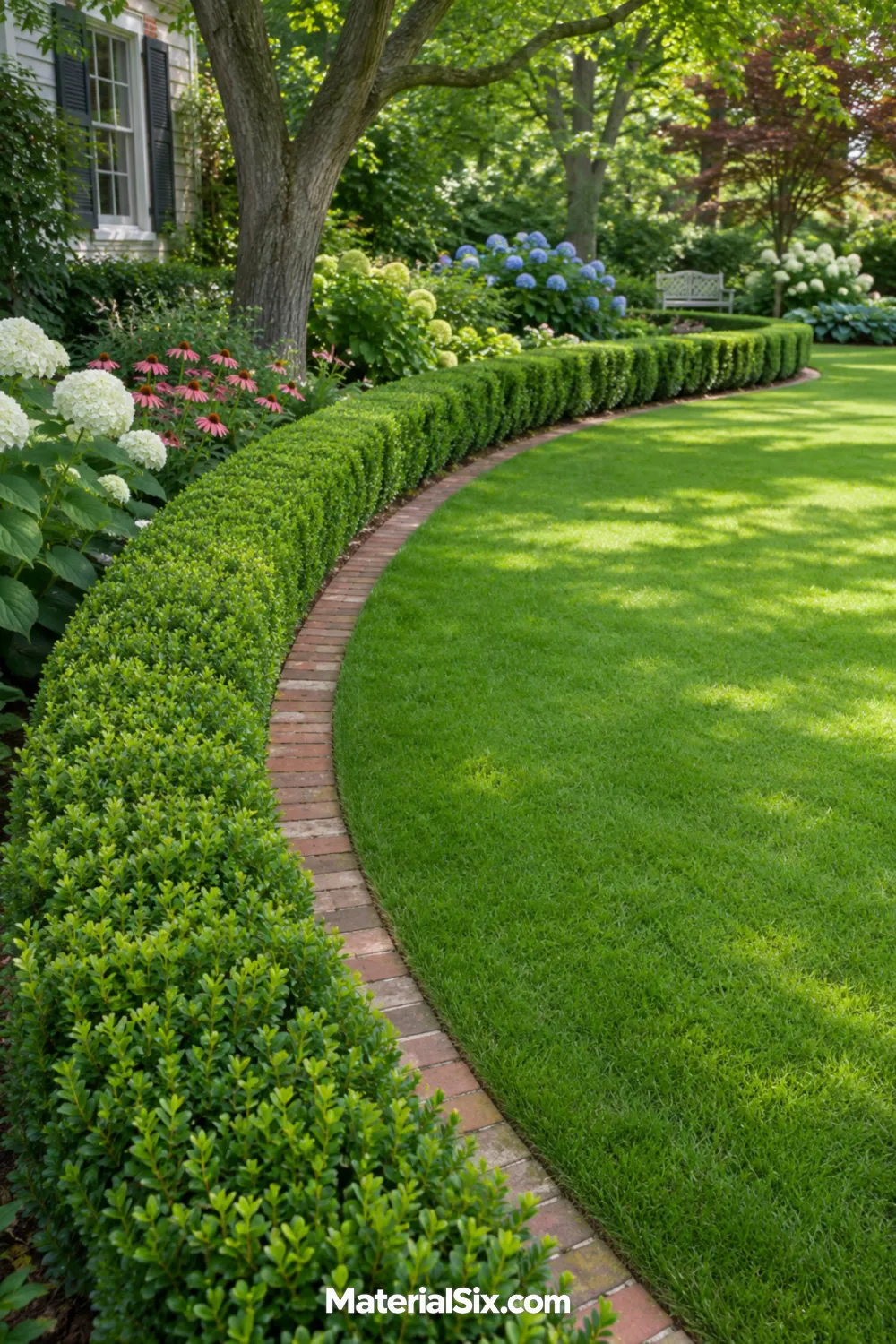
A sweeping boxwood border can guide the eye around a lawn and make a rectangular yard feel less rigid. Give the curve enough depth to read as one flowing line rather than a series of tight wiggles. The planting becomes the garden’s outline, so you can keep the lawn and nearby beds relatively quiet.
Lay out the curve with a hose before digging and check it from several viewpoints. Leave a mowable strip or clear edging between the lawn and mature foliage. Select plants for the intended height and spread, and avoid a layout that forces repeated hard cutting to keep the border out of the grass.
8. Create a Boxwood Backdrop for a Courtyard Bench
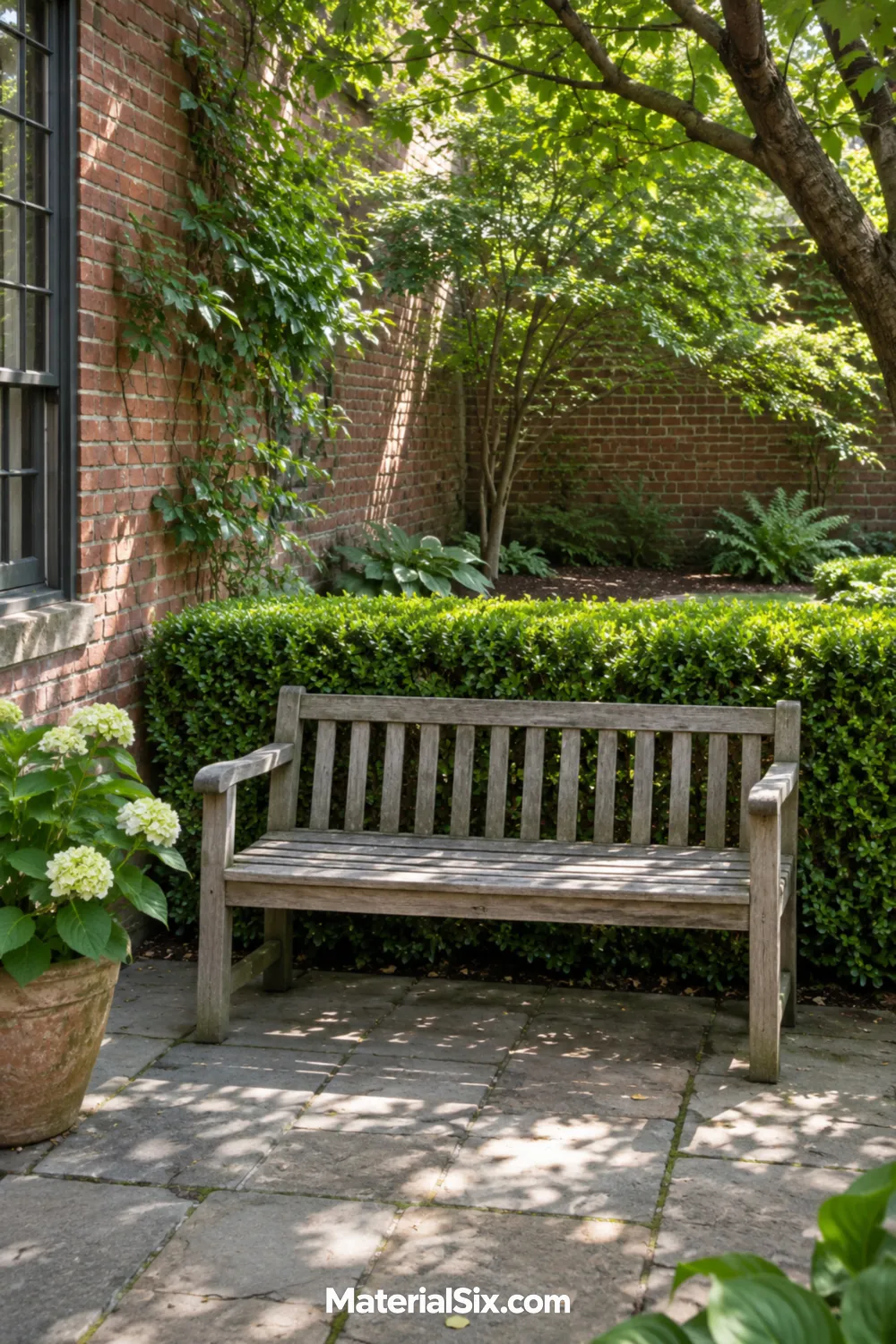
A line of boxwoods behind a bench can make a courtyard seating area feel deliberately placed. Keep the shrubs low enough that you can still enjoy the surrounding walls, trees, or garden view. Stone paving and a simple wooden seat give the evergreen backdrop a calm setting without needing many decorative extras.
Leave enough space behind the bench to reach the plants, and make sure the seat can be moved for maintenance. Test the view from both the doorway and the bench before fixing the layout. This is a visual boundary, not a promise of complete privacy. Choose a taller screen elsewhere if blocking a neighboring view is your main goal.
9. Give a Kitchen Garden an Evergreen Perimeter
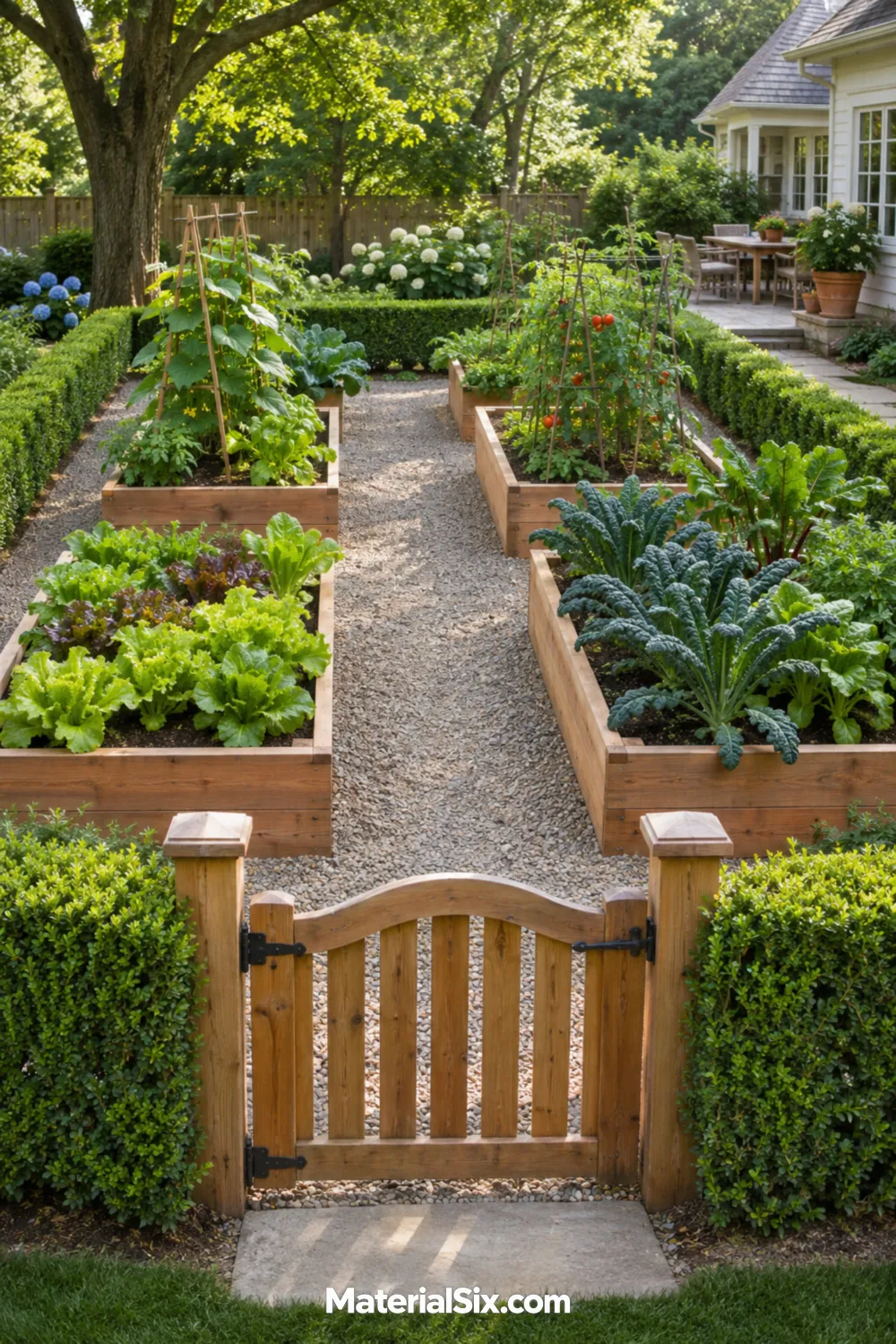
Boxwoods can frame the outside of a kitchen garden while the productive beds remain separate inside. The contrast between steady green edges and changing crops gives the space a clear outline. A simple gate or central path makes the transition into the growing area easy to understand.
Keep the shrubs outside the main digging and harvesting zones so routine vegetable gardening does not disturb their shallow roots. Leave generous paths between the perimeter planting and raised beds, and account for shade as the shrubs mature. Choose the dimensions around your actual gardening tasks first. The ornamental border should support the working layout rather than making watering and wheelbarrow access awkward.
10. Repeat Boxwoods Along Terraced Garden Beds
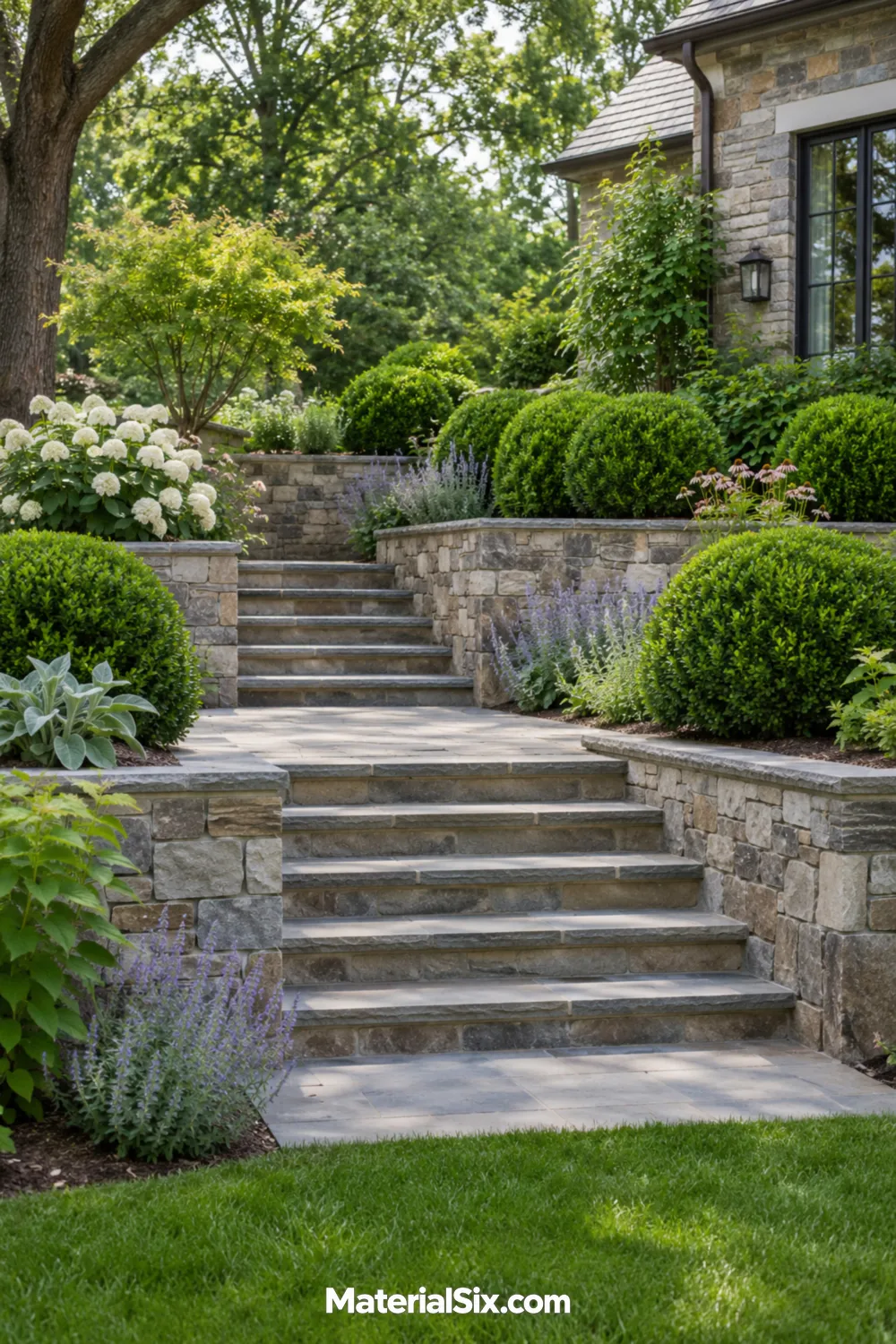
On an already terraced yard, repeated boxwoods can connect separate planting levels visually. Place small groups along the tops of retaining walls or beside stair landings so the green shapes lead the eye upward. Broadleaf shrubs and open planting space can soften the pattern between those repeated anchors.
Treat the terrace construction and drainage as separate planning work that needs appropriate professional advice. Do not plant directly against wall components or assume a raised level drains well. Choose shrubs whose mature size fits the available soil area and leaves the steps clear. Repetition does the visual work here, so a few well-placed groups are enough.
11. Define an Outdoor Dining Area With a Boxwood Hedge
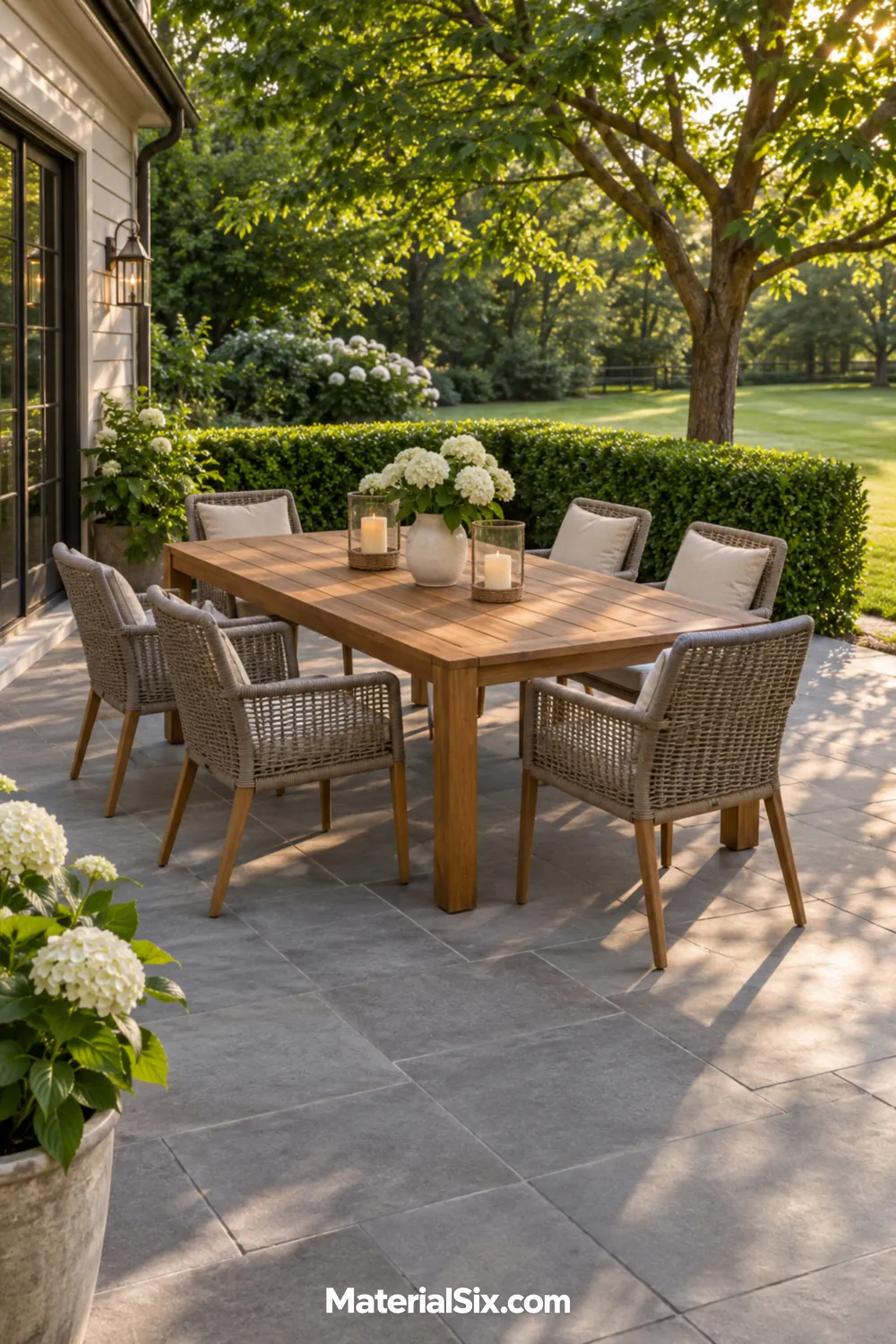
A boxwood hedge along the outer edge of a patio can mark the dining area without building another wall. Use the planting as a green boundary behind the chairs, with a clear opening toward the rest of the garden. A rectangular table and large paving slabs echo the hedge’s simple geometry.
Pull the planting back far enough that chairs can slide out and people can walk behind them. Select the finished hedge height around the view you want to keep, and remember that boxwoods take time to fill in. If you need immediate or tall privacy, plan another solution. This arrangement is about spatial definition as much as screening.
12. Use Cone Topiaries to Highlight a Garden Gate
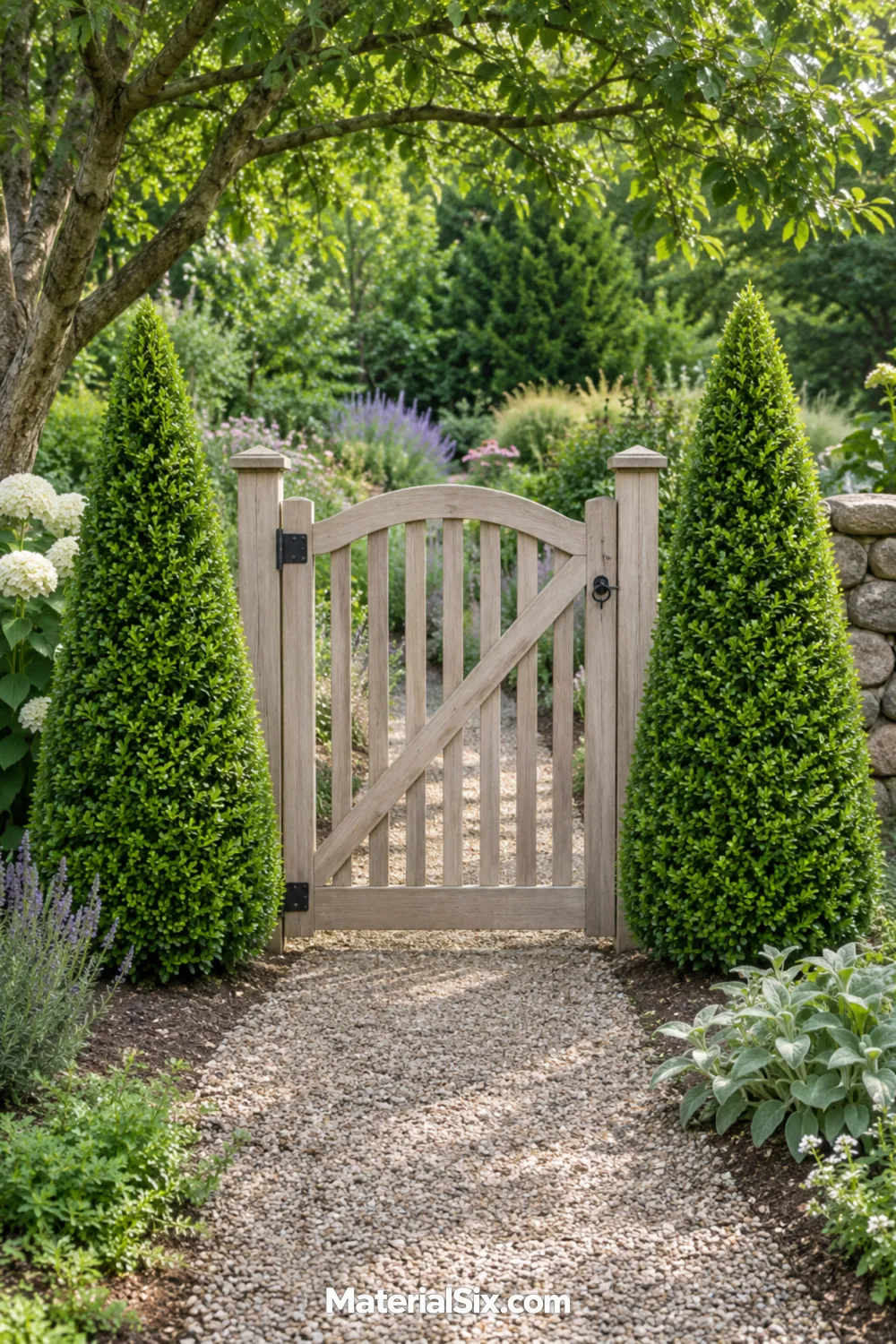
Two cone-shaped boxwoods can mark a garden gate as clearly as architectural posts. Their upright form adds a different silhouette from rounded shrubs and low hedges. Keep the surrounding planting quieter so the paired shapes remain the focal point as you approach the opening.
Allow the gate to swing freely and leave room to walk past without brushing the foliage. Look for a suitable naturally upright variety, then decide whether you want to maintain a formal topiary outline. Precise shapes require more attention than relaxed mounds, and regular shearing has plant-health tradeoffs. Ask a local nursery about appropriate varieties and pruning practices before investing in a closely clipped pair.
13. Blend Loose Boxwood Mounds Into a Mixed Border
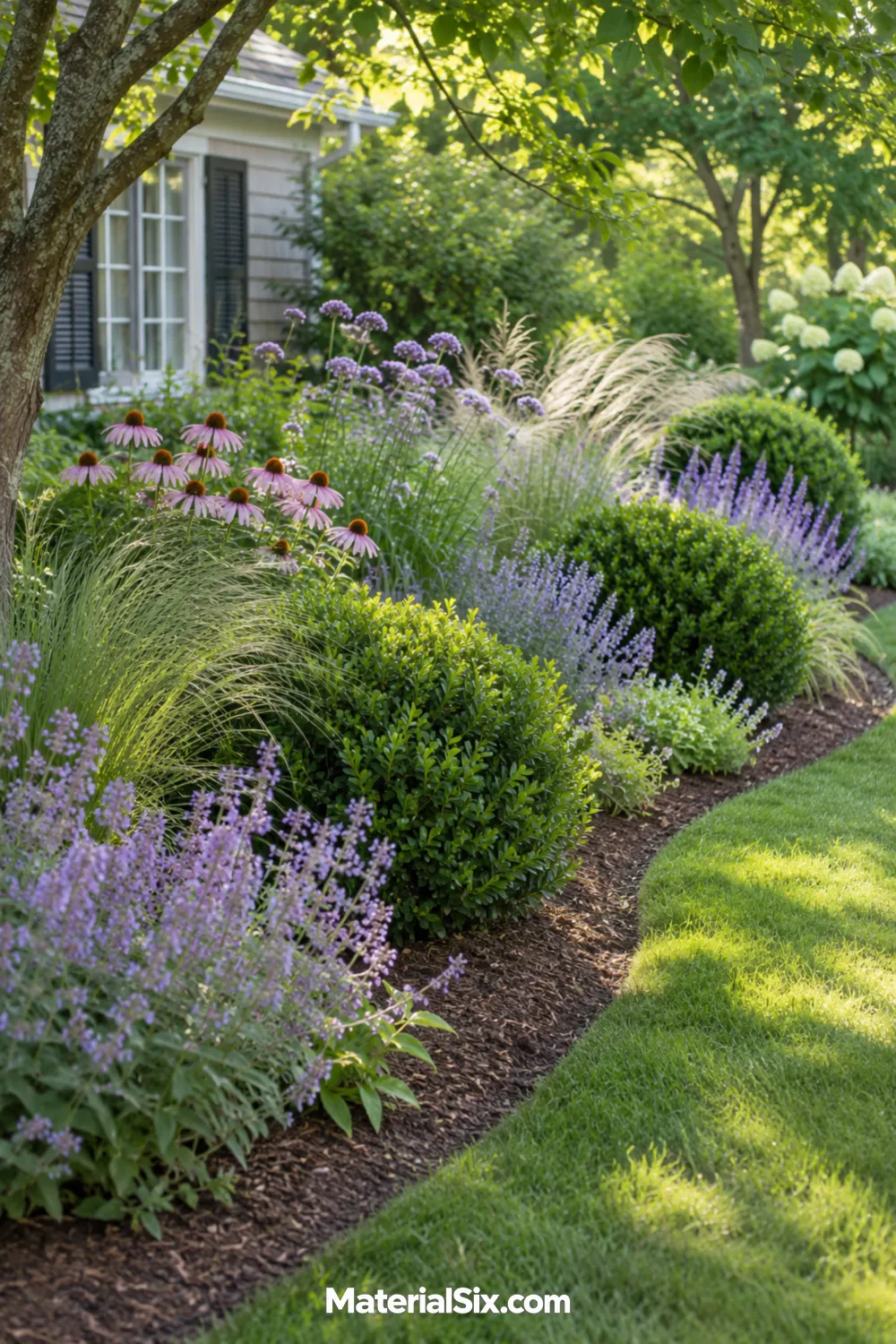
Boxwoods do not have to appear as rigid hedges. Looser mounds placed among compatible perennials and ornamental grasses can give a mixed border a steady green rhythm. Repeat the shrubs at intervals, then vary the softer plants between them so the border feels connected without becoming uniform.
Work with the existing light and moisture conditions when choosing companions. Keep plant crowns distinct and leave enough room to reach the boxwoods without stepping through dense growth. A naturally rounded variety helps you maintain a relaxed outline with less reshaping. Use this approach where you want evergreen structure but prefer the movement and irregular spacing of a less formal garden.
Choose the Shape That Fits Your Yard
Start with the part of your yard that needs the clearest outline: the walk to the door, a planting bed, or a place to sit. Choose one repeatable boxwood shape and let the surrounding materials and plants support it. Save the ideas that suit your layout, then check mature sizes and local growing guidance before buying plants.