
Someone gets the sofa, someone balances on the edge of a bench, and the last few family members end up standing near the steps. A big front porch can still feel short on seating when the furniture was chosen one piece at a time.
The goal is to give a large family comfortable places to sit without turning the entrance into an obstacle course. That means thinking about conversation, meals, different ages, and the path everyone uses to get inside. A long porch may work best with two smaller groups, while a deep porch can accommodate a sectional or a full dining setup.
These 15 big front porch seating ideas focus on layouts with room for real family life. Some use ready-made furniture; others make better use of corners or perimeter space. Start with the number of people who gather regularly, then choose an arrangement that fits your porch’s usable dimensions rather than its appearance in a photograph.
1. Two Long Sofas Facing Each Other
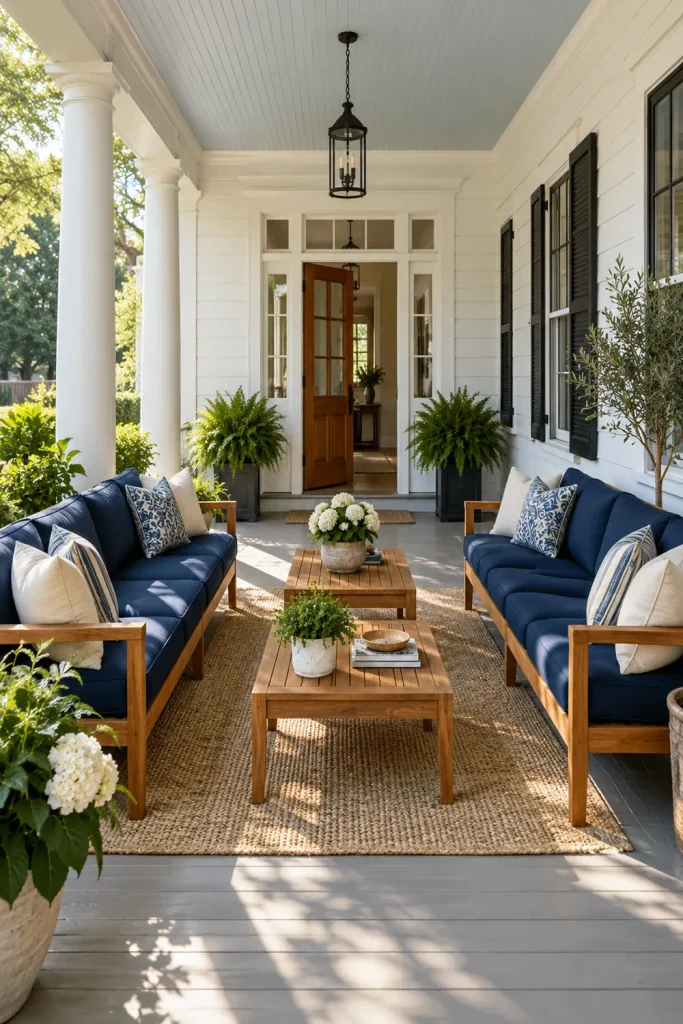
Two long outdoor sofas create a clear gathering place without scattering chairs across the entire porch. Face them toward each other so relatives can talk comfortably, then use a pair of small coffee tables rather than one oversized piece. The split tables make it easier to reach drinks and move through the group.
Choose this layout for a wide, deep seating bay beside the entrance. Keep a separate walking route along one edge, and check the door’s full swing before buying furniture. Removable outdoor cushion covers help with everyday family messes. Count usable cushion space rather than assuming every sofa comfortably seats three adults.
2. A U-Shaped Sectional for One Big Conversation
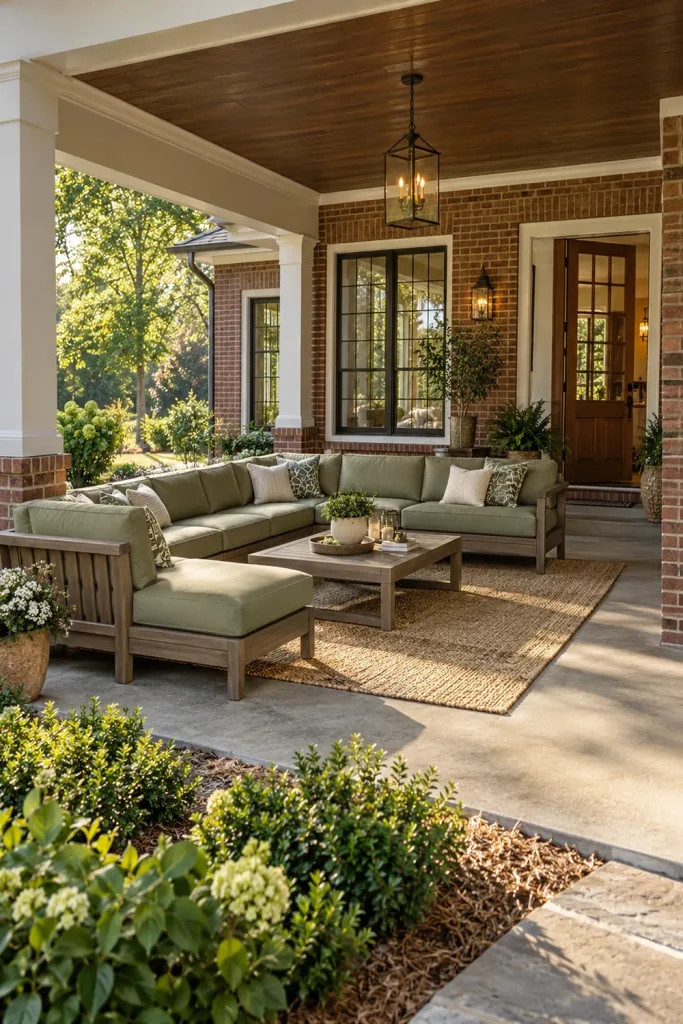
A U-shaped outdoor sectional brings a large family into one connected seating area. Its open center gives siblings, cousins, and grandparents a shared place to gather, while the side returns offer different spots for stretching out or sitting upright. A restrained cushion palette keeps the substantial furniture from feeling visually busy.
Place the sectional in a deep porch bay with its open end facing the garden or a clear aisle. Measure the complete footprint, including corner pieces and projecting arms. Corner seats can be awkward for two adults to share, so treat the advertised capacity as a starting point rather than a guaranteed head count.
3. Built-In Benches Around the Porch Corner
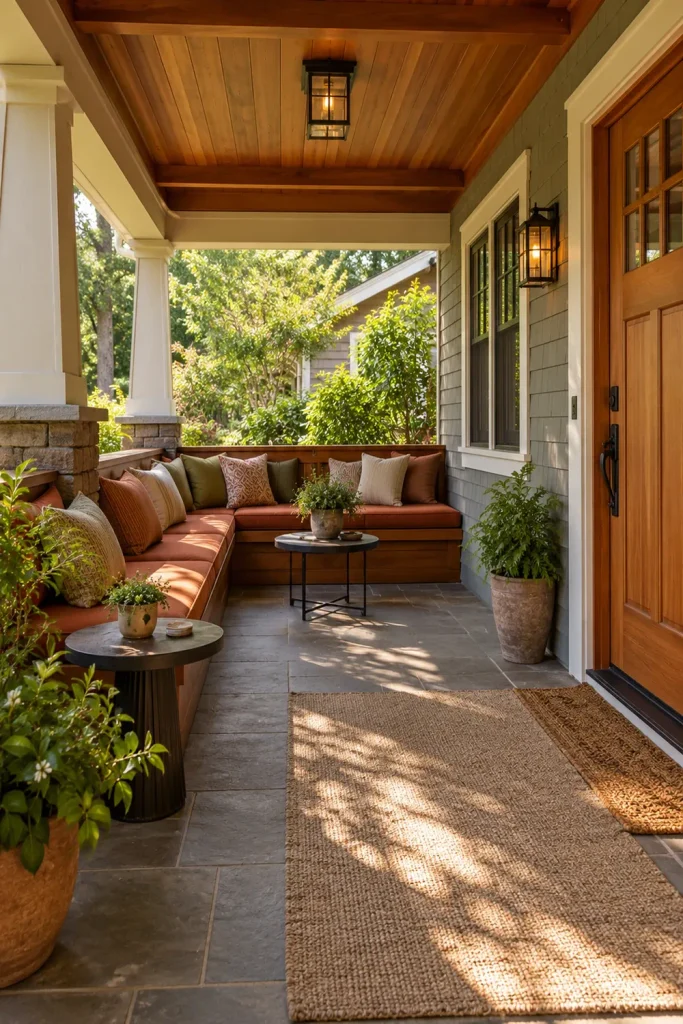
Built-in corner benches turn the edges of a porch into useful seating while leaving the middle available for movement. An L-shaped arrangement feels especially natural on a Craftsman porch, where wood slats and simple cushions can echo the existing trim. Small side tables keep drinks accessible without filling the open floor.
Use the benches for a family that likes flexible seating rather than individually assigned chairs. Include supportive backs where practical, and avoid making every cushion excessively deep. Permanent benches need careful planning around doors, windows, drainage, and existing railings. Have their attachment and any structural changes evaluated before treating a sketch as a construction plan.
4. A Long Family Table With Bench Seating
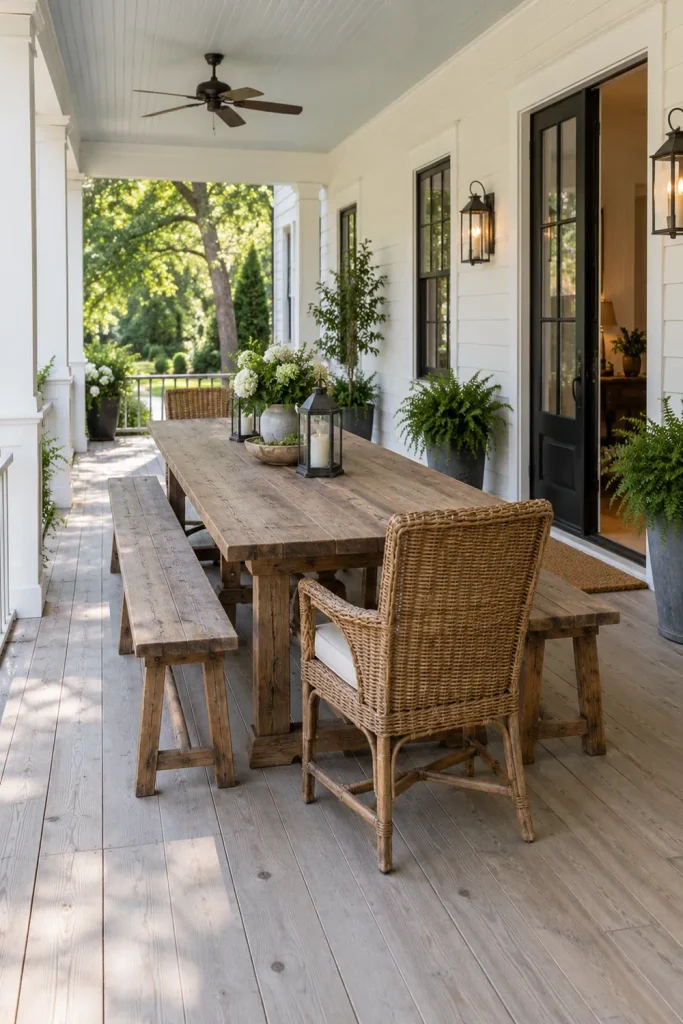
A long table makes the porch useful for more than a quick sit outside. With benches along both sides, the family can spread out breakfast, tackle a puzzle, or gather for an informal meal. Two end chairs add seating with backs and arms for relatives who prefer more support.
This arrangement suits a broad farmhouse porch where people can move behind seated diners. Test the space with benches pulled out, not tucked underneath the tabletop. Benches allow flexible spacing, but everyone still needs comfortable elbow room. Choose outdoor-rated materials, and keep at least one easy-to-access chair available so nobody has to climb over a bench to join.
5. Two Matching Conversation Groups
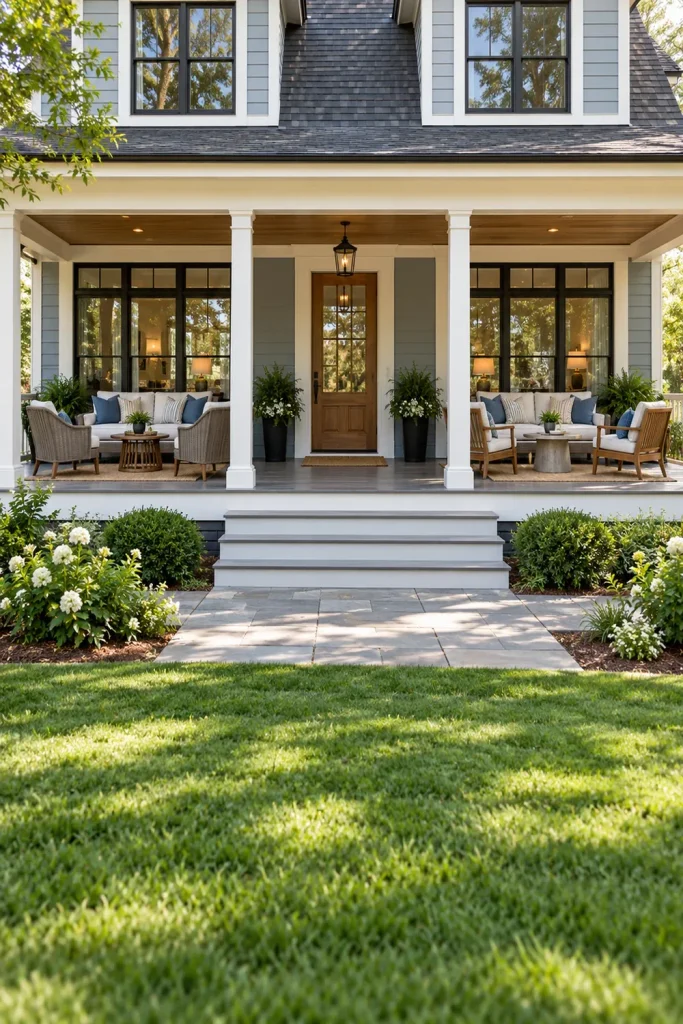
Two smaller seating groups can work better than one enormous circle when your family enjoys different conversations. Set a loveseat and two chairs around each small table, then repeat a cushion color to connect the groups visually. The porch feels coordinated while giving kids, adults, or visiting relatives a choice of where to settle.
A long porch with the front door near the center is a natural fit. Leave the entrance corridor open between the groups instead of bridging it with a rug or extra chair. Place the groups close enough for people to mingle, but leave room to enter each one without squeezing between furniture arms.
6. A Sofa Paired With a Row of Rockers
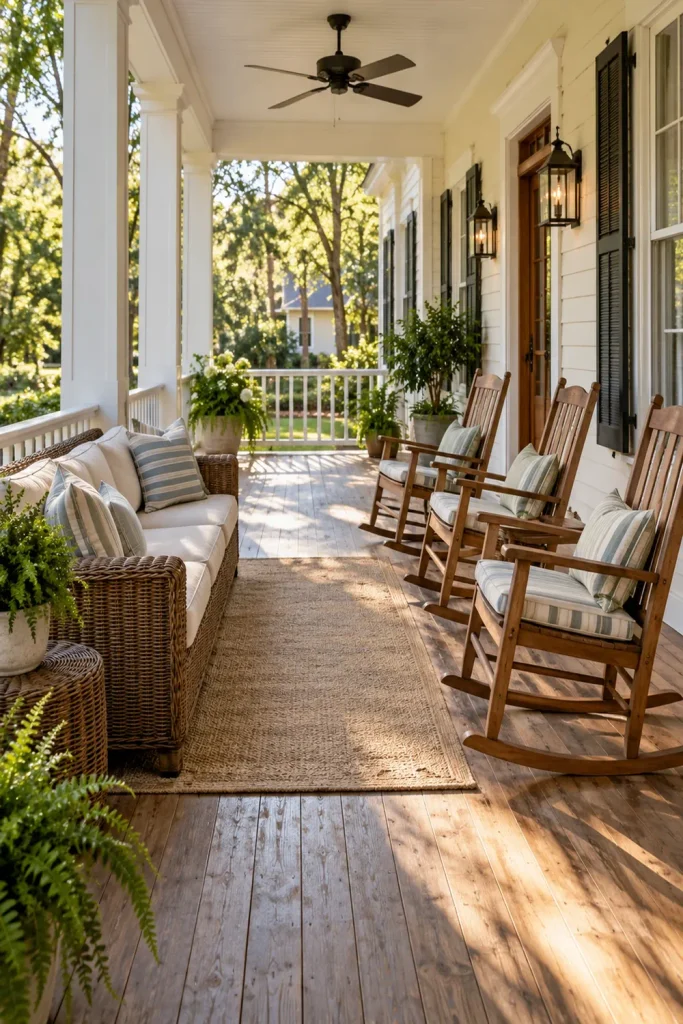
A full-size sofa handles everyday lounging, while a line of rocking chairs gives several family members their own comfortable spot. Together, they create a relaxed front porch seating arrangement with more variety than a matching furniture set. Wicker and painted wood look cohesive when their cushions share a few colors.
Allow for the rockers’ movement when planning the layout. Their runners need space behind and in front, and the moving chairs should stay outside the main walking route. A deep porch works better than a narrow one here. Keep nearby tables small and stable, and arrange them where a rocking chair will not repeatedly bump their legs.
7. A Wraparound Porch With Seating Along Both Sides
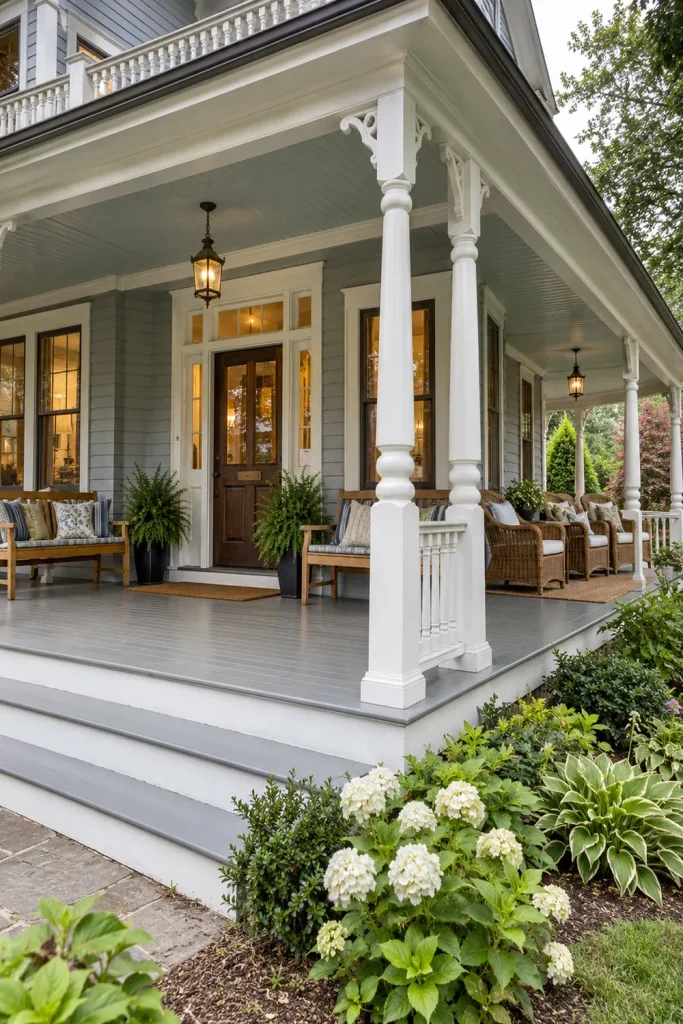
A wraparound porch lets a huge family spread out without leaving the shared outdoor space. Use the front wing for benches and the side wing for individual chairs, with the corner serving as a natural transition. Each area gets its own view, which helps the arrangement feel intentional rather than like overflow furniture.
Repeat one material or fabric color across both sides. Keep the turn around the corner clear, especially where people carry food or move between steps and the front door. Seating farther down the side may feel separate from the main conversation, so reserve that area for quieter chats rather than expecting everyone to talk across the entire porch.
8. A Deep Daybed With Upright Chairs Nearby
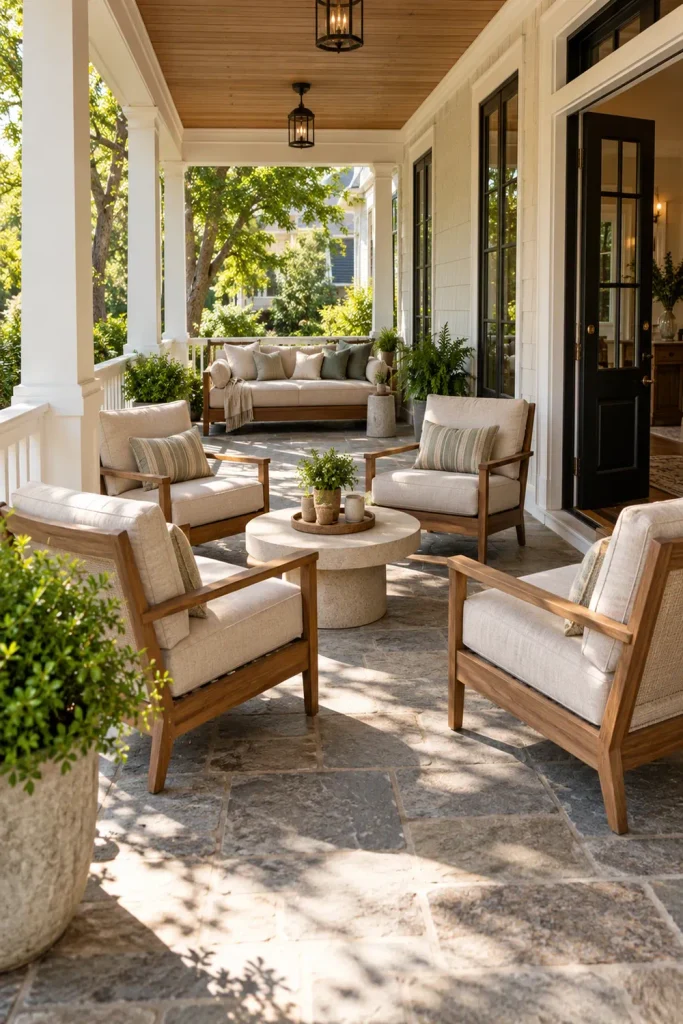
A freestanding outdoor daybed gives the family a generous lounging spot, especially for reading together or taking a quiet break. Pair it with upright armchairs so the porch also works for relatives who prefer a conventional seat. Neutral cushions and a few textured pillows keep the oversized piece from dominating the room.
Position the daybed at the end of a deep porch, where its full footprint will not interrupt the entrance route. Choose a product intended for outdoor use and follow its stated capacity. A daybed’s broad surface does not automatically translate into several comfortable adult seats. Keep the surrounding chairs accessible without requiring anyone to step around an extended lounger.
9. Two Porch Swings With Room Between Them
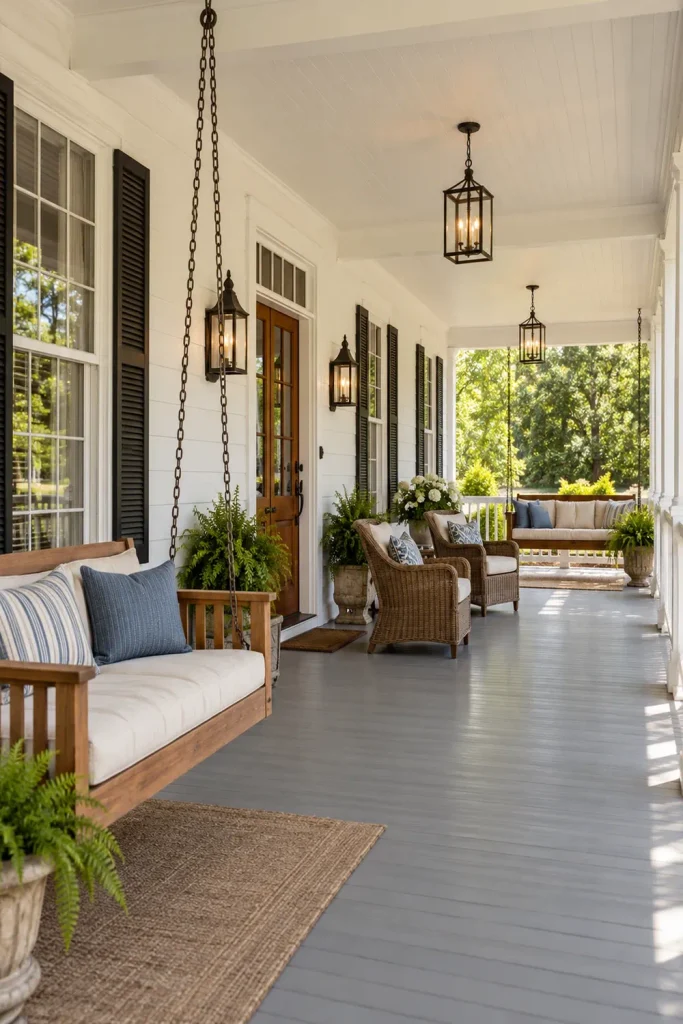
Two porch swings create separate little gathering spots while keeping the overall porch visually open. Place them in distinct bays, with stationary chairs nearby for anyone who dislikes motion. Matching finishes give the arrangement a calm rhythm, even when different generations are using the porch at once.
This option depends on more than available floor space. A qualified professional should assess the supporting structure and appropriate hardware before installation. Follow the swing manufacturer’s instructions for capacity and movement clearance. Keep each swing’s full travel area away from doors, railings, furniture, and walking routes. For a large family, add stationary seats rather than crowding extra people onto the swings.
10. A Perimeter Bench With Movable Center Chairs
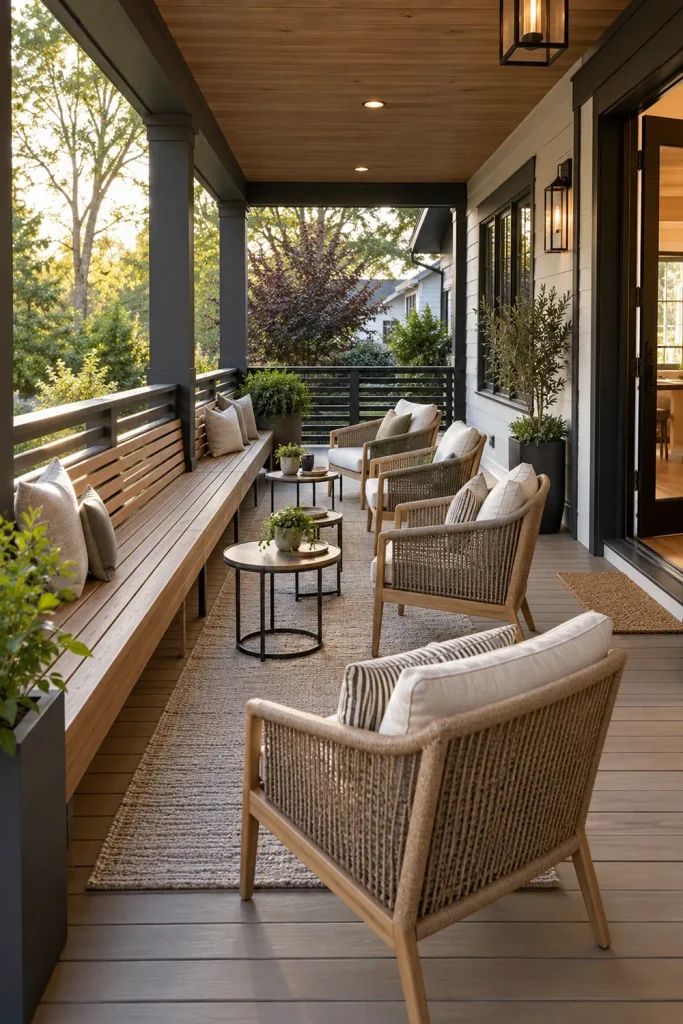
A long bench along the outer edge establishes a generous seating base, while movable chairs let the family adjust the conversation area. Face the chairs toward the bench for a gathering, then shift a few aside when children need more open floor. Nesting side tables provide useful surfaces without permanently occupying the center.
Keep the bench separate from the railing unless the structure has been designed for that purpose. Leave access to steps and gates, and avoid positioning climbable seating where it creates a fall concern for young children. Lightweight chairs are convenient, but they still need to be stable and suitable for the porch’s exposure to wind and rain.
11. A Storage Bench Wall for Everyday Family Gear
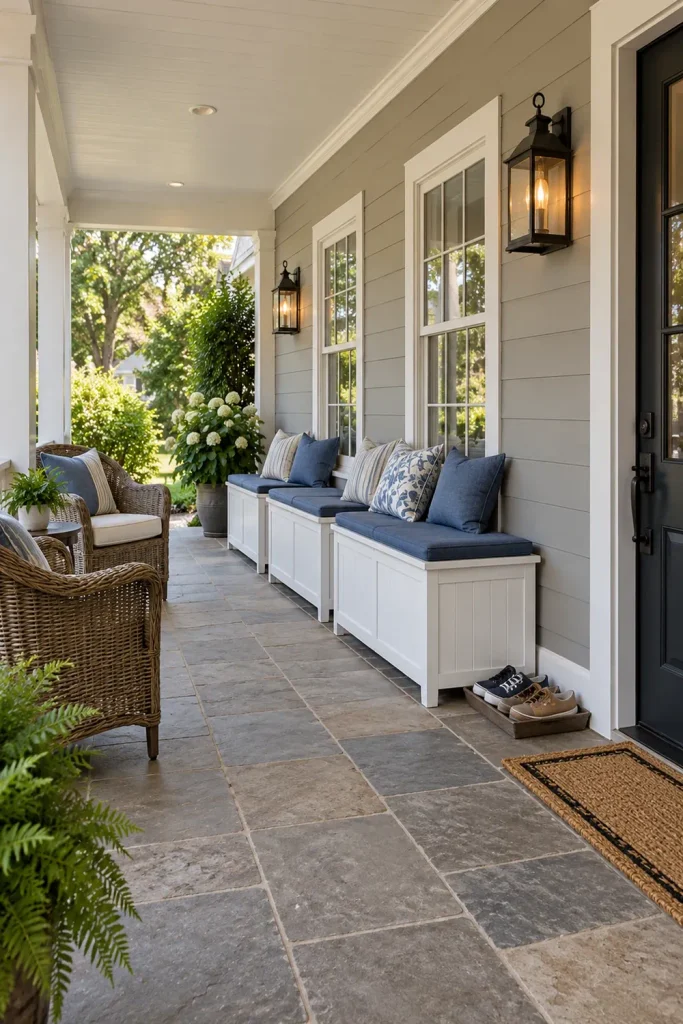
Several storage benches along a solid wall combine family seating with a place for outdoor cushions, games, or small porch supplies. Repeating the same bench style gives the long arrangement a built-in appearance without requiring custom construction. Add a couple of armchairs so the setup offers more than one sitting position.
Look for benches explicitly designed to function as seats, and follow their individual capacity limits. Storage interiors are not necessarily watertight, even under a roof, so protect moisture-sensitive items separately. Check lid hardware and pinch points before storing children’s toys inside. Keep shoes in a defined tray at one end rather than letting them collect across the walking route.
12. A Full-Size Lounge Beside a Children’s Table
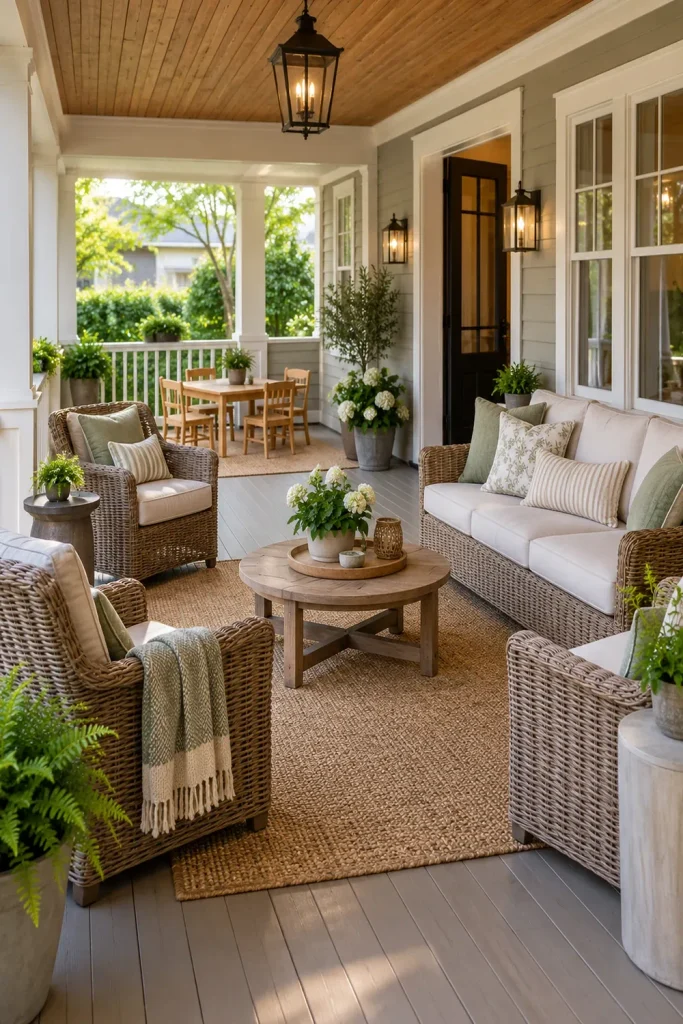
A large family porch can accommodate one adult conversation area and a smaller children’s table without making either feel like an afterthought. Arrange a sofa and armchairs together, then place the small table nearby where adults have a clear view. Coordinating colors help the two furniture scales belong in the same setting.
The children’s area should sit away from steps, railings, and the front door’s swing. Leave a visible passage between the groups so small chairs do not spill into the entrance route. Choose age-appropriate furniture with stable bases. The little table supports drawing or snacks, while the main seating remains available for family members who need full-size chairs.
13. An Outdoor Dining Set That Doubles as Game Night Seating
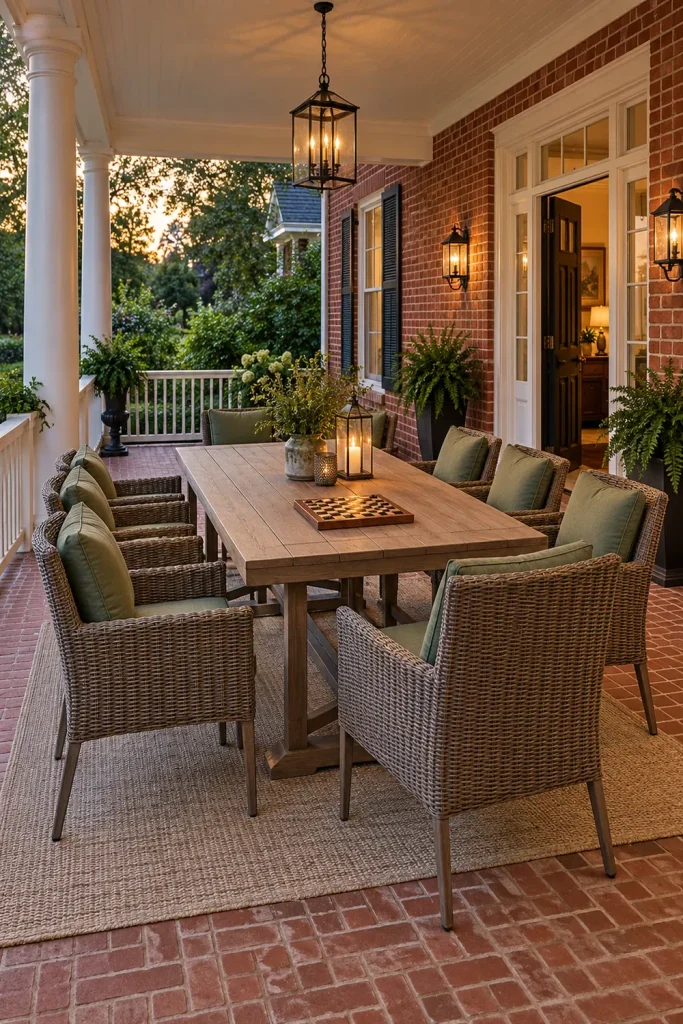
An outdoor dining table surrounded by individual chairs gives a big family a place for cards, board games, and meals. Compared with benches, separate chairs let people get up without asking everyone beside them to move. A simple rectangular table also creates an orderly layout on a broad, straight porch.
Measure with every chair occupied and pulled away from the table. The practical footprint is much larger than the tabletop alone suggests. Choose armchairs only if their arms fit beneath the table comfortably, and keep game storage indoors or in a protected container. A nearby porch light makes evening gatherings easier, provided the table does not block access to switches or doors.
14. Back-to-Back Sofas for a Double-Duty Porch
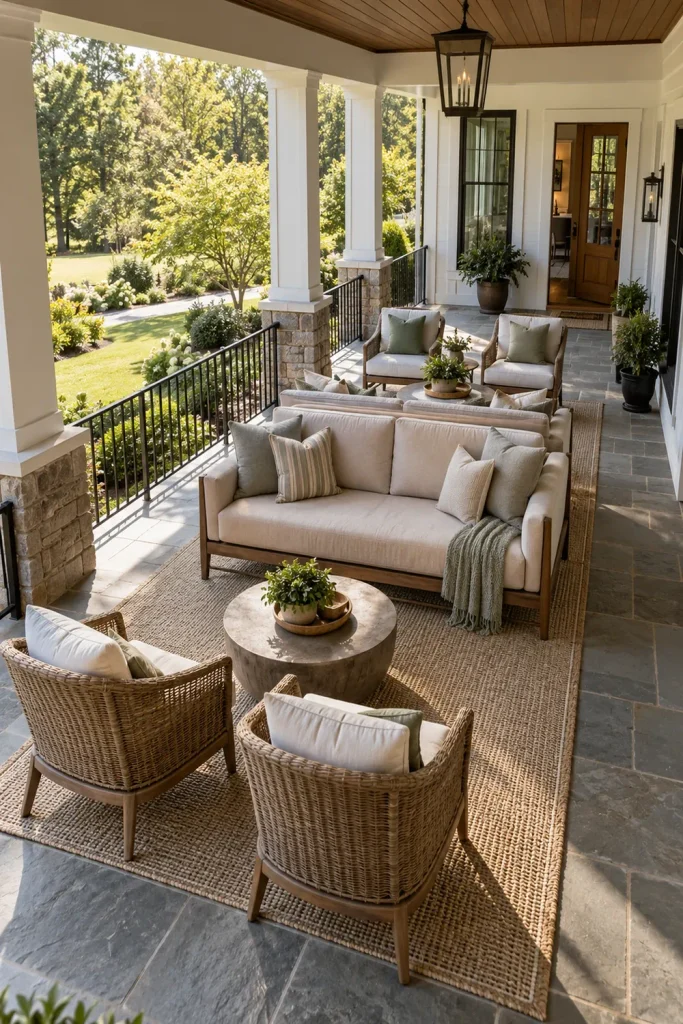
Back-to-back sofas divide an exceptionally deep porch into two useful zones. One sofa can face the garden and a pair of chairs, while the other anchors a second group closer to the house. The sofa backs form a low visual divider, allowing different conversations without installing a screen.
This layout needs substantial depth, so map it on the floor before committing to furniture. Include the chairs and tables on both sides, plus a separate route to the front door. Choose sofas with finished backs that look attractive from different angles. Avoid squeezing this arrangement onto a shallow porch; two comfortable groups require more space than a single sectional.
15. A Main Seating Group With Foldaway Overflow
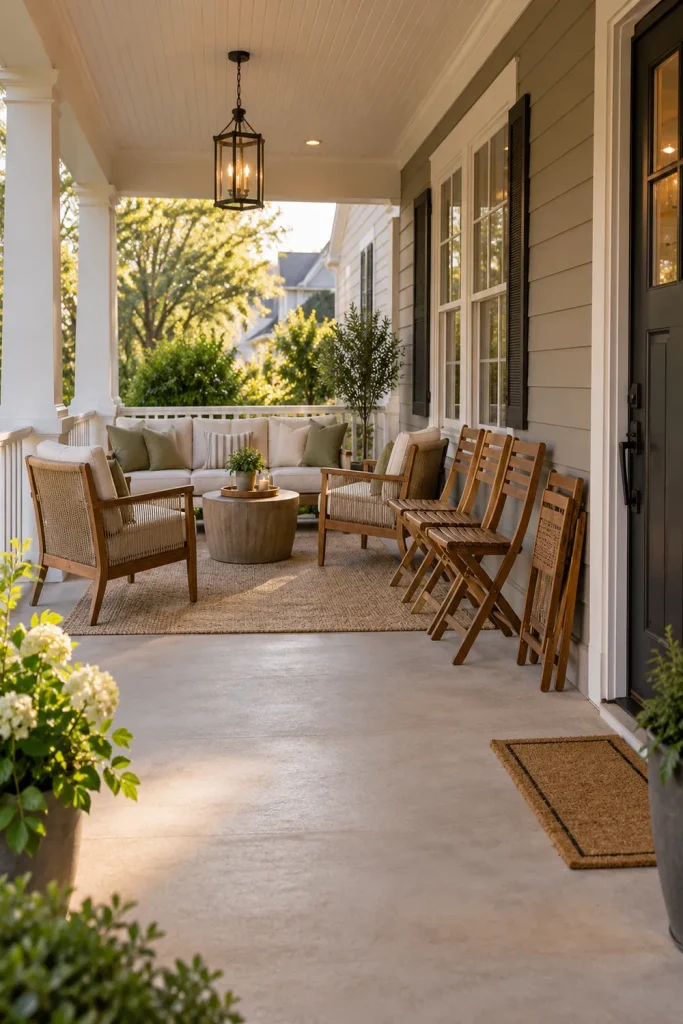
A permanent sofa-and-chair group can handle normal family evenings, with folding chairs brought out when everyone arrives together. Choosing folding seats in a similar wood tone or color helps them feel like part of the porch rather than a last-minute addition. Small tables can shift to serve the expanded group.
Store spare chairs dry and secure when they are not needed. Before a gathering, open and lock each chair fully, then place it on a level surface outside the door and stair routes. Overflow seating works best when the porch still has breathing room. When all the chairs cannot fit comfortably, spread the gathering into another suitable area instead of packing the entrance.
Plan the Seating Around the People Who Use It
Start with your regular family gathering, then allow for occasional visitors. Note who needs a firm seat, back support, an armrest, or a place at a table. A mix of sofas and individual chairs often serves different ages better than one furniture type.
Mark furniture footprints with painter’s tape, including pulled-out chairs, rocking movement, and door swings. Walk the route from the steps to the entrance carrying a laundry basket or grocery bag. Treat any suggested layout as inspiration, then check your own measurements and applicable local requirements before installing permanent seating or suspended furniture.
FAQ
How can I work out how many people my porch will seat?
Draw the usable porch area and add the actual dimensions of each furniture piece. Use manufacturer seating and weight limits, then account for your family’s comfort. Keep movement space separate from the seat count.
Is a sectional or separate seating better for a huge family?
A sectional keeps one conversation together and suits a deep seating bay. Separate chairs and sofas offer more flexibility and can serve different support needs. Long porches often benefit from two groups rather than one oversized arrangement.
Can I use indoor furniture on a covered front porch?
A roof does not prevent humidity, windblown rain, or sunlight from reaching furniture. Choose pieces intended for the conditions on your porch. Indoor upholstery and unfinished wood may deteriorate even when they are not directly exposed to rain.
How do I add seating without buying everything at once?
Build around one main piece, then add stable outdoor chairs in compatible finishes. Folding seats can handle occasional visitors. Measure the eventual layout first so early purchases do not consume the space needed for later additions.
Give Everyone a Comfortable Place to Gather
Choose the layout that fits your family’s most common activity: conversation, shared meals, or a mix of quiet and lively corners. Start with one well-planned seating zone and test the walking routes before adding more furniture. A big family porch works best when everyone can settle in, get up, and reach the front door comfortably.