
The entryway closet tends to collect whatever you’re holding when you walk through the door. Before long, the shoes you wear every day are buried under spare tote bags, and the coat rod is packed with jackets nobody needs this week.
A good entryway closet makeover starts with figuring out what you reach for on your way in and out. You might need a place to sit, more room for long coats, or somewhere to put wet boots.
These 11 ideas cover different ways to organize the space, make it easier to use, and give the front hall a look you enjoy.
1. Split the Closet Into Short and Long Hanging Zones
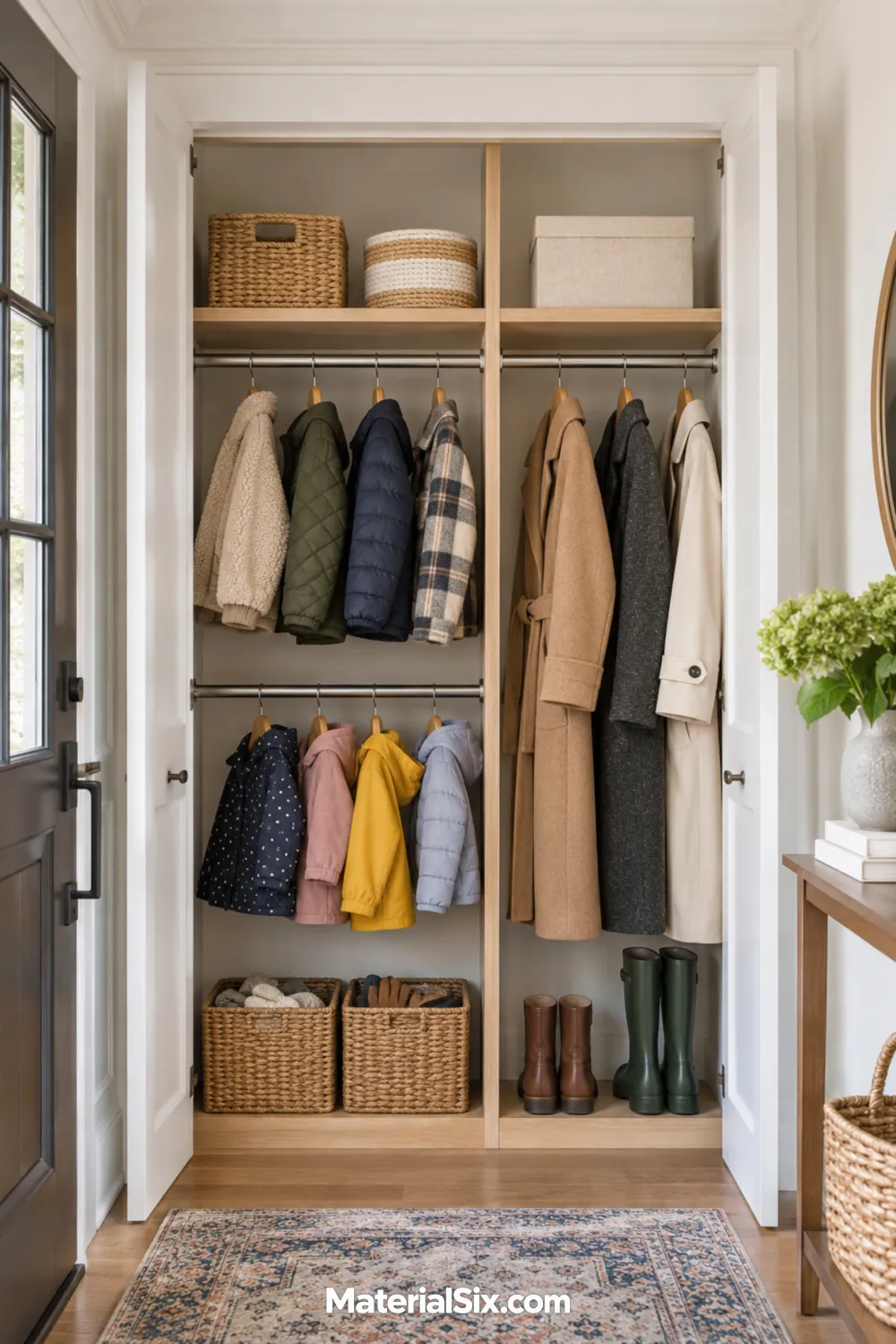
When short jackets and long coats share one rod, the space beneath the shorter pieces tends to go unused. Split the closet into two bays. In one, stack two short rods for waist-length jackets and kids’ coats. Keep a single high rod in the other bay so trenches and winter coats can hang freely.
Before choosing rod heights, hang your longest coat and your bulkiest short jacket on the hangers you already use. Use those lengths to plan the gaps, leaving room to lift a hanger on and off each rod. Put kids’ everyday jackets on the lower rail where they can reach them.
2. Tuck Shoes Into a Tilt-Out Cabinet
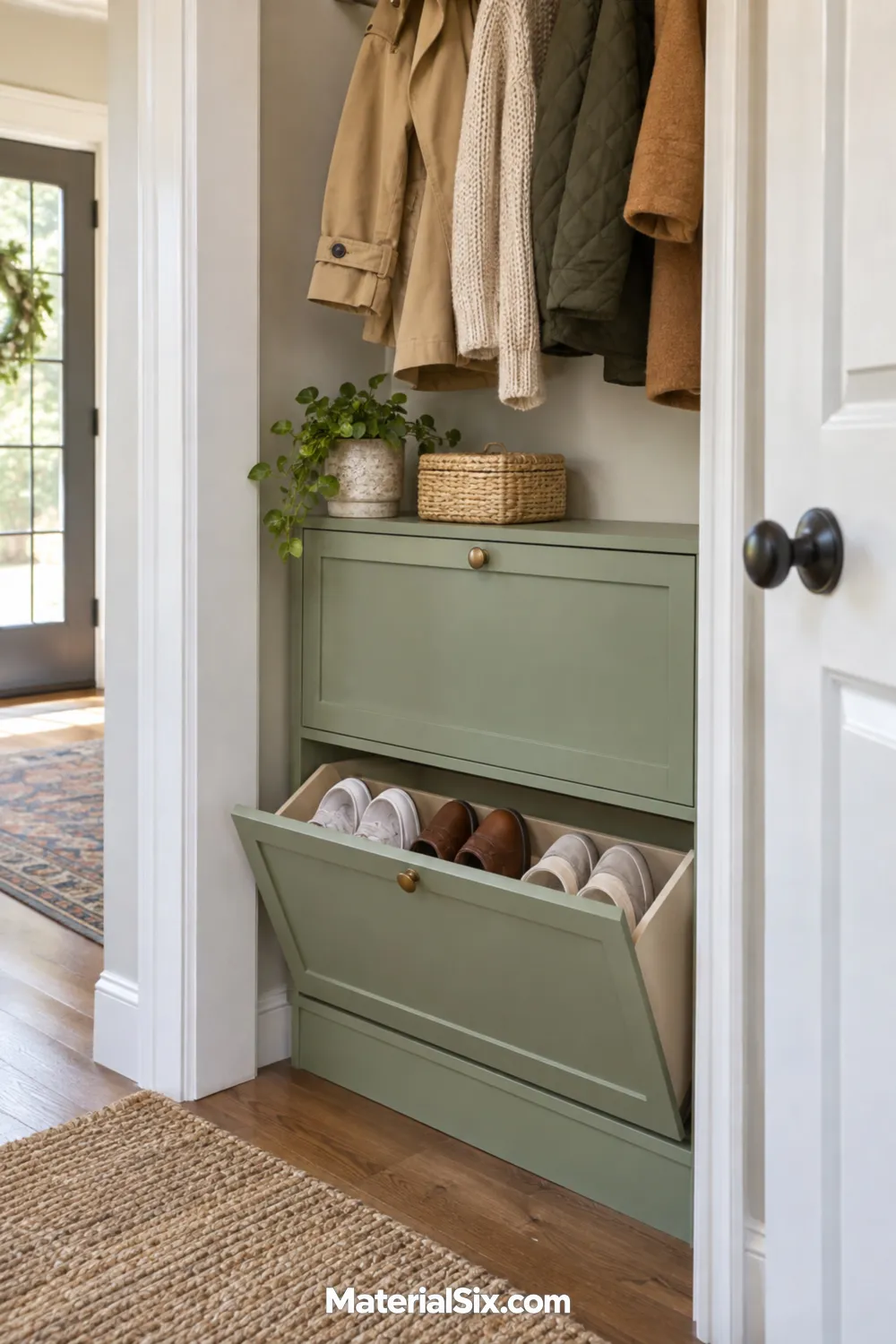
A shallow tilt-out shoe cabinet gives everyday pairs a place to go without leaving them scattered beneath the coats. Its closed fronts are especially useful if the closet door tends to stay open and the shoe collection is visible from the foyer.
Measure the cabinet with a compartment tilted out. Check whether it clears the closet door, trim, and the coats hanging above it. Bring the dimensions of your longest pair when shopping, since compartments vary in depth. Follow the manufacturer’s anchoring instructions, and give bulky boots a separate spot if they don’t fit without bending.
3. Turn the Closet Into a Mudroom Bench Nook
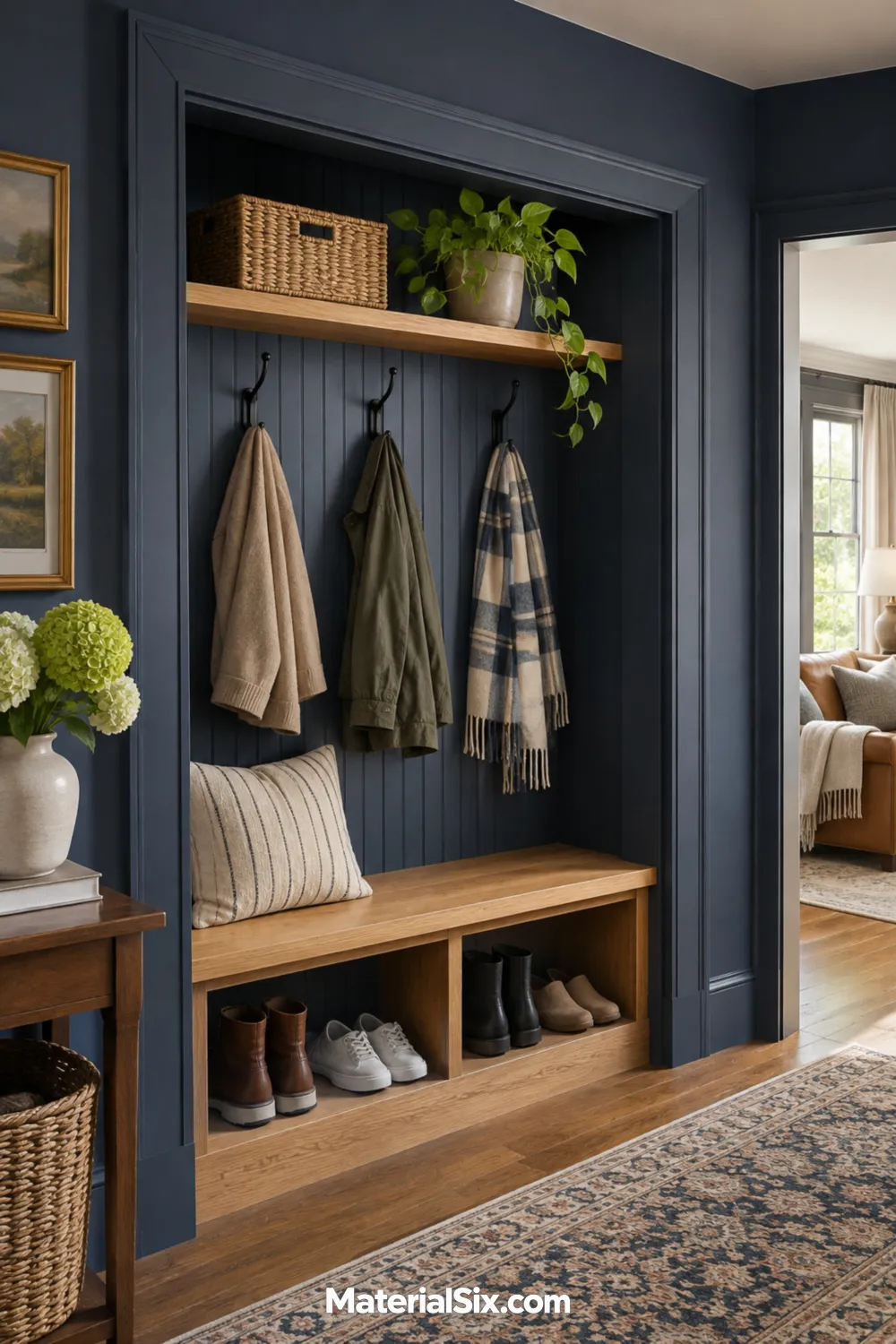
Take the closet doors off and use the recess as a small mudroom, with a bench across the back, hooks above, and cubbies below. The open layout makes sense when the entry needs a place to sit but a freestanding bench would crowd the hallway.
Set the bench far enough into the opening that it leaves a clear path past the closet. Before deciding where the hooks go, sit on the bench and have someone hold up your longest everyday jacket. Leave a spot above the seat clear of coat hems so there’s room to sit without leaning into them.
4. Wallpaper the Back of the Coat Closet
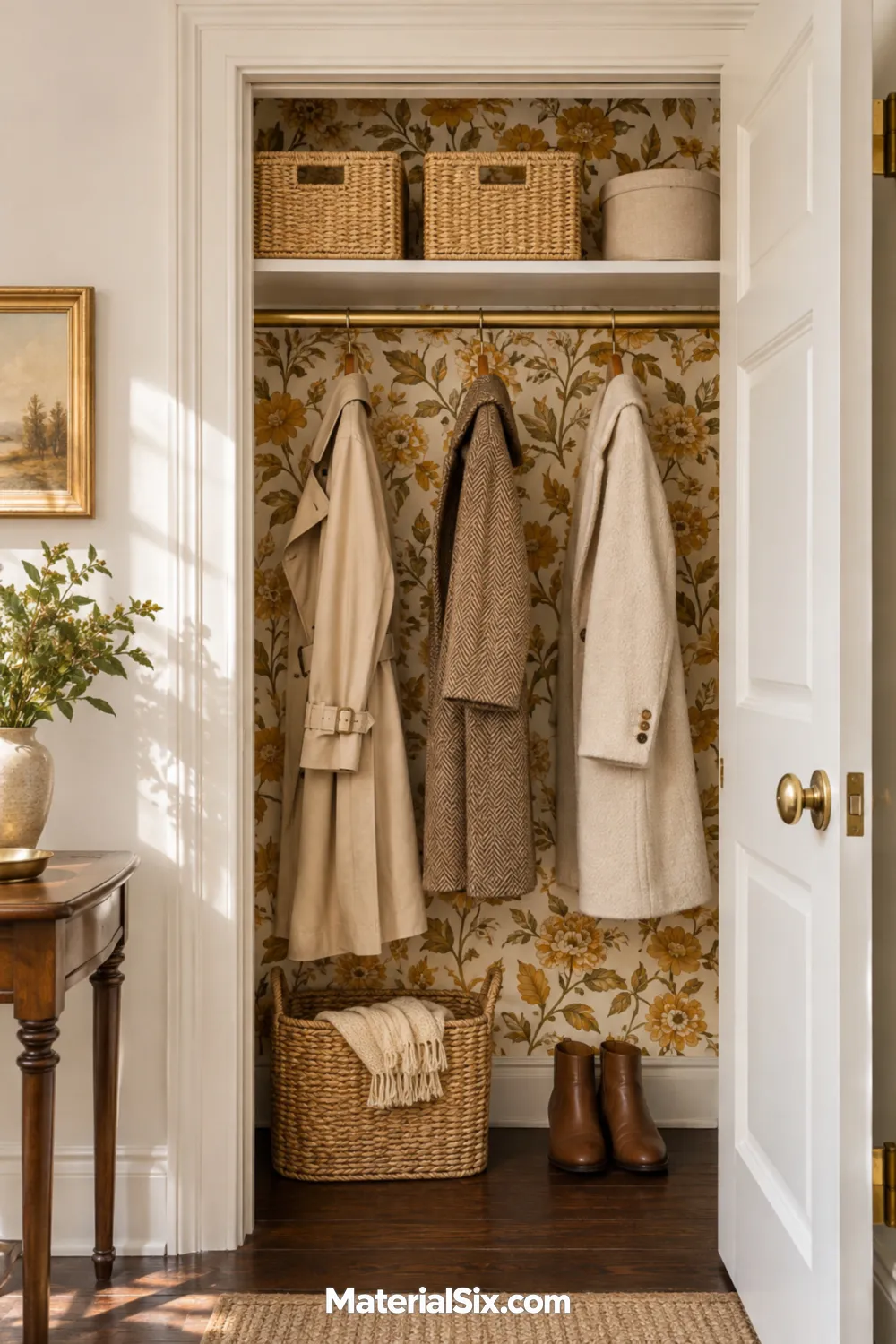
A patterned back wall can make an ordinary coat closet feel like part of the foyer. Try a warm botanical print behind a handful of neutral coats, or pick up a color from the runner or wall paint outside the door. The pattern will show most clearly where the rod has a little breathing room.
Keep the wallpaper on the back wall if the side walls often get bumped by bags or hangers. Before ordering, hold a sample inside the closet and look at it from the hallway in daylight and again at night. A print can read differently in a deep recess.
5. Give Keys and Mail Their Own Shelf
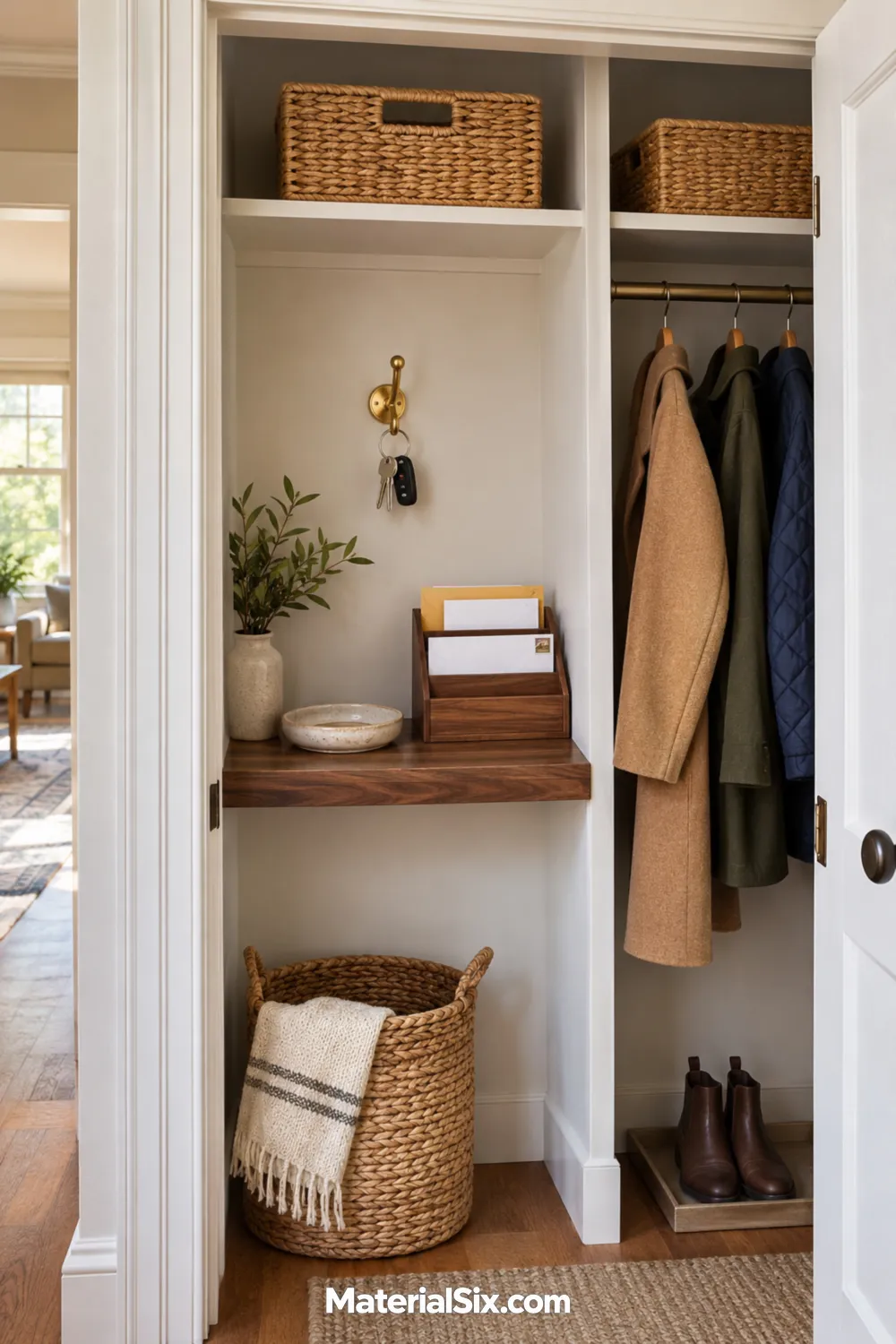
Build a small drop zone into one side of the closet if keys, outgoing mail, and sunglasses usually land on the nearest kitchen counter. A shallow shelf with a key dish and an upright mail sorter gives those things a home close to the door while leaving the main hanging space for coats.
Position the shelf where you can reach it without moving jackets out of the way. Try the setup with a tray on an existing shelf before committing to a built-in. Keep the sorter for mail that needs attention or has to leave the house. File the rest wherever you handle paperwork.
6. Build an Adjustable Shoe Tower
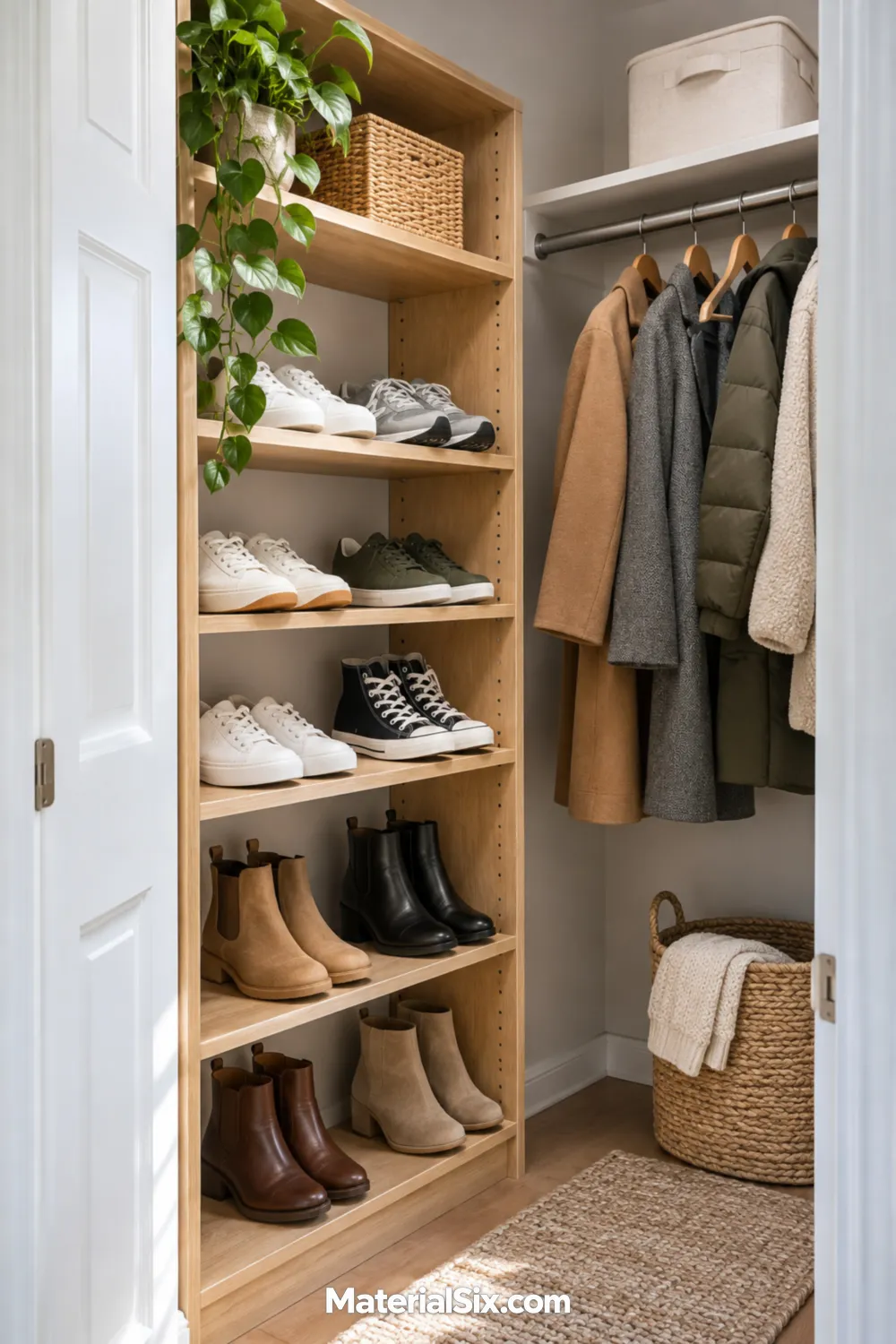
An open tower at one end of the closet lets you see your everyday shoes at a glance. Adjustable shelves let you set a low row for flats or sneakers and leave a taller opening for ankle boots. This layout works well when your household reaches for a different mix of shoes throughout the year.
Start by lining up the pairs you actually wear through the front door. Use them to decide how wide the tower needs to be and which shelves deserve the easiest reach. Leave enough room above each pair to pull it out without knocking the shoes beside it.
7. Separate Coats From Cleaning Tools
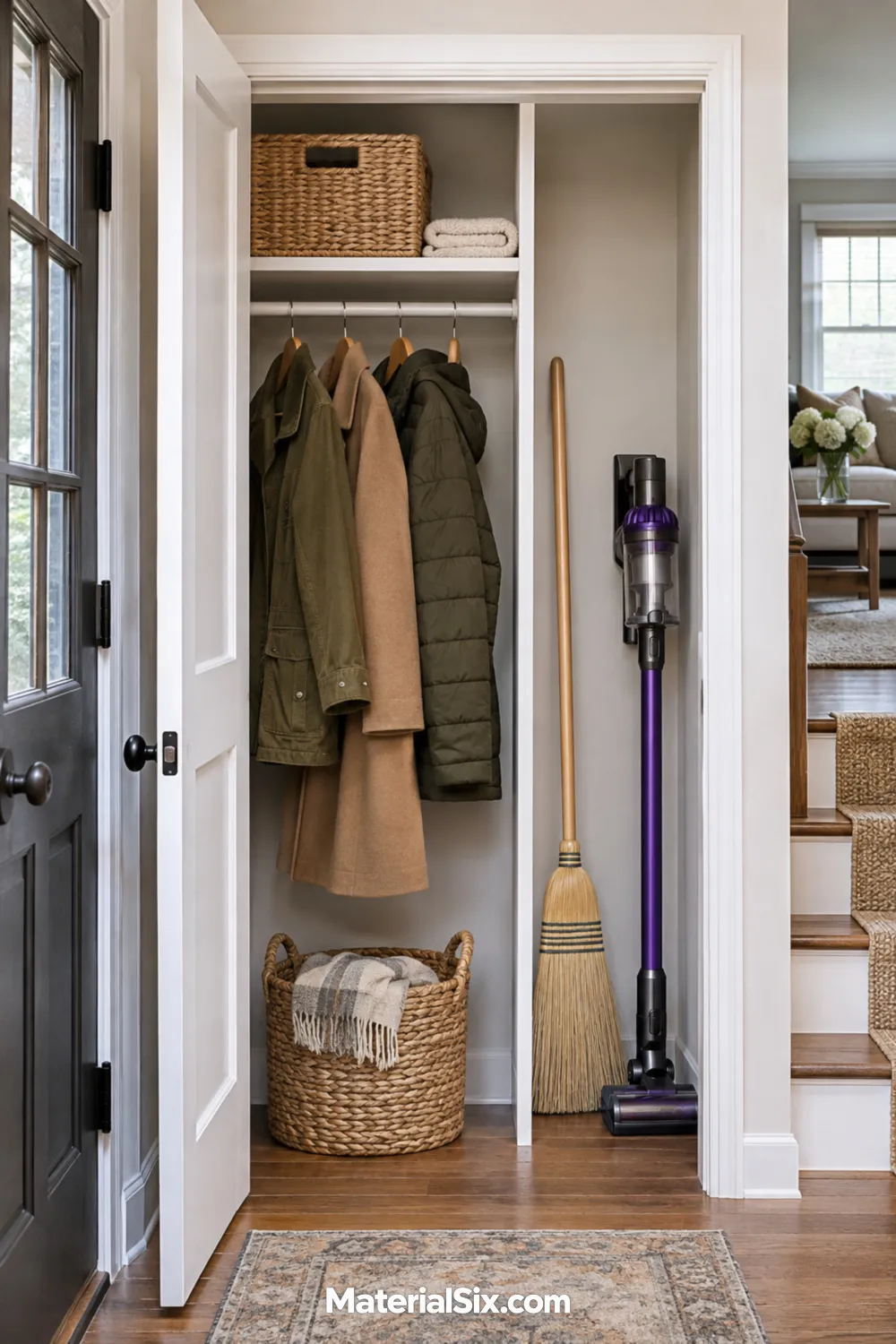
When the hall closet has to do double duty, give the broom and vacuum a dedicated vertical bay. A solid divider keeps handles from snagging coat sleeves and makes it easier to take a tool out without pulling jackets along with it. Hang the coats on the opposite side and keep the tools closest to the opening.
Size the tool bay around the widest vacuum head and the tallest handle. Check that the vacuum can tilt out of the opening with the door in its usual position. Keep cleaning supplies in a separate spot if the closet is within easy reach of children or pets.
8. Swap Swinging Doors for Bifold Doors
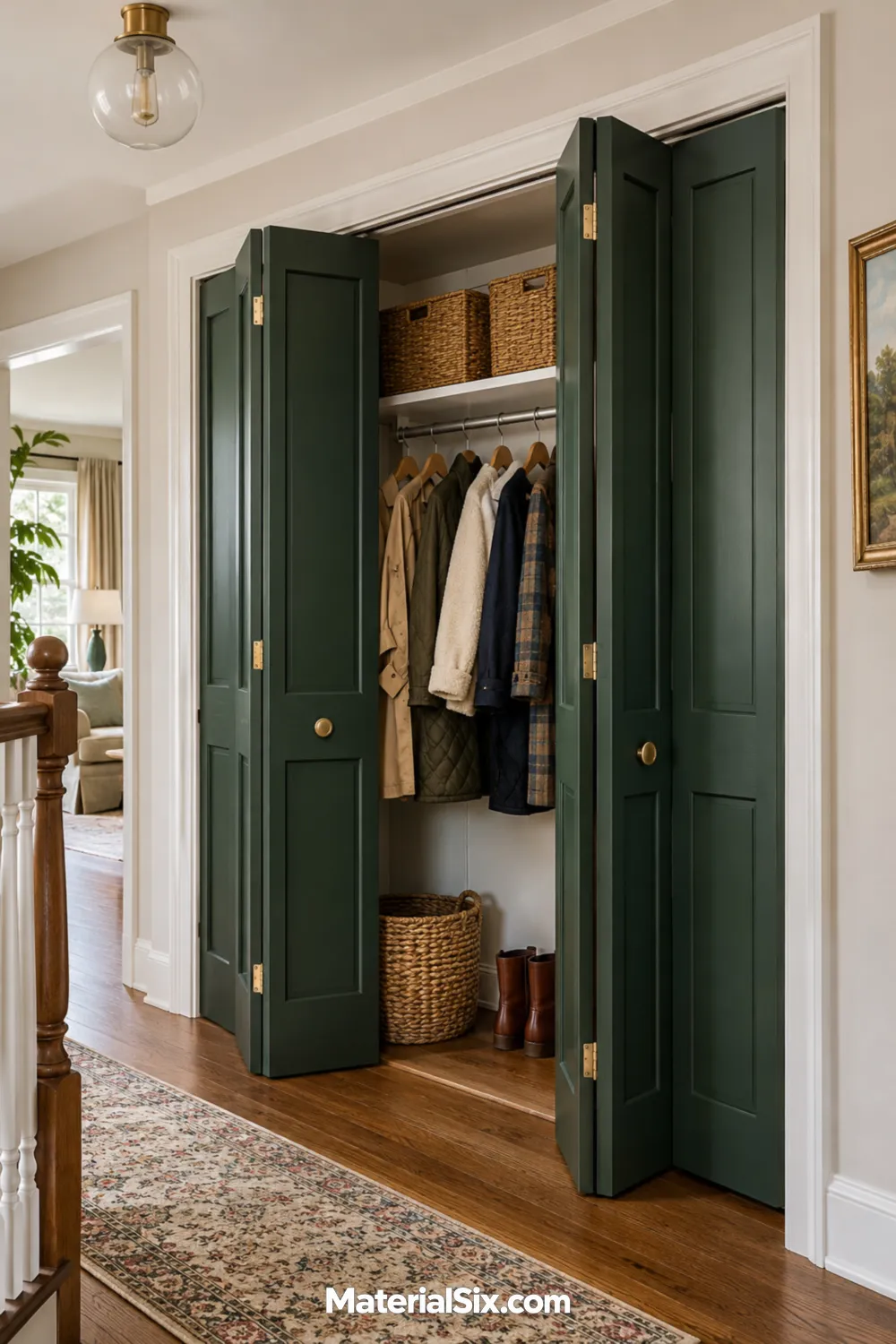
Bifold doors can make a reach-in closet easier to use in a foyer where a wide swinging door crosses the path to the front entrance. The leaves fold together at each side, and a painted finish can give the closet a stronger presence from the hallway. Dark green looks especially good against warm white trim.
Compare the usable opening with the doors folded, since the stacked leaves occupy some of that width. Measure the finished opening and check that any shoe drawers or pullouts will still clear it. Bring a paint sample into the hall before committing to a color.
9. Use the High Shelf for Seasonal Baskets
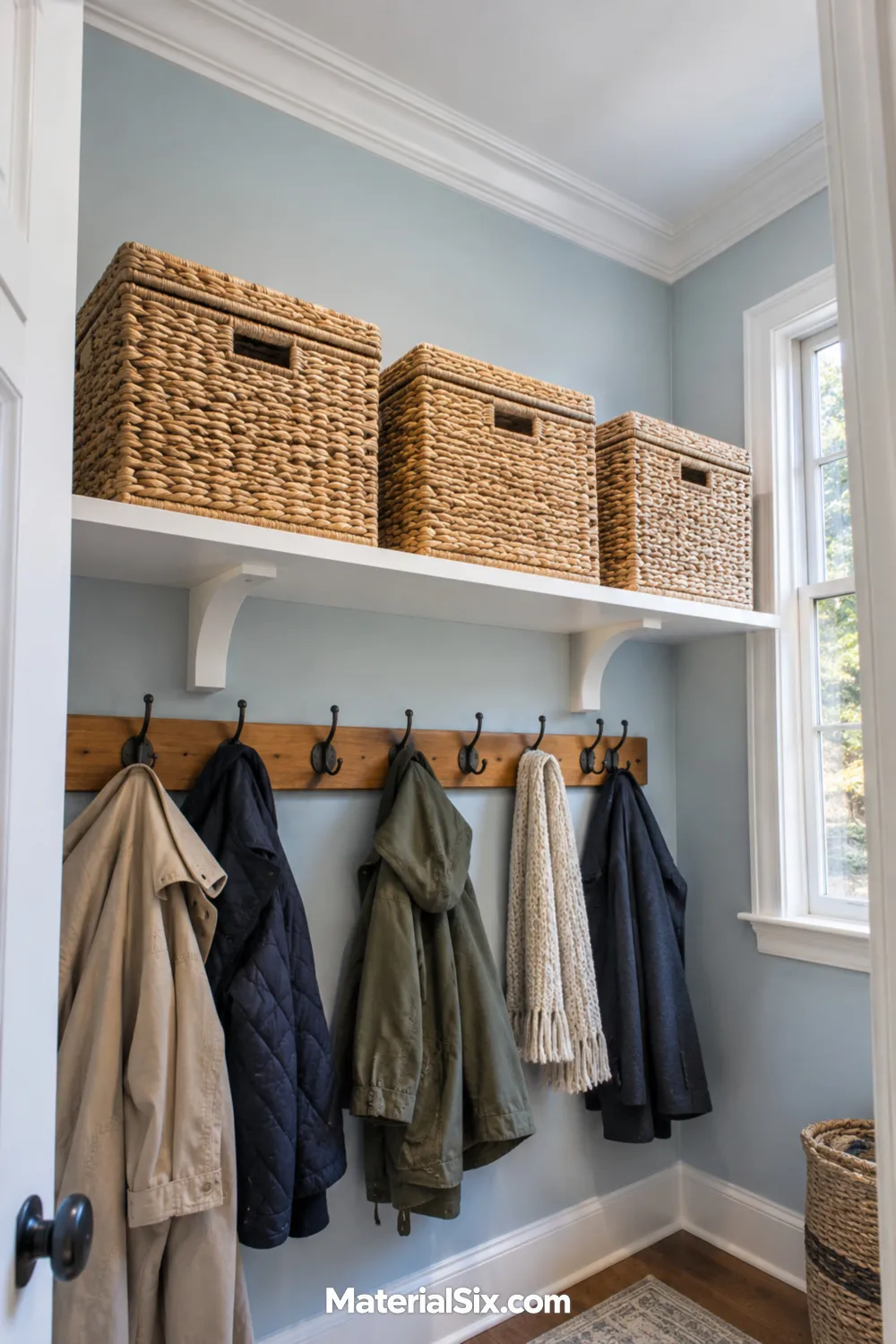
Put the space above the coats to work with a row of matching baskets for off-season accessories. A wide shelf can hold light items such as knit hats, spare scarves, and fabric tote bags. Keeping those pieces together makes seasonal changes easier and leaves the space around the door clear for everyday items.
Choose baskets you can grip from the front and check their depth against the shelf. Before committing to lidded baskets, make sure there’s room to lift them down without scraping the ceiling. Store things you grab most often at a lower height.
10. Hang Two Hook Rails at Different Heights
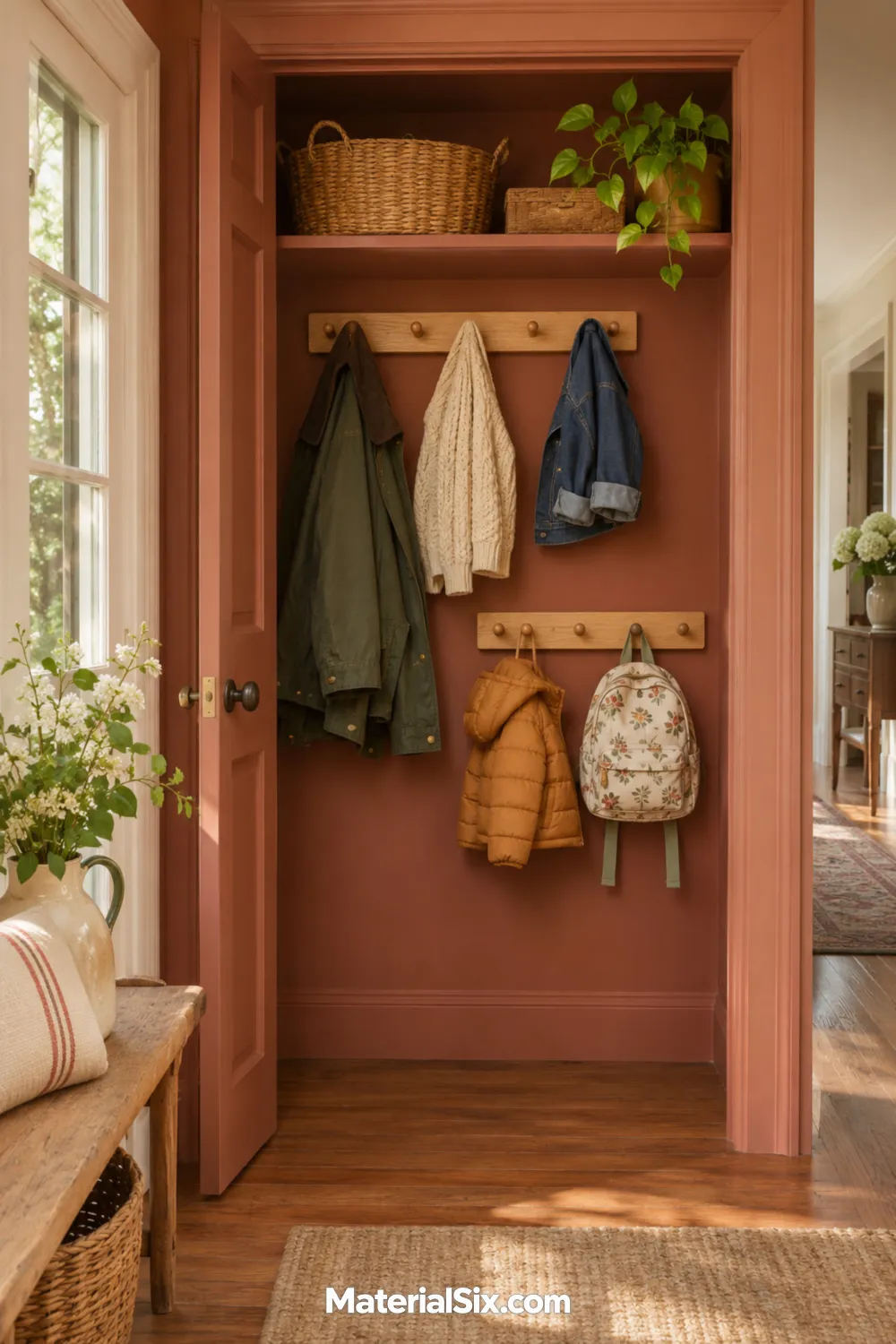
A pair of hook rails gives a busy household a quick way to hang up jackets and bags without sorting through hangers. Place an upper rail for adults and a lower one for kids. Stagger the hooks across the back wall so longer jackets on the top rail don’t cover the lower hooks.
Lay out your everyday coats and backpacks before picking the spacing. Bulky pieces may need more room than you’d guess from the hooks alone. Keep the rail that holds heavier bags within easy reach and use mounting hardware suited to the wall and the load.
11. Make a Landing Spot for Wet Boots
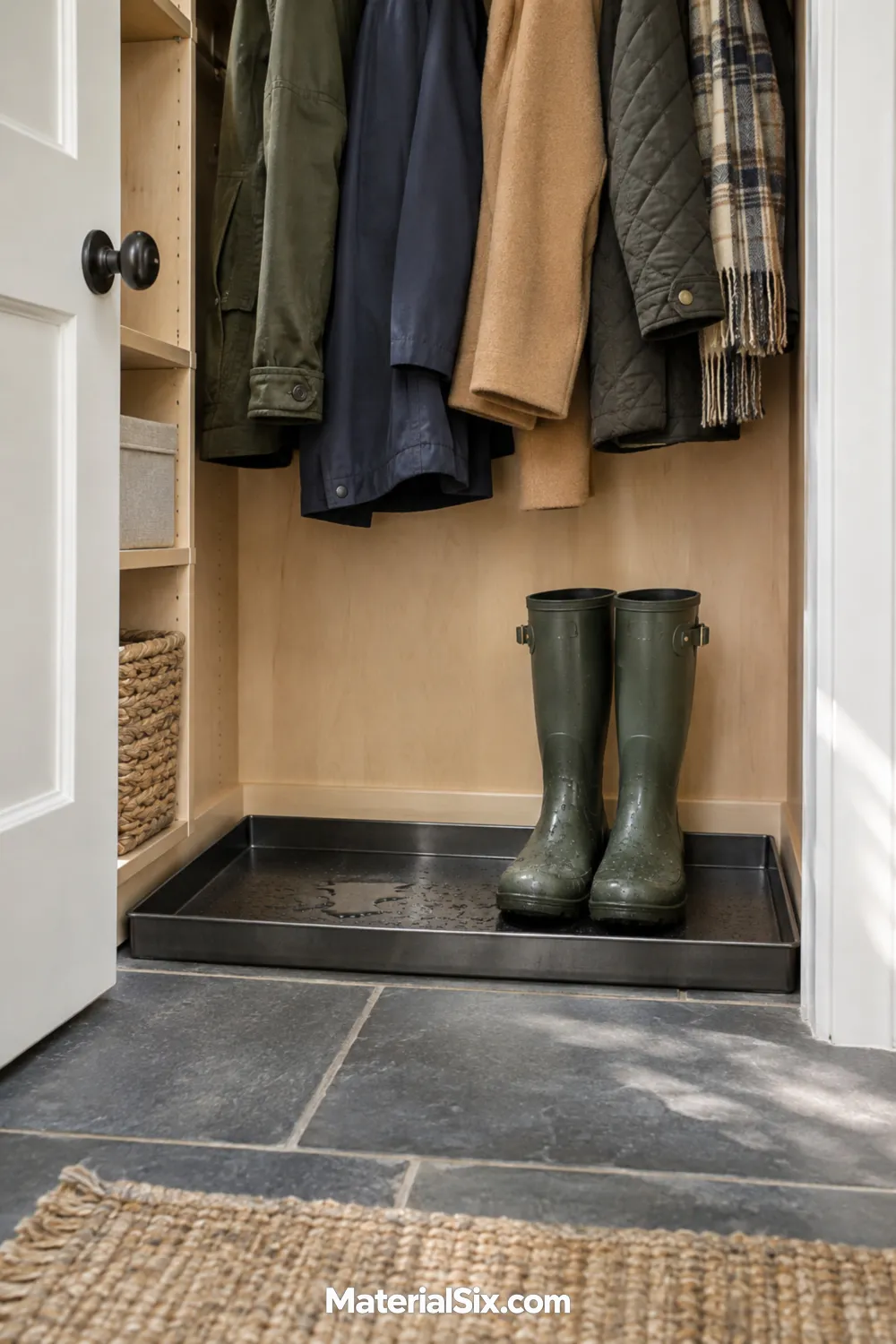
Give muddy boots a spot of their own with a raised-edge tray on the closet floor. Place it near the front so you can step out of boots and set them down without reaching past dry shoes. Slate-look tile or a wipeable floor beneath the tray makes the occasional spill easier to deal with.
Pick a tray you can lift out without moving the contents of the closet. Check the clearance beneath the door and leave room around the tallest pair. Empty standing water and give damp boots a chance to air out before closing them in the closet.
Start with what slows you down most at the front door. If shoes block the floor, compare open shelves with a tilt-out cabinet. If coats and bags pile up, try a different hanging layout or make room for a bench. Save the ideas that fit your routine and take a few measurements before you start moving things around.