
A stone patio gives your backyard a place to gather, but the material is only part of the decision. The pattern, outline, furniture placement, and connection to planting all influence how the space feels. You might prefer the relaxed shapes of flagstone, the neat lines of bluestone, or a textured courtyard with a small table.
These stone patio ideas cover different materials and layouts, along with features that help a sitting area feel considered. Use them to narrow your preferences before discussing the surface, installation, and site conditions with a local professional. Start with the activities you want to make room for, then choose the look that supports them.
1. Let Irregular Flagstone Set a Relaxed Outline
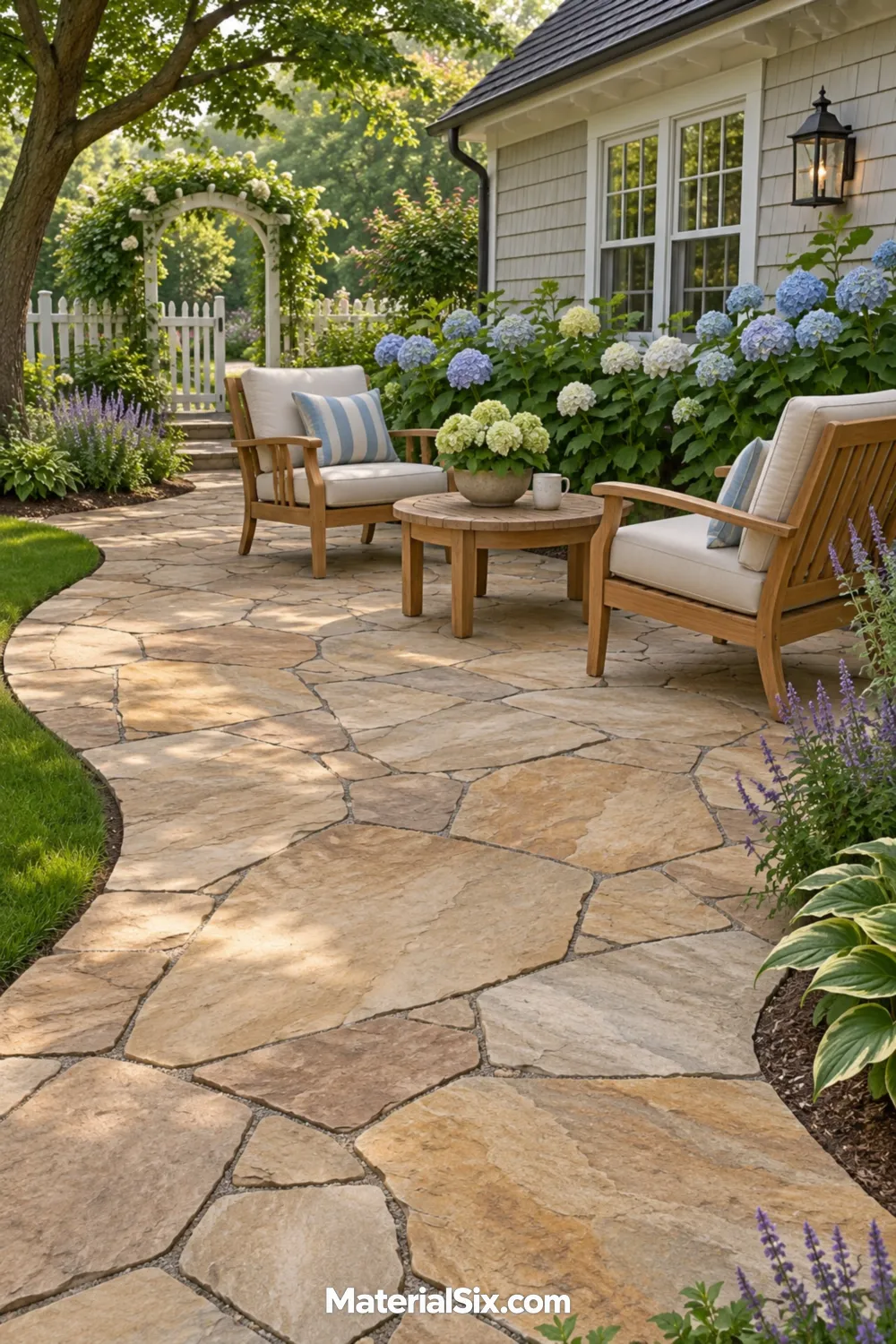
Start with irregular flagstone when you want a patio that feels connected to the garden rather than drawn with a ruler. The varied shapes create movement across the surface, while a gently curved edge can follow an existing planting bed. Keep the furniture arrangement simple so the stone remains the main feature.
Choose a restrained mix of tones that works with your house, then look at several pieces together before committing. Joint width and finish will affect the overall look, so discuss both with your installer. A continuous, stable walking surface matters more than squeezing every unusual stone into the layout.
2. Give Bluestone a Crisp Rectangular Grid
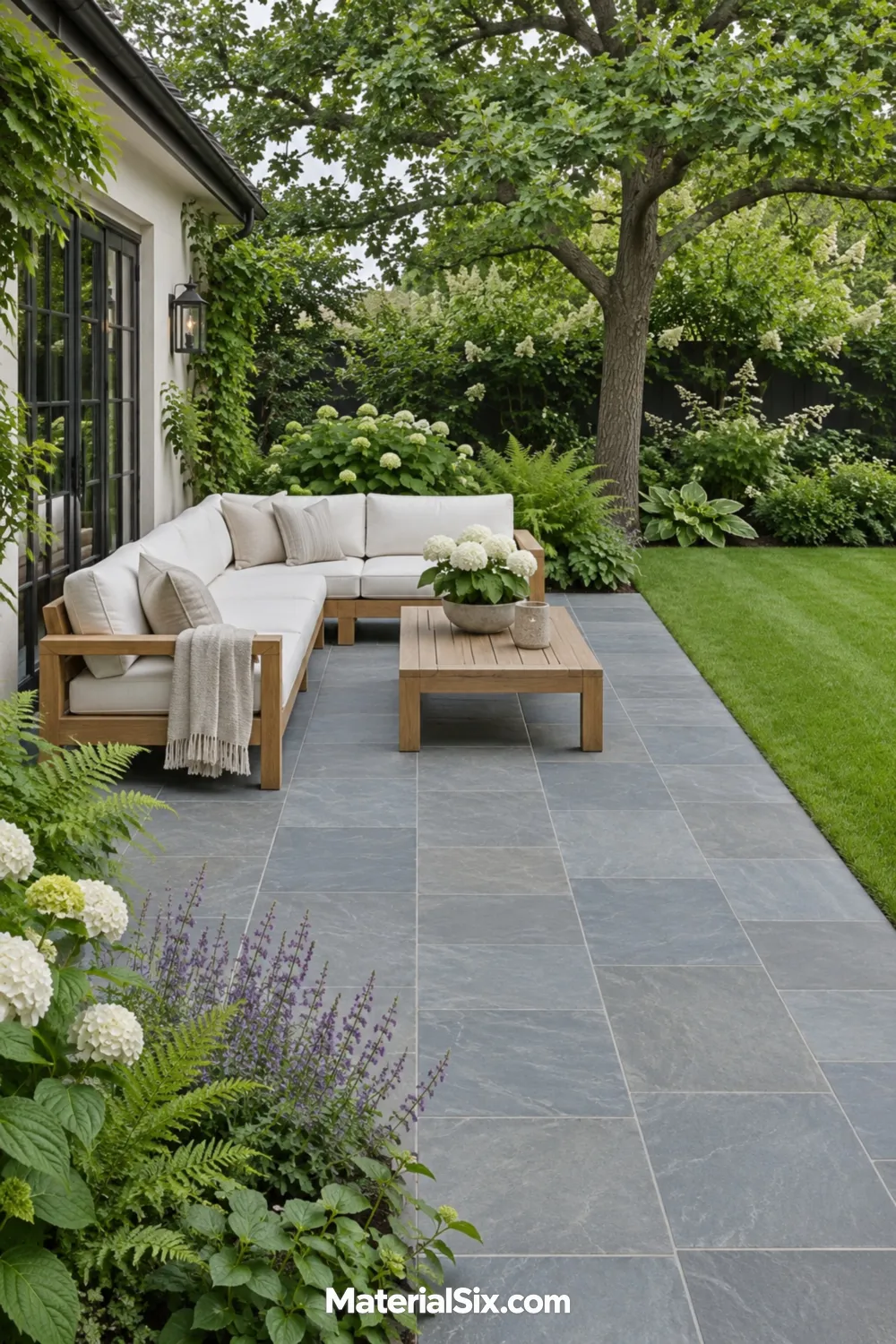
Rectangular bluestone offers a more ordered look without making the backyard feel formal. Arrange the pieces in a repeating grid and let the blue-gray surface become a quiet backdrop for wood furniture, white cushions, and leafy planting. A straight edge beside the lawn makes the geometry especially easy to appreciate.
Before selecting a finish, see a sample outdoors in both shade and daylight. Stone color can read differently beside brick, siding, or painted trim. Plan the seating footprint first, including space behind pulled-out chairs, so your clean-looking grid supports the way you actually use the patio.
3. Warm Up an Outdoor Dining Area with Limestone
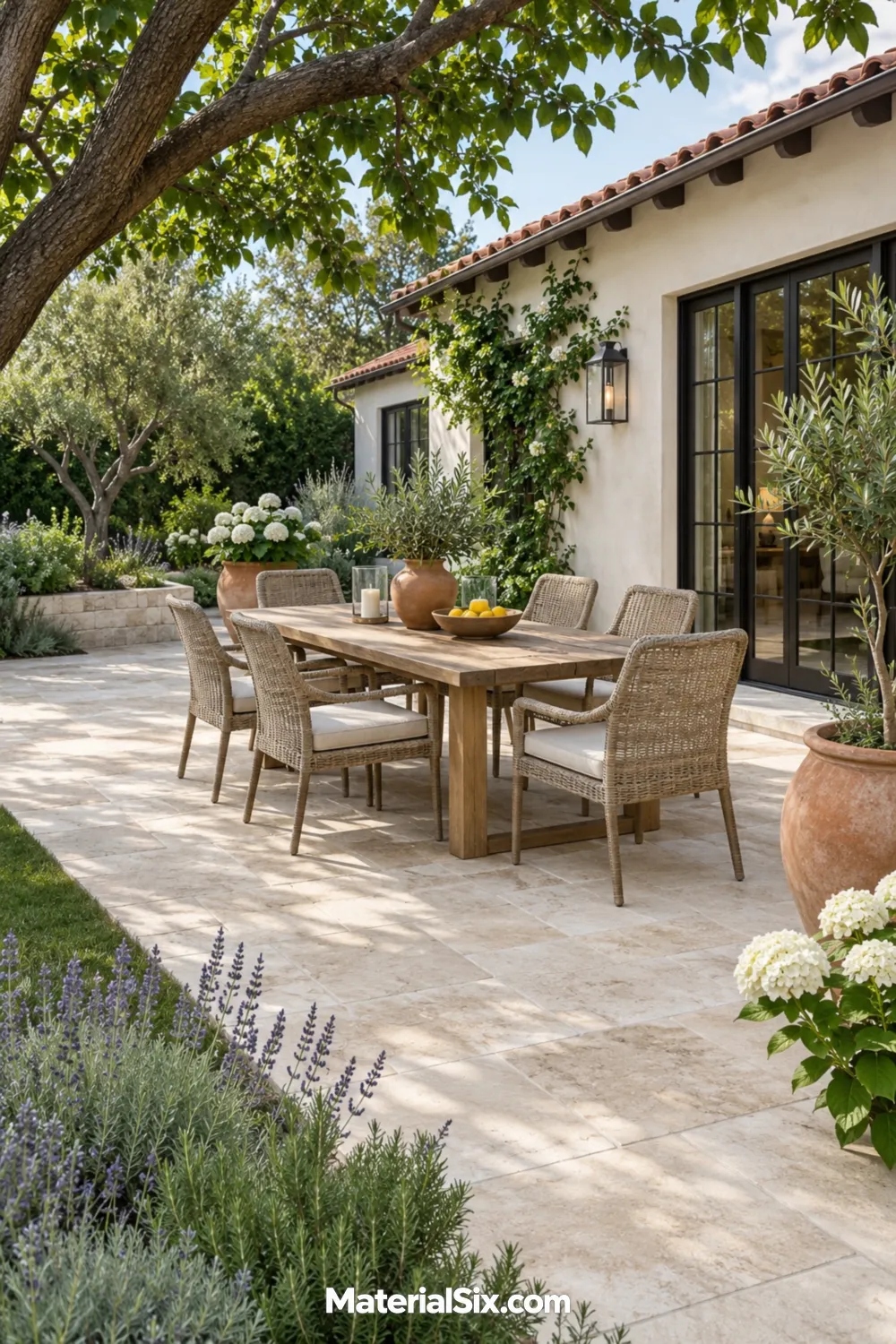
A pale limestone palette can make an outdoor dining area feel calm and welcoming. Pair large rectangular pieces with a substantial wood table and woven chairs, allowing the paving to act as a simple foundation. Warm cream stone works particularly well with earthy planters and soft green foliage.
Keep chair legs and table placement in mind when discussing the paving layout. You want the dining furniture to sit comfortably rather than straddle awkward changes in level. Ask the supplier about the selected stone’s outdoor suitability, finish, and care requirements for your climate. Limestone products vary, so base the decision on the actual material.
4. Create a Moody Lounge with Slate
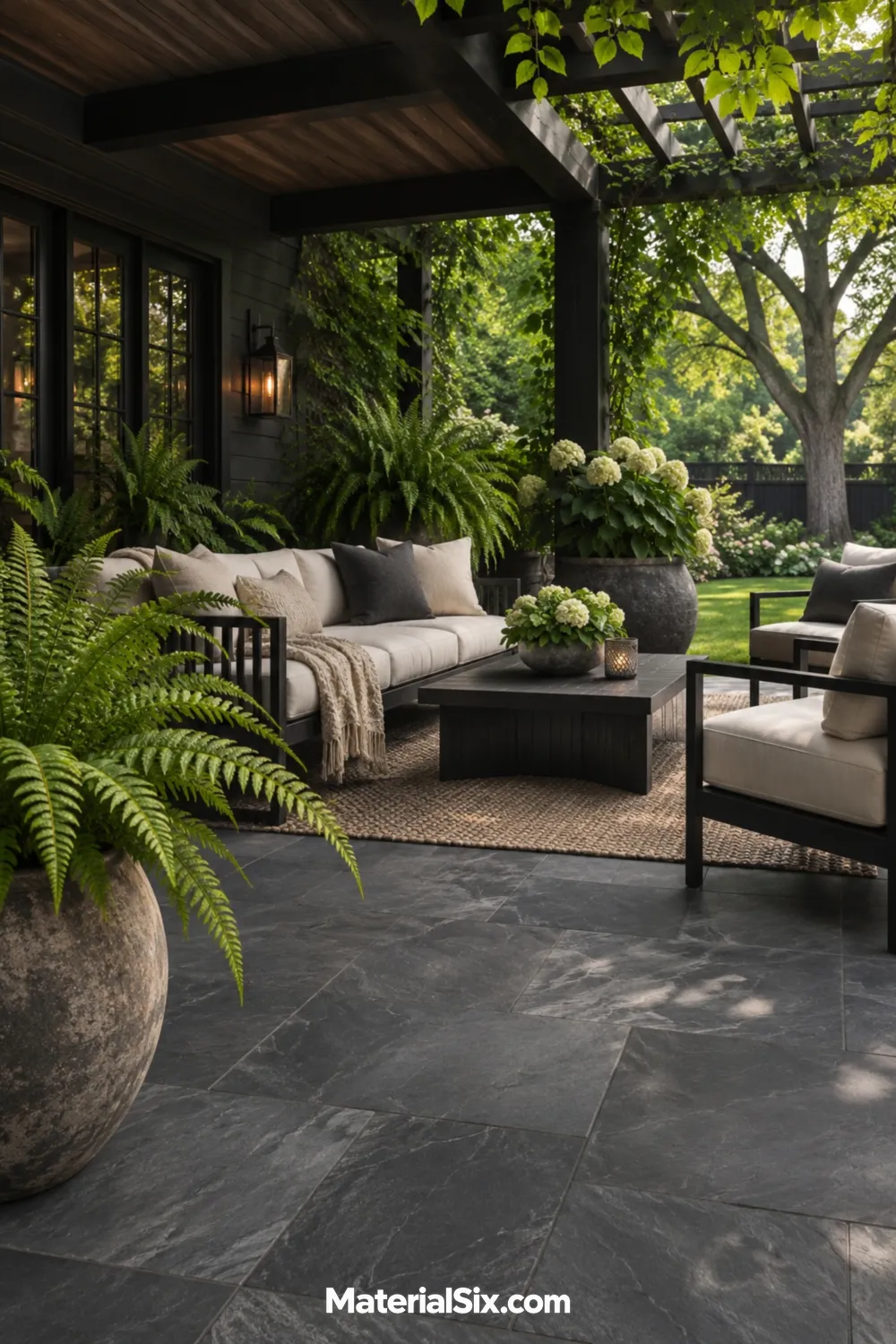
Dark slate gives a lounge area a grounded, intimate character. Use its charcoal and muted blue tones alongside light cushions, simple black furniture, and generous planting. The contrast keeps the scene readable without requiring lots of decorative accessories or a busy paving pattern.
A covered or partly shaded setting can be a useful place to evaluate this look, but choose the material and finish for the actual exposure. Ask about surface texture, outdoor use, and seasonal care instead of assuming all slate performs the same way. Keep the main route clear of side tables, and use a few large planters to frame the seating.
5. Frame a Courtyard with Cobblestone
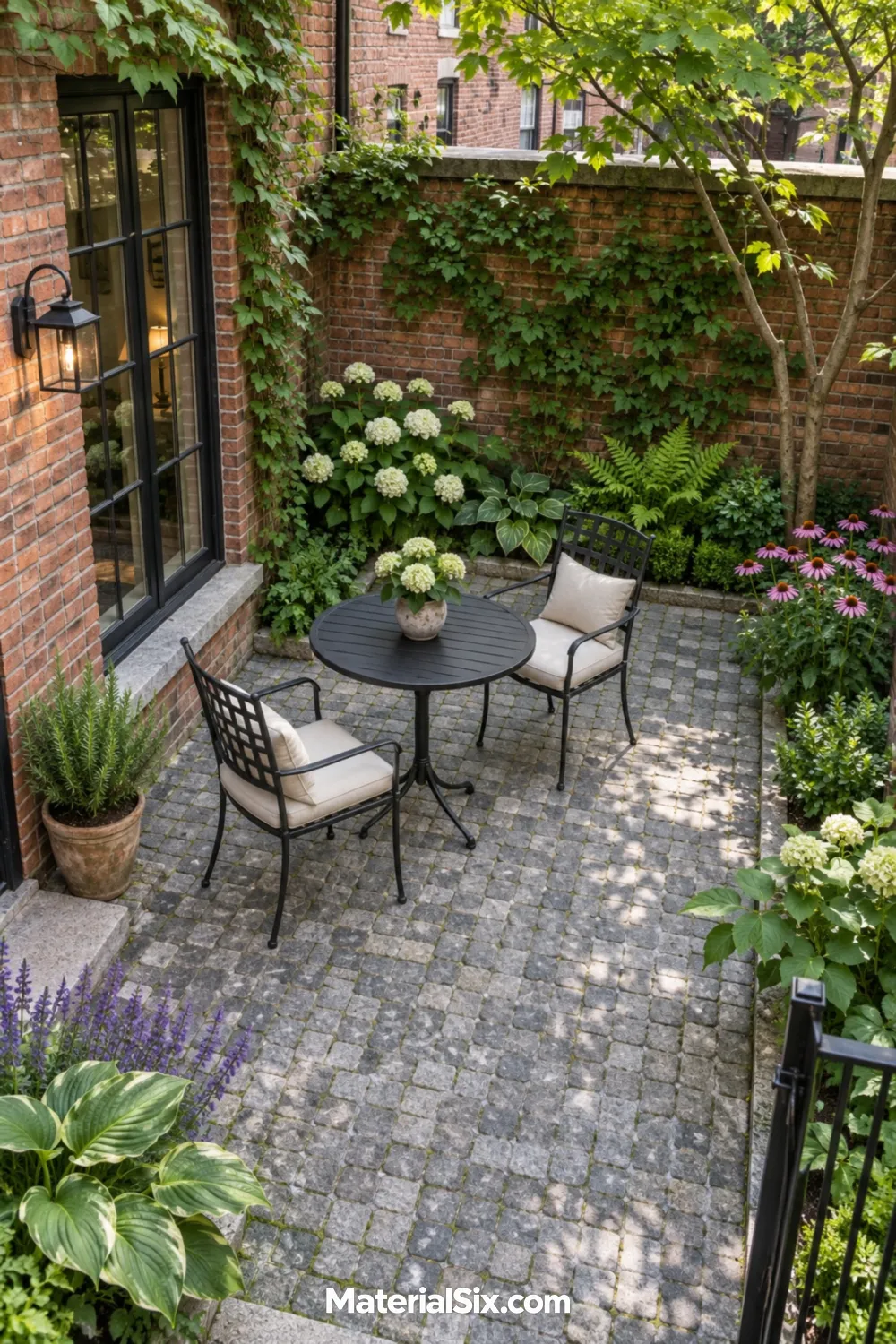
Cobblestone brings texture to a courtyard and suits a more enclosed outdoor room. A compact bistro table, climbing greenery, and a brick or stucco backdrop give the small-format stones a setting that feels intentional. Keep planting concentrated at the edges so the paving pattern remains visible.
Because cobblestone surfaces and products differ, check how the selected finish feels underfoot and how your chairs sit on it. A smoother central furniture area may suit your plans better than strongly rounded pieces. Sketch the entry route as well as the table footprint before settling on the pattern, particularly where doors open into the courtyard.
6. Space Stone Slabs Across a Gravel Terrace
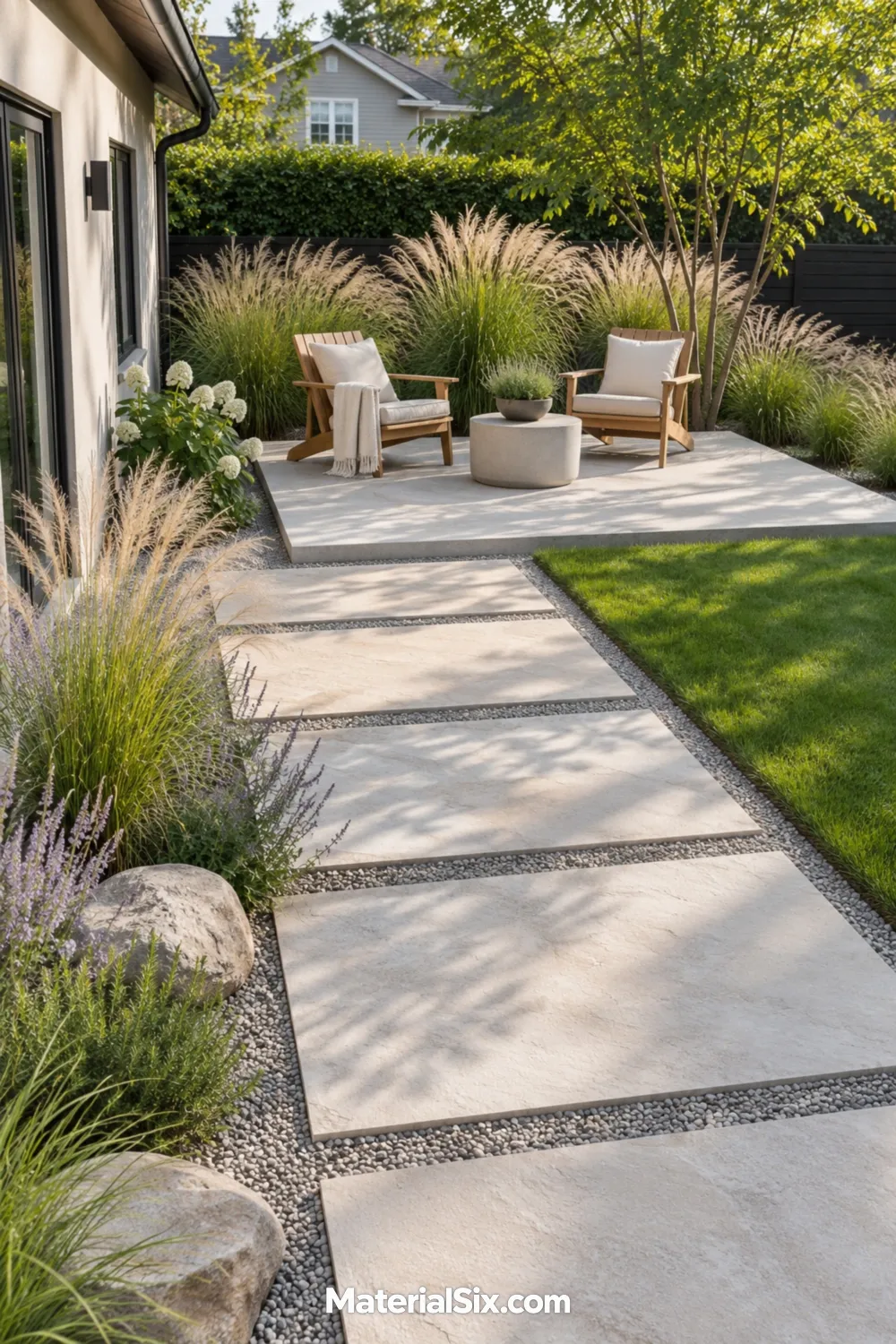
Separate stone slabs surrounded by gravel create a lighter, less continuous-looking terrace. The contrast between solid paving and loose aggregate works well beside grasses and simple wood seating. Make the slabs feel like a deliberate layout rather than leftover stepping stones scattered across the yard.
Put solid stone where you need a steady route and where furniture legs will rest. Gravel is a visual choice here, not a substitute for planning the base, edging, or drainage. Discuss those details locally before installation. This arrangement can also help define a smaller paved footprint if you do not need a fully covered surface across the entire sitting area.
7. Use a Circular Pattern to Gather Seating
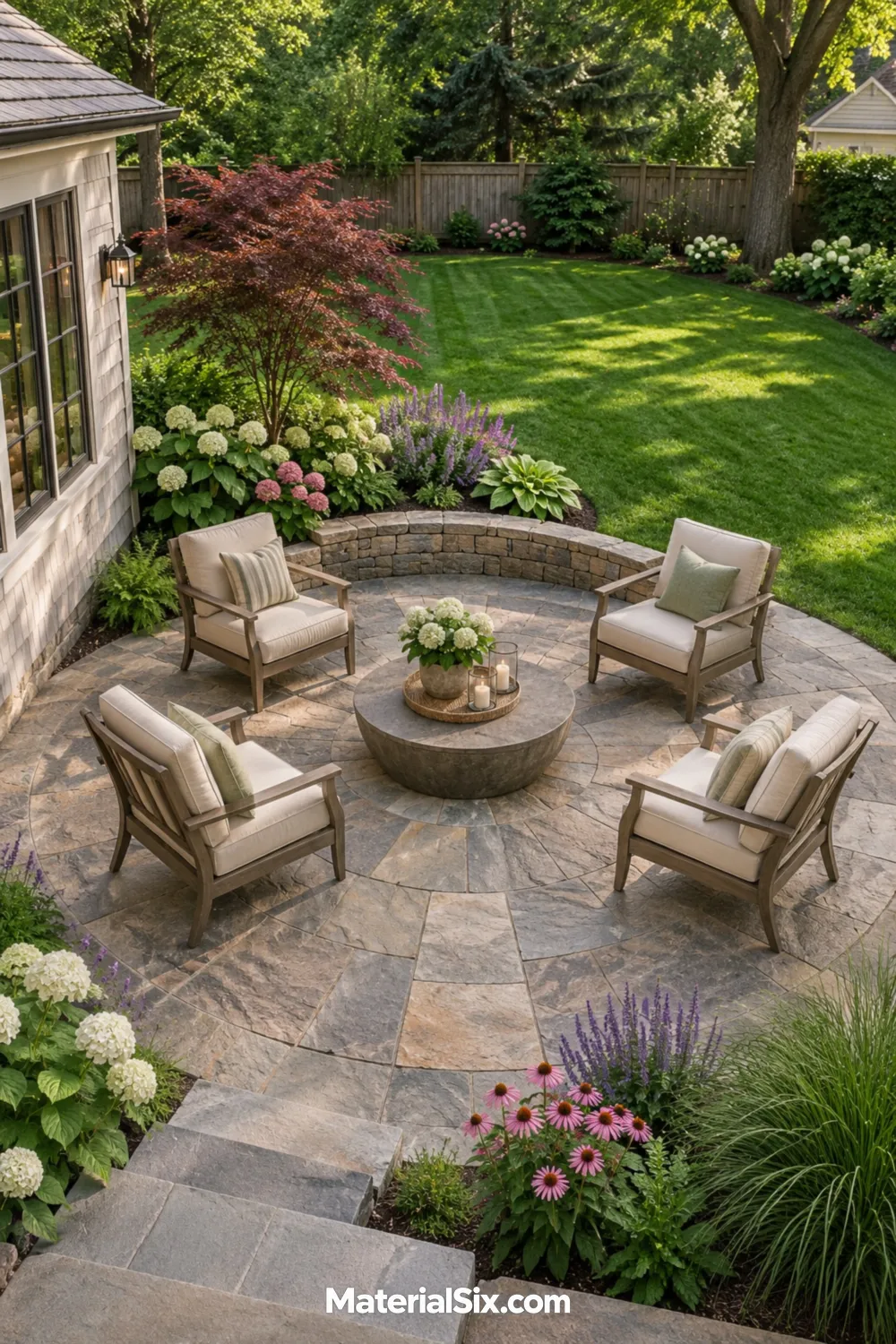
A circular patio naturally suggests a conversation area. Arrange stone in a radial pattern and position a curved sofa or several chairs around a low table. The rounded footprint can soften a yard dominated by straight fences, rectangular lawn panels, and the flat back wall of a house.
Decide where the main entrance to the circle will be before positioning furniture. Leave a generous opening instead of making visitors weave between chair backs. You can repeat the curve in the planting bed or lawn edge, but avoid adding too many competing circles. One clearly defined shape usually gives the patio enough character on its own.
8. Define Two Garden Levels with Stone Terraces
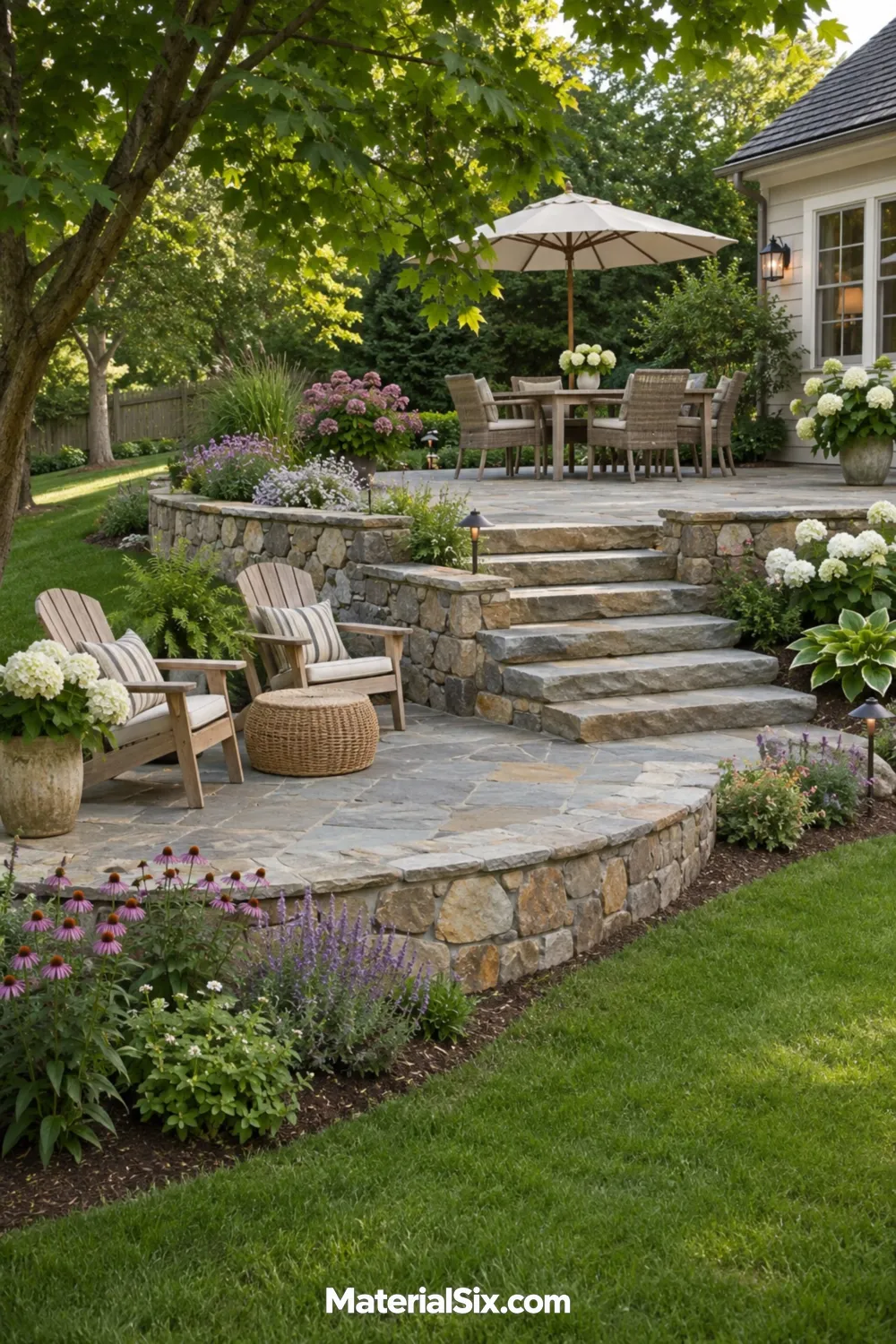
On a sloping site, two connected stone terraces can give dining and lounging their own places. Repeating the same paving material helps the levels read as one design, while a broad stair connection makes the change in elevation visually clear. Planting along the sides can soften the transition.
Treat this as a layout idea to discuss with a qualified local professional. Steps, retaining structures, drainage, and any required guards need site-specific planning. Avoid squeezing furniture close to a drop or stair opening. Establish the usable footprint of each level first, then decide whether a dining table or a smaller seating arrangement belongs there.
9. Turn a Side Yard into a Stone Sitting Nook
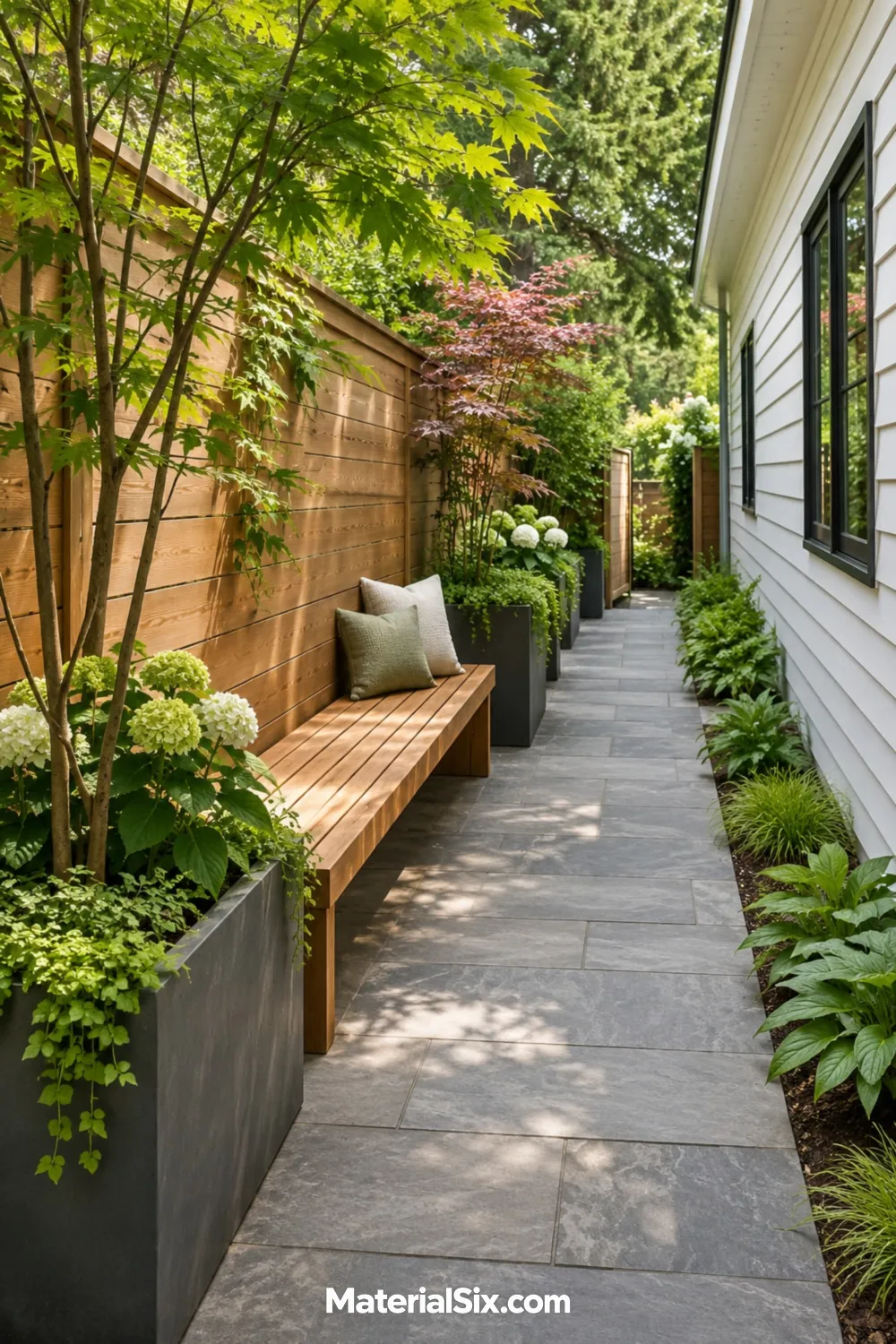
A side yard can become a useful sitting area when its paving and furniture match the narrow footprint. Run rectangular stone pieces across the width to give the ground a clear rhythm, then place a slim bench along one boundary. A few tall plants can add softness without filling the walking route.
Measure the passage you need to preserve before choosing furniture. Gates, doors, utilities, and access for maintenance should remain usable. Rather than filling every corner, leave one uncluttered length of paving that lets the space breathe. A small side table is often enough for the nook to feel ready for a morning break.
10. Bring Planting Pockets into the Paving
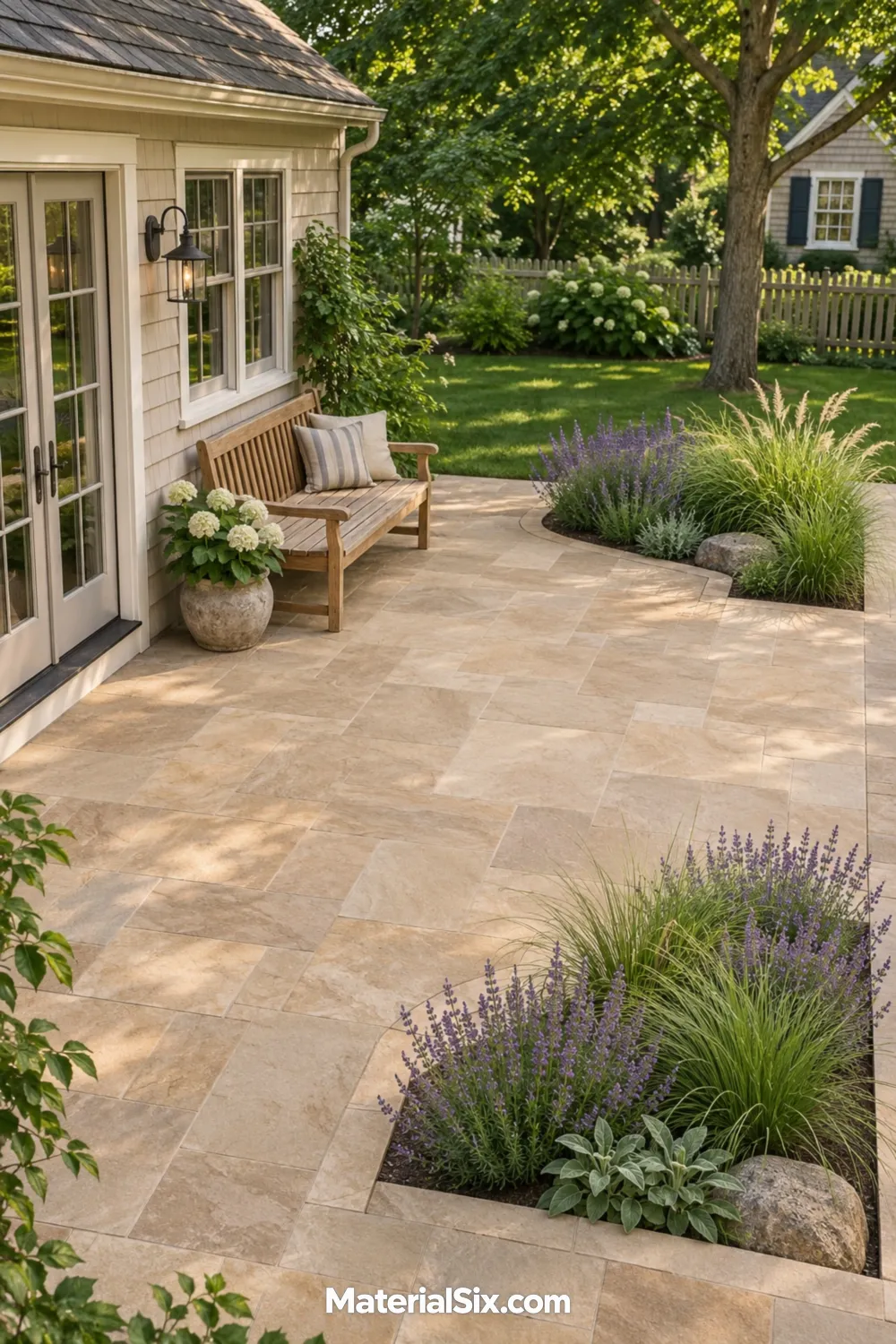
Leaving a few planned planting pockets within a stone patio can connect the sitting area to the garden. Use one or two generous openings near the perimeter rather than tiny gaps scattered through the main walking zone. The result looks purposeful and keeps the furniture arrangement easy to understand.
Select plants suited to your climate, light, and available soil space. Keep spreading growth away from chair legs and frequently used routes. These openings also deserve the same drainage planning as the rest of the patio. They add greenery, but their presence alone does not establish that the entire paved area is a permeable installation.
11. Carry Stone Beneath a Covered Porch
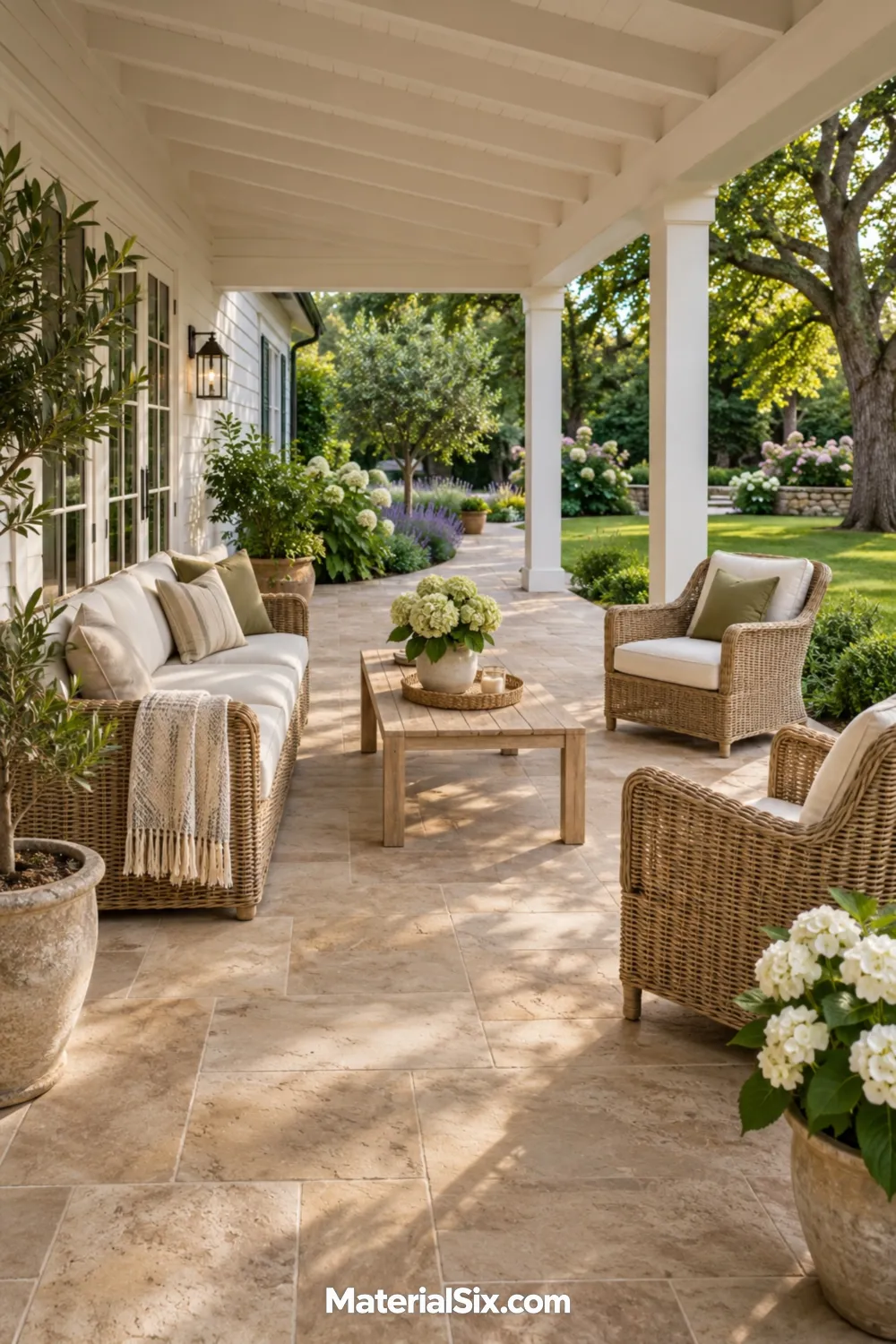
Stone paving beneath a covered porch can make the transition into the yard feel more connected. Repeat the same material just beyond the roofline, then arrange a sofa and two chairs to mark the sheltered outdoor room. The roof structure provides a clear setting for larger, simpler furniture.
Look closely at the threshold, nearby siding, and any changes in paving height during planning. The finished surface and drainage should be coordinated with the house rather than decided after the furniture arrives. Bring a sample beside the exterior wall to check the color relationship. Warm stone can soften white siding, while gray tones can echo metal roof details.
12. Set an Outdoor Kitchen on a Unified Stone Floor
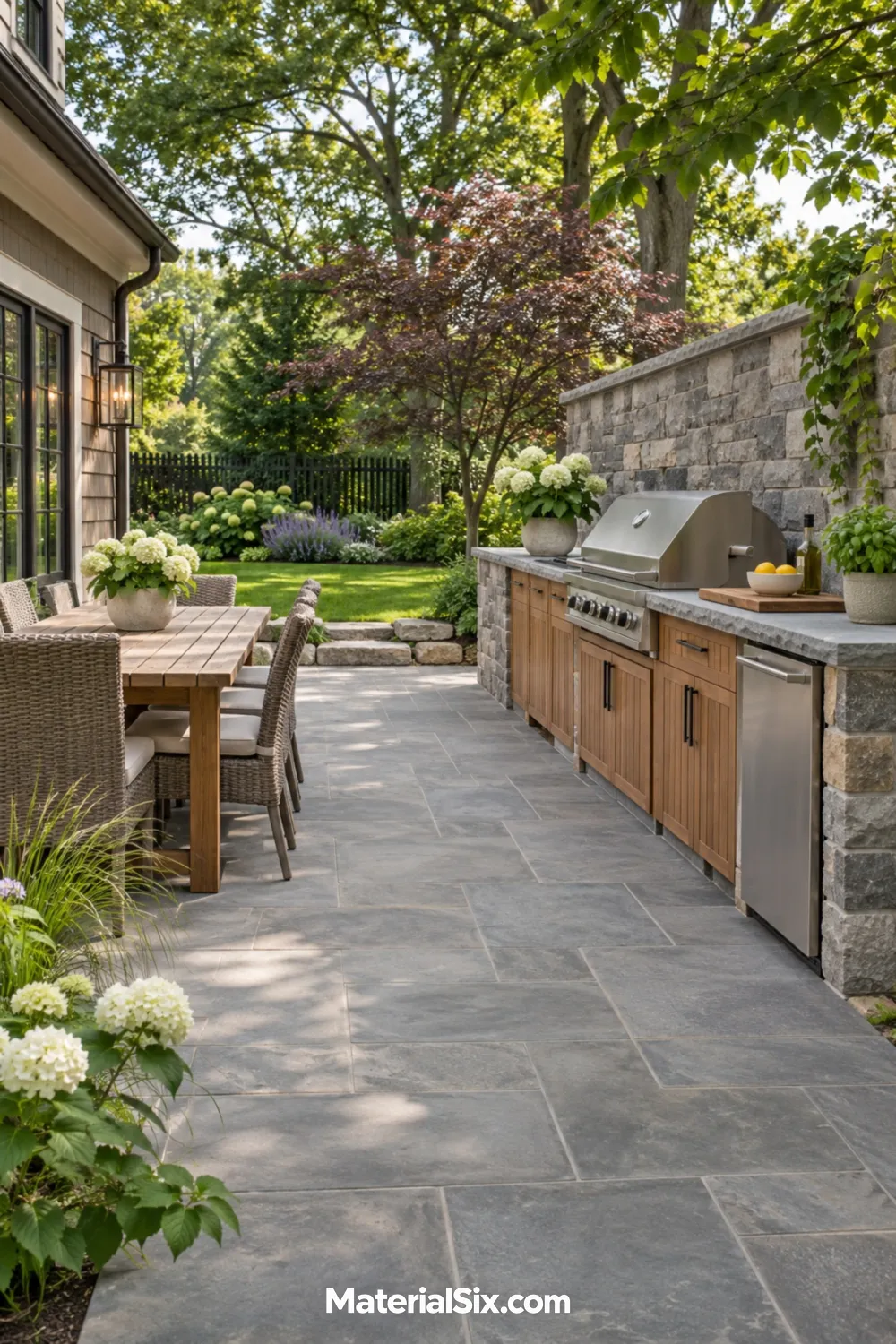
An outdoor kitchen feels more settled when its prep area and nearby dining zone share one stone floor. Use a straightforward paving pattern so cabinetry, countertops, and the grill do not compete with a busy surface. A change in furniture placement can define the dining area without introducing another flooring material.
Map the working route before choosing the final footprint. Allow room for open cabinet doors, people passing, and seating, then coordinate the appliance layout and clearances with manufacturer instructions and local requirements. Treat the image as inspiration for the overall arrangement. Fuel, electrical, and plumbing work require their own proper planning and installation.
13. Build a Conversation Area Around a Fire Pit
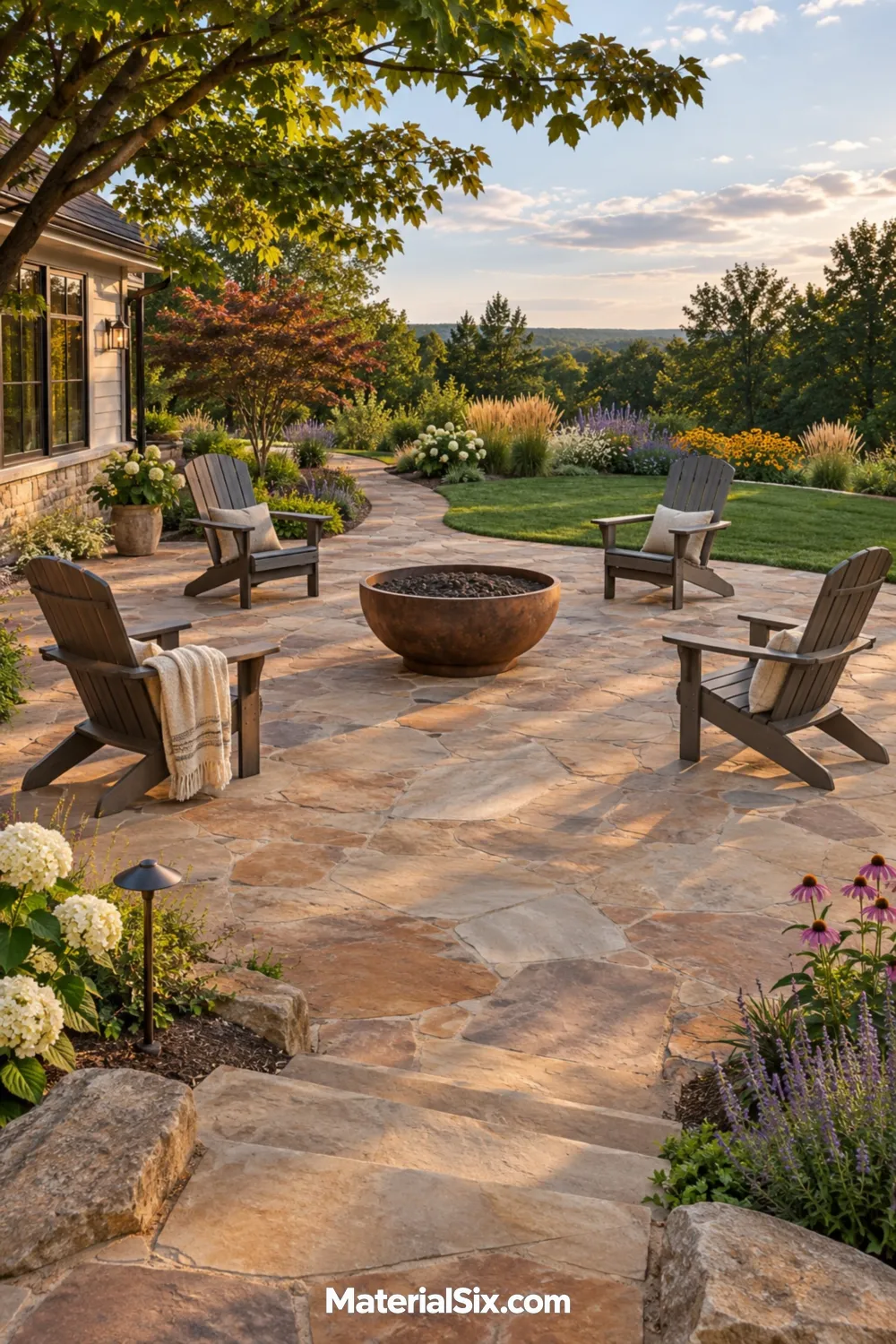
A stone patio can give a fire pit area a clear visual boundary. Arrange chairs in a loose arc and keep the paving visible between them so the setting feels open. Earthy flagstone and simple wood seating offer a relaxed look without needing a large collection of accessories.
Choose the fire feature before finalizing the patio plan, since its instructions and local rules will shape placement, clearances, and nearby materials. Do not rely on a decorative rendering for those details. Leave a straightforward route into the seating area, and avoid placing furniture so tightly that people have to step around the fire feature to reach a chair.
14. Make a Small Fountain the Patio Focal Point
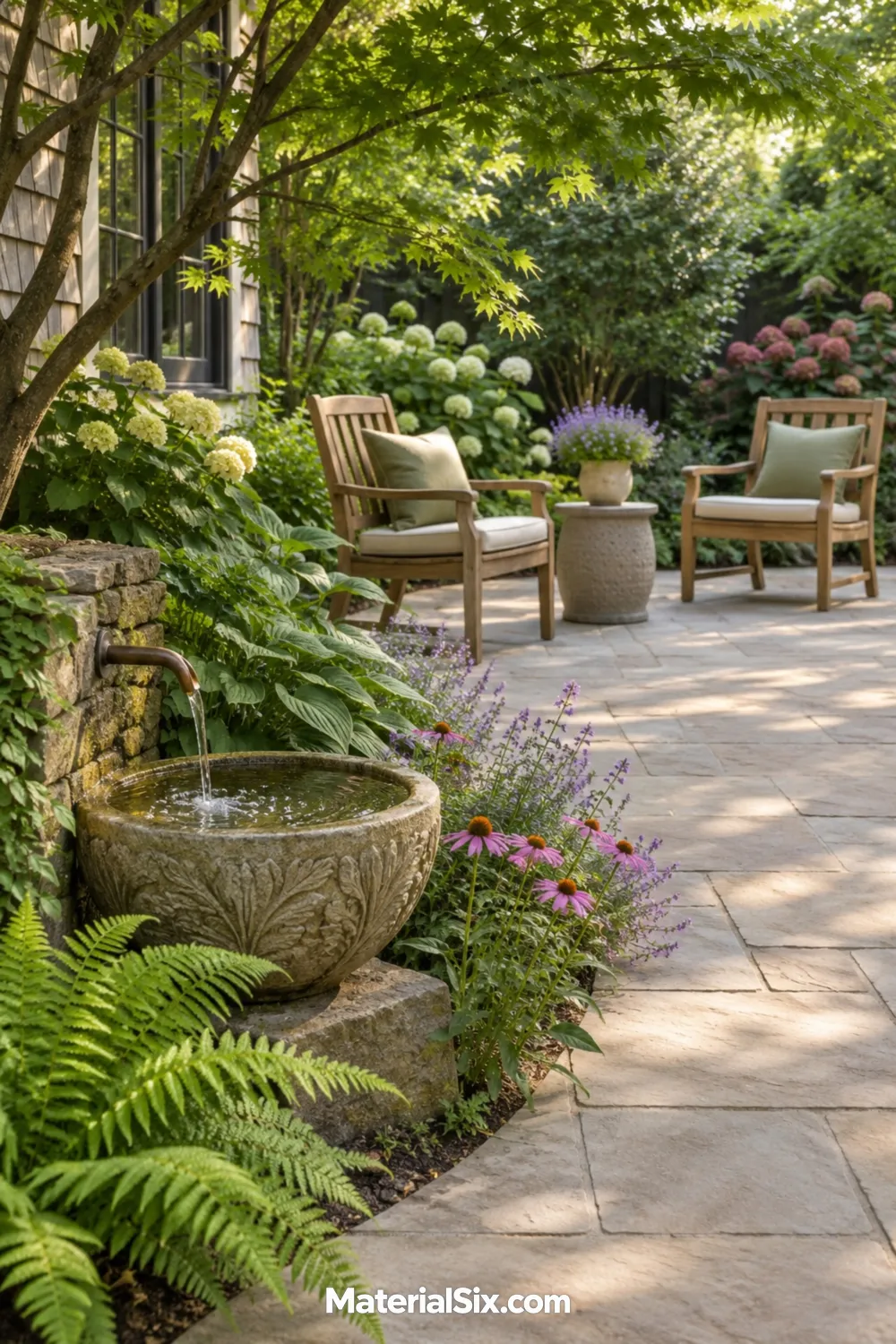
A small fountain can give a stone patio a focal point beyond the furniture. Position it toward a planted edge where you can see it from the main seats, then keep the surrounding materials restrained. Repeating a similar stone tone in the fountain and paving helps the arrangement feel connected.
Think about access for cleaning and the practical route for any required power before choosing its location. Leave comfortable walking space and keep splashing away from the main seating surface where possible. You do not need a large fountain for this approach; a compact basin can supply enough visual interest while leaving the patio open for everyday use.
15. Shape the Edge with a Stone Seat Wall
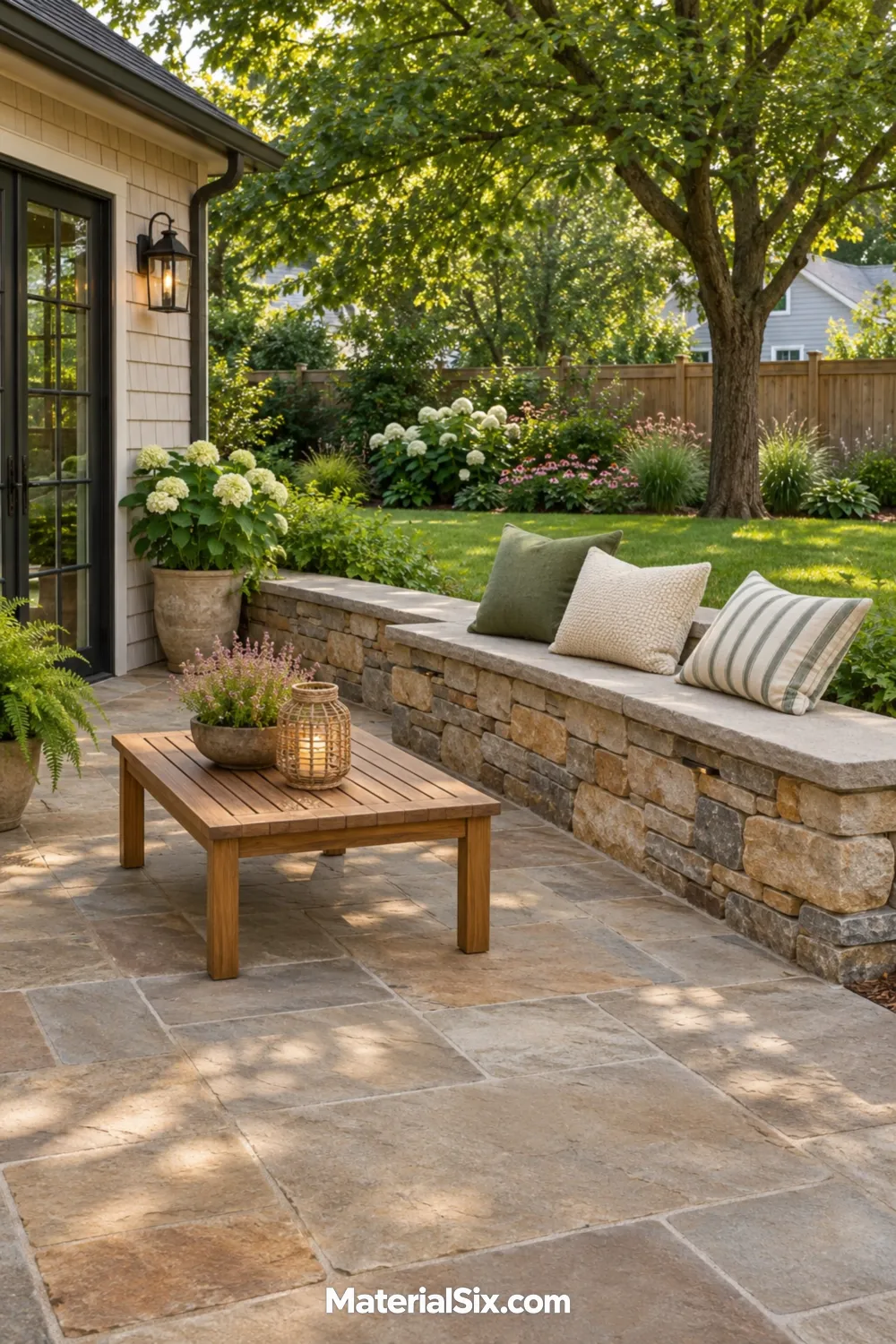
A low stone seat wall gives a patio a defined edge and an additional place to perch. Let it follow one side of the paving, with a few cushions to make the purpose clear. The rest of the perimeter can remain open to the lawn or planting, avoiding an enclosed feeling.
Discuss a comfortable seating height, cap depth, finish, and wall design with your installer. A wall used to retain soil needs planning appropriate to that role, even if it also looks like seating. Keep the main furniture group far enough away that both the wall and the chairs remain usable rather than competing for the same strip of space.
16. Add a Pebble Mosaic as a Small Accent
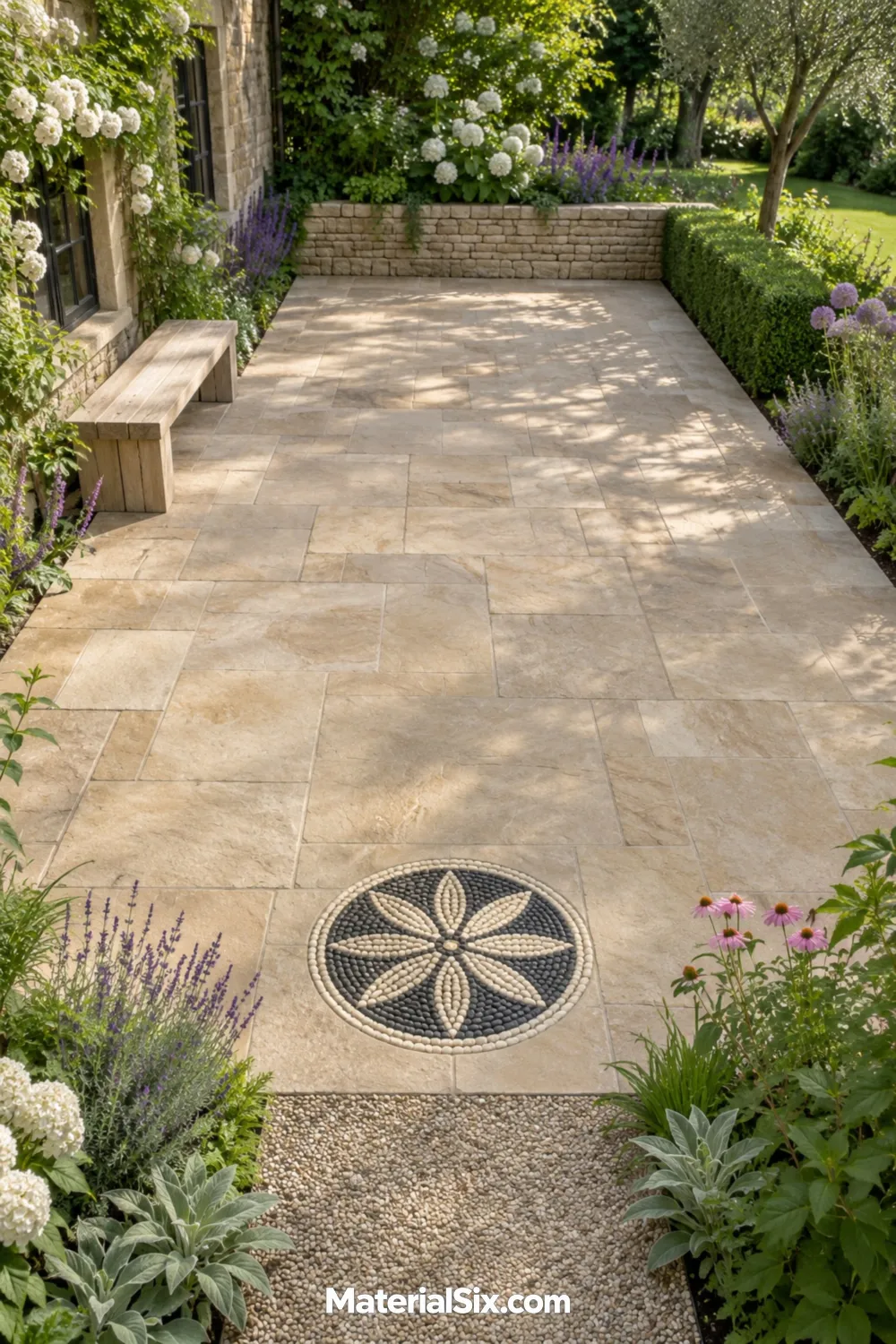
A pebble mosaic can add a crafted detail to an otherwise simple stone patio. Keep the accent limited to a defined inset, such as a small medallion near the garden entrance, and let larger stone pieces handle the surrounding area. That contrast gives the detailed pattern room to stand out.
Choose the position with furniture and foot traffic in mind. A mosaic hidden beneath a dining table will rarely be seen, while a highly textured feature may not suit the main walking route. Discuss the finished level and surface with the installer. A restrained pattern often works better than repeating decorative motifs across the entire patio.
17. Mix Reclaimed Stone Sizes for a Collected Look
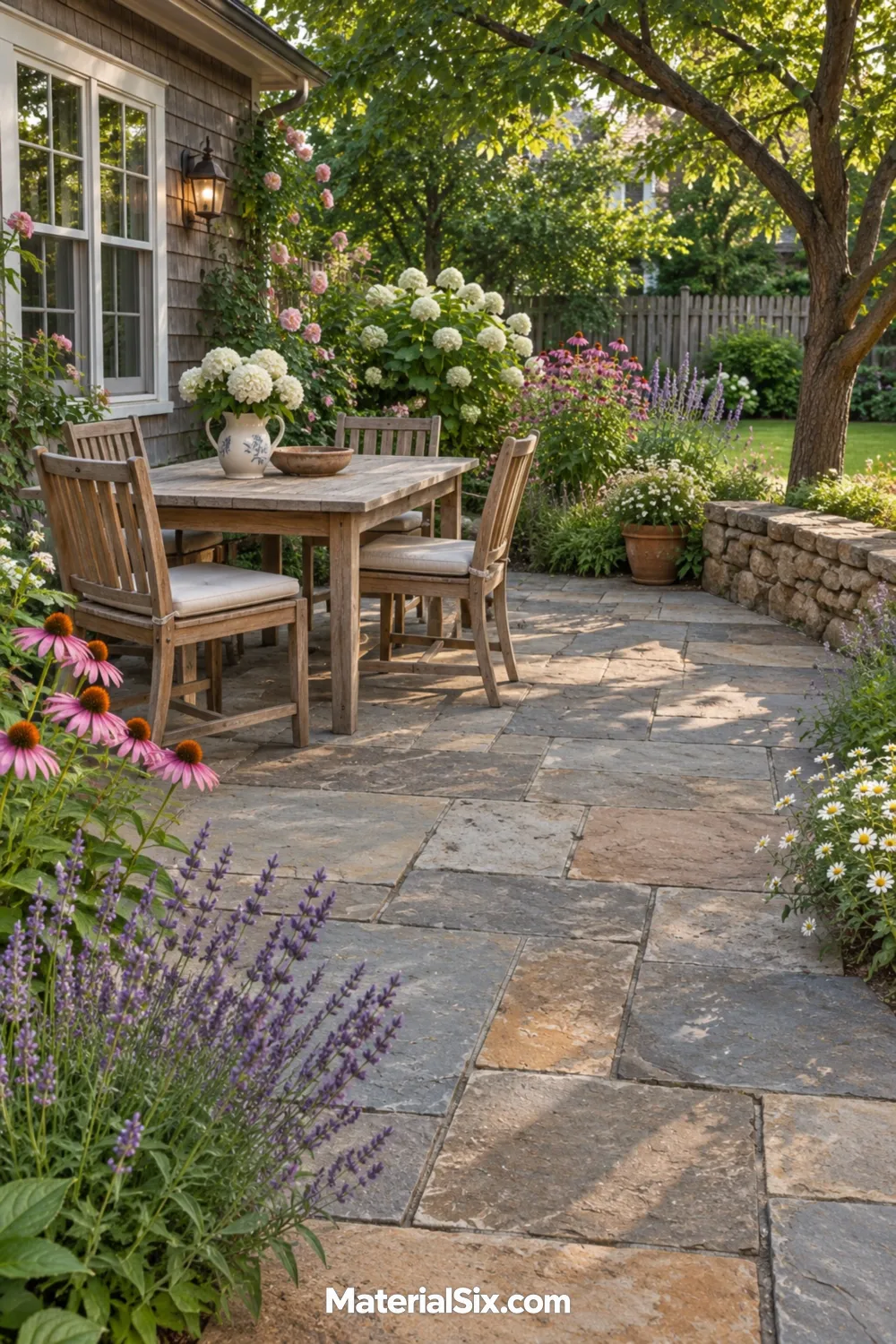
Reclaimed stone can give a patio a collected appearance through subtle differences in size, tone, and weathering. Keep the palette close enough that the pieces feel related, then use simple furniture and generous planting to finish the setting. The interest comes from the material rather than a complicated layout.
Look beyond the surface color when sourcing pieces. Thickness, condition, quantity, and suitability for the intended installation all deserve attention. Ask your installer how the available stone can form a stable, coherent surface before buying an assortment. This approach suits readers who enjoy irregular character and are willing to plan around the actual material they find.
Choose Your Starting Point
Choose the stone patio ideas that match how you spend time outside, then compare their materials and layouts against your actual yard. A clear furniture plan and a thoughtful connection to the house and garden are useful starting points. Save your favorite examples, gather real stone samples, and discuss site-specific installation details before moving ahead.