
A porch can have white siding, black hardware, and a pair of chairs yet still feel a little unfinished. Often, what is missing is the comfortable part: a cushion you actually want to lean into, greenery that softens the doorway, or warm wood that balances all those crisp edges. Modern farmhouse style works especially well when those useful, welcoming details lead the design.
You do not need a wraparound porch or a complete exterior renovation to get there. A small stoop might only need a softer door color and a thoughtfully sized mat. A deeper covered porch can support a conversation corner, a swing, or a spot for morning coffee. The goal is to make the entrance feel connected to your home and comfortable to use.
These 25 modern farmhouse front porch ideas offer different ways to build that feeling, with approachable combinations of natural textures, restrained patterns, practical furniture, and greenery. Choose the ideas that fit your porch’s actual footprint, light, and exposure.
1. Natural Wood Rockers with Cream Cushions
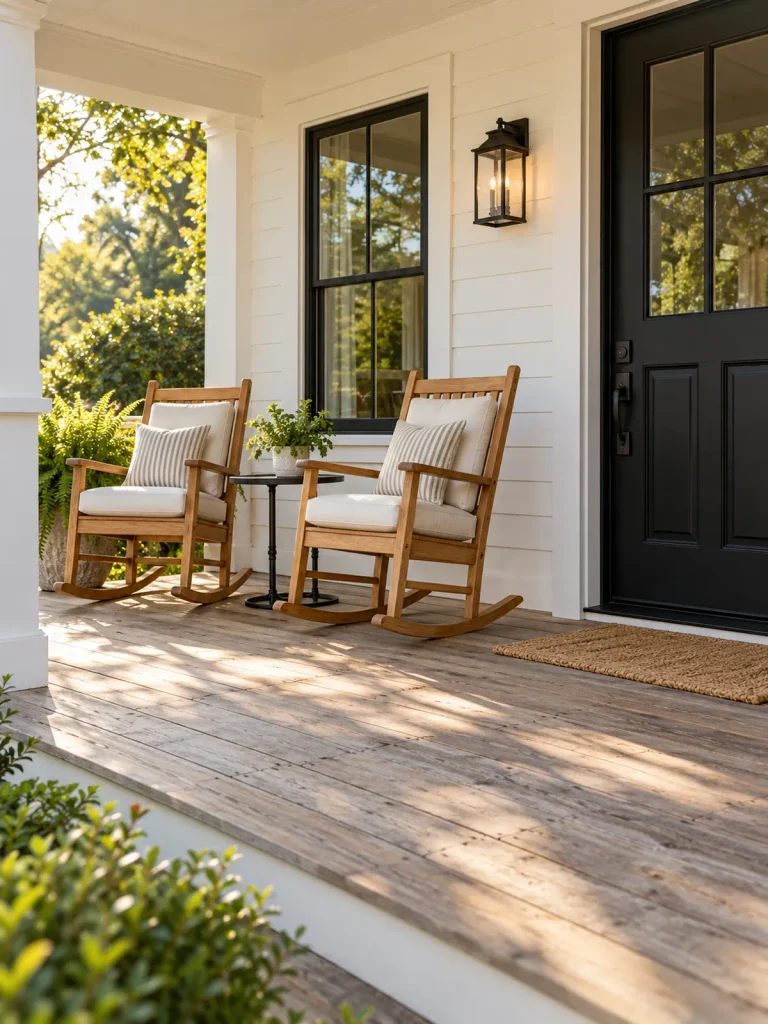
Two natural wood rocking chairs bring warmth to white siding without making the porch feel crowded with decoration. Cream seat cushions soften the wood, while a small black table gives the arrangement a clear center. The combination feels familiar enough for a farmhouse but simple enough for a newer home.
Place the chairs where they can rock fully without hitting siding, railings, or passing feet. On a narrower porch, angle them slightly toward each other rather than directly toward the street. Choose furniture intended for outdoor use and follow its finish-care guidance. A nearby fern adds softness without competing with the seating.
2. A Sage Green Door Against Crisp White Siding
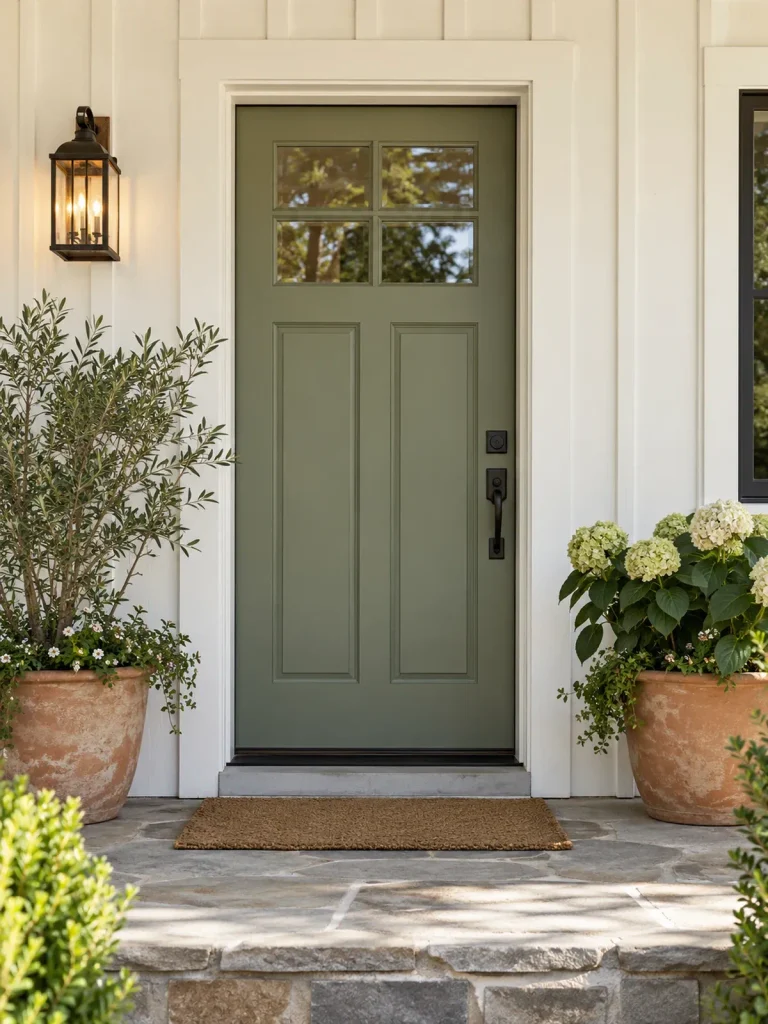
Muted sage gives a farmhouse entry some color while staying easy to combine with wood, black metal, and terracotta. Against white siding, the door becomes a gentle focal point rather than a bold statement. Two simple planted pots are enough to finish the scene.
Try paint samples on the actual door before committing, since a covered entry can make green look grayer than it does in sunlight. Use an exterior coating suitable for the door material and prepare the surface according to the manufacturer’s directions. Keep nearby accessories restrained so the color remains visible. This approach works especially well on a small stoop with little room for furniture.
3. A Porch Swing with Soft Ticking Stripes
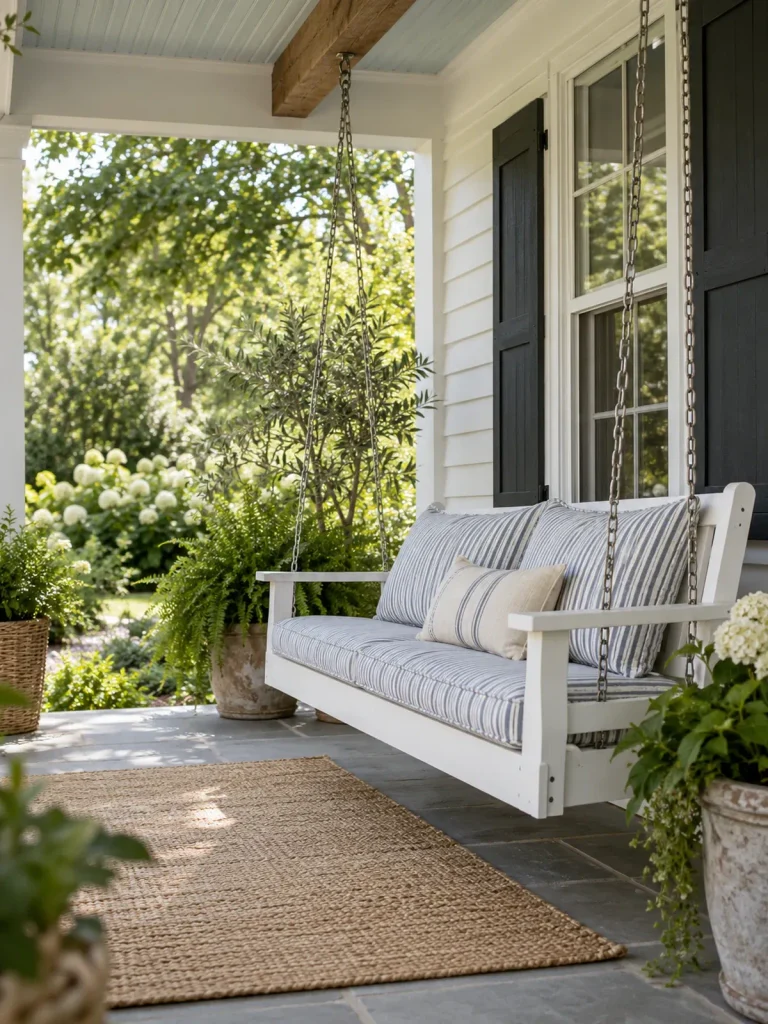
A white porch swing with blue-gray ticking stripes makes a covered porch feel like somewhere to pause. The narrow pattern adds character without the visual weight of a large print, and the pale frame keeps the seating light against white siding. Leave the surrounding floor relatively open so the swing has room to be enjoyed.
This is a choice for a porch with enough depth and a verified support structure. Have a qualified installer assess the mounting location, hardware, and required clearances; decorative ceiling boards are not adequate support. Outdoor cushions with removable covers make seasonal cleaning easier. Keep the swing’s travel area separate from the route to the door.
4. A Compact Bench Beside the Door
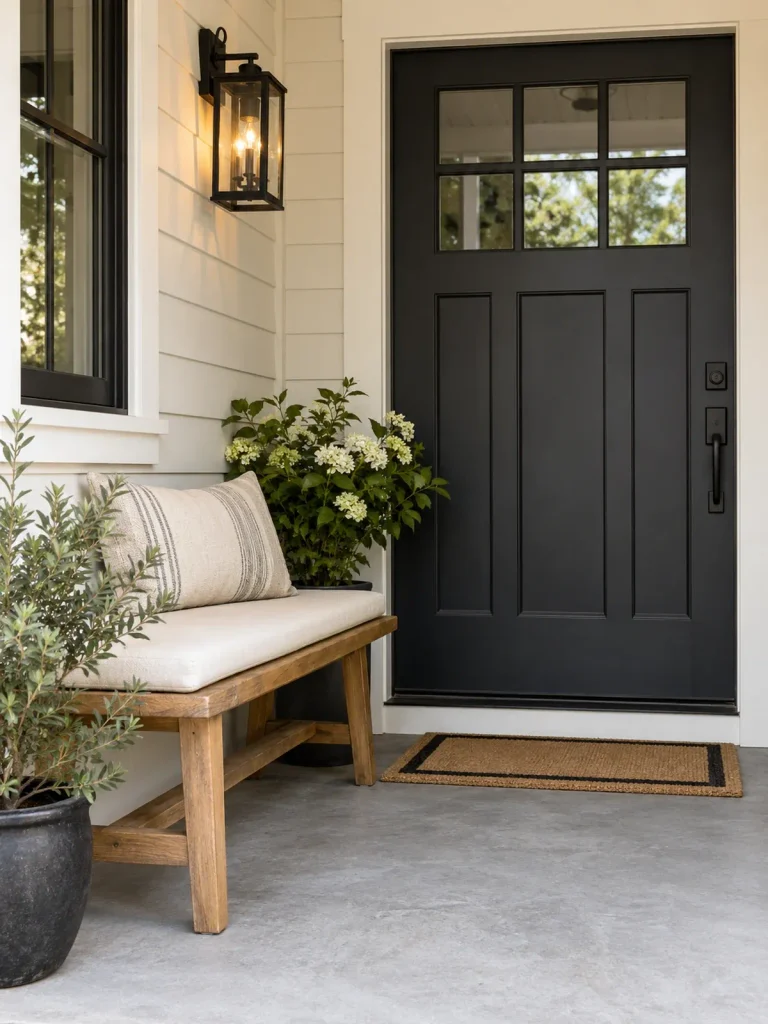
A slim wood bench gives a small porch a place to sit without taking on the footprint of two armchairs. Topped with a single cream cushion, it looks comfortable but visually quiet. A dark planter nearby ties the arrangement to black door hardware or window trim.
Measure the usable wall rather than the overall porch width. The bench needs to stay outside the door swing and leave a comfortable passage for people carrying groceries or bags. Choose a depth that allows someone to sit normally without extending into that route. Where rain blows under the roof, bring the cushion inside between uses and avoid a bench finish intended only for interiors.
5. Gingham and Coir at the Threshold
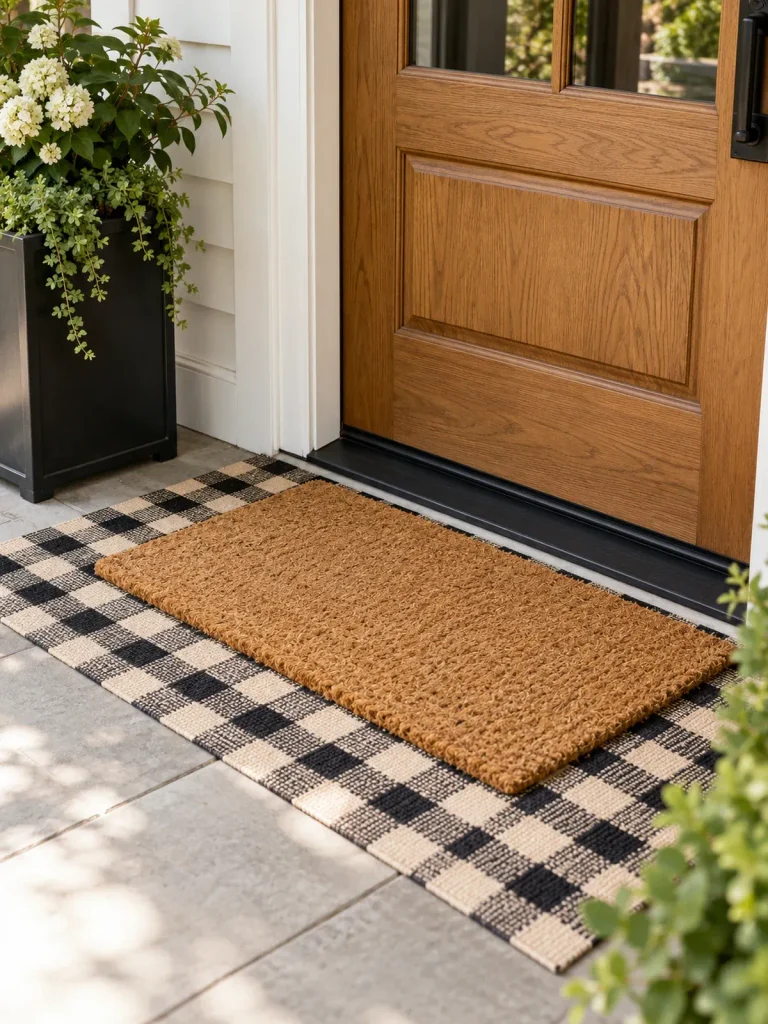
Black-and-cream gingham brings a small dose of farmhouse pattern right to the entrance. A plain coir doormat layered over it adds texture and gives shoes a separate wiping surface. Keeping both pieces free of lettering lets the materials carry the design.
This detail works best on a broad, level landing where the rugs can lie completely flat. Check that the door clears both layers and that neither edge curls into the walking route. Use a suitable nonslip backing for your floor and exposure, following the rug maker’s guidance. In a narrow or rain-soaked entry, choose one low-profile outdoor mat instead of layering two pieces.
6. Black Gooseneck Sconces for a Warm Evening Glow
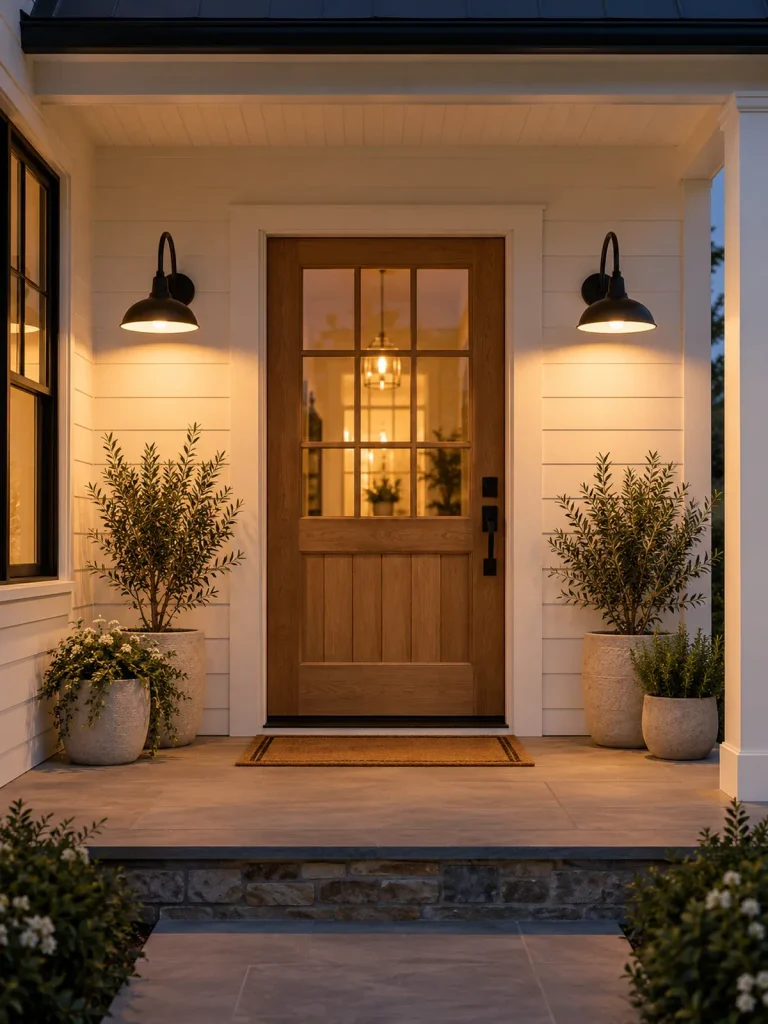
Black gooseneck sconces add a familiar farmhouse outline while giving the doorway definition after sunset. Paired with white siding and a natural wood door, they create contrast without needing extra decorative objects. Warm light makes the entry feel inviting and helps the wood retain its rich tone at dusk.
Choose exterior fixtures rated for the actual location, including any exposure to wind-driven rain. A licensed electrician can check placement, wiring, and local requirements if fixtures are being added or moved. Look for a shielded light source rather than a glaring exposed bulb. Consider how the light falls on the landing and steps as well as how the fixture looks from the street.
7. Matching Olive Trees in Simple Pots
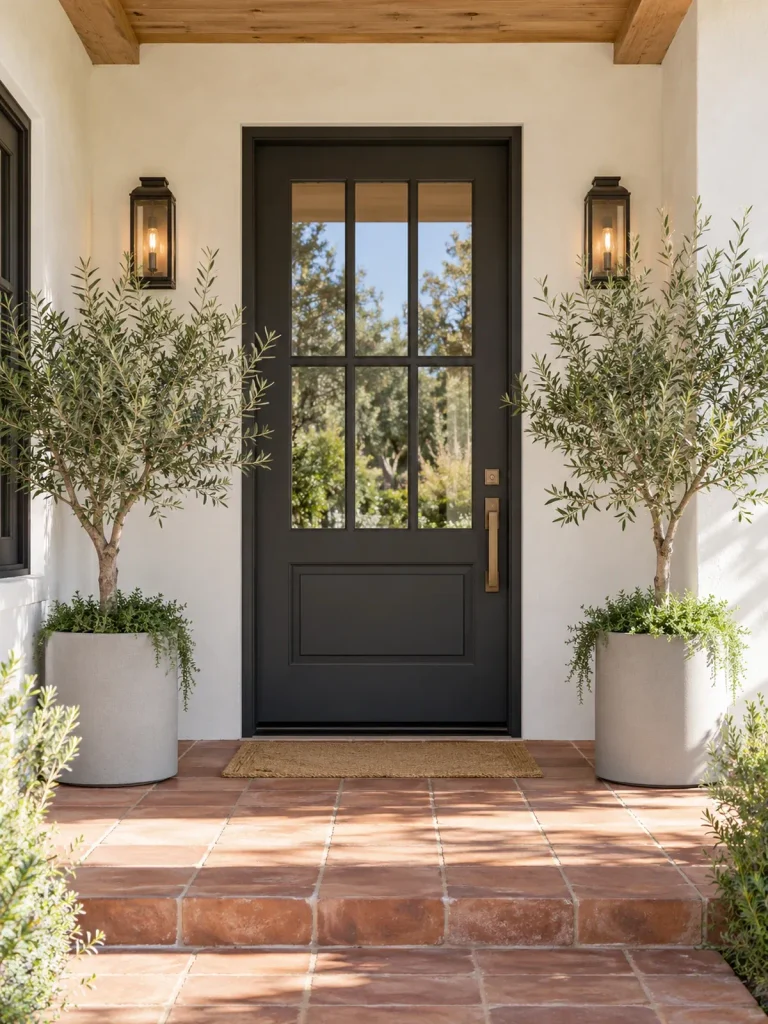
Two olive trees in pale, simple pots frame an entrance with airy greenery rather than a dense wall of foliage. Their silvery leaves sit comfortably beside white walls, warm wood, and charcoal trim. Leaving space around the trunks keeps the arrangement feeling fresh and uncluttered.
Reserve living olive trees for a location with the sun and climate they need. Container plants may require protected overwintering in colder regions, and a shaded porch may call for a different species. Use pots with drainage and keep water from collecting against the house. Position both containers beyond the door swing, allowing for future growth rather than sizing the arrangement around freshly pruned plants.
8. A Cedar Slat Screen Around the Seating Corner
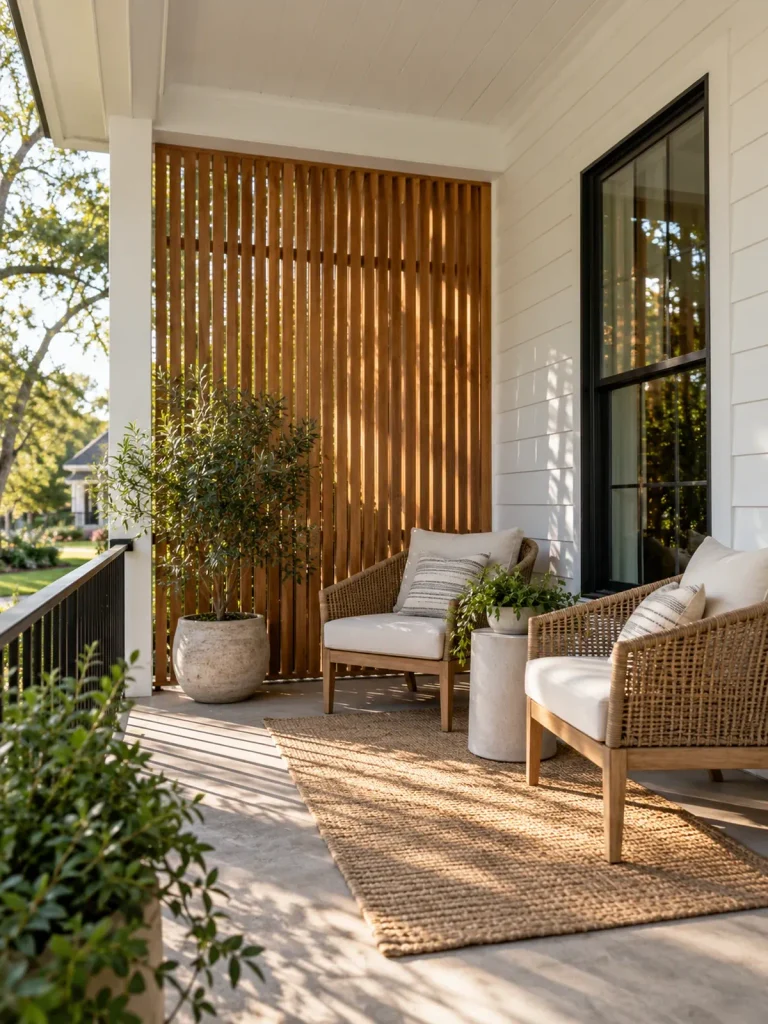
A cedar slat screen gives the end of a front porch a more enclosed, comfortable feeling without hiding the entire house. The warm vertical boards balance white siding and create a defined backdrop for two woven chairs. Small gaps keep the screen visually lighter than a solid wall.
Use this idea along an exposed side where neighboring windows or a driveway make seating feel overlooked. Treat the screen as a building element: attachment, wind exposure, local rules, and any effect on existing guards need review before installation. Do not substitute decorative slats for a required railing. Keep the entry open and let the screen shape a seating corner rather than a narrow corridor.
9. Muted Blue Accents on a Neutral Porch
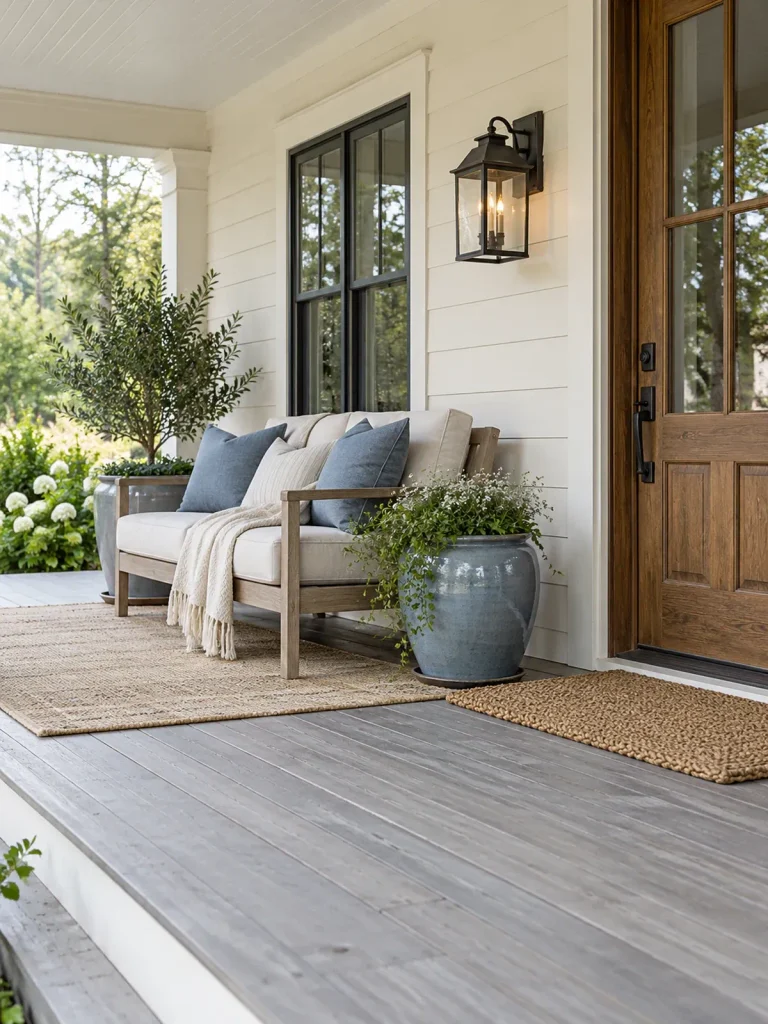
Dusty blue pillows and a blue ceramic planter cool down a porch filled with cream upholstery and natural wood. The color feels relaxed beside weathered gray flooring and keeps a neutral scheme from looking flat. Because the blue appears in only a few places, the porch still reads as calm and cohesive.
Start with one textile and repeat a similar tone in a pot, rather than buying a full matching set. Outdoor fabrics will suit exposed seating better than indoor cushions, though they still need routine care and storage as directed. On a small porch, use the color on a single chair. Let the doorway remain the visual anchor.
10. A Round Bistro Set for Morning Coffee
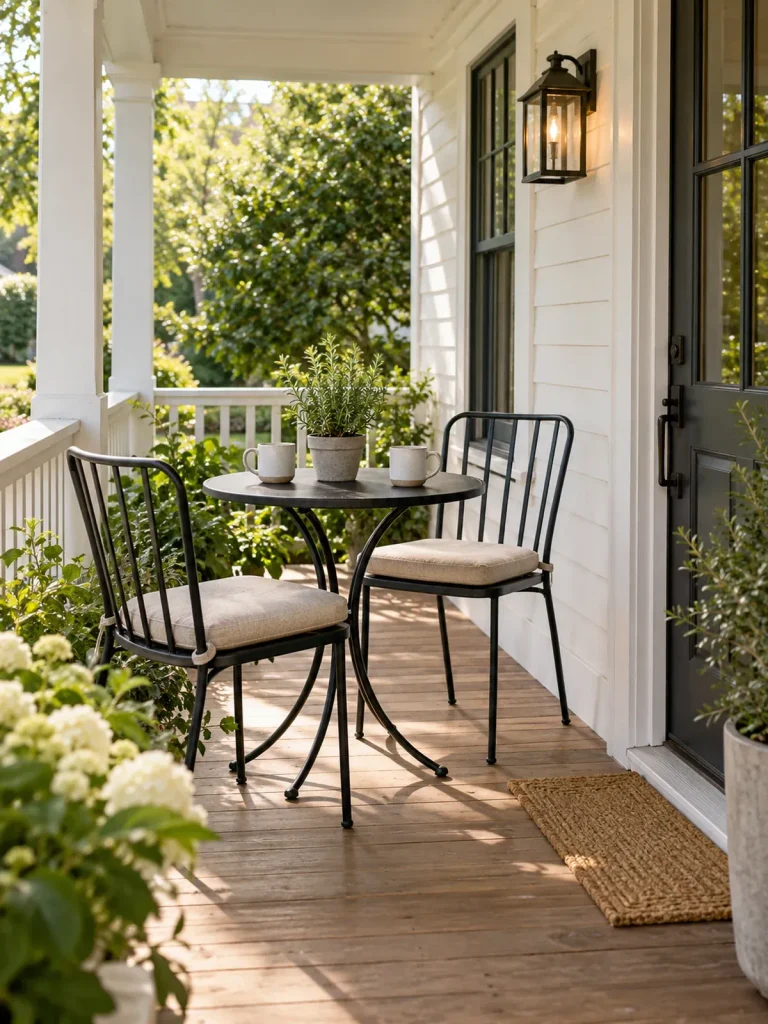
A small round bistro table makes a farmhouse porch useful beyond greeting guests. Black metal keeps the silhouette crisp, while oatmeal seat pads and a little potted rosemary introduce softness. The round tabletop also looks less boxy beside the straight lines of siding and porch posts.
Place the set in a side alcove where chairs can be pulled out without entering the main walkway. Measure the seating in use, not just with both chairs pushed beneath the table. A compact table suits coffee or a light snack better than a full dinner spread. Bring loose cushions inside during rough weather and avoid leaving mugs or small pots where wind can knock them over.
11. Mixed Terracotta Pots in a Sunny Corner
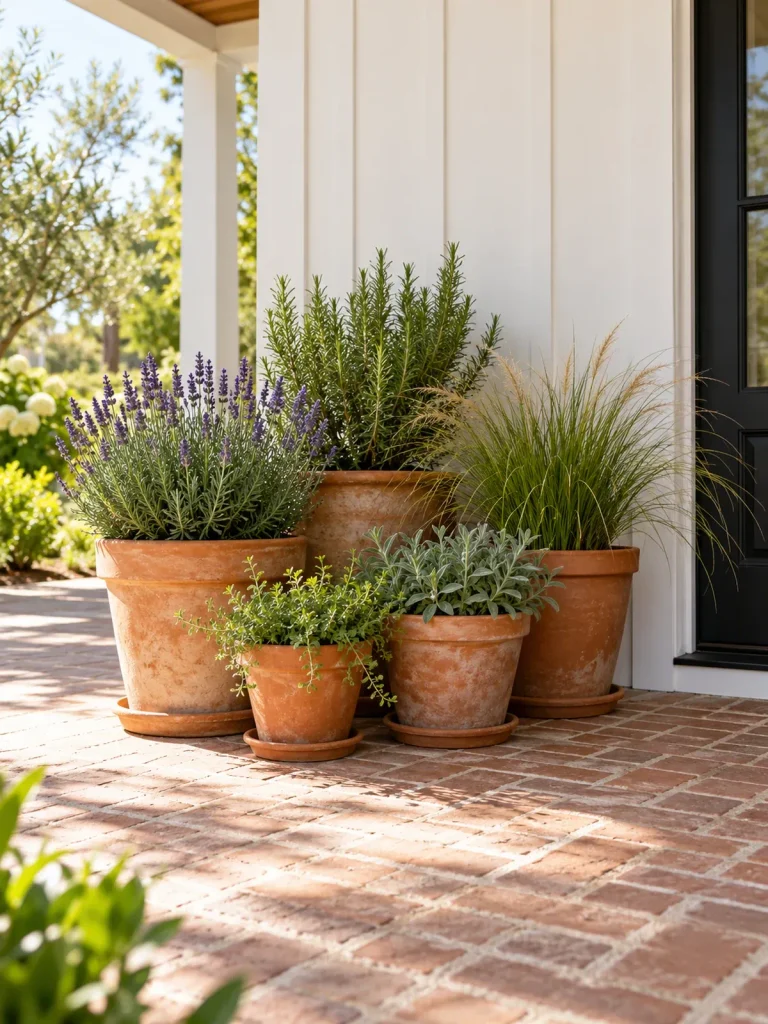
Terracotta adds earthy color to a clean white porch without requiring painted furniture or a colorful door. Group a few pots in different heights, using lavender, rosemary, and ornamental grasses for varied shapes. The warm clay and loose foliage make a farmhouse exterior feel less rigid.
Build the cluster in a genuinely sunny corner and choose plants that suit your climate and available light. Similar-looking containers do not mean the plants have identical watering needs, so keep each in its own pot. Drainage matters, and saucers should not hold standing water indefinitely. Leave a clear route beside the grouping. In freezing climates, check whether the containers can stay outdoors through winter.
12. A Wall-Mounted Plant Ledge for a Tiny Porch
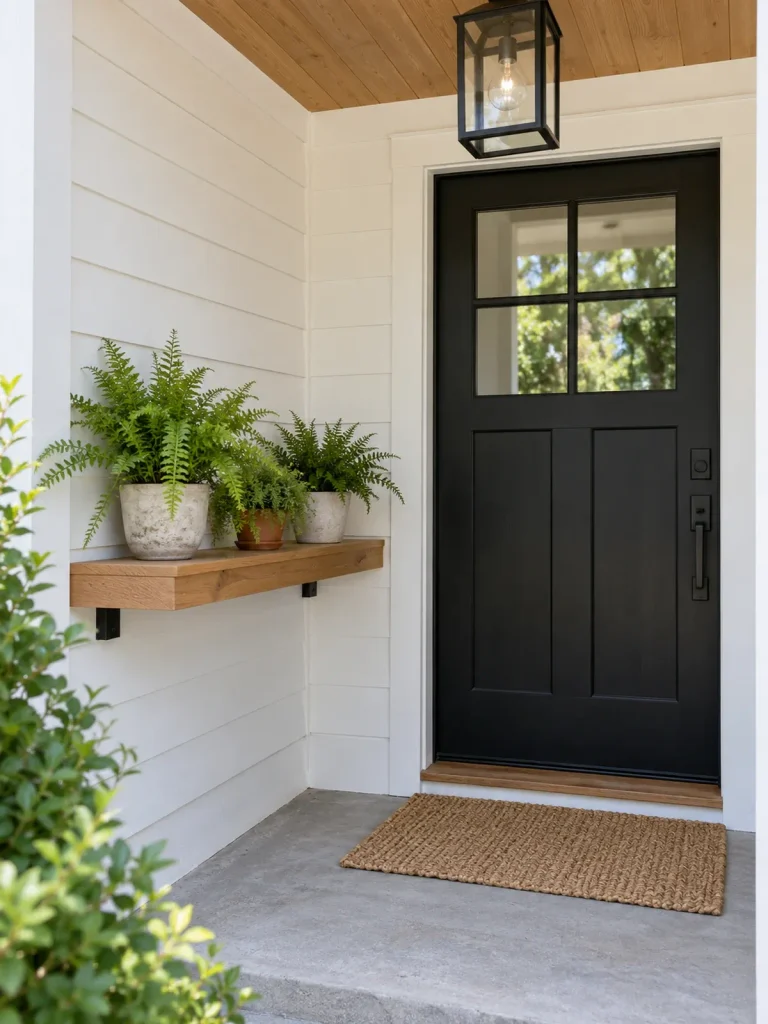
A shallow wood ledge brings greenery to a tiny porch while preserving the floor for coming and going. Three small pots create a deliberate display rather than a crowded collection. Against white siding, the wood supplies just enough warmth to support a black door and simple hardware.
Keep the ledge on a side wall outside the door swing and away from shoulder-level passage. Its mounting needs to suit the wall construction and the combined weight of wet pots; follow appropriate exterior attachment and weather-sealing guidance. Compact plants are easier to manage here than long trailing stems. Choose species for the light that actually reaches the shelf, not the brighter garden beyond the roof.
13. A Painted Checkerboard Porch Floor
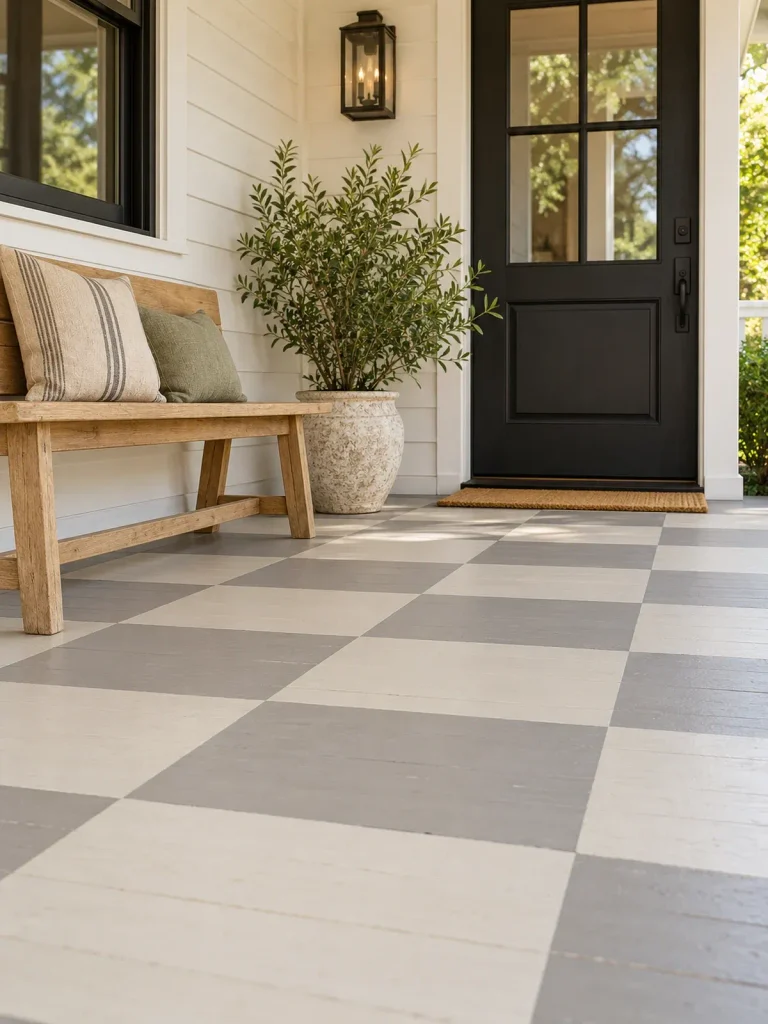
Large cream-and-gray checks turn the porch floor into the main decorative feature. The muted contrast feels softer than stark black and white, especially beside an oak bench and white siding. With pattern underfoot, the furniture and planters can stay wonderfully simple.
This treatment suits a sound floor that can accept a compatible exterior floor coating. Cleaning, repairs, surface preparation, and the product’s application conditions matter more than the pattern itself. Consider traction in wet weather and avoid a glossy finish that is unsuitable for walking surfaces. Lay out the checks before painting so awkward slivers do not dominate the edges. Keep steps visually legible rather than disguising changes in level with pattern.
14. Woven Chairs with a Pale Neutral Rug
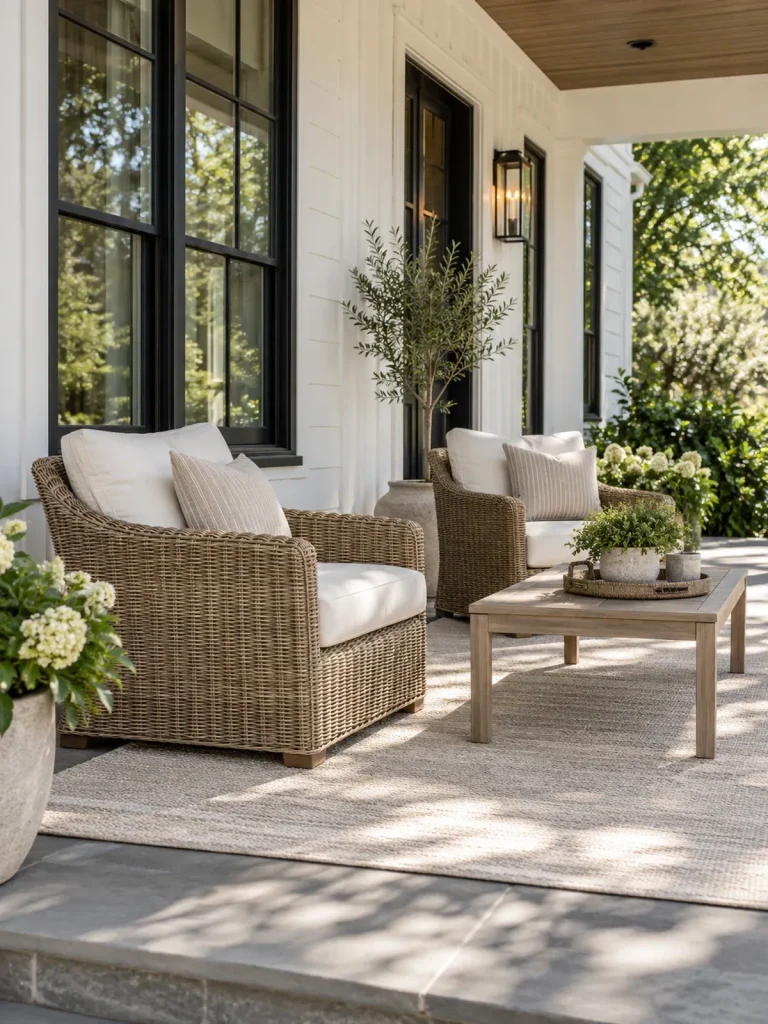
Woven outdoor chairs bring an easy, textured look to a modern farmhouse porch. Cream cushions and a pale oatmeal rug soften the seating area without adding much color. A slim wood table between the chairs makes the arrangement feel connected and gives drinks a practical landing place.
Choose furniture designed for the exposure your porch receives; indoor rattan can struggle outdoors. The rug should also suit outdoor use and sit flat beneath the furniture. On an open porch, check the floor underneath periodically so trapped moisture and debris do not go unnoticed. Keep chair legs stable on the rug and leave the main entry route uncovered if another rug would create an awkward transition.
15. A Slim Console for a Collected Entry
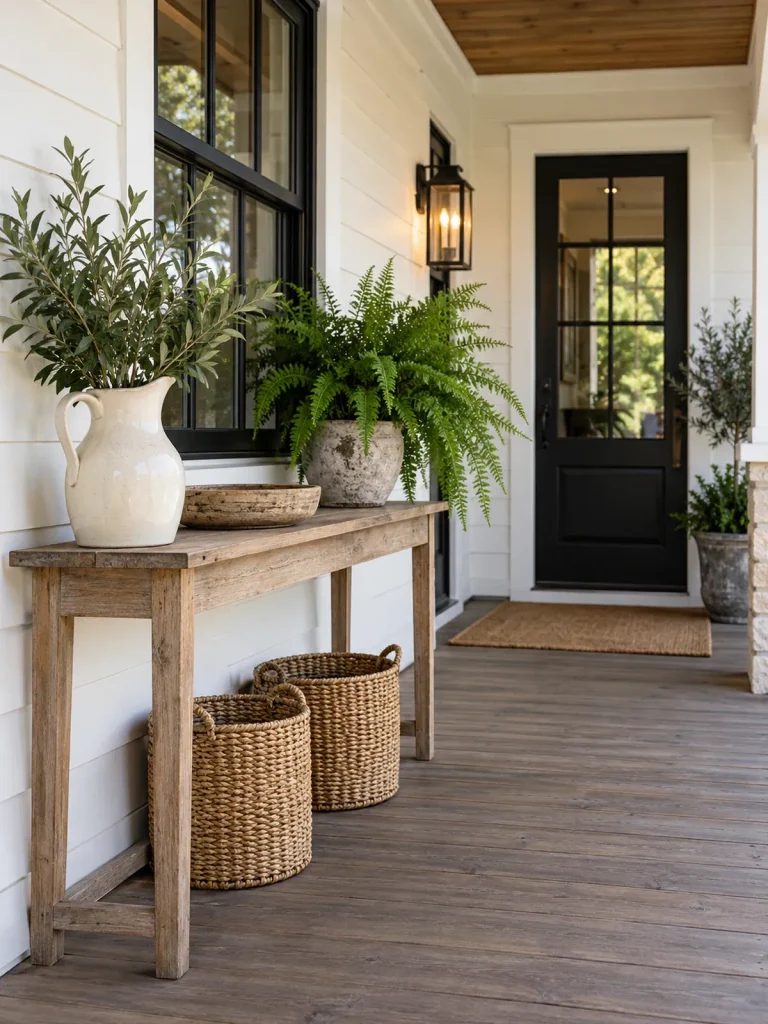
A narrow weathered wood console turns an empty sheltered wall into a small decorating moment. An ivory ceramic pitcher, a fern, and two baskets underneath offer different textures without making the porch feel like a storage room. The arrangement works especially well beneath a window where a tall cabinet would feel heavy.
Look for an outdoor-suitable piece with enough stability for its location. Even a covered porch can receive moisture, so fragile indoor furniture may need to stay inside. Keep the tabletop display low and simple, and avoid breakables in a windy corner. Baskets are useful for dry lightweight items, but bring them in if dampness becomes a recurring problem.
16. A Warm Brick Landing with Simple Seating
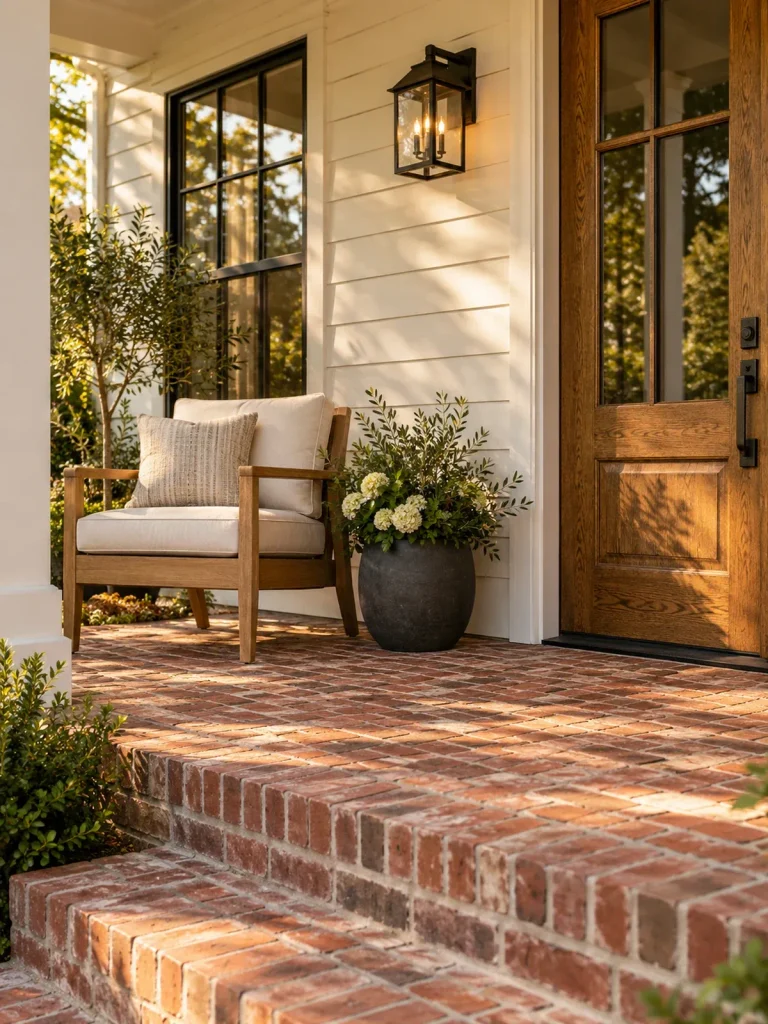
Red brick gives a farmhouse porch the earthy warmth that a mostly white exterior can lack. Paired with an oak door and a simple wood armchair, the landing feels comfortable without a rug or a large collection of accessories. A charcoal planter keeps the palette grounded.
Existing brick can become the starting point for the whole scheme, saving you from covering a feature that already adds character. Keep the joints and walking surface in good condition, and address loose or uneven areas before arranging furniture. For a new surface, drainage and transitions deserve professional planning. Choose furniture with feet that sit steadily on the brick, and leave the threshold clear of extra pots.
17. A Tonal Wreath on a Natural Wood Door
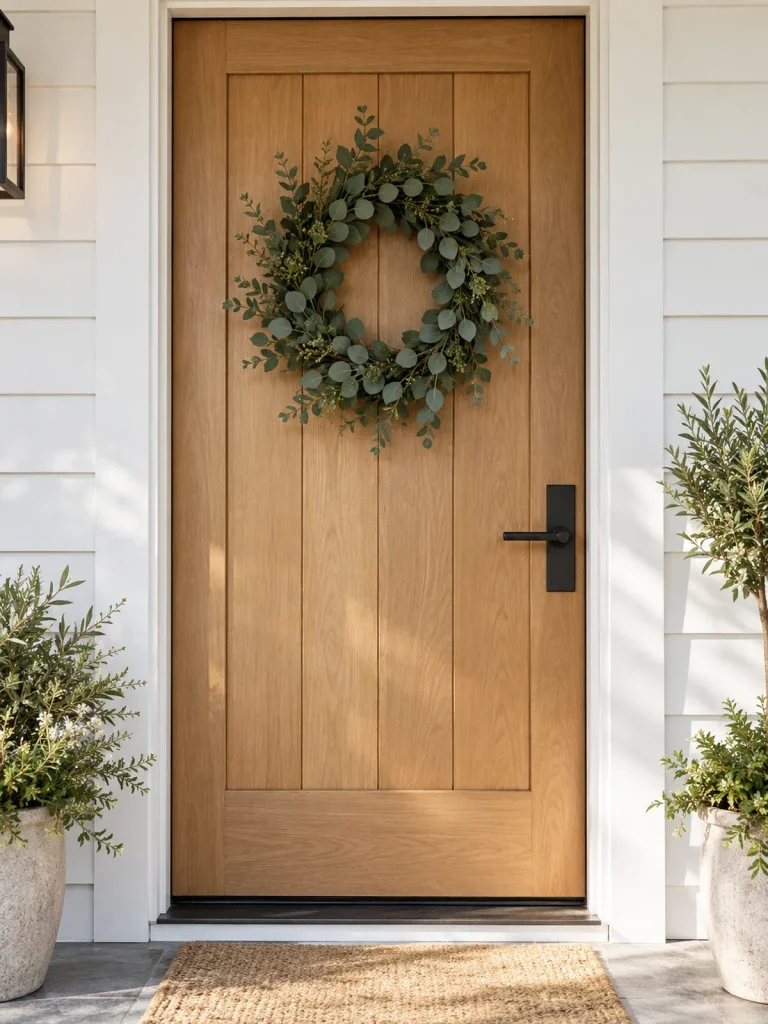
A loose green wreath on a natural wood door adds a soft organic shape to an otherwise clean-lined entry. Without a bow, sign, or contrasting seasonal ornaments, it can sit comfortably within a modern farmhouse palette. The wood grain remains part of the design instead of disappearing behind a large decoration.
Choose a wreath sized to leave the door hardware, glazing, and edges unobstructed. Use an attachment method compatible with the door finish and check that an over-door hanger does not interfere with closing. Fresh foliage requires replacement as it dries; artificial greenery should suit outdoor exposure. A sheltered doorway generally gives delicate materials a gentler setting than a fully exposed stoop.
18. An L-Shaped Bench for a Deep Porch Corner
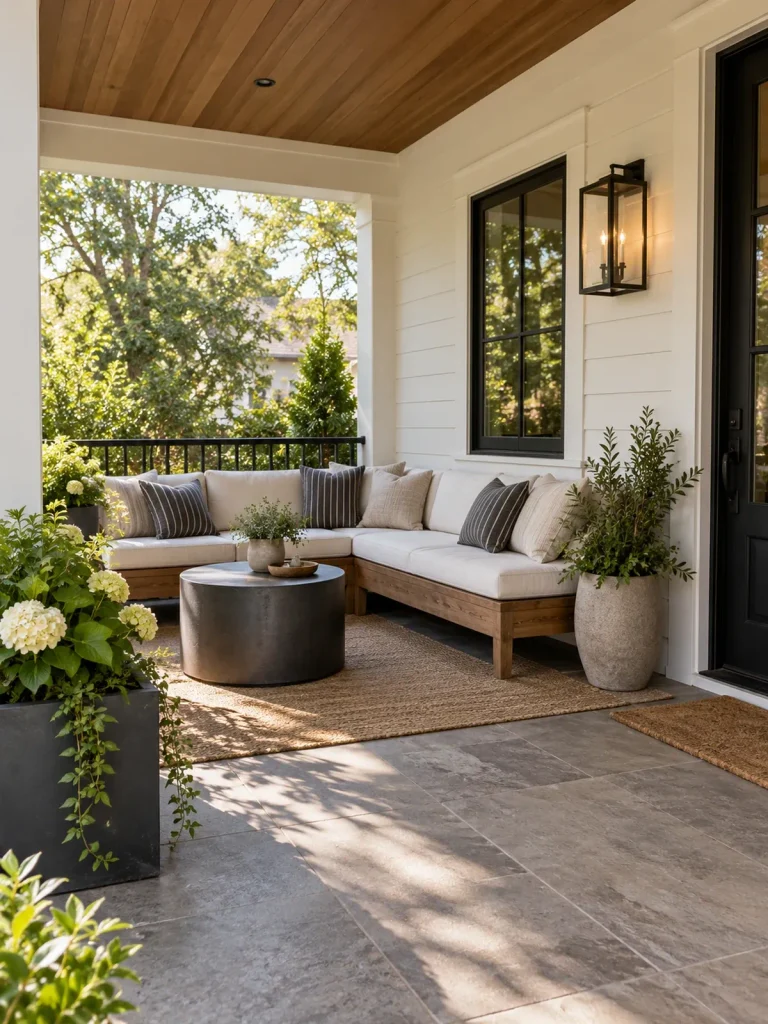
An L-shaped bench turns a deep porch corner into a more settled conversation area. Natural wood, cream cushions, and a few charcoal striped pillows keep the look recognizably farmhouse without making it rustic-heavy. A small round table breaks up the bench’s angular footprint.
This arrangement needs enough depth to leave comfortable access in front of the seating. Freestanding modular pieces can be easier to rearrange than a built-in bench, especially while you are testing the layout. Check seat depth and back support before choosing a set. Keep cushions from resting against wet siding, and do not let the long return of the bench cut across the route from the steps to the door.
19. A Soft Taupe Door with Brass Details
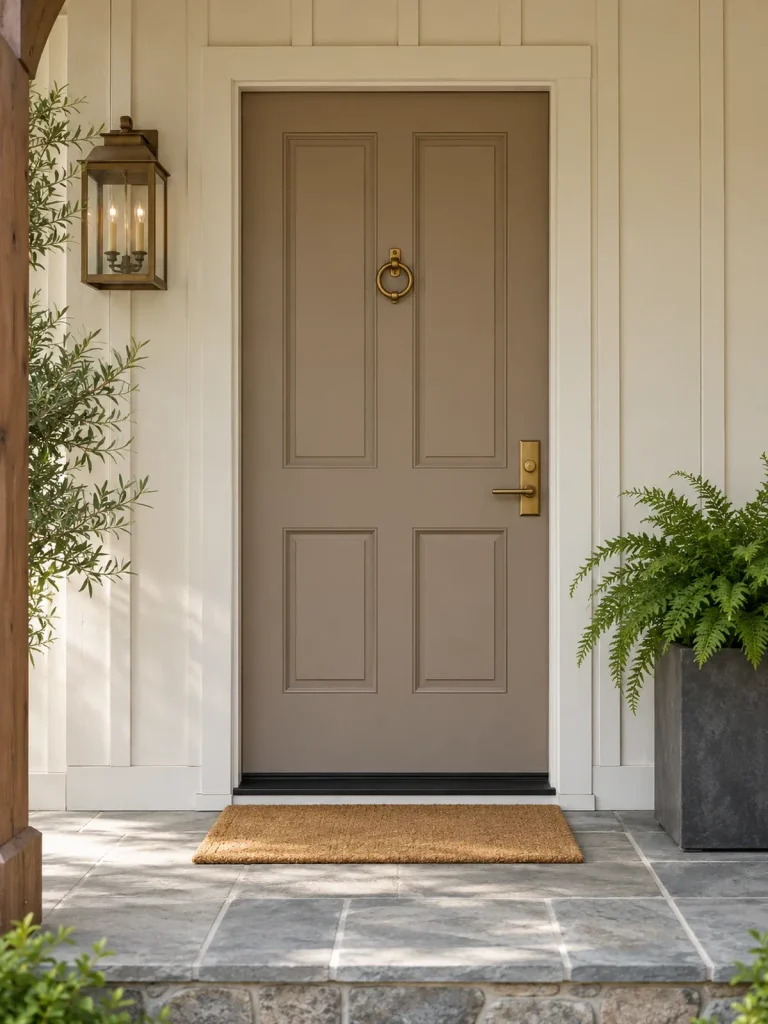
Taupe offers a warm alternative to the black door often associated with modern farmhouse style. A muted brass handle and simple knocker add a little glow against the painted surface, while creamy siding keeps the whole entry soft. One dark planter provides enough contrast to prevent the palette from fading together.
Test the door color beside your trim and any nearby brick or stone, since taupe can lean pink, green, or gray in different light. Choose exterior-rated hardware compatible with the door’s existing preparation unless you are planning a larger change. Keep the metal finish consistent on the door itself. Nearby lighting can coordinate without matching every piece exactly.
20. A Black Metal and Wood Porch Pairing
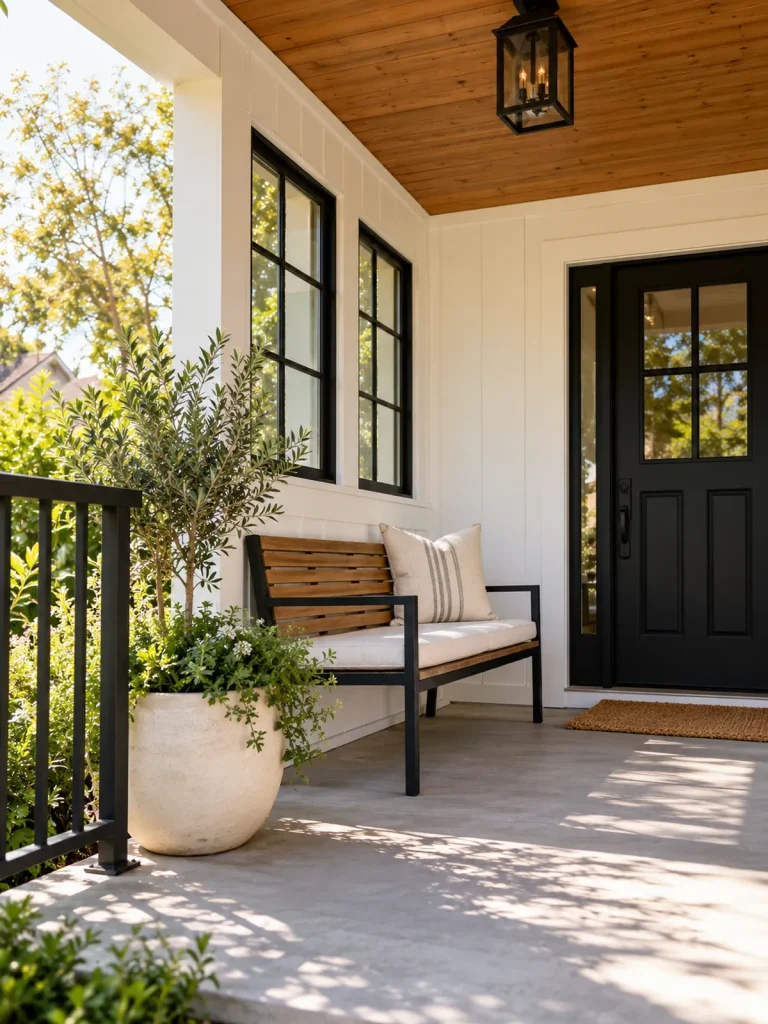
A bench with a black metal frame and warm wood slats combines two defining farmhouse materials in one useful piece. The slender frame feels clean and modern, while the wood keeps the seating from looking cold. Repeating black in an existing railing helps the bench feel connected to the house.
Let this combination lead rather than adding several competing rustic finishes. A cream cushion and one pale planter may be all the decoration it needs. Check that the bench is made for outdoor use and follow maintenance guidance for both the metal coating and the wood. Place it against a wall or within a seating zone, leaving the entrance and any required railing access clear.
21. A Simple Outdoor Curtain at the Porch End
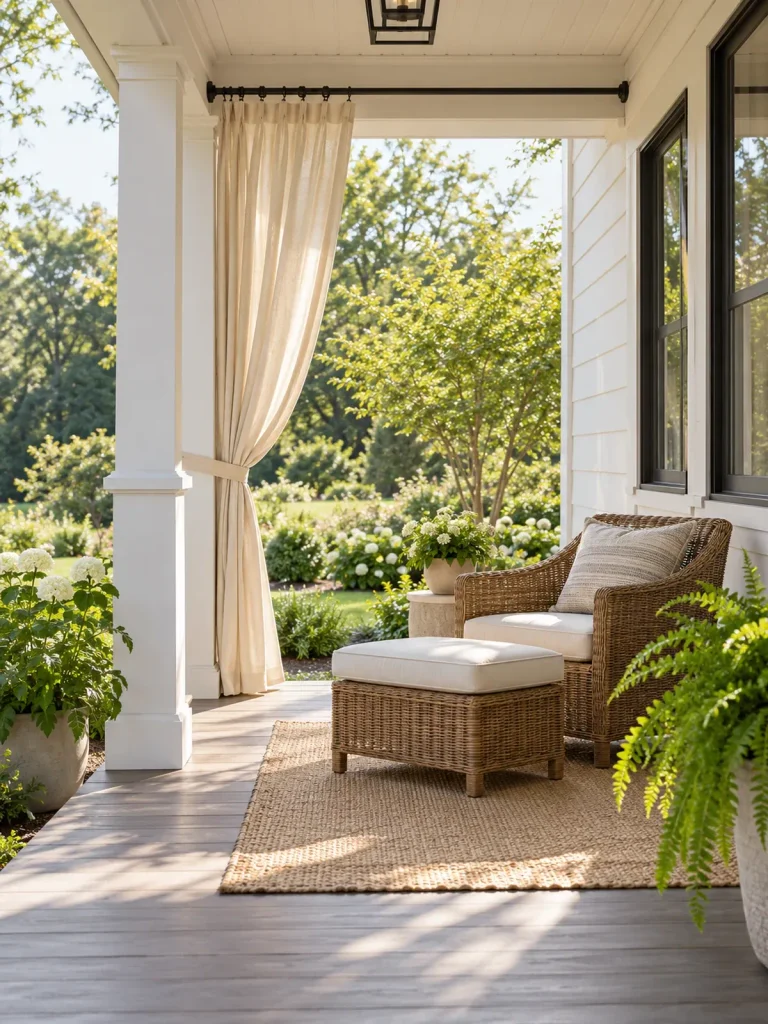
A cream outdoor curtain softens the hard edges of porch posts and makes a side seating area feel more tucked away. One panel, drawn back neatly, can be enough to create the effect. Beside a woven chair and ottoman, it brings a relaxed farmhouse mood without enclosing the whole porch.
Use an exterior-suitable rod and secure mounting appropriate to the structure. Tie the curtain back whenever wind could push it into the walkway, and avoid trailing fabric on the floor. Outdoor curtains offer variable privacy depending on the weave and lighting, so check the fabric before relying on it. Keep fabric away from heaters, flames, and light fixtures that produce heat.
22. A Porch Daybed for a Wide Covered Space
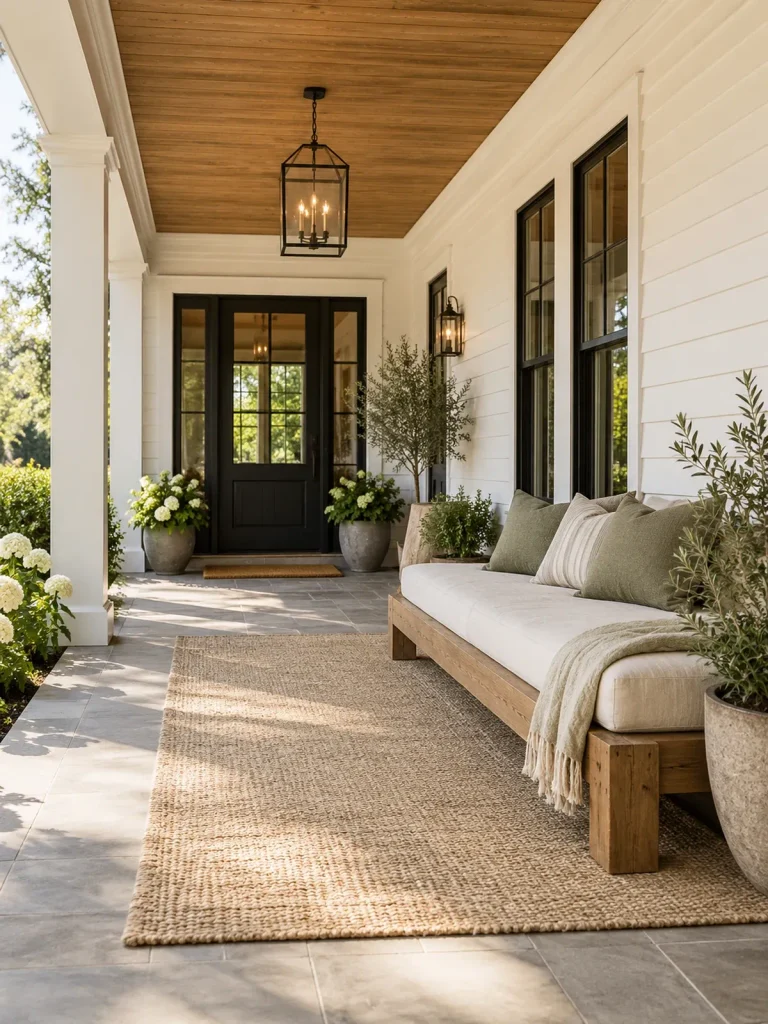
A low wood daybed makes a wide covered porch feel like a true lounging space. Oatmeal upholstery and muted sage pillows keep it calm, while a pale rug helps define the resting area. The long horizontal shape looks particularly comfortable against simple white siding.
Reserve this idea for a porch with enough room to pass the daybed easily while someone is using it. A freestanding outdoor model avoids the structural questions of a suspended bed, though size and weight still matter. Check delivery access before ordering a large piece. Store bedding according to its care instructions and avoid leaving absorbent indoor mattresses outside. Keep the front door visually and physically separate from the lounging zone.
23. A Handy Boot Bench with Tidy Storage
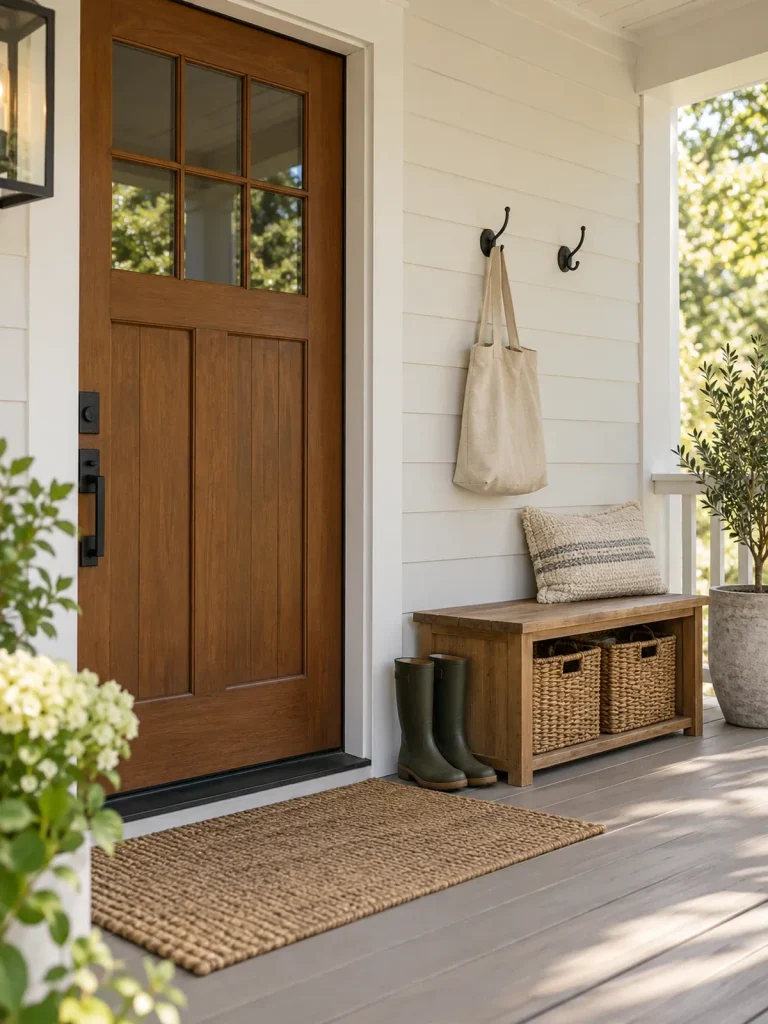
A wood bench with baskets underneath gives a farmhouse porch an everyday purpose. It provides somewhere to sit while changing shoes and a defined place for small outdoor necessities. A pair of boots tucked beside it and a plain canvas bag on a wall hook make the entry feel used without looking neglected.
Keep this setup in a sheltered spot, and store only items that can tolerate local moisture and temperature changes. Wet footwear needs airflow rather than a closed basket, and baskets should not become permanent homes for damp gloves or towels. Mount hooks securely and keep hanging bags outside the walking route. Edit the contents regularly so storage stays manageable.
24. A Tongue-and-Groove Wood Porch Ceiling
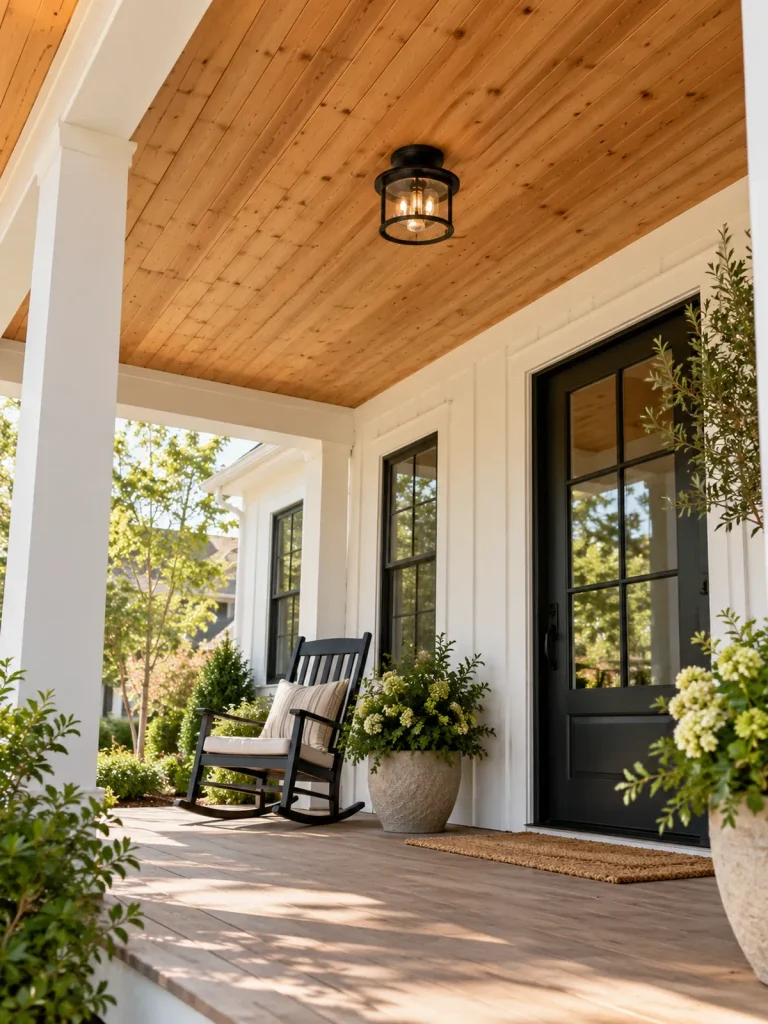
A honey-toned wood ceiling brings warmth above a porch that otherwise relies on white walls and black trim. The long boards give the roofed space a finished appearance, while a simple black flush-mount light keeps the composition clean. Even modest furniture feels more considered beneath a warm ceiling.
Treat this as a finishing project that needs proper planning rather than a purely decorative cover-up. Existing leaks, moisture issues, electrical access, and local requirements should be addressed before new boards go up. Choose materials and finishes suited to the location, with installation guidance for exterior exposure. On a shallow porch, a lighter wood tone can keep the ceiling from feeling visually heavy.
25. A Fern-Filled Porch with Symmetrical Hanging Baskets
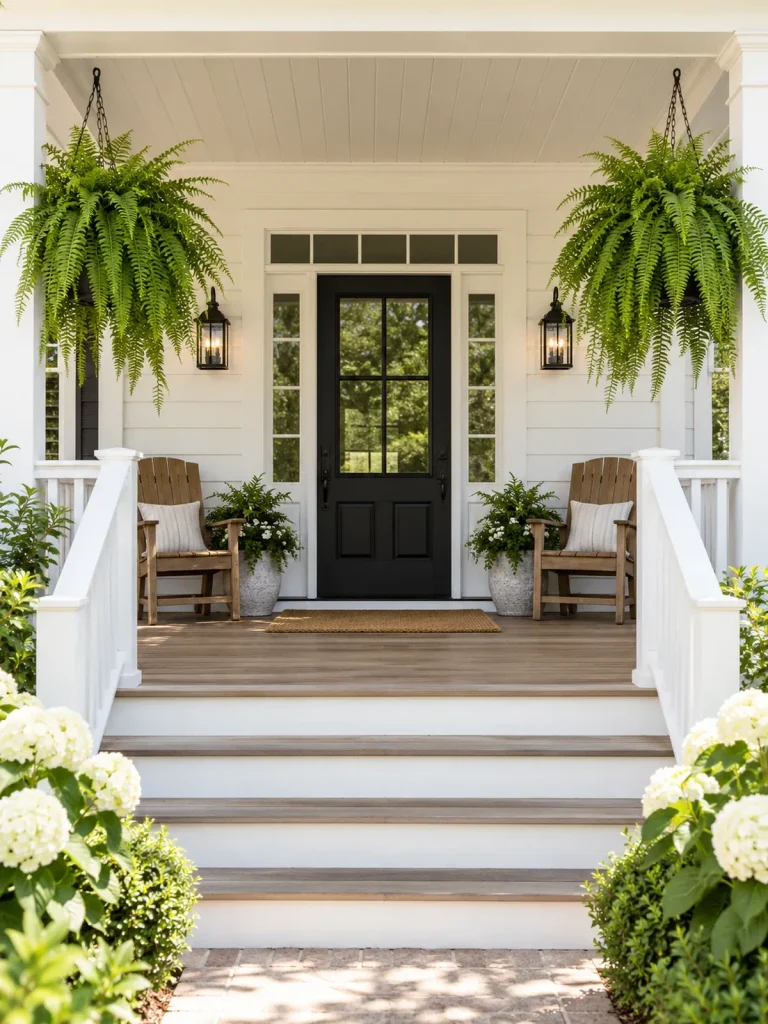
Two hanging fern baskets frame a broad farmhouse porch with generous greenery while keeping the floor relatively open. Their arching fronds soften square posts and straight siding, and a pair of simple wood chairs keeps the scene grounded. Repeating the baskets on opposite ends creates order without requiring matching every pot below.
Choose ferns suited to the porch’s light and climate, and account for the weight of watered containers when selecting supports. Secure hooks into appropriate structure using suitable hardware. Hang baskets away from heads, doors, and the route up the steps. Water where runoff will not create a slippery landing, and check moisture regularly rather than relying on a fixed schedule.
Build a Cozy Porch Without Crowding the Entrance
Start by mapping the space people actually use: the door swing, the route from the steps, and the room needed to sit or pull out a chair. Furnish the remaining area, rather than treating the whole floor as available decorating space.
Choose one main feature, such as wood rockers, a sage door, or a patterned floor. Then add one softer layer and one green element. For example, rockers with cream cushions and a fern already create a complete small arrangement. A tiny stoop can feel just as intentional with a painted door, plain mat, and one well-placed pot.
Before buying anything, compare each piece with the porch’s sun, rain, wind, and storage conditions. Materials that suit those conditions will be easier to live with. Repeat a few finishes across the space, and leave enough bare wall and floor for the architecture to remain visible.
FAQ
What makes a front porch feel modern farmhouse?
A restrained mix of natural wood, simple furniture, neutral textiles, greenery, and crisp metal details creates the look. Clean silhouettes and limited accessories keep traditional farmhouse touches from feeling overly themed.
How can I make a very small farmhouse porch cozy?
Start with the door color, a properly sized mat, and a single container plant. Add a narrow bench only if it leaves the door swing and walking route comfortable. Small spaces benefit from fewer, more useful pieces.
Does modern farmhouse decor have to be black and white?
No. Cream, taupe, sage, muted blue, terracotta, and natural wood can all fit the style. Use a limited palette and repeat a few materials so the entrance feels connected rather than busy.
Can outdoor cushions stay on a covered porch all year?
That depends on their materials, care instructions, and local conditions. A roof does not prevent wind-driven rain or dampness. Let cushions dry thoroughly and store them in a dry, ventilated place when they will not be used for an extended period.
How do I choose plants for a shaded front porch?
Observe how much direct sun actually reaches the containers, then choose plants suited to that exposure and your climate. Ask a local nursery about suitable options, and consider temperature, drainage, and any need for indoor overwintering as well as appearance.
Conclusion
A cozy modern farmhouse porch starts with a layout that works and a few materials you enjoy seeing every day. Choose one realistic first step: soften a bench with a cushion, warm up the entrance with wood, or add greenery where it has room to thrive. Build from there, keeping the doorway clear and the seating comfortable. The result can feel welcoming without requiring a porch full of decorations.