
The space around your porch shapes how the whole entrance feels. A bare foundation can look unfinished, while overgrown planting can hide the steps and windows you want to show off. These front porch landscaping ideas offer different ways to connect the house, garden, and approach without treating every yard as the same project.
You will find layered shrub beds, loose flower borders, paved-entry container gardens, and layouts for long porches or sloping sites. Use the images to compare shapes and proportions, then adapt your favorite approach to your light, climate, mature plant sizes, and the route you use every day.
1. Layer Low Shrubs Beneath the Porch Rail
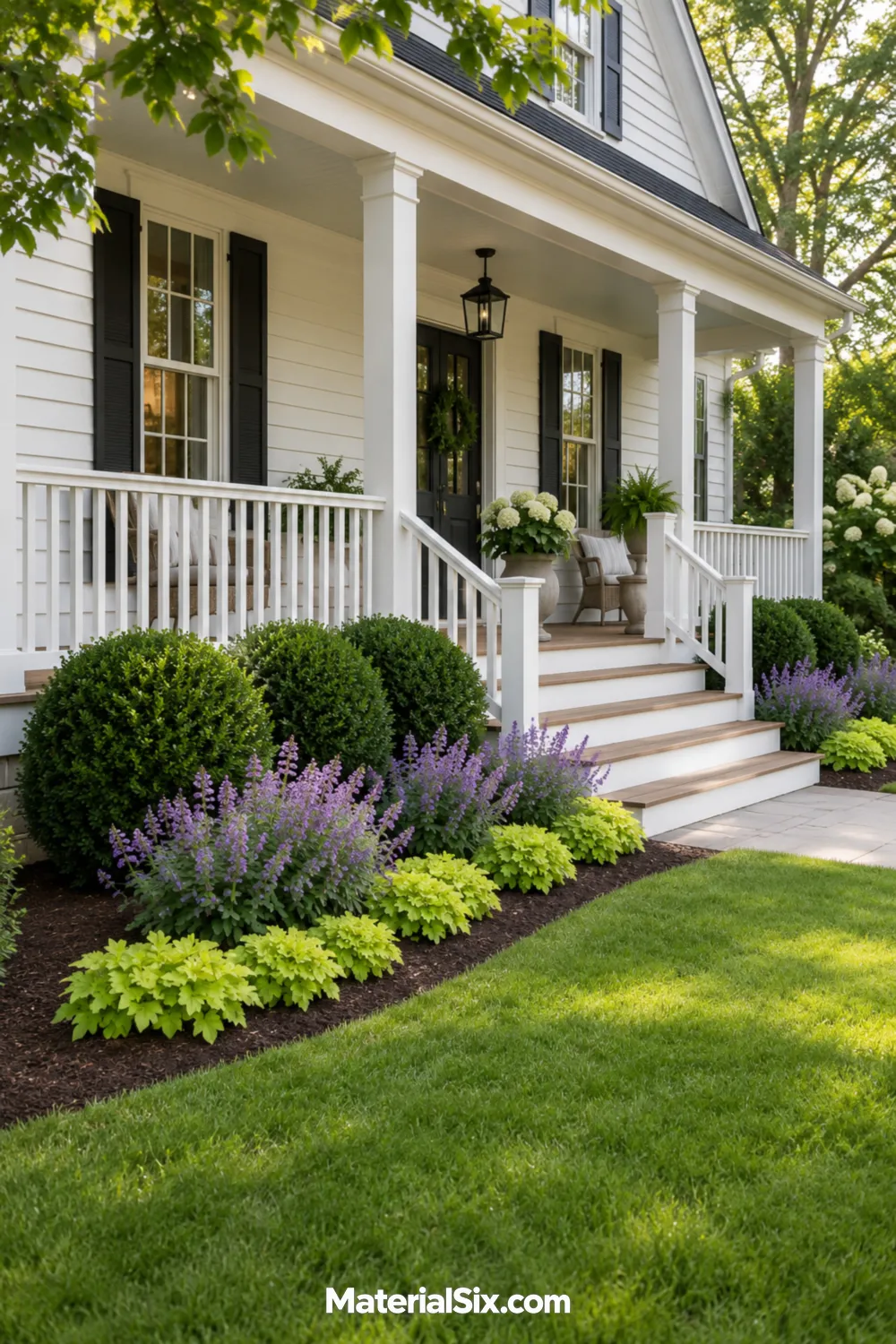
Give your porch a planted base with a simple three-level arrangement: compact shrubs at the back, flowering perennials in the middle, and a low edging plant along the lawn. The change in height makes the bed feel intentional while leaving the porch itself visible.
Choose shrubs by their mature height and width rather than their size at the nursery. Keep foliage below windows and outside the walking route. Repeat a few plant shapes instead of collecting one of everything, and leave room between the planting and siding for access. A gently defined bed edge finishes the composition.
2. Fill a Cottage Border With Loose Flower Drifts
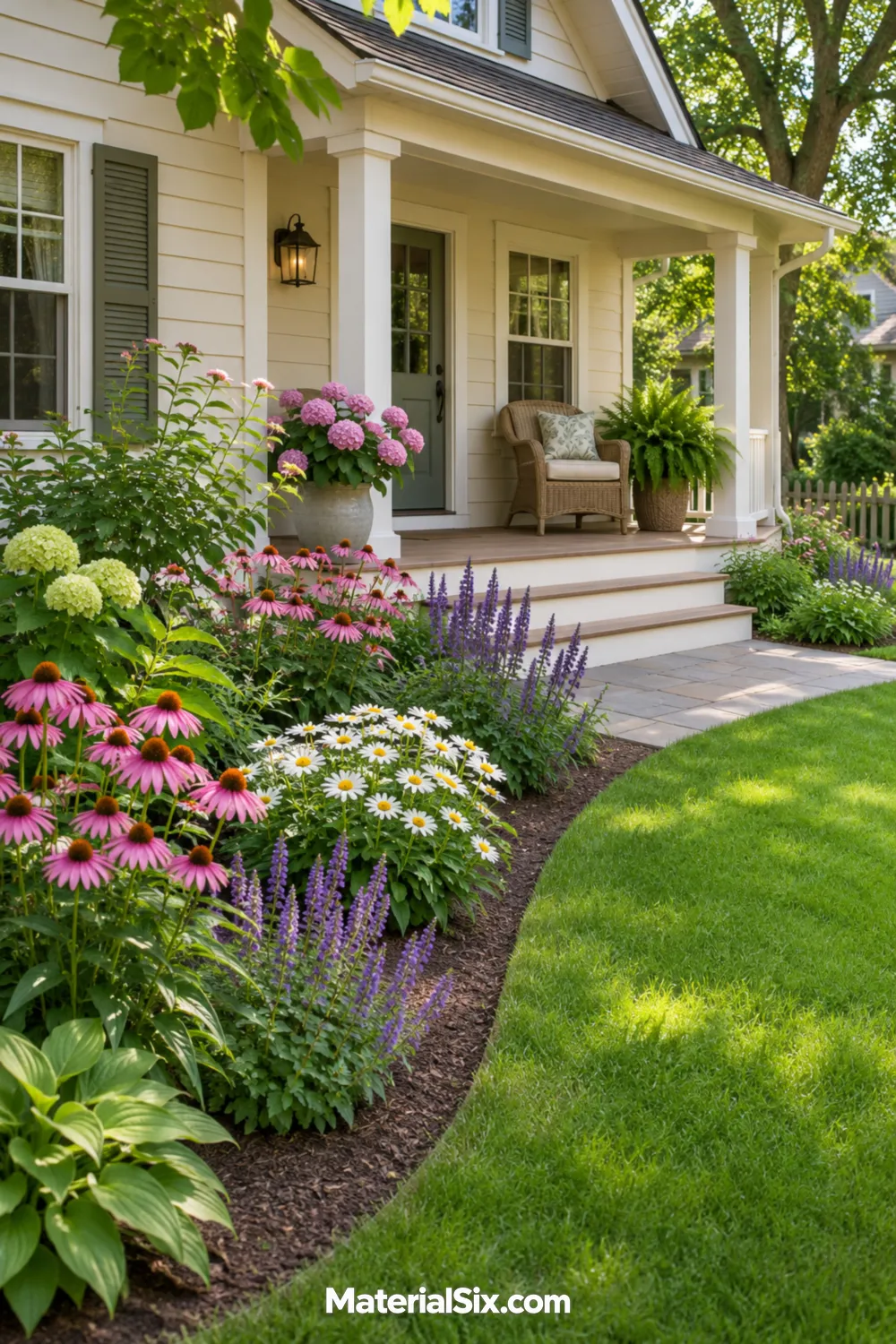
For a softer approach, let generous groups of flowers spill visually toward the lawn while a crisp border keeps the scene organized. A cottage-style planting looks especially inviting beside a porch with painted wood, wicker seating, or an uncomplicated railing.
Build the bed around repeated flower forms and a limited color palette, such as pink, white, and violet. Place taller stems where they will not hide the steps, and use foliage to connect plants between bloom periods. You can keep the arrangement relaxed without letting it swallow the entrance. Leave a reachable route into a deep bed for maintenance.
3. Frame a Small Porch With Two Compact Planting Pockets
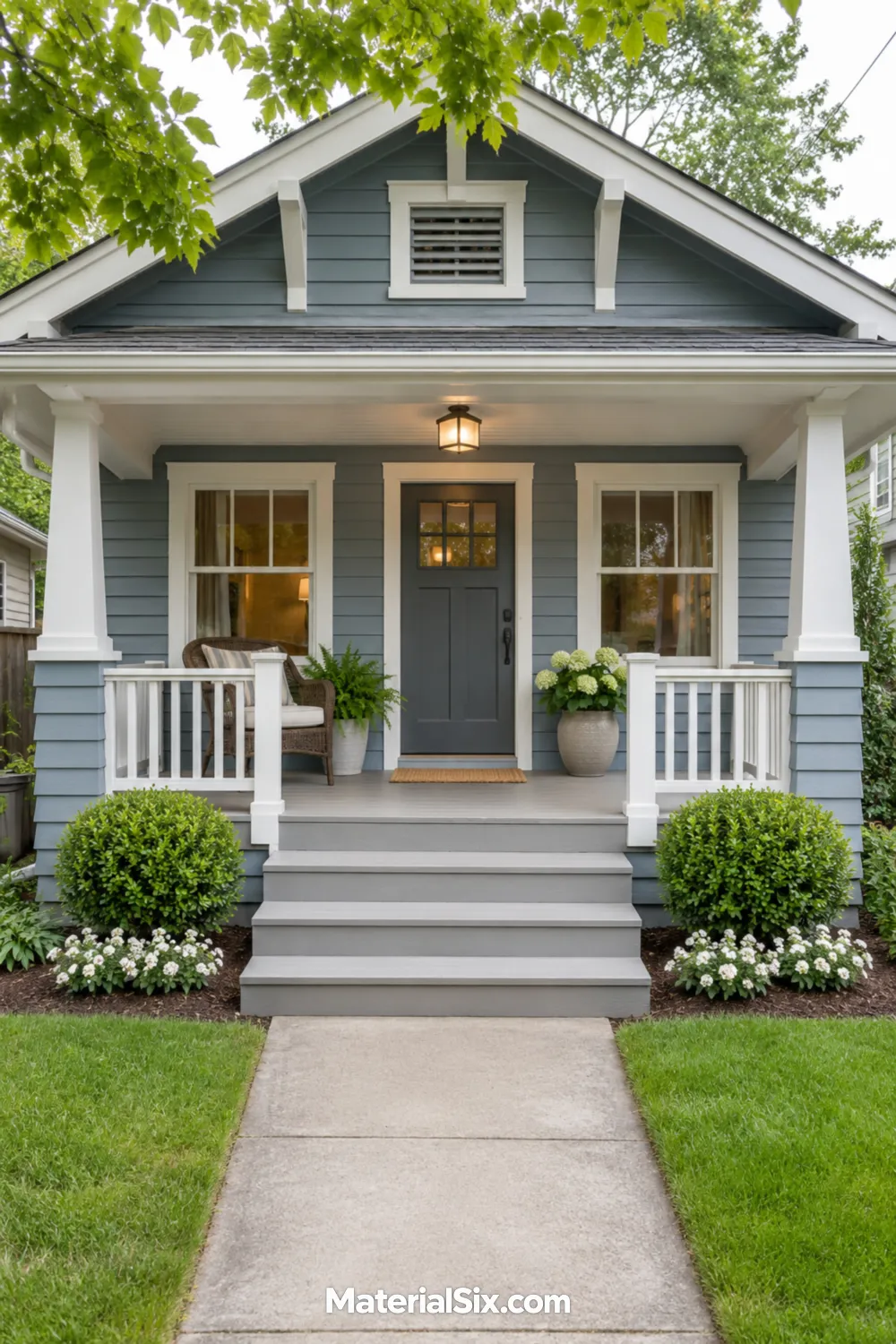
A small entrance does not need a continuous garden across the entire facade. Two compact planting pockets beside the steps can establish a clear focal point while preserving a useful patch of lawn or an existing walkway.
Keep each pocket simple: one rounded shrub, a short sweep of flowering plants, and a visible border. The two sides can echo each other without matching every stem. Check the door swing and the space people use while carrying bags before expanding either bed. Low plants near the stair corners help keep the approach readable and prevent a modest porch from feeling squeezed.
4. Repeat Plant Groups Along a Long Front Porch
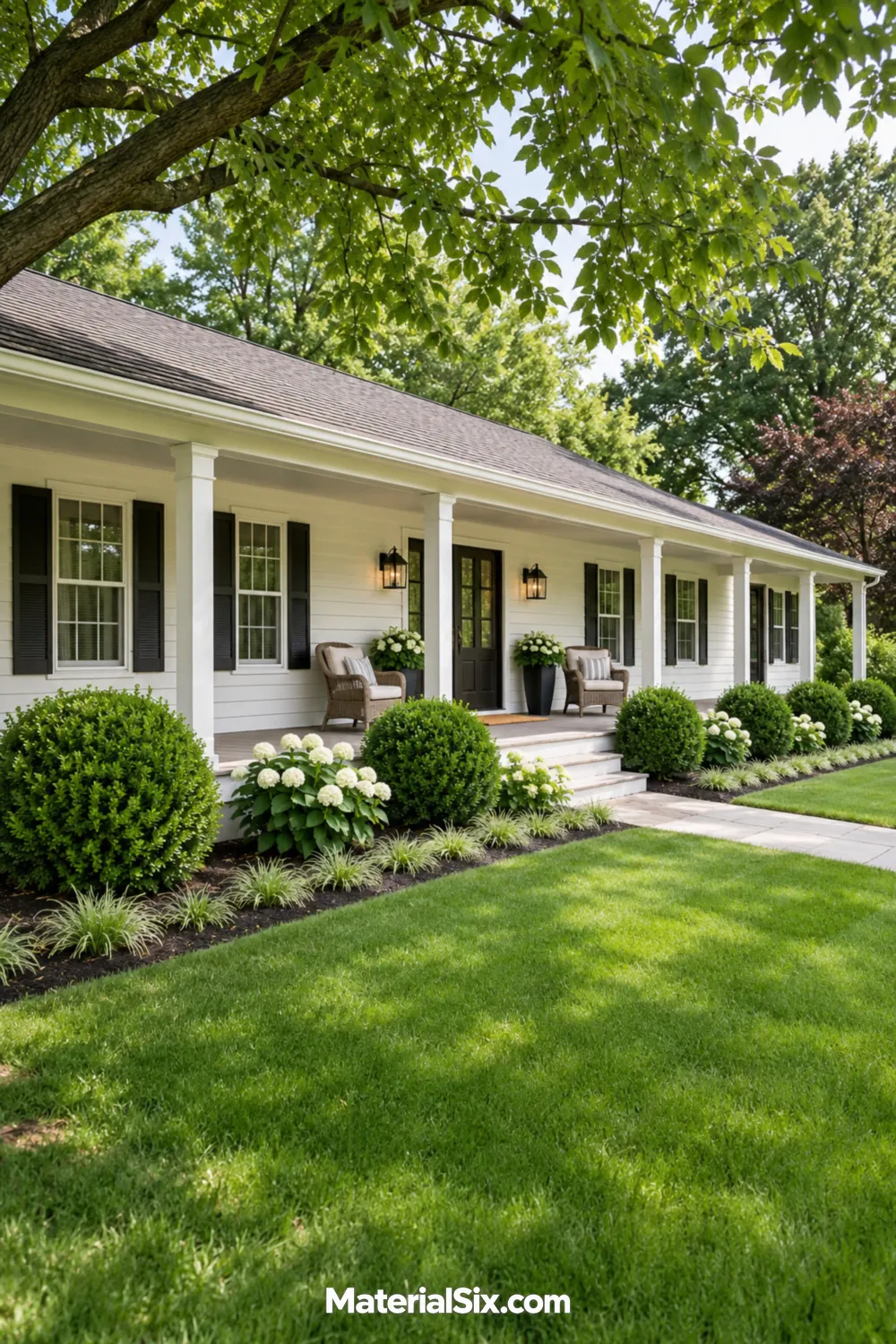
A long porch often needs rhythm more than extra plant varieties. Repeat a short sequence of shrubs and flowering clumps along its length so your eye moves naturally from one end to the entrance.
Use the porch posts as visual reference points, then adjust the planting to the actual bed width and growing space. You do not need a shrub directly beneath every post. Leave openings where steps or utility access interrupt the line. Repeating three or four plant types can connect a wide facade without producing a solid green wall, especially when the lower border stays continuous.
5. Make a Shady Porch Edge a Foliage Garden
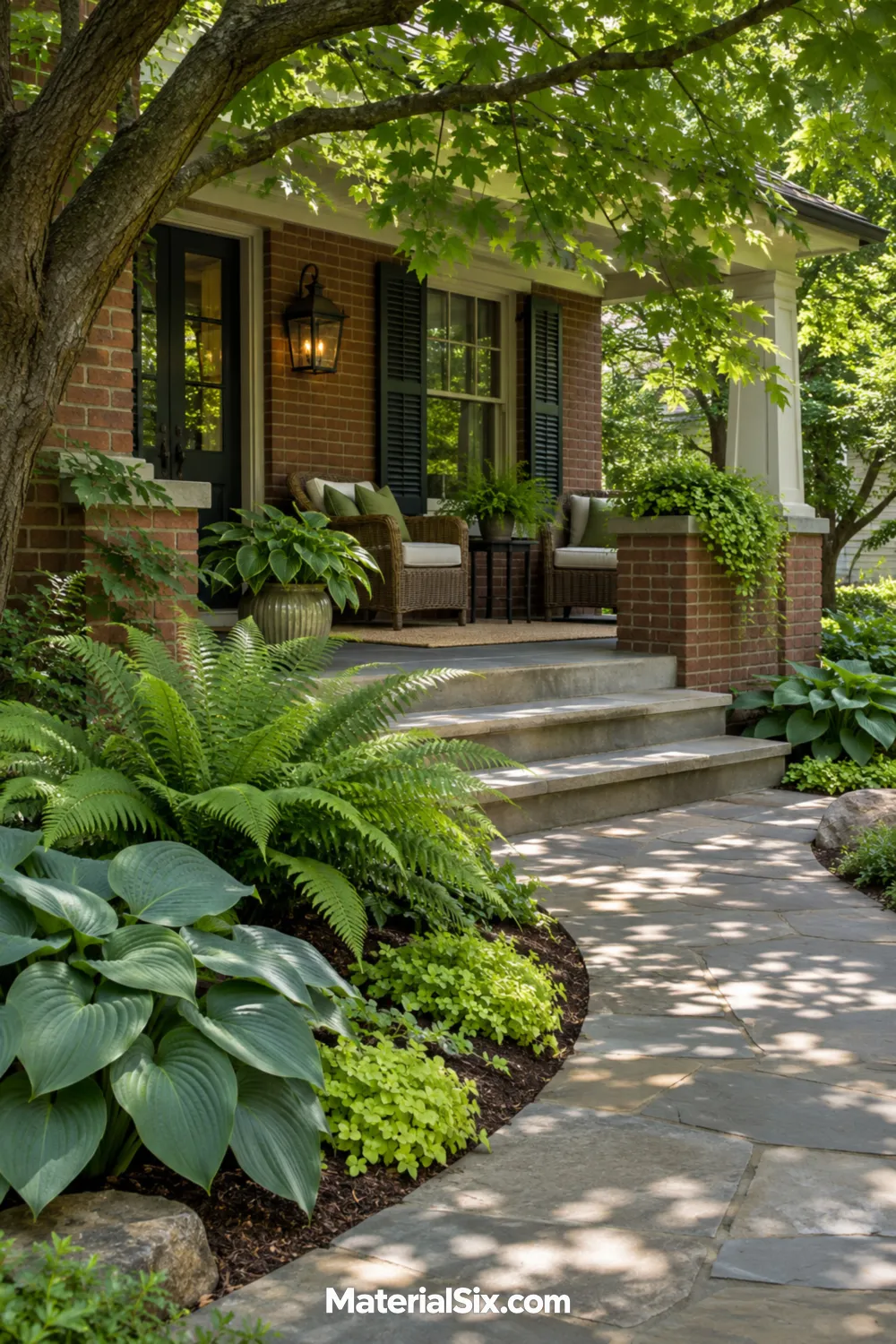
When a deep roof or nearby trees shade your planting bed, work with foliage rather than trying to force a sun-loving flower display. Fernlike fronds, broad leaves, and fine-textured groundcover can create contrast even when very little is blooming.
Choose shade-tolerant plants suited to your region and the bed’s moisture conditions. Dry shade under an overhang differs from a damp garden under trees, so check the soil before shopping. Repeat leaf shapes in generous groups, keep the bed edge visible, and leave the steps clear. A restrained mix of greens can make a shaded entrance feel richly planted.
6. Use Gravel and Sculptural Plants for a Dry-Land Look
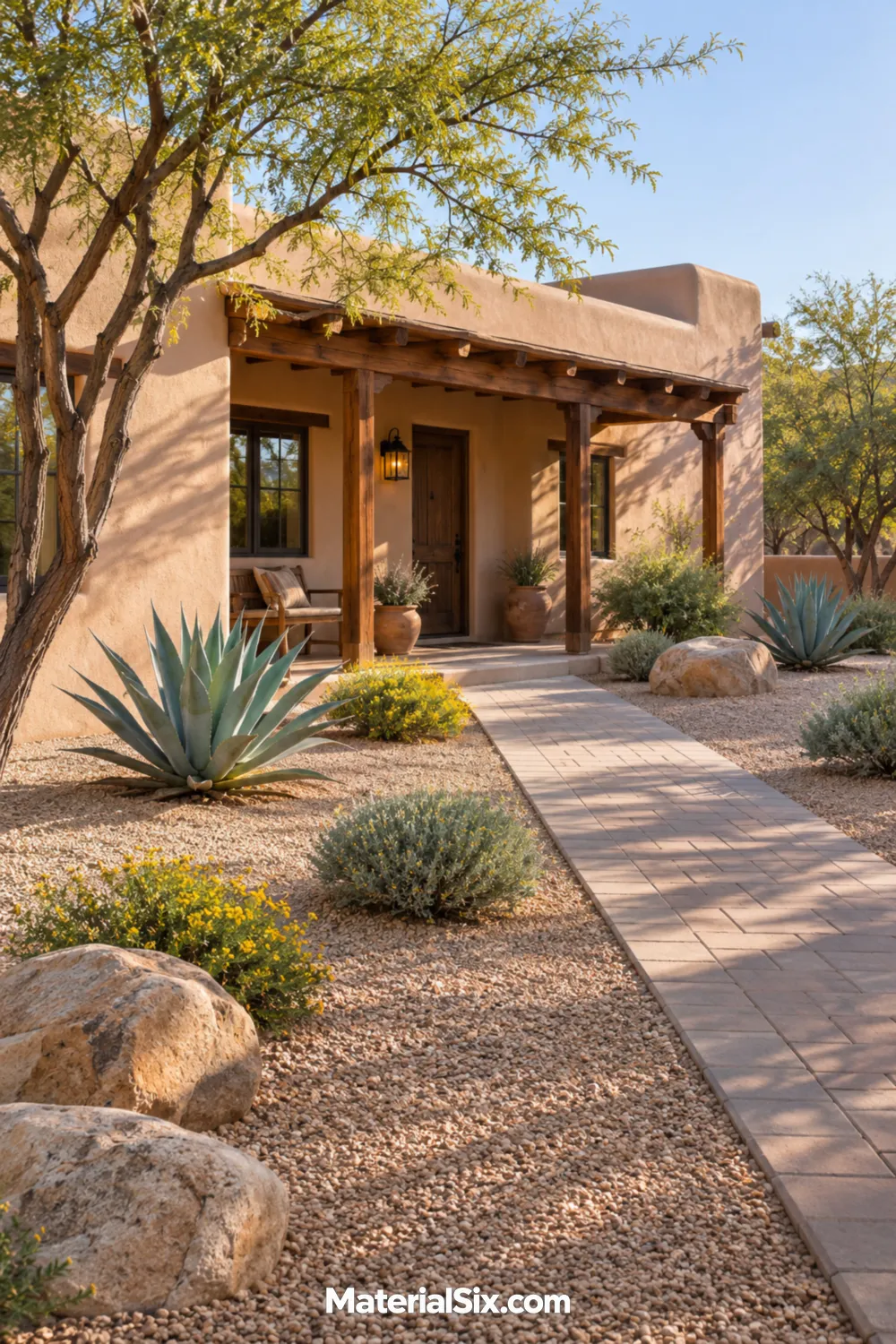
A gravel-based planting can suit a porch where the surrounding architecture feels spare and the climate supports dry-land plants. Start with a few strong silhouettes, then let open mineral surfaces give those shapes room to stand out.
Select plants for local rainfall, winter temperatures, and soil drainage rather than choosing by appearance alone. Group plants with similar watering needs, and remember that new plantings still need establishment care. Keep sharp leaves away from the walkway. Gravel is a visual material, not a substitute for drainage planning, so preserve the site’s intended water flow and keep the foundation accessible.
7. Soften a High Porch With Descending Plant Heights
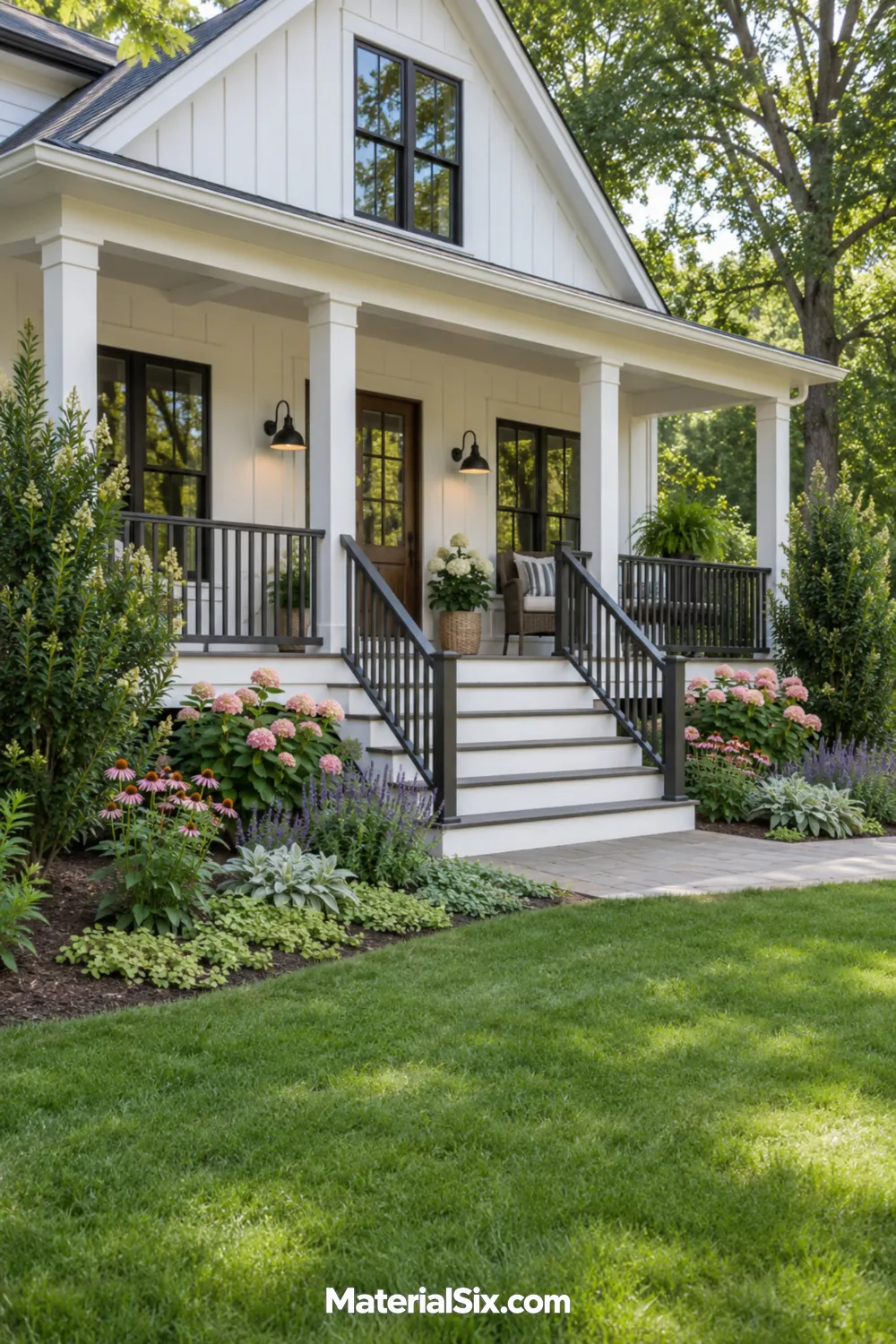
A high porch can look detached from the yard when its base is mostly exposed. Use a deeper planting bed to step visually from taller shrubs near the porch down to medium perennials and a low front edge.
Keep the tallest planting beside the porch rather than across the stair approach. Check mature widths so the shrubs will not press against the railing or block access beneath the structure. A few visible gaps are useful for inspection and maintenance. The goal is to connect the porch to the ground through planting heights while keeping the staircase easy to see and use.
8. Let a Curved Walk Shape the Planting Bed
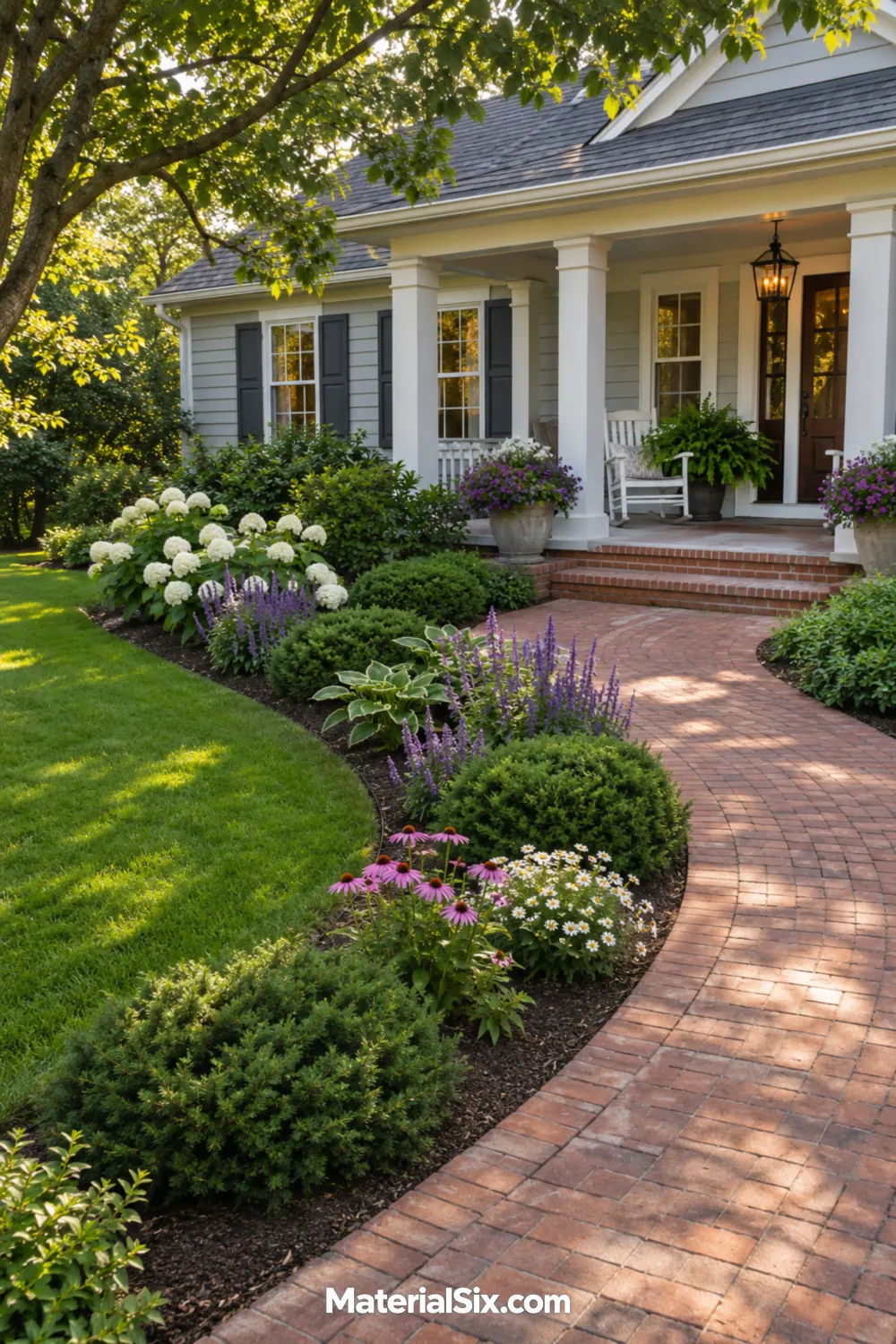
Instead of drawing a garden bed independently, use the route to your front door as its starting point. A gently curved walk creates a natural place for a broad planting sweep between the path and porch.
Repeat a few plants around the curve so the garden leads toward the entrance rather than distracting from it. Keep foliage out of the walking surface and leave sightlines open near the steps. You can echo the curve at the lawn edge, but avoid adding bends simply to make the plan busier. A clear path and one generous planting gesture often carry the whole design.
9. Balance a Side Entrance With an Asymmetrical Bed
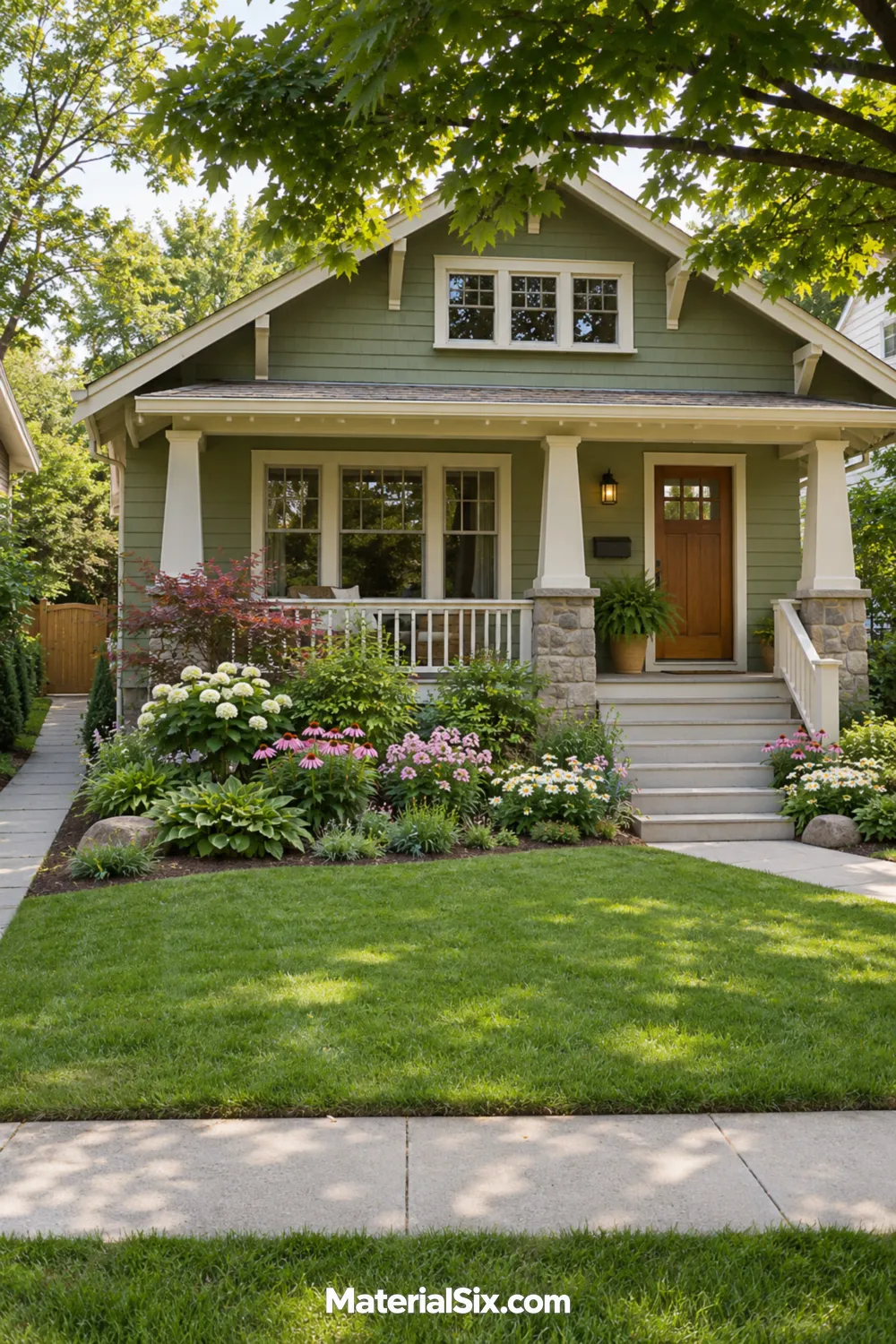
When your porch steps sit near one end, symmetrical beds can feel forced. Let a larger planting mass occupy the long side of the porch, then use a smaller group near the entry to give the composition a clear counterpoint.
Repeat one leaf color or plant shape on both sides to tie the unequal areas together. Keep the larger shrubs toward the closed end of the porch and use lower plants beside the landing. This arrangement can work with an existing side path, too. Follow the way people actually approach the house rather than centering everything on the facade.
10. Define a Front Flower Bed With Stone Edging
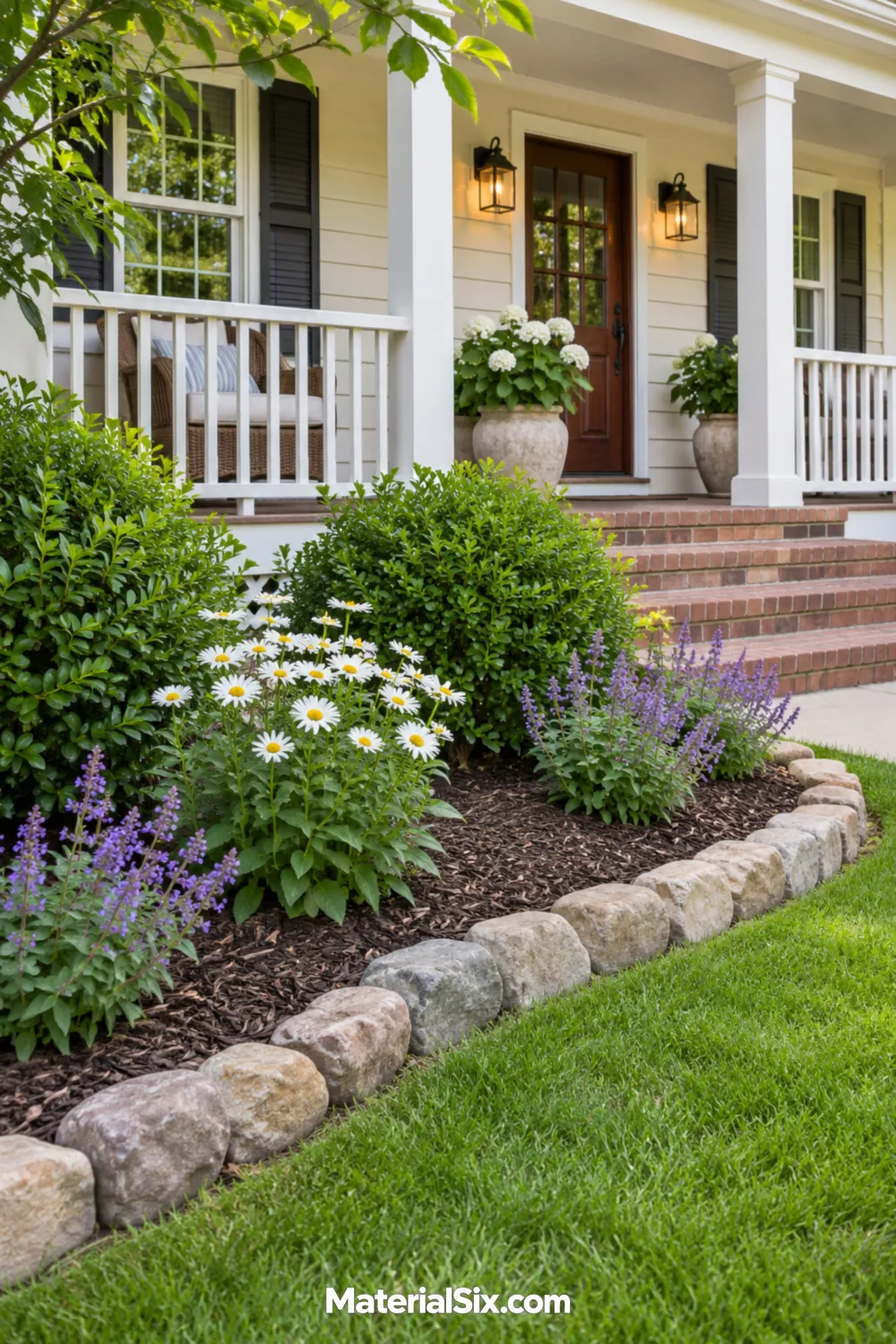
Stone edging gives a loose planting a firm outline, especially where a porch meets a lawn. Use a low border that reads as an edge rather than a wall, and let the planting remain the main feature.
Choose a stone color that relates to your steps, chimney, or walkway so the new material feels connected to the house. Keep the bed shape uncomplicated and leave the lawn side accessible for routine care. This is a useful visual approach when you want a more finished front flowerbed without changing the porch itself. Edge construction should suit the site and local conditions.
11. Pair Ornamental Grasses With a Modern Porch
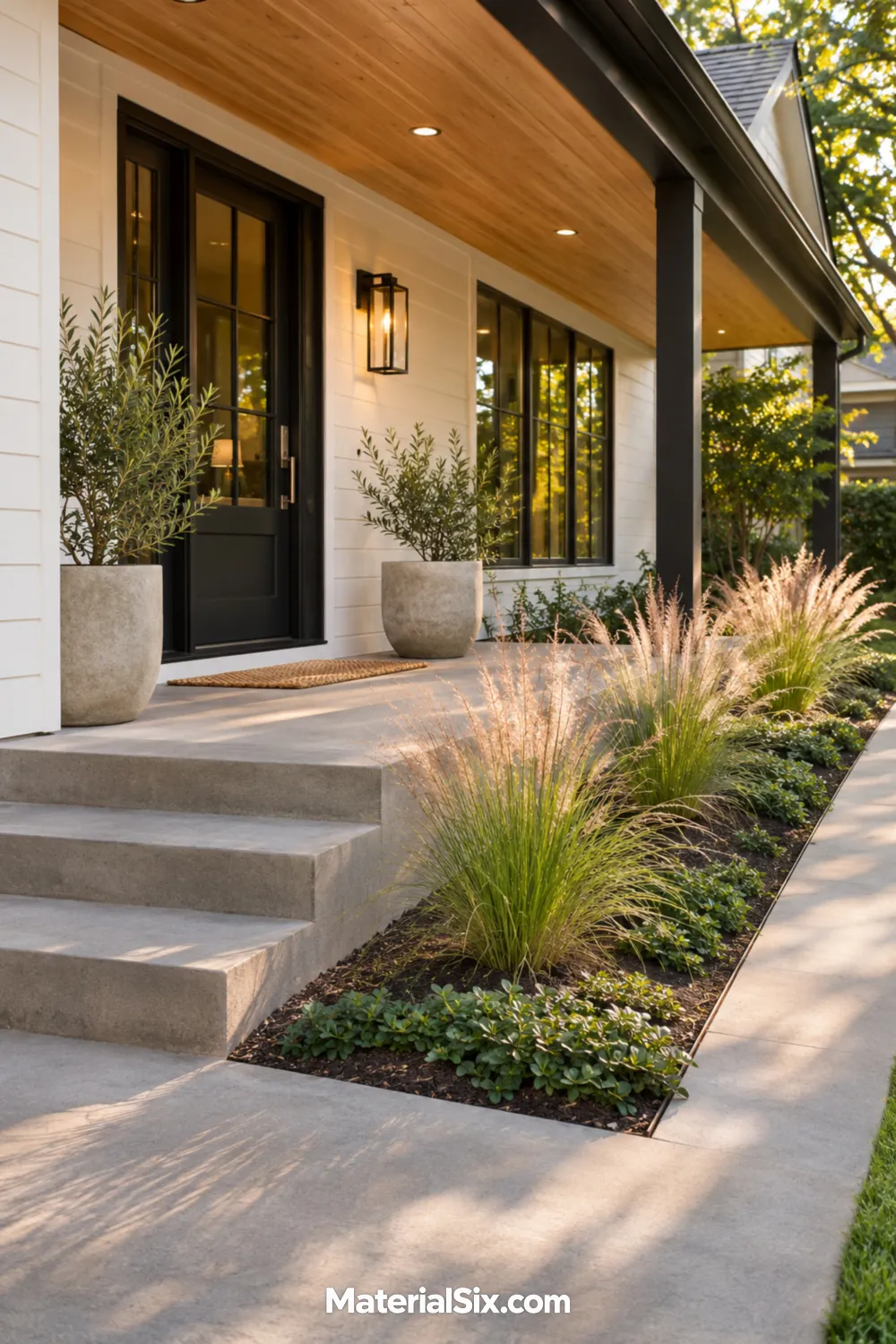
A modern porch can feel connected to the yard through repeated grasses and a restrained plant palette. Upright blades and soft seed heads contrast with straight steps, simple columns, and flat planes of siding.
Choose clumping grasses suited to your region and check their mature height before placing them under windows. Leave space between groups so the planting has a deliberate pattern rather than forming an unbroken screen. A low companion plant can soften the bed edge without adding another tall layer. Keep the color palette quiet, then let texture and movement provide the interest beside your entrance.
12. Add a Native Flower Pocket Beside the Porch
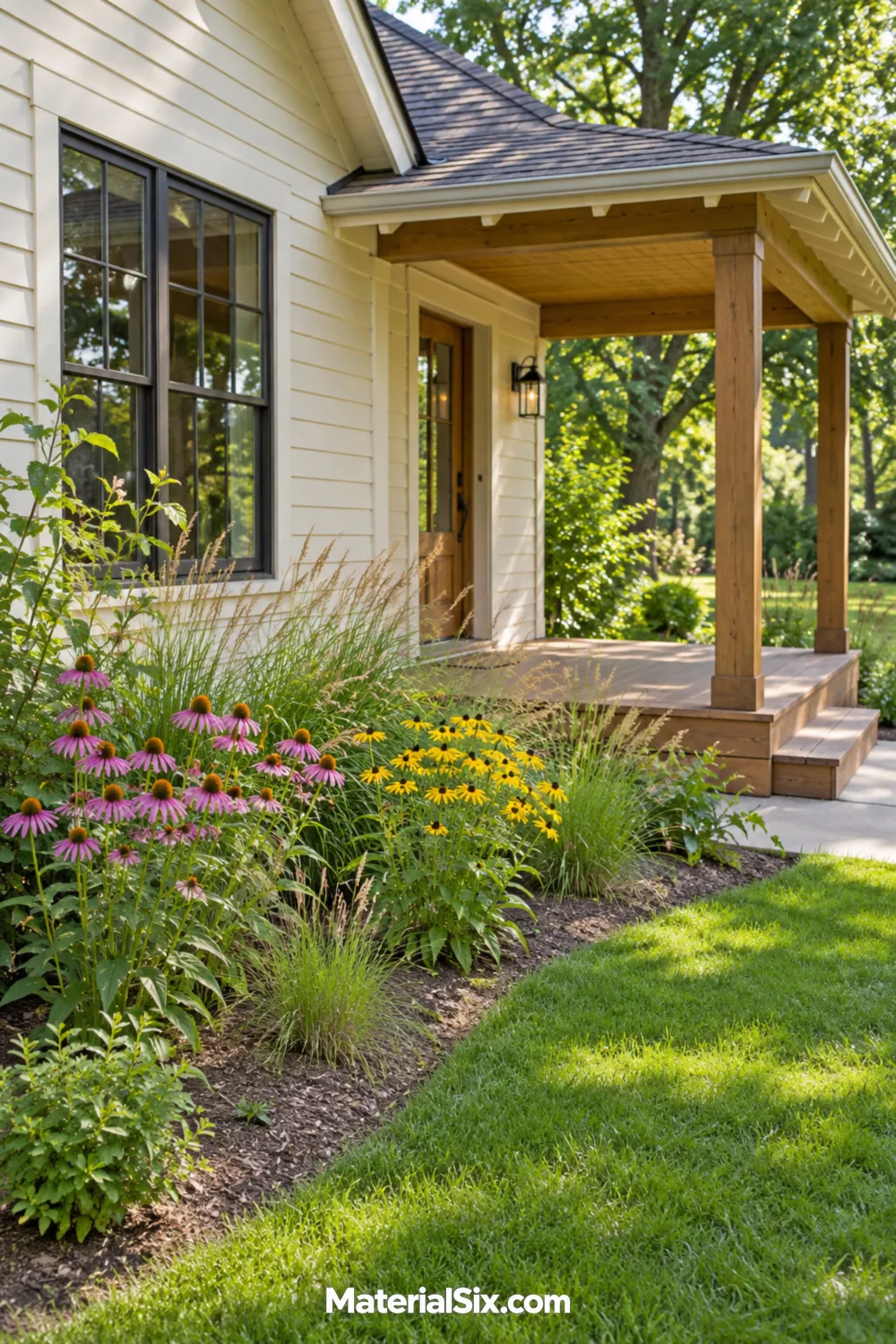
You can introduce a looser planting style without redesigning the entire front yard. Give one sunny pocket beside the porch to locally appropriate native flowers and grasses, with a defined edge that relates to the rest of the landscape.
Choose species native to your area and matched to the actual soil and light. Native does not automatically mean suitable for every site. Repeat a few species in groups and keep taller stems away from the entry path. A clearly maintained border helps this more informal pocket sit comfortably beside a traditional house, particularly when nearby shrubs keep their simple shapes.
13. Build a Container Garden Around a Paved Entry
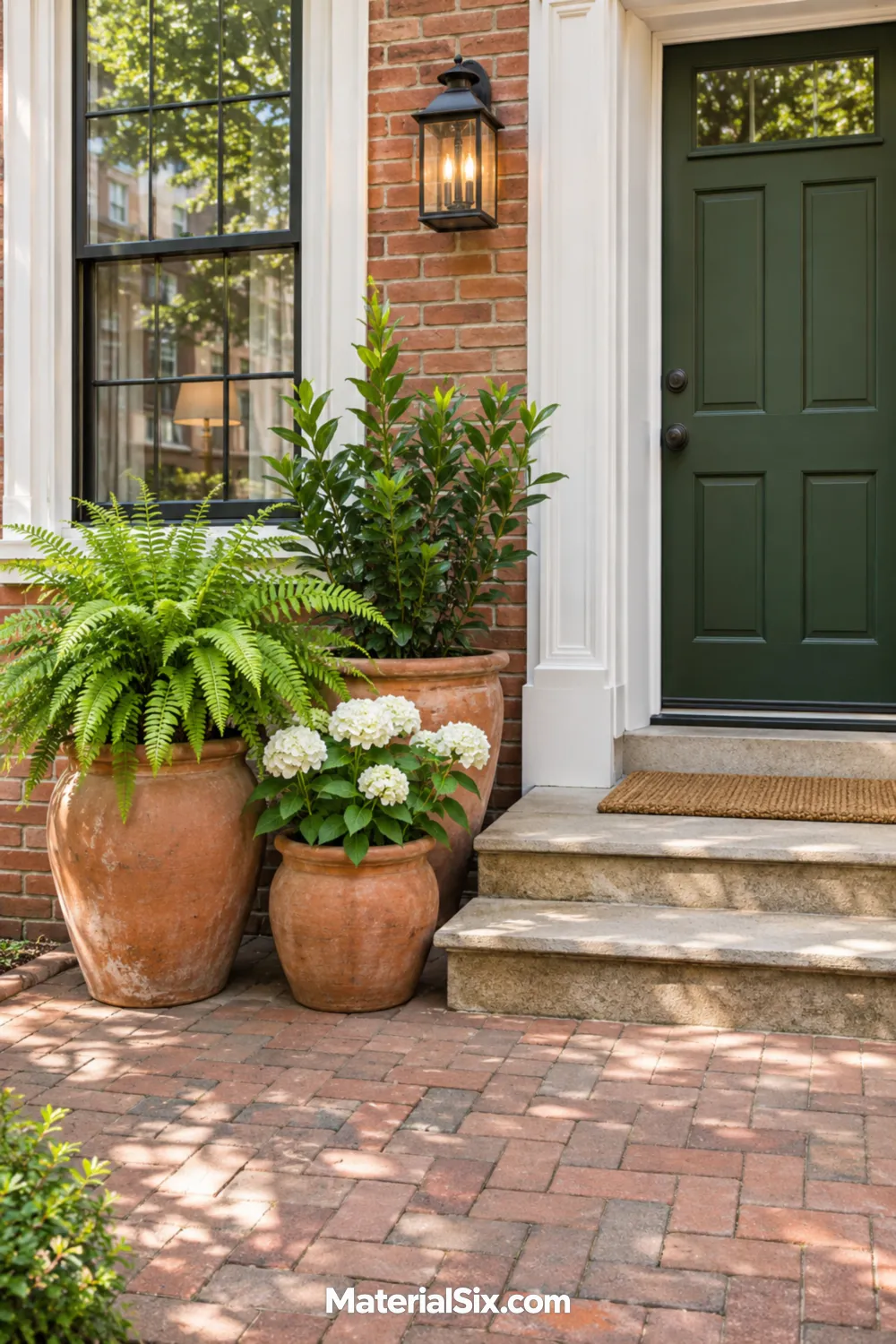
Where paving leaves little room to dig, containers can provide the planted transition between porch and yard. Use a small group of substantial pots at the edge of the landing rather than lining every step with small planters.
Vary container heights while repeating a material or color, such as terracotta, charcoal, or weathered concrete. Choose pots with drainage and plants suited to the available light, then plan for watering access. Keep the door swing, handrail, and walking route open. Grouping the containers to one side can make a hard-surfaced entrance feel planted without crowding the entire approach.
14. Step a Sloping Front Yard Into Planted Terraces
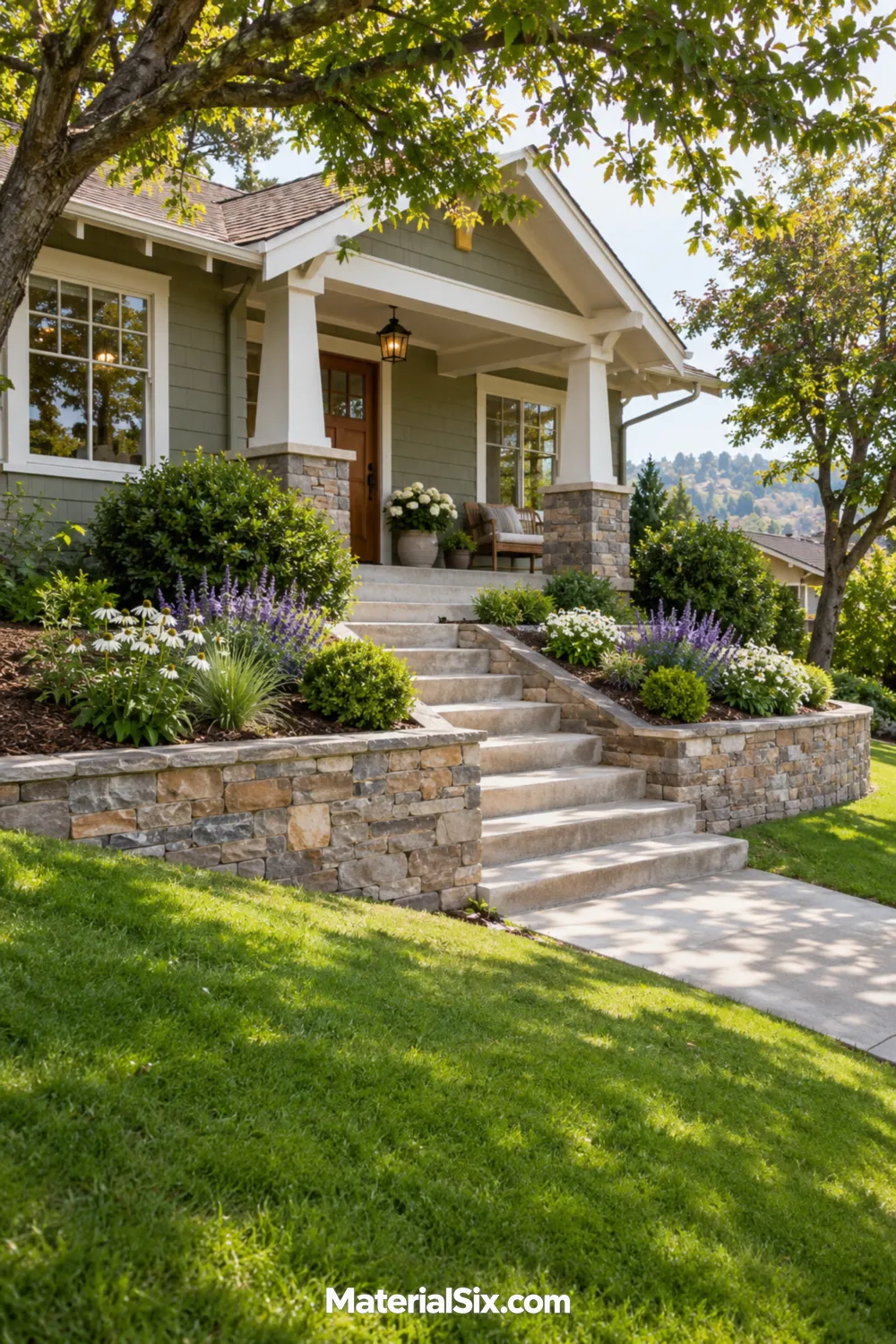
On a sloping front yard, planting can connect the street level to a raised porch through a sequence of lower garden areas. Terraces give each planting group a clear place instead of leaving the whole slope as one uninterrupted bank.
Repeat materials between the terrace edges and entry steps so the landscape reads as one composition. Use lower plants near the stairway and place larger shrubs where they will not obscure the route. Treat this as a design direction rather than a retaining-wall tutorial. Drainage, grading, wall structure, and any permits need site-specific planning before you begin building.
15. Grow a Narrow Trellis Garden at One Porch End
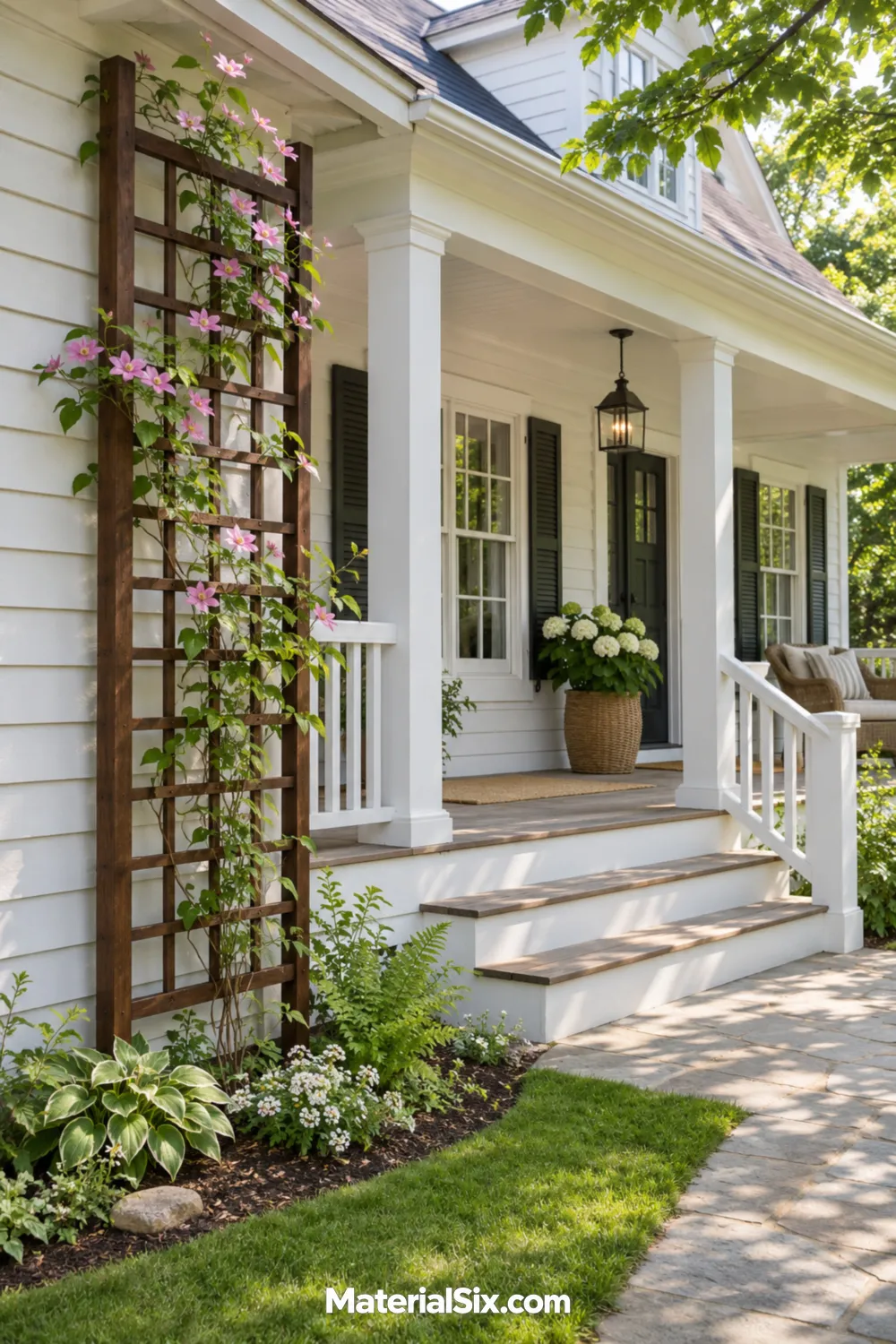
A narrow bed at the end of your porch can add height without taking over the front view. Place a trellis along the bed and train a suitable climbing plant on it, with low planting around the base.
Set the support where you can reach it for pruning and where mature growth will not cover a window or enter the roofline. Check the plant’s growth habit and regional suitability before committing. One defined vertical accent usually carries more visual weight than several small supports. Keep the main entrance planting lower so the trellis remains a side feature rather than a barrier.
16. Edge a Sunny Porch With a Small Herb Garden
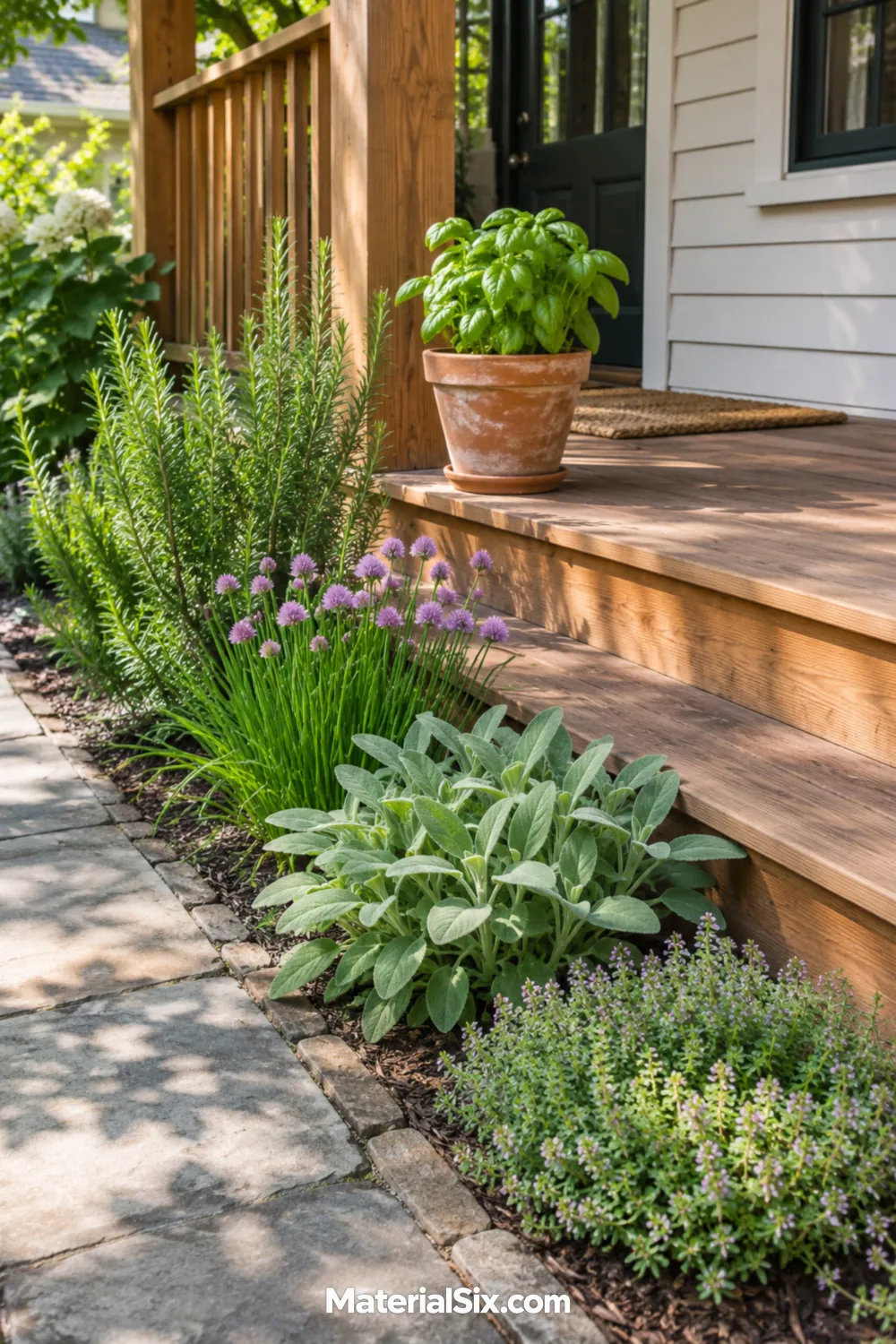
A sunny bed near your porch can hold herbs as well as ornamentals. Repeated clumps of leafy and fine-textured herbs create a useful garden edge that feels different from a conventional shrub border.
Choose herbs for your growing conditions and the space you can maintain. Keep plants with vigorous spreading habits in separate containers, and leave small gaps where you can reach in to harvest. A simple path-side location makes the planting easier to use, but foliage should stay outside the walking route. Mix textures deliberately and keep the layout uncluttered so the bed still supports the front entrance.
17. Weave Warm Path Lighting Through the Porch Border
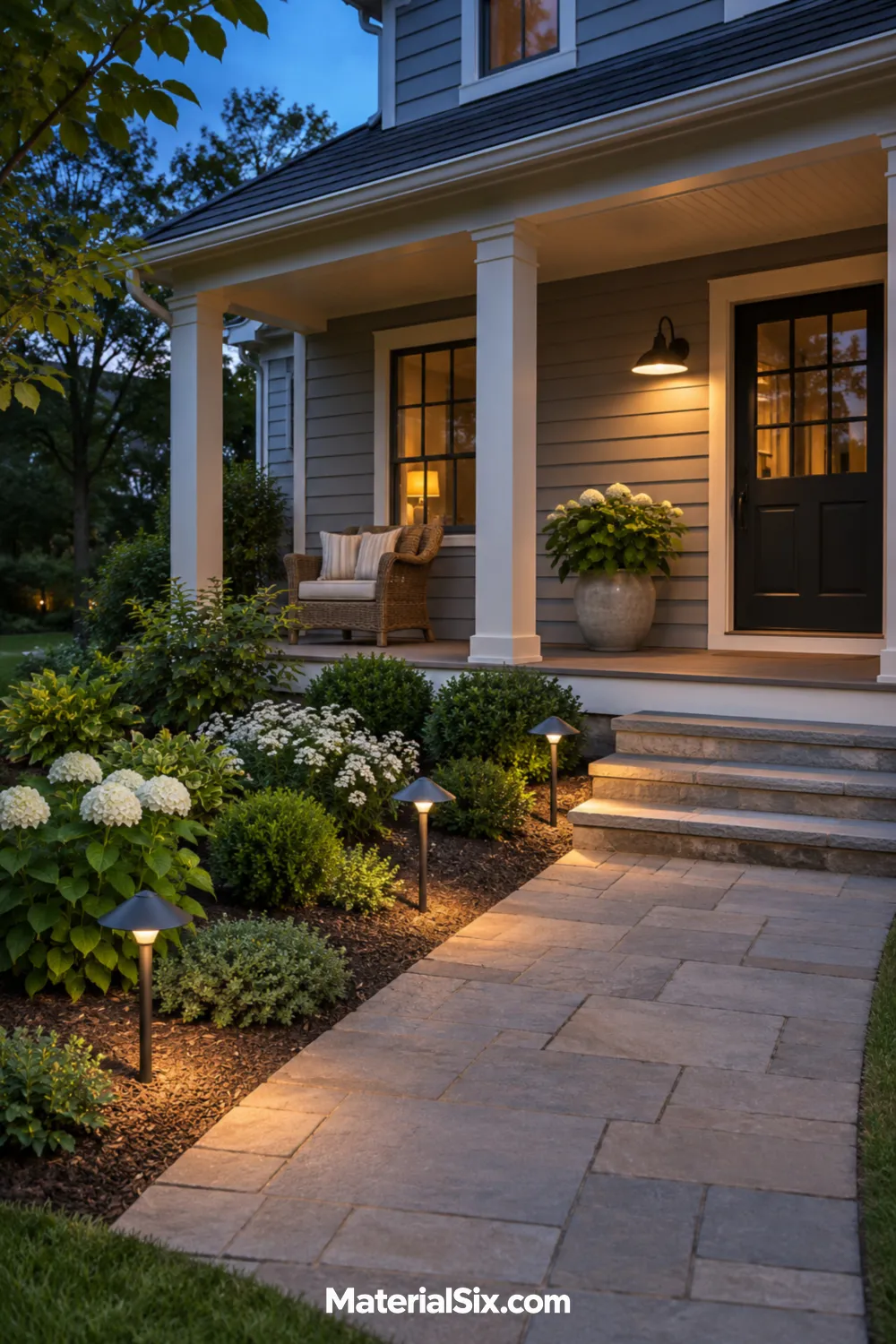
Planting beside the porch should still make sense after daylight fades. A few shielded path lights can reveal the edge of the approach while a warm porch fixture connects the garden to the door.
Place lights with the route and plant growth in mind, keeping fixtures out of the walking surface and away from foliage that may cover them. Aim the light toward the path rather than into the street or neighboring windows. Repeating a restrained fixture style keeps the scene calm. Plan outdoor electrical work for your site and use appropriately rated equipment instead of treating lighting as a purely decorative addition.
Start with the part of your entrance that needs the clearest connection: the steps, an exposed porch base, a blank corner, or the path from the street. Choose one planting approach that suits that space before adding more details. Save a few favorite layouts, compare them with your actual growing conditions, and build a front garden that leaves the porch welcoming and the entrance easy to use.