
If you’ve been collecting garden layout ideas but still feel unsure how to arrange your space, this roundup will help you see what actually works.
These visual garden design plans cover everything from small backyard zones and flower bed layouts to vegetable garden layouts, raised beds, and potager-inspired designs.
You’ll get ideas that look beautiful and also make sense for flow, structure, and everyday use. If you’re just getting started, these garden layout ideas for beginners can help you understand the basics before choosing a layout style.
1. Symmetrical Front Yard Garden Design Layout
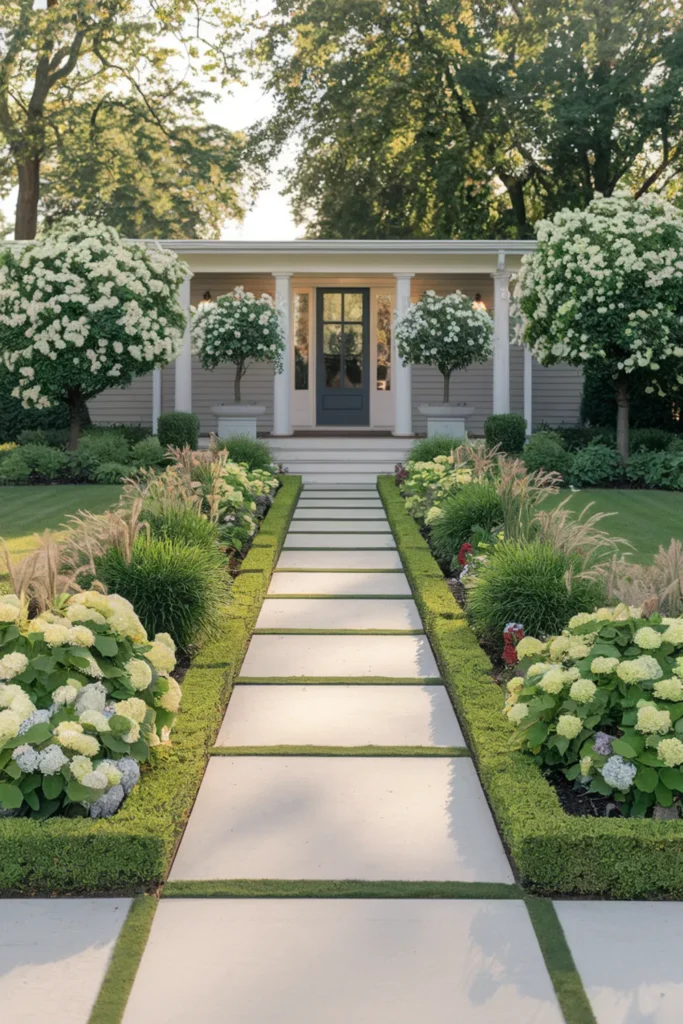
A symmetrical front yard garden design layout gives you a calm, polished look before anyone reaches the porch.
Start with a straight center path, then mirror your planting beds on both sides using matching shrubs, flowers, and small trees. This layout pattern works well when you want clear structure and easier upkeep because the arrangement repeats.
Path lights and porch planters help guide the eye and improve flow from sidewalk to entry.
If you want a fresh twist, change flower colors by season while keeping the same bed shape.
2. Curved Backyard Garden Layout With Layered Planting Beds
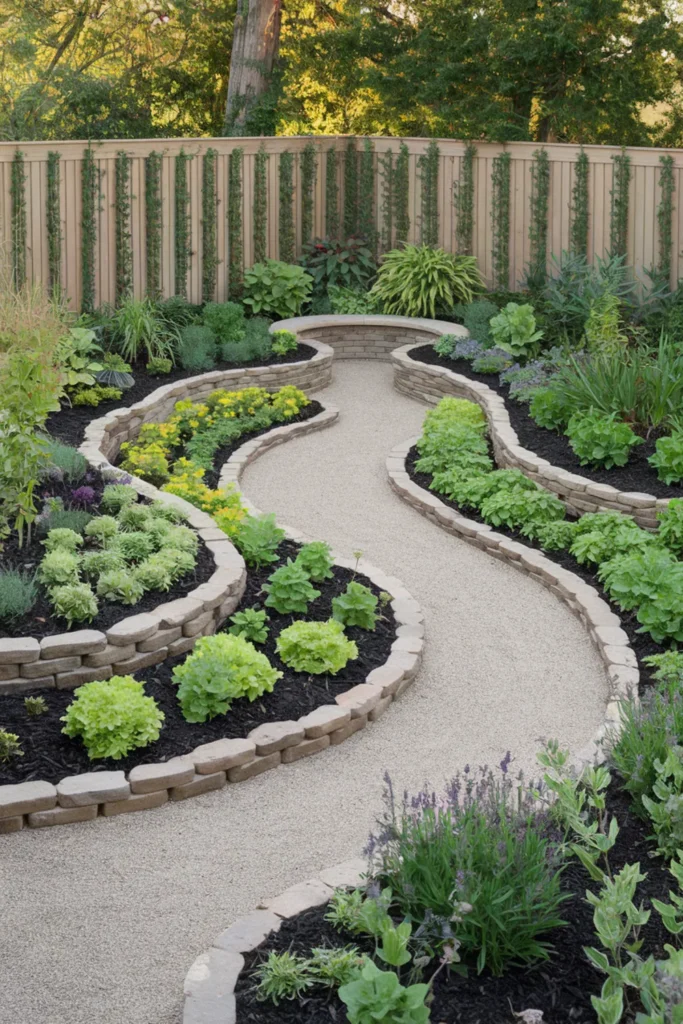
Instead of straight lines, this curved backyard garden layout uses a soft path-based pattern that feels relaxed and inviting.
You can arrange layered planting beds along a winding gravel path, placing low plants near the edge and taller shrubs behind them for depth.
The flow becomes the star here because each curve reveals a new view of your garden design. A small seating nook at the end gives the layout a clear destination.
If you want more ideas like this, explore these backyard garden layout plan ideas for more ways to structure paths, planting beds, and focal points.
Try repeating a few plant groupings along the path so the space feels connected, not random.
3. Small Backyard Garden Layout With Zoned Seating and Planting
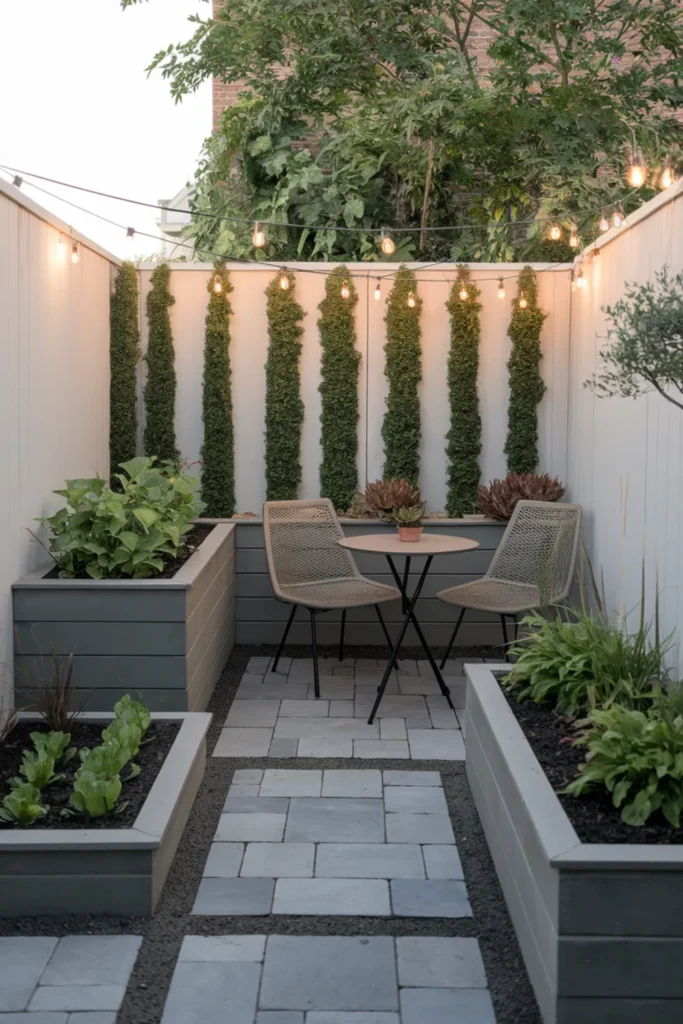
This small backyard garden layout works best when you treat the space like mini zones with one job each.
Place a bistro seating area in one corner, raised planting beds in another, and a slim privacy planting strip along the edge, then leave a clear center path for movement.
That zoned layout pattern keeps your yard useful without feeling crowded. You get better flow because each area is easy to reach and easy to use.
For extra charm, add matching planters or lights to visually tie the zones together.
4. Patio Garden Ideas Layout for a Compact Outdoor Space
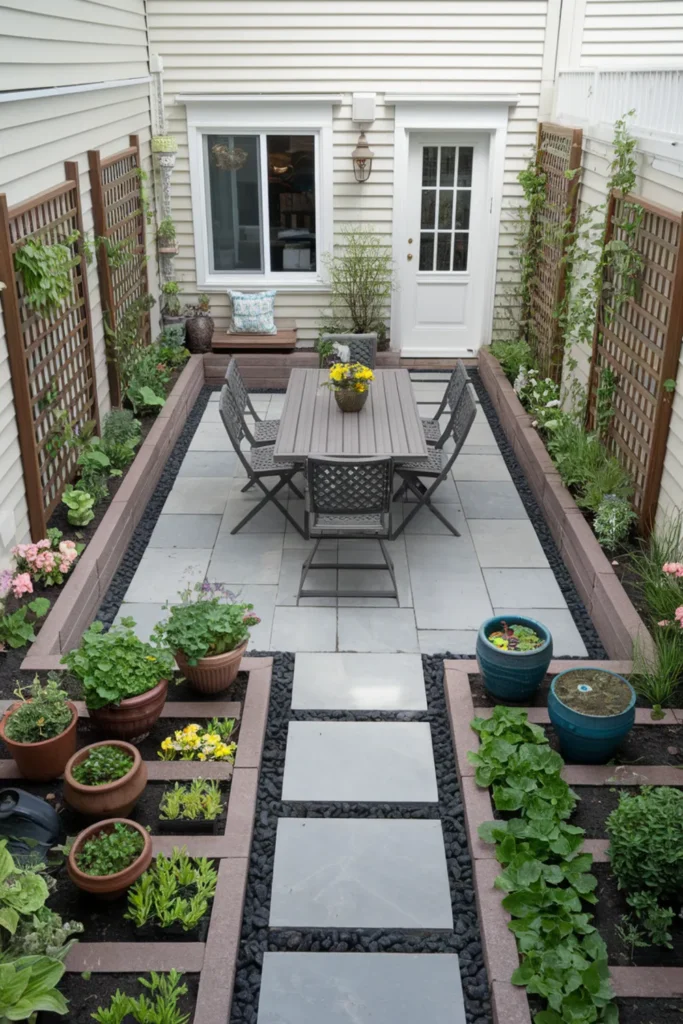
A compact patio garden ideas layout should keep your seating area usable while still giving you plenty of greenery.
Set a central dining or lounge zone first, then frame it with narrow planting borders, corner containers, and a slim path that connects the door to the gate.
This arrangement creates a clear structure, so the patio feels organized instead of packed. Vertical trellis panels and staggered pots add height without taking over floor space.
If you cook often, place herbs near the door for quick picking and better daily flow.
5. Long Garden Ideas Layout With a Strong Focal Path
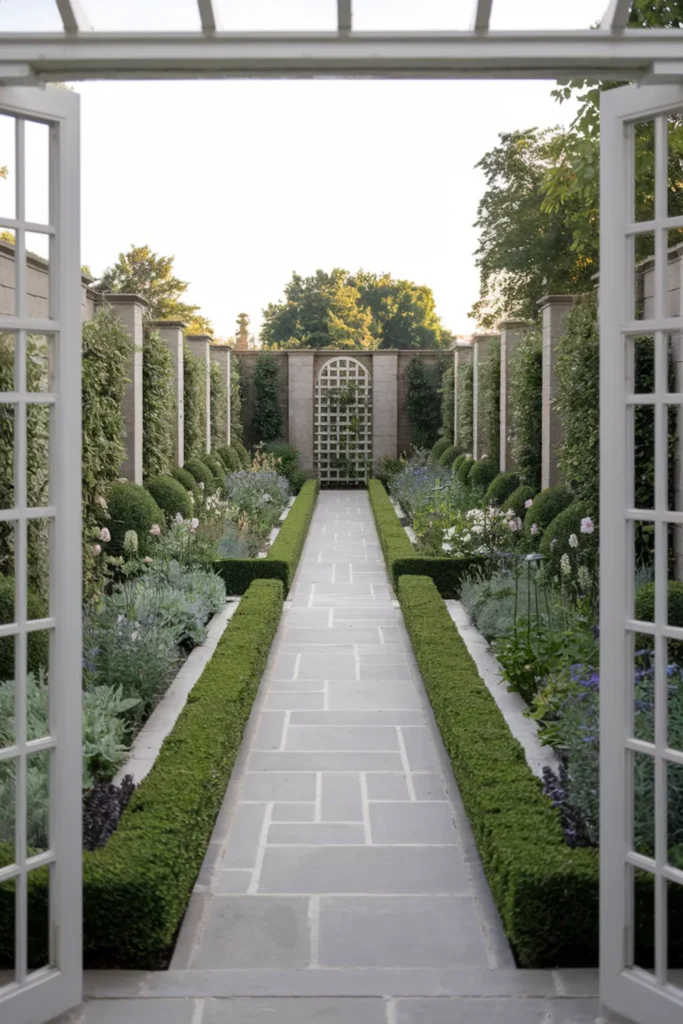
Long garden ideas layout plans often work best with a strong focal path that pulls your eye forward.
Use a linear path-based structure, then break the space into repeating sections with planting beds, clipped shrubs, and flower groupings on both sides.
This arrangement improves flow because you move through the garden in clear stages instead of seeing one long strip. A bench, arbor, or statement planter at the far end gives the layout purpose.
To soften the narrow shape, add subtle curves in bed edges or layered plant heights.
6. Garden Plot Design Ideas for a Clean Grid Layout
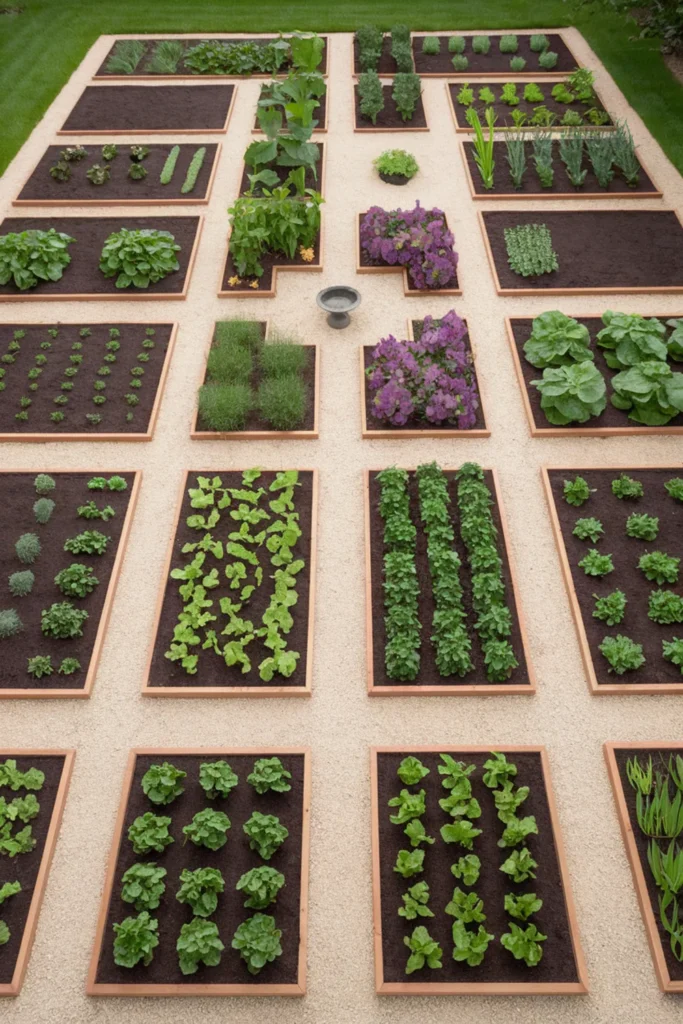
A clean grid layout makes your garden plot design feel organized from the first glance.
You can divide the space into equal squares or rectangles, then assign each section to flowers, herbs, or vegetables based on how you use the yard.
Straight gravel paths between plots improve flow and make watering, pruning, and harvesting much easier.
This layout pattern also helps you expand later without changing the whole design. For a more decorative look, place a birdbath or planter in the center to anchor the structure.
7. Simple Garden Layout With Easy-to-Maintain Border Beds
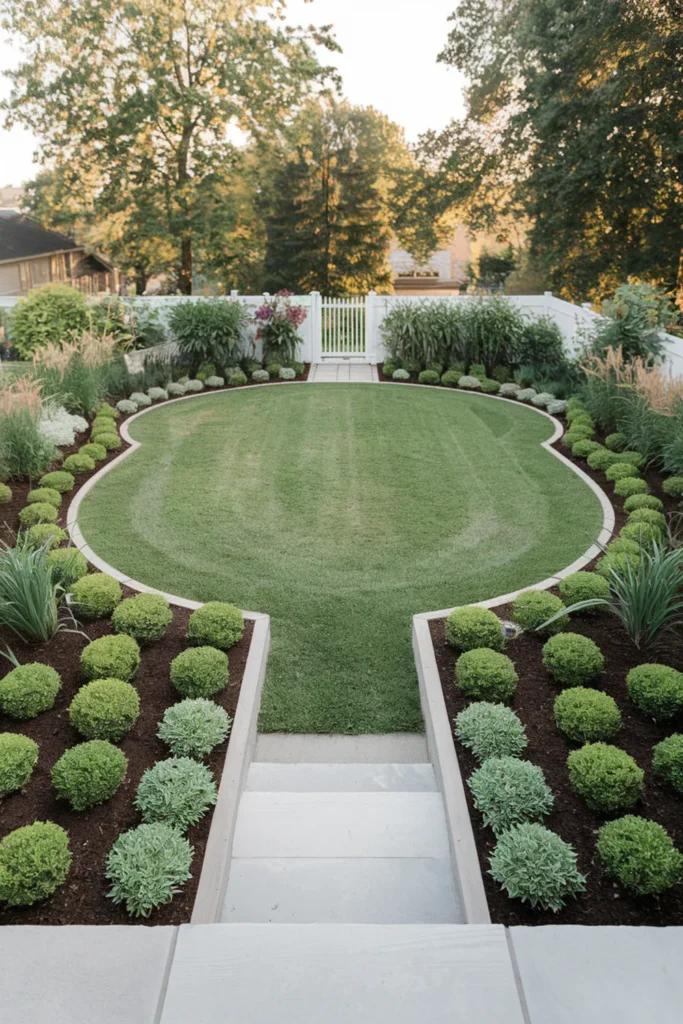
This simple garden layout is a smart choice when you want a tidy yard without a lot of upkeep.
If easy upkeep is your top priority, these low maintenance garden ideas will give you even more practical options for a busy schedule.
Keep the center open as lawn or flexible space, then arrange easy-to-maintain border beds around the edges with shrubs, grasses, and repeating perennial groups.
That perimeter layout pattern gives you clear structure while leaving room for kids, pets, or outdoor seating.
A path from patio to gate keeps the flow practical for everyday use. If you want more color, swap in seasonal blooms only in a few key spots.
8. Garden Beds Layout With Central Walkway Design
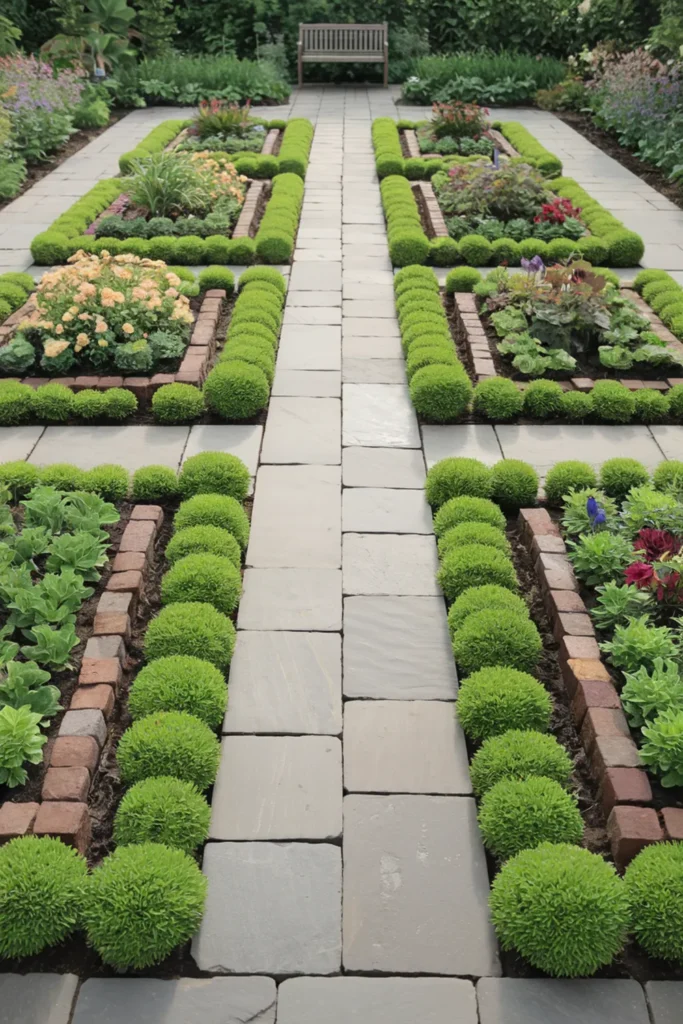
A central walkway design gives your garden beds layout a strong backbone and makes the whole space easier to read.
Start with one straight path through the middle, then arrange beds on both sides in a mirrored or near-symmetrical pattern.
You can layer flowers and shrubs by height to guide the eye toward a bench, trellis, or planter at the end.
This setup improves flow because every bed connects to the main route. For a softer look, keep the path straight but use slightly curved bed edges.
9. Garden Layout Ideas Design for Mixed Flower and Shrub Beds
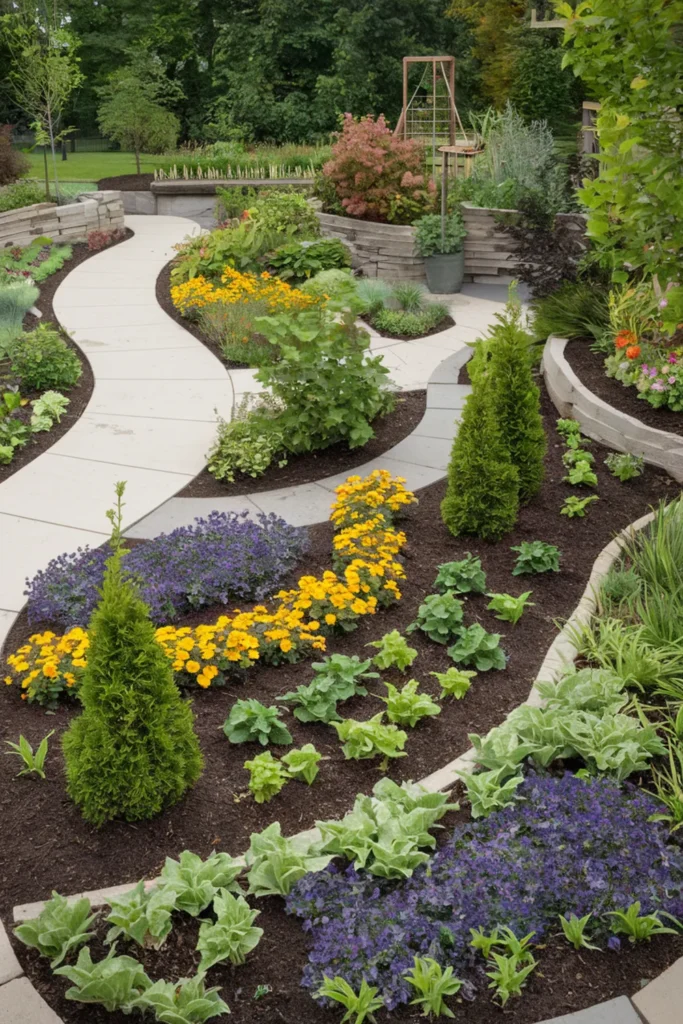
Mixed flower and shrub beds work best when your garden layout design has a clear path and repeating plant groups.
Place taller shrubs first as anchors, then weave in flower drifts around them so the arrangement looks full but still structured.
A curved walkway helps the flow feel natural, especially in a backyard garden design where you want movement and layered views.
You can add a small seating spot in one corner to create a destination. Try repeating two or three colors to keep the layout cohesive. If you love a softer, layered look, these cottage garden layout ideas are a great next step for adding charm without losing structure.
10. Garden Design Plan With Plants for Four-Season Color
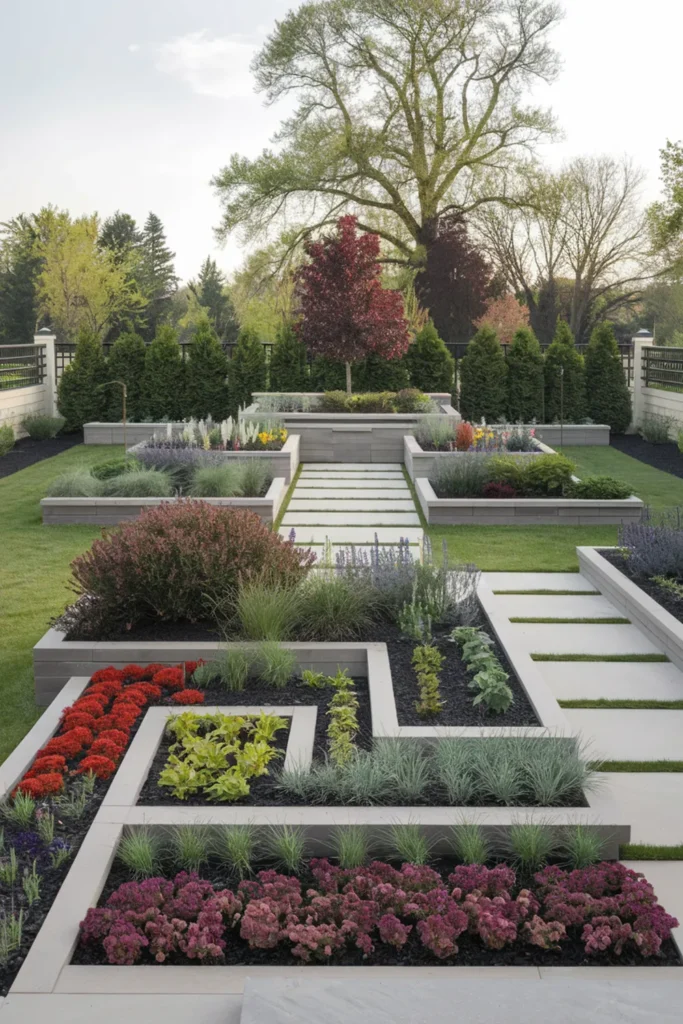
A four-season garden design plan helps you enjoy color and texture long after one bloom cycle ends.
Arrange your planting beds in layers, with early spring flowers near the entry, summer color in the middle zones, and late-season blooms deeper in the layout.
Evergreen shrubs and ornamental grasses keep the structure strong when flowers fade.
This area arrangement improves flow because each section gives you a different highlight as you move along the path. For extra interest, add one focal tree where you can see it from the patio.
11. Raised Flower Bed Layout for a Neat Front or Side Yard
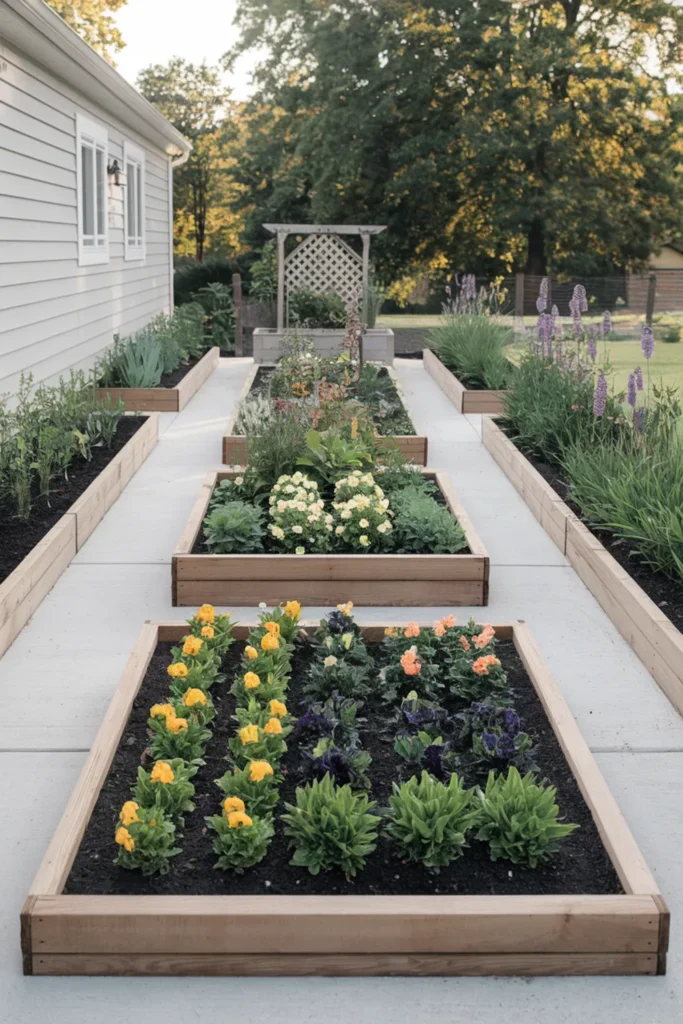
A raised flower bed layout gives your front or side yard a cleaner structure and makes planting zones easier to control. For more structure and spacing ideas, check out these raised bed garden layout tips for practical designs that are easier to plant and maintain.
Place the raised beds along the house line or property edge, then arrange flowers in layers from low blooms in front to taller plants in back.
This layout pattern creates a strong border while keeping the center area open for movement and maintenance.
A narrow walkway beside the beds improves flow when you need to prune or replant. For a fresh spin, repeat one bed shape all along the side yard.
12. Backyard Flower Garden Design With Color-Blocked Sections
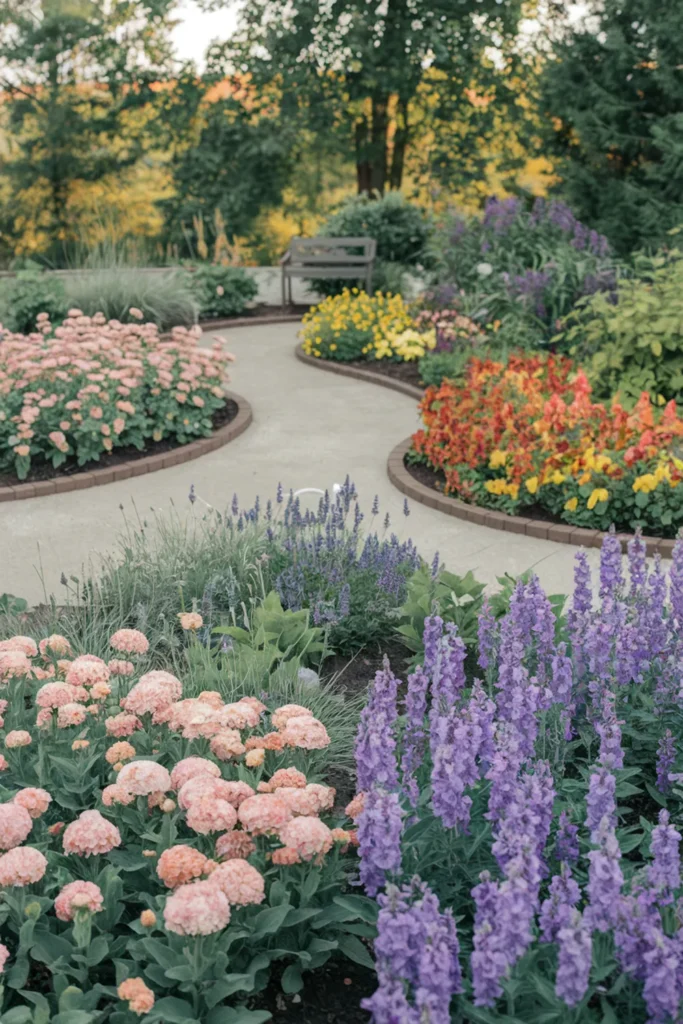
Color-blocked sections can make your backyard flower garden design look bold without feeling messy.
Divide the garden into clear planting zones, then assign each bed a color family like pinks, warm tones, or cool purples.
A loop path or curved walkway helps the flow by letting you move from one color section to the next in a natural order.
This area arrangement also makes seasonal updates easier because you can refresh one zone at a time. Add a bench where two color blocks meet for a strong focal view.
13. Planning a Flower Garden Layout Around Bloom Timing
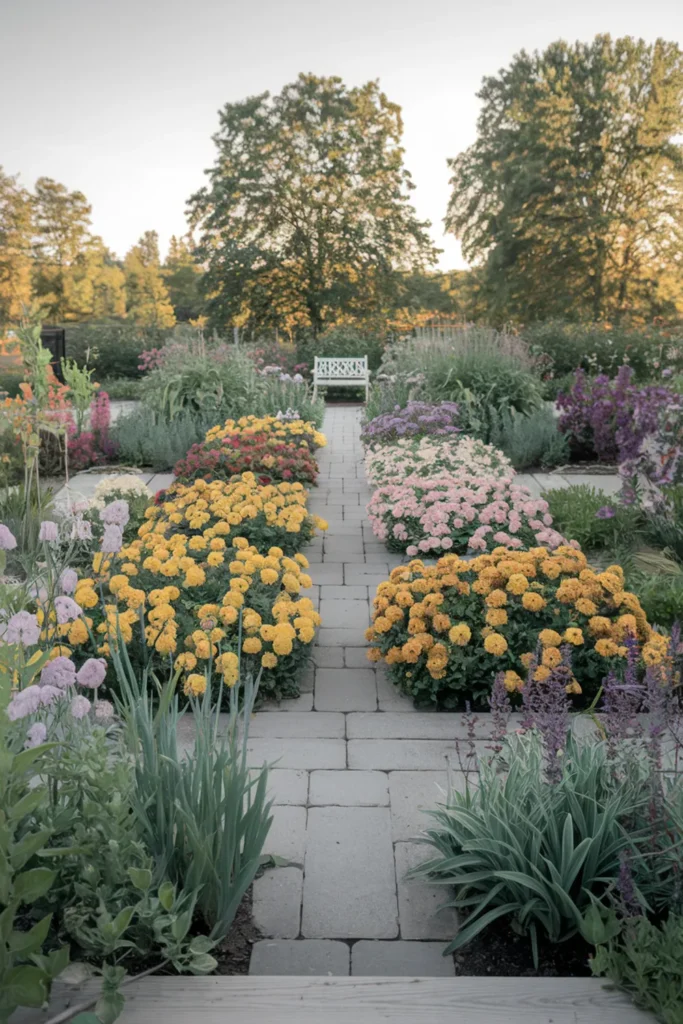
Planning a flower garden layout around bloom timing gives you a yard that changes beautifully through the year. If you also want flowers you can harvest for arrangements, these cut flower garden layout ideas can help you plan beds that are both beautiful and productive.
Set up a path-based layout, then arrange early bloomers near the entry, mid-season flowers in central beds, and late bloomers near your seating area or focal point.
That structure keeps the garden interesting as you move through each season.
Foliage plants between bloom groups help the flow stay visually smooth when one section is resting. If you want simpler upkeep, repeat a few dependable plants across multiple timing zones.
14. How to Plan a Flower Bed With Height-Based Plant Layers
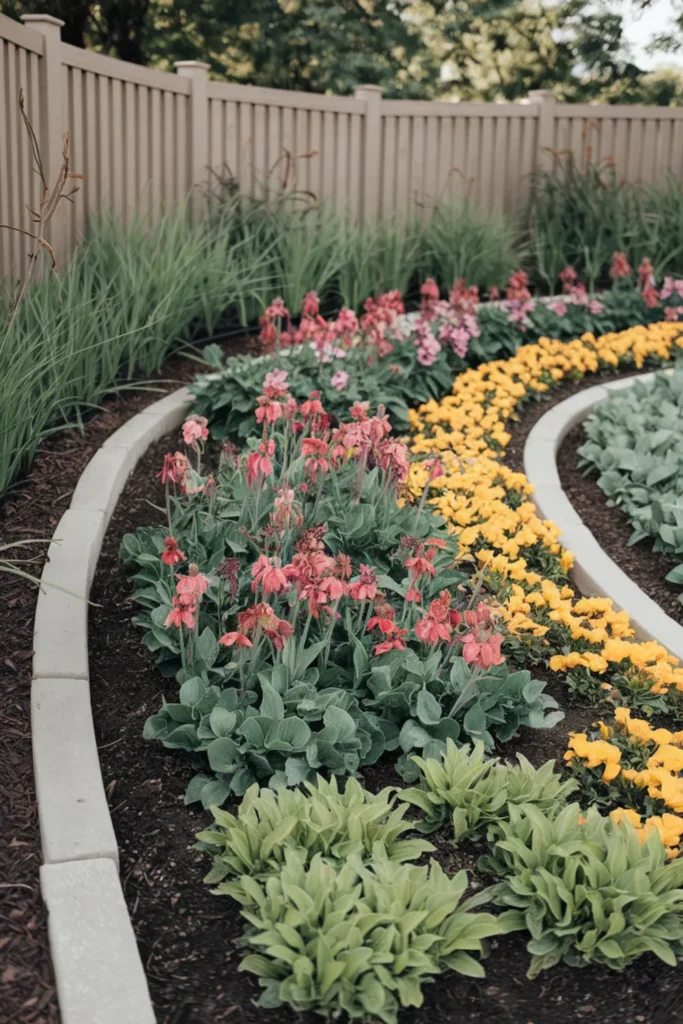
A height-based flower bed layout is one of the easiest ways to make your planting look intentional.
Start by placing tall plants at the back edge or center, medium-height flowers in the middle, and low edging plants at the front.
This arrangement creates depth and keeps each layer visible, which improves both structure and flow along a path or lawn edge.
Curved bed lines also help soften the look while guiding the eye across the space. For a cleaner design, repeat plant groups instead of mixing too many varieties.
15. Garden Layout Ideas Design Flower Beds Around a Lawn Centerpiece
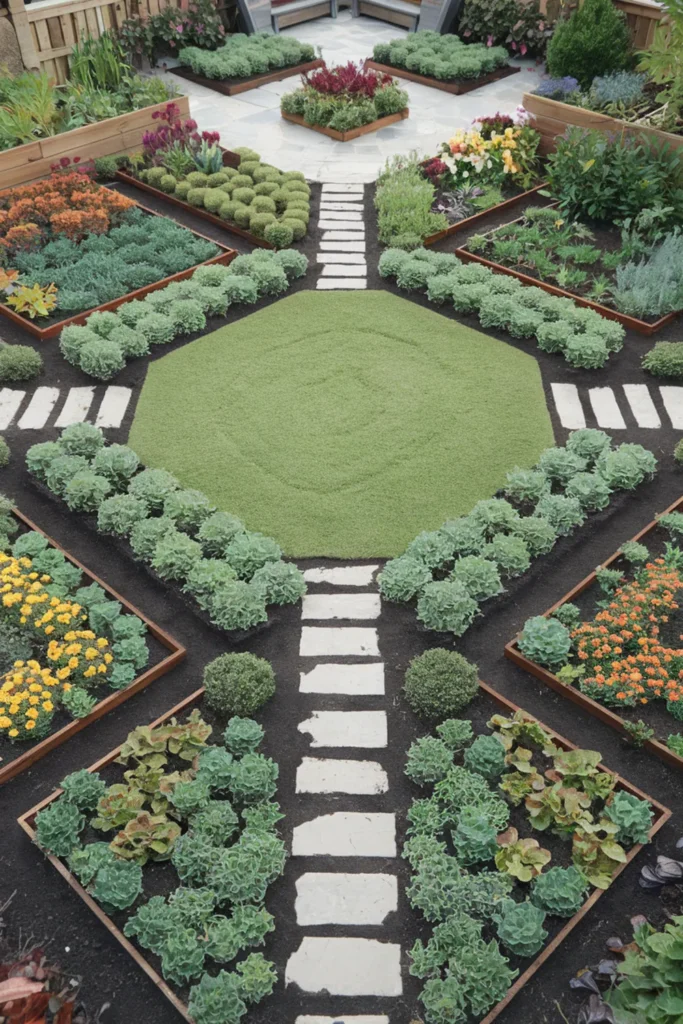
Using a lawn centerpiece can make your garden layout ideas design feel balanced and easy to enjoy.
Keep the middle area open as a clean lawn panel, then arrange flower beds around the edges and corners to frame that green center.
A partial path or stepping-stone route helps the flow by connecting the beds to a seating spot or focal feature.
This layout pattern works well when you want both open space and lush planting. To add more character, use one corner as a layered feature bed with shrubs and seasonal flowers.
16. Small Plot Garden Ideas With Vertical Accents and Pathways
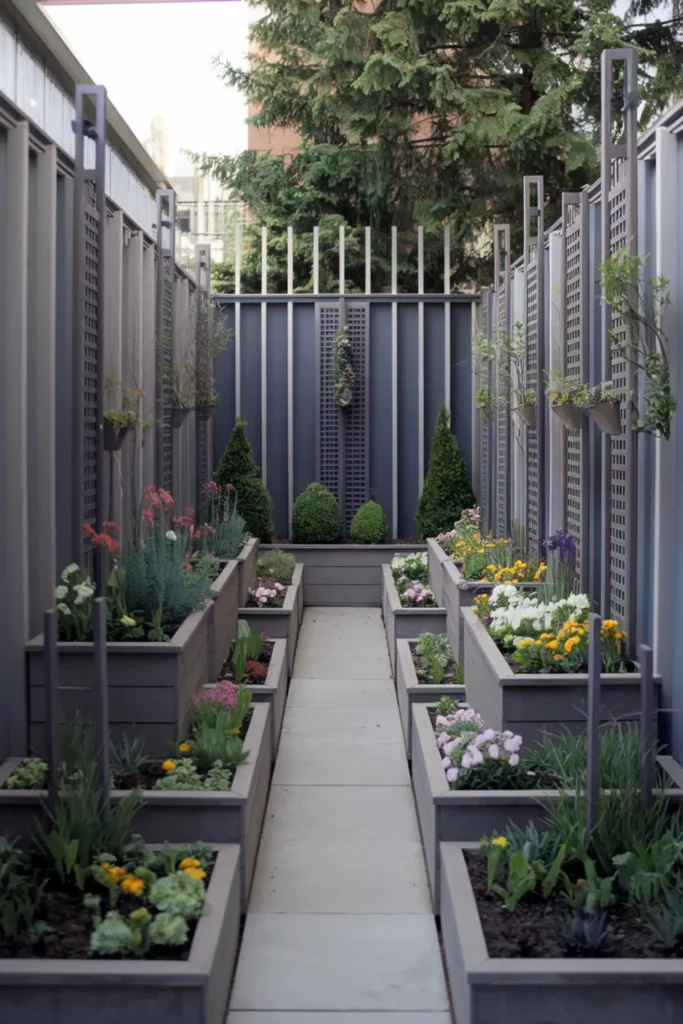
A small plot garden can feel much bigger when you use vertical accents and a clear path layout.
Place a narrow walkway through the center or along one side, then arrange planting beds in compact layers around it.
Trellises, obelisks, or slim arbors pull the eye upward, which adds height and improves the flow of the space.
This layout pattern keeps the garden from looking flat or crowded. For a creative twist, repeat one vertical feature style in two spots to make the design feel more connected.
17. Small Outdoor Spaces Garden Layout With Multi-Use Corners
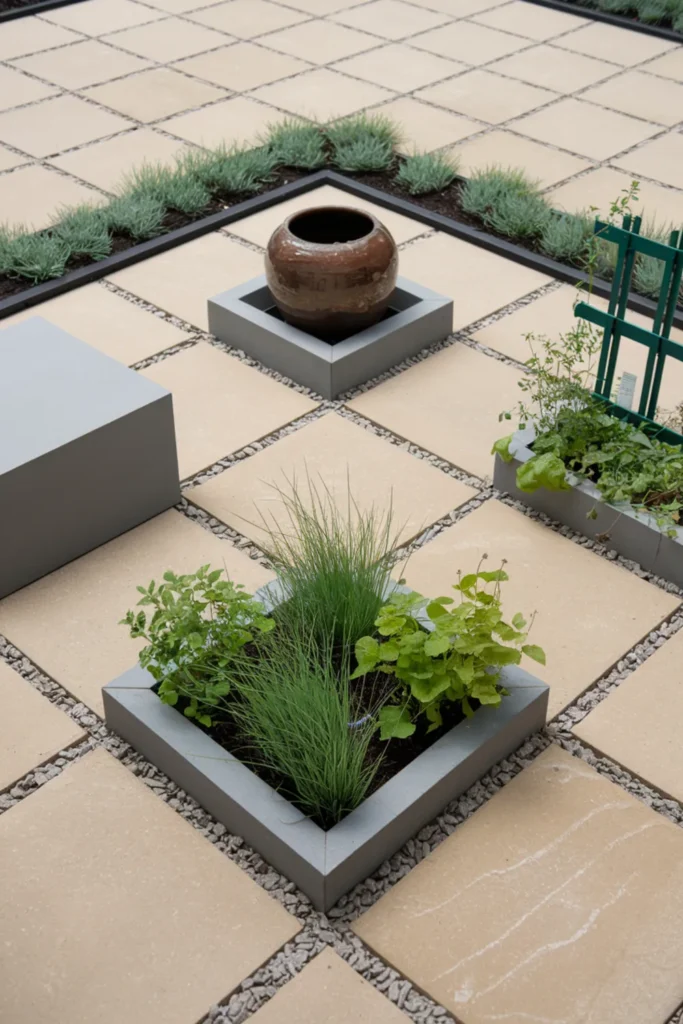
Small outdoor spaces work better when each corner has a clear purpose.
You can arrange one corner for seating, another for container plants, one for vertical herbs, and keep one corner open for circulation or a focal piece.
This zoned garden layout creates structure fast, even in a tight backyard or patio edge. Pavers, gravel, and planted borders help define the areas and improve movement between them.
For more space-smart setups, see these small garden layout ideas that help you maximize every corner without making the space feel cramped.
If the space feels busy, repeat the same planter color or material to make the whole layout look more unified.
18. One Acre Garden Layout With Functional Zones
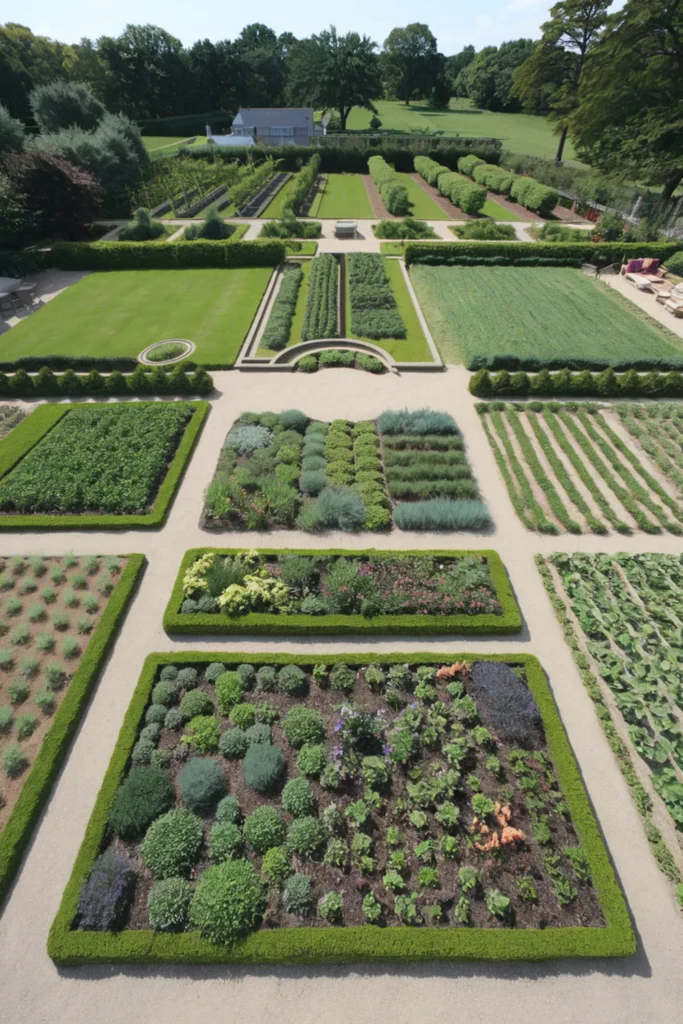
A one acre garden layout becomes easier to manage when you divide it into functional zones from the start.
Set up clear sections for ornamental beds, vegetable growing, orchard rows, lawn, and seating, then connect them with wide paths or gravel lanes.
This area arrangement gives your garden design structure and helps the whole property feel intentional instead of scattered.
You also get better flow because each zone has a clear route in and out. For a cleaner look, use hedges or low borders to mark transitions between spaces.
19. Large Garden Ideas Layout With Open Views and Garden Rooms
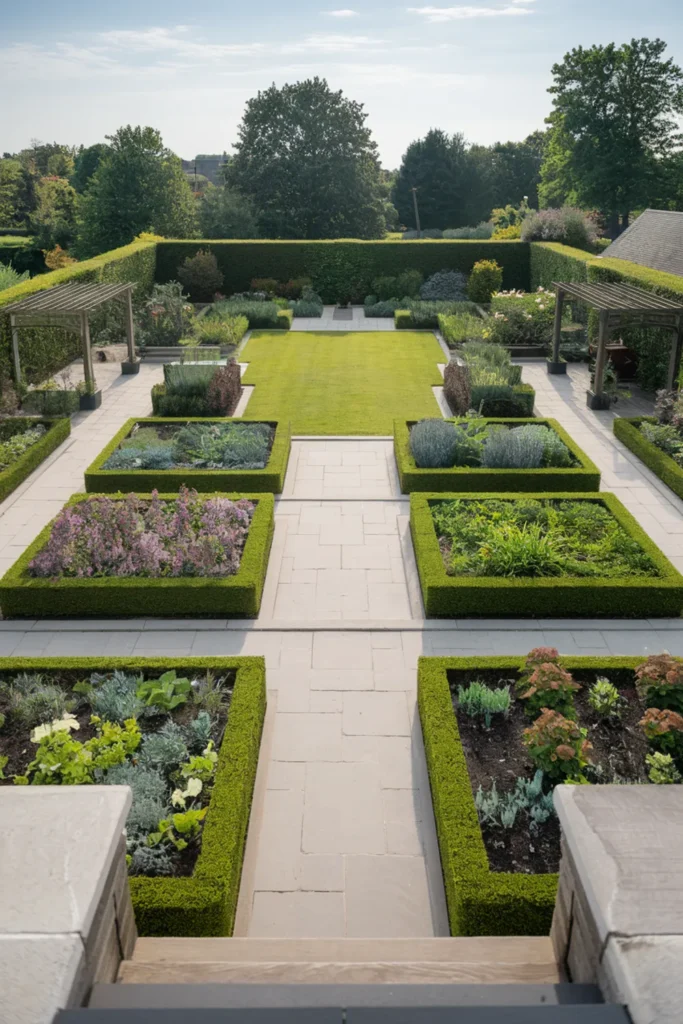
Large garden ideas layout plans feel more inviting when you mix open views with defined garden rooms.
Keep one main lawn or wide planted view open, then arrange separate spaces like a flower area, quiet seating nook, and productive garden behind soft dividers such as hedges, pergolas, or planting screens.
This layout pattern gives you structure without making the yard feel closed in.
Clear paths and framed openings improve flow from one area to the next. For extra charm, give each garden room a different focal feature.
20. Landscape Design Ideas Layout for a Sloped Backyard Garden
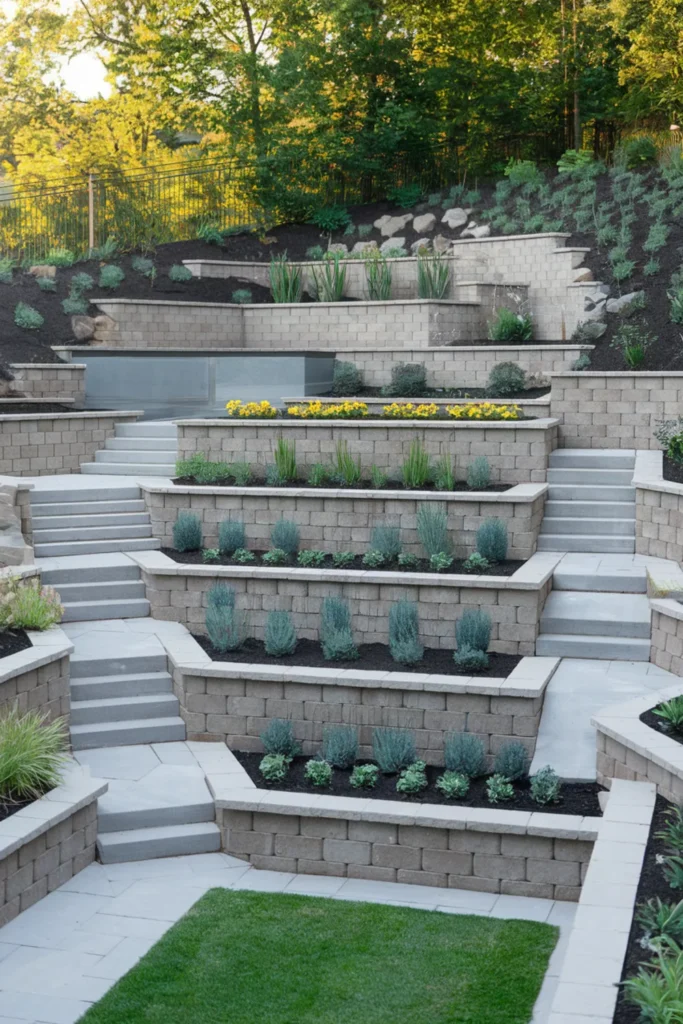
A sloped backyard garden needs structure first, and terraced zones are a smart way to build it.
Arrange the space by levels, such as a top patio, middle planting terraces, and a lower lawn or seating area, then connect everything with steps or a winding path.
This layout pattern improves flow because each zone feels usable instead of steep or awkward.
Layered plants along retaining walls also soften the edges and tie the levels together. If you want a more natural look, mix straight terraces with curved planting lines.
21. Beginner Vegetable Garden Layout for a Small Backyard
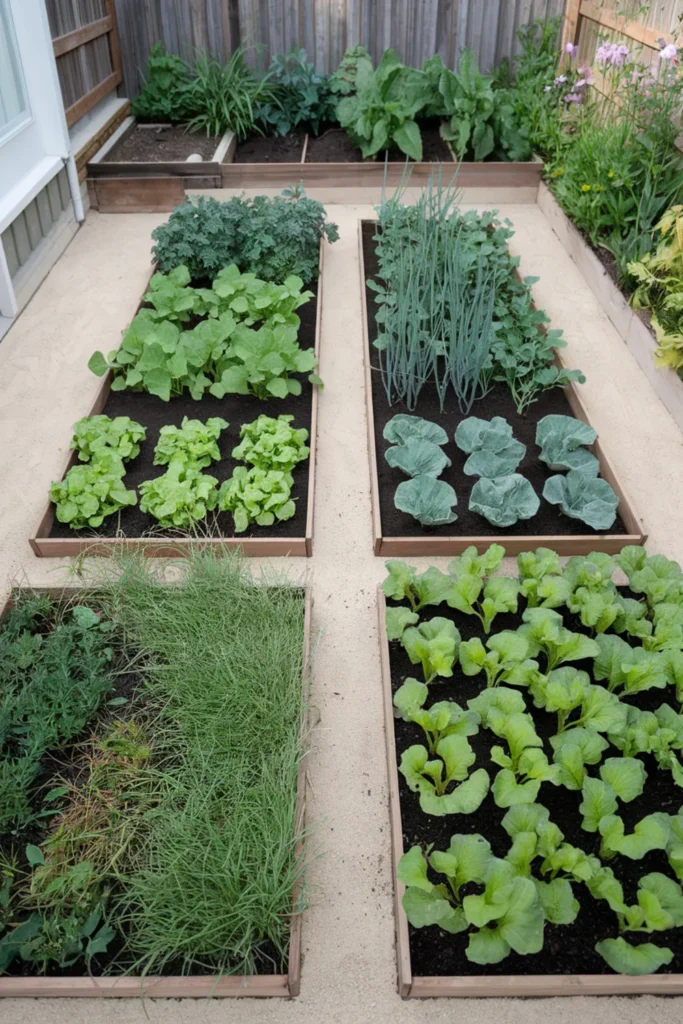
A beginner vegetable garden layout works best when the structure is simple and easy to follow. If you want more planting patterns and bed arrangements, explore these vegetable garden layout design ideas for layouts that work in small and larger spaces.
Start with a small rectangular layout pattern, then arrange a few growing beds in one or two rows with a main path leading from the back door.
Place herbs closest to the house for quick use, and keep taller vegetables in the back so they do not block sun. This setup improves flow for watering and harvesting.
If you want less stress, leave space for one empty bed you can plant later.
22. Small Vegetable Garden Layout for Beginners With Clear Rows
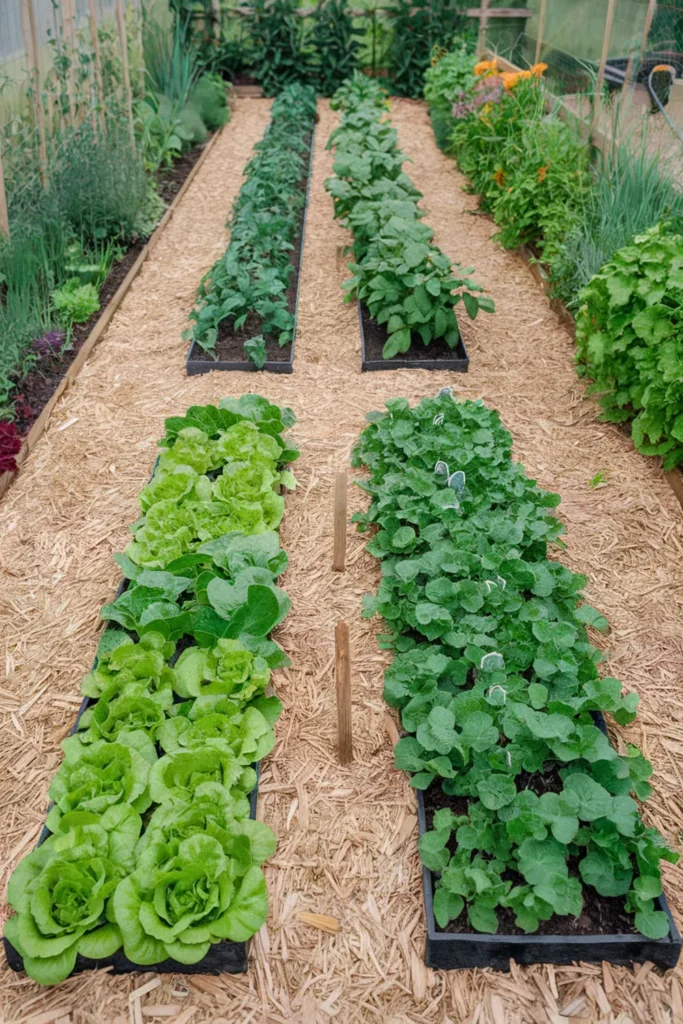
Clear rows make a small vegetable garden layout easier to plant, track, and maintain.
Use a row-based pattern with straight planting lines and simple walking paths between them, then group crops by height so low growers stay in front and taller plants sit along the back edge or fence.
This arrangement keeps the structure readable and helps you move through the garden without stepping into beds. Row markers can also make planning easier.
For a softer look, add a slim herb or flower strip along one side.
23. Easy Vegetable Garden Layout With Wide Paths and Starter Crops
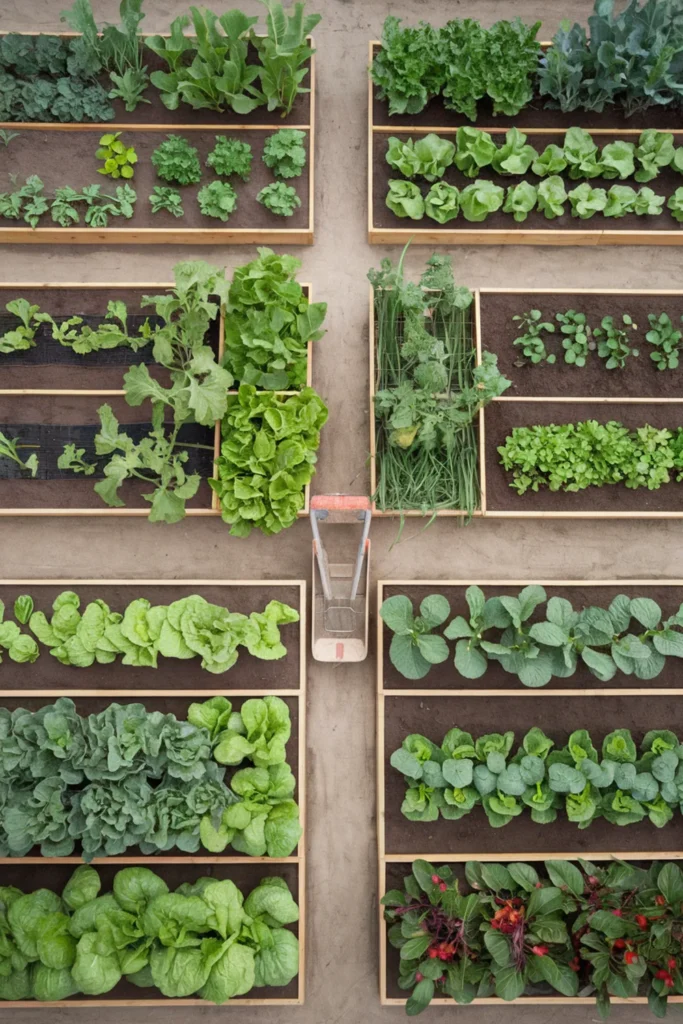
An easy vegetable garden layout becomes much more practical when you give yourself wide paths from the start.
Arrange beds in a simple grid or parallel layout, then leave enough walking space for watering cans, tools, or a small cart.
Group starter crops by similar care needs, with quick greens near the entrance and larger crops deeper in the garden.
This area arrangement improves flow and makes daily tasks feel less cramped. If your yard is small, reduce bed size first, not the path width.
24. Family Vegetable Garden Layout With Harvest-Friendly Flow
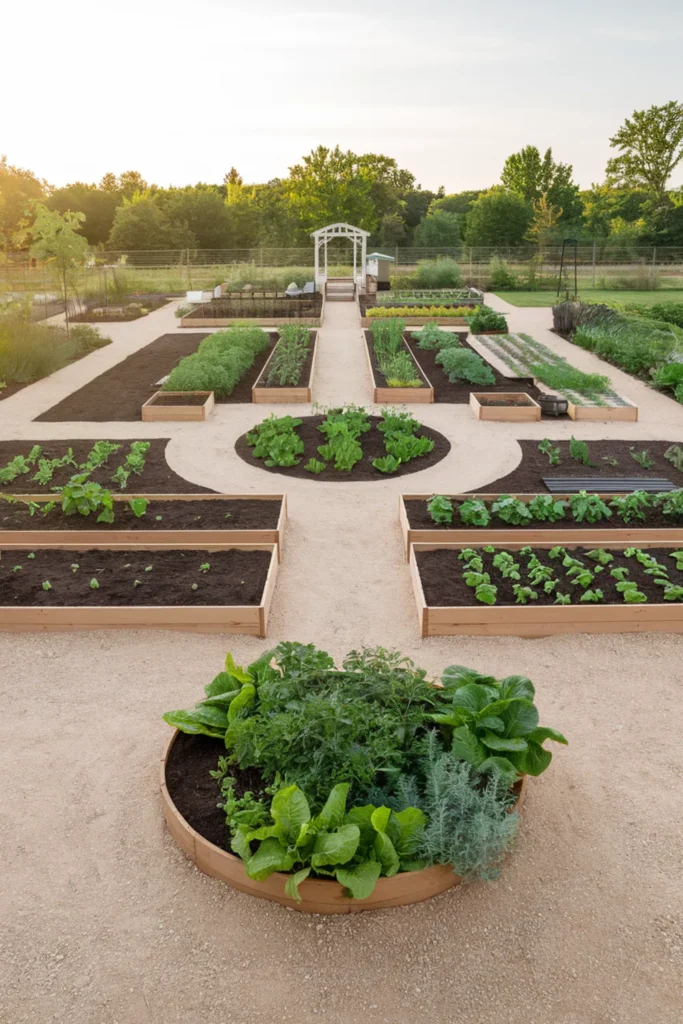
A family vegetable garden layout should make harvesting feel easy for everyone, not just the person who planted it.
Use a zoned layout with a central path loop, then arrange quick-pick herbs and kid-friendly crops near the entrance while larger seasonal beds sit farther back.
This structure creates smooth movement and gives each area a clear purpose. Wide paths also help when two people are picking at the same time.
For a fun touch, add a small basket-drop spot or bench near the main entry path.
25. Fruit and Vegetable Garden Layout With Separate Growing Zones
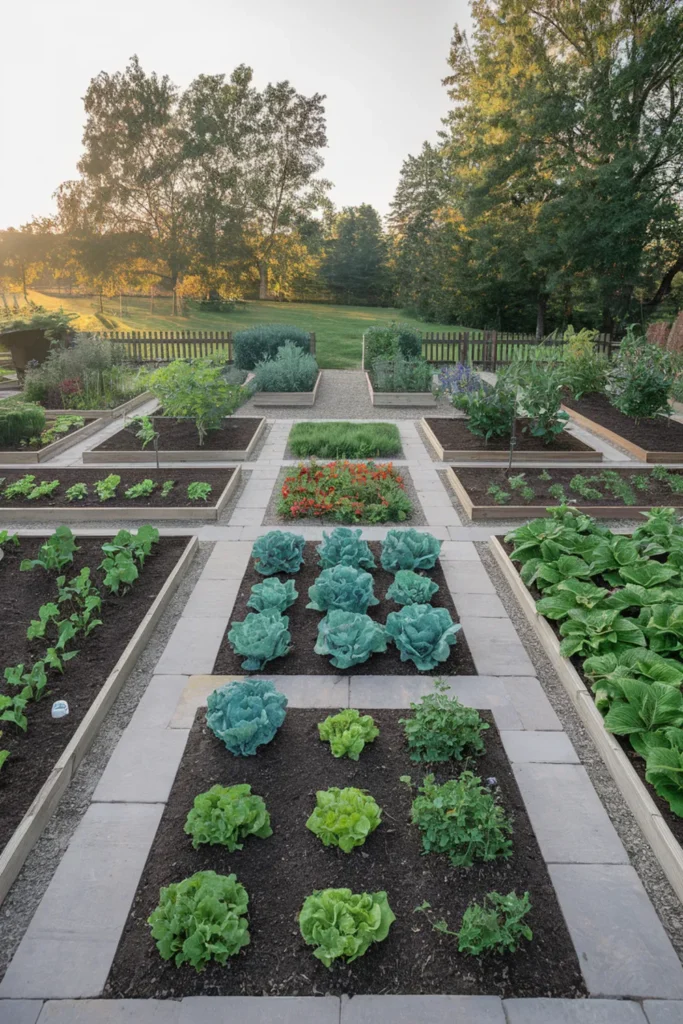
A fruit and vegetable garden layout feels more organized when you split it into clear growing zones.
Place vegetable beds in the sunniest, easiest-to-reach section near the main path, then arrange fruit trees or berry rows along the perimeter or in a separate strip with wider spacing.
A transition zone with herbs or pollinator flowers helps connect the two areas without making the layout feel chopped up.
This setup improves flow and maintenance because each zone has different needs. If space allows, add a loop path for easier access.
26. In-Ground Vegetable Garden Layout Ideas With Row Blocks
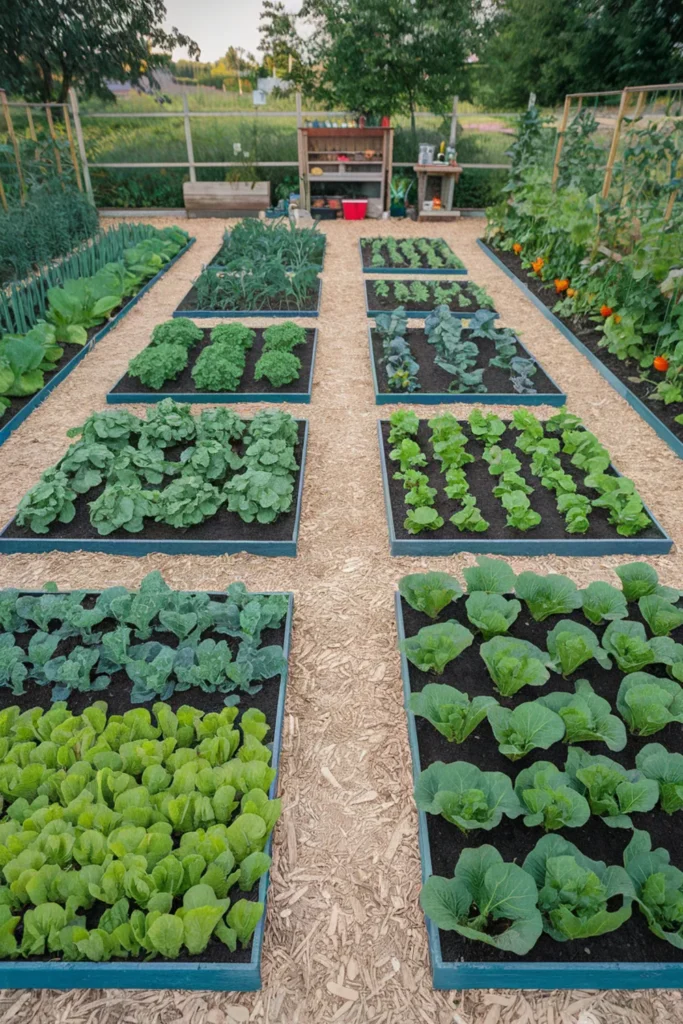
An in-ground vegetable garden layout with row blocks gives you more structure than loose rows without making the space feel too formal.
Divide the garden into rectangular planting blocks, then arrange each block by crop type so watering and harvest routines stay simple.
Keep a main path from the entry to a small work area, with smaller paths between the blocks for easy movement.
This layout pattern helps you see the garden in sections, which makes planning easier. If you want more visual order, repeat the same block size throughout.
27. Raised Garden Layouts for Productive Backyard Vegetable Gardens
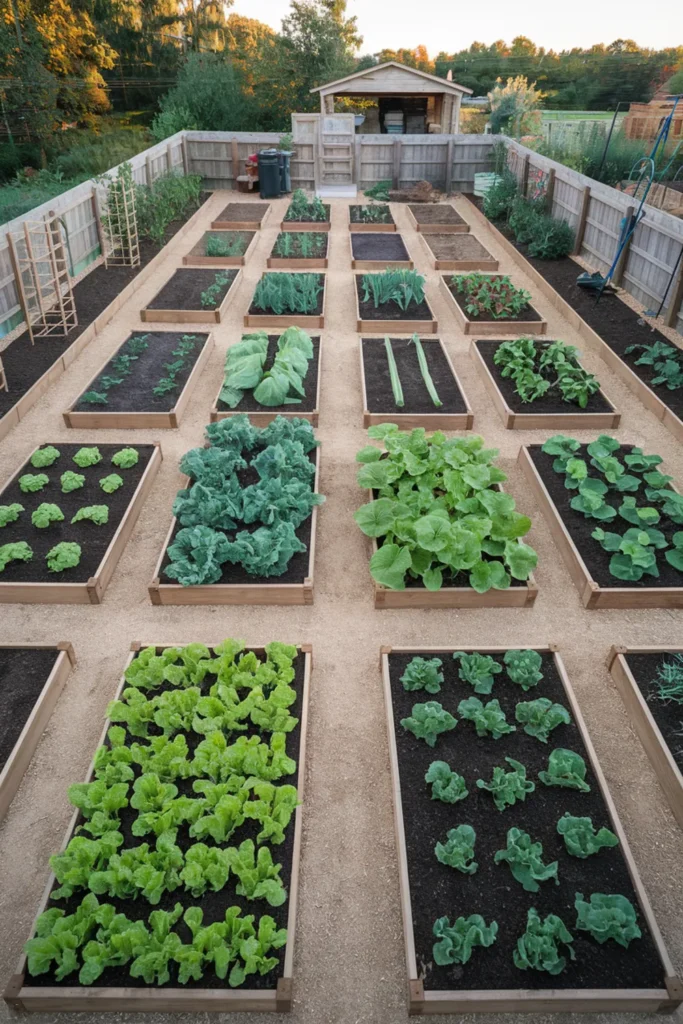
Raised garden layouts can boost productivity when you plan the beds around access instead of squeezing in more boxes.
Arrange multiple raised beds in parallel rows or a neat grid, then add clear paths that connect the entrance, compost area, and watering point.
Place trellis beds along one edge so taller crops do not shade the rest of the garden.
This structure improves flow for daily tasks and keeps each bed easy to reach. For a cleaner look, mix bed sizes but repeat the same material and shape.
28. Best Raised Bed Garden Layout With a Central Access Path
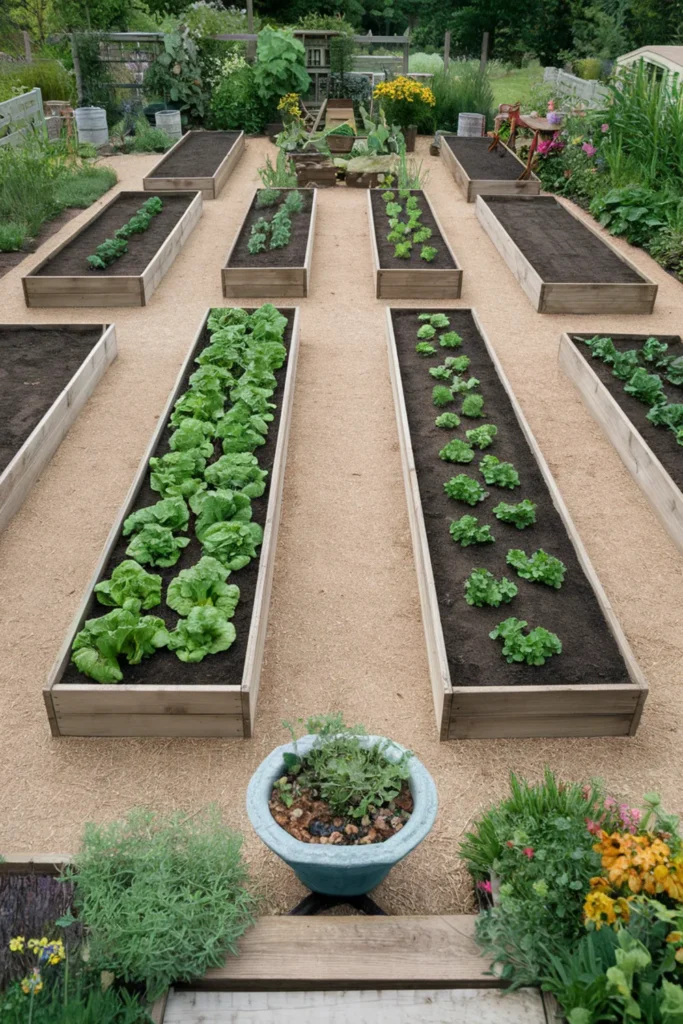
A central access path can make your raised bed garden layout feel organized the moment you step in.
Start with one wide main path, then arrange raised beds on both sides in a mirrored or near-symmetrical pattern for a strong layout structure.
This setup improves flow because every bed connects back to the main route, which helps with watering, pruning, and harvest trips.
A bench, arbor, or planter at the end gives the path a clear destination. If your yard is narrow, shorten the beds instead of narrowing the path.
29. U-Shaped Garden Layout for Raised Beds and Easy Reach
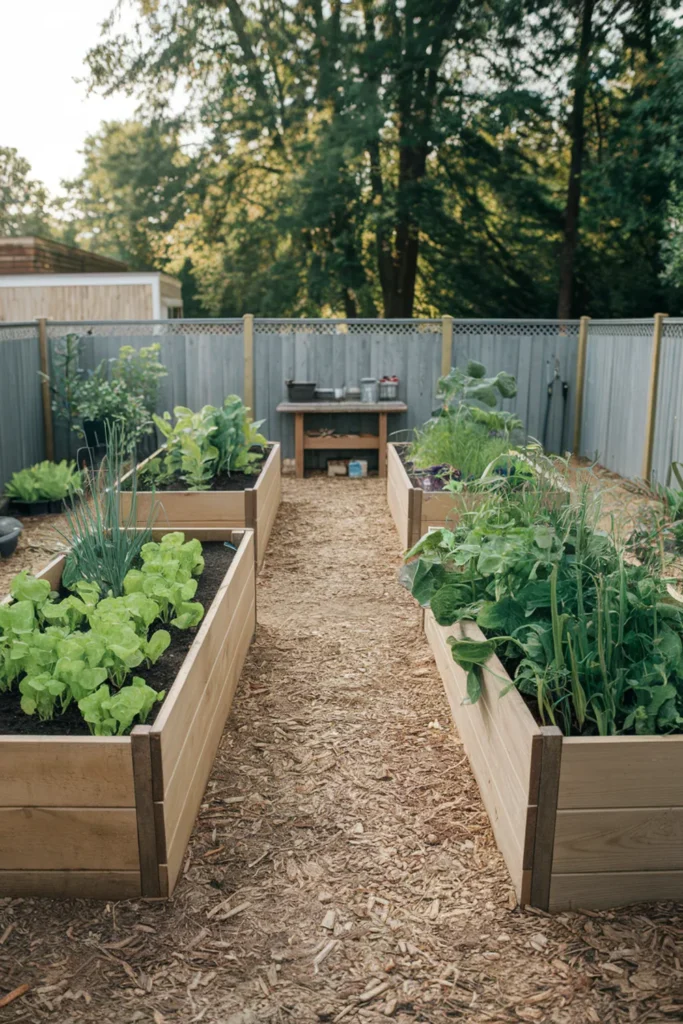
A U-shaped garden layout is a smart choice when you want raised beds close at hand and a comfortable work zone in the middle.
Arrange beds along three sides, then leave the center open for movement, watering, and quick harvest tasks.
Place herbs and salad greens in the nearest sections, with taller crops in the back bed to keep the layout easy to manage.
This pattern supports smooth flow because you can reach each zone without crossing through planting areas. Add a small potting table at the open end for convenience.
30. Raised Garden Bed Vegetable Layout for Small Food Gardens
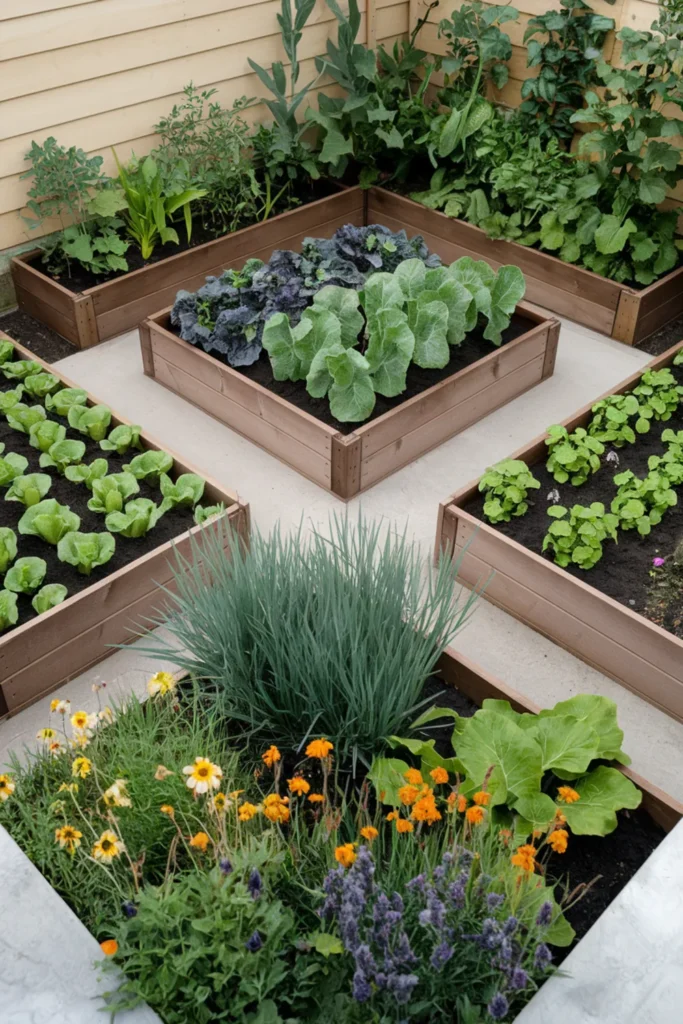
A small food garden can still feel productive when your raised garden bed vegetable layout uses space with intention.
Arrange two to four raised beds in a compact pattern with clear paths, then reserve one corner for herbs or companion flowers to soften the structure.
Group taller vegetables together in the sunniest spot so they do not block lower crops.
This area arrangement improves flow and helps you move through the garden without crowding the beds. For extra growing room, add a trellis along one edge instead of adding another bed.
31. Herb and Vegetable Garden Layout Near the Kitchen
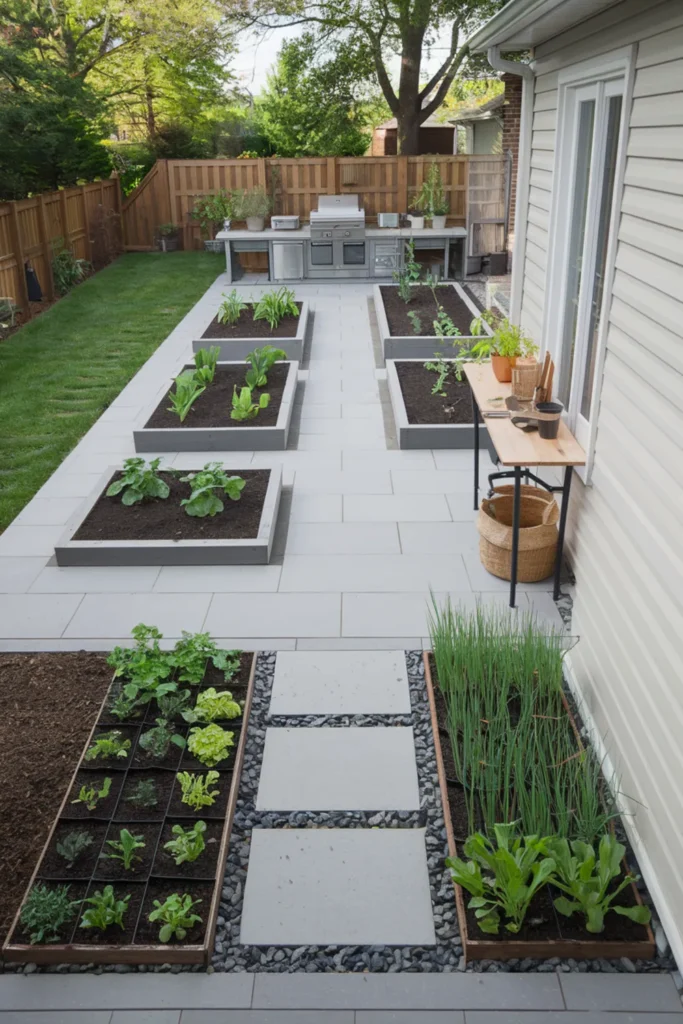
A herb and vegetable garden layout near the kitchen saves you steps and makes the space easier to use every day.
Place herbs in the closest beds or planters by the back door, then arrange vegetable beds a little farther out in the sunniest area.
This path-based layout improves flow because your most-used plants stay within quick reach.
A small work spot near the entry also helps with harvesting and rinsing tools. If you want more charm, add a short gravel path with edging to define the route.
32. Veggie and Flower Garden Layout for Beauty and Pollinator Support
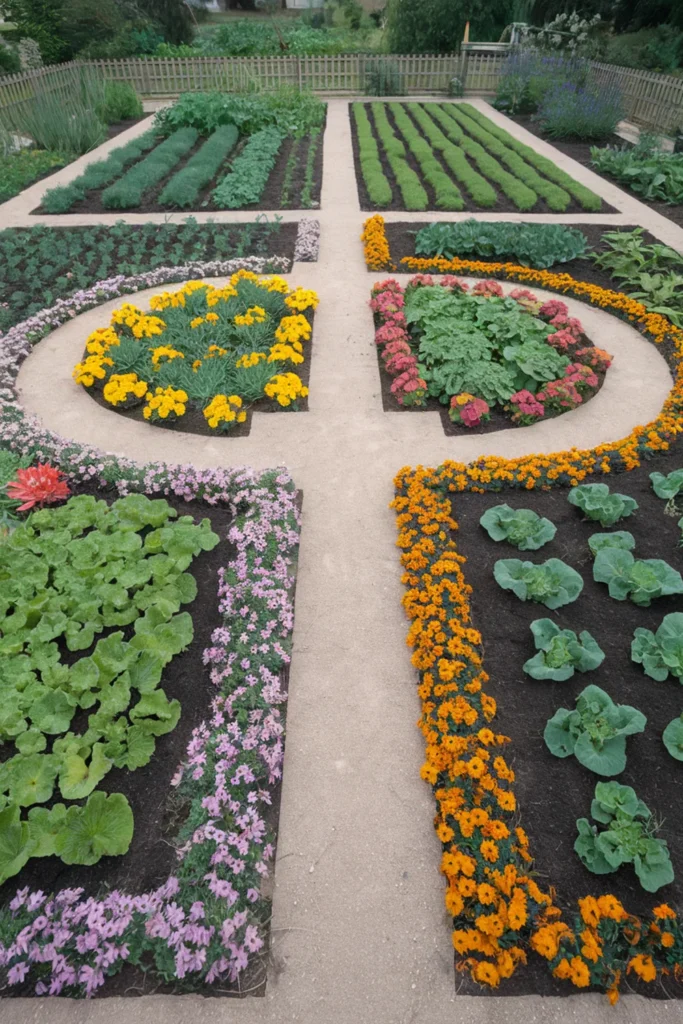
A veggie and flower garden layout works well when you blend structure with color in a clear pattern.
Arrange vegetable beds in rows or blocks first, then place pollinator-friendly flower sections along bed edges, path intersections, or the ends of rows.
This setup keeps the garden organized while adding softer lines and stronger visual interest. A loop path improves flow so you can move through both growing and flower zones without stepping into beds.
For a fresh variation, repeat the same flower colors in different spots to tie the layout together.
33. Companion Vegetable Garden Layout With Smart Plant Pairing Zones
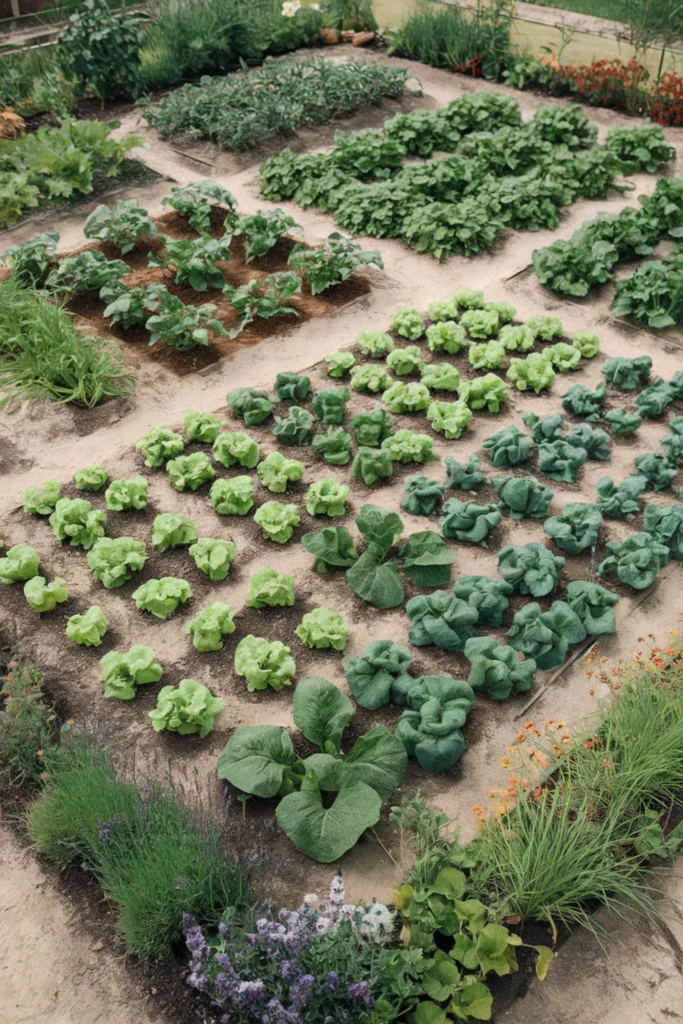
A companion vegetable garden layout becomes easier to manage when you treat plant pairings as zones instead of random mixes.
Use a grid or block layout pattern, then group compatible crops in neighboring beds so the arrangement is easy to follow.
Keep clear walking paths between zones and place taller support crops toward the back to protect the flow and light access.
This structure helps you stay organized during planting and harvest season. If you want less confusion later, add simple bed markers that match each pairing section.
34. Potager Garden Layout Raised Beds in a Decorative Grid
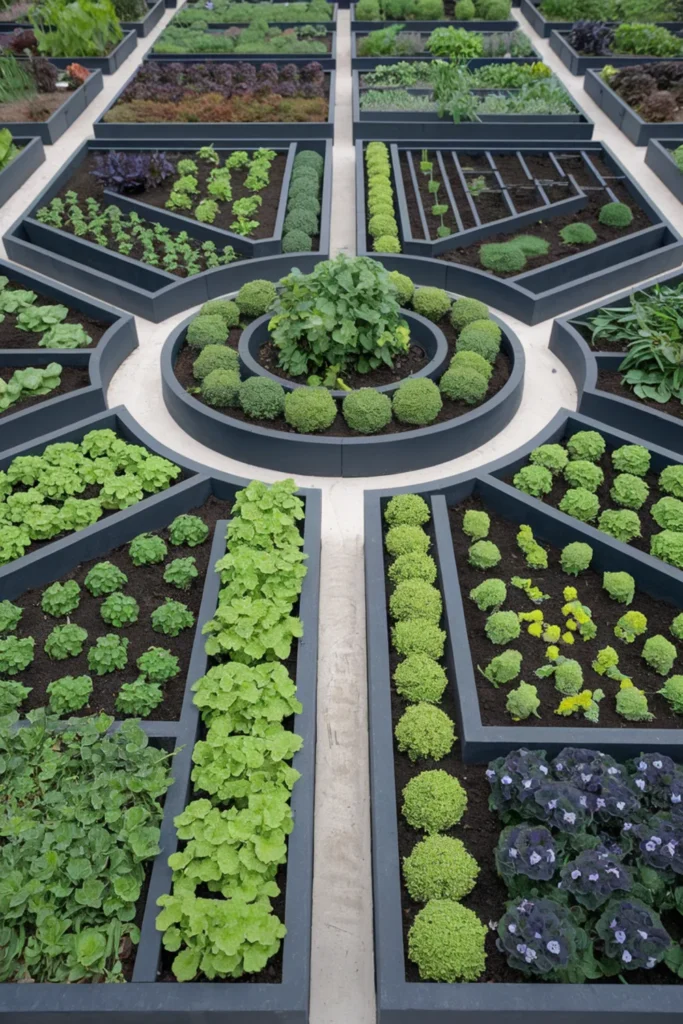
A potager garden layout with raised beds looks beautiful because the structure is part of the design.
Start with a decorative grid pattern and symmetrical paths, then arrange vegetables, herbs, and flowers in repeating bed shapes around a central focal point.
This area arrangement gives you a strong visual center while keeping the garden productive and easy to navigate.
Low edging and clipped herbs can sharpen the layout even more. For a softer touch, mix one or two loose flowering plants into each section without breaking the grid.
35. Small Potager Garden Layout With Symmetrical Paths
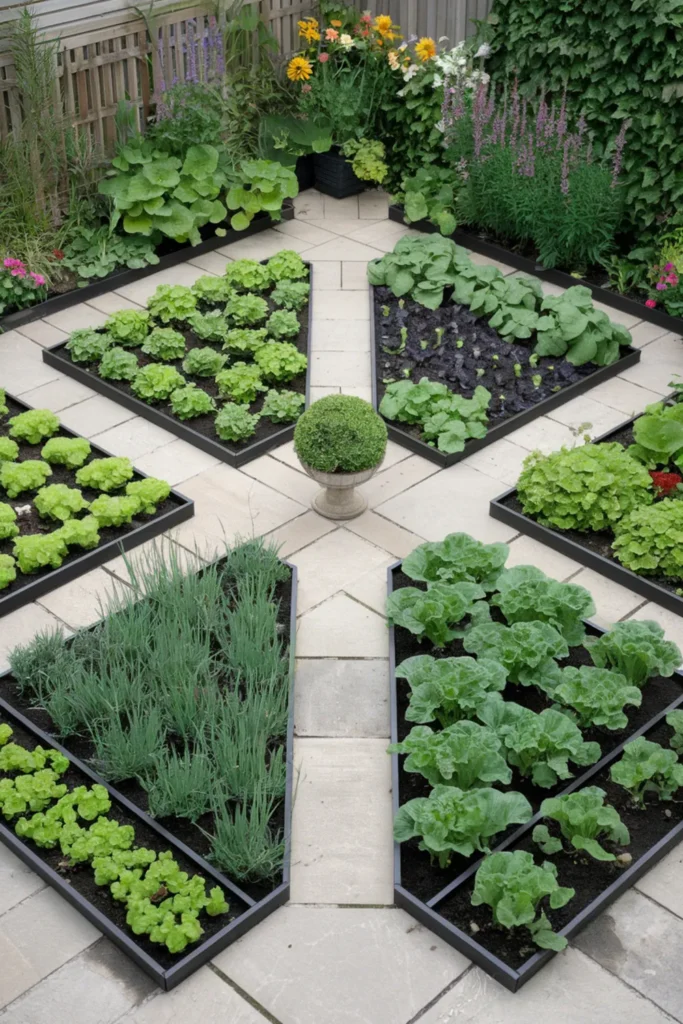
A small potager garden layout can feel elegant when you use symmetrical paths to organize the space.
Divide the garden into small planting sections with a cross-shaped or square path pattern, then arrange compact vegetables, herbs, and flowers in tidy grouped beds.
This layout pattern creates strong structure and makes movement simple, even in a tight backyard.
A small centerpiece like a planter or topiary helps anchor the design and improve flow around the paths. If you want more personality, use contrasting foliage colors in opposite sections.
36. Kitchen Garden Design Plans With Edging and Plant Grouping
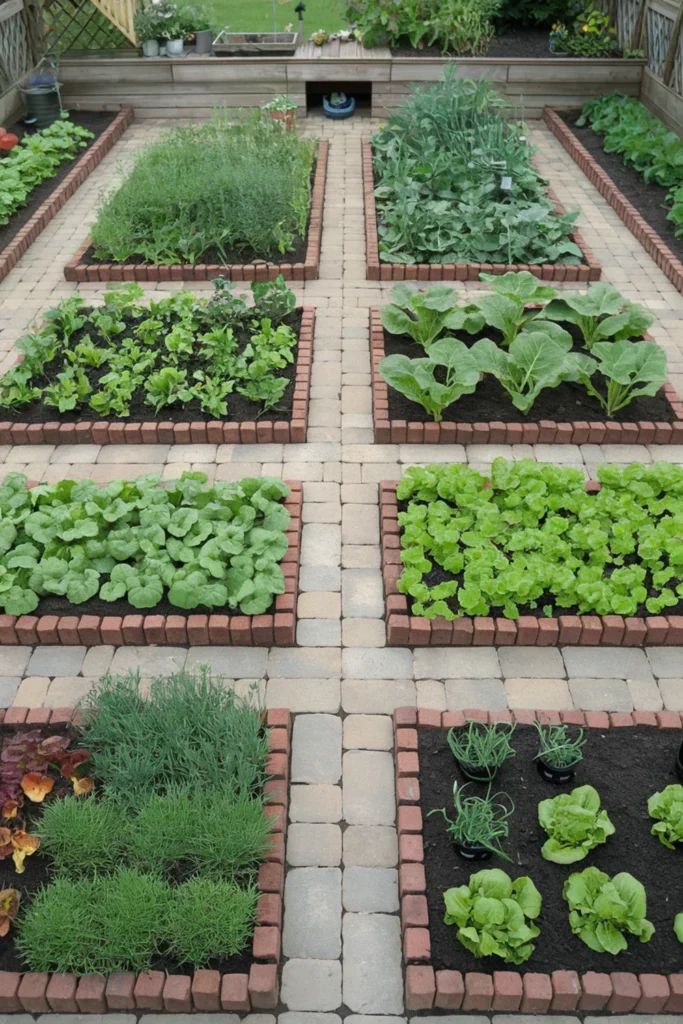
A kitchen garden design plan feels much easier to use when each section has a clear purpose.
Arrange herbs near the entrance, leafy greens in the most accessible beds, and larger seasonal vegetables farther back where they still get full sun.
Brick, stone, or wood edging helps define the layout and keeps the garden looking tidy.
A main path from the back door, plus short side paths, improves flow for daily harvesting. If you want a cleaner look, group plants by use and repeat the same edging style throughout.
37. Productive Garden Design for an Efficient Garden Layout
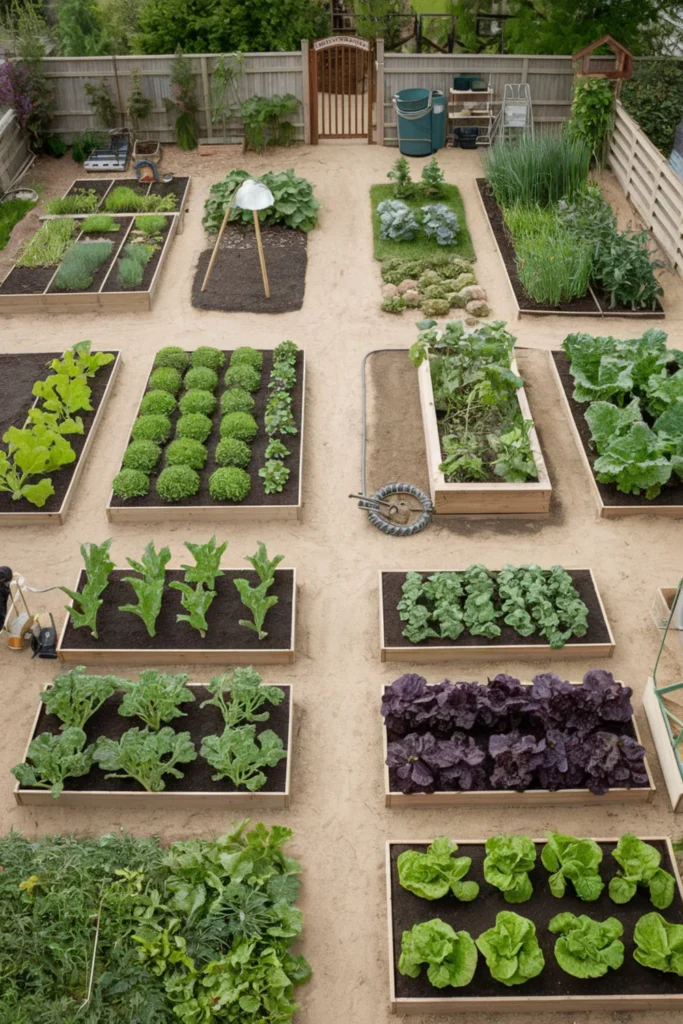
An efficient garden layout should help you work faster without making the space feel cramped.
Use a grid or parallel-bed pattern, then arrange crops by watering needs and harvest frequency so your daily route makes sense.
Quick-pick beds near the entrance save time, while larger or trellised crops can sit deeper in the garden.
A central path spine improves flow by connecting compost, tools, and watering points in one structure. For better long-term use, leave a turning area where you can move a cart or bucket easily.
38. Small Backyard Homestead Layout With Garden, Compost, and Paths
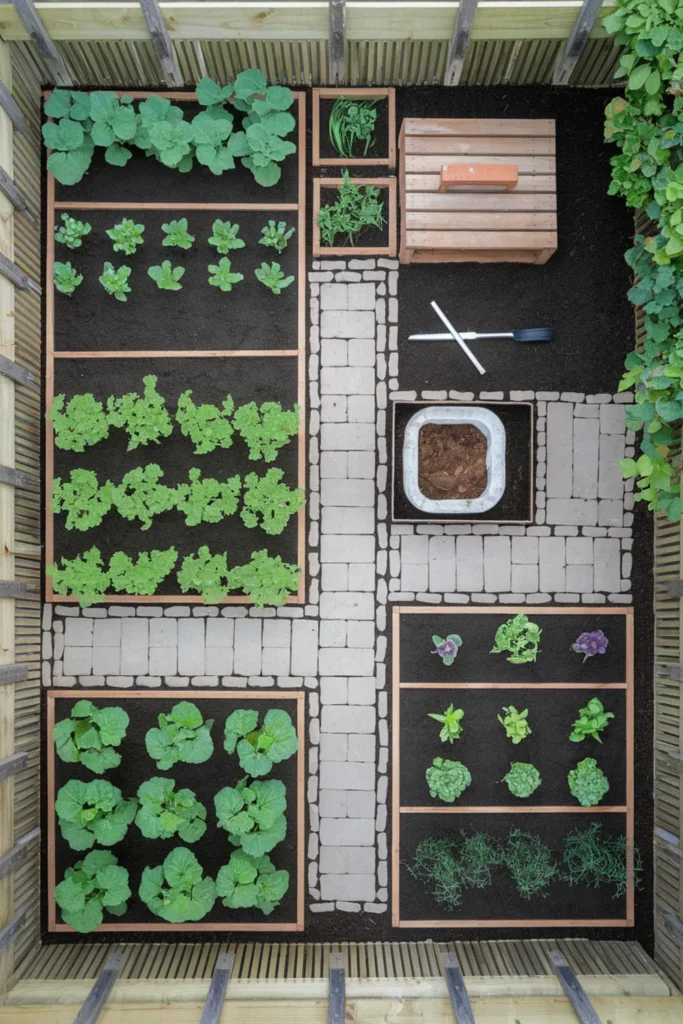
A small backyard homestead layout works best when you separate tasks into clear zones.
Place productive garden beds in the sunniest area, tuck the compost station and tool storage into a side corner, and connect everything with a main path plus short connector paths.
This arrangement keeps your garden space functional and makes daily movement smoother.
A small bench or harvest-prep spot near the entrance adds convenience without taking much room. If your yard feels busy, use consistent edging or path material to make the whole layout feel more organized.
39. Garden and Orchard Layout for a Backyard Food Garden Design
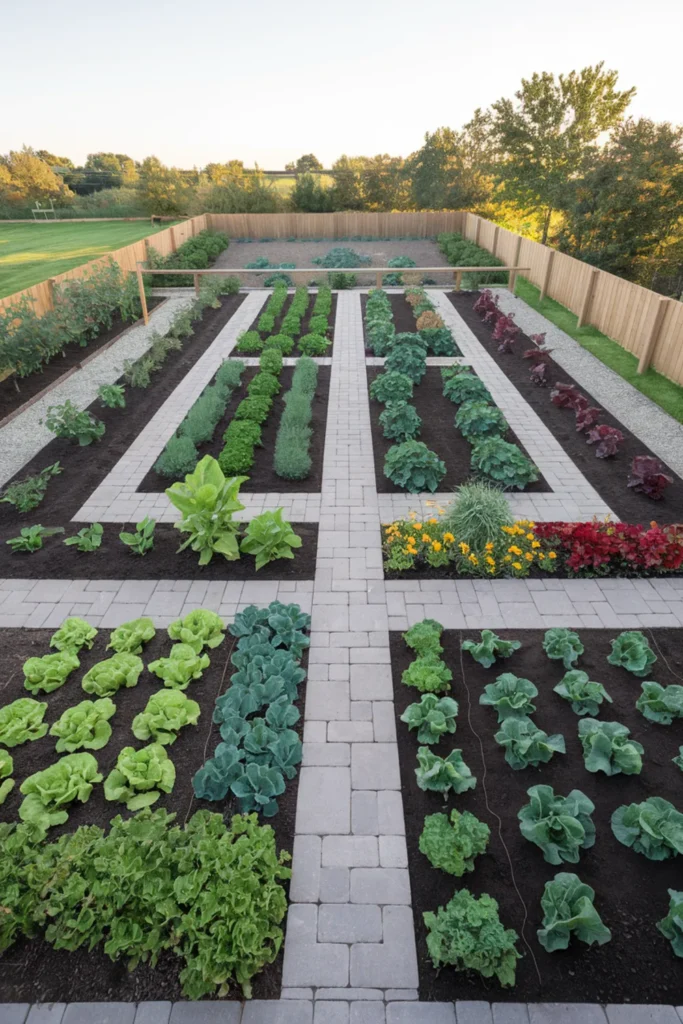
A backyard food garden design becomes more practical when you split the layout into a garden zone and an orchard zone.
Keep vegetable beds closer to the house for quick access, then arrange fruit trees or berry rows along the perimeter or in a separate strip with wider spacing.
A transition area with herbs or pollinator flowers helps the two sections flow together instead of feeling disconnected.
This structure supports easier maintenance because each zone has different needs. For a nicer walking pattern, add a loop path that links both harvest areas.
Conclusion
Great garden layout design is not just about pretty plants, it’s about how your paths, beds, and zones work together.
Whether you’re planning a small backyard garden layout, a front yard garden design layout, or a productive food garden, use these ideas to build a space that feels clear, inviting, and easy to enjoy.
Save your favorite layouts, then start with one section and build from there.
Want more layout-specific inspiration? Browse our guides to small garden layout ideas, backyard garden layout plans, and vegetable garden layout designs to plan your space with more confidence.