
Planning your vegetable garden can feel exciting and a little overwhelming at the same time. You want fresh food, neat beds, and a layout that actually fits your yard. With a smart plan, you can grow a surprising amount of produce in even the smallest corner, and still keep your space easy to move through and enjoy.
These layout ideas help you match your garden to your sunlight, soil, and daily routine. You’ll see options for tiny patios, long narrow yards, and everything between. Pick the ideas that fit your space, then mix and match them so harvesting, watering, and relaxing all feel simple and satisfying.
For broader inspiration on organizing paths, zones, and planting areas, browse these garden layout ideas and design inspiration for all kinds of outdoor spaces.
1. Staggered Raised Bed Grid
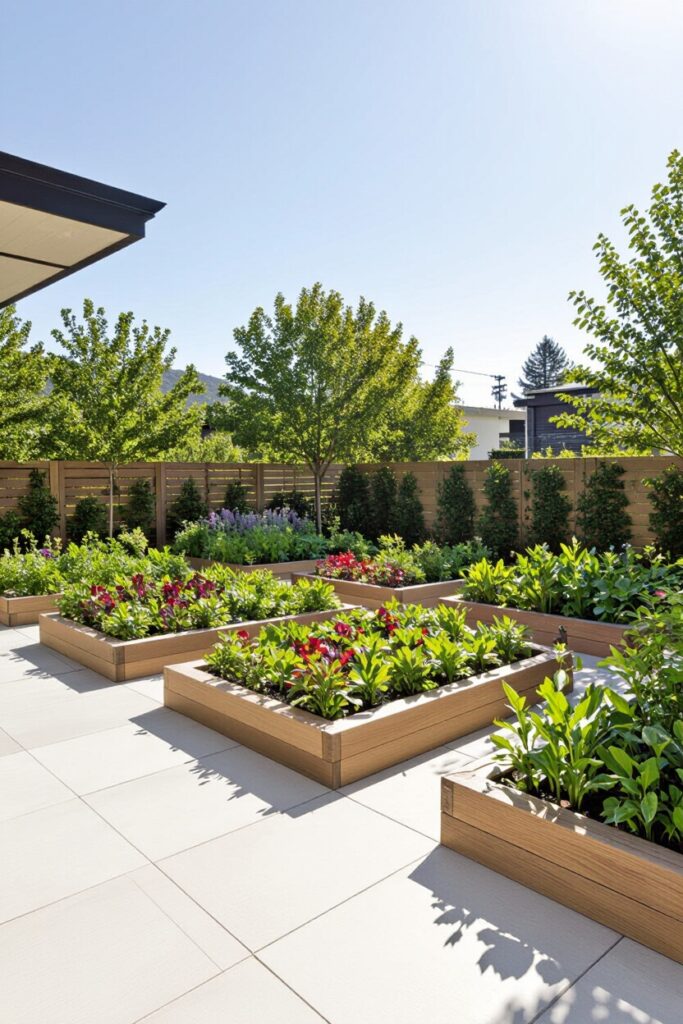
A staggered grid of raised beds gives your vegetable garden a polished, custom look. The offset layout creates easy walking paths and makes every plant feel within reach, even in the center. You also get clear zones, so you can group thirsty crops in one bed and drought-tolerant ones in another.
Start with two or three rectangular beds and angle the middle one slightly so the corners don’t line up. Leave wide paths for a wheelbarrow or hose, then fill beds with rich soil so roots stay happy. For extra style, edge the paths with gravel or wood chips and tuck herbs along the corners for quick snipping.
2. Bamboo-Framed Corner Plot
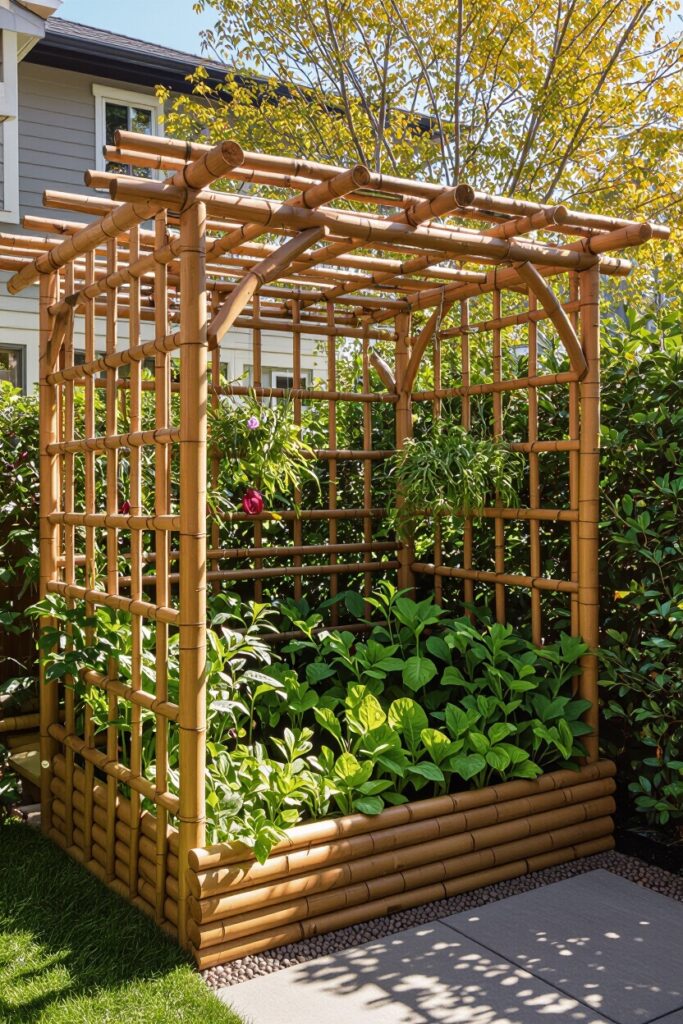
Turning an unused corner into a bamboo-framed plot makes your garden feel tucked in and cozy. The vertical lines draw the eye up, which helps a small yard feel taller and more defined. It also creates a gentle backdrop for climbing veggies and blooming companions.
Set simple bamboo poles into the ground along two sides of the corner, then run twine or thin canes between them for support. Plant tomatoes, peas, or cucumbers along the back and shorter greens in front so nothing gets shaded out.
If your corner stays windy, lash the poles in triangles for extra strength and tie in a few lanterns for evening glow.
If you plan to grow in framed beds, these raised bed garden layout ideas can help you organize spacing and access more efficiently.
3. Patio Container Clusters
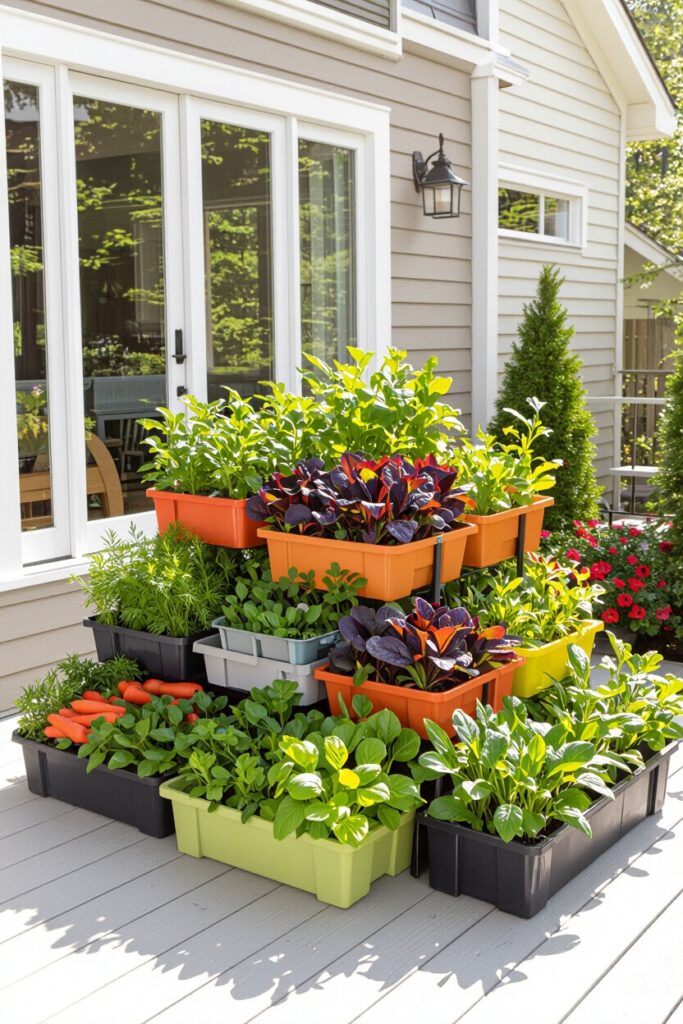
Container clusters on your patio turn hard surfaces into a productive mini farm. Grouping pots together keeps watering quick and helps create a lush, leafy feel right outside your door. You can move them around as the sun shifts through the season.
Pick a mix of large tubs for tomatoes or peppers and smaller pots for lettuce, basil, and radishes. Slide the biggest containers to the back, then stagger shorter ones in front so you see every plant at a glance. Add a rolling plant stand for heavy pots you may want to chase the sun with, and tuck a small stool nearby so harvest breaks feel like a treat.
4. Chain-Path Row Garden
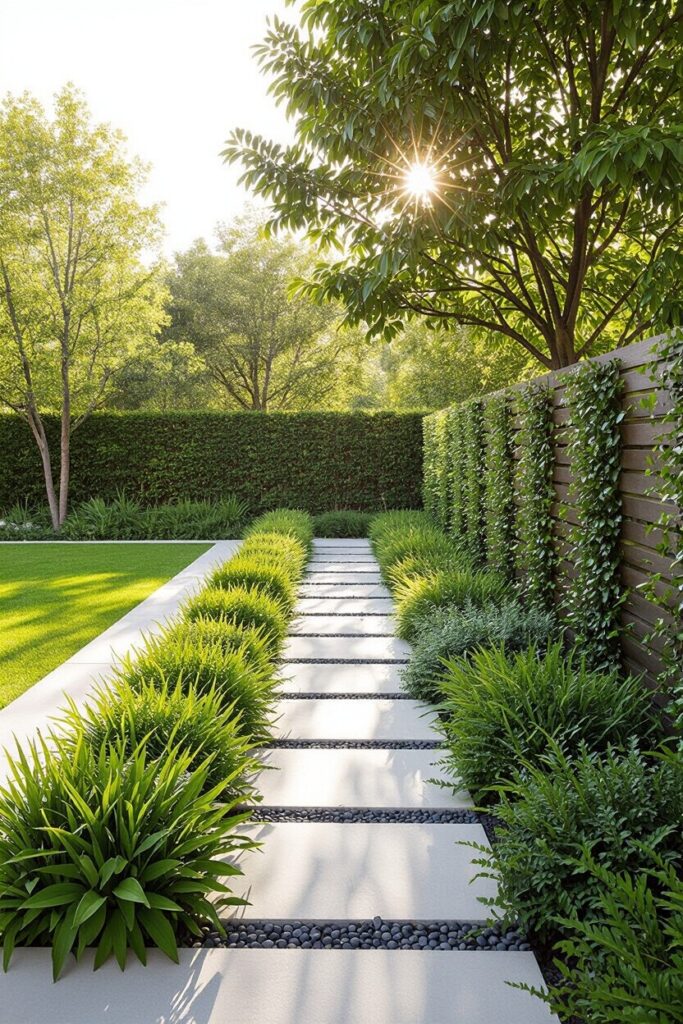
A simple row garden that follows an existing path or fence can be surprisingly productive. Lining everything up along one edge keeps the center of the yard open for kids, pets, or a seating area. It also makes it easy to run one drip line or hose along the full length.
Lay out straight rows parallel to your walkway, leaving a narrow soil path for your feet between plants and the hard edge. Grow taller crops such as sweet corn, pole beans, or sunflowers nearest the fence, then shorter veggies closer to you. If you want a softer look, curve the outer row slightly and let a few flowering herbs spill toward the path.
5. Layered Bed and Trellis Wall
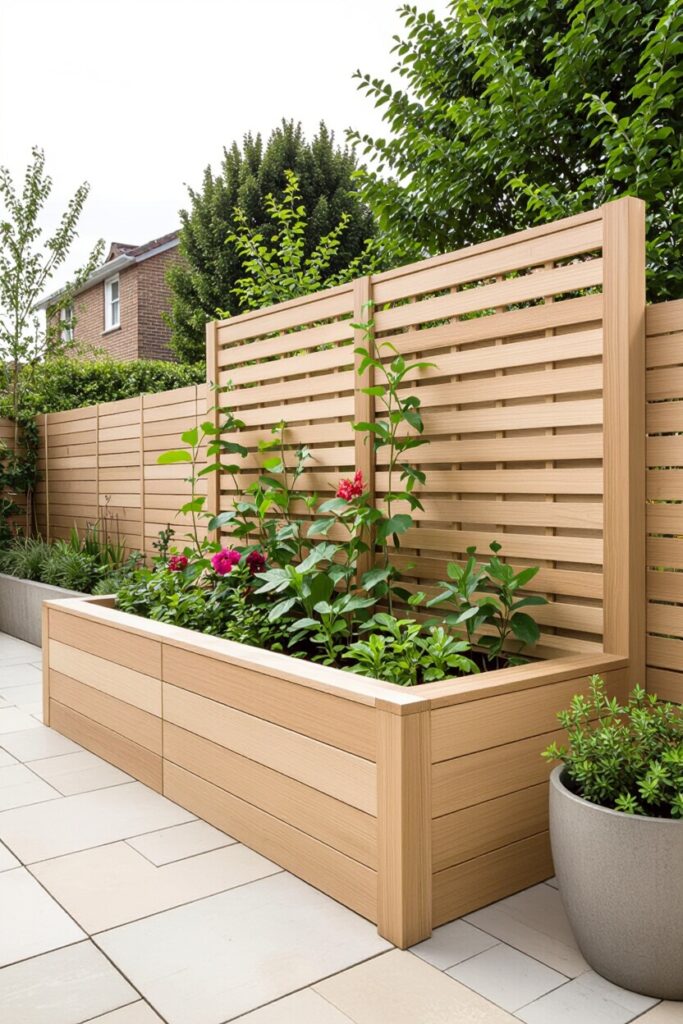
A low bed paired with a tall trellis wall gives you two levels of growing space with a small footprint. The structure frames your garden nicely and can double as a privacy screen between you and a neighbor. Climbing plants use vertical space, leaving the front of the bed free for roots and greens.
Attach sturdy trellis panels or cattle panels to posts along the back of a rectangular bed. Plant vining crops like cucumbers, pole beans, or squash at the base and guide them upward with clips or twine. In front, tuck in carrots, onions, or lettuce so they bask in the filtered shade during hot afternoons and stay tender longer.
6. Diagonal Checkerboard Plot
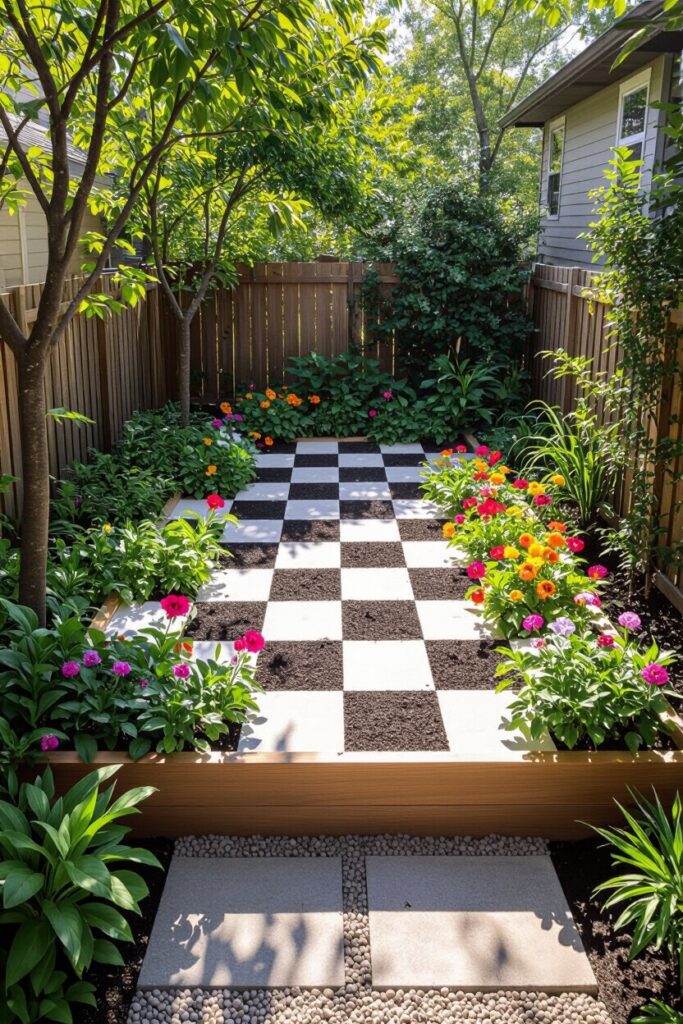
Turn a plain rectangular bed into a diagonal checkerboard and your veggies suddenly look arranged on purpose. Angling your rows toward the corners makes the space feel wider and gives you easy reach from every side. You also get clear paths that stay neat, even when plants fill in.
Snap a chalk line from corner to corner, then mark planting squares along each line. Grow low crops like lettuce and onions in the front diamonds and taller peppers or kale toward the back. Leave every third diagonal as a walking strip with mulch so you can harvest without stepping on soil.
7. Tiered Stair-Step Garden
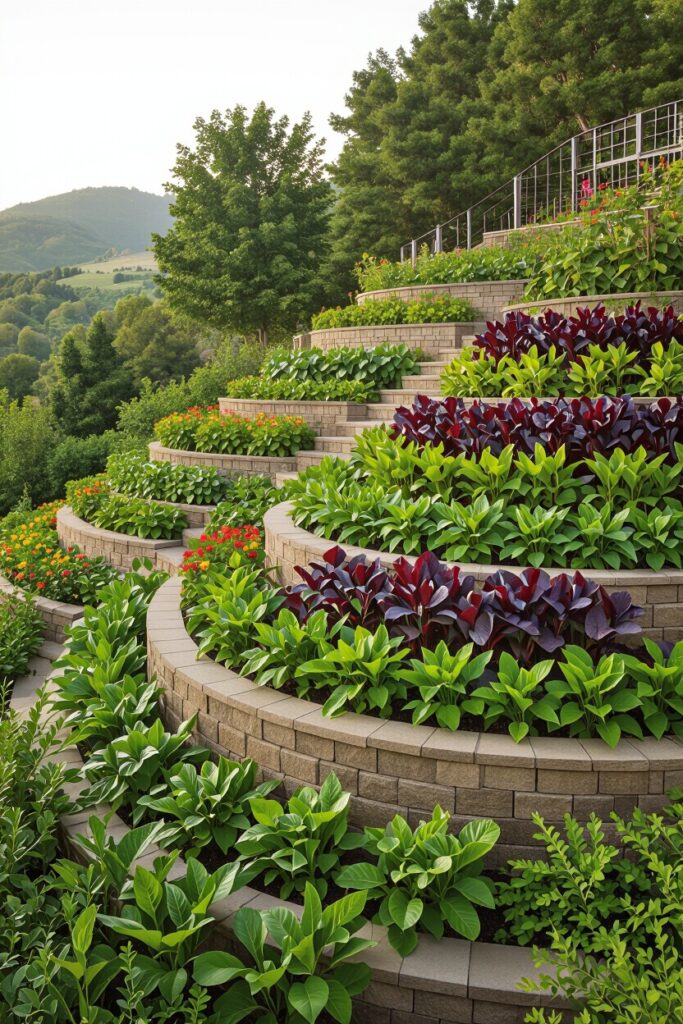
If your yard slopes, a stair-step garden turns an awkward hill into a tidy vegetable display. Each level acts like a shallow terrace, so water doesn’t rush away and your plants stay put. It also puts some crops higher, which is kinder on your back during harvest.
Build short retaining edges from stone, brick, or boards to create narrow shelves up the slope. Plant thirstier crops on the lower steps and sun-lovers like tomatoes on the highest row. Use the front edges for strawberries or thyme, and add a simple railing or rope line where the drop feels steep.
8. Central Circle With Spoke Beds
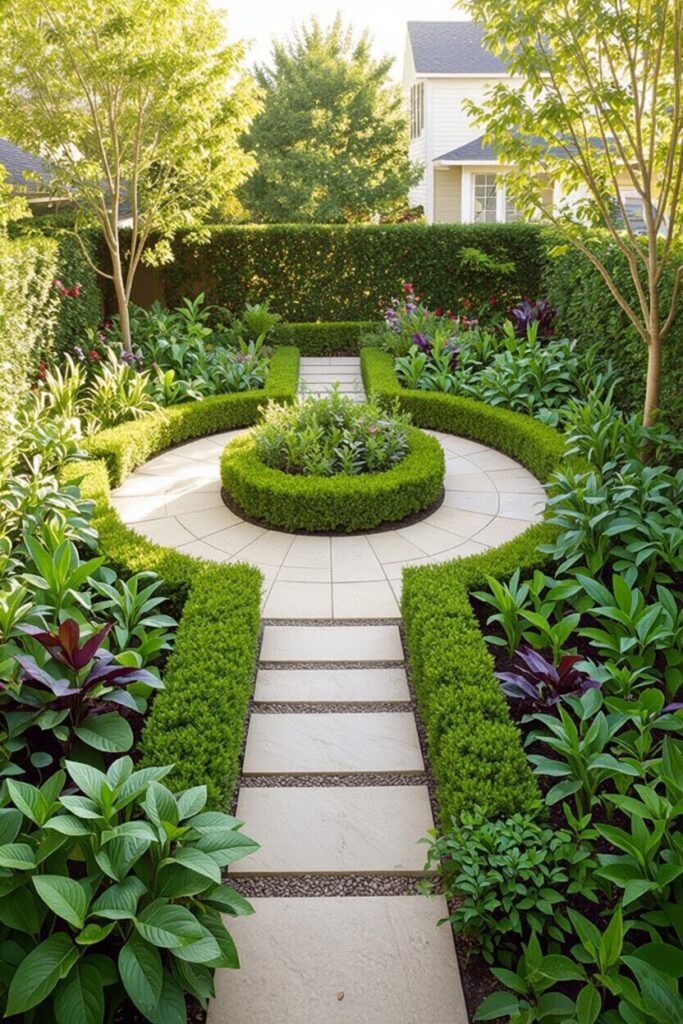
A round center with paths that radiate out feels both playful and organized. You stand in the middle, spin, and everything you need is within arm’s reach. This layout works in small yards and becomes a real focal point when the plants are mature.
Start by marking a circle big enough for a stepping stone or small bench. From that hub, lay out straight paths like bicycle spokes and keep soil beds between them. Plant one “spoke” for salad greens, another for roots, and another for climbing peas on low arches. Mulch the paths well so mud never reaches the center spot.
9. Perimeter Bed With Open Center
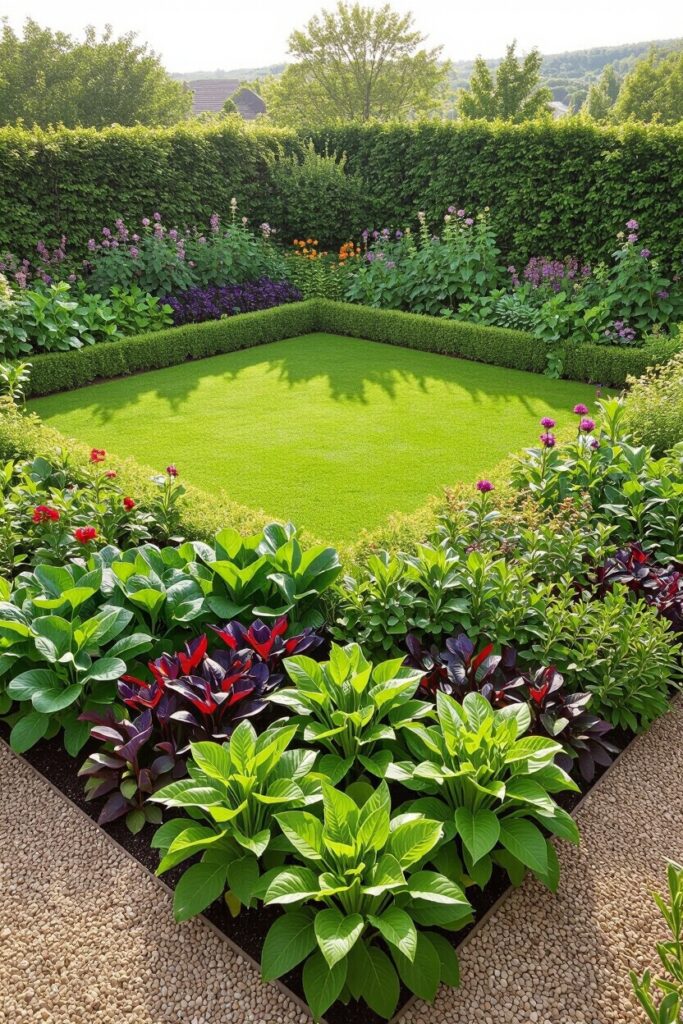
Framing your garden around the edges of a square or rectangle keeps the middle open for work space, a table, or even a compost bin. Your vegetables create a living border that softens fences and hides plain walls. It also makes watering and pest checks feel simple because everything runs in one loop.
Dig or build narrow beds along all four sides and leave a clear space in the middle. Plant taller corn, okra, or sunflowers along the back edge and shorter bush beans or beets toward the front. Keep a wheelbarrow-wide path open so you can bring in soil, straw, or a hose without squeezing plants.
10. Hanging and Railing Basket Garden
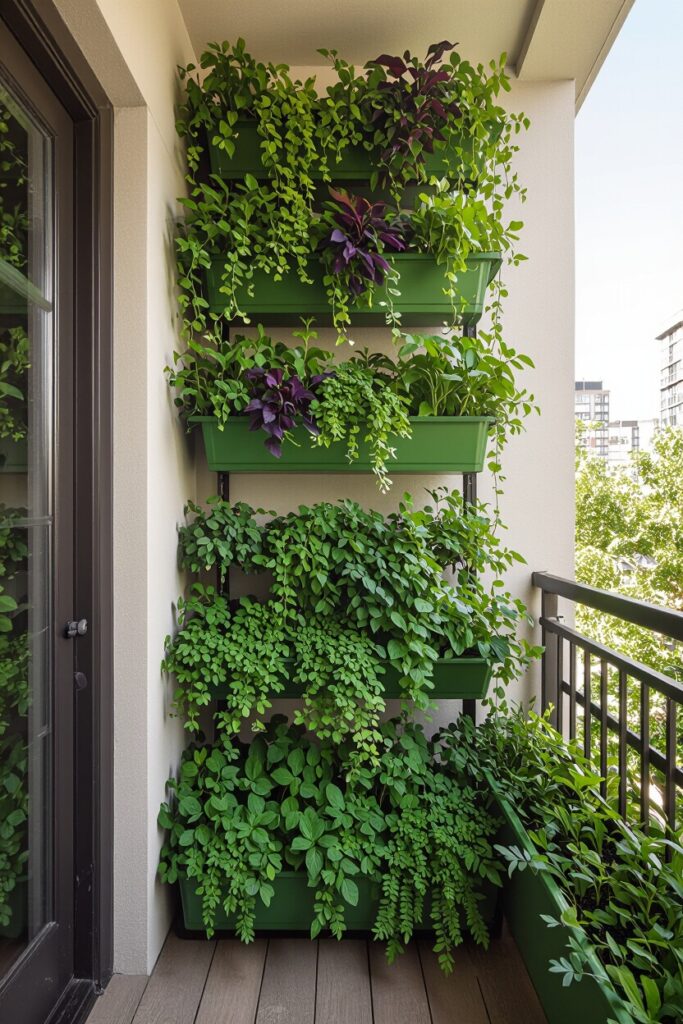
When ground room is tight, hanging baskets and railing planters let you grow a surprising amount of food in the air. The trick is treating them like a planned layout, not random pots. Grouped together, they create a green wall of herbs, cherry tomatoes, and compact peppers.
Attach long trough planters to balcony or deck railings for greens and radishes. Above them, hang sturdy baskets on hooks or brackets, and plant trailing cherry tomatoes or tumbling strawberries. Use lightweight potting mix and water-retaining compost so they do not dry out too fast. A simple morning watering routine becomes your quiet daily check on each plant.
11. Sun-and-Shade Split Layout
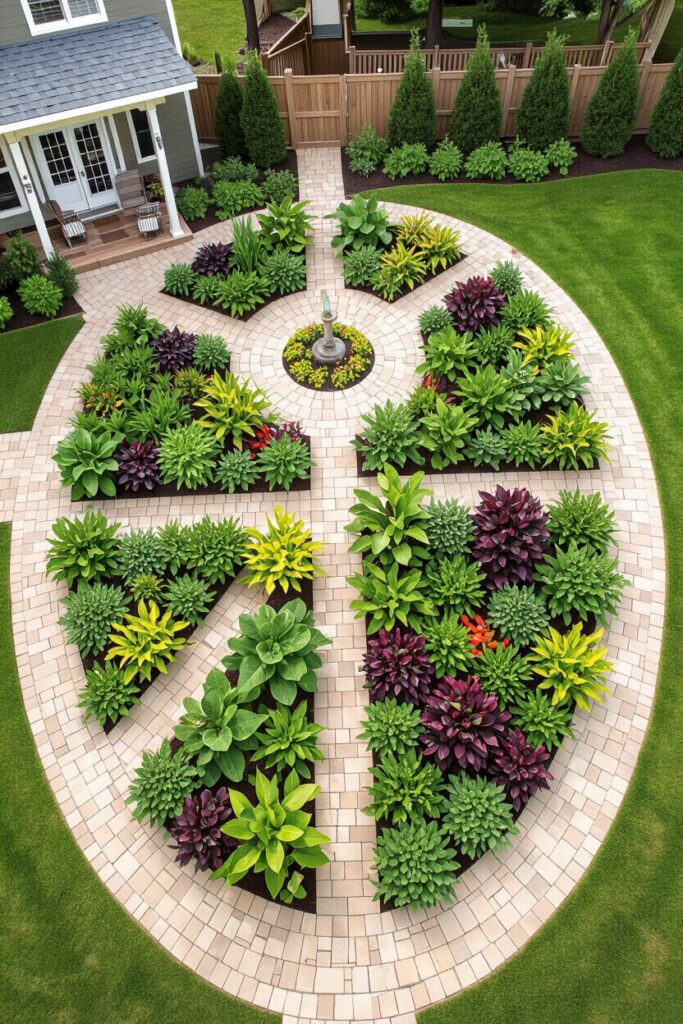
A split layout works well when your yard has both bright sun and deep shade. You treat each side differently, so every plant gets what it likes. Put a simple path or row of stepping stones down the middle to mark the change in light.
On the sunny half, group tall crops like tomatoes and corn at the back, with peppers, bush beans, and basil in front. The shady half can hold leafy greens, mint, and cool-loving herbs. Use matching bed edges or containers on both sides so the whole space still feels like one tidy garden.
12. Long Ribbon Side-Yard Garden
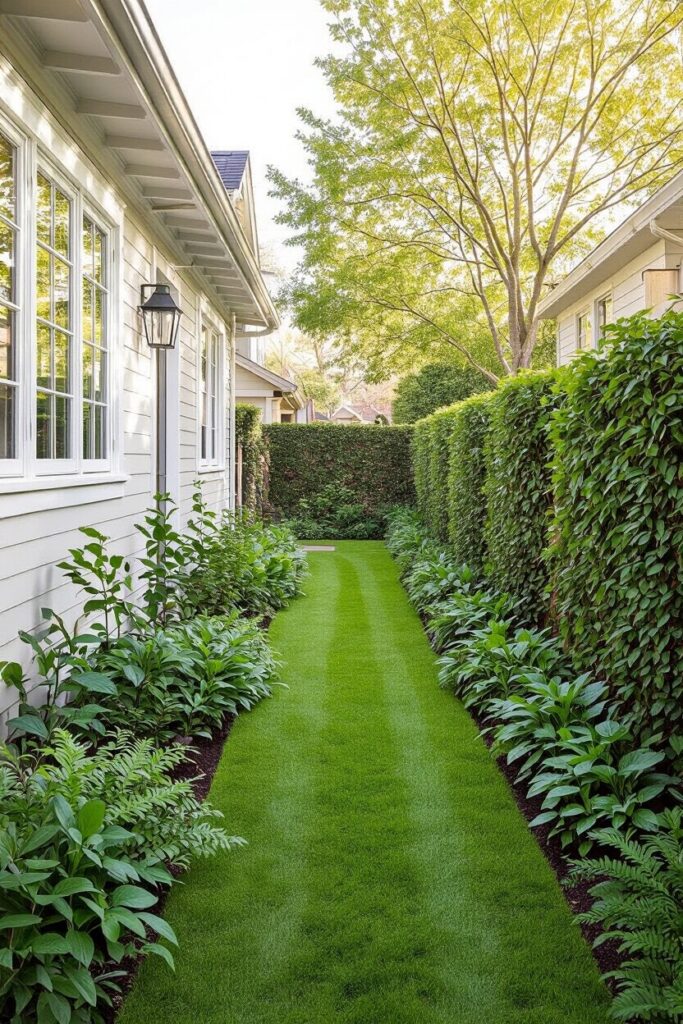
A long, narrow side yard can turn into a productive “ribbon” garden. You keep walking space while squeezing in a surprising amount of food. This layout makes a forgotten strip feel planned and useful.
Run one skinny bed along the fence or wall and keep it no wider than you can reach from one side. Plant repeating blocks of two or three crops so it looks neat, not messy. Tuck tall trellis crops where the wall can support them, then use low growers like lettuce near the path. Add a few pavers between sections so you can step in for harvest without crushing the soil.
13. Mobile Raised Bed Cart Row
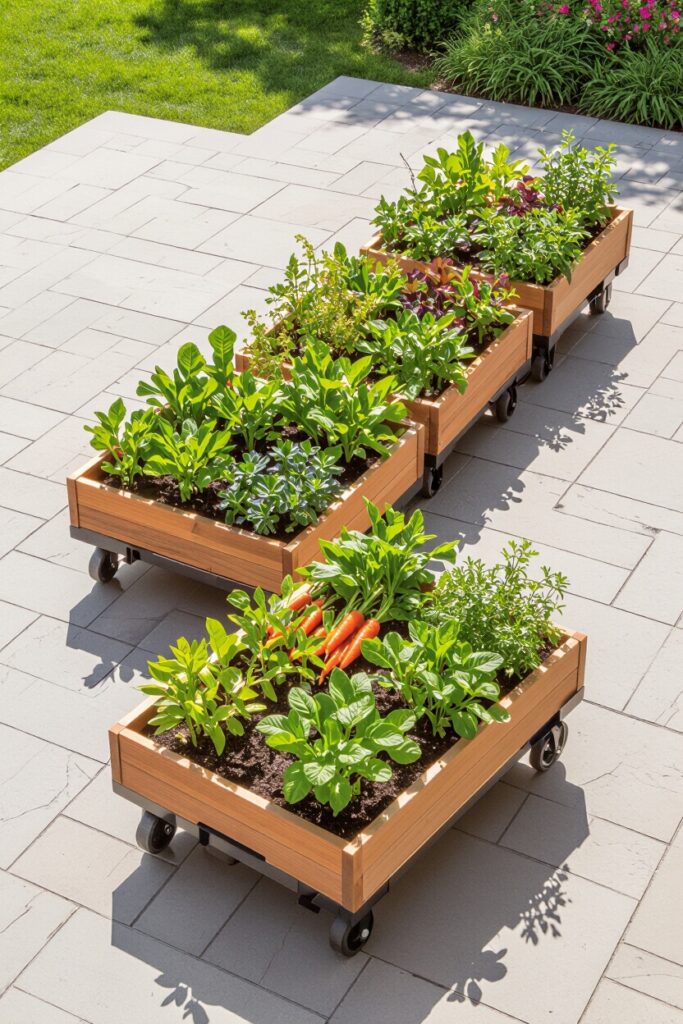
Rolling raised beds let you shift your vegetable layout as the seasons change. You can chase the sun, group thirsty plants near the hose, or slide a bed aside for a party. This works well on patios, decks, and driveways.
Build or buy box-style planters on locking caster wheels. Line them up like short “cars” in a train, leaving space to walk and water. Plant deep-rooted crops like carrots or peppers in the taller carts, and use shallow ones for salad greens and herbs. When frost threatens, wheel tender plants closer to the house for extra warmth.
Conclusion
You now have a mix of layouts that fit tight patios, long side yards, and bigger backyards. Pick one idea that matches your space and start small, even with a single bed or cart.
As you learn how the sun moves and which crops you love to grow, you can add more pieces and link layouts together. Snap photos or sketch what works so you can repeat it next year.
Save these ideas, share them with a friend, and use them as a menu each time you’re ready to expand your vegetable garden.