
A cottage garden feels like a little escape right outside your door. Curving paths, tumbling flowers, and tucked-away seating make even a small yard feel special. When you plan the layout with care, that charm becomes easy to keep up and enjoy every day.
You can guide the eye, hide the messy bits, and give plants the cozy space they love. Want a soft place to relax, show off flowers, or grow herbs near the kitchen? With the right layout ideas, you can shape each corner to match how you live. Use these plans as starting points, then tweak them to fit your space and style.
If you want to compare cottage layouts with more structured arrangements, explore these layout and garden design ideas for different patterns and yard shapes.
1. Welcoming Front Path Cottage Border
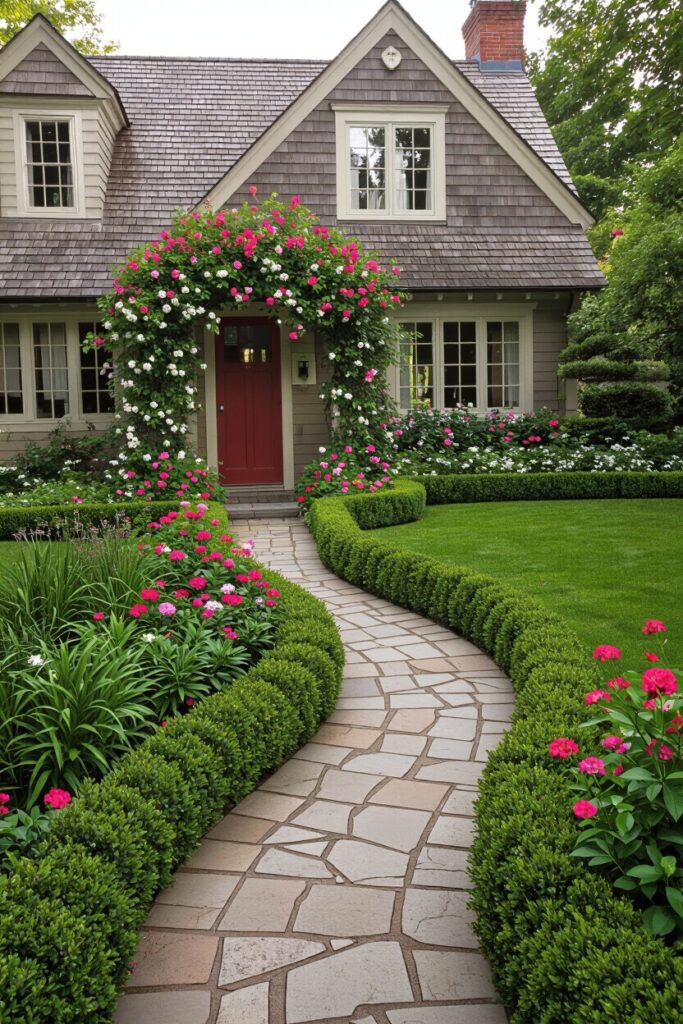
A flower-lined front path sets the tone the moment someone steps onto your property. You get that storybook feel, plus a clear route to the door. Curves keep the walk interesting and give you extra planting pockets for color and scent.
Lay out the path first with a hose or rope, then widen bends where you want deeper planting beds. Plant taller blooms like foxglove and hollyhock toward the house, with low mounding plants near the edge so visitors can walk easily.
Mix in fragrant herbs close to the path so brushing past releases scent. If you have steps, soften the sides with trailing plants that spill slightly over the edges.
2. Hidden Seating Nook Among Blooms
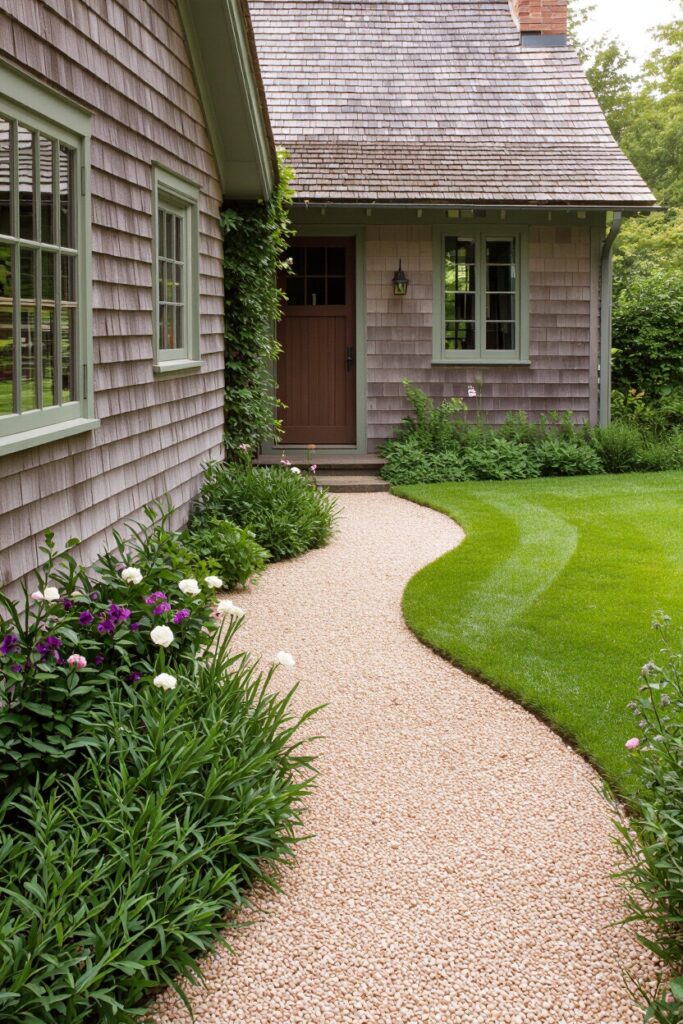
A small, tucked-away seating nook gives your cottage garden a secret retreat feeling. You can read, sip coffee, or just listen to bees working the flowers. Because it is partly hidden, even a tiny bench feels like its own room.
Pick a back corner or side yard where you have privacy, then frame the area with shrubs or trellised vines. Leave a narrow stepping-stone path leading in so the space feels discovered, not exposed.
Surround the bench with soft planting, such as roses, lavender, and nepeta, and keep anything thorny to the back. A couple of pots by your feet let you change seasonal color without redoing the whole bed.
3. Curved Central Bed With Mixed Heights
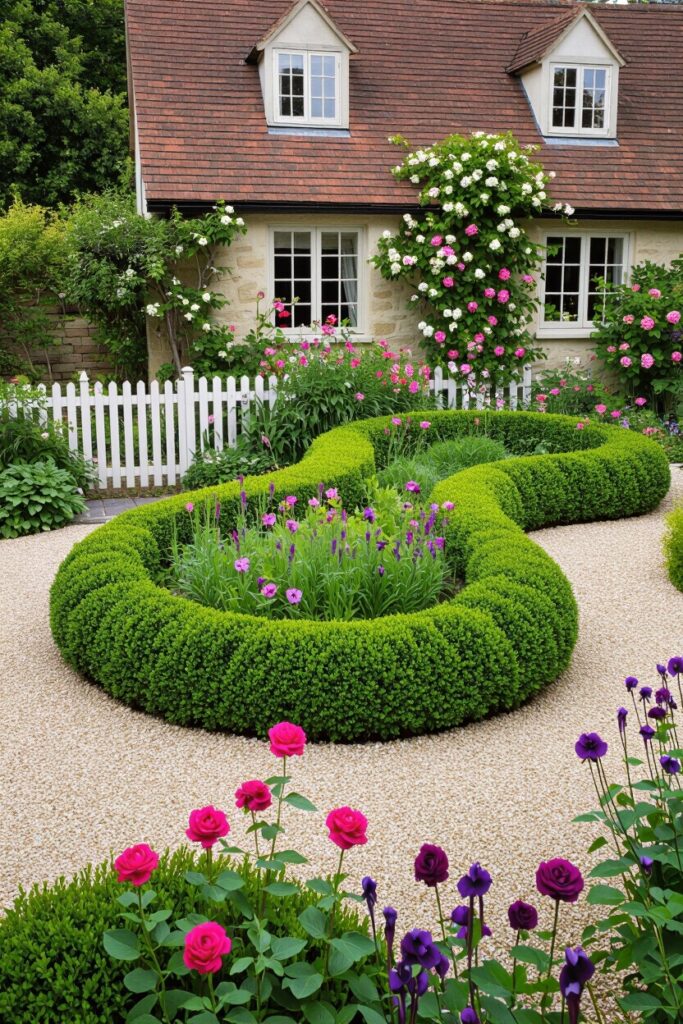
A big, curved bed in the middle of the yard breaks up straight lines and makes your cottage garden feel full. The shape draws the eye from every angle and gives you room for tall, medium, and low plants together. When heights are layered, the bed looks lush from spring to fall.
Sketch a loose kidney or teardrop shape, leaving walking space all around. Place the tallest plants, like delphiniums or shrub roses, toward the center so they do not block views.
Fill the middle ring with reliable perennials and herbs, then edge the whole bed with low growers that knit together. If your soil is heavy, raise the bed slightly with extra compost so drainage stays good even after rain.
4. Kitchen Door Herb and Cutting Strip
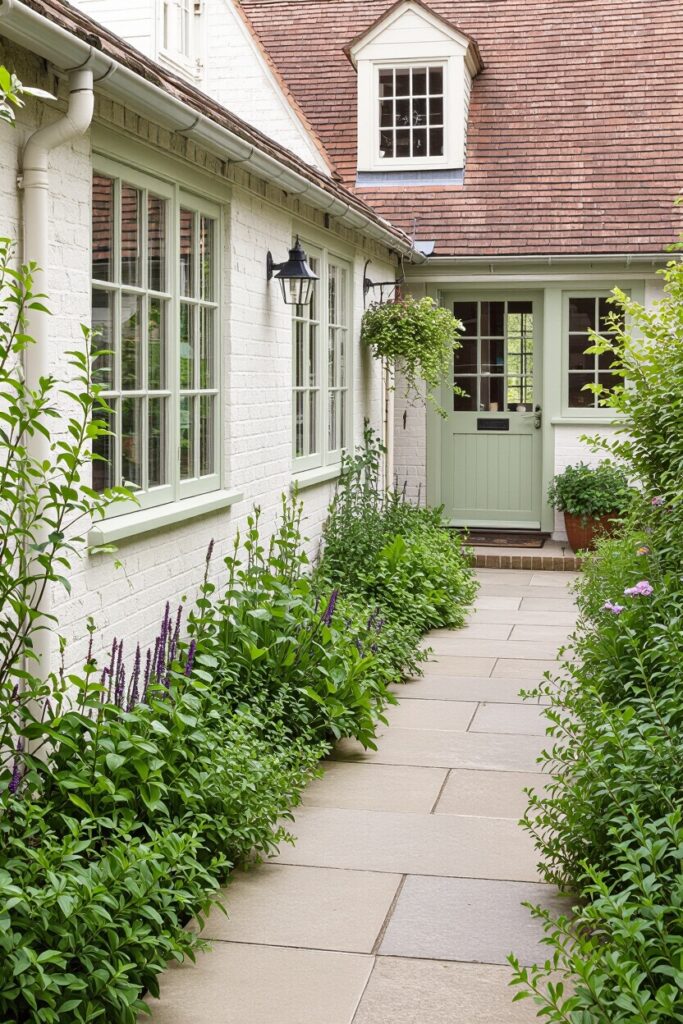
A slim bed right outside the kitchen door saves steps and keeps fresh flavor close at hand. You can snip herbs, grab a few stems for a vase, and still keep the layout tidy. Because the strip is narrow, care stays simple.
Use a straight or slightly angled strip along the house wall or patio edge. Plant everyday herbs like thyme, chives, and parsley nearest the door for quick access. Then add compact cutting flowers, such as calendula or dwarf cosmos, behind them for color.
Keep the soil amended with compost so frequent harvesting does not stress plants. If the wall reflects heat, tuck in a few warm-loving varieties like rosemary and sage to take advantage of the extra warmth.
Want the charm without as much upkeep? These low maintenance garden ideas can help you simplify the structure and plant choices.
5. Arched Entry With Climbing Roses
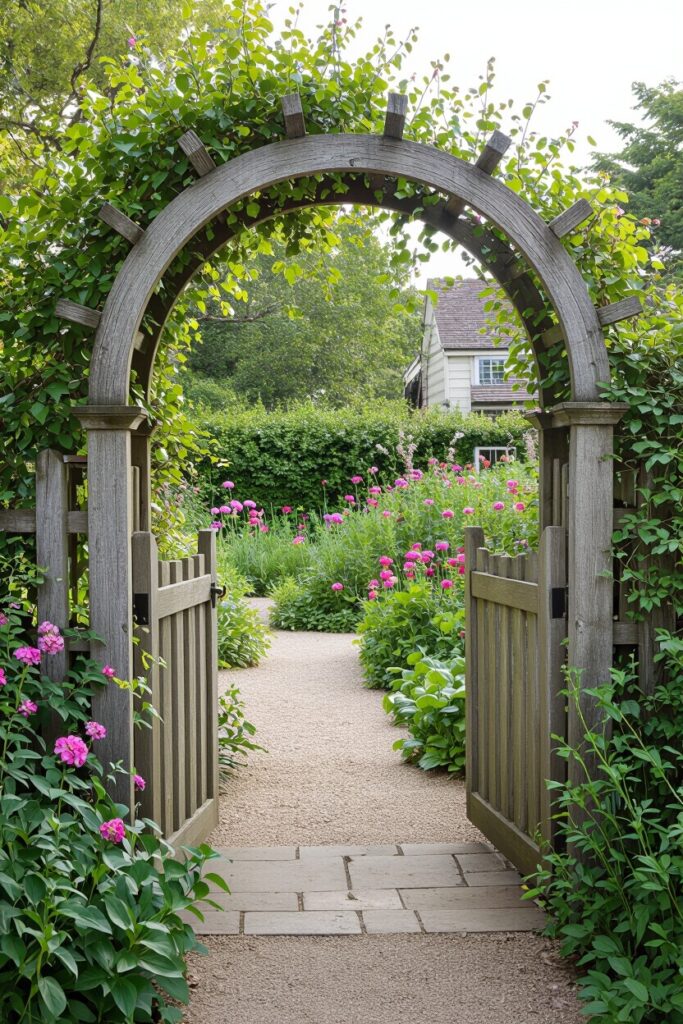
An arched entry turns a simple garden gate into a romantic feature. You get height, shade, and color in one spot, and it marks the shift from regular yard to cottage haven. Climbing roses are classic, but other vines can mix in for longer bloom.
Set the arch where people naturally enter, such as between driveway and path or at a side gate. Anchor the posts securely, then plant one climber at each side and guide young stems along the frame with soft ties.
Underplant with low mounds of catmint or lady’s mantle to soften the base. Regularly tie in new shoots so the arch fills evenly rather than bunching at the top. At night, a small solar lantern hanging from the center makes the entry feel magical.
6. Cottage Side Path With Overflowing Edges
A narrow side yard can feel forgotten, but a cottage-style path turns it into a charming journey. Think soft curves, loose gravel, and flowers spilling over the edges so you brush past scent and color as you walk. The effect is relaxed and storybook, even in a tiny strip beside the house.
Lay a simple gravel or bark path first, then tuck in hardy plants that tolerate a bit of foot traffic. Use low growers like thyme and dianthus near the edge, with taller foxgloves or delphiniums leaning in from the back. Let a few self-seeding favorites wander so the path changes a little every year.
7. Flower Filled Corner With Small Water Feature
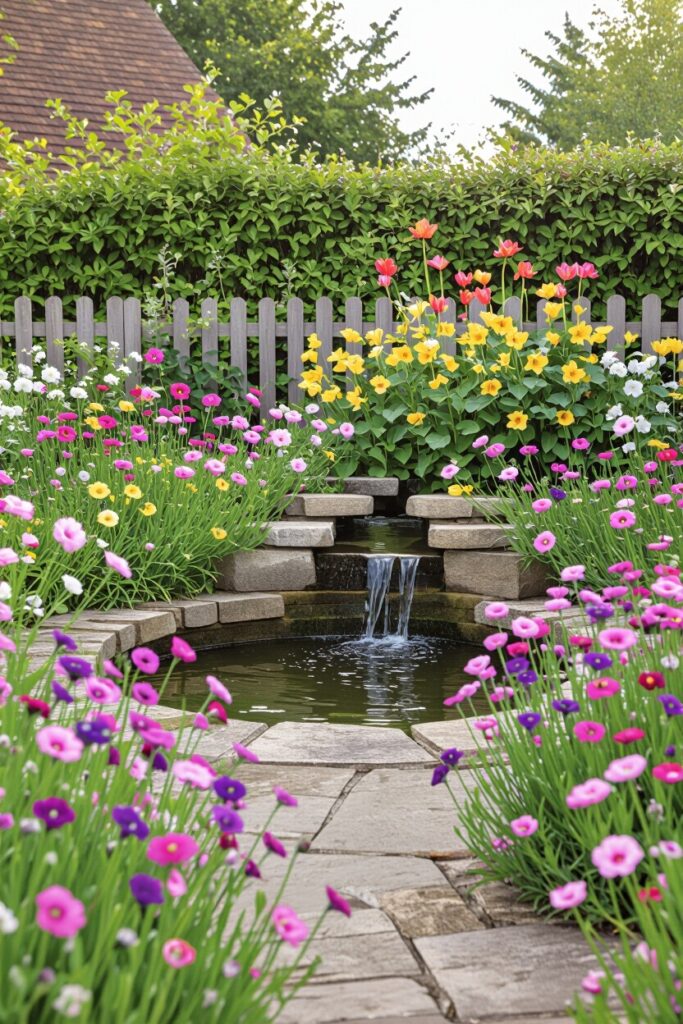
An unused corner becomes a focal point when you add a cottage planting around a small pond or bowl fountain. Moving water adds gentle sound, reflects the sky, and draws birds in for quick baths. You get a peaceful spot that feels tucked away from the rest of the garden.
Start with a ready-made tub, half-barrel, or ceramic bowl set level on bricks. Plant moisture lovers like iris, astilbe, and primulas around the base, then soften the edges with creeping jenny or violas. Add a few flat stones as perches and place a simple pump so water trickles, not splashes, to keep the mood calm.
If you love flowers you can also harvest and arrange indoors, these cut flower garden layout ideas are a beautiful next read.
8. Central Cottage Potager With Mixed Veg and Blooms
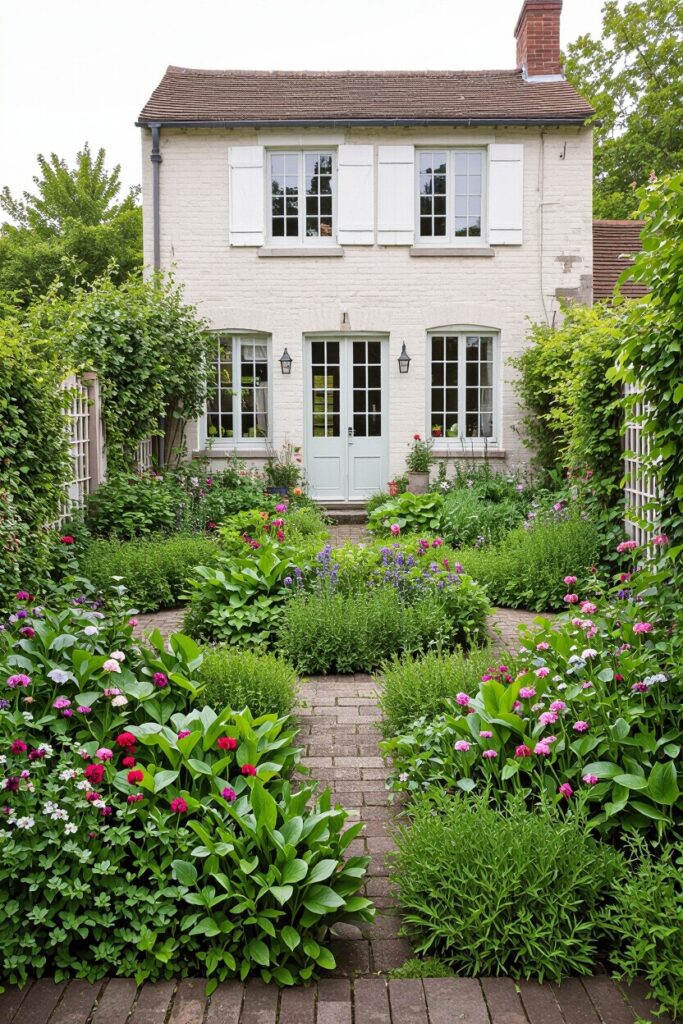
A potager layout brings vegetables, herbs, and flowers together in one pretty working garden. Low beds arranged in squares or diamonds feel organized but still full of life. From the house or patio, you see neat paths framed with rich color and texture instead of bare soil.
Mark out beds with brick, timber, or woven edging, keeping paths wide enough for a wheelbarrow. Plant salad crops and herbs near the front, with taller beans, kale, and sunflowers in the center. Thread in calendula, nasturtiums, and sweet peas for pollinators and cut flowers. A simple obelisk or teepee in the middle ties everything together.
9. Underplanted Fruit Tree Alcove
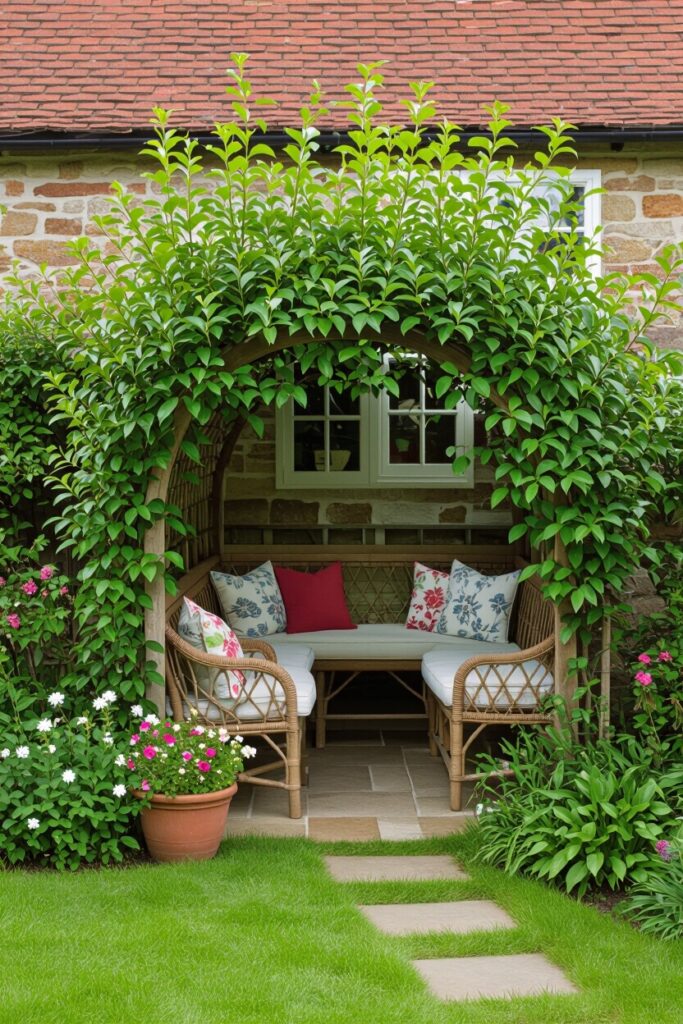
A cluster of fruit trees can double as a snug cottage retreat if you treat it like a mini orchard room. Dappled shade, blossom in spring, and hanging fruit later in the year make this area feel generous and inviting. Place a bench or two chairs and you have a quiet nook wrapped in green.
Choose compact apples, pears, or plums and plant them in a loose U or crescent shape. Underneath, sow clover, bulbs, and low perennials instead of plain grass so the ground feels soft and full. Edge the space with lavender or chives, then add a simple mulch path so you can pick fruit without trampling the planting.
10. Evening Glow White and Silver Border
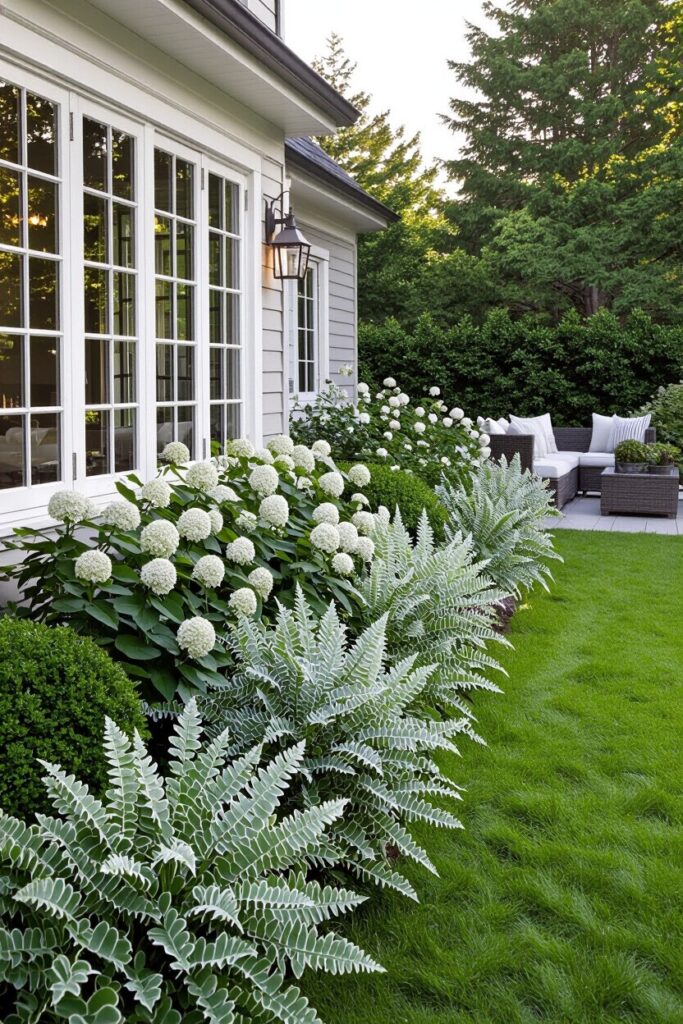
A white and silver cottage border close to your seating area keeps the garden glowing after sunset. Pale blooms catch every bit of remaining light, so the space still looks fresh when you step outside at night. This layout works especially well along a patio or beside a deck where you linger after dinner.
Plant white roses, daisies, and phlox through the middle, then layer in silver foliage like artemisia and lamb’s ear near the edge. Slip in night-scented stocks or nicotiana for fragrance once the air cools. Simple lanterns or stake lights tucked among the plants give a soft shimmer so you can enjoy the garden long after dark.
11. Gravel Patio Framed With Overflowing Containers
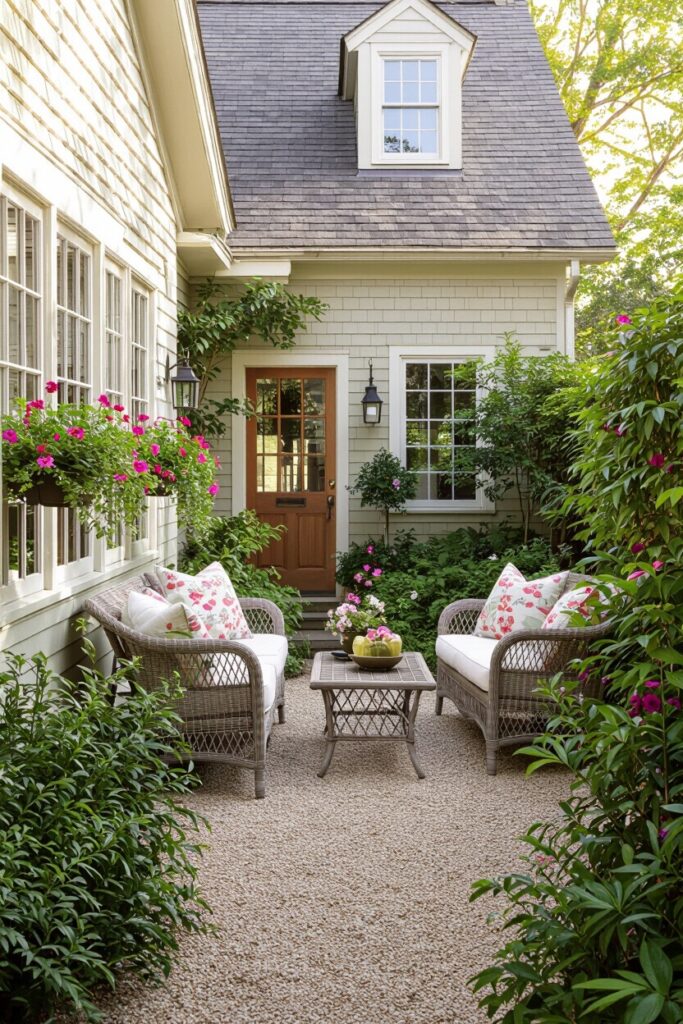
A small gravel patio lets your cottage garden feel relaxed and low fuss while still looking pulled together. The stone surface keeps chairs stable and drains quickly after rain, so you can head back out with your coffee in no time. Surround the sitting area with big clay pots and old tubs filled with billowy perennials to soften every edge.
Start with two or three anchor containers at the corners, then tuck smaller pots between them like puzzle pieces. Mix herbs, flowers, and even a dwarf shrub or two so every container feels lush. If the area looks flat, raise a few pots on bricks or wooden crates to add height changes and a cozy, enclosed feeling.
12. Tiered Cottage Beds Along Garden Steps
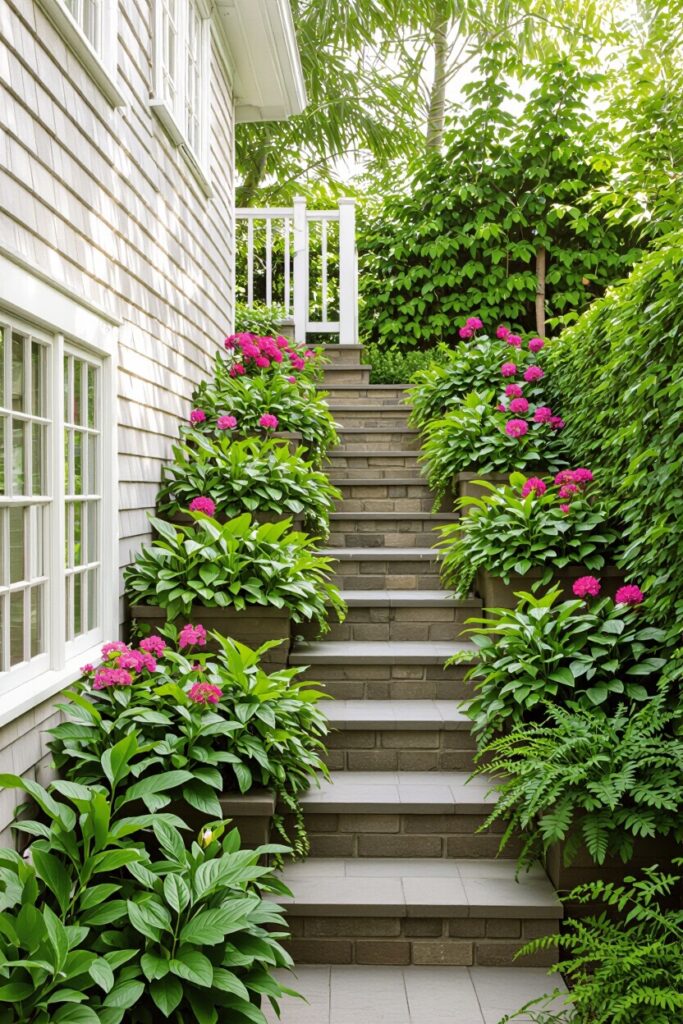
Steps running through your yard can become a lovely planted stairway instead of just a route from point A to B. When you stack narrow beds beside each tread, the whole climb feels like walking through a story. Flowers at eye level let you see every bloom up close, which makes even simple varieties feel special.
Edge each step with low growers such as thyme, violas, or small sedums so they spill just slightly over the risers. Behind them, plant taller cottage favorites in bands, repeating colors as you move up the hill. Keep one or two plants consistent on every level, like lady’s mantle or hardy geraniums, to tie the stairway together.
13. Sunny Wildlife Corner With Native Cottage Blooms
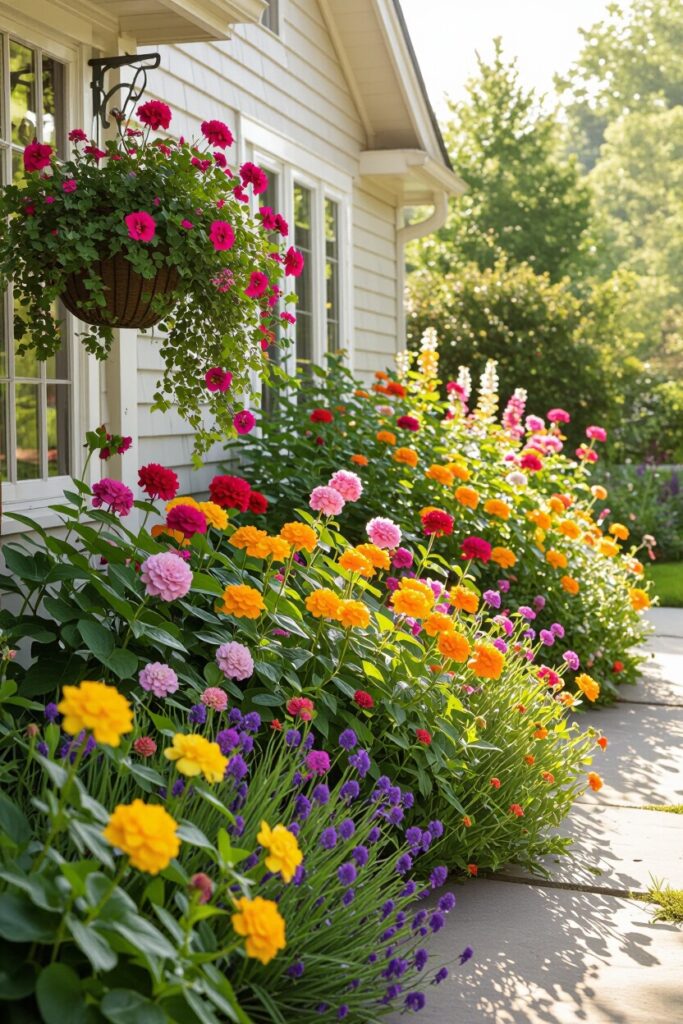
A bright, unused corner is the perfect spot to welcome bees, butterflies, and birds. You still keep that soft cottage look, but the space also starts to buzz with life. Pick native flowers that fit your climate so they return each year with little help from you.
Group plants in loose drifts instead of singles, repeating the same color patches through the bed. Add a shallow water dish on a stump, and tuck a small log pile in the back for insects to hide in. Leave a bit of bare soil or fine gravel for ground-nesting bees, and skip chemicals so your new visitors stay safe.
14. Window View Scent Garden Near the House
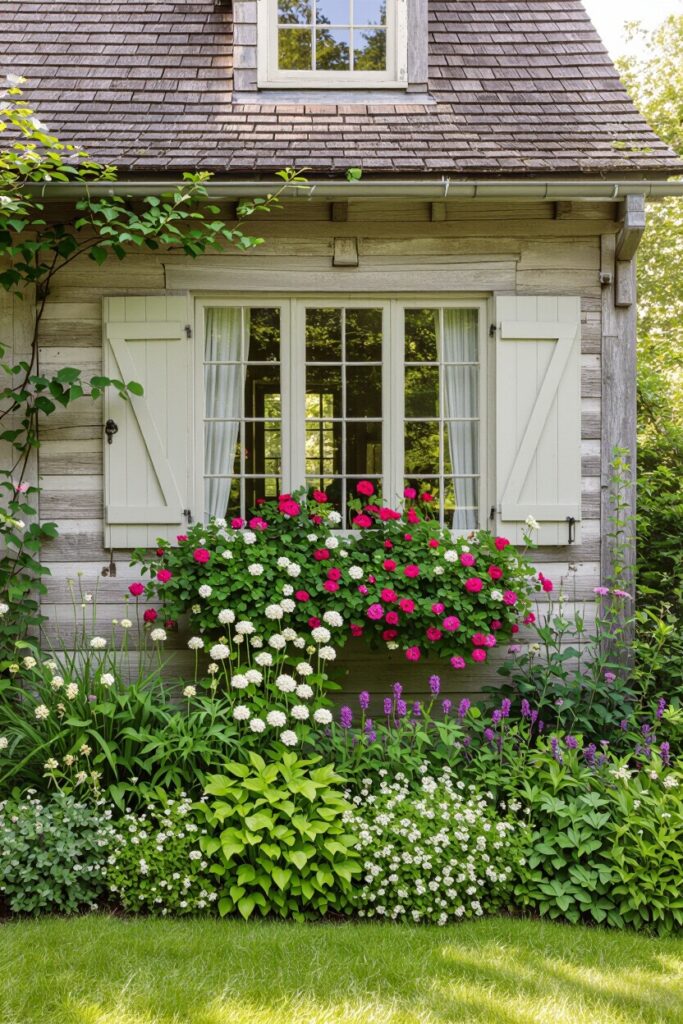
Planting a small cottage bed right under a favorite window gives you a view and a fragrance boost at the same time. Open the window and you catch the scent of flowers and herbs, even on days you do not feel like going outside. It turns washing dishes or working at a desk into something a little softer.
Place the tallest plants, like hollyhocks or foxgloves, toward the outer edge so they do not block the glass. Closer to the wall, fill in with scented choices such as lavender, sweet peas, or dianthus. Keep a narrow flagstone strip between the bed and the house so you can reach for pruning and enjoy brushing past the foliage.
15. Mixed Cottage Hedge As a Living Backdrop
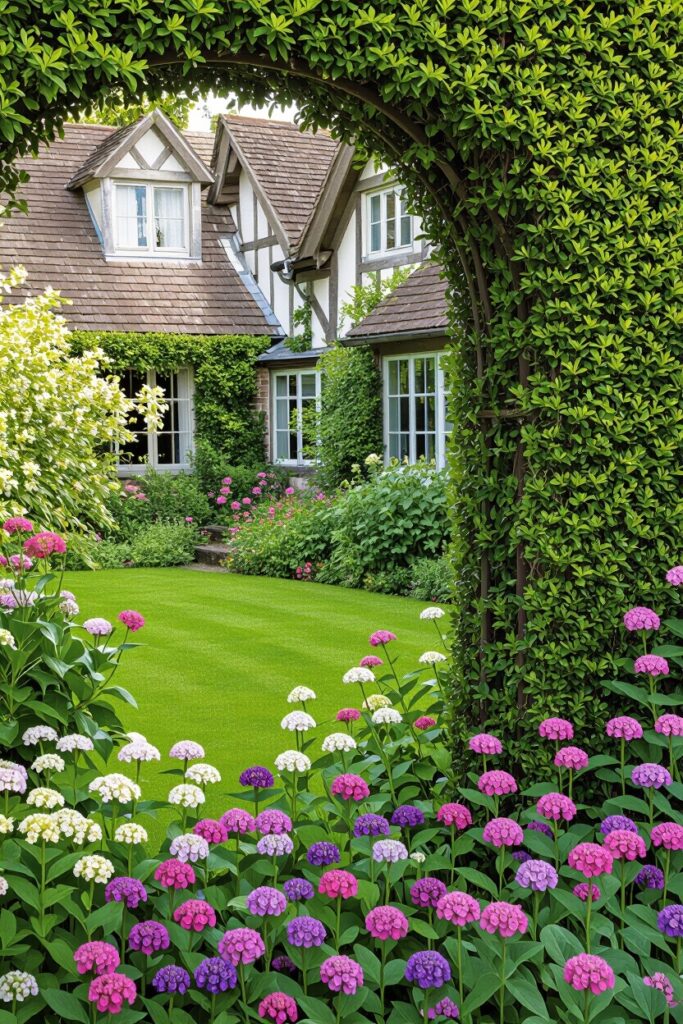
A mixed hedge gives your garden a green frame and a calm background for all those cottage flowers. Instead of one solid shrub line, you use a blend of flowering and evergreen plants, so the border feels friendly rather than stiff. It also hides fences and sheds without needing constant attention.
Choose shrubs with different bloom times, berries, and leaf colors so something interesting happens in every season. Plant in a loose zigzag instead of a straight row to avoid a rigid look and create pockets for perennials at the front. Clip only once or twice a year, letting some branches stay a bit wild so birds can nest and perch among the twigs.
16. Shady Fern Walk Beside the House
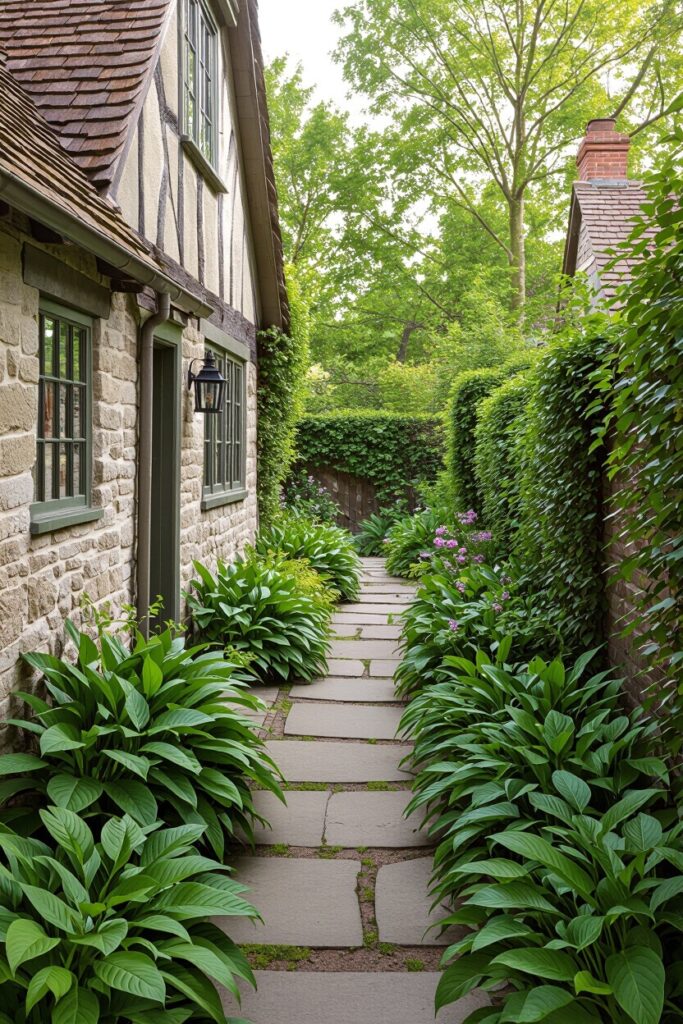
A narrow, shady strip beside your house can become a soft cottage walk instead of a forgotten gap. Ferns, hostas, and foxgloves bring calm color and give you a cool path to wander on hot days. Add a simple stepping stone trail so you can enjoy the greenery up close.
Start by clearing weeds and laying a loose curve with stones or pavers. Tuck ferns and shade flowers right up to the edge so they spill over your feet. Mix in a few spring bulbs for early color. A small wall light or lantern will make the path glow at dusk.
17. Tiny Courtyard Cottage Layout With Central Table
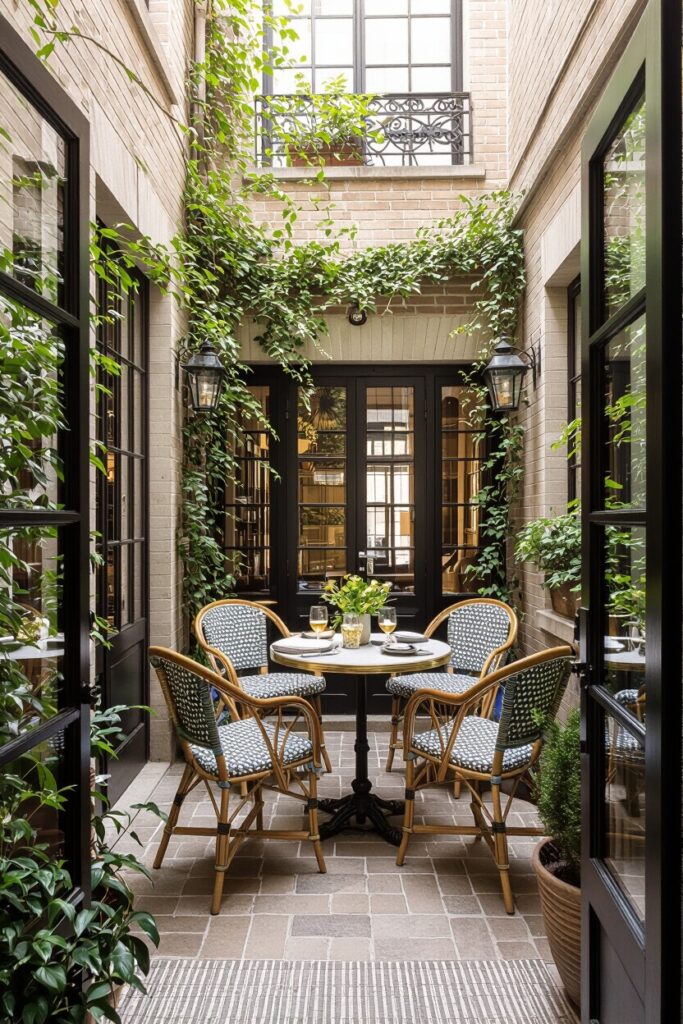
A small paved courtyard can still feel like a storybook garden when you build the planting around one cozy table. Flowers at the edges frame the space, so your seating feels wrapped in color and scent. Breakfast outside suddenly feels special, even on a weekday.
Place a bistro table in the middle, then group large pots and low troughs around the walls. Fill them with roses, sweet peas, and soft herbs so you can reach out and touch leaves from your chair. String simple lights overhead for evening meals. You get a full cottage mood without needing much ground.
Conclusion
You now have a mix of cottage layouts to fit almost any corner, from sunny borders to shady paths and tight courtyards. Choose one idea that matches your space, then sketch it on paper so you can see how paths, beds, and seats will sit together.
Start small if that feels easier, and let your garden grow in layers over time. Save the ideas that speak to you, keep a short plant list, and bring it with you to the nursery.
Soon you’ll have a space that feels personal, relaxed, and loved every time you step outside.