
Busy schedule, tired evenings, and still you want a yard that looks pulled together when you glance out the window. You can have that without spending every weekend hauling soil or pruning hedges. The trick is choosing garden ideas that almost run themselves once you set them up.
With the right structure, you water less, weed less, and still enjoy color, texture, and fresh air. These ideas give you simple, repeatable setups instead of fussy plant collections that constantly need help.
You get more time to relax on the patio, and less time worrying about what’s dying in the corner bed. Pick the projects that match your space and budget, then build them out step by step. A low care garden can still feel special and personal; it just works harder in the background.
If you also want layout inspiration that balances beauty and function, these garden layout ideas for different spaces show practical ways to organize your space.
1. Gravel And Evergreen Front Border
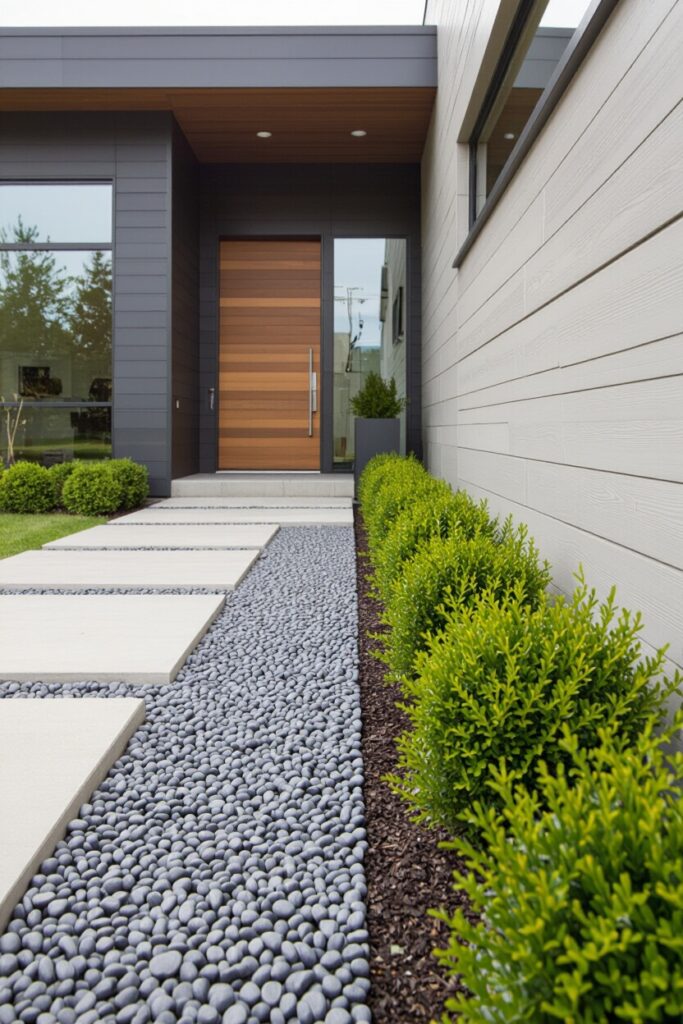
A slim gravel strip with evergreen shrubs keeps your entry looking neat all year with very little effort. Clean lines and simple shapes make the space feel planned, even if you only spent one weekend on it. The gravel also acts like a built-in weed blocker and tidy frame for your plants.
Lay down weed barrier fabric, then pour a shallow layer of pea gravel or crushed stone so you still see the top of the edging. Set low-maintenance evergreens, like boxwood or dwarf holly, in spaced clusters rather than a tight hedge. Tuck in a few hardy perennials for seasonal color. Top up the gravel once a year and trim shrubs a couple of times, and you are done.
2. Container Grouping With Self Watering Planters
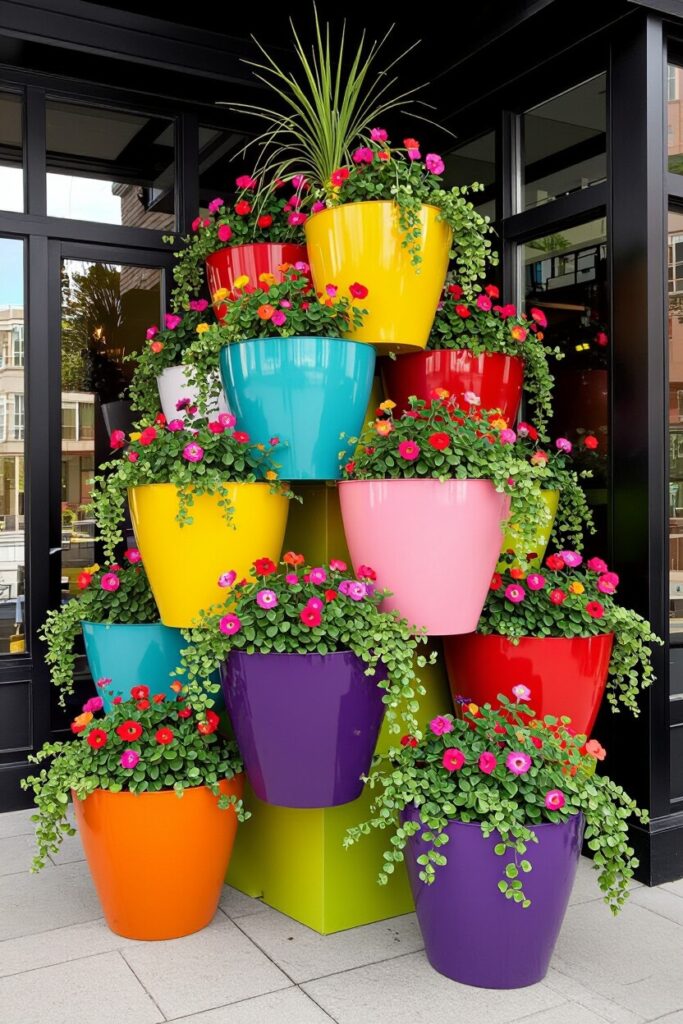
A cluster of large containers turns one dead corner into a lush focal point that barely needs your attention. Self watering planters hold extra moisture in a hidden reservoir, so your plants stay happy through hot workweeks. The grouping looks intentional and modern, and you can shift pots around if you change furniture.
Choose three or five pots in related colors and heights, then place them close together to act like one big planter. Fill them with potting mix, slow-release fertilizer, and plants that share the same sun needs. Think dwarf shrubs, grasses, and trailing vines instead of thirsty bedding flowers. Keep the reservoirs filled when you remember, and most of the watering is handled for you.
3. Mulched Perennial Island Bed
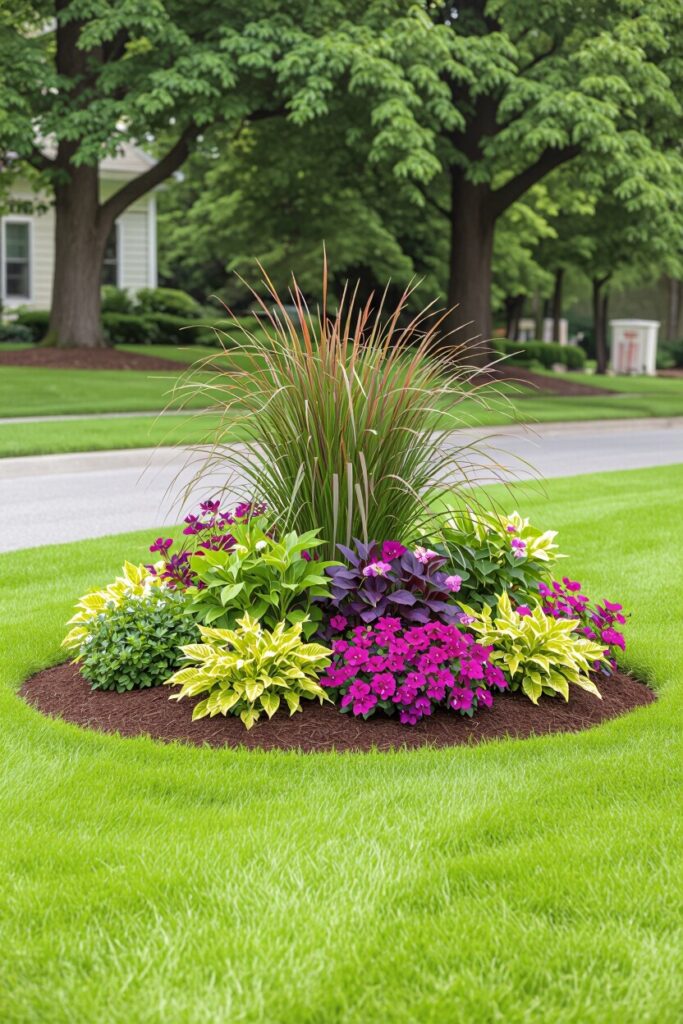
An island bed surrounded by deep mulch gives you loads of color with barely any weeding. The bed floats in the middle of your yard, drawing the eye to a single spot instead of scattered plantings. Because the plants return every year, you skip annual shopping trips and replanting.
Outline a simple oval or teardrop shape with a hose, then cut the grass away and add a border if you like. Mix in compost, plant sturdy perennials like coneflower, daylily, and salvia, and space them so they fill in over time. Cover every inch of bare soil with a thick layer of shredded bark. Refresh the mulch once a year and divide crowded plants when they outgrow the space.
4. Stone Path With Groundcover Joints
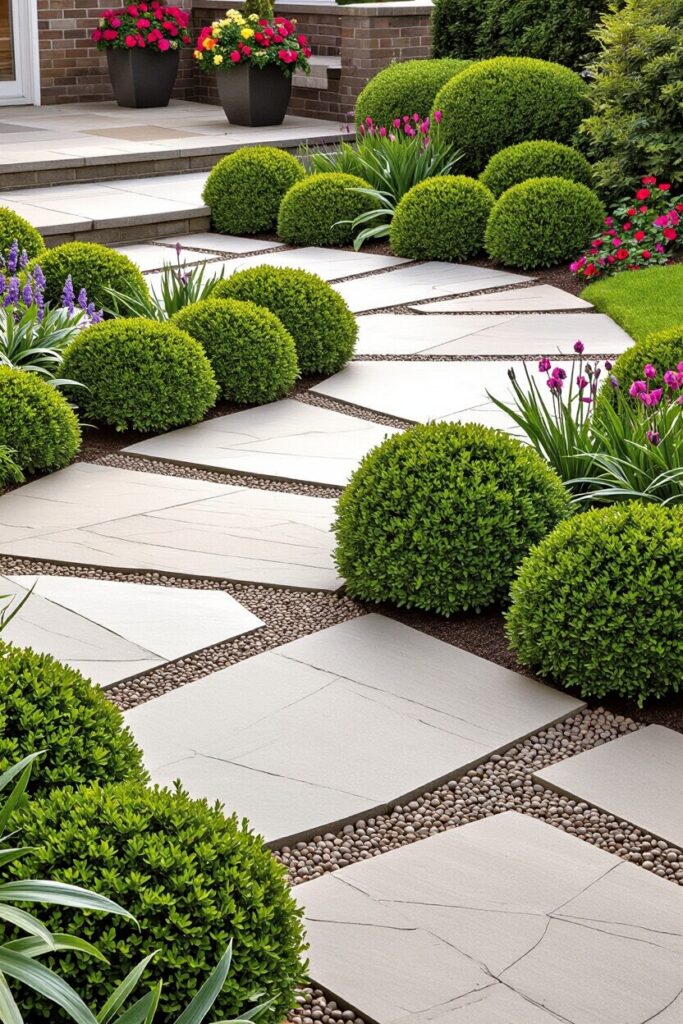
A wide stone path looks charming and also shaves time off yard work, since hard surfaces never need mowing. Set low-growing groundcovers between the stones and you get a soft, green edge that rarely needs trimming. The path guides visitors through your garden and keeps shoes clean after rain.
Lay stepping stones or pavers on packed sand, leaving small gaps between each piece. Instead of filling those gaps with plain sand, tuck in tough plants like creeping thyme, Irish moss, or woolly thyme. Water them well the first few weeks so they root, then let them spread on their own. The path ages nicely, and the groundcovers stay short enough that you almost never touch them.
5. Shrub And Rock Corner Retreat
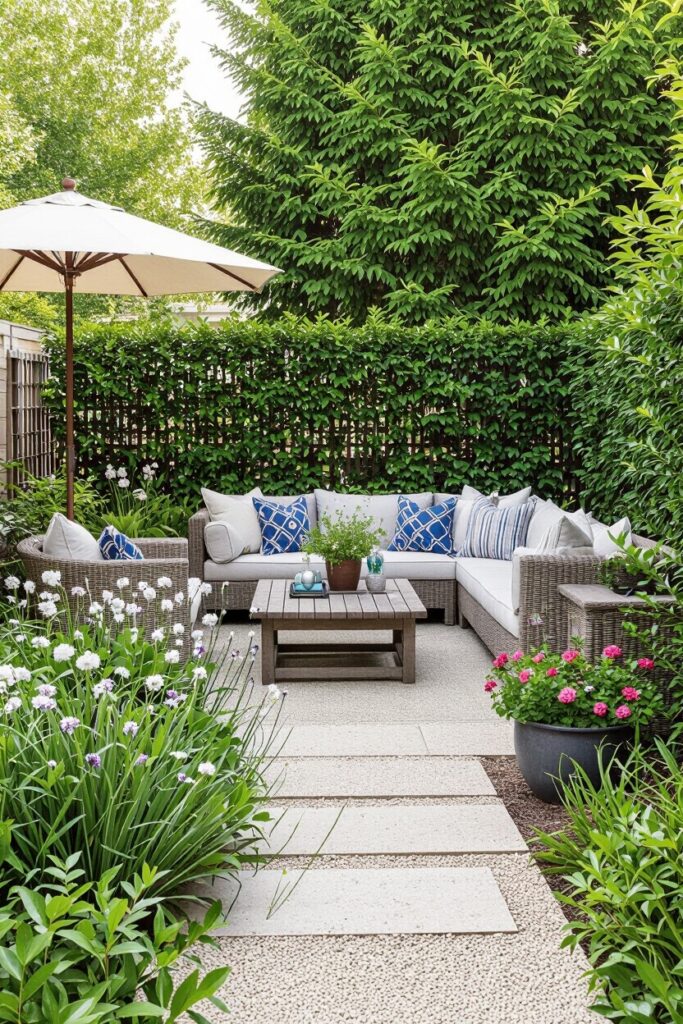
A forgotten corner can become a low-care retreat by mixing hardy shrubs with decorative rock. The rocks cover bare soil, cut down on weeds, and give your plants a finished backdrop. You gain a spot that always looks tidy, even when the rest of the yard feels in progress.
Start with one anchor shrub like a small ornamental tree or large hydrangea, then ring it with smaller shrubs and a few clumping grasses. Lay weed barrier fabric in the open spaces and pour decorative rock over the top.
Tuck a simple bench or two chairs at the edge so you have a quiet place to sit. Prune once a year, hose off the rocks when they collect leaves, and enjoy the calm corner view.
For compact spaces that need easy upkeep, these small garden layout ideas are especially helpful.
6. Native Wildflower Meadow Patch
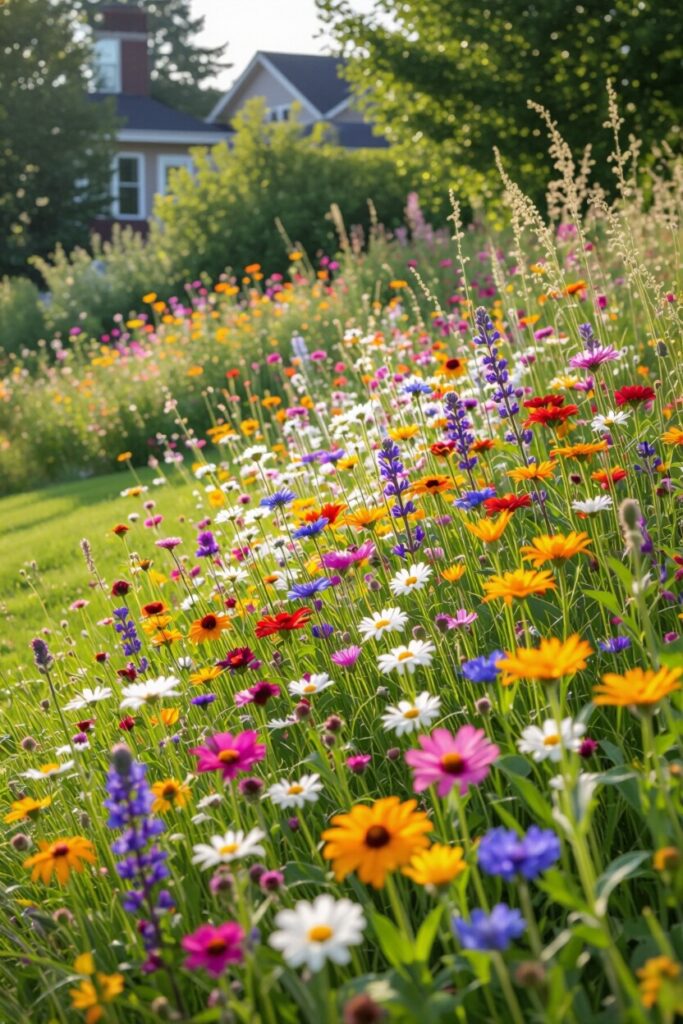
A small wildflower patch gives you color, movement, and pollinators without constant care. You get that relaxed, meadow feel instead of a fussy flower border that needs weekly grooming. Pick native mixes suited to your region so the plants handle your weather on their own.
Clear grass from a sunny spot, spread a no-mow wildflower seed mix, and rake it in lightly. During the first season, water when the soil looks dry, then let rain handle it. Mow the whole patch once a year in late fall, leaving clippings to drop seed. You’ll see new surprises every spring with almost no work.
7. Drip Watered Raised Vegetable Corner
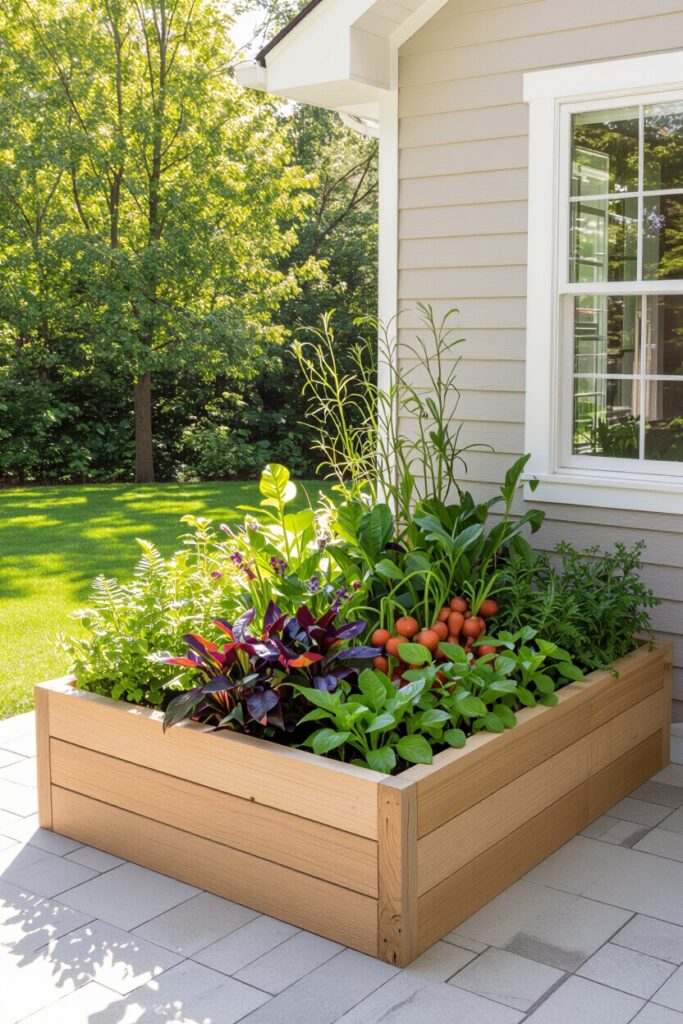
Want fresh herbs and salads without living in the garden? A compact raised vegetable corner lets you grow what you actually use and keeps weeds low. The soil warms faster in spring, so plants take off quickly and stay healthier.
Build two or three simple wooden boxes and line the paths between them with gravel or bark. Fill the beds with a quality mix, then run a drip line or soaker hose through each box and hook it to a timer. Focus on easy crops like lettuce, cherry tomatoes, and bush beans. You’ll grab dinner ingredients in minutes, and the timer handles most of the work.
8. Evergreen Gravel Seating Nook
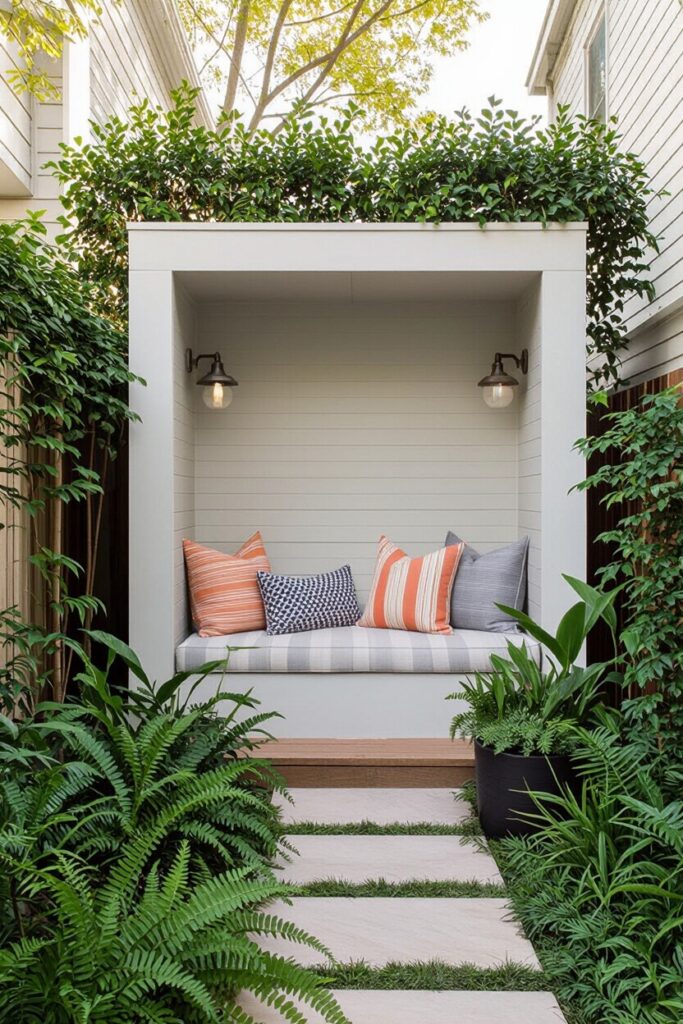
A tiny seating nook tucked into a corner can change how you use your yard. Gravel flooring, a couple of evergreen shrubs, and one sturdy bench create a calm spot that looks tidy all year. You get a place to relax without mowing or edging around more lawn.
Mark out a simple rectangle, lay down weed barrier, and spread compacted gravel for a firm surface. Add two or three low-care evergreens in large pots or small beds at the edges. Tuck in solar lanterns or a small side table for your coffee. Sweep the gravel once in a while and you’re done.
9. Low Care Ornamental Grass Ribbon
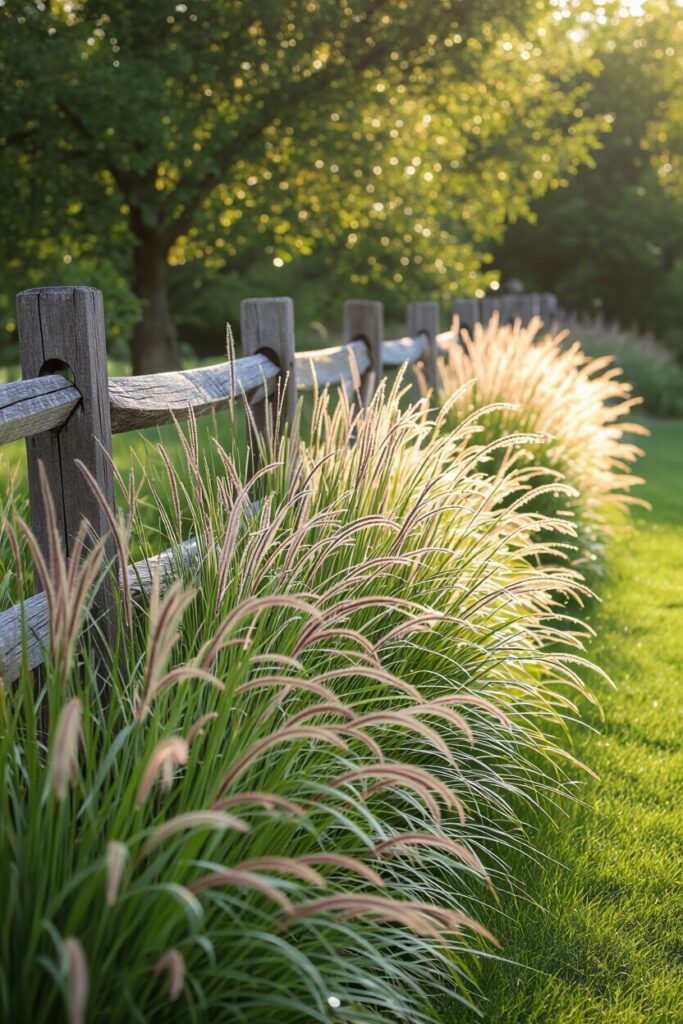
A ribbon of ornamental grasses along a fence or driveway gives you motion, height, and texture. The feathery plumes catch evening light and look good even in winter. You also create a soft screen that doesn’t need constant clipping like a formal hedge.
Choose clump-forming varieties that stay in neat mounds, such as fountain grass, feather reed grass, or blue fescue. Space them in a straight or gentle curved line, then cover the soil with a thick layer of mulch. Water well the first season so roots dig in. After that, you just cut the grasses back once a year and enjoy the show.
10. Shade Loving Foliage Corner Under Trees
The bare ground under big trees can make your yard feel unfinished. Turn that tricky area into a cool foliage corner filled with shade plants that practically take care of themselves. Big leaves and repeating greens create a calm, planted look that lasts through the season.
Start with tough hostas, ferns, and heuchera in a few repeating colors. Group them in clusters rather than dotted everywhere, then outline the bed with irregular stone or brick. Add a thick layer of leaf mold or bark mulch to keep roots moist. Water new plants until they settle, then let the tree canopy and mulch do most of the work.
11. Succulent Rock Strip Along The Driveway
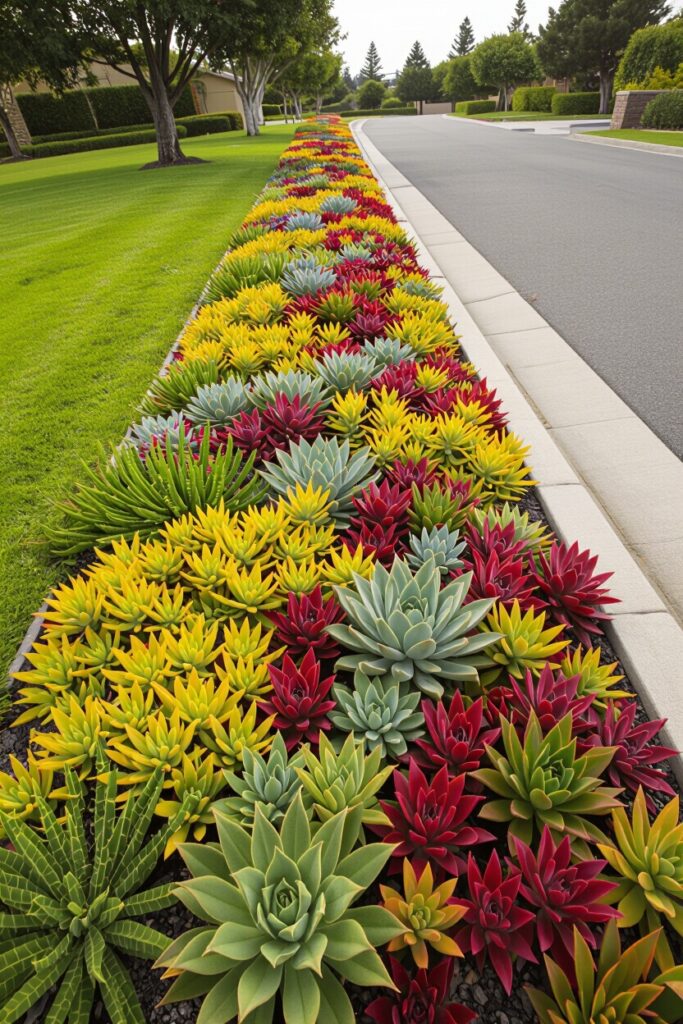
A narrow band of succulents along your driveway gives you bright color with almost no upkeep. The mix of rock and fleshy leaves looks tidy even when you ignore it for weeks. It also handles heat from pavement and missed watering days without complaint.
Start by removing grass in a strip and lining it with weed barrier fabric. Cover the area with decorative gravel, then tuck in low-growing sedum, hens-and-chicks, and small aloe in pockets of soil. Water well the first few weeks so roots grab, then cut back to the occasional deep soak and a quick fall cleanup.
12. Artificial Turf Patch For A Always Green Lawn
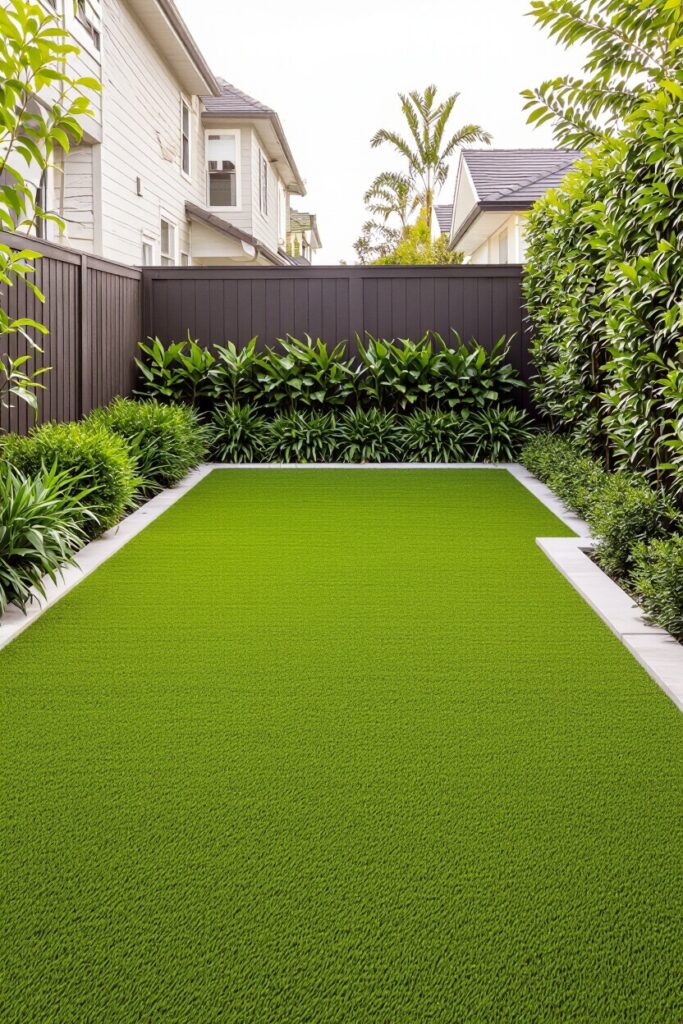
A small section of artificial turf stays green without mowing, edging, or fertilizer. It gives kids or pets a soft spot to play and keeps high-traffic areas from turning into muddy ruts. You get the look of a manicured lawn even during watering bans.
Pick one area that takes the most wear and remove the existing grass. Add a compacted base of crushed stone, roll out the turf, and secure the edges with landscape spikes. Brush the blades upright with a stiff broom. Hose it off now and then, and you’re done with weekend lawn chores there.
13. Herb Pocket Garden By The Back Door
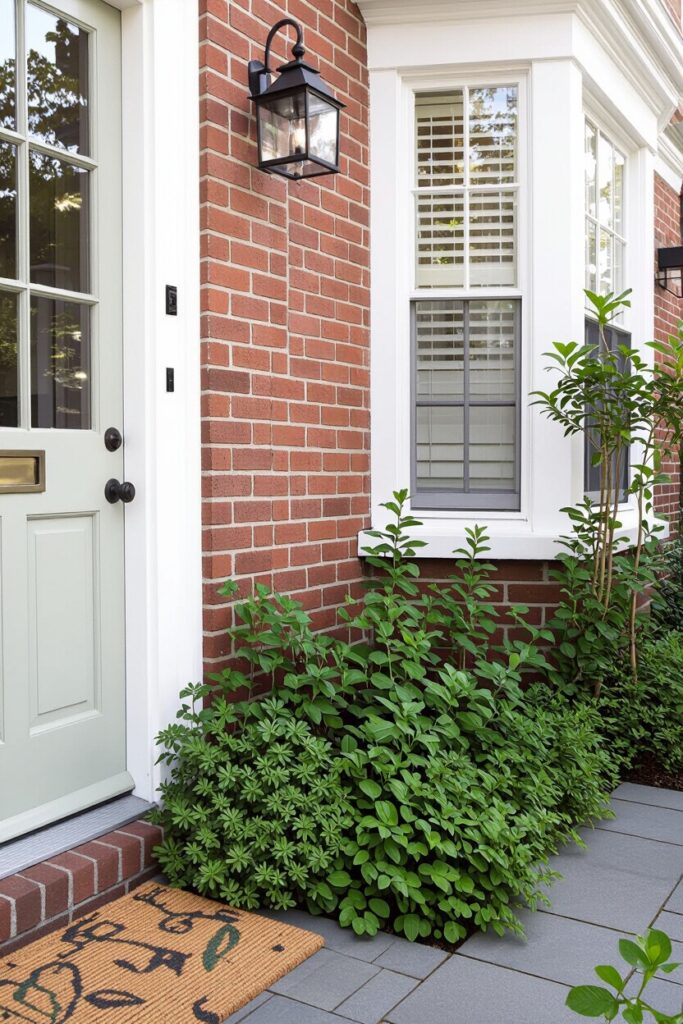
A tight cluster of herbs near your back door saves trips across the yard and stays easy to manage. The plants stay compact, smell great, and bounce back even if you forget a watering. You’ll actually use fresh herbs because they’re only a few steps away.
Use a half barrel, tall trough, or a set of wall pockets on a sunny wall. Fill with good potting mix and plant hardy herbs like rosemary, thyme, oregano, and chives. Group thirsty ones like basil closer together so a quick pass with the watering can covers them. Snip often to keep growth dense and tidy.
14. Rain Garden Swale Near Downspouts
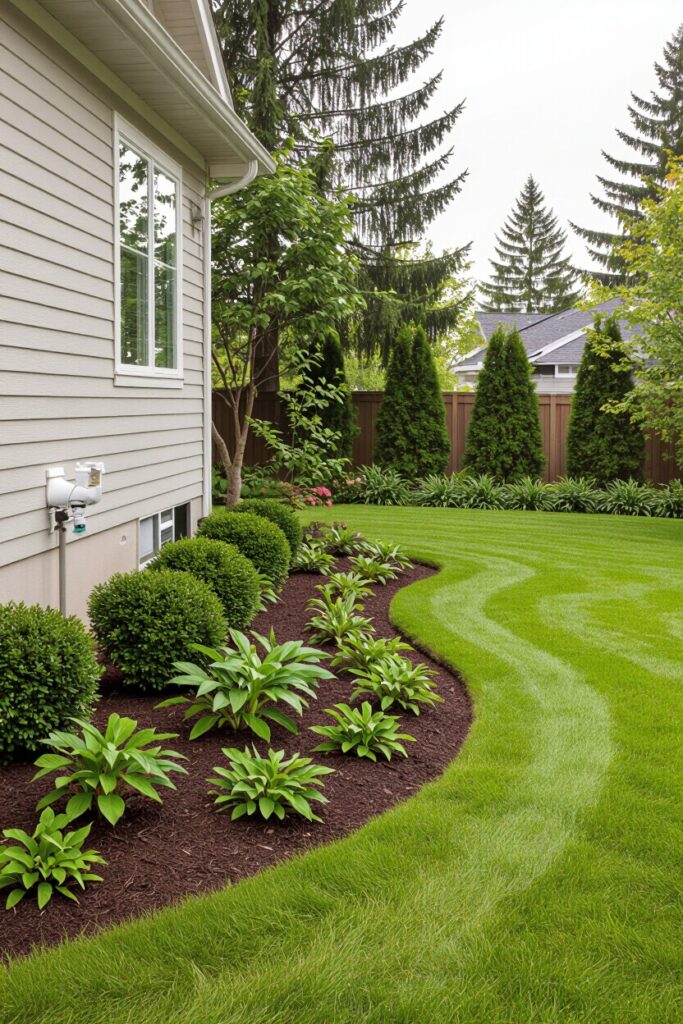
A shallow rain garden swale turns a soggy corner into a neat feature that manages storm water for you. The gentle dip and stones guide runoff into deep-rooted plants, so puddles disappear faster. It looks like a small dry creek most days, then quietly handles the next downpour.
Mark a curving trench from your downspout out into the yard and dig it slightly lower than the lawn. Line the center with river rock, then plant moisture-loving natives like blue flag iris, joe pye weed, or switchgrass along the sides. Top exposed soil with shredded bark. Once plants are established, you mostly just trim old stems each spring.
15. Vertical Trellis Wall With Climbing Vines
A tall trellis panel with climbing vines gives instant height and softens bare fences or walls. The green curtain draws the eye up, so even a small yard feels larger. You also gain extra shade for seating areas without planting a full tree.
Attach wood or metal trellis panels to posts, leaving a little space from the wall for airflow. Plant easy climbers like star jasmine, clematis, or annual morning glory at the base, and add drip emitters so watering is automatic. Guide the first few stems through the grid, then let the plant take over. A quick trim once or twice a year keeps the wall in shape.
16. Mixed Pebble And Paver Side Strip
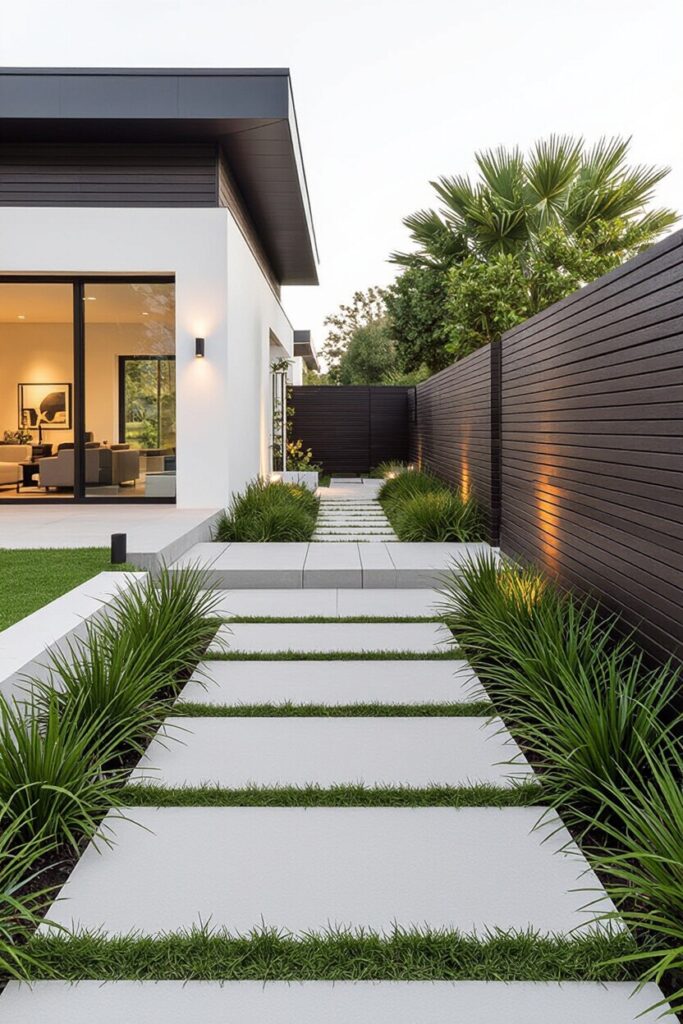
A narrow side yard can turn into a neat, walkable strip that almost never needs attention. Mix large concrete pavers with decorative pebbles so you get a clean path and a weed‑blocking filler. The hard surfaces handle foot traffic, trash bins, and pets without turning into mud after rain.
Start by laying a weed barrier fabric, then set pavers in a simple grid you can repeat. Pour pebbles in between and rake them level. You can tuck a few drought‑tolerant tufts of grass at the edges if you want a softer look without adding real work.
17. Low Water Shrub Hedge Around The Perimeter
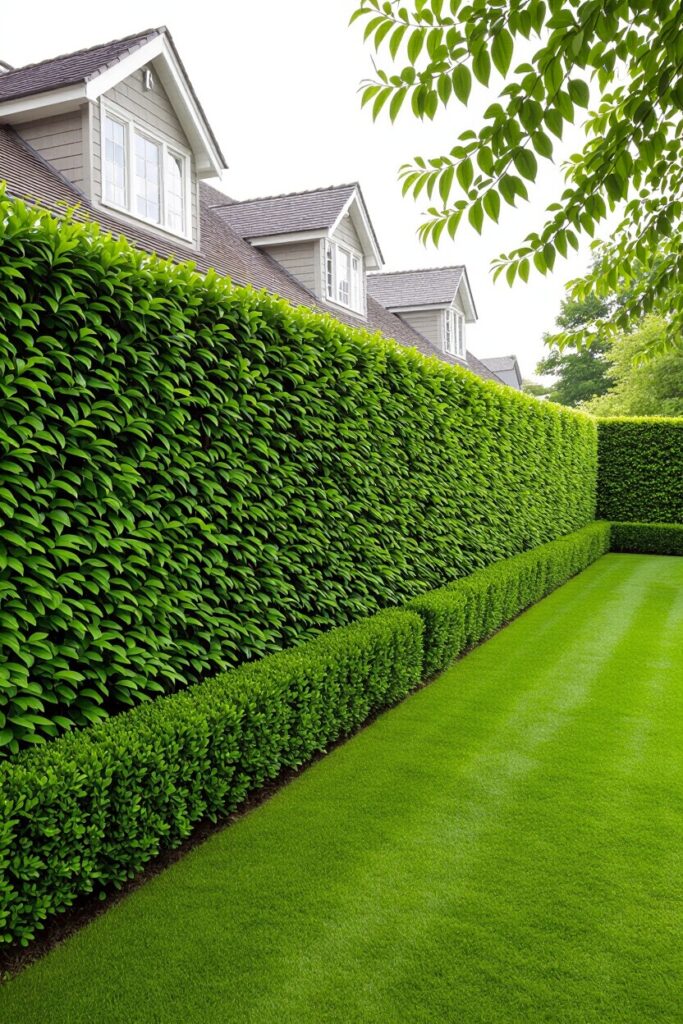
A border of tough shrubs gives your yard a finished frame and cuts down on mowing awkward edges. Once established, they need very little beyond a light trim once or twice a year. Pick varieties bred for your climate so they handle heat, cold, and skipped watering days easily.
Space plants so they touch when mature, not when you first plant them. Cover the soil under the hedge with thick mulch to hold moisture and block weeds. If you like color, choose shrubs with seasonal berries or flowers so the hedge still stays simple but never looks plain.
18. Self Watering Window Box Row
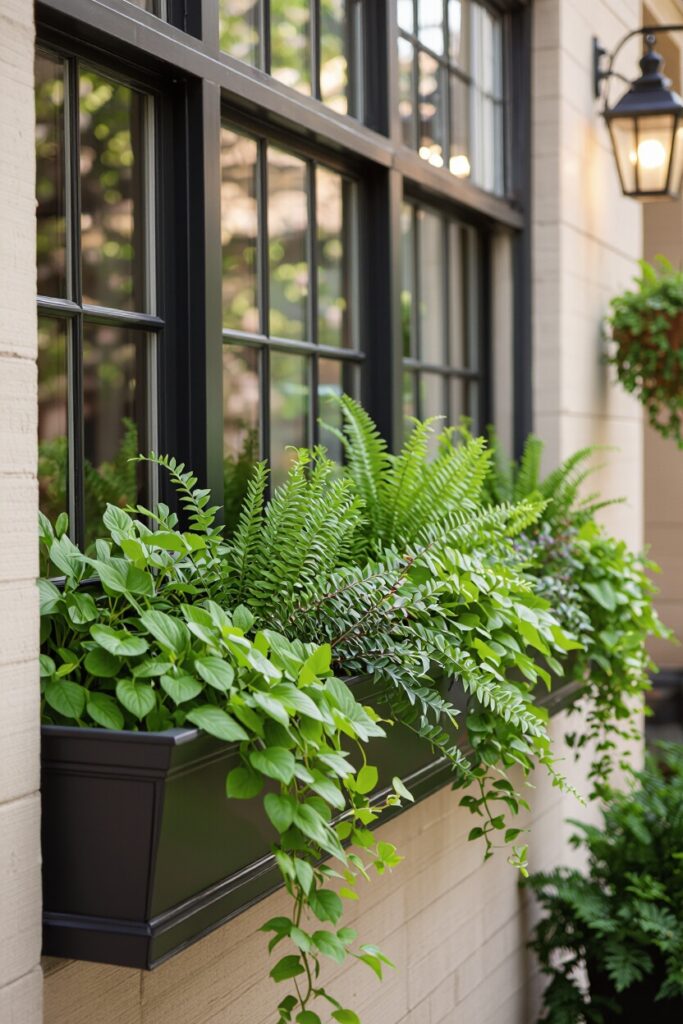
Window boxes brighten your view from inside and add charm outside without taking up ground space. When you choose self watering styles, you only need to top up the reservoir instead of dragging a watering can every day. They are great spots for compact flowers, herbs, or trailing vines.
Measure each window and buy boxes that fit snugly so wind does not rock them. Use a light potting mix so roots stay happy and drainage stays quick. Group plants with the same sun needs in each box and refresh the top inch of soil with compost once a year.
19. Evergreen Screening In Large Planters
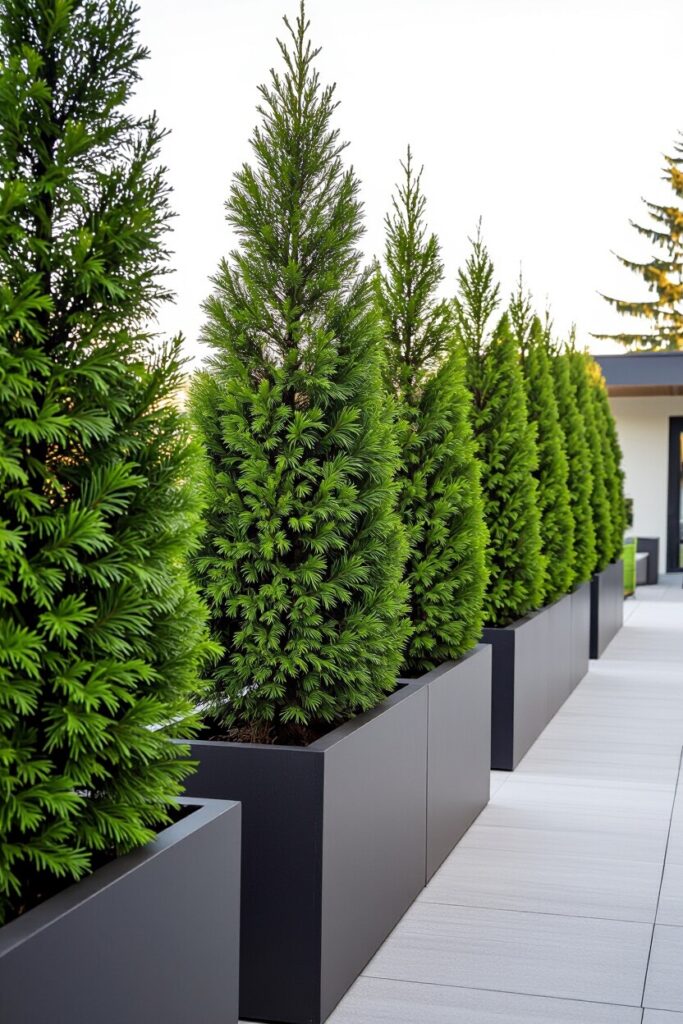
Tall planters filled with evergreens give you instant privacy and a tidy backdrop that stays green all year. You can line them along a patio, spa, or balcony to block views without building a fixed structure. The height makes the space feel cozy, like an outdoor room.
Choose frost hardy evergreens that stay narrow, such as columnar arborvitae or upright juniper. Fill planters with a slow release fertilizer mix so feeding stays simple. Water deeply but less often, and add a drip line up the back if you want to automate care. Refresh the top mulch layer each spring.
20. Rocky Dry Creek Accent Through The Yard
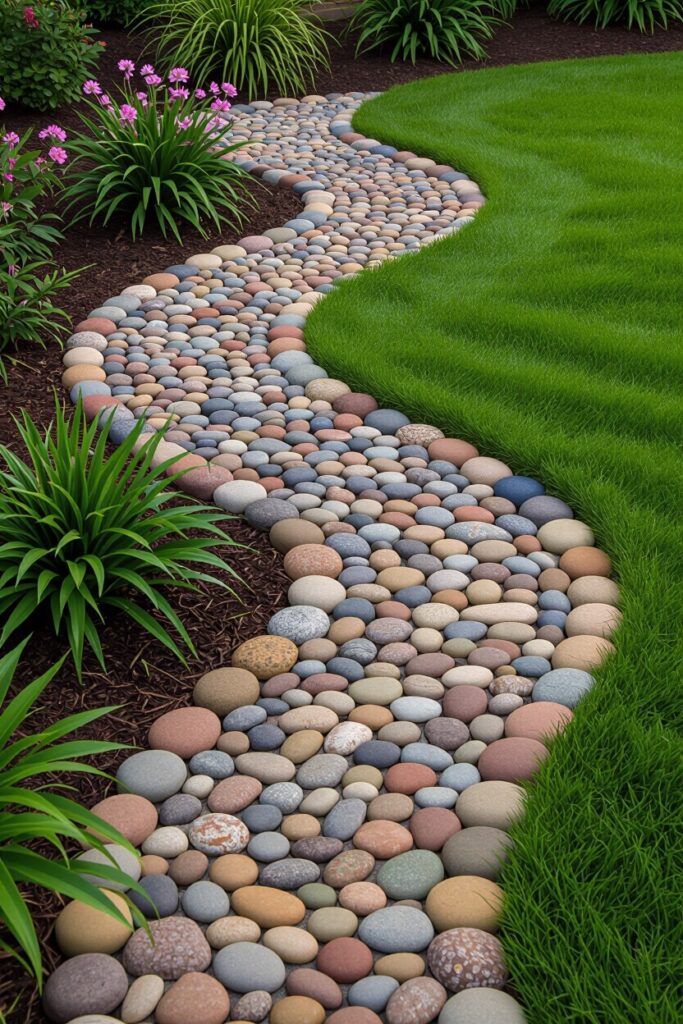
A dry creek bed made from stones and cobbles turns a dull stretch of grass into a natural‑looking feature. It guides rainwater, breaks up large open areas, and never needs mowing. You can curve it gently so the whole garden feels longer and more interesting.
Dig a shallow trench that widens in the middle and taper the ends into your existing beds. Line it with fabric, then place larger rocks along the “banks” and smaller gravel in the center. Tuck in a few clumps of low care plants at the edges to soften the stones and help the creek blend into the rest of your yard.
21. Mossy Stepping Stone Walkway
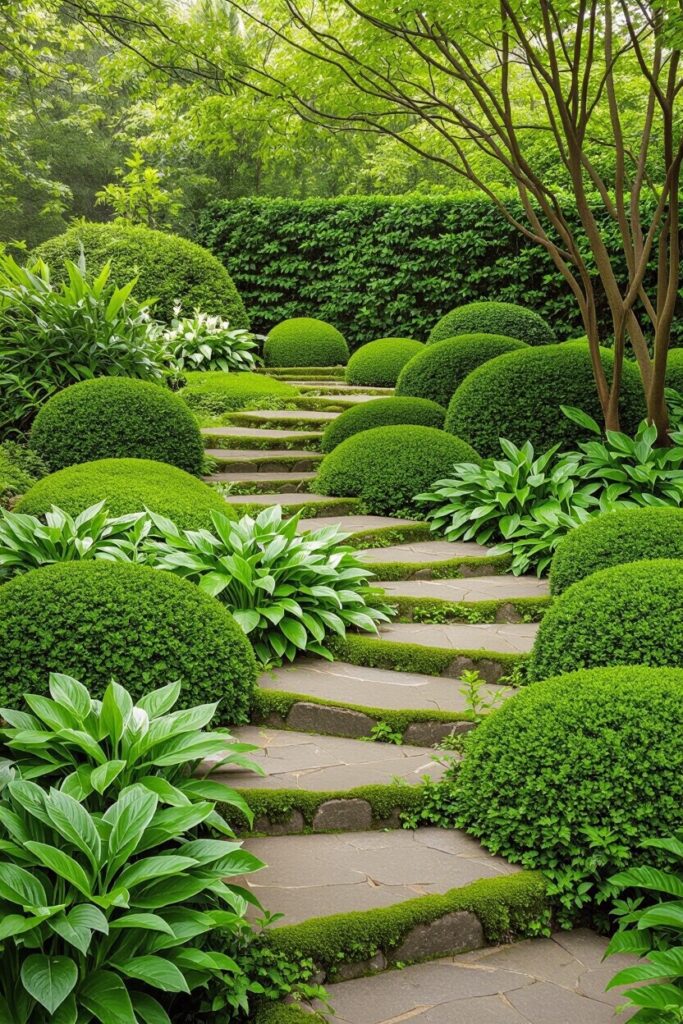
A mossy stepping stone walkway gives your garden a soft, storybook feel with almost no upkeep. The stones handle the foot traffic while the moss quietly fills gaps and hides dirt. You get a green ribbon that stays low and never needs trimming.
Set wide, flat stones into compacted soil or sand, leaving shallow joints between each one. Tuck in moss from garden centers or gently transplant clumps from shady spots in your yard. Keep the area moist for the first few weeks so it roots, then let it coast. Fallen leaves can stay as light mulch, so raking is optional.
22. Shade Sail Sitting Corner Over Gravel
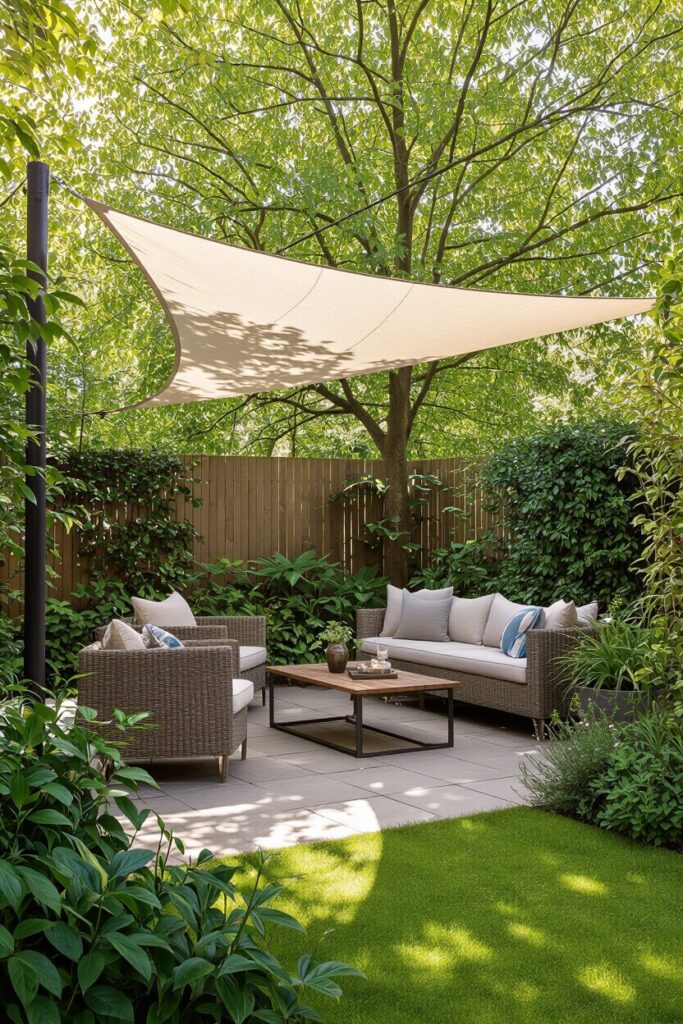
A shade sail stretched over a gravel pad turns an empty corner into a cool retreat that almost takes care of itself. The gravel keeps mud away, and the sail protects your furniture from harsh sun. You get a spot that looks pulled together even on weekdays when you hardly step outside.
Outline the area with pavers or edging, then fill it with compacted gravel so chairs stay level. Install sturdy posts or attach hardware to nearby walls for the sail. Choose outdoor furniture that can live outside without worry, like metal or resin pieces. A few large pots with drought tolerant plants finish the space with very little watering.
23. Clover Lawn Replacement Patch
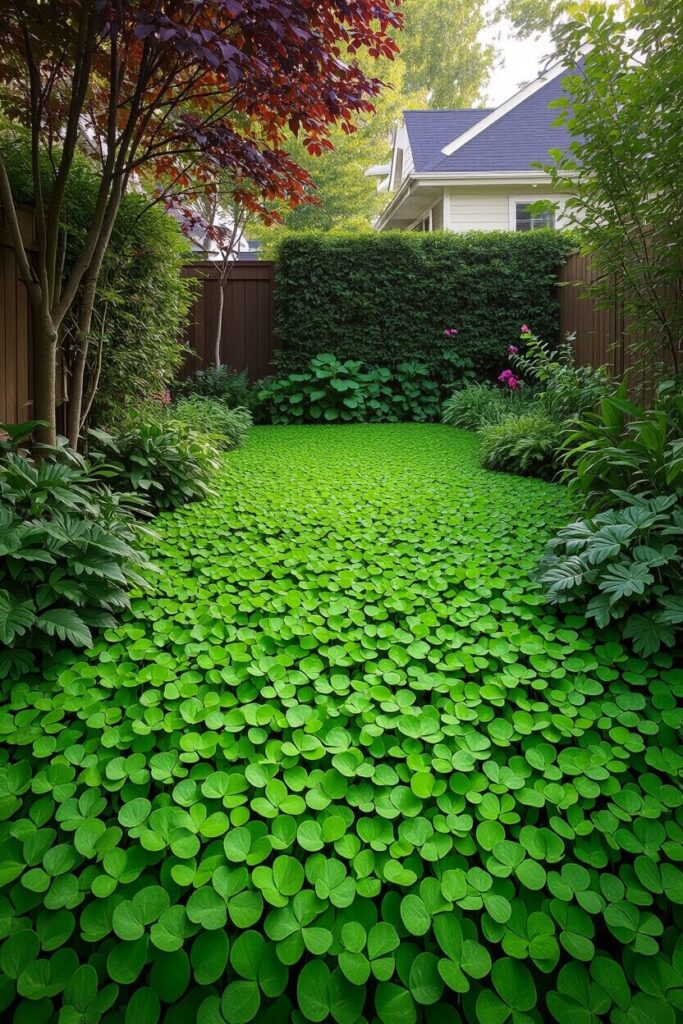
A clover patch gives you a soft, green carpet that stays short and forgives skipped mowing. It handles light foot traffic, feeds itself by fixing nitrogen, and stays fresh looking during light drought. You spend more time enjoying your yard and less time pushing a mower.
Start by scalping your existing grass in the chosen area and raking away thick thatch. Sow clover seed on a calm day, then press it into the soil with your feet or a roller. Water lightly for the first couple of weeks so it sprouts evenly. Once it fills in, you can mow high a few times a season or simply let it stay low and natural.
24. Automatic Soaker Hose Flower Border
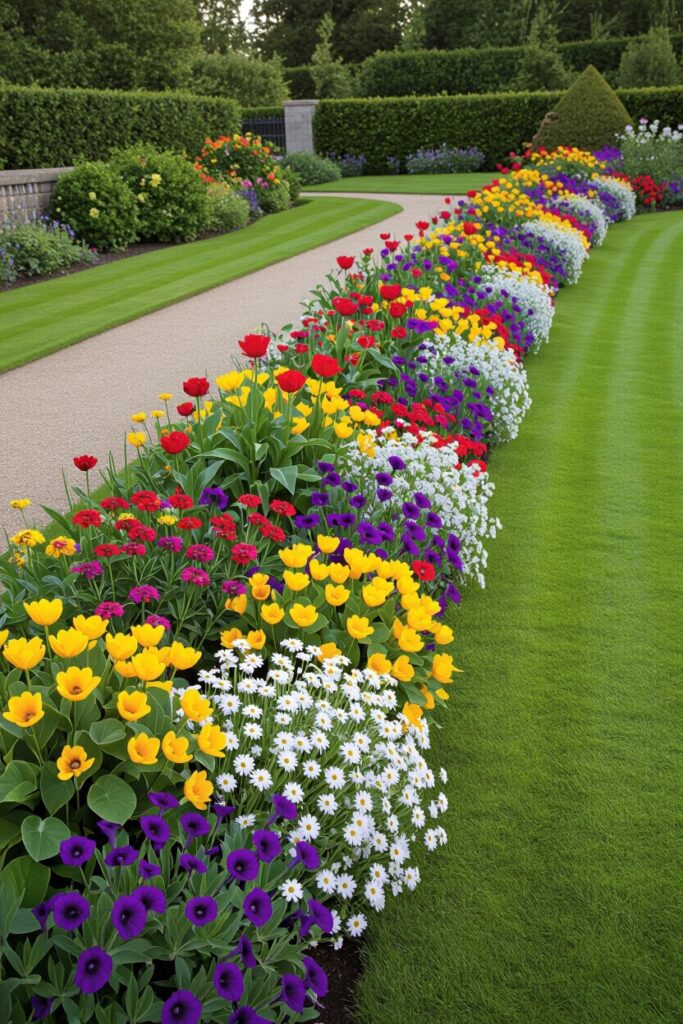
A flower border with a hidden soaker hose keeps your plants happy on autopilot. Water seeps straight to the roots, so you avoid dusty leaves and wasted spray. The result is a tidy strip of color that does not beg for daily attention.
Lay the soaker hose along the planting line before you mulch, weaving gently between young plants. Hook it to a simple timer at the spigot so watering happens early in the morning. Add sturdy, repeat-blooming perennials like daylilies and coneflowers for long color with little fuss. A fresh layer of mulch each spring guards moisture, blocks weeds, and keeps the bed looking new.
25. Small Pond Tub With Floating Plants
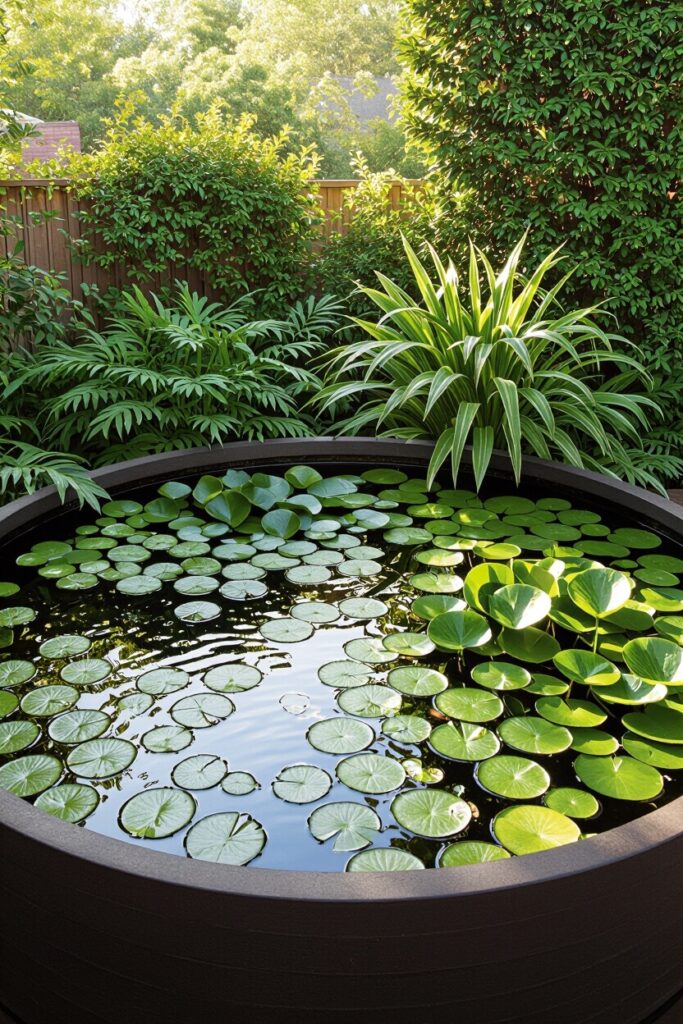
A compact pond tub turns a forgotten corner into a calm water feature with surprisingly low care. The gentle reflections make your garden feel bigger, and floating plants help keep the water clear. You get the sound of water without digging a full pond.
Choose a sturdy stock tank or half barrel and set it level on pavers or gravel. Add a small pump to keep water moving, then place a few rocks to hide the cord. Drop in floating plants like water lettuce or hyacinth so they shade the surface. Skim debris now and then, top up water during hot spells, and enjoy the simple ripple and motion.
Conclusion
Low maintenance gardens are built from smart choices, not endless chores. When you mix gravel, tough plants, automatic watering, and simple seating, your yard starts to work for you. Pick one or two ideas that match a corner you already have, then layer more as you gain confidence.
Save this list, mark the sections that excite you, and plan a weekend project that actually fits your schedule. Take a quick photo before you start, then another when you finish so you can see the difference. Over time, these small upgrades add up to a yard that feels welcoming on even your busiest days.