
Your backyard can be so much more than a patch of grass. With a smart layout, you can turn that space into a calm retreat, a food garden, or a fun hangout that fits how you live. The best part is you don’t need a huge budget or a huge yard to start. Thoughtful paths, grouped plants, and clear zones can make even a small area feel inviting and easy to care for.
This guide gives you creative ideas you can mix and match. You’ll see how to plan beds, tuck in seating, and use height so every corner works harder. Pick one idea that feels simple, try it this weekend, and watch your garden slowly turn into the outdoor space you imagine.
For more mixed-style inspiration beyond backyard-focused plans, browse these garden layout ideas and design examples to compare path, zone, and planting arrangements.
1. Layered border beds along the edges
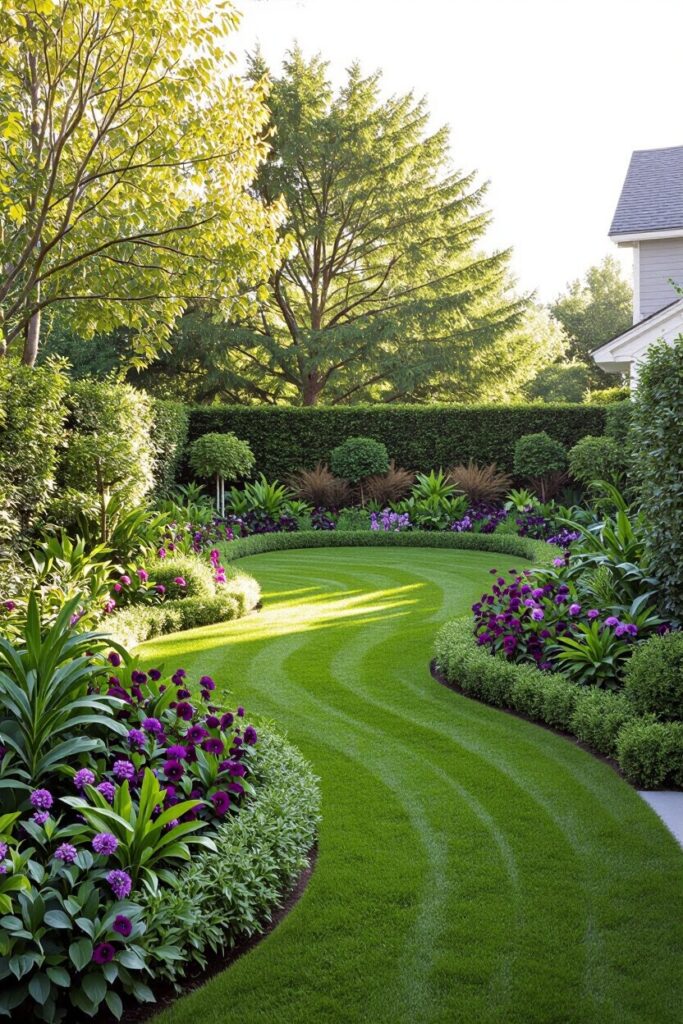
Framing your yard with layered border beds makes the whole garden feel finished and cozy. You draw the eye around the space, soften fence lines, and free up the center for play, seating, or a small dining area. It also gives you clear “planting zones” so the layout feels planned, not random.
Start at the back of each border with taller shrubs or narrow trees. In front, add mid-height perennials, then a strip of low growers or herbs along the edge. Keep one or two colors that repeat around the yard so the borders feel connected. Leave a narrow mulch strip inside the grass line and mowing will stay simple.
If your backyard is limited in size, these small garden layout ideas offer space-saving layouts that still feel usable and balanced.
2. Curved central path to guide the view
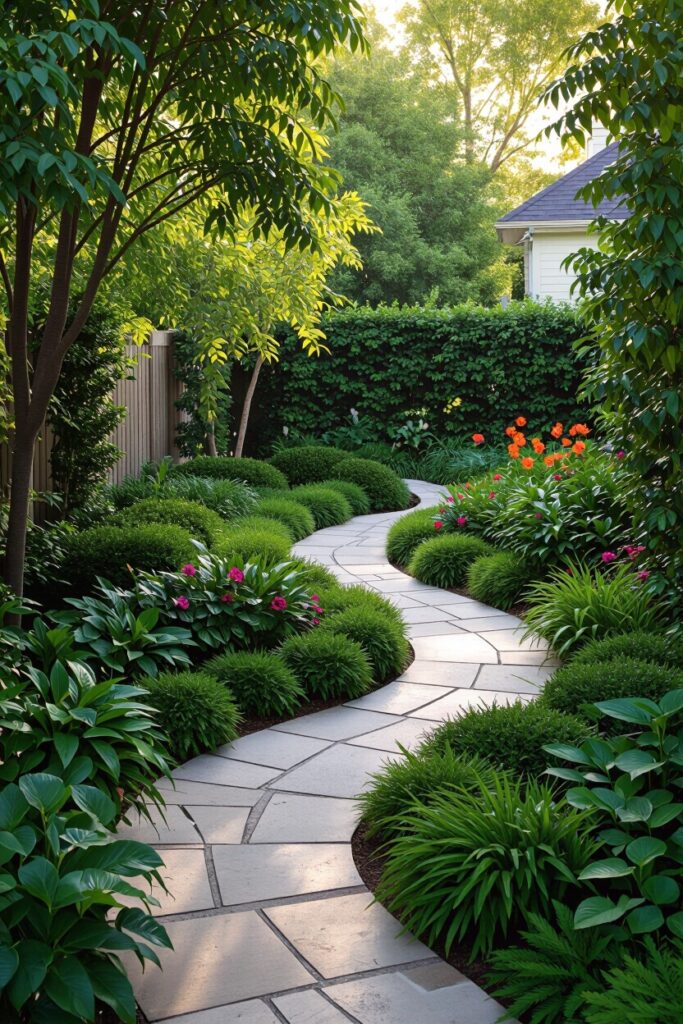
A gentle curved path pulls you through the garden and makes even a short yard seem longer. Each bend hides part of the view, so you feel like you’re moving from one little scene to the next. The path also gives you a clear backbone to plan beds and seating around.
Use stepping stones set in gravel, bark, or ground covers for a soft look. Mark key stops along the way with a bench, a big pot, or a raised bed. Keep the curves wide and smooth so it’s easy to walk and push a wheelbarrow.
At the end of the path, place something special, like a small tree or birdbath, to reward the walk.
For a softer and more charming planting style, take a look at these cottage garden layout ideas that work beautifully in backyard spaces.
3. Zoned garden rooms for different uses
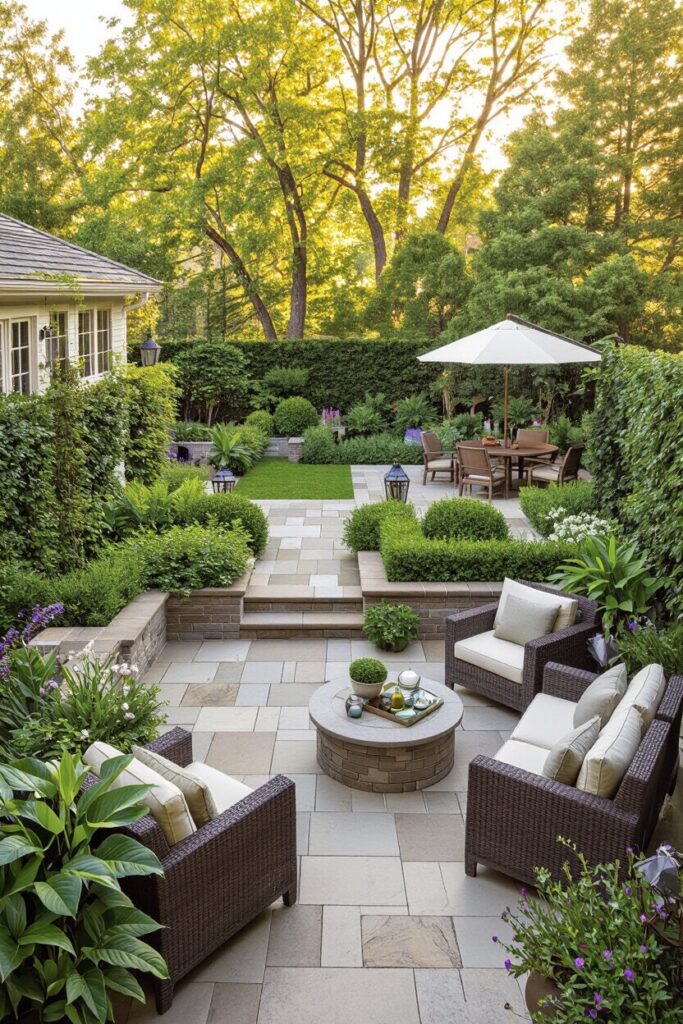
Breaking your yard into simple “rooms” makes it easier to plan and to use every bit of space. You might have a growing area, a relaxed sitting corner, and a spot for kids or pets. Each zone feels cozy on its own, yet together they form one clear layout.
Use low hedges, planters, or even a change in ground material to mark the shift from one area to the next. A row of pots can frame a small dining nook, while a trellis can separate vegetables from a lounging space. Keep a shared color or material, like the same pavers or cushions, so the rooms feel like parts of one garden, not separate yards.
4. Vertical trellis walls for height and privacy
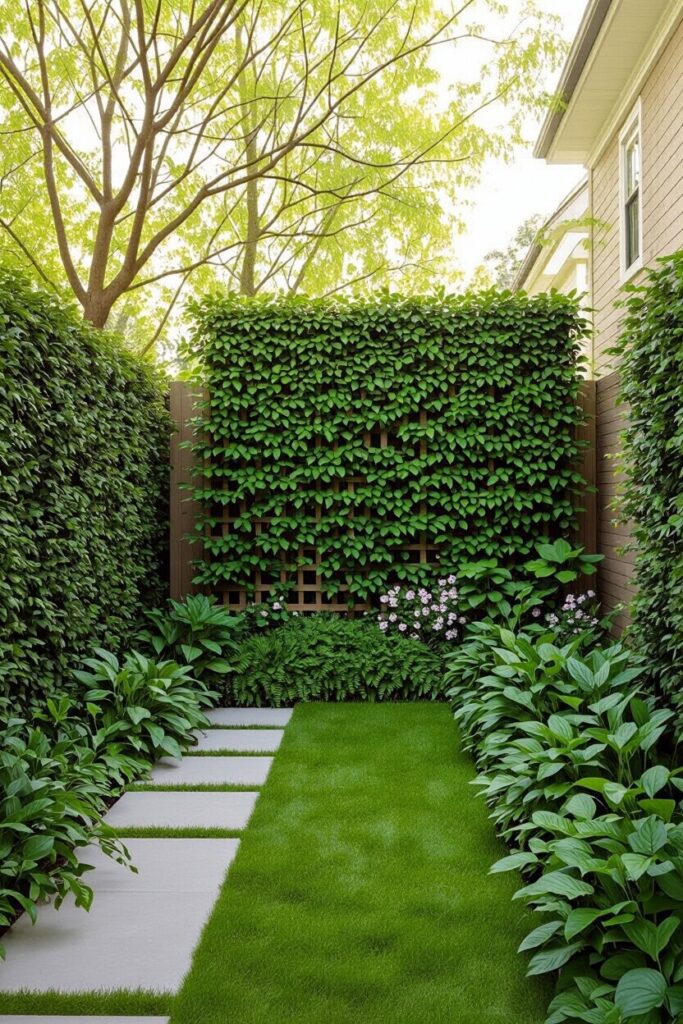
Vertical trellis walls add height, give climbing plants a home, and create pockets of privacy without heavy structures. They help you control views, shade a hot corner, and turn bare fence runs into lush green features. This works especially well in narrow yards where floor space is limited.
Place a trellis behind a bench to form a cozy backdrop, or use two trellises to mark the entrance to a seating area. Grow beans, sweet peas, or small flowering vines to keep the look light. You can even hang baskets and lanterns from sturdy sections. Keep the pattern simple so the plants are the star and the garden still feels open.
5. Mixed kitchen garden near the back door
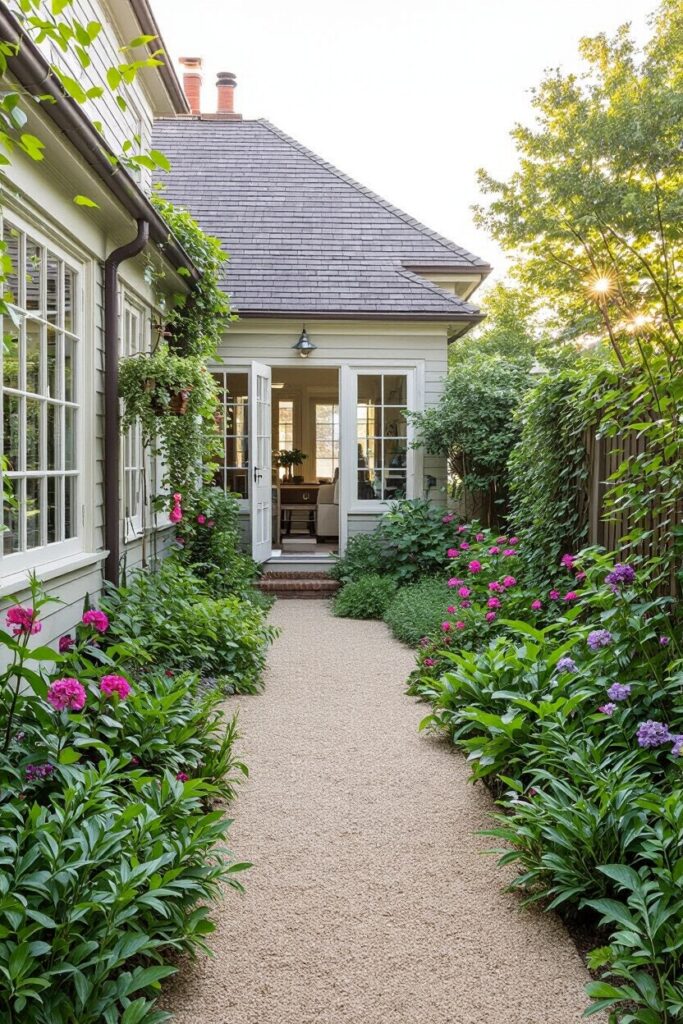
A mixed kitchen garden close to the house makes fresh herbs and vegetables easy to grab for dinner. It also turns a plain corner near the back door into a lively, useful space. Short walks from the kitchen mean you’ll actually use what you grow, instead of forgetting about beds at the far end of the yard.
Combine raised beds, large pots, and a narrow strip of soil so you can grow a bit of everything. Put herbs along the front edge for quick clipping. Taller crops like tomatoes belong toward the back so they don’t shade smaller plants.
Add a simple stepping stone path between beds for dry feet after rain, and leave room for a small stool so you can weed and harvest in comfort.
6. Sunken lounge corner with built in seating
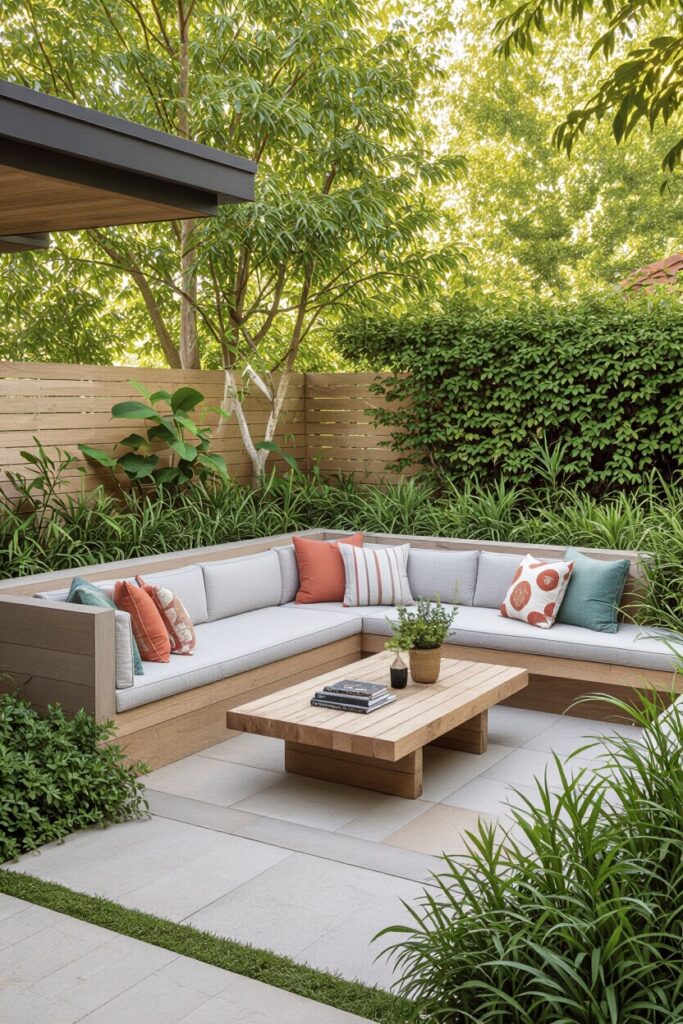
A lowered lounge corner makes your garden feel like an outdoor living room and gives the space a clear destination. By stepping down a little, you create a snug feeling that blocks wind and frames the view of your plants. It also helps separate relaxing space from the rest of the yard without needing tall walls.
Mark out a simple square or rectangle and dig down a shallow step, then edge it with brick, timber, or stone. Add a built in bench along two sides and tuck planters behind the backrests for a soft green backdrop. String lights above or hang lanterns from hooks to make the nook inviting after dark.
7. Compact wildlife corner with mini pond
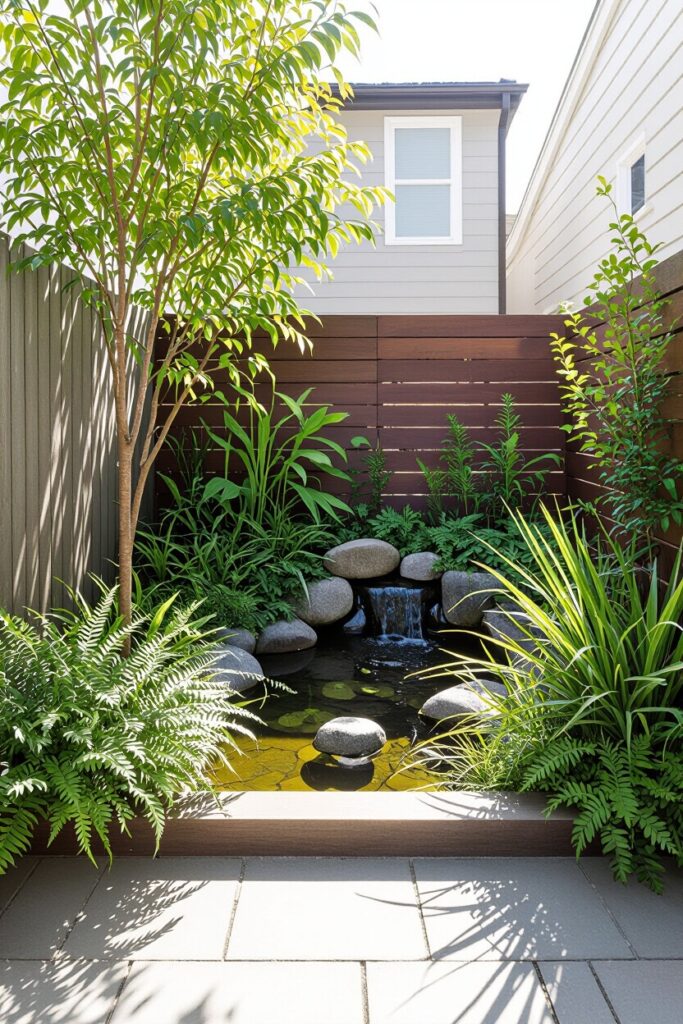
A dedicated wildlife corner brings movement and gentle sound into your garden, even in a tight yard. A small pond or water bowl attracts birds, bees, and frogs, turning an unused spot into a tiny nature hub. You get a relaxing place to sit nearby and watch everything happening.
Choose a back corner that gets some sun and part shade, then sink a preformed pond liner or large glazed pot. Surround it with stones, grasses, and flowering perennials so creatures feel safe. Add a shallow dish for bees to drink, and place a simple bench or stump seat close enough for quiet viewing.
8. Symmetrical twin beds framing a central feature
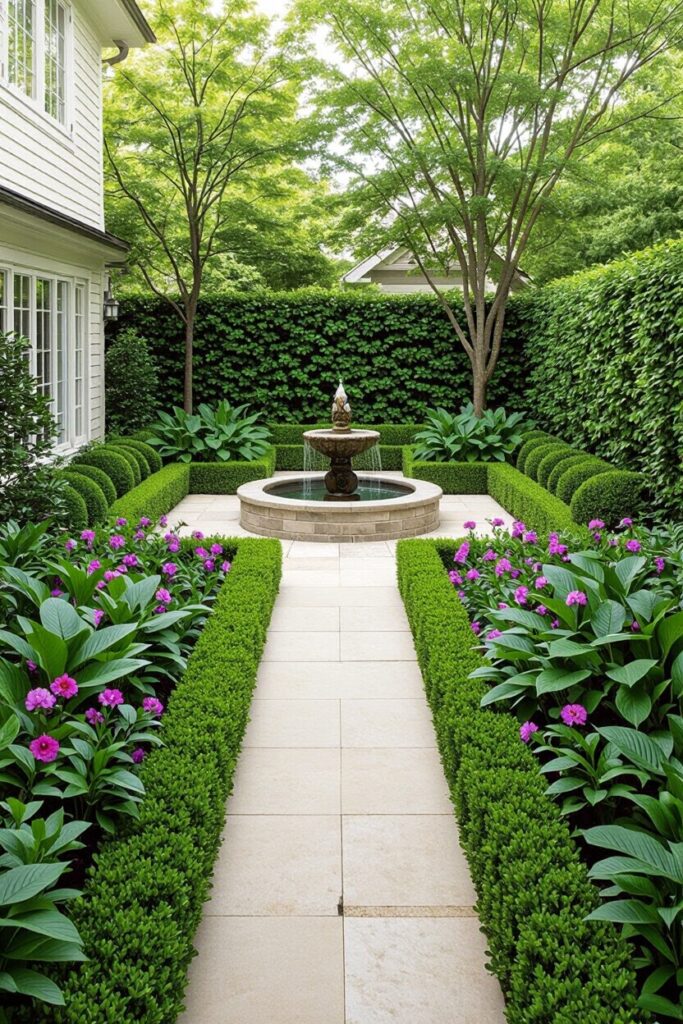
Matching beds on either side of a focal point give your garden a calm, orderly feel. The repeated shapes draw your eye straight to the feature, which might be a sculpture, birdbath, or small tree. This layout works well near a patio because it looks tidy from inside your home too.
Start by deciding what you want in the center, then sketch two mirror image beds stretching out from it. Plant in layers, using the same shrubs and flowers on each side so the pattern reads clearly. You can still mix colors and textures, just repeat them so both beds feel related.
9. Gravel patio with modular planter blocks
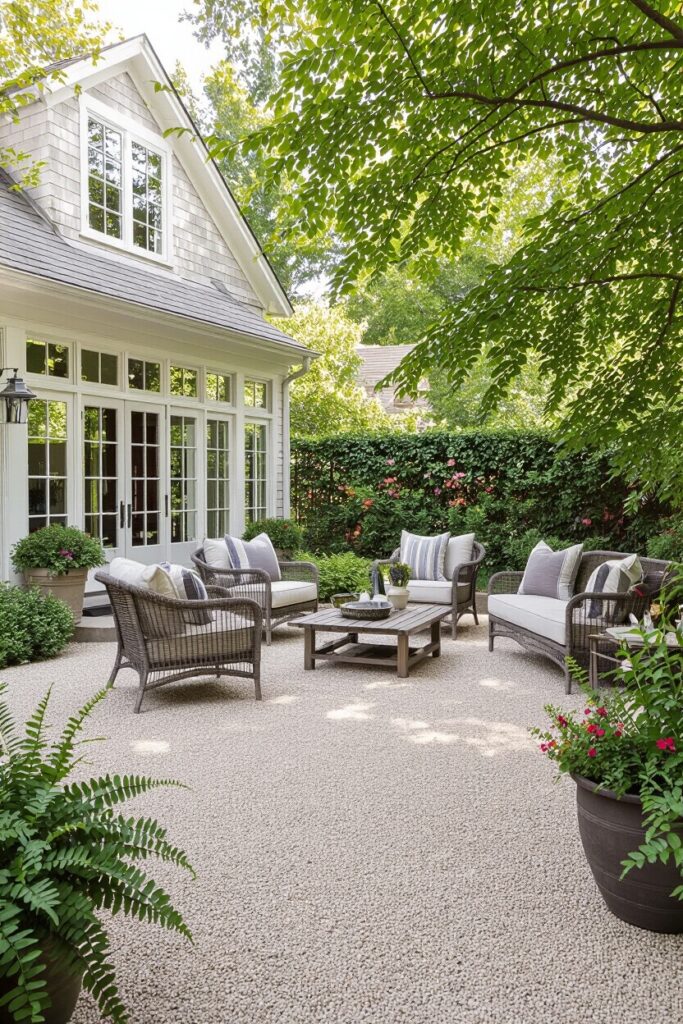
A simple gravel patio gives you a flexible floor for chairs, a grill, or a dining set. When you surround it with movable planter blocks, you can reshape your layout whenever you like. The mix of hard and soft surfaces keeps the garden feeling relaxed, not overly formal.
Rake out the area, lay weed fabric, and spread compacted gravel in a light color that reflects heat. Then bring in square or rectangular planters and group them along one or two edges to act as low walls. Shift the planters season by season, sliding them closer for a cozy nook or wider for big gatherings.
10. Shaded hammock strip between trees or posts
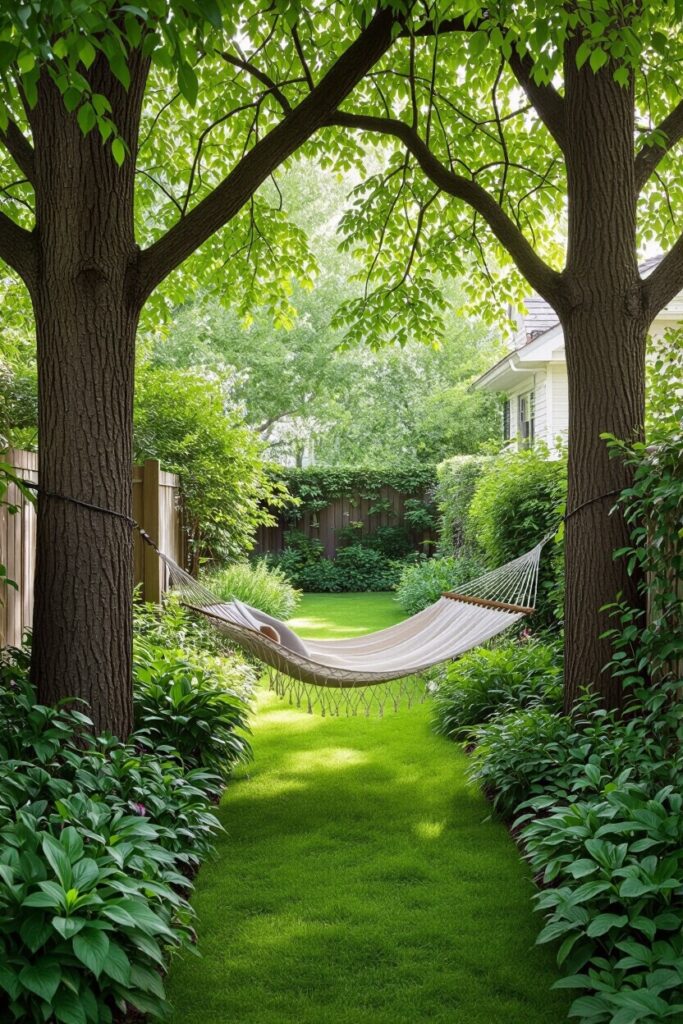
A narrow strip reserved for a hammock turns an awkward side area into the best napping spot outside. The long shape guides the eye along the garden and adds a laid back holiday feel. You also get a clear pause point in your layout where everything slows down.
Use two sturdy trees if you have them, or set posts in concrete at each end of the strip. Plant ferns, hostas, or other shade lovers underneath and around the hammock to soften the view. Add a small stool for books and drinks, and run a line of low solar lights along the edge so you can find your way at night.
11. Raised deck planter strip along a fence
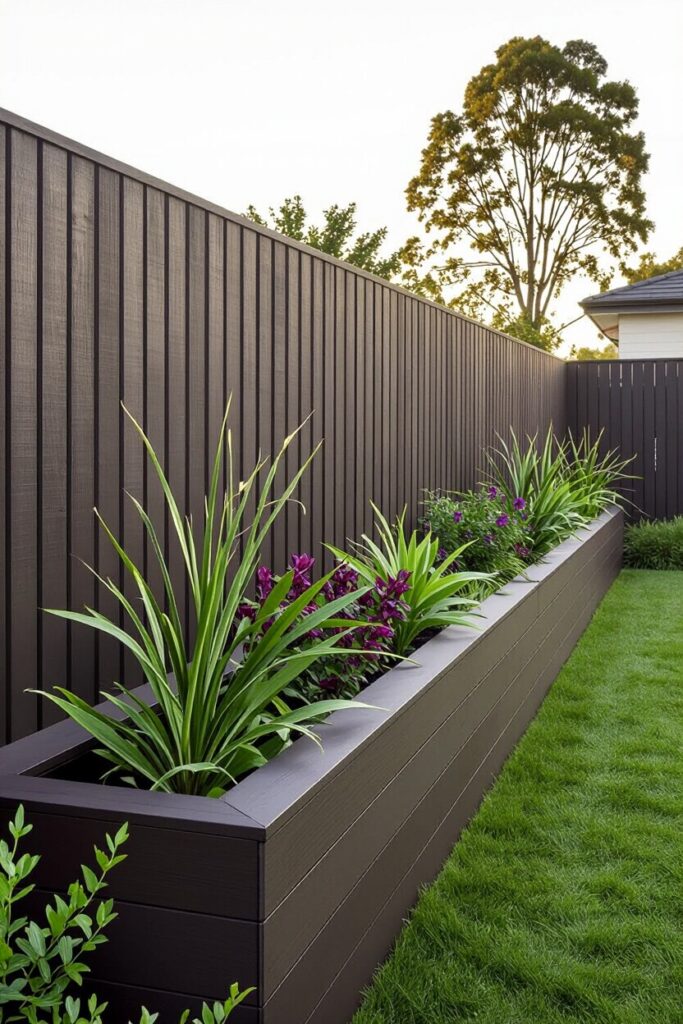
A slim raised planter running beside your fence adds a clean, finished edge and pulls the eye around the garden. It softens hard lines and gives you a place to grow flowers, herbs, or even small shrubs right at eye level.
Build a long narrow box from treated lumber or metal troughs and set it tight against the fence with a small gravel strip for drainage. Fill it with a light soil mix so roots stay happy and water can drain well. Mix tall grasses at the back with trailing plants near the front. You get color, privacy, and a tidy border all in one move.
12. Stepping stone mosaic path through planting beds
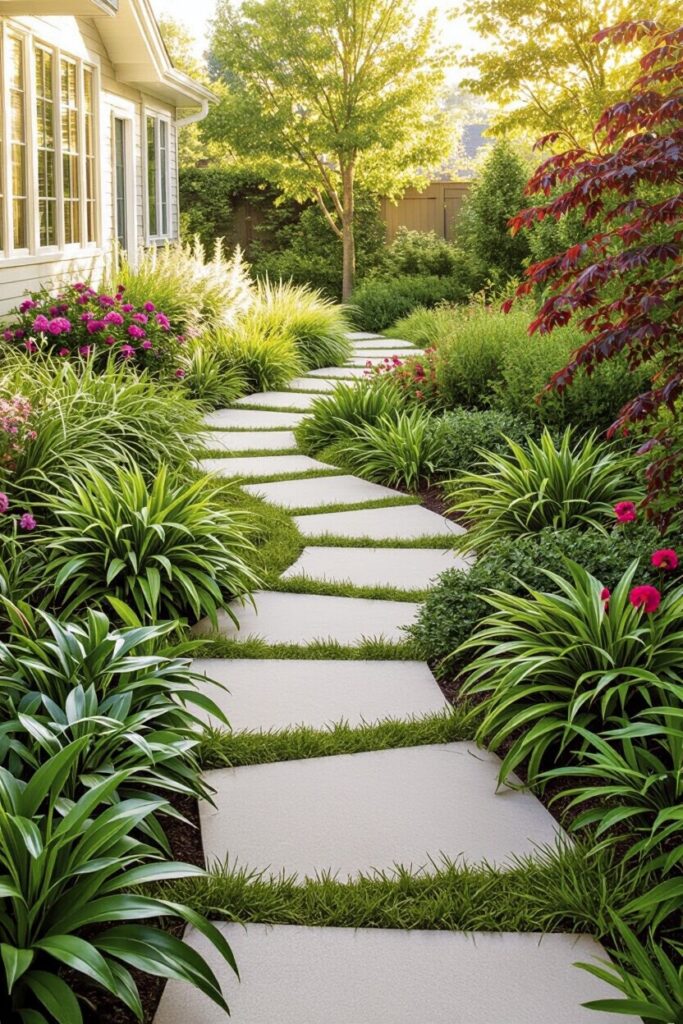
A stepping stone path that weaves through your beds makes the garden feel like a place to explore, not just something you look at. The broken-up shapes slow your walking pace so you notice scents, textures, and tiny details.
Lay out your route first with a garden hose, then drop stones where your feet land naturally. Use irregular pieces of flagstone or concrete pavers and tuck low groundcovers, like thyme or moss, between them.
Keep the stones almost level with the soil so you can mow or trim easily along the edges. At night, add a few low lights to turn the path into a glowing trail.
13. Corner pergola nook for dining and vines
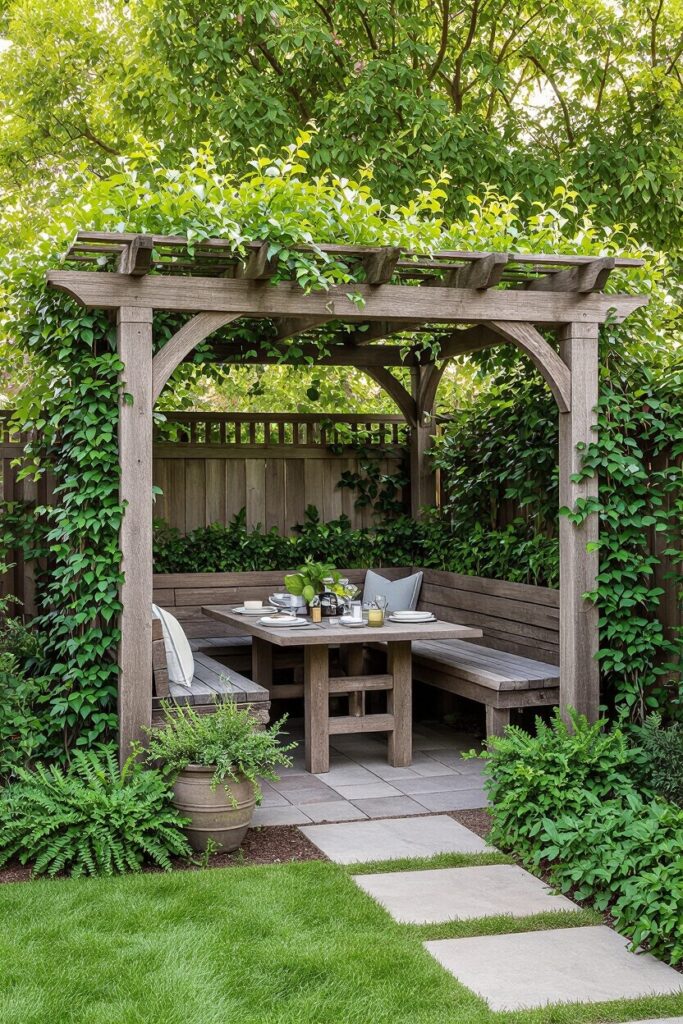
A pergola tucked into a garden corner creates a cozy outdoor room where you can eat, read, or just sit under a bit of shade. The posts frame the view and give climbing plants a sturdy home.
Mark out a simple square or rectangle, then set posts in concrete so they stay solid for years. Keep the roof slats open enough for filtered light, and run wires or thin battens across the top for extra support.
Plant a couple of climbers at the bases and guide them up the posts. Add a small table, string lights, and cushions, and the corner becomes your favorite spot in the yard.
14. Herb spiral tower near the patio
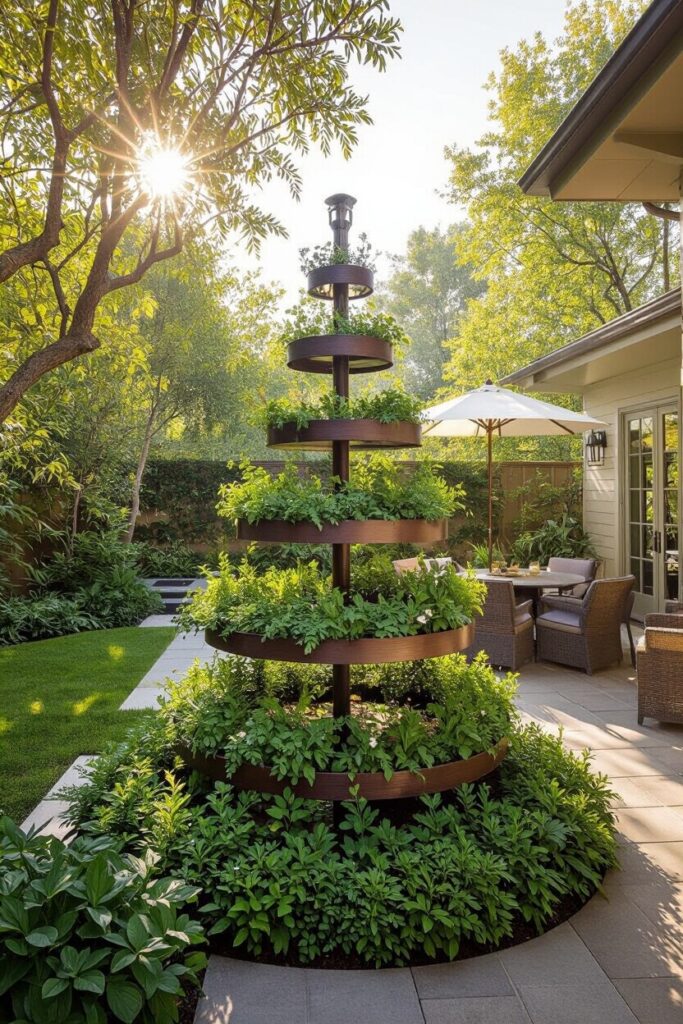
An herb spiral turns a small footprint into a stacked growing space with many microclimates. You get a sculptural feature that keeps basil, thyme, and mint all within arm’s reach while you cook or grill.
Start with a rough circle on the ground, then build a low wall of stone, brick, or recycled blocks that spirals upward to knee height. Fill it with good soil as you build, packing it firmly so it will not settle too much.
Plant sun lovers like rosemary at the top and moisture fans like mint down near the base. Water trickles down through the spiral, so every plant finds its happy spot.
15. Movable container clusters for flexible color
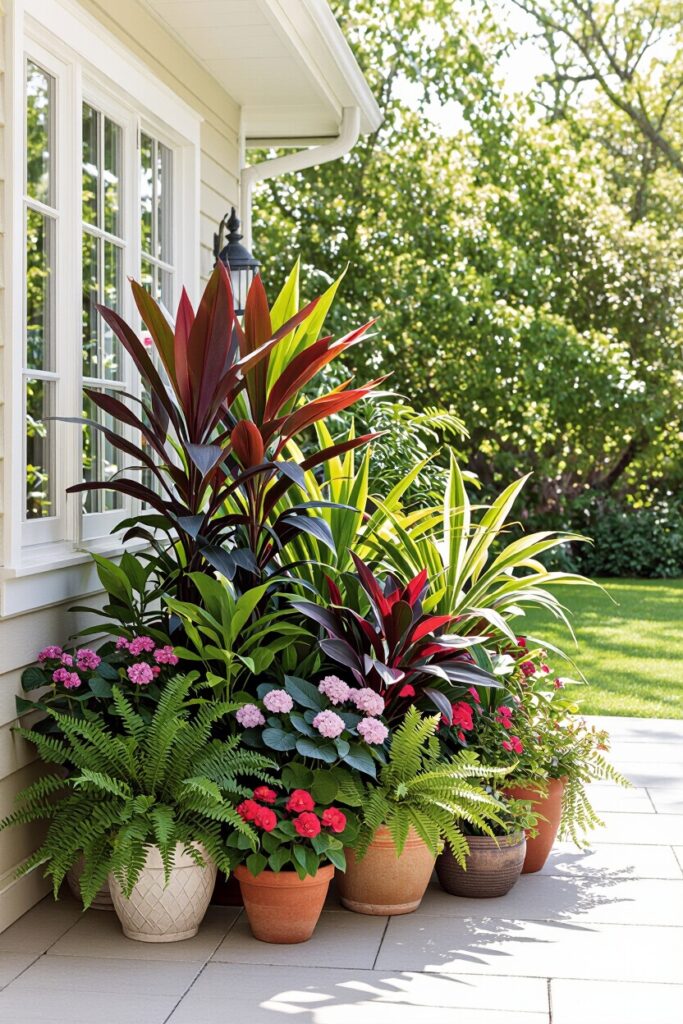
Clusters of pots let you try bold layout ideas without committing to fixed beds. You can group them by color, height, or season and shuffle them around when you want a fresh look.
Pick containers of different sizes but similar materials so the group feels intentional. Place the tallest pots at the back of the cluster and shorter ones in front, just like a mini stage.
Use lightweight soil mixes and plant wheeled pot bases under the heaviest ones so you can roll them into shade or sun. When something finishes blooming, slide that pot out and swap in a new star, keeping your garden bright all year.
16. Diagonal bed grid for dynamic angles
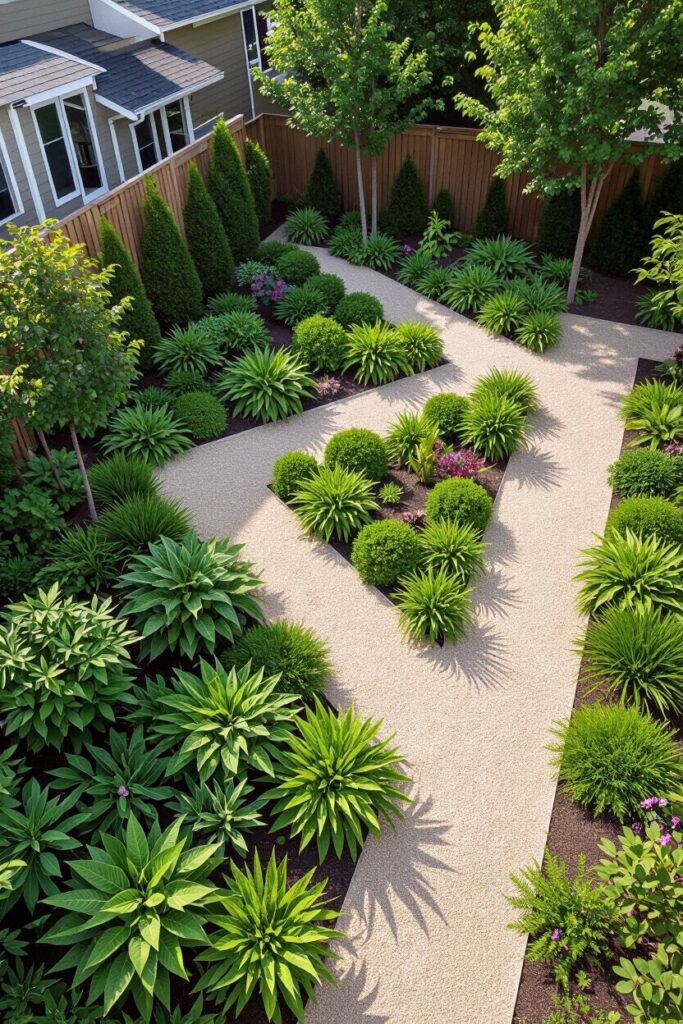
Angling your beds across the yard changes the whole feel of the space. Lines that cut corner to corner make a small garden look wider and give you interesting planting pockets instead of plain strips along the edges.
Snap a chalk line from one back corner to the opposite front corner, then set narrow beds on either side of that line. Repeat with a second diagonal to create diamond shapes you can fill with herbs, flowers, or shrubs. Keep paths between beds just wide enough for a wheelbarrow so you use every bit of growing space.
17. Central fire bowl ringed with planting
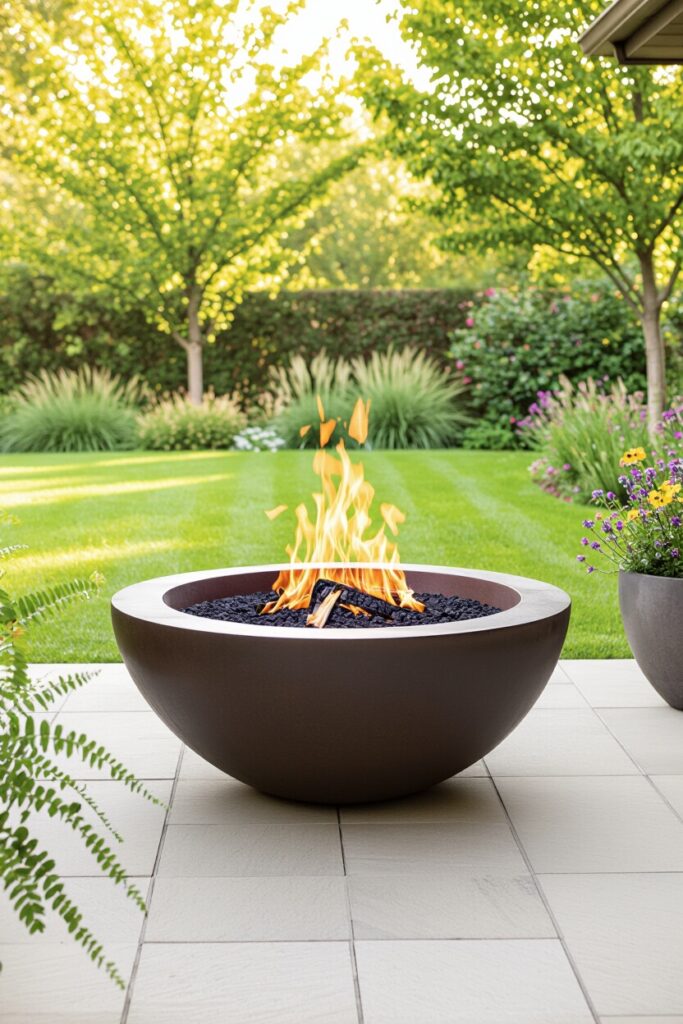
A simple fire bowl in the middle of your yard can become the anchor for your whole garden plan. Set it on a round pad of gravel or pavers, then curve low planting beds around it like ripples on water.
Tuck in compact grasses, scented herbs, and a few glow-in-the-dark solar stakes so evenings feel cozy. Add movable chairs you can pull close on chilly nights and push back during the day.
That flexible seating ring keeps the fire feature useful without locking you into one rigid layout.
Conclusion
Now you have a mix of layout ideas you can pull together like puzzle pieces. Pick one feature that excites you most, then plan the rest of the yard to support it instead of trying to do everything at once. Sketch a few quick versions, even if they are rough, and walk the space to see where the sun falls, where you like to sit, and how you move through the garden.
Save the ideas that fit your space and style, then start with the ones you can build in a weekend. Little changes add up fast, and soon your backyard will feel designed on purpose, not just filled in over time.