
Your front porch may be in good shape and still feel a little tired. The chairs look flat, the entry feels bare, or the collection of small pots never quite comes together. You want a noticeable change, but sanding a door, painting railings, or hiring someone to rebuild the steps is more than you want to take on.
A front porch refresh can start with the things you can pick up, rearrange, clean, or swap. A better-scaled planter, comfortable cushions, or a useful seating spot can give familiar surroundings a different feel while working with the brick, siding, and flooring you already have.
These front porch ideas focus on decorating and everyday function, with no painting or remodeling required. Some suit a tiny covered entry; others need room for furniture. Choose the updates that solve your porch’s actual problems, then leave enough open space for the door, deliveries, and people moving through.
1. Layer a Patterned Outdoor Rug Under a Plain Doormat
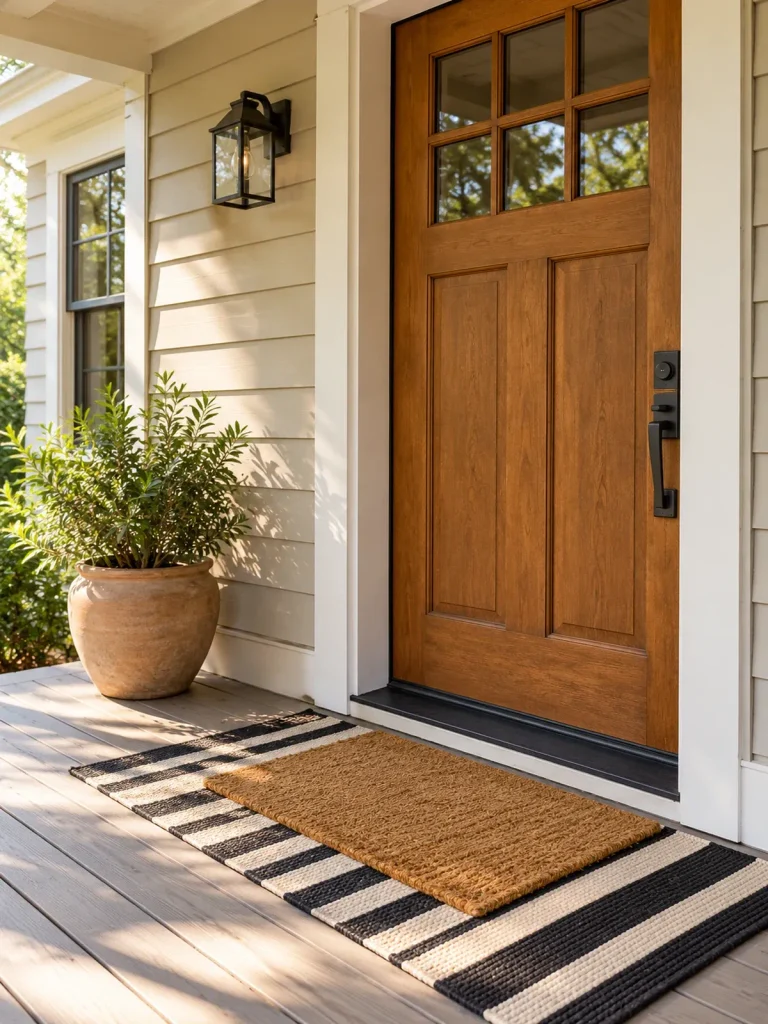
A striped outdoor rug beneath a plain coir doormat gives the doorway a more deliberate look without changing the floor. The larger pattern outlines the entry, while the smaller mat keeps a familiar, practical surface where shoes land. Black and cream works with many existing finishes, but muted checks can feel softer against red brick.
Measure the landing before choosing both sizes, leaving a visible border around the top mat. Keep the combination low enough for the door to clear, and check that neither layer slides or curls. On exposed entries, skip layering if it traps moisture or creates a trip point.
2. Frame the Entry With a Pair of Substantial Planters
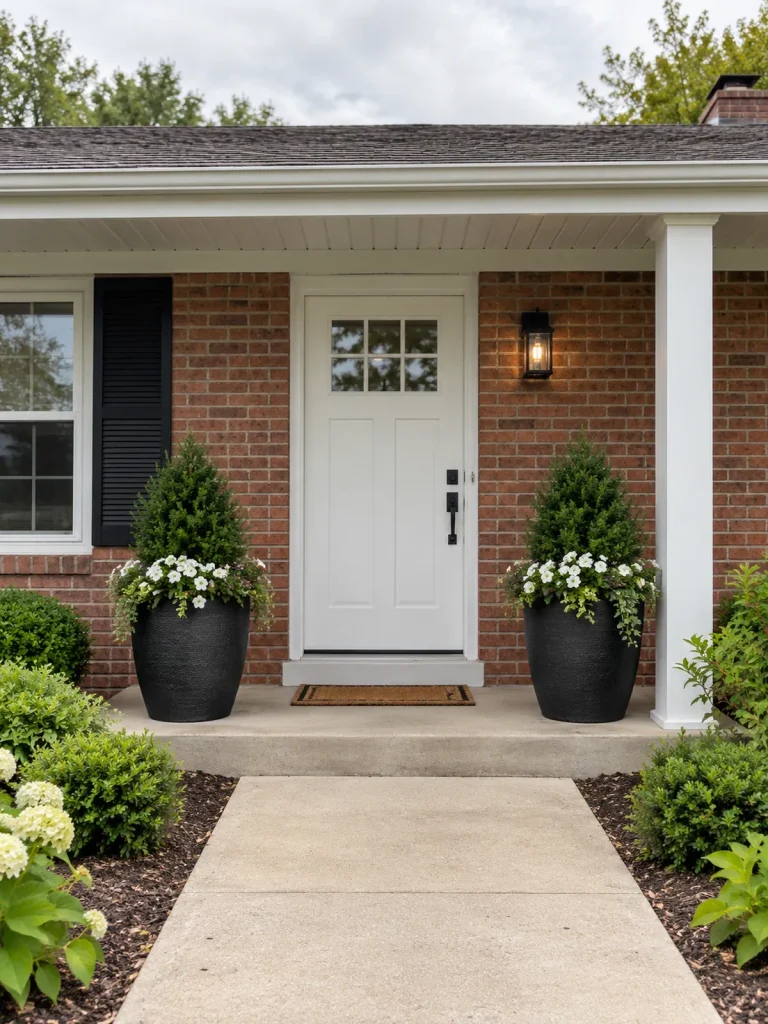
Two well-sized planters can give a plain entrance a sense of balance that several scattered little pots don’t provide. Dark containers make pale siding feel grounded, while simple clay or stone-look finishes bring warmth to a neutral porch. Compact shrubs surrounded by seasonal flowers create a full arrangement without overwhelming the doorway.
Place the containers beyond the door swing and walking route, then choose plants for the light the porch actually receives. Drainage holes matter more than decorative details; avoid allowing runoff to collect at the threshold. A narrow landing may only have room for one substantial planter, which is better than forcing symmetry.
3. Give Existing Chairs Fresh Outdoor Cushions
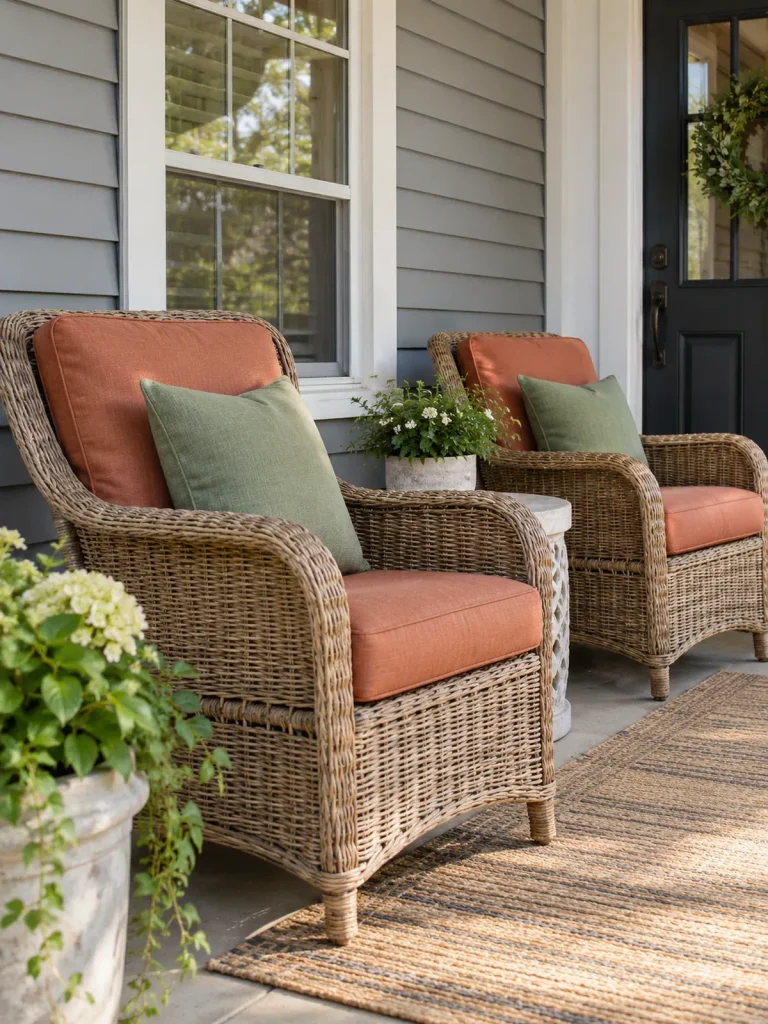
Structurally sound porch chairs can feel quite different with new cushions. Muted terracotta fabric warms up weathered wicker, and a pair of sage pillows adds contrast without demanding a matching door or railing. Keeping the furniture lets you spend attention on the part you see and touch most.
Measure the seat, back, and cushion thickness before ordering replacements. Choose fabric intended for outdoor use, plus ties or another suitable way to keep cushions in place. Even under a roof, wind-driven rain can reach the seats. Bring cushions in during extended wet weather and follow their care instructions rather than assuming outdoor fabric can stay damp indefinitely.
4. Build a Small Conversation Spot With Movable Furniture
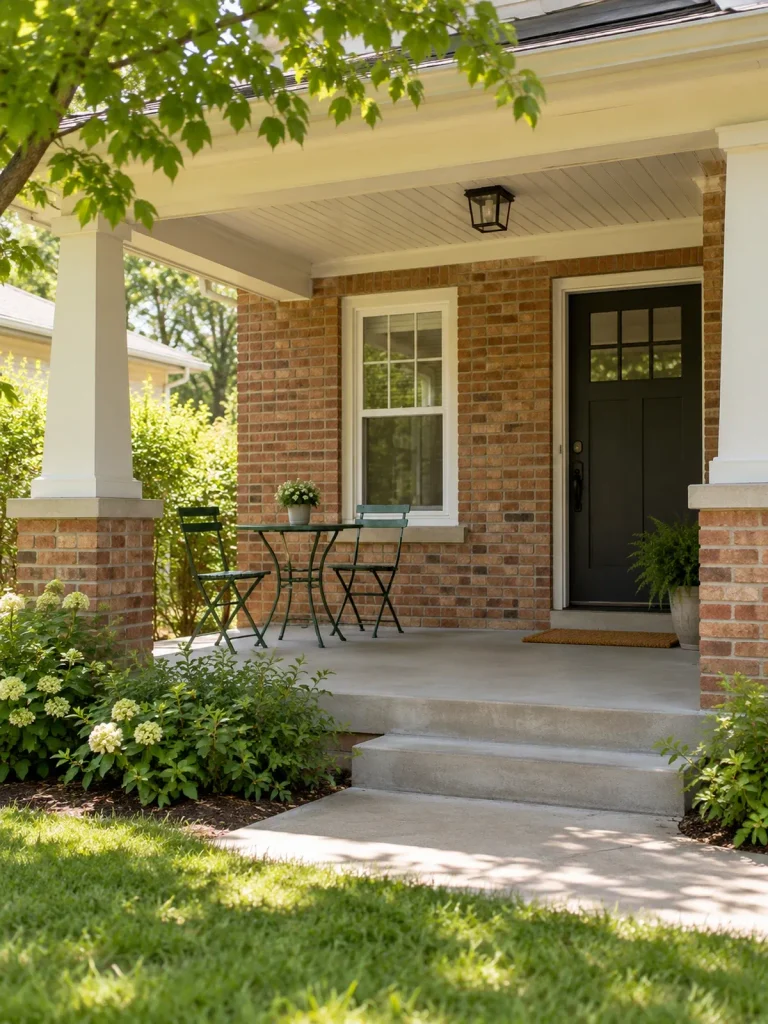
A compact bistro table and two slender chairs can turn an unused porch end into a place for coffee or a short conversation. Open metal frames look lighter than bulky lounge furniture, which helps on a modest bungalow porch. A soft green finish adds color through furniture instead of altering the house.
Arrange the chairs so someone can sit down and pull back comfortably while another person passes. Check the door’s full swing before settling on the layout. Outdoor-rated folding pieces are useful when the space occasionally needs clearing. Avoid squeezing a dining setup onto a landing that only comfortably accommodates arriving and leaving.
5. Make a Plain Door Stand Out With a Seasonal Wreath
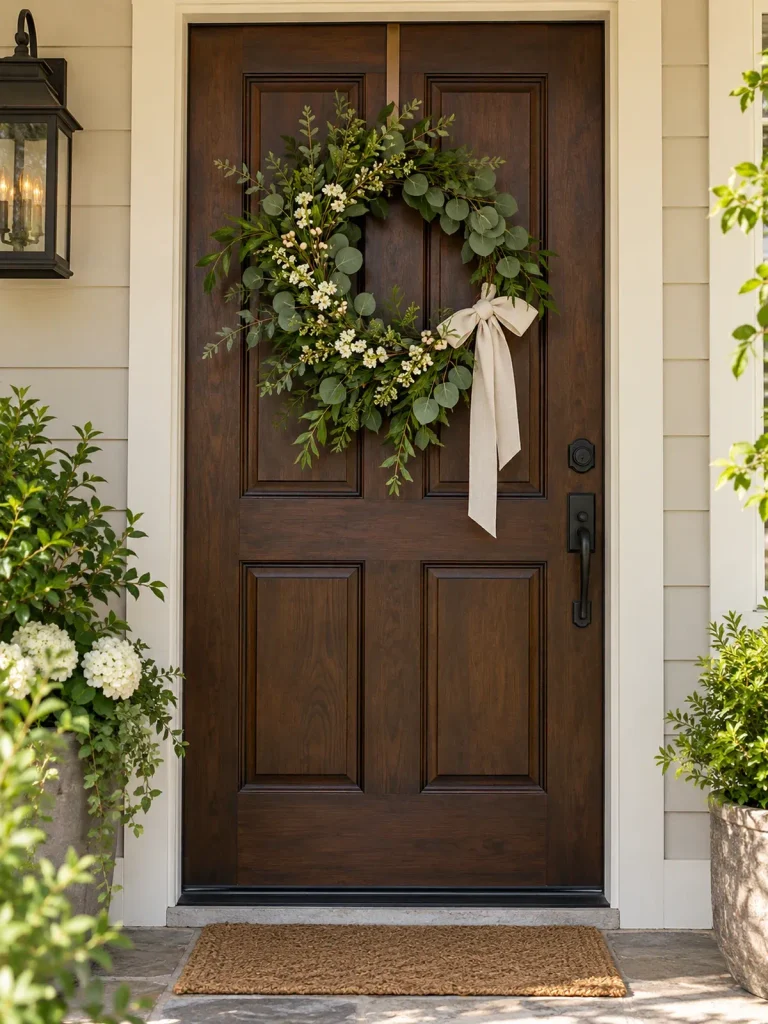
A foliage wreath adds shape and texture to an existing door while allowing its original finish to remain the backdrop. Loose greenery, small white flowers, and a quiet ribbon feel welcoming without tying the porch to one holiday. On a dark wood door, lighter foliage creates a visible contrast from the front walk.
Choose a wreath that fits within the door’s panels and leaves the handle, lock, and peephole accessible. A compatible over-door hanger can avoid new holes, provided it doesn’t interfere with closing or weatherstripping. Check clearance behind a storm door, too. Use materials suited to the entry’s exposure to sun and rain.
6. Add Evening Glow With Battery-Powered Lanterns
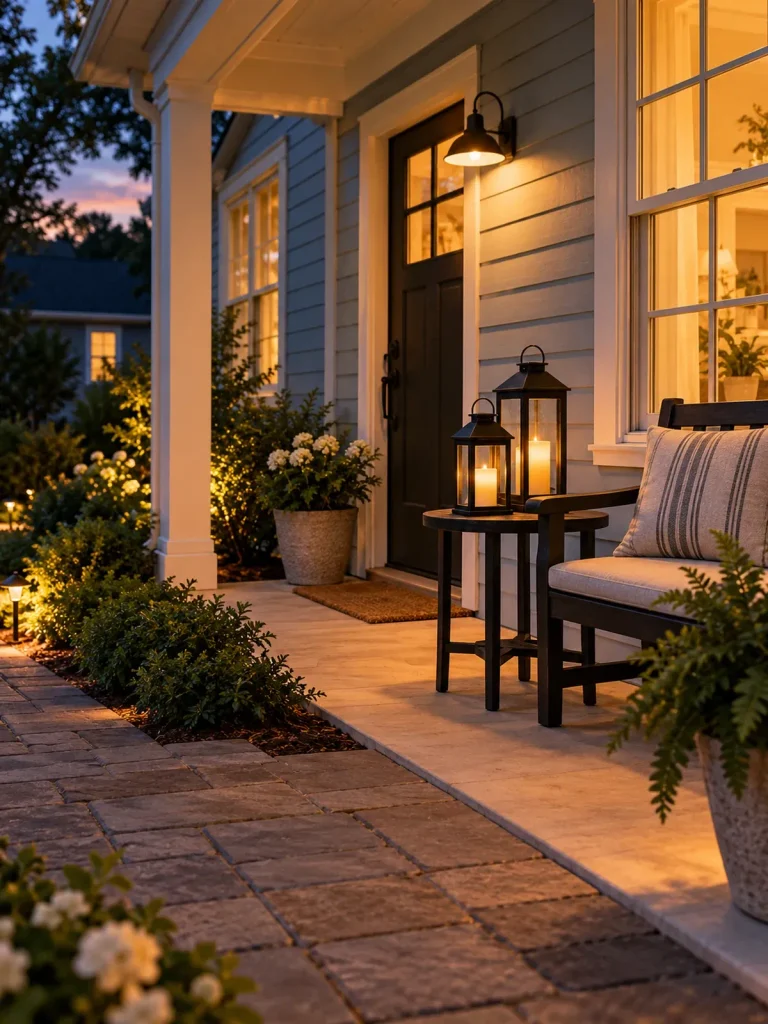
Two lanterns at different heights can make a seating corner feel inviting after sunset. Warm LED candles inside dark frames give the display definition, especially beside pale siding. A sturdy side table keeps the lanterns visible without filling the steps or lining the walking route with small obstacles.
Choose lanterns and battery lights specifically rated for the conditions where you’ll place them. A roof doesn’t prevent all moisture exposure. Timer settings can simplify daily use, but check batteries and housings periodically. Treat this as decorative porch lighting alongside working entry lights; lanterns should not be the only illumination for steps, locks, or changes in floor level.
7. Soften a Bare Corner With a Freestanding Plant Stand
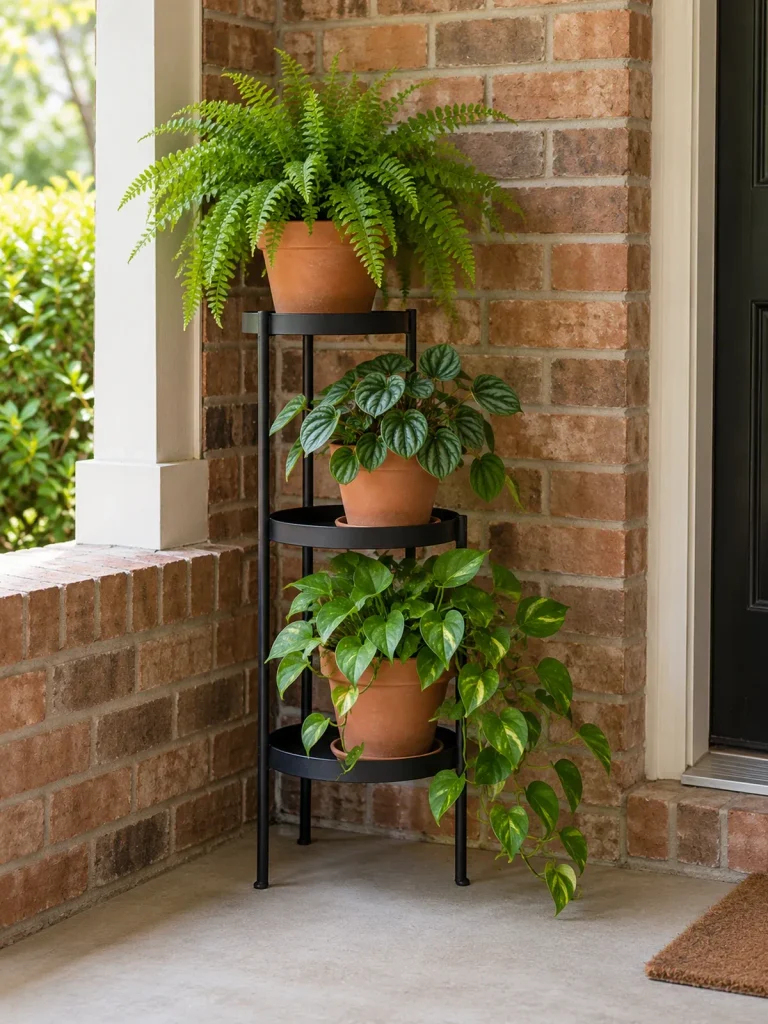
A tiered plant stand draws the eye upward, making a blank corner feel furnished without requiring hanging baskets or ceiling hooks. Terracotta pots on a simple dark frame let varied leaf shapes provide the interest. On a sheltered, shaded porch, a fern and other shade-suited foliage can create a lush little display.
Choose plants for local temperatures as well as light, and bring tender varieties indoors before cold weather arrives. Check the stand’s weight limits and stability with watered pots in place. Keep heavier containers low, manage drainage, and trim trailing stems before they reach the walkway. Leave room to water without moving the entire arrangement.
8. Anchor the Porch With a Freestanding Storage Bench
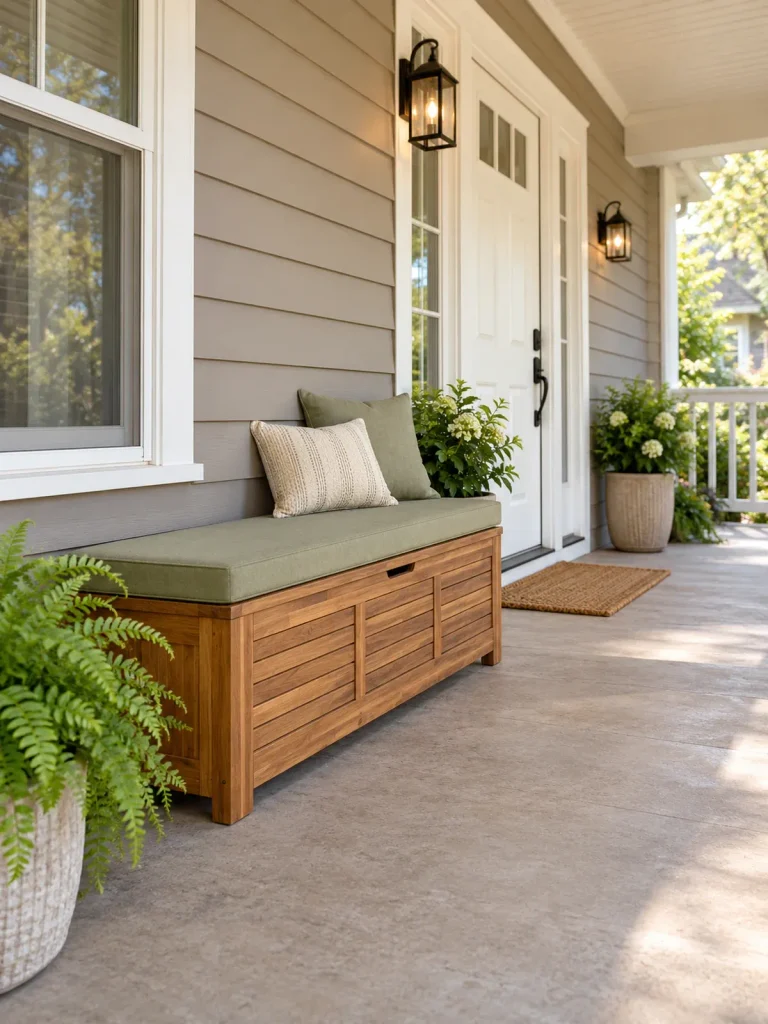
A storage bench adds a clear horizontal line along an empty wall while giving the porch a useful seat. Natural wood and a simple cushion can soften existing vinyl siding or concrete without covering either surface. The enclosed compartment also gives small outdoor essentials a more orderly home.
Look for a bench intended for outdoor seating, with an appropriate load rating and a lid mechanism that suits your household. Check whether its storage is weather-resistant or actually waterproof before putting anything sensitive inside. Measure the lid’s opening clearance, not just the closed footprint. Position the bench away from the door swing and leave its feet accessible for cleaning underneath.
9. Create a Flexible Display With a Rolling Porch Cart
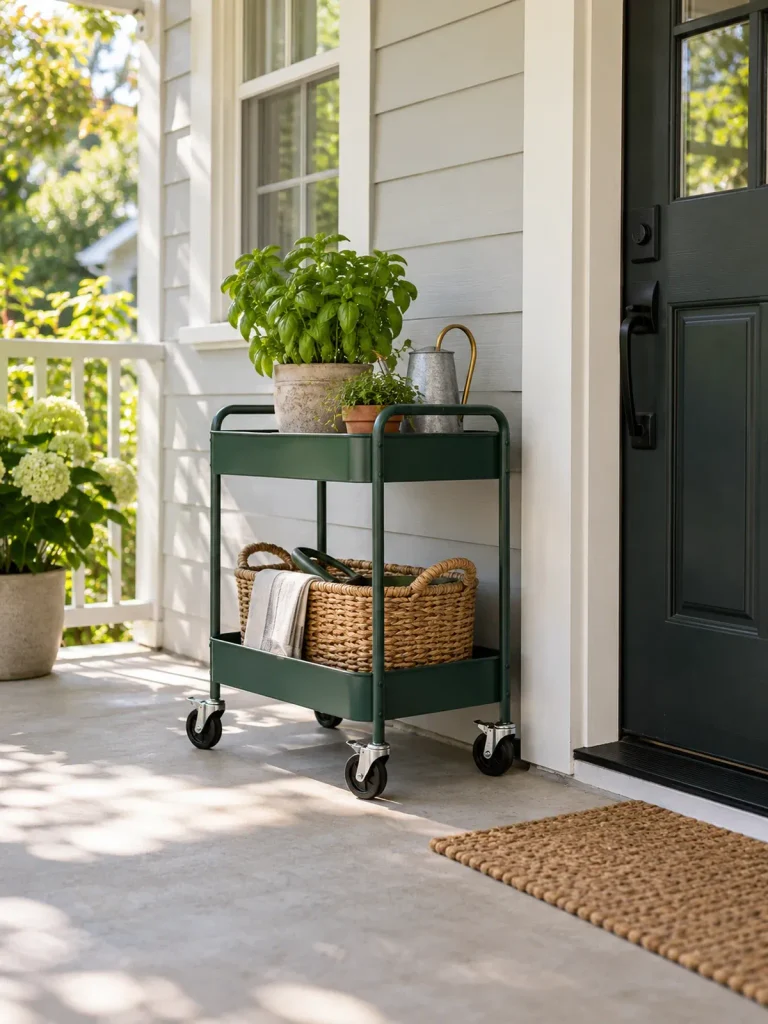
A small rolling cart gives a sheltered porch a flexible surface for herbs, a watering can, or a drink while you’re outside. A dark green metal frame adds a modest dose of color, and the lower shelf keeps a basket of frequently used items together. The effect is functional rather than overly decorated.
Choose a cart suitable for outdoor conditions and park it on a level surface with its casters locked. Keep it outside the door’s swing, with heavier items on the lower shelf. Bring loose accessories inside during windy weather. An indoor kitchen cart may rust quickly outdoors, even when the porch usually stays dry.
10. Refresh a Sound Porch With a Thorough Gentle Cleaning
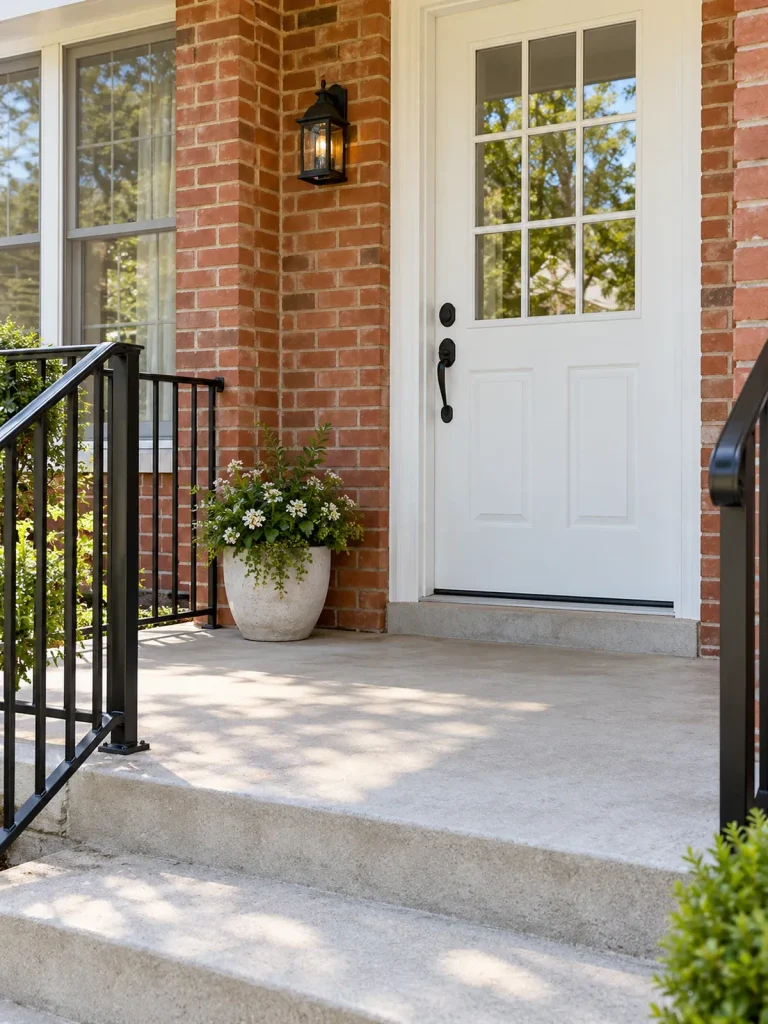
Sometimes the most useful update is uncovering the surfaces already there. Swept concrete, clean door glass, and railings free of dust can make an entry feel cared for with very little added decor. A single healthy plant is enough when the porch itself becomes the focus.
Start with dry debris, then use cleaning methods appropriate for each material and its existing finish. Follow product directions and test an inconspicuous spot before treating a large area. Don’t assume every porch needs pressure washing; aggressive cleaning can damage vulnerable surfaces. Let everything dry before returning mats and furniture. Loose railings, rot, or damaged steps need attention beyond cosmetic cleaning.
11. Trade Visual Clutter for Matching Storage Baskets
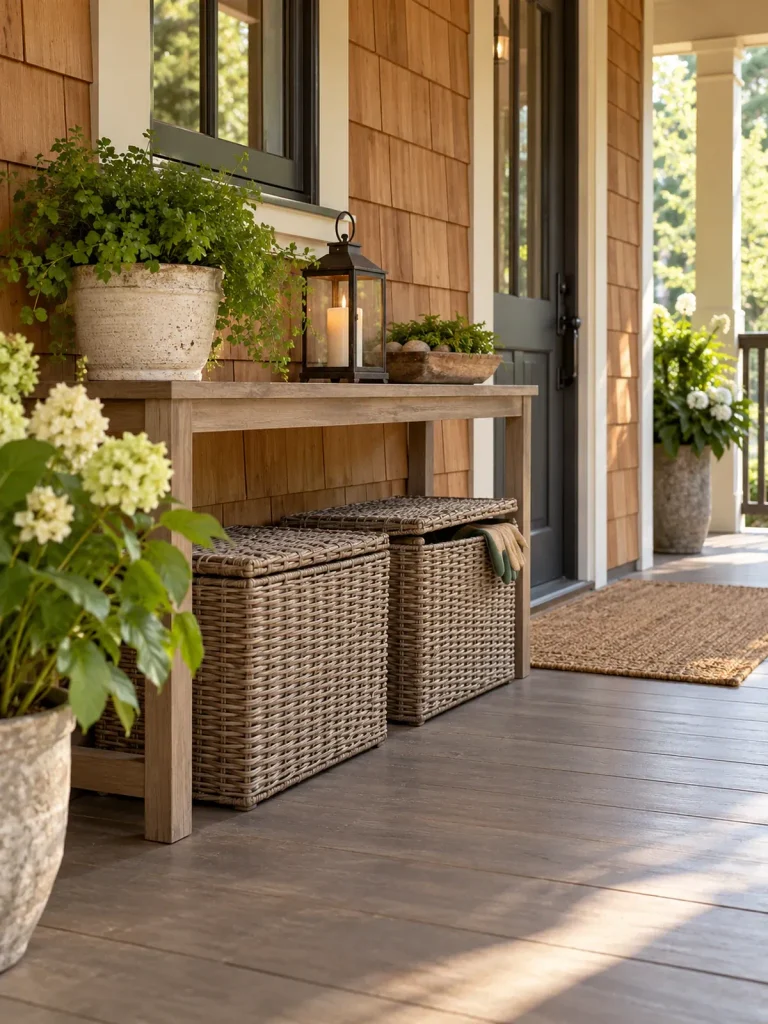
Matching lidded baskets can gather the small things that make a porch look busy: gardening gloves, plant ties, or a few outdoor accessories. Tucked beneath an existing console, they create a calmer line while keeping useful items within reach. Repeating one basket finish looks more cohesive than collecting unrelated containers.
For a covered entry, woven synthetic materials can give you a natural look with care requirements suited to outdoor use. Check the actual exposure rating, and remember that a lid doesn’t make a basket waterproof. Keep contents dry and avoid storing food or damp textiles. Leave enough space beneath and behind the baskets to sweep and check for trapped moisture.
12. Give a Blank Wall a Weather-Ready Focal Point
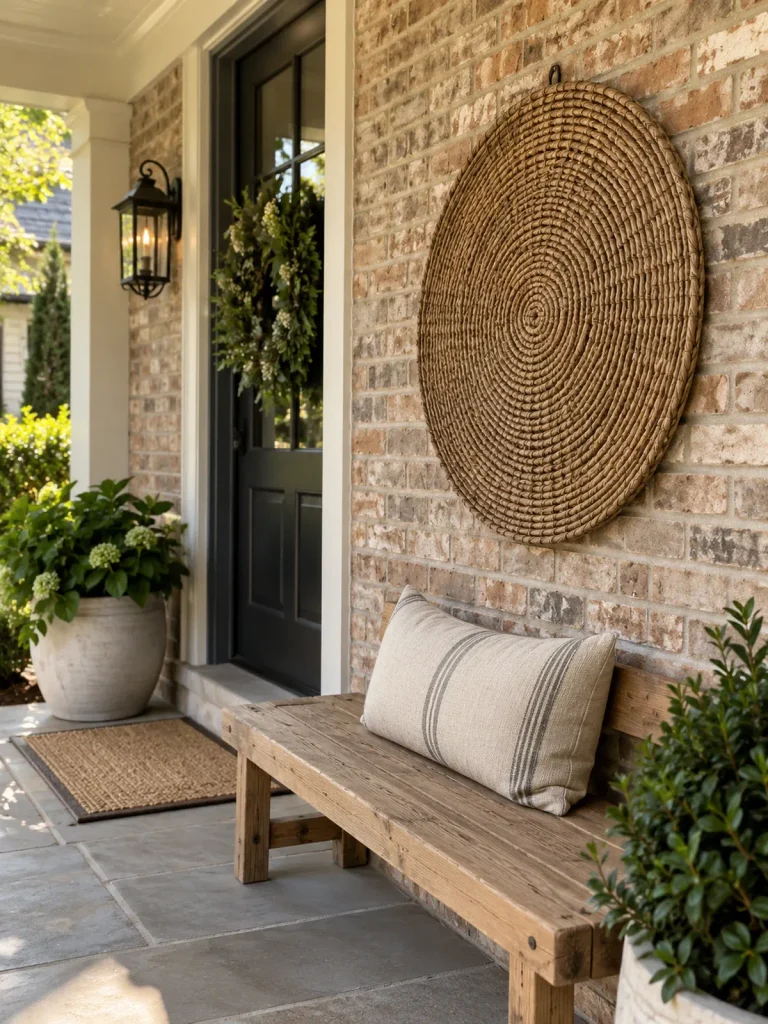
One substantial piece of outdoor wall decor can make a seating area feel finished without changing the wall itself. A round, woven-look resin accent introduces texture against brick and balances the straight lines of a simple bench. Keeping the display to one piece helps it read clearly from the yard.
Use an existing suitable hook or mounting point only after checking its condition and capacity. Any alternative hanger must be compatible with the surface, item weight, and outdoor exposure; removable doesn’t automatically mean damage-free. Choose decor intended for exterior use, keep it clear of lights and door movement, and take it down when conditions exceed its installation limits.
13. Set Up a Freestanding Privacy Screen at One End
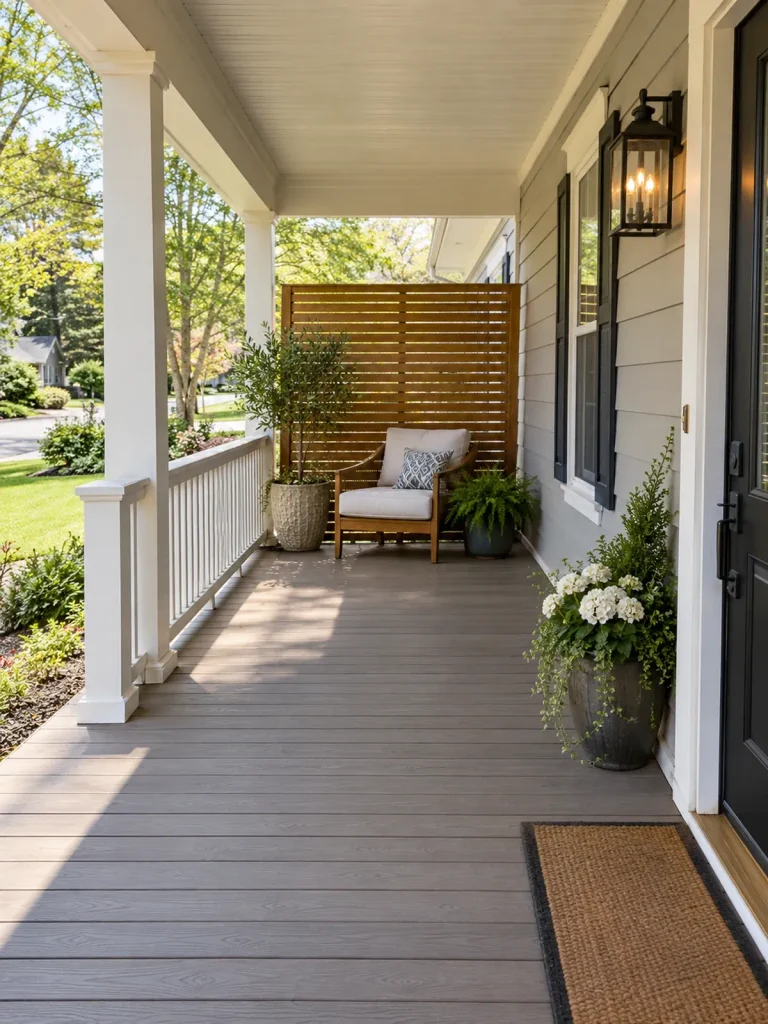
A freestanding slatted screen can give a porch chair a more sheltered backdrop without building a wall. Positioned at the far end, it helps define a quiet nook while leaving the front of the porch open. Natural wood tones work especially well with existing neutral siding and simple outdoor seating.
Choose a screen designed for outdoor freestanding use, and follow its stability and wind instructions. Some products require anchoring, which may put them outside the scope of a no-remodel update. A sheltered location alone doesn’t guarantee stability. Keep doors, windows needed for escape, railings, and walking routes accessible, and store the screen before weather makes its placement unsuitable.
14. Let a Large Outdoor Pouf Do Double Duty
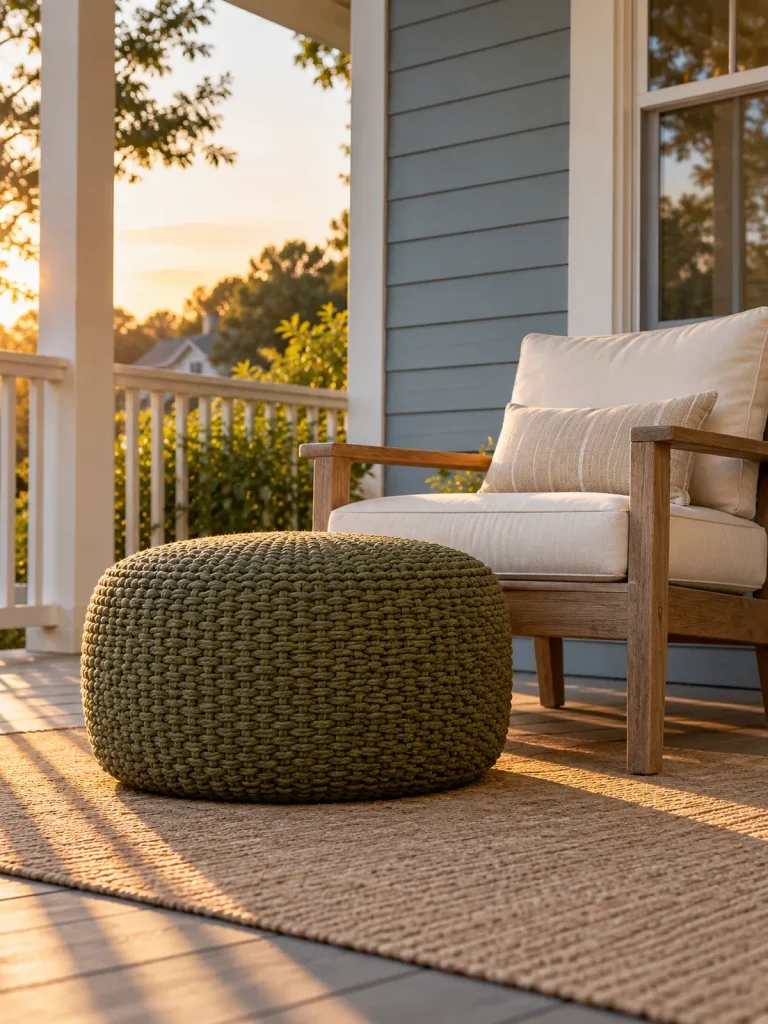
An outdoor pouf brings a softer shape into a porch full of straight furniture legs and siding lines. Beside an existing armchair, a textured olive version adds color and a place to rest your feet. A sufficiently firm, appropriately rated model can also serve as an occasional extra seat when needed.
Check the manufacturer’s intended uses before treating a footrest as seating. Choose outdoor fabric and filling suitable for the porch’s exposure, and allow the pouf to dry fully after getting wet. Keep it within the seating nook rather than in the route to the door. Its movable size makes seasonal storage easier than adding another full chair.
15. Give the Steps a Lift With Planters Beside the Base
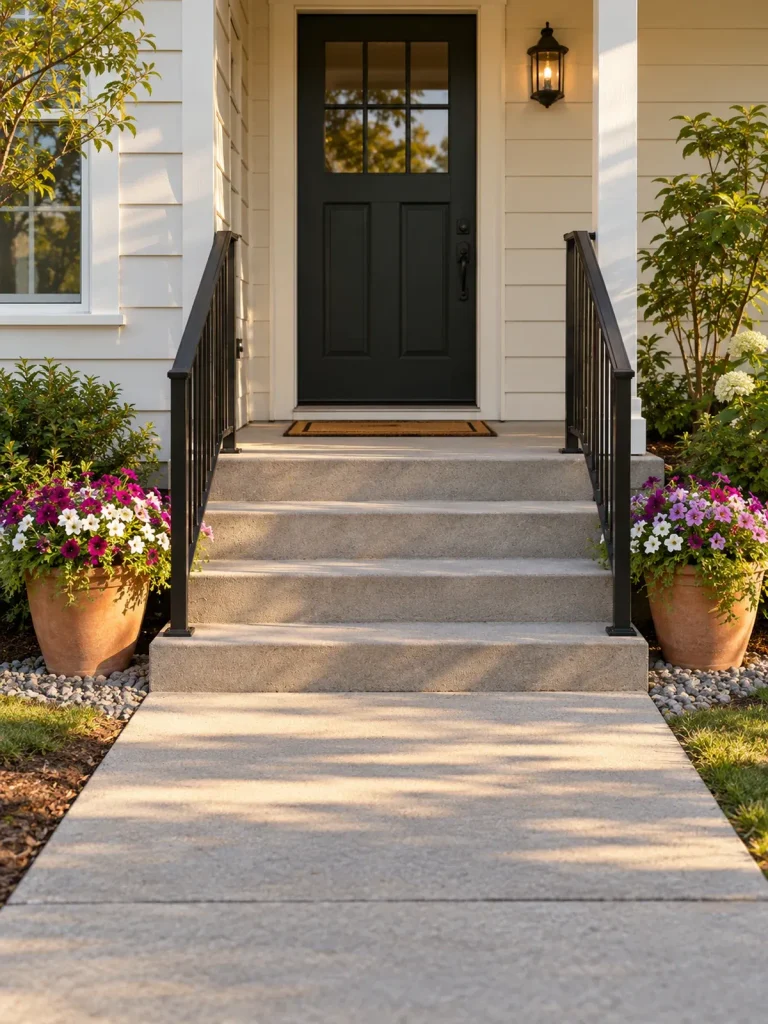
Containers beside the bottom of the steps can brighten the entire approach while leaving a small porch landing open. Terracotta pots filled with pink, purple, and white flowers soften the edges of concrete and tie the entry into the surrounding garden. The color sits where it’s visible from the sidewalk.
Use existing level areas outside the stair footprint, keeping every tread, handrail, and the full walking route clear. If there’s no suitable space, choose another update rather than balancing pots on narrow steps. Select flowers for the location’s sun and climate, and direct drainage away from the approach. Trim spreading stems before they spill across the path.
Choose One Focal Point Before Adding More
Start by deciding what needs help most: the doorway, a seating area, or everyday clutter. Pick one main update for that zone, then add a smaller supporting detail. Paired planters and a plain mat may be enough for a tiny entry. On a wider porch, refreshed chair cushions and a lantern can make an existing seating area feel complete.
Repeat one or two colors already present in the house or garden. Measure furniture footprints and walk through the proposed layout before buying anything. Check how much rain and afternoon sun reach each spot, since a covered porch can still have exposed edges. Stop while the space remains easy to use; a porch makeover without renovation doesn’t need an accessory in every corner.
FAQ
How can I update a very small front porch without making it crowded?
Focus on the door and one side of the entry. A wreath, a well-fitting mat, and one planter can provide color and texture without requiring seating. Keep the landing and full door swing clear.
What should I do first if I have a limited budget?
Clean the porch and remove items that no longer serve a purpose. Rearrange sound furniture you already own, then choose one missing element, such as a cushion or appropriately sized planter, instead of buying a full matching set.
Can I leave outdoor rugs on the porch all year?
That depends on the rug, floor material, and weather exposure. Follow both manufacturers’ care guidance, lift the rug regularly to check for trapped moisture, and store it when conditions prevent it from drying properly.
Which porch updates are easiest to reverse for a rental?
Movable planters, outdoor cushions, compact furniture, and storage baskets are straightforward options. Check your lease before adding hangers or wall decor, and avoid assuming an adhesive attachment will leave every surface unmarked.
How do I make new decor work with an existing brick or siding color?
Treat the existing exterior as the base palette. Repeat a color from its undertones in a planter or textile, then add one restrained accent. Seeing samples outdoors can help you judge them in the porch’s actual light.
Start With the Part You Use Every Day
You don’t need to change your porch’s permanent finishes to make it feel more welcoming and useful. Start with the detail you notice most often: an empty doorway, uncomfortable chairs, or clutter beside the entrance. Make that single update, live with the layout, and add another only if the space still needs it. A comfortable, clear entry is a worthwhile result on its own.