
You like the drama of black doors, old ironwork, and shadowy greenery, but you don’t want your porch to look as though October never ended. A year-round gothic aesthetic takes a quieter approach: deep colors, interesting silhouettes, weathered textures, and enough warm light to make the space feel welcoming.
You also don’t need a Victorian house or a sprawling wraparound porch. A small covered entry can carry the mood with a dark planter and a pointed-arch accent, while a wider porch has room for romantic seating and layered foliage. The goal is to make the style feel connected to your home and useful in everyday life.
These moody and dark front porch ideas range from simple decorative swaps to larger finish changes. Start with the features you already have, choose a few elements that work together, and leave plenty of room for opening the door, carrying groceries, and actually enjoying your porch.
1. A Matte Black Door That Grounds the Whole Porch
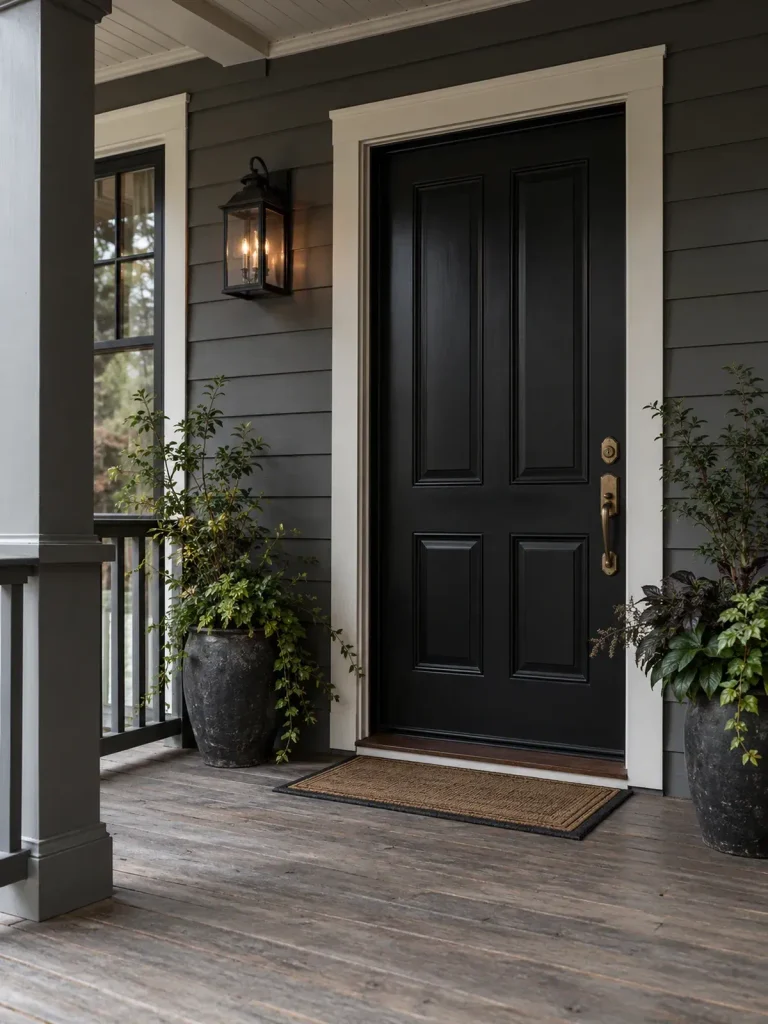
Start with the door when you want a strong focal point without repainting the entire exterior. A matte or low-sheen black finish looks especially grounded beside smoky gray siding, while a narrow band of pale trim keeps the doorway easy to read. Aged brass hardware adds a little warmth without making the entry feel flashy.
Test the color on the actual door before committing, since nearby brick and siding affect how black reads. Follow the door manufacturer’s finish guidance, particularly for doors exposed to strong sun. Keep the surrounding styling simple so the dark front door remains the main event.
2. Charcoal Siding with Soft, Pale Trim
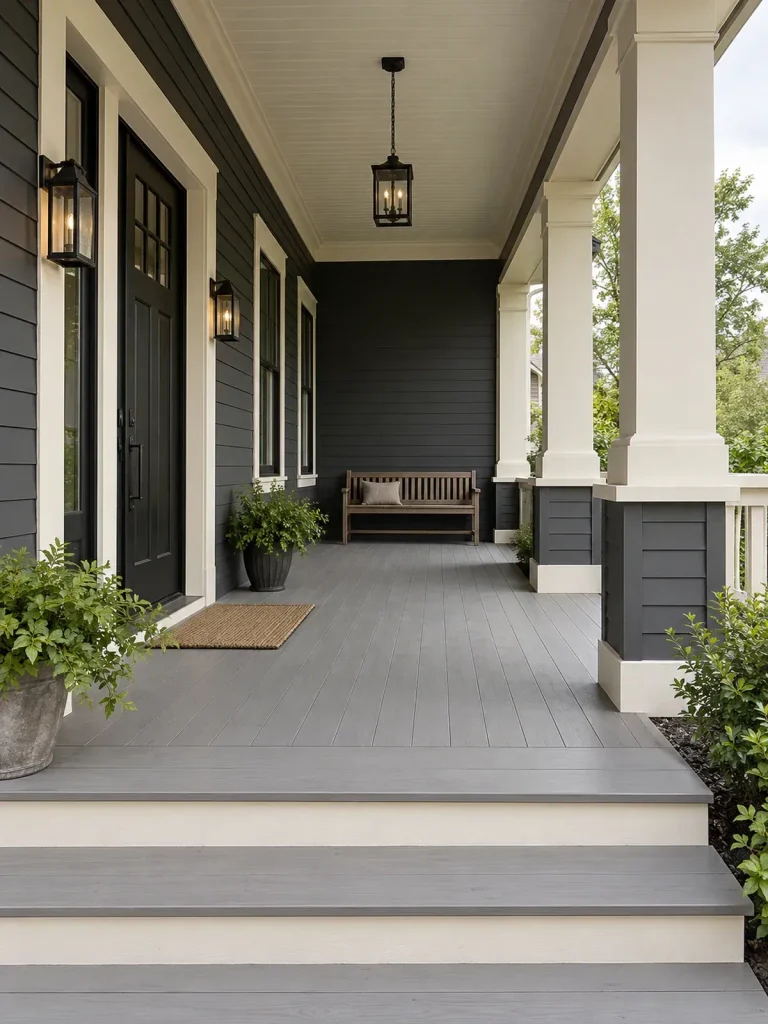
A charcoal exterior gives even an ordinary porch a more atmospheric foundation. Pair it with soft ivory or pale gray trim rather than a stark collection of competing colors. The contrast outlines posts, windows, and the entry, which helps a dark porch retain definition in both daylight and evening lighting.
Try this approach when your existing architecture has clean lines worth emphasizing. Sample paint on more than one wall and check it through the day before choosing. Use a coating appropriate to the siding material, and check any neighborhood restrictions before making a broad exterior color change.
3. Gothic Arches Without a Structural Remodel
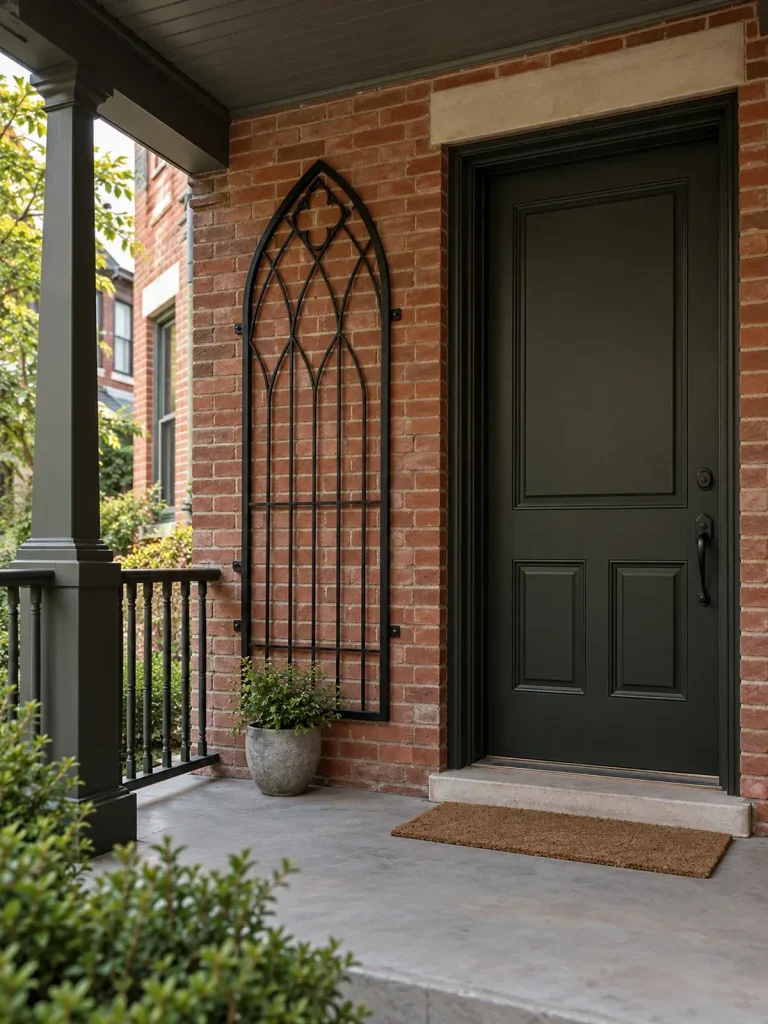
Pointed arches bring a recognizable Gothic detail to a porch without changing its roofline. A metal garden trellis mounted on a blank wall can supply the shape while taking up very little floor space. Keep the surrounding wall relatively quiet so its outline reads clearly from the walkway.
Choose an outdoor-rated piece with a finish suited to your climate, then secure it using fixings appropriate to the wall and the product instructions. It should function as decorative wall art, not as a replacement for a railing or support. A small pot beneath it is enough to complete the corner.
4. Warm Lantern Light Against Dark Walls
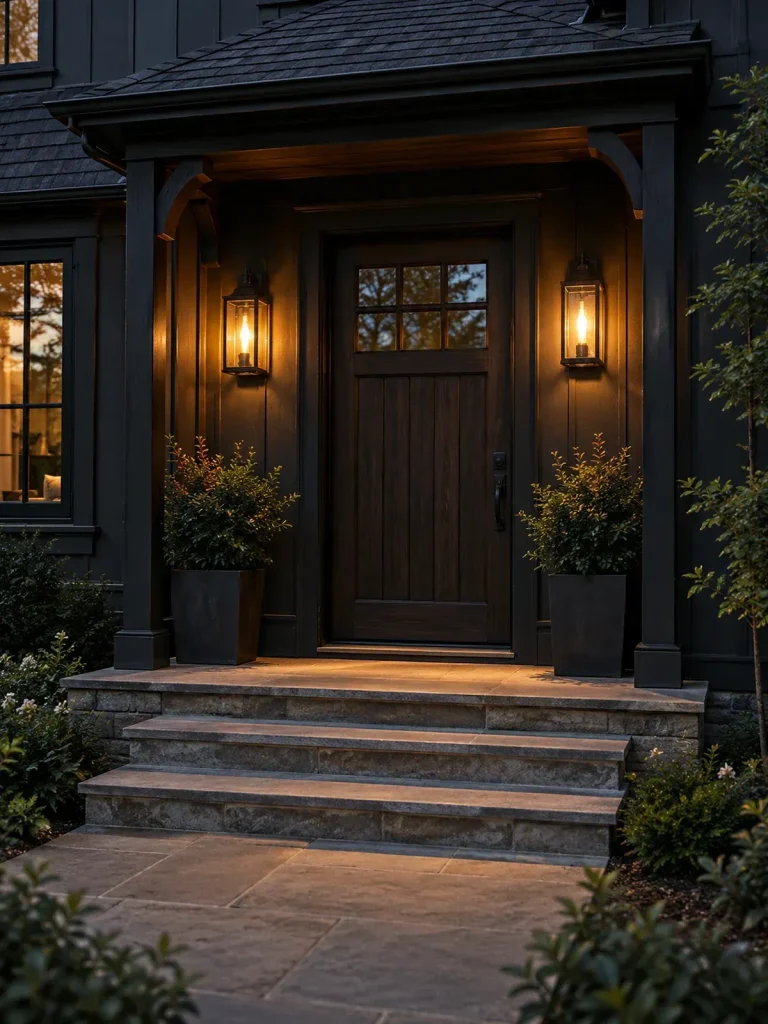
The right porch lighting lets a dark color scheme feel warm after sunset. Black metal lantern fixtures with clear glass create an old-world outline, while a warm-toned light makes wood, brick, and painted siding easier to appreciate. Match the scale to the entry instead of choosing oversized fixtures solely for drama.
Keep enough light on locks, landings, and steps to make everyday use comfortable. Use fixtures rated for their exposure and have wiring changes handled appropriately. For extra atmosphere, add a sheltered battery lantern on a side table, where it cannot crowd the route to the door.
5. A Pair of Aged Urns Beside the Entry
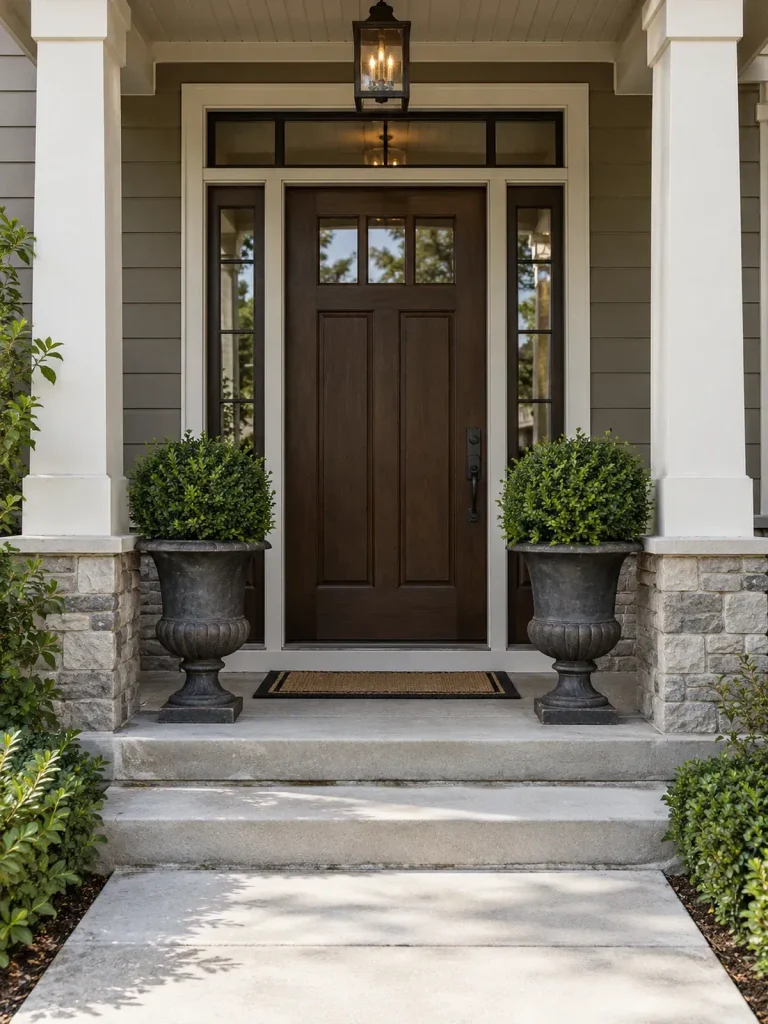
A pair of charcoal urn planters gives a modest entry a formal, slightly timeworn character. The traditional shape supplies ornament, so the plants can stay simple: rounded foliage, a restrained evergreen silhouette, or another plant suited to the available light. A gray or weathered finish looks softer than glossy black.
Measure the landing before buying two large containers. Their bases should sit securely beyond the door swing and leave room for people to pass. Stone-look containers may offer the appearance with less empty weight, but account for wet soil too. Check drainage and the container’s suitability for freezing conditions.
6. Burgundy Foliage for a Living Gothic Palette
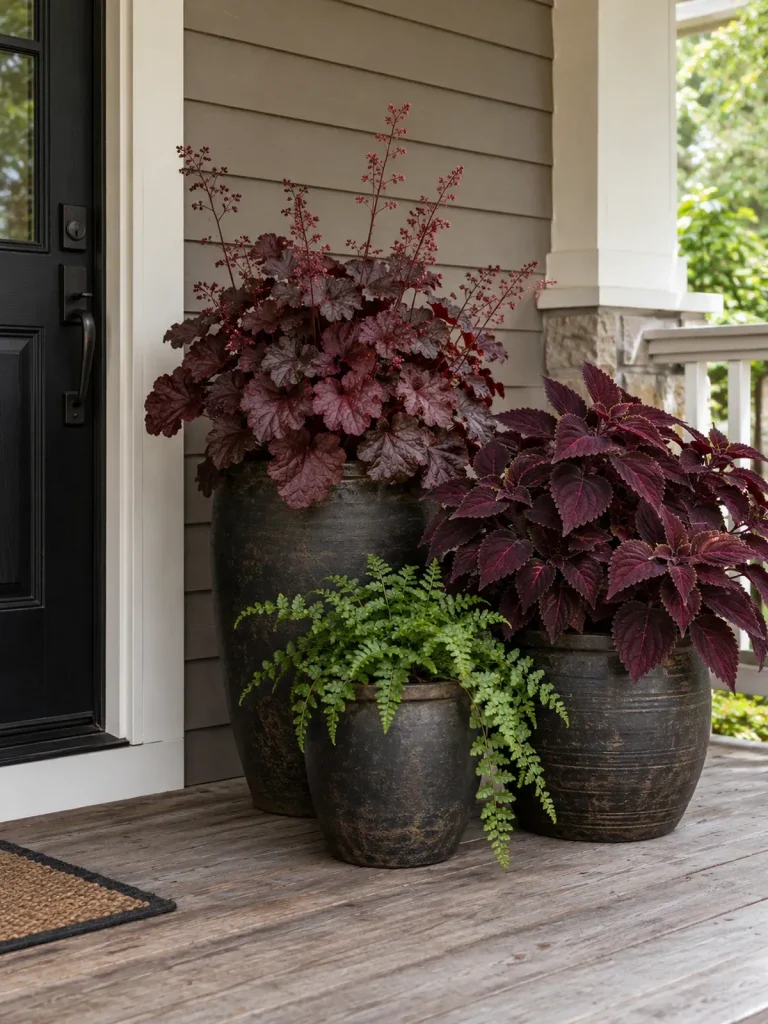
Dark leaves make a gothic palette feel alive rather than flat. Burgundy heuchera and deep plum coleus are useful examples to investigate, with the final choice depending on your growing conditions and the particular variety. Mix broad and finely textured leaves so neighboring pots do not merge into one dark mass.
Group containers near a pale wall or a lighter floor, where their shapes show clearly. Match plants to the actual porch light and watering routine, and use pots that drain freely. Treat tender foliage as a seasonal layer in cold climates; the containers and permanent finishes can hold the style through winter.
7. An Iron Bistro Corner for Small Porches
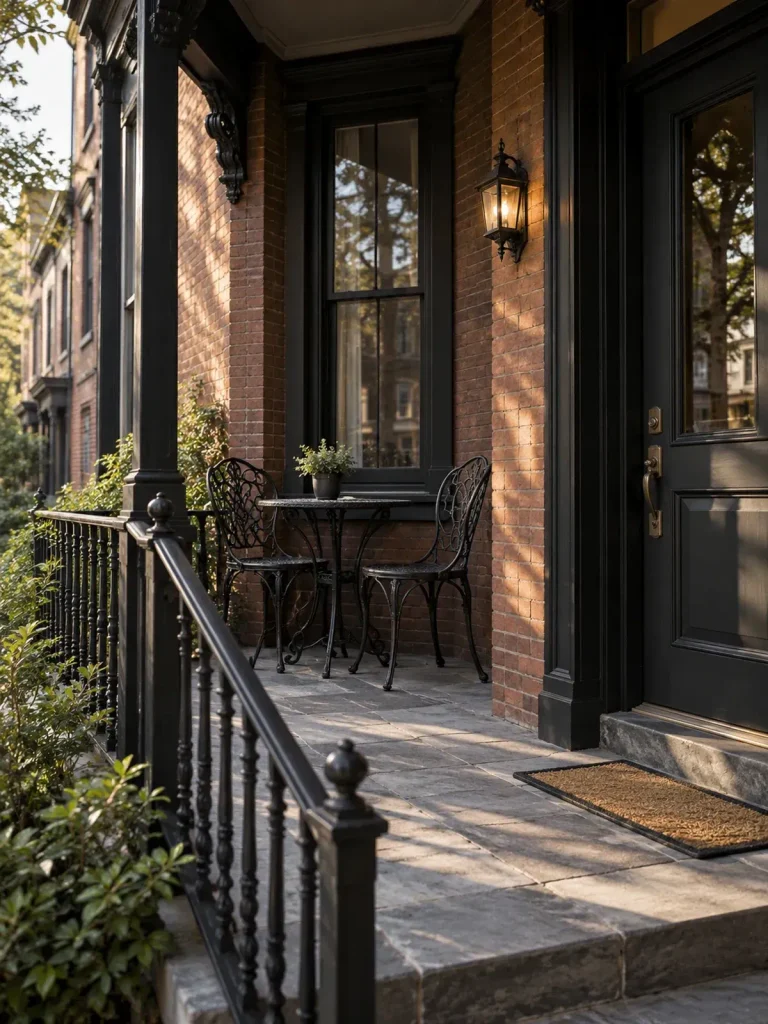
An iron-look bistro set creates a place to sit without the visual weight of a deep sofa. Slender legs and a curved metal back suit a gothic front porch, especially beside brick or stone. A compact round table keeps the arrangement conversational and leaves fewer corners projecting into the space.
Before ordering, mark out both the furniture footprint and the room needed to pull out a chair. A narrow porch may only accommodate one chair and a small table. Look for outdoor furniture, maintain damaged finishes as directed, and move the arrangement if sitting down blocks the front door.
8. An Outdoor Rug with a Faded Gothic Pattern
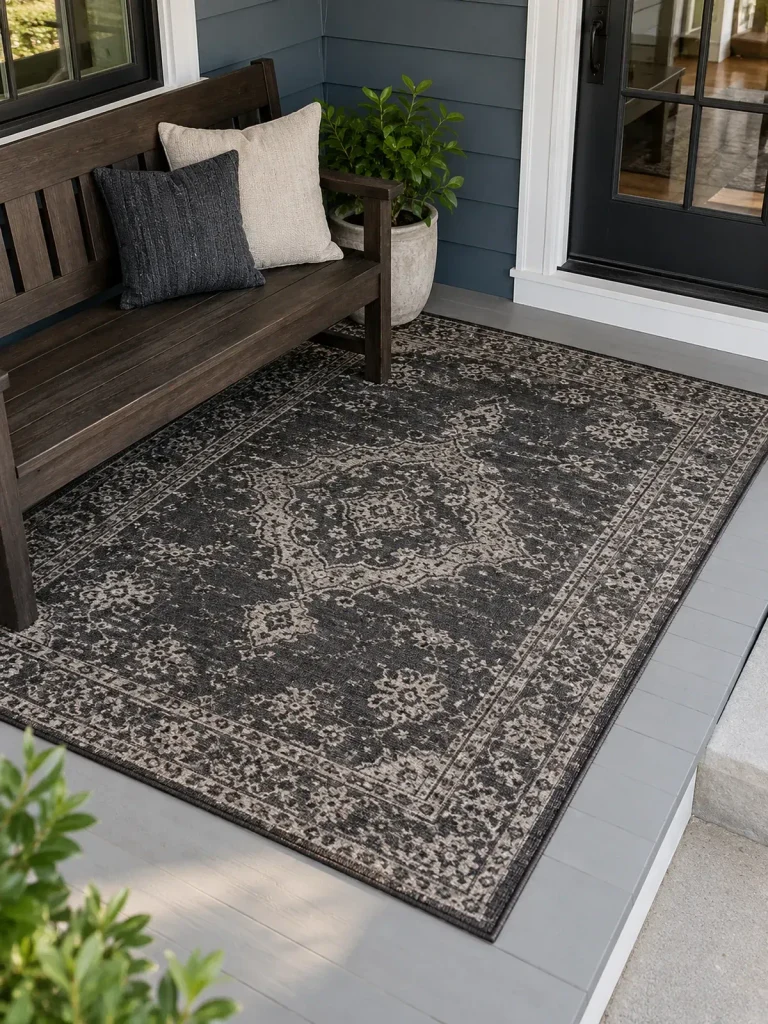
A faded medallion-pattern outdoor rug introduces detail without adding more objects to the porch. Charcoal, bone, and muted taupe give the pattern an aged quality that works with dark furniture. Place it in the seating area so the decorative floor layer feels connected to a bench or pair of chairs.
Choose a low-profile rug intended for outdoor use, and check that its backing is compatible with your porch surface. It should lie flat and stay clear of step edges and door movement. Lift it periodically to clean underneath and allow the floor to dry, especially on a shaded or damp porch.
9. Forest Green Walls for a Woodland Gothic Mood
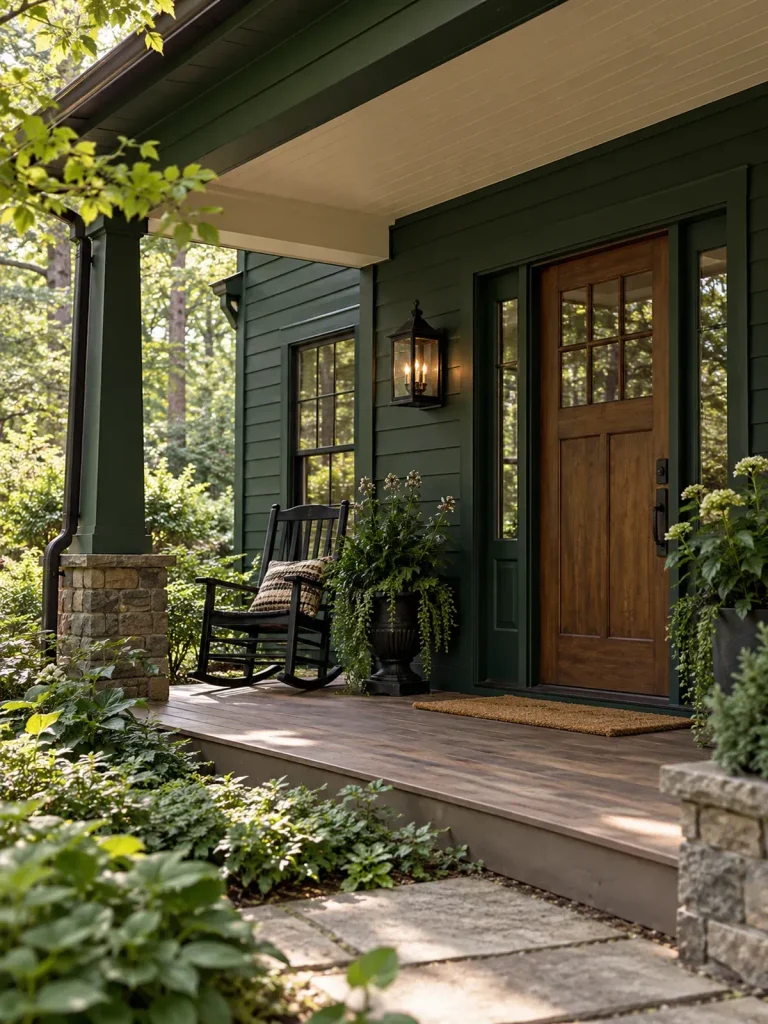
Deep forest green is a softer route into dark porch decor when black feels too severe against your home. It pairs naturally with stained wood, iron-look furniture, and leafy planting. A lighter ceiling or pale posts give the color room to breathe while preserving the enclosed, woodland feeling.
Use green on one architectural surface first, such as the siding within the covered entry. Leave existing warm brick or timber visible rather than trying to recolor everything at once. Paint samples matter here: the same green can look nearly black in deep shade and much brighter along a sunny porch edge.
10. A Ceiling That Wraps the Porch in Midnight Color
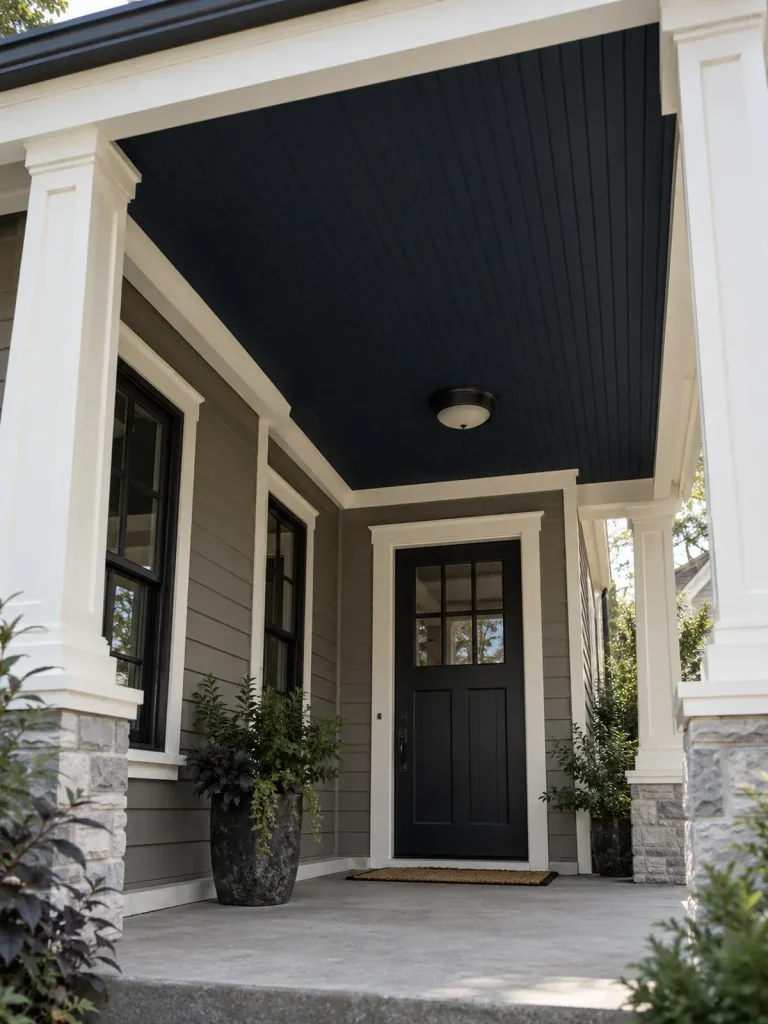
A midnight blue porch ceiling adds atmosphere above eye level, where it can feel immersive without taking away floor space. Beadboard gives the dark color subtle rhythm, while a pale edge around the perimeter keeps the roof structure visually distinct. This works particularly well with lighter walls and simple square posts.
Assess the porch in daytime before choosing a very dark shade. A low, heavily shaded ceiling may feel more compressed, so test a generous sample overhead. Choose a finish appropriate to the ceiling material and exposure. Keep existing vents and fixtures unobstructed, and inspect the surface before painting over it.
11. Black Lattice for a More Private Sitting Bay
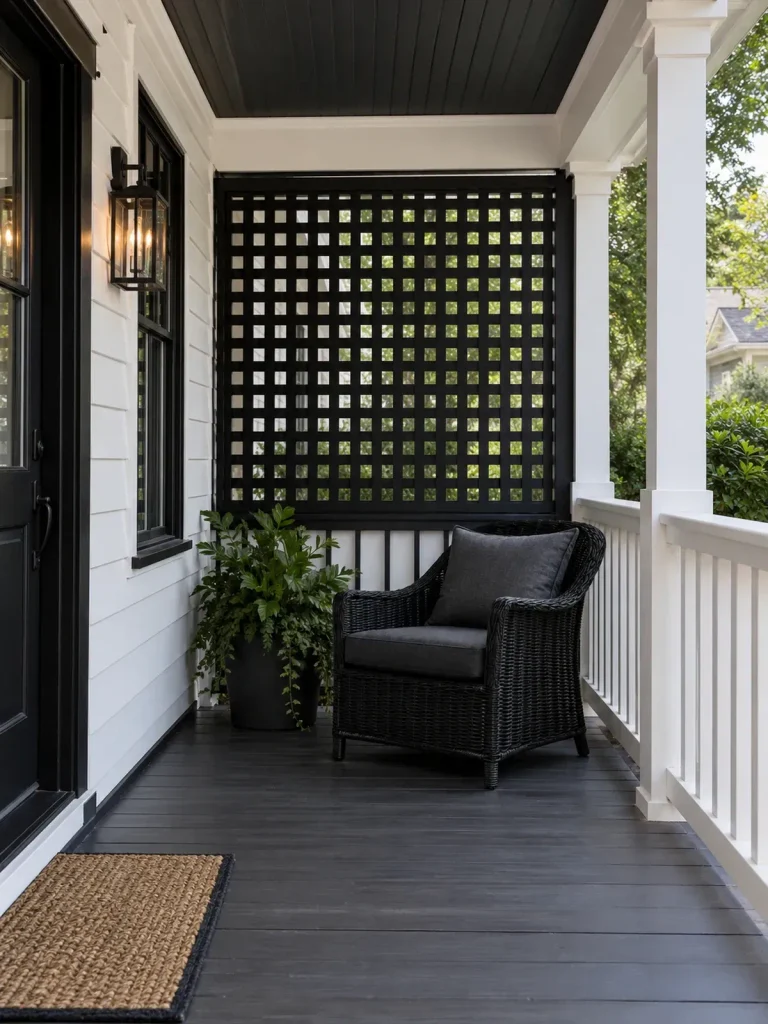
A black lattice panel can give a sitting bay a more sheltered feeling while repeating the dark lines of Gothic ironwork. Square lattice feels restrained; a denser decorative pattern brings more ornament. Place it along one side of the porch rather than surrounding every opening, so the seating area still feels connected to the garden.
Treat the image as a design direction rather than an installation plan. Panel placement, wind exposure, attachment, and local requirements all matter. Keep the existing guardrail intact and obtain appropriate guidance for installation. Lattice filters views, but it does not provide complete privacy or replace required structural protection.
12. An Antique-Look Bench with Outdoor Fabrics
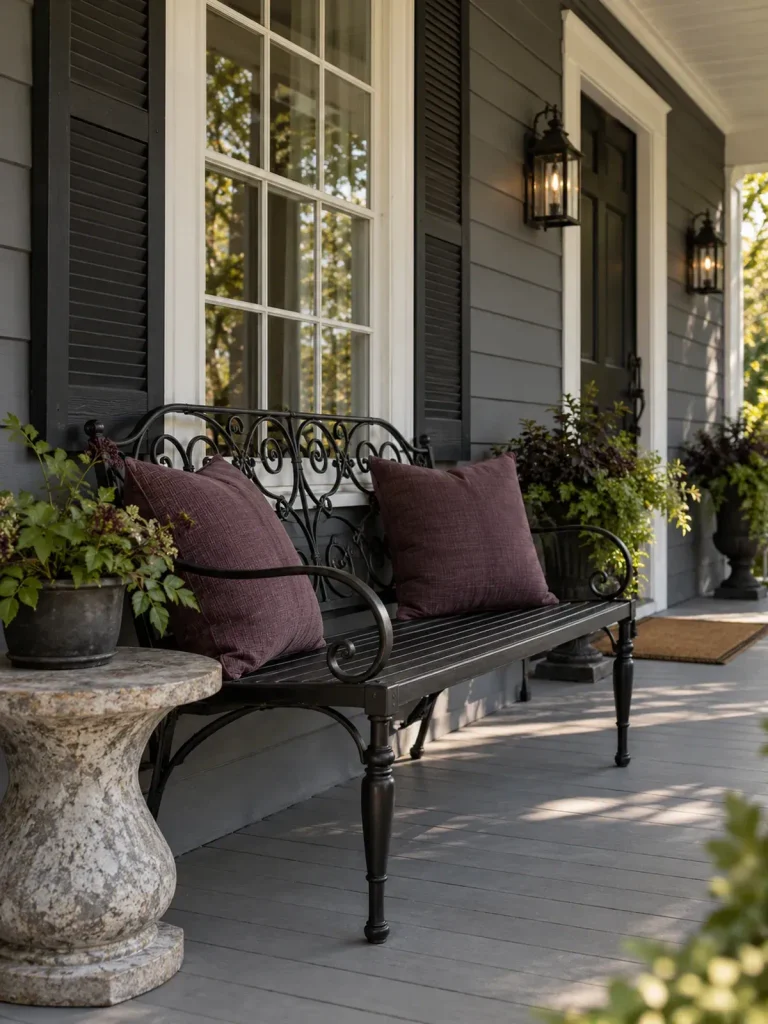
Curved outdoor seating adds romance to a porch without relying on elaborate architectural details. A black metal bench with a scroll back can become the main decorative piece, especially against plain siding. Muted plum or charcoal cushions soften the outline and make the seat feel intentional rather than purely ornamental.
Choose a bench made for outdoor use instead of moving an upholstered indoor antique outside. Check its dimensions, condition, and weight rating before buying. Use outdoor fabrics and store cushions when weather or the manufacturer’s instructions call for it. A small side table is useful if it fits without narrowing the passage.
13. A Restrained Botanical Wreath for Every Season
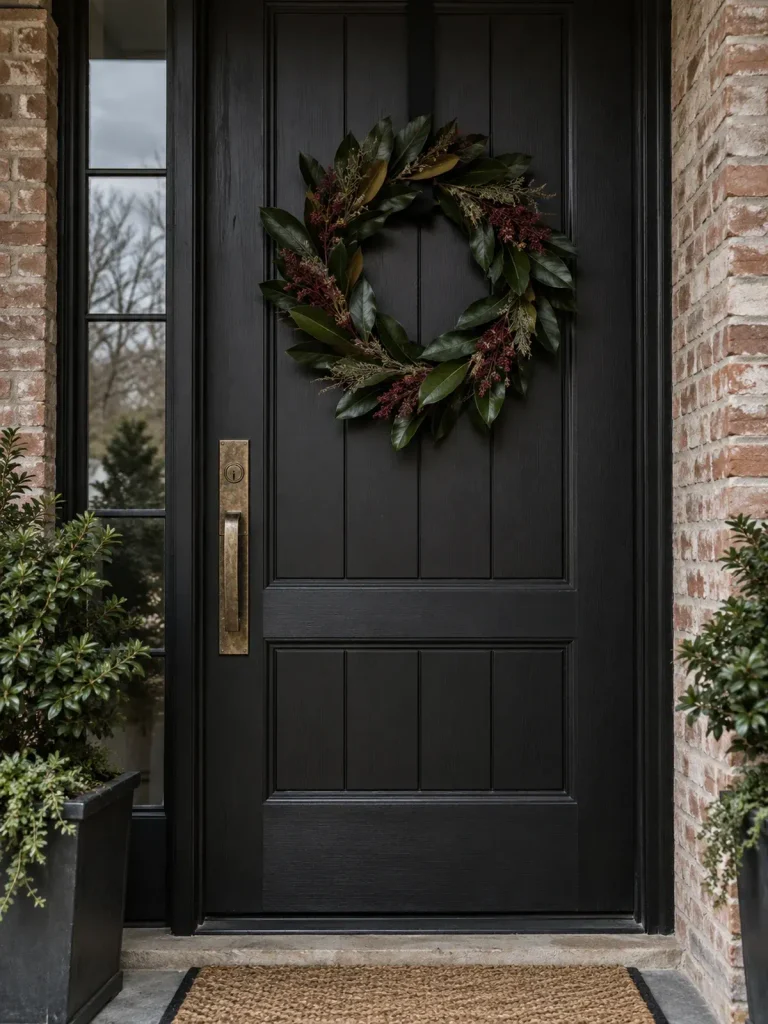
A dark botanical wreath gives the doorway a finished look without tying it to a holiday. Choose deep green leaves, a few burgundy stems, and a simple black ribbon. A mostly circular silhouette keeps the arrangement calm, letting leaf shape and color provide the interest instead of a collection of themed ornaments.
Match the wreath’s scale to the door panels and keep it clear of the lock, peephole, and glass you need to see through. Use a door-compatible hanging method. On exposed entries, choose materials suited to outdoor conditions and check for fading or loose pieces. Refresh seasonal foliage while keeping the same restrained palette.
14. A Slate-Toned Floor with Visible Step Edges
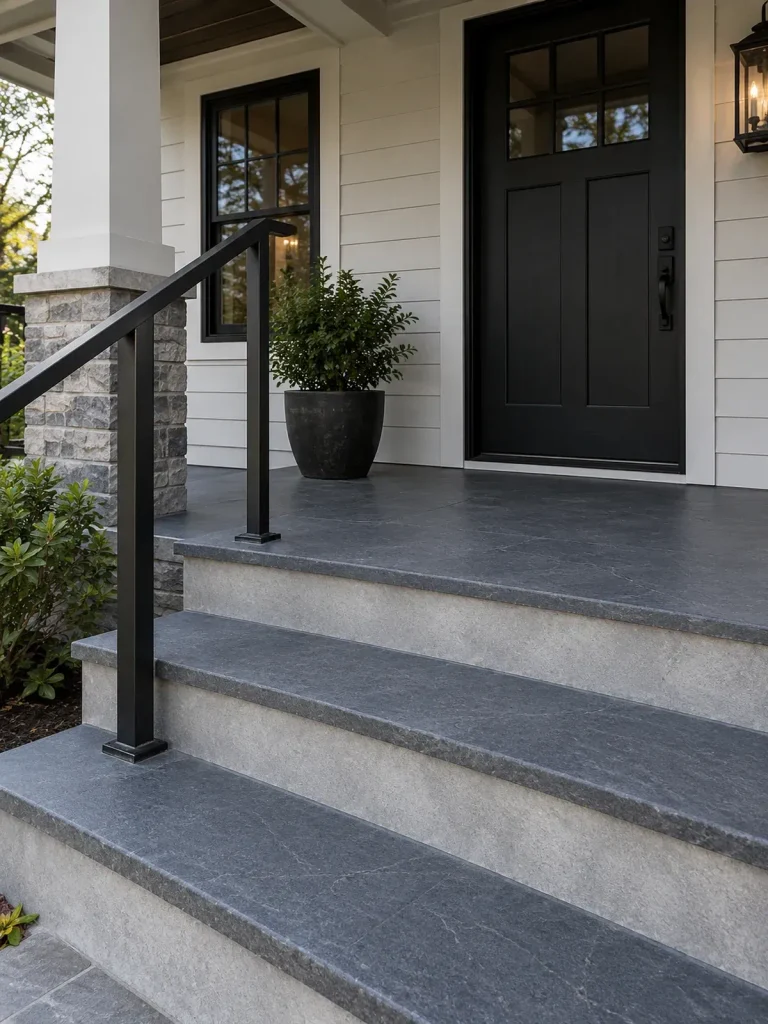
A slate-toned floor brings visual weight to a porch, particularly when the walls are pale. The look can come from existing stone, compatible tile, or a porch-floor coating chosen for the substrate. A matte, textured appearance fits the mood while allowing furniture and plants to stand out against a quiet base.
Do not choose a finish by color alone. Exposure, drainage, surface preparation, and the product’s intended use all matter. Preserve clear visual definition at changes in level rather than making the entire stair read as one black shape. For new tile, stone, or repairs, get advice suited to the existing porch construction.
15. Smoky Glass and Aged Metal on a Side Table
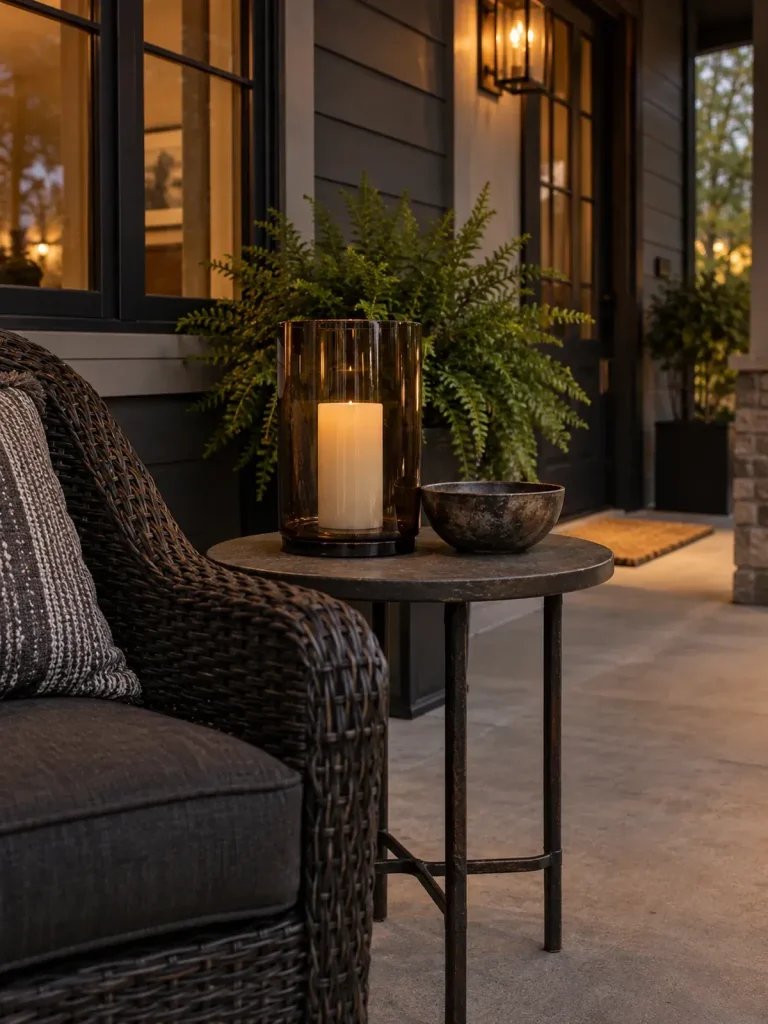
A small side-table arrangement can make a porch feel collected rather than decorated all at once. Smoked glass, a weathered metal bowl, and one leafy plant bring different surfaces into the same dark palette. Keep the objects large enough to read clearly, with open space around them instead of numerous tiny accessories.
Confine the vignette to a sheltered seating corner. Choose pieces intended for outdoor conditions or bring them inside when necessary, and avoid fragile objects on a wobbly table. A battery candle can add a soft evening glow without an open flame. Make sure the candle is rated for its location and temperature range.
16. A Minimal Black-and-Stone Entry for Modern Homes
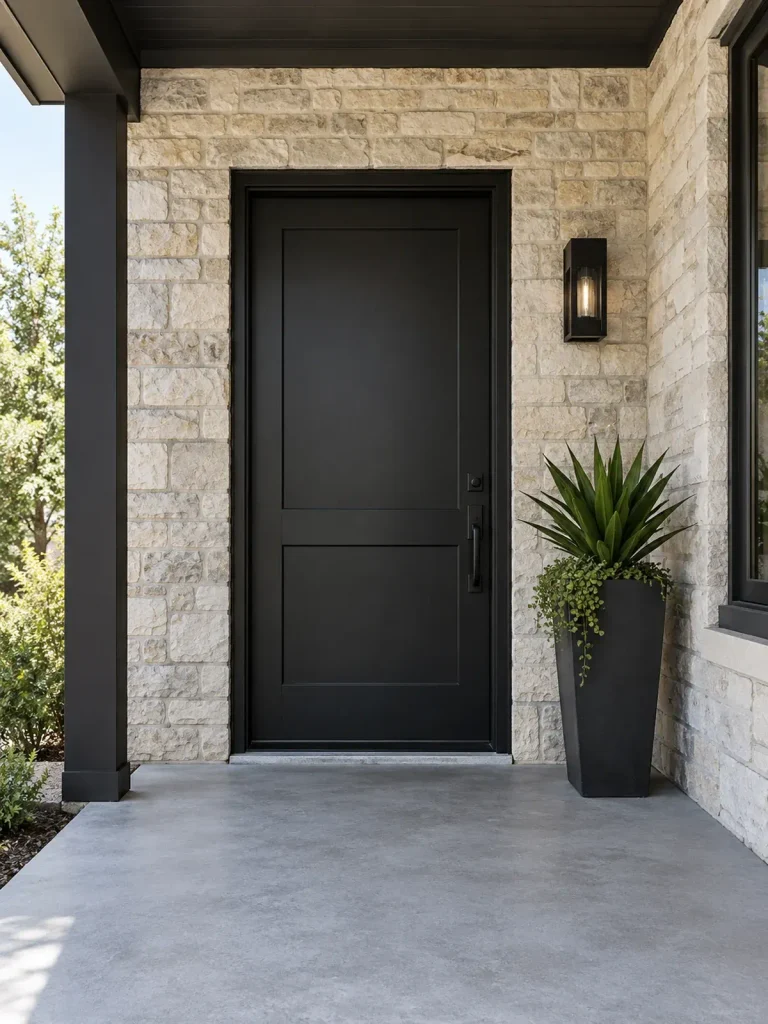
A modern house can carry a gothic mood through restraint rather than ornament. Combine a plain black door, pale stone texture, and one sculptural charcoal planter. The contrast between rough masonry and a clean door creates enough interest that scrollwork, wreaths, and several accessory layers may be unnecessary.
This approach suits a small porch where extra furniture would only make arrival awkward. Select a plant for the actual light and climate, not just for its silhouette. Keep the planter outside the door swing and choose a broad, stable base. Repeating black in the light fixture helps the limited palette feel deliberate.
17. A Rose-Covered Side Trellis with Dark Furniture
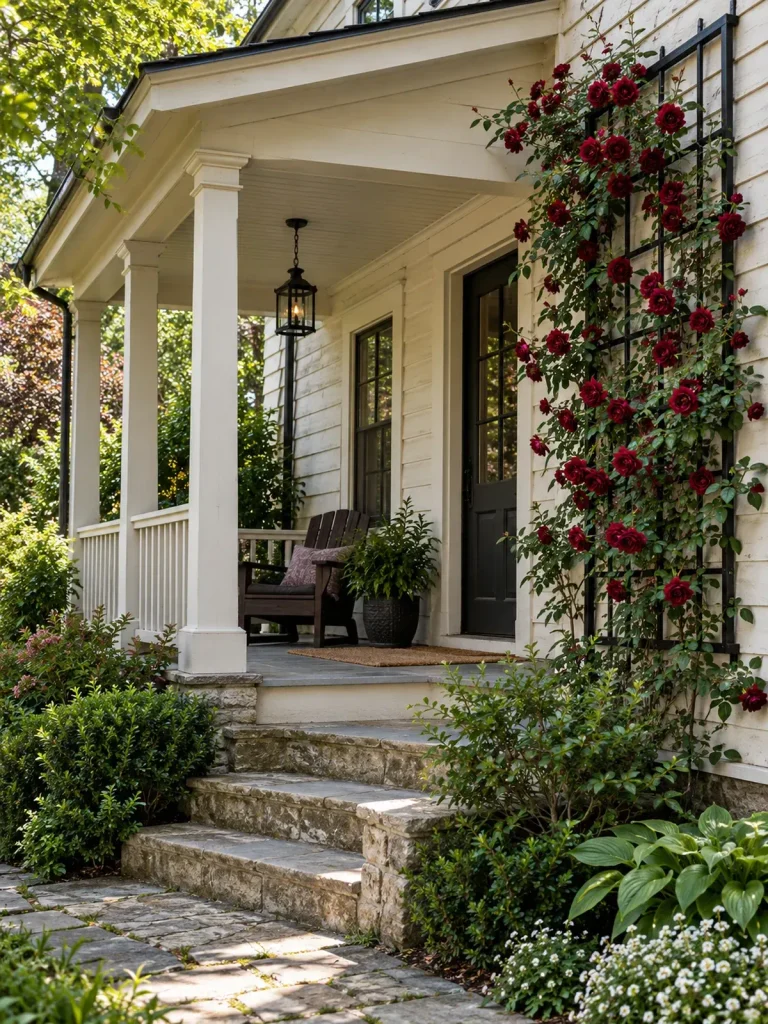
Deep red roses introduce a romantic garden edge that complements dark furniture and weathered siding. Train them along a side trellis, where the flowers frame the sitting area without hanging across the entrance. A black support keeps a decorative outline visible even when the plant is out of bloom.
Choose a climbing rose suited to your region, sunlight, and available space. Allow room for mature growth, regular training, and pruning, and keep thorny canes away from hands and the walking route. The flowers will be seasonal in many climates, so rely on the trellis, furniture, and finishes to maintain the gothic aesthetic year-round.
Build a Palette That Still Works in January
Choose one dark foundation, one decorative shape, and one living element. A black door, an arched trellis, and burgundy foliage form a complete starting combination; you do not need every idea on this list.
For a small porch, prioritize the door and wall surfaces before adding floor-standing decor. On a wider porch, establish the seating footprint first, then place planters and lighting around it. Repeat one metal finish to connect the details, and leave some pale trim, visible wood, or stone to keep the dark colors readable.
Plan for the least decorative month of the year. The porch should still look intentional when cushions are stored and plants are dormant. Durable visual anchors carry the style; flowers and softer accessories can change with the season.
Frequently Asked Questions
How do I keep a gothic porch from looking like Halloween decor?
Focus on permanent colors, curved metalwork, pointed arches, and botanical textures. Limit obvious seasonal symbols. A few architectural-looking details will feel more settled than a large collection of spooky accessories.
Can I create this look without painting the house?
Yes. Start with dark outdoor furniture, a charcoal planter, a botanical wreath, and a removable outdoor rug. Renters should get permission before painting, drilling, or attaching anything to the building.
Does a year-round gothic porch need to stay entirely black?
No. Forest green, midnight blue, burgundy, gray stone, and stained wood all fit the mood. Pale trim and warm light help define the darker elements and keep the entrance welcoming.
Which plants should I use on a shaded front porch?
Choose plants for the actual light level, climate, and container conditions, then look for suitable dark-leaved varieties. Heuchera may be an option depending on the cultivar and site. Very deep shade limits flowering choices; do not buy by color alone.
How can I keep dark porch decor looking tidy?
Sweep regularly, wipe visible pollen and dust from dark surfaces, and inspect metal finishes and container drainage. Store accessories that are not designed for the season. Keeping the collection small makes routine care easier.
Create a Dark Porch You’ll Use All Year
A year-round gothic front porch can begin with one grounded change: a dark door, a curved metal bench, or a generous planter with rich foliage. Choose the feature that suits your space and upkeep routine, then repeat a color or material in one other place. Keep the entrance comfortable to use, and let the architecture and a few well-chosen details carry the mood through every season.