
A mobile home can feel comfortable inside while its entrance still looks like a door, a set of steps, and somewhere to leave your shoes. The challenge is making that spot feel welcoming without crowding a small landing or planning a porch addition that overwhelms the house. Long walls, low rooflines, narrow lots, and nearby neighbors all influence what works.
The good news is that charm doesn’t have to come from a large structure. A well-placed bench, a coordinated pair of planters, or a seating corner that leaves the doorway clear can make an existing porch feel much more intentional. Larger decks offer room for outdoor living, but even a compact entry can have its own personality.
These front porch ideas for mobile homes and trailers range from simple decorating changes to layouts worth discussing with a qualified contractor. Choose the ones that suit your existing space, your maintenance preferences, and the way you actually use your entrance.
1. A Tiny Landing with Two Matching Planters
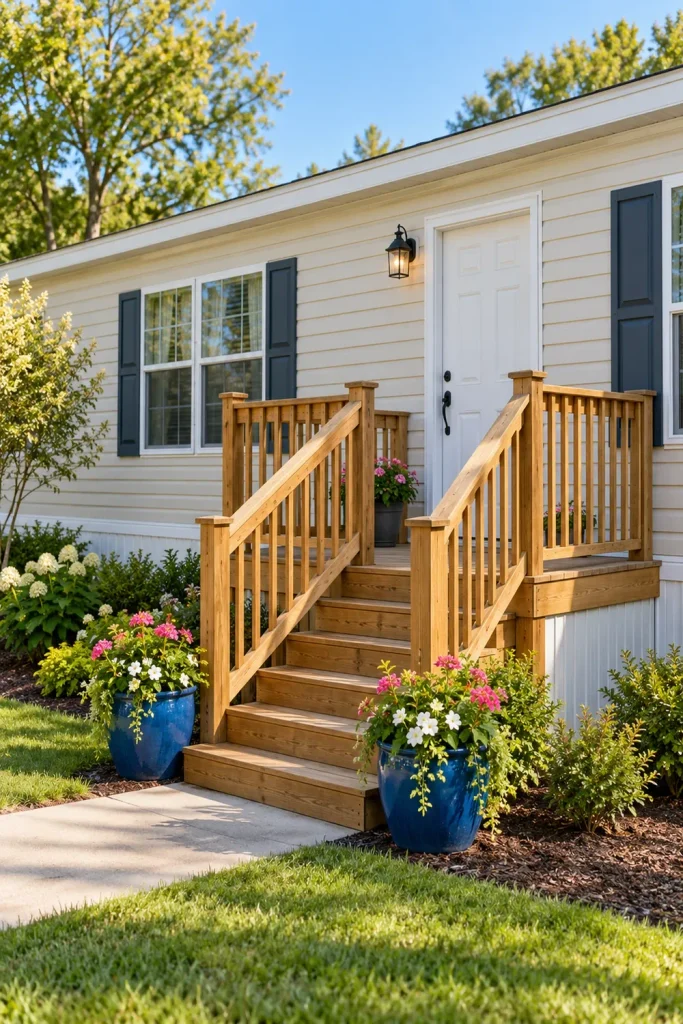
A small landing looks more settled when the steps have a visual frame. Place two matching planters on the ground beside the stair base, leaving the handrails and approach easy to reach. Blue glazed pots bring a cheerful accent to cream or white siding without requiring a larger makeover.
Keep the planting simple: one upright plant surrounded by lower flowers gives each container a clear shape. Match your plants to the entrance’s actual sunlight, rather than choosing by flower color alone. On a very narrow lot, use just one generous pot beside the steps. Two containers should never come at the expense of a comfortable walking route.
2. A Covered Porch with a Pair of Rocking Chairs
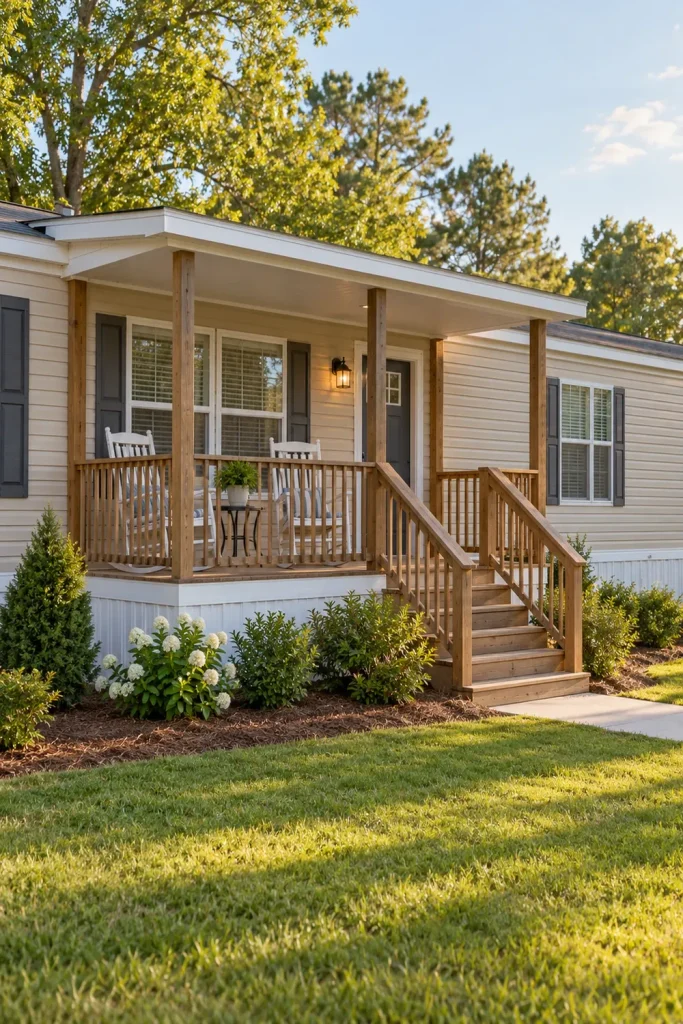
Two rocking chairs give a covered porch an unmistakable invitation to sit down. Natural wood chairs look warm against beige siding, while a small table between them creates a useful place for a drink. The arrangement feels relaxed without needing a full outdoor furniture set.
Place the chairs along one side of the porch so the route from the steps to the door stays open. Measure the space needed for rocking, not just the chair legs, and keep that movement away from railings and traffic. An existing covered deck makes this a straightforward decorating project; adding the roof or porch itself requires a separate structural plan.
3. A Slim Bench Along the Wall
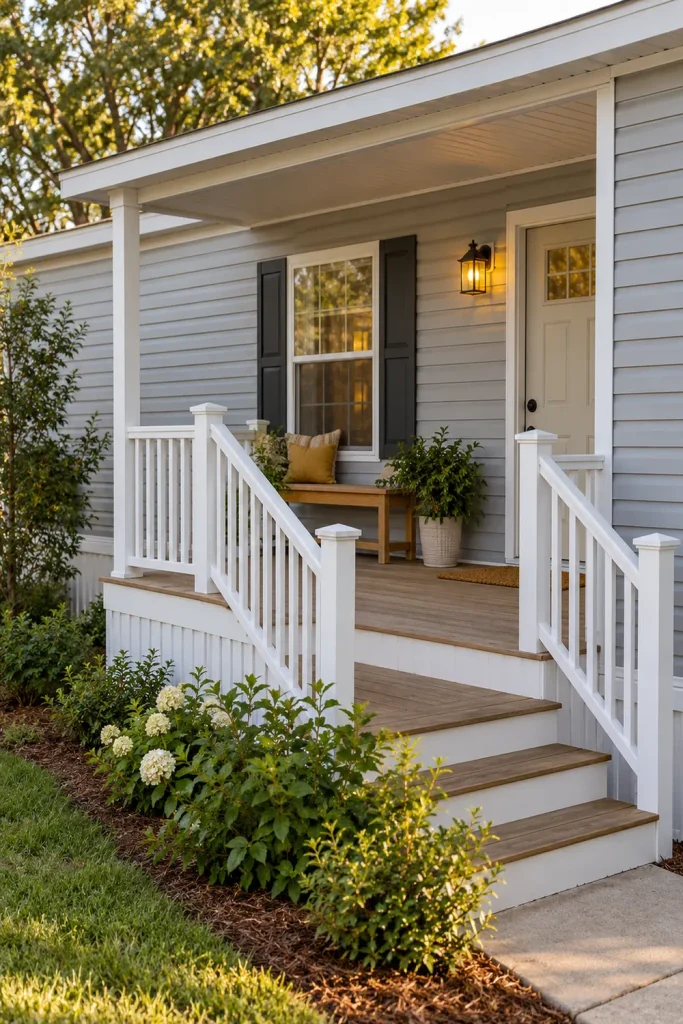
On a shallow porch, a slim bench can provide a place to put on shoes without spreading furniture across the entire floor. A natural wood finish softens gray siding, and a single mustard cushion adds warmth without making the entry feel busy.
Choose a bench with a shallow seat and place it against an uninterrupted section of wall, clear of the door swing. Check the route with someone seated, since knees and feet take up space too. Keep windows, vents, and access points usable. Where there isn’t enough room to sit and pass comfortably, move the bench to an adjacent ground-level sitting area instead of squeezing it onto the landing.
4. A Cottage Entry with Window Boxes
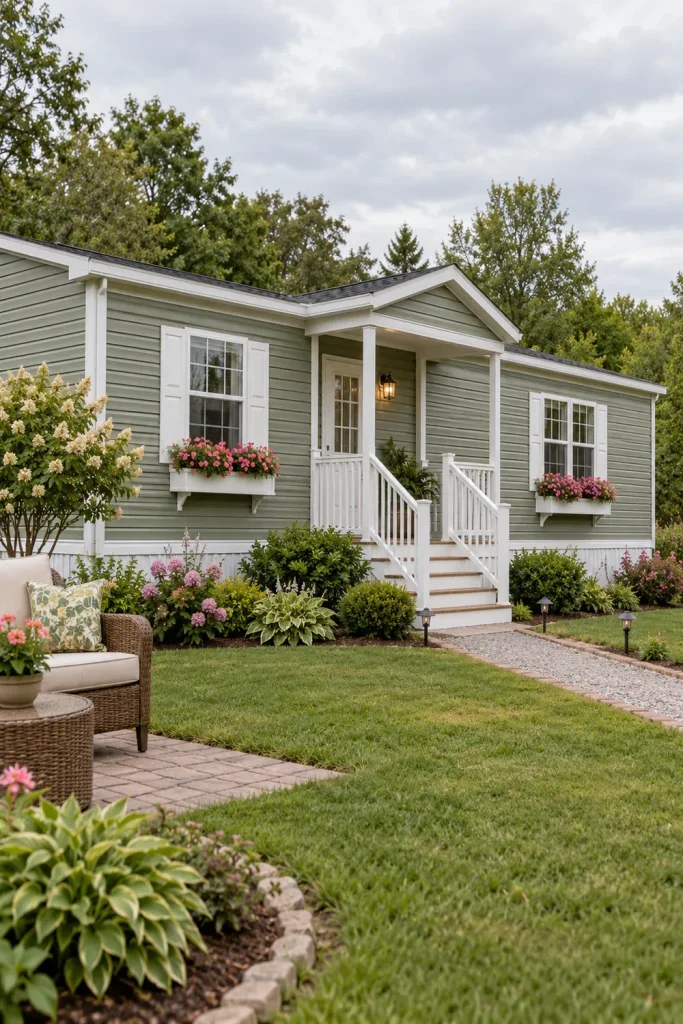
Window boxes can make a long manufactured-home facade feel more detailed without filling the porch floor with pots. Pink flowers against sage siding and white trim create a soft cottage look, especially beside a simple white-railed entrance.
Use a limited planting palette so the boxes read as part of the house rather than separate decorations. Their support matters: wet soil adds weight, and mounting methods need to suit the wall assembly. Use an approved installation approach or independently supported boxes rather than assuming the siding can carry them. Position containers so drainage won’t continually wet the wall, and leave windows free to open and function as intended.
5. A Black-and-Cedar Modern Porch
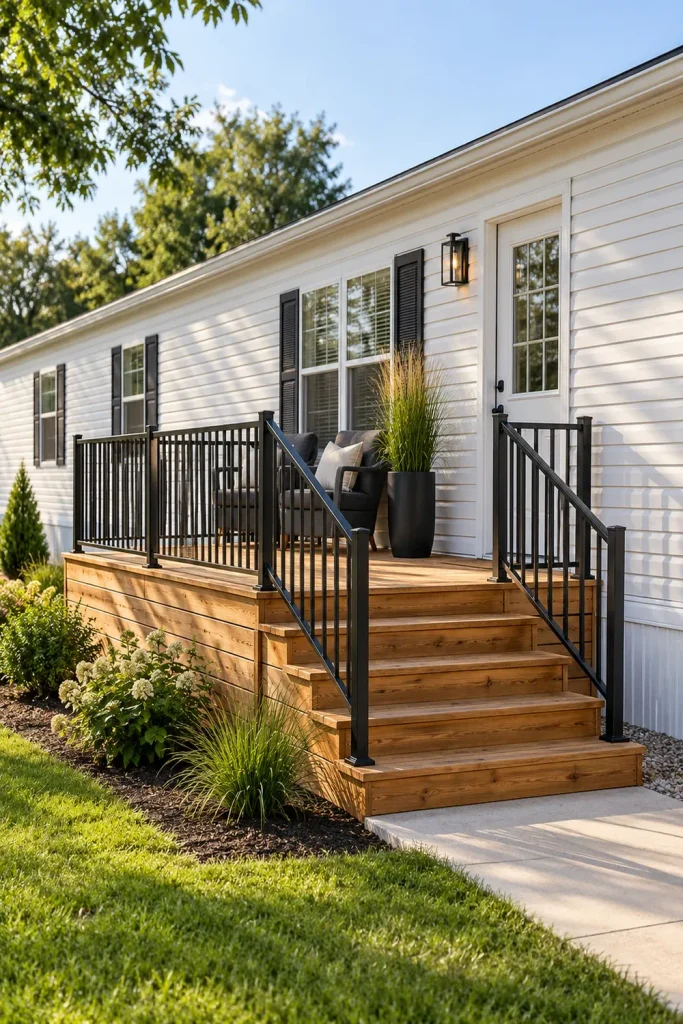
Natural cedar tones paired with black metal railings give a plain entrance a clean, modern outline. The warmth of the decking keeps the dark accents from feeling severe, while white siding provides an uncomplicated backdrop. Two charcoal chairs and one grass-filled container are enough to finish the scene.
Carry the black finish through a few visible elements, such as the furniture frames and an existing light fixture. Avoid adding several competing wood tones. For an existing deck, furniture and accessories can suggest this palette without changing its structure. Replacing guardrails or decking is a larger project, so have the assembly and required details assessed before choosing materials solely for appearance.
6. A Bistro Corner for Morning Coffee
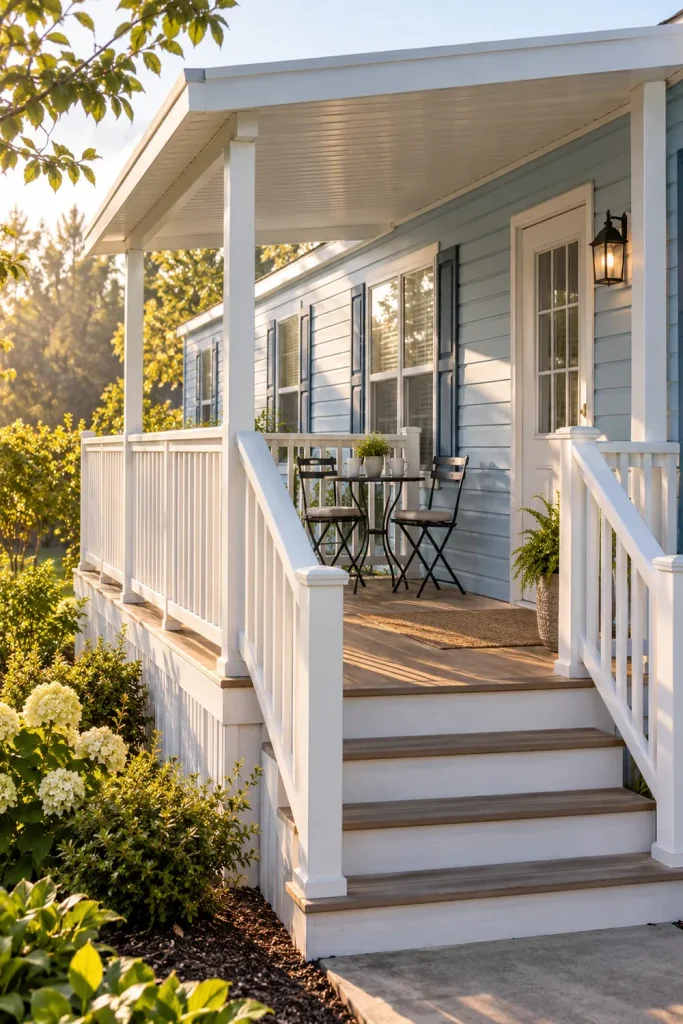
A small bistro table can turn an unused porch corner into a breakfast spot. Light blue siding, white railings, and simple metal chairs keep the setting airy, even on a modest deck. A round tabletop makes the arrangement feel less visually bulky than a large rectangular table.
Set it beyond the main route to the entrance and test the layout with both chairs pulled out. Folding chairs offer flexibility, but they still need stable footing and a suitable place to store them. Skip oversized centerpieces that consume the usable surface. This arrangement suits a porch with a genuine spare corner, rather than a landing that only has room for opening the door.
7. A Side Screen for a Little Privacy
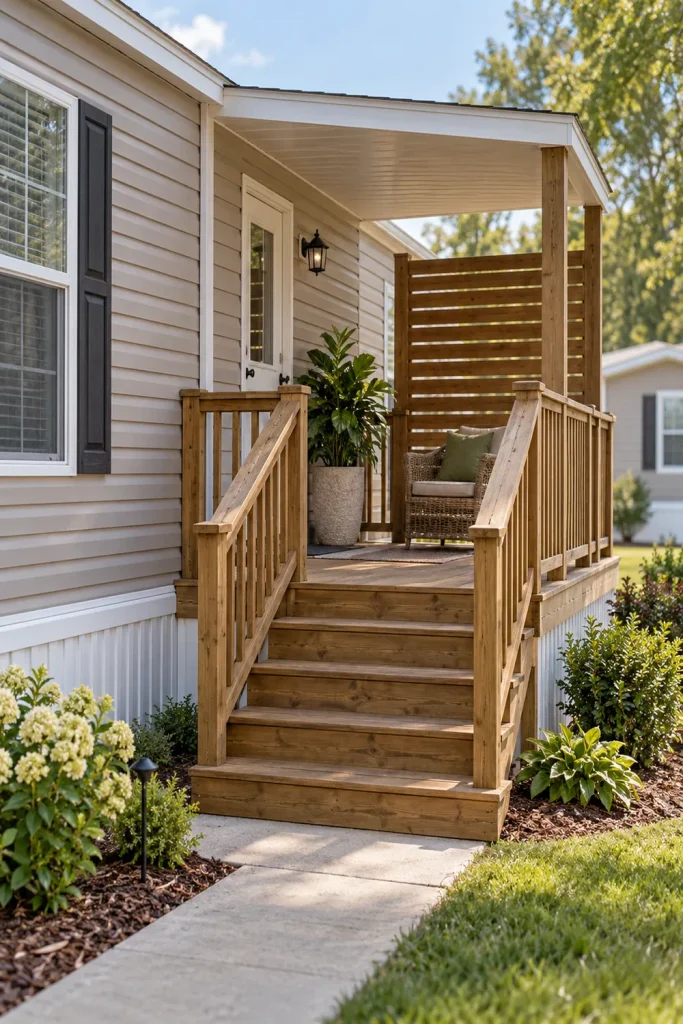
A slatted screen at one end of a porch can soften the view of a neighboring home while leaving the front open. Pair it with one comfortable chair and a leafy container to create a sheltered reading corner. Natural wood slats work especially well with taupe or cream siding.
Treat the screen as a separate feature, not a replacement for required guardrails. Its support and anchoring need to account for wind, so avoid casually fastening a tall panel to an existing railing or the home’s siding. Keep the entrance visible and the exit route clear. For rented lots, confirm community rules before committing to a permanent privacy feature.
8. A Blue-and-White Coastal Entry
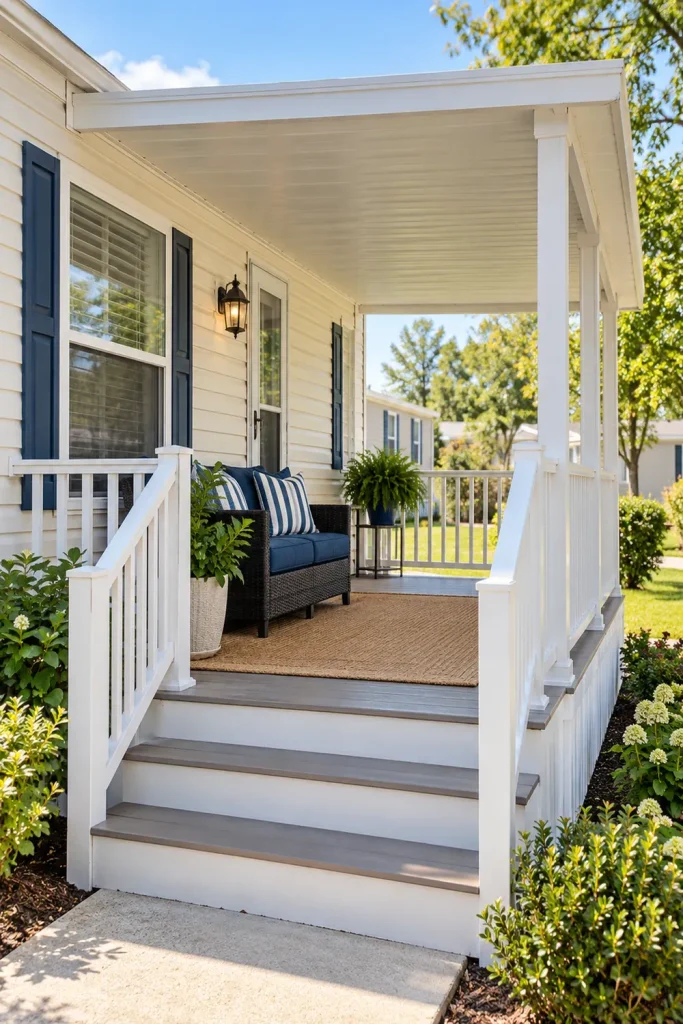
Blue-and-white textiles can give a mobile-home porch a breezy coastal feeling without themed signs or a collection of beach ornaments. A navy outdoor loveseat, striped cushions, and pale railings create the effect through color. A woven-look outdoor rug adds texture beneath the seating area.
Keep the loveseat to one side so its depth doesn’t narrow the entrance. Choose textiles intended for outdoor use and bring cushions into storage when conditions call for it. The rug should lie flat, clear the door, and suit the flooring beneath it. This look works far from the coast because the appeal comes from a calm palette and comfortable furniture, rather than location-specific decorations.
9. A Container Garden Beside the Steps
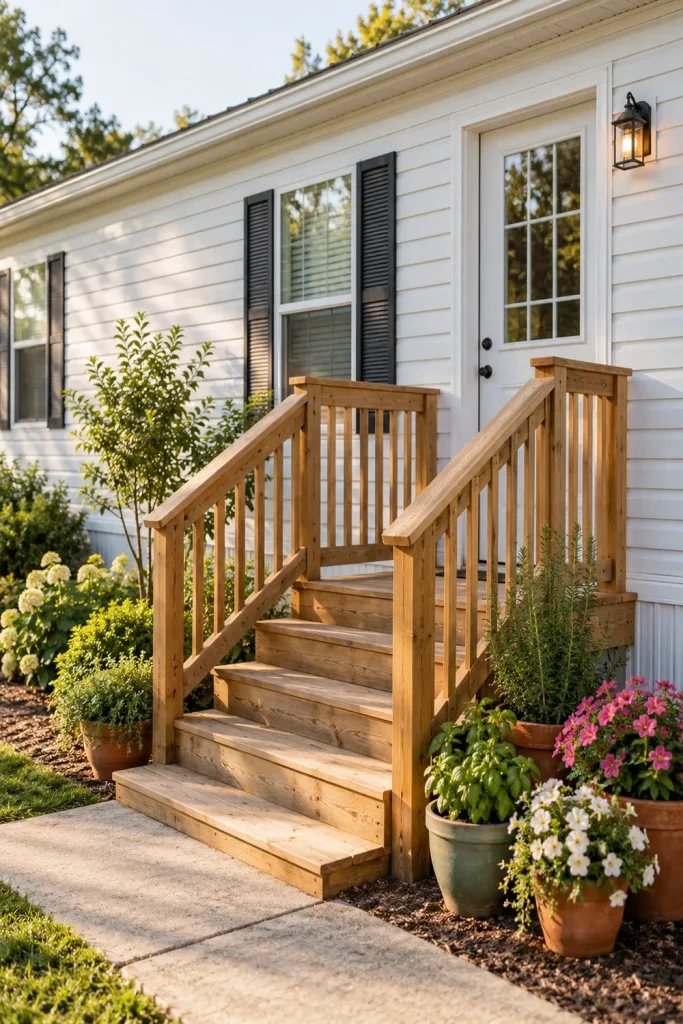
When a porch has little room for furniture, let the garden gather around it instead. Green and cream pots in varied sizes create a relaxed stairside display. Herbs add interesting leaf shapes, while flowering annuals bring color near the entrance.
Cluster the containers on firm ground outside the stair footprint, keeping treads, landings, and handrail access completely clear. Place taller pots behind shorter ones so the display feels layered without hiding the steps. Group plants with similar watering needs to simplify care. Leave access to skirting panels and utilities, and avoid directing runoff toward the home. The result is a welcoming entry that doesn’t depend on expanding the porch.
10. A Ground-Level Patio Beside a Small Porch
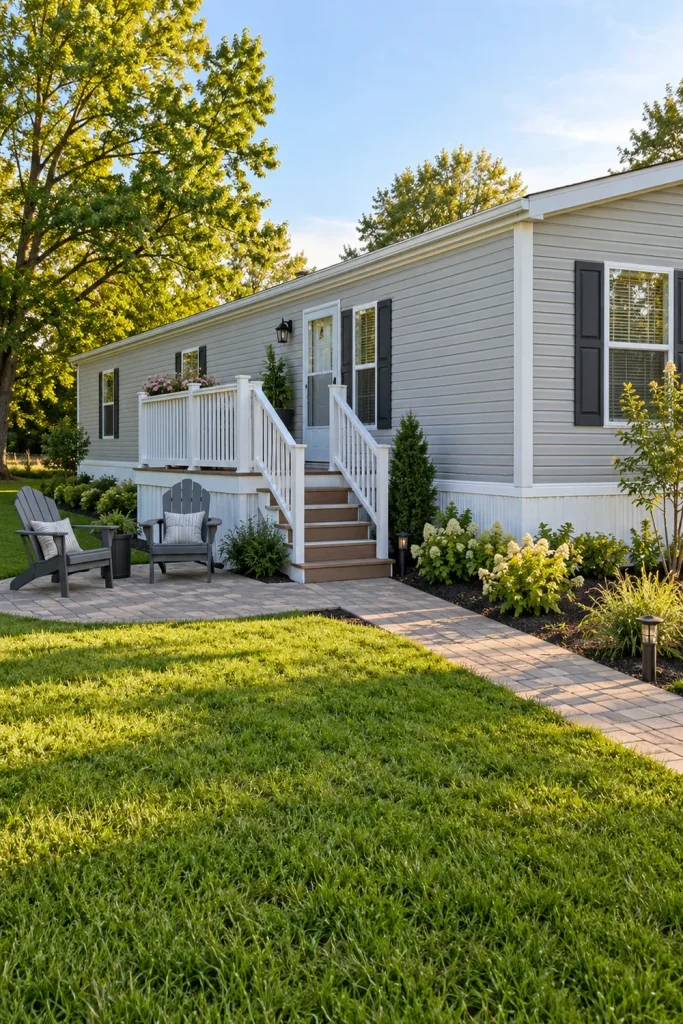
A tiny raised entry doesn’t need to hold every outdoor activity. An adjacent paver patio can provide a sitting area while the porch remains a simple arrival point. Two Adirondack chairs placed beside the walking route make a comfortable destination without crowding the landing.
Choose paver colors that relate to the steps or skirting so the two areas feel connected. A firm, properly prepared surface is more useful than a decorative patch that shifts under chair legs. Plan drainage and transitions carefully, and keep the home’s ventilation and service access open. This approach suits a yard with available ground space, especially when enlarging the elevated porch would be a substantial undertaking.
11. A Warm Evening Porch with Portable Lighting
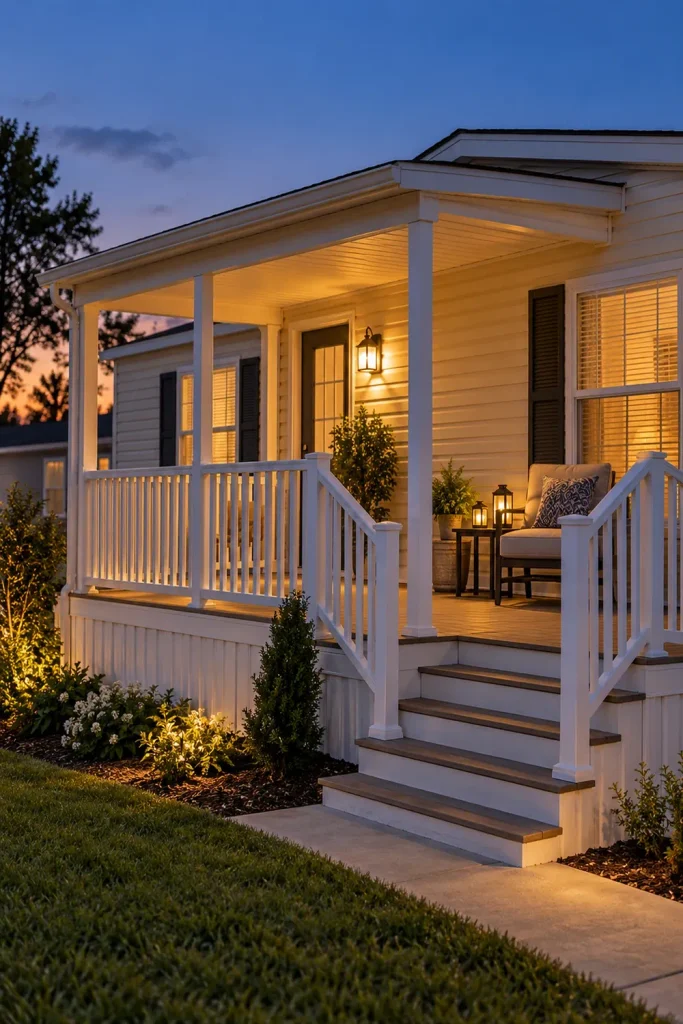
Soft evening light makes a modest covered porch feel inviting after the sun goes down. An existing wall light can provide the main illumination, while battery lanterns on a side table add a warm glow beside a chair. The effect is cozy without filling the roofline with cords.
Use outdoor-rated lanterns and keep them off stair treads and walking routes. Decorative light should supplement, rather than replace, enough illumination to see the door, steps, and changes in level. Check the porch after dark to spot shadows that daytime decorating can miss. If the existing fixture needs electrical work, have that addressed separately before relying on the space for regular evening use.
12. A Vintage Metal Glider as the Focal Point
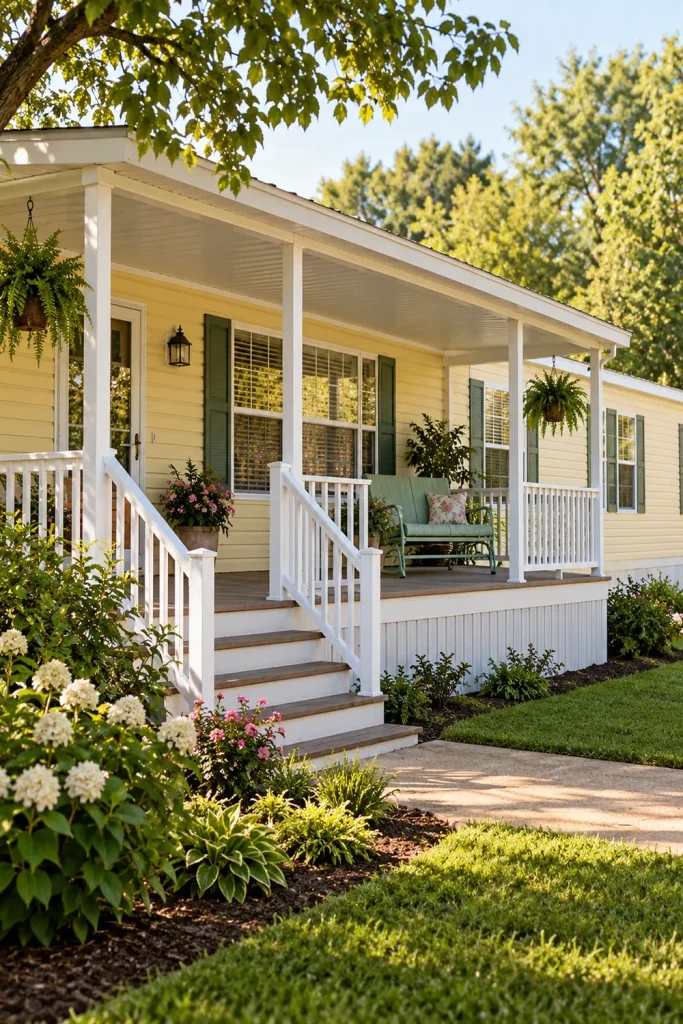
A mint metal glider brings nostalgic character to a pale yellow or white manufactured home. One distinctive seat can carry the whole porch, so a small cushion and restrained accessories are often enough. The look feels collected and friendly rather than overly coordinated.
Reserve this option for a porch with enough depth for the glider’s full movement and a clear passing route. Inspect older furniture for rust, sharp edges, loose parts, and sound seating before putting it into use. Keep fingers and stored items away from moving mechanisms. A glider is a furniture choice, not a hanging swing, so it avoids needing overhead suspension while still requiring adequate floor space.
13. A Tidy Storage Bench Entry
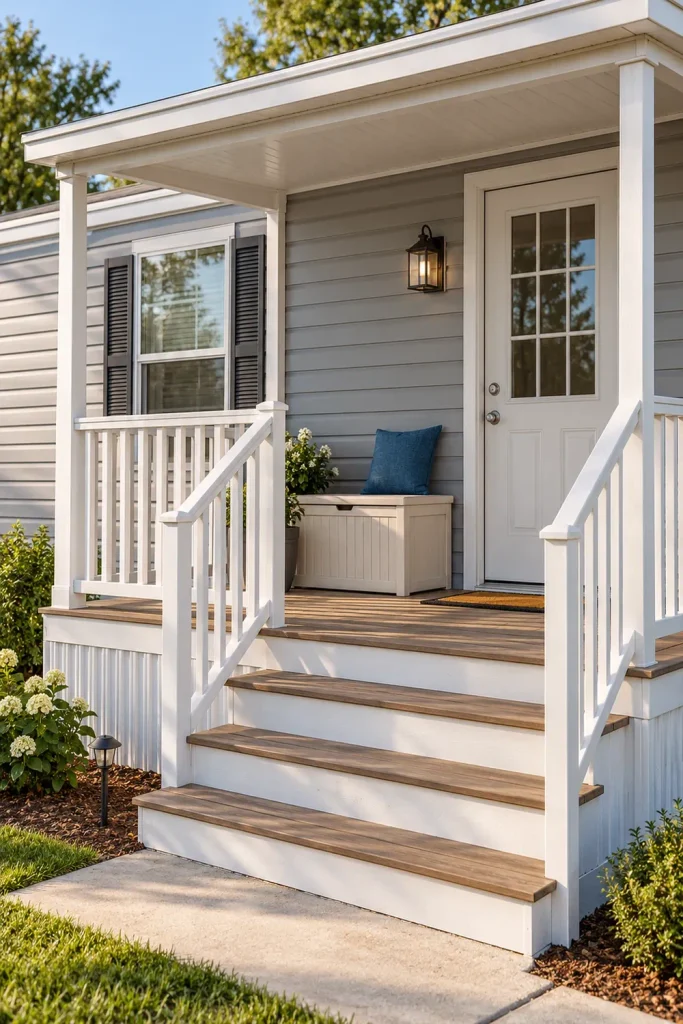
A closed storage bench gives a porch a calmer appearance when small outdoor items otherwise collect beside the door. A cream bench against gray siding looks understated, and one blue cushion helps it read as seating rather than a utility box.
Choose a model intended for outdoor use and check what the manufacturer says about water resistance and seating capacity. Store only items suited to the conditions inside; a covered porch doesn’t guarantee dry storage. Leave space to open the lid without striking a window or blocking the doorway. Avoid using it for fuels, chemicals, or anything needing specialized storage. This solution works best where the bench can sit outside the main circulation route.
14. A Desert-Inspired Porch with Earthy Texture
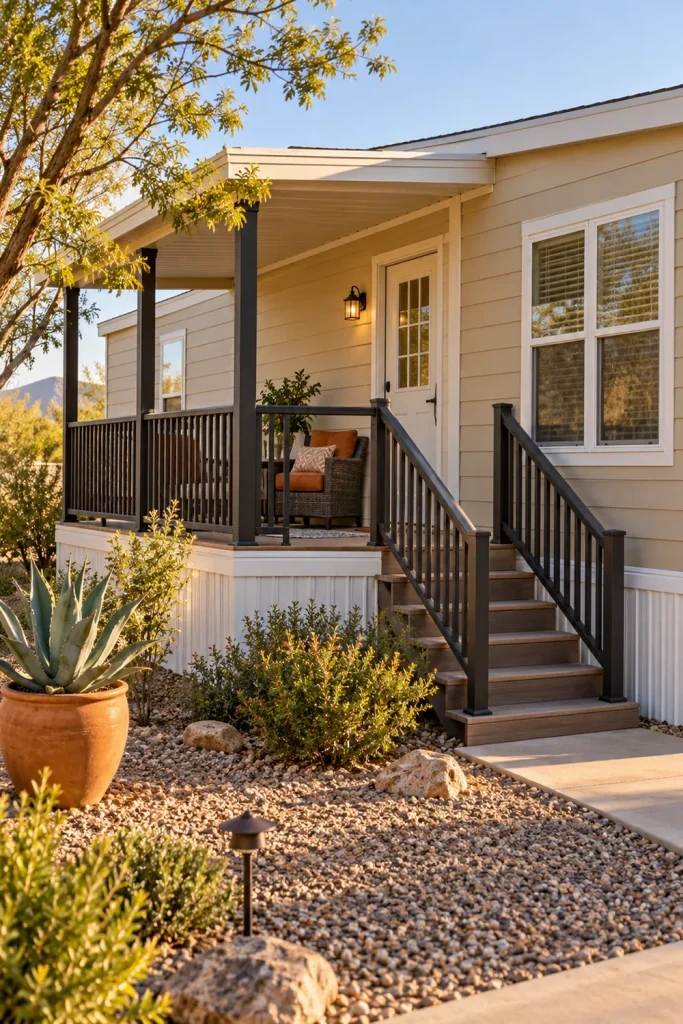
Rust-colored cushions, terracotta, and woven-look outdoor furniture bring warmth to a tan mobile home. Nearby gravel landscaping reinforces the earthy palette without requiring a porch full of decorations. One sculptural plant can provide a strong focal point beside the entrance.
Choose plants for your climate and exposure, not just the desert aesthetic. Spiky specimens belong well away from steps, seating, and places where children or pets brush past. Place large containers on the ground when that better suits their weight and scale. Furniture needs to tolerate the porch’s actual sun exposure, and soft furnishings may need storage. The look is most convincing when textures stay simple and the entry remains uncluttered.
15. A Porch-to-Garden Path That Feels Connected
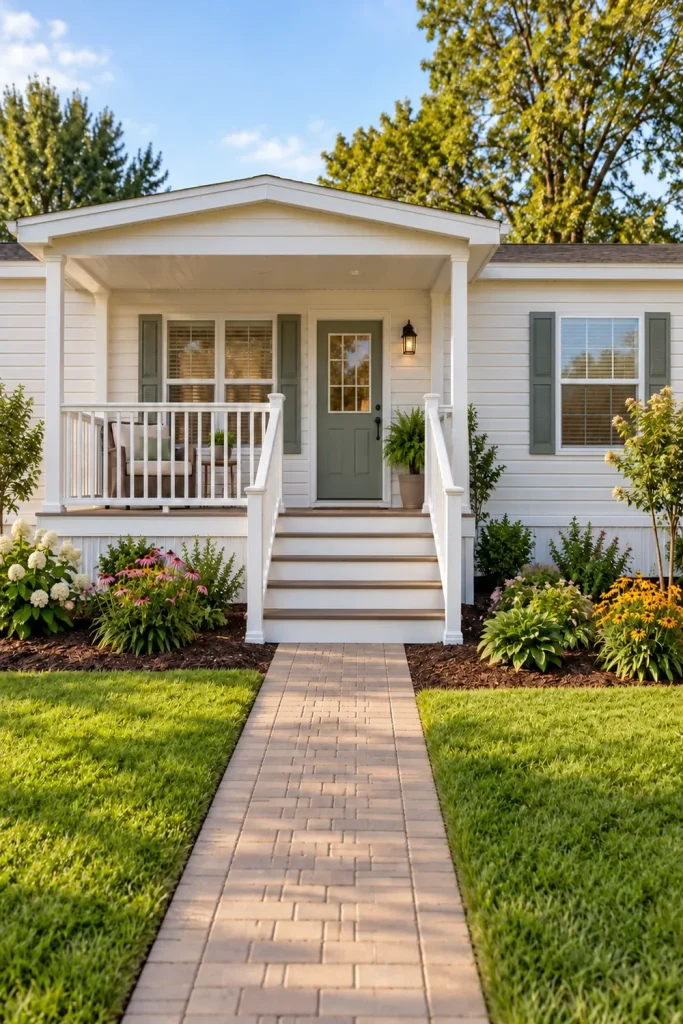
A clear garden path helps a small porch feel like part of the yard rather than a separate platform. Straight pavers, low planting beds, and a door color repeated in a nearby pot can visually connect the approach. The landscaping does much of the decorating work.
Keep plants low near stair entrances so they won’t hide the walking surface or catch clothing. Use a stable path with considered drainage and comfortable transitions at the steps. Leave planting and mulch clear of siding, ventilation, and service areas. This is particularly effective along the long front of a single-wide home, where a defined route gives the eye somewhere to go without adding more porch furniture.
16. A Seasonal Accent Corner That Stays Simple
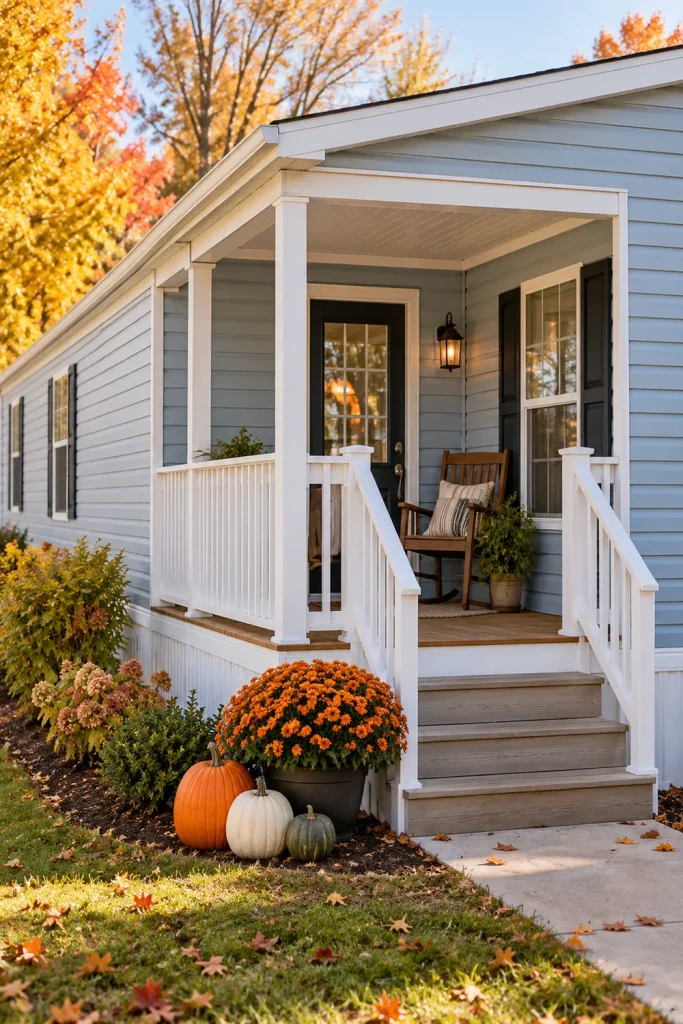
A single accent corner makes seasonal decorating manageable on a small mobile-home porch. For fall, a generous chrysanthemum and a few pumpkins beside the porch can supply the color, leaving the landing open. One wood chair provides a quiet background rather than another display surface to fill.
Keep the seasonal pieces on stable ground or a spacious side area, never along the stair treads. Remove decaying pumpkins and spent flowers promptly so the entry stays tidy. The same approach works throughout the year: swap the plant and a few accents while keeping the furniture arrangement. Limiting the display to one spot also makes it easier to protect loose decorations when windy weather is expected.
17. A Long Porch Divided into Two Small Zones
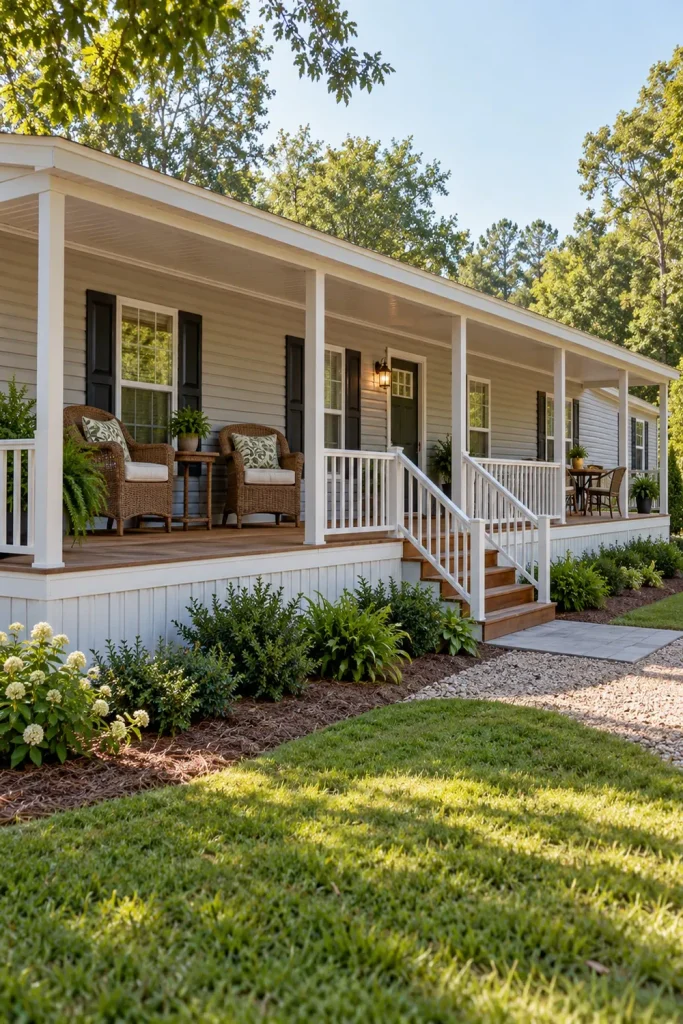
A long double-wide porch can feel more useful when it has two modest destinations instead of one scattered furniture arrangement. Place a conversation pair at one end and a compact dining table at the other. Leave the route between the entrance and steps open so daily use doesn’t cut through either setting.
Repeat one material or cushion color across both zones to keep them visually connected. Avoid filling the middle just because floor space remains available. Test dining-chair pullout and seating access before buying the furniture. This layout belongs on an existing porch with sufficient usable space and suitable capacity; its appeal comes from organizing that space, rather than maximizing the number of seats.
Choose the Layout Before You Buy the Decor
Start with the door swing, the stair landing, and the route you use while carrying groceries. Mark proposed furniture footprints with removable tape, then test the space with chairs pulled out or someone seated. Keep required exits, handrails, windows, vents, and service access usable.
Next, decide whether your project is decorating an existing porch or changing its structure. New decks, roofs, stairs, railings, and heavy privacy screens require more planning than cushions and containers. HUD notes that significant additions or structural alterations may require local permits and can affect a manufactured home’s compliance. Check the home’s documentation, local requirements, and any park or lease rules before proceeding. hud.gov
Have a qualified professional establish how new porch structures will be supported and connected. Do not assume the home’s wall, roof, or existing rails can carry added loads. For a travel trailer or RV, use guidance specific to that unit and site; a manufactured-home porch concept is not an attachment plan.
FAQ
How can I make a small mobile-home porch look welcoming?
Choose one focal point, such as a planter pair or a slim bench, then repeat one accent color. Clear circulation usually makes a small entry feel more welcoming than adding extra furniture.
Can I add a covered porch to a manufactured home?
It may be possible, but the design needs to suit the home, site, and applicable requirements. Have a qualified professional review support, connections, drainage, and permitting before construction. A decorative inspiration image cannot establish those details.
What can I do if my porch is only a landing and steps?
Decorate beside the entrance with ground-level planters or improve the approach with a garden path. If yard space allows, put seating on an adjacent patio rather than narrowing the landing.
Which changes make sense on a rented mobile-home lot?
Portable chairs, removable cushions, and containers are practical starting points, subject to your community rules. Get permission for changes involving the structure, ground, exterior attachments, or permanent screening.
Can these ideas work for a travel trailer?
Portable furniture, color schemes, and ground-level container arrangements can transfer well. Permanent decks, roofs, and attachments need separate consideration under the trailer manufacturer’s guidance and site rules, with towing and emergency access preserved.
Start with the Part of Your Entry You Use Most
Choose a change that solves an everyday annoyance: a place to sit, a clearer arrival area, or a little privacy from the neighboring lot. A small landing may only need planters beside the steps, while a larger existing porch can support a coffee corner or two defined seating zones. Build the charm around comfortable circulation and the scale of your mobile home, and let additional details follow only where there is room for them.