
Carrying groceries to the front door can expose every awkward part of a porch: the step that blends into the next one, the chair that narrows the path, or the lock that takes both hands to turn. When you’re planning to stay in your home as you grow older, those everyday details deserve attention alongside paint colors and flowerpots.
A welcoming porch can support easier movement without losing its character. Useful changes might include a clearer approach, a comfortable place to sit, or lighting that reaches the entire landing. Larger projects, such as a ramp or a new threshold, need more planning than a furniture rearrangement.
These 15 front porch ideas for aging in place combine practical access features with approachable design. Start with the needs of the person who lives there, including any mobility aid they use. Use the images as design inspiration; measurements, structural decisions, and local requirements need to be worked out for the actual home.
1. A Clear Walking Route That Still Feels Welcoming
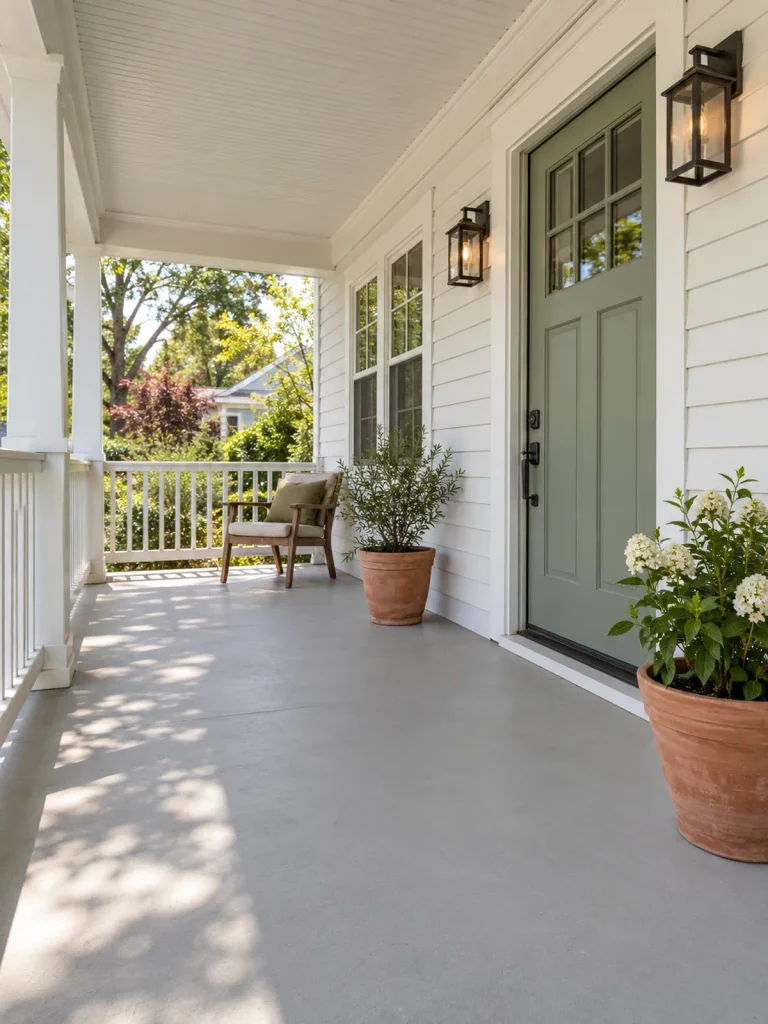
A porch feels more welcoming when you can cross it without weaving around furniture. Start by giving the route from the approach to the front door its own uninterrupted space, then arrange everything else around it. A sage door, pale flooring, and a few pots against the wall can still create a finished look.
Check the route with the door open, including any storm door, and with chairs occupied. Someone using a walker may need more room than an empty-porch photo suggests. Let the resident’s movement and turning needs determine the layout. On a narrow porch, removing a chair can be more useful than adding another accessory.
2. A Gentle, Step-Free Approach Framed by Planting
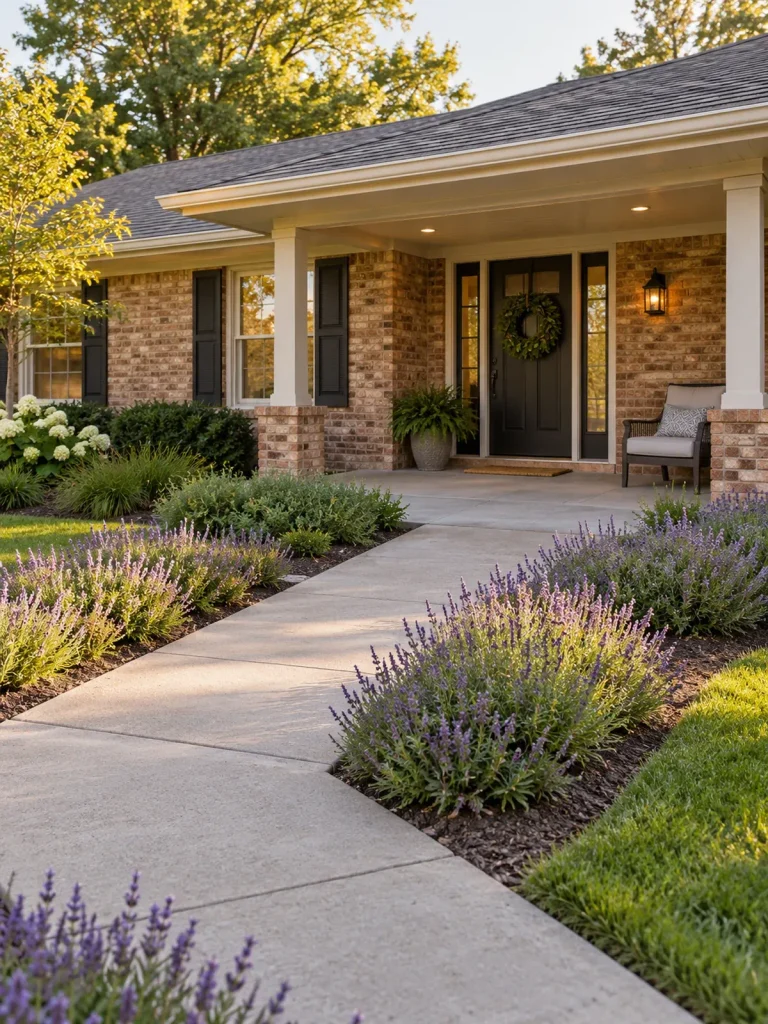
At a house with a low entry, a gently graded walkway can connect the garden to the porch without a separate flight of steps. Broad concrete paving and low planting make the approach feel like part of the landscape rather than an attachment added later.
This works best when the site has enough distance to spread out the elevation change. Ask a qualified designer or contractor to evaluate grading, drainage, and the connection to a level door landing. A path that looks shallow in a photograph may still be too steep in practice. Keep loose gravel and stepping-stone gaps out of the main walking route.
3. A Porch Ramp That Belongs With the House
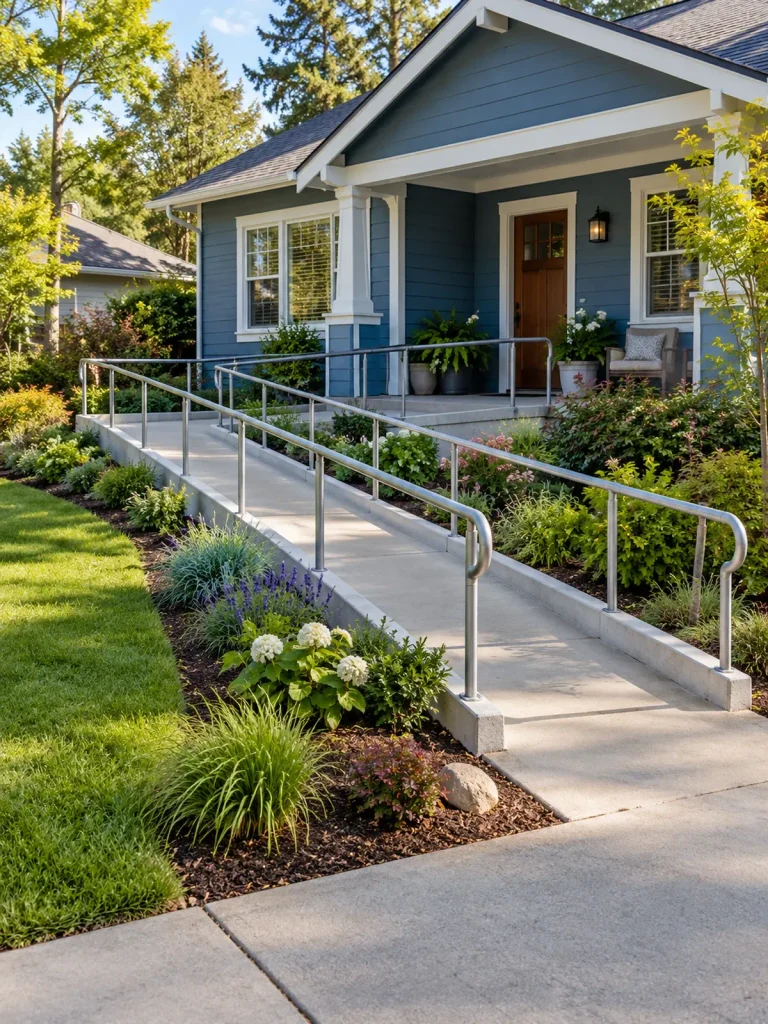
A thoughtfully placed porch ramp can echo the siding, trim, and railing colors already on the house. Running it along the front garden often looks calmer than pointing a short, steep ramp straight toward the driveway. Low planting outside the rails softens the view without narrowing the passage.
Treat the ramp as a designed access project, with its slope, landings, handrails, edge protection, and drainage considered together. U.S. Access Board guidance illustrates why these elements matter. A ramp also needs enough room to approach and operate the door. Have a professional assess the actual site and resident’s mobility needs before choosing its configuration. access-board.gov
4. Graspable Handrails With Architectural Character
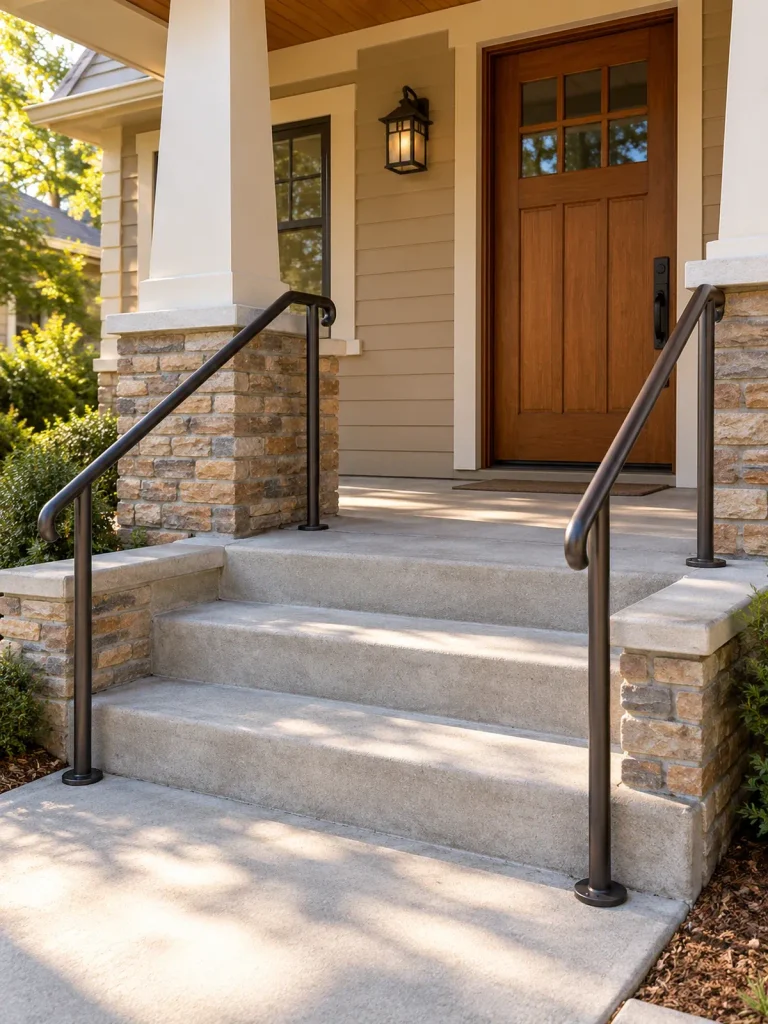
Slim, graspable handrails can suit a Craftsman porch just as comfortably as a contemporary entry. Dark metal against light masonry creates a clear visual line, while a simple rounded profile keeps the detail understated.
Arrange for secure handrails on both sides of the steps, with a continuous grip along the stair run. CDC fall-prevention guidance supports adding railings on both sides of stairs. A broad decorative railing cap is not necessarily a usable handrail, and a planter or column cannot substitute for one. Have attachment points and the condition of the steps checked before installation, especially where old masonry or weathered wood is involved. CDC
5. Subtle Contrast That Makes Step Edges Easier to Read
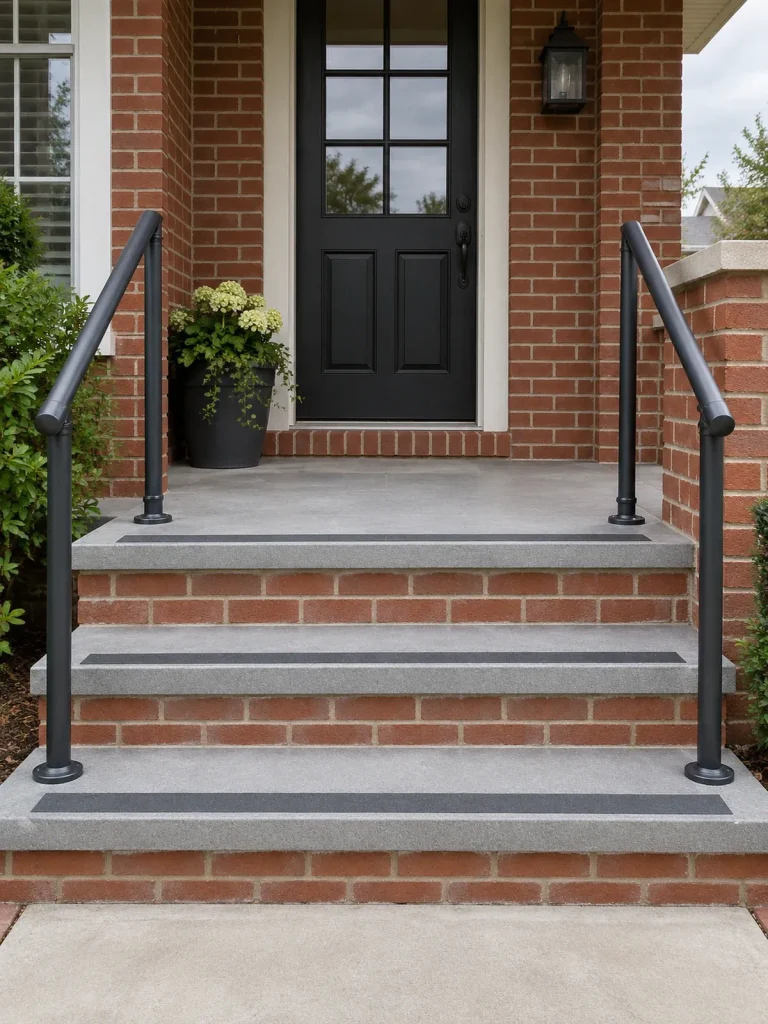
A restrained change in color can help separate one stair tread from the next. Picture gray masonry steps with a narrow charcoal band integrated along each leading edge, paired with simple handrails. The contrast becomes part of the architecture instead of looking like temporary decoration.
Keep the treatment consistent across the flight and choose an exterior application that does not create a raised lip. Avoid busy painted patterns that make the walking surface harder to interpret. Color contrast cannot correct uneven risers, loose treads, or inadequate lighting. Repair those problems first, then consider visibility improvements suited to the person who uses the entrance.
6. Matte, Textured Flooring in a Soft Neutral Palette
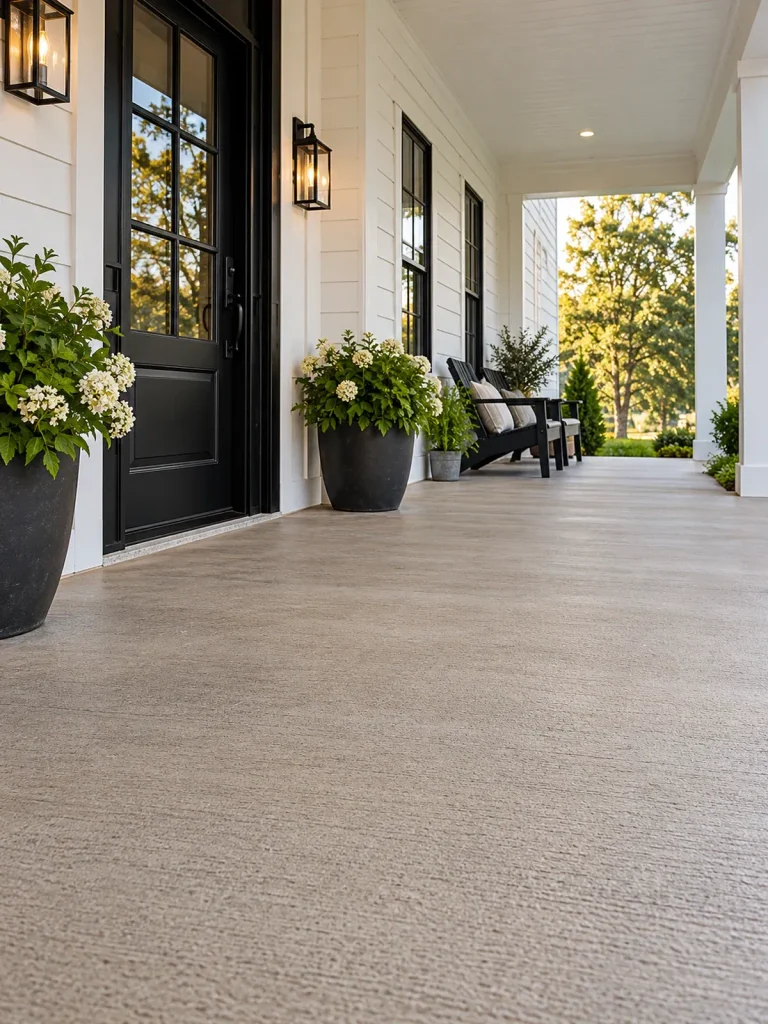
Soft taupe or warm gray flooring can give a porch a quiet, coordinated foundation. A finely textured concrete finish also avoids the visual clutter of small patterned tiles or irregular stone. The goal is a firm, stable walking surface with traction appropriate to outdoor conditions.
Ask about performance when wet, not just the appearance of a dry sample. U.S. Access Board guidance emphasizes slip resistance under the conditions a surface will encounter. Very coarse finishes can make wheeled travel uncomfortable, while some sealers change surface performance. Select the flooring and finish together, and follow the maintenance instructions rather than assuming a matte appearance guarantees traction. access-board.gov
7. A Recessed Entry Mat That Sits Flush
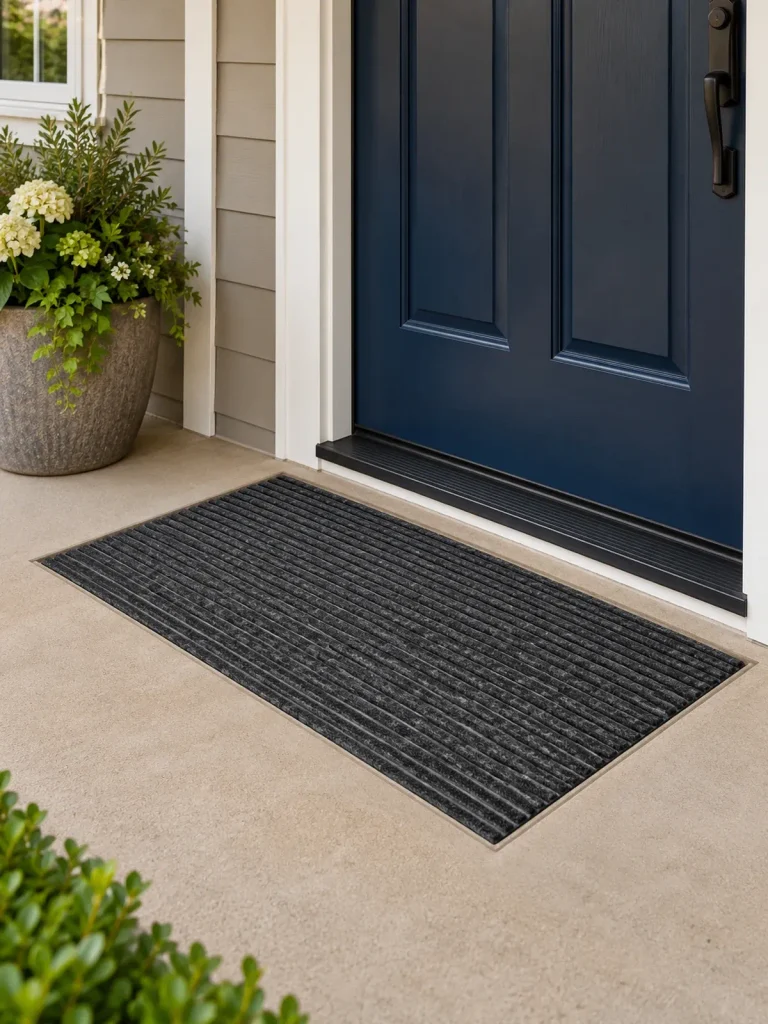
An entry mat set into a properly detailed recess gives muddy shoes a landing place without placing a thick decorative layer across the doorway. A plain charcoal mat against a lighter floor keeps the arrangement visually simple and easy to coordinate with most door colors.
The finished edges should sit flush and remain secure, without curling corners or a frame standing proud of the surrounding surface. Recesses also need a cleaning and drainage plan. This is usually easier to incorporate during floor work than as a quick accessory swap. If a flush installation is impractical, leaving the walking route mat-free may be the more workable choice.
8. A Low-Profile Threshold With a Clean Finish
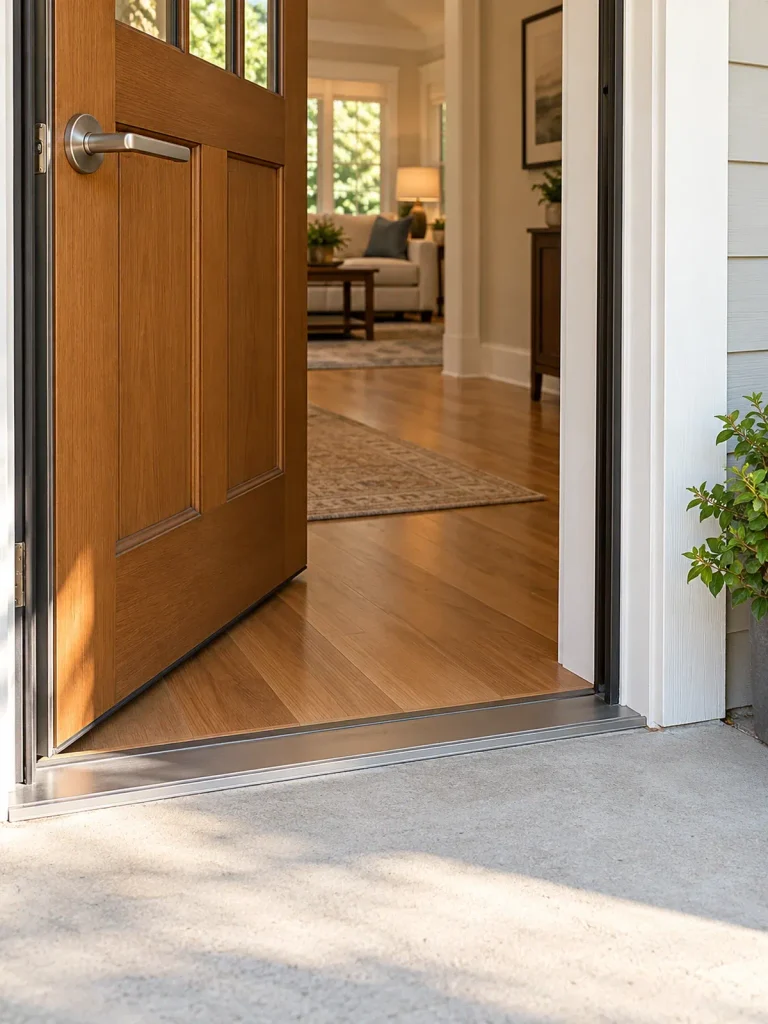
The small transition at the front door deserves as much attention as the larger porch. A low-profile threshold can create a cleaner connection between outdoor paving and the interior floor, particularly when a walker or wheelchair needs to pass through.
Have the whole doorway assessed, including weather protection, sill drainage, floor heights, and door operation. Simply removing a sill or adding a loose wedge can introduce new problems. The Access Board’s doorway guidance offers useful threshold examples, but a retrofit must suit the actual assembly. Keep the finish visually calm so the transition is easy to see, and check that the door still seals and closes properly. access-board.gov
9. A Sheltered Landing for Rainy-Day Arrivals
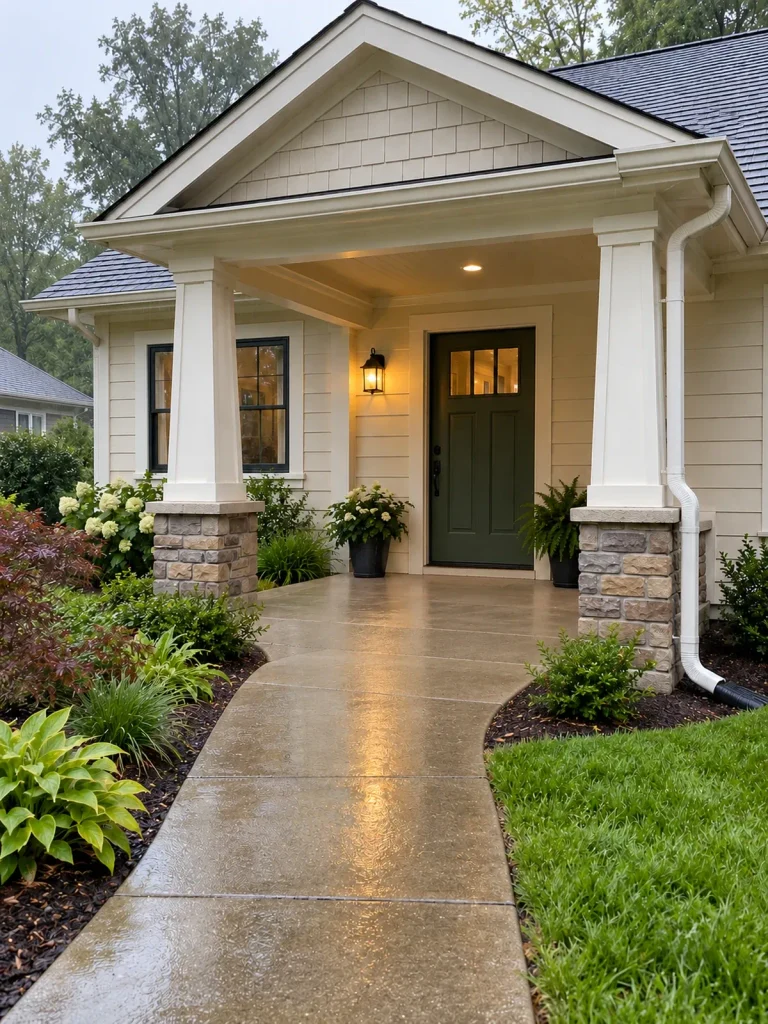
A covered landing creates a place to pause while finding keys or closing an umbrella. On a small cottage, a modest roof extension with posts outside the walking route can look like a natural continuation of the house.
Make the sheltered area useful at the door, rather than covering only the steps below it. Gutters and downspouts should direct runoff away from the approach. Wind-driven rain can still reach a covered porch, so suitable flooring and drainage remain important. A contractor should evaluate the roof connection, support locations, permits, and any local snow or wind requirements before this becomes a construction project.
10. Layered Lighting That Shows the Whole Route
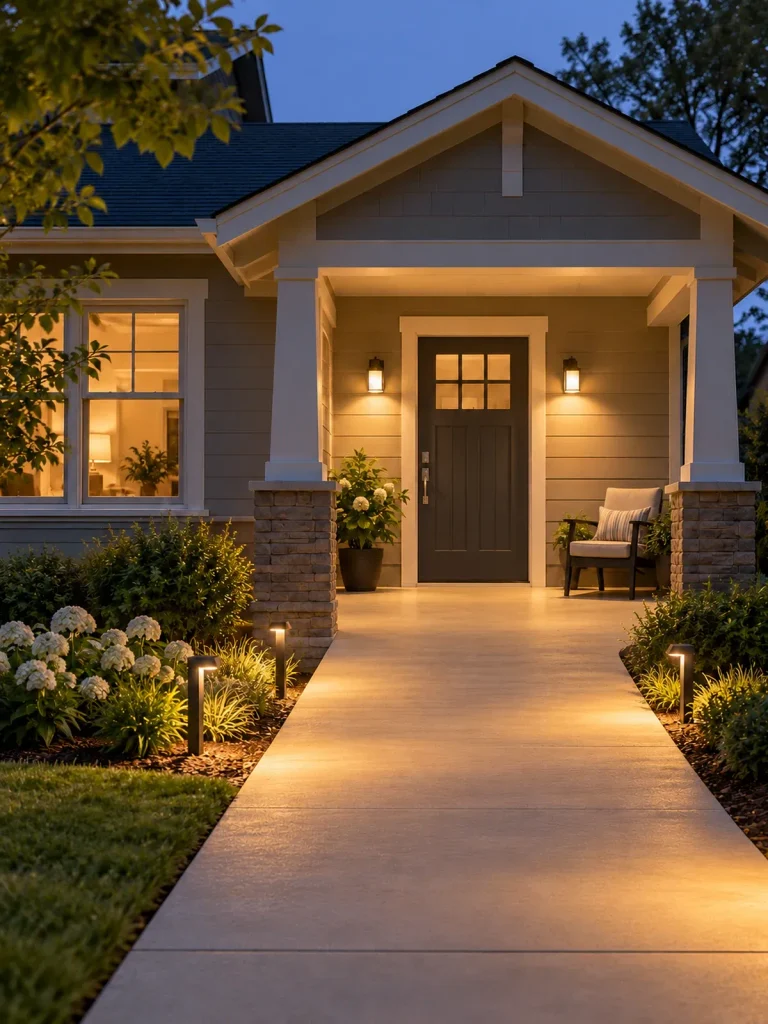
Think of porch lighting as a connected route from the yard to the lock. Shielded wall sconces can brighten the doorway, while discreet fixtures beside the approach help reveal the walking surface. A warm, even glow can feel welcoming without turning the entrance into a spotlight.
Check the effect after dark from the direction someone actually approaches. Look for glare, deep shadows, and a door handle left in darkness. If using motion sensors, verify they switch on before the person reaches the walking area and stay on long enough. Keep cords off the route, and use a qualified electrician for new wiring and exterior fixture installation.
11. Door Hardware That Is Easier to Operate
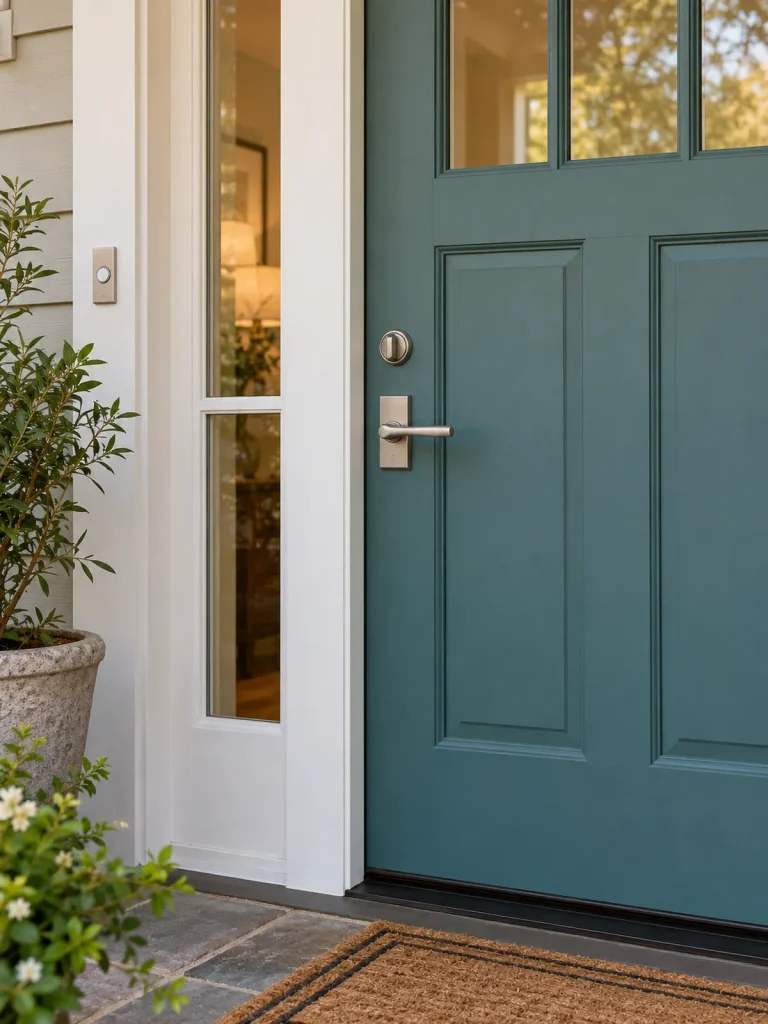
A simple lever handle can blend into a traditional painted door while reducing the need to twist a round knob. Brushed nickel, bronze, and matte finishes offer plenty of ways to coordinate the hardware with existing porch lighting.
Try the latch, lock, and door together before making a final choice. A comfortable lever will not solve a binding door, awkward key, or stiff closer. U.S. Access Board guidance identifies hardware usable without tight grasping, pinching, or wrist twisting as an accessibility feature. Position a doorbell where the resident and visitors can reach it comfortably without leaning across a planter or standing in a door’s swing. access-board.gov
12. Upright Armchairs for a Comfortable Pause
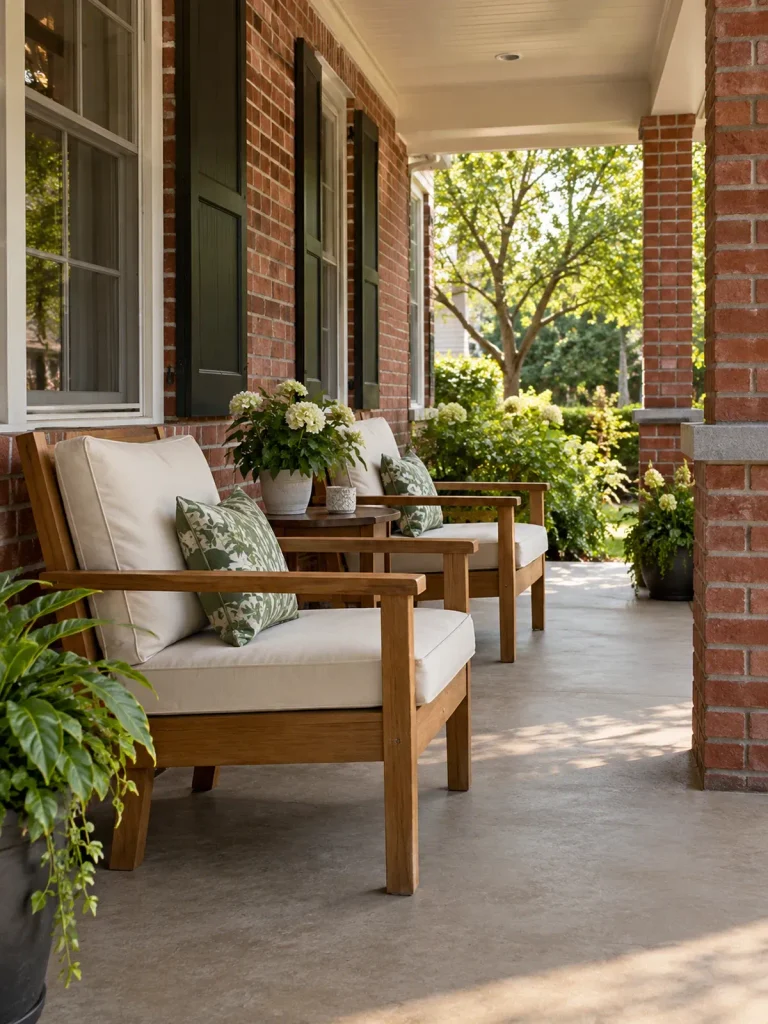
A pair of upright armchairs can make the porch an everyday stopping place. Wood frames, firm cushions, and a small side table create a relaxed sitting area without the deep seats and low lounge profiles that some people find difficult to leave.
Choose seating around the person who will use it. Check that their feet rest comfortably on the floor and that the armrests are useful when sitting down or standing up. The chair should remain steady during that movement. Keep the table close enough to avoid stretching, but outside the approach to the chair. Leave room nearby for a mobility aid without obstructing the doorway.
13. Raised Planters That Keep Gardening Within Reach
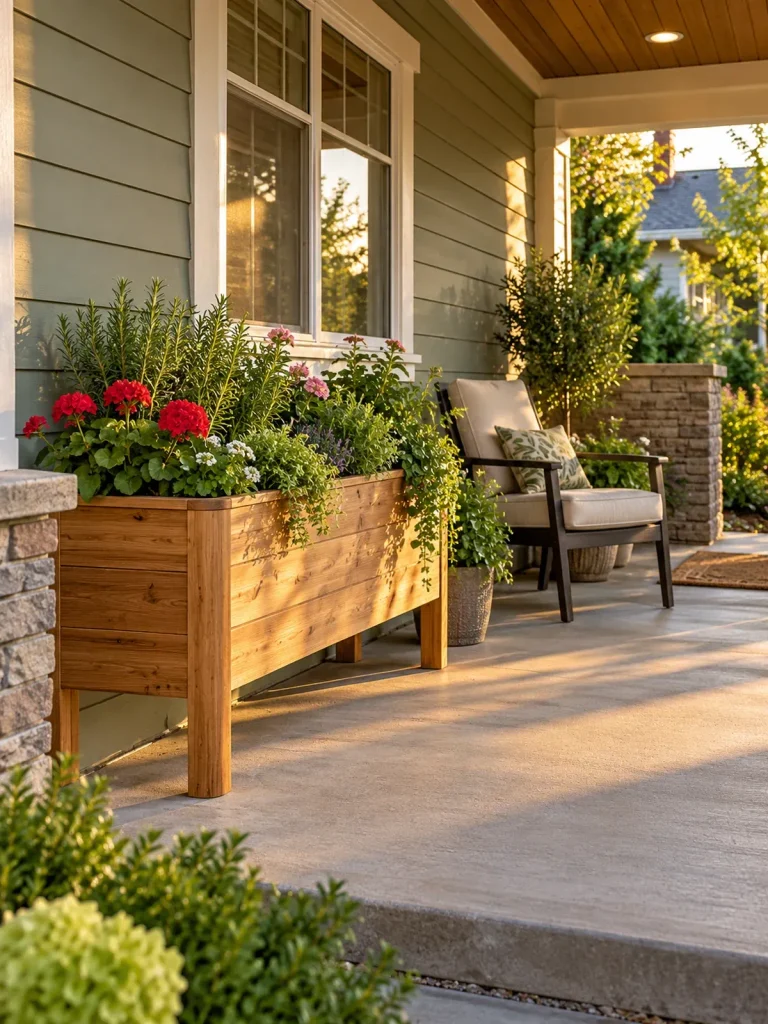
Raised planters bring flowers and herbs closer to view and can reduce the amount of bending involved in porch gardening. A compact cedar planter beside the wall adds warmth and color while leaving the middle of the porch open.
Set its height and depth around the resident’s comfortable reach. A standing-height box may not work for someone who gardens seated, and a deep planter can make the far edge difficult to maintain. Choose a stable design suitable for the loaded weight, and assess porch capacity where necessary. Give drainage water somewhere appropriate to go, and store watering tools away from the walking route.
14. A Delivery Drop Zone Beside the Door
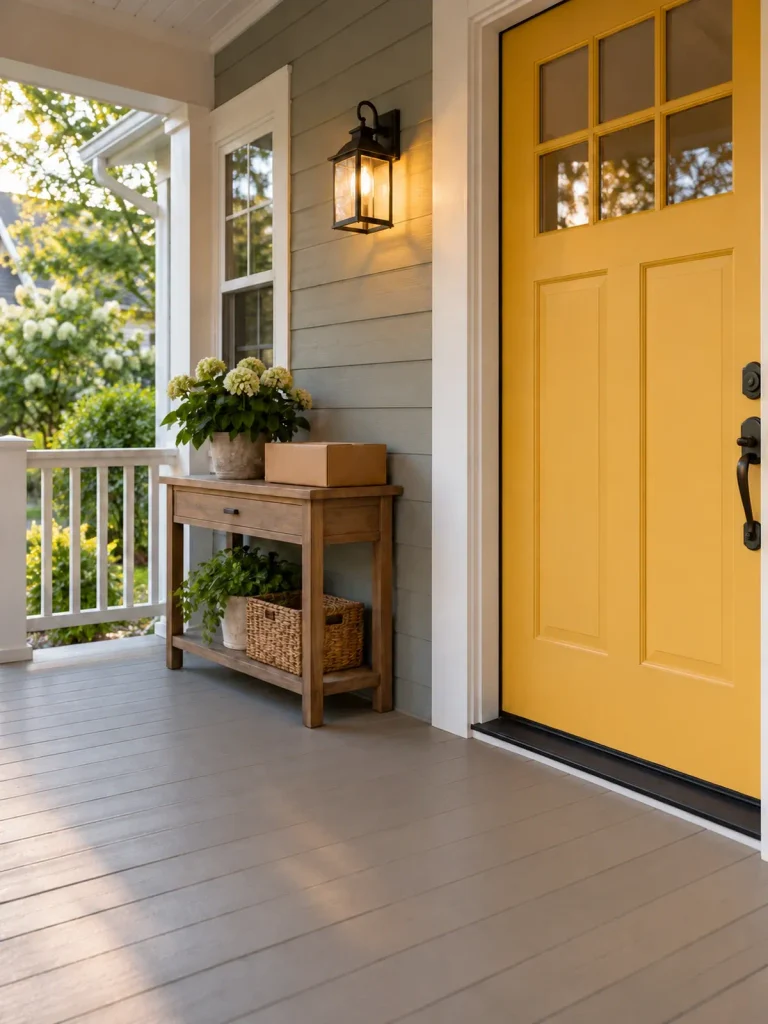
A dedicated parcel spot gives deliveries somewhere to land other than the middle of the porch. A modest console tucked against a side wall can coordinate with the front door while bringing small packages closer to a comfortable handling height.
Only add it where the door landing and approach remain generous. Place it outside the door swing, including a storm door, and avoid projecting corners beside a narrow passage. Use delivery instructions to explain the location. The shelf should be stable and rated for its intended load, but it is not a support rail. Heavy boxes may still need help to move, regardless of their starting height.
15. Low-Maintenance Borders That Stay Off the Walk
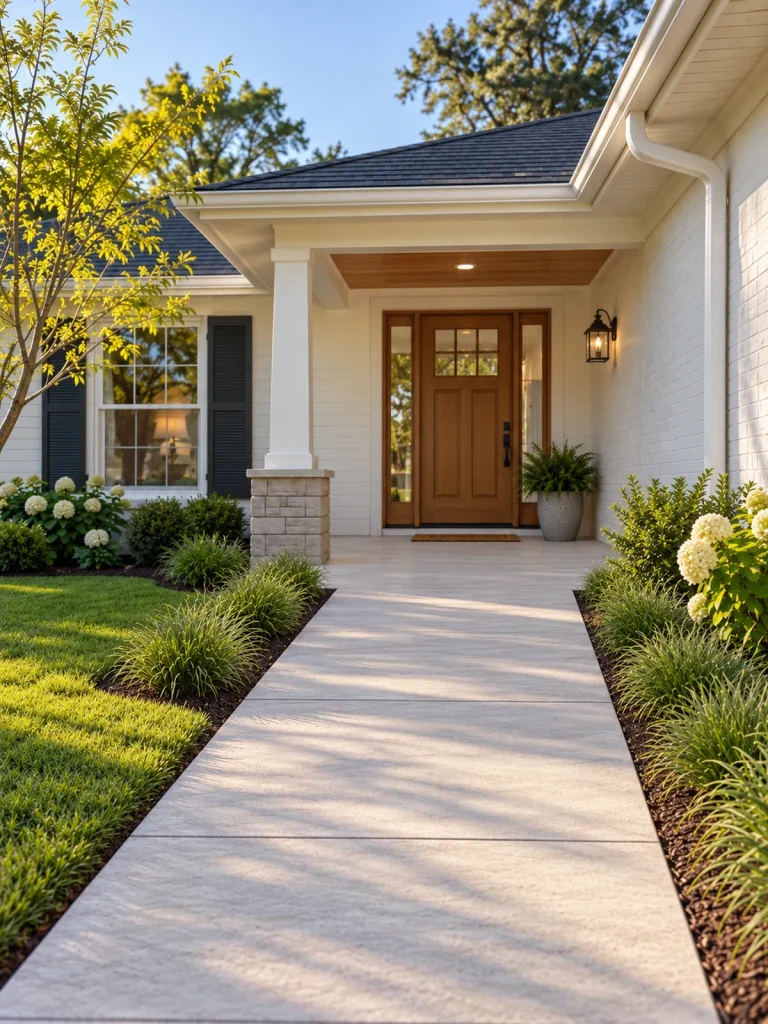
Low planting can frame the entrance without asking for constant pruning from a ladder or repeated lifting of heavy pots. A simple border of climate-suited grasses or compact perennials gives the porch a softer setting while keeping the pavement easy to follow.
Allow for mature plant size instead of arranging everything around nursery-pot dimensions. Keep foliage, fallen fruit, irrigation spray, and loose mulch away from the walking surface. Choose plants suited to local light and rainfall so upkeep stays manageable. Include the gutters and drainage outlets in the maintenance plan: a tidy planting bed is less useful if runoff leaves the approach wet or icy.
Choose Changes Around the Resident’s Daily Routine
Walk through a typical arrival with the person who uses the porch. Where do they pause, reach, turn, or set something down? Review the route after dark and after rain as well as on a sunny afternoon.
Address damaged surfaces, unstable rails, and obstructed access before spending on decorative extras. Then choose one comfort improvement, such as a suitable chair or a reachable planting area.
For substantial access changes, an occupational therapist can help identify individual movement needs, while an experienced accessibility contractor or designer can develop the construction details. Accessibility standards can inform a project, but they do not automatically establish the legal requirements for every private single-family home. Confirm applicable local rules. Build a simple maintenance routine around leaves, snow, lighting, drainage, and any loose fittings.
Frequently Asked Questions
What should I change first on a small porch?
Start with a clear walking route and usable door landing. Remove unnecessary furniture and floor clutter, then address repairs and lighting. A single chair and a wall-side planter may be enough decoration.
Does every aging-in-place porch need a ramp?
No. The right approach depends on the resident, the entrance height, and the site. A ground-level entry may need only modest changes, while another house may require a professionally designed ramp or a different accessible entrance.
Are rocking chairs a good choice?
Some residents enjoy them and use them comfortably. For someone who needs a steady surface while sitting or standing, a stationary upright chair with useful armrests may be a better match. Try the actual chair rather than relying on its style or label.
Can outdoor rugs stay on the porch?
A loose, curling, or shifting rug can interfere with walking or a mobility aid. Removing it is often the simplest option. If an entry mat is necessary, choose a secure arrangement that keeps edges and transitions from becoming obstacles, and inspect it regularly.
How can an accessible porch still look attractive?
Coordinate useful features with the house: simple dark handrails, a door color you enjoy, understated lighting, and planting outside the access route. A calm layout and a few intentional details can carry the design without crowding the porch.
A Porch That Works for the Years Ahead
Begin with the part of arriving home that feels most awkward today. Clear the route, repair a problem surface, or improve the lighting before choosing larger projects. Then add a comfortable seat and a little color where space allows. A porch planned around daily use can remain a pleasant place to spend time as needs change.