
You brought home one more plant, and now the front porch is starting to look like the next available growing space. The appeal is obvious: big leaves beside the door, vines softening the edges, and somewhere to sit with your coffee while surrounded by green. The challenge is making that abundance feel intentional without turning the entrance into an obstacle course.
These urban jungle front porch ideas are for plant lovers who want more than a pair of seasonal flowerpots. You’ll find ways to display a collection, build height, add privacy, and work greenery into the space you already have. Some suit a tiny city porch; others need a deeper covered area.
Start with your porch’s light, available floor space, and seasonal temperatures. Then borrow the layout that fits. A convincing porch jungle comes from healthy plants and thoughtful layers, not simply squeezing in as many pots as possible.
1. Palm-Framed Entryway
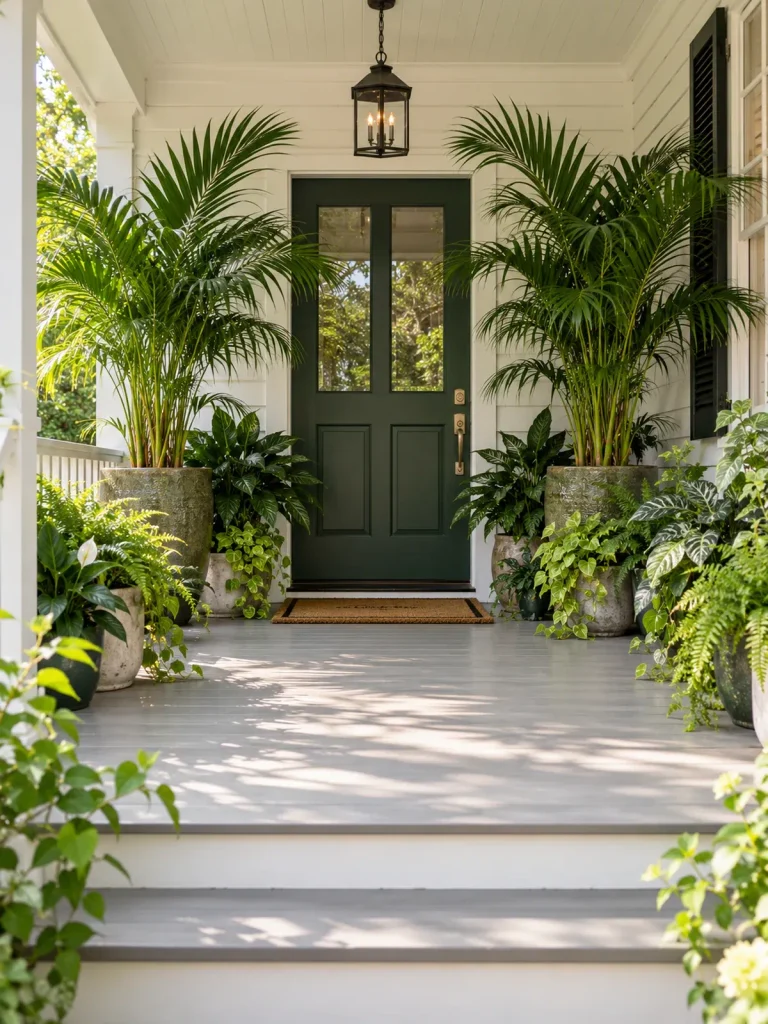
Two tall palms can give an ordinary doorway the feeling of a leafy passage. Set one substantial container on each side, then tuck smaller foliage plants around the outer edges rather than directly in front of the door. The repeated height brings order to an enthusiastic collection without making it feel sparse.
Choose a palm suited to the porch’s actual light and leave room for fronds to spread. On a sheltered porch, the effect can be lush with surprisingly few pots. Keep the doorbell, house numbers, and full door swing visible, and use containers you can relocate when cold weather arrives.
2. A Fern Canopy Above the Railing
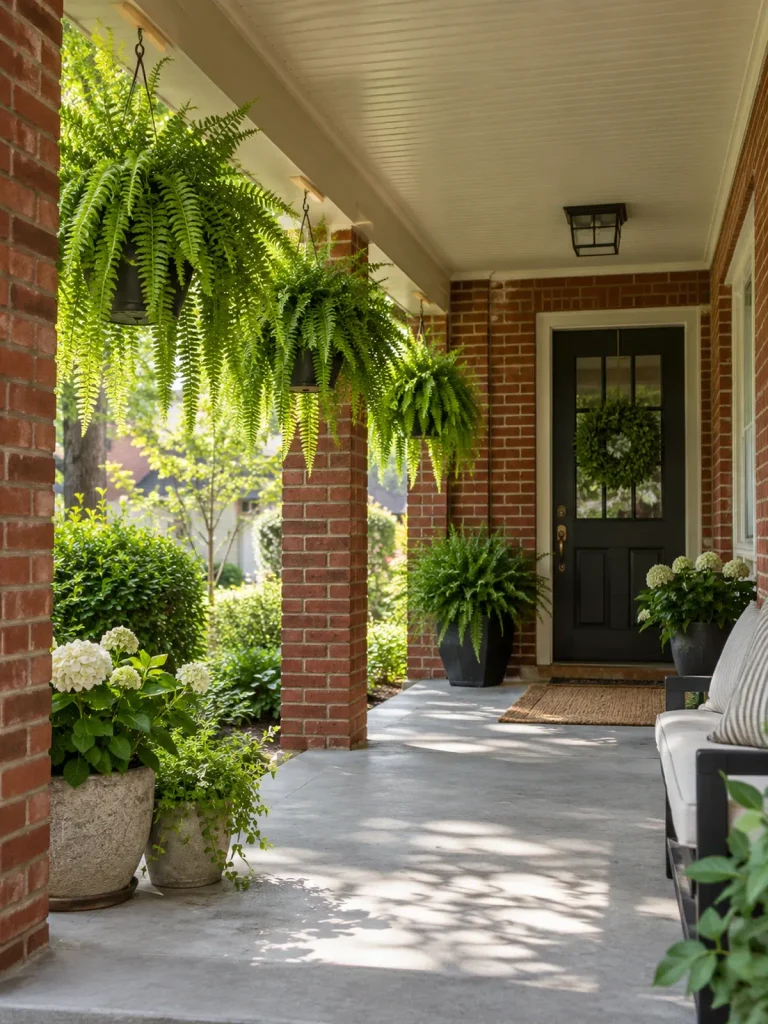
A row of hanging ferns turns the upper edge of a porch into a green canopy while leaving the floor available for sitting and walking. Boston ferns bring a soft, feathery texture that looks especially good against brick, painted beadboard, or simple white trim. Let each basket read as its own generous shape instead of squeezing them into a continuous tangle.
Hang baskets along the outer perimeter, away from anyone’s head and outside the door’s path. Use appropriate mounting hardware and check the support against the basket’s wet weight. Keep watering access manageable; a gorgeous fern that requires a balancing act will quickly become a chore.
3. A Collector’s Shelf of Leaf Shapes
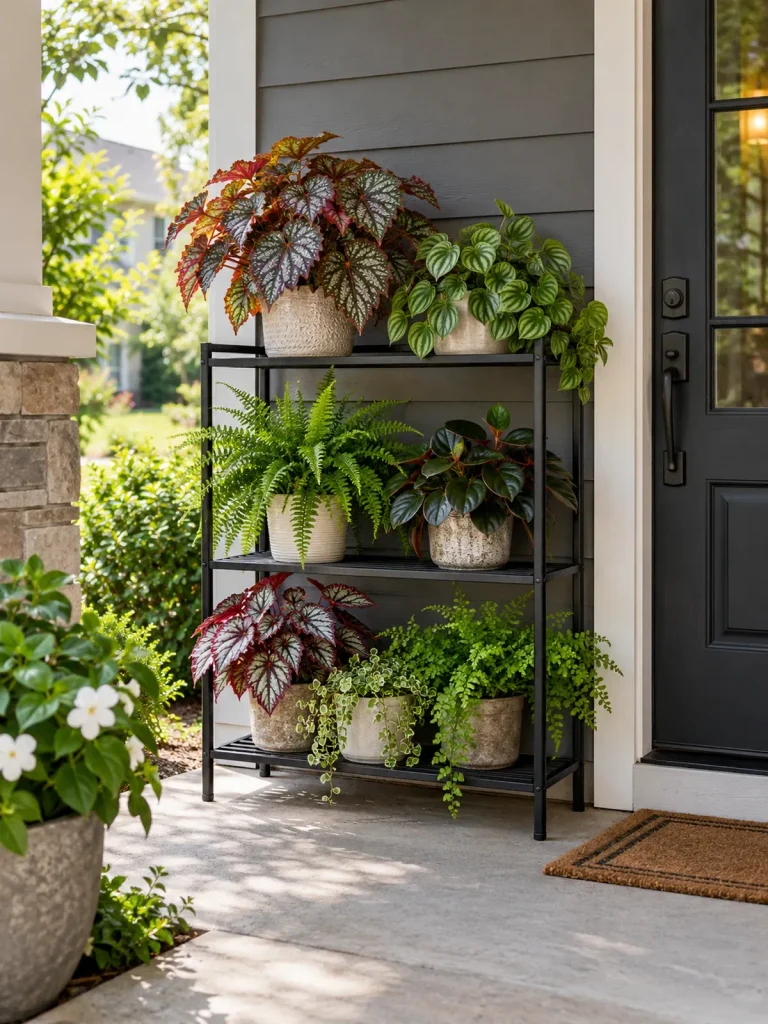
A plant shelf gives the small specimens in your collection a place to shine. Arrange compact begonias, peperomias, and ferns across a sturdy outdoor-suitable unit, mixing rounded leaves with rippled edges and fine fronds. Repeating a few pot colors keeps the display from looking like a temporary holding area.
Position the shelf against a sheltered wall where every tier receives usable light. Leave enough space above each pot for new growth, and rotate plants when the front row begins shading the back. A broad, stable base matters more than squeezing in another tier. Keep heavier containers low and secure the unit as its manufacturer directs.
4. A Monstera as the Main Event
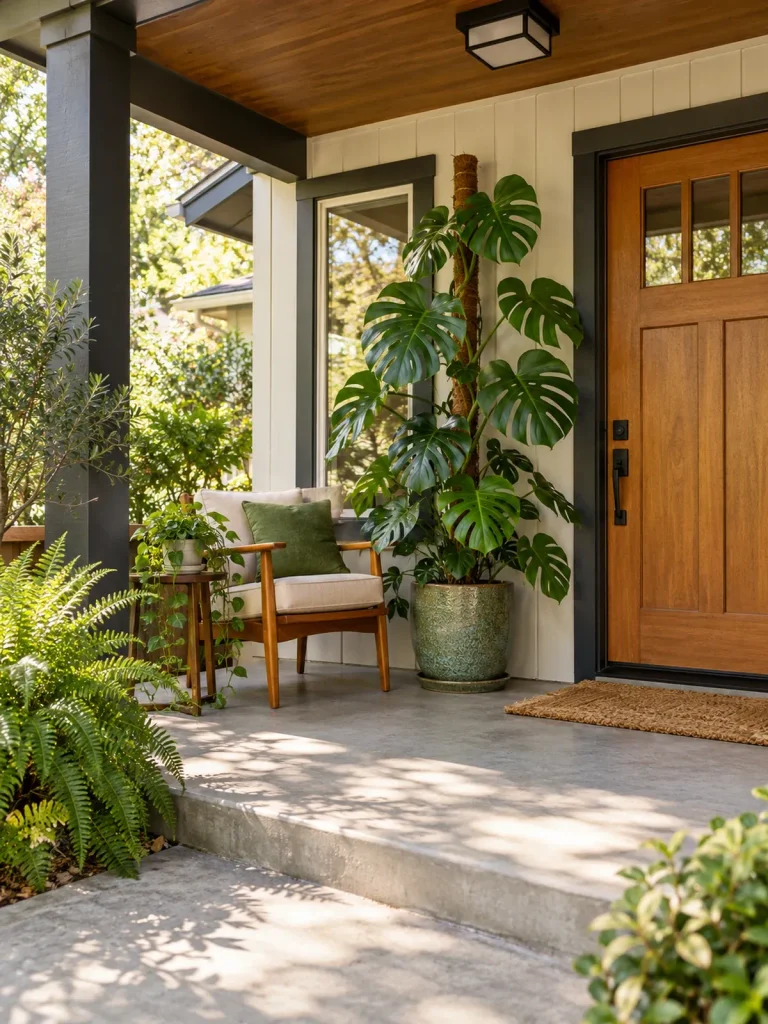
Let one established monstera carry the scene instead of surrounding the entrance with dozens of little pots. Its split leaves create a recognizable jungle silhouette, especially beside a quiet wall and a simple chair. A moss pole or other suitable support keeps the composition upright and gives a climbing plant somewhere to grow.
Place it where the porch offers bright, indirect light and shelter from strong wind. Leave generous space around the mature leaves so guests are not brushing through them. This approach suits a small covered porch when you want a dramatic plant moment without losing the entire floor to a collection of containers.
5. A Living Privacy Screen Beside the Seating
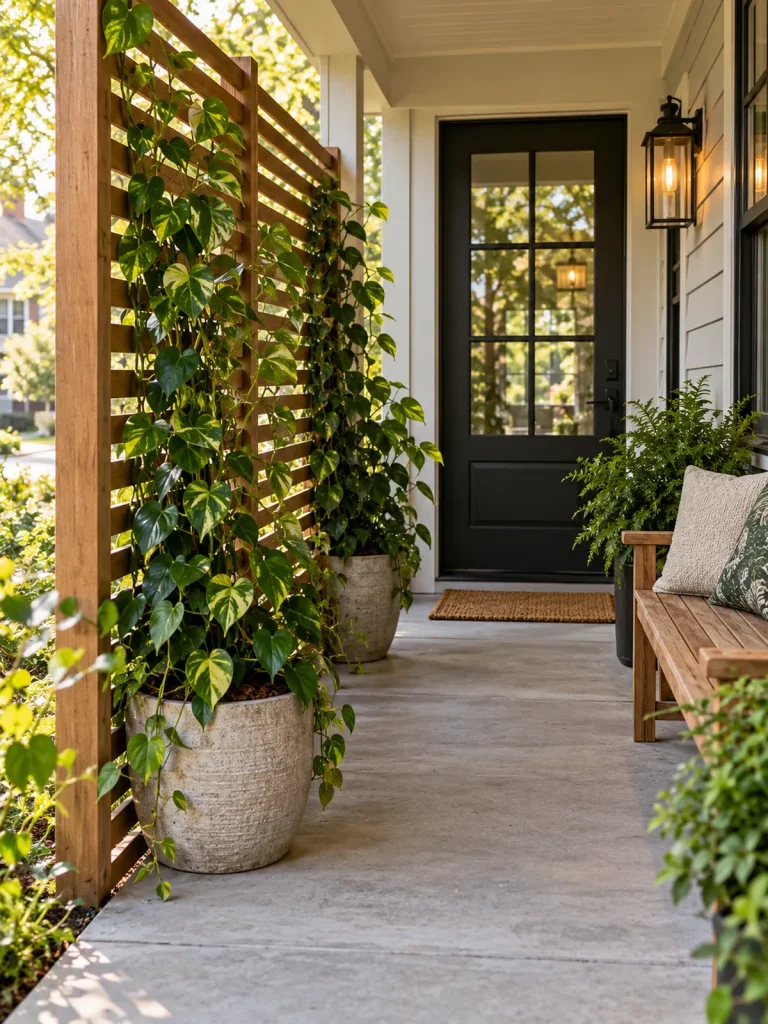
A leafy screen can soften the view of a neighboring driveway or sidewalk while making porch seating feel more enclosed. Start with a stable freestanding slatted panel, then train potted climbing plants onto suitable supports in front of it. The slats provide immediate visual structure while the foliage gradually fills in.
Keep the screen at the side of the sitting area rather than across the entrance. Choose climbers for the light available and guide stems before they wander into trim or gutters. A screen catches wind, so its size, placement, and anchoring deserve attention. Check rental restrictions before installing anything that attaches to the building.
6. A Bench Wrapped in Greenery
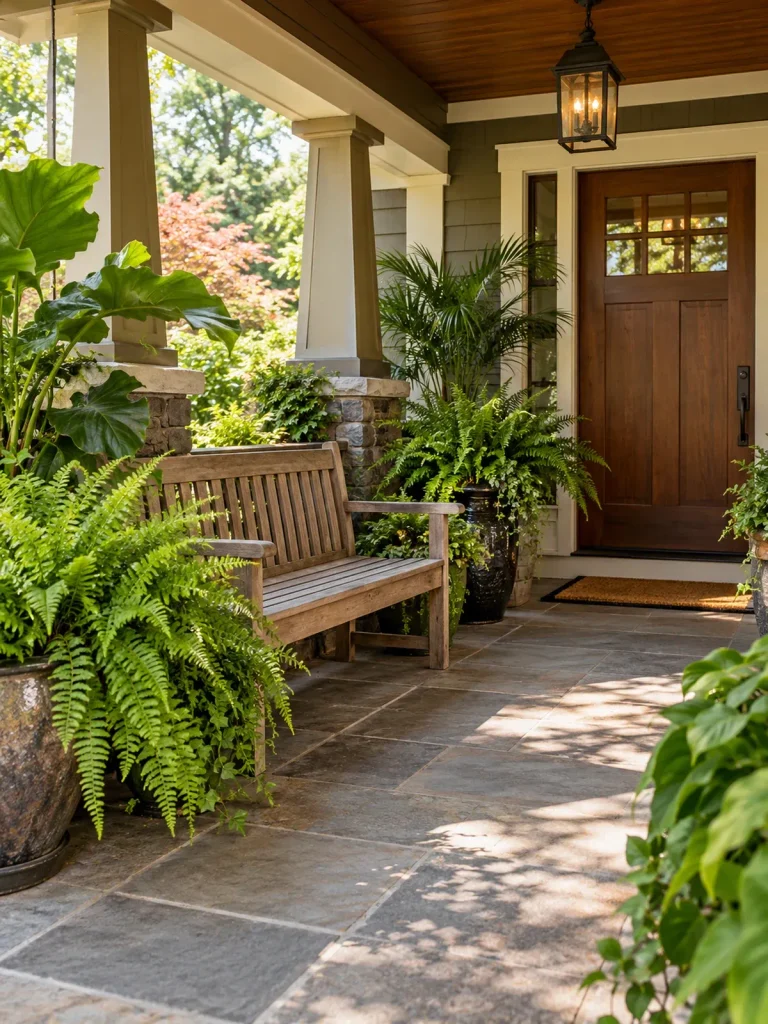
A bench becomes much more inviting when plants frame the place where you sit. Put taller foliage behind its outer corners and fuller ferns beside the legs, leaving the seat and approach open. Against a Craftsman porch or painted cottage wall, the mix feels collected and comfortable rather than formally landscaped.
Use fewer, larger containers closest to the bench so watering does not involve shuffling a dozen pots. Leave clearance for elbows and shoulders, and trim leaves that drape onto the cushion. Outdoor furniture should remain easy to wipe down. The goal is a spot where you can enjoy your plants, not a bench that has become another plant shelf.
7. One Big Mixed Foliage Planter
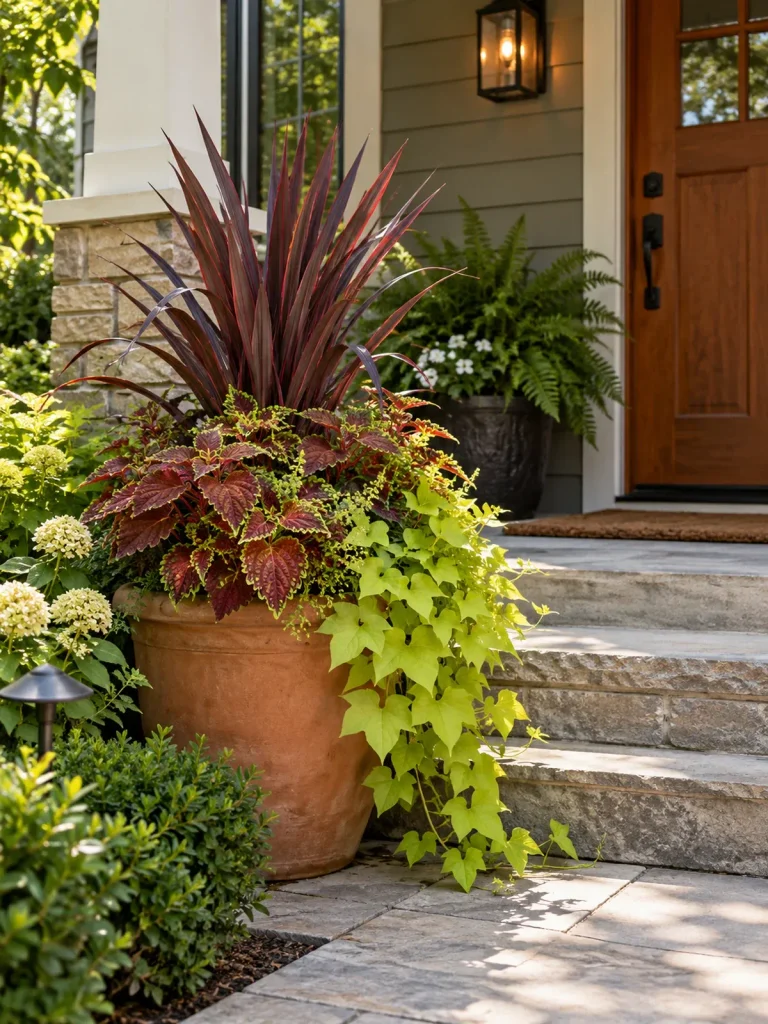
A broad mixed planter can deliver a generous jungle effect on a porch with little room for separate containers. Combine a strong upright plant, such as cordyline, with rounded coleus foliage and a trailing edge of sweet potato vine. The contrast creates several layers within one footprint.
Check that the selected varieties share compatible light and moisture needs before planting them together. Use a container with drainage and enough room for roots, then leave space for the summer growth you cannot see yet. Position the planter beside the entry rather than on a stair tread, and cut back trailing stems before they reach the walking route.
8. A Deep-Red and Lime Leaf Palette
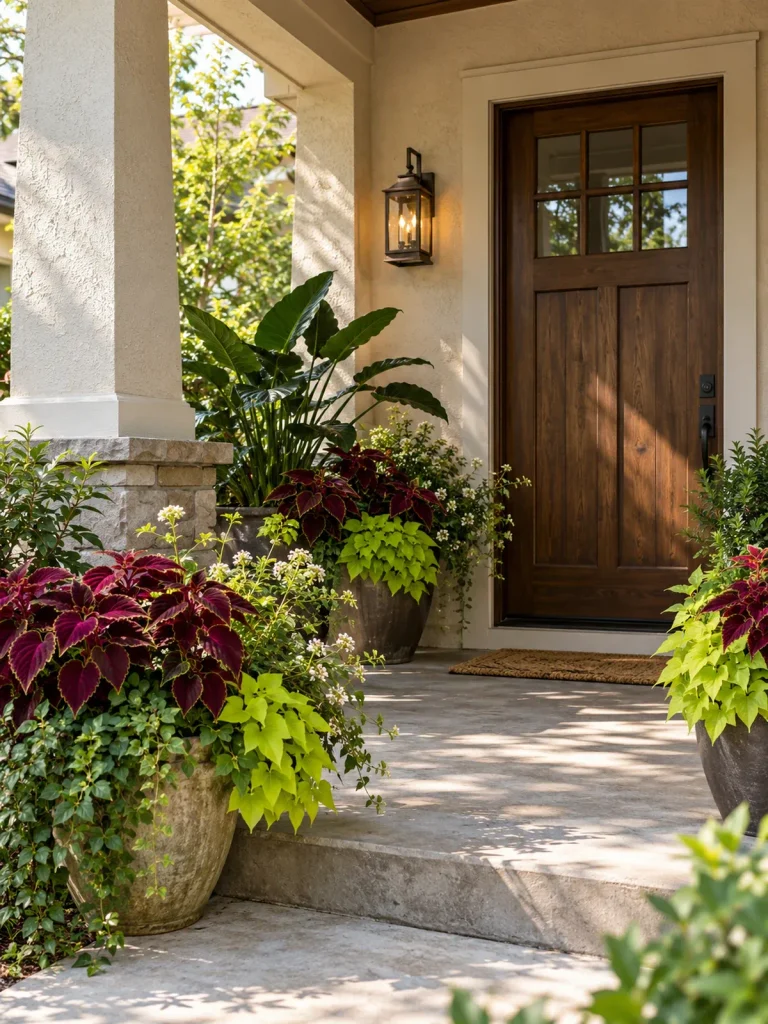
An urban jungle does not have to rely on green alone. Deep burgundy coleus, lime foliage, and a few dark green leaves can create a vivid porch palette without needing a mass of flowers. A plain cream or pale gray backdrop helps the leaf colors stand out.
Keep the pots relatively quiet so foliage supplies the contrast. Group plants by similar growing requirements, but use separate containers when their watering needs differ. Coleus varieties vary in how much sun they tolerate, so follow the tags rather than assuming every color behaves alike. This look works especially well when you want a plant collection that reads clearly from the sidewalk.
9. Terracotta Pots in Every Size
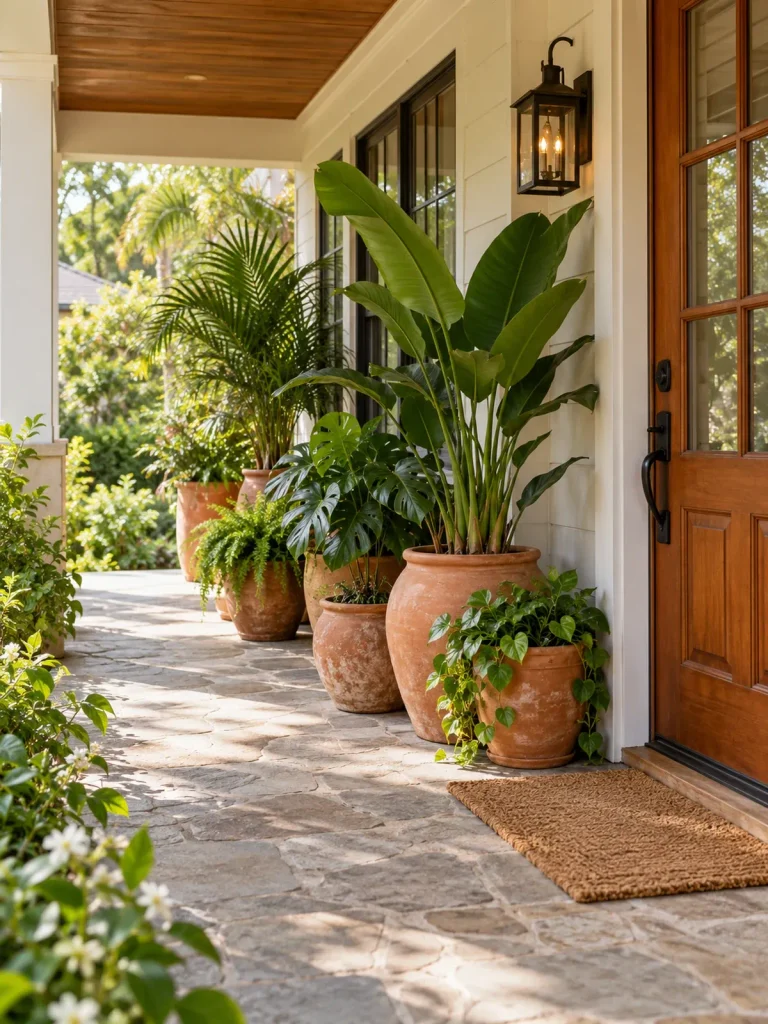
Terracotta gives a mixed plant collection an immediate visual connection. Tall cylinders, squat bowls, and familiar tapered pots can all belong together when their warm clay color repeats. On a wood or brick porch, the containers create an earthy base for glossy leaves, feathery fronds, and trailing stems.
Build the arrangement along one wall, with the biggest pots first and smaller ones filling the gaps. Porous clay can dry out quickly, so check moisture rather than watering the whole collection on autopilot. Use surface protection that allows drainage and inspect beneath containers regularly. In freezing climates, check whether the pots need sheltered winter storage.
10. A Black-and-Green Modern Jungle
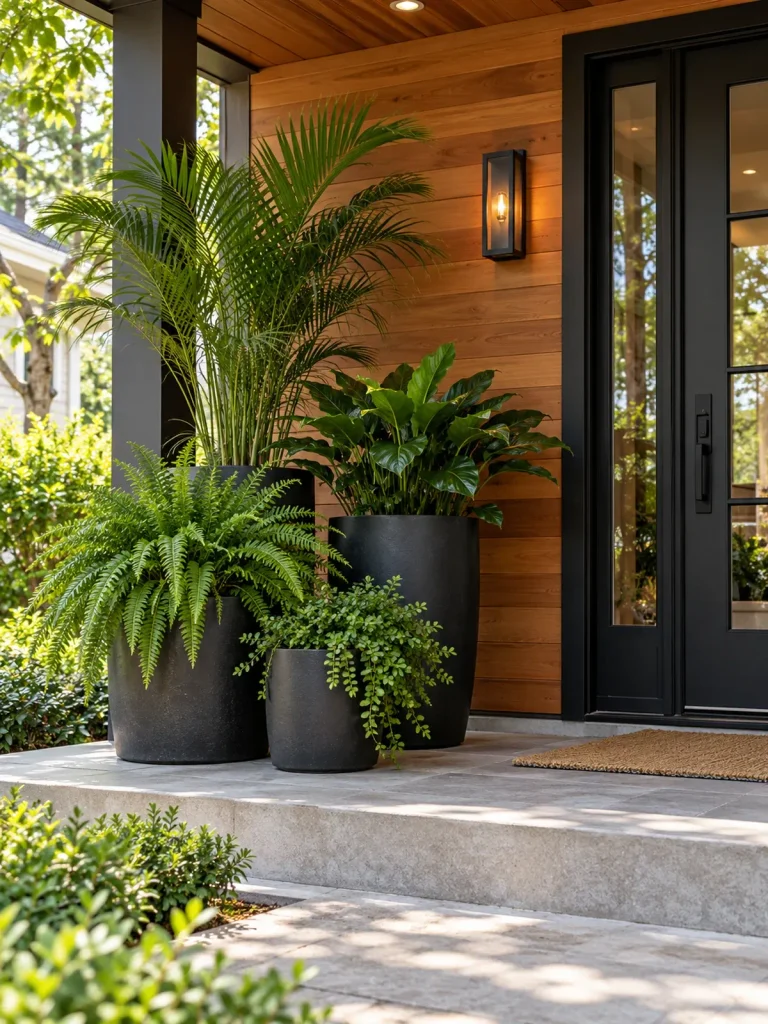
Matte black containers give abundant foliage a crisp outline. Pair a tall palm with a broad-leaf plant and a low fern, then repeat the dark finish across their pots. Against cedar siding, pale masonry, or a light-colored door, the greenery becomes the main source of movement and texture.
Choose substantial shapes rather than a crowd of tiny black pots. A few repeated containers can make a large collection feel intentional. Remember that dark pots exposed to strong sun can become hot, so consider their position and material. Keep shade-loving plants under the porch cover, and avoid assuming that a sleek container automatically suits every exposure.
11. A Sun-Loving Succulent Jungle
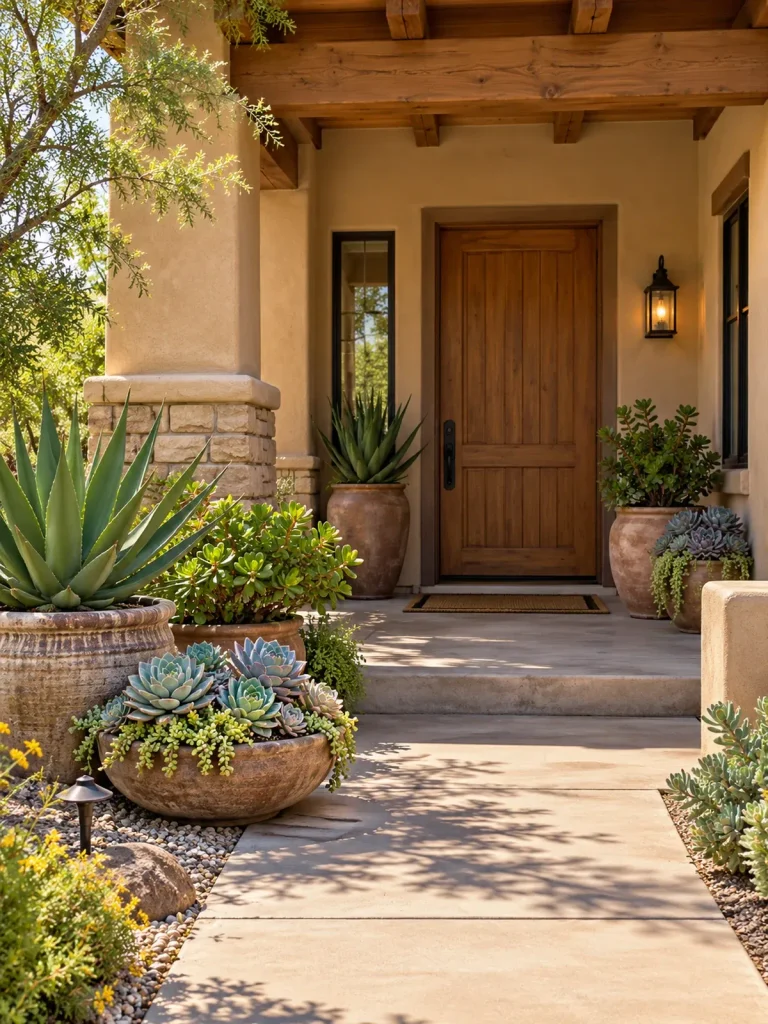
A sunny porch needs a different kind of jungle. Build density with branching jade plants, aloe leaves, and clusters of succulent rosettes instead of forcing shade-loving tropical foliage into harsh afternoon light. Varied plant shapes can still feel abundant when the palette stays mostly green.
Use containers with drainage and a potting mix appropriate for the plants. Select species for your local temperatures as well as exposure, and acclimate them gradually to stronger light. Keep pointed leaves well away from seating and the approach to the door. This version suits a bright, relatively dry setting, with a cold-weather plan for any tender plants in the collection.
12. A Climbing Vine Around One Porch Post
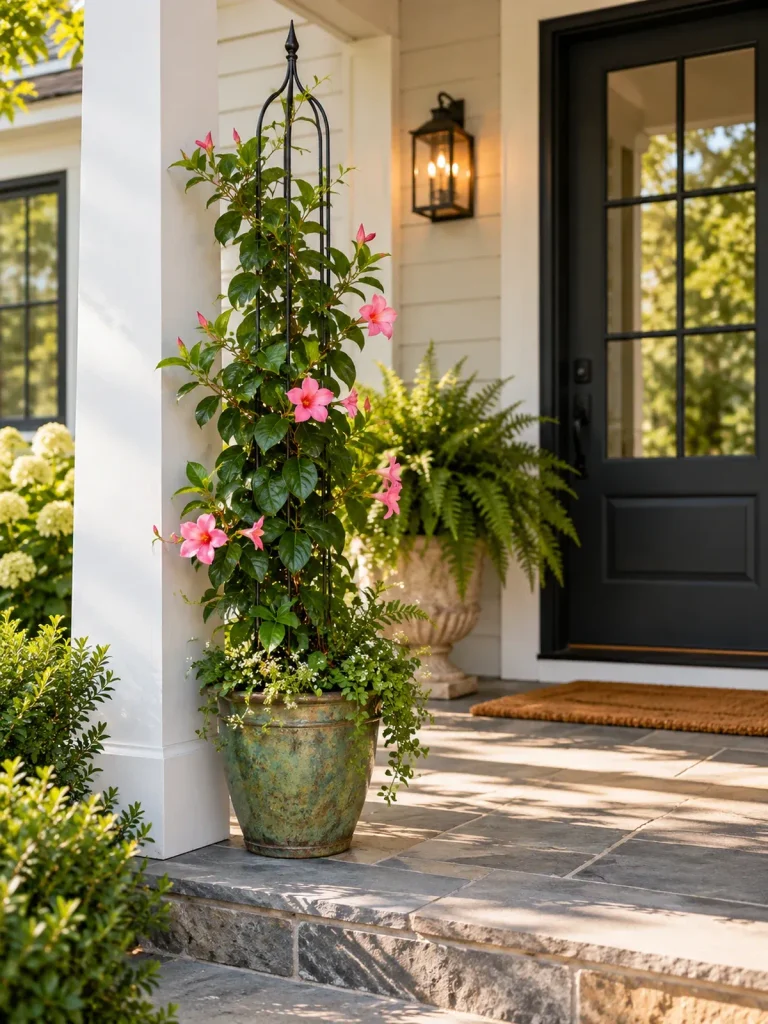
One leafy vertical accent can connect a porch floor to its roofline. Place a potted flowering vine, such as mandevilla, beside a porch post and train it onto its own slim trellis. A few flowers among the leaves add color without changing the plant-heavy character of the space.
Match the vine to the exposure and give its container enough stability for the trellis. Keep stems on their support instead of letting them grip siding, light fixtures, or the gutter. In much of the United States, tender vines need seasonal care rather than year-round exposure. Leave the porch post visible enough to inspect and maintain it.
13. Deep Railing Boxes That Spill Green
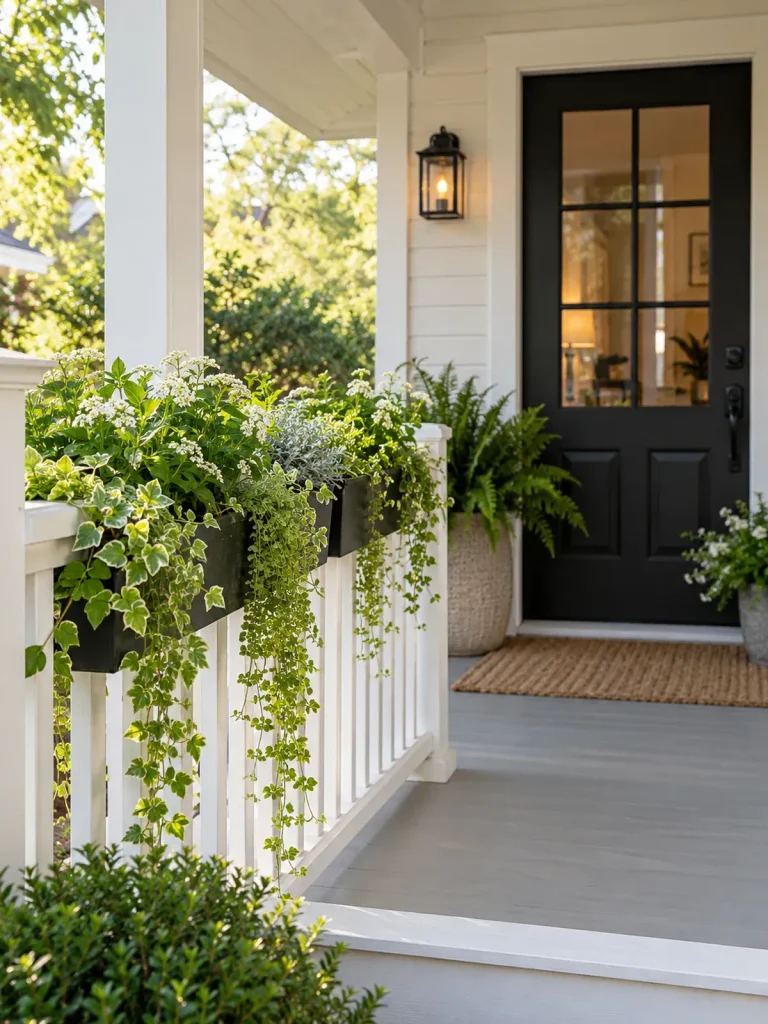
Deep railing planters bring foliage up to eye level without filling every corner of the porch floor. Use repeated boxes with upright leaves in the center and soft trailing growth along the edge. From the sidewalk, the porch looks surrounded by greenery; from the seat, you still have space to stretch your legs.
Choose hardware designed for the railing and the planter’s filled weight, and follow its installation instructions. Keep boxes clear of handrails needed for access. Plan for drainage so runoff does not soak the entry path or a neighbor’s space. Trim trailing stems before they obscure steps, and check exposed boxes more often during hot, windy weather.
14. A Plant Cart That Moves With the Season
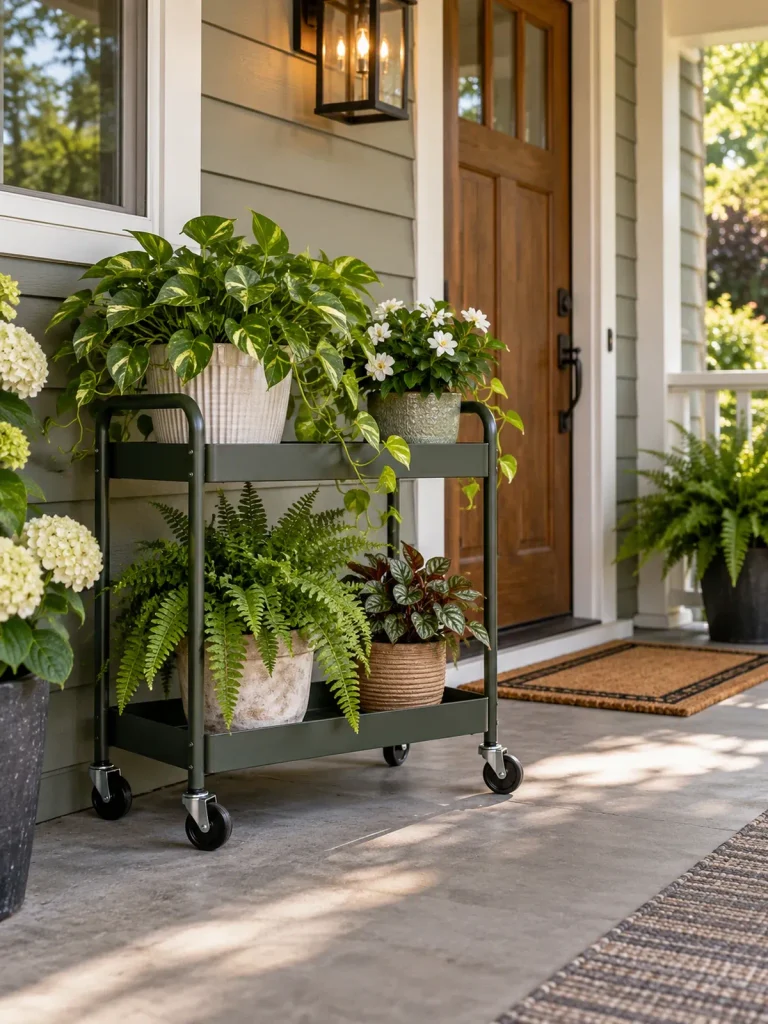
A rolling plant cart makes a porch collection easier to rearrange as the season changes. Place medium and small pots on an outdoor-suitable cart with a stable frame and locking casters. The display can sit beside the door during mild weather, then move under deeper cover when conditions demand it.
Keep the heaviest plants on the lowest shelf and stay within the cart’s load limit. Wheels help on a level surface, but they do not make stairs or uneven paving easy to navigate. Leave handles accessible and the route clear. A cart works best as a manageable collection, not a tower of pots stacked beyond its intended capacity.
15. A Staghorn Fern on a Sheltered Wall
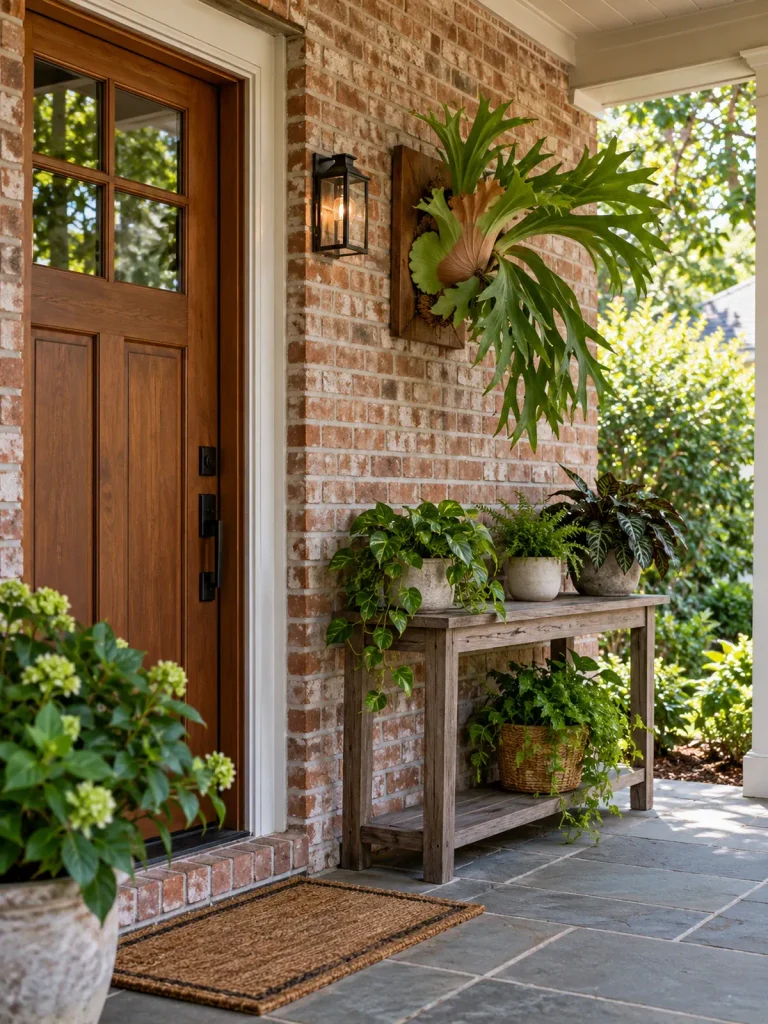
A mounted staghorn fern offers a different kind of jungle focal point: sculptural foliage displayed on a wall rather than another pot on the floor. Its antler-like fronds stand out against brick or simple siding, especially above a spare console with a few supporting plants.
Reserve this idea for a sheltered location with suitable filtered light. Mount the display using hardware and backing appropriate to its wet weight and the wall material. Water it where drainage will not damage the wall, then return it once excess moisture has drained. A mounted specimen needs access for care, so avoid placing it too high simply to fill an empty patch.
16. A Jungle Framing a Porch Swing
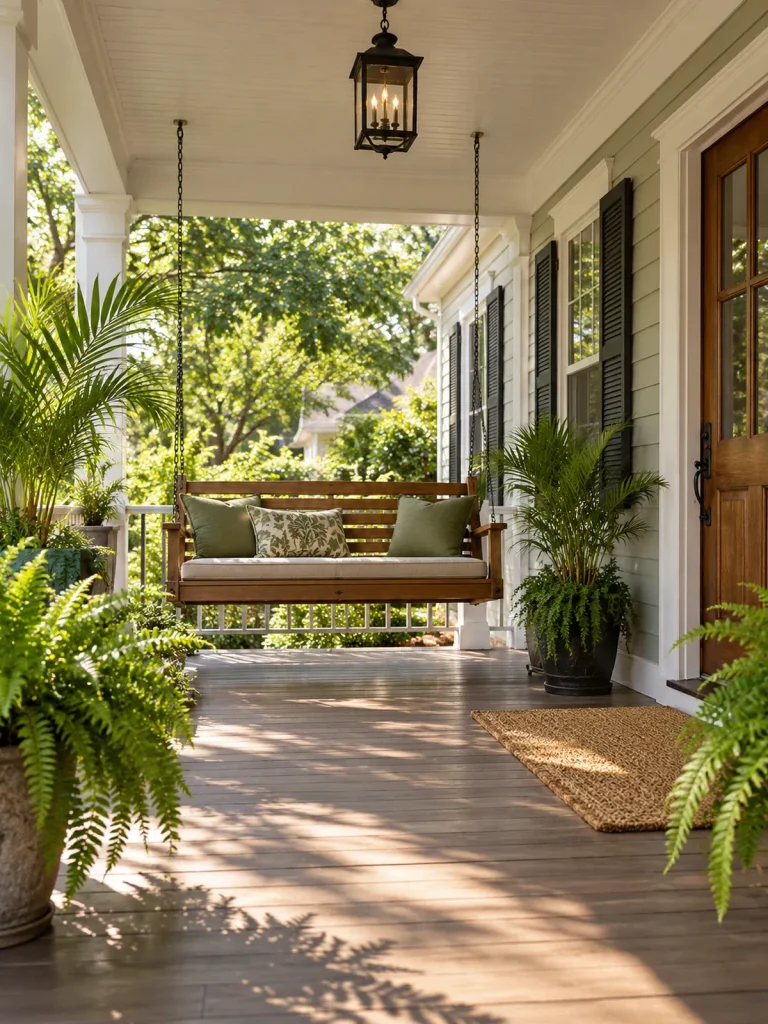
A porch swing surrounded by foliage feels like a small retreat within the entry. Cluster palms or other upright plants beyond its ends, then add lower ferns near the outer corners. The moving seat stays central while the leaves create a soft green background.
Start with a correctly installed swing and preserve its full travel area before adding containers. Keep fronds, hanging baskets, and pots away from the chains and moving seat. This arrangement belongs on a porch with enough depth for both swinging and circulation. If space is tight, use a fixed bench instead and borrow the same planted framing without crowding the path to the door.
17. A Window-Ledge Plant Gallery
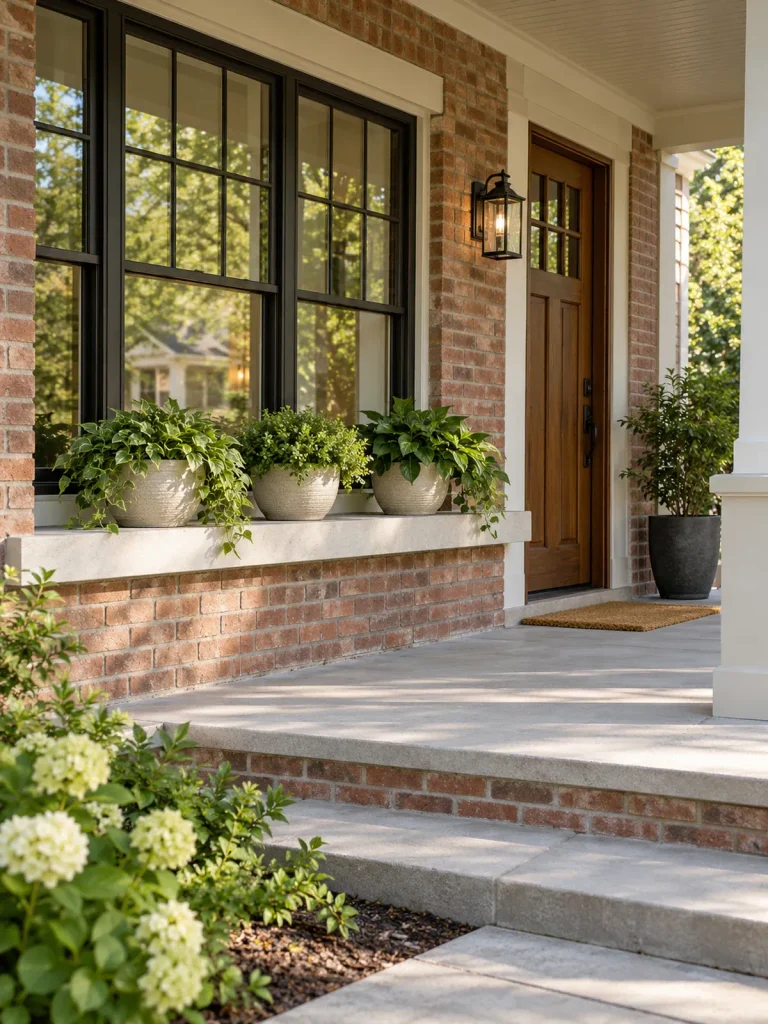
A narrow plant ledge under a porch window lets a collection of smaller foliage plants read as a deliberate gallery. Repeat a modest pot size, then alternate leaf shapes along the line. From a side angle, the display adds depth without taking over the entire porch.
Use an existing broad architectural ledge, a stable freestanding unit, or a properly installed shelf rather than balancing pots on narrow window trim. Keep the window operable and avoid blocking vents. Individual saucers can make maintenance easier, but empty collected water and check the surface underneath. This arrangement suits a sheltered wall where small pots receive enough light and are easy to lift for watering.
18. A Cascading Pothos Column
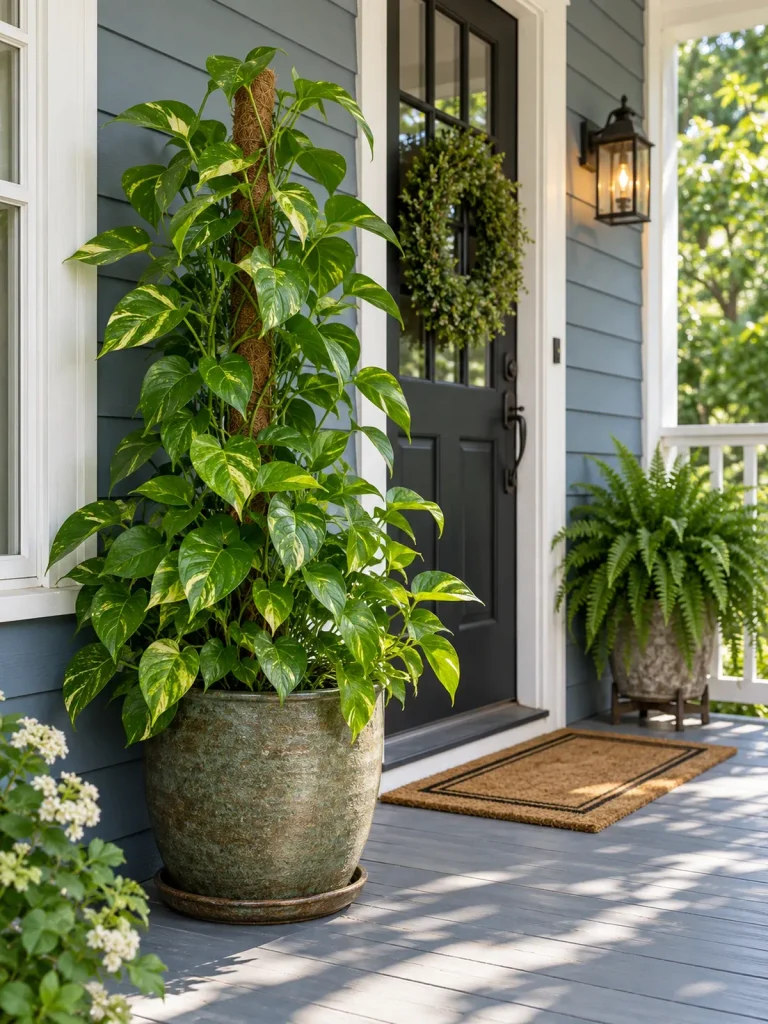
A pothos trained upward can give a small porch a concentrated column of green. Set a substantial pot near a sheltered wall and guide the stems around a sturdy support. Let a few shorter vines trail over the pot’s edge while keeping the longer growth within the display.
The upward shape provides height without requiring several tall containers. Choose a shaded or indirectly lit position, and introduce an indoor plant to outdoor conditions gradually. Check ties as stems grow so they do not tighten into the plant. Keep the support stable and prune stray vines before they reach the doormat, door handle, or nearby chair.
19. A Circular Plant Stand in an Empty Corner
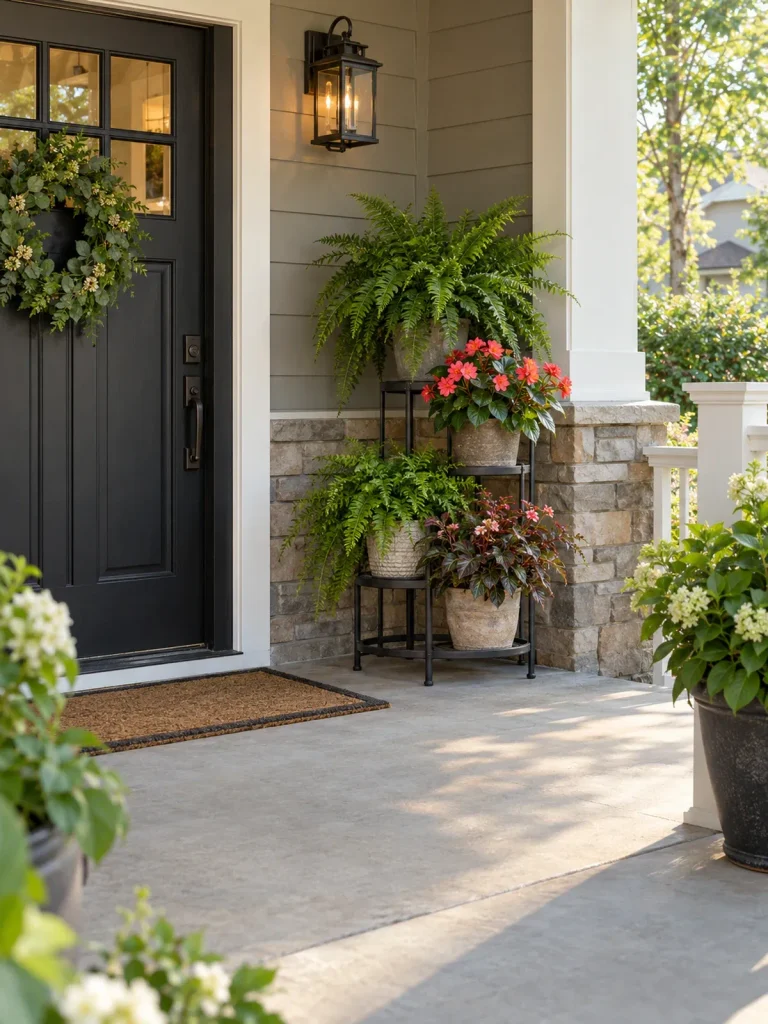
An empty corner can hold a surprisingly generous display when the stand fits its shape. A round tiered plant stand lets compact ferns, begonias, and other leafy specimens face outward rather than disappearing behind one large pot. The curved arrangement softens a porch dominated by straight boards and railing lines.
Choose a wide-based stand intended for the setting and its expected load. Put heavier pots on lower tiers and give each plant enough headroom. A sheltered corner may be dimmer than it looks in a photograph, so check the light before filling every level. Leave room to reach the wall and sweep fallen leaves beneath the display.
20. A Leafy Container Border Along the Porch
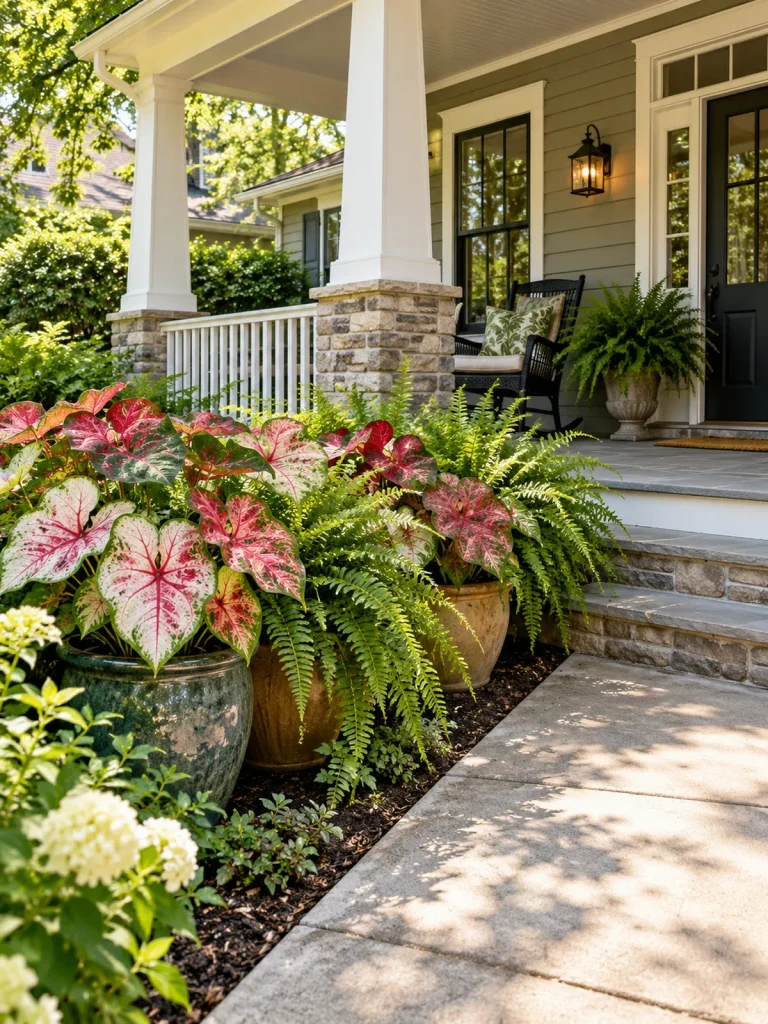
Extend the jungle beyond the porch floor with a container border along the garden-facing edge. Broad caladium leaves and soft ferns can link the entry to the planting bed while leaving room above for seating. A low porch benefits from this approach because the foliage feels connected to the architecture.
Keep the pots on firm, level ground and out of the drainage path from the roof. Use plants suited to the exposure and your seasonal temperatures. Group the containers with enough room to reach them for watering. The front steps should remain visually separate, with no leaves covering the landing or disguising the edges of the treads.
21. A Sheltered Orchid and Fern Nook
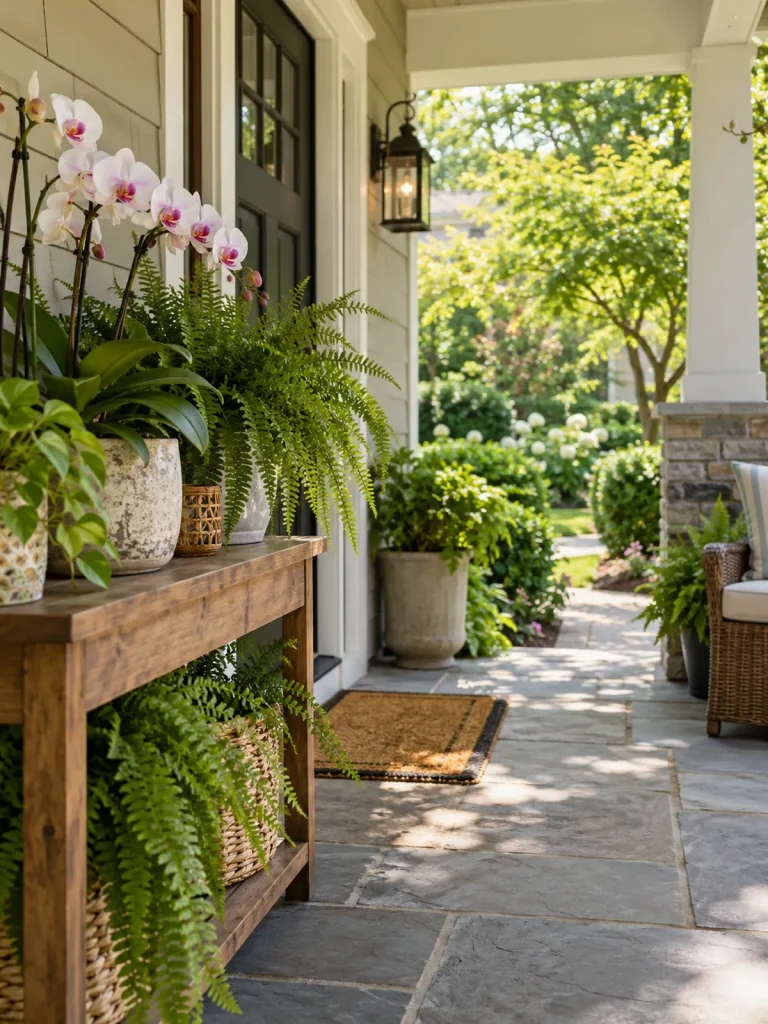
A sheltered orchid nook adds a collector’s touch to a porch jungle. Place blooming moth orchids on a simple console, with fern fronds nearby to soften the arrangement. The flowers become accents within a leafy scene rather than the basis of a traditional porch flower display.
Use bright shade and a protected spot appropriate for the particular orchids you own. Keep each plant in its own suitable potting medium and container; the ferns and orchids do not need identical watering. Avoid strong direct sun, wind exposure, and temperatures outside the plants’ tolerance. This is a seasonal display for many US porches, with the plants returning indoors when conditions change.
22. A Leafy Entry in Blue-and-White Pottery
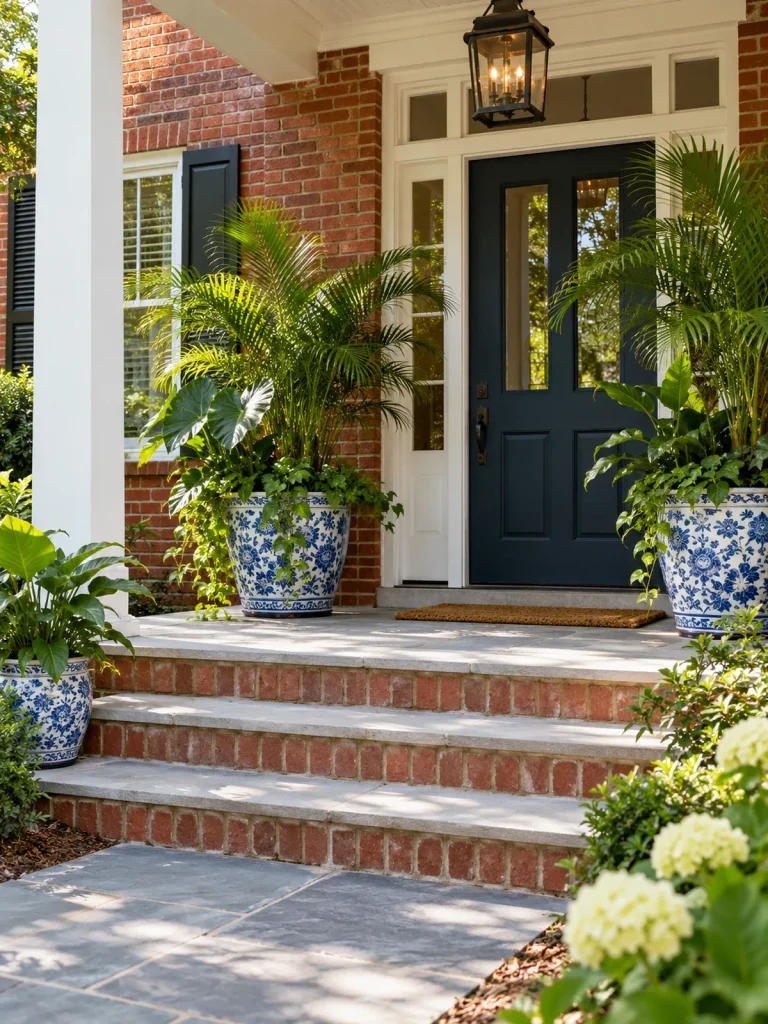
Blue-and-white pottery gives a leafy porch collection a decorative anchor. Repeat the colors in two or three substantial containers, then use the plants for height and fullness. Palms and broad leaves look especially striking against traditional brick, a painted door, or simple white trim.
Keep patterns related without requiring every pot to match exactly. Check whether each ceramic vessel can drain or needs a removable nursery pot inside. Empty collected water instead of leaving roots sitting in a decorative cachepot. On an exposed porch, also check the container’s suitability for outdoor use and freezing weather. Let the foliage remain generous enough to balance the patterned surfaces.
23. Giant Leaves on a Small Porch
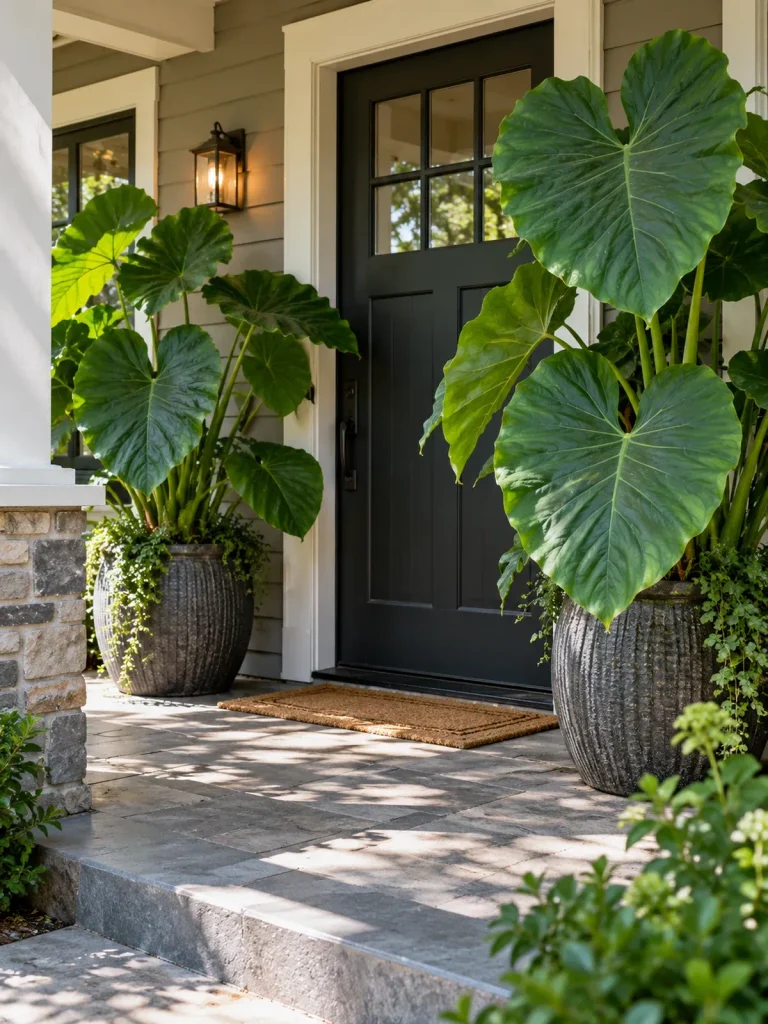
Giant leaves can make a compact porch feel richly planted without a huge number of pots. A pair of elephant ear plants provides an oversized, almost architectural silhouette against simple siding. Keeping the containers plain helps the broad leaves carry the scene.
Choose a variety whose mature size actually fits the space; some grow far beyond what a small entry can accommodate. Site the plants according to their particular light requirements and protect tender growth from strong wind. Leave room for the full spread of the leaves, not just the pots. On a narrow porch, one specimen may give the same effect while preserving a comfortable route inside.
24. A Plant-Care Console That Earns Its Space
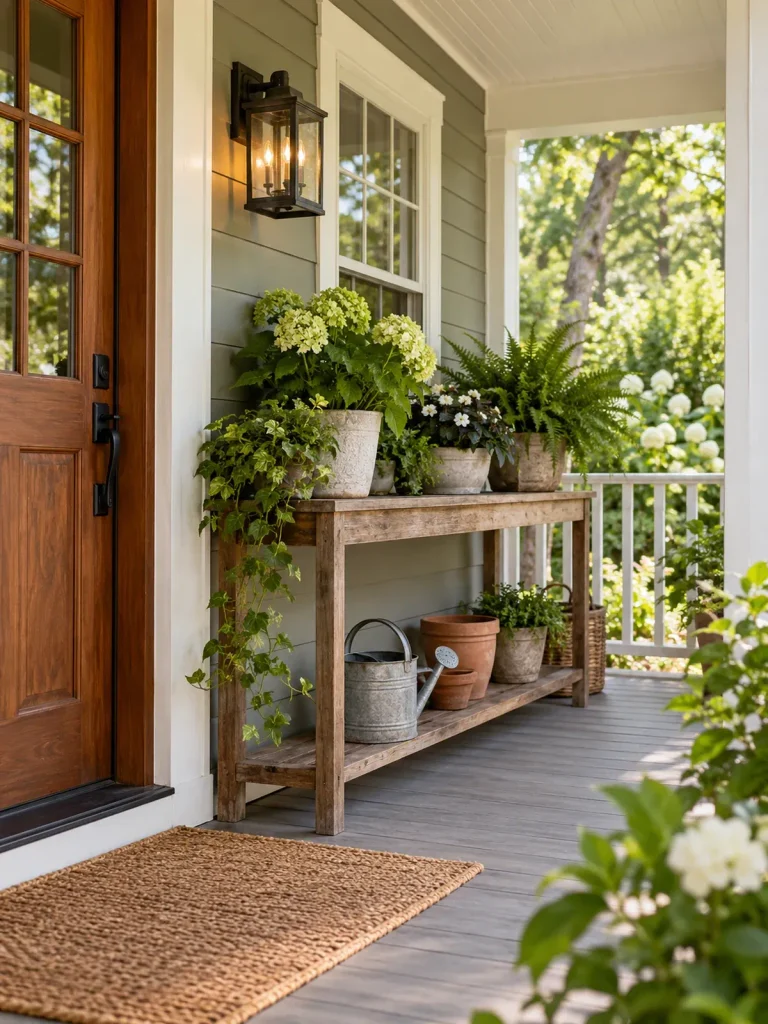
A slim plant-care console can be part of the styling rather than a pile of gardening supplies by the door. Display a few leafy plants across the top, then use the lower shelf for a watering can, spare saucers, and neatly nested empty pots. The result supports a larger collection without letting maintenance clutter take over.
Choose furniture appropriate for the porch’s exposure and protect the surface from repeated wetting. Store potting mix in a closed container elsewhere if the console cannot keep it dry. Leave enough open space to lift and inspect each plant. This setup suits plant lovers who want the porch to remain easy to tend.
25. An All-Green Evening Retreat
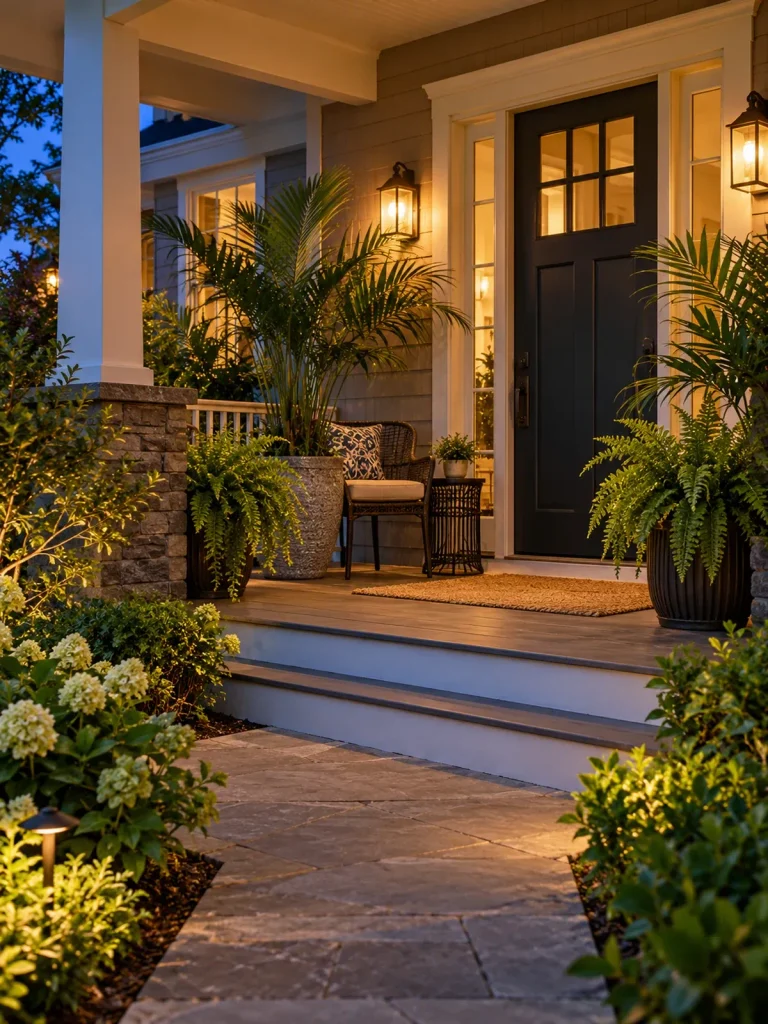
Warm evening light can reveal a different side of a dense plant collection. Group palms and ferns near existing porch sconces so the leaves catch gentle highlights and cast soft shadows. A simple chair gives the scene a purpose beyond displaying pots.
Keep the entry and steps clearly lit, with foliage trimmed away from fixtures. Use outdoor-rated lighting installed as directed, and keep cords out of the walking route. Ordinary decorative lighting does not replace the daylight plants need to grow. Plan the arrangement around healthy daytime conditions first, then use the evening view to decide which foliage deserves the most visible position after dark.
Build the Jungle Around Your Porch’s Conditions
Spend a day observing where sunlight actually lands before choosing plants. The bright outer edge and the shaded wall can behave like different growing spaces. Arrange plants with similar needs together, while keeping individual pots accessible for inspection and watering.
Introduce indoor-grown plants to outdoor conditions gradually in a sheltered, shaded spot. Abrupt changes in exposure can scorch foliage. For most houseplants, University of Minnesota Extension advises waiting until nighttime temperatures stay consistently above 50°F, but check the needs of your particular plants; some require warmer conditions. Source: UMN Extension
Use containers with drainage holes and keep nursery pots from standing in water inside decorative outer pots. Check moisture regularly instead of assuming rain reaches plants under a roof. Source: Illinois Extension
Before adding another layer, walk from the steps to the door carrying a grocery bag. Check the door swing, seating access, and room to reach every pot. Plan indoor winter space for tender plants before the collection outgrows it.
Frequently Asked Questions
Can I create an urban jungle on a very small front porch?
Yes. Choose one tall focal plant, a compact shelf or vertical support, and a few smaller pots. Keep the walking route open and use the walls or corners before adding more containers to the floor.
Which plants should I choose for a shaded porch?
Depending on the amount of indirect light and your climate, options include ferns, pothos, philodendrons, and suitable palms. Deep shade still limits growth, so match the specific plant’s requirements rather than treating every covered porch as the same environment.
Can the plants stay outside all winter?
Only if the species and container conditions suit your local winter. Many tropical porch plants need to come indoors before cold weather. Check individual temperature tolerances, inspect for pests, and decide where the plants will live before bringing home large specimens.
How do I keep a large porch collection manageable?
Group plants by care needs, leave room to lift each pot, and keep a watering can nearby. A few larger containers often take less rearranging than many small ones. Check moisture individually, since sun, wind, pot size, and material change how quickly containers dry.
How do I plan the collection around children or pets?
Identify each species and check its suitability for your household before buying. Place fragile or unsuitable plants beyond reach and keep heavy pots stable. Do not assume a high shelf is enough protection if a child or animal can climb or pull on trailing growth.
Choose One Corner and Let It Grow
Start with the part of your porch you use most: the doorway, a favorite seat, or an empty sheltered corner. Add one clear focal point, then build around it with contrasting leaf shapes and a container palette you enjoy. Leave room for both new growth and everyday life. A porch jungle should give you somewhere to enjoy your collection, with enough access to keep it thriving.