
If craft supplies keep taking over the dining table, the problem may not be how much you own.
You may simply need a workspace that supports the way you craft.
The most useful small craft room ideas combine a stable work surface, reachable storage, good lighting, and enough room to move comfortably.
This collection includes closet workstations, corner desks, folding tables, mobile carts, sewing stations, and shared-room layouts.
As you browse, consider what you make most often, how much surface area each project requires, and where unfinished work will go between sessions.
Those details will help you choose a craft room setup that stays functional after the initial organizing is finished.
1. One-Wall Craft Station With Pegboard Storage
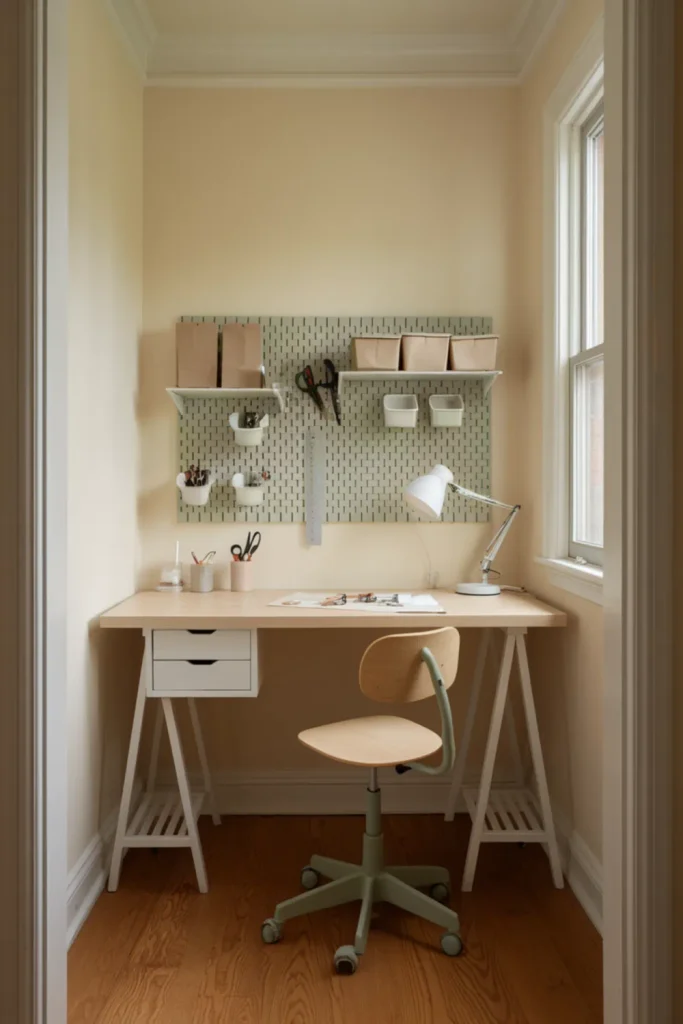
When tools keep spreading across the worktop, a one-wall station gives everything a defined place.
The pale oak desk and sage pegboard keep the setup visually light, while hooks, cups, and baskets hold scissors, rulers, and other everyday supplies within reach.
Keeping storage vertical also leaves more open floor space in a small craft room.
Arrange frequently used tools between shoulder and eye level rather than filling every peg.
Heavy items belong in lower drawers, and the pegboard should be secured with hardware suited to the wall type and expected load.
2. Closet Craft Room With Bifold Doors
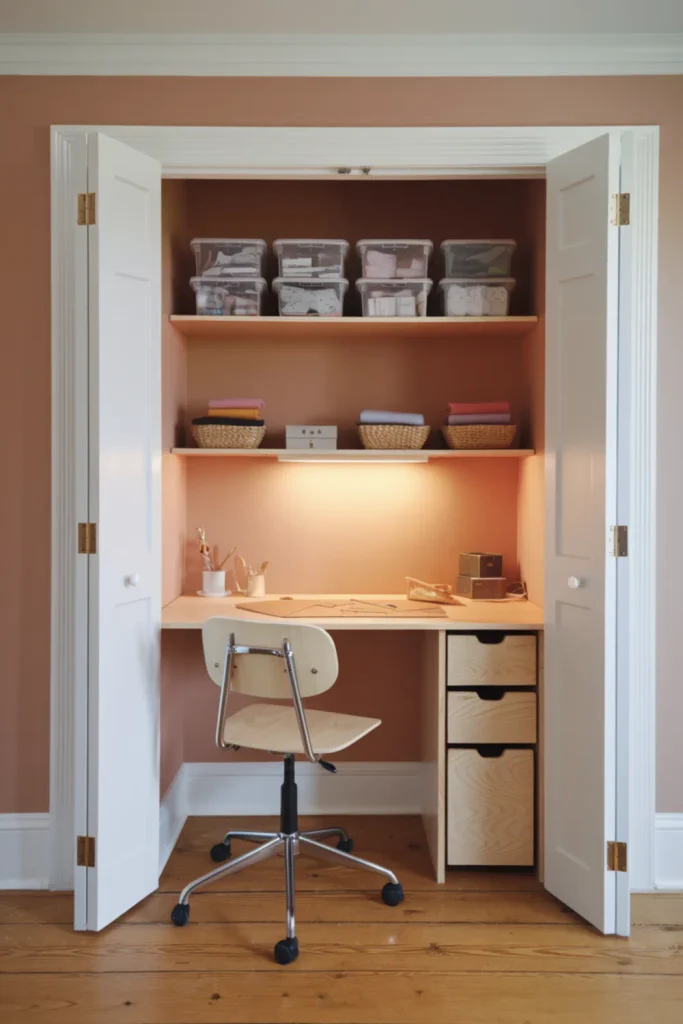
Before converting a closet, check where the chair will sit while the doors are open.
This reach-in setup uses a fitted desktop, shallow shelves, and compact drawers to create a craft room that can disappear when the room serves another purpose.
The dusty blush wall gives the interior definition without requiring extra decor.
Keep shelves shallow enough to preserve headroom and prevent them from shading the work surface.
An under-shelf light can help with detailed projects.
Measure the folded bifold doors as well as the closet opening so they do not block storage or chair movement.
3. L-Shaped Corner Craft Desk With Drawer Storage
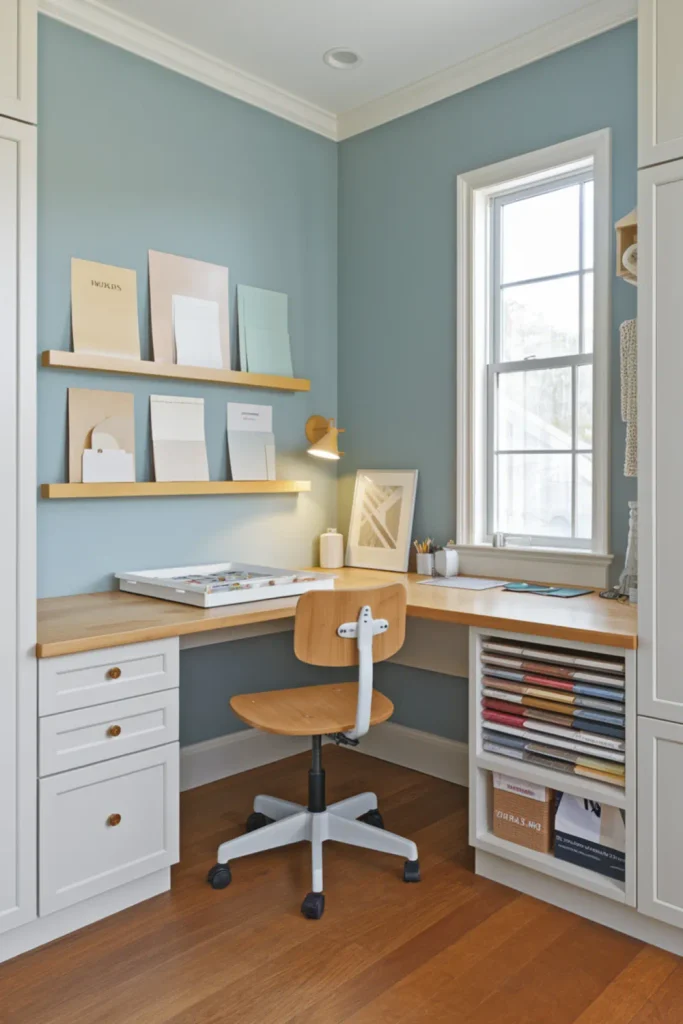
Clear chair movement matters more than squeezing another cabinet beneath an L-shaped desk.
Here, the longer surface handles active projects while the shorter return provides room for paper, tools, or materials waiting to be used.
White furniture, blue walls, and mustard accents give the compact workspace a cheerful but controlled palette.
Place drawer units near the outside ends rather than crowding the inside corner.
That keeps the knee area open and lets you move between both surfaces.
In a tight craft room layout, rounded desktop corners can also make turning and reaching more comfortable.
4. Window-Facing Craft Desk With Low Side Cabinets
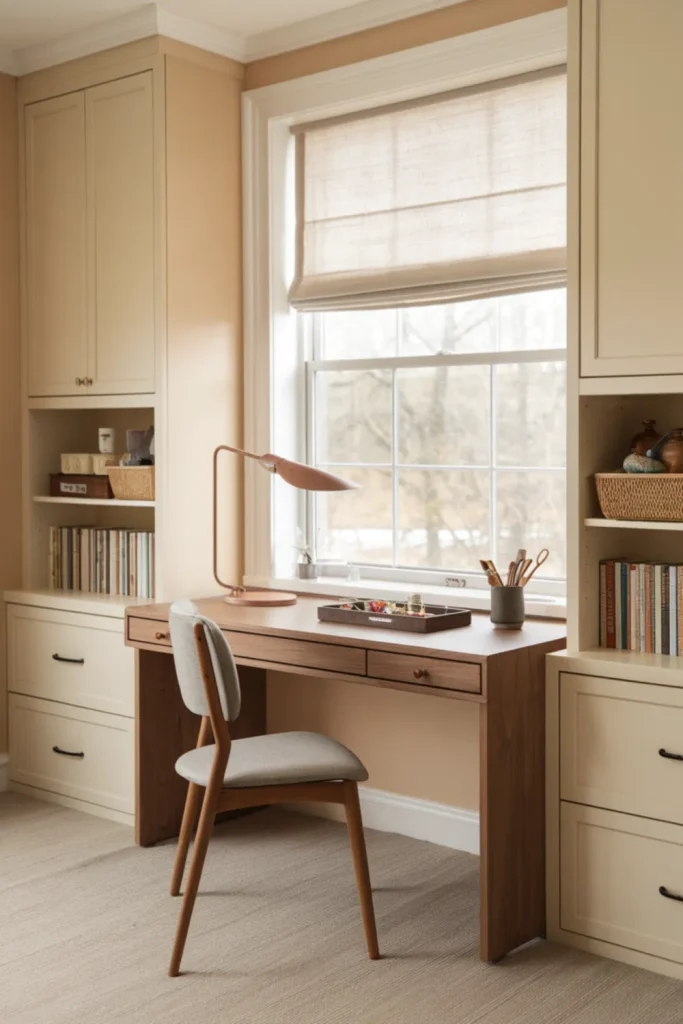
Keep storage low when positioning a craft desk beneath a window.
The walnut worktop and ivory side cabinets provide enough room for embroidery, paper crafts, or small tools without covering the natural light.
Muted rust accents warm the arrangement while allowing the window to remain the main feature.
Check the sill height, opening hardware, nearby outlets, and any vents before choosing the desk.
Direct sun may fade fabric, yarn, and colored paper, so add a light-filtering shade when needed.
A movable task lamp will keep the workstation useful after daylight fades or on cloudy afternoons.
5. Fold-Down Craft Table Beneath a Supply Cabinet
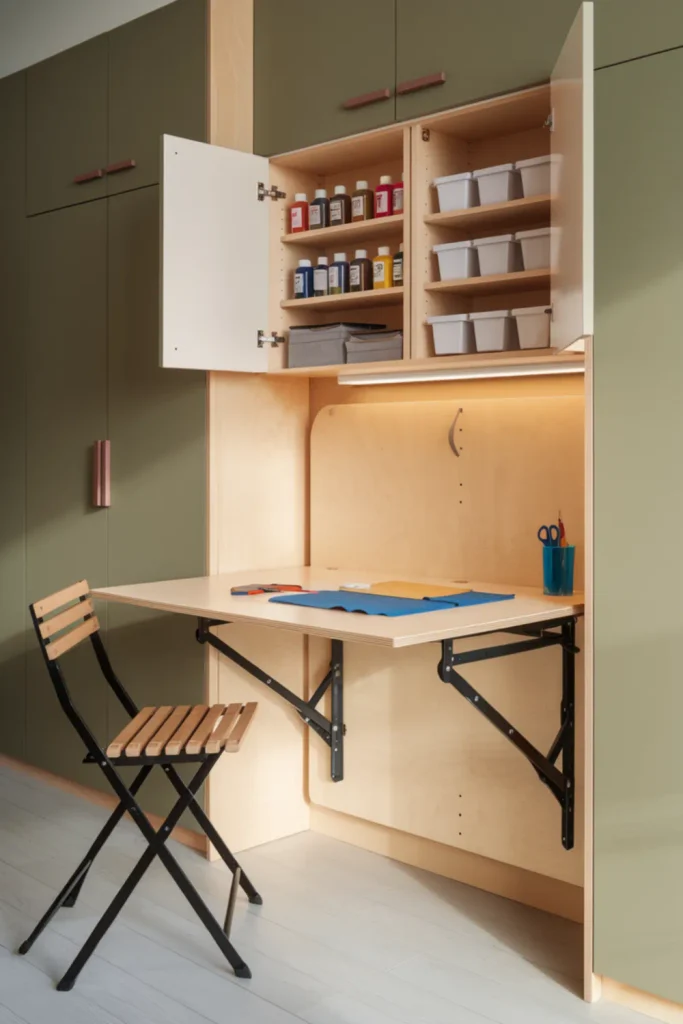
Folding furniture earns its place when a room must handle several activities.
A birch tabletop opens beneath a shallow olive cabinet, creating temporary project space without permanently filling the floor.
Paint, paper, and lightweight supply boxes remain close by, while hinged legs support the front edge during use.
This small craft room idea suits projects that can be packed away between sessions.
Avoid relying on wall hinges alone to carry the working load.
Use suitable anchors or framing, keep heavy materials elsewhere, and clear every tool and unfinished piece from the surface before folding it closed.
6. Renter-Conscious Craft Nook With Freestanding Storage
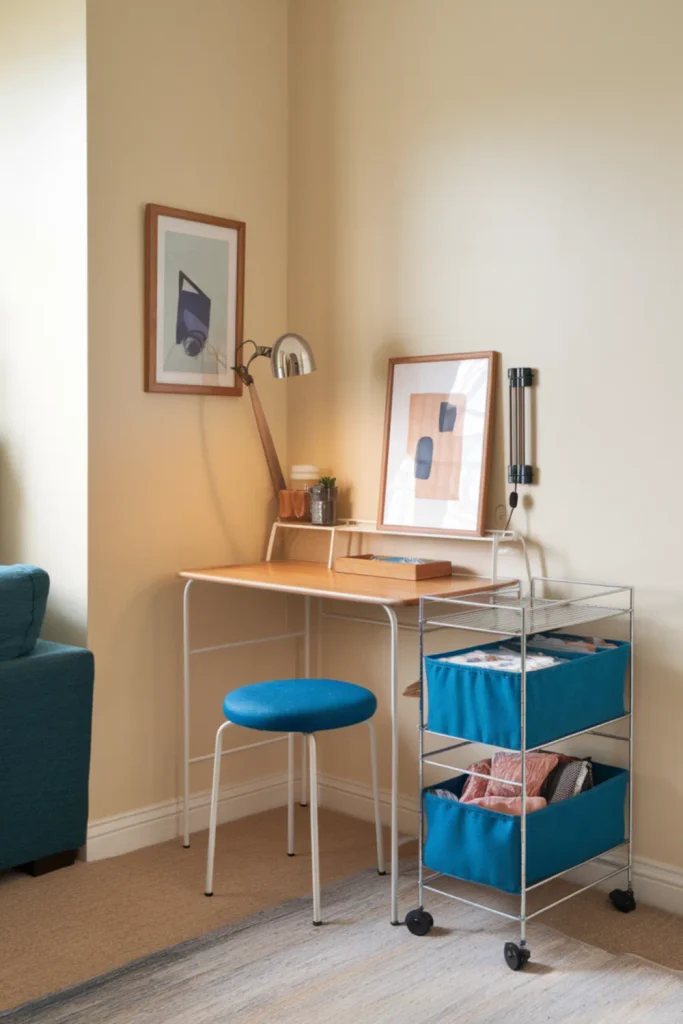
Renters and frequent movers often benefit more from flexible furniture than fitted storage.
A slim desk, cube organizer, and rolling cart form a complete craft nook without requiring built-in cabinetry.
Cobalt fabric bins conceal loose supplies, while a clamp lamp saves valuable desktop space.
Choose pieces that fit through doorways and can serve another purpose in a future home.
Measure the desk opening with the chair and cart in place rather than checking each item separately.
Tall freestanding units may still require anti-tip hardware, so follow the manufacturer’s instructions and confirm any wall attachment with the property owner.
7. Office Craft Room Combo With Two Work Zones
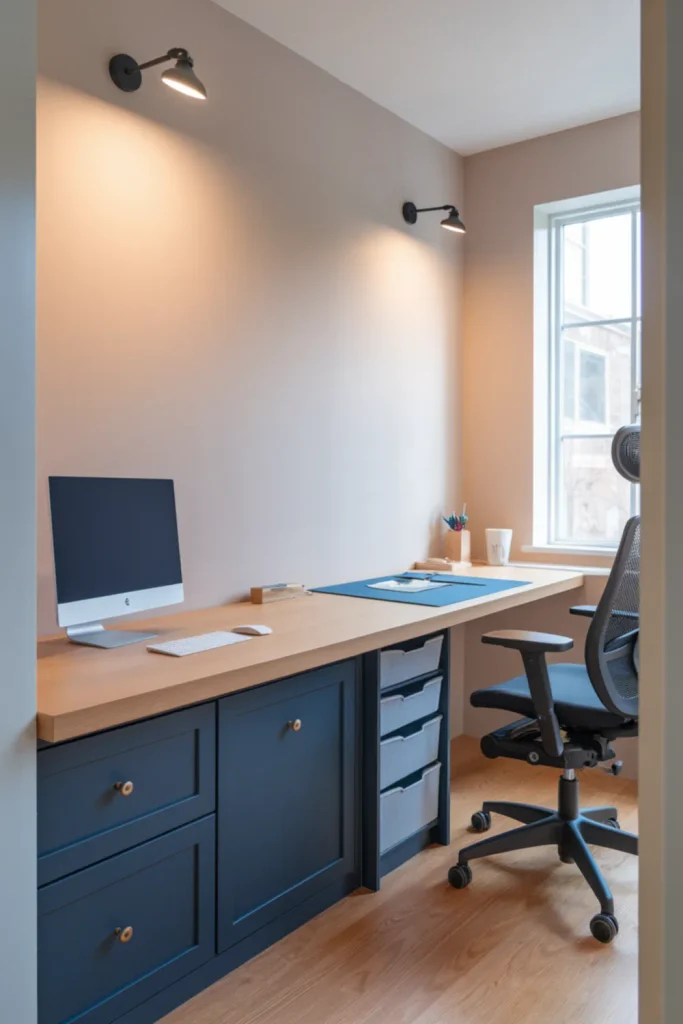
Sharing one room becomes easier when office work and crafting have separate landing zones.
The computer stays at one end of this long desk, while a cutting mat and hand tools occupy the other.
Closed cabinets keep documents away from paint, glue, and paper scraps, and independent task lights support each activity.
Leave the center clear enough to move one chair between both stations.
Good craft room organization also means protecting electronics from rinse water, loose glitter, and cutting debris.
Route cables behind or beneath the office side rather than allowing them to cross the crafting surface or walking path.
8. Guest Room Craft Space Beside a Daybed
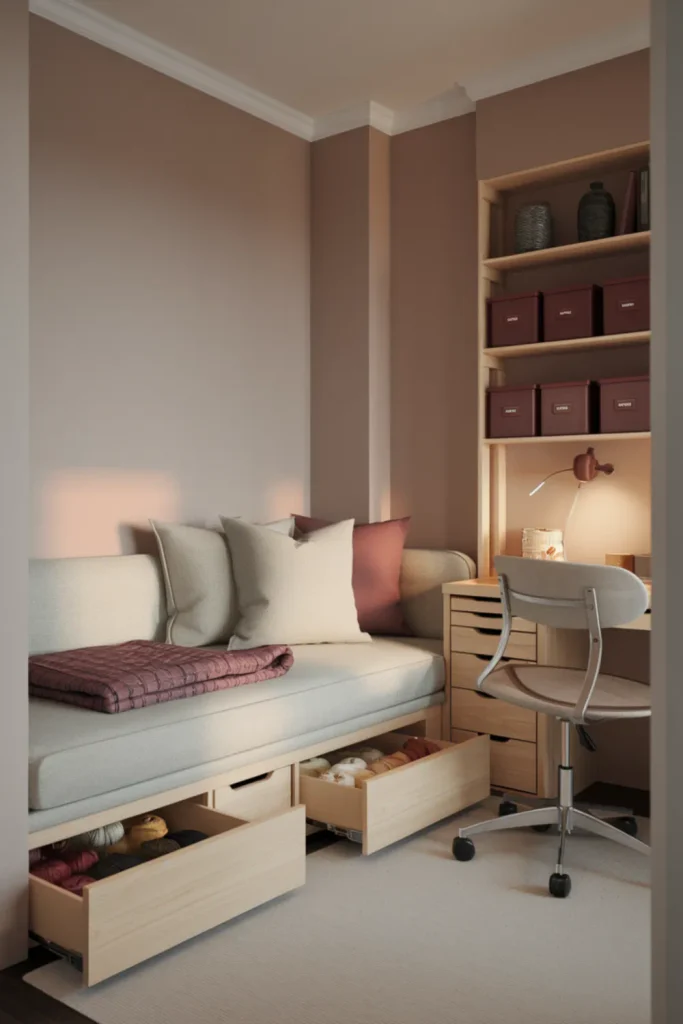
In a guest room, craft storage needs to clear quickly without requiring a complete reorganization.
A shallow desk sits beside the daybed, while deep under-bed drawers hold fabric, yarn, and boxed supplies out of sight.
The chair tucks beneath the worktop to protect the aisle when visitors arrive.
Measure the room with the bed prepared for sleeping, not only in its daytime arrangement.
You should still be able to open drawers and walk between the furniture.
Store active projects in handled trays or boxes so they can move from the desk to a drawer without being taken apart.
9. Vintage Armoire Craft Station With a Fold-Out Desk
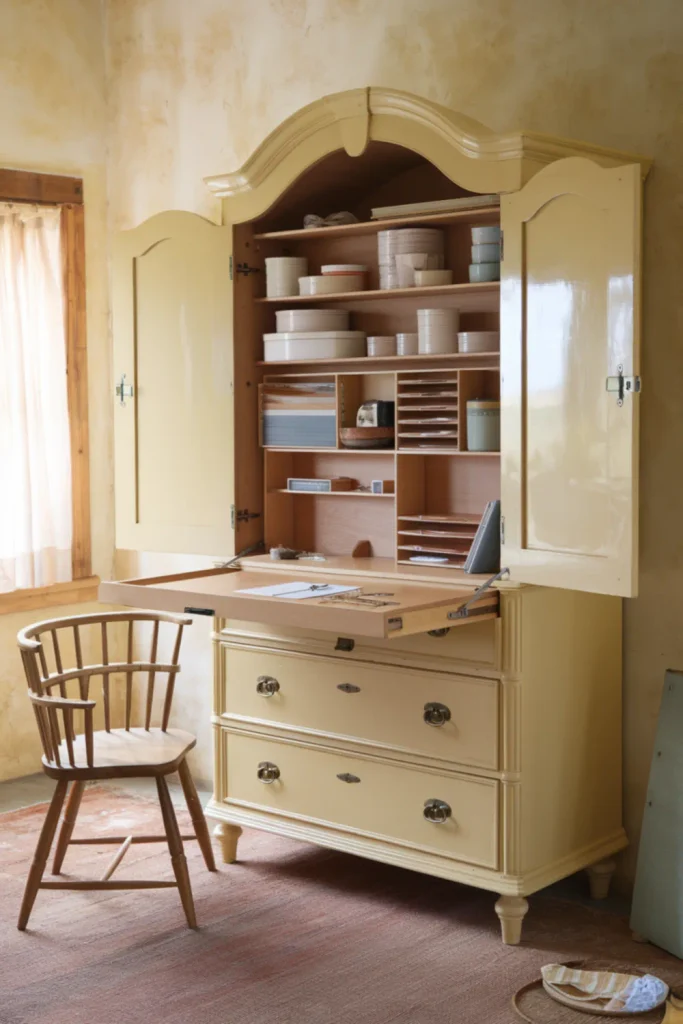
Muted yellow paint and a natural wood interior give this armoire workstation a collected, cottage-inspired look.
Shelves hold ribbon, paper, and small containers, while the fold-out panel becomes a surface for embroidery or card making.
Closing the doors hides the entire craft station in a living room or bedroom.
Look for a cabinet with strong hinges, a stable base, and enough internal depth for your supplies.
The desktop also needs legs or another load-bearing support beneath its front edge.
Keep heavy materials in lower drawers and confirm that the open doors will not interfere with your chair.
10. Rolling Supply Cart That Parks Beneath the Desk
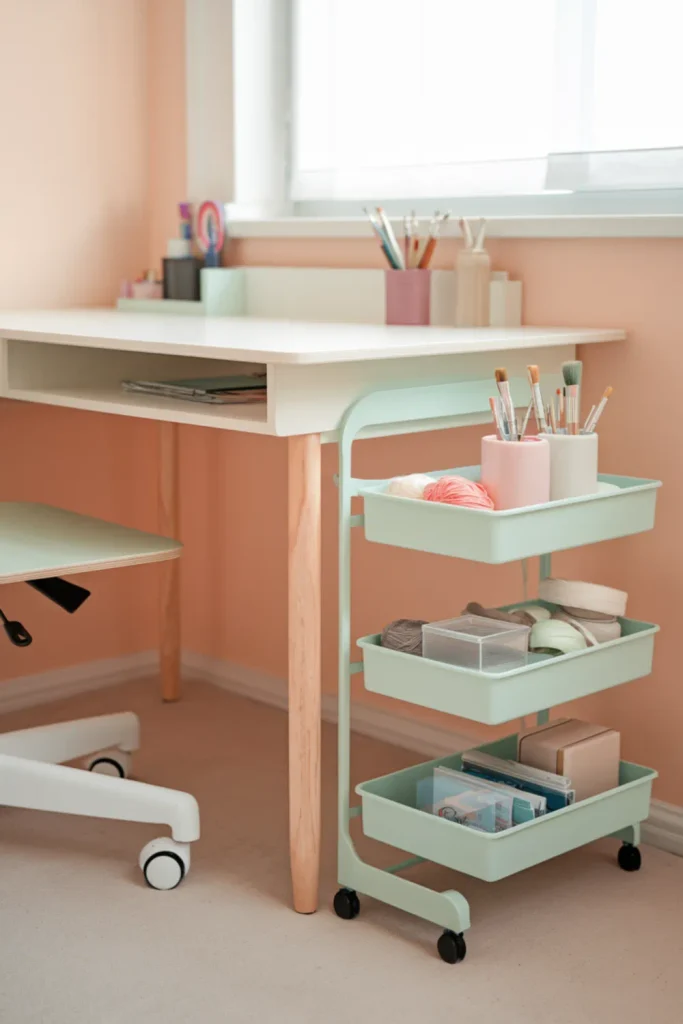
Compared with a fixed drawer cabinet, a rolling cart brings supplies closer to the project and moves away afterward.
The pale mint cart fits beneath a birch desk, holding brushes, tape, yarn, and small boxes without covering the worktop.
One knee bay remains open for the chair, which prevents the compact workstation from feeling cramped.
Measure the cart with its handles and tallest containers included.
Even a small height difference can stop it from parking properly.
Tidy nearby cables before rolling it in, and use wheel locks if the cart shifts while you reach into its trays.
11. Sewing Corner With a Drop-Leaf Table Extension
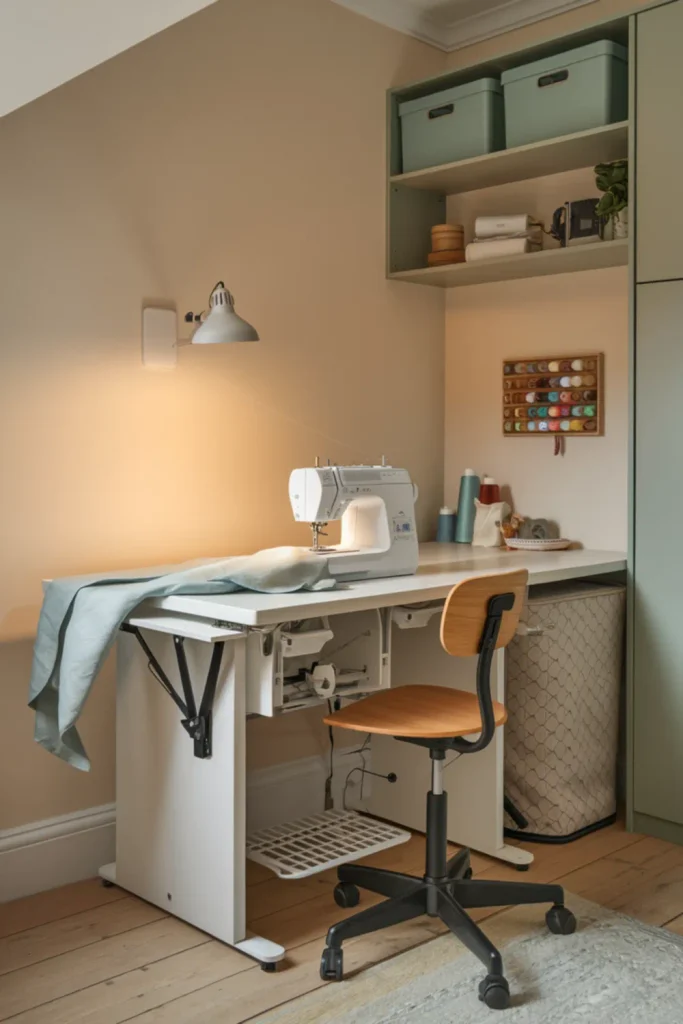
Sewing gets easier when fabric has support beside the machine instead of pulling toward the floor.
This white workstation uses a drop-leaf extension to widen the surface during a project, then folds down to restore walking room.
A nearby thread rack keeps colors visible, while a closed bin contains fabric without crowding the chair.
Make sure the raised leaf rests on a sturdy gate leg or frame rather than the hinge alone.
A directional lamp should illuminate the needle area without casting shadows from your hands.
Adjust uneven table feet if machine vibration causes the surface to shake.
12. Cricut Workspace With Clear Mat-Feeding Space
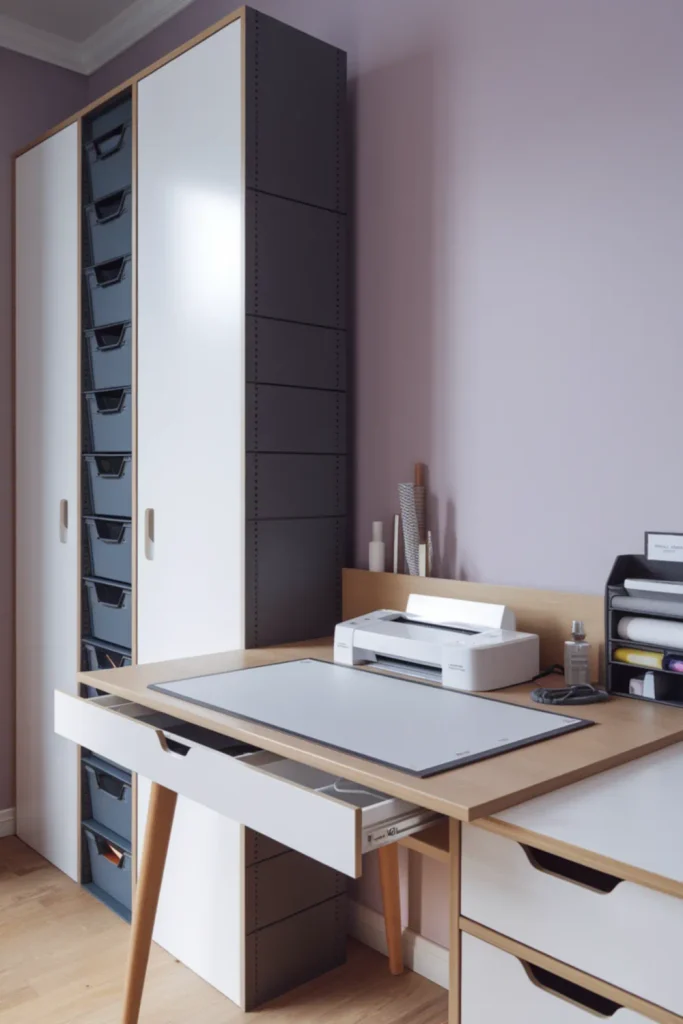
The closed footprint of a cutting machine rarely shows how much working depth it needs.
Here, the desk sits slightly forward from the wall so the mat can travel freely through the machine.
Rolled vinyl stands vertically at one side, and shallow drawers keep blades, scrapers, and small tools off the desktop.
Measure the complete mat path before deciding where to place the workstation.
Shelves, walls, or stacked supplies behind the machine can interrupt a cut even when the device itself fits comfortably.
Route the power cord to one side so it never crosses the moving mat or working area.
13. Paper Craft Desk With Shallow Flat-File Drawers
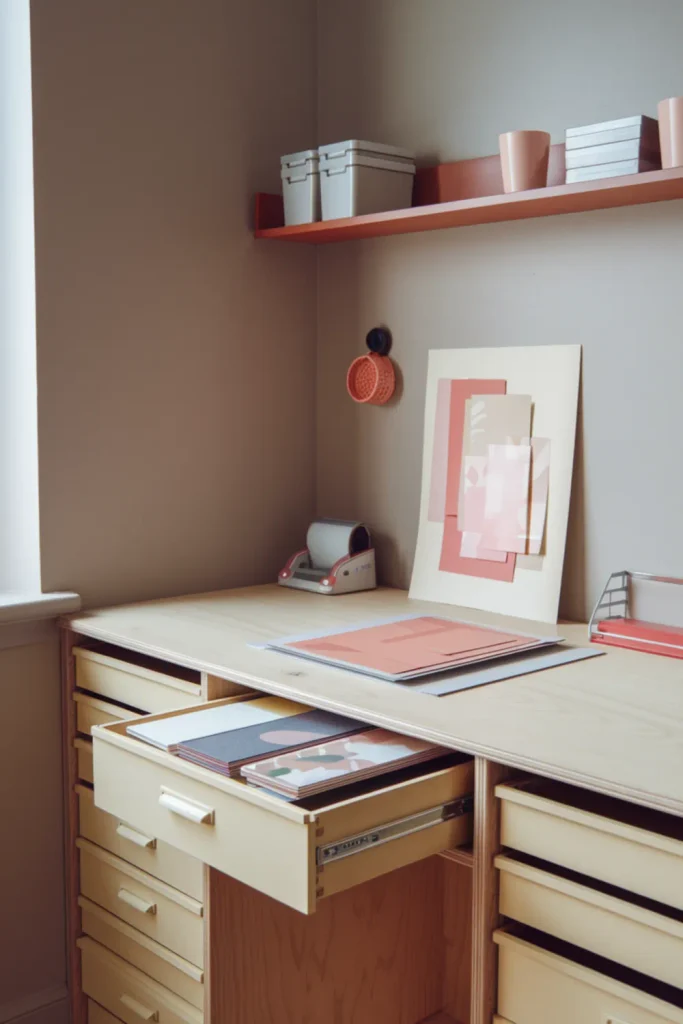
Wide, shallow drawers are much easier to browse than deep bins when you work with paper.
Cardstock, envelopes, and patterned sheets lie flat beneath the pale ash desktop, reducing curled corners and hidden stacks.
Open knee space on the opposite side keeps the desk comfortable, while a short tool rail avoids bulky overhead storage.
Match the internal drawer dimensions to the largest paper size you regularly use.
Do not rely on the cabinet’s exterior measurements.
Avoid overfilling each drawer as well, since dense paper stacks become heavy and may exceed the slides’ rated capacity or make individual sheets difficult to remove.
14. Fabric Prep Table With Upright Remnant Storage
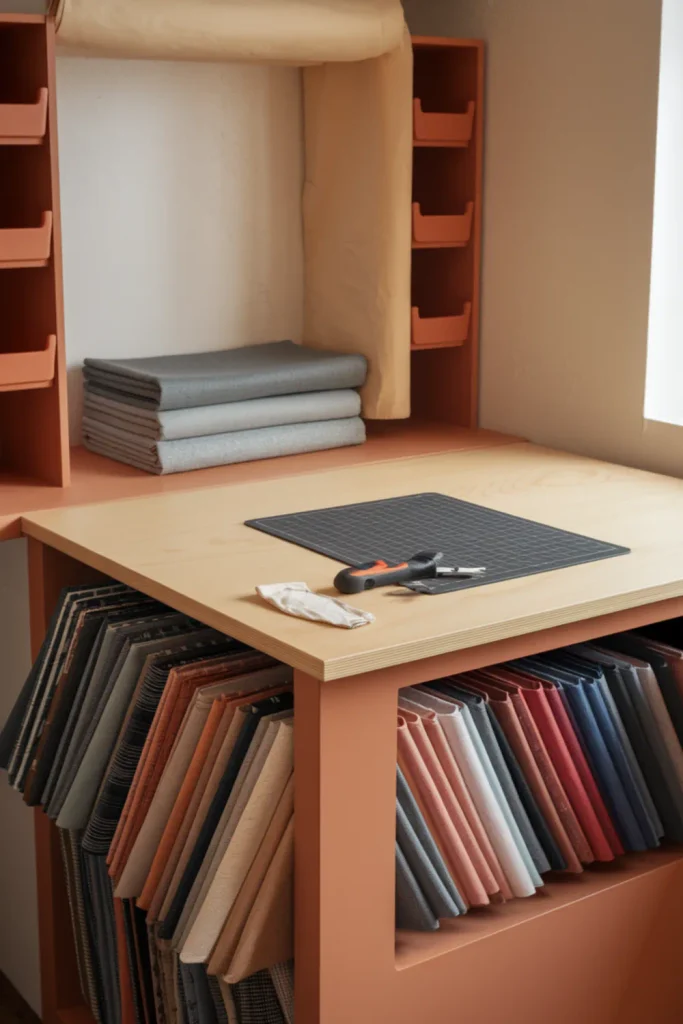
Fabric remnants become easier to scan when they stand upright on uniform boards instead of forming one deep pile.
A narrow side cubby keeps these smaller pieces beside the plywood worktop, while larger folded cuts stay on a low shelf.
The arrangement leaves most of the table open for trimming, pinning, and planning color combinations.
Use a smooth, sealed surface that will not catch delicate fabric.
This compact table suits remnants and modest cuts, but it may not support full-length yardage.
Close rotary cutters after each use and store them where they cannot roll beneath fabric or off the worktop.
15. Painting and Craft Nook With a Wipe-Clean Worktop
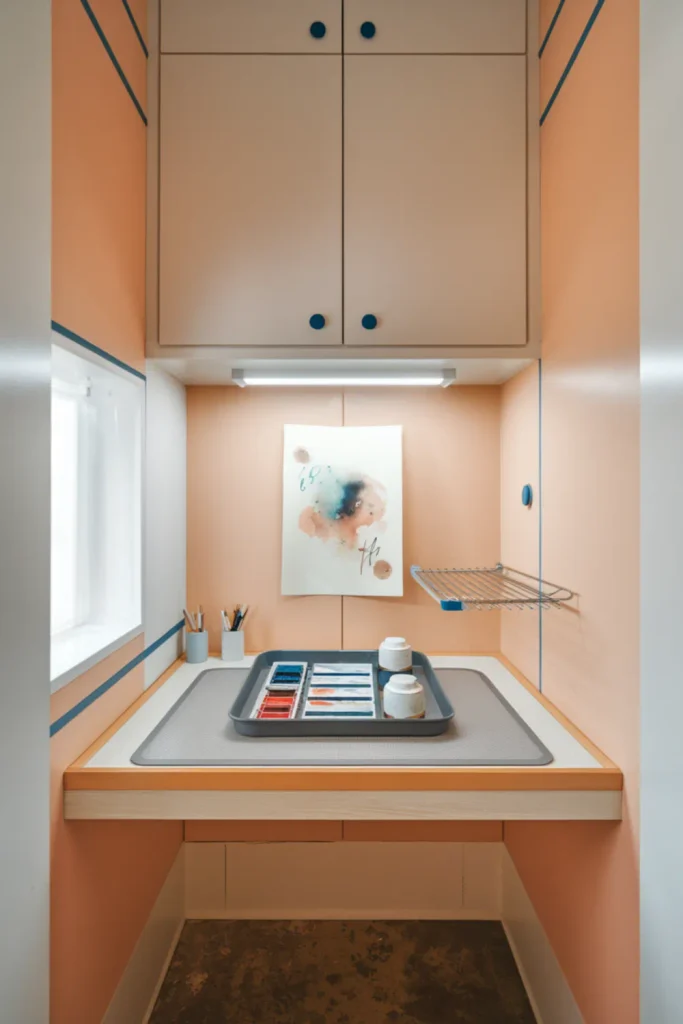
Laminate and a removable silicone mat make cleanup simpler in a painting or mixed-media corner.
The off-white desk includes a raised-edge tray for watercolor pans, brushes, and stable rinse jars, while a small side rack keeps wet paper away from the active workspace.
Easy-clean flooring makes more sense than a rug beneath this type of station.
Check which cleaners the worktop and protective mat can tolerate before treating stains.
Keep liquids away from outlets and cords, and position the lamp outside the splash zone.
A contained wet-work area also stops paint supplies from spreading into paper or sewing storage.
16. Yarn Storage Wall With Shallow Cubbies
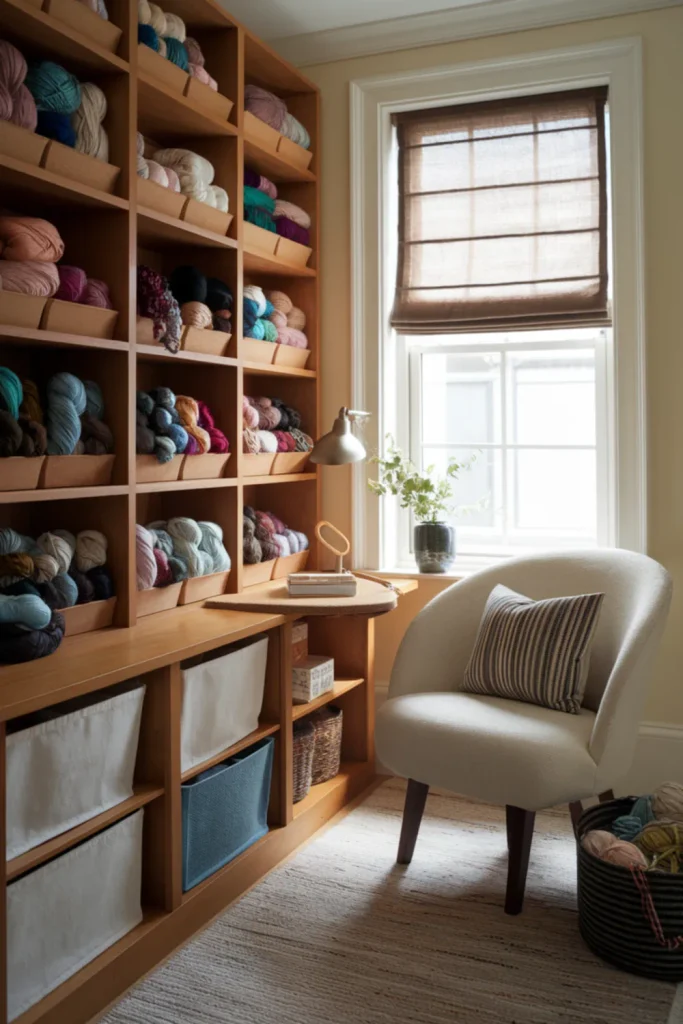
Jewel-toned skeins arranged in honey-wood cubbies turn the supply collection into an easy-to-read color library.
The shallow cabinet uses less floor depth than a wardrobe, while fabric bins along the bottom conceal backup notions and less frequently used yarn.
A chair, small project table, and lidded basket keep the active work close together.
Leave enough room around each group to remove one skein without disturbing the entire section.
Strong sunlight can fade some fibers, so use a shade or move vulnerable yarn into closed storage.
Open cubbies also need regular dusting to keep the collection fresh and usable.
17. Back-of-Door Organizer for Small Craft Supplies
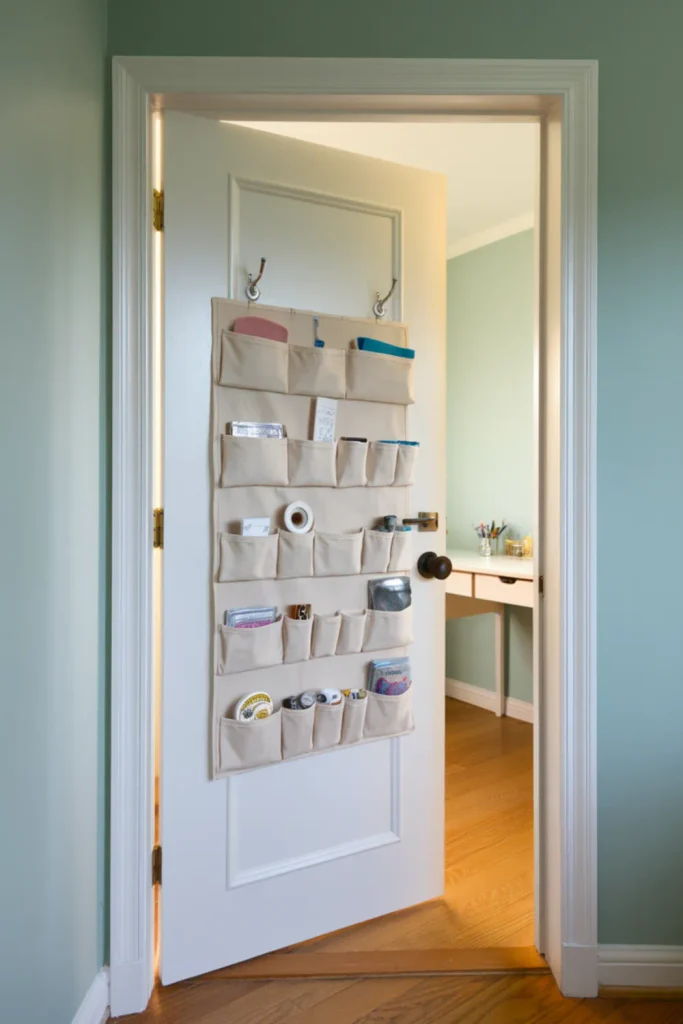
The back of a door is often the last useful storage area in a compact craft room.
Slim canvas pockets hold felt sheets, ribbon cards, tape, and lightweight supply pouches without occupying a wall or drawer.
Keeping the organizer shallow allows the door to open toward the nearby workstation.
Check hook thickness and door-frame clearance before filling every pocket.
Avoid placing heavy jars, sharp tools, or bulky items near the handle.
Open the door slowly during the first few uses to confirm that the organizer does not strike furniture, damage trim, or prevent the latch from closing properly.
18. Ceiling-Height Storage With Everyday Supplies Kept Low
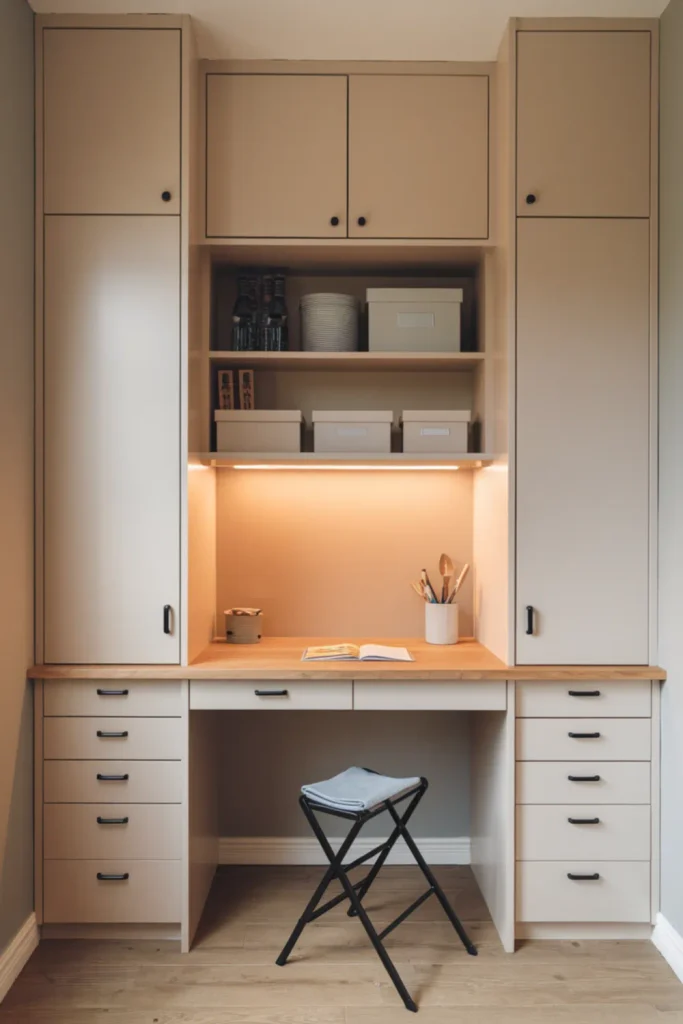
Everyday tools should remain within reach, even when cabinets extend toward the ceiling.
In this tailored craft room, low drawers and a short open shelf serve the oak worktop, while lightweight boxes and occasional-use materials occupy the highest compartments.
Setting the upper cabinets back from the desk edge prevents the seated area from feeling boxed in.
Store machines and heavy bulk supplies below waist height.
A stable household step stool is safer than climbing onto a chair, but it still needs a parking place outside the walkway.
Keep upper sections lightly loaded and check shelf limits before filling them.
19. Attic Craft Desk Beside a Sloped Ceiling
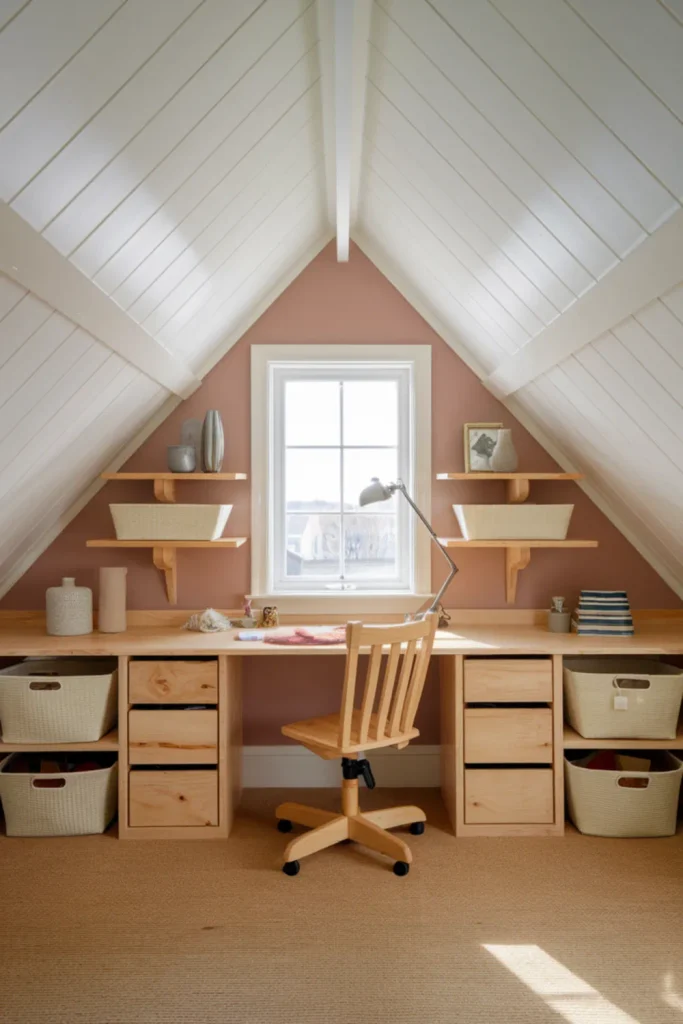
Sloped ceilings can guide the layout instead of becoming wasted space.
Low drawers fit beneath the eaves, while the pine desk and chair sit near the dormer where headroom and daylight are better.
This arrangement works for felting, sketching, and other seated crafts that do not require tall overhead storage.
Measure the ceiling clearance both while seated and while standing from the chair.
Attics may also experience stronger temperature and humidity changes than the rooms below.
Check whether those conditions suit paper, fabric, paint, and adhesives before storing an entire supply collection there, and use window coverings to limit direct sun.
20. Narrow Craft Room With a Single-Sided Workbench
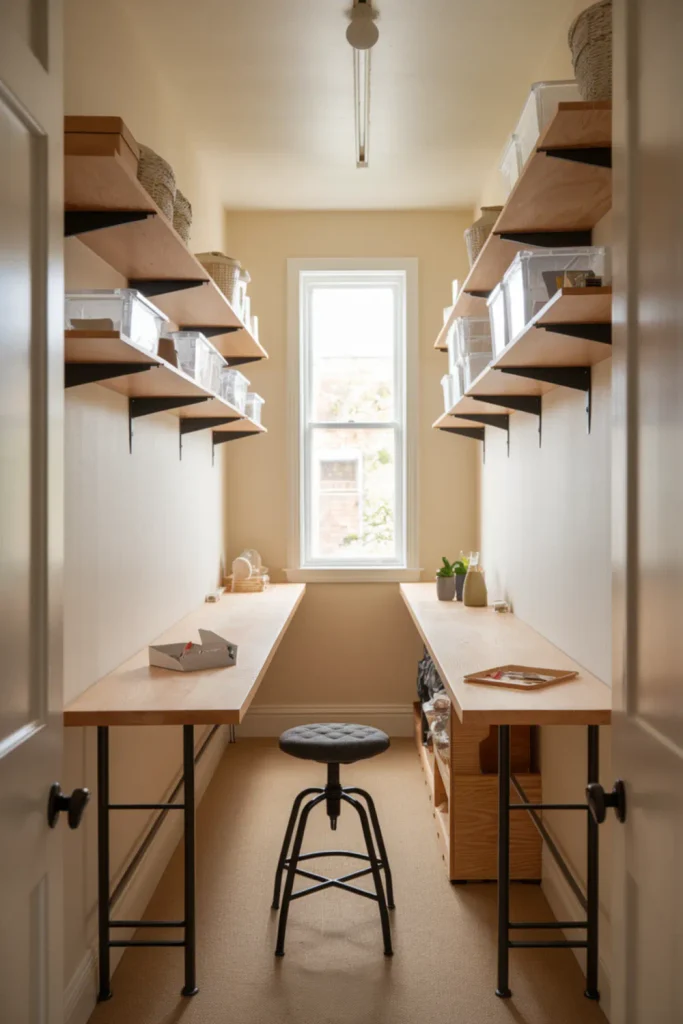
In a narrow craft room, the strongest layouts often leave one wall almost empty.
A slim oak workbench and shallow shelves run along the opposite side, preserving a continuous path from the entrance to the window.
The backless stool slides fully beneath the surface when the room is not in use.
Choose the worktop depth according to your main craft rather than buying the narrowest desk available.
Paper projects need less depth than large machines or fabric preparation.
Resist adding cabinets to both walls, since a visually balanced arrangement may leave too little room to sit, turn, or carry materials.
21. Modular Cube Storage Beside a Separate Craft Table
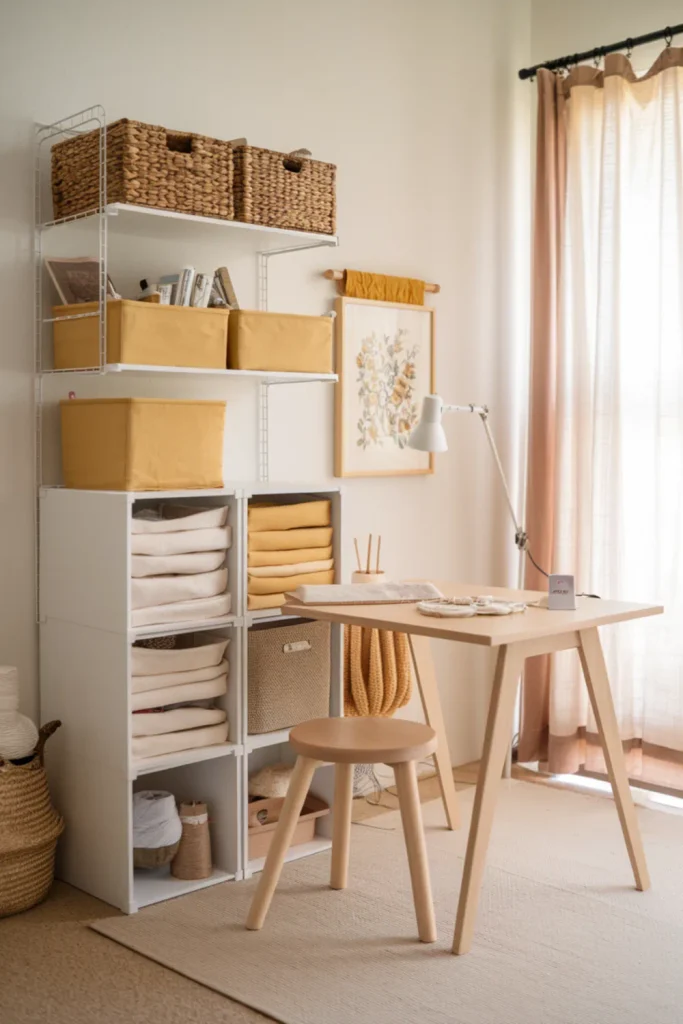
Separate furniture gives you more freedom to adjust a small craft room as supplies change.
A low cube organizer sits against the wall, while a pale beech table stands perpendicular to it with one side open for the chair.
Woven baskets hide loose materials, and open compartments keep paper or yarn visible.
Check the internal dimensions of each cube before buying bins.
A container may fit the opening yet still be too narrow for large cardstock or folded fabric.
Keep the route to the doorway clear, and avoid using the storage unit as a table support unless it was designed to carry that load.
22. Budget Craft Room With a Secondhand Dining Table
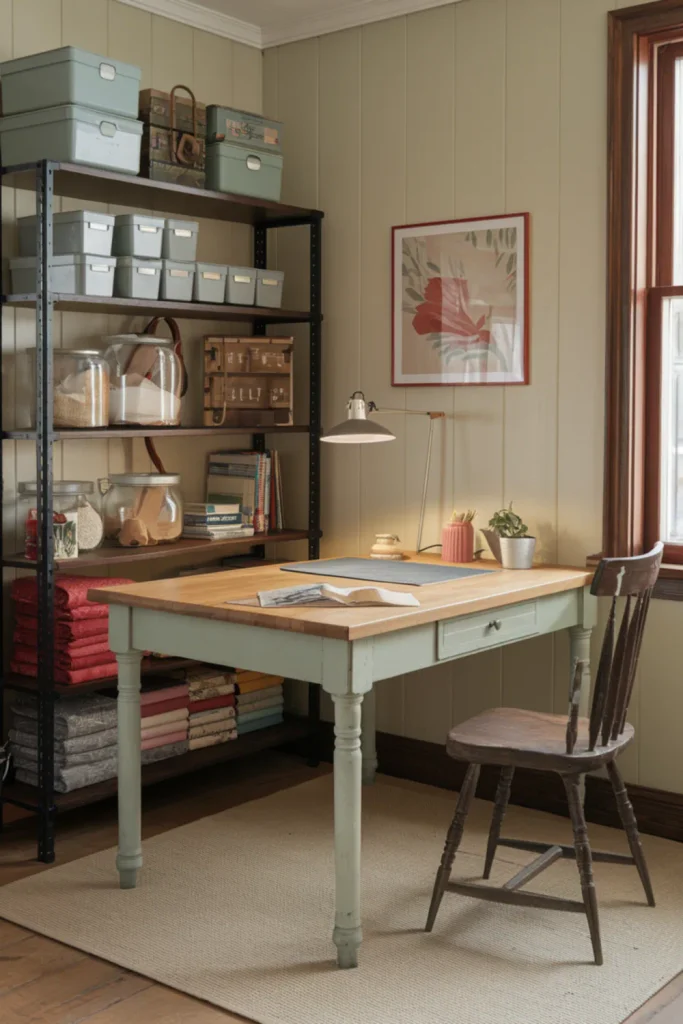
Budget craft rooms benefit from sturdy furniture more than coordinated accessories.
A secondhand dining table offers generous working space, while painted green legs and honest wear make the setup feel relaxed rather than unfinished.
A reused bookcase holds boxes, dry supplies, and folded fabric close to the work area.
Before buying, check the table for wobble, loose joints, splinters, and a comfortable working height.
Add a washable mat where glue, paint, or blades may damage the wood.
Glass jars are useful for visible dry supplies, but sharp or heavy items should stay in lower, more secure storage.
23. Folding Cutting Island on Locking Casters
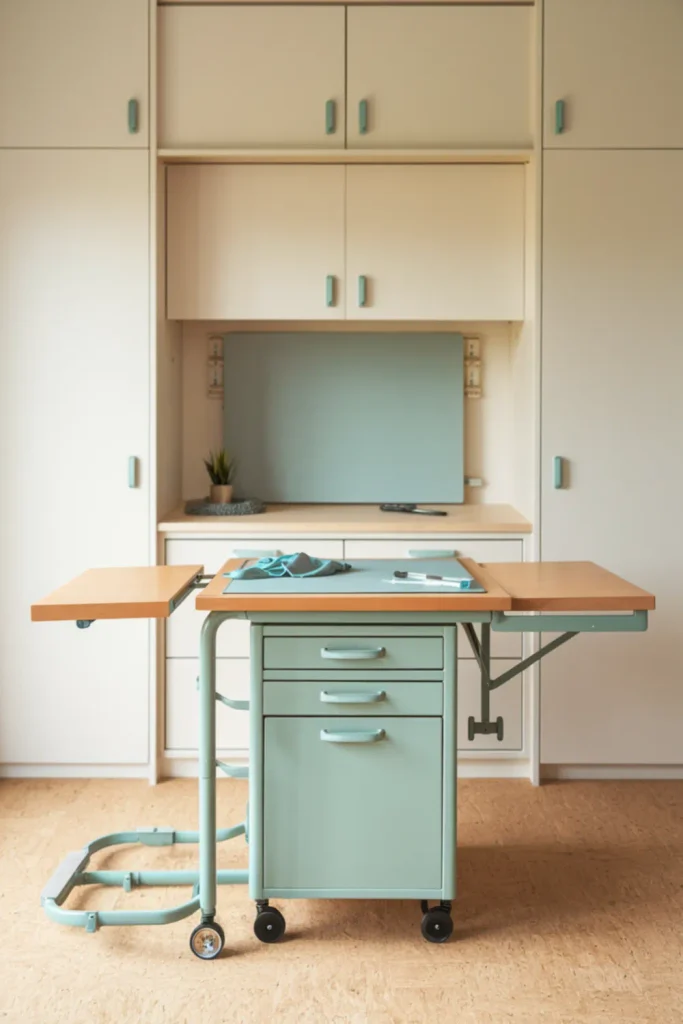
Rolling the work surface into the center gives you access to more than one cutting edge.
This mobile island combines drawers, locking casters, and a hinged side leaf supported by a swing-out frame.
When the project ends, the leaf folds down and the unit can park against a wall.
Measure the room with the island fully expanded, including the standing area around it.
All applicable wheels should be locked before cutting fabric or applying pressure.
Check that the folding support reaches the floor firmly, and avoid placing the island where its open leaf narrows the main walking route.
24. Curtain-Hidden Supply Shelves in a Shared Craft Room
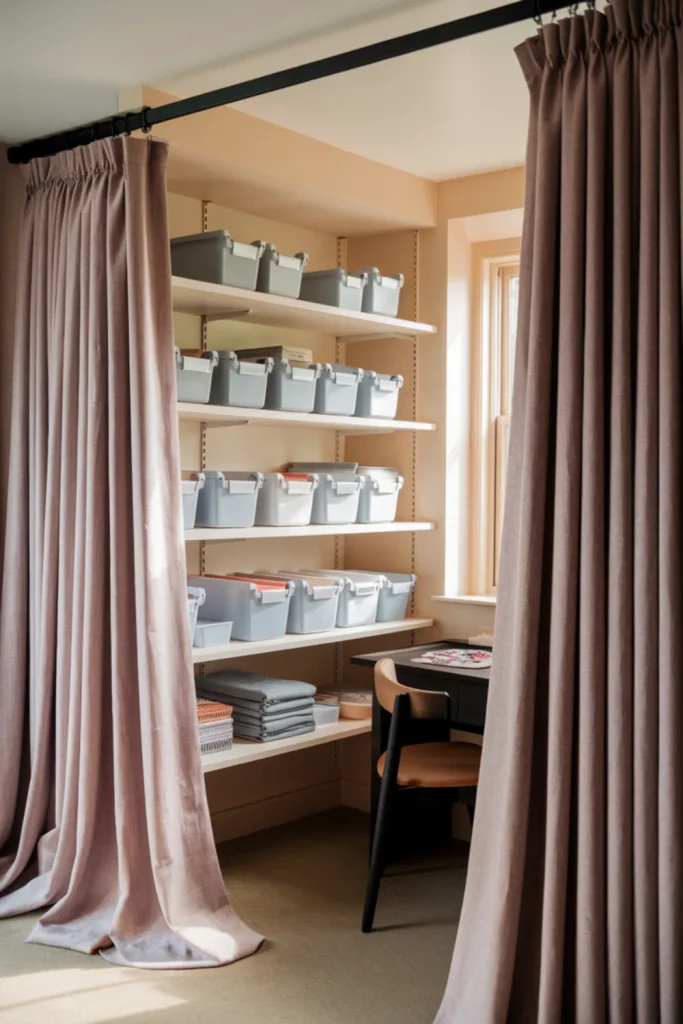
Soft linen provides a simpler way to conceal busy shelving than installing cabinet doors.
The dusty rose curtain slides aside to reveal paper trays, bins, and folded textiles, while the dark-wood desk remains clear of its path.
This approach suits a craft room shared with an office, bedroom, or family area.
Mount the track securely and keep the hem slightly above the floor to reduce dust and snagging.
The curtain should never cover outlets, hot lamps, or equipment that needs ventilation.
Leave enough space between the fabric and shelving so it moves freely without catching on protruding containers.
25. Two-Person Craft Station With a Shared Supply Tower
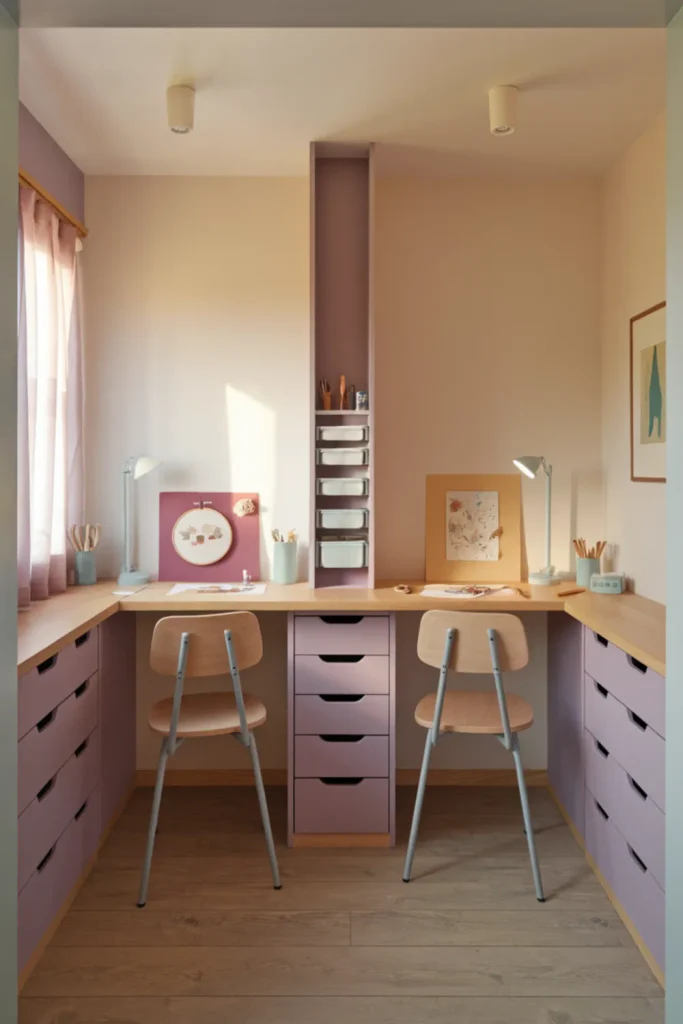
Two people can share a compact workstation when each person still has defined elbow and knee space.
The continuous oak desktop spans two chair bays, divided by a central drawer unit and shallow supply tower.
Shared scissors, paper, and hand tools stay within reach, while separate task lamps support different projects.
This layout works better for embroidery, card making, and other modest tabletop crafts than for large cutting jobs.
Measure both chair widths before installing the desktop, and include room to pull them back.
Support the outer ends securely, and avoid letting shared storage spread across either working zone.
Conclusion
Narrow your options by identifying what makes crafting difficult now.
Choose a one-wall workstation if circulation is limited, a closet or folding setup for a shared room, or a deeper table when sewing and cutting require more surface area.
Before committing to any of these small craft room ideas, test the proposed layout with removable tape and furniture you already own.
Complete one typical project, then note what stays on the desk, which supplies are hardest to reach, and how much room your chair needs.
Those observations will guide a more practical setup than appearance alone.