
You can spend a lot of money decking the full width of your house and still end up pulling the same two chairs into one sunny corner. Before you price boards, picture how you’ll use the space on an ordinary Saturday. A spot for coffee needs a different footprint from a table where four people can comfortably pull out their chairs.
These ground level deck ideas on a budget cover both kinds of projects: building a compact platform from scratch and getting more use out of a deck that’s already there. Some ideas change the footprint. Others help you spend your money where you’ll notice it most.
1. Build a Square Floating Deck for Two
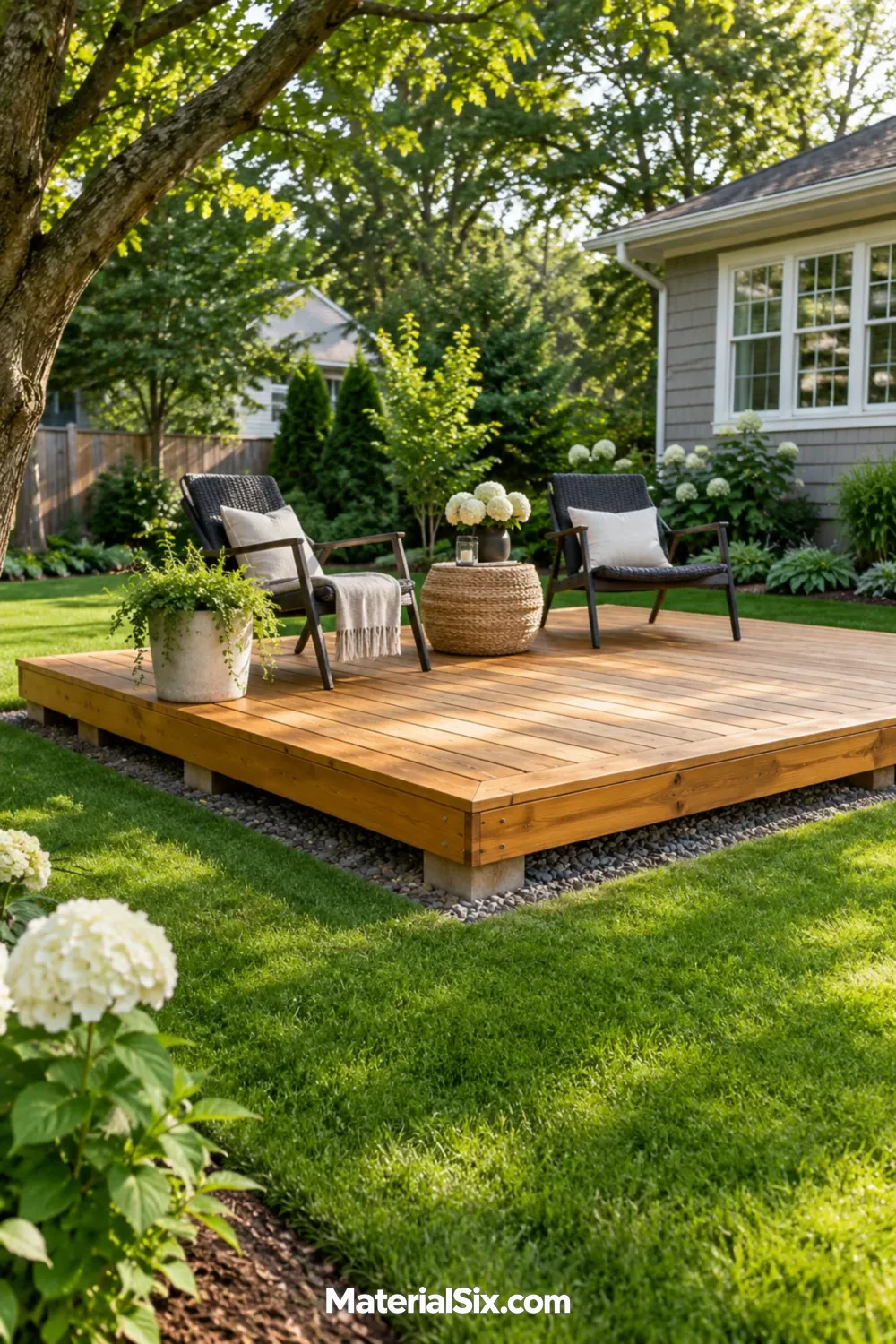
A square floating deck can give two lounge chairs and a side table a permanent spot without taking over the yard. Try arranging the furniture on the lawn first so you can see how much deck you’d actually use. Leave room to walk behind the chairs even when someone has their feet up.
When you sketch the platform, ask your lumber supplier about stock board lengths. A small adjustment to the footprint can reduce the number of boards you need to trim. Confirm the support system and site conditions with your local building department before settling on a freestanding design.
2. Run a Narrow Deck Along the House
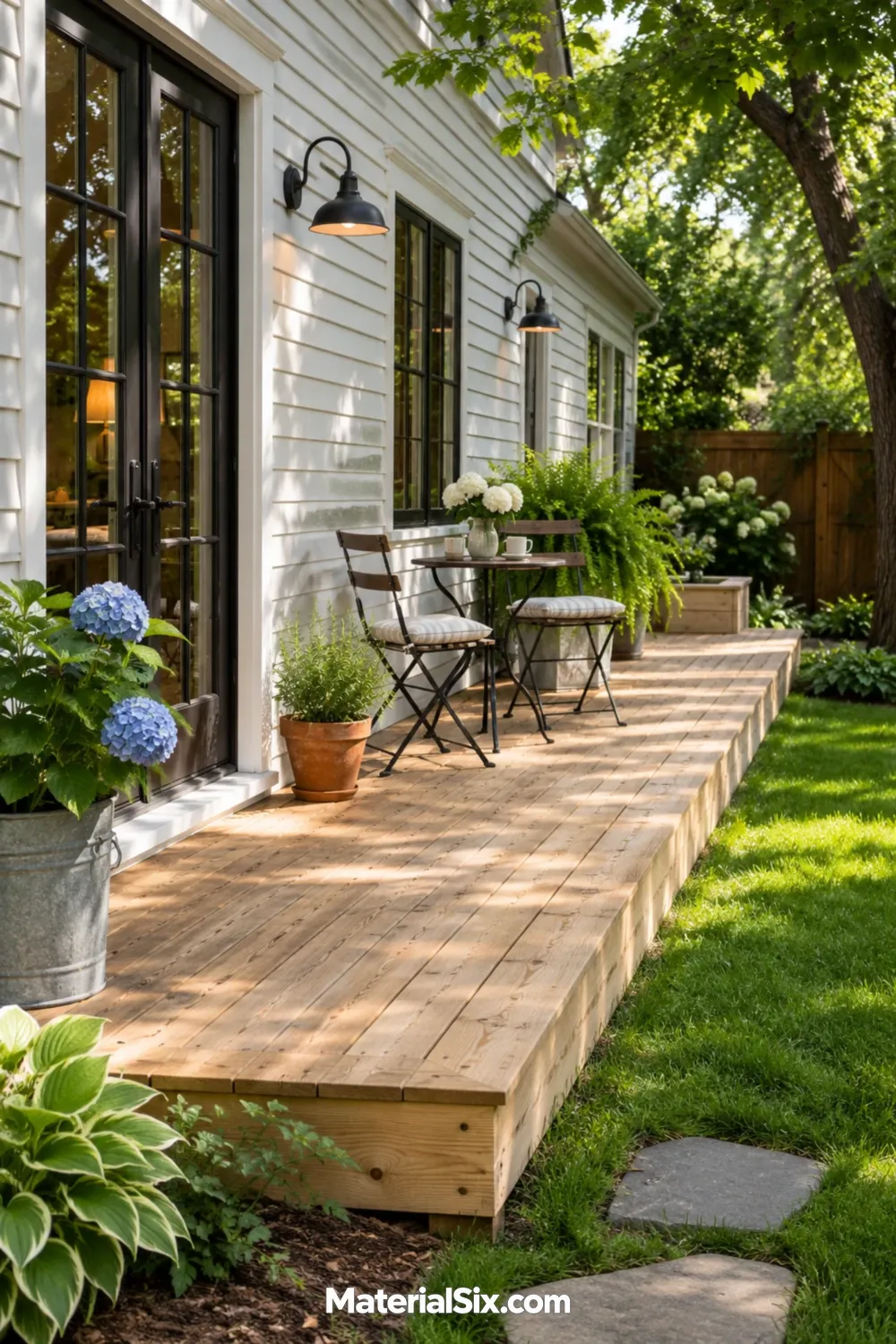
The strip outside a back door can be just wide enough for a deck with a café table and two chairs. Bias the seating toward one end so the door, path, and chairs don’t all compete for the same space. A small round table is easy to walk around when you’re carrying a tray.
Check the door swing and the positions of vents, downspouts, and exterior fixtures before you choose the outline. Decide early whether the low deck will be structurally independent or attached. That choice can affect both the scope of the work and the budget.
3. Tuck an L-Shaped Seating Area Into a Fence Corner
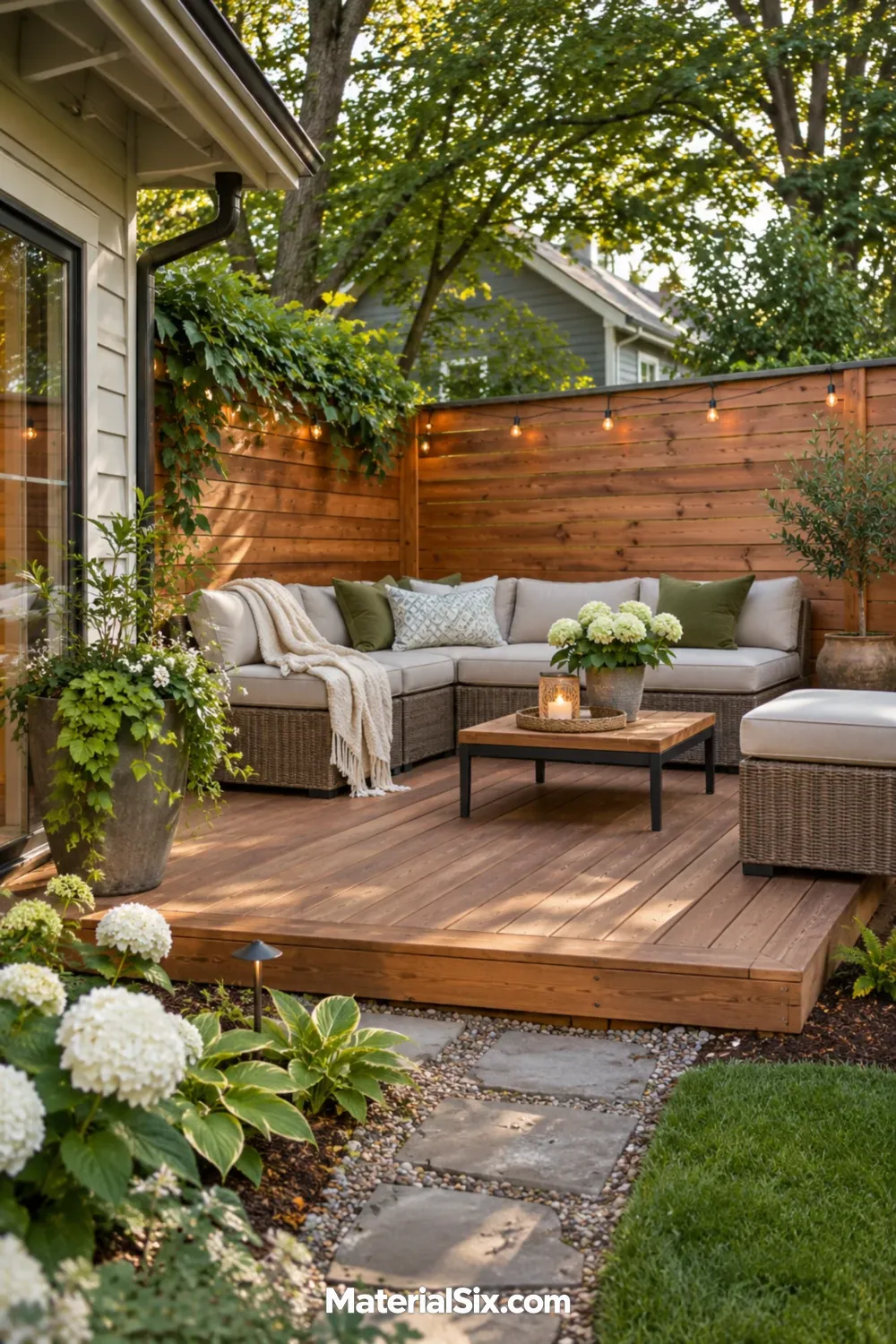
Make the most of the corner where two fences meet by setting a compact platform square to both sides and arranging seating in an L. That leaves the open side facing the yard, where people can come and go without passing in front of every seat. Two movable benches let you change the setup later and make it easier to reach the fence for maintenance. Leave access to the fence and any gate when you measure. If the fences meet at a slightly crooked angle, you can preserve a clean rectangle and use the leftover strip for planting.
4. Give the Far End of the Yard Its Own Deck
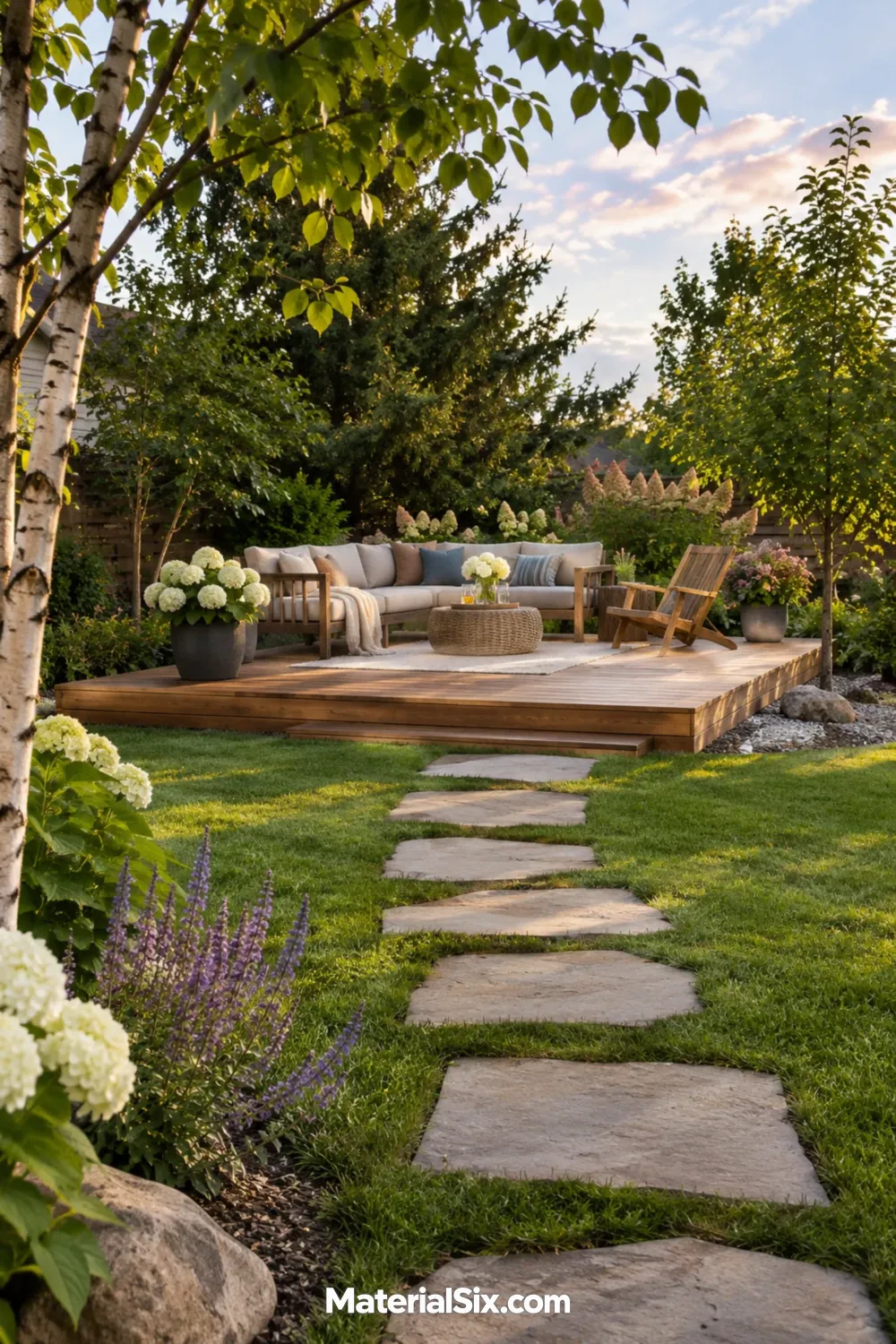
Walk around the yard at the time of day you’d like to sit outside. The far end might have evening shade or a view back toward your favorite planting bed. A freestanding platform there can turn an unused patch into a destination without running decking all the way from the house.
Use a short line of stepping stones to connect the platform to a route people already take. Budget for that approach along with the deck. A seat that’s pleasant in dry weather is more likely to get used if you can reach it after rain.
5. Set a Small Deck Beside an Existing Concrete Patio
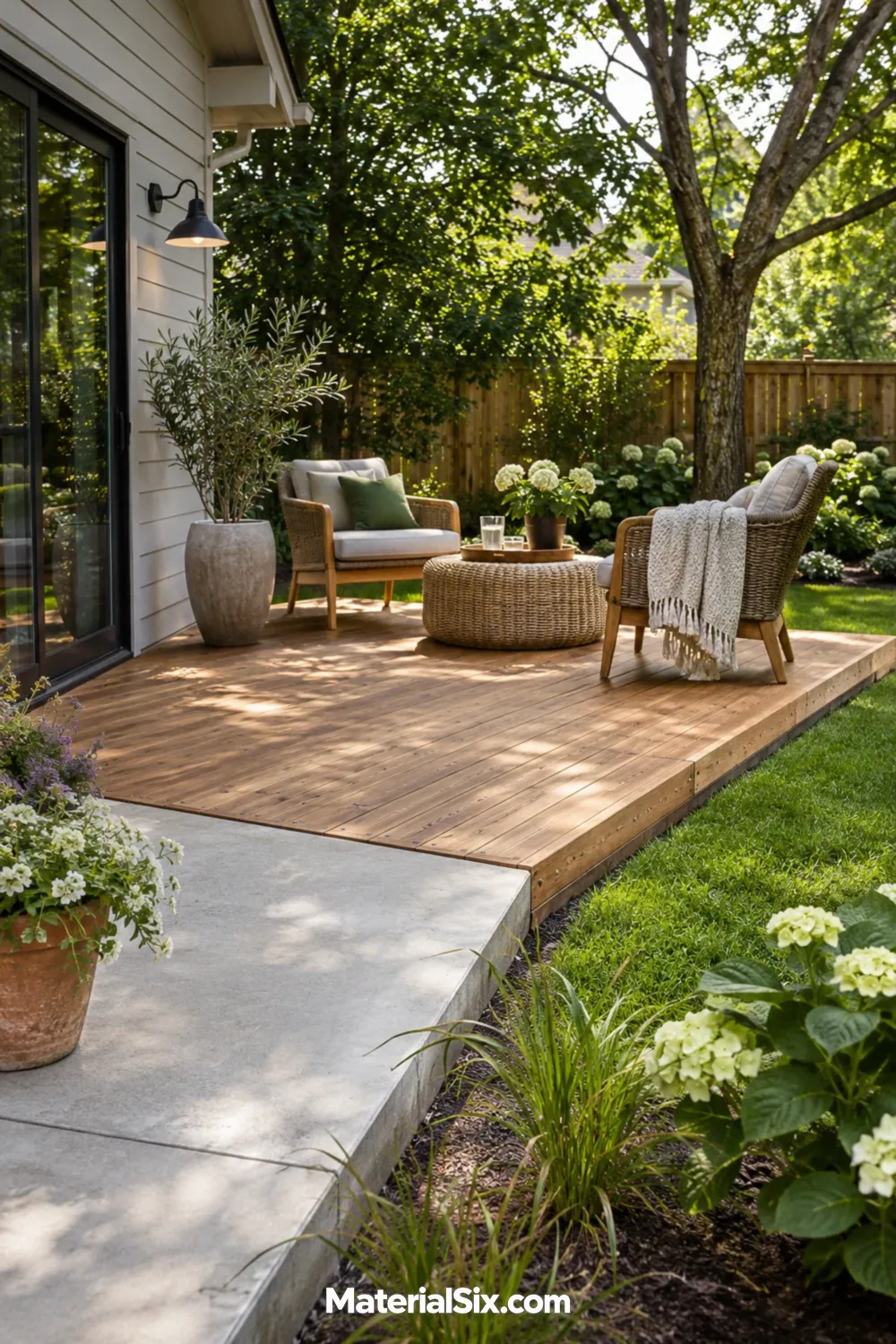
Keep the old concrete patio in service and add a strip of wood decking where you want another activity to happen. For example, the patio can hold a dining table while the new deck adds a pair of chairs that face the yard. Follow a straight edge of the slab so the two surfaces look intentional together.
Look at the joint from the route people will walk. A change in level needs a clear, deliberate transition, and the two surfaces still need to drain. Have the slab and the deck support assessed independently before budgeting for the addition.
6. Concentrate the Step on One Edge
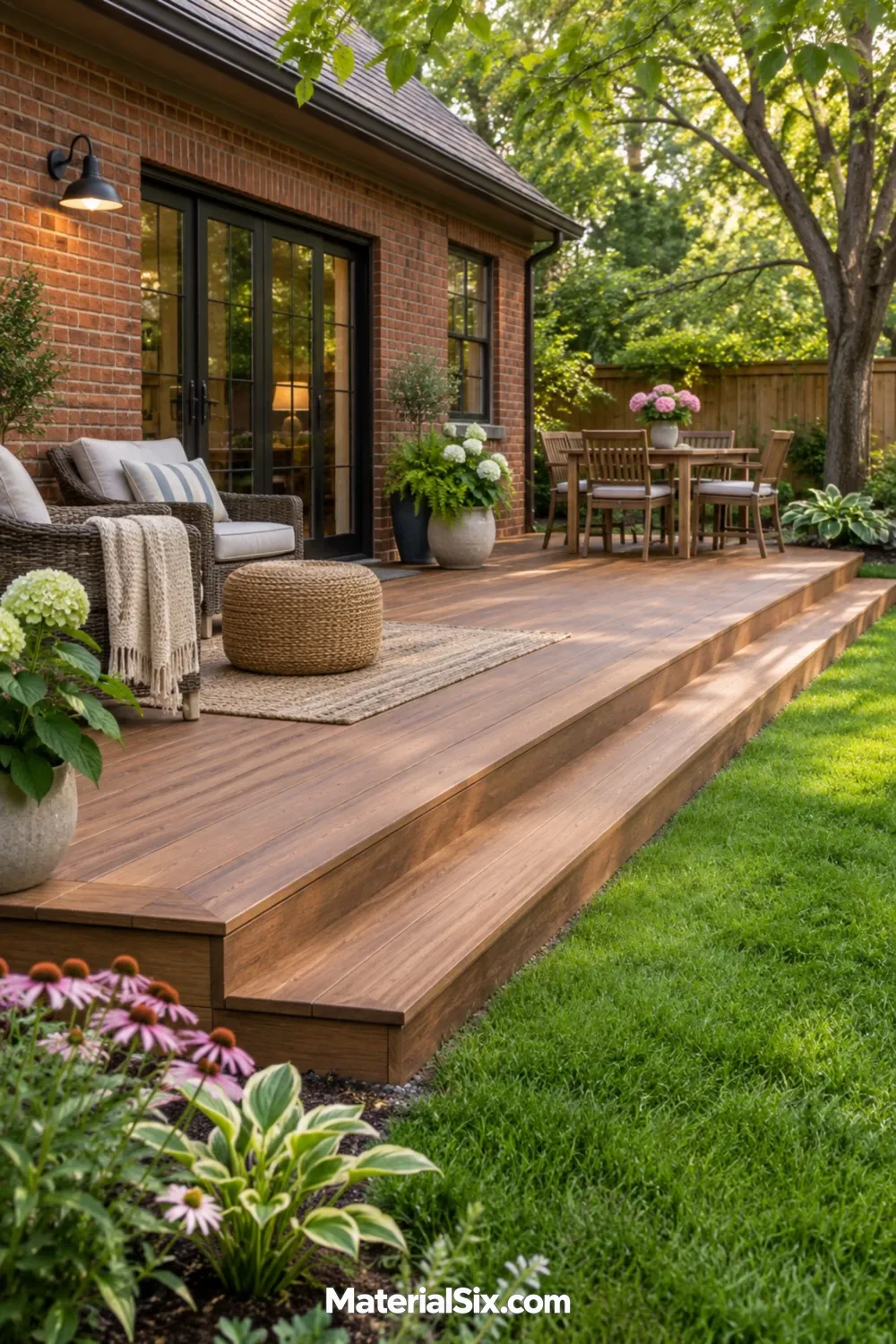
If your deck needs a step, make the side facing the main garden path the obvious place to come and go. A broad step along that edge can make a simple rectangle feel connected to the yard. Group the furniture toward the back of the deck and keep the approach open so you can cross it with a tray or a watering can.
Price the step as its own part of the project, including its support and finish. Ask what step dimensions and other requirements apply locally before you buy materials.
7. Clip One Corner to Make Room for a Garden Path
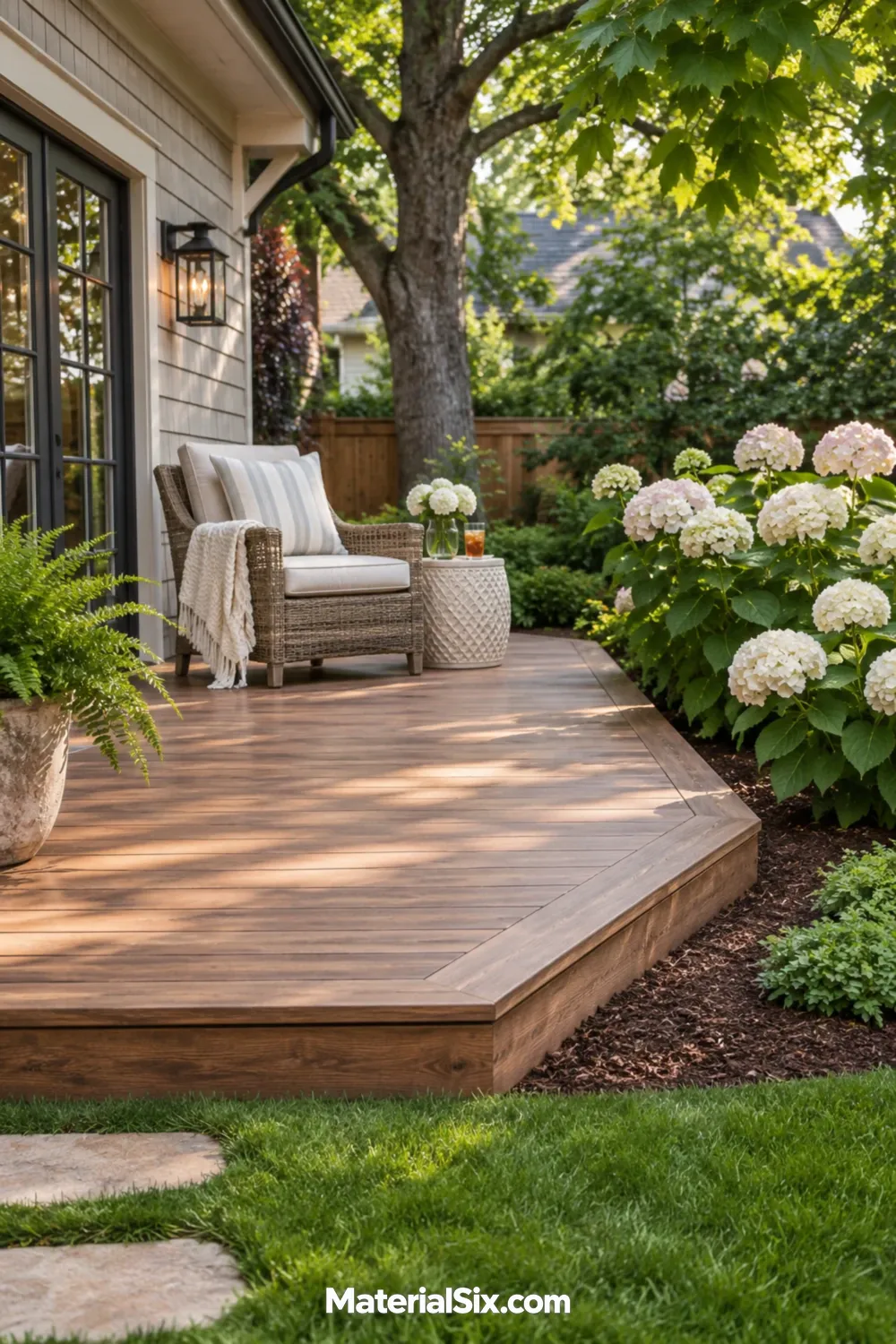
A rectangular deck can feel oversized if its corner cuts into a path or a planting bed. Angling off that one corner may be enough to preserve the route and keep the rest of the platform simple. Mark both versions with string, then walk the path carrying something wide, like a laundry basket, to see whether the extra room matters. Ask for the angled framing and cuts to be priced before you commit. This shape earns its place when the corner solves a real circulation problem or saves a plant you want to keep.
8. Give a Plain Rectangle Shape With a Rug
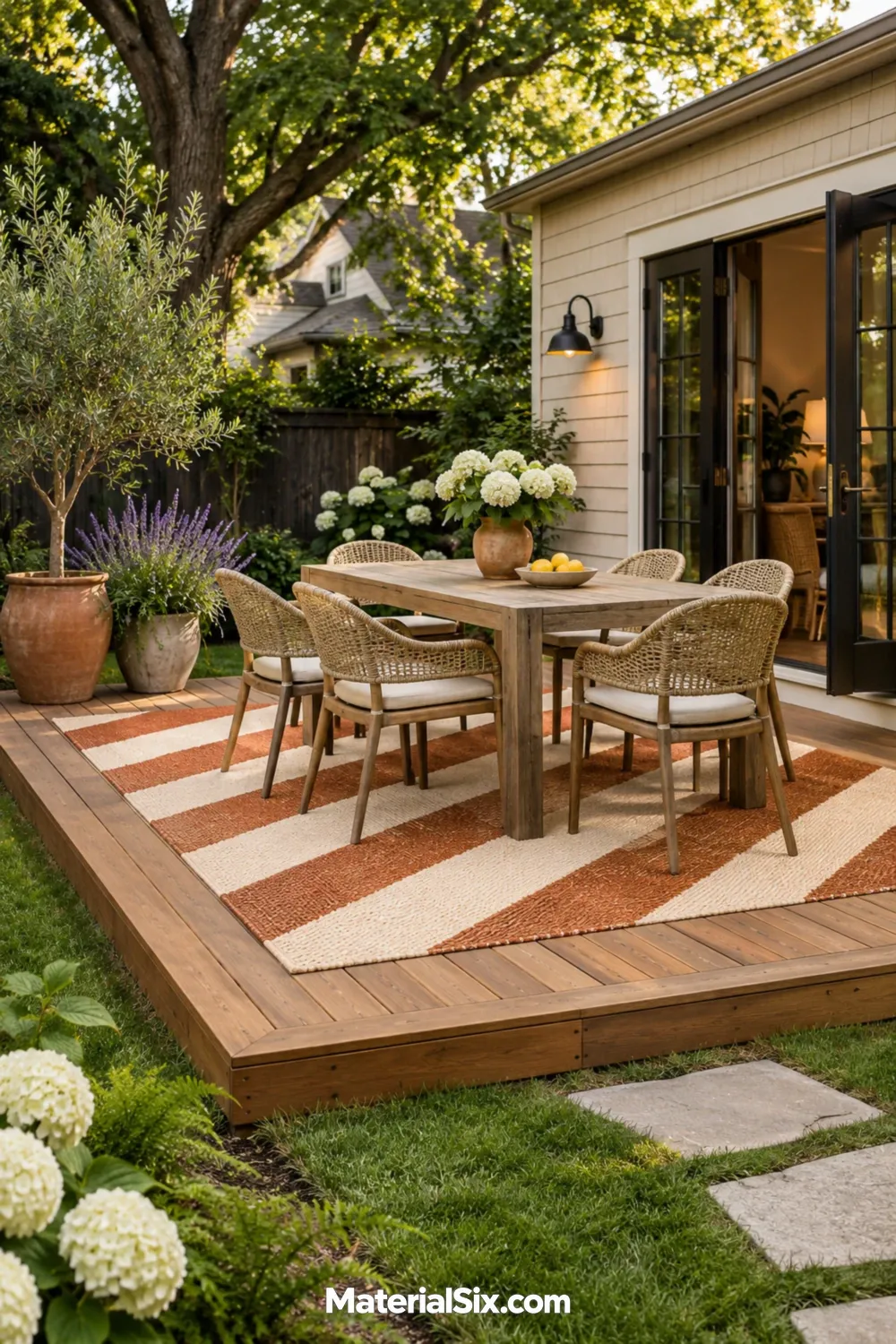
If you like the look of a deck with multiple zones, try arranging a patterned outdoor rug under one furniture group first. A terracotta stripe or broad check can give a plain wood rectangle a distinct dining area without changing the deck’s footprint. Leave a visible strip of boards between the rug and the edge so the shape reads clearly. For a table and chairs, check that the rug still supports the chair legs when someone pulls out a seat. Follow the decking and rug care guidance, especially if the spot stays damp after rain.
9. Plan an Open Gravel Pocket for a Planter
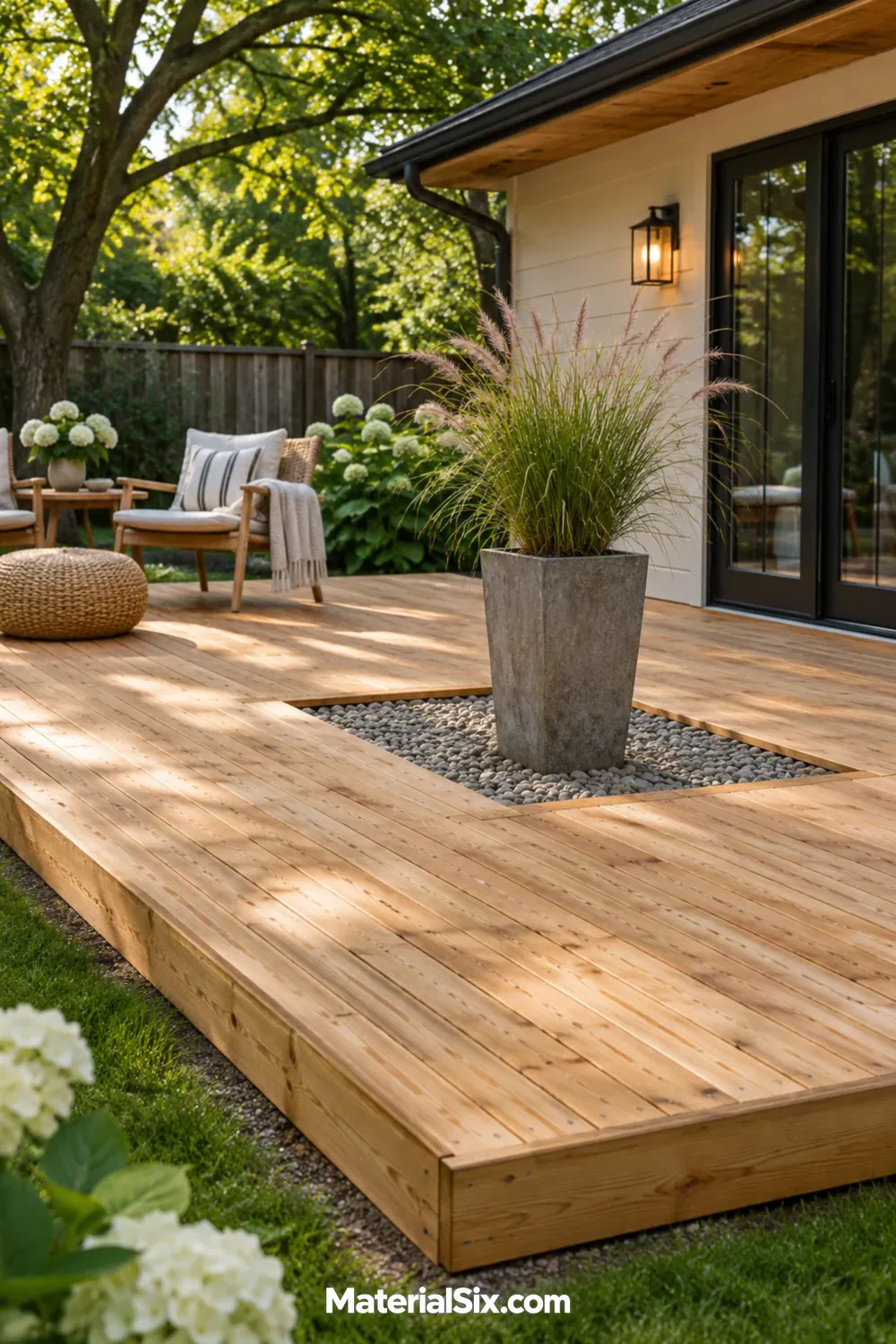
A small open corner within the deck’s outline can give a large planter a home at yard level and visually break up a broad area of boards. Put the pocket at one end or off a main travel route so it doesn’t interrupt the way you use the platform. Light gravel makes the recess visibly distinct from the walking surface.
Plan the recess before the framing is designed. A custom opening can add labor, so compare the quote with a plain rectangle and a gravel planter bed alongside it before choosing.
10. Add a Work Deck Beside the Shed
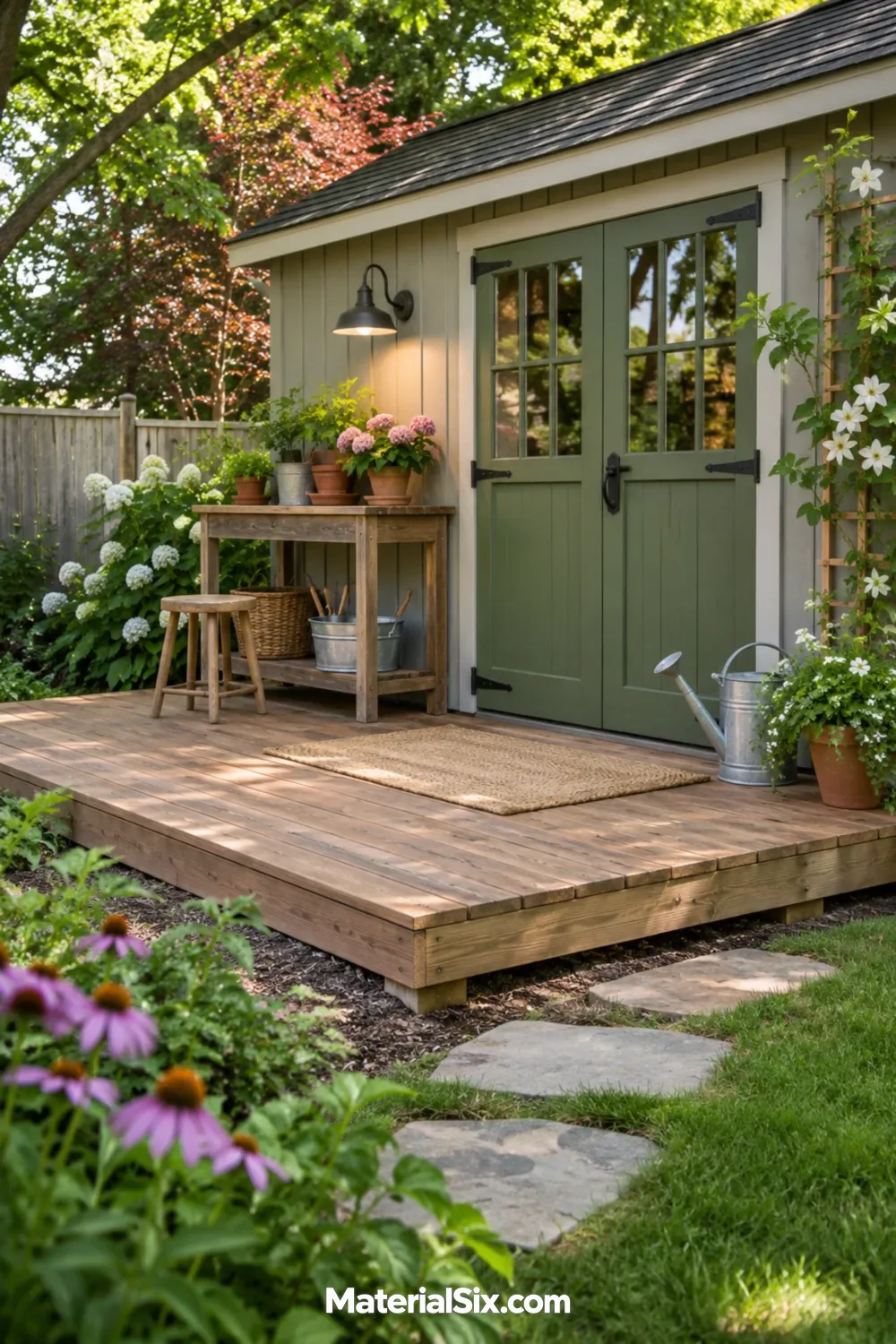
Set a small platform next to a garden shed and give a potting table a clean, level place to live. It helps to think through your busiest task. If you repot plants there, plan where you’ll stand, where a bag of soil will sit, and how you’ll get a filled pot back to the garden. Keep the shed door and the route for bulky tools clear. A short platform beside the door often makes more sense than decking the entire shed frontage, especially when the yard already has a serviceable path.
11. Price Straight Pressure-Treated Pine First
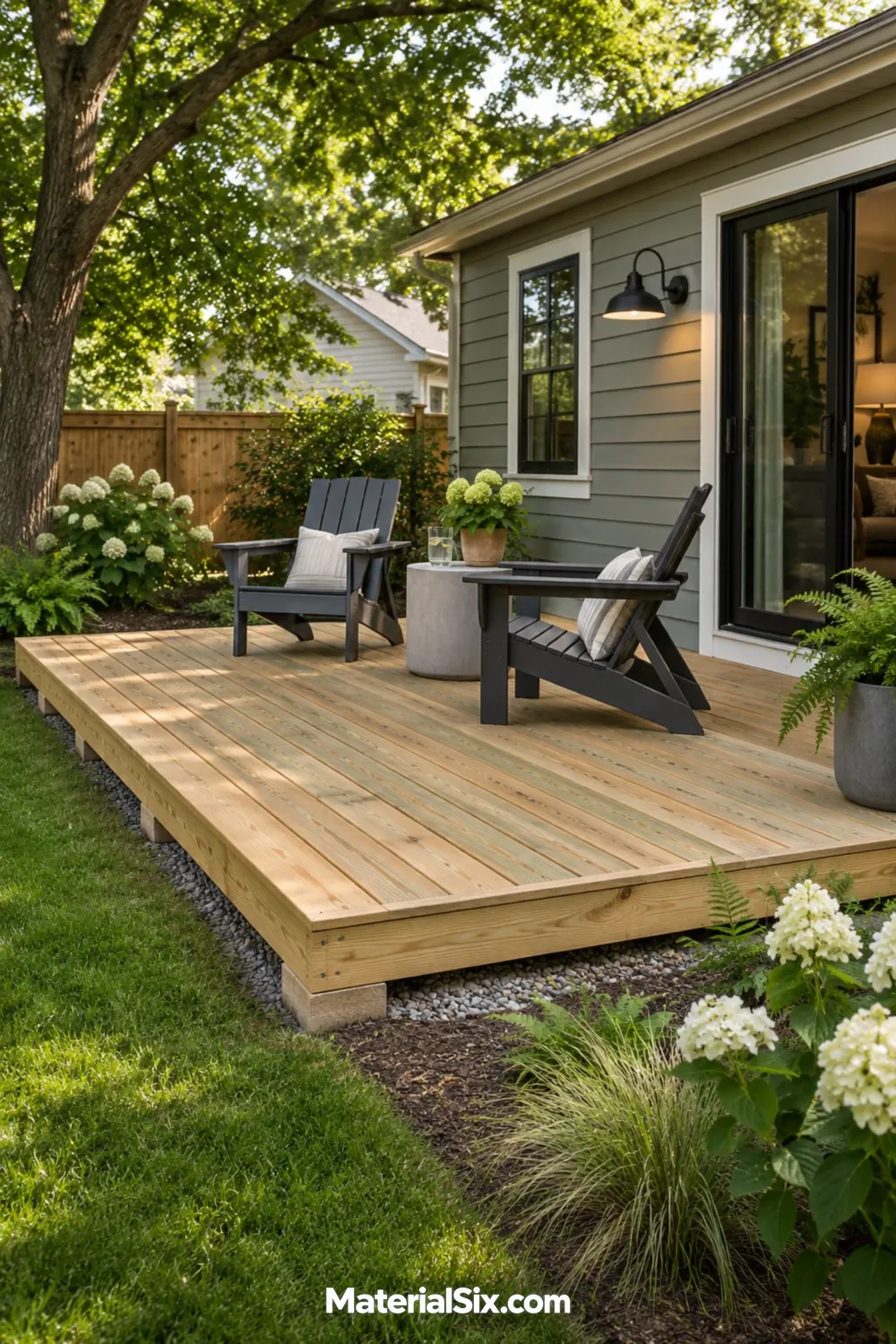
When comparing decking materials, ask for a quote for straight-laid pressure-treated pine in common stock lengths. Include the finish you intend to apply, the compatible fasteners, and the cost of future upkeep in the same estimate. Pay attention to what’s specified for the framing as well as the walking surface, because wood treatment requirements depend on where each piece will be used.
A plain parallel board layout suits all kinds of backyards. You can put the visual interest into a fence, planting, or furniture and keep the decking straightforward.
12. Compare Composite on a Small Footprint
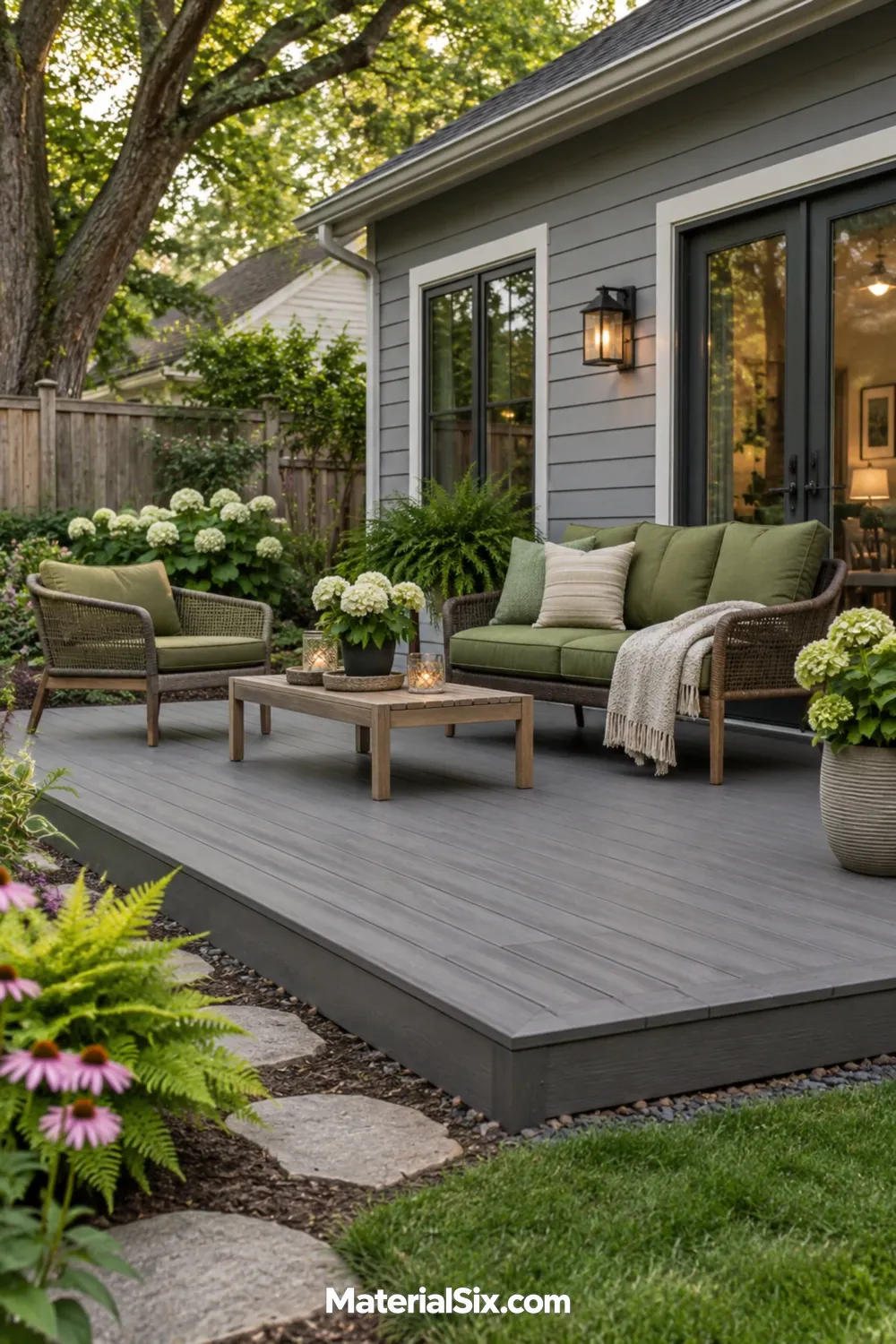
If you want composite decking, quote it for a compact seating platform so you can see how the material affects the whole budget. Ask a supplier to include the attachment system and any edge treatment in the estimate. Check the manufacturer’s framing, ventilation, and ground-clearance requirements for the product you’re considering.
Bring samples outside and compare them against your house or fence in daylight. The gray that looks cool at the store may look more blue next to warm siding. Color is easier to settle while the choices are still samples.
13. Warm Up Plain Pine With an Amber Stain
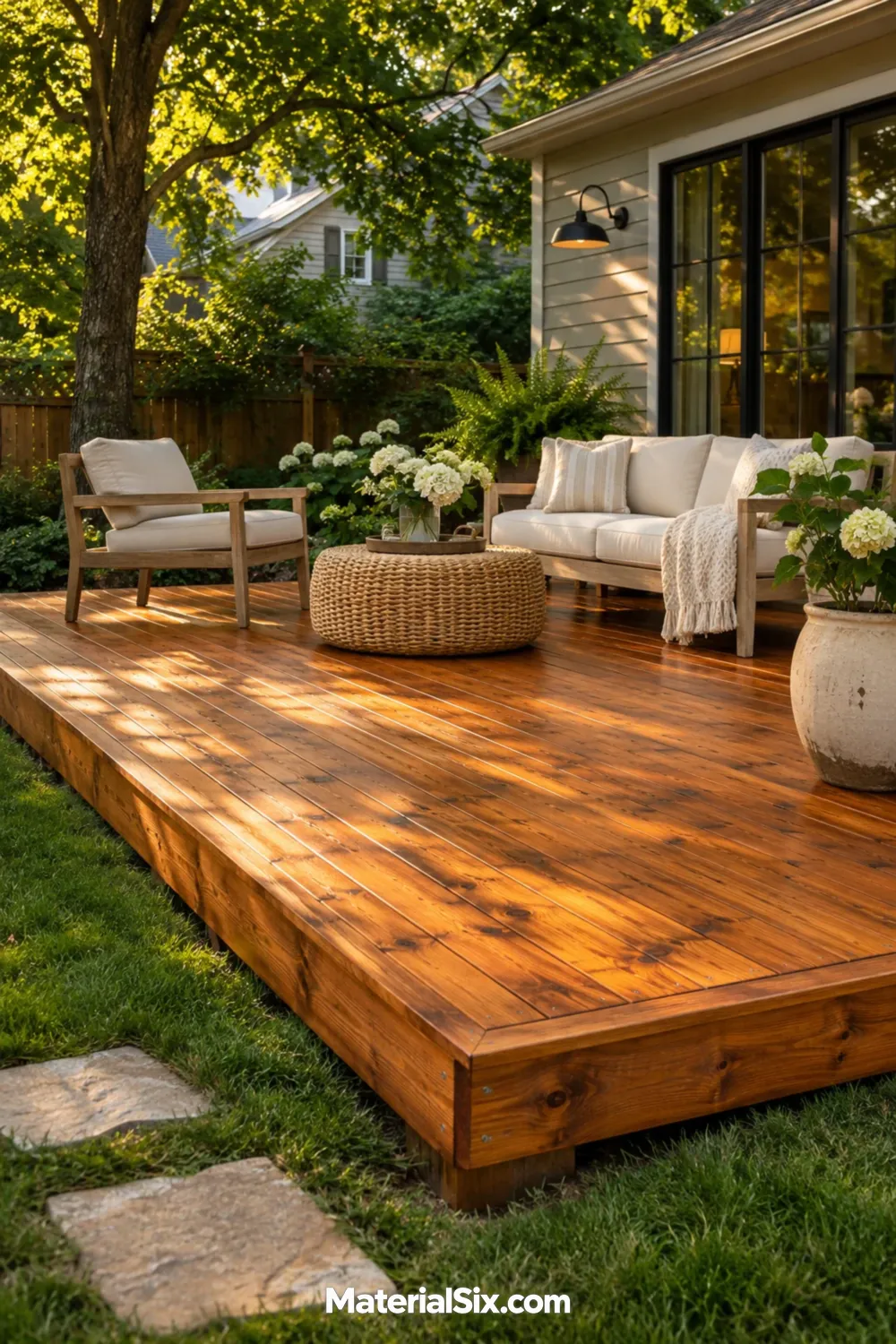
An amber-toned stain can give ordinary wood a warmer look next to brick, cream cushions, or green planting. Test it on an offcut from the same stock or a discreet spot on existing boards, since the wood’s starting color can change the result.
Let the sample dry and look at it in both shade and sun. Before buying stain, confirm that it’s suitable for deck floors and check its preparation and application instructions for your wood. Put the required prep in the budget, especially if you’re working with an older finish.
14. Paint a Dark Border on a Sound Deck
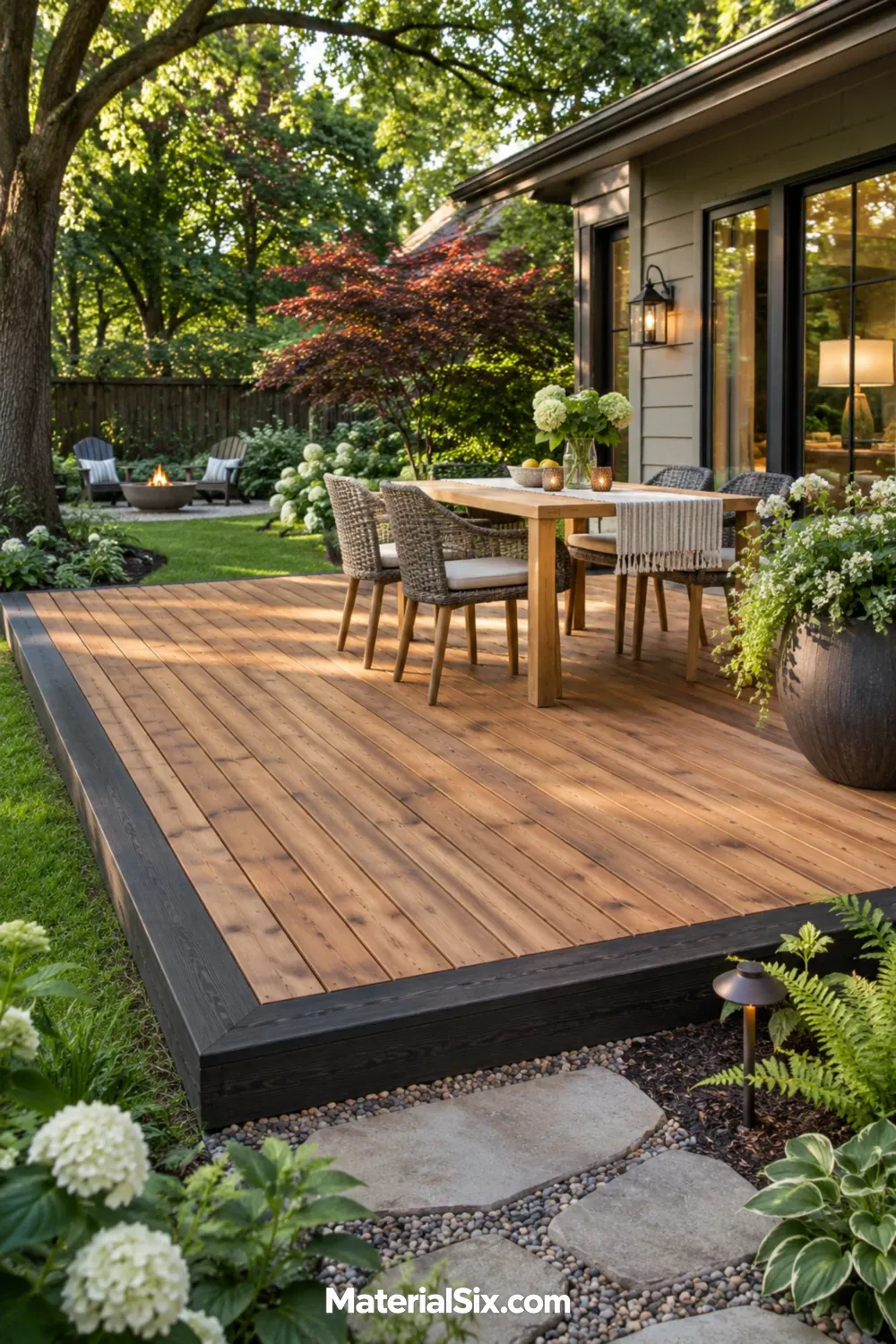
A dark perimeter can make an existing rectangle feel deliberate and frame the pale boards in the middle. It works especially well when the deck already has a dark door, window frame, or set of chairs nearby.
Pick a deck-floor coating compatible with the existing surface and lay out the border before you open the can. Let the board edges guide the stripe wherever possible. If the deck needs repairs, price those first and paint after the surface is ready. The border is a finish detail and should stay a small part of the spending.
15. Bring Privacy to the Seats With Tall Planters
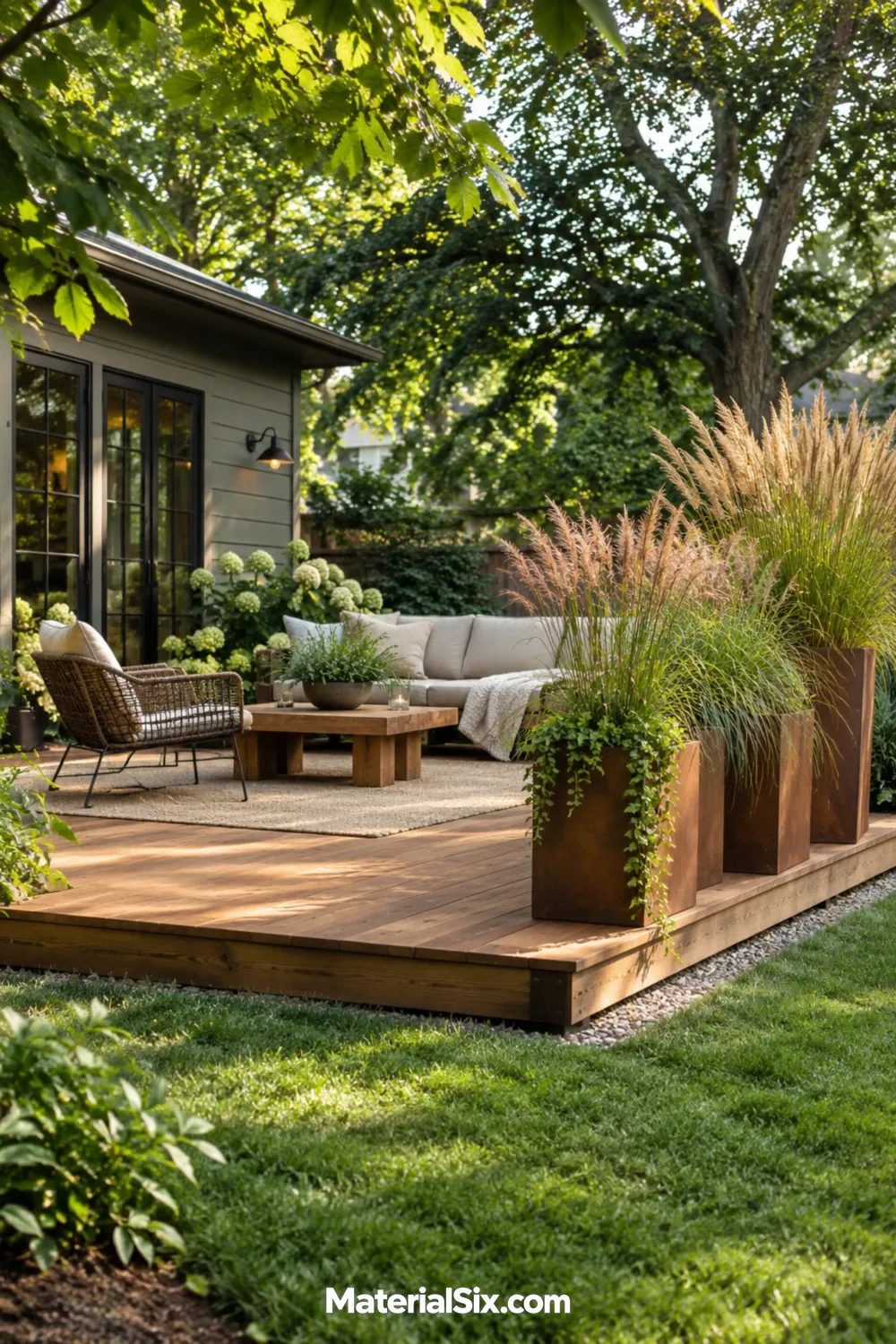
Set a cluster of tall planters where the view from a neighboring window or path is most direct. Test the position from a seated height first. Two or three grasses at the end of the deck may screen the angle you care about and preserve the view across the yard. Pick plants suited to the available light and containers you can water comfortably. If the pots will be large or heavy when filled, consider placing them on stable ground next to the deck. You’ll still see the foliage from your chair.
16. Screen One Corner With Wood Slats
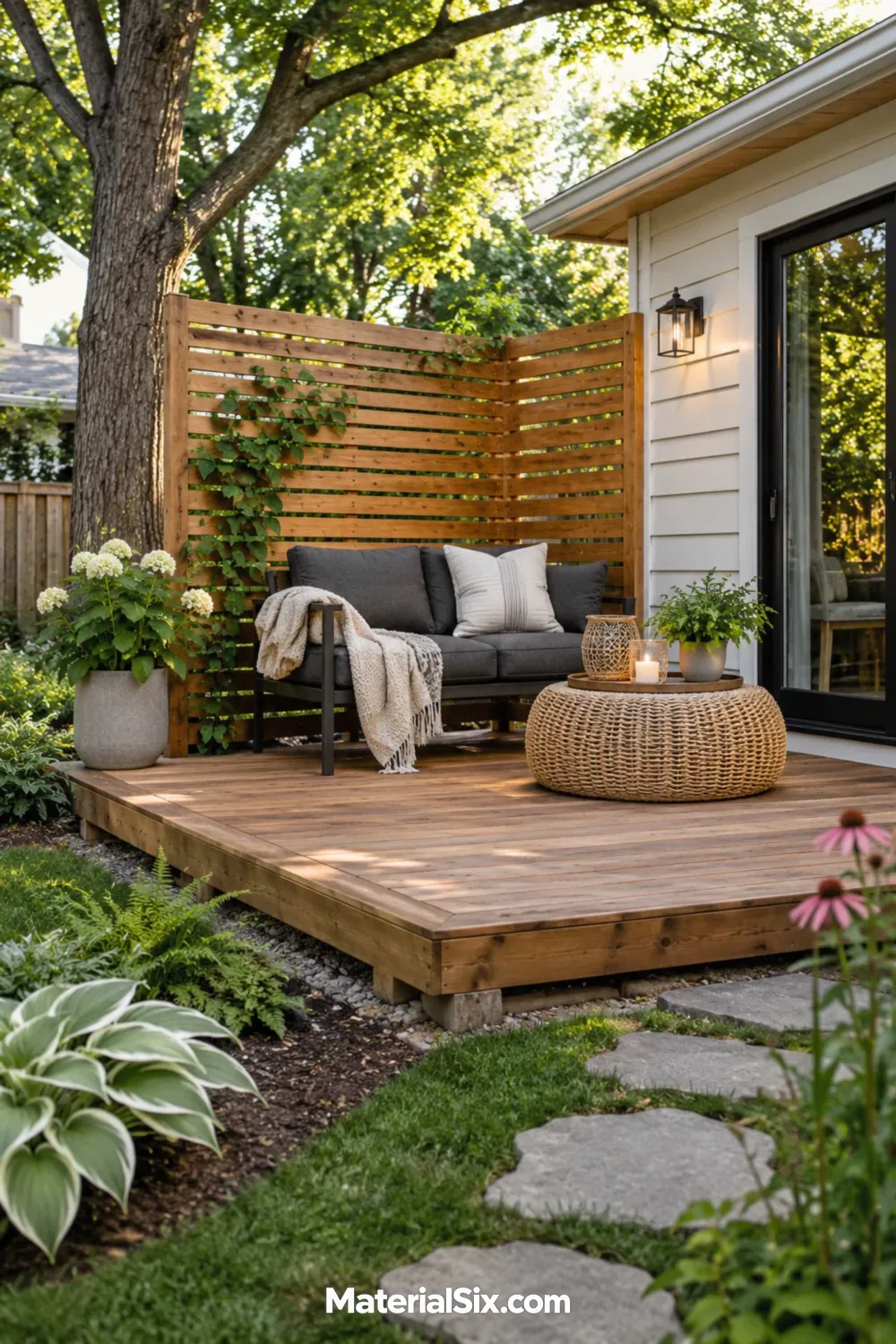
A short run of wood slats can make a loveseat or a reading chair feel tucked in while leaving the rest of the deck open. Decide how much screen you need by sitting in the planned spot and asking someone to hold up a temporary sheet where you’re considering placing it. Mark the width that actually blocks the view.
Price the screen and the support together and check how wind loads will be handled. Keeping the screen to the corner with a clear purpose frees up the sunny side for plants or another chair.
17. Shade the Table With a Freestanding Umbrella
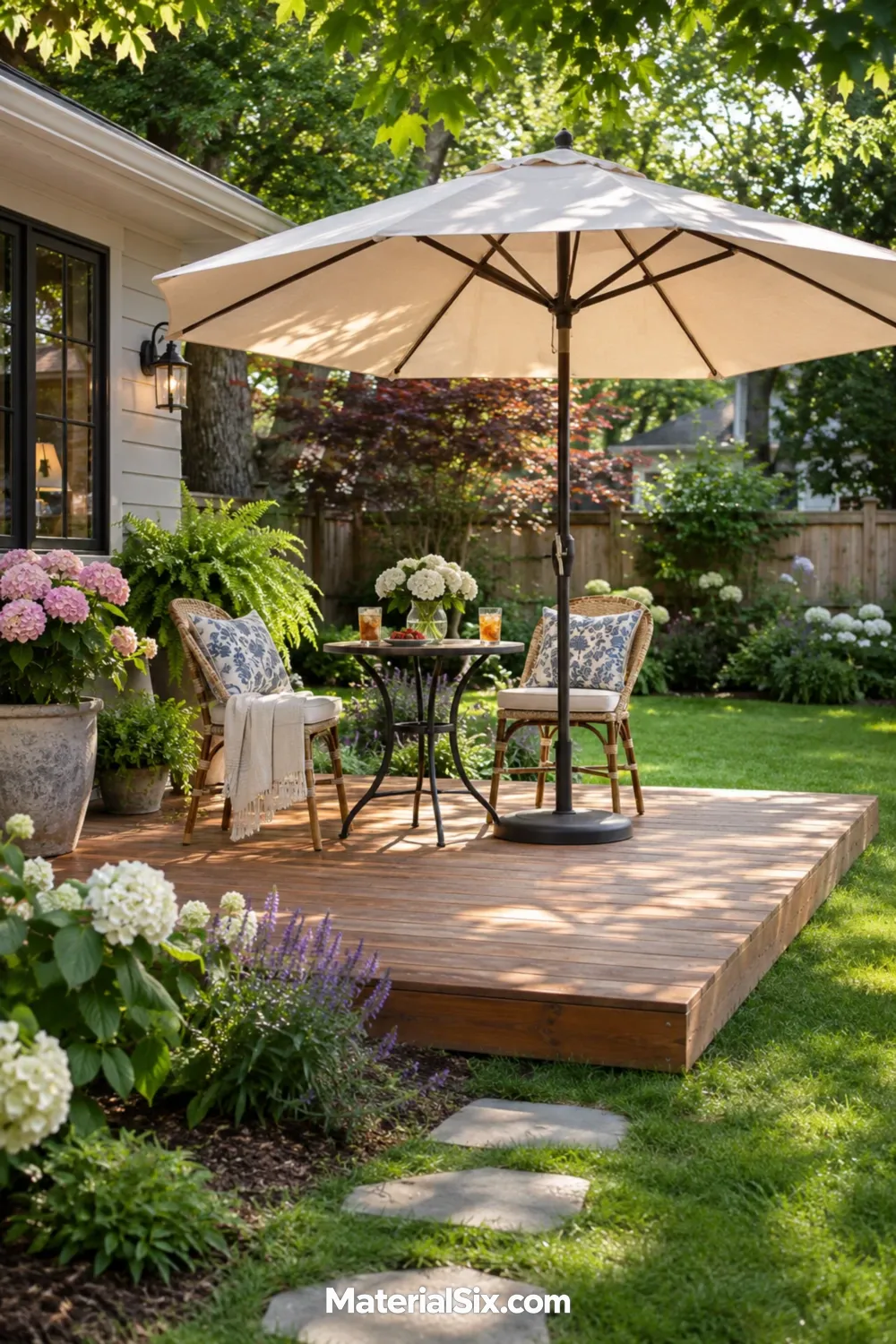
For a deck with a café table, a freestanding umbrella lets you put shade across the chairs without building a permanent roof. Figure out where its base will sit before choosing the table size. You want to be able to pull a chair out and walk to the garden without stepping around the stand. Look at the shadow at the time you usually sit outside, since a spot that looks shaded at noon can be bright at dinner. Use a base suited to the umbrella and follow the manufacturer’s wind guidance.
18. Repeat One Plant Along a Mulched Edge
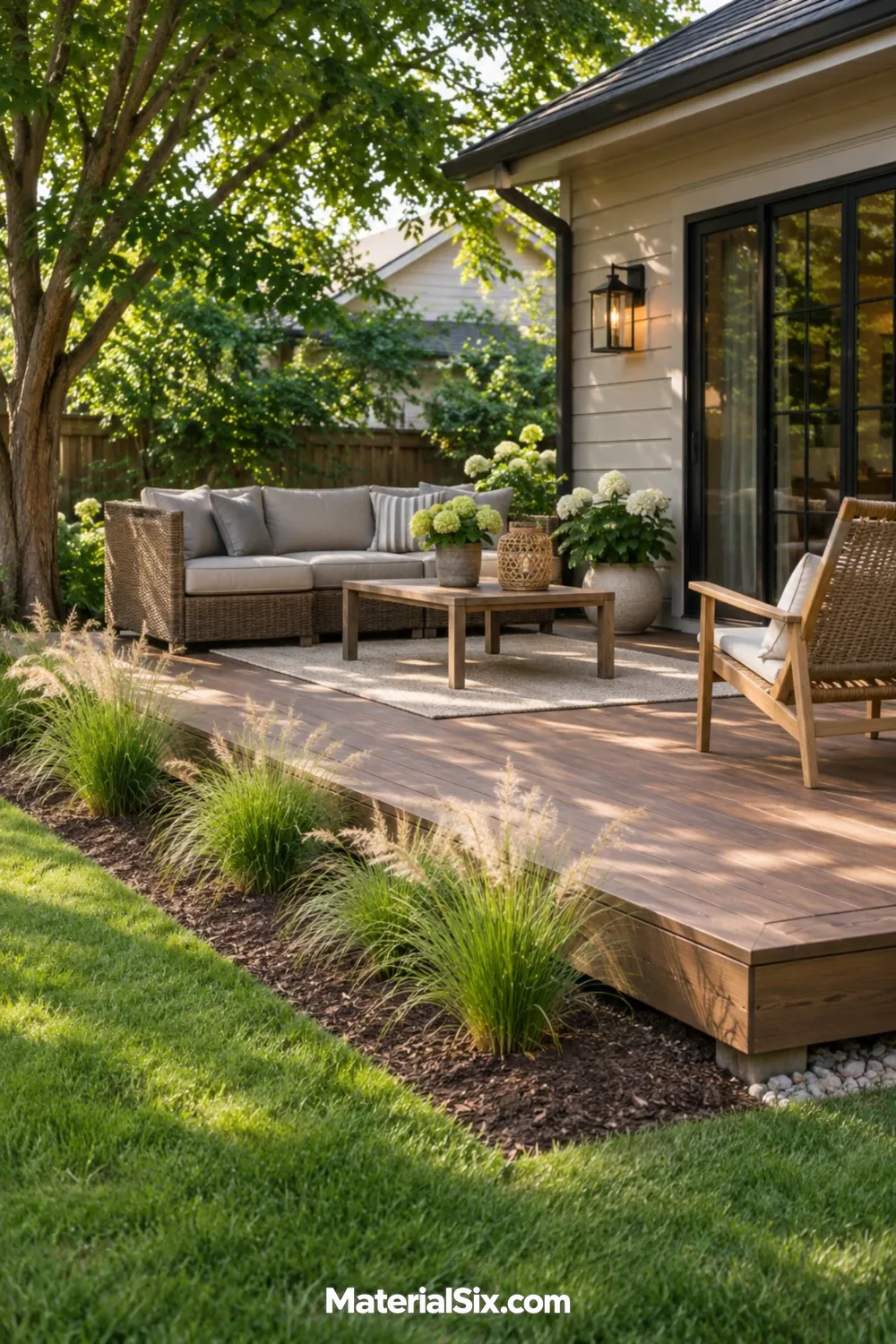
A narrow, mulched planting edge can soften the line where a ground deck meets the lawn. Repeat a few clumps of the same ornamental grass or low shrub to give the deck a defined border without buying a different plant for every gap. Choose a plant that fits the light and whose mature spread leaves the deck edge and path accessible. Keep mulch and soil from piling against the wood. If your deck has a wide view of the garden, leave an opening in the planting where you like to look out or step through.
19. Give the Deck a Gravel Apron
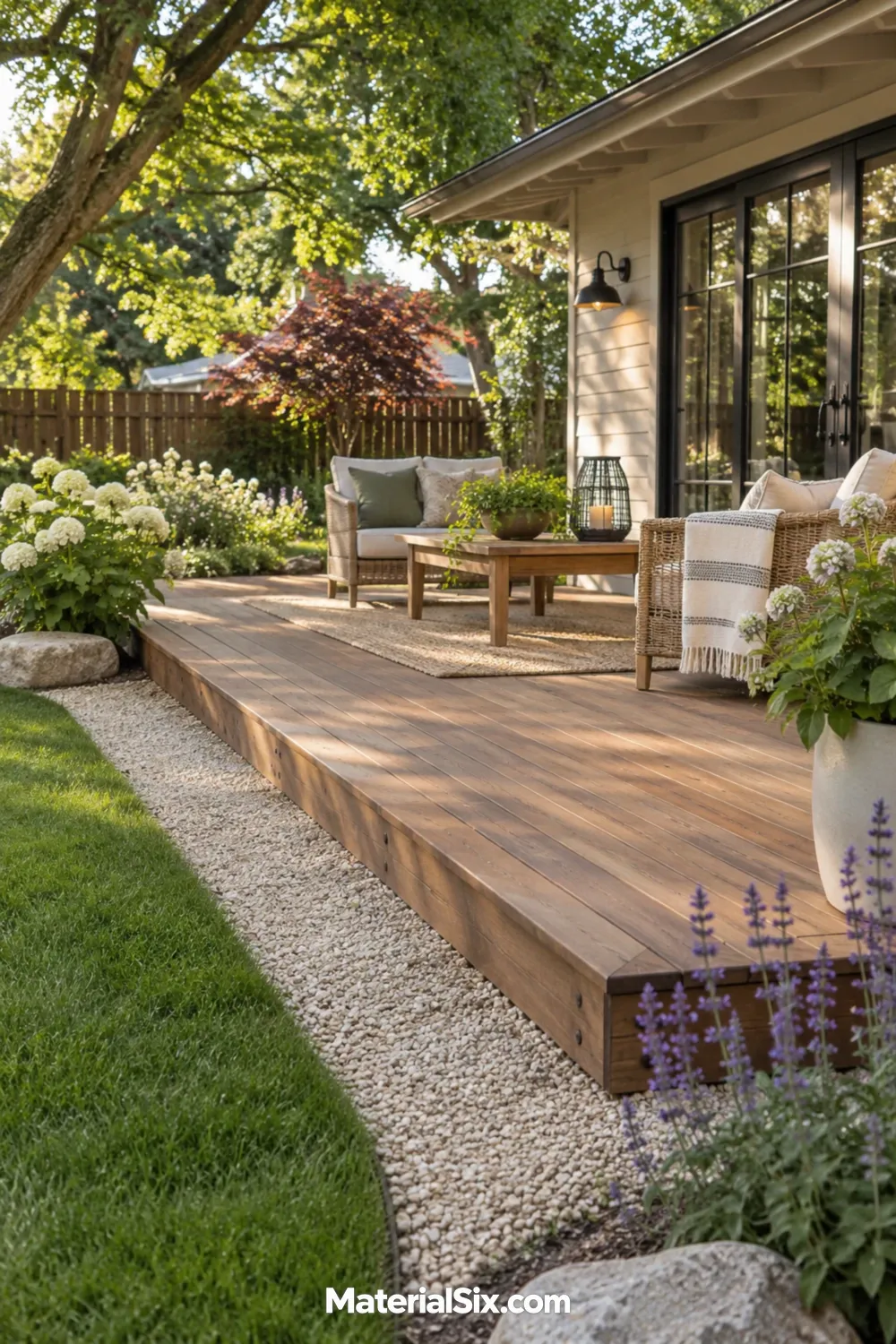
A band of gravel on the garden side can visually set the platform apart from the lawn and give a nearby planter a matching spot to sit. Follow the deck’s straight edge or turn the gravel band outward into an existing path. Decide which surfaces you’ll maintain with a mower or trimmer so you can plan the boundary with those tools in mind.
Look at where runoff goes on your property. A gravel strip is a finish for the yard surface, and persistent drainage problems deserve attention in the site plan.
20. Make Secondhand Chairs Look Like a Set
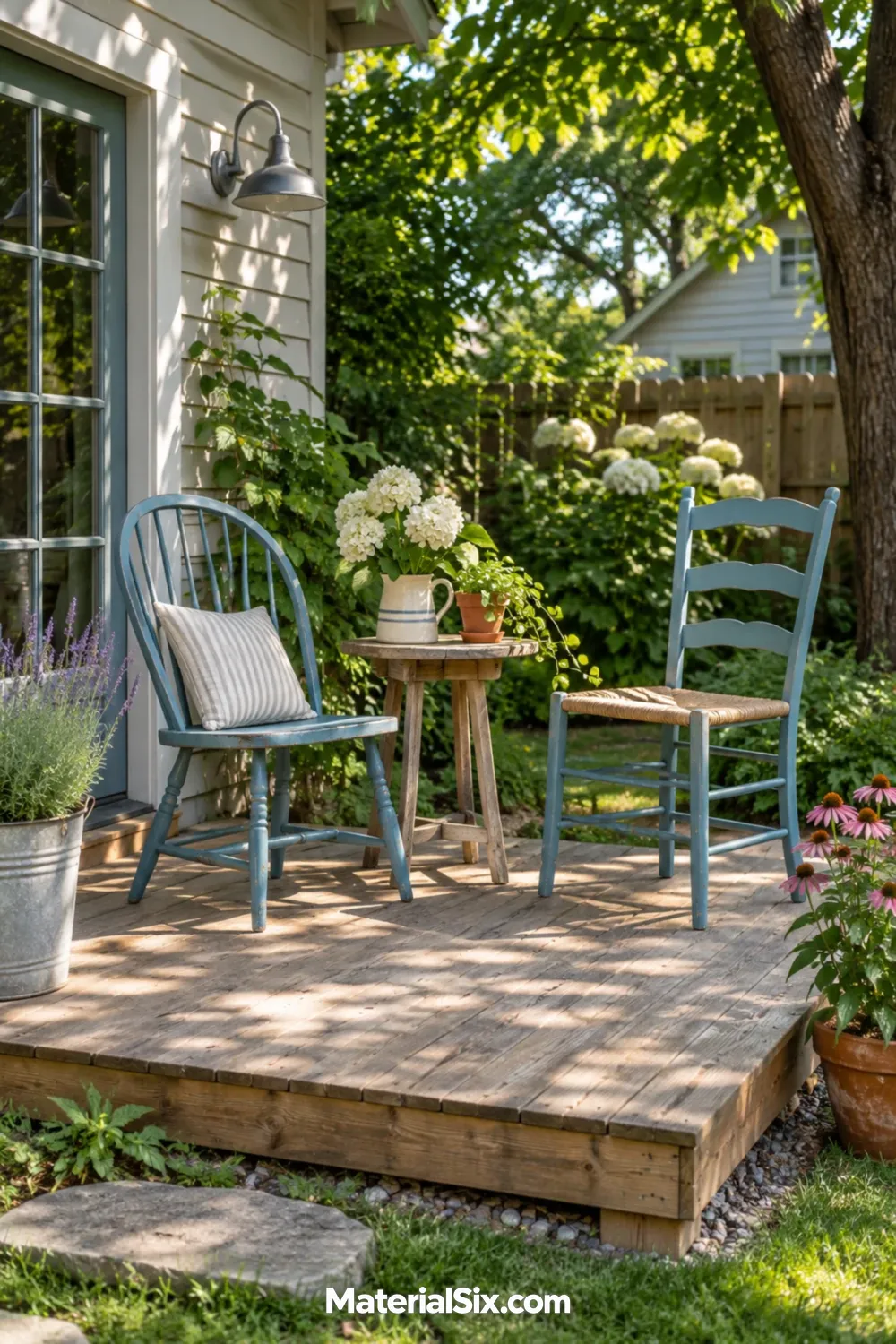
A spindle chair and a slatted chair can look at home together when both are painted the same muted blue. Check secondhand pieces for looseness or damage, and use an exterior finish suited to the material. A small shared table gives them a reason to sit together and leaves room for morning coffee. On a narrow deck, put the larger chair at the end with more space to pass. Try the arrangement before painting, since swapping one bulky piece out may improve the deck more than adding another accessory.
21. Use a Bench With Storage for Cushions
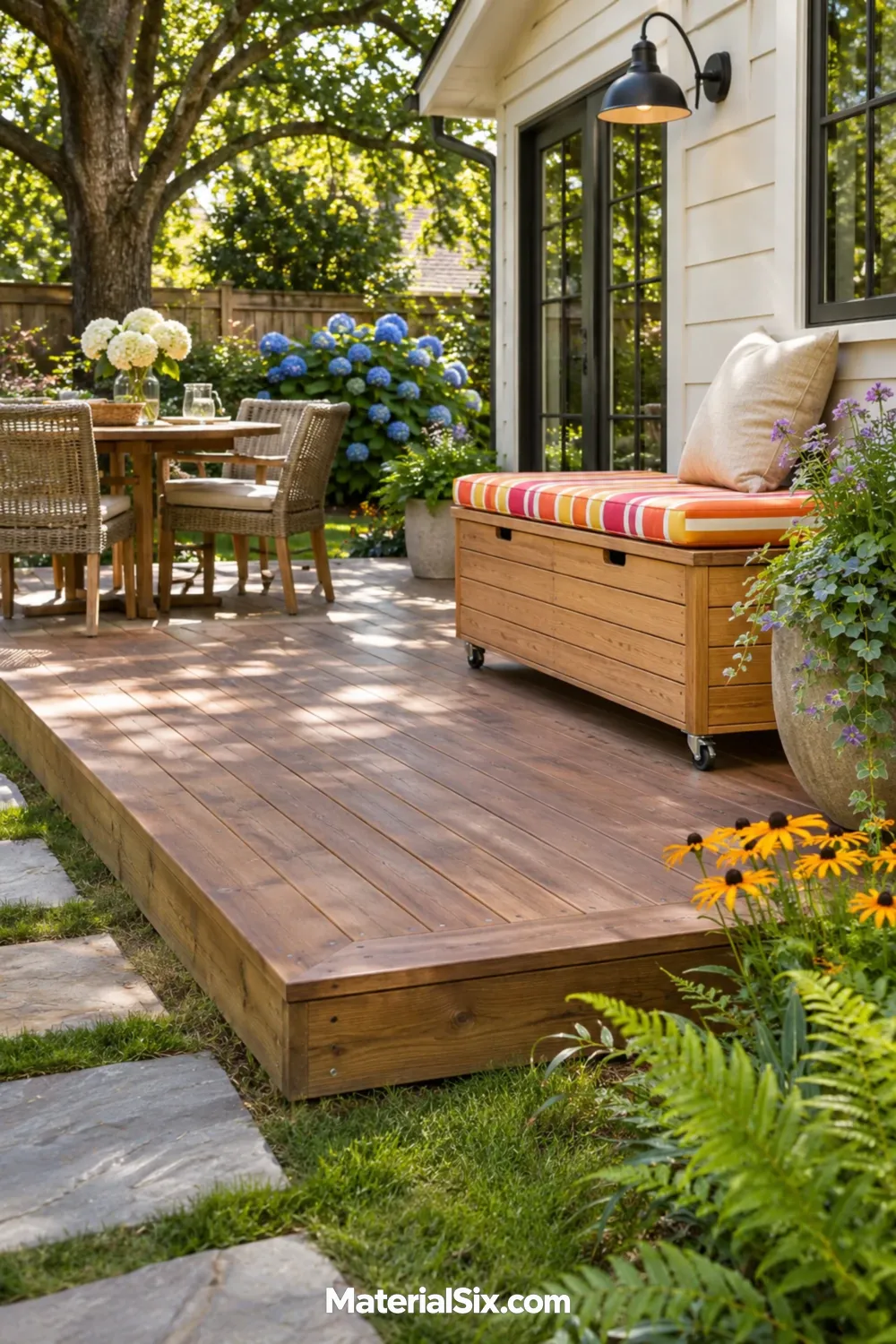
A storage bench can provide seating while keeping small deck accessories within reach. Place it where someone can open the lid without standing in the doorway or moving the table. On an exposed deck, check what the manufacturer says about water resistance before storing anything that needs to stay dry, and let damp cushions air out before putting them away. Measure the inside as well as the outside of the bench. Some cushions take up more room when folded than they appear to on the seat.
22. Mark the Route With Solar Path Lights
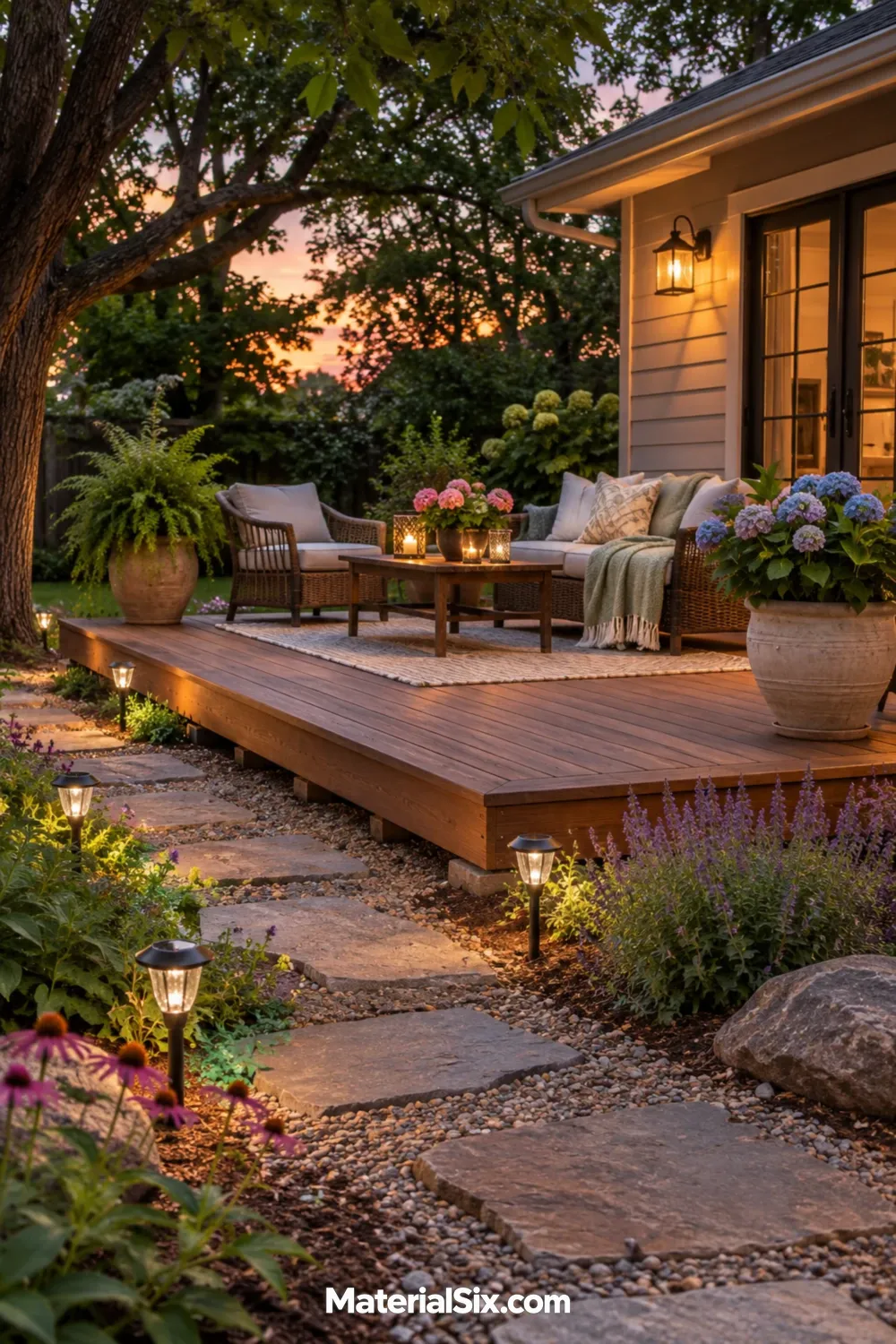
Place a few small solar lights beside the path that leads to the deck. Space them where the route changes direction or where the transition from garden to platform needs to be visible. Check where the lights will receive sun during the day, then test the arrangement after dark from both directions. For any step that needs reliable lighting, check local requirements and choose suitable lighting for the job. The path lights can still add a pleasant low glow beside plants without becoming the main feature.
23. Add a Short Run of Café Lights
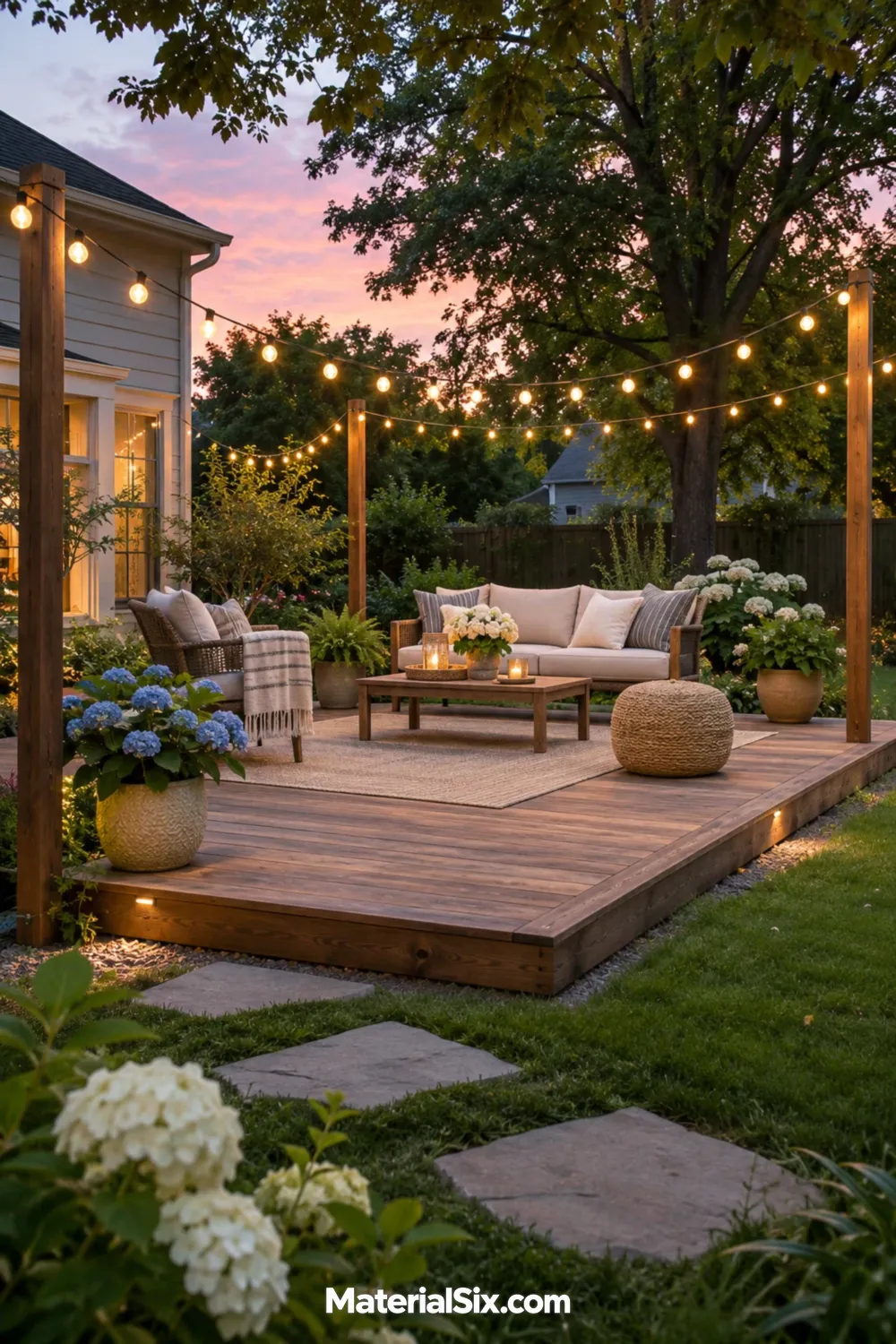
A short strand of outdoor café lights can make a low deck feel like a room at dusk. Plan the run around the part you use at night, whether that’s two chairs and a side table or a small table near the house. Use outdoor-rated lighting, suitable support, and an appropriate outdoor power source. Place the supports so the main route between the house and yard stays clear. Sketch where the cord and power connection will go before you buy the strand, especially if the deck sits well away from the house.
24. Open the Center Up With Folding Furniture
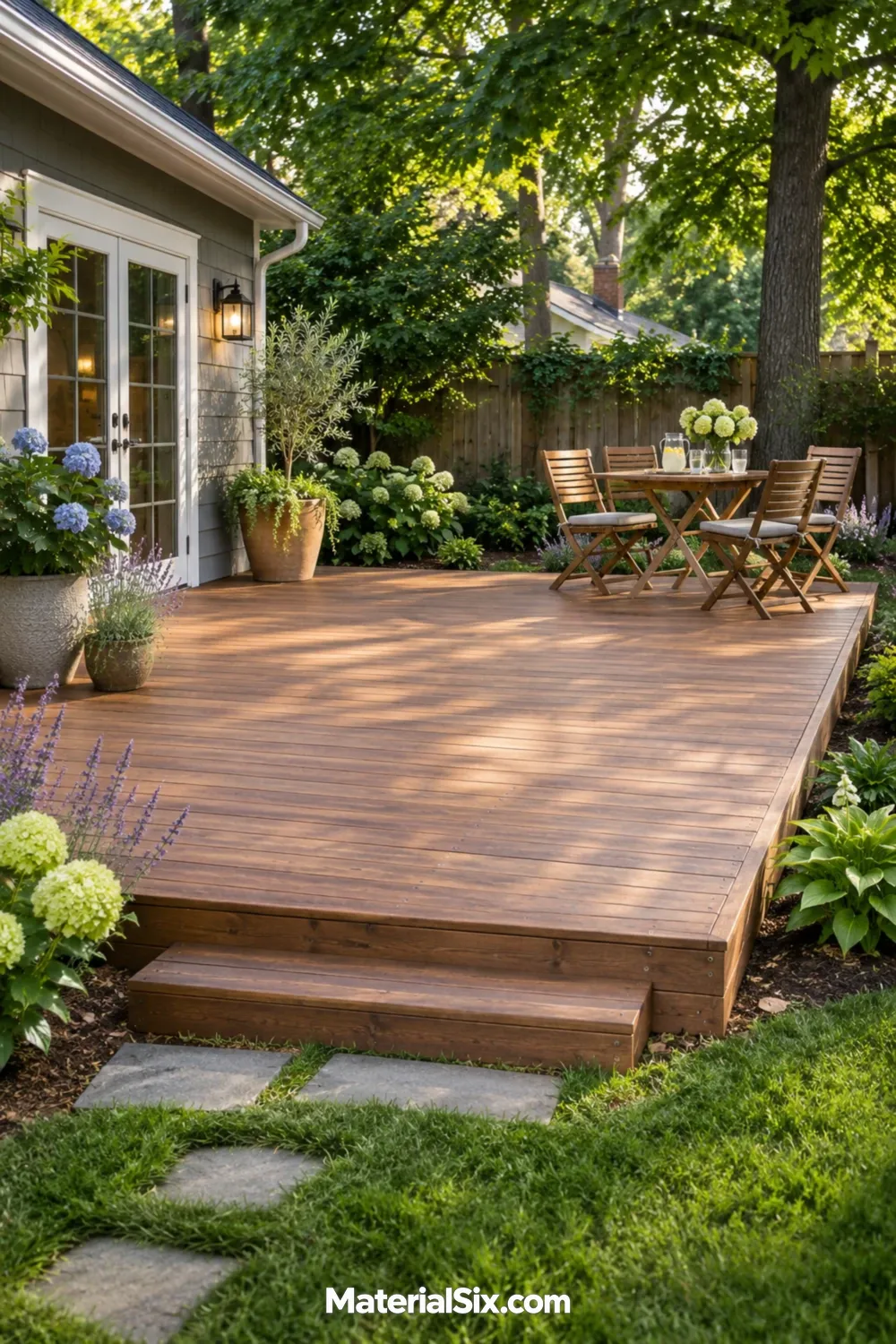
A folding bistro table and chairs make sense when the deck doubles as an open spot for stretching, plant care, or a kid’s outdoor project. Look for pieces you can carry and store easily, and decide where they’ll go when you clear the deck. Measure a chair in both positions so it fits under cover or beside the shed without getting in the way. If one person tends to sit outside every morning, a permanent chair at one end and folding seating for guests can be an easier everyday arrangement.
25. Split Lounging and Dining Across Two Surfaces
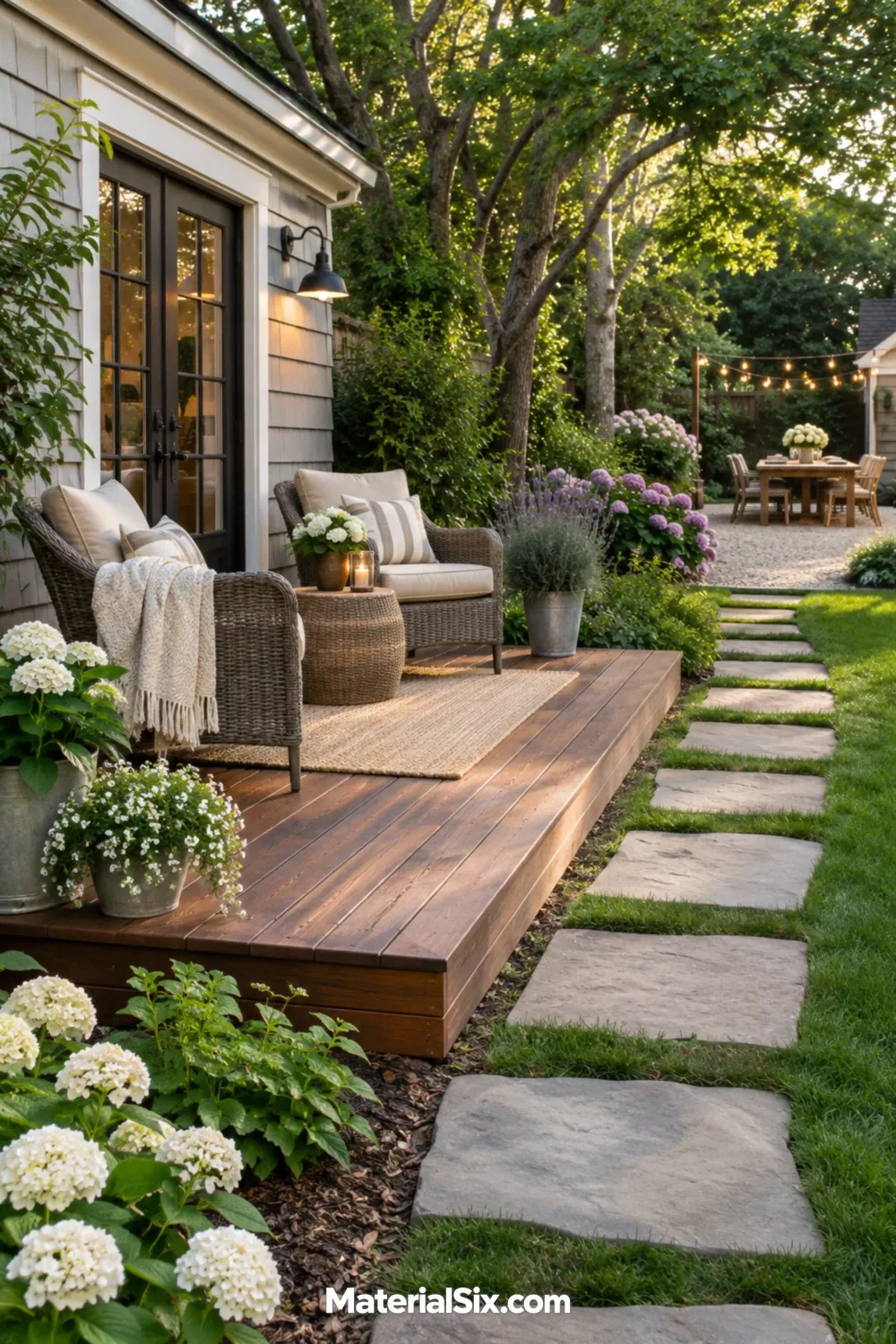
Keep a small lounge deck outside the back door and put the dining table on an existing gravel or paver area. Separate surfaces let you build decking where you most want the feel of wood underfoot. Before settling on the dining location, walk the route from the kitchen with a tray and check that the table and chairs sit stable when people pull the chairs out. Tie the two areas together with repeated cushion colors or the same style of planter. A short path can give the backyard a clear layout without committing the entire space to decking.
What to Measure Before You Ask for Deck Quotes
- Furniture in use. Set up the chairs and table, pull every seat out, and walk your usual route to the yard. Mark the smallest outline that fits the activity comfortably.
- Existing site conditions. Note the door threshold, slope, downspouts, and where water sits after rain. Contact your local building department about permits, setbacks, and the design requirements for the proposed deck. Arrange a utility locate before digging.
- Two comparable scopes. Ask for a quote on a simple footprint and another on the design detail you care about most. Ask each builder to break out support, framing, decking, steps, fasteners, labor, and finishing. If you’re doing the work yourself, include delivery, tools, and disposal in your materials estimate.
- A maintenance budget. Find out what the specified boards and finish will need over time. Compare those costs separately from the initial quote so you can decide where you’d rather spend.