
There’s always one more thing to put away in a nursery. The clean sleepers need a drawer, the next size up needs somewhere to wait, and the wipes have to be where you can reach them halfway through a diaper change. Once the room is set up, the real test is whether each item makes it back to the same spot.
The nursery storage ideas below give those everyday routines a place in the room. A divided drawer lets you see which sleepers are clean, while a shelf by the door gives the packed diaper bag somewhere to land between outings. The right setup depends on what you reach for and where you’re standing when you need it.
1. Divide the Dresser Drawer by Clothing Type
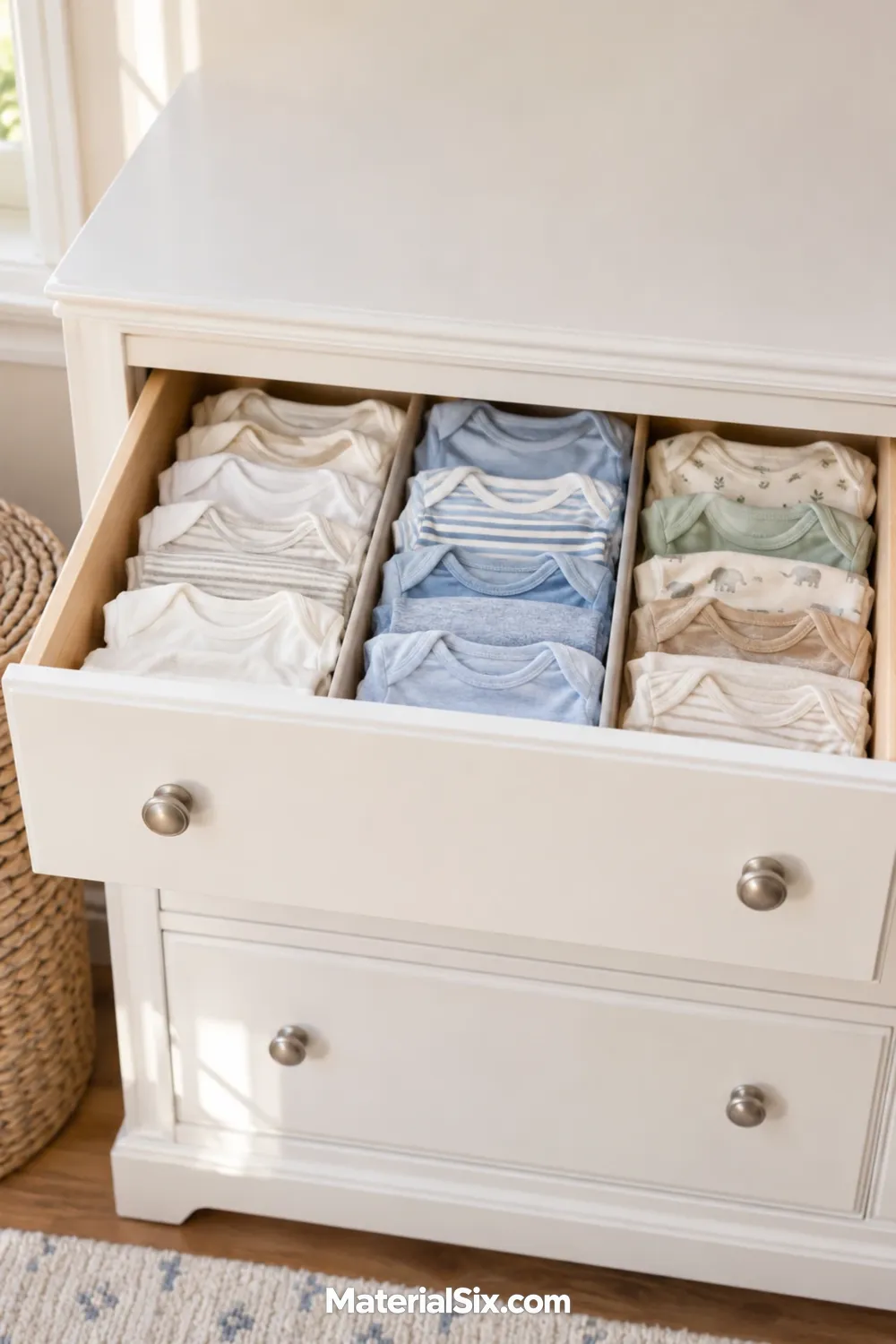
Fold onesies upright in one section and group sleepers in another. Set the dividers after you fold a few pieces so each section fits the clothes you actually own. Leave a little room to slide a hand in and pull out one outfit without disturbing the row.
2. Use Two Short Rods for Baby Clothes
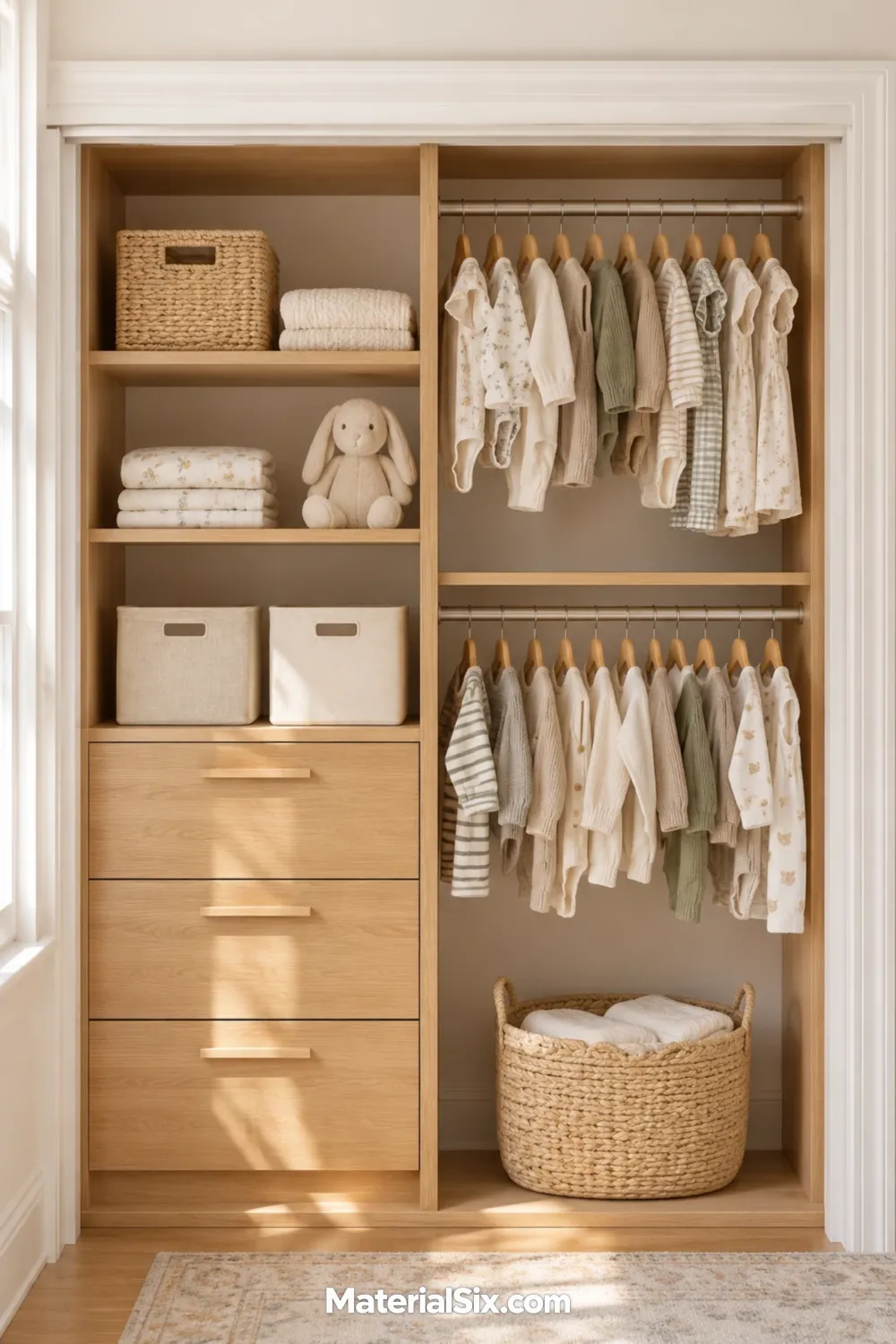
Baby outfits leave a lot of unused space under a full-height closet rod. If your closet can take a second rod, hang shorter pieces on both levels and leave one end open for longer coats or dresses.
Check the length of your longest garment on a hanger before positioning the lower rod. The upper row should be easy for you to reach, and both rows should clear the floor and any storage underneath.
3. Separate Hanging Clothes with Size Dividers
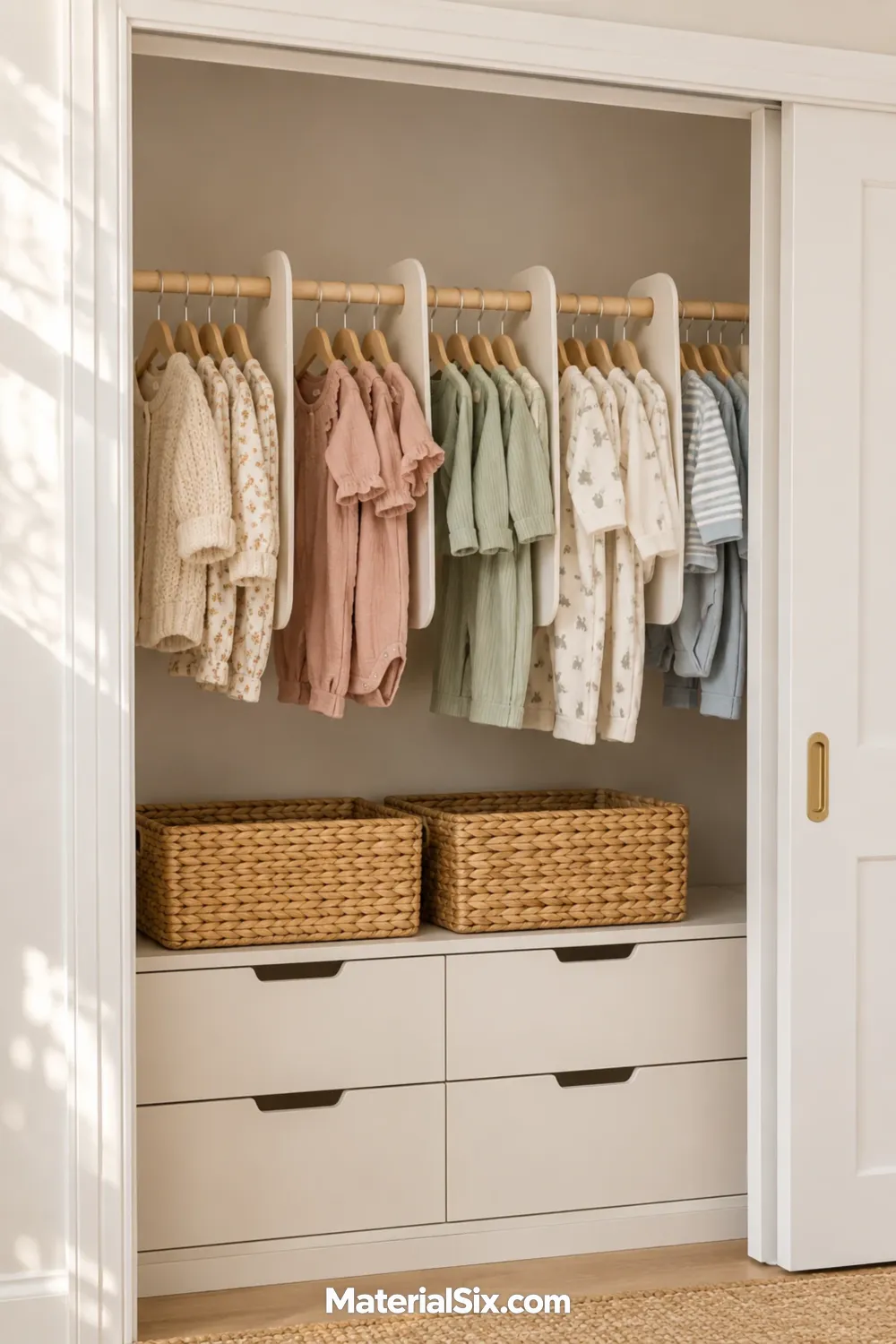
Slide wardrobe dividers between sizes, then compare the actual fit of pieces from different brands. Keep the clothes your baby can wear now together at the end of the rod closest to the door. The next size can sit immediately beside it, ready for the first sleeper that gets tight.
4. Store Next-Size Clothes in Clear Bins
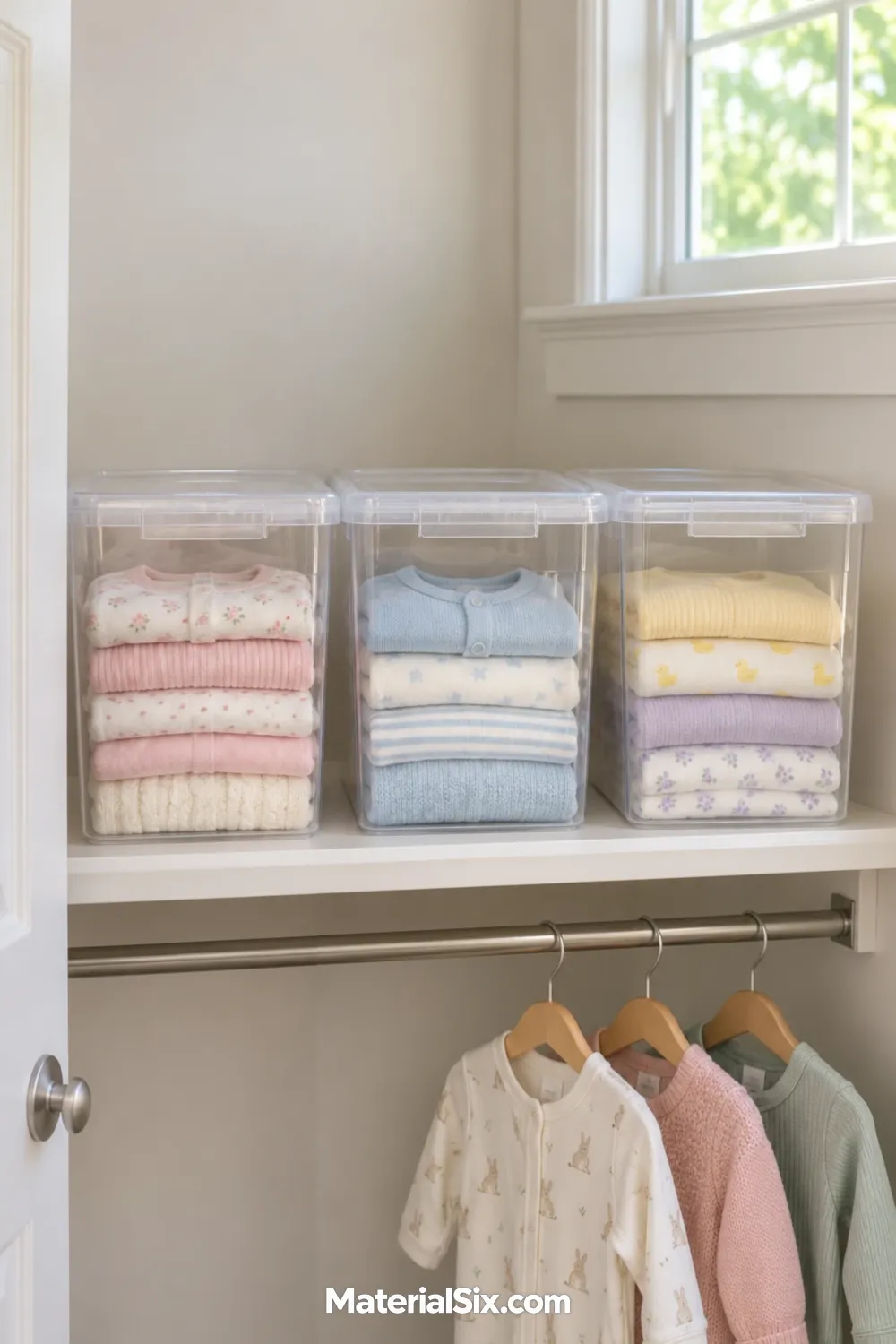
Group hand-me-downs by the size you expect to reach next and what will fit later. Clear bins let you spot the winter layers or summer basics without pulling every container down. Put a label on the side that faces the closet door so you can read it from the floor.
5. Set Up a Drop Bin for Outgrown Clothes
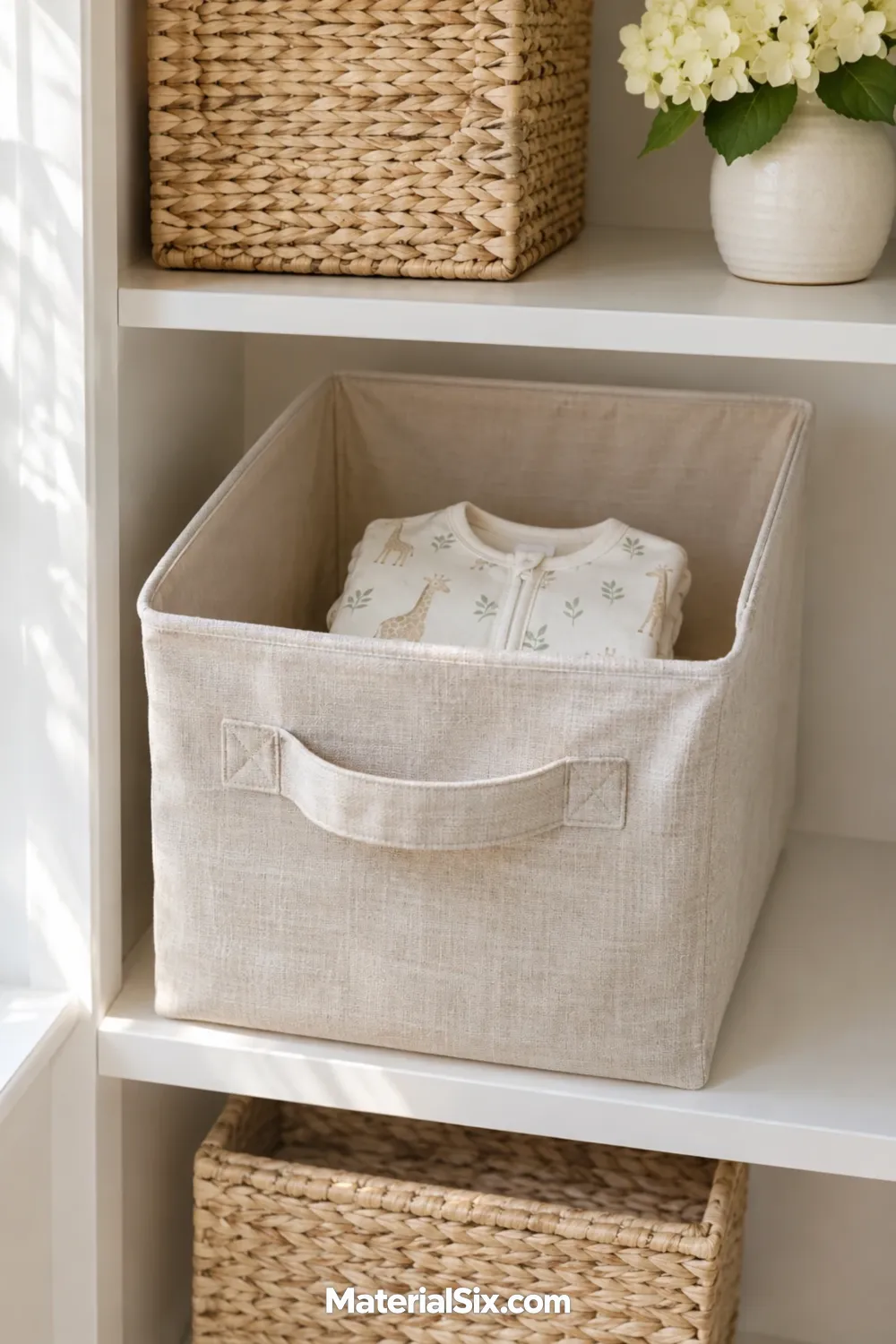
Put a small open tote within your reach where you dress your baby. Drop in a snug sleeper as soon as you take it off, then sort the tote for donations, hand-me-downs, or storage when it fills.
6. Add Hanging Cubbies for Bulky Knits
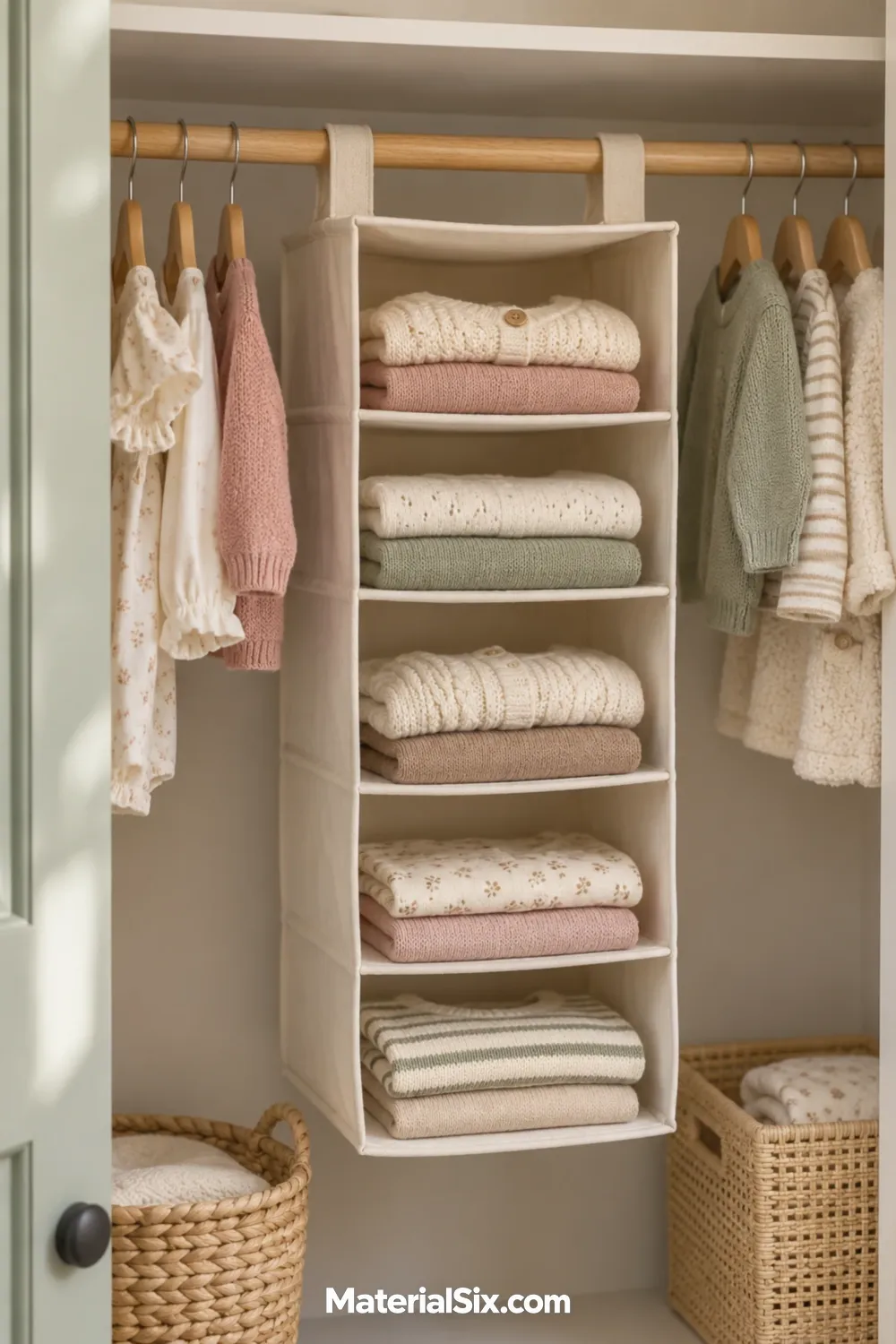
Sweaters and thicker layers tend to take over a small dresser drawer. Fold them into a hanging closet organizer with one short stack per cubby. Before buying one, measure the drop from the rod to the floor or shelf underneath, and check the organizer’s weight limit.
7. Give Diaper Changes a Dedicated Supply Zone
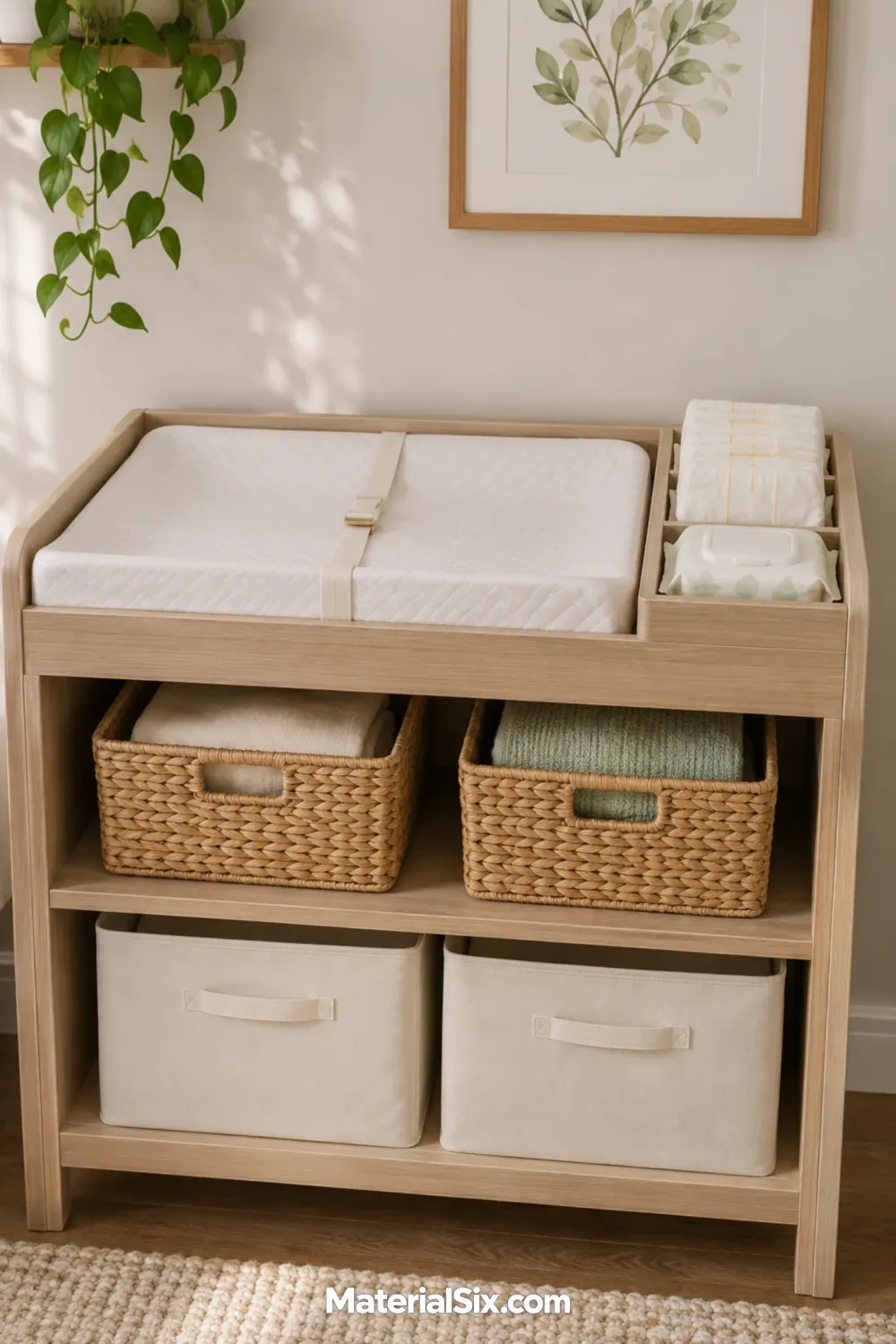
Dedicate the side compartment of a purpose-built changing station to open diapers and wipes. Keep any overflow elsewhere so you can see what needs refilling at a glance. Put a fresh outfit and a spare changing-pad cover in the nearest drawer for the changes that turn into a full reset.
Choose a setup you can reach while keeping a hand on your baby. Anchor the furniture as directed and follow the changing product’s instructions for securing the pad.
8. Keep a Diaper Caddy for the Second Room
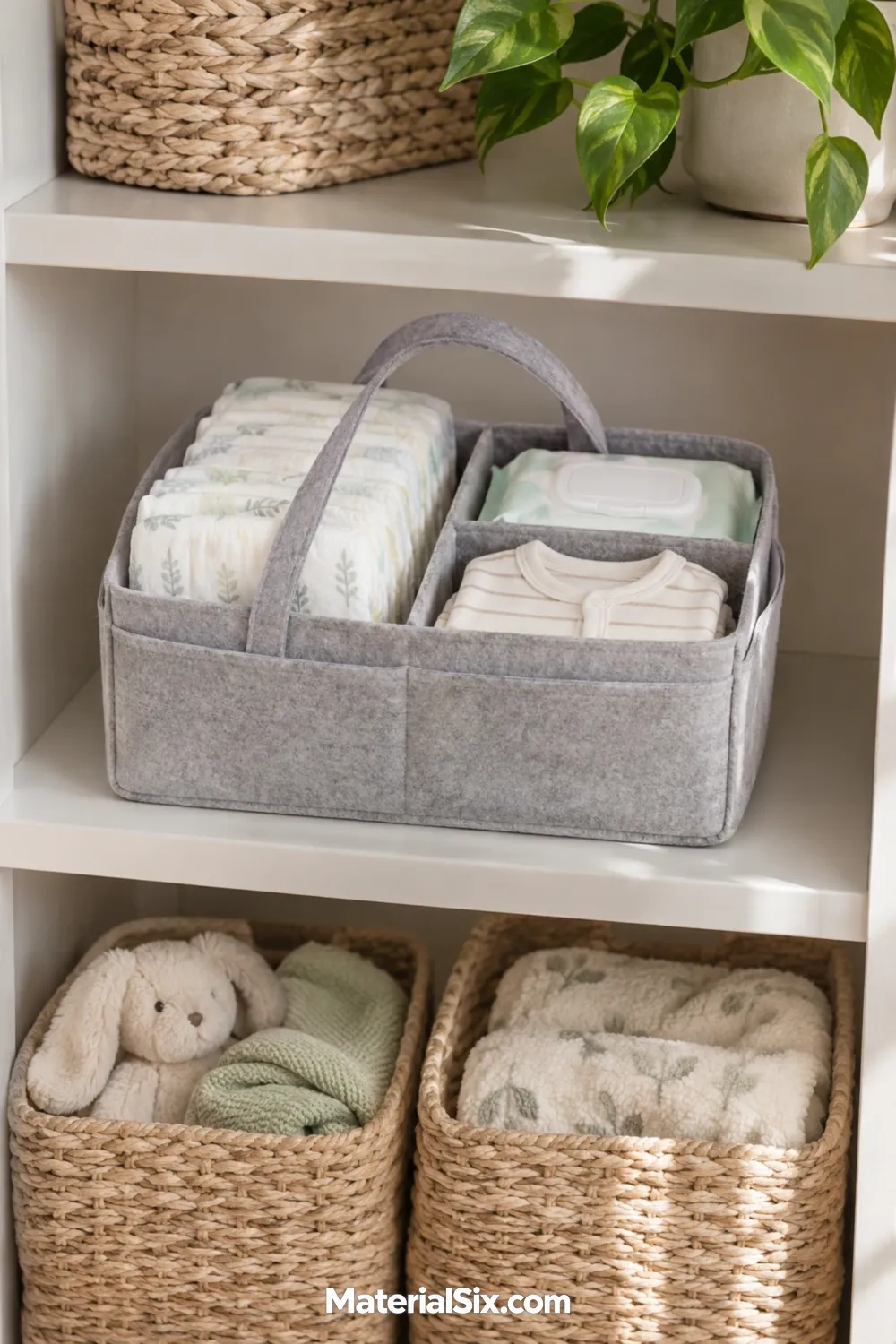
When you spend part of the day away from the nursery, keep a handled caddy ready with a few diapers, wipes, and a spare outfit. Give the caddy an adult-height home shelf and replenish it when you return it there.
9. Reserve a Slim Cart for Diaper Refills
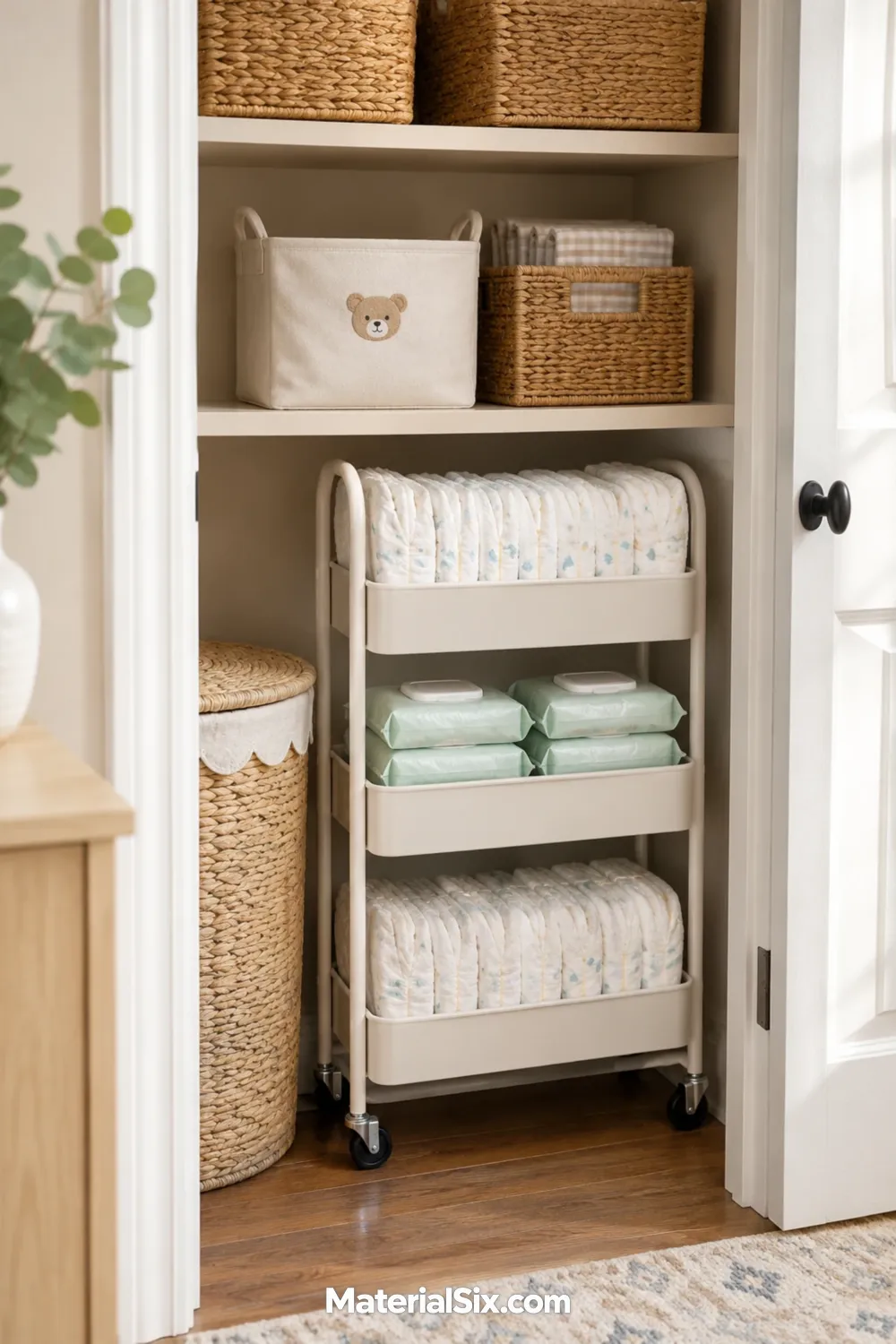
Make a narrow cart in a utility closet your refill station. Open packs can go on the easiest tier to reach, with unopened packs and spare wipes below. Measure the cart with its handle and wheels before you buy, then check that you can open the closet door fully with the cart parked inside.
10. Use Closet Door Pockets for Soft Extras
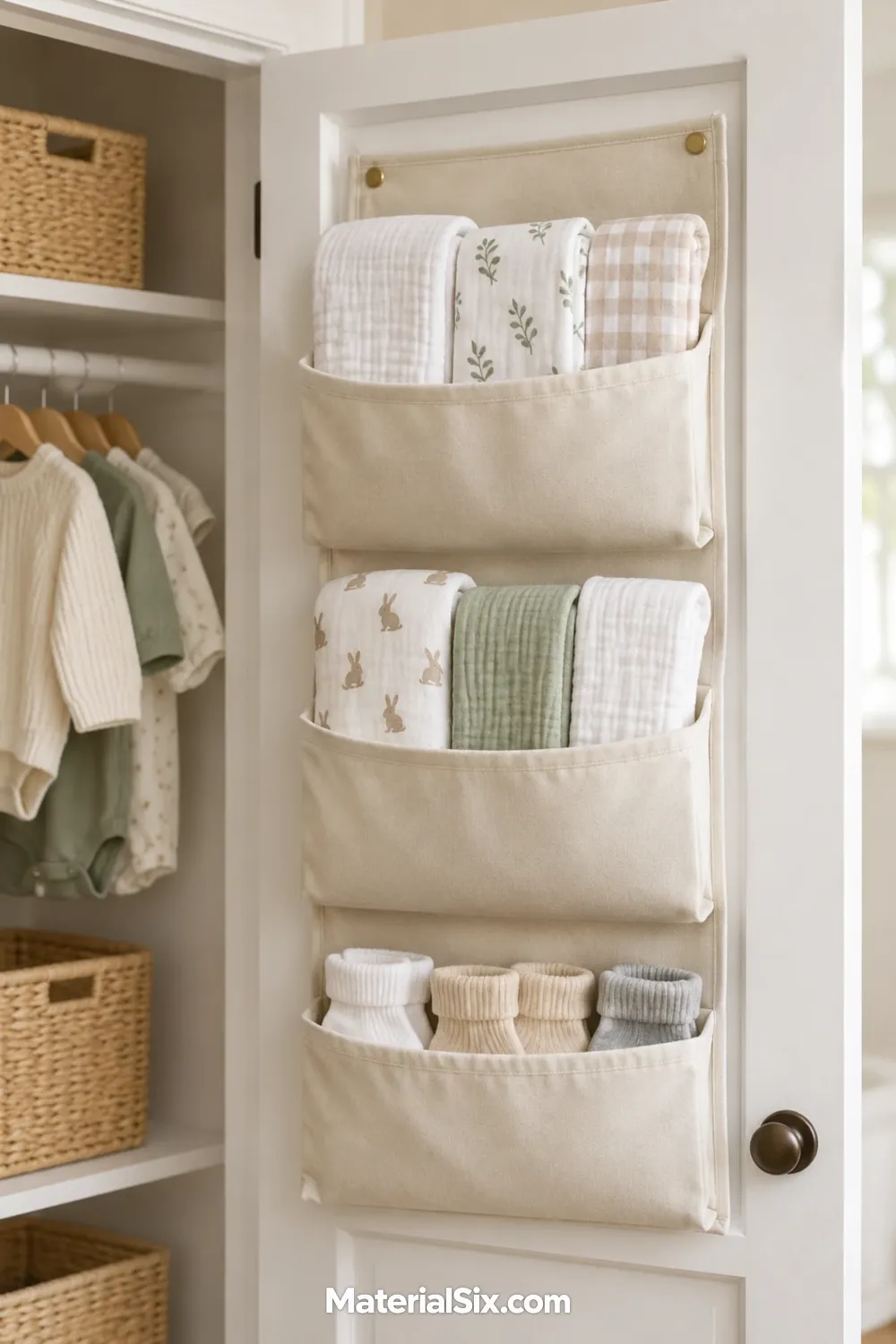
Give burp cloths, socks, and spare bibs a pocket each on the inside of the closet door. Check that the door still shuts cleanly with the pockets loaded. A quick glance at each pocket tells you what needs to go back after laundry day.
11. Hang Shallow Shelves for Folded Linens
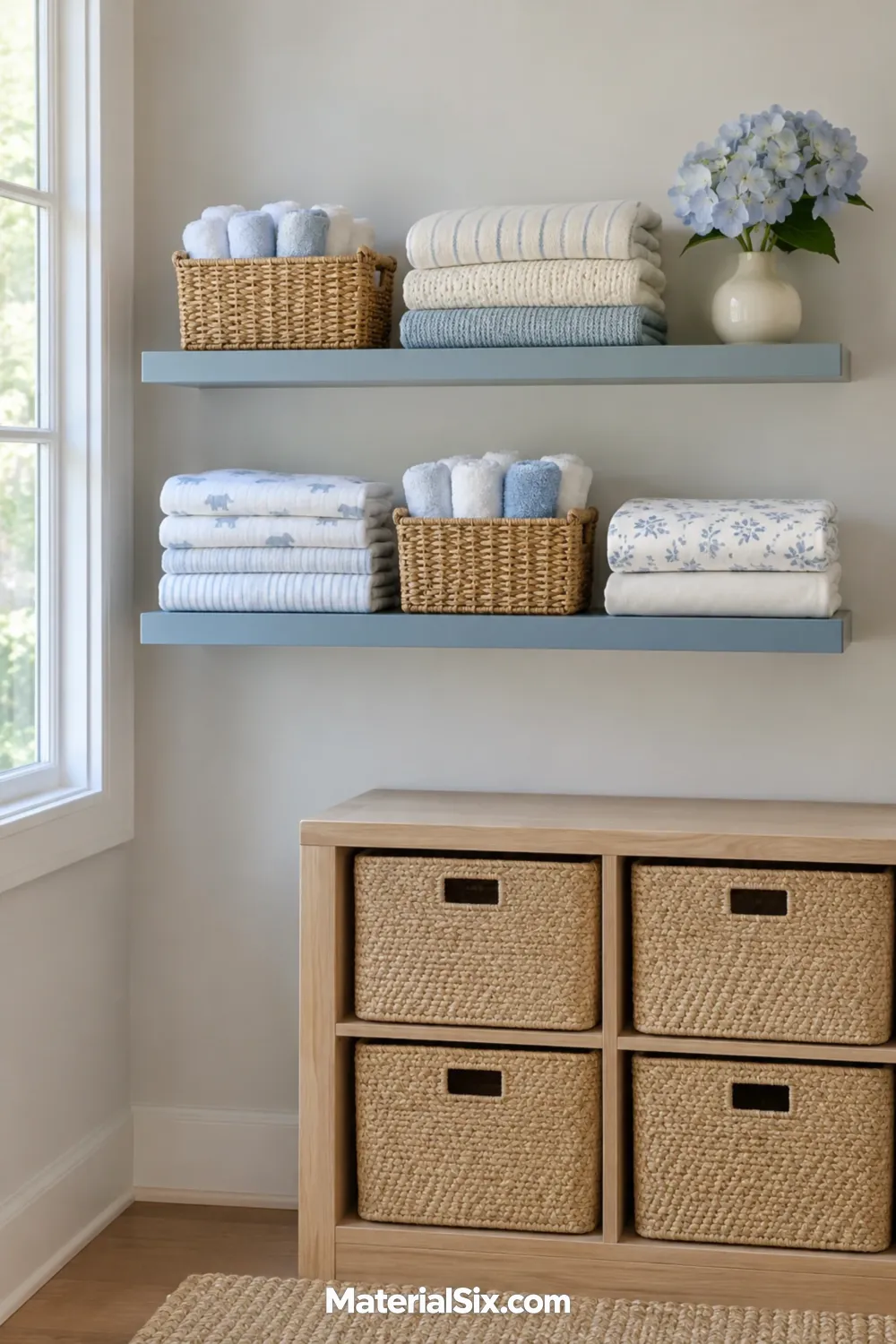
A pair of shallow shelves makes folded washcloths and spare crib sheets visible without taking up floor space. Check the depth against a folded sheet before ordering and choose a wall away from the crib or changing surface. Install the shelves for the wall type and stay within their rated load.
12. Tuck Bedding Into a Closed Linen Cabinet
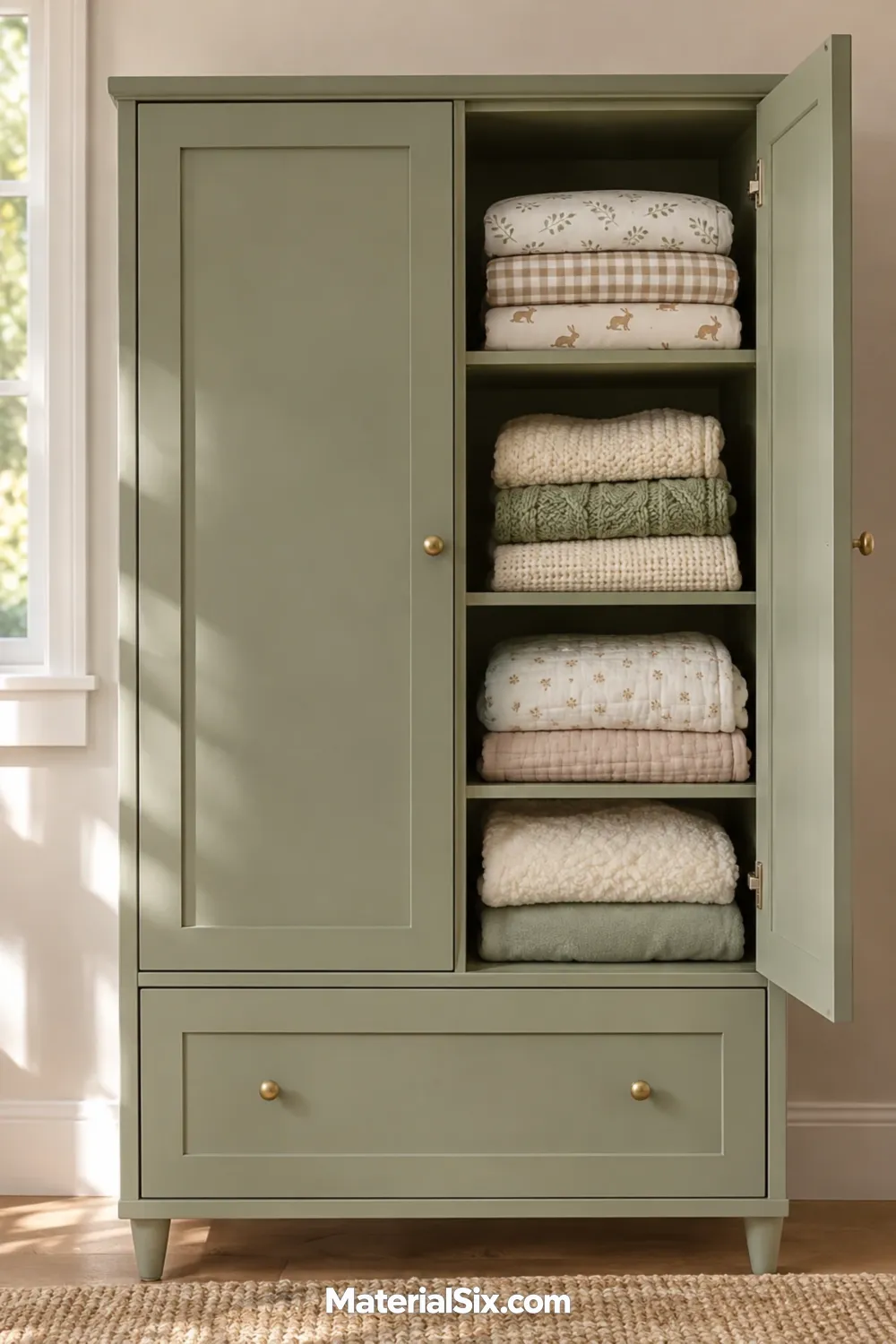
A slim cabinet with doors works well when the nursery shares a room with another activity. Group bedding by what fits each mattress, and fold the fitted sheet and pad cover into a small stack you can grab together.
Bulky spare blankets can go on a separate shelf where they’ll stay handy for supervised awake time or other household use. Keep the infant sleep surface clear of loose bedding.
13. Slide Shallow Bins Under a Bench
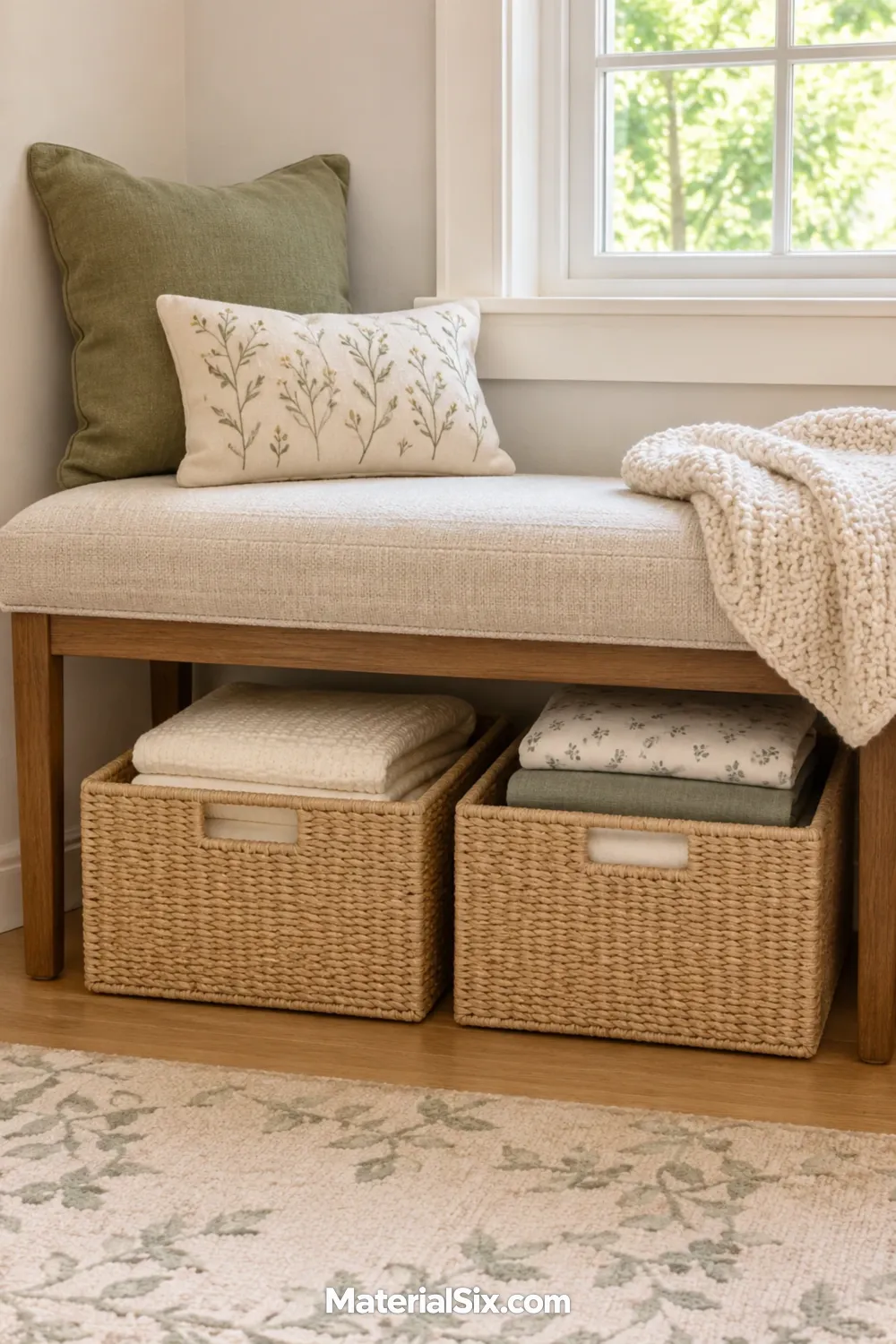
Measure the opening under a freestanding bench and choose bins that slide out without scraping the floor. Flat spare linens make sense here because you can see the full stack without lifting a lid inside the tight opening.
14. Put a Lined Hamper Where Clothes Come Off
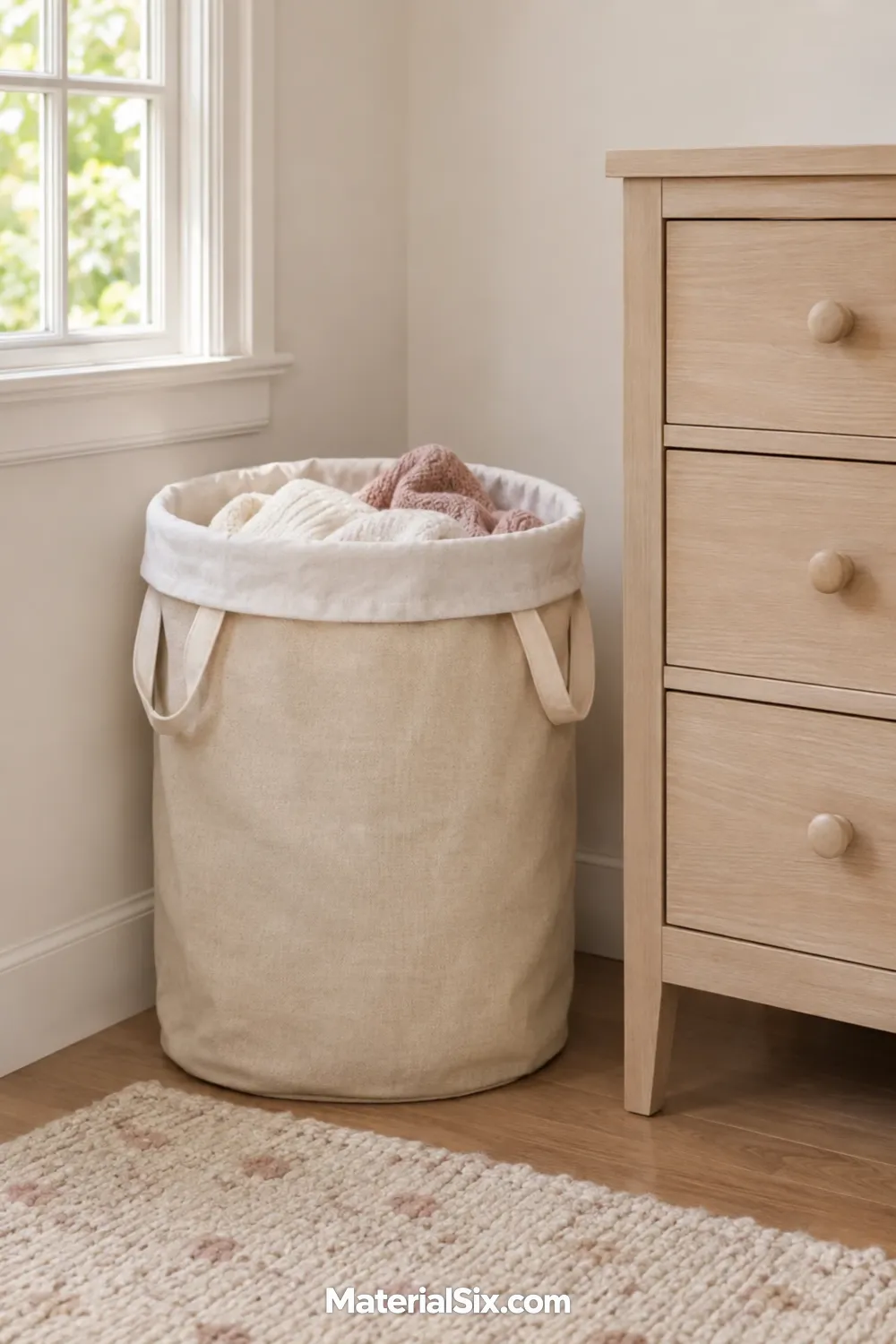
Place a hamper beside the dresser so a used sleeper can go straight into the wash pile. A removable liner lets you carry the laundry out in one trip while the hamper stays in its spot.
15. Sort Playroom Staples in Open Cubes
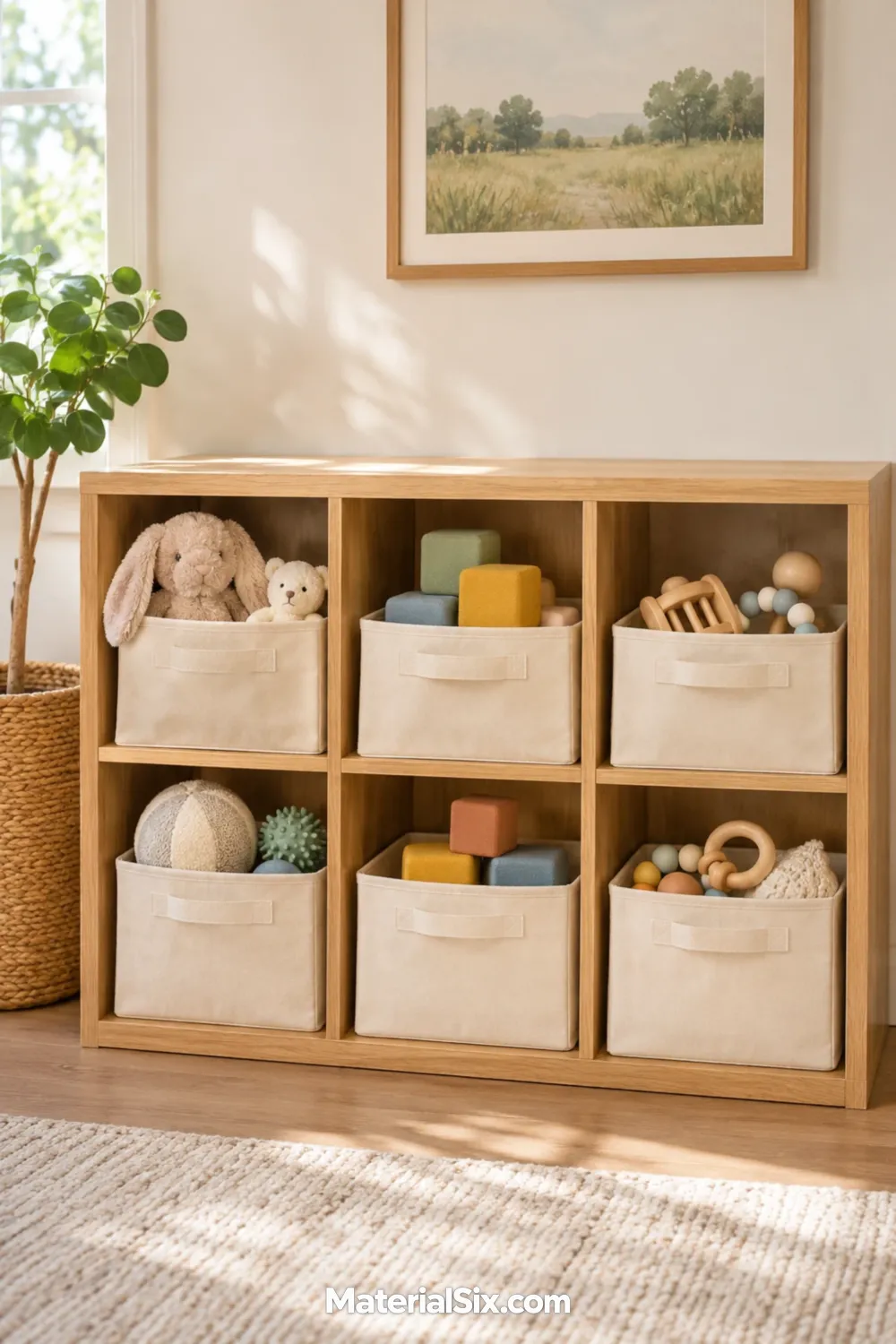
Give soft blocks, rattles, and other age-appropriate toys their own easy-to-lift fabric bins. One type per cube also makes it easier for another caregiver to find an activity and put it away. Follow the unit’s anchoring instructions, even if it’s low, and save the top for light items or leave it clear.
16. Face Board Book Covers Out on Low Ledges
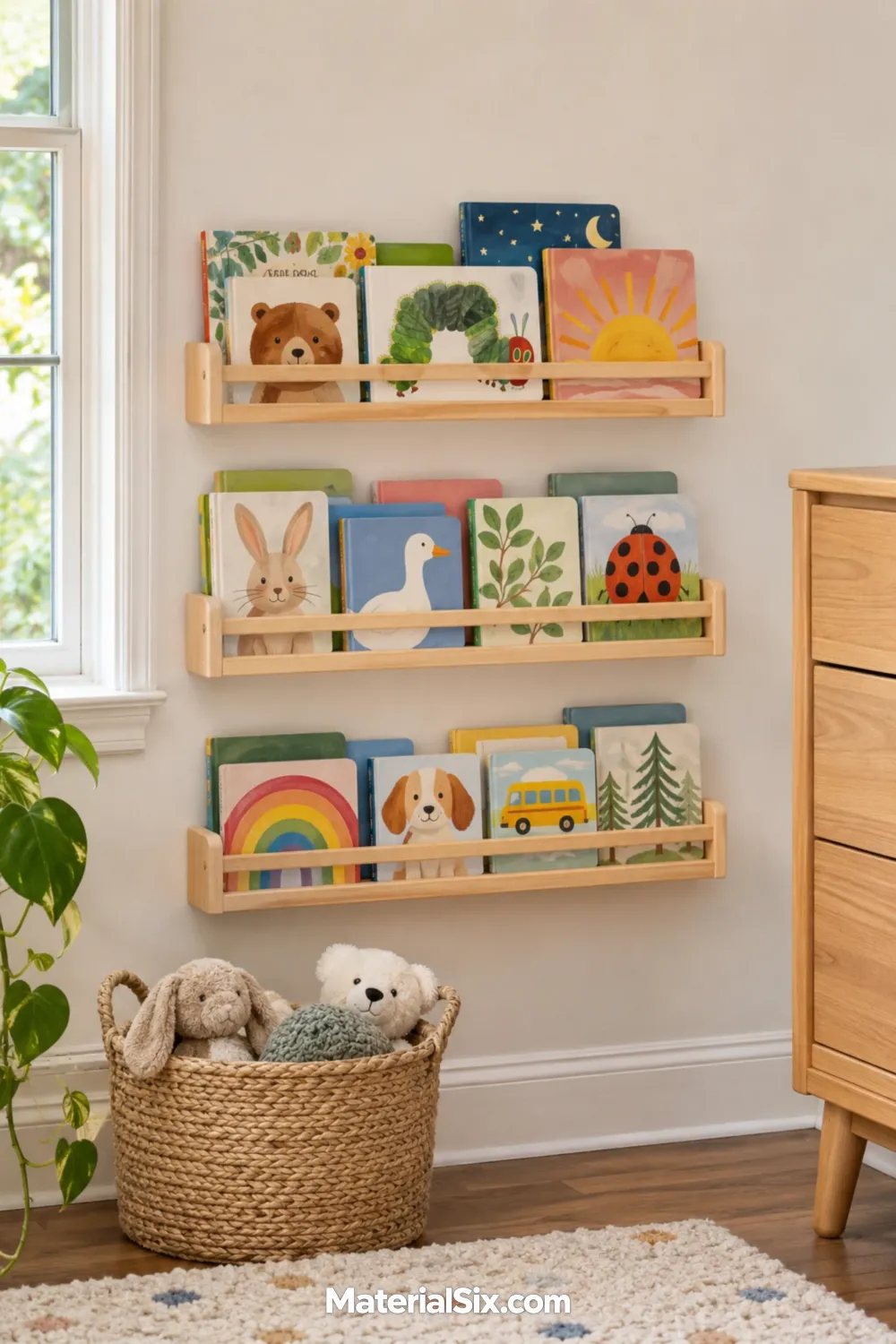
Use low, wall-fixed ledges in the reading area so board book covers are easy to see. Keep a few favorites facing forward and turn over the selection occasionally. Check that the ledge is deep enough for thicker board books and short enough to keep the books easy to lift out.
17. Give Playtime a Shallow Floor Basket
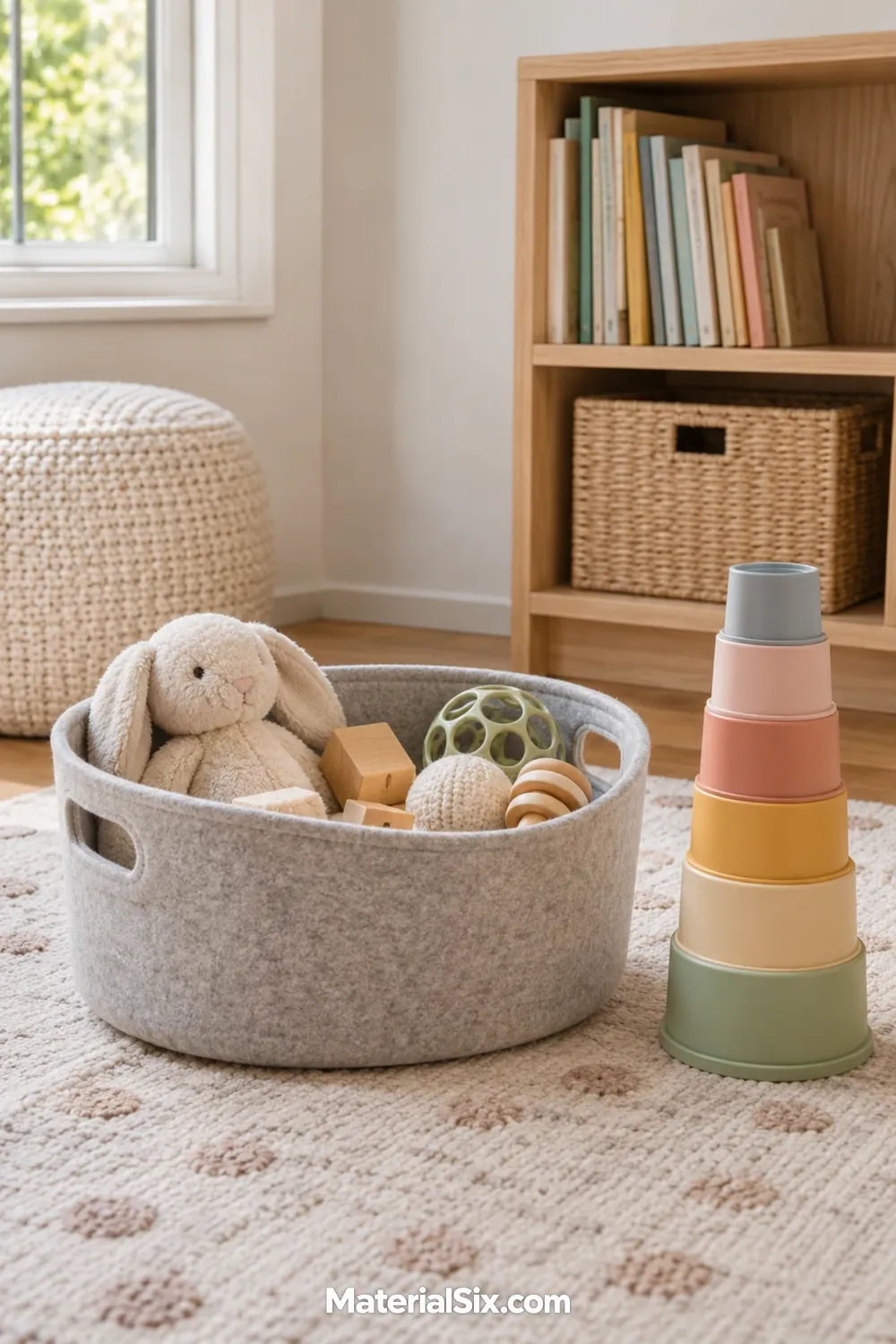
A shallow, open felt basket keeps a set of big stacking cups or soft toys visible from the rug. Pick one without a lid and make it the first place you sweep up toys when playtime ends.
18. Keep a Toy Rotation Bin in the Closet
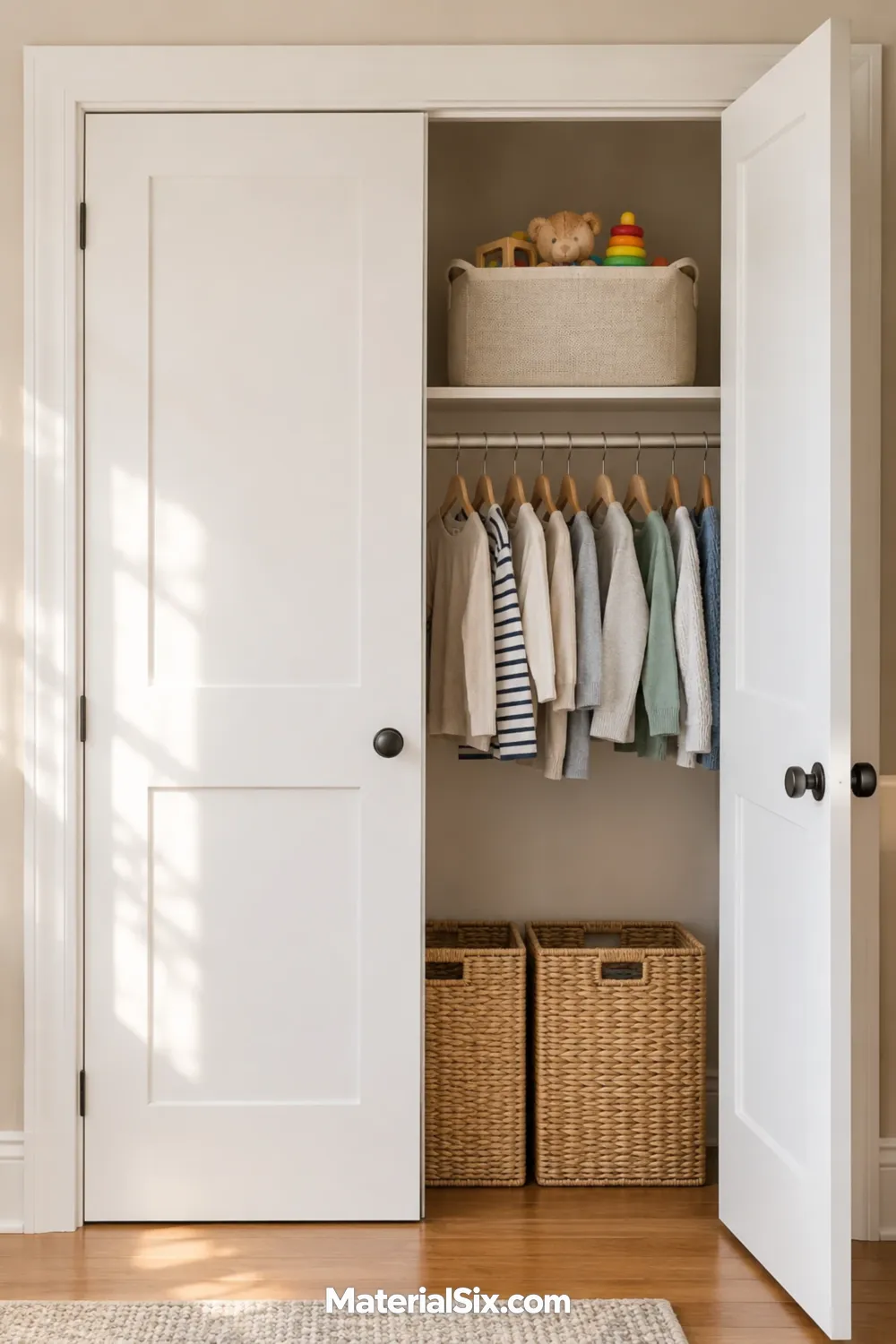
Put a small set of age-appropriate toys in the play area and store the rest in a bin on a closet shelf you can reach. When the same toys keep getting passed over, trade a few with what’s in reserve. A single bin gives you a natural limit on how much to keep in the rotation.
19. Use a Chairside Cubby for Burp Cloths
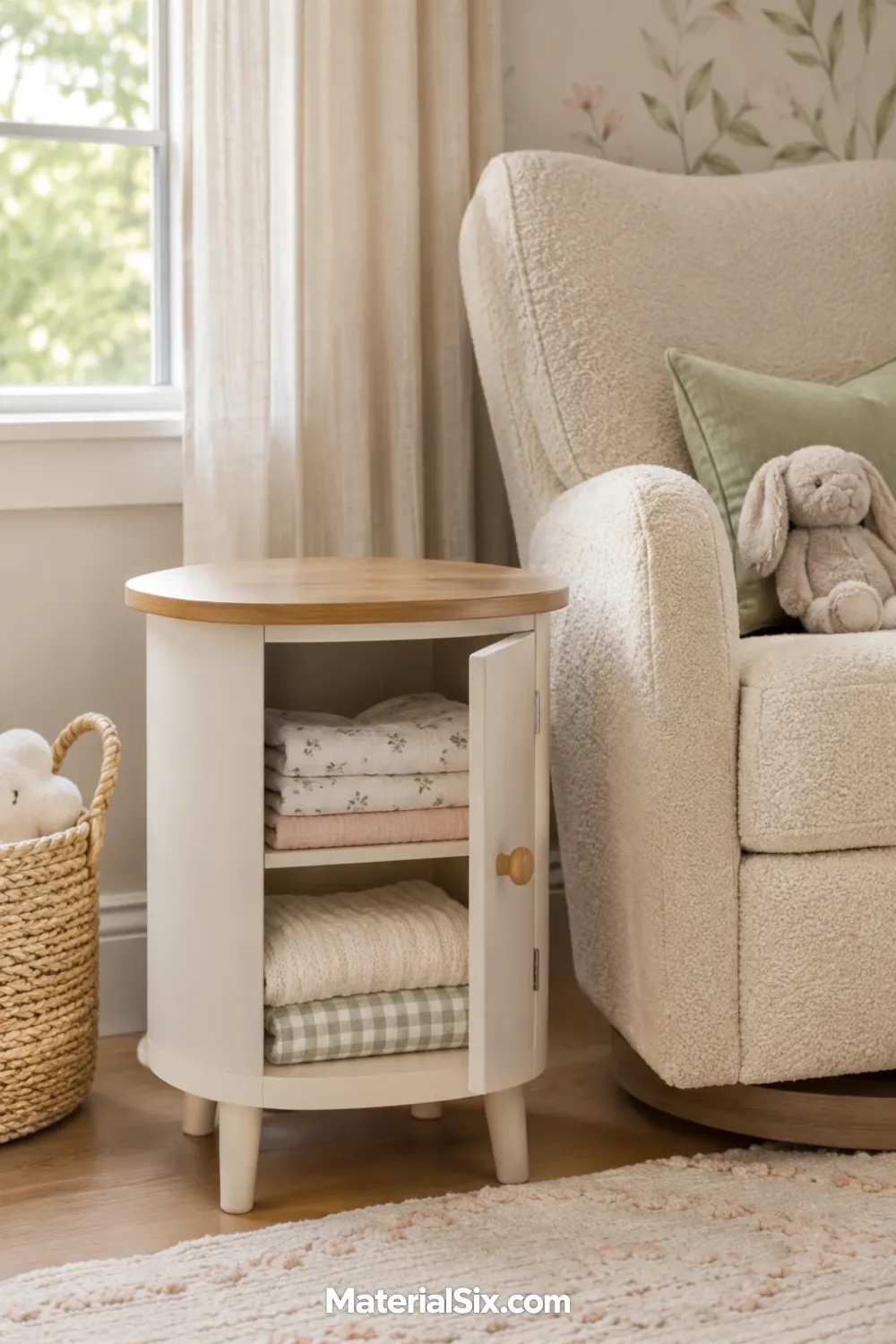
Store folded burp cloths in the cubby of a sturdy side table by your nursery chair. Check where your elbow rests when you sit, then position the table so the cloths are easy for you to reach. Leave space to get up and walk around the chair.
20. Group Outing Refills in Zip Pouches
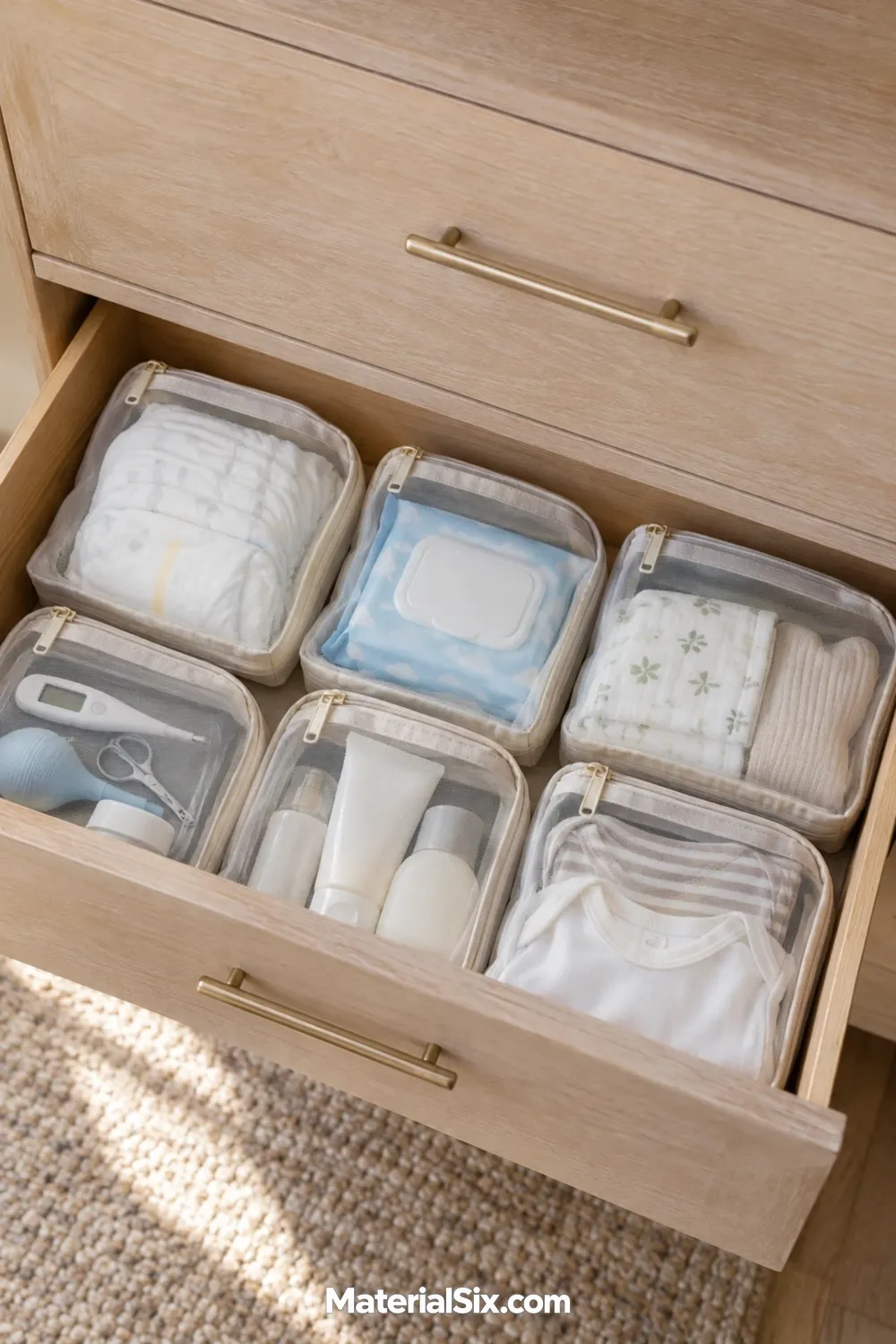
Give your outing supplies a drawer and keep one zip pouch for spare clothes and another for diaper changes. When you unpack after a trip, replace anything you used before putting the pouches back. Check the spare outfit’s size whenever you move up a clothing size.
21. Keep the Packed Diaper Bag by the Door
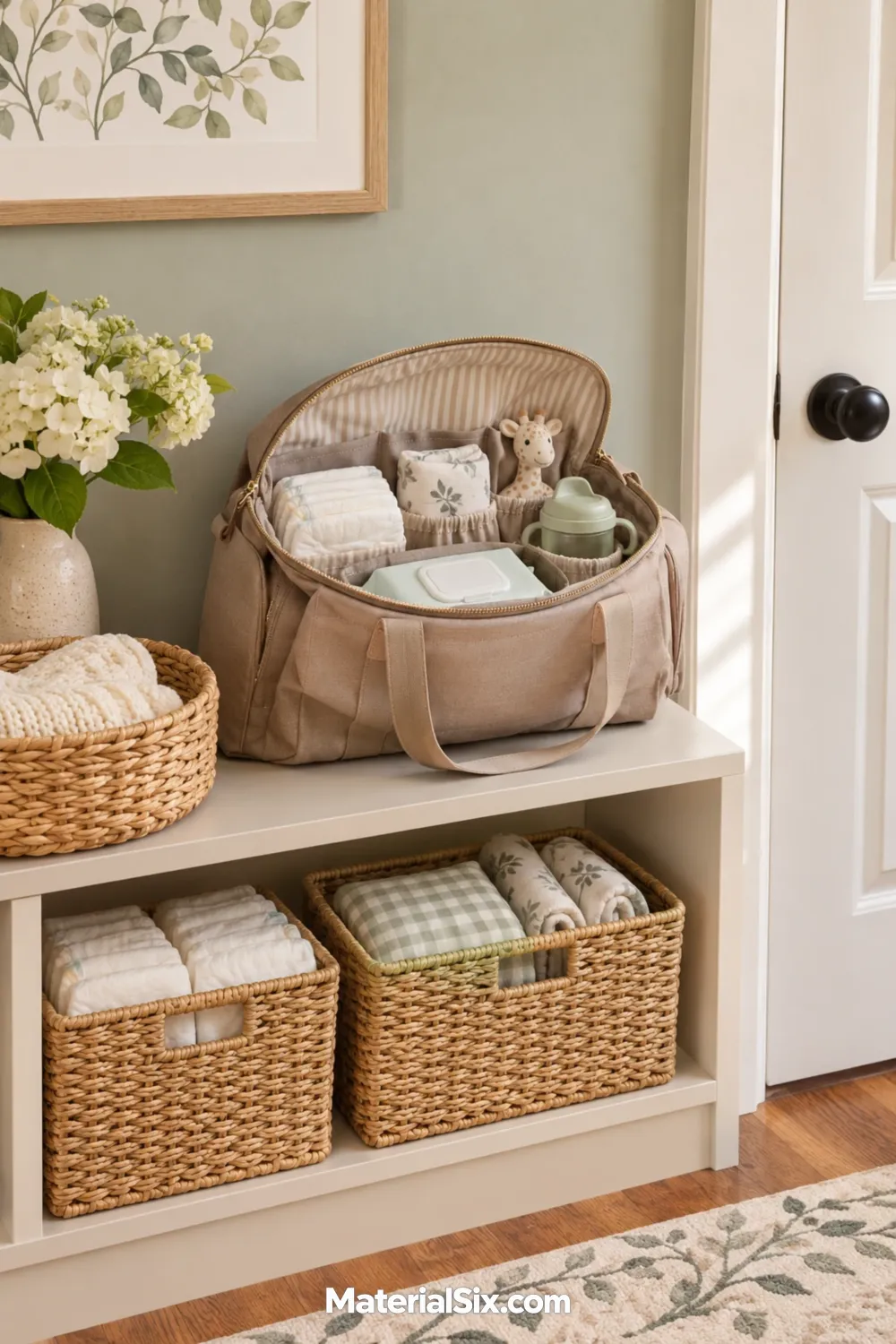
Choose a sturdy shelf near the nursery door as the landing spot for the loaded bag. Keep straps tucked in and away from your child’s reach. Before you head out, you’ll know which bag is ready and where to grab it.
Check Your Layout Before Buying Another Organizer
Walk through a diaper change, a load of laundry, and getting out the door. Notice where you stop to look for something or set it down because your hands are full. That’s where a change in storage will matter most.
- Check clearance in use. Open the deepest drawer and swing the closet door all the way. Measure the walking space while both are open, especially if your nursery shares a bedroom.
- Decide what needs an adult-only home. Give travel supplies, cords, and items with small parts a spot your child can’t reach. Leave a clear route to the crib and follow the manufacturer’s anchoring instructions for furniture.
- Leave the crib out of the storage plan. Keep spare blankets, toys, and other loose items elsewhere, and use only a fitted sheet on the infant sleep surface.
Make the First Change Where You Spend the Most Time
Pick the routine that creates the most back-and-forth, whether that’s getting dressed or restocking the diaper bag. Give its supplies one home and see what still ends up on the dresser a week later. The things you keep setting down will tell you what needs a better spot.