
A work meeting and an unfinished craft project do not always share a desk gracefully. The laptop needs a clear spot, paper supplies spread quickly, and putting everything away can feel like another job. A thoughtful office craft room combo gives each activity somewhere to land, whether you have a spare room or just one useful wall.
These ideas cover different layouts, storage approaches, and hobbies, from sewing to painting and paper crafting. Look for the arrangement that fits your daily routine first. Then borrow the details that help you switch between paid work and creative time with less rearranging.
1. L-Shaped Desk with Separate Work and Craft Wings
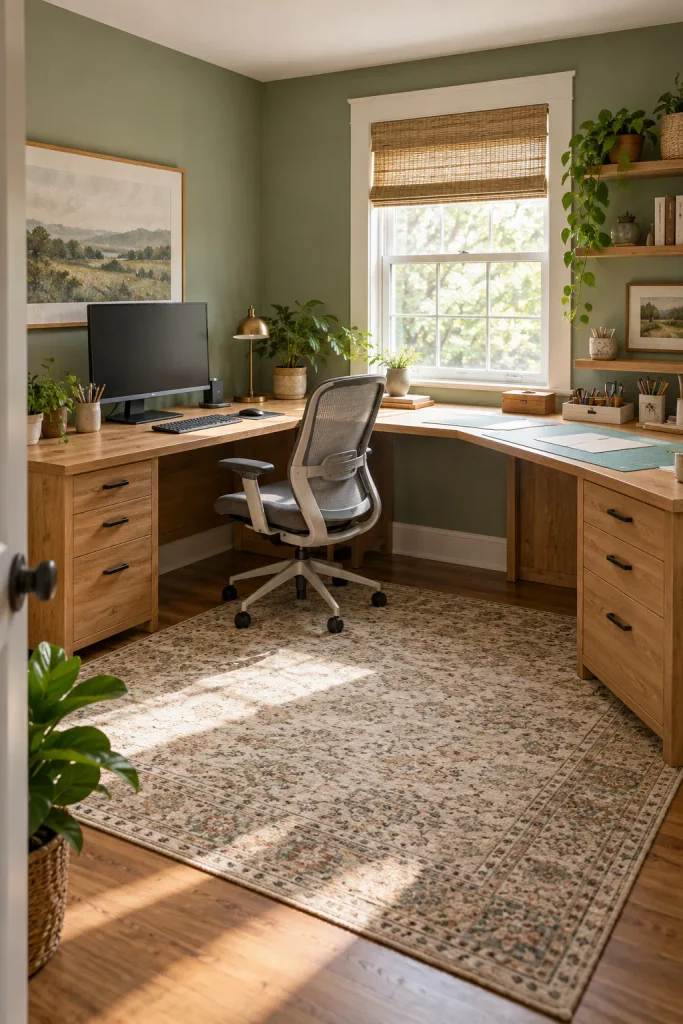
An L-shaped desk puts computer work on one wing and hands-on projects on the other. You can leave a cutting mat or sorting tray in place without moving your keyboard every morning. The corner also keeps both surfaces within reach, which helps when you follow digital instructions while crafting.
Keep the computer wing relatively spare, with drawers beneath its outside end. Give the craft wing storage suited to your supplies, such as shallow paper drawers or small removable bins. Before buying furniture, mark both desk depths on the floor and check that your chair can turn without hitting drawer pulls or table legs.
2. Opposite Walls for Two Dedicated Zones
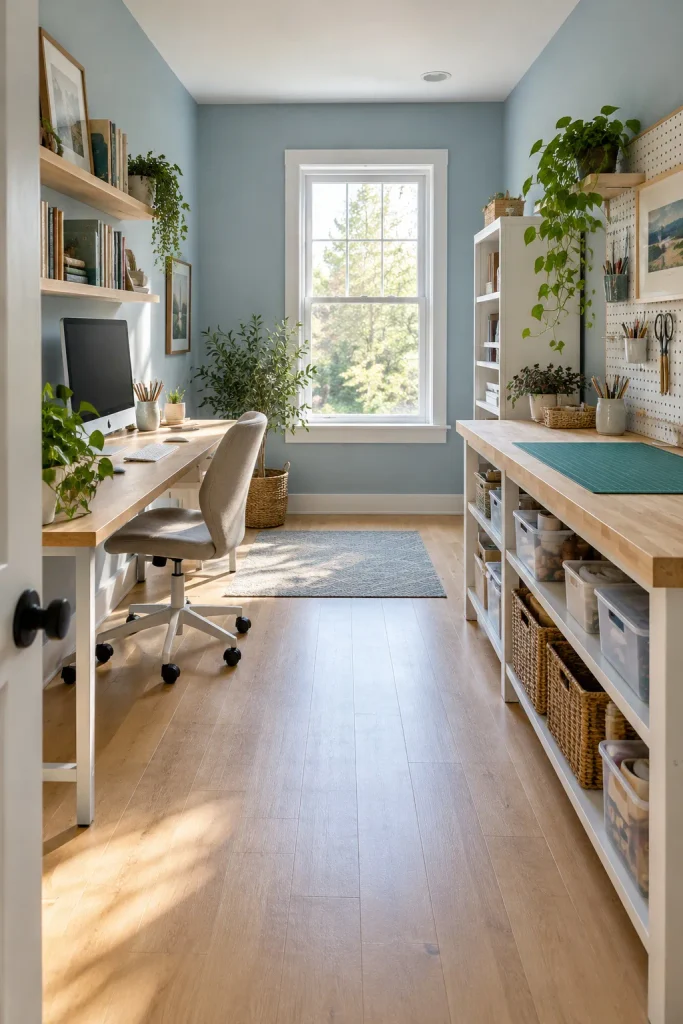
Facing your computer desk toward one wall and placing a craft bench on the opposite wall creates a clear separation between activities. It works especially well when you want to leave a project out but prefer a quieter backdrop for office tasks. Each wall can have storage that serves its own purpose.
Try a slimmer desk for the computer and a deeper bench for projects that spread out. Measure the space with chairs pulled back and cabinet doors open, rather than judging only the furniture footprints. Keep the middle of the room clear so carrying a fabric bundle or a tray of supplies does not become an obstacle course.
3. One Long Counter with a Clear Boundary
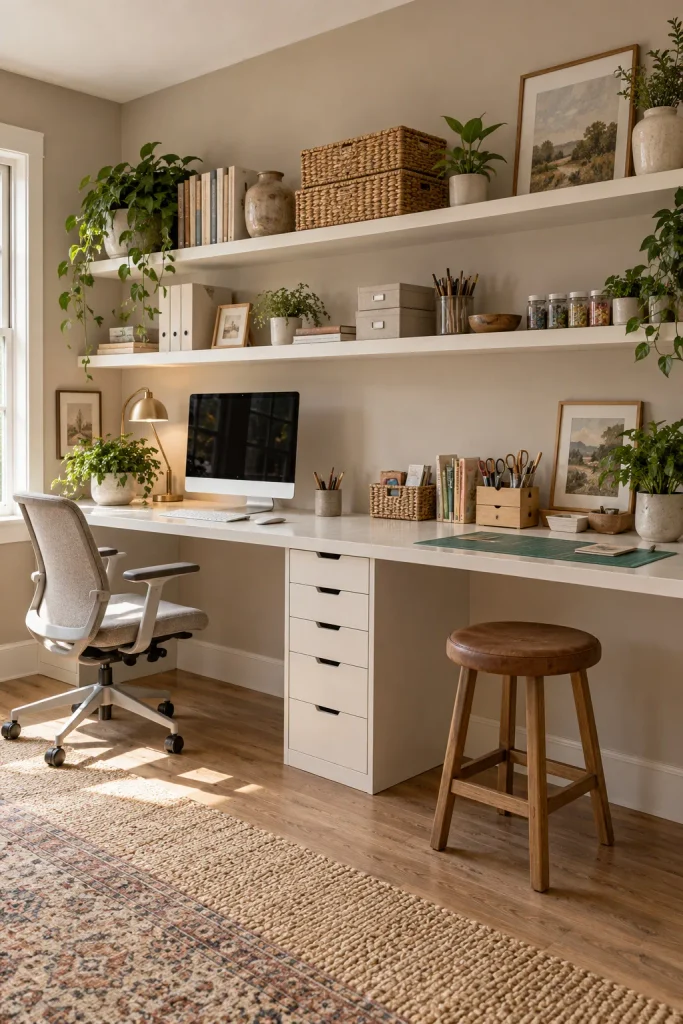
A continuous counter can make an office and craft room combined layout feel cohesive. Instead of treating the entire surface as one shared desk, assign a computer section at one end and a project section at the other. A small drawer organizer between them creates a visible stopping point for supplies.
Use the space below strategically: office files near the keyboard, craft drawers near the cutting mat, and open knee space where you sit. Wall shelves can carry less-used materials, while everyday tools stay close to the appropriate station. Leave a genuinely clear work patch on the craft side instead of filling the whole counter with storage.
4. A Center Craft Island with a Perimeter Office
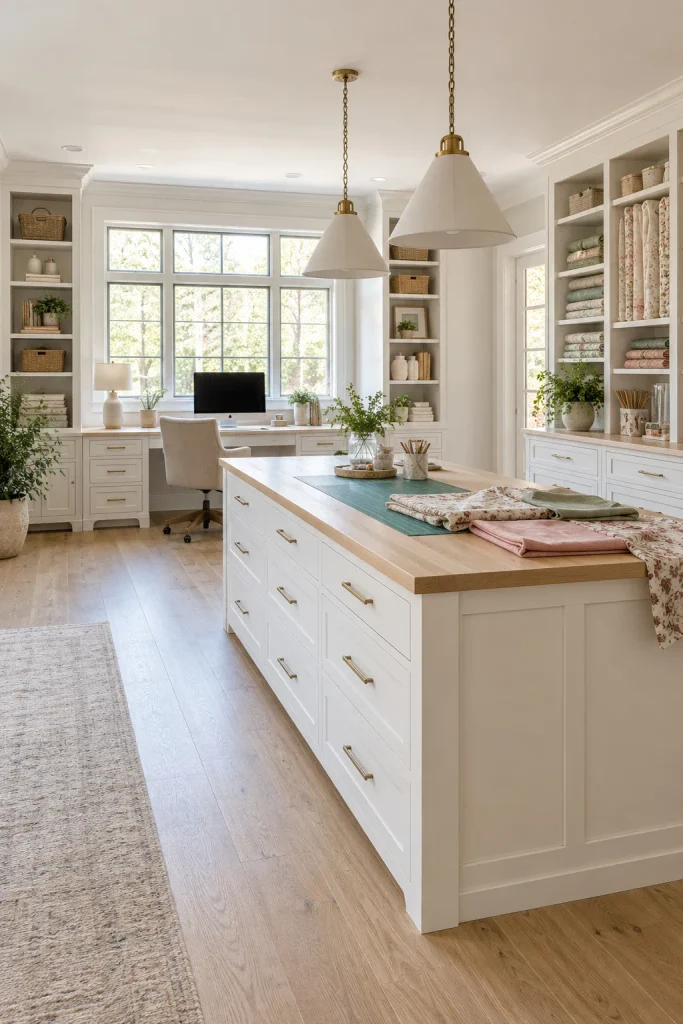
A central island gives larger projects room to spread while the computer stays on a separate perimeter desk. This arrangement suits a room where you regularly sort fabric, assemble decorations, or work on something from more than one side. Storage inside the island keeps the surrounding walls from carrying everything.
Choose the island height around your main task and whether you prefer sitting or standing. Then check that you can walk around it with drawers extended and an office chair pulled out. A movable mockup made from boxes can reveal a cramped aisle before you commit. Reserve one island drawer for current-project pieces so the surface can reset between sessions.
5. A Closet Craft Station Beside the Office
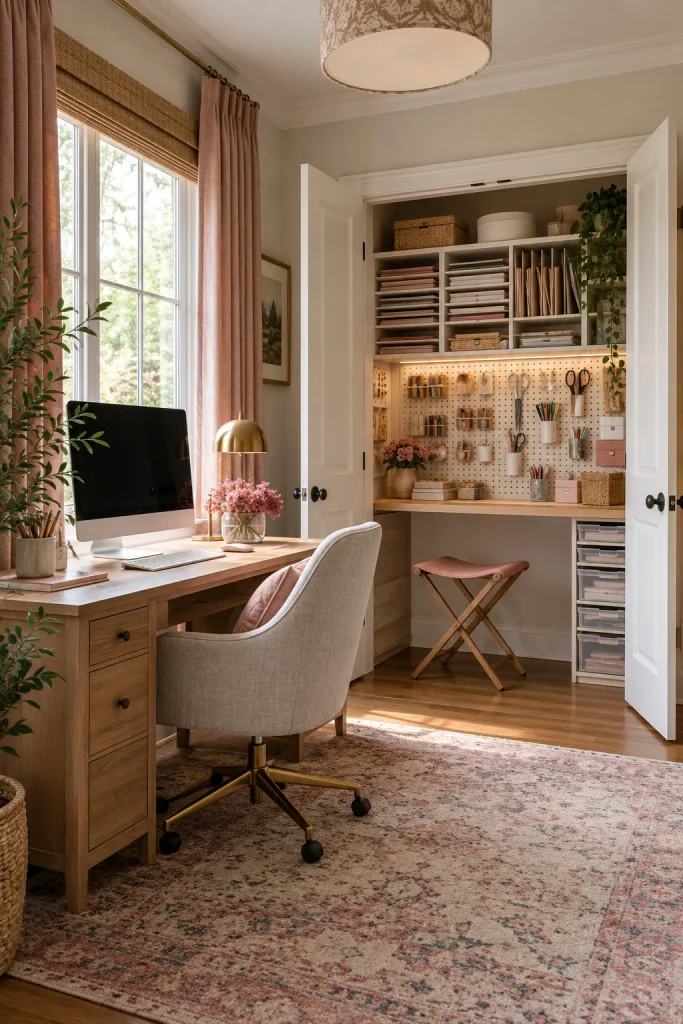
A spare closet can hold a compact craft station while the rest of the room functions as a home office. Inside, combine a shallow worktop with shelves, paper cubbies, and a small tool board. Closing the doors gives the room a calmer appearance when you finish for the day.
Measure the opening, door swing, and usable interior depth before planning the work surface. If you will sit there, leave knee space rather than packing cabinets underneath. Add task lighting so your body does not shade the worktop. Keep portable trays for larger projects that need to move onto another table, and check that supplies do not prevent the doors from closing.
6. A Wall-Mounted Fold-Down Craft Table
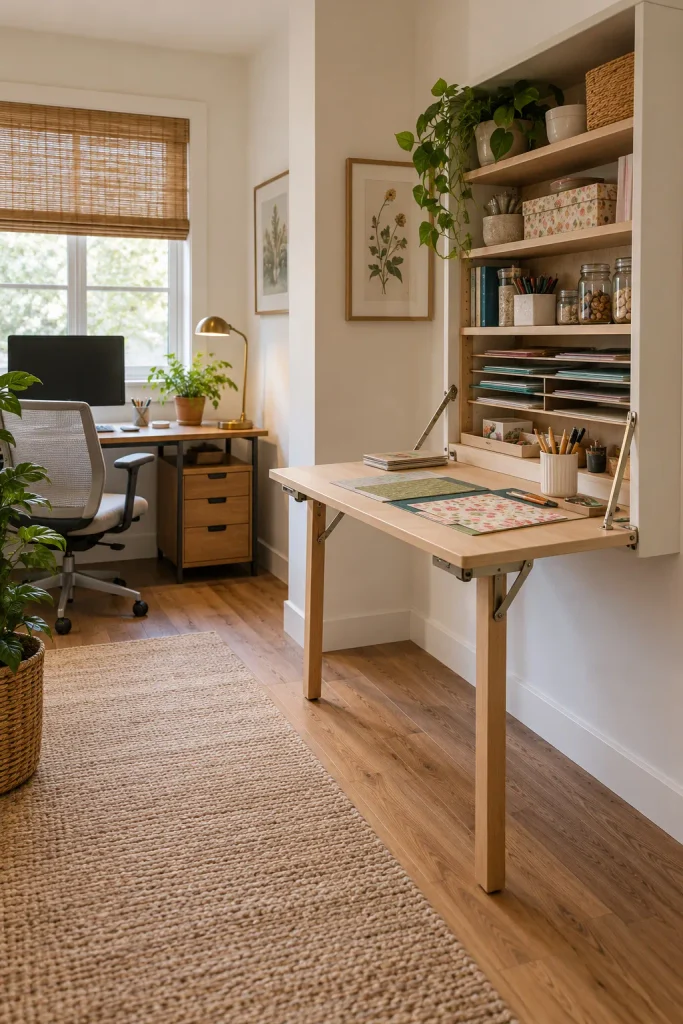
A fold-down table adds a second work surface without permanently occupying the floor. Keep a regular desk for computer work, then open the craft table for cardmaking, sketching, or other light projects. When it folds away, the room regains walking space and a less crowded appearance.
Choose hardware, supports, and wall fasteners appropriate for the tabletop and intended load, following the system’s installation instructions. Do not assume every folding design can handle a heavy machine. Store supplies on nearby shelves or in a cabinet that remains accessible when the table opens. Before installing, check the full swing of the tabletop and the space its supports need on the floor.
7. A Rolling Craft Cart That Parks Under the Desk
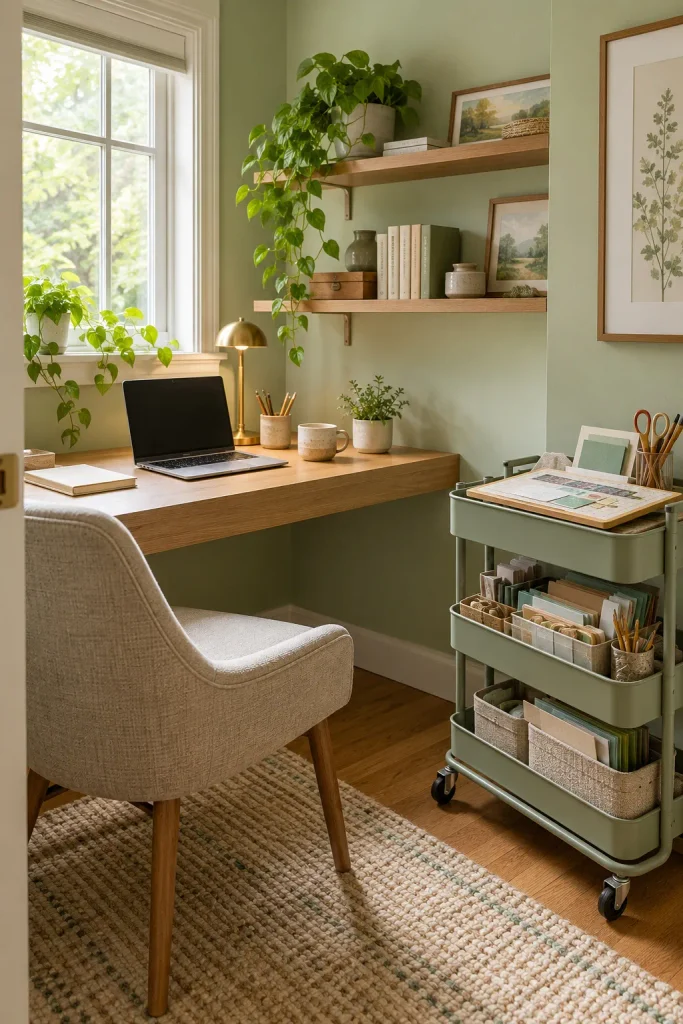
A rolling cart makes a small office craft room more flexible when there is no room for a permanent second station. Fill it with one hobby’s essentials and bring a removable work board to the desk when you craft. The board gathers small pieces and separates the project from the office surface.
Choose a cart that fits its parking spot without taking away chair or knee space. Beneath an unused desk return can work; beside the desk may be more practical. Check the cart’s total height, including anything stored on top. Keep heavy supplies low and avoid stacking trays so high that you must unload them to reach everyday tools.
8. A Guest Room with Furniture That Packs Away
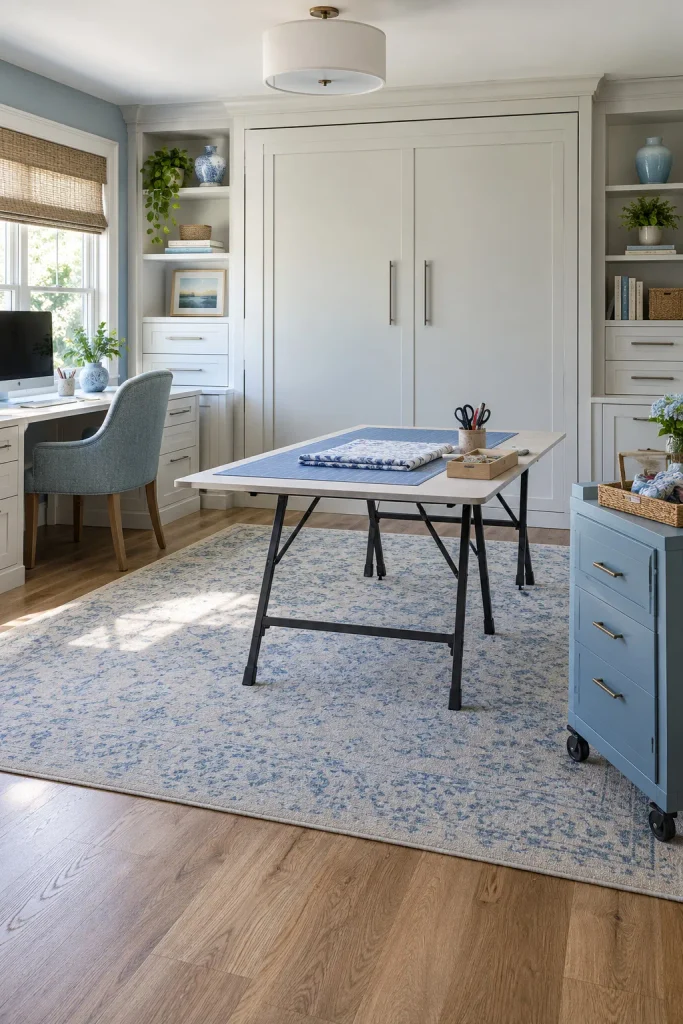
Combining a guest room, office, and craft room depends on what can stay put and what must move. A permanent computer desk can serve daily work, while a folding craft table and wheeled supply cabinet handle occasional projects. A wall bed can free floor space between visits if its installation requirements suit the room.
Plan the room in both modes before choosing furniture. When the bed opens, guests still need access to the doorway, outlets, and their belongings. Give the craft table a specific storage location rather than hoping it will fit somewhere later. Keep one closed bin available for unfinished work so preparing for visitors does not mean mixing project pieces with general supplies.
9. A Bedroom Alcove with Concealed Craft Storage
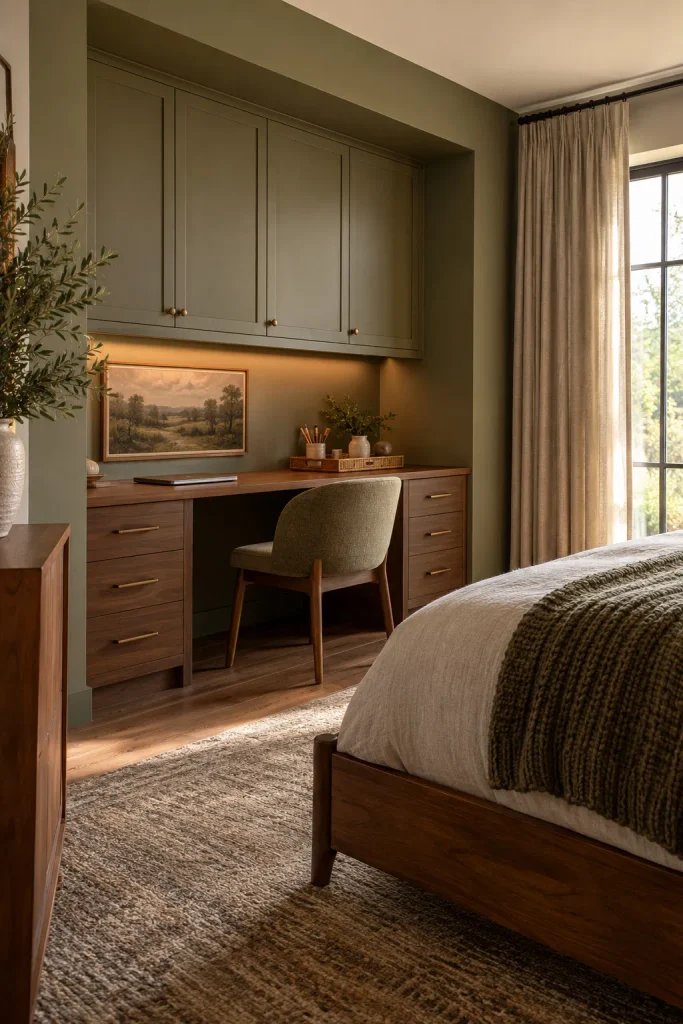
A recessed alcove or quiet bedroom wall can hold a small home office and craft room combo without making the bed feel surrounded by equipment. A broad desk provides room for a laptop and a removable project tray, while drawers and closed overhead cabinets contain the visual clutter.
Choose crafts that suit the setting and available cleanup space. Paper projects, hand stitching, and drawing are easier to pack away than activities involving wet materials or bulky machinery. Keep office items together in one drawer and current craft supplies in another. At the end of a session, put the tray away and close the laptop so the desk does not dominate the sleeping area.
10. A Sewing Station with a Separate Computer Return
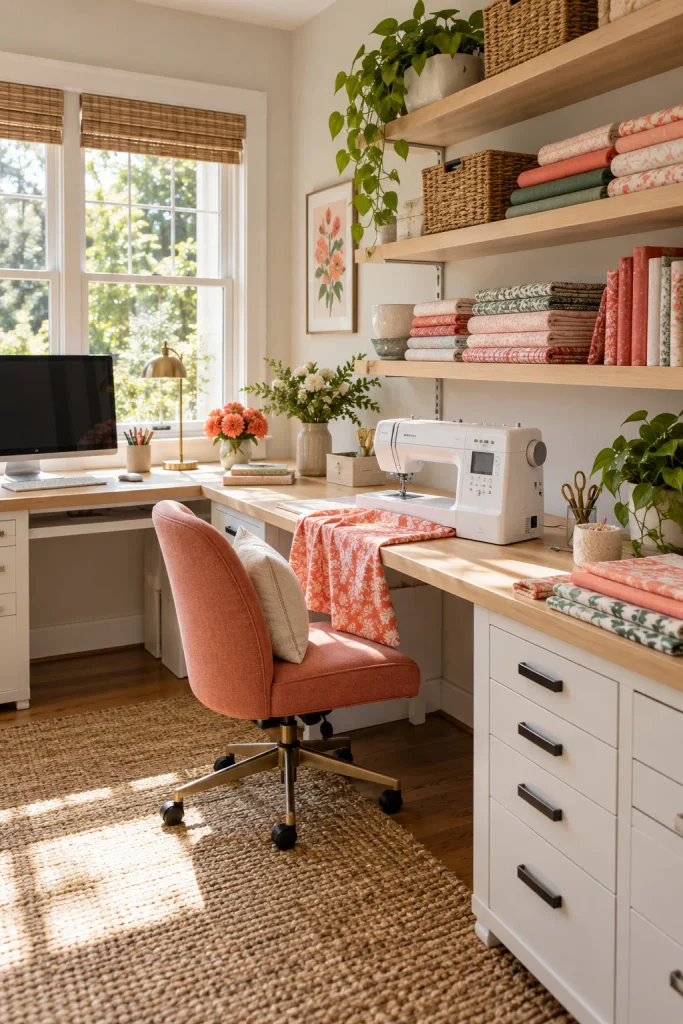
A home office sewing room combo works better when the sewing machine does not compete with the keyboard. Set the machine on a sturdy main worktop and place the computer on a separate return. You can reference a pattern or lesson while leaving fabric arranged around the machine.
Allow clear space for fabric to feed and rest, especially behind the machine. Store thread and small notions nearby, with folded fabric in drawers or cubbies that do not intrude on the worktop. Check that furniture joints and supports will not interfere with your chair or foot pedal. If you need a cutting surface, use a separate table or removable board rather than cutting beside computer cables.
11. A Paper-Crafting Station with Machine Clearance
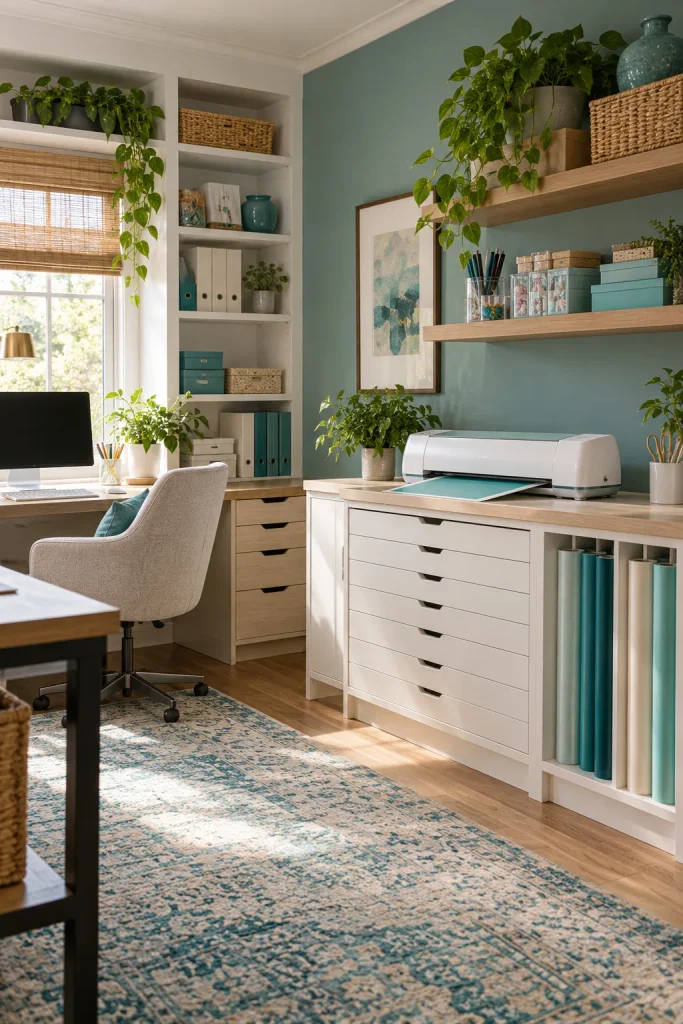
A dedicated station for an electronic cutting machine keeps paper crafting from taking over the office desk. Put the machine on a stable cabinet top and use the drawers below for cardstock, tools, and flat materials. Store rolls separately so they do not crowd the machine’s working area.
Look up the clearance requirements for your particular model before deciding how deep the cabinet should be. Some machines move mats or materials through the front and back, so nearby walls and shelving matter. Keep the computer on an adjacent desk and route cords away from moving materials. Add a removable weeding or assembly tray so small scraps can travel to the trash without covering the office zone.
12. An Art Studio Corner with a Clean Office Zone
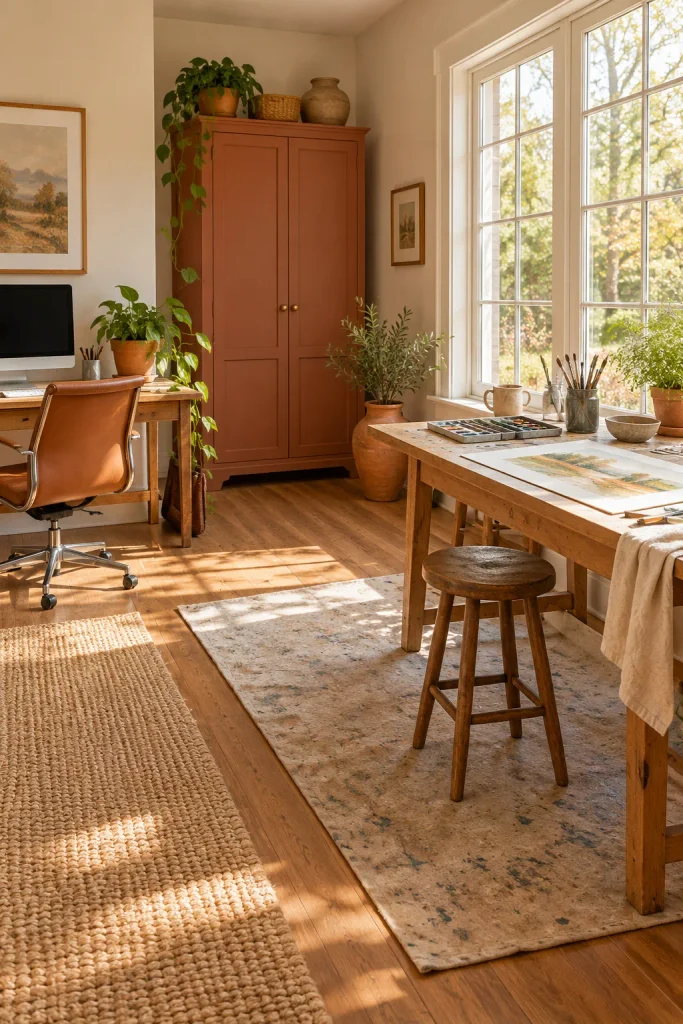
Painting and office work can share a room when the wet and dry activities have separate homes. Position an art table near a useful window and keep the computer desk farther from paint, rinse water, and splashes. A washable floor covering beneath the art area makes routine cleanup easier.
Give brushes, palettes, and paper dedicated storage instead of letting them migrate toward electronics. Use a sturdy container for rinse water and leave somewhere flat for work to dry. Match the setup to the materials you actually use: a watercolor corner has different needs from solvent-based work. Follow product directions for handling and ventilation, and keep supplies stored appropriately when the room is shared.
13. A Library Wall That Stores Books and Craft Supplies
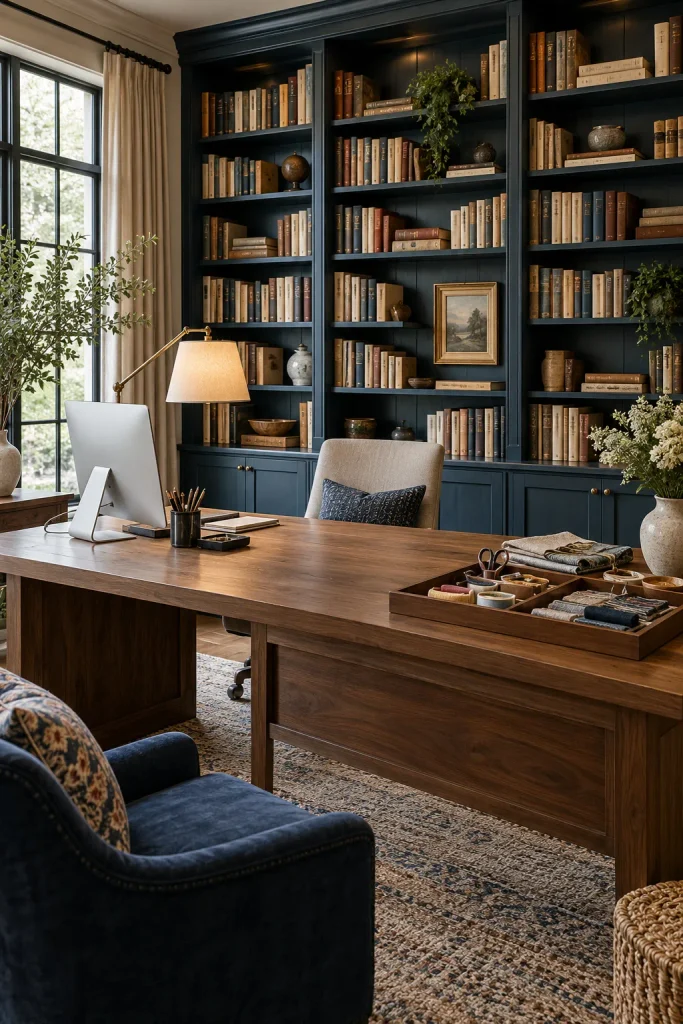
A library wall gives an office craft room a quieter, more finished appearance. Keep books and a few display pieces on the open shelves, then use closed lower cabinets for craft supplies. A desk in front can support computer work at one end and a compact project tray at the other.
Organize the cabinets by activity so you can pull out a complete set rather than search several shelves. A hand-stitching tray, drawing box, or cardmaking bin is easier to reset than loose supplies spread across the desk. Follow furniture instructions for securing tall shelving. Leave enough open desk space that the bookcase becomes useful storage rather than a backdrop to a permanently crowded surface.
14. Two Workstations for a Shared Hobby Room
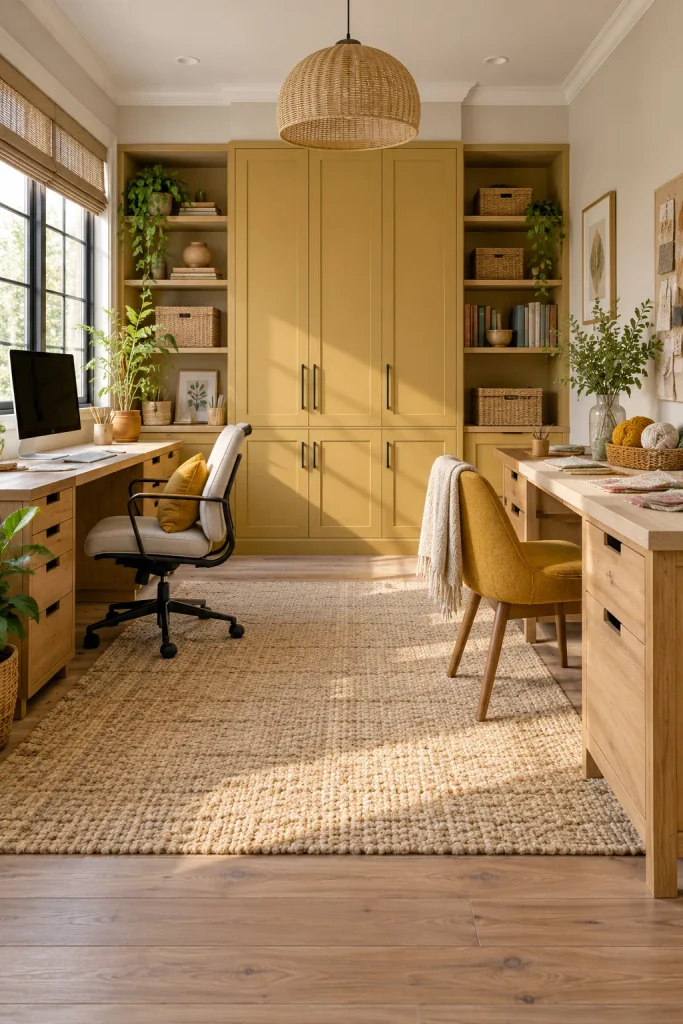
When two people share the room, separate workstations can prevent every project from becoming a negotiation over desk space. One person might use a computer while another crafts, or each station can switch roles. Arrange the desks at an angle or on different walls so both chairs have independent space.
Agree on which storage is personal and which supplies are shared. A central cabinet can hold common paper, tools, and printer supplies, while individual drawers protect ongoing projects. Check both seating positions at the same time before settling on the layout. Headphones, separate task lights, and a simple cleanup routine can help different activities coexist without requiring matching schedules.
Before You Choose Your Layout
Start with the work you do most often, then map the second activity around it. These checks can help you compare the ideas:
- Measure the furniture in use. Include open drawers, moving machine parts, pulled-back chairs, and doors, not just desk widths.
- Plan the reset. Decide exactly where an unfinished project goes when you need the room for work or guests.
- Match storage to materials. Flat paper, fabric rolls, paint bottles, and office files need different compartments.
- Check light at both stations. Test where your hands and monitor will sit before placing task lamps.
- Keep connections accessible. Locate outlets and plan cable routes that stay out of walking paths and craft work areas.
Make Room for Both Parts of Your Day
The most useful office craft room combo is one you can switch between without a major cleanup. Choose a layout around your room’s dimensions, your main hobby, and how much work you need to leave out. Save the ideas that fit your routine, then start with one clear office zone and one dependable place to create.