
A small pond can give your backyard a focal point without taking over the whole garden. The trick is to make the water, surrounding plants, and nearby seating feel connected rather than squeezed together.
Your space might suit a planted container beside the patio, a raised pond with clean edges, or a little wildlife retreat tucked into a border.
These small pond landscaping ideas cover different layouts and styles, so you can choose what fits your yard and the upkeep you want. Start with how you’ll enjoy the space, then work outward from the water.
1. Use a Container Water Garden Beside Your Seating
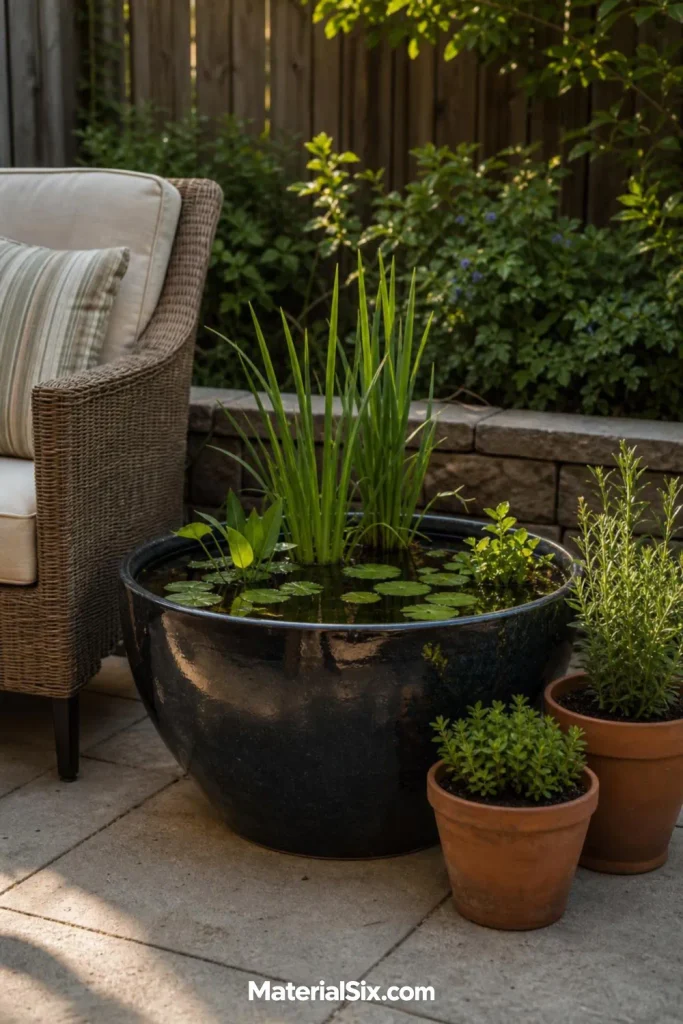
A container water garden brings a visible patch of water to a patio where an in-ground pond would feel crowded. Choose a vessel intended to hold water outdoors, then let its shape do some of the decorating. A rounded bowl softens angular paving, while a simple tub works with a more relaxed garden.
Place it where you can see the water from your chair without narrowing the walking route. Keep the planting restrained so the surface remains part of the display. A few nearby pots can connect the container to the rest of your patio without making the arrangement feel busy.
2. Give a Raised Pond a Finished Garden Edge
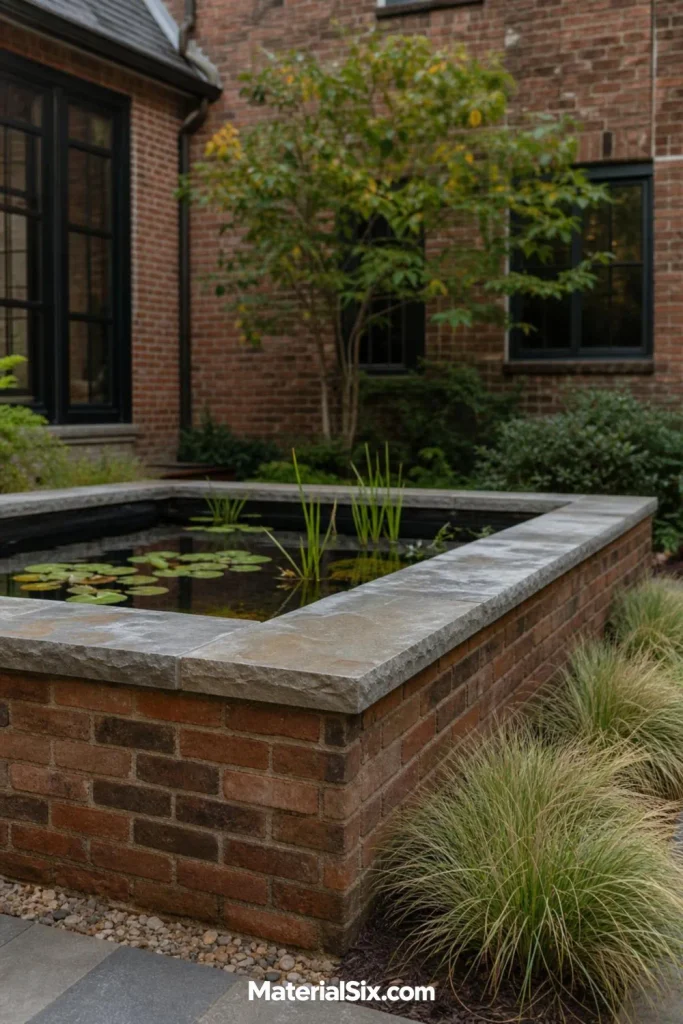
A raised pond makes the water feature read like a deliberate piece of garden architecture. Its visible sides give you another surface to coordinate with the yard, whether that means brick beside an older house or a simple rendered finish near a contemporary patio. The defined outline also keeps the design visually tidy.
Leave room around it for maintenance rather than surrounding every side with dense planting. Low grasses or compact flowering plants can soften the base while keeping the pond’s structure visible. Choose a coping material that relates to nearby paving, and treat the wall as a pond edge rather than assuming it doubles as seating.
3. Create a Wildlife-Focused Pond With a Gentle Edge
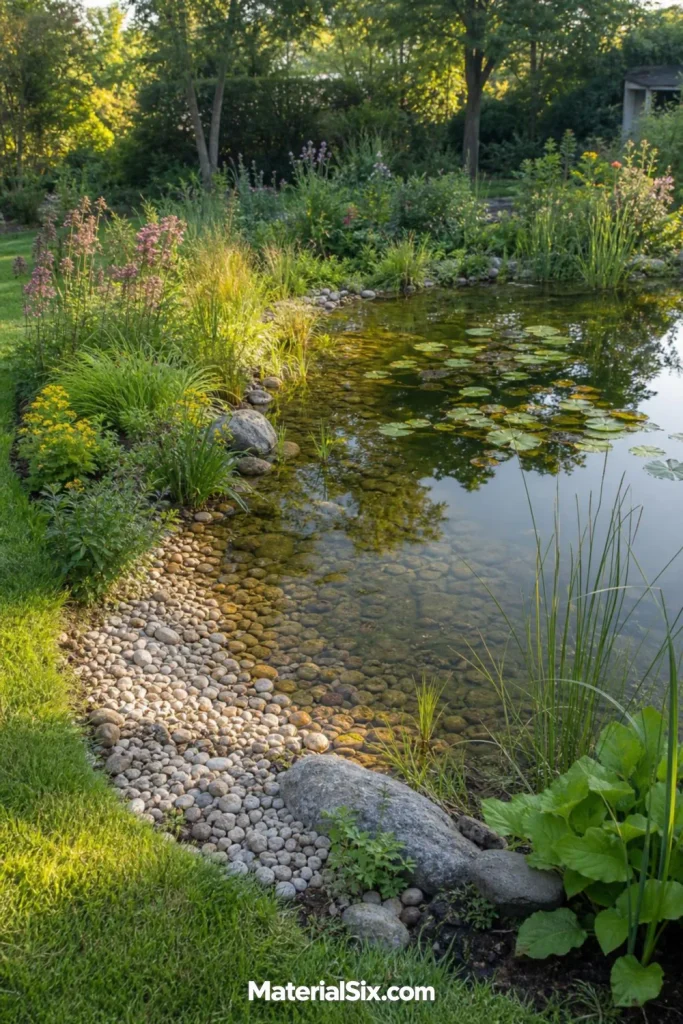
A wildlife-focused pond puts the surrounding habitat ahead of decorative extras. Let part of the edge meet a gently sloping, planted margin instead of enclosing the entire pond with steep walls. The result feels more like a small garden habitat than an ornamental basin, especially when nearby planting includes species suited to your region.
Keep one section visually open so you can watch the water from a nearby path. Leave space for plants to mature without covering every edge, and avoid adding fish if wildlife is your priority. Before settling the layout, check local guidance on suitable planting, access slopes, and ongoing pond care.
4. Add a Low Waterfall as the Main Focal Point
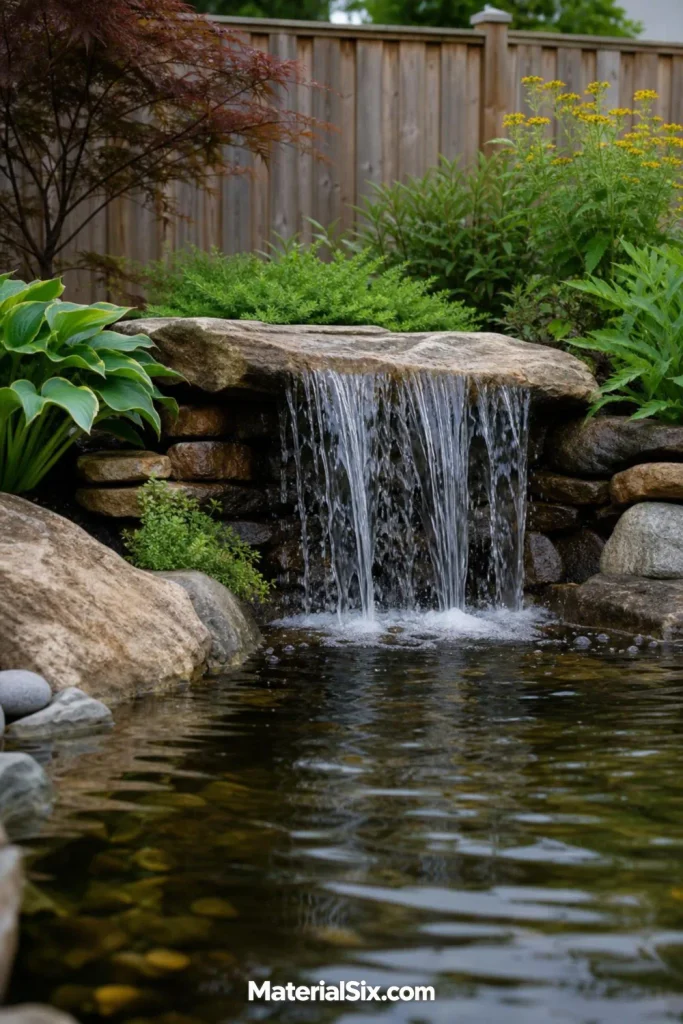
If moving water is what draws you to ponds, make a low waterfall the main feature instead of adding several competing ornaments. A short drop over a broad stone can give a compact pond a clear focal point without making the surrounding rockwork look oversized. Let the water remain easy to see from your usual sitting spot.
Repeat a few of the same stones around the pond so the waterfall belongs to the whole design. Keep planting lower near the spillway and fuller toward the sides. Allow discreet access to the pump and plumbing, with equipment selection and electrical requirements reviewed before installation.
5. Tuck a Cottage Pond Into a Flower Border
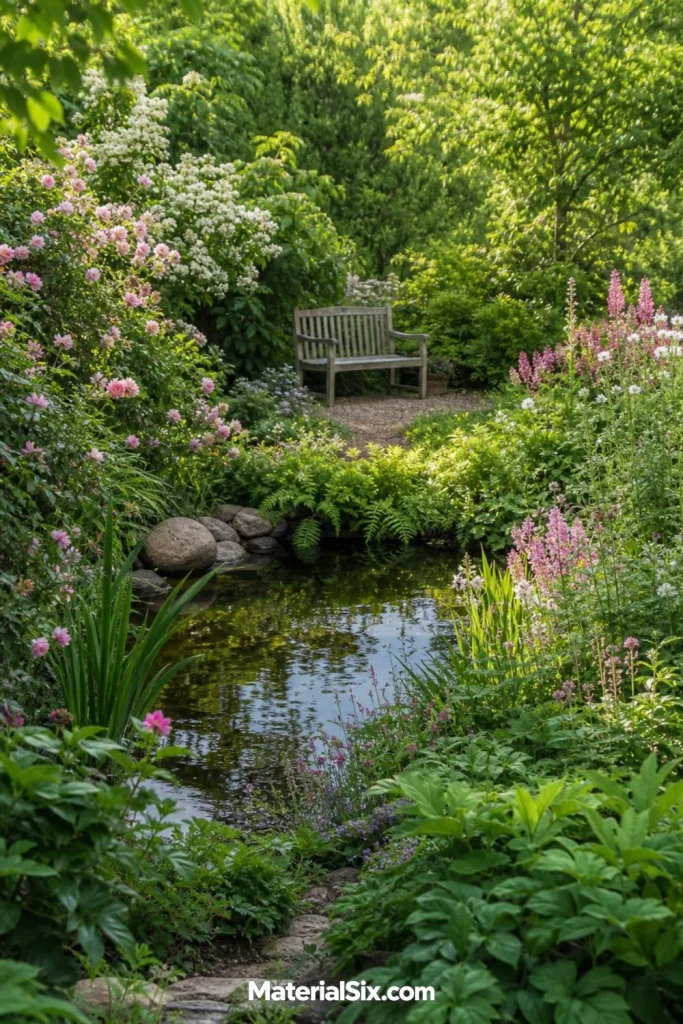
A cottage-style pond works best when it feels woven into the garden rather than displayed on its own. Nestle an informal water shape beside a mixed flower border, then use repeated foliage colors to connect the planting on land with the plants at the water’s edge. A little open water keeps the scene from becoming visually crowded.
Give yourself a clear viewing gap instead of planting a complete ring of tall flowers. A nearby bench or short path can make that opening feel intentional. Choose plants for your local conditions, and leave enough access to remove fallen stems and manage growth as the border fills out.
6. Pair a Geometric Pond With a Compact Patio
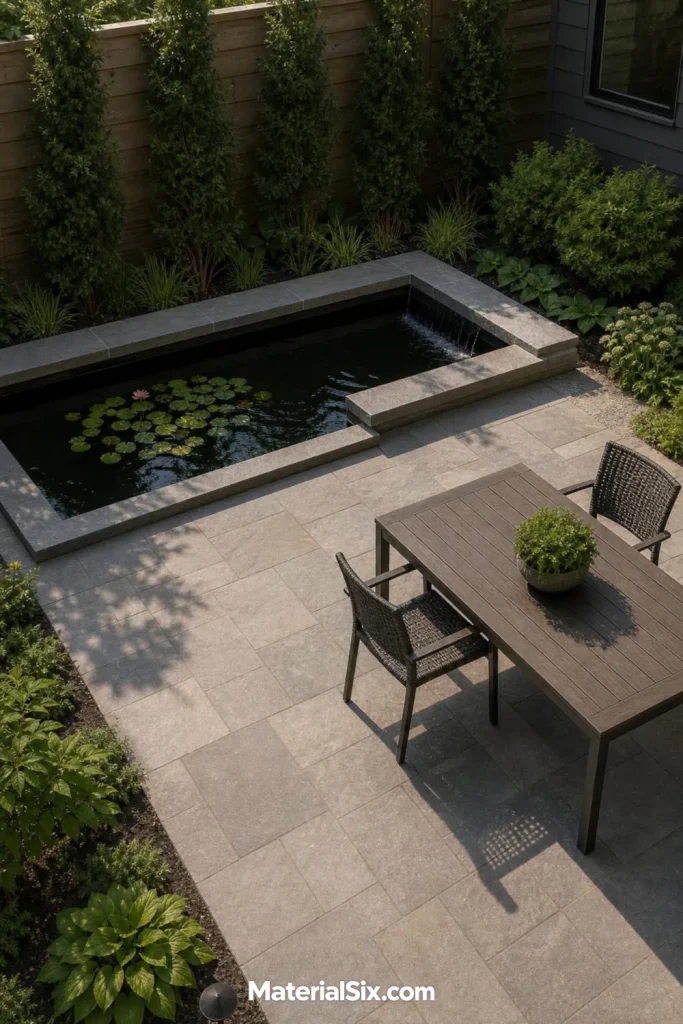
A square or rectangular pond can make a small patio feel more organized by repeating the lines already present in the paving. Rather than placing it in the middle of everything, position it along one side of the sitting area. That gives the water a strong relationship to the patio while preserving a usable central space.
Keep the surrounding palette simple, with one paving material and a limited mix of plants. A narrow planting strip can soften the far side without hiding the outline. Plan the layout around everyday circulation first, and make sure the pond edge remains easy to recognize beside the walking surface.
7. Frame the Water With a Gravel Garden
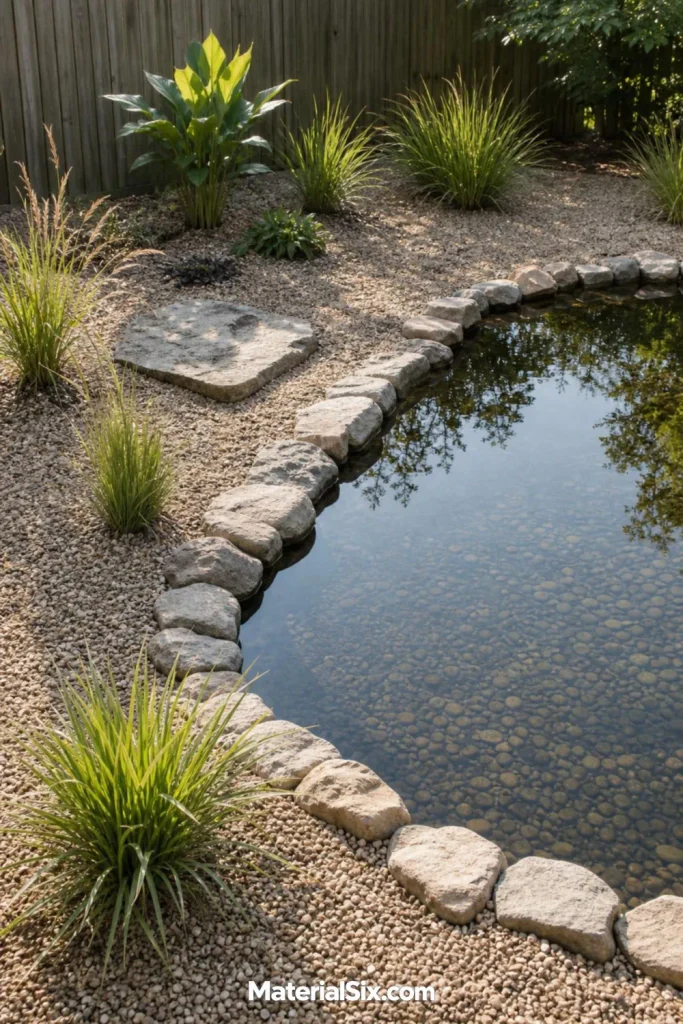
A gravel surround gives a little pond breathing room, especially if your yard already has plenty of leafy borders. The contrast between still water, loose stone, and a few sculptural plants creates interest without requiring lots of decorative objects. Choose gravel that relates to your existing paths so the pond feels connected to the landscape.
Use plants in small groups rather than spacing individual specimens evenly around the water. Keep loose gravel separate from the pond with a defined edge, and provide a stable place to stand for maintenance. Match the planting to your climate rather than assuming every gravel garden needs desert plants.
8. Make a Leafy Water Garden the Star
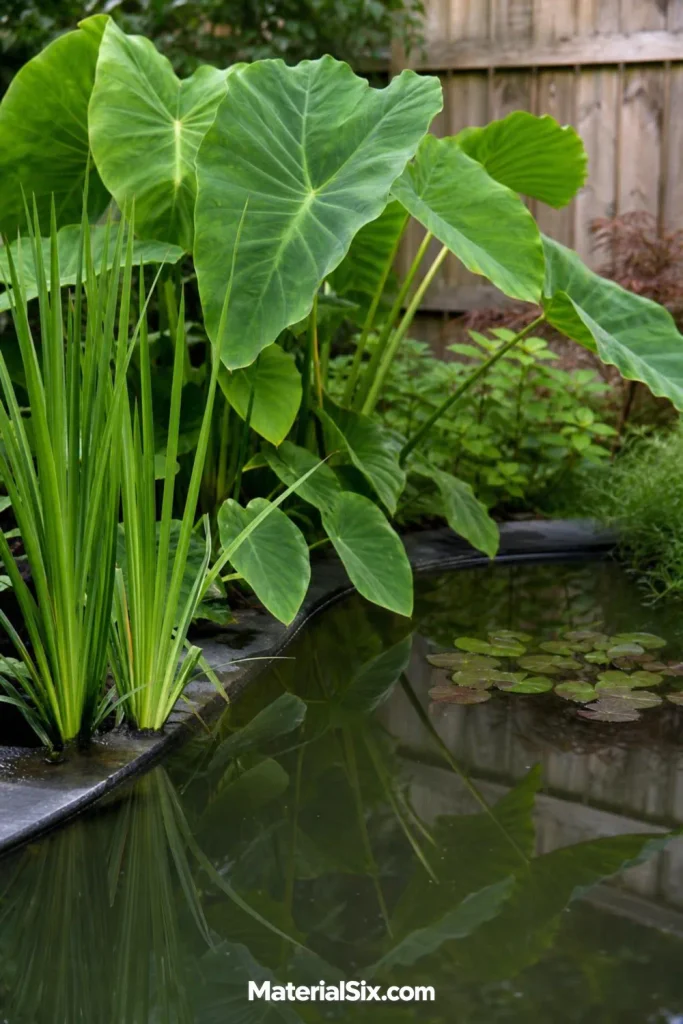
When flowers aren’t your main interest, build the pond’s look around contrasting leaf shapes. Broad foliage, narrow upright leaves, and a few floating leaves can create a layered scene without a complicated color scheme. Keep a generous opening of visible water so the planting frames the pond rather than swallowing it.
Carry that foliage-focused approach onto land with plants suited to the site’s sun and soil. A simple background, such as a plain fence, helps the shapes stand out. Check mature plant sizes and local restrictions before buying aquatic plants, and leave access where you’ll need to thin or tend them.
9. Keep Fish Pond Landscaping Open and Accessible
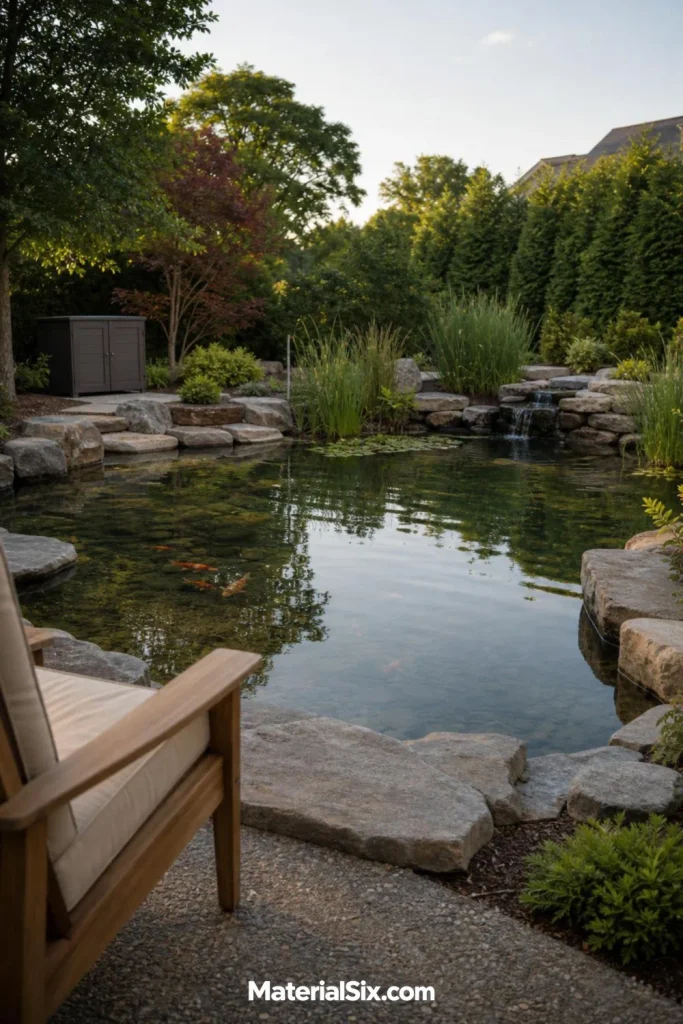
If watching fish is your main goal, let visibility and maintenance shape the landscaping. Keep the viewing side open, move taller plants toward the back, and resist filling the water with decorative rocks or dense planting. A simple edge and a nearby chair can make the pond feel welcoming without distracting from what you came to see.
Treat fish suitability as a separate planning decision, not an automatic addition to any small pond. Species, mature size, climate, water volume, and filtration all matter. Before committing to fish, have the proposed setup reviewed, and reserve convenient access to equipment rather than hiding it behind permanent landscaping.
Save the ideas that fit both your yard and the amount of upkeep you want. Then narrow your choices by pond shape, viewing spot, and planting style. A small pond feels more connected to the garden when you leave room to enjoy it and care for it.