
Your sofa fits against the wall, but the room still feels like a hallway with cushions. Put a chair opposite it and the walking route disappears. Leave the middle empty and every piece of furniture seems stranded along the edges. A long narrow living room can be surprisingly tricky because you need space to sit, move, and look at something other than the room’s length.
The most useful changes start with how you actually use the space. You might need a comfortable TV area, a place to read by the window, or a living and dining room that share one stretched-out footprint. You don’t have to squeeze all three into every room.
These 19 layout and decor ideas address the bowling-alley effect from different angles. Some change furniture placement; others adjust storage, color, or lighting. Start with a clear walking route, then choose the ideas that suit your doors, windows, and everyday routines.
1. Keep One Continuous Walking Route Along the Side
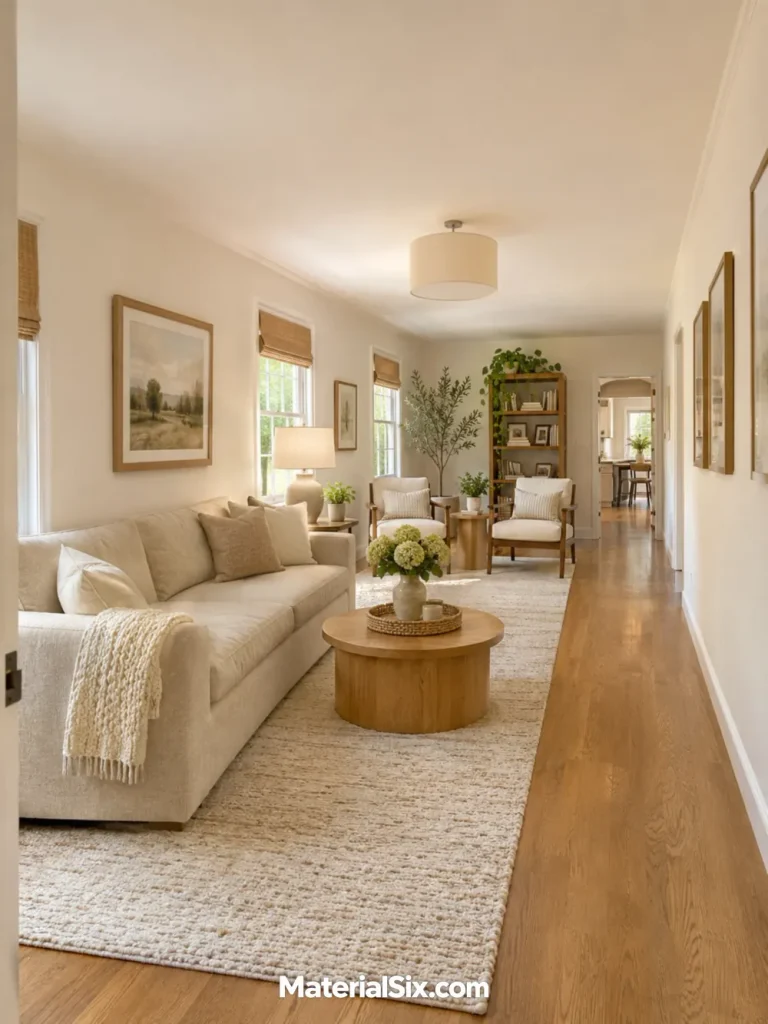
A clear route down one side gives a long room an understandable layout. Arrange your sofa, chairs, and coffee table as a group beside that route instead of scattering furniture across it. The room can still feel furnished without making everyone weave between table corners.
Trace the journey between doorways before moving anything heavy. Aim for roughly 30–36 inches of clear passage where your room allows, and allow more space when your household needs it. Measure between the furniture edges that actually project into the route. A side table, overhanging lampshade, or open cabinet door can narrow a passage that looks generous on paper.
2. Float a Sofa to Create a Separate Walkway
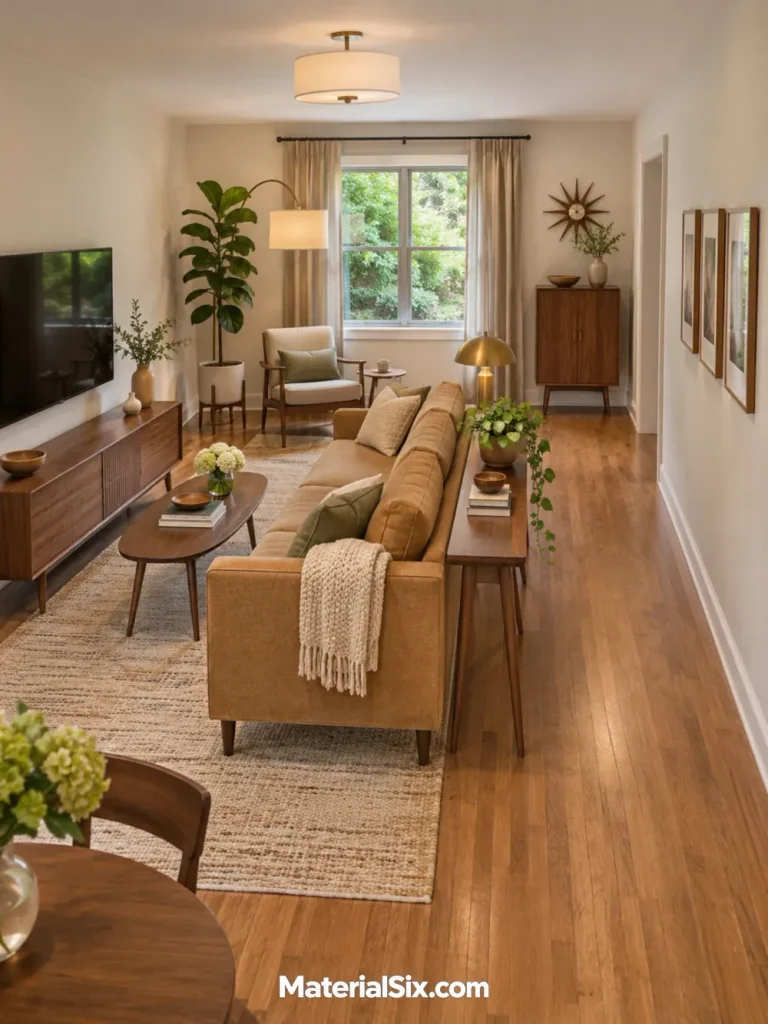
Pulling a sofa away from a long wall can separate circulation from conversation. With the back of the sofa facing the walking route, the seating area reads as a destination within the room. A narrow console behind it adds a finished edge without requiring another bulky piece.
Measure the full sofa depth before committing to this arrangement. You need room behind it for movement and enough space in front to use the seating comfortably. It works best in narrow rooms with a little extra width. Where the fit is tight, skip the console and choose a sofa with an attractive upholstered back.
3. Divide the Room With Two Separate Rugs
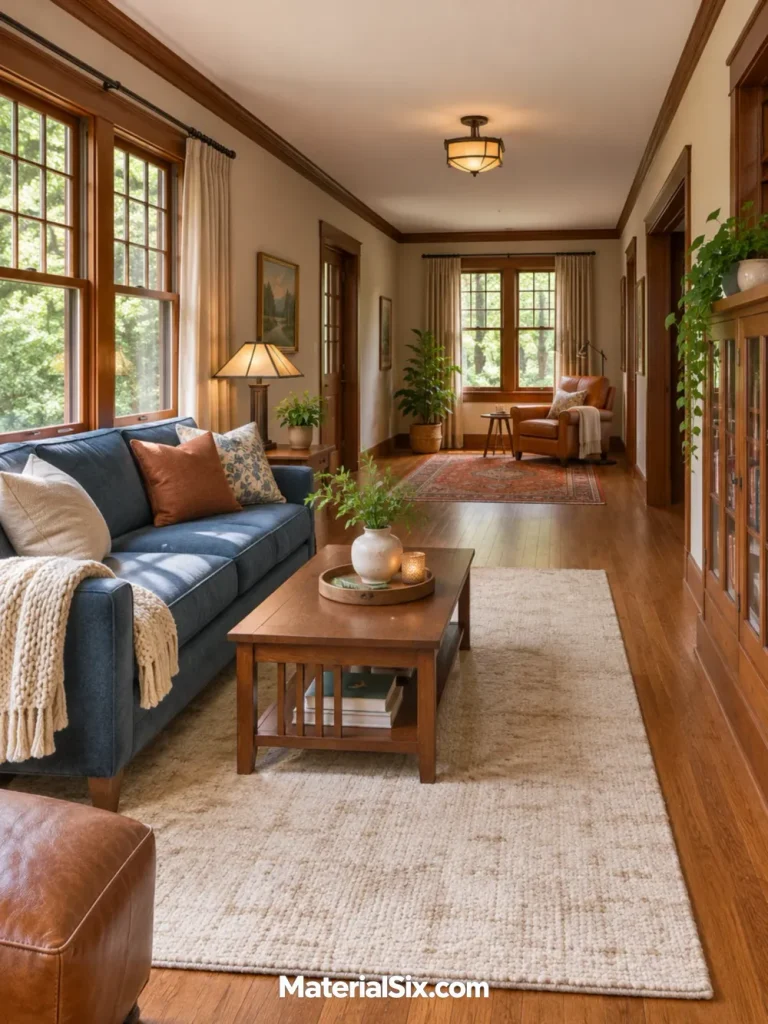
Two rugs can give a stretched-out room two distinct jobs. Place a larger rug under the main seating group and a smaller one beneath a reading chair farther down the room. A visible strip of flooring between them helps each area feel intentional.
Choose rugs that share a color or texture without matching exactly. A quiet cream rug beside a patterned rust rug creates more distinction than two identical runners. Keep the main rug broad enough to connect the seating, usually with the front furniture legs resting on it. Avoid loose rug corners in the walking route, and use pads suited to your flooring.
4. Turn the Seating Group Across the Room
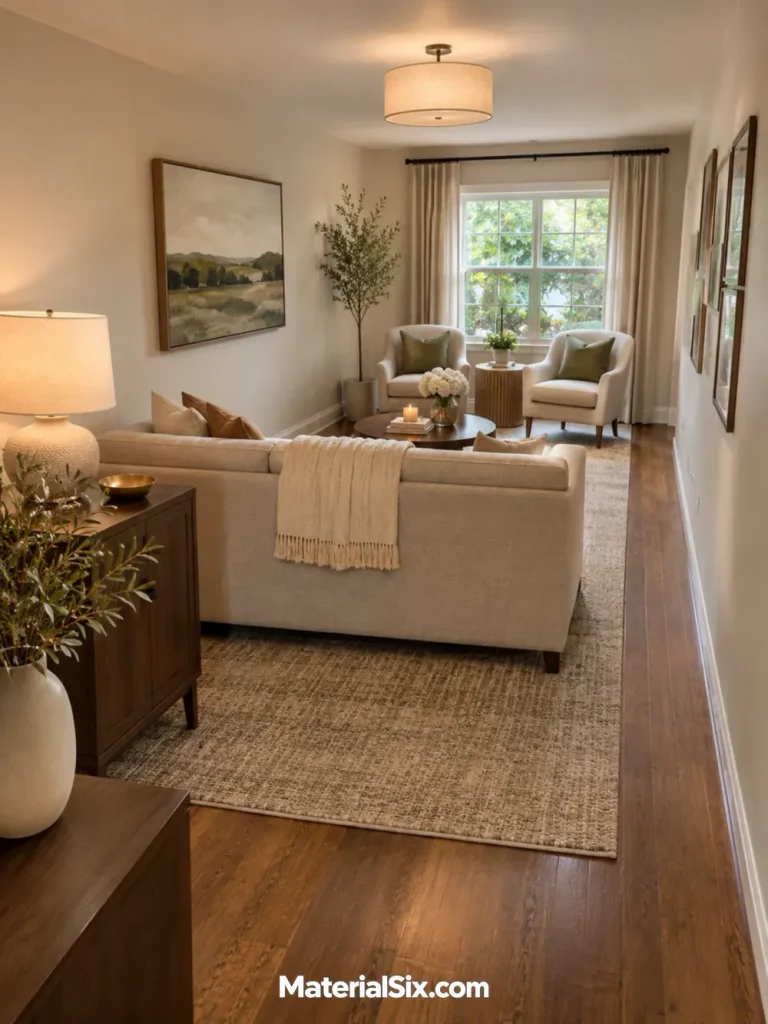
Instead of letting every seat follow the long walls, turn a compact sofa across the room. Facing it toward chairs nearer the far end creates a conversation area that reads across the width. The sofa’s back becomes a soft boundary between this group and whatever sits behind it.
This arrangement needs enough room to pass one end of the sofa comfortably. Check the sofa’s overall width, including its arms, against the actual wall-to-wall measurement. A smaller loveseat can make the layout workable where a full-size sofa cannot. Keep the group close enough for conversation so it doesn’t become another stretched-out row of furniture.
5. Put a Compact L-Shaped Sofa at the Far End
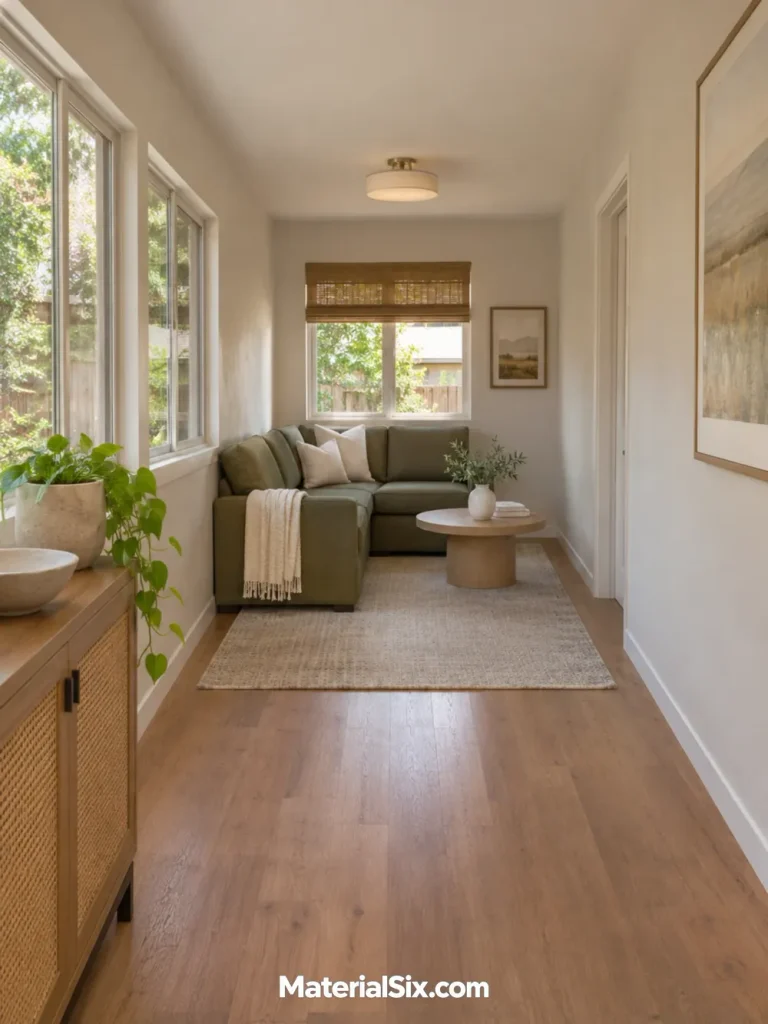
A compact L-shaped sofa can turn the far end into a comfortable lounging corner while leaving the entrance area open. Tuck its short return against an end wall so the projecting seat doesn’t cut across the main route. A small round table keeps the center easy to move around.
Check both the sectional’s footprint and its orientation before ordering. A left-facing return and a right-facing return can produce very different results in the same room. Tape the outline on your floor, including the deeper corner section. Keep windows, heating equipment, and door swings in mind rather than assuming the end wall is completely available.
6. Swap the Second Sofa for Two Movable Chairs
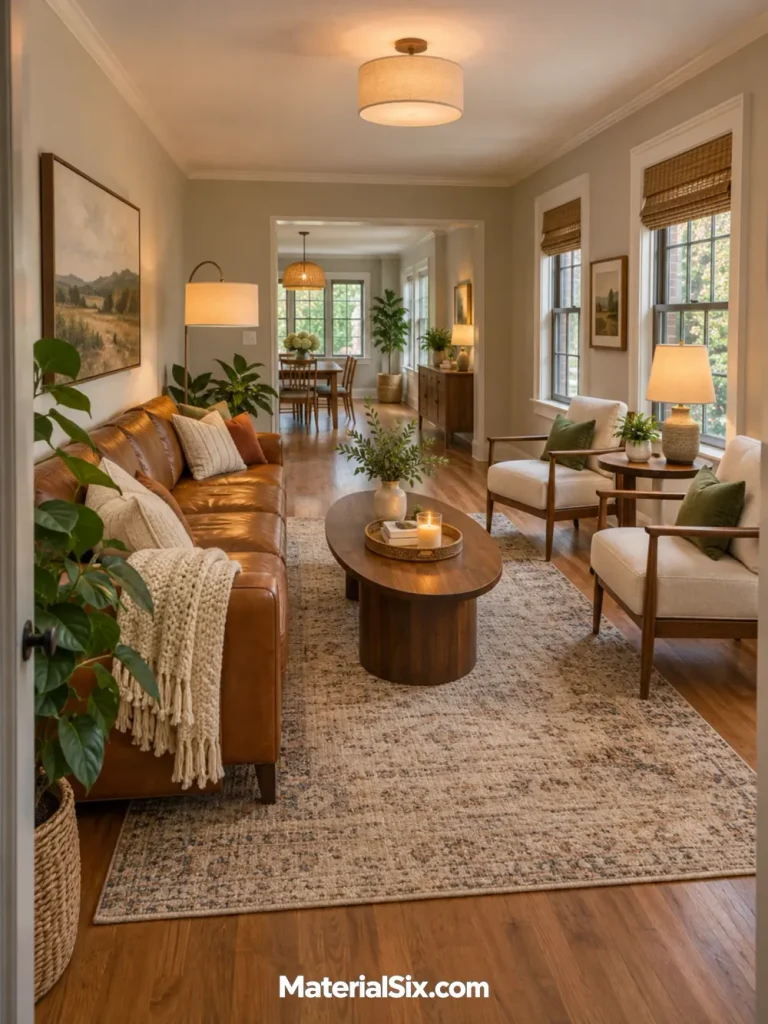
Two small chairs opposite a sofa can provide a conversational layout with more flexibility than a second couch. Open wood frames and visible legs let you see more of the floor, which helps the arrangement feel less crowded. A little table between the chairs gives both seats somewhere to set a drink.
Compare overall chair widths rather than relying on labels such as “apartment size.” Wide arms can consume the space you hoped to save. Angle the chairs slightly toward the sofa, then test whether people can enter and leave each seat easily. Lightweight chairs are especially useful when you occasionally need to rearrange for guests.
7. Replace the Coffee Table With Nesting Tables
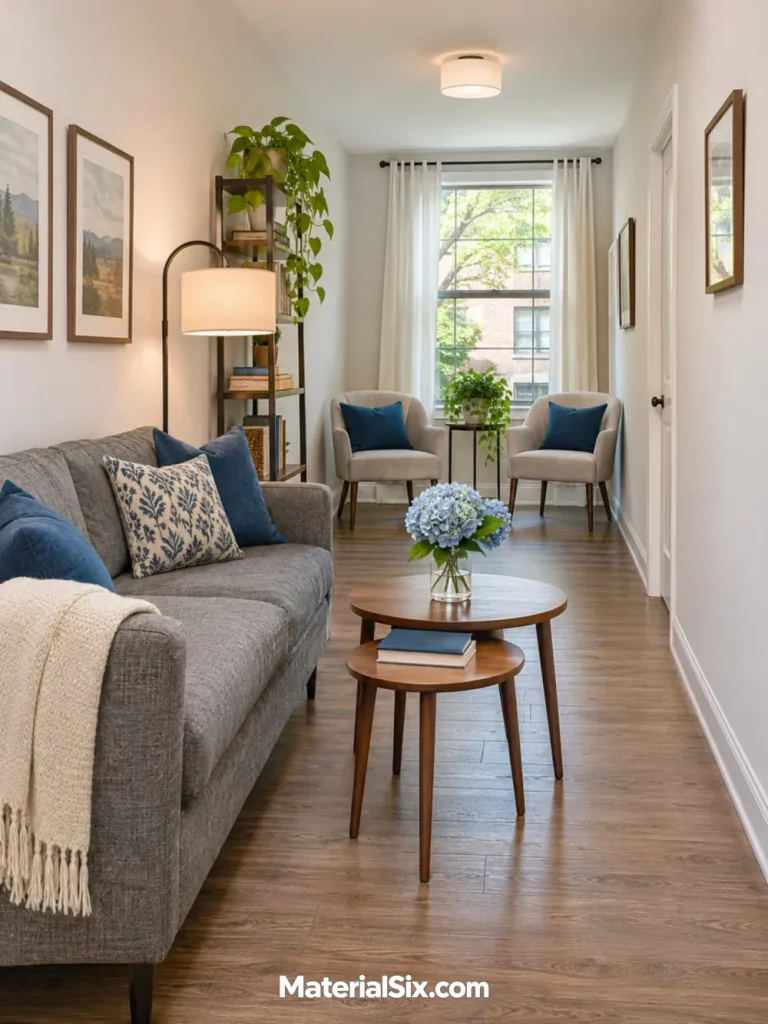
A pair of nesting tables gives you a usable surface without permanently filling the middle of a narrow seating area. Keep them partly tucked together on ordinary days, then separate them when someone needs a place for a book or a drink. Round tops soften the route around the sofa.
Choose a set with stable bases and heights that work beside your seating. Check the footprint when both tables are fully extended, since the expanded arrangement can take more space than expected. Leave enough room to stand up without catching a knee on the edge. In a very tight room, one table can move beside a chair.
8. Use Two Small Ottomans for Flexible Seating
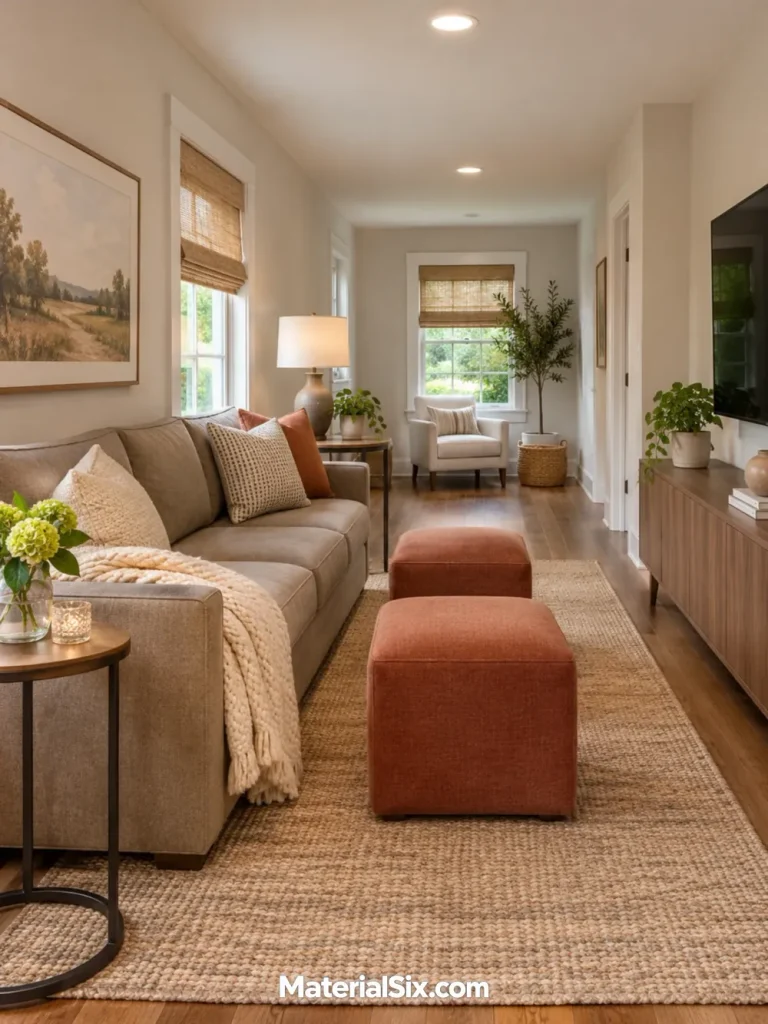
Two compact ottomans bring softer shapes into a room dominated by long straight walls. Set them near the conversation group as occasional seating or footrests, then move them aside when you need more open floor. Upholstery in rust, olive, or a subtle pattern can add warmth without another large cabinet or chair.
Choose ottomans designed to support seated use if that is part of your plan. Keep their size proportionate to the sofa and rug rather than filling every available gap. They work particularly well when you don’t need a permanent central tabletop. Add accessible side tables so drinks don’t end up balanced on soft cushions.
9. Keep the TV Wall Shallow
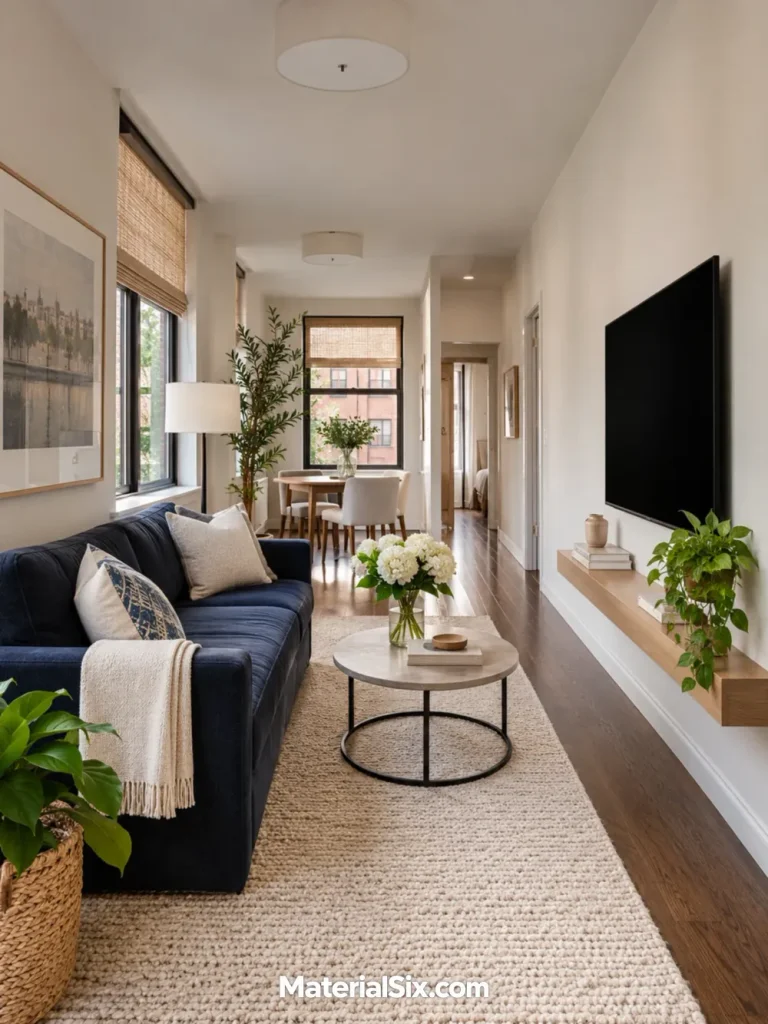
A wall-mounted TV above a slim media console can preserve valuable floor space opposite the sofa. The composition feels calmer when the console holds cables and small electronics without projecting as far as a deep entertainment center. A simple dark screen and warm wood cabinet also give the wall a clear focal point.
Before buying storage, measure the depth your equipment needs, including plugs and ventilation space. Follow the TV and mount manufacturers’ installation requirements, and choose mounting hardware suited to the wall. Position the screen for comfortable seated viewing. A shallow console only helps if its doors and drawers can still open without colliding with the coffee table.
10. Make an End-Wall Fireplace the Destination
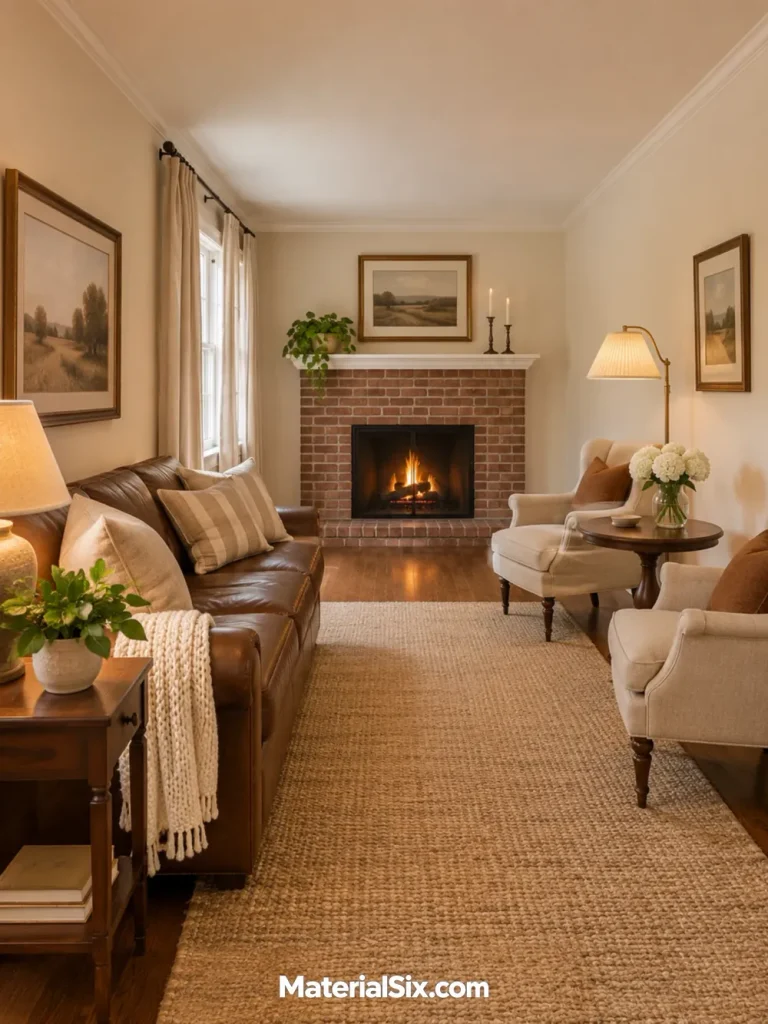
When a fireplace sits on a short wall, let the seating acknowledge it. A sofa along one side and a pair of smaller chairs nearby can create a gathering place at the end of the room. The fireplace gives your eye somewhere to settle instead of continuing down an empty corridor.
Bring the seating group toward the focal point without crowding the hearth. Follow the fireplace manufacturer’s requirements for furniture and combustible materials; don’t judge placement from a photograph alone. If the fireplace is decorative or unused, you still need easy access for cleaning and inspection. Keep the opposite end available for another purpose instead of stretching the conversation area indefinitely.
11. Give the Window End a Reading Nook
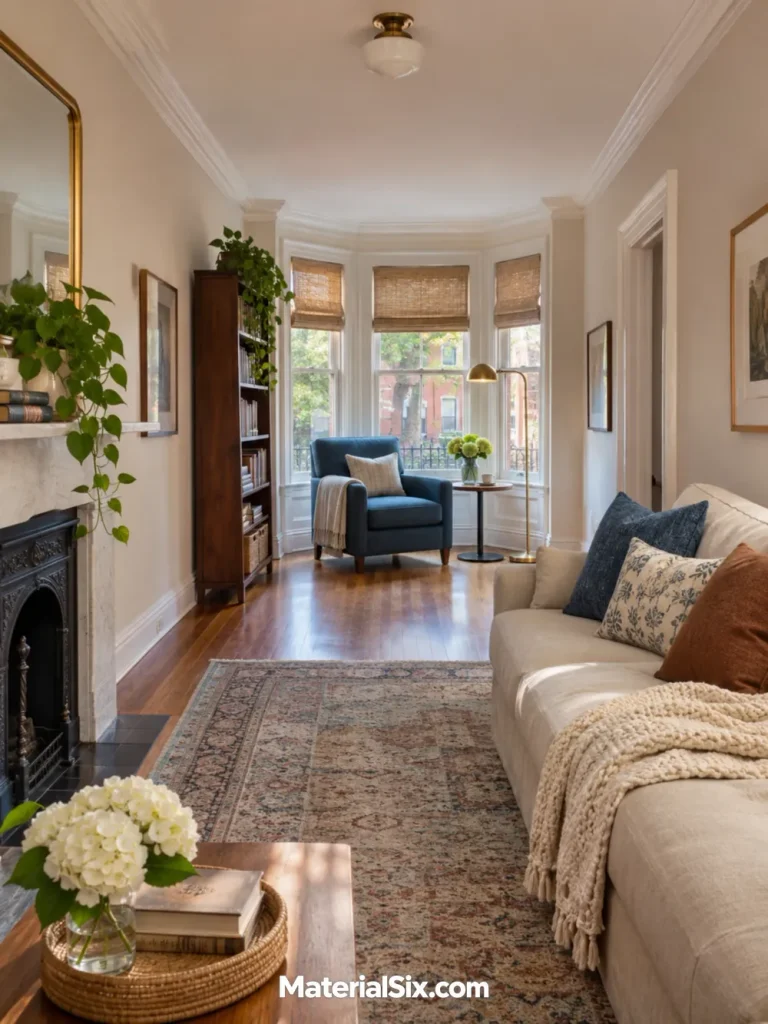
An end window can anchor a small reading nook beyond the main seating group. One comfortable chair, a side table, and a shaded lamp are enough to make the spot useful. The separate chair gives a long room a quieter destination without asking you to furnish a second full living area.
Turn the seat slightly toward the room so it feels connected rather than parked in a corner. Check that curtains can move freely and that the chair doesn’t interfere with a radiator, vent, or frequently opened window. Choose a table that holds the things you actually use. Leave a straightforward route from the main seating to the nook.
12. Add a Round Dining Table at the Opposite End
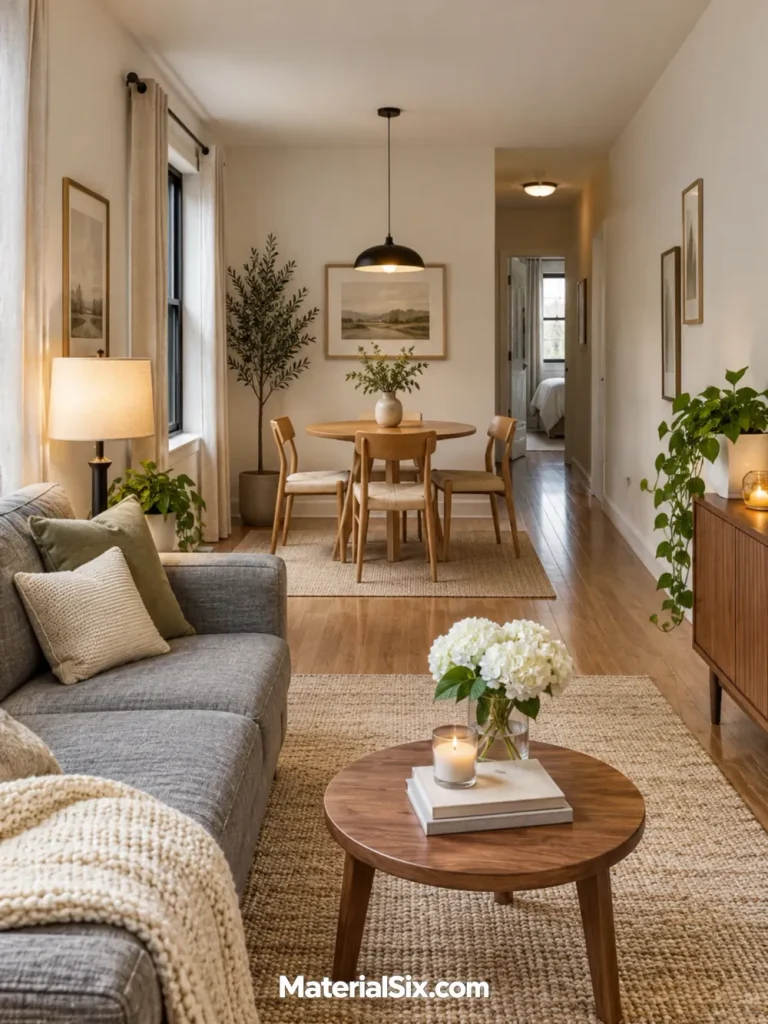
A small round dining table can give an extra-long living room a practical second zone. Its curved edge is useful where circulation passes close to the dining area, and a simple pendant or separate rug can distinguish it from the sofa group. Keep the table near the kitchen route when the floor plan allows.
Measure with chairs pulled out, not just tucked beneath the tabletop. A table that fits neatly when empty may block the passage during dinner. Start with the number of seats you use daily and consider occasional seating separately. This arrangement suits rooms with enough length for two functioning zones, rather than squeezing dining into a necessary walkway.
13. Tuck a Compact Desk Into an Unused End
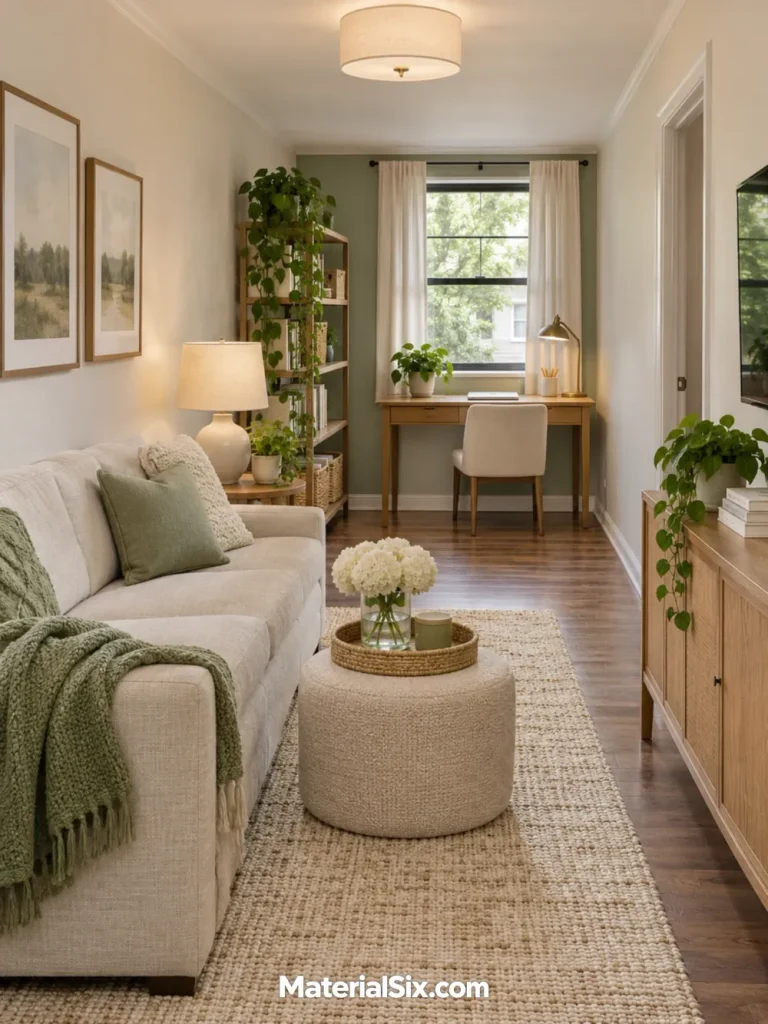
A shallow writing desk can put an underused end wall to work without turning the whole living room into an office. Position it beneath a window or against a quiet short wall, with a chair that slides fully underneath. A closed laptop and a small amount of storage keep the work area visually contained.
Choose the desktop around your actual equipment. A surface that handles a notebook may be too shallow for a large monitor and keyboard. Leave room to pull the chair out without cutting off the main passage, and route cords away from feet. Add task lighting so the desk remains useful after the window light fades.
14. Stretch Storage Upward With Shallow Shelves
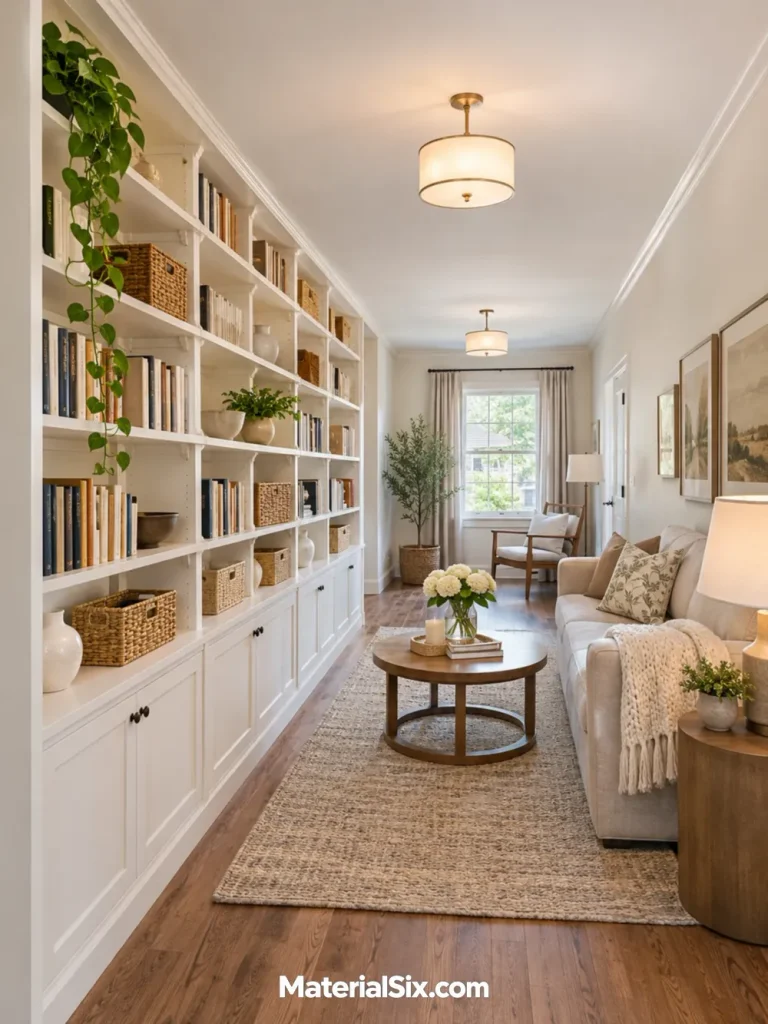
Shallow shelving uses wall height without taking as much width from the room as a deep cabinet. Books, baskets, and a few larger decorative pieces create a lived-in backdrop, while closed lower storage can hide everyday clutter. Keep the opposite furniture relatively simple so both sides don’t feel equally heavy.
Measure your belongings before choosing shelf depth. Oversize books, board games, and electronics may need more space than a slim unit provides. Follow anchoring instructions for tall furniture, using fixings appropriate for your wall. Leave some open shelf space so the storage doesn’t become a busy stripe running the entire length of the room. Start with the section you actually need.
15. Try One Broad Rug With a Crosswise Pattern
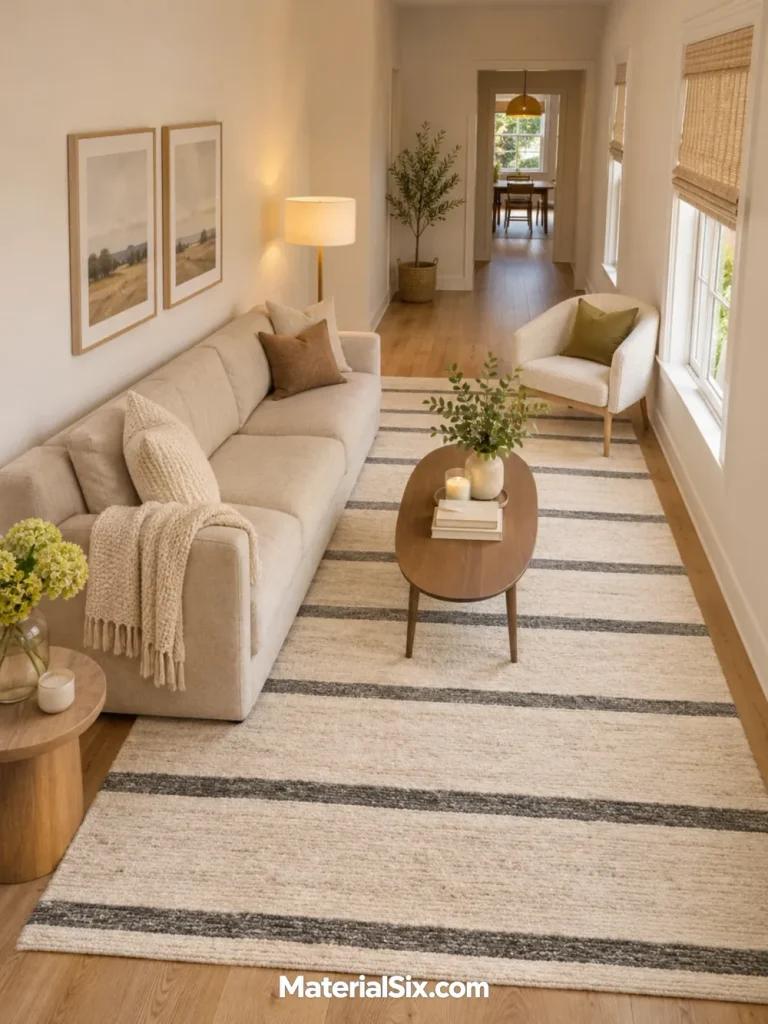
A broad rug with stripes or bands running across the room can interrupt its strong lengthwise lines. The pattern draws attention from side to side while connecting the sofa and chairs into one group. Keep the colors restrained if your upholstery or artwork already carries a noticeable pattern.
Check the rug’s orientation before ordering, since its stripe direction may be fixed by the dimensions. It still needs to fit the seating arrangement, with enough width to avoid looking like a runner between furniture rows. This is a visual adjustment rather than a substitute for workable furniture placement. Use a simple coffee table so the crosswise pattern remains easy to read.
16. Give the Far Wall a Deeper Paint Color
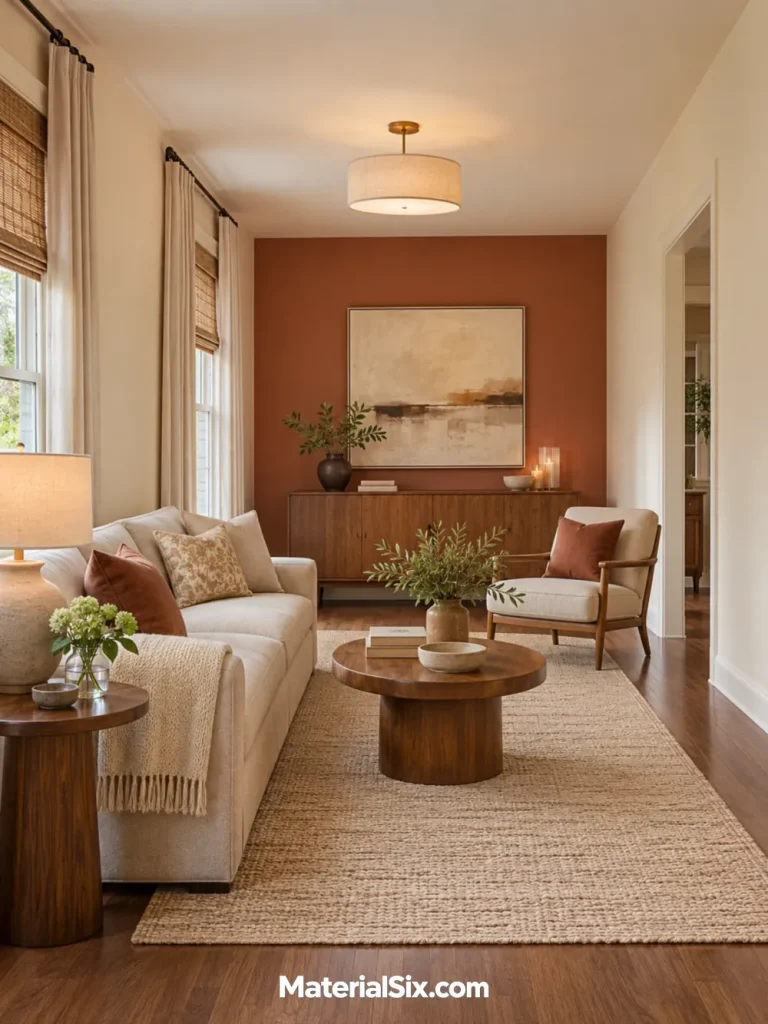
A deeper color on the short end wall gives a long room a stronger stopping point. Muted terracotta, olive, or smoky blue can anchor a low sideboard or a single piece of artwork while the long walls stay lighter. The contrast makes the end feel furnished even when you need to keep the floor relatively clear.
Test large paint samples in daylight and after dark before covering the wall. A color that feels warm beside a sunny window can look much heavier at the darker end of a room. Keep the surrounding trim and furniture in the decision. Paint changes emphasis, but it won’t correct seating that blocks your route through the space.
17. Hang Curtains Beyond the End Window
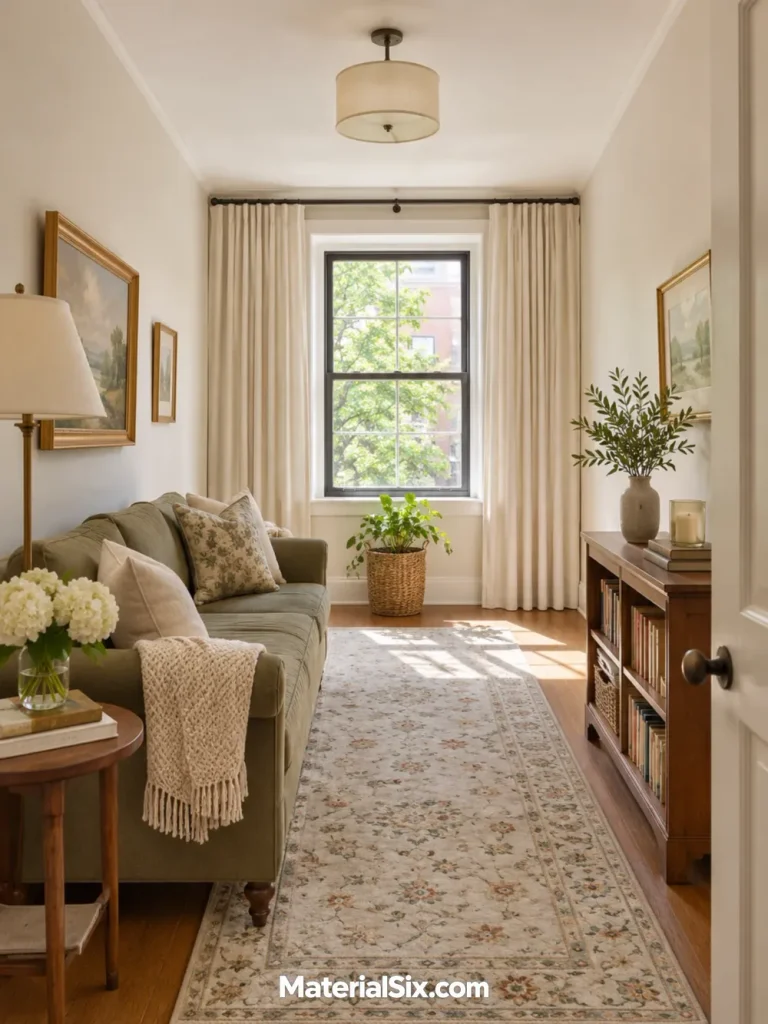
Curtains that extend beyond a narrow end window can give the short wall more visual presence. Hang the panels so they stack mostly beside the glass when open, allowing daylight into the far end of the room. Full-length fabric adds softness to a space that may otherwise feel dominated by parallel hard surfaces.
Measure the wall space available on both sides before choosing the rod length. Leave clearance for adjacent doors, furniture, and heating equipment, and attach hardware according to the manufacturer’s instructions. Choose enough fabric for the panels to look softly folded when closed. Keep hems off the floor where a nearby walkway would otherwise catch or drag them.
18. Use a Mirror to Borrow Light From the Side
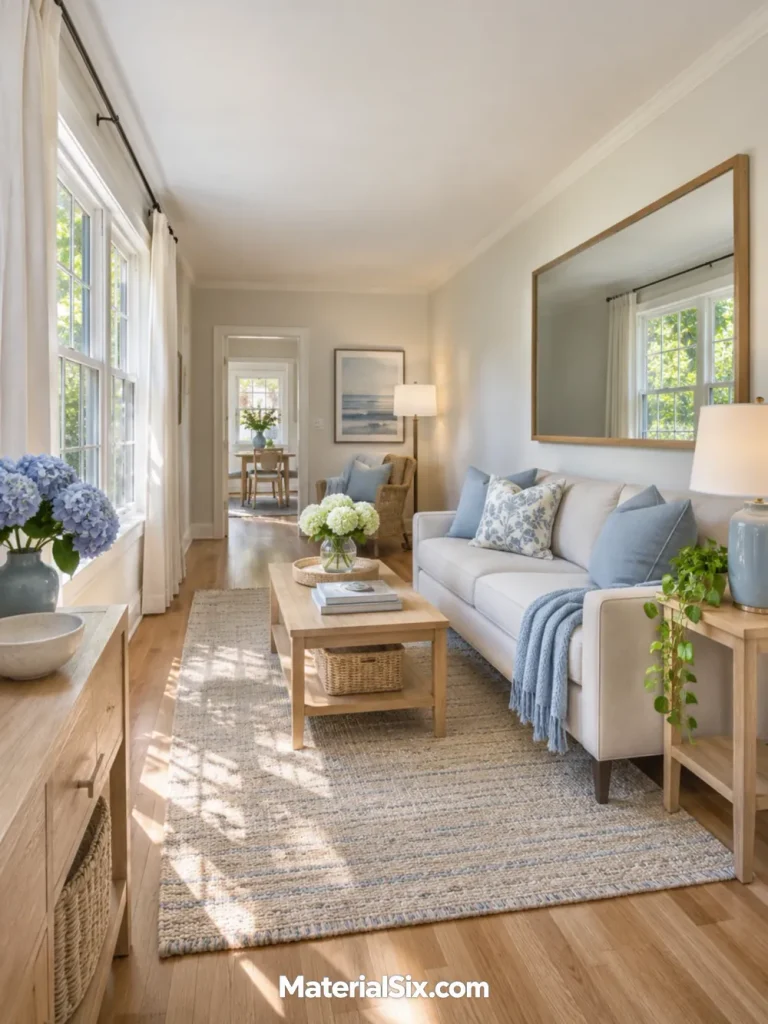
A mirror on a long wall can reflect a side window and bring another view of daylight into the seating area. A simple frame keeps the effect calm, especially when the room already contains shelving or patterned textiles. Position it where the reflection includes something you enjoy seeing, such as a window and greenery.
Check the reflection from your usual seated position before settling on the height. A mirror can repeat clutter, a bright bulb, or the TV just as easily as a pleasant view. Use wall fixings rated for its weight and suitable for the wall material. It adds reflected light and depth, while the room’s physical clearance stays the same.
19. Break Up the Tunnel Effect With Pools of Light
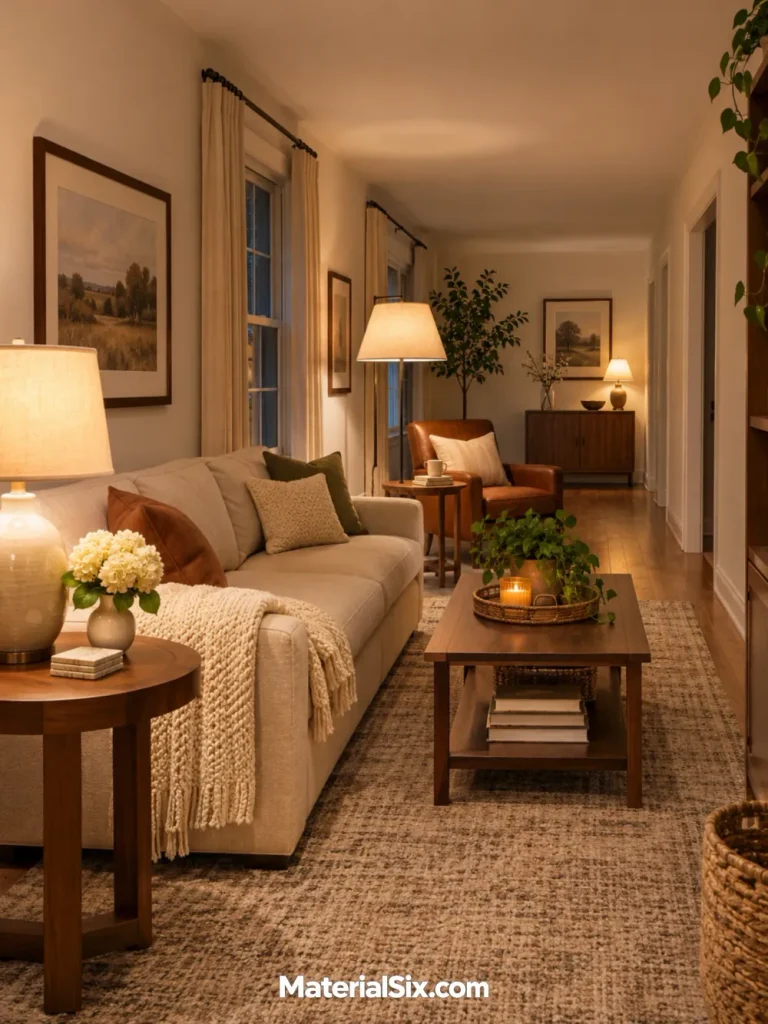
Separate pools of light can make a long living room feel like several comfortable places after sunset. Try a table lamp by the main sofa, a shaded floor lamp near a reading chair, and a small lamp at the far end. The arrangement gives each activity its own focus instead of emphasizing one continuous line down the ceiling.
Use similar light colors across the lamps for a cohesive evening atmosphere. Keep shades below distracting glare lines where possible, and choose brightness around the task rather than appearance alone. Plan outlets before arranging furniture so cords stay out of the walking route. Include accessible switches for the areas you use most often.
Choose the Layout Before Adding the Decor
Start with a quick measured sketch showing every doorway, window, fireplace, and fixed feature. Mark door swings and the route people take through the room. Then draw your largest furniture pieces at their actual dimensions, including arms and projecting legs.
Choose one main layout approach first. A sofa against a long wall, a floating sofa, and a crosswise seating group are alternatives to test, rather than instructions to combine. Add a second activity zone only if the remaining space supports it comfortably.
Once the furniture works, choose two or three finishing ideas. You might pair shallow media storage with a broad striped rug and layered lamps, or combine a window reading nook with two rugs and taller curtains. Walk through the room with doors and drawers open before calling the arrangement finished. The useful layout is the one your household can live with every day.
FAQ
Should the sofa go against the long wall?
Often, particularly in a very narrow room. A floating or crosswise sofa can also work when enough width remains for circulation. Compare the actual furniture footprint with door locations before choosing.
How do you arrange a long narrow living room with doors at both ends?
Start by preserving a continuous route between the doors. Keep the seating group beside that route where possible, and account for door swings. Avoid putting a table or projecting chaise directly in the passage.
Can you use a sectional in a narrow living room?
Yes, when its dimensions and return orientation suit the room. A compact L shape at one end may work better than a large sectional in the middle. Tape out the complete footprint before buying.
Where should the TV go when a window is at the end?
An adjacent long wall may allow you to keep the window accessible. Check glare at the times you watch and consider window treatments. Choose a position that supports comfortable viewing without compromising the route through the room.
How can you improve the layout without buying new furniture?
Remove unnecessary pieces temporarily, test a continuous side passage, and regroup the seating around one focal point. Moving an existing chair to the far end can create a useful second zone. Take measurements before deciding whether anything needs replacing.
Conclusion
A long narrow living room becomes easier to furnish when you give movement and seating clear places. Start by testing one walking route and one main furniture arrangement. Once those work, a reading corner, shallower storage, or a change in lighting can help the room feel more connected and comfortable without filling every foot of its length.