
A baby does not need a huge room, but the furniture choices can make a compact space feel crowded surprisingly fast. These small nursery ideas focus on giving each piece a clear job, keeping daily supplies organized, and leaving a sensible route through the room.
You’ll find options for a dedicated baby room, a shared bedroom, and spaces that also need to serve another purpose.
Start with the sleep space and the furniture you actually use, then choose the storage and decorating details that fit around them. You can borrow one approach or combine a few that suit your home.
1. Choose a Mini Crib to Open Up the Floor
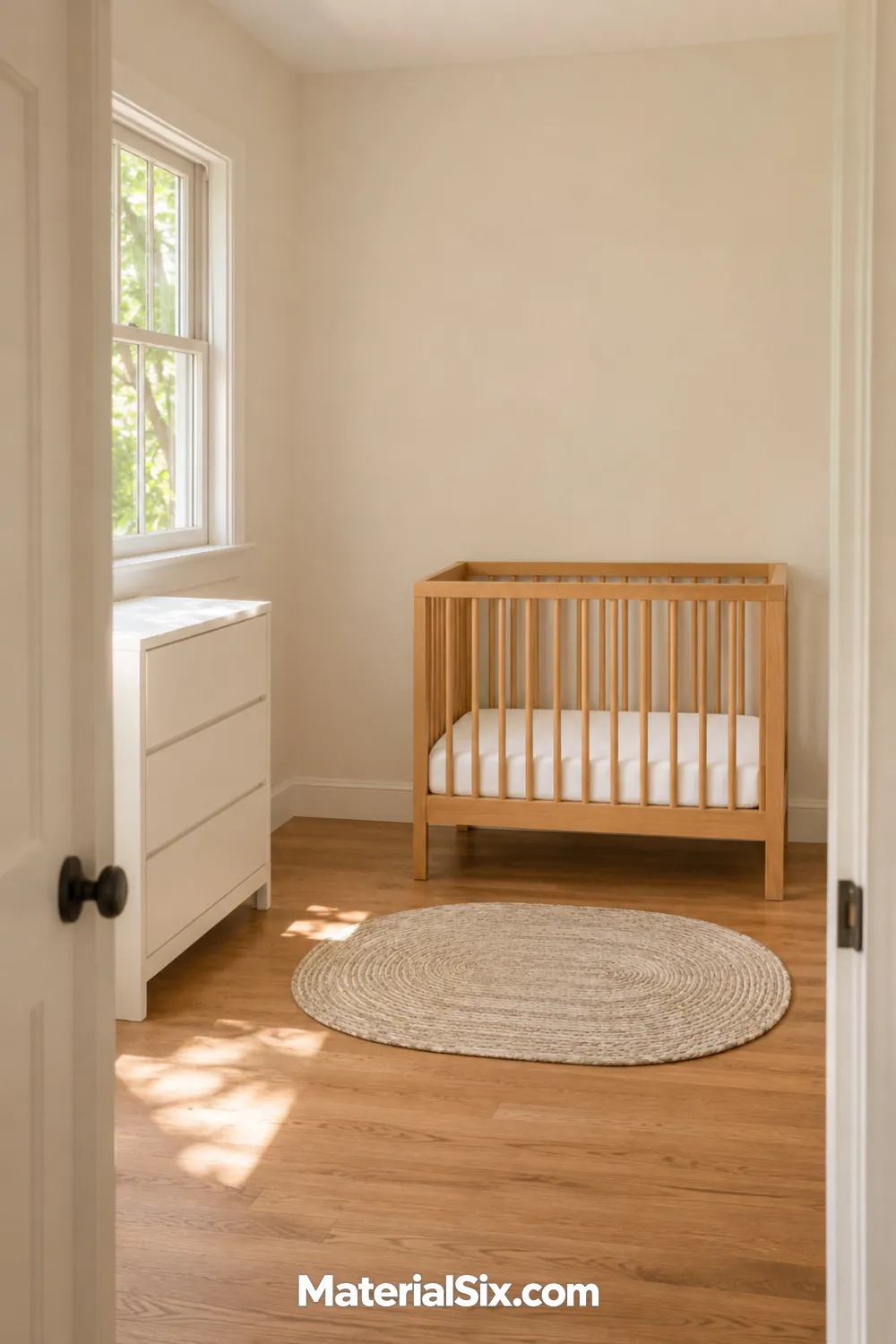
A mini crib can make a tiny nursery room feel less crowded without turning the layout into a furniture puzzle. Its smaller footprint may leave room for a comfortable route between the door, changing area, and sleep space. Keep the surrounding styling simple so you can actually see the extra floor space.
Measure the crib’s outside dimensions, including projecting legs, before choosing your other pieces. Use only the mattress specified for that model, and follow its size and developmental limits. A compact crib is a furniture choice, not a reason to squeeze storage or loose bedding into the sleep area.
2. Let a Changing Table Dresser Do Two Jobs
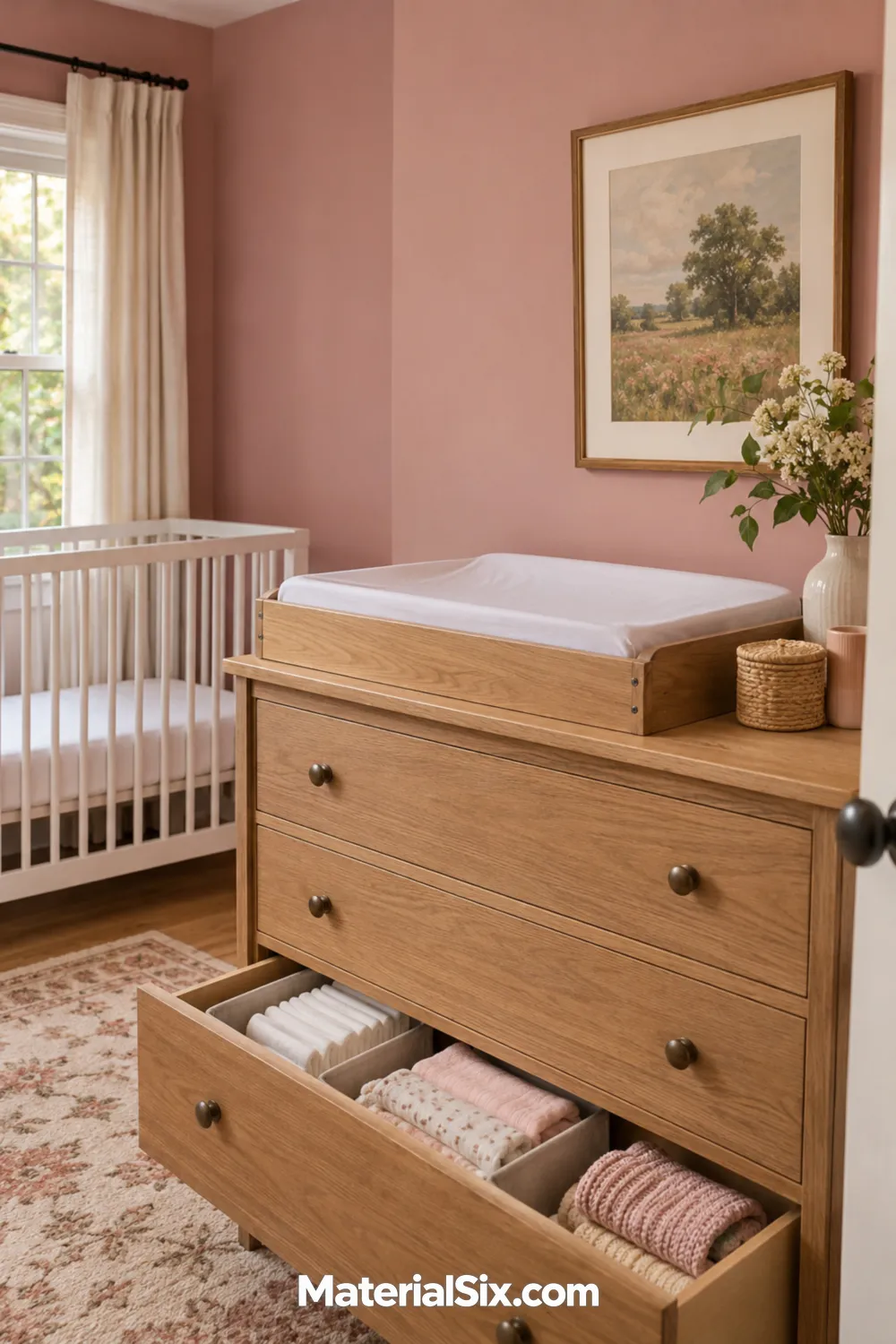
Combining clothing storage and a changing station gives one substantial piece of furniture two clear jobs. A changing table dresser also creates a useful visual anchor, especially when the rest of the room contains just a crib and a chair. Choose a finish you would still enjoy after the diaper years.
Use a changing topper or pad system intended for the dresser and install it according to its instructions. Group everyday clothes in the top drawer, with refills lower down. Anchor the dresser, keep supplies within your reach, and stay with your baby throughout every change. Avoid letting decorative objects crowd the working surface.
3. Turn the Closet into a Baby Wardrobe
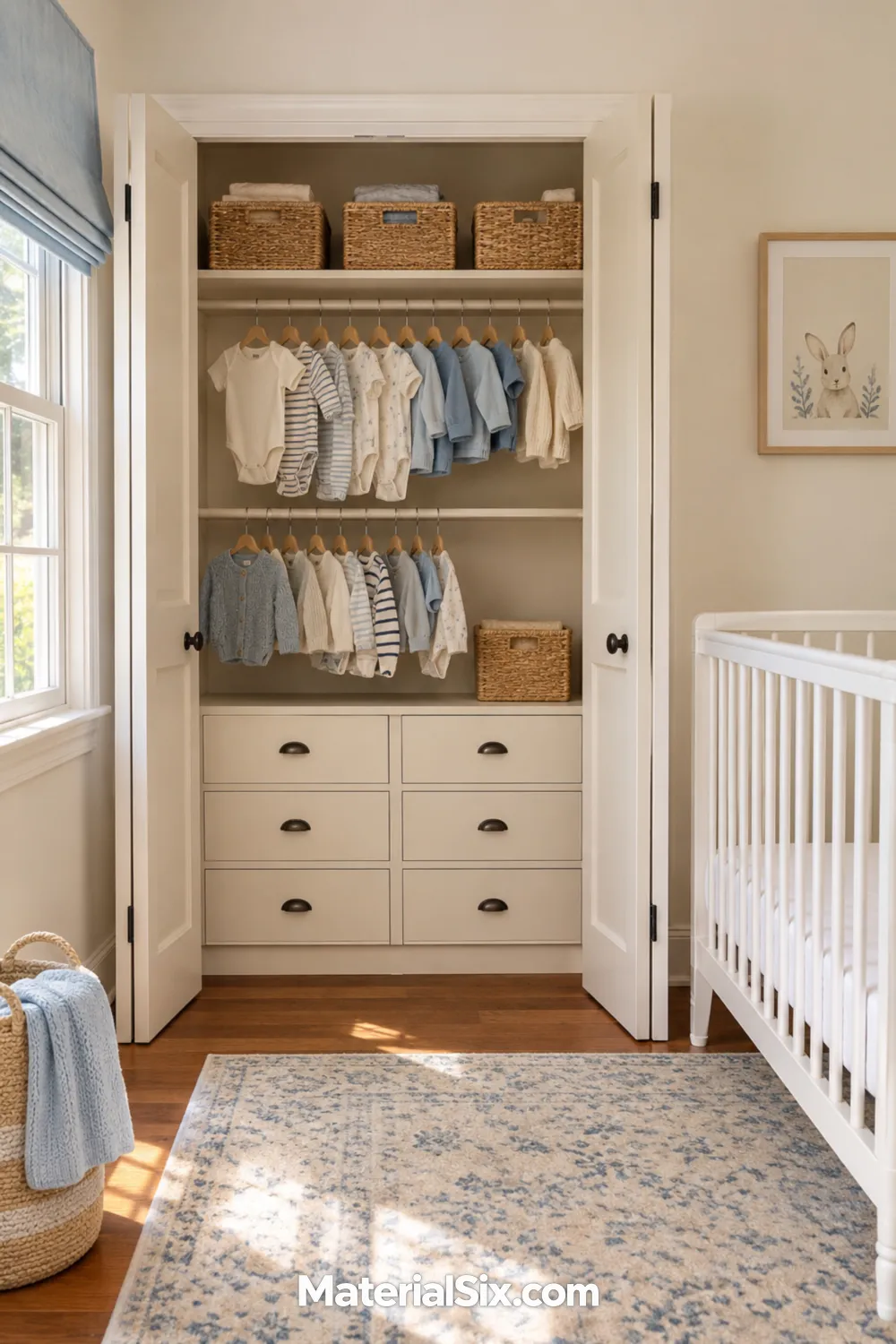
Baby clothes rarely need the full hanging height of an adult wardrobe. A closet arranged with shorter hanging sections, drawers, and a few upper bins can hold the nursery’s clothing supply without another freestanding cabinet. This works especially well when the room already has a shallow reach-in closet.
Sort the lower drawers by current size and keep next-size clothing in clearly separated bins. Leave space for doors to open and drawers to slide out without blocking the room’s main route. Treat this as nursery storage organization rather than a sleeping alcove. The crib belongs in the room, with clear space around it.
4. Create a Nursery Zone in Your Bedroom
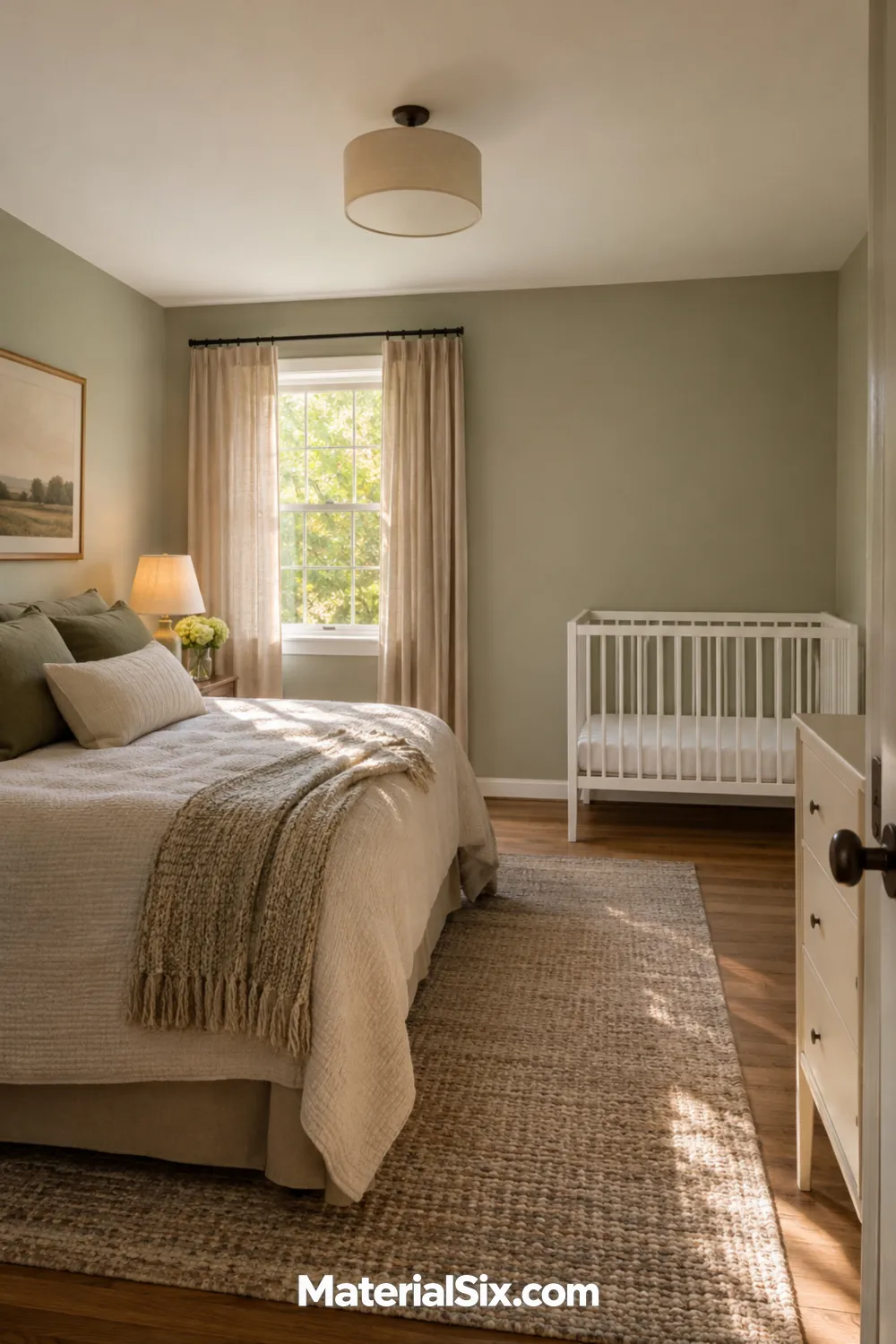
A separate nursery is not the only way to make space for a newborn. In a one-bedroom home, a dedicated baby zone can sit within your bedroom while keeping adult and infant furnishings visually coordinated. Repeat a wood tone or wall color instead of trying to match every piece.
Give the baby an independent sleep surface designed for infant sleep, with only its fitted sheet. Position it away from adult bedding, window coverings, and reachable cords. Keep baby clothes in one dresser section so supplies do not spread across the room. Tape out the proposed furniture footprints first to check your nighttime walking route.
5. Divide a Nursery and Office by Function
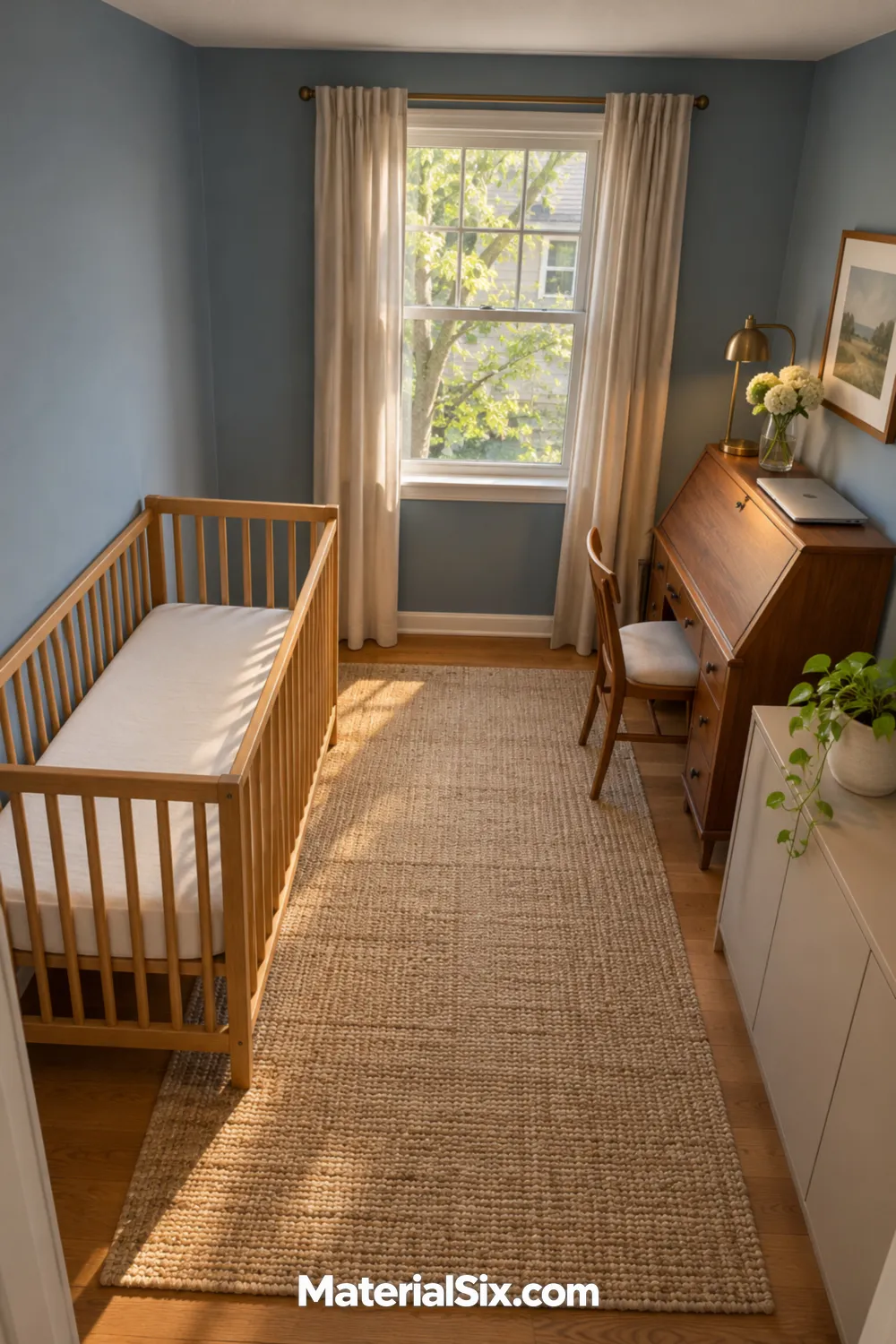
A nursery and office combo needs a clear boundary between work storage and baby care. Place the desk and its supplies along one wall, then keep the crib on another, with the middle of the room as a shared circulation zone. A closed secretary desk can make the work area look quieter when the day ends.
Choose closed storage for stationery and small accessories instead of open piles. Route electronics and cables entirely outside the crib area, and reassess access as your child becomes mobile. Compare actual furniture depths before buying. A desk that looks slim online can still consume the aisle once its chair is pulled out.
6. Give Siblings Separate Zones in One Room
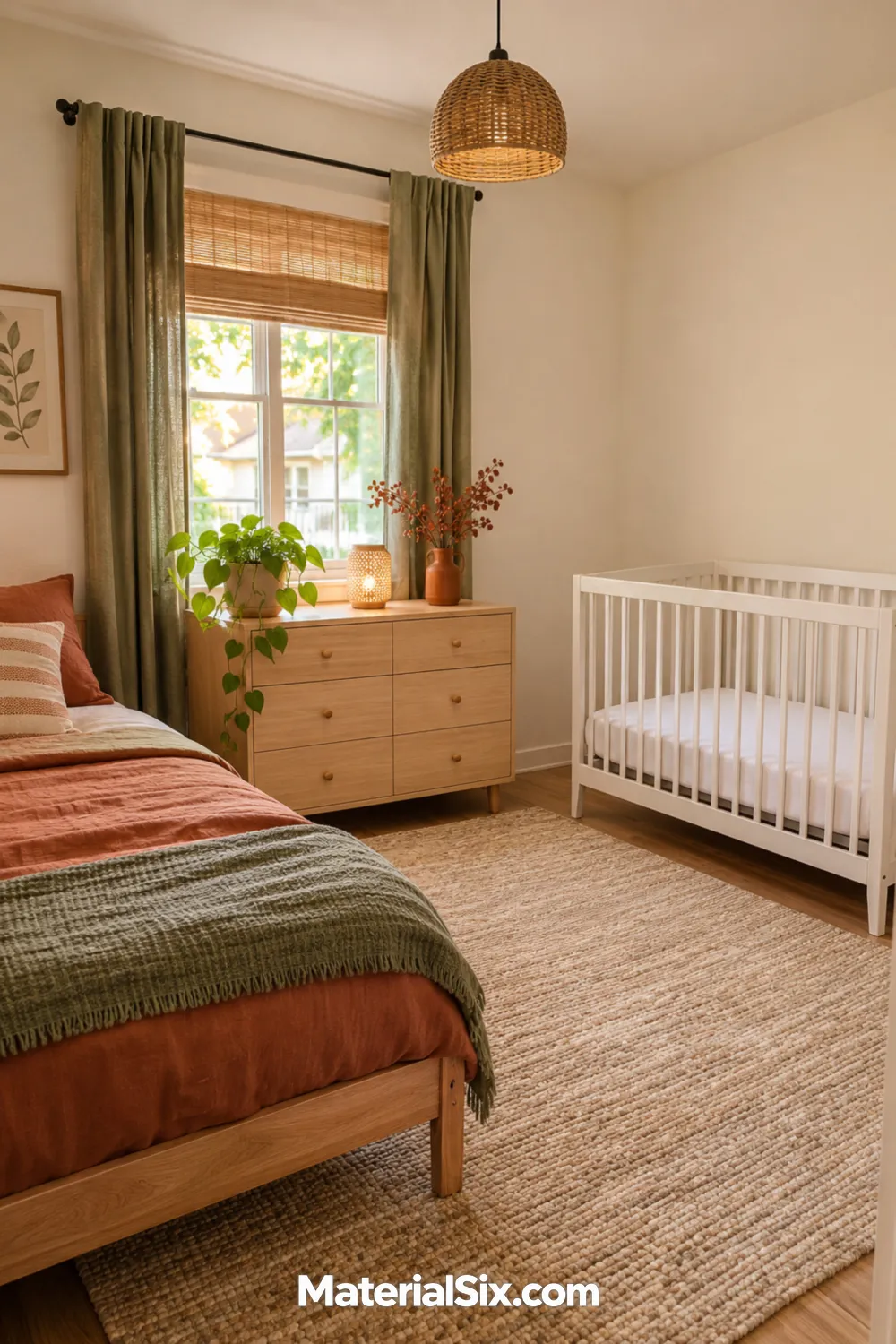
A shared room can feel considered when each child has a recognizable area. Use a small change in color, separate clothing drawers, or different wall art outside the crib zone to mark the two spaces. Keep the larger furniture visually related so the room still feels connected.
Position the older child’s bed, blankets, and toys away from the crib, and plan storage that helps contain small play pieces. Avoid placing a crib below an upper bunk or hanging storage. Leave the door route clear even when drawers are open. Your small nursery layout should accommodate everyday movement, not simply fit both beds into a floor-plan sketch.
7. Choose a Compact Chair with a Clear Landing Spot
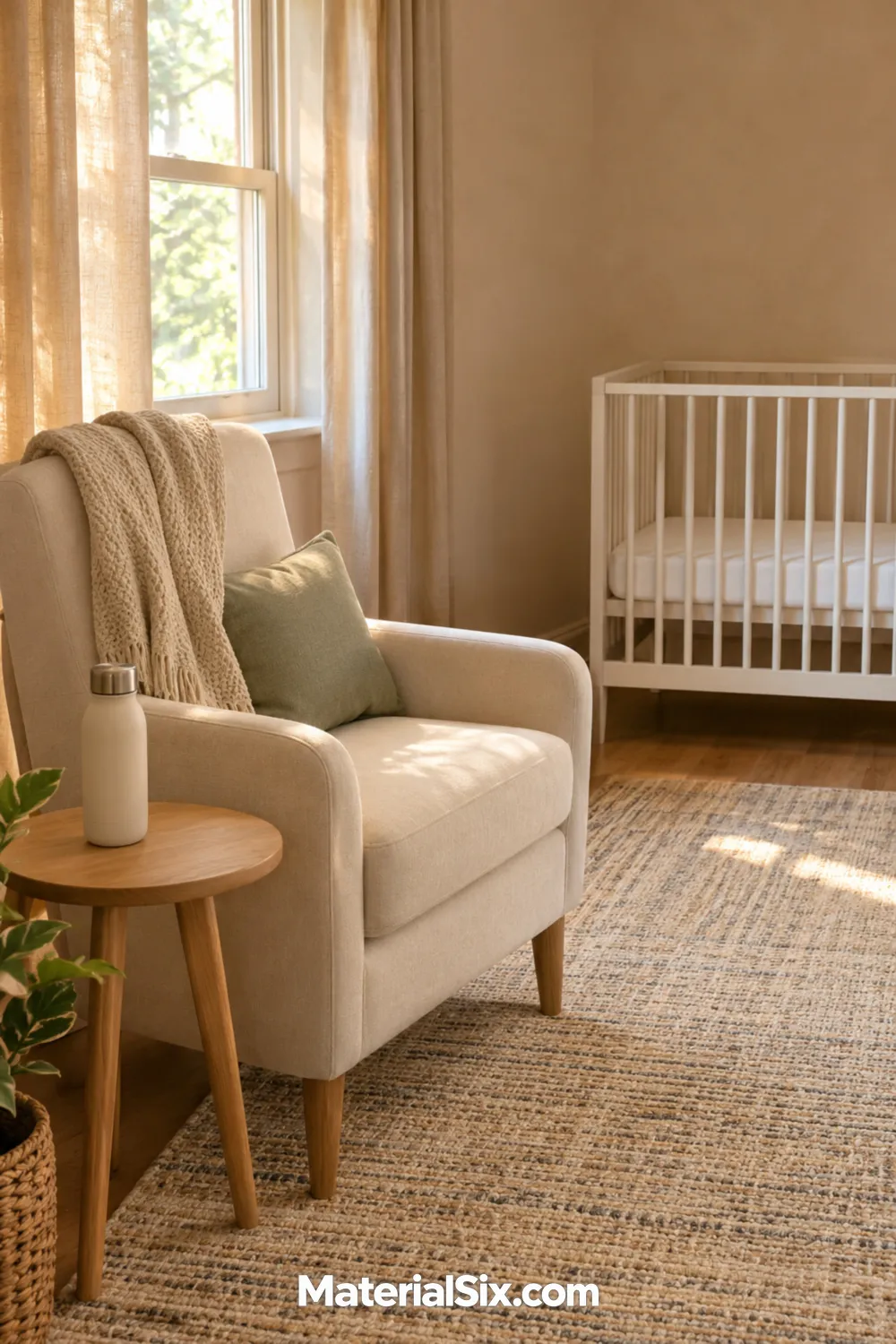
A large glider can dominate a small baby room, particularly when its base or reclining motion needs extra clearance. A compact upholstered chair with supportive arms may suit the available corner better. Try the chair in person when possible and check how it feels while sitting down and standing up.
Place a small table within your reach for water and other adult essentials, outside the baby’s reach from the crib. Measure the full moving footprint if you choose a rocker or recliner. Leave enough room to use the chair comfortably, and treat it as a feeding or sitting spot rather than an infant sleep surface.
8. Move the Book Collection onto a Narrow Wall
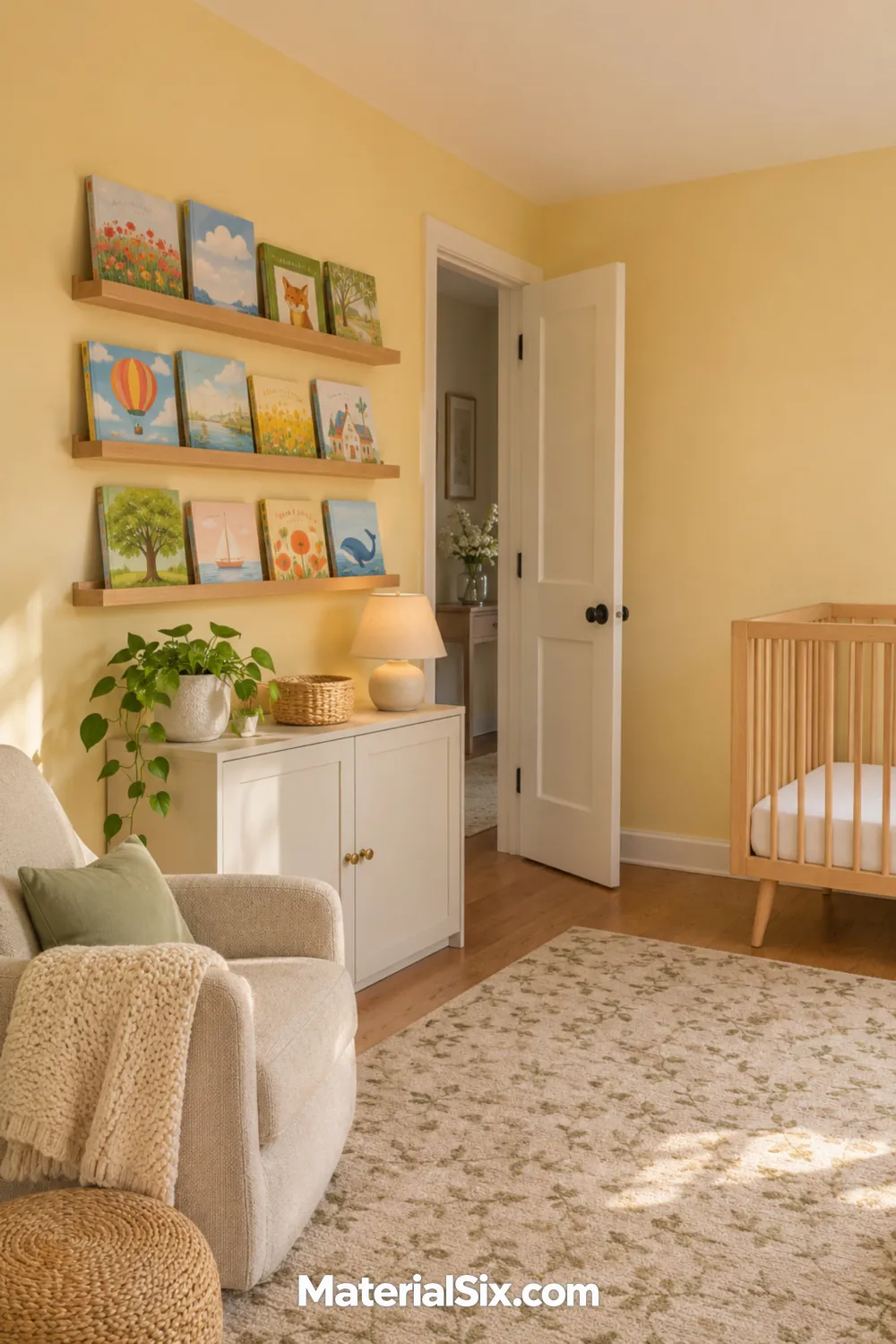
A slim bookcase or shallow book ledges can give bedtime books a home without using a deep furniture footprint. Look for an unused wall near the chair or entry rather than filling the space above the crib. Outward-facing covers bring color to a small nursery decor scheme without adding lots of accessories.
Keep the displayed collection modest so books are easy to remove and put back. Secure shelves and bookcases using the appropriate installation method, and keep them away from the sleep area. Store overflow books in a closed drawer and rotate a few at a time. A smaller display is often easier to keep orderly.
9. Use the Back of a Door for Lightweight Supplies
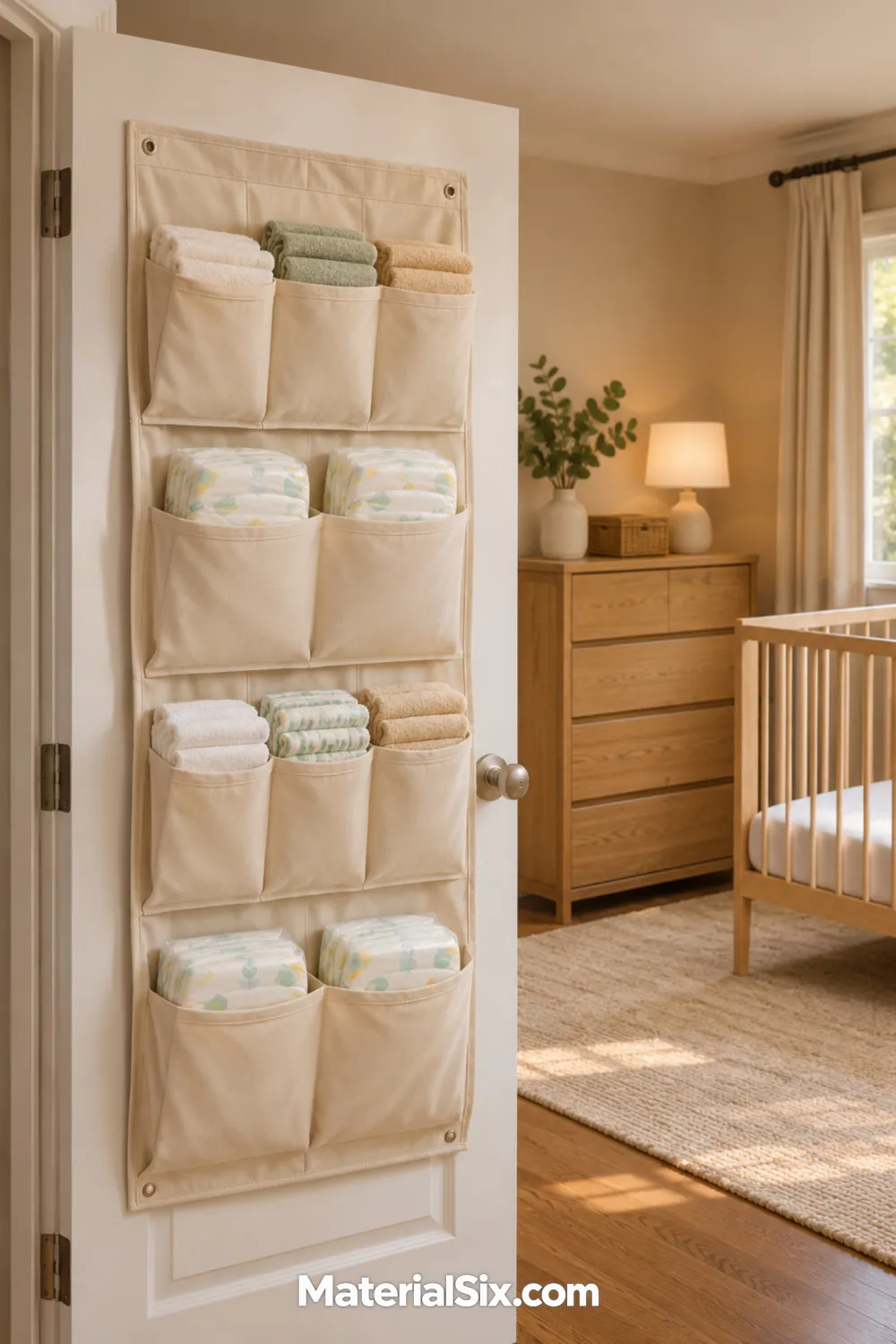
The back of a closet door can hold lightweight supplies that would otherwise collect on the dresser. A fabric pocket organizer keeps washcloths and spare diaper packs grouped in one vertical strip. It is a useful option when wall space is already occupied by the crib, closet, and changing station.
Check the door’s swing, latch, and hardware clearance before adding an organizer. Follow the mounting and weight instructions, avoid loose hanging ties, and keep anything hazardous secured elsewhere. Reserve reachable pockets for appropriate everyday items. This approach adds storage to an existing surface instead of introducing another piece of furniture into the room.
10. Bring Color to the Ceiling Instead of Adding Clutter
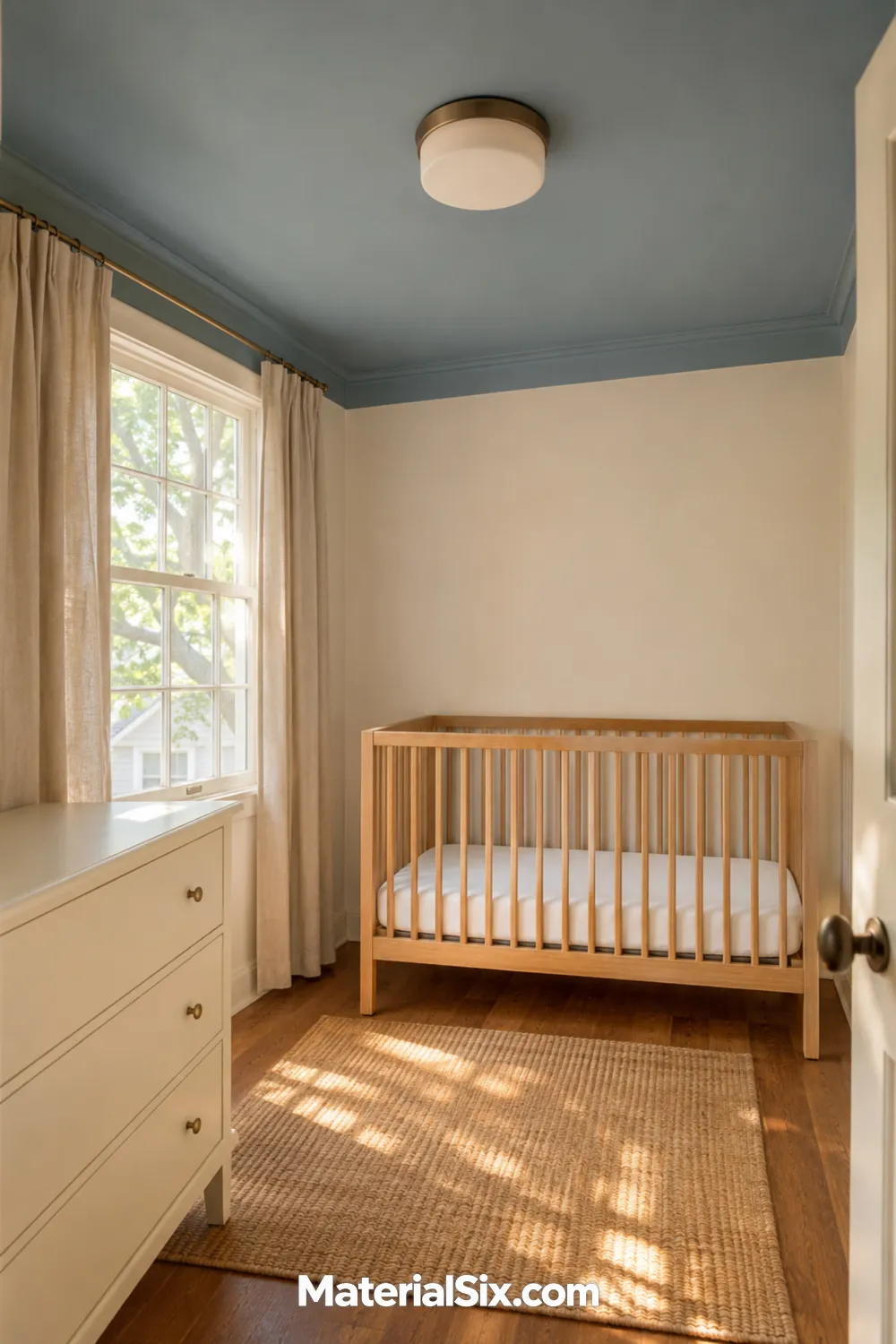
A colored ceiling gives a tiny nursery personality without using floor space or adding objects around the crib. Muted blue, soft clay, or a warm green can introduce a gentle focal point while the walls stay simple. Carry a small amount of that color into a rug or drawer pull for a connected look.
Test paint samples where the ceiling meets the wall because daylight can change how a color reads. Keep overhead fixtures simple and avoid hanging decorative items above the sleep space. This is a styling layer that can work with several nursery layouts, including rooms where there is barely room for additional furniture.
11. Keep Occasional Guest Space in a Folded Sofa Bed
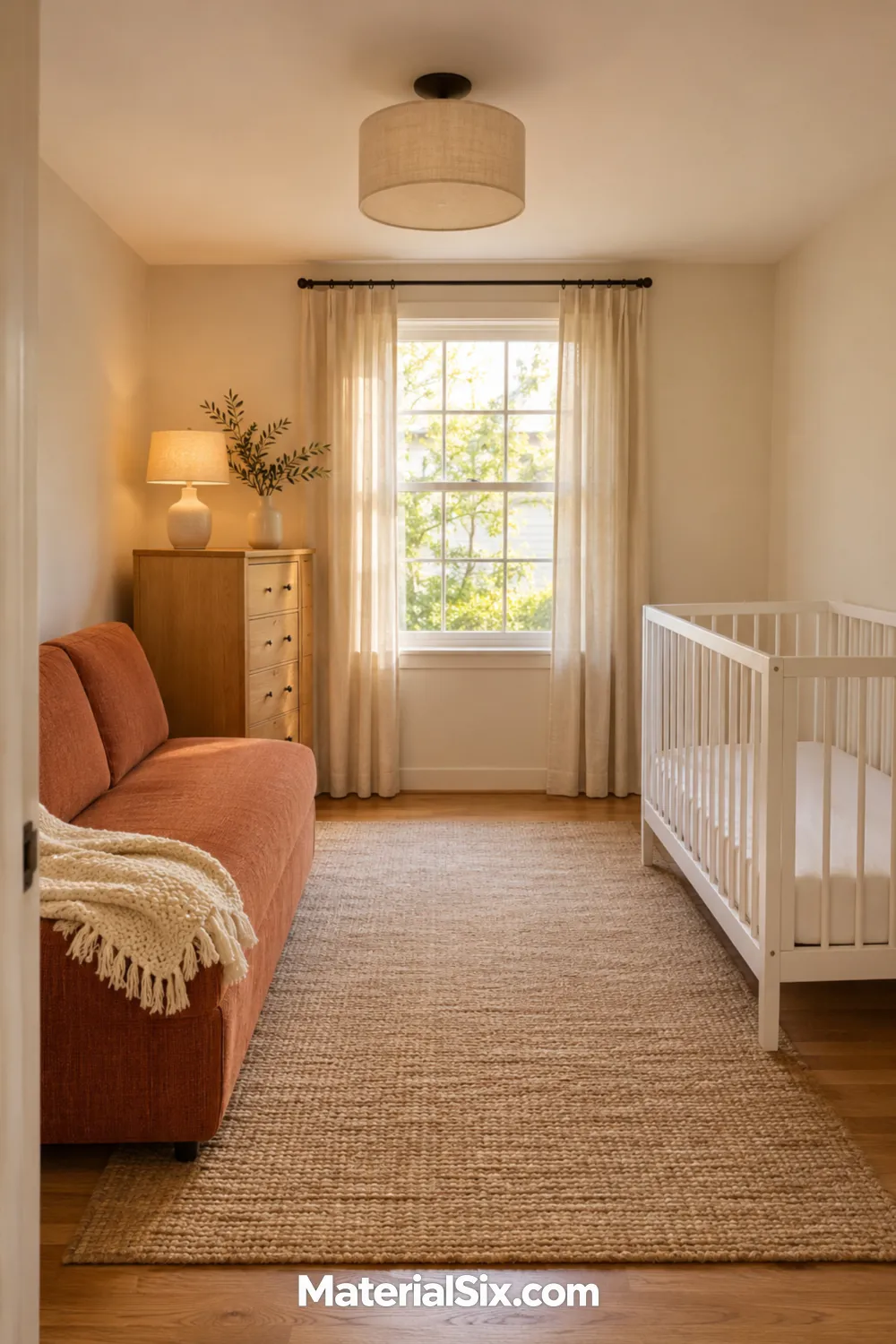
A room that occasionally hosts family can still have a clear everyday nursery setup. A compact sleeper sofa keeps the guest function folded away between visits, leaving more usable floor space than a permanently open bed. Choose a plain shape and a fabric that sits comfortably with the nursery palette.
Measure both the closed sofa and its fully opened sleeping footprint before committing to the layout. Check that opening it will not trap the crib, obstruct the door, or bring adult bedding into the baby’s sleep area. If both uses cannot fit safely together, arrange a different guest sleeping space rather than forcing the combination.
Before You Arrange the Furniture
Use a crib or other infant sleep product that meets federal requirements, with a firm, flat sleep surface and only a fitted sheet. Keep cords out of reach and anchor furniture according to its instructions. Check current product recalls and review the CPSC safe sleep guidance and home childproofing guidance before setting up your room.
Choose What Fits Your Home
Start with the furniture your room needs every day, then add storage and color where they will be useful. One measured change, such as a smaller chair or a better-organized closet, may be enough to make your layout feel more manageable. Save your favorite ideas and check them against your room’s actual dimensions before buying.