
Limelight hydrangea landscaping can solve several design challenges, from filling an empty foundation bed to screening a backyard patio.
The harder part is choosing a layout that suits the shrub’s mature size without crowding paths, windows, or neighboring plants.
These ideas cover hedges, borders, containers, tree forms, fence lines, and mixed garden beds, helping you compare different looks and find an arrangement that fits your home, available sunlight, and maintenance preferences.
1. Layered Limelight Hydrangea Foundation Bed
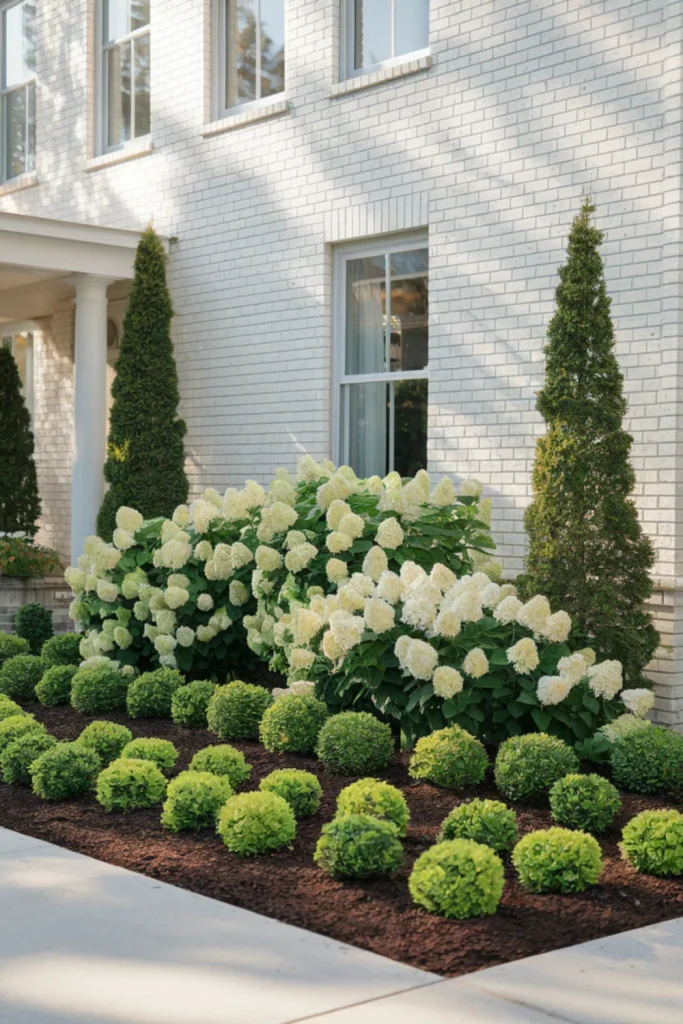
Layering plants by height keeps a foundation bed balanced even when Limelight hydrangeas reach their mature size.
Tall evergreens anchor the corners, creamy flower clusters fill the middle, and clipped boxwoods create a clean foreground.
Leave enough clearance between the hydrangeas and exterior walls for airflow and maintenance.
Against white brick or pale siding, the lime-green blooms remain visible instead of blending into the façade.
2. Limelight Hydrangea Hedge Along a White Fence
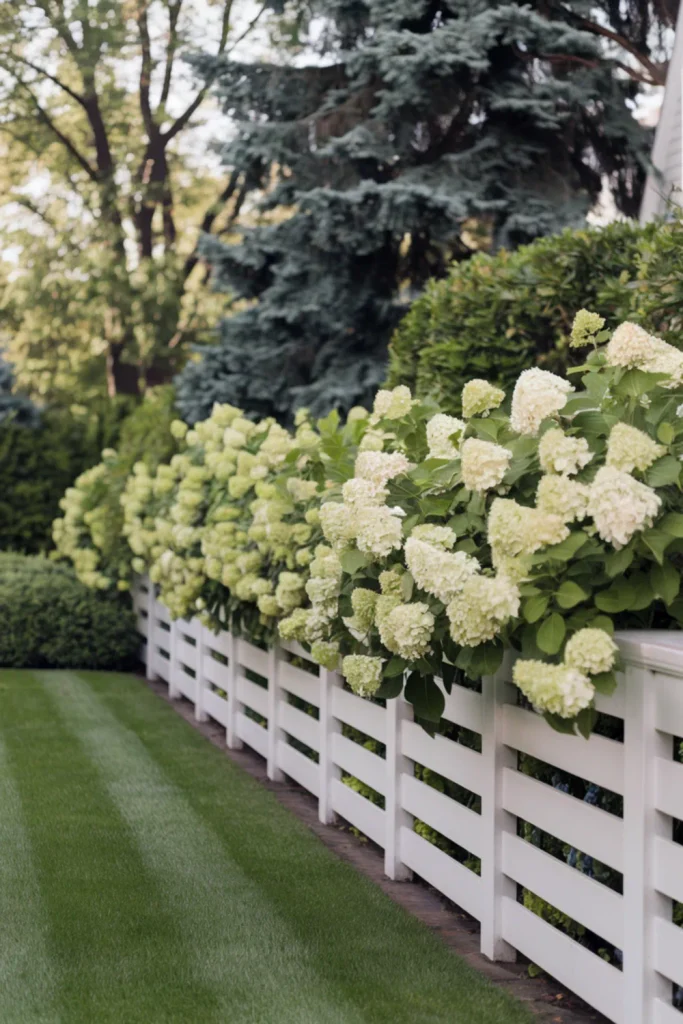
Few combinations feel as crisp as creamy Limelight blooms against a white fence.
The straight fence line gives the loose flowers structure, while the shrubs soften a long stretch of boards.
Space plants according to their mature width rather than packing them tightly for immediate coverage.
Leaving a narrow access gap behind the Limelight hydrangea hedge also makes pruning, fence repairs, and seasonal cleanup much easier.
3. Curved Limelight Border Beside a Front Walkway
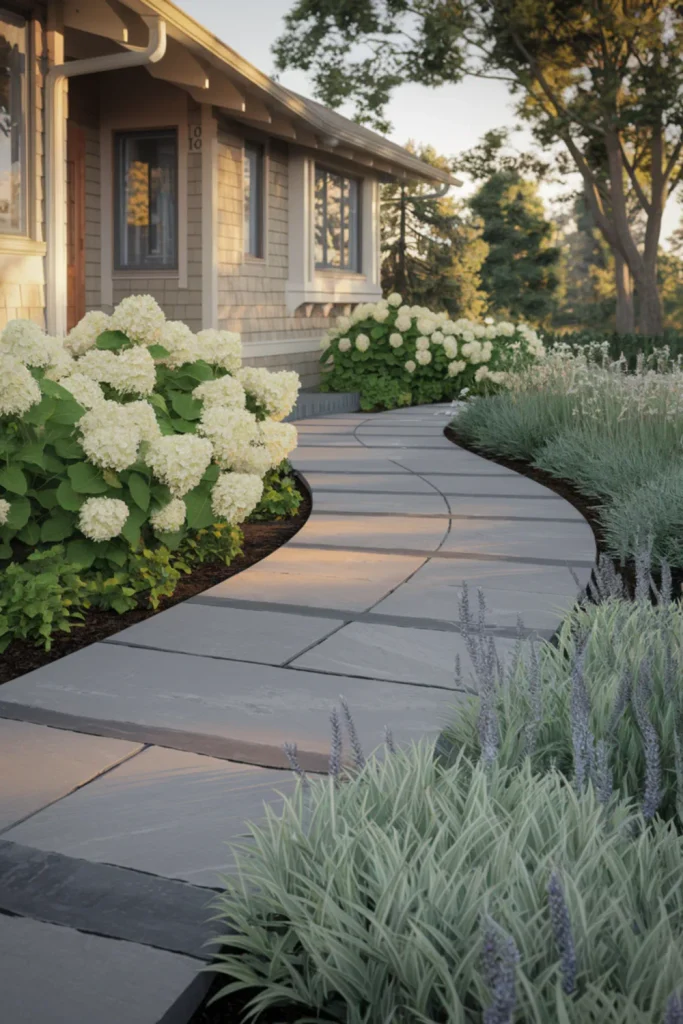
Curving the planting bed away from the walkway gives large hydrangeas room to arch without brushing against visitors.
Low catmint, lamb’s ear, or another compact edging plant can define the path beneath the taller cream-colored blooms.
Keep the Limelight hydrangea border widest near open lawn areas and narrower near steps.
That simple adjustment protects walking space while making the route to the entrance feel gently framed.
4. Modern Limelight and Ornamental Grass Planting
Pairing Limelight hydrangeas with upright ornamental grass creates a strong contrast between rounded flowers and narrow vertical blades.
Karl Foerster feather reed grass works especially well in contemporary landscaping because it holds a tidy shape.
Repeat each plant in a clear rhythm instead of mixing too many varieties.
Gravel mulch and black steel edging can reinforce the modern look, but confirm that the bed still retains enough moisture for the hydrangeas.
5. Formal Limelight Hedge With Boxwood Edging
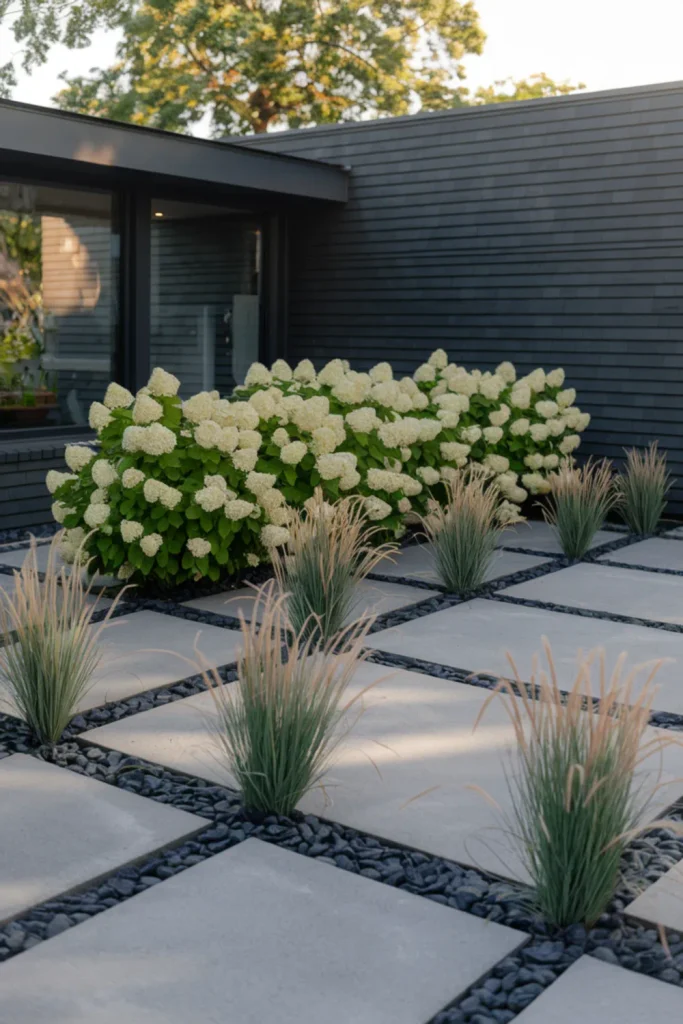
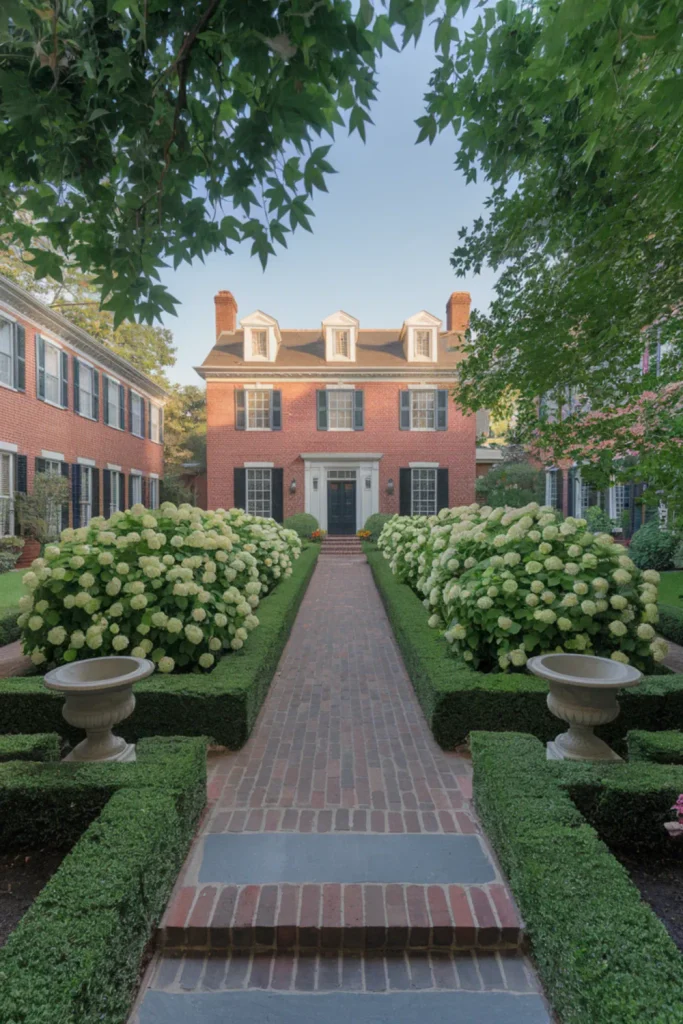
Formal gardens benefit from a clear framework beneath the hydrangeas’ loose, cloudlike flowers.
Low boxwood edging defines the bed throughout winter, while Limelight hydrangeas provide height and late-season color.
Centering the hedge along a brick path or symmetrical façade strengthens the ordered layout.
Keep the boxwoods far enough forward that both shrub layers can be clipped and maintained without branches growing into one another.
6. Limelight Hydrangeas Beneath a Japanese Maple
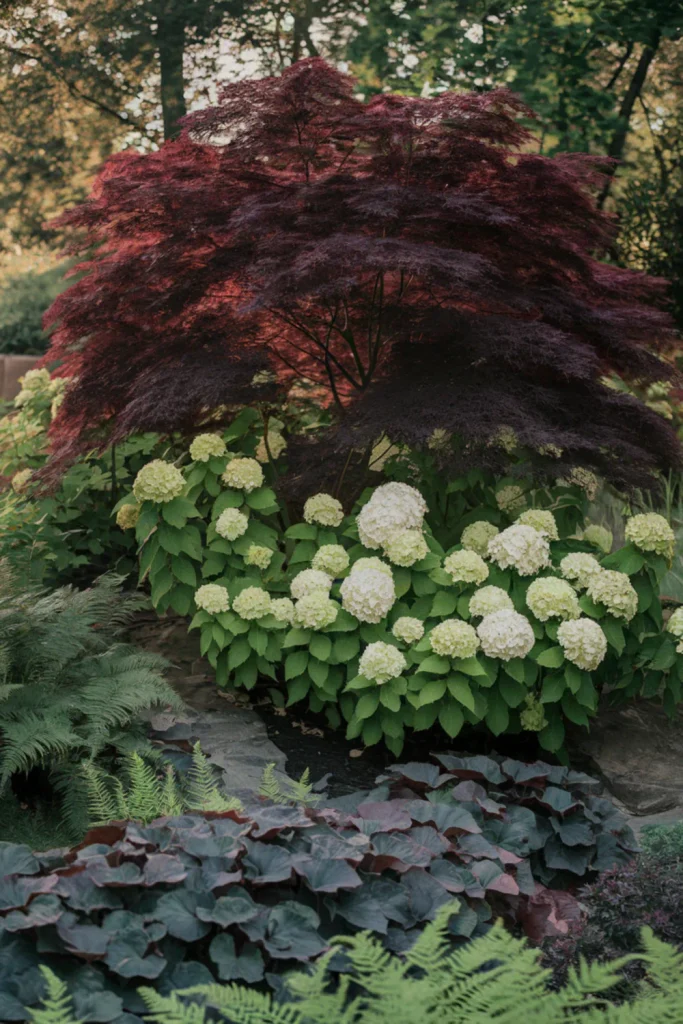
Burgundy Japanese maple foliage makes pale Limelight flowers look brighter and more dimensional.
Arrange the hydrangeas around the outer edge of the maple’s canopy, then use heuchera or ferns to fill the lower layer.
Planting too close to the trunk can create competition for moisture and reduce flowering.
This combination works best where the shrubs receive filtered light or several hours of direct morning sun.
7. Limelight Hydrangeas and Knock Out Roses
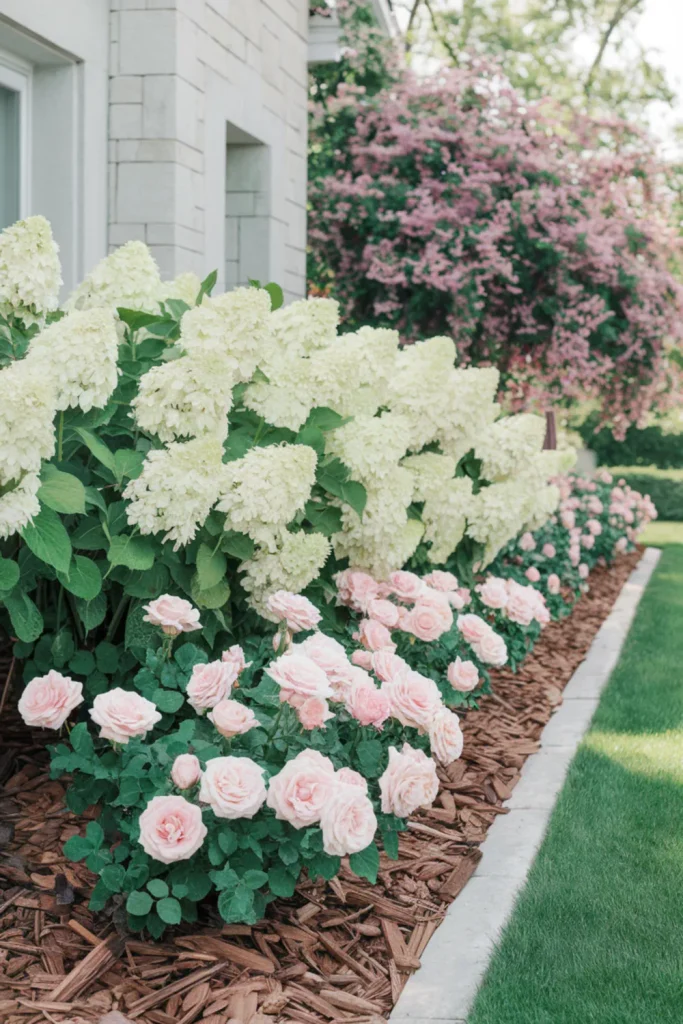
Blush-pink Knock Out roses create a colorful foreground without hiding the taller cone-shaped hydrangea blooms.
Both shrubs appreciate sunny conditions, making the pairing useful for an open front-yard flower bed.
Group the roses in broad sweeps rather than alternating every plant, which can make the design look busy.
Include a maintenance path or enough open mulch between the layers so pruning and cleanup remain manageable.
8. Limelight Cottage Garden Around a Picket Gate
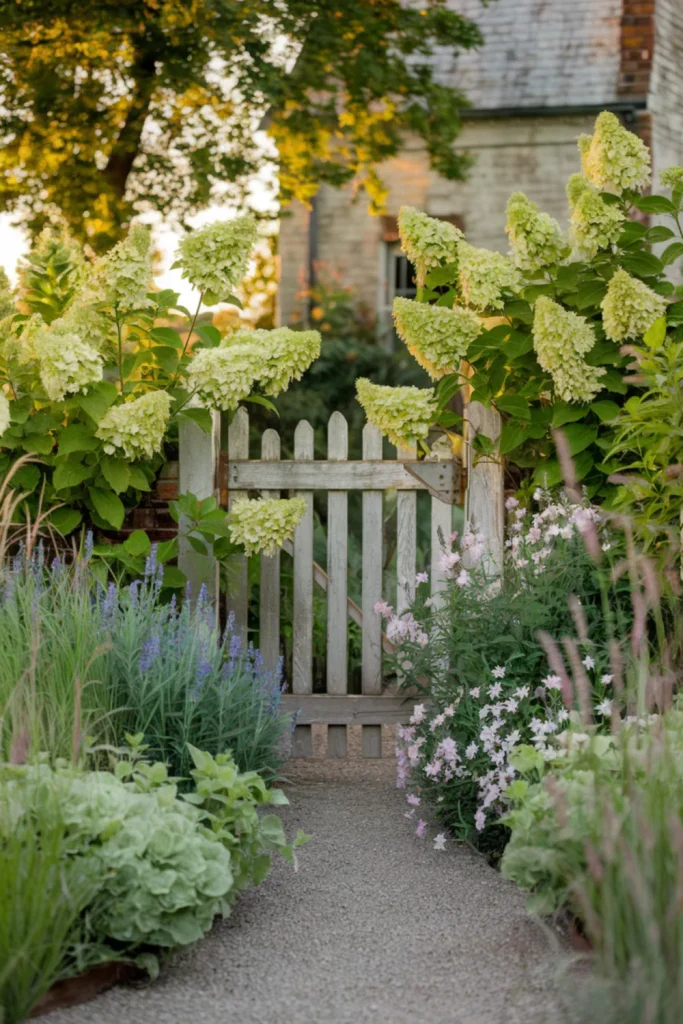
Near a white picket gate, Limelight hydrangeas provide the generous scale that cottage gardens need.
Lavender catmint, garden phlox, and white coneflowers can spill along the path below, giving the planting a relaxed but connected look.
Avoid filling every gap in the first season.
Leaving room for perennials and shrubs to expand reduces crowding, improves airflow, and keeps the gate easy to open once the garden matures.
9. Side-Yard Hydrangea Garden With Stepping Stones
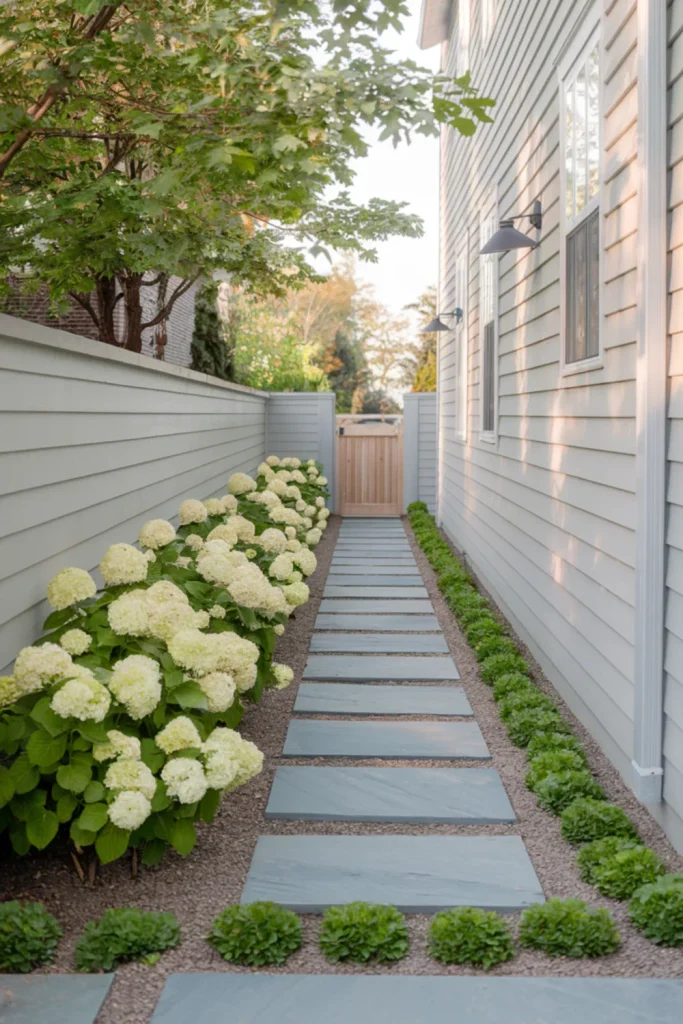
Narrow side yards need more clearance than they first appear to have.
A row of Limelight hydrangeas can turn the passage into a lush garden, but full-size shrubs should not crowd siding, windows, or stepping stones.
Use gravel around widely spaced stone pavers to keep the route functional and reduce muddy areas.
Low groundcover along the opposite edge adds softness without taking valuable walking space.
10. Backyard Limelight Privacy Hedge
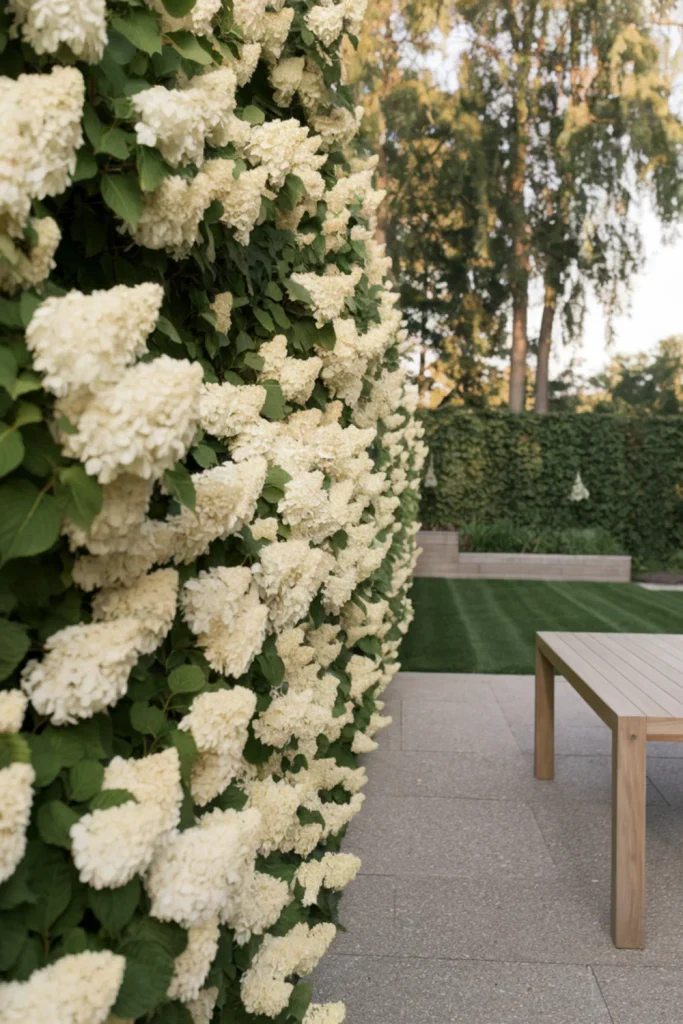
Seasonal privacy is one of the most useful reasons to plant a Limelight hydrangea hedge around a backyard patio.
Dense summer foliage and large flowers screen outdoor seating when the yard is used most often.
Because these shrubs lose their leaves in winter, combine them with fencing or scattered evergreens when year-round coverage matters.
Keep the hedge several feet from furniture so mature branches do not lean into the seating area.
11. Limelight Hydrangeas in Front of Arborvitae
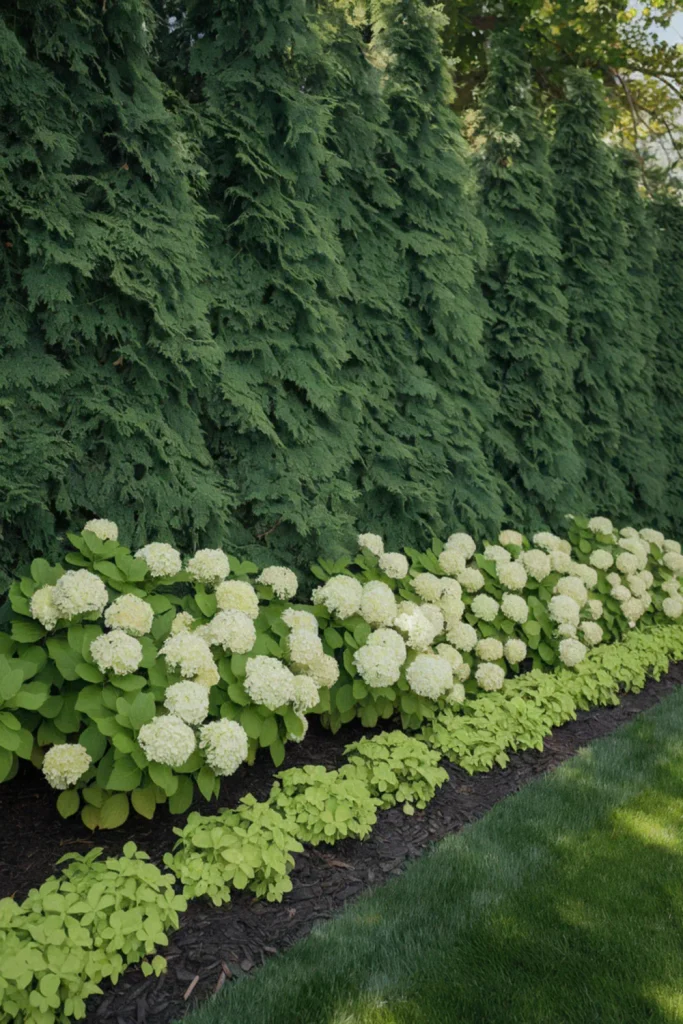
Evergreen arborvitae gives Limelight hydrangeas a dark background and preserves structure after the flowers and leaves fade.
A staggered arrangement feels fuller than planting both layers in rigid matching rows.
Before installation, account for the mature width of each species and the shadows cast by the arborvitae.
Crowding the layers may restrict airflow, while excessive shade can reduce the hydrangeas’ flowering and weaken their stems.
12. Large Limelight Hydrangea in a Patio Container
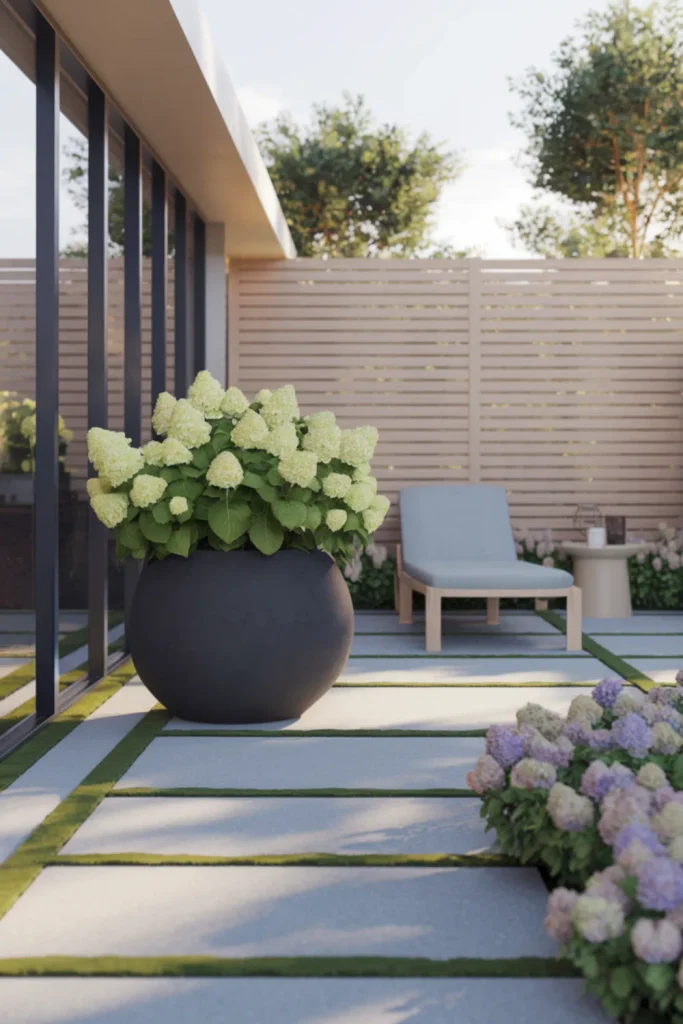
Container planting allows a young Limelight hydrangea to bring substantial flowers closer to a patio or seating area.
Choose an oversized, frost-resistant planter with several drainage holes rather than a lightweight decorative pot.
Container soil dries faster than garden soil, so regular moisture checks are essential during hot weather.
Because Limelight becomes a large shrub, plan to repot it or move it into the landscape as it outgrows the container.
13. Limelight Tree Forms Flanking a Front Porch
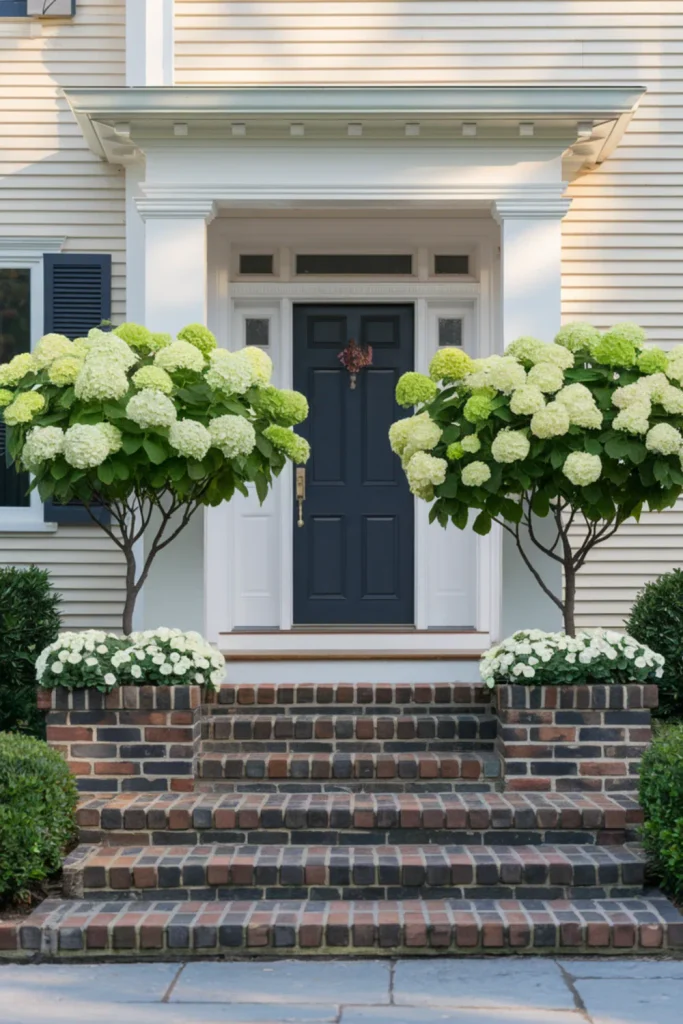
Tree-form Limelight hydrangeas frame a porch without creating dense foliage at step level.
Their clear trunks leave space for clipped boxwoods, white annuals, or a simple mulch layer beneath the flowering canopies.
Matching specimens work especially well around a centered entrance, but their placement should follow mature canopy width rather than the edge of the steps.
Regularly remove shoots that emerge from the trunk or base to preserve the tree form.
14. Small Front Yard With One Limelight Specimen
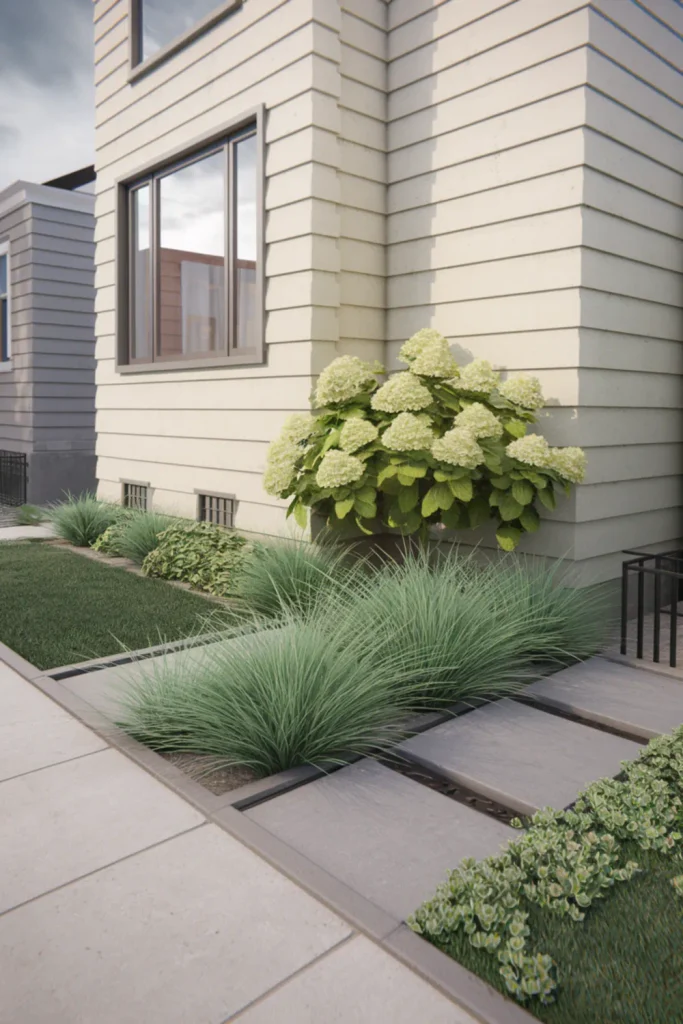
One mature Limelight shrub can carry a small front-yard design more effectively than several crowded plants.
Position it near an open corner where the broad canopy and cream-colored flowers have room to develop.
Sedges, creeping thyme, or another low planting can cover the surrounding soil without competing for height.
Check sightlines from windows and sidewalks before planting, since an established Limelight may reach six to eight feet in both directions.
15. Hydrangea Mailbox Bed With Limelight Tree Form
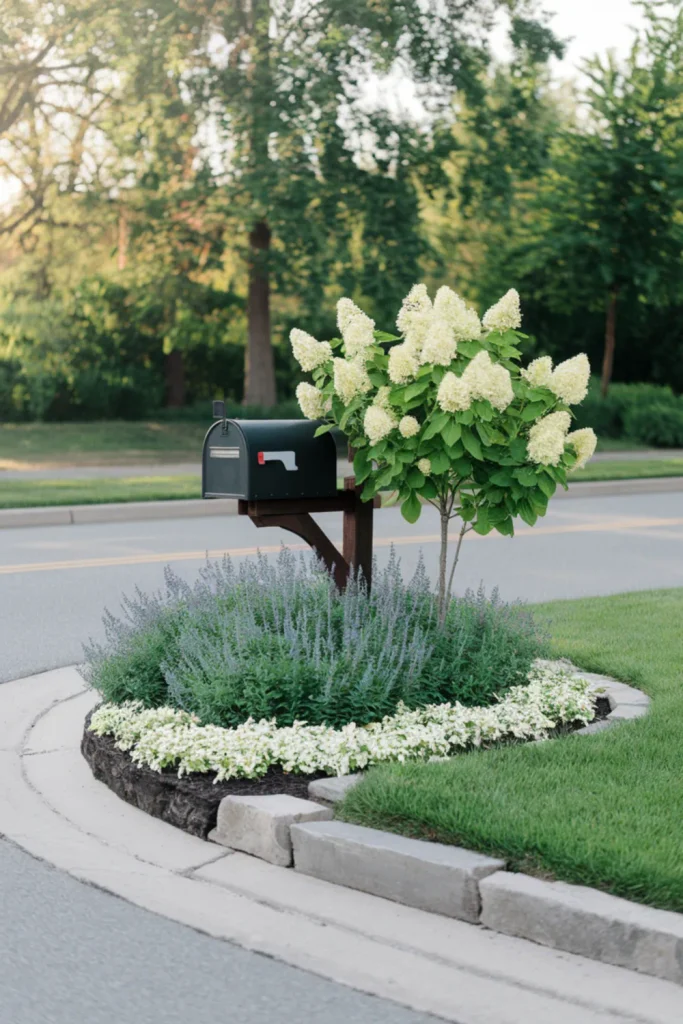
Mailbox landscaping must remain attractive without interfering with visibility or delivery access.
A Limelight hydrangea tree placed several feet behind the mailbox supplies height and flowers while keeping the immediate curb area open.
Low catmint or durable groundcover can fill the base without blocking doors or house numbers.
Confirm local setback rules and avoid placing the trunk where winter road salt, snow piles, or vehicle tires could damage it.
16. Limelight and Russian Sage Driveway Border
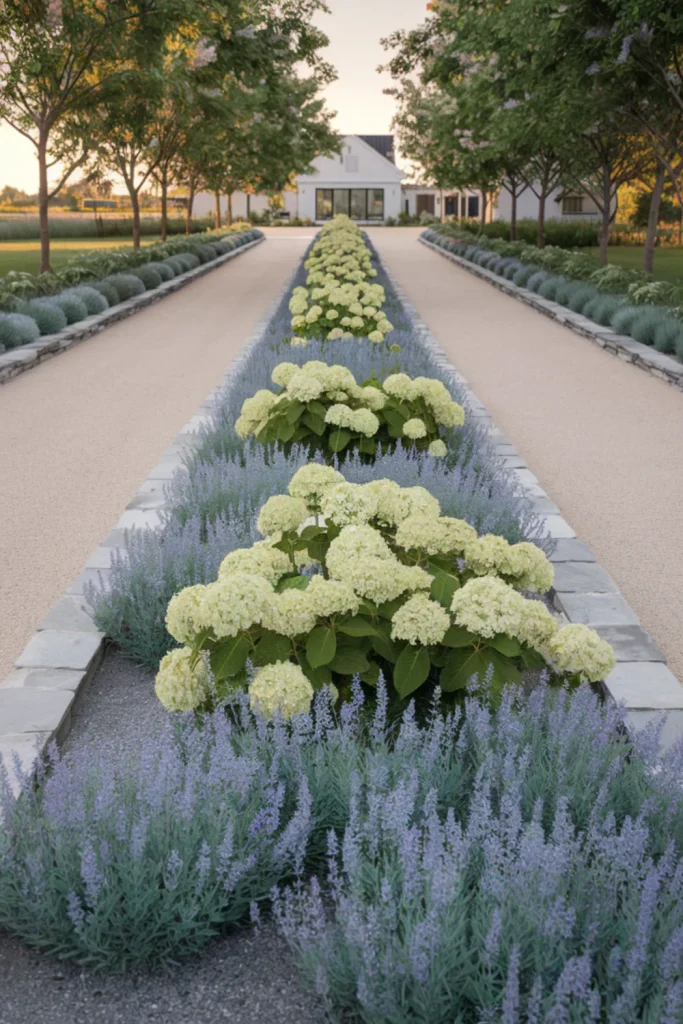
Along a sunny driveway, airy Russian sage provides a fine-textured contrast to the substantial Limelight flower clusters.
Repeating broad groups of each plant looks calmer than alternating individual shrubs and perennials.
The two plants have different moisture preferences, so concentrate irrigation near the hydrangeas and keep the sage in the driest front edge.
A stone or steel border also prevents gravel from migrating into the planting bed.
17. White Limelight Garden With Hostas
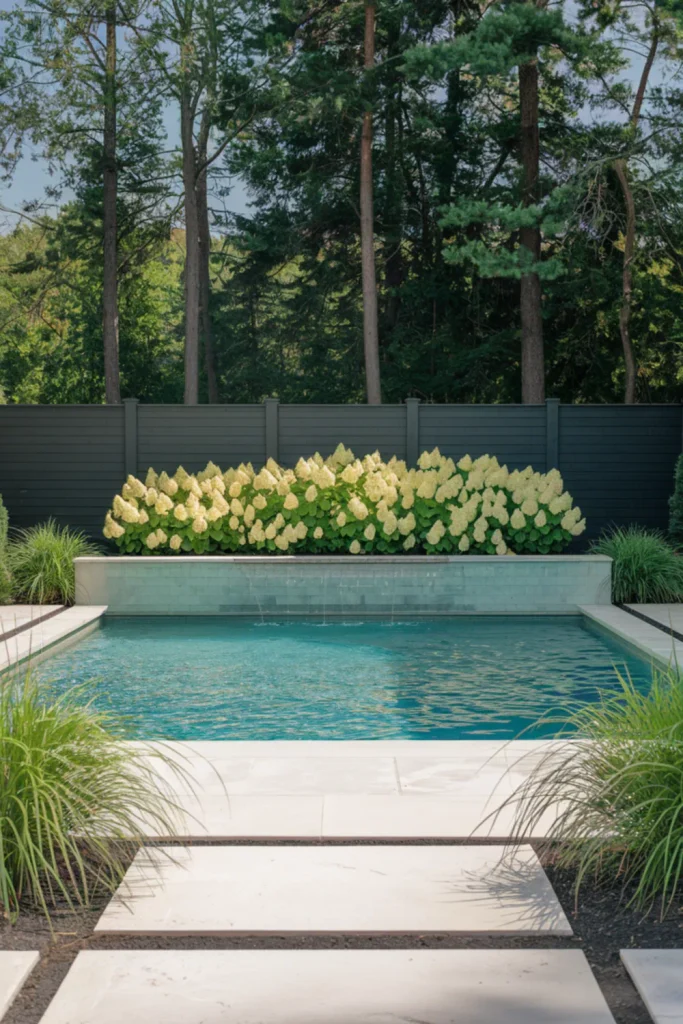
Morning sun and light afternoon shade can support a layered garden of Limelight hydrangeas and blue-green hostas.
The hostas conceal bare lower stems while their broad leaves echo the scale of the flowers above.
Deep shade should be avoided because it can reduce bloom production and encourage weak growth.
Add compost to help the bed retain even moisture, but keep mulch away from the crowns of both plants to reduce rot problems.
18. Poolside Limelight Hydrangea Border
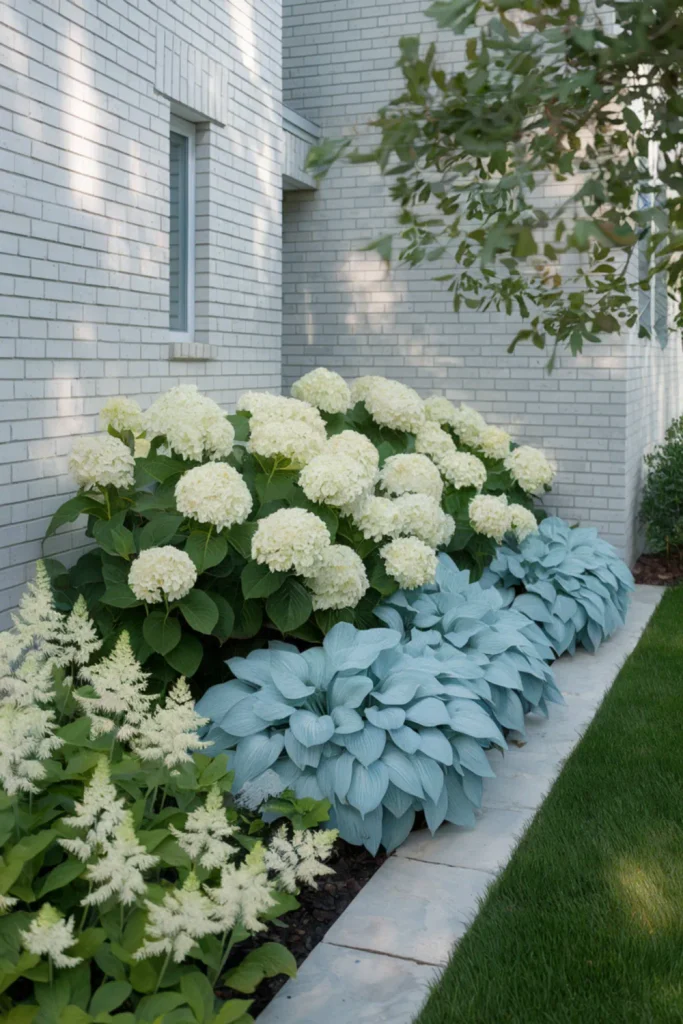
Pale hydrangea flowers make a cool, lush backdrop for blue pool water and light stone decking.
Set the Limelight border beyond the main circulation zone so arching stems do not extend across the deck.
Adequate distance also keeps falling petals and leaves farther from the water.
Where reflected heat is intense, maintain consistent irrigation and use mulch around the root zone instead of placing the shrubs directly against hot paving.
19. Rustic Limelight Border Along a Split-Rail Fence
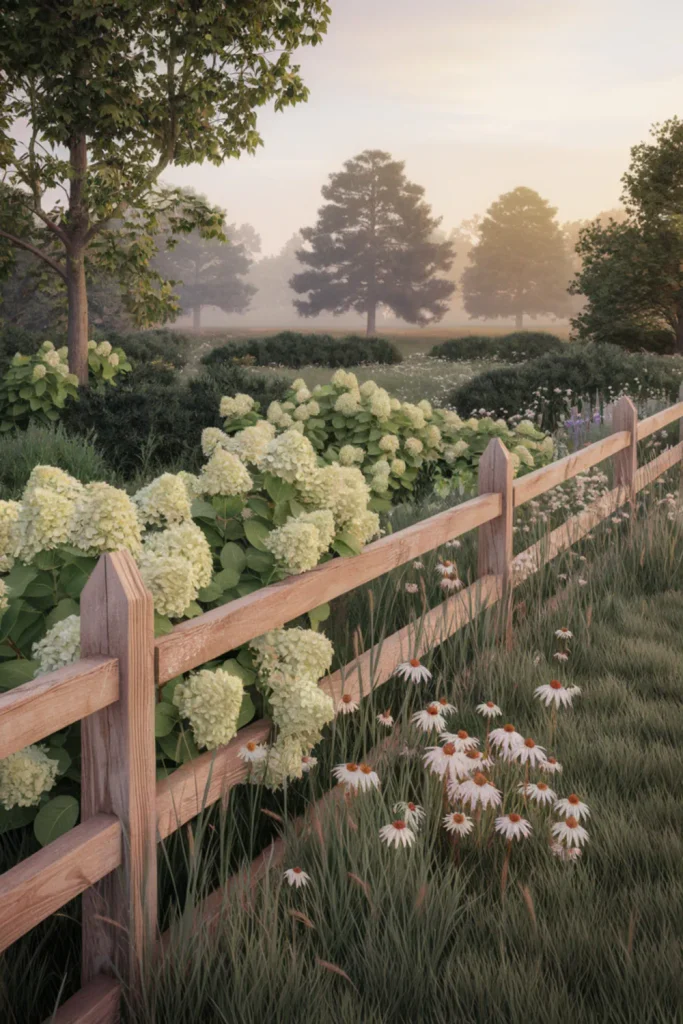
Against a weathered split-rail fence, creamy Limelight hydrangeas soften the open rails without hiding the rural character.
Switchgrass and white coneflowers can bridge the gap between the substantial shrubs and a surrounding lawn or meadow.
Use an irregular grouping instead of a tightly clipped hedge for a more natural effect.
Even informal planting needs mature spacing, especially where access to fence posts may be required for future repairs.
20. Limelight Hydrangea Island Bed in a Large Lawn
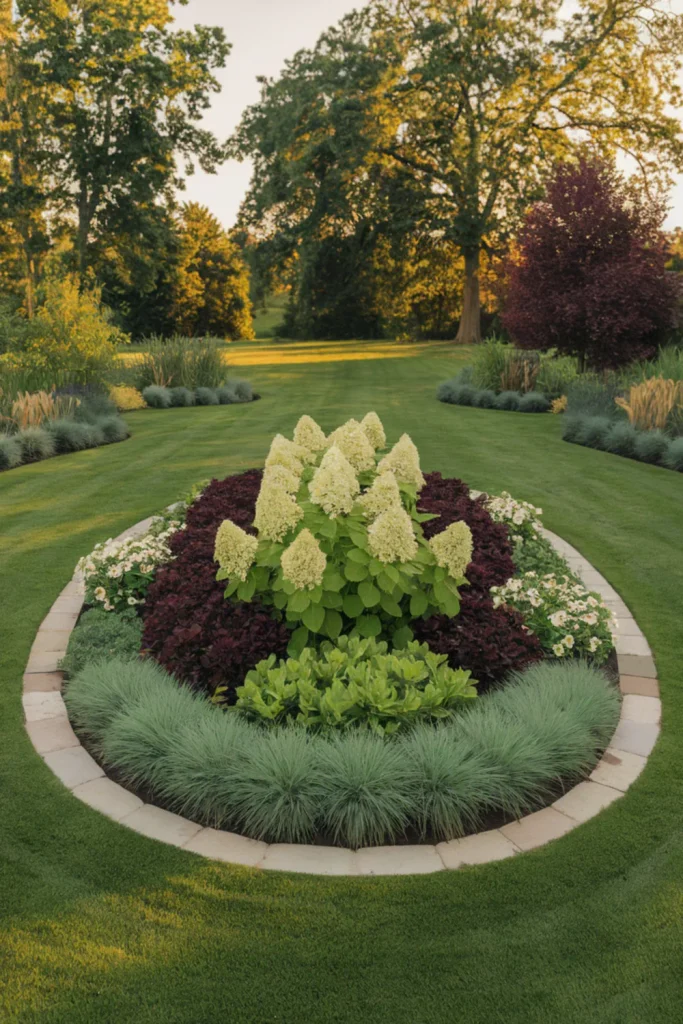
Island beds allow Limelight hydrangea landscaping to be viewed from several sides, making plant arrangement especially important.
Group three shrubs slightly off center, then step down through dark-leaved ninebark, coneflowers, and ornamental grasses.
A crisp stone or hand-cut lawn edge keeps the mixed planting from appearing untidy.
Leave open mulch between young plants during establishment rather than filling every space with specimens that will soon overlap.
21. Limelight Hydrangeas Beside a Garden Bench
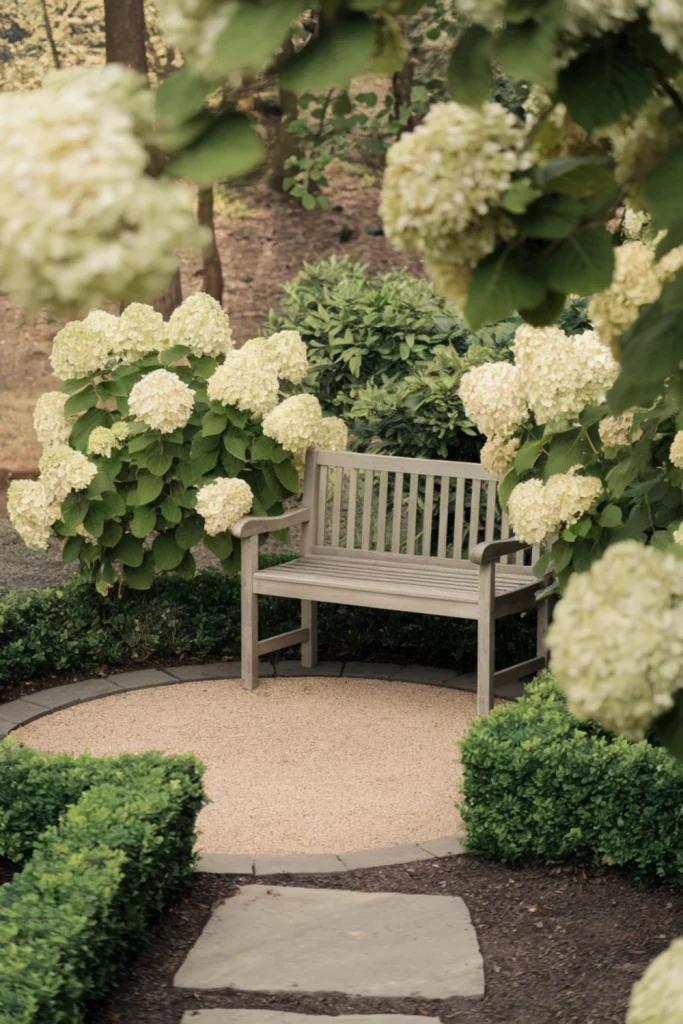
Placing a bench near Limelight hydrangeas lets the flowers define a quiet destination within a larger garden.
Pea gravel beneath the seat provides a stable, low-maintenance surface, while a short stepping-stone path keeps foot traffic out of the bed.
Position the bench outside the shrubs’ mature spread so flower-heavy branches do not crowd anyone sitting there.
Nearby boxwood edging can maintain a clean outline after the hydrangeas become dormant.
22. Blush-Pink Limelight Hedge for Fall Color
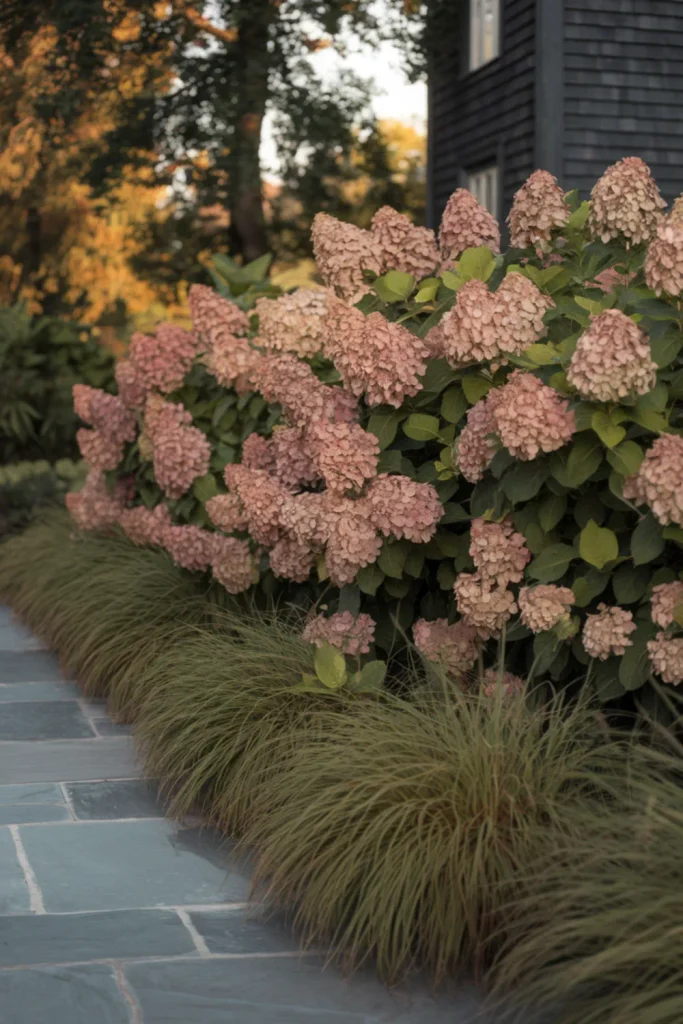
By early fall, Limelight flowers often shift from cream and pale green to dusty pink or rose.
Bronze sedges and a dark-painted exterior make those changing tones more noticeable without competing for attention.
Leave aging flowers on the hedge if seasonal color and dried winter texture are priorities.
Since the depth of pink varies with climate and conditions, avoid planning the entire color scheme around one exact shade.
23. Budget-Friendly Limelight Bed With Mulch and Groundcover
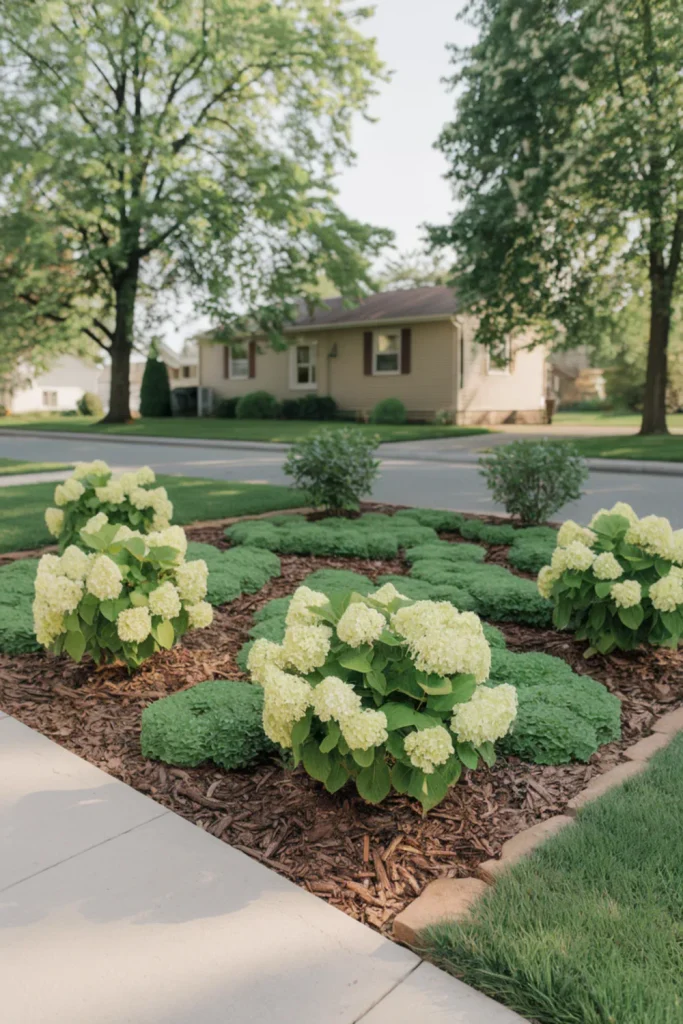
Young Limelight hydrangeas rarely fill a new bed right away, but buying extra shrubs can lead to expensive overcrowding later.
Space them for mature growth, cover exposed soil with shredded mulch, and use affordable groundcover between the main plants.
A simple hand-cut lawn edge keeps costs lower than stone or metal curbing.
Mark each shrub’s expected spread before planting so the finished layout remains balanced as it develops.
24. Limelight Hydrangeas Framing a Backyard Fire Pit
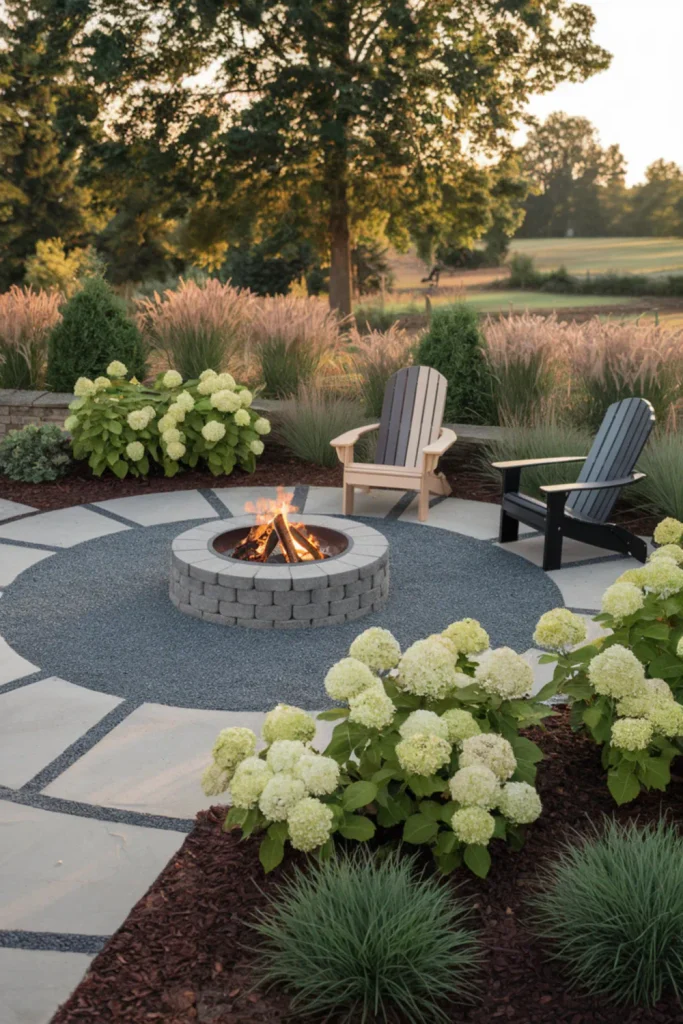
Around a fire-pit area, hydrangeas should frame the gathering space from a safe distance rather than enclosing the flames.
A broad gravel zone provides noncombustible separation, while Limelight shrubs and upright grasses soften the outer edge.
Keep flower heads, dry stems, and fallen leaves away from the fire ring, especially late in the season.
Local fire-clearance guidance should determine the final spacing before any permanent planting begins.
25. Four-Season Limelight Garden With Evergreens and Grasses
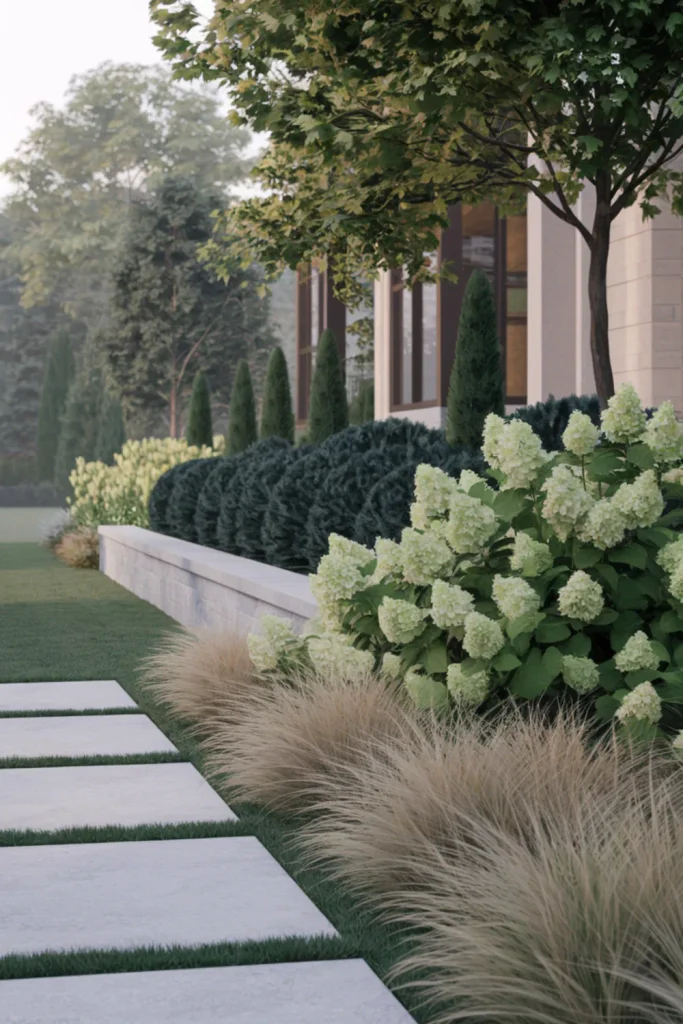
Four-season structure keeps a Limelight planting from looking empty once the deciduous shrubs lose their leaves.
Compact evergreens create dense green anchors, columnar forms provide height, and ornamental grasses hold texture into winter.
Arrange these plants behind or between the hydrangeas without shading them heavily.
Selecting companions by mature size is more important than matching their nursery proportions, since every layer needs enough light and airflow over time.
FAQ
How far apart should Limelight hydrangeas be planted for a hedge?
Spacing depends on how quickly you want the hedge to fill and how much maintenance you accept.
Approximately five to six feet between standard Limelight hydrangeas generally allows their mature forms to meet without severe crowding.
Avoid planting them too tightly against fences, walls, or neighboring shrubs.
Can Limelight hydrangeas grow successfully in large containers?
Young Limelight hydrangeas can grow in large containers with drainage holes, quality potting mix, and consistent watering.
Because the standard variety becomes substantial, container growing may be temporary.
Choose a weather-resistant planter and be prepared to repot the shrub or move it into the landscape as its roots expand.
What should be planted in front of Limelight hydrangeas?
Choose shorter plants that keep the lower bed attractive without hiding the flowers.
Catmint, compact ornamental grasses, boxwood, heuchera, and low groundcovers are useful options.
Match each companion to the site’s sunlight and moisture, then leave enough space for air circulation and future maintenance.
Conclusion
The strongest Limelight hydrangea landscaping plan begins with realistic measurements, not the number of plants that fit at the nursery.
Choose a hedge or layered border for a large property, and use one specimen or tree form where space is limited.
Before purchasing, outline each shrub’s mature spread on the ground and confirm that paths, windows, and maintenance areas will remain accessible.