
Clay pavers and a shaded bench can set the mood for a Mexican-inspired patio before you add a single bright accessory. The color might come from a strip of blue tile, a painted courtyard wall, or bougainvillea trained to one side of a doorway. Where you put it changes how the patio feels from both the house and the seats.
A renovation gives you room to work with arches or patterned paving, while a rented or finished space can take color from pots and textiles. Use the Mexican patio ideas below to think about the view from the back door and the details you notice from your favorite seat.
1. Lay a Talavera-Style Tile Patio
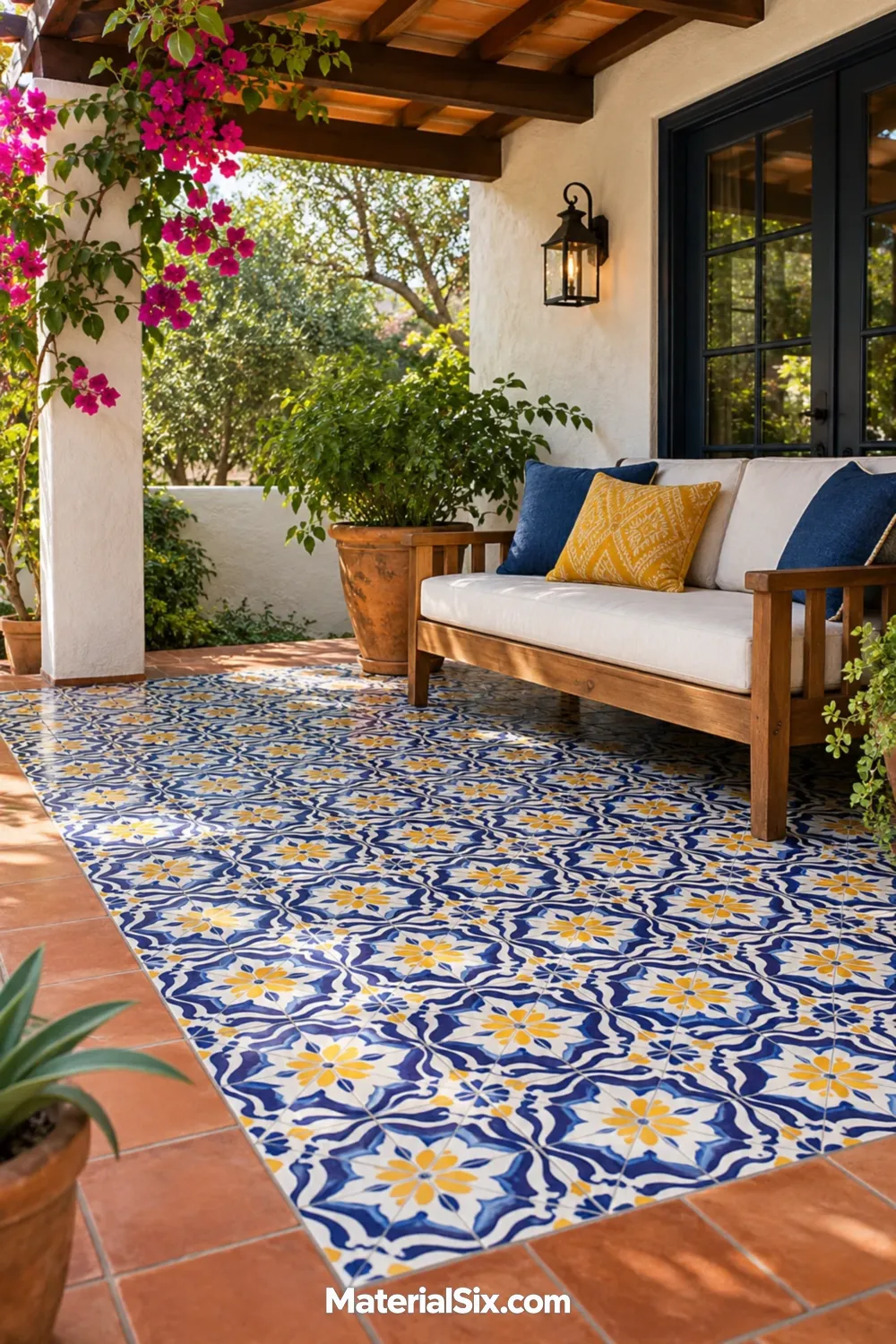
A patterned floor can carry the entire patio. Echo one color from the tile in a cushion or pot and give the rest of the furniture room to be quiet. A plain border gives the pattern a clean stopping point where it meets a path or bed.
When comparing tile, bring samples outside and look at them in sun and shade. Ask the supplier to confirm that the tile is rated for exterior floors, including wet conditions and freeze-thaw exposure where relevant. You can use the same visual idea with an outdoor floor tile that has a Talavera-style pattern.
2. Frame a Hacienda-Style Courtyard With Arches
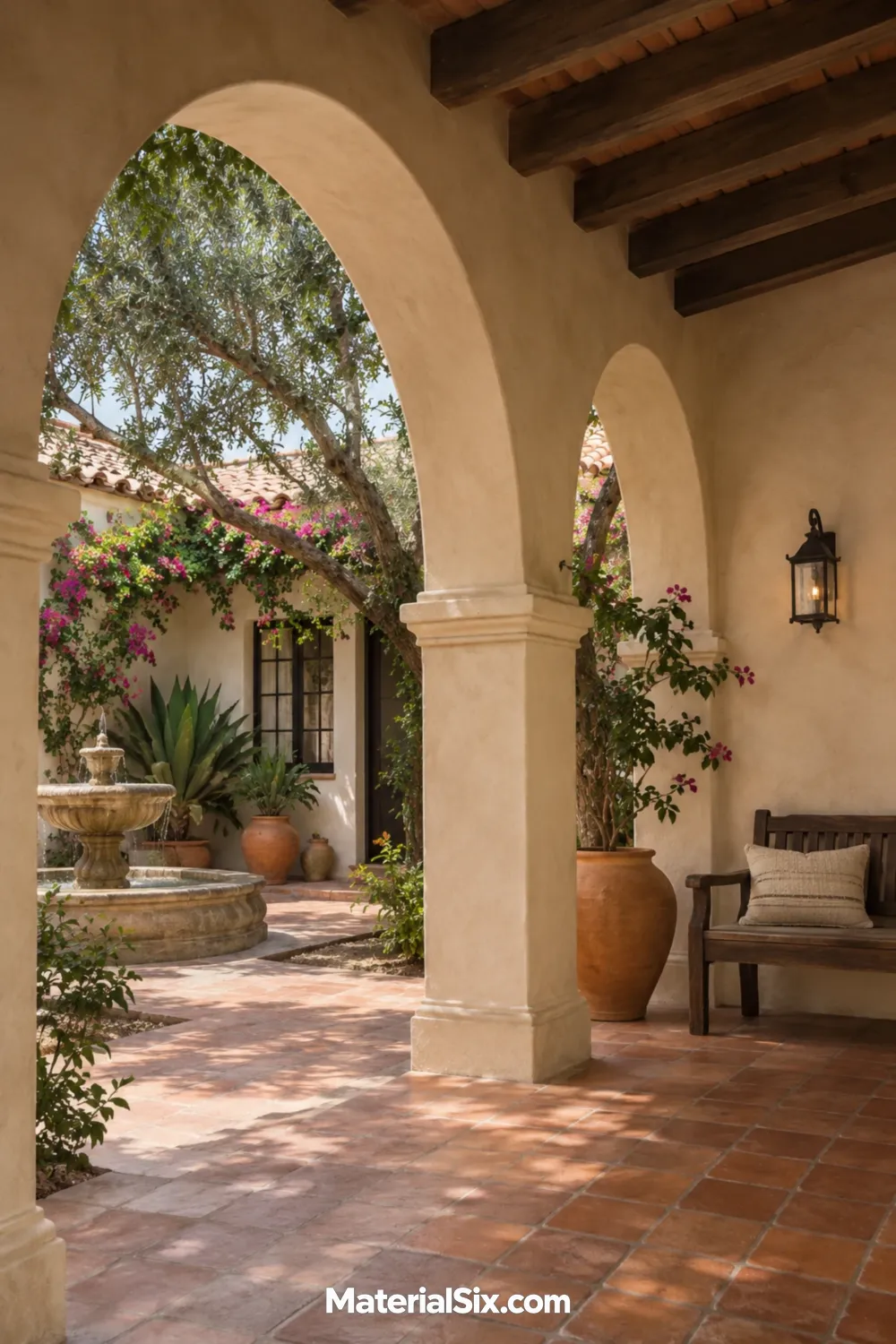
Let existing arches set the rhythm of a covered patio. Pull seating back from the openings and put your main group under one bay so every route into the courtyard stays open. Pale plaster, clay paving, and a single substantial wood bench are enough to make the archways stand out.
3. Give a Tiled Fountain Its Own Spot
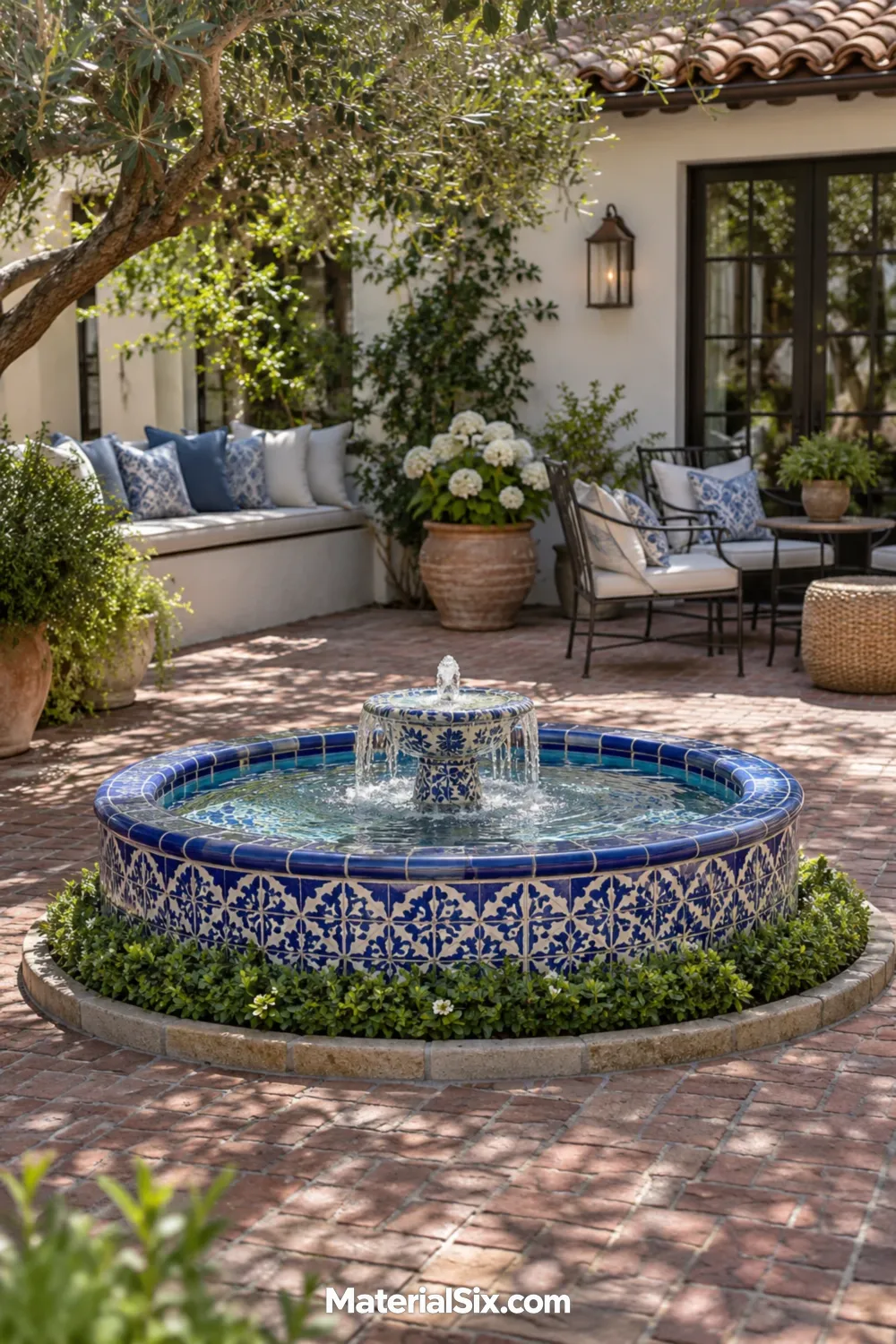
From a chair at the edge of the patio, a small fountain can become the view. Place it where you can see it from your seat and from the house, with enough room around the basin to clean it or reach the pump. In a tight layout, a compact wall fountain keeps the middle available for a table.
Look at the basin’s splash area before settling on a location. Keep it clear of the main walking route and think about where the power cord will run if you pick a plug-in model.
4. Use Herringbone to Give Clay Pavers Direction
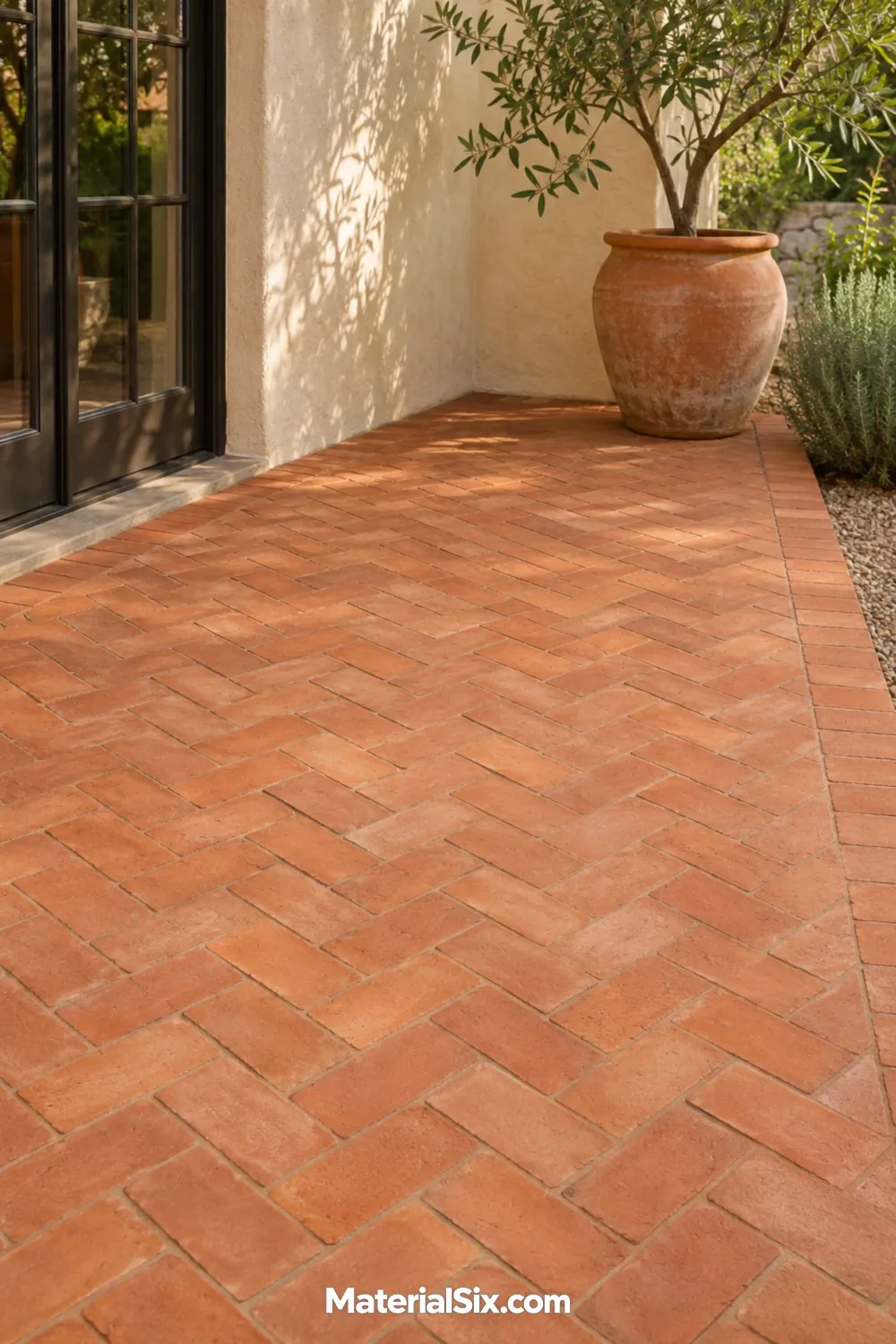
Set plain clay pavers on the diagonal and run a straight border along the outside edge. The change in direction makes the field feel intentional without bringing in a second color. Compare dry-laid samples beside the house so you can see which clay tones sit comfortably next to the siding or stucco.
5. Paint One Patio Wall Cobalt Blue
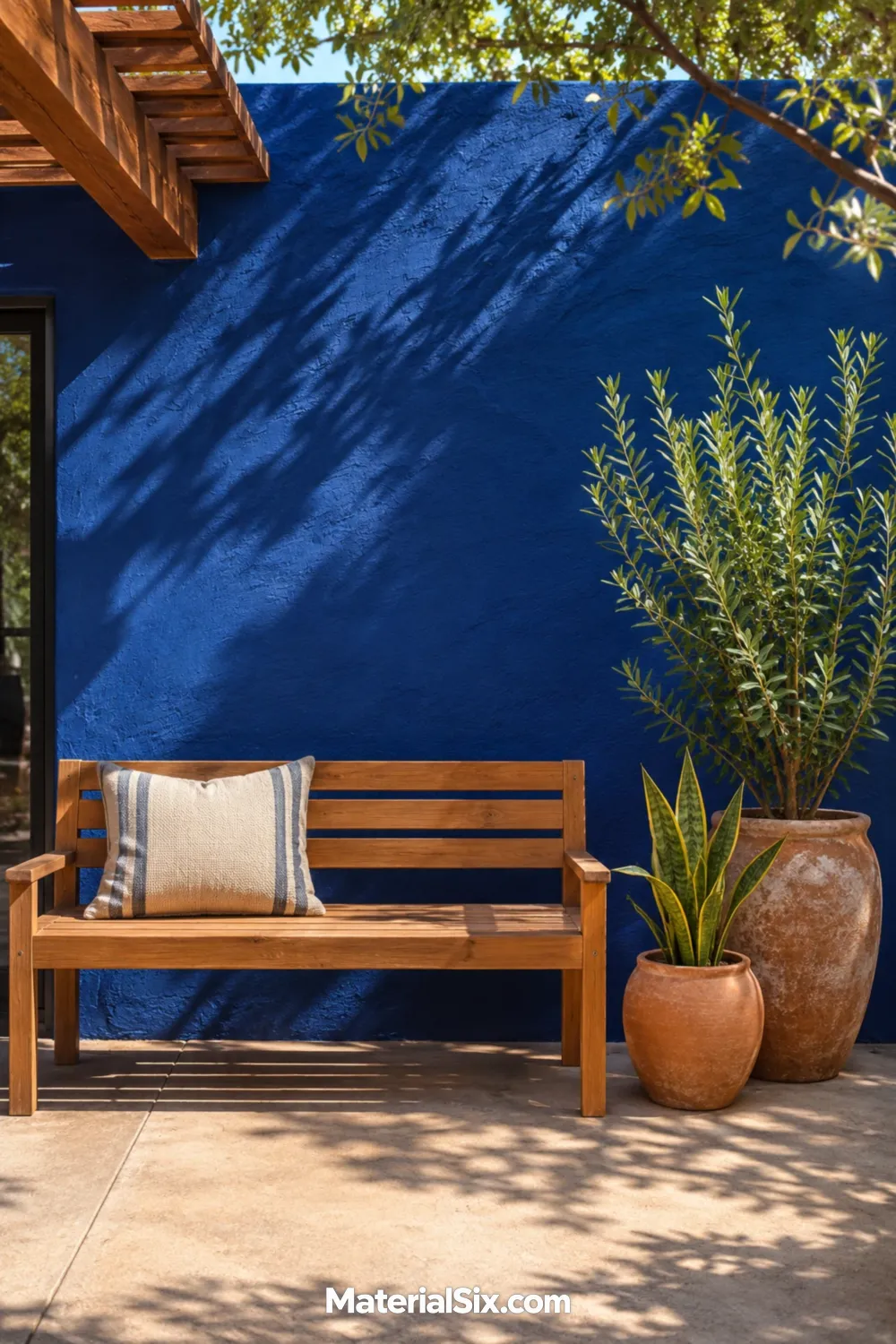
One cobalt wall changes the view from a kitchen window or back door. Test a swatch where the wall gets both direct light and shade, then repeat the blue once in a smaller object if the wall feels disconnected from the seating.
6. Dress Up Stair Risers With Patterned Tile
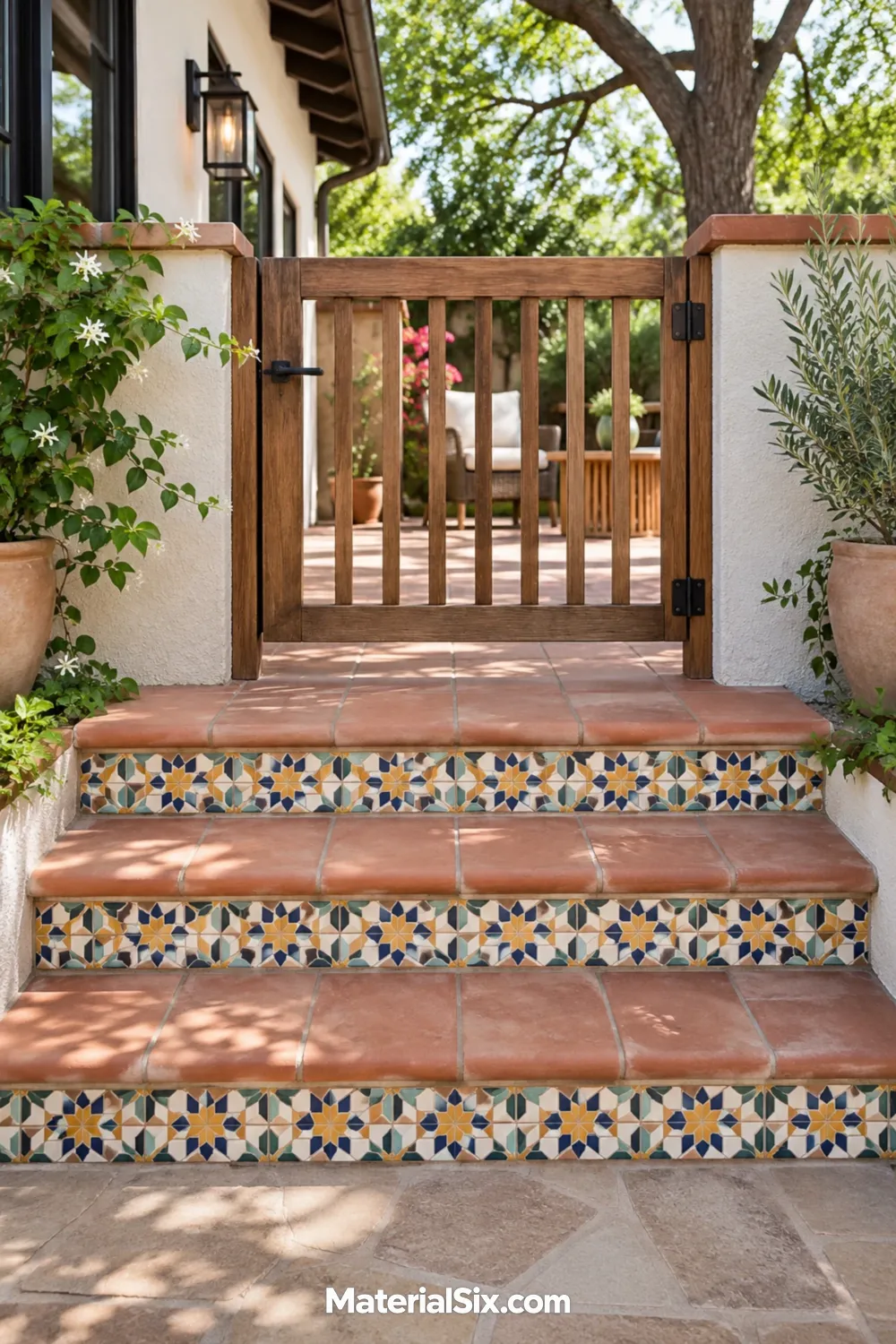
Tile across the vertical faces makes the pattern visible from the lower patio. Use the same repeat on each riser, or choose one motif with enough contrast to read from across the yard. Leave the tread surfaces visually simple so the stair edges are easy to see.
If you have an uneven run of steps, lay out a full row of sample tiles before choosing a size. A small repeat is easier to center when you want matching cuts at both ends.
7. Group Terracotta Pots Around a Sculptural Plant
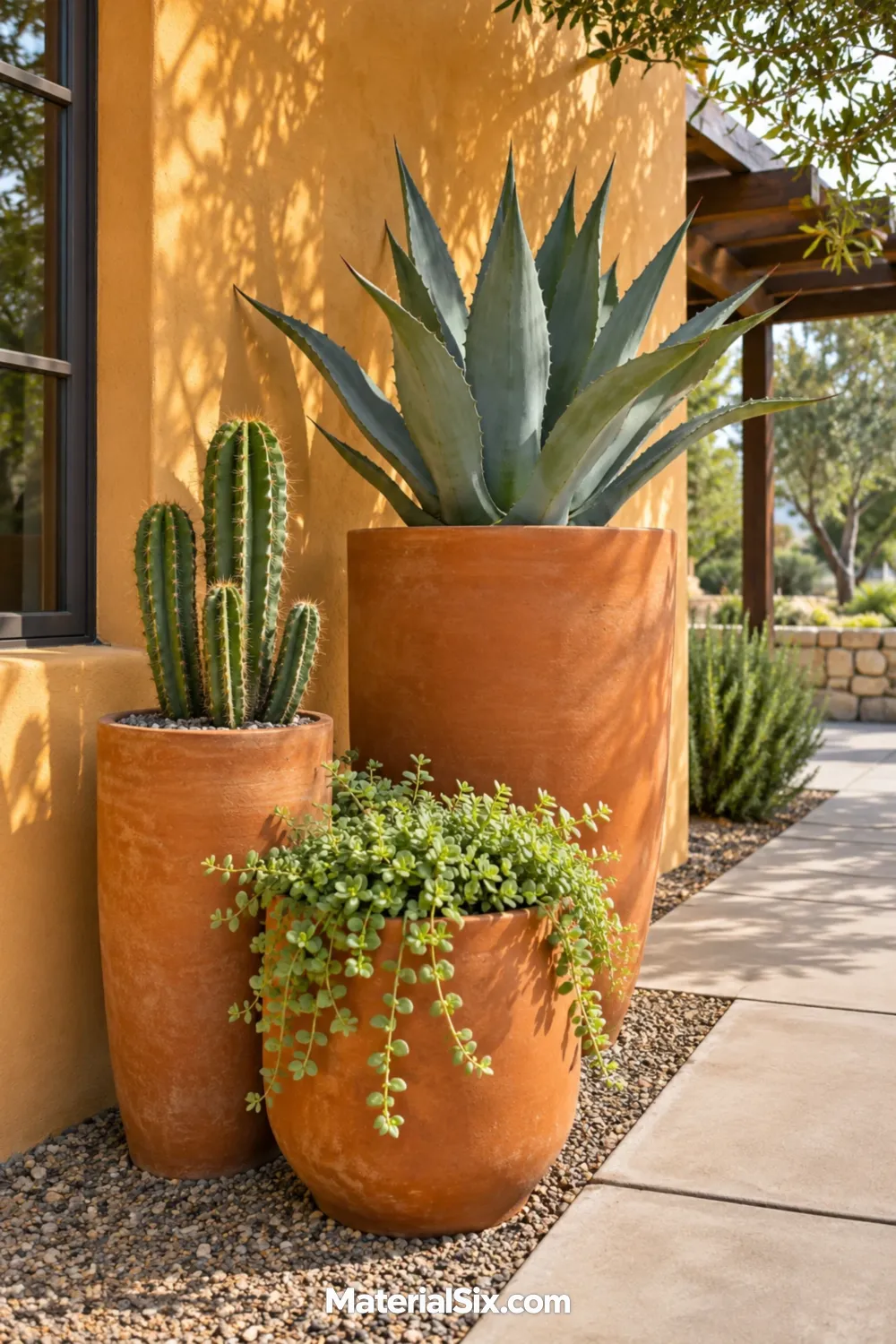
Give a sculptural plant the tallest pot and let smaller shapes sit below it. An agave, an upright cactus, and a trailing succulent create three distinct silhouettes. Choose plants suited to your climate, and tuck anything spiny away from doorways and seats. Keep the containers separate so you can water and move each one on its own.
8. Use a Mosaic Planter as a Small Color Accent
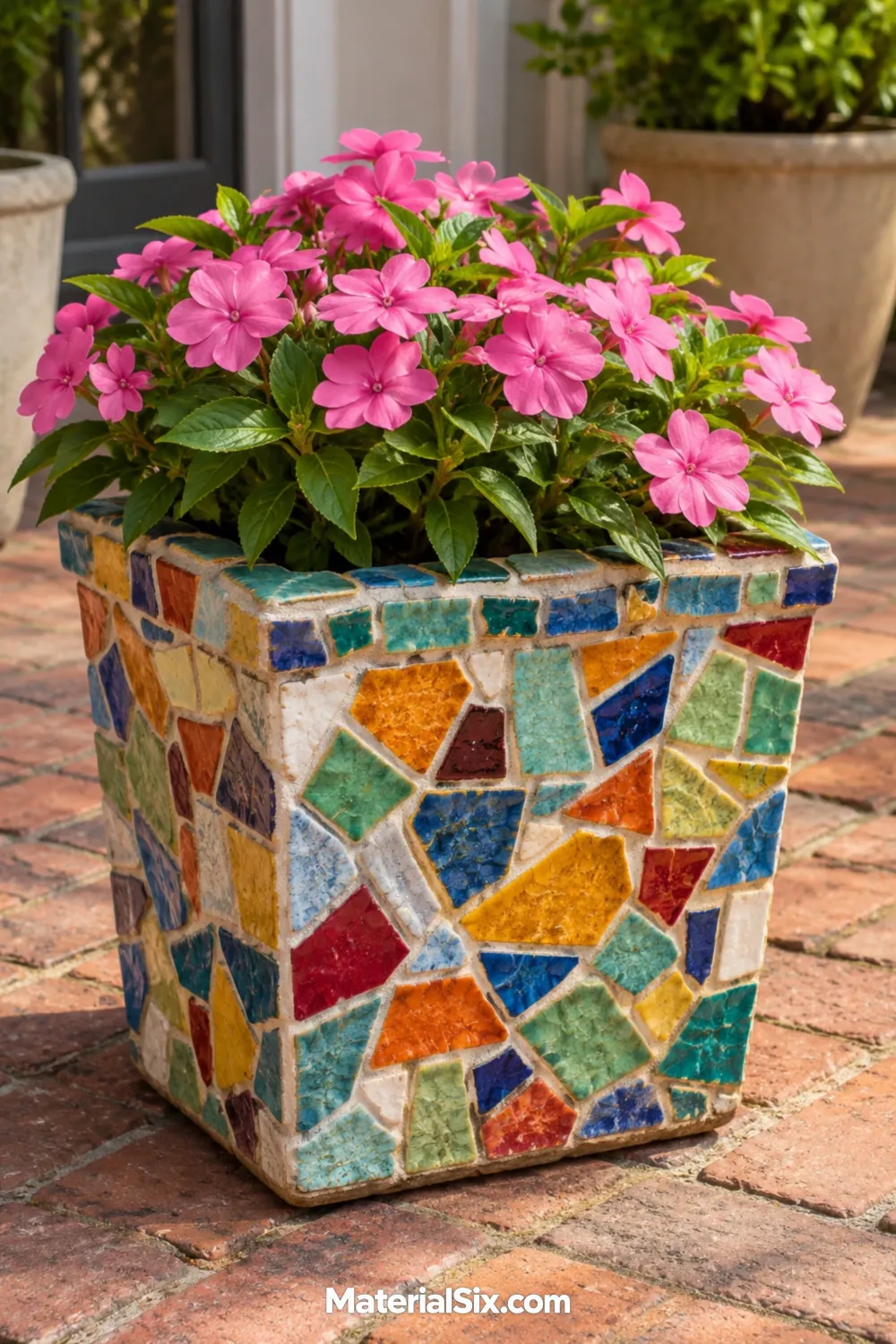
Set one colorful mosaic planter on a plain paved corner or where a patio path turns toward the house. Let a single flower color echo one of the tile fragments. A plant with a compact habit will keep the pot visible as it fills out.
9. Train Bougainvillea Beside a Patio Door
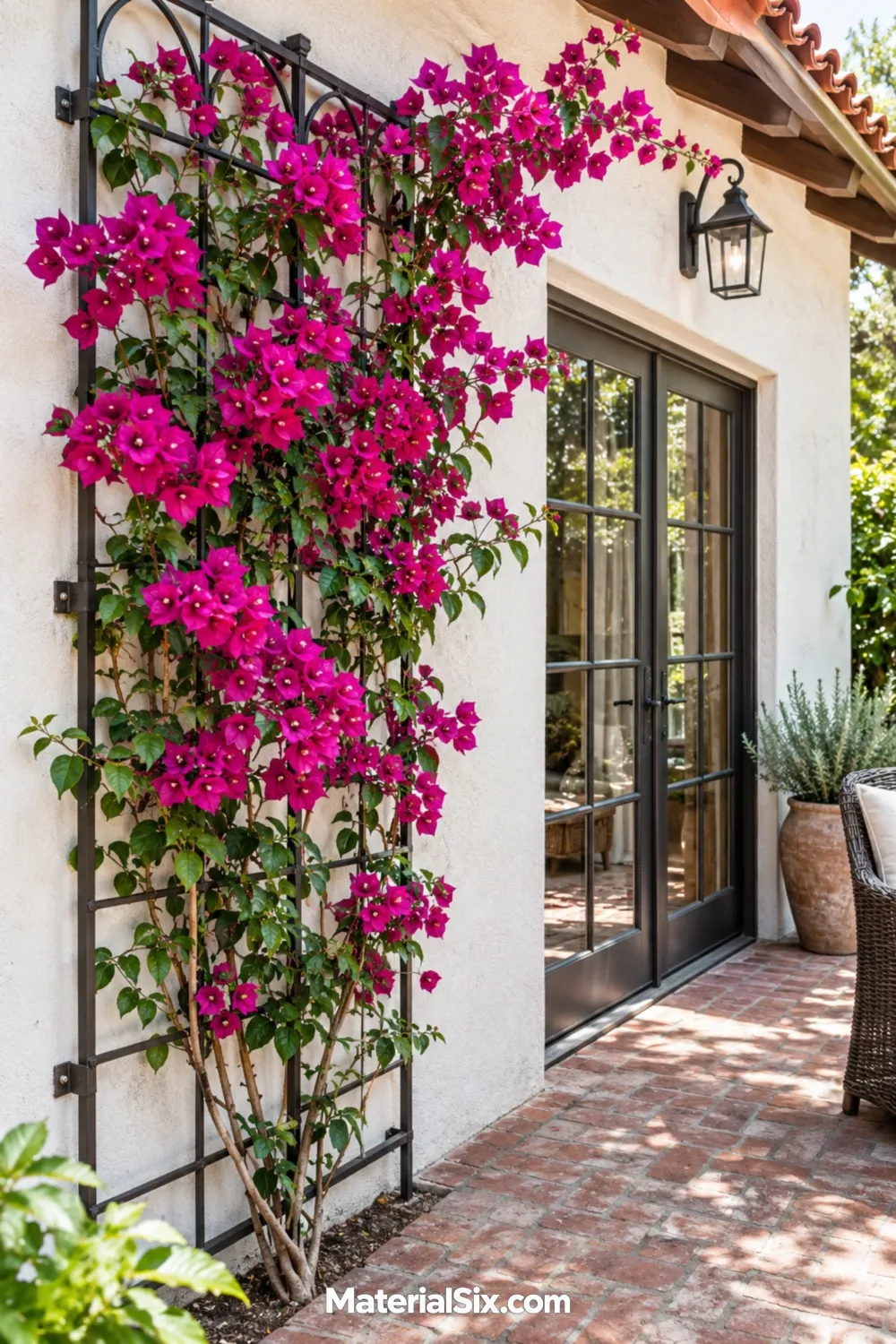
Magenta blooms can soften the wall beside a door, especially when the paving and stucco are quiet. Give the vine its own trellis off to one side and keep stems out of reach along the route to the handle. Pick a support you can reach from the patio when the plant needs tying or pruning.
Choose a sunny spot where bougainvillea suits your climate. Where winter cold is a concern, you can use a container that can be moved to shelter or choose a flowering climber suited to your area for the same layout.
10. Define a Conversation Area With a Striped Rug
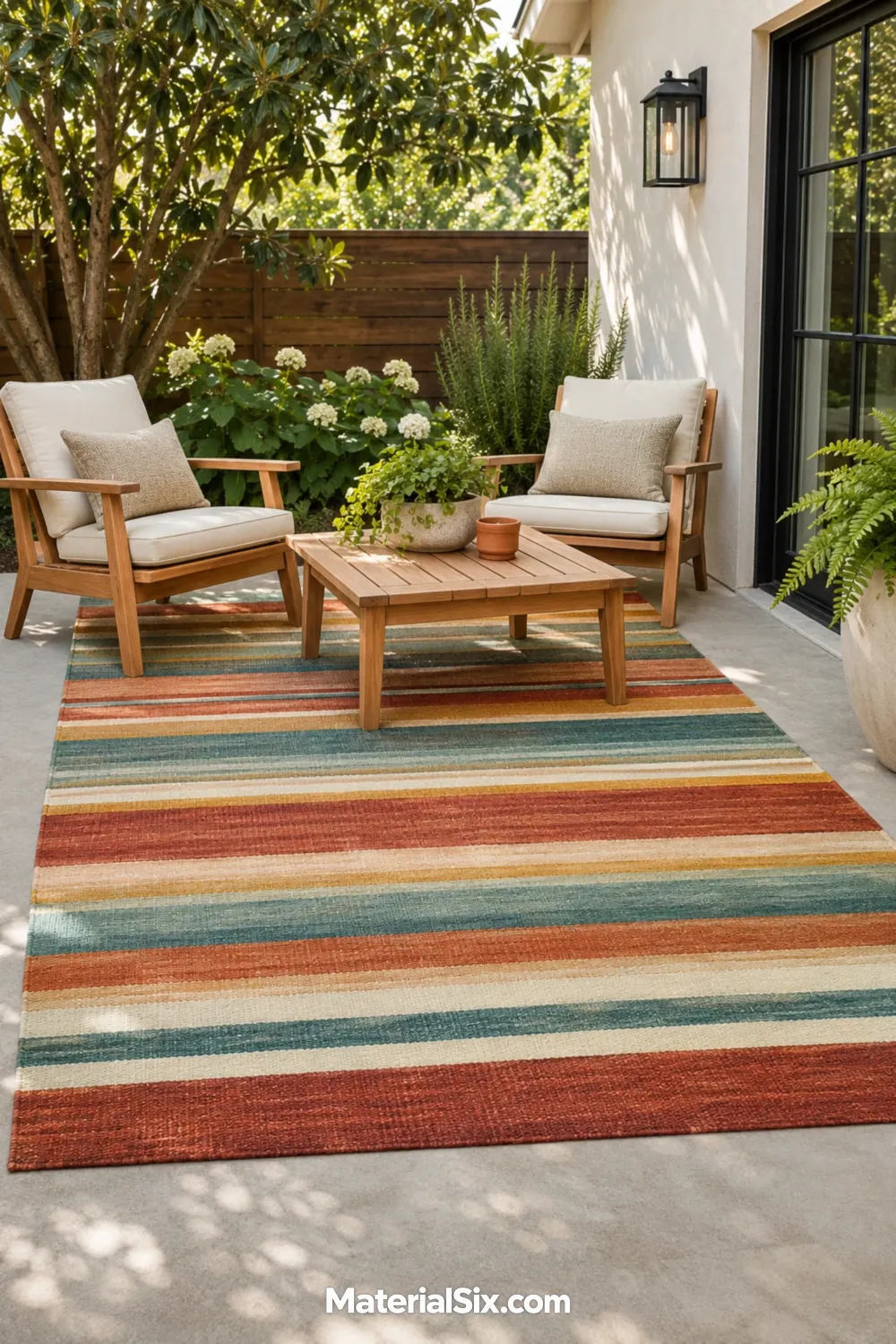
Use a low-profile outdoor rug to pull a pair of chairs and a side table into one group. Strong stripes make the sitting area visible from the house and give you a palette to work with. Check where the chairs land when you pull them back, and place rug edges away from the main route between doors.
11. Bring Texture In With Woven Lounge Chairs
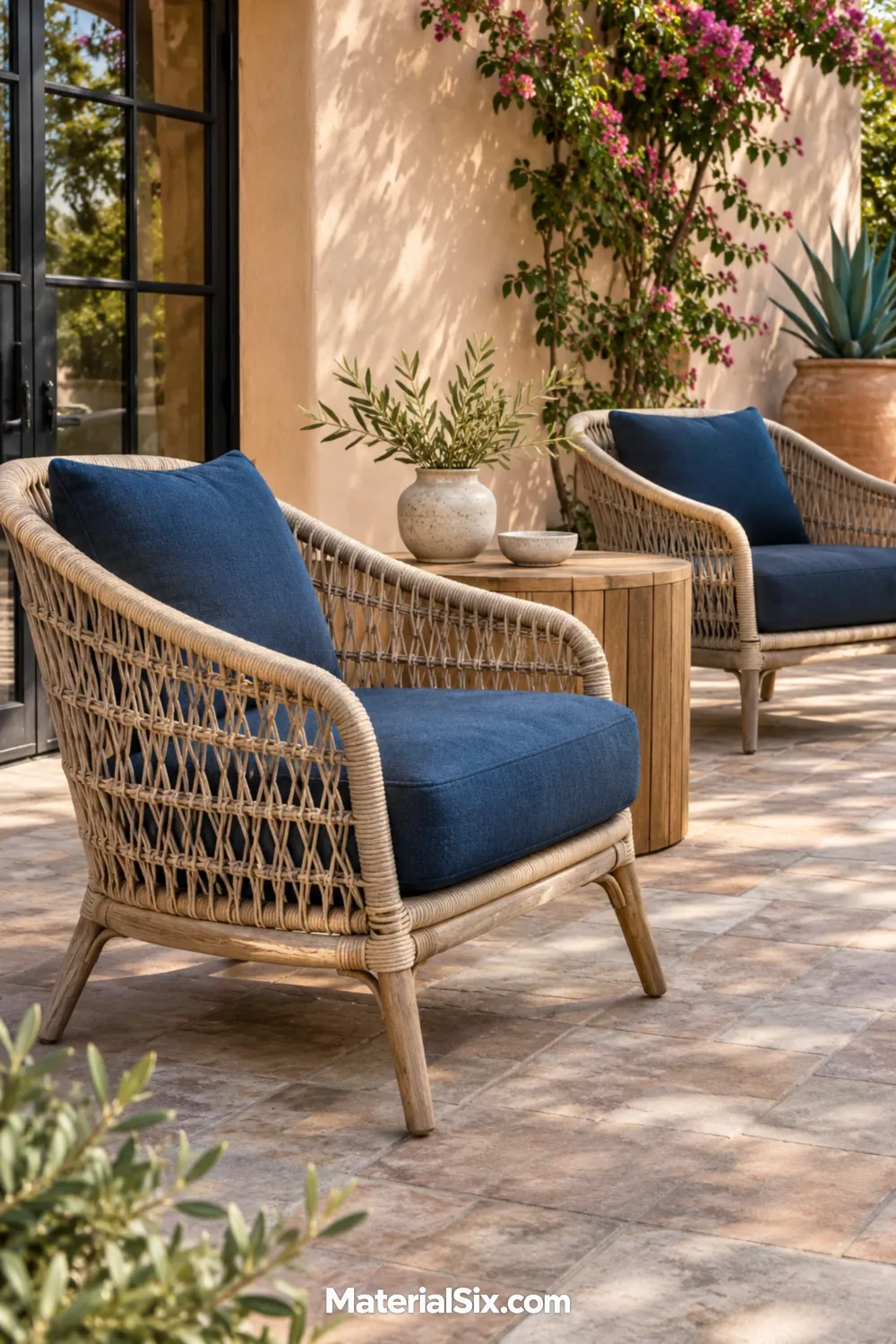
Set two woven lounge chairs against a plain stucco wall where you can see the weave from the side. Choose a cord or wicker explicitly rated for your patio’s exposure. Check seat depth before buying, especially if you want chairs that work for both leaning back and chatting over coffee.
12. Set a Wrought-Iron Table in the Courtyard
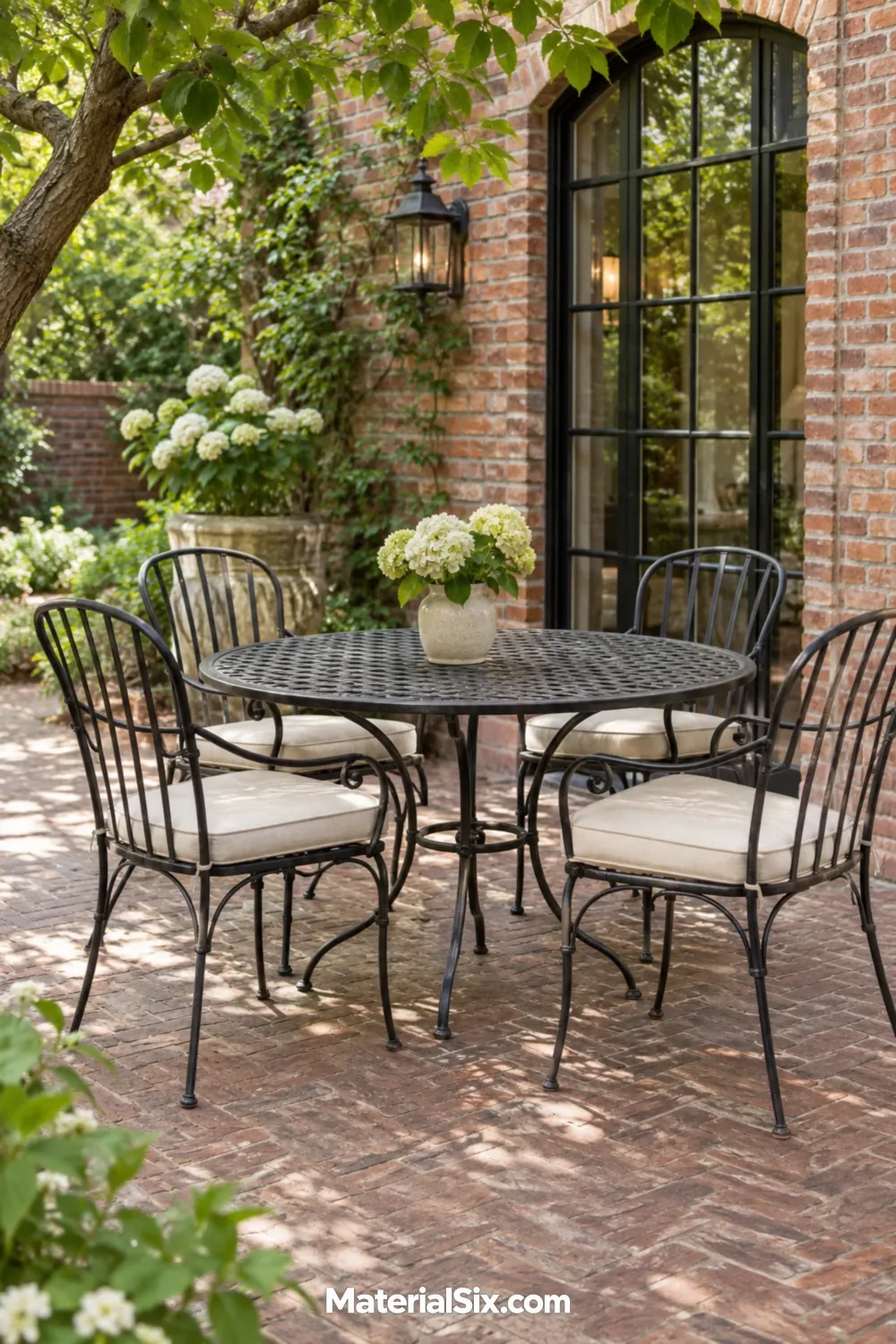
An open iron frame lets you see the paving through the furniture, which helps a dining courtyard feel less crowded. Give the chairs room to slide back, then walk the route from the kitchen with one pulled out. Tie-on seat pads and a ceramic vase add softness and color without covering the ironwork.
13. Filter the Sun With a Wood Pergola
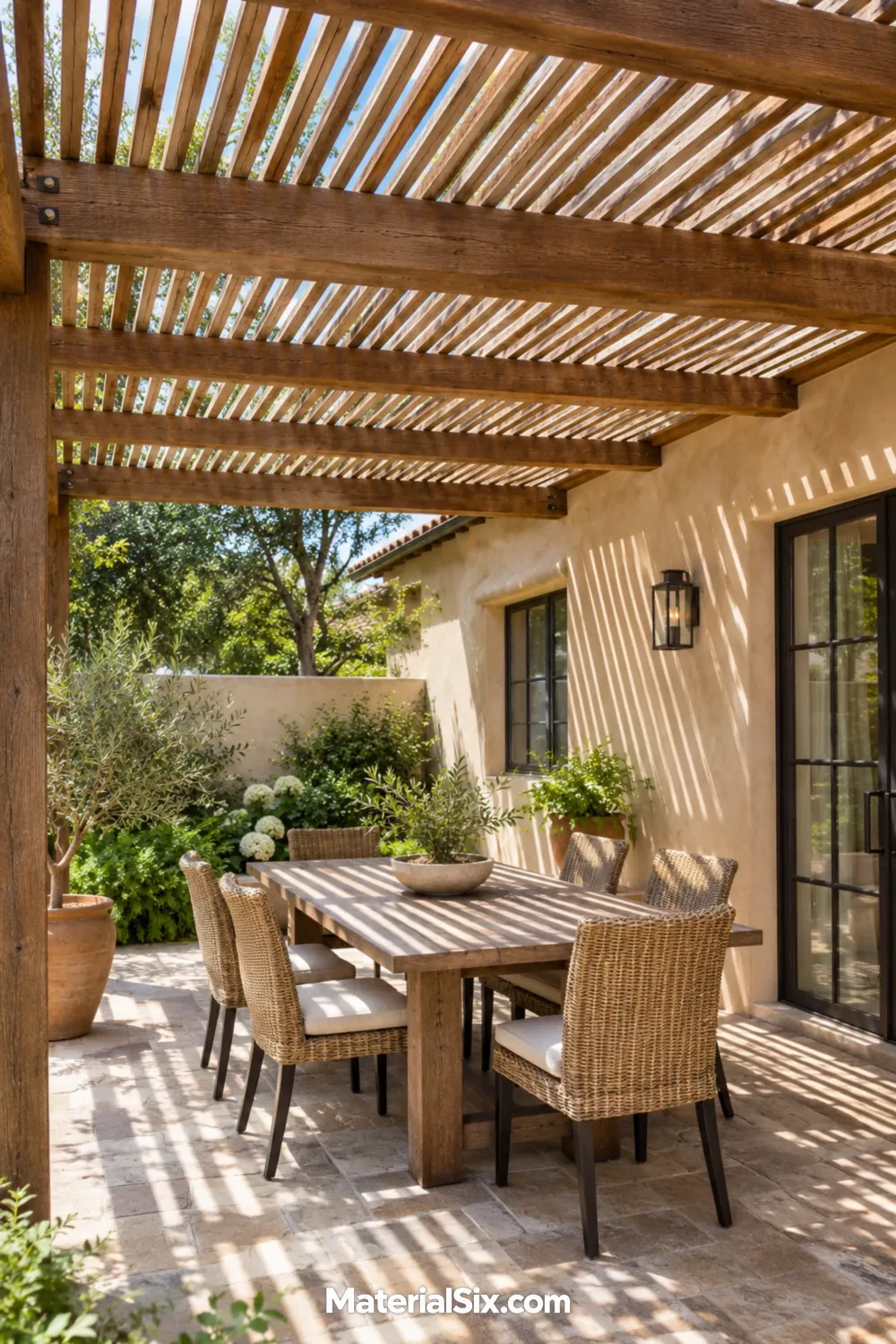
A slatted pergola casts a changing pattern over a dining table. Watch where the sun lands at the hour you actually eat outside before committing to the table position. A pergola that shades the middle of the patio at noon can leave the chairs exposed later in the day.
Start with the footprint of the table and chairs in use. Leave room to walk around the group so posts sit outside the regular path to the house.
14. Tuck an L-Shaped Bench Into a Corner
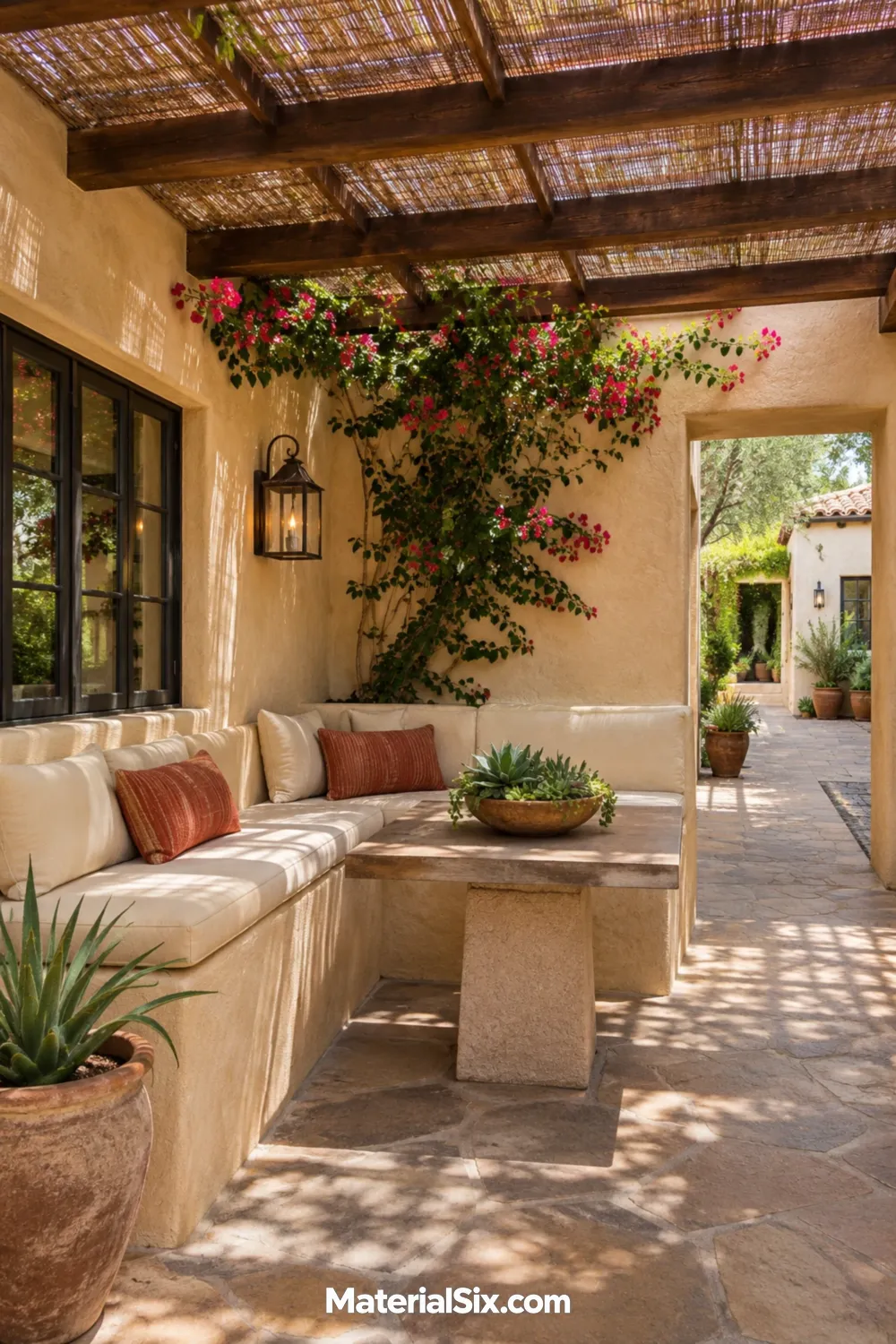
A built-in masonry bench gives an awkward corner a job. Face the open side toward the courtyard and place a small freestanding table where people can reach it from either leg. Mock up the bench and table with chairs or boxes first. Try getting into the corner seat with someone already in the seat beside it.
15. Give Ceramics an Arched Wall Niche
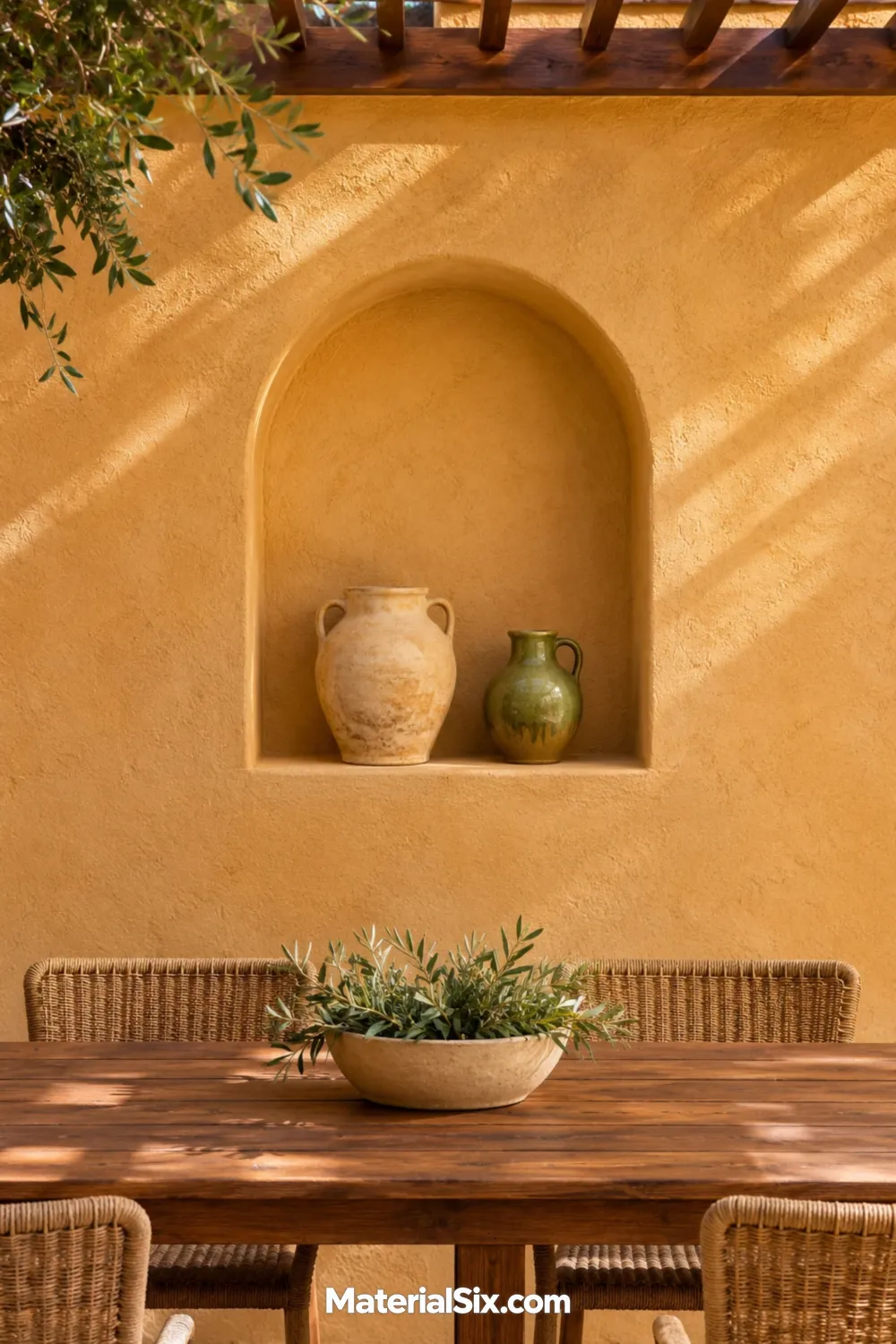
Set a pair of clay vessels into a shallow niche so their silhouettes show against the plaster. Choose pieces with stable bases that fit behind the front edge. If your patio wall is already finished, a shelf in a sheltered spot can serve the same display purpose.
16. Use Patterned Tile Behind an Outdoor Grill
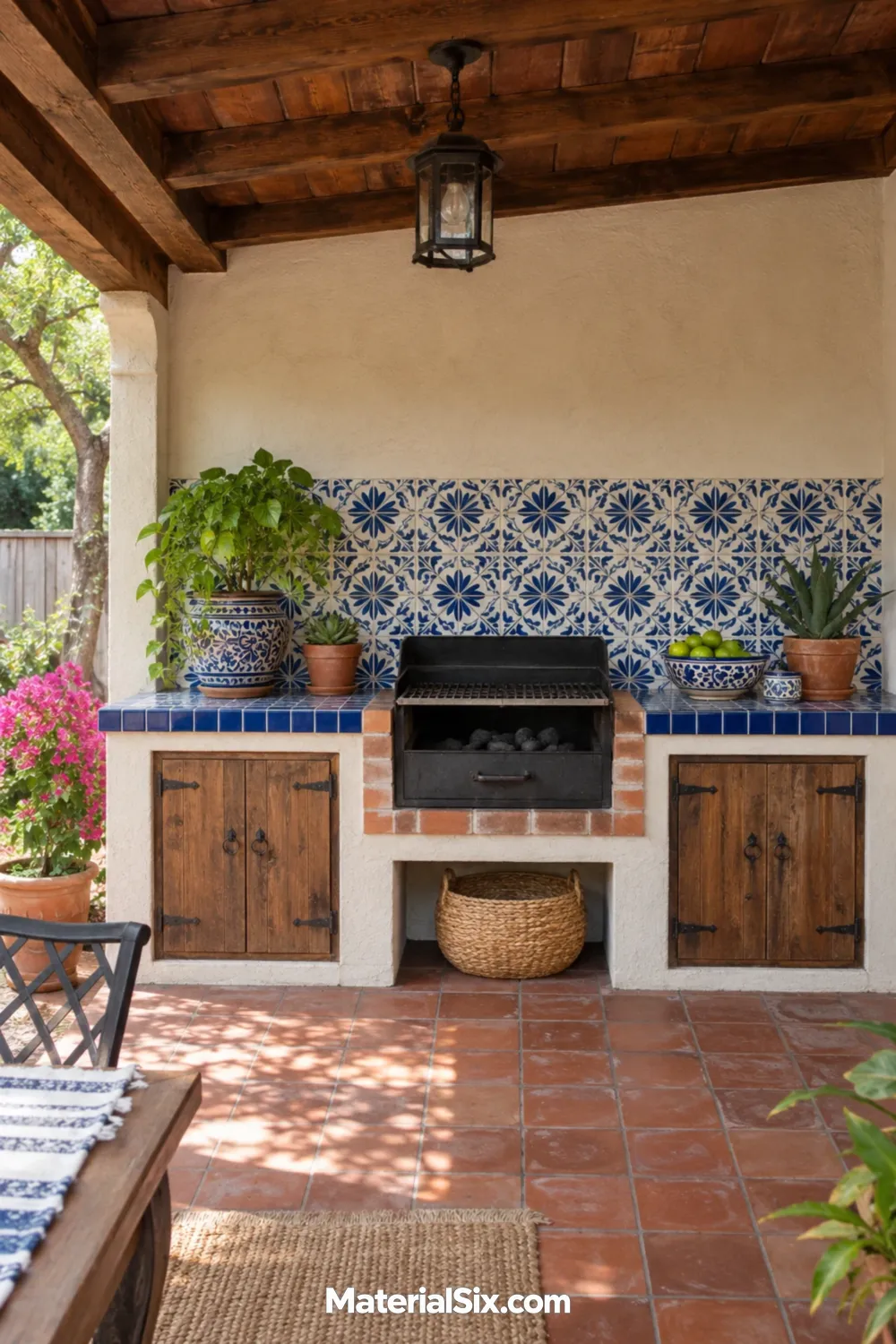
A short run of patterned tile gives your outdoor kitchen a focal point without taking over the courtyard. Carry one backsplash color into a planter or serving piece on the table. Keep a clear landing area beside the grill so trays and tools have a place during meals.
Choose the grill first if you are designing a built-in counter. The manufacturer’s installation instructions should guide clearances, ventilation, and which materials can go around the appliance.
17. Set Up a Small Patio Drinks Station
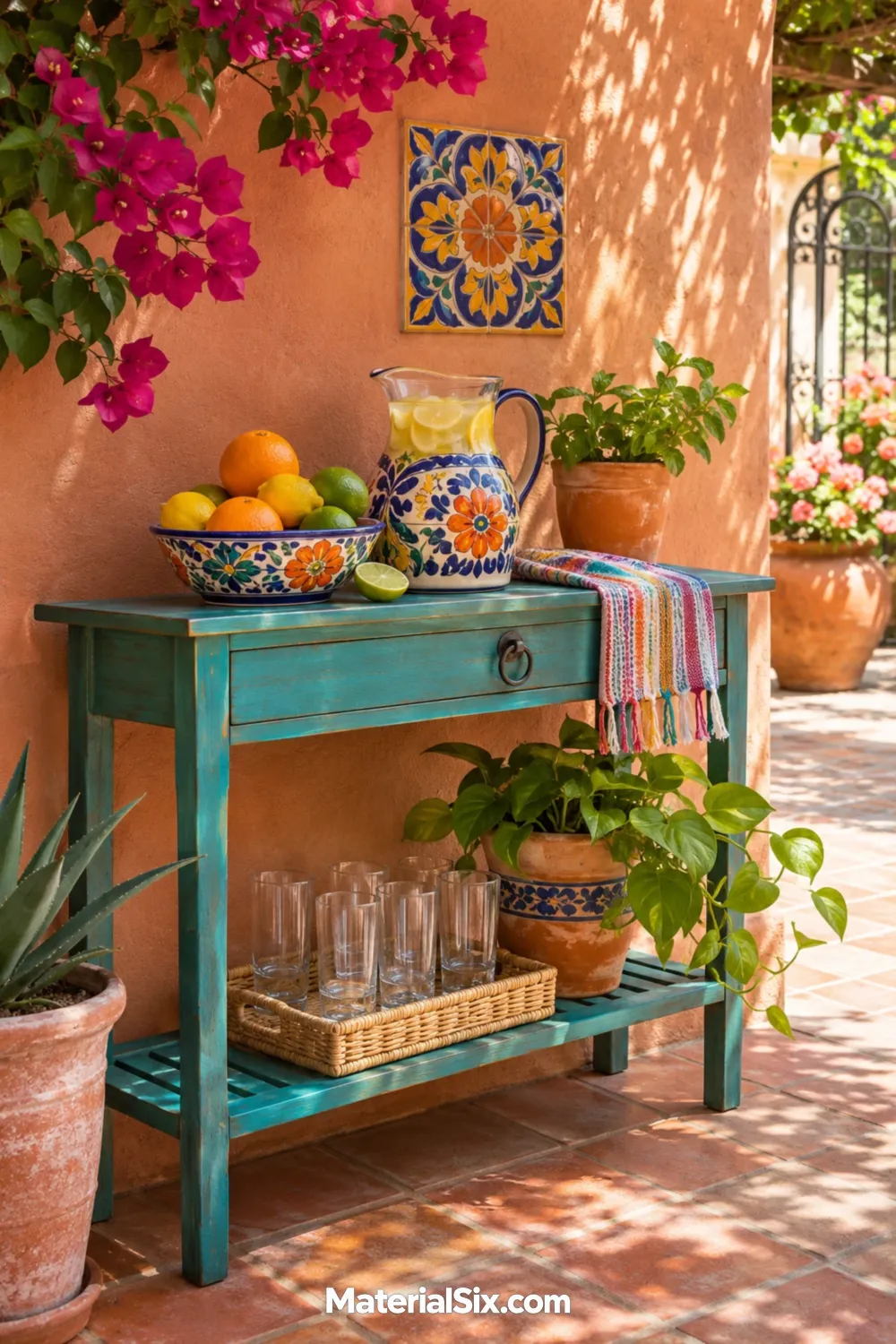
A narrow console makes it easy for guests to refill a glass without going back to the kitchen. Set it near the seating but off the route between the grill and table. A pitcher, a bowl of citrus, and glasses fit on a small console, leaving the dining table free for food.
18. Light the Dining Area for Blue Hour
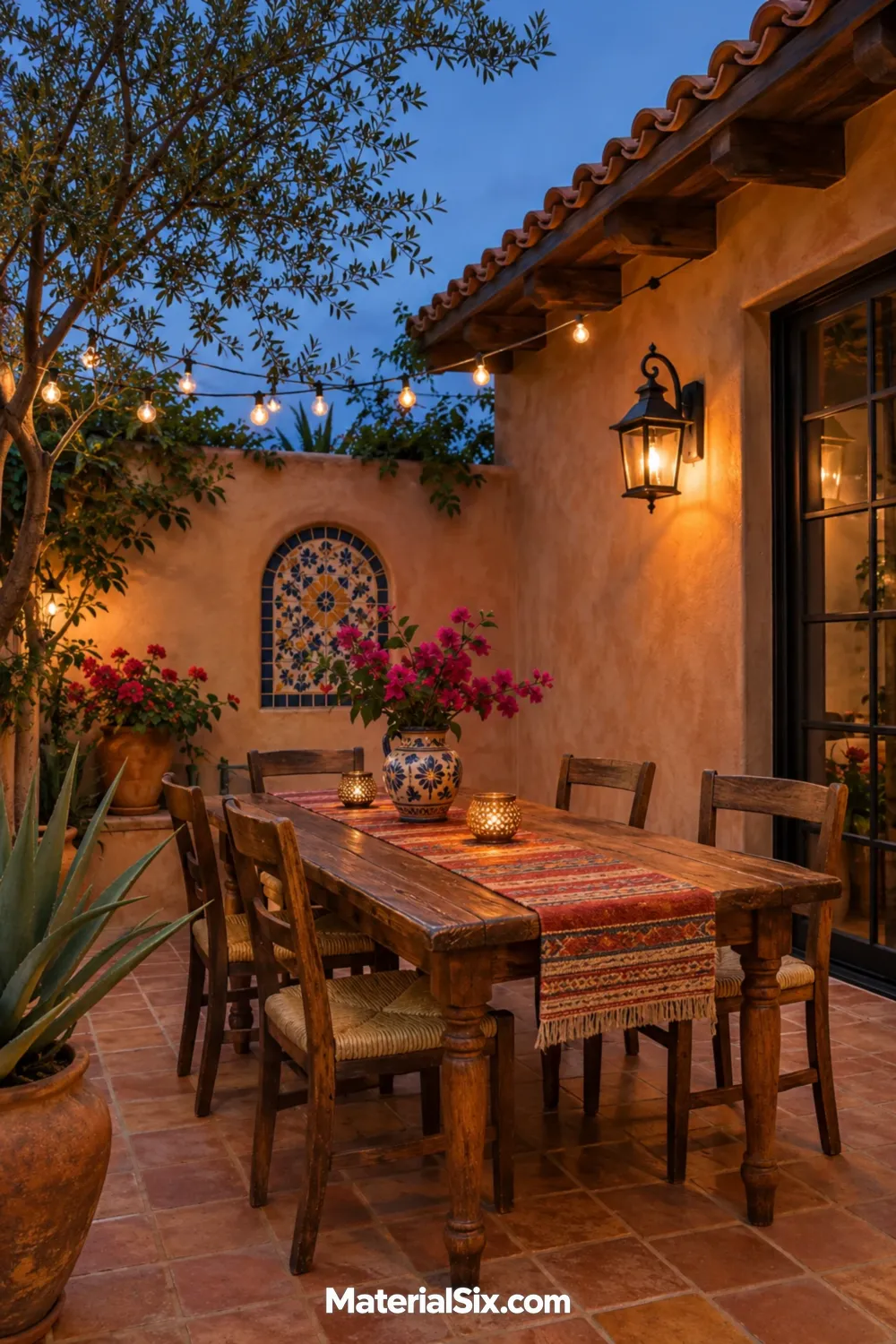
Hang a short strand of outdoor string lights over the eating area and let a wall lantern mark the route back to the house. Check the scene after dusk from both the doorway and a seat at the table. You want enough light to see plates and steps, with the brightest bulbs out of the seated sightline.
How to Plan Color and Flow on a Mexican-Inspired Patio
- Find the routes you use. Trace the trip from the back door to the table, grill, or yard. Pull out a dining chair and see whether people can still pass with a tray. Place pots, consoles, and fountain basins beyond those routes.
- Pick one surface for the main pattern. A floor, a backsplash, and a run of step risers are all seen from different angles. Give the pattern to the surface you see from your favorite seat or from inside. Sample the tile next to the other finishes outdoors.
- Work from permanent to movable. Settle drainage, paving, built-in seating, and fixed shade before buying furniture. Try the finished layout with chairs you already own, then decide where a rug, planter, or lantern would do the most good.
- Check the patio when you use it. Look at where shade falls during meals and where the walk looks dark after dinner. That gives you a better starting point for shade and lighting than a midday walk-through.
Make the Patio Feel at Home
Choose one detail you will enjoy from inside the house and one spot that makes you want to go out and sit. When those work together, a few well-placed colors and materials can tie the rest of the patio to the house.