
A deck can feel like two different places in the same day. At breakfast, the table catches a little welcome sun. By late afternoon, the same light hits the seat cushions and comes straight into your eyes. Covering the deck from above might solve the first problem and leave the second one right where it was.
The deck shade ideas below range from a market umbrella over a bistro table to an attached roof over an outdoor dining area. Some make sense for a single seat or a few hours of glare. Others give you a place to settle in for the afternoon. Think about the part of the deck you actually want to use, and when you want to use it.
1. Extend a Retractable Awning Over the Dining Area
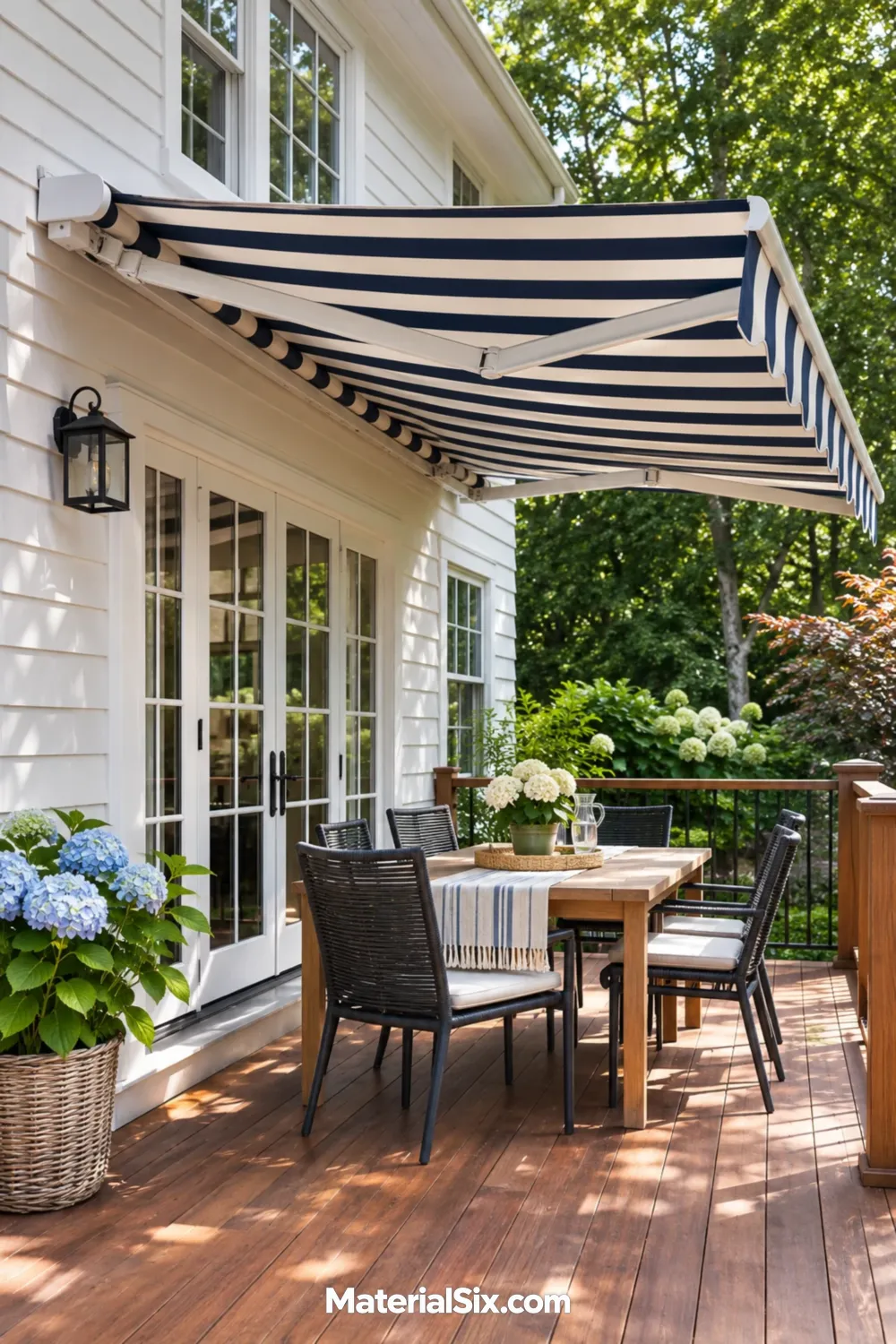
A striped fabric awning gives a dining deck an outdoor café feel and folds back against the house when you want the sky open. The wall-mounted design keeps the floor around the dining chairs clear, a handy advantage when the table nearly fills the deck.
Look at the wall from outside and inside as you plan. You want the awning to project far enough to shade the chairs as well as the table, with room for any doors and exterior lights. Ask the installer about mounting and check the model’s operating limits before choosing fabric or controls.
2. Float a Cantilever Umbrella Over the Lounge
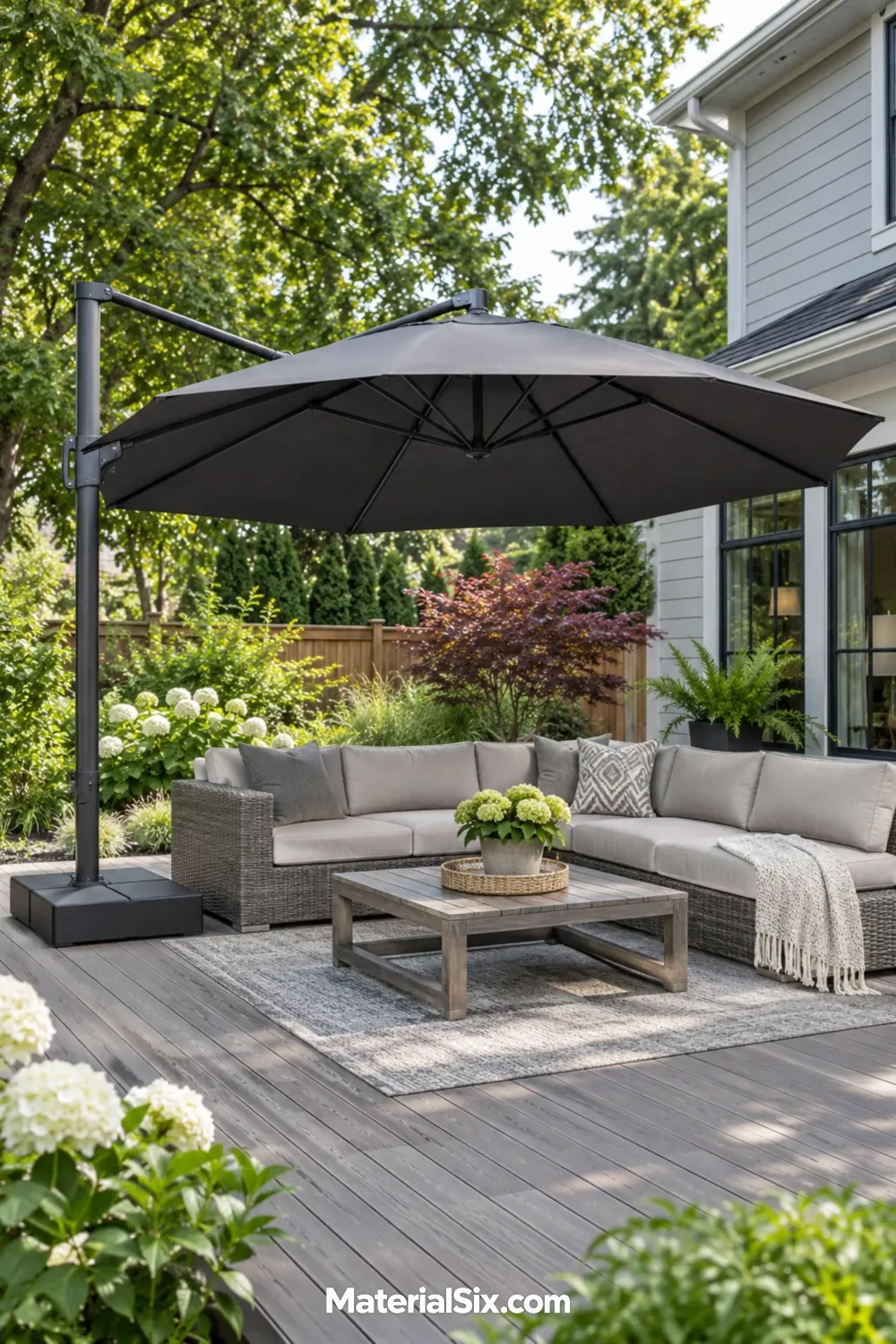
An offset umbrella lets you bring shade over a pair of lounge chairs or an outdoor sectional without putting a pole in front of the seating. Try positioning the mast behind an end chair or alongside the sofa where the canopy can reach the middle of the group.
Mark out the space needed for the base before shopping. On a compact deck, the base can compete with the path to the steps, even if the canopy itself fits overhead. An adjustable model gives you some room to follow the shifting shadow.
3. Give a Bistro Table Its Own Market Umbrella
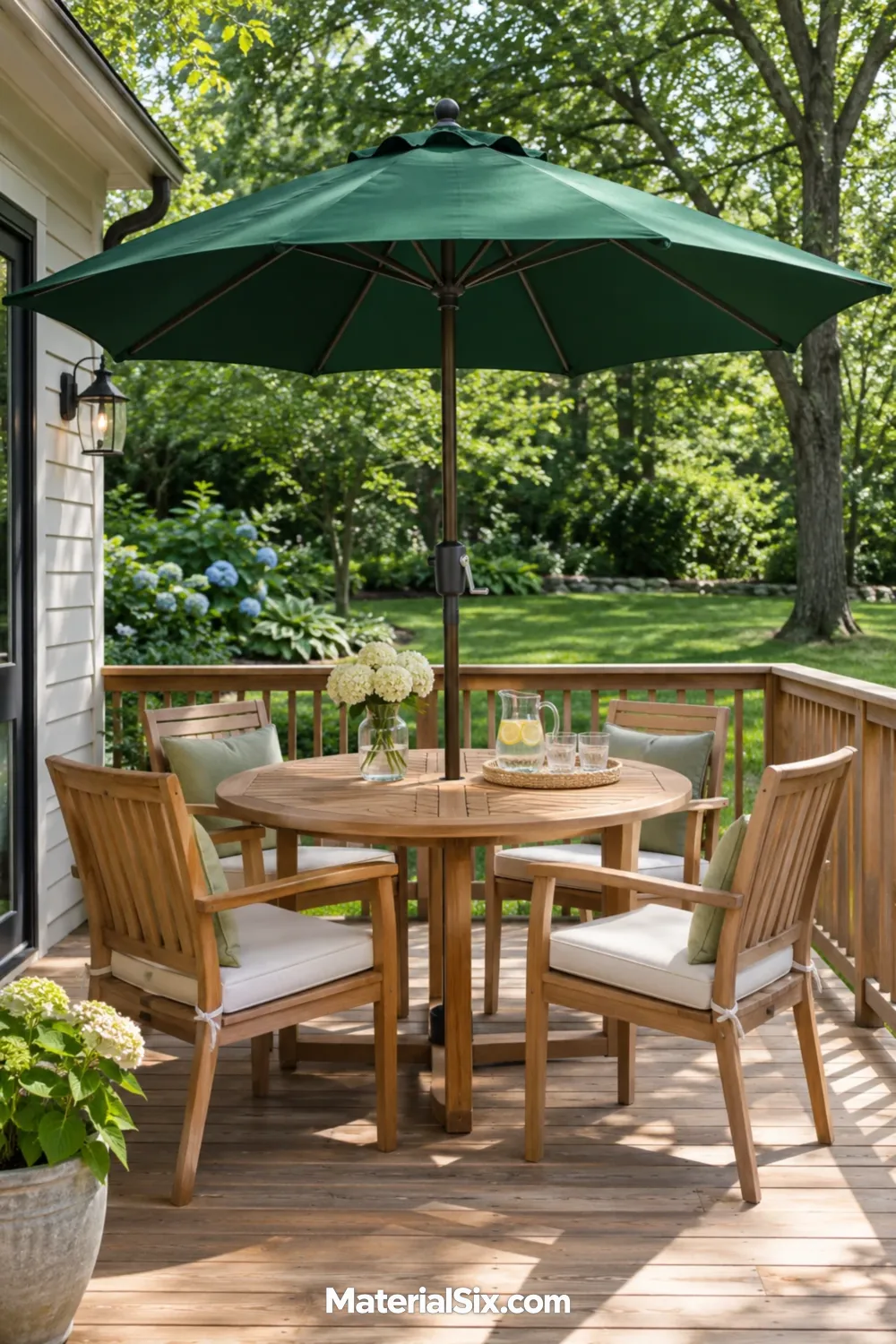
For a deck that doubles as a breakfast spot, a center-pole market umbrella puts a patch of shade right where you sit. A solid green or blue canopy can carry the color of nearby planters without adding visual weight to the rest of the deck.
Check the table’s center opening against the pole, and look at the base requirements for the model. Leave enough room for the chairs to pull out around the table. If you tend to sit on the same side each morning, use that seat to judge how much canopy you need.
4. Stretch a Triangle Shade Sail Above One Corner
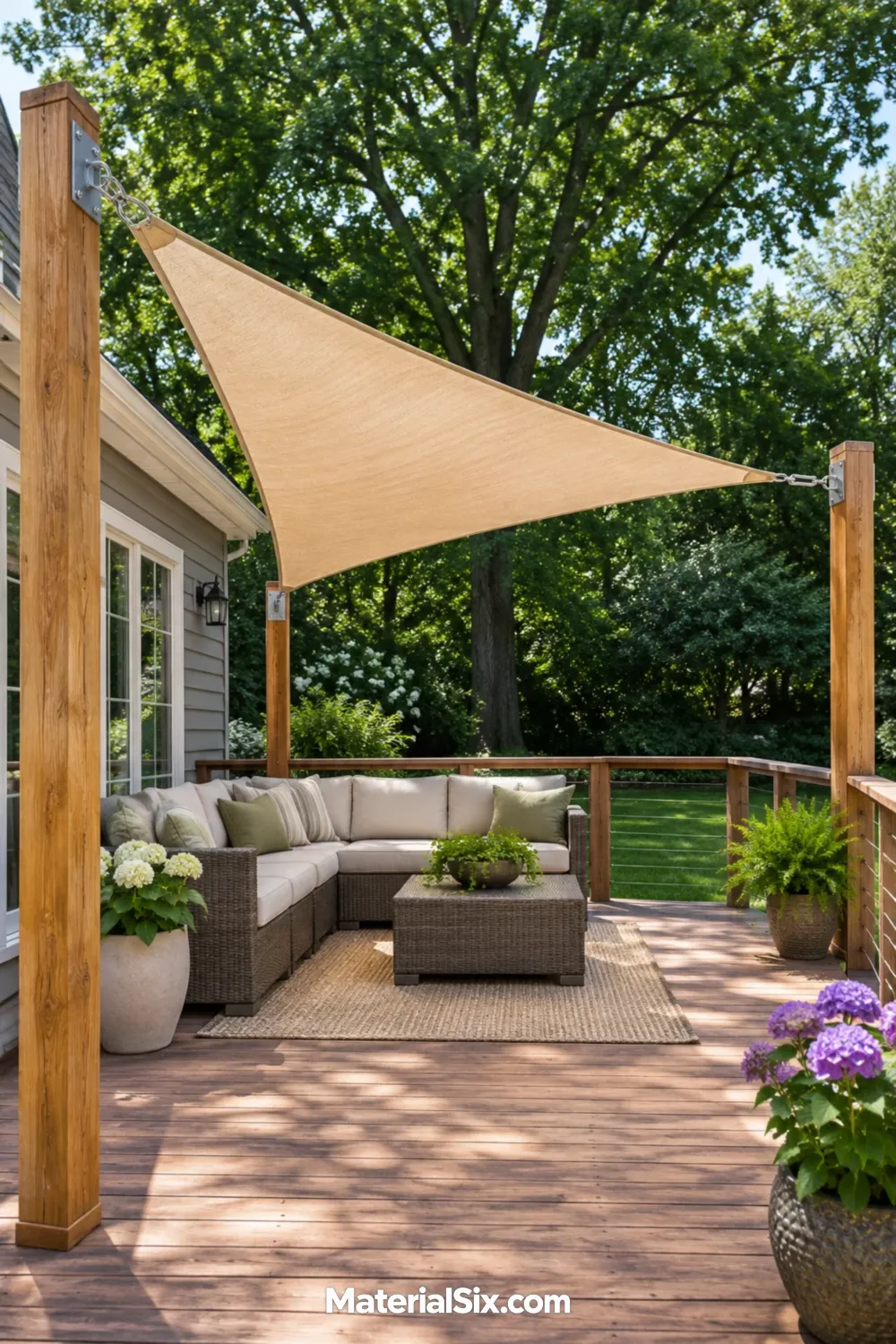
A triangle sail makes sense over a deck corner that holds a loveseat or two chairs. Its pointed shape draws the eye up, and you can let the open part of the deck lead into the lawn or the steps.
Sketch the possible anchor locations and the actual seating footprint together. The corners taper, and the shadow shifts as the sun moves. A sail also needs space for tensioning hardware beyond the fabric itself. Have suitable anchors assessed and follow the sail maker’s installation and weather instructions.
5. Add Shade Cloth to an Existing Pergola
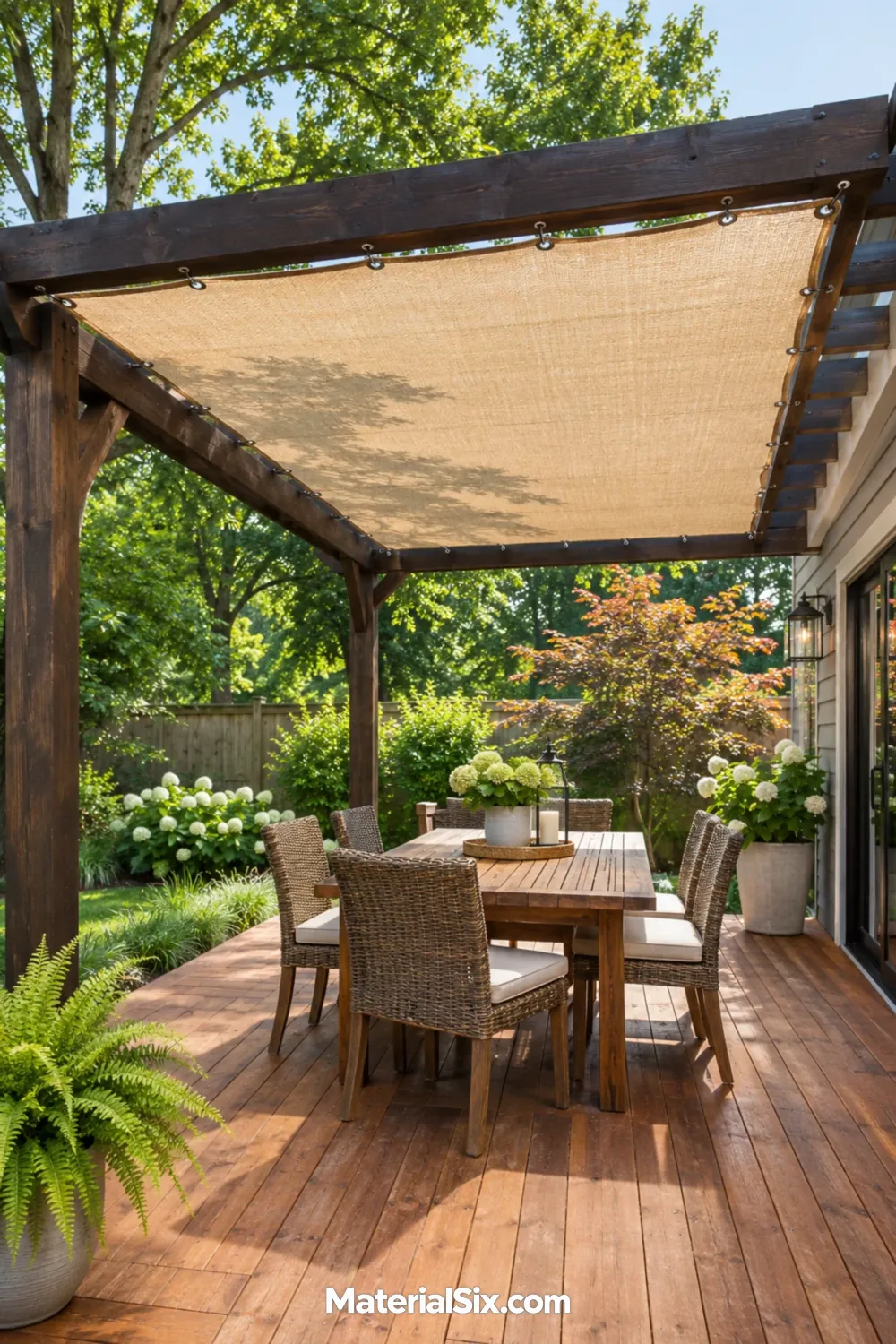
If your pergola already frames the deck the way you want, a fitted panel of outdoor shade cloth can soften the sun coming through its open top. Use a shade close to the color of the beams for a quieter look, or choose a lighter panel to brighten the view from underneath.
Compare fabric samples outdoors. A dark weave can change the feel of the room below, and a lighter weave may pass more light than you want over a dining table. Check how the panel is fastened and how you will reach it for seasonal cleaning.
6. Slide a Fabric Canopy Along Pergola Tracks
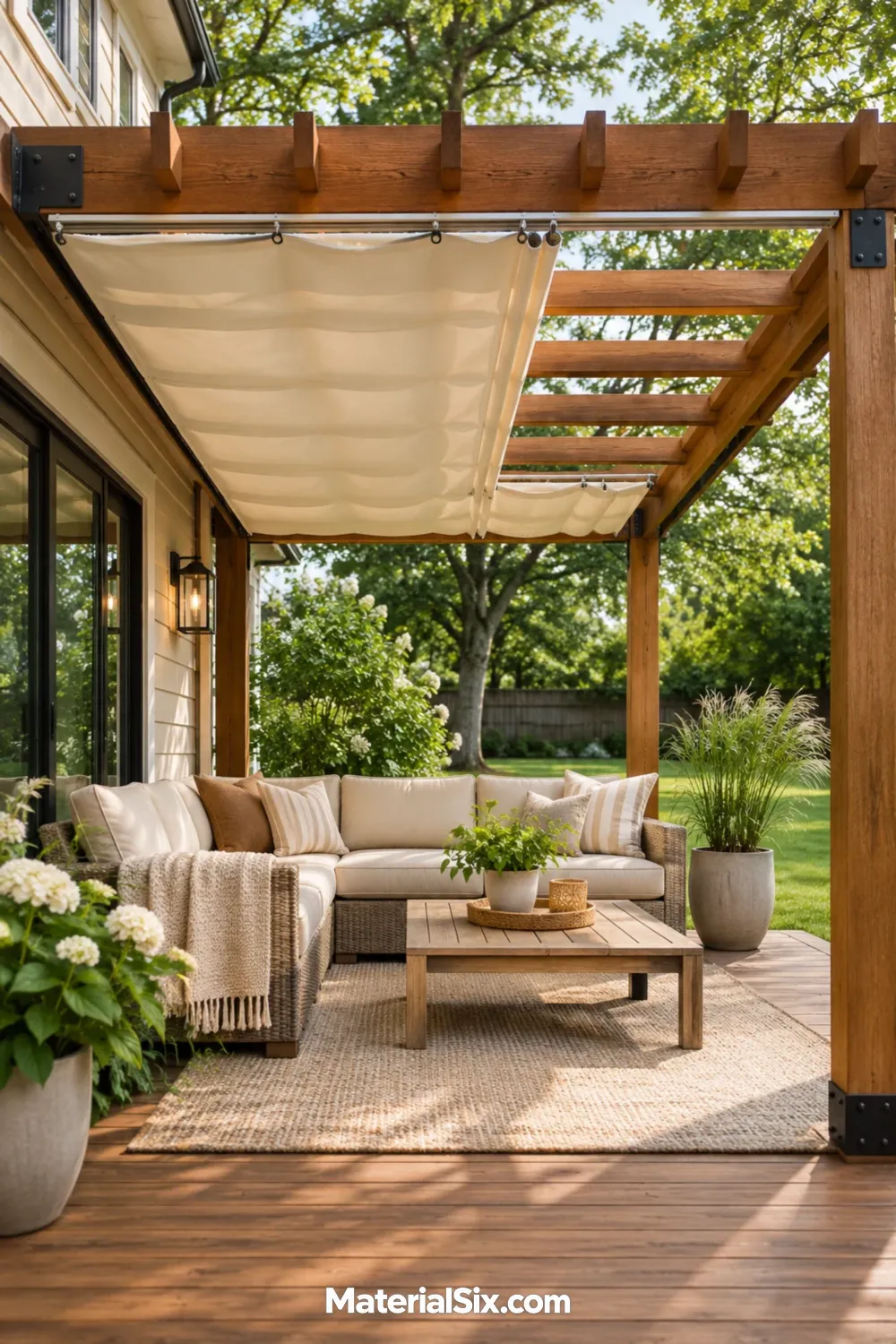
A track-mounted canopy gives a pergola two moods. Slide the fabric across for lunch, then draw it back at sunset to open the view. In a long rectangular lounge, shallow folds overhead echo the lines of the sofa and break up the hard edges of the timber frame.
Check where the folded fabric gathers and whether the handle is within reach from the deck. Plan for access to the tracks and choose the material with the kind of exposure the deck gets in mind.
7. Use Angled Slats for Filtered Shade
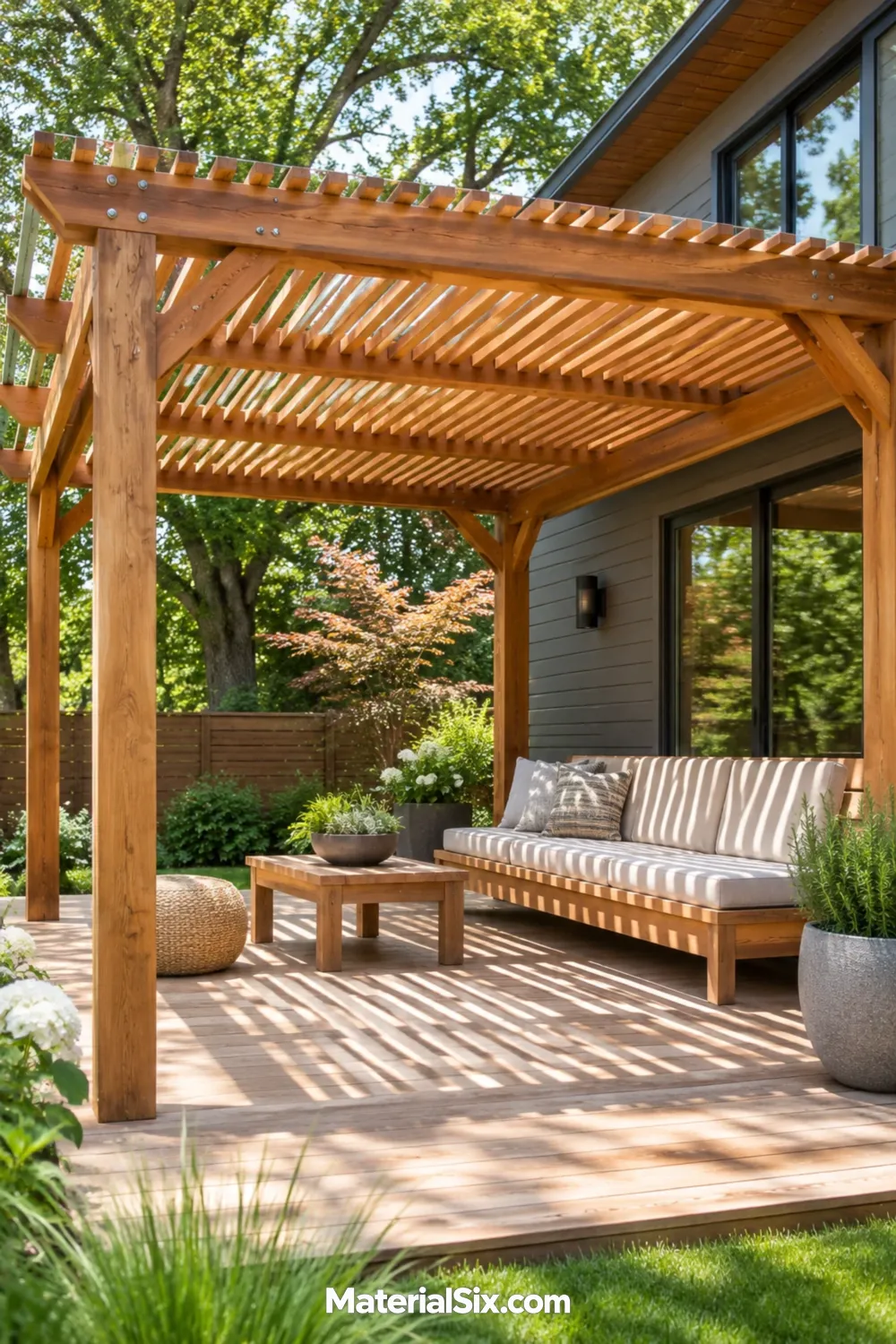
Angled timber slats make a deck feel partly sheltered while leaving the sides open to the garden. The stripes of light across the floor can be enough for a reading bench or a spot where you want some sun for containers.
Slat direction changes where that pattern lands. Before settling on a design, look at how the midday and late-afternoon light crosses the deck and ask to see a sketch of the proposed slat orientation against the seating area.
8. Set an Adjustable Louvered Roof Above the Deck
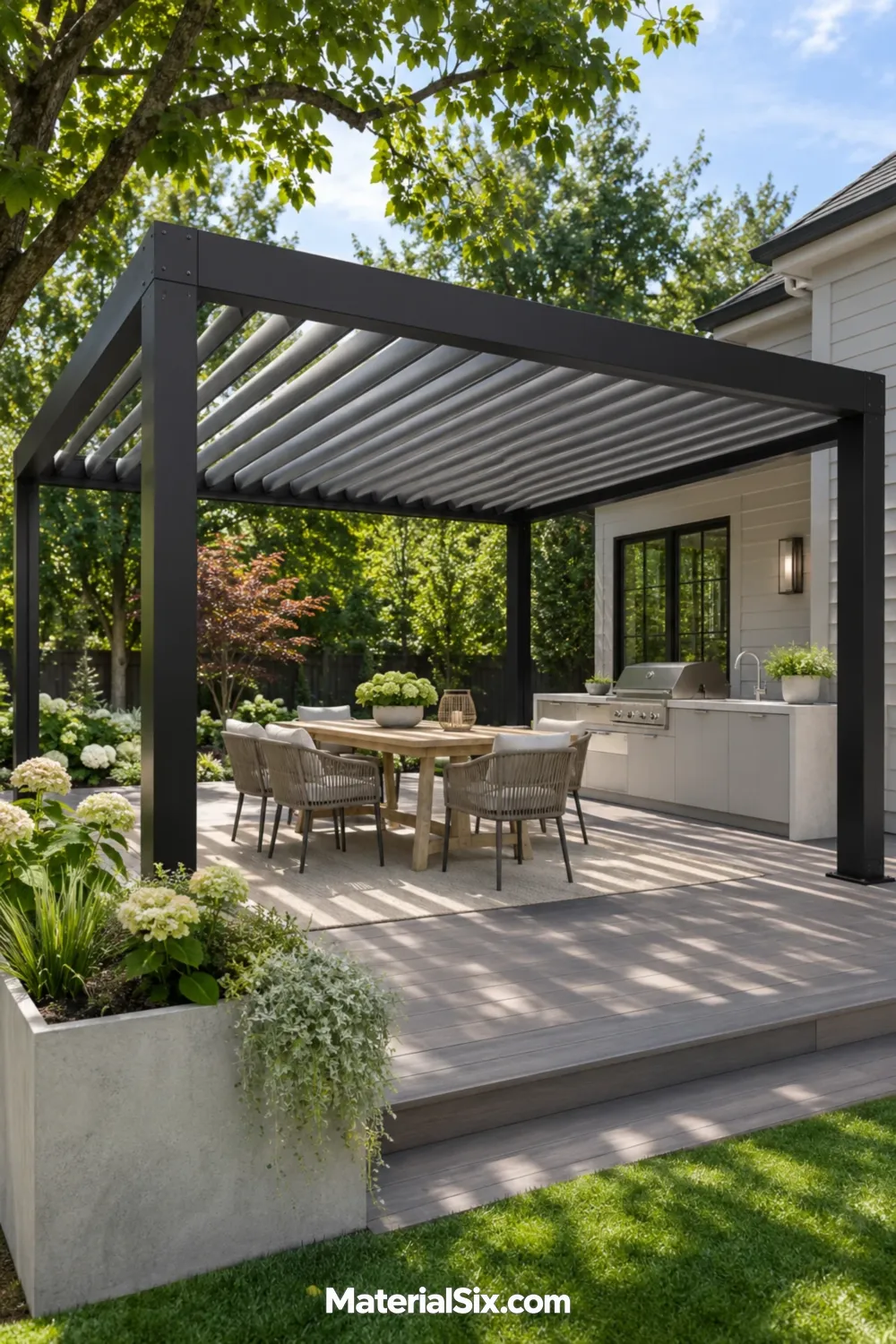
A louvered aluminum pergola gives you more control over overhead light. Tilt the louvers for a brighter afternoon, then close them more when you sit down to eat. A dark frame works especially well with composite boards and a simple outdoor kitchen counter.
Look closely at drainage details if you plan to use the deck in light rain. Ask where water leaves the frame and where it will go once it reaches the deck or yard. Also decide where the controls should go so they’re easy to reach from the house.
9. Cover the Deck With Translucent Panels
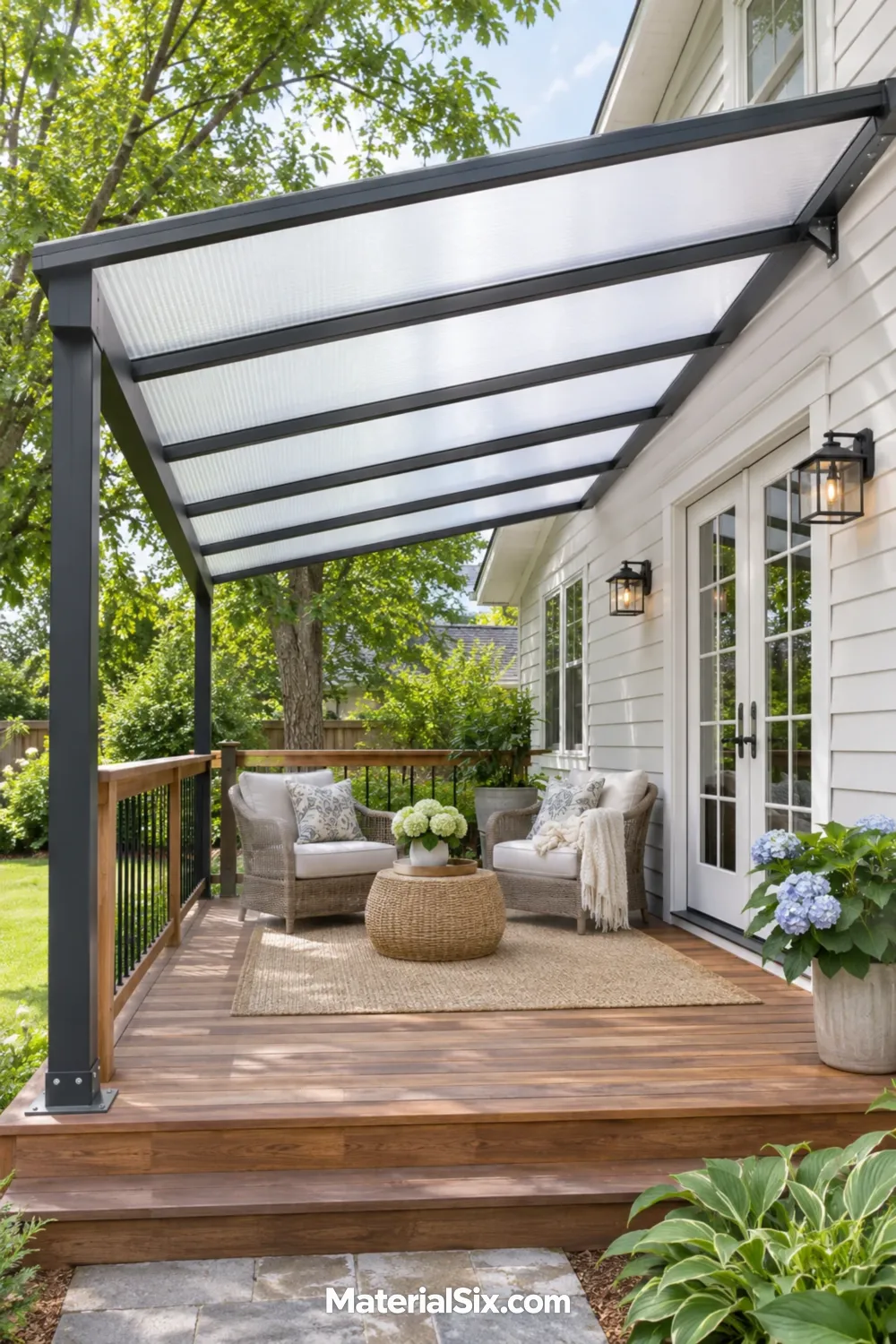
Opal polycarbonate panels diffuse light over the deck while keeping the area below visibly bright. That can be an appealing middle ground if a solid roof would darken rooms that borrow light through the back windows.
Compare the way clear, tinted, and translucent samples look in full sun and from inside the house. The color from above may read quite differently underneath. Work through drainage and the location of the low edge with your installer before fixing the seating layout.
10. Extend a Solid Porch Roof Over the Deck
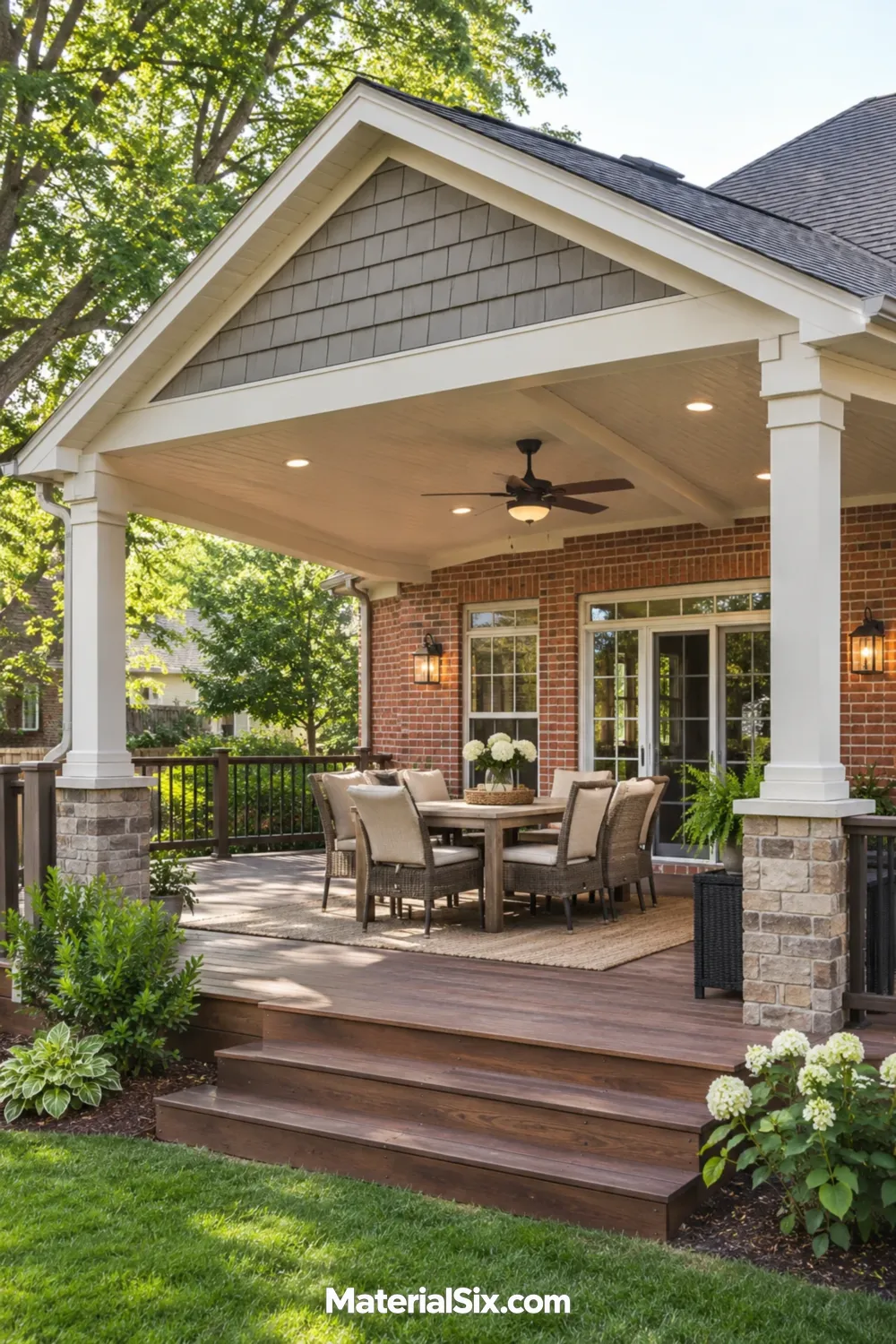
A solid roof gives a large dining deck a more settled, porch-like feel. Pull a ceiling or trim color from the main house so the extension belongs with the back elevation. From the yard, the roofline reads as part of the home’s architecture.
Think through the view from indoors as carefully as the deck below. A deep cover changes the light at the windows and may shift where you want the outdoor table. Ask a qualified contractor to assess the existing deck, design the supports, and check local permit requirements.
11. Set a Freestanding Gazebo on a Detached Deck
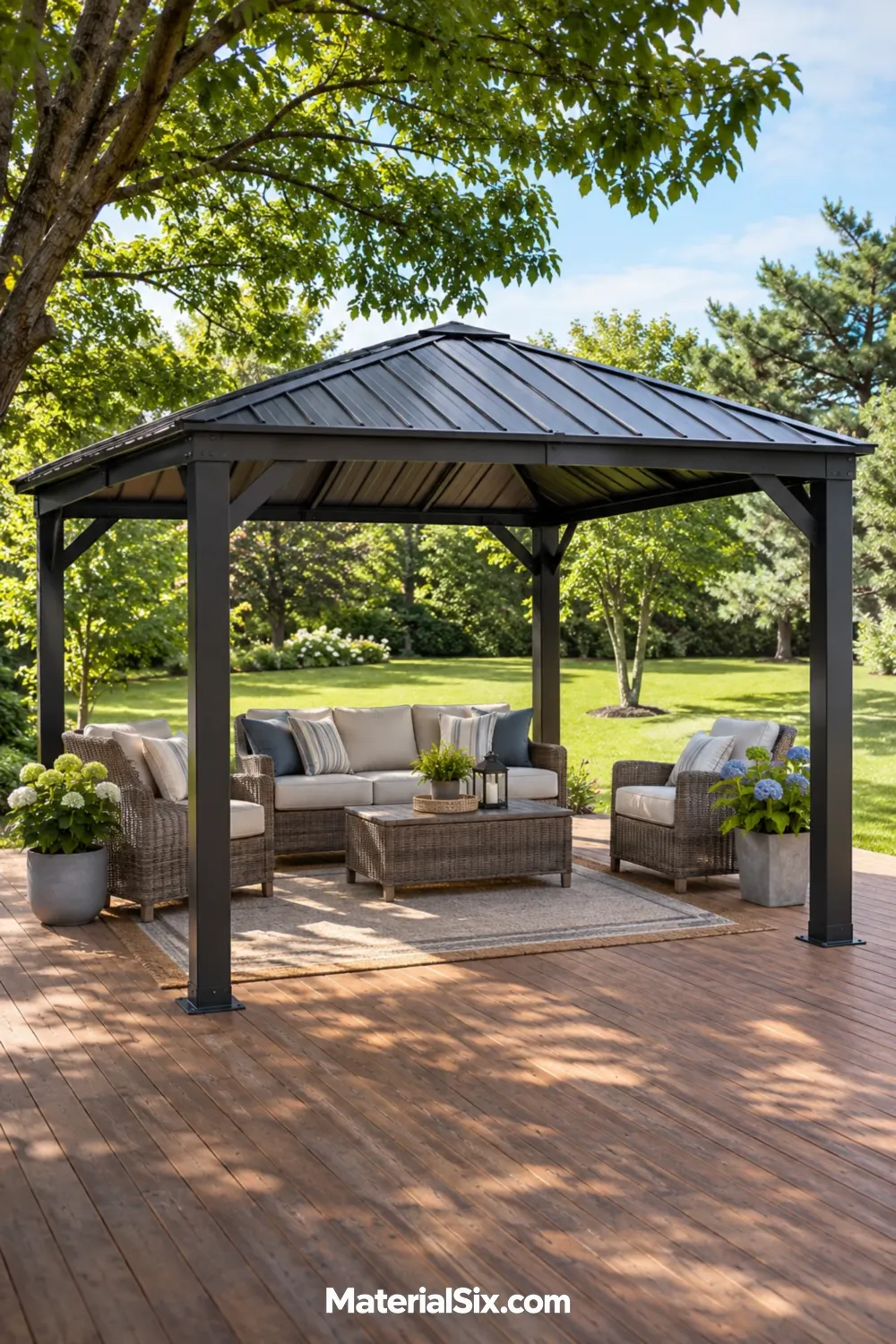
On a deck set apart from the house, an open-sided gazebo can turn the conversation area into its own destination. Center the seating under the roof and keep a strip of deck open as an approach from the yard.
Draw in the posts as well as the roof when trying different locations. A post near the head of the steps can make the entrance feel cramped. For an existing deck, have the structure and proposed connections assessed before choosing a gazebo.
12. Put Up a Pop-Up Canopy for Occasional Shade
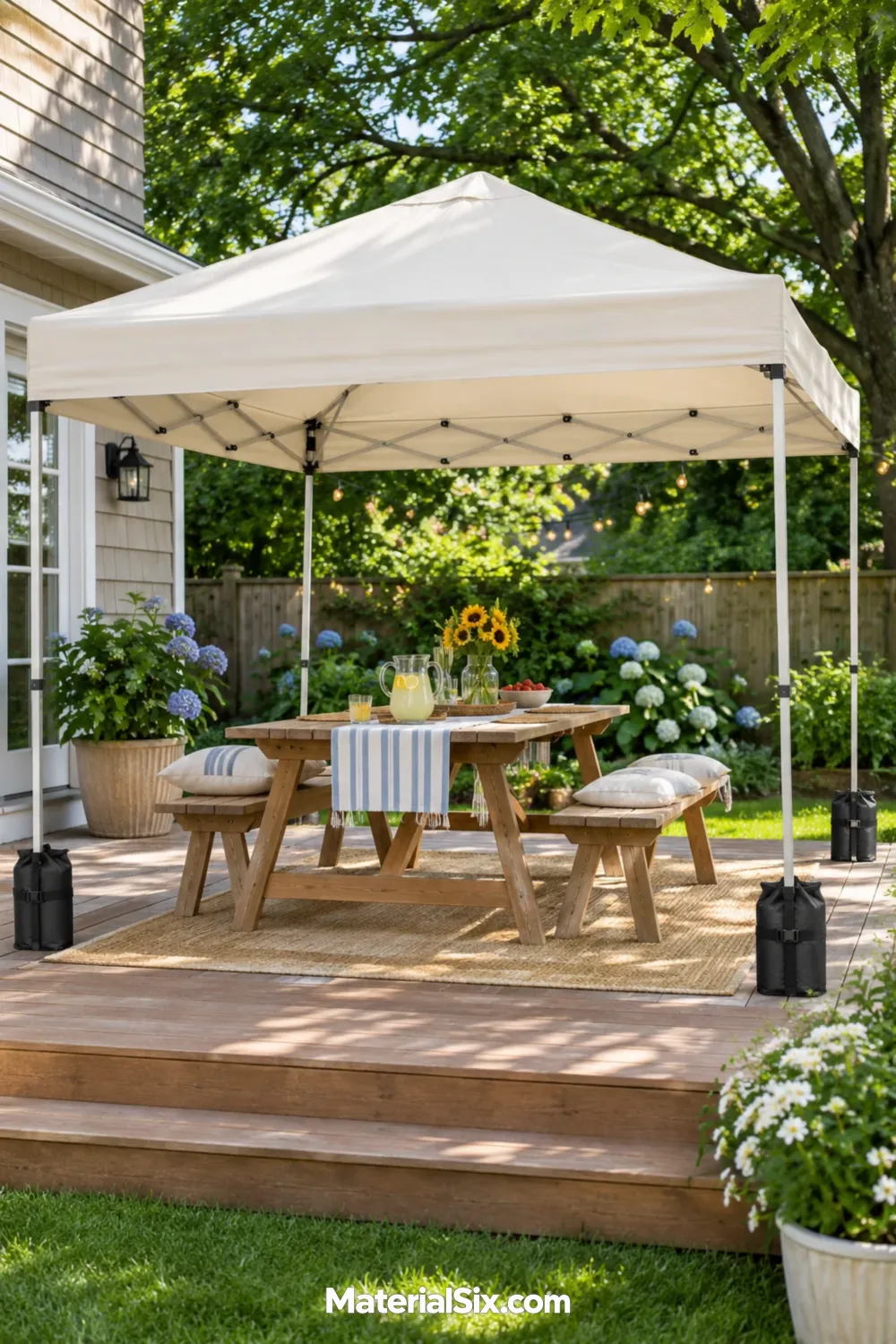
A folding canopy works for an afternoon when you need shade over a picnic table, a game, or an extra seat for guests. Pale fabric keeps the deck bright beneath it, and a simple unprinted canopy blends in with everyday outdoor furniture.
Check the actual leg footprint with the chairs pulled out. Set the canopy up and secure it according to the manufacturer’s instructions, and pack it away when conditions fall outside its stated operating limits.
13. Lower a Mesh Screen Against Low Afternoon Sun
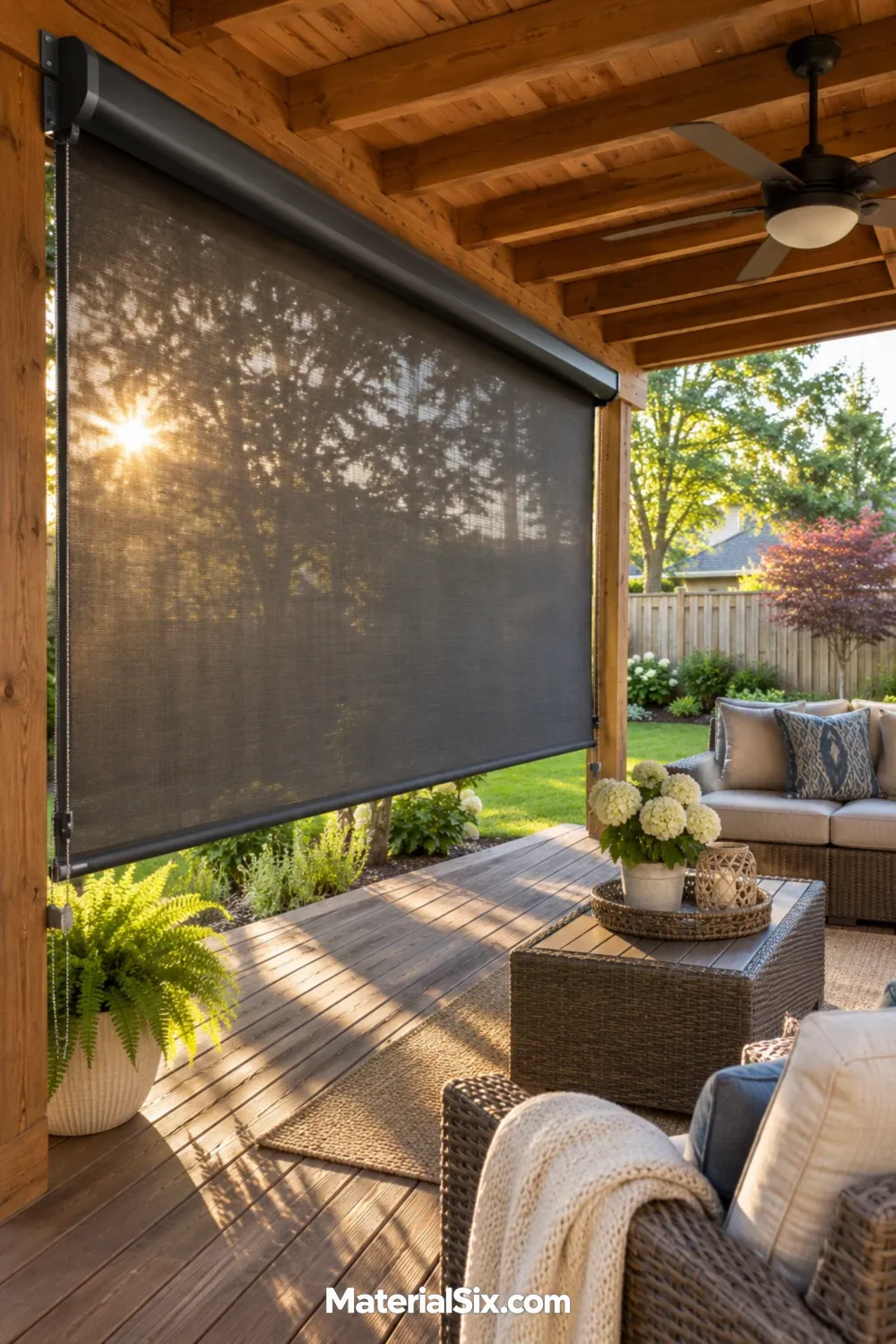
An overhead cover can leave one side of a deck exposed right when you head outside after work. A drop-down mesh screen along that opening tones down glare while preserving a view of the yard through the fabric.
Sit where the sun bothers you and mark the opening it comes through. Positioning the screen for that sight line can be more effective than treating every side. Compare mesh samples so you can judge the balance between glare and how much garden view you want.
14. Pull Outdoor Curtains Across the Sunny Side
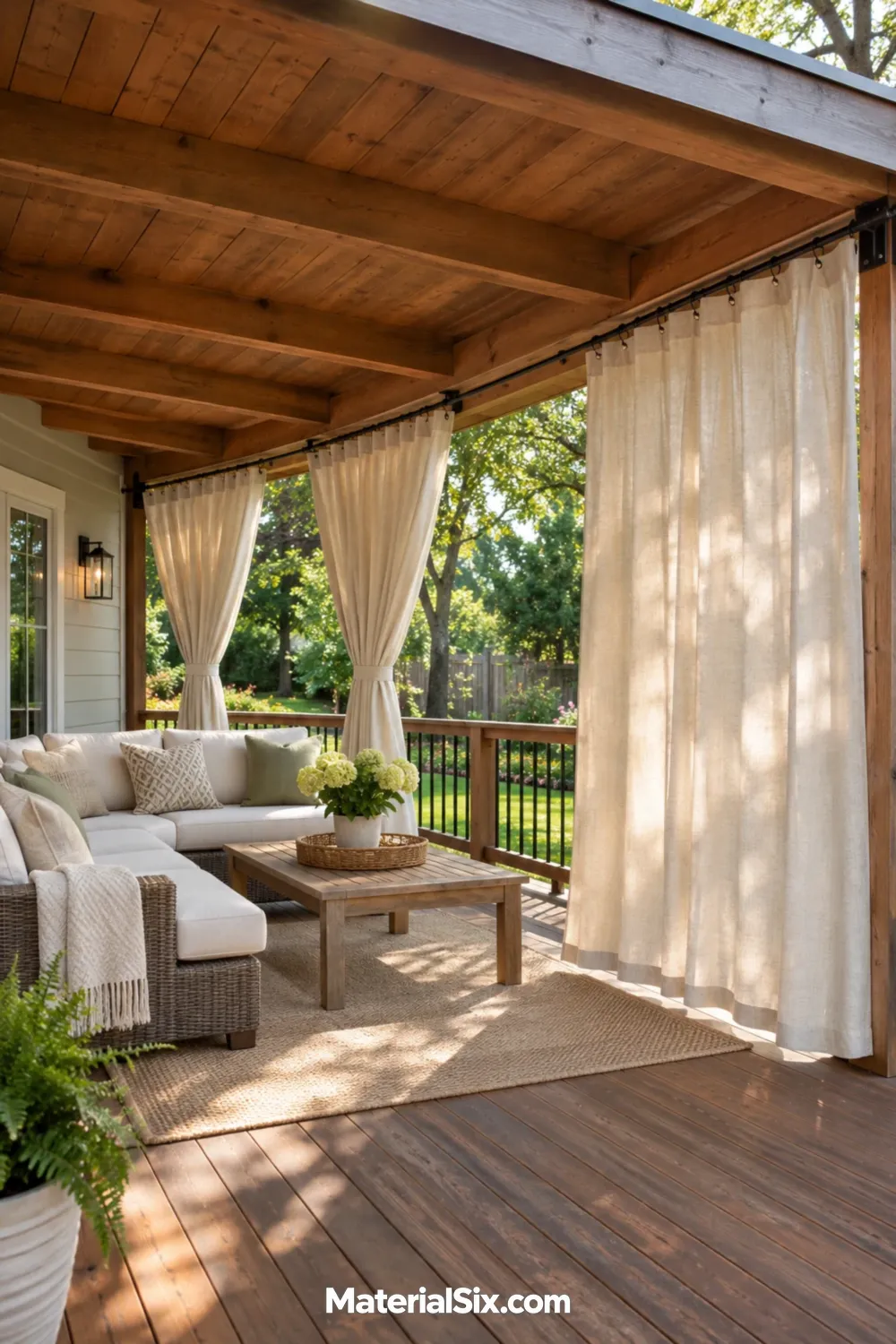
Outdoor curtains let you soften a covered deck and shade just the end of a sofa that gets too much light. Hang the rod beneath an outer beam so the fabric can run along the edge rather than cutting into the seating area.
Use tiebacks to park the panels clear of the steps and keep hems above the boards where they can dry. An oatmeal fabric coordinates with wood, wicker, and pale cushions. A deeper color gives the opening a more defined frame when the curtains are drawn.
15. Grow a Leafy Canopy Over a Pergola
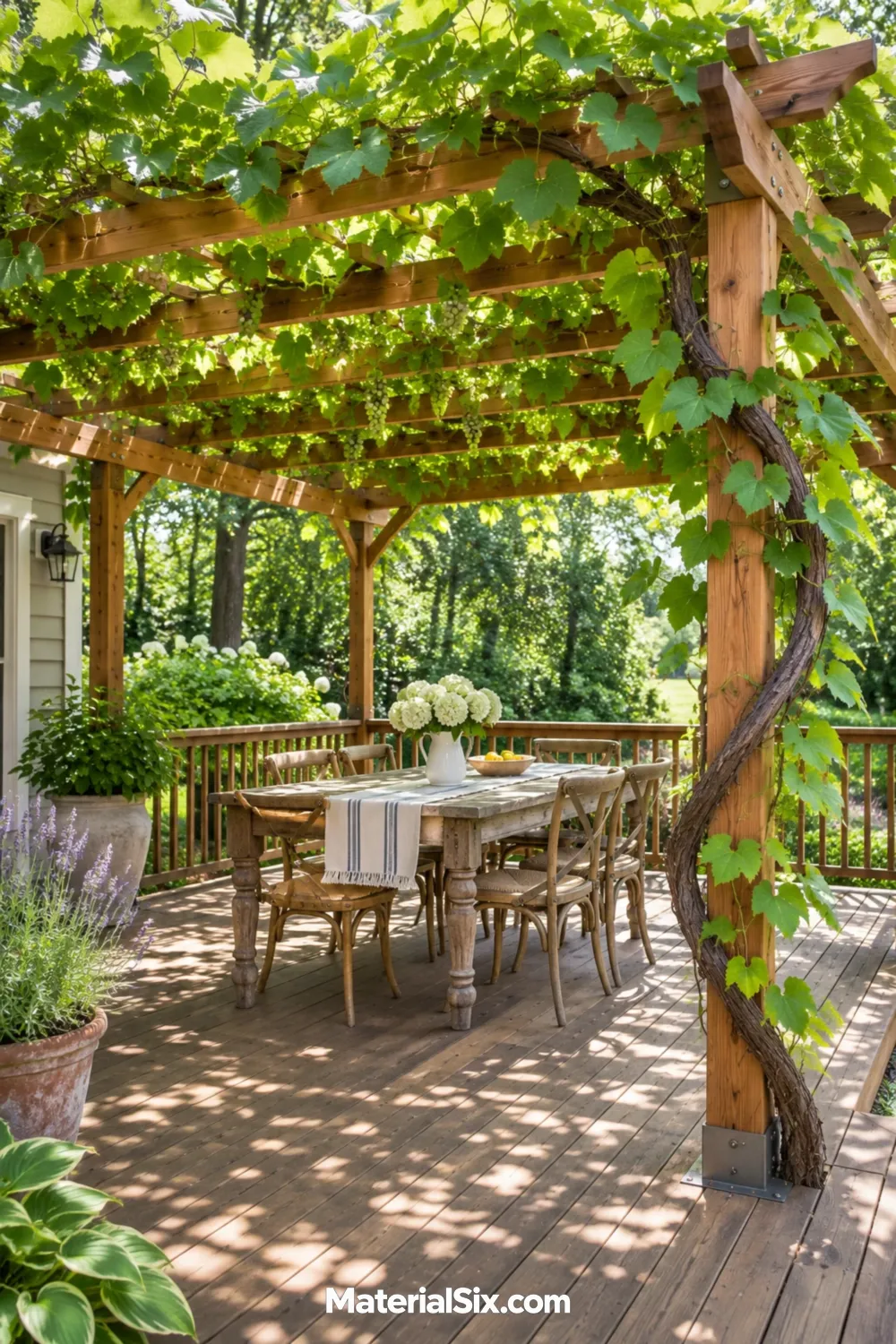
A climbing vine can bring dappled light to a timber pergola and make an outdoor dining area feel tucked into the garden. Train it from the planting bed beside a post so you keep the deck surface free for seating.
Choose a vine suited to your climate and a structure that can support its mature growth. Think about what falls onto the deck as well. A fruiting vine brings a different cleanup routine from a foliage plant, particularly if your main table sits directly below.
16. Set the Seating Under an Existing Shade Tree
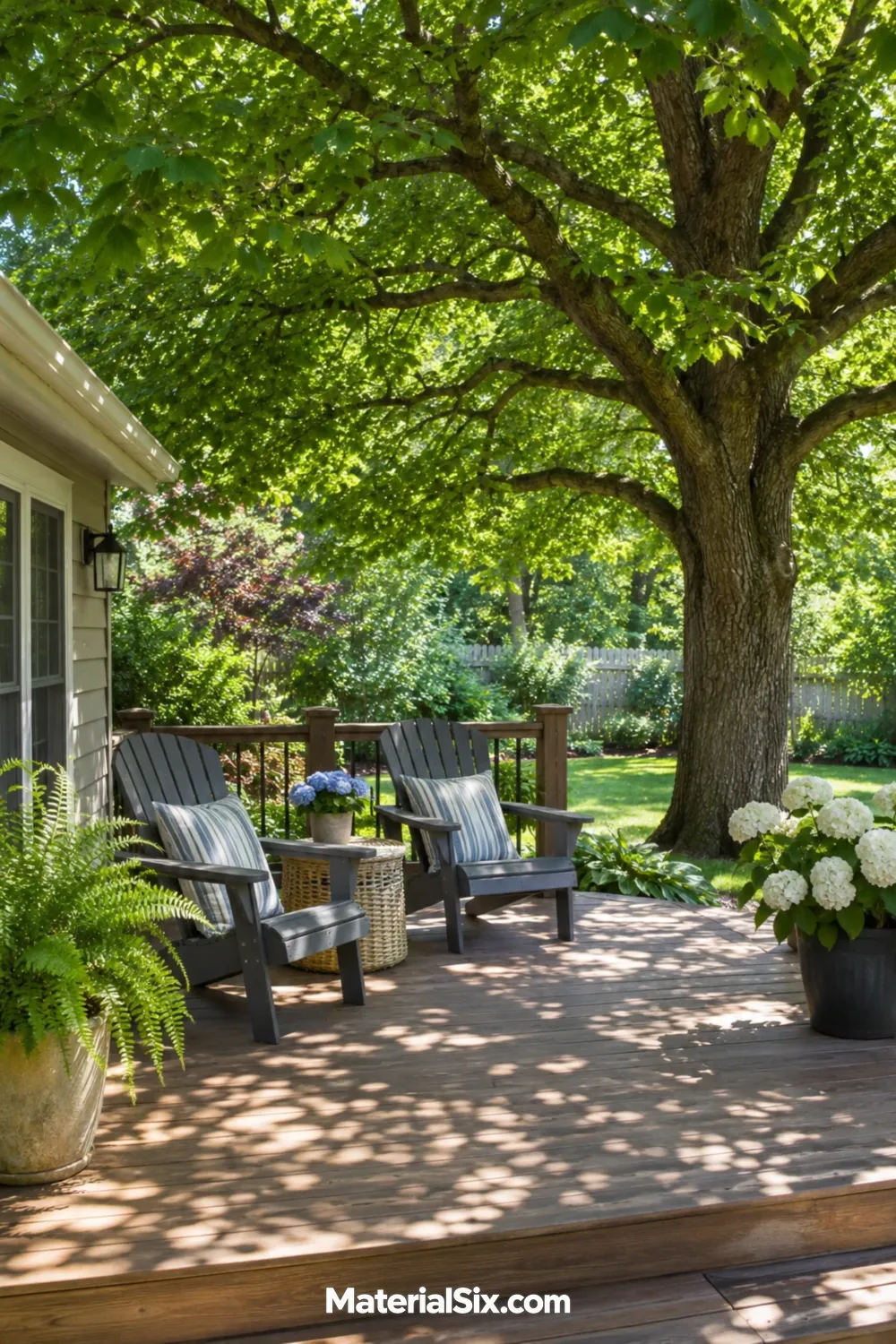
The best shade on a low deck sometimes comes from a mature tree just beyond the edge. Set a pair of chairs where the crown casts its afternoon shadow and leave space for the chairs to move as that shadow shifts with the season.
Spend a few minutes there at the hour you most often sit outside. A footprint that looks shady from the kitchen may have a bright gap right at eye level. If you’re planning new construction close to an existing tree, get an arborist’s advice before disturbing the root area.
Map the Shadow Before You Buy
Sit in the chair or spot you want to shade at breakfast, midday, and late afternoon. A photo from the same seat each time can help you spot whether sunlight comes from overhead, through the rail side, or across a corner. Repeat this when the deck normally gets its heaviest use.
| What you notice | What to compare |
|---|---|
| The tabletop heats up around lunch | Compare overhead options by their shadow at chair level. |
| Light reaches your eyes below an existing cover | Look at a side screen or movable curtain for that opening. |
| Shade lands in an area nobody sits | Try shifting the layout before adding another canopy. |
| A base or post would crowd the stairs | Mark it with painter’s tape and walk from the door to the steps. |
| You want to leave the cover up year-round | Discuss mounting, drainage, and seasonal conditions with an installer. |
For a permanent cover, take those notes and photos to the installer. The position of the shadow matters just as much as the footprint of the roof.
Make One Good Spot to Sit
Pick the seat you wish you could use on a bright afternoon and solve for that first. A shaded dining table or a comfortable corner can change how often you go outside while leaving the rest of the deck open for sun-loving plants and a view of the sky.