
A few plants can make a front porch feel welcoming, but adding more pots does not always make the arrangement look better. You might have healthy flowers, attractive containers, and a favorite fern, yet the whole space still feels scattered. Sometimes the plants are all the same height. Sometimes the pots look too small beside the front door. And sometimes the prettiest grouping lands exactly where everyone needs to walk.
Learning how to arrange plants on a front porch comes down to a handful of useful decisions: where plants can grow, which areas need to stay open, and how to combine different shapes into a clear composition. You do not need matching everything or a porch full of expensive planters.
This guide walks you through choosing workable locations, building height and depth, coordinating containers, and adjusting the finished layout. The goal is a planted entry that looks intentional from the sidewalk and still works comfortably every day.
Before You Start: Assess the Porch and Gather the Basics
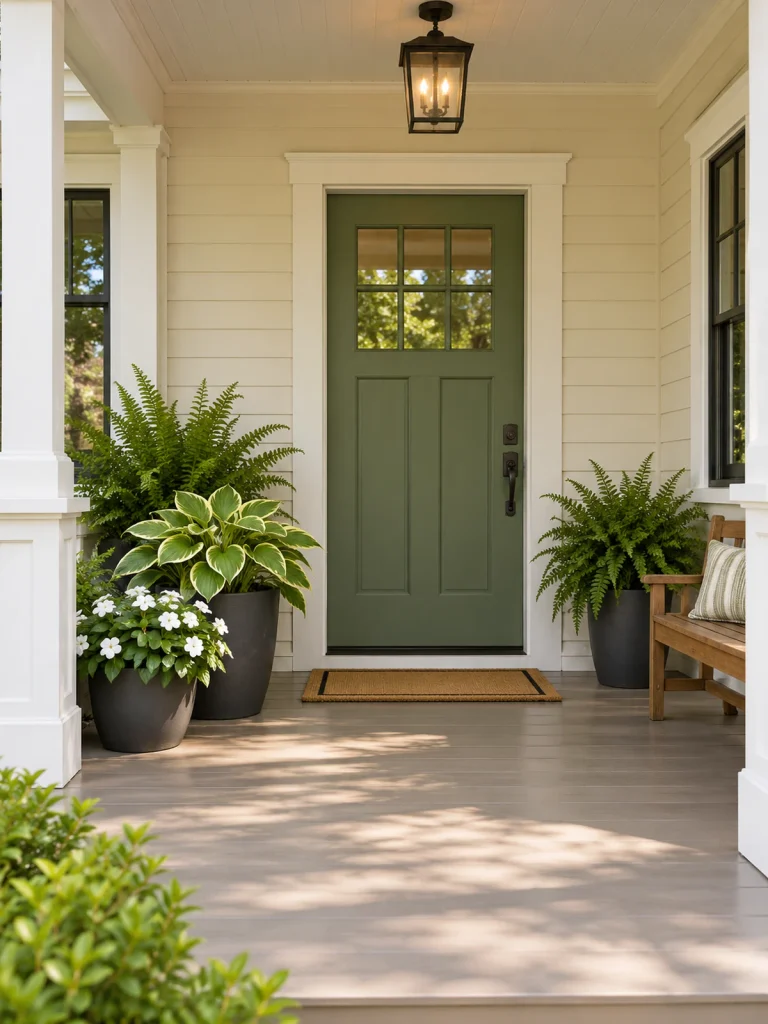
Take a photo from the sidewalk and another from the doorway. Note the door swing, walking route, seating, outlets, hose access, and any areas exposed to wind or roof runoff. Measure the usable planting areas rather than the entire porch.
Gather what you actually need:
- A tape measure and phone camera.
- Existing planters and plants, plus labels or care information.
- Containers with drainage and a potting mix appropriate for the plants, if repotting.
- A watering can, gloves, and a hand trowel, if planting.
Move empty containers into position before filling them. For an uncertain raised-porch load capacity or a proposed heavy installation, consult a qualified building professional. Check individual plant toxicity if children or pets may chew foliage.
1. Read the Light Before Choosing Your Plants
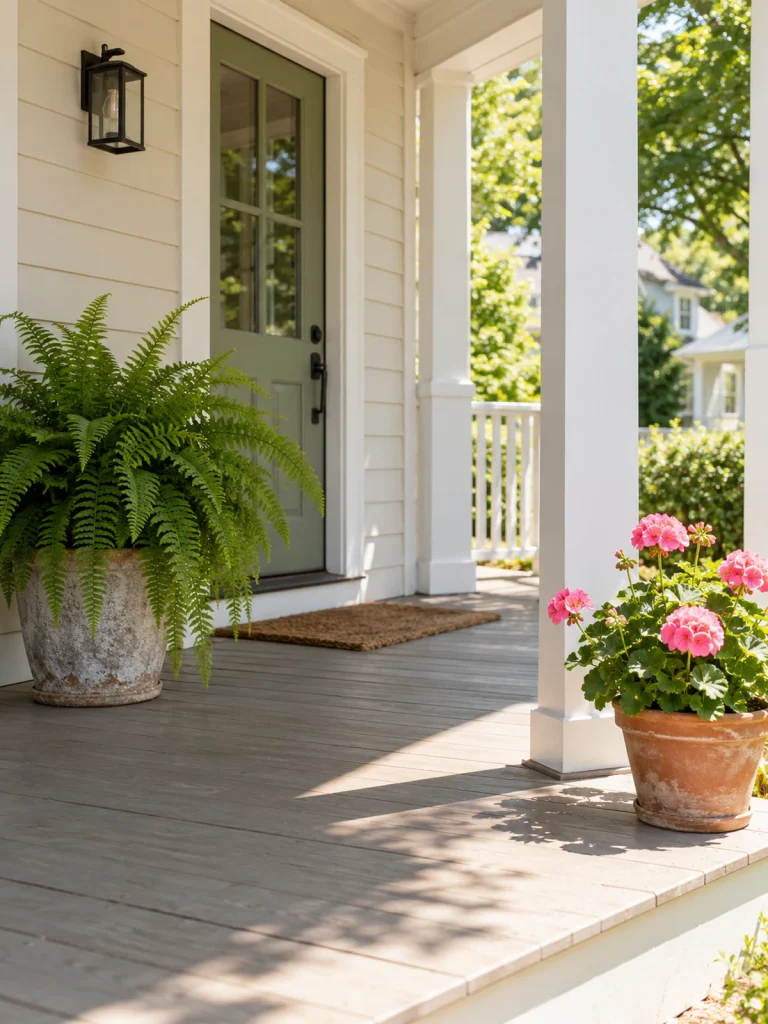
Observe where direct sunlight lands in the morning, around midday, and later in the afternoon. A roofed porch can have a sunny outer edge and a much darker wall only a few feet away. Record the approximate duration of direct sun in each planting spot, then compare it with the specific plant label. Repeat the assessment as seasonal shadows change.
Choose for those conditions before choosing for flower color. A sun-loving plant tucked behind a deep roof will not become a shade plant because its container looks good there. Likewise, tender shade foliage may struggle at an exposed, hot edge.
Keep the first selection small. Pick plants suited to your local season, light, and care routine, and give plants sharing a container compatible growing requirements. That makes the eventual arrangement easier to maintain. Fulton From the Ground Up
2. Reserve the Walking Route and Door Clearance
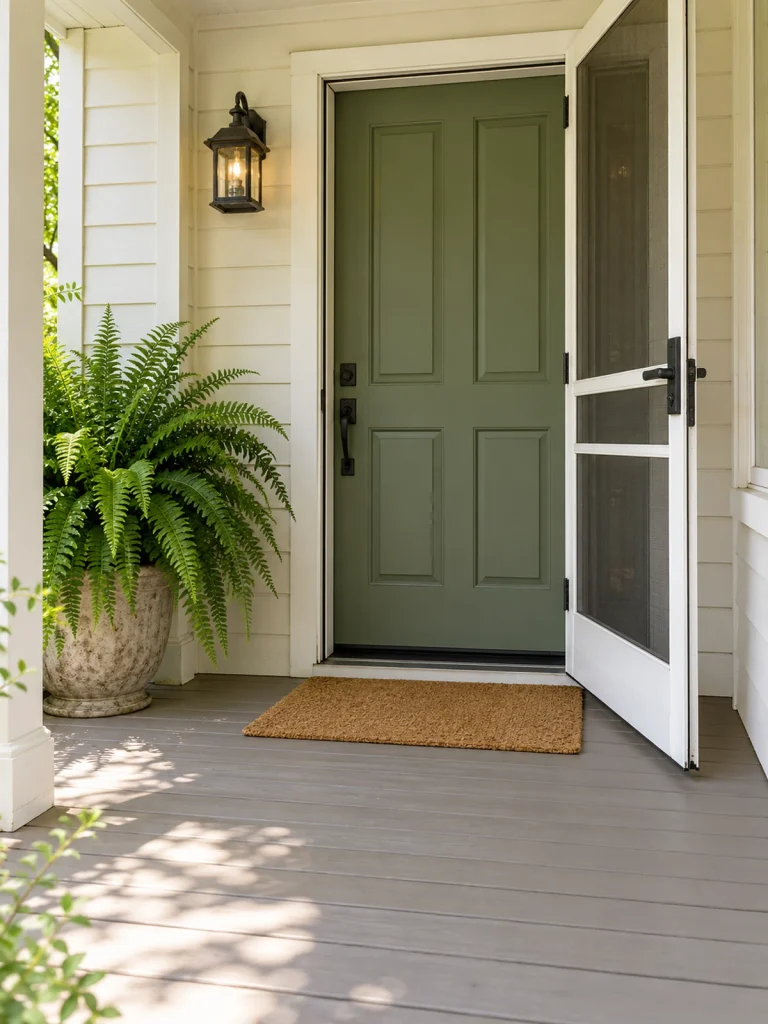
Decide which floor space belongs to people before deciding where the pots belong. Open the entry door and screen door fully, then walk through carrying a bag or basket. Check the approach from the sidewalk, access to the mailbox, and the space needed to sit down or move a chair.
Place planters outside these movement areas, allowing room for mature foliage rather than just the pot itself. A fern’s fronds can reach much farther than its container. Keep stair treads, landings, handrails, and required access clear; use local requirements where applicable rather than treating a decorative layout as clearance guidance.
On a narrow porch, one substantial planter in a usable corner can look more deliberate than several small pots along the route. Mark its footprint temporarily before buying anything.
3. Choose Containers That Fit the Plants and the Porch
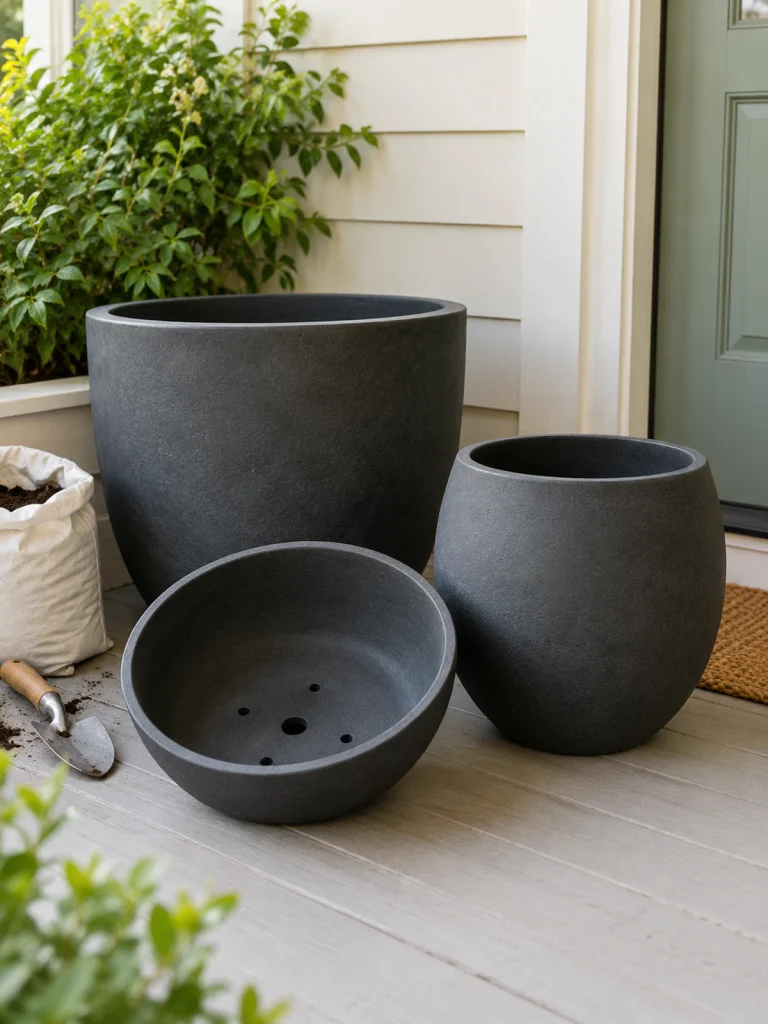
Look at the front door, posts, and nearby furniture when judging planter scale. A tiny pot may disappear beside a broad doorway, while an oversized vessel can overwhelm a shallow entry. Try empty containers in position and photograph them from the approach before committing.
Choose sufficient root space for the plants’ expected growth, using plant-specific guidance rather than appearance alone. Coordinate containers through one repeated feature, such as a charcoal finish, warm terracotta, or a simple rounded shape. They can vary in size without looking unrelated.
Check drainage before planting and use suitable container potting mix. Do not add a gravel layer as a drainage fix; it does not improve drainage. If using a decorative outer pot, make sure the inner planting pot can drain and that collected water can be removed. University of Maryland Extension
4. Position One Strong Anchor Plant
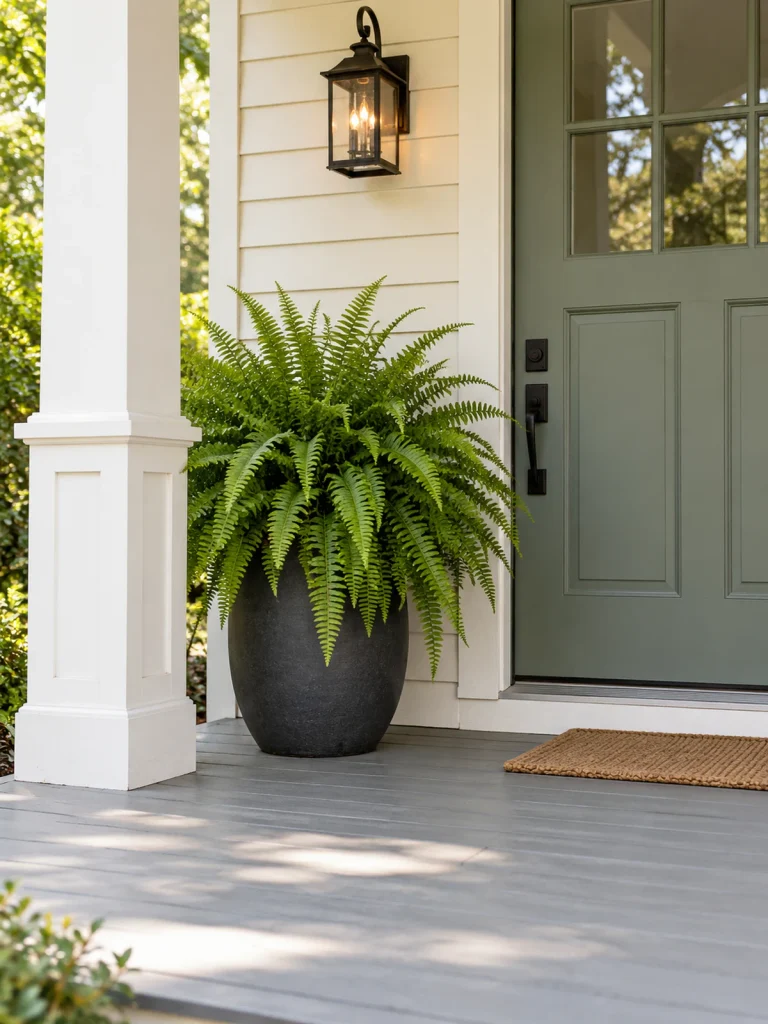
Set the most visually substantial plant first. This anchor gives the arrangement a clear starting point, whether it is an upright foliage plant, a full fern, or a shrub suitable for your container and climate. Place it beside a post, near an unused corner, or to one side of the entrance where its shape relates to the architecture.
Judge the plant and container together. A tall, narrow plant and a broad, arching plant can have very different visual weight even when they reach the same height. Leave foliage clear of lights, door hardware, and the walking route.
Keep the anchor in its intended light conditions. Avoid forcing it into a darker corner simply to fill a gap. Once this first piece feels settled, the smaller plants have something to relate to.
5. Build Layers With Tall, Medium, and Low Shapes
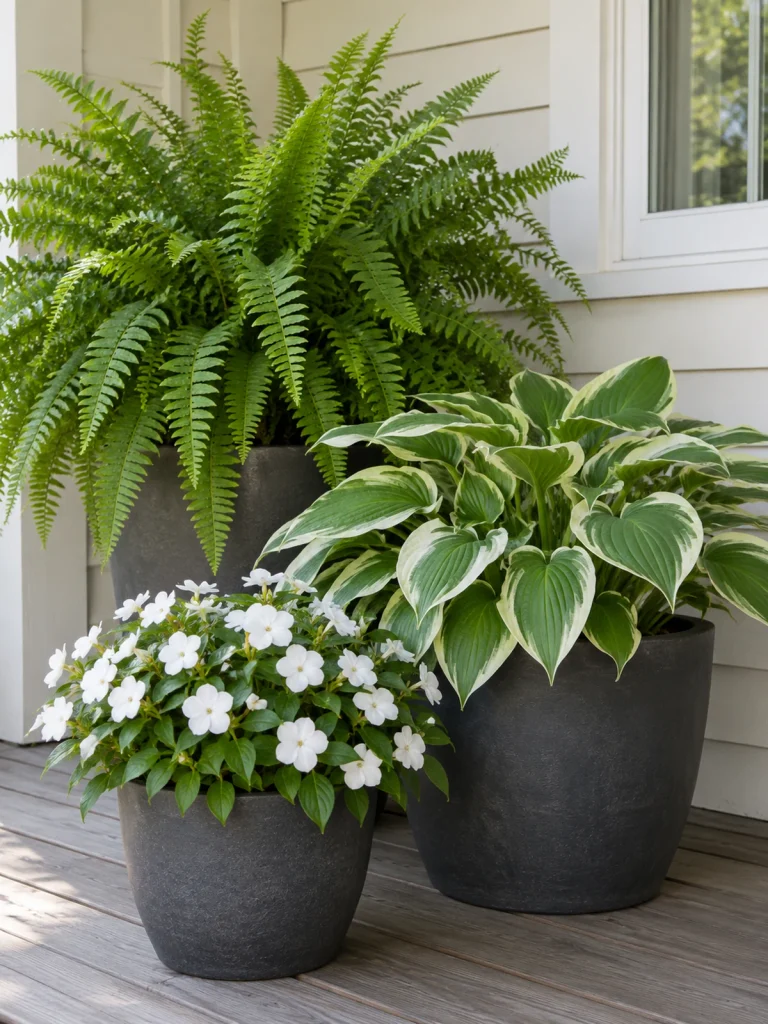
Arrange supporting plants so your eye moves through different heights. In a group viewed mainly from the front, place the tallest form toward the back, a medium plant slightly forward and to one side, and a lower plant near the front. Offset the pots so the arrangement has depth instead of forming a straight line.
Use foliage shape as well as height: airy fern fronds, broad leaves, and a low flowering mound can create distinct layers. Keep enough of each plant visible that the grouping remains readable as it grows.
You can also use this principle within one mixed planter: an upright feature, a fuller middle, and a trailing edge. It is an optional design tool, not a requirement. Separate pots make it easier to accommodate different care needs and adjust spacing. Fulton From the Ground Up
6. Group the Pots and Balance the Whole Entry
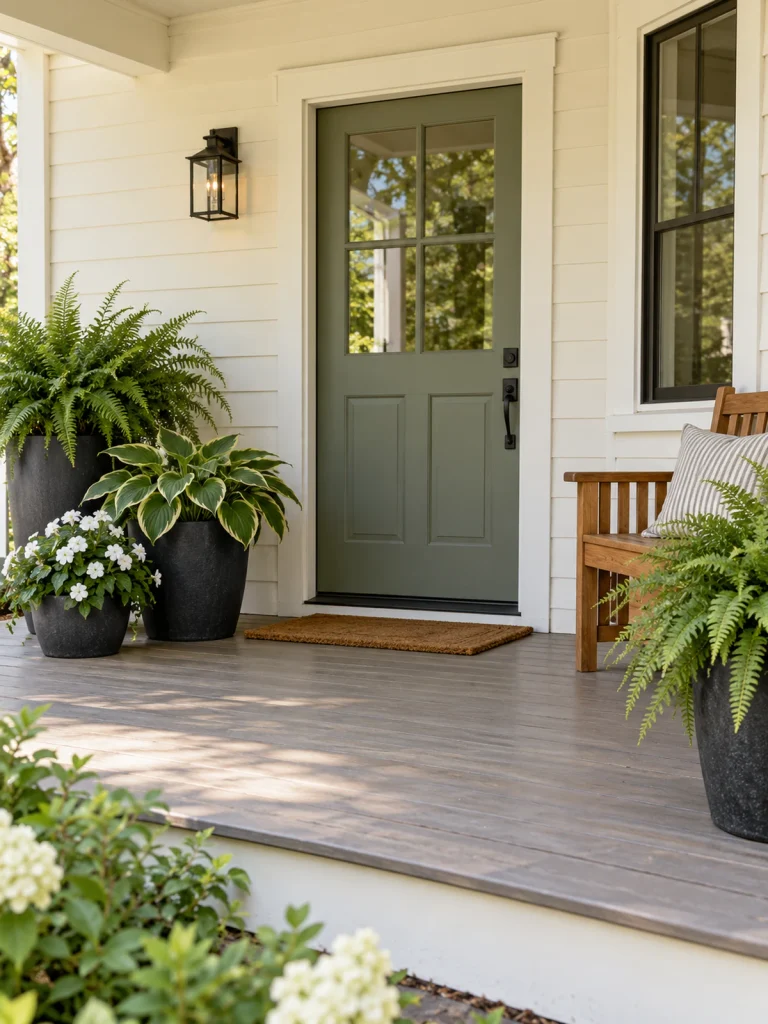
A small cluster often feels more connected than individual pots spaced evenly around the porch. Bring containers close enough to read as a group while leaving access for watering and air movement. A trio is a useful starting point when space allows, but two well-chosen plants can work just as well.
Then step back and assess both sides of the door. Balance does not require identical plants. A substantial grouping on one side may be balanced by a smaller planting beside a bench on the other. Furniture, a dark door, and solid posts also contribute visual weight.
For a formal entry, try a matching pair instead. Use the same container style and similar plant volume, but allow for different growth if the two positions receive different light. Do not add a pot merely to meet a number.
7. Repeat a Small Palette and Contrast the Foliage
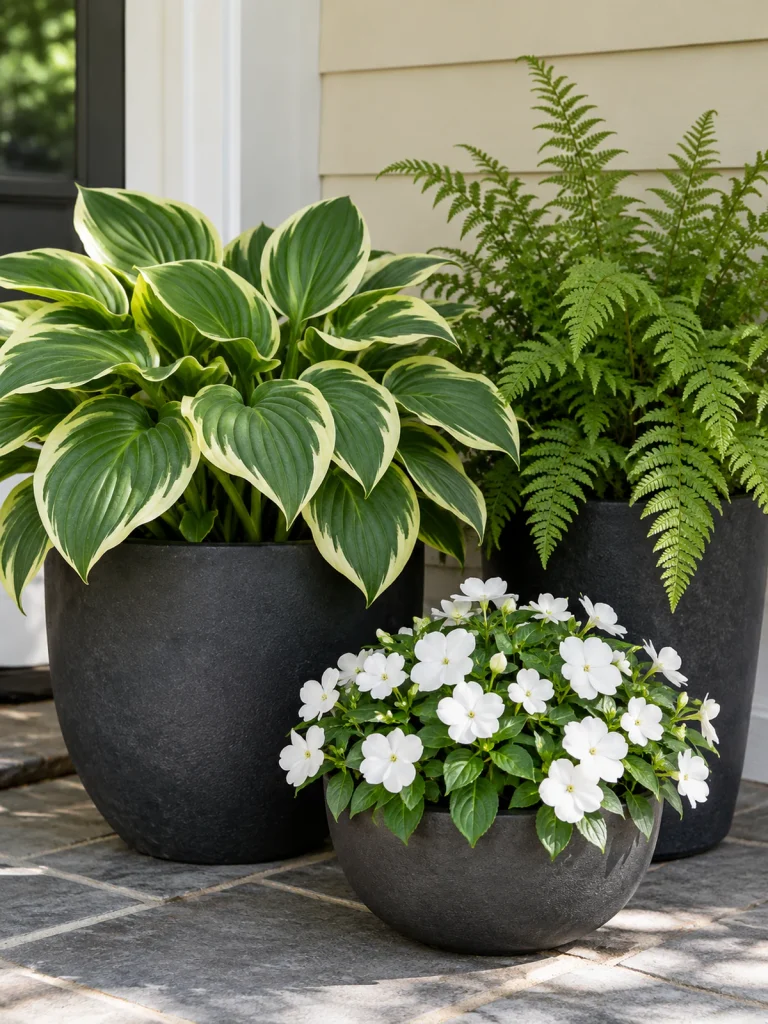
Choose a limited set of colors that relates to the house. Green foliage with white flowers and charcoal containers creates a quiet combination; terracotta with warm flower colors creates a different mood. Repeating one color across separated pots helps the porch read as one composition.
Keep some variation within that repetition. Broad leaves beside fine fronds create contrast without requiring more flower colors. Rounded foliage can soften the straight lines of a doorframe, while an upright plant can echo a porch post.
Check the arrangement against the actual siding and door, rather than judging plants only at the garden center. If every pot, flower, and leaf competes for attention, remove one accent. A restrained palette gives the shapes room to do the visual work and makes seasonal replacements easier to choose.
8. Refine the Spacing From the Views You Use
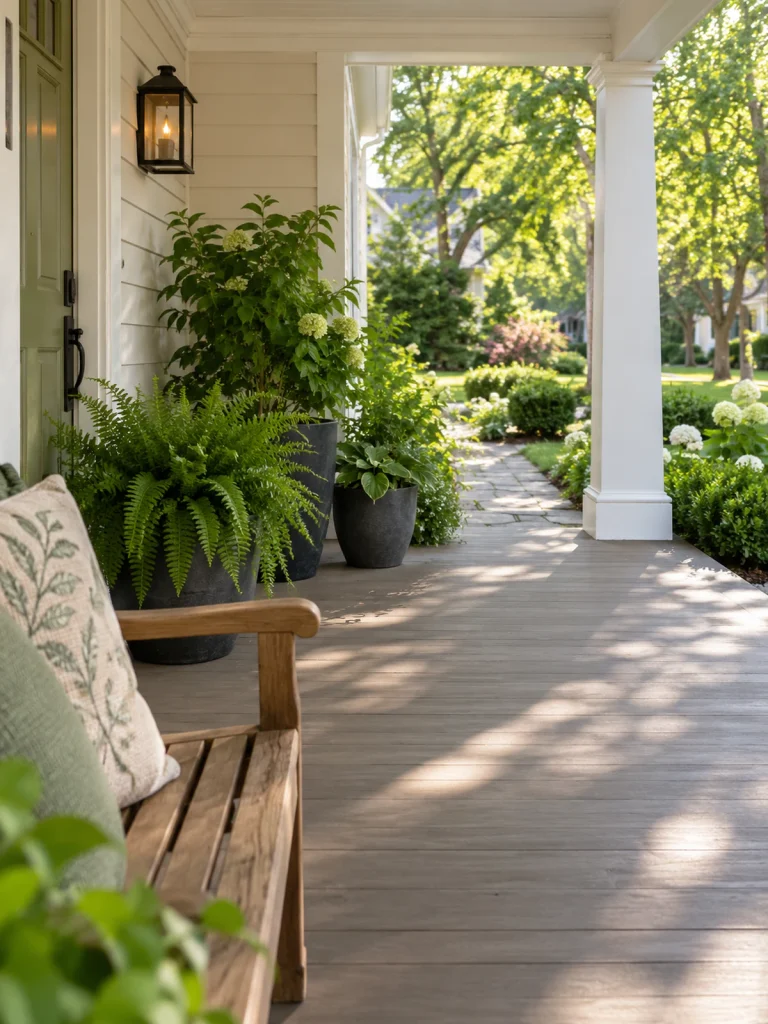
Review the arrangement from the sidewalk, the doorway, and any seating. Plants that look separated in a close-up can merge into one dense mass from farther away. Shift a supporting pot slightly forward or sideways to reveal its shape, keeping it outside the walking route.
Look for open space around the grouping. Visible floor, an unobstructed door, and a clear view past a chair help planted areas feel intentional. Leave room between foliage and siding so you can inspect the wall and tend the plants.
Take another phone photo and compare the visual weight on each side. Before buying an extra plant, try removing or relocating one. A simpler arrangement may read more clearly. This is also the moment to check that chairs still move comfortably and nothing catches clothing as people pass.
9. Water, Check Drainage, and Adjust as Plants Grow
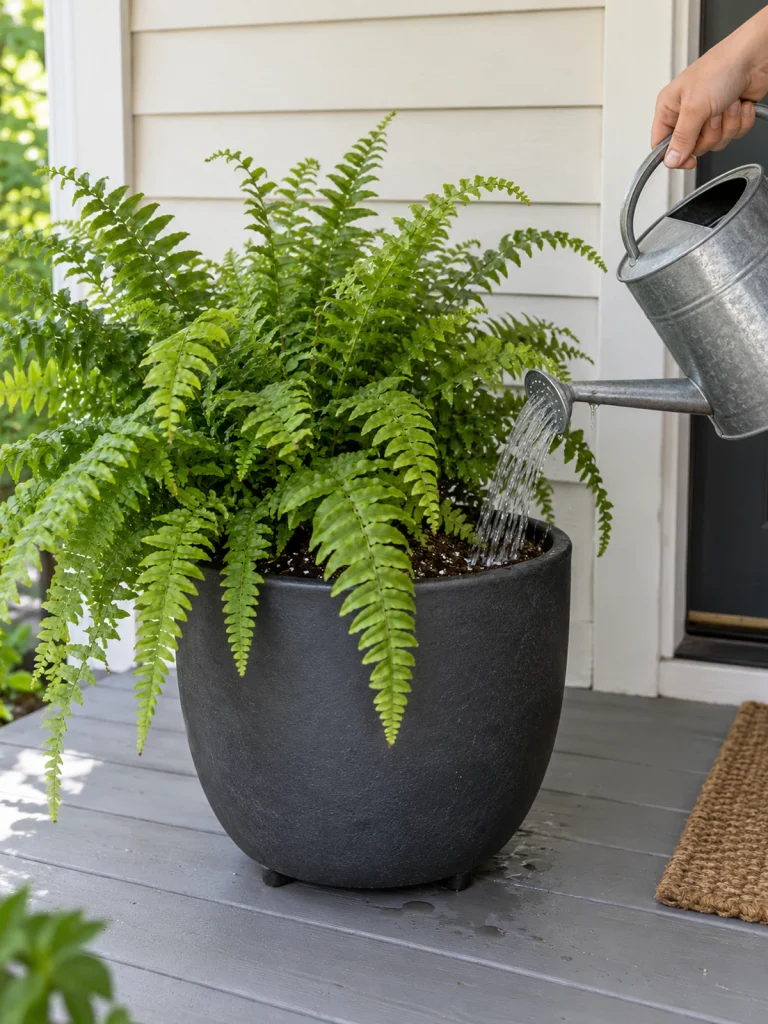
After planting, water according to each plant’s needs and check where the runoff goes. Keep drainage away from the doorway and address slippery surfaces promptly. Use stable pot feet where appropriate for the container and surface, and follow flooring guidance to reduce trapped moisture or staining.
Check potting-mix moisture regularly rather than watering every pot on the same schedule. Covered containers may miss rainfall, while exposed ones can dry more quickly in sun and wind. University of Maryland Extension Empty standing water from saucers or outer pots, and follow plant and fertilizer labels. UMN Extension
As foliage expands, reassess the walking route and separate crowded pots. Remove spent flowers or damaged leaves as appropriate. Plan for seasonal changes, including frost protection or indoor storage for tender plants, instead of assuming every porch plant can remain outdoors year-round.
Adapt the Method to Your Porch
A Small, Shaded Entry
Use one full fern or another shade-suited plant beside the door where clearance allows. Add a lower companion only if there is genuine floor space. A consistent container finish and contrasting leaf shapes can provide enough interest without a large collection.
A Wide Porch With Uneven Light
Treat the shaded wall and sunny outer edge as separate growing zones. Repeat container finishes or flower colors to connect them, while choosing different plants for each exposure. The plants do not need to be identical for the porch to feel coordinated.
A Renter-Friendly Arrangement on a Budget
Reposition existing pots before buying more. Keep plants in separate, appropriately sized containers so individual pieces can move when needed. Avoid wall-mounted or hanging additions unless permitted and properly supported. Spend first on suitable plants and functional containers, then add decorative pieces gradually.
Common Front Porch Plant Arrangement Mistakes
- Shopping by appearance alone: A plant that needs different light may decline in its chosen spot. Check the exposure and plant label first.
- Lining up many similar pots: Equal heights and spacing can flatten the composition. Build one clear group with varied forms, or use a deliberate matching pair.
- Ignoring mature size: A compact nursery plant can expand into a doorway. Allow growing room and reassess during the season.
- Mixing incompatible plants in one pot: Different moisture or light needs make care harder. Choose compatible companions or keep them in separate containers.
- Filling every empty corner: Too many groups can compete with the entrance. Preserve open floor and a clear focal point.
- Leaving water trapped in decorative pots: The outer container can hold drainage against the roots. Check and empty it after watering.
Frequently Asked Questions
How many plants should I put on a front porch?
Use as many as fit the growing conditions and leave comfortable access. One large planter, a matching pair, or a small group of three are all workable starting points. There is no required count.
Should I put matching plants on both sides of the door?
Matching plants suit a formal entry when both spots provide suitable conditions. If one side is shaded and the other sunny, repeat the containers and approximate plant volume while choosing plants suited to each location.
How do I make a small porch look lush without crowding it?
Choose a full plant with a clear silhouette and use foliage contrast instead of many pots. Keep the planting in one usable area. Avoid narrow, unstable stands or hanging additions that interfere with headroom or access.
Can I leave porch plants in their nursery pots?
Temporarily, yes, if the nursery pot has enough root space and drains freely. Check moisture often and repot when the plant needs it. Inside a decorative outer pot, keep the drainage holes out of standing water.
Which plants work best on a covered front porch?
That depends on the actual light, temperature, and local growing season. Ferns, hostas, and shade-tolerant flowering plants are possible options for suitable shaded spots; a bright outer edge may support sun-loving choices. Check the specific variety’s requirements and plan for winter.
Bring the Arrangement Together
A well-arranged porch combines plants that can grow in their locations with a clear visual structure: one anchor, supporting layers, repeated details, and enough open space to use the entrance comfortably. The layout can be formal or relaxed, sparse or leafy, as long as those decisions work together.
Begin by watching the light and clearing the walking route. Then place one anchor container and build around it slowly. A few thoughtful adjustments usually help more than another cart full of plants.