
You can picture the porch you want: a rich front door, a comfortable place to sit, and plants that look like they belong together. Then you start adding up furniture, oversized pots, and outdoor accessories, and a small refresh begins to feel like a renovation. Fortunately, a polished entry doesn’t require replacing everything at once.
The most useful front porch ideas on a budget work with what is already there. A consistent color, a better furniture arrangement, or one well-chosen piece can make ordinary materials feel more intentional. The goal is a welcoming space with enough texture and contrast to feel finished, while leaving room to open the door and move comfortably.
These 20 ideas focus on affordable front porch decor, manageable updates, and secondhand possibilities. Choose the ones that suit your porch’s exposure and dimensions, then build gradually. A few coordinated changes usually make a clearer statement than a porch crowded with small purchases.
1. Paint the Front Door a Rich, Grounded Color
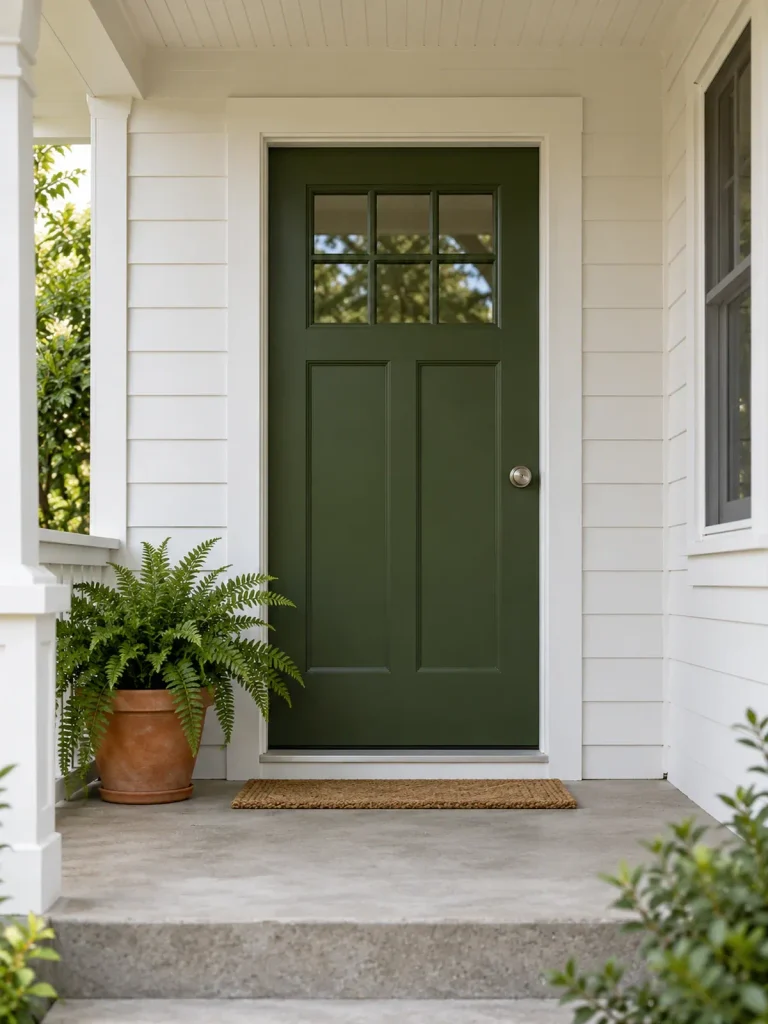
A deep olive, muted navy, or warm charcoal door gives a simple entry a clear focal point. Against existing siding and trim, that concentrated color can make the surrounding porch feel more considered without changing its architecture. Start with samples viewed outside in both sun and shade; a color that looks subtle indoors may read very differently at the entrance.
Keep the budget focused on preparation and a coating suited to the door’s material and exposure. Follow the door manufacturer’s finish guidance, especially for heat-sensitive doors. Clean trim and a plain mat help the new color stand out without requiring additional decorations.
2. Give Mismatched Planters One Cohesive Finish
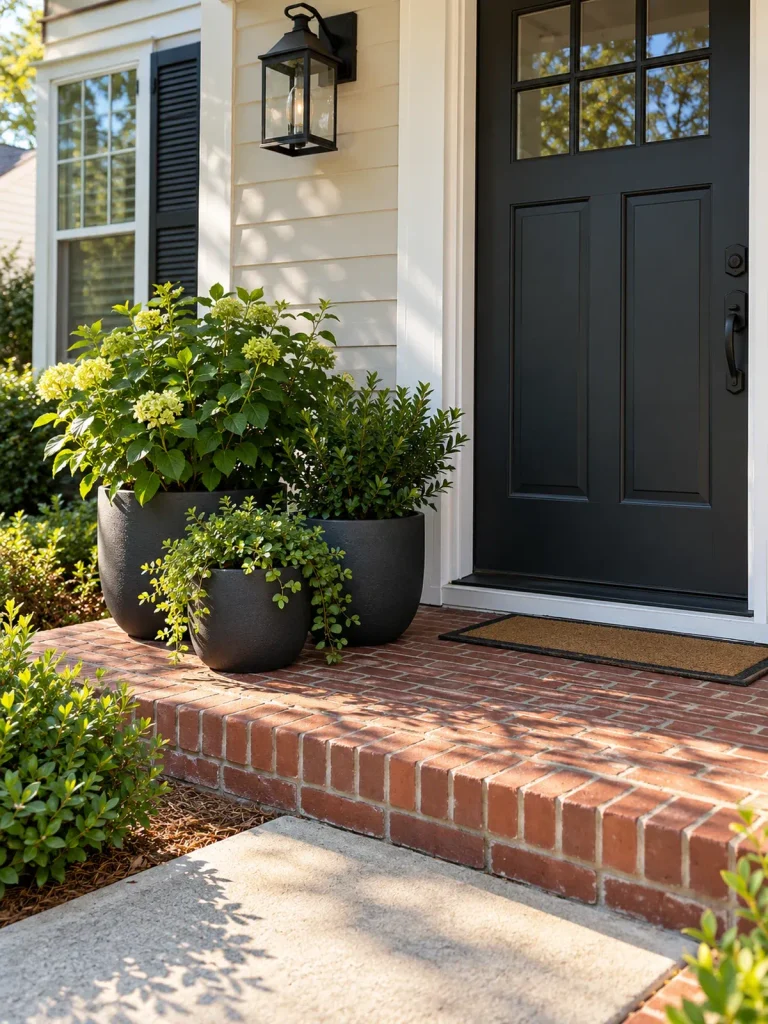
An assortment of pots can look collected rather than random when they share a finish. Matte charcoal, warm white, or a subdued clay tone lets different shapes sit together comfortably. Group the containers beside a wall, with the tallest at the back, so they create one readable arrangement instead of several scattered accents.
Reuse sound pots before buying new ones, and choose a coating labeled for their material and outdoor conditions. Leave drainage openings clear and avoid painting interior surfaces that contact soil unless the product specifically allows it. The coordinated exterior is the decorative upgrade; healthy plants still need suitable drainage and light.
3. Layer a Plain Doormat Over a Subtle Outdoor Rug
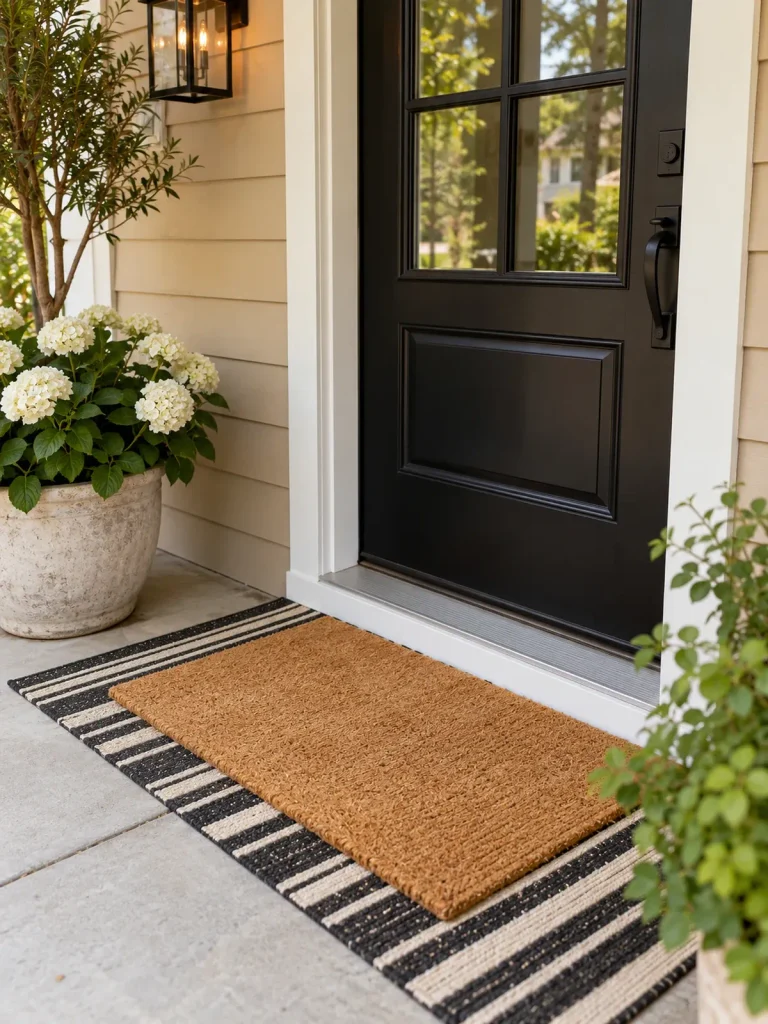
A plain coir mat over a restrained striped outdoor rug gives a small doorstep an extra layer of texture. The larger rug acts like a quiet border, making an ordinary mat feel more deliberate. Black and ivory work with many door colors, while a muted tan stripe creates a softer effect against brick or painted concrete.
Measure the actual landing before shopping. Both layers should lie flat, stay clear of the door swing, and leave no curled edges near a step. Choose outdoor-rated materials and lift the rugs periodically to clean and dry underneath. Skip the layering if a low threshold or tight landing makes it awkward.
4. Use Symmetry to Make a Simple Entry Feel Formal
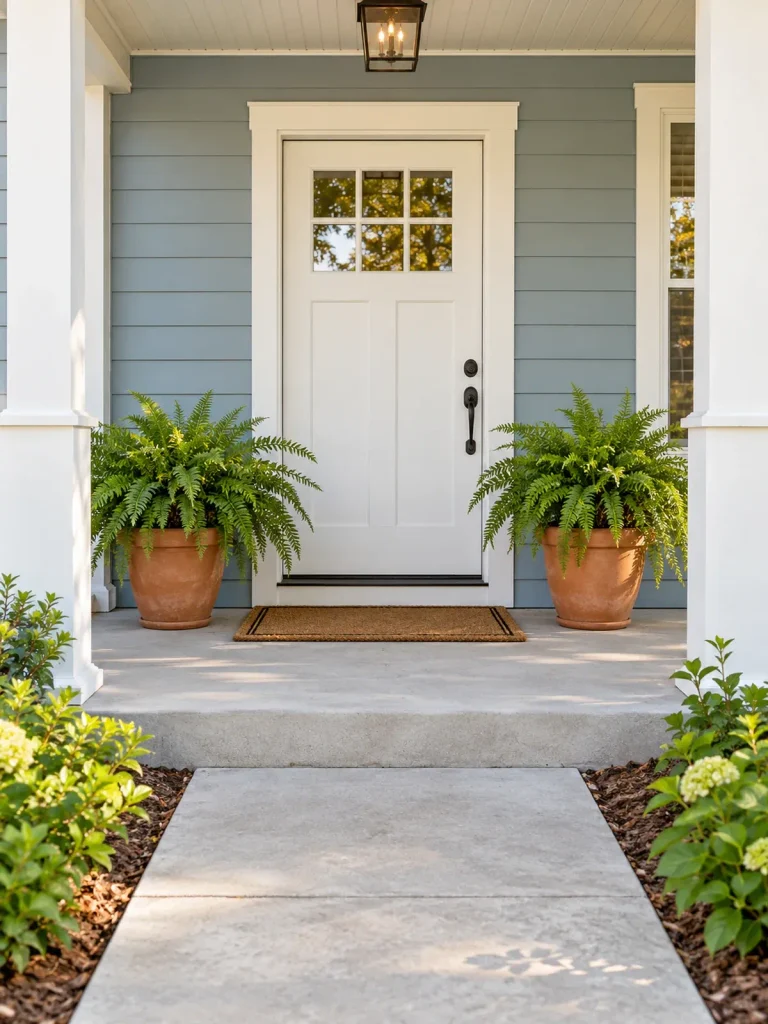
Two matching pots placed on either side of the door bring order to an otherwise plain porch. The containers don’t need elaborate detailing; equal scale and similar plant fullness do much of the visual work. Terracotta pots with leafy ferns can look especially composed against simple white trim or pale siding.
Use a pair you already own, or look for basic containers in a size that suits the doorway. Check the door swing and walking route before deciding where they belong. A narrow stoop may only accommodate smaller pots, and an off-center door doesn’t need forced symmetry if one side would obstruct the entrance.
5. Refresh a Secondhand Bench With a Single Paint Color
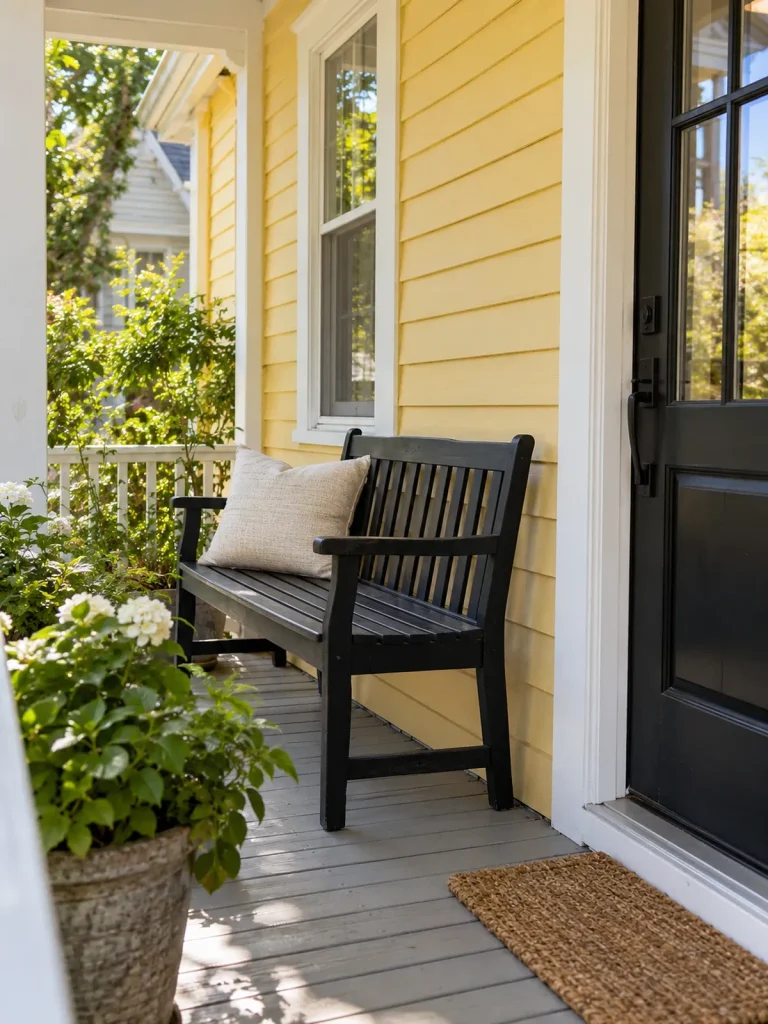
A compact wooden bench can give a narrow porch the presence of a furnished room without the cost or footprint of a seating set. Muted black makes a simple slatted shape feel crisp, while a soft neutral cushion keeps the result comfortable. Look for straightforward proportions rather than decorative details that compete with the house.
Before buying secondhand, inspect joints, legs, and wood condition. A low purchase price loses its appeal when repairs exceed your budget or ability. Use an exterior coating suitable for the material, and place the bench along a wall where seated knees won’t block the route to the door.
6. Make a Small Seating Area Feel Finished With a Rug
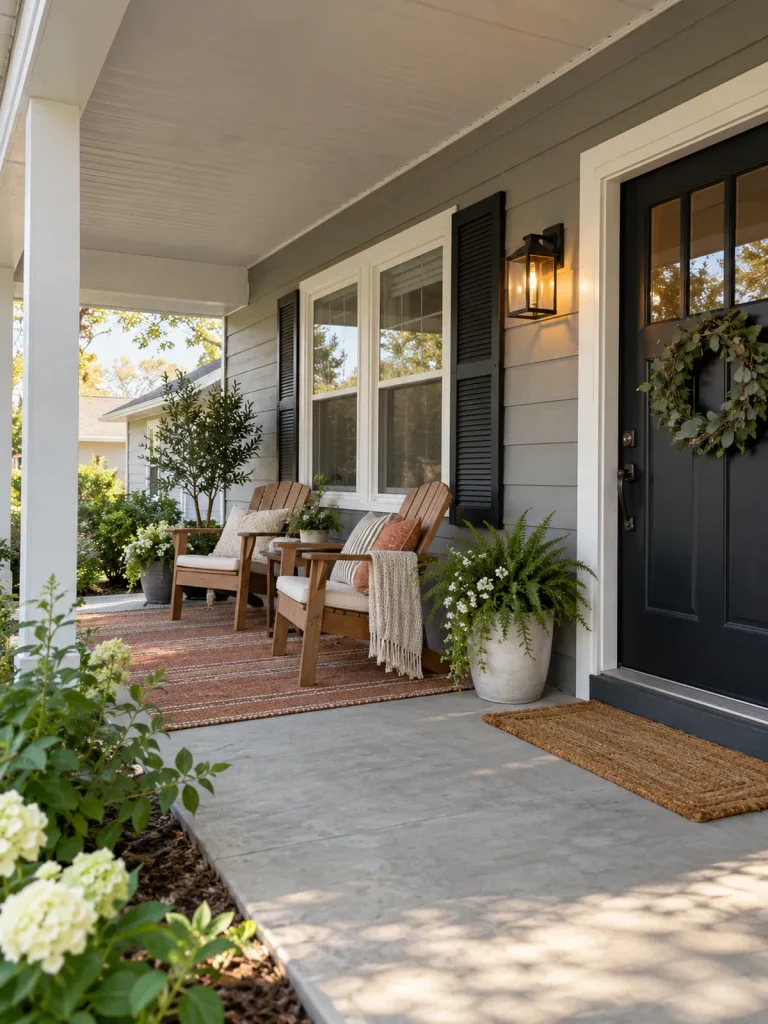
An outdoor rug can connect two existing chairs that otherwise seem to float on a large porch floor. A faded rust, sand, or subdued geometric pattern creates a defined seating area without adding more furniture. Choose the rug around the chairs’ arrangement, with enough coverage to make the pieces read as a group.
Measure before buying, including the space needed to sit down and stand up. Keep the rug outside the main door path, and use only a backing or pad suitable for the floor beneath it. Outdoor rugs still need cleaning and drying; on a persistently damp porch, an uncovered floor may be easier to maintain.
7. Bring Older Chairs Together With Coordinated Cushions
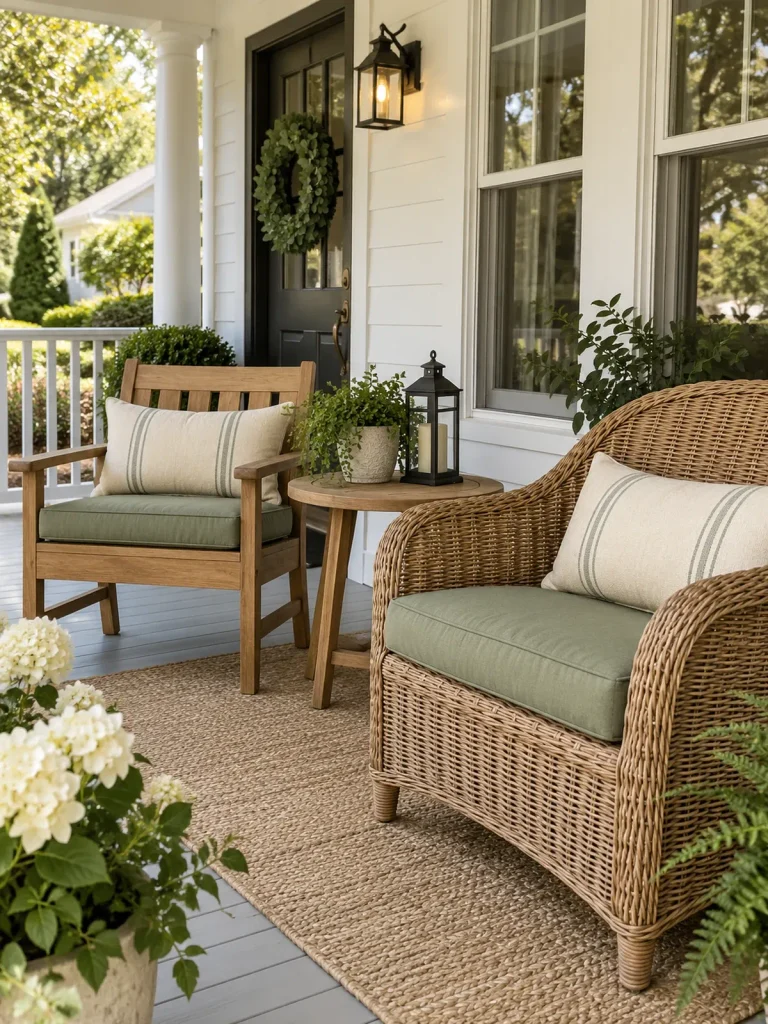
Different chairs can share a porch comfortably when their cushions repeat a small color palette. A wicker chair and a wooden armchair, for example, feel more connected with sage seat pads and simple ivory lumbar cushions. Matching textiles provide continuity while the different furniture shapes keep the arrangement relaxed.
Replace covers rather than whole inserts when the existing cushions are clean, supportive, and compatible with the new covers. Check dimensions carefully, including cushion thickness and fastening options. Choose fabric intended for outdoor use, and store cushions when prolonged wet weather is expected. Limit the mix to a few colors so the seating feels coordinated without needing a matching set.
8. Turn a Sturdy Garden Stool Into a Side Table
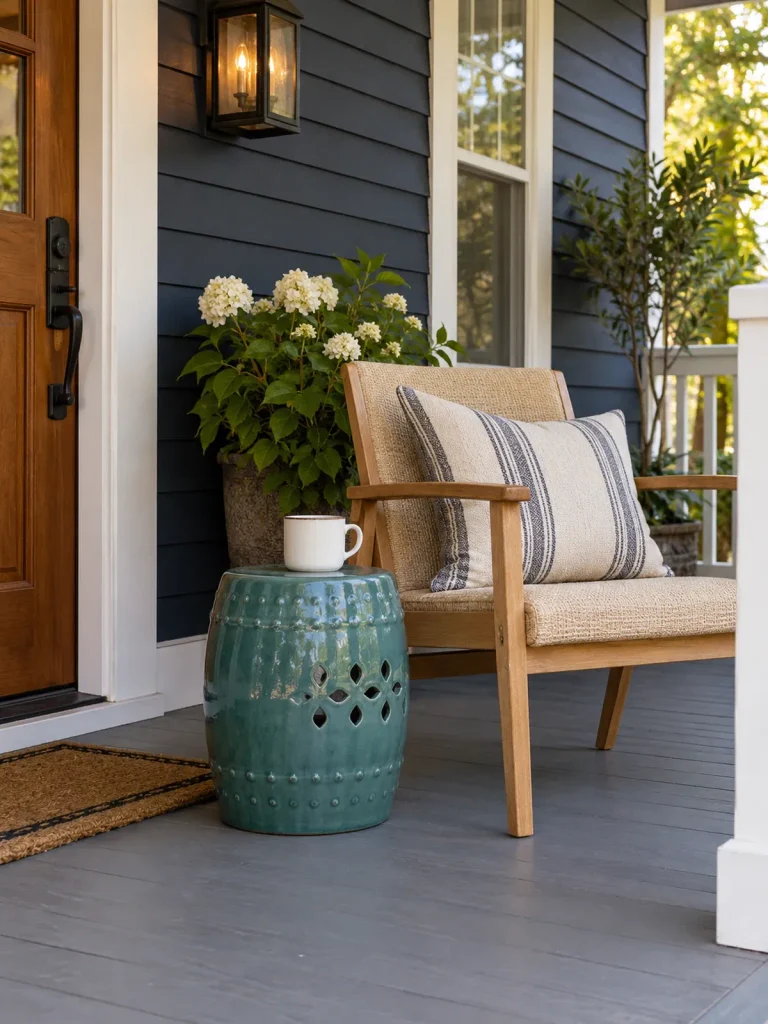
A ceramic garden stool beside a chair introduces color, shine, and a useful landing spot in one compact piece. A teal or earthy glazed finish can provide the decorative accent that a plain seating corner needs. Buying a single accent often makes more sense than replacing a functional chair just to change the look.
Choose a stool with a stable base and a sufficiently flat top for its intended use. A rounded or perforated surface may be unsuitable for drinks. Check its outdoor rating, weight, and cold-weather care instructions, and don’t assume it is seating unless the manufacturer says so. Secondhand options are worth checking for cracks before purchase.
9. Hang a Simple Green Wreath With Plenty of Breathing Room
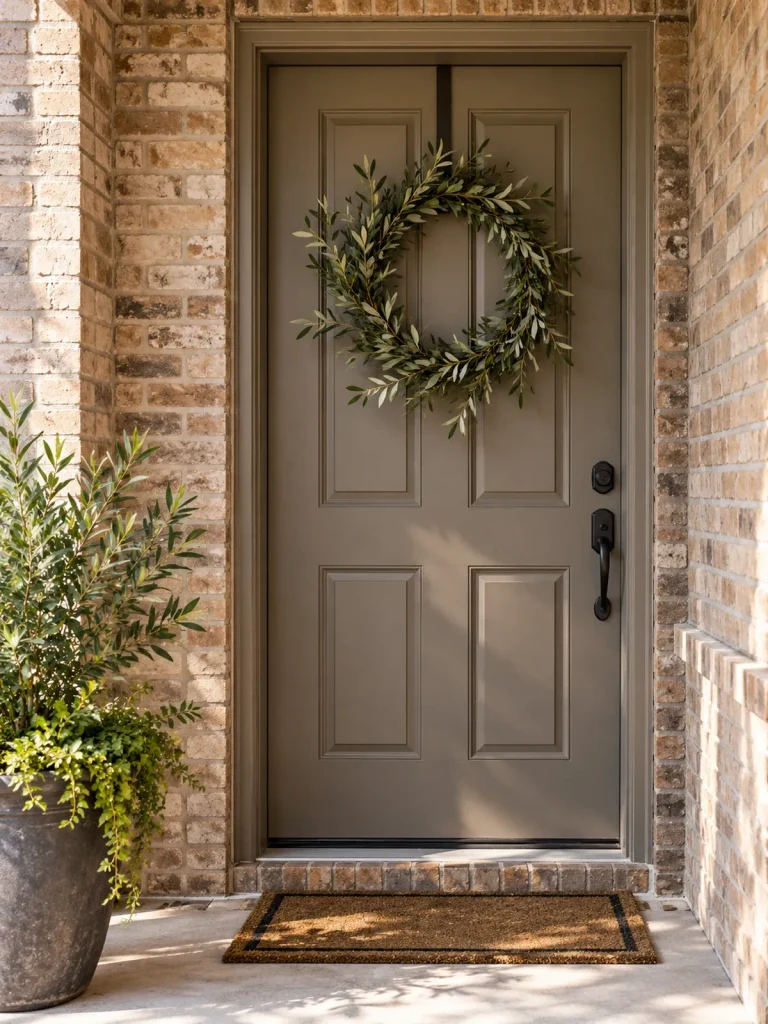
A loose green wreath adds softness to a front door without turning the whole porch into a seasonal display. Olive-style leaves, small leafy branches, or another simple foliage shape give the door a quiet decorative layer. Keep ribbons and surrounding accessories restrained so the wreath remains easy to see.
A plain reusable wreath base can be refreshed with a modest amount of suitable greenery instead of replaced every season. For artificial foliage, check whether it is intended for covered outdoor use and expect exposure to affect its appearance over time. Use a hanger compatible with the door, and confirm it doesn’t interfere with closing, seals, glass, or existing hardware.
10. Replace Faded House Numbers With a Clean Matching Set
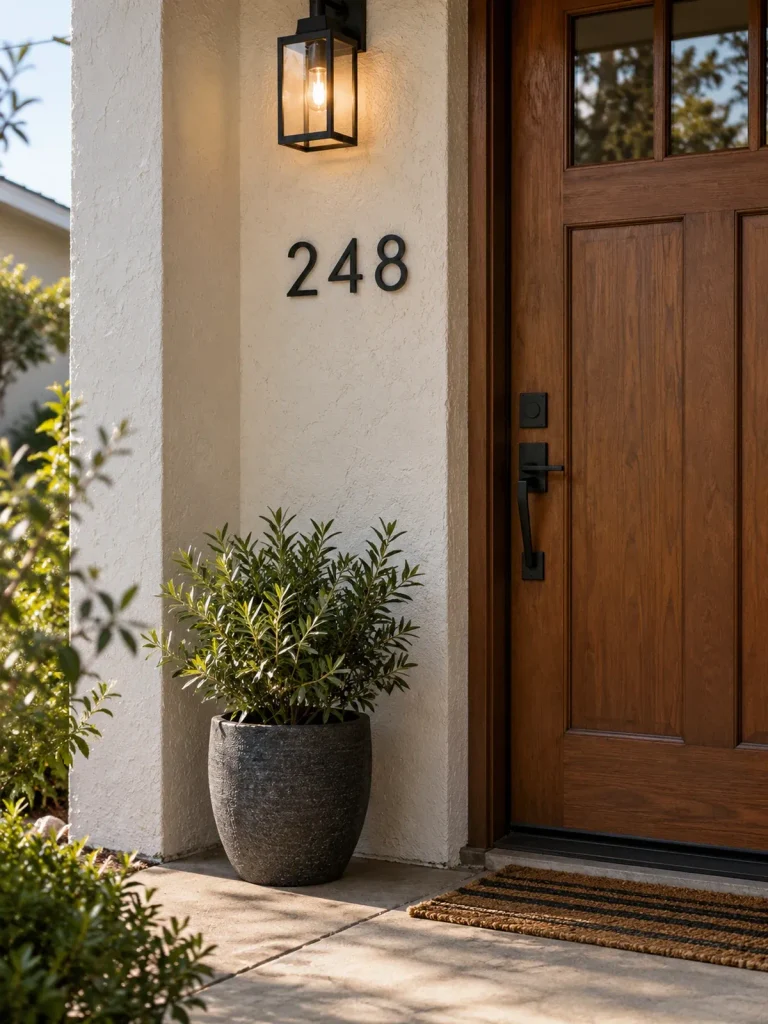
Small details can make an entry feel neglected even when the larger surfaces are in good condition. A matching set of simple house numbers gives the wall beside the door a cleaner appearance while serving a practical purpose. Dark metal against pale siding or stucco creates a clear, restrained contrast.
Choose numbers that are readable from the approach and comply with local addressing requirements. Before ordering, account for their spacing, mounting holes, and any marks left by the old set. Installation needs to suit the siding or masonry beneath them. A straightforward surface-mounted style can be a more manageable update than a large decorative address plaque.
11. Refresh the Finish on Sound Door Hardware
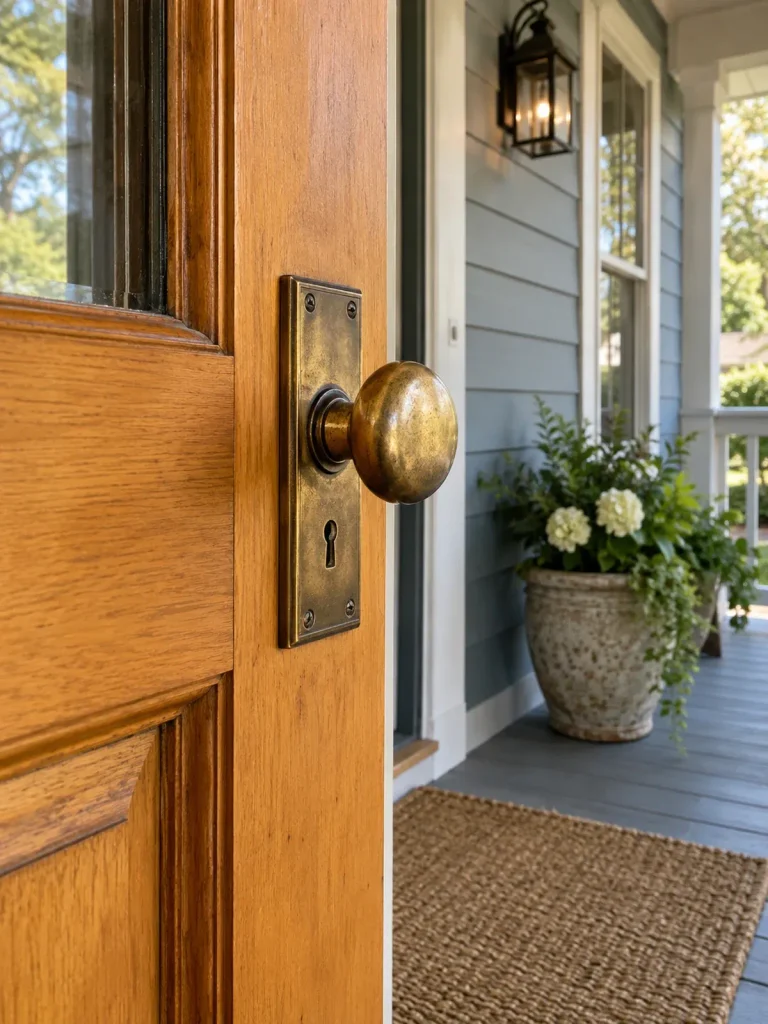
Existing door hardware may only need careful cleaning to regain some of its character. An aged brass knob against a wood door, for instance, can look intentional when the surrounding plate and visible fittings are clean and coordinated. Keeping a little natural patina can suit an older home better than chasing a mirror-bright finish.
Identify the material and finish before applying polish; plated, lacquered, and living finishes require different care. Start with the manufacturer’s recommended method and avoid abrasive shortcuts. Cosmetic work won’t fix a loose lock or unreliable latch, so address function separately. Preserve the working mechanism rather than painting over moving parts to imitate a different metal.
12. Give the Porch Ceiling a Soft, Contrasting Color
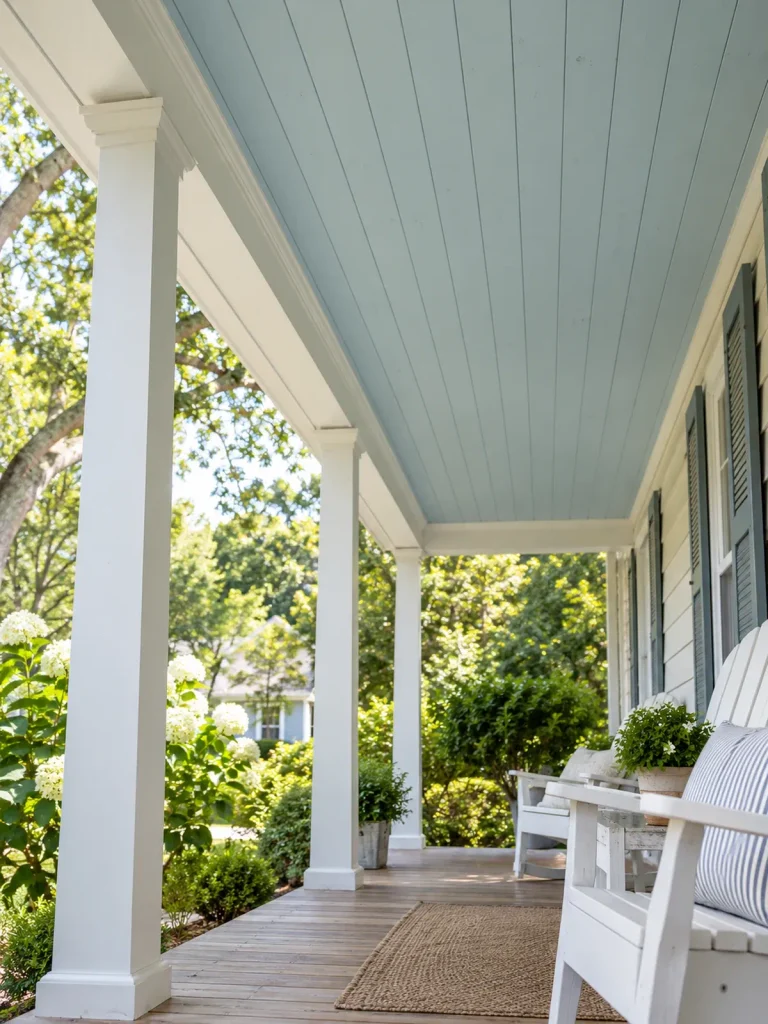
A pale blue ceiling can make a covered porch feel thoughtfully finished even when the floor and furniture stay simple. Because the color sits overhead, it adds interest without filling the walking area or competing with the front door. White posts and restrained furnishings let the ceiling become the gentle surprise.
Treat this as an optional paint project, not an essential first purchase. Check the surface condition and resolve moisture problems before coating it. Use an appropriate product and a safe access method; a high or awkward ceiling may require professional help that changes the budget. Sample the color outdoors so it complements the siding rather than looking unexpectedly bright.
13. Anchor an Empty Corner With One Taller Plant
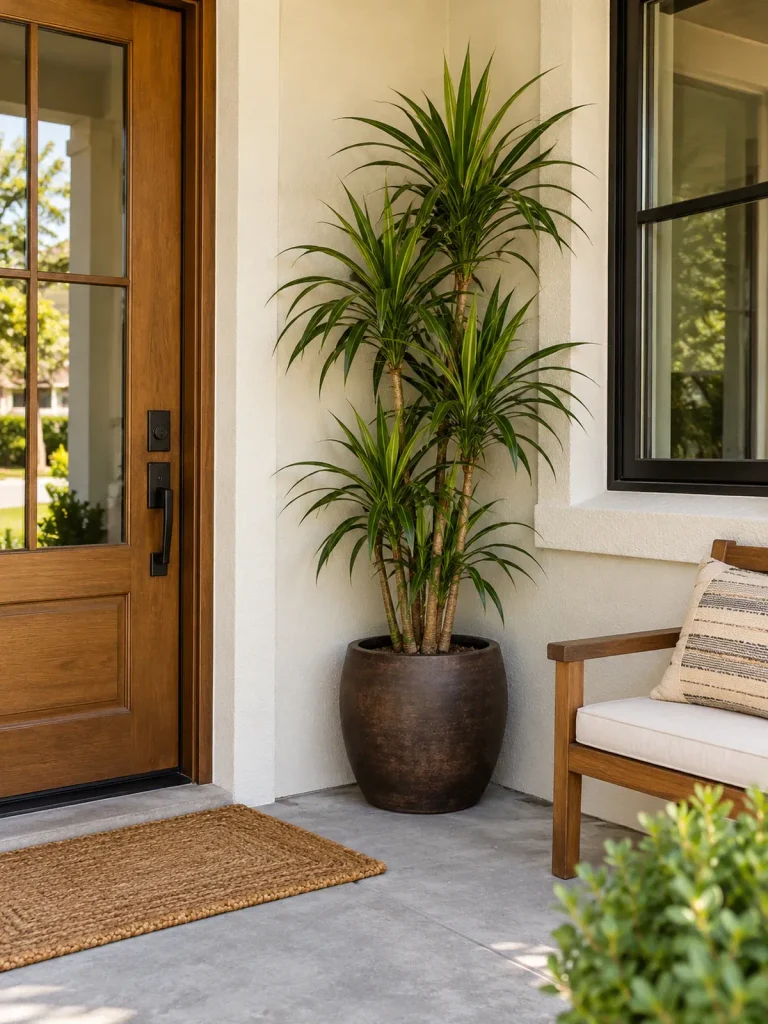
One upright plant can give an empty corner more presence than a collection of tiny pots. A tall dracaena-style silhouette in a simple container creates height beside a low chair or window, helping a modest porch feel balanced. The visual effect comes from scale, so the planter itself can remain plain.
Choose the actual plant for your light, temperatures, and household, including pets. A plant suited to a sheltered warm-season porch may need to come indoors when conditions change. Use a stable container with drainage and room for the root system. Leave space between foliage, windows, and the door instead of wedging the plant into the busiest corner.
14. Fill a Simple Window Box With a Repeated Planting
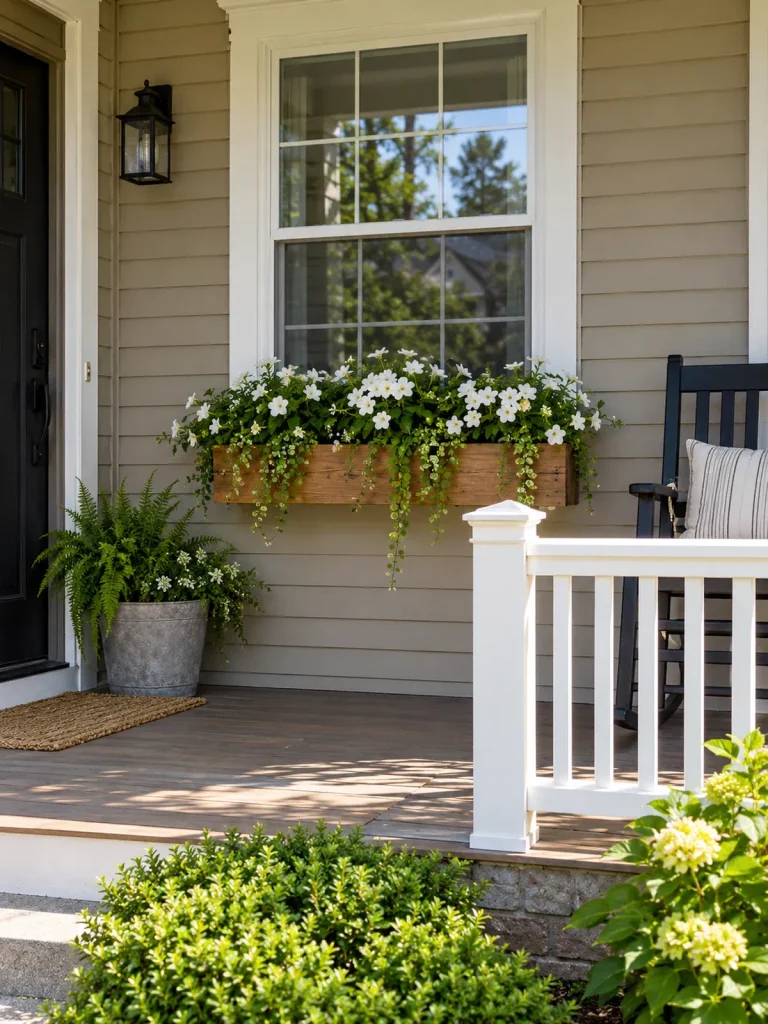
A plain window box looks more composed when the planting follows a clear rhythm. Repeating white flowers with trailing green foliage creates a unified band of color beneath a porch window. The restrained palette gives inexpensive individual plants a stronger collective effect than a crowded mix of unrelated colors.
Use an existing sound box where possible, and select plants with compatible light and watering needs. Confirm that the box, brackets, and attachment method can support the filled container’s weight; this is not a place to improvise with decorative hooks. Keep drainage away from vulnerable siding, and leave access for watering and trimming as the plants fill out.
15. Use a Narrow Console to Create a Styled Wall Moment
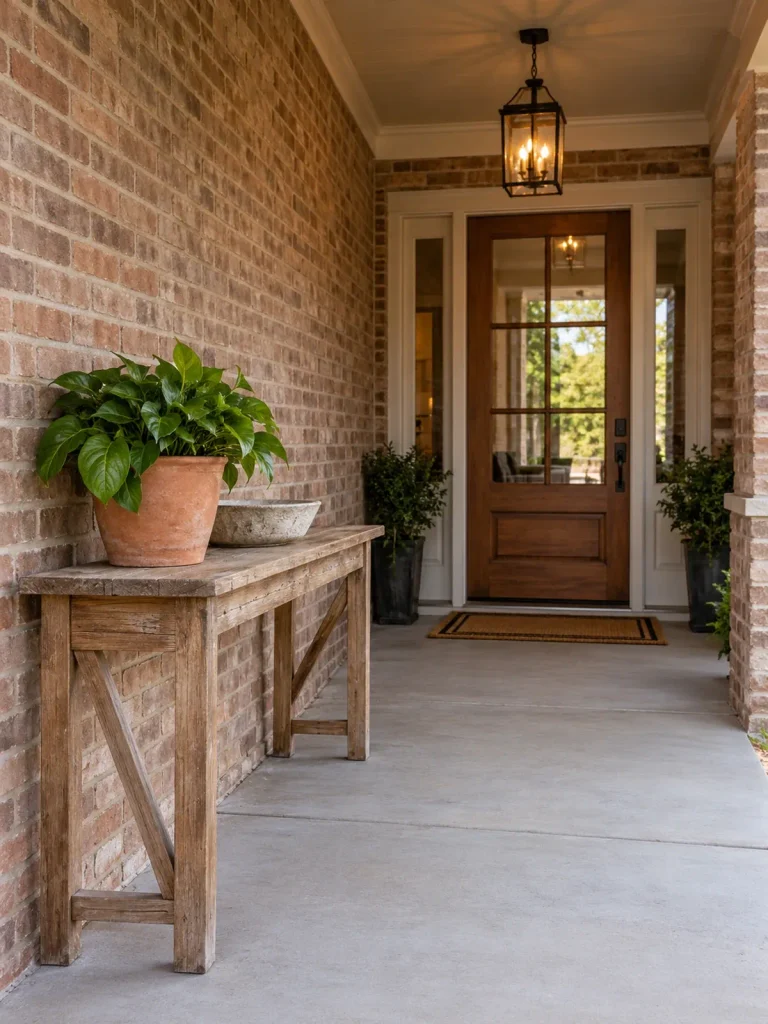
A slim console can turn an unused wall into a purposeful part of a deep, sheltered porch. Weathered wood, one leafy plant, and a shallow bowl create an inviting vignette without requiring a cabinet or elaborate display. The table can also hold a small item temporarily while you unlock the door.
Shop your own furniture first, but only use a piece suited to the conditions it will face. A roof doesn’t prevent all wind-driven rain or humidity. Check stability and any anchoring requirements, and measure the remaining walkway before committing. On a shallow porch, a console may take more space than its practical value justifies.
16. Create a Welcoming Glow With Battery Lanterns
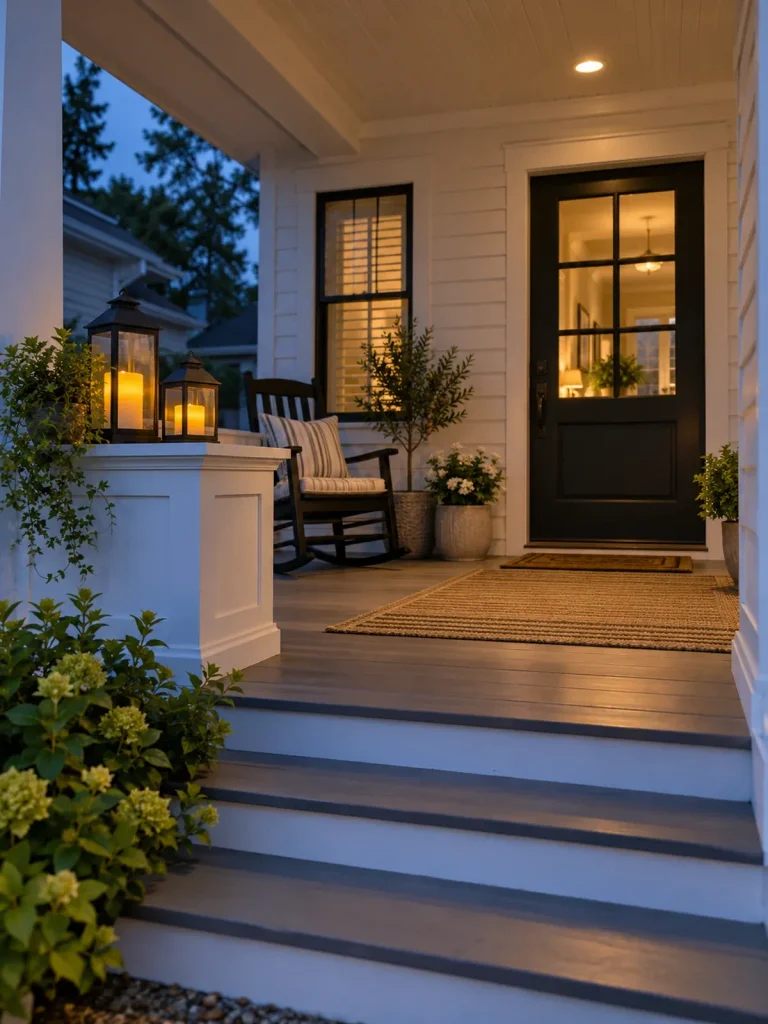
Two simple lanterns with warm flameless candles bring evening atmosphere to a porch without a hardwired lighting project. Grouping them on a wide side ledge keeps the glow concentrated and the floor easier to navigate. Black frames work well with many existing door finishes, while the warm light softens plain siding.
Choose lanterns and battery candles rated for the actual exposure, including heat and moisture. Position them on a stable surface away from edges and the walking route. A timer can reduce daily handling, though batteries still need attention. Treat these as decorative accents; retain appropriate entrance and step lighting for visibility after dark.
17. Hang One Outdoor Curtain Panel to Soften a Side Opening
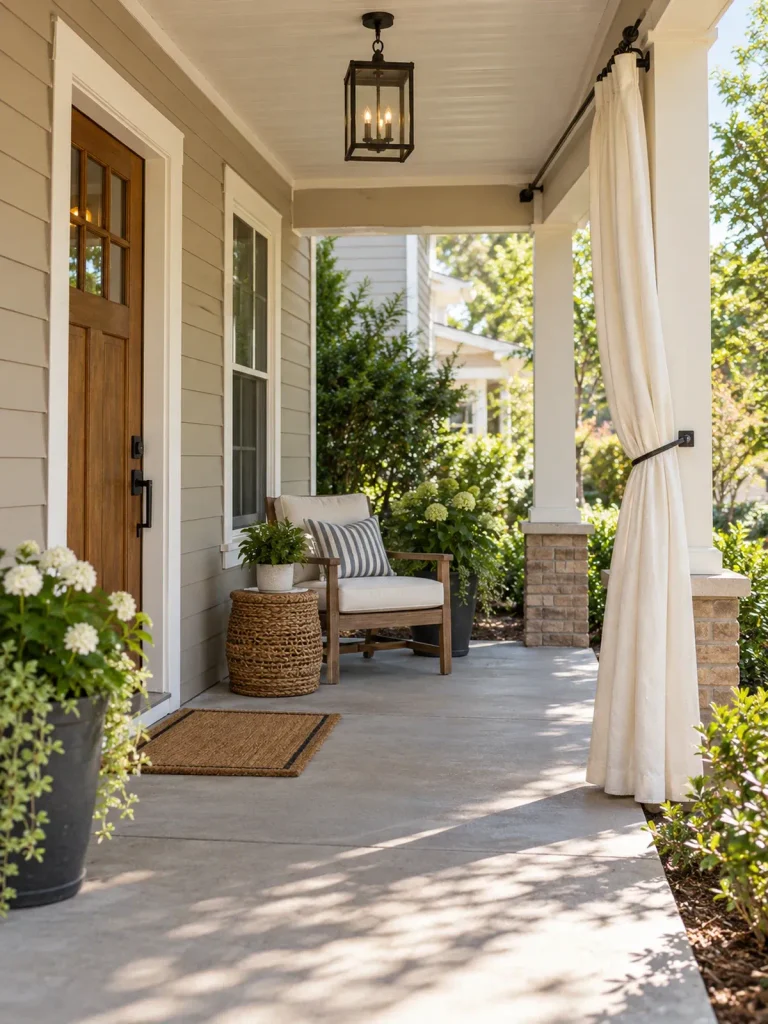
A single curtain panel can soften the hard lines of a covered porch without enclosing the entire space. Cream fabric gathered against a side post adds a relaxed, finished texture, especially beside simple wood furniture. Keeping the panel tied back makes the effect feel light rather than crowded.
Budget for the rod, attachments, and tieback as well as the fabric. The supports must suit the mounting surface and outdoor conditions, and the panel needs enough clearance to stay off a wet floor. Avoid obstructing steps, circulation, or the entrance. On a porch exposed to strong winds, removable fabric may be a more practical choice than a permanent installation.
18. Warm Up a Sheltered Porch With a Large Woven Basket
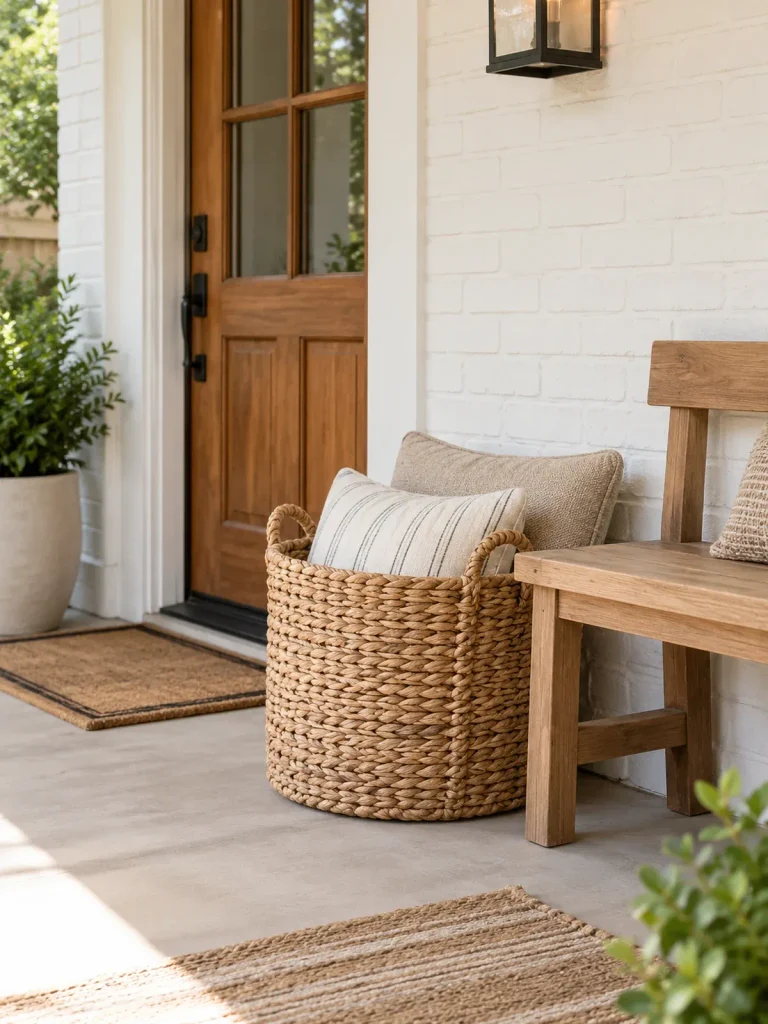
A substantial woven basket adds texture while giving removable cushions a temporary home. Beside a simple bench, its natural color can connect wood furniture, neutral textiles, and a plain concrete floor. Using one useful basket keeps the arrangement calmer than adding several small decorative containers.
Try a basket you already own in a dry, recessed entry before purchasing another. Natural fibers generally need protection from damp conditions, so bring the basket and textiles inside during wet weather. Don’t use it to conceal wet cushions that need to dry. Choose a location away from the door swing, and keep the contents limited so storage doesn’t become visual clutter.
19. Repeat One Flower Color in a Few Simple Pots
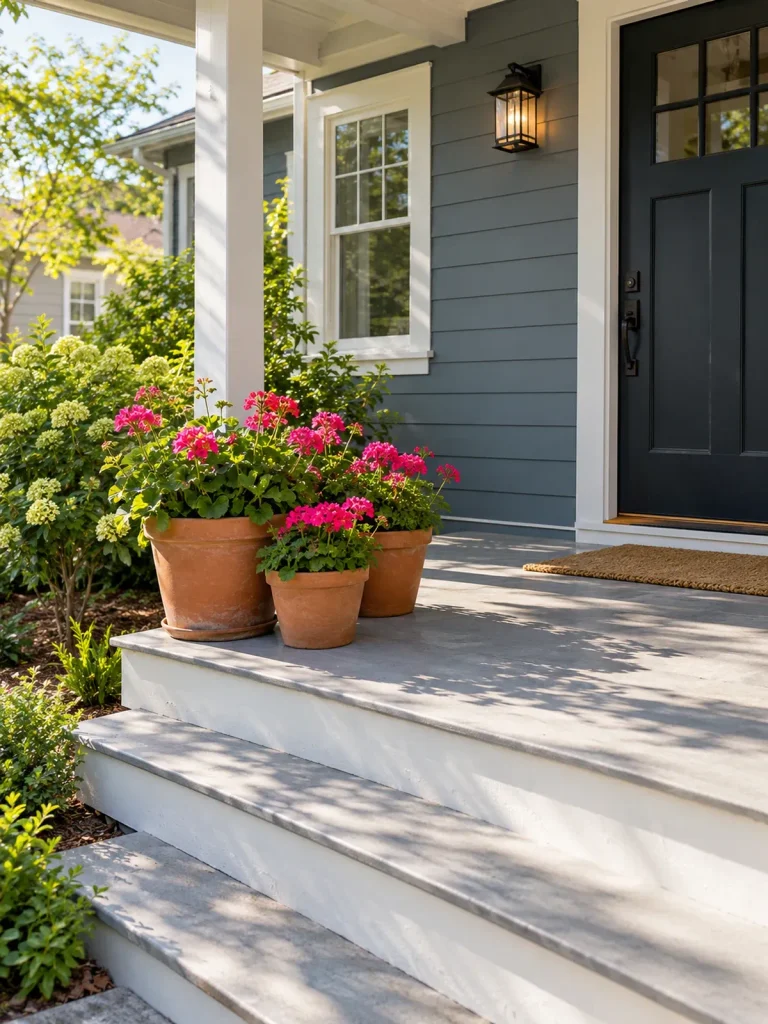
A few terracotta pots filled with the same flower color can give a porch a coordinated seasonal accent. Deep pink geraniums, for example, stand out against blue-gray siding without needing ornate containers. Varying the pot size adds movement, while the repeated bloom color keeps the group visually connected.
Choose flowers suited to the porch’s actual sun exposure and your willingness to water and deadhead. Allow room for growth instead of packing too many plants into each container. Cluster pots on a broad side landing or another area outside the walking route. Reusing containers and repeating a familiar plant can help keep seasonal decorating decisions focused.
20. Let a Clean, Edited Layout Be the Upgrade
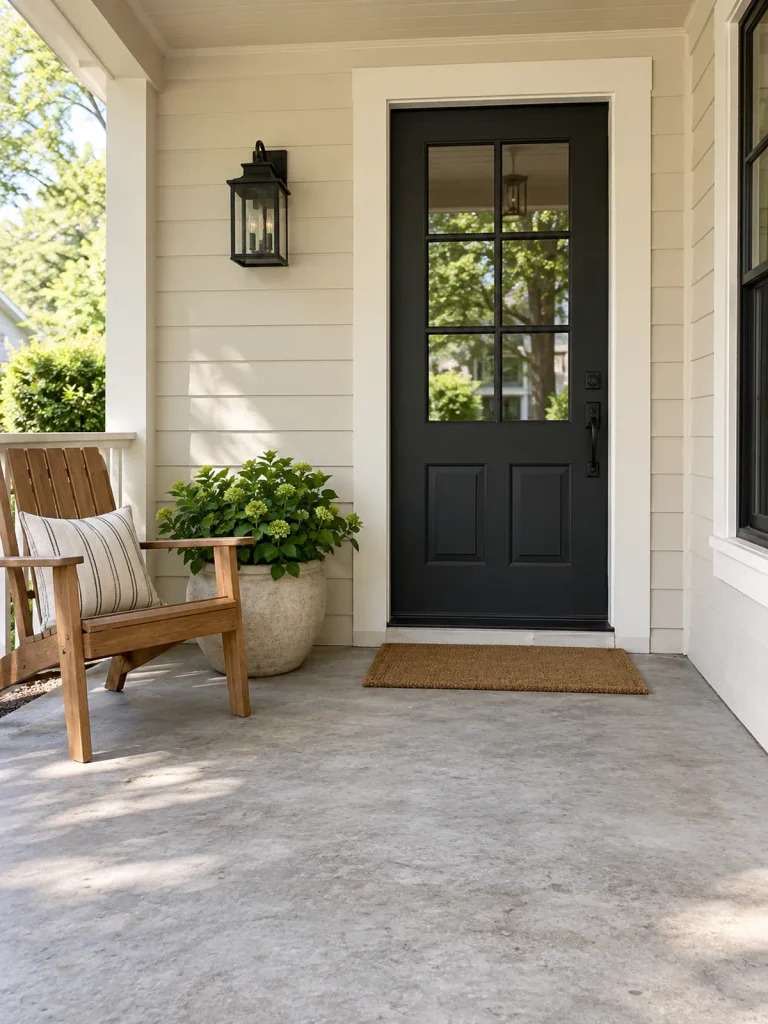
Sometimes the strongest budget porch makeover starts by taking things away. Remove unused furniture, empty pots, faded accessories, and anything that makes opening the door inconvenient. A clean floor, one comfortable chair, and a healthy plant can feel more finished when each has enough room around it.
Clean surfaces with methods suited to their materials, and address maintenance issues before adding decor. Move the pieces you keep into a deliberate arrangement, then look at the porch from the path as well as the doorway. Photographing the space can help you notice clutter. Live with the simpler layout before deciding what, if anything, still needs buying.
How to Get a Polished Porch Without Buying Everything
Start with an inventory: what is sound, what needs routine care, and what genuinely prevents you from using the porch? Repair needs come before styling. Then choose one focal update, such as the door color, a refreshed bench, or a substantial plant. Let the surrounding details support that choice.
Set a total spending limit that includes paint supplies, mounting hardware, potting mix, delivery, and any help required. Reused items save money only when the preparation is manageable. Choose two or three ideas that solve different needs rather than buying every coordinated accessory you see. A painted bench, repeated cushion colors, and a clear walkway can be a complete plan.
Finally, match purchases to exposure. Covered porches still get damp, sunny corners fade fabrics, and lightweight decor can move in wind. Durable suitability matters more than how an item looks in a listing photo.
FAQ
What should I update first on a very small budget?
Start by cleaning, clearing the walking route, and rearranging usable pieces. Then choose one visible improvement based on condition: refreshing the door, replacing a worn mat, or coordinating existing pots. Avoid buying accessories before deciding what the porch actually needs.
How can I make a tiny front porch look more expensive?
Use fewer, appropriately scaled pieces and a restrained palette. One container with a full plant often reads more clearly than several tiny accents. Keep the door swing and landing open; visual breathing room is especially valuable on a small stoop.
Is secondhand furniture always the cheapest option?
No. Add transport, repairs, coatings, and replacement cushions to the purchase price. Check that the piece is structurally sound and suitable for outdoor exposure. A bargain that needs extensive work may cost more than a simple new alternative.
Do all the metal finishes on a porch need to match?
They don’t need to be identical. Repeating one finish in a few visible details can create continuity, while a limited second finish can still look intentional. Don’t replace functional locks or lights solely to make every metal surface match.
How do I keep budget porch decor from looking cluttered?
Give each item a purpose and group related pieces together. Leave open floor around the entrance and avoid filling every corner. When adding something new, consider removing an older accessory rather than expanding the display indefinitely.
Start With One Change You Will Notice Every Day
A porch can look thoughtfully designed without a full furniture set or an extensive renovation. Choose the update that addresses your space most directly, whether that’s a richer door color, a refreshed seat, or a simpler layout. Reuse what works, buy only what completes the plan, and leave enough room to enjoy the entrance you already have.