
You spot a wicker chair at a yard sale, bring home a lovely old pitcher, and suddenly have the beginnings of a porch you love. Then comes the awkward part: making unrelated finds look intentional instead of like a holding area for things that haven’t made it inside yet.
An eclectic front porch can handle mismatched furniture, faded patterns, and a little patina. What helps is giving each piece a purpose and repeating a few colors or textures. You don’t need a matching patio set or a cart full of new accessories to make the arrangement feel finished.
These 15 eclectic front porch ideas use thrifted and vintage finds for the furniture and decorative layers. Living plants, hidden nursery pots, and necessary cleaning or mounting supplies can support the look without becoming the shopping focus. Some arrangements suit a tiny entry; others need a deeper covered porch. Start with the pieces you already own, then choose the idea that fits both your space and its exposure to weather.
1. Pull Mismatched Vintage Chairs Together with Color
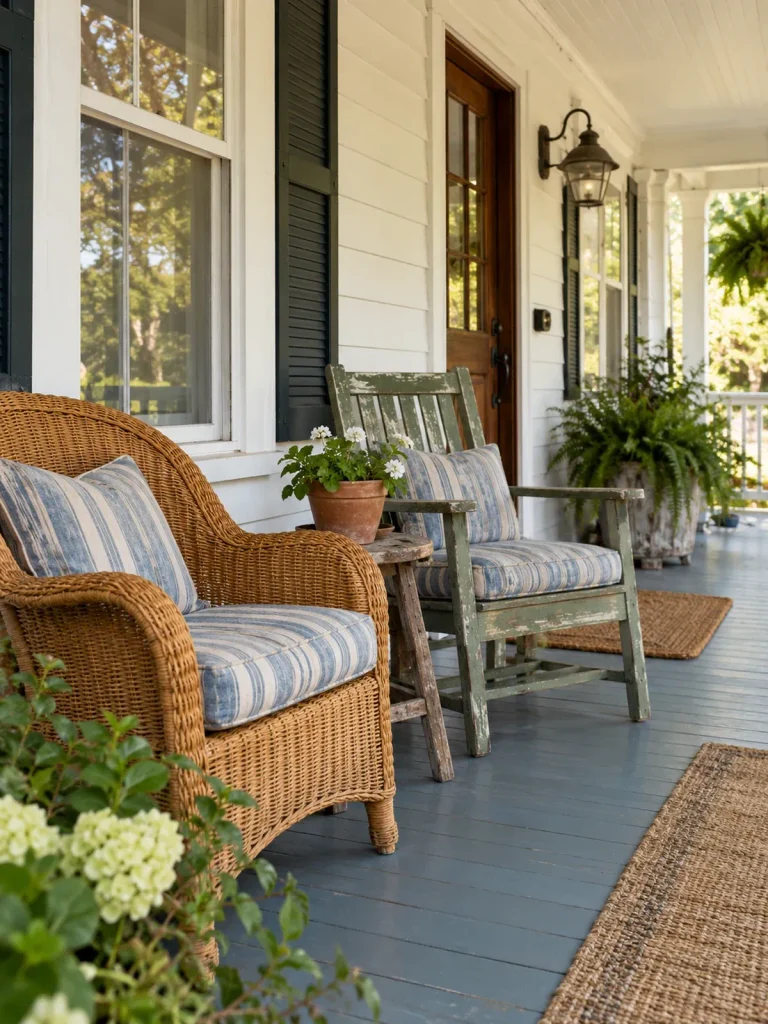
A wicker armchair and a painted wooden chair can look surprisingly comfortable together when their cushions share a color. Faded blue stripes, for example, connect different shapes without hiding the character of either seat. A small secondhand stool between them gives the arrangement a useful center.
Look for chairs with compatible seat heights and enough room to sit down without bumping the railing. Before buying, check for wobbling joints, loose weaving, and sharp edges. Keep natural wicker and indoor cushions on a sheltered porch, bringing cushions inside during damp weather. Repeat the cushion color in one small accessory, then let the mismatched frames do the rest.
2. Make a Vintage Trunk the Center of a Seating Nook
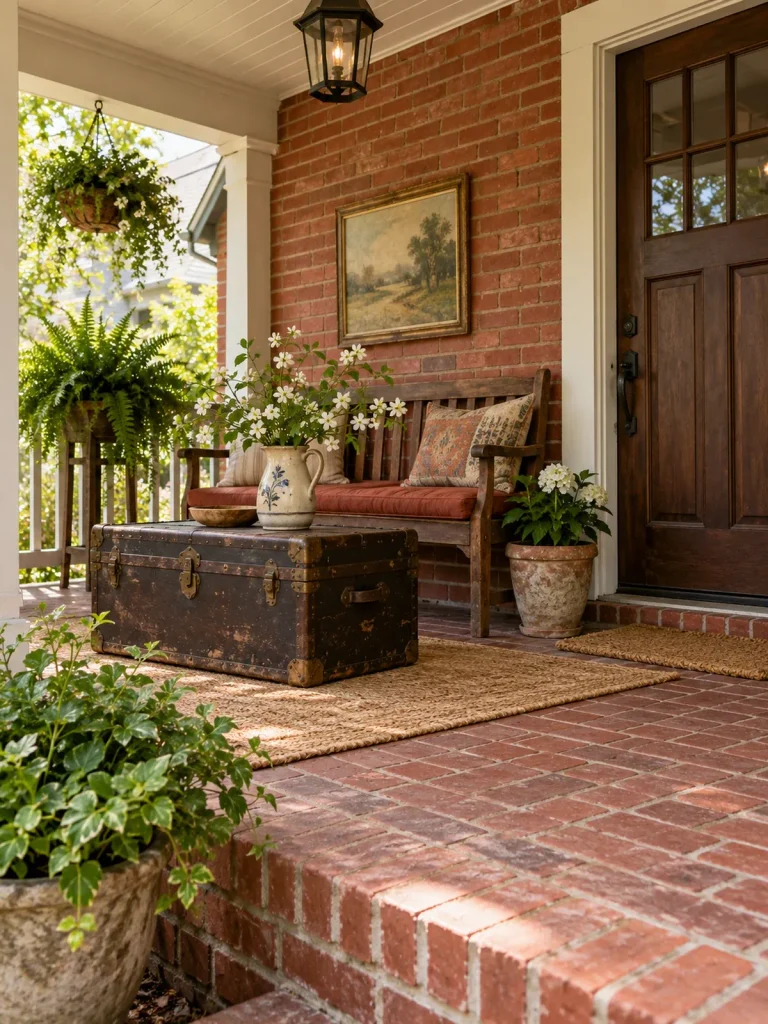
An old steamer trunk adds a broad, low surface in front of a secondhand bench. Worn corners and dark hardware bring depth to a brick porch, while a ceramic pitcher or wooden bowl softens the heavy shape. Keep the top mostly empty so there’s still somewhere to set a drink.
Choose a trunk that sits flat and has a sound lid rather than one that needs constant balancing. It belongs well under a roof, away from wind-driven rain. Don’t assume it provides dry storage just because it closes. Leave comfortable legroom beside the bench, and position the entire nook outside the door’s swing and walking route.
3. Gather Old Enamelware into a Planter Group
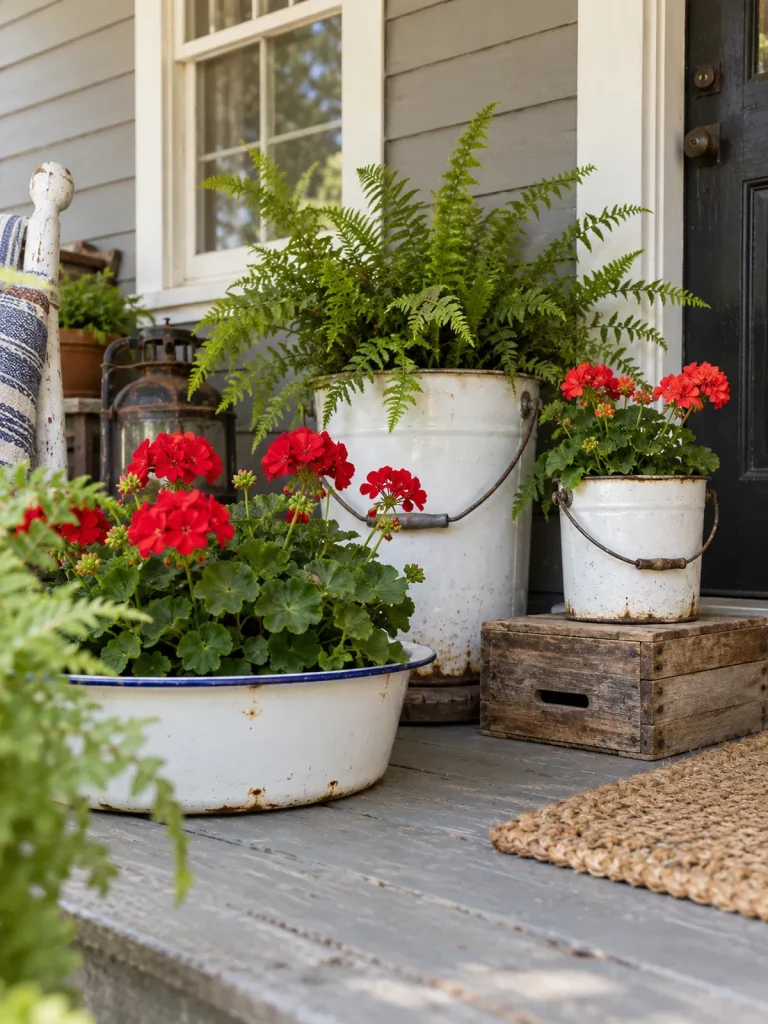
White enamel pails and a shallow basin make an appealing plant display beside gray floorboards or a dark front door. Different heights keep the grouping lively, while a repeated blue rim pulls it together. A sturdy wooden crate can lift the smallest container so its flowers remain visible.
Use the enamelware as outer containers, with plants in removable pots that drain separately. Lift those pots out for watering, empty collected water, and protect the porch floor beneath the display. Avoid vessels with sharp chipped edges. Cluster everything against the wall rather than across the threshold; a compact group has more presence than scattered little buckets.
4. Hang a Small Gallery of Secondhand Art
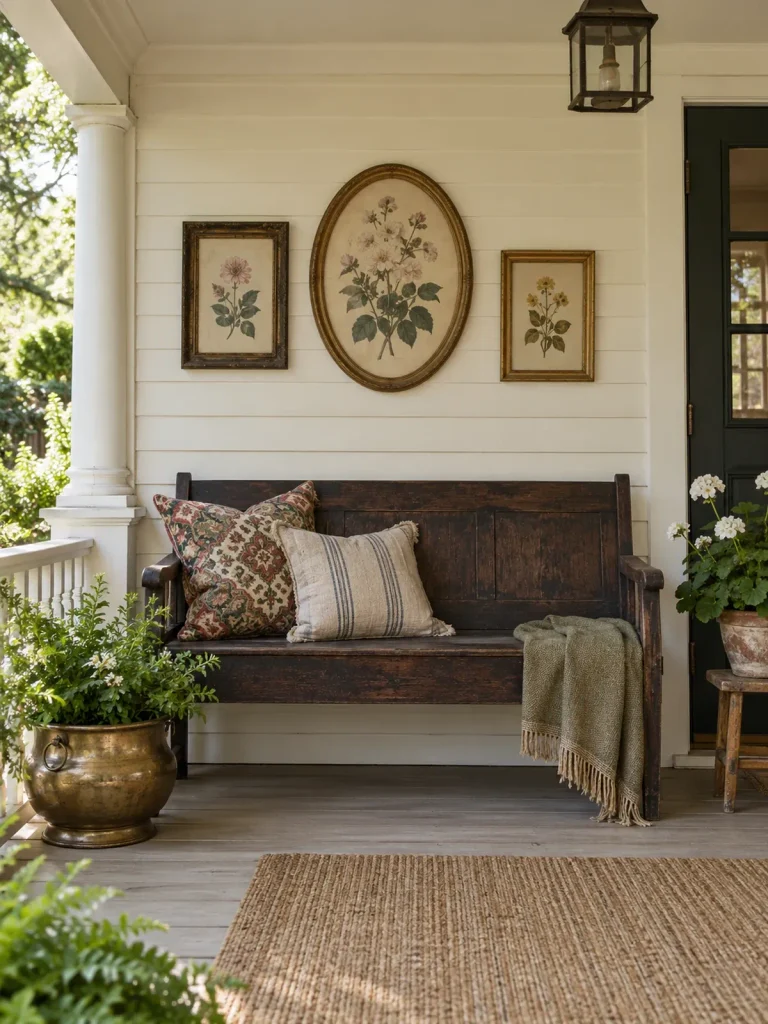
Three thrifted botanical prints can give a covered porch the feeling of an outdoor sitting room. Mix an oval frame with rectangular ones, keeping either the subject matter or frame finish consistent. Hanging them above a dark wooden bench creates one readable composition instead of several competing decorations.
Reserve ordinary paper artwork for a deeply sheltered wall, and use inexpensive pieces you can readily move indoors. Shade and a roof don’t make indoor frames weatherproof. Check occasionally for moisture behind the glass, and remove the art during wet seasons. Secure each frame with mounting hardware suited to your wall and the piece’s weight, rather than propping it above seating.
5. Roll a Vintage Bar Cart into a Porch Corner
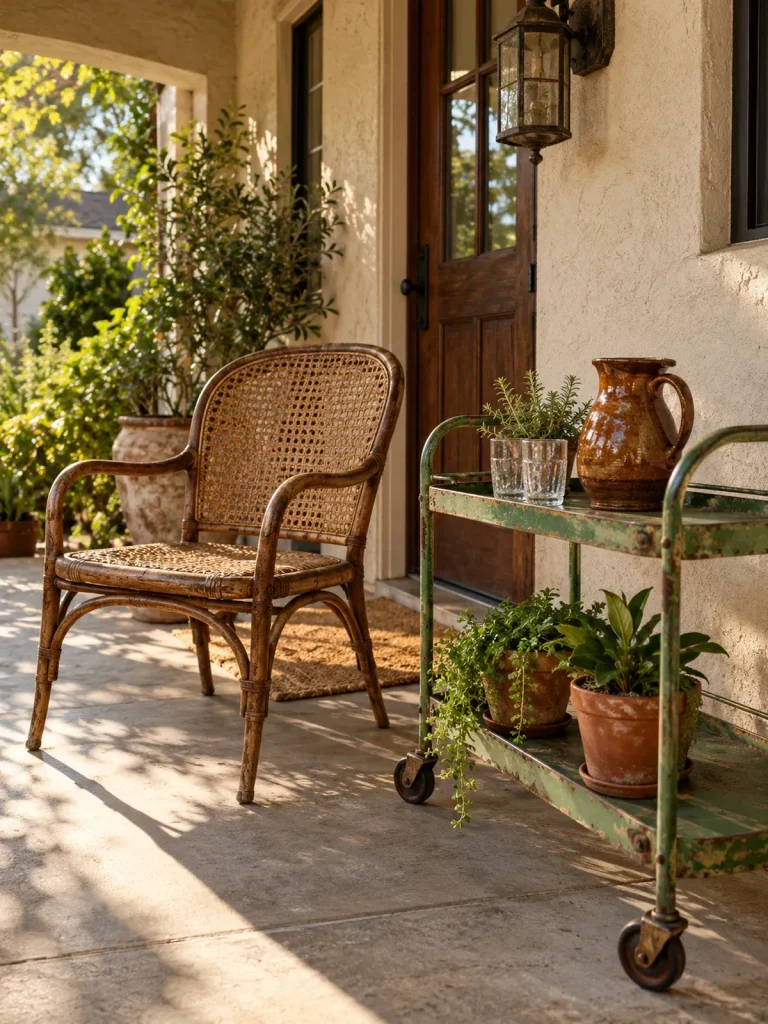
A faded metal bar cart makes a flexible surface for a pitcher, a couple of glasses, and small potted plants. Its narrow footprint works where a full sideboard would crowd the porch. A used cane chair nearby gives the corner a clear purpose without requiring a whole seating set.
Check the wheels, shelf connections, and stability before loading it. Park it on a level section of floor away from steps, and prevent it from rolling during use. Bring serving pieces out when needed instead of leaving glassware exposed all week. Keep the lower shelf lightly styled so the cart remains easy to move when you sweep or rearrange the porch.
6. Give a Bare Corner a Salvaged Shutter Backdrop
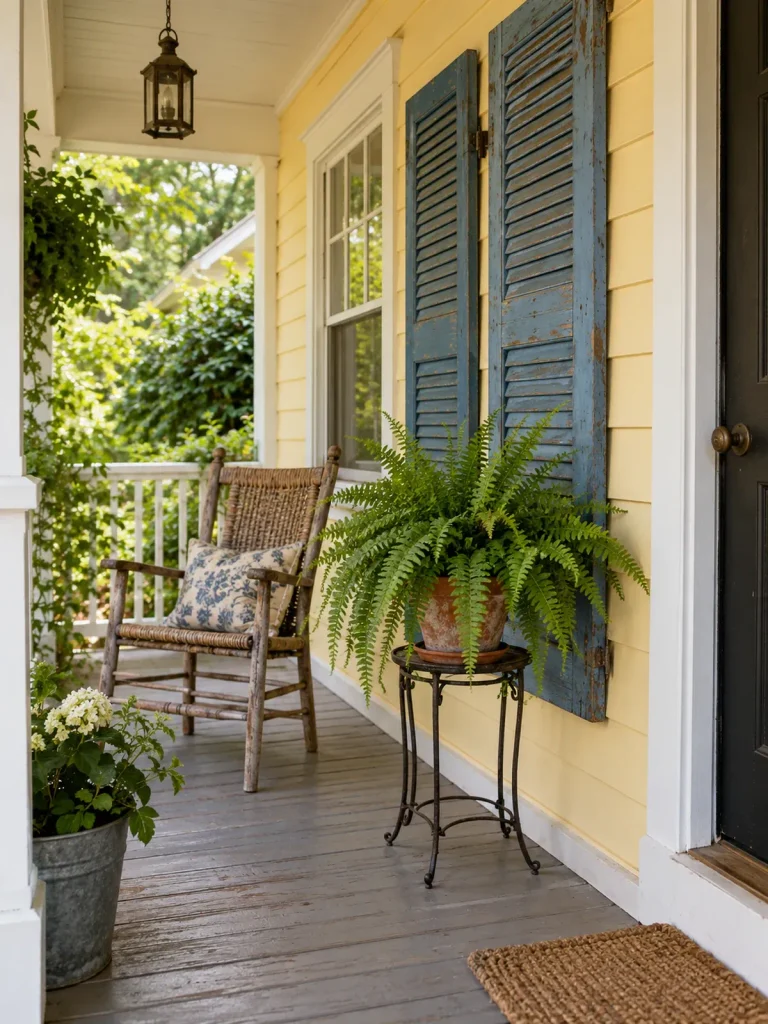
Weathered shutters add height and rhythm to a blank porch wall without taking up much floor space. A pair in faded blue makes a soft backdrop for a black iron plant stand and a fern. Nearby wood or wicker keeps the mix relaxed rather than overly coordinated.
Treat the shutters as decorative panels, not as freestanding screens. They need secure mounting appropriate to their weight and the wall surface, with any loose slats repaired first. Skip deteriorating pieces that shed flakes or splinters. On a narrow porch, keep the display shallow and against the wall. The shutters provide the visual interest, so one plant stand is usually enough underneath.
7. Pair Vintage Metal Lawn Chairs with a Retro Table
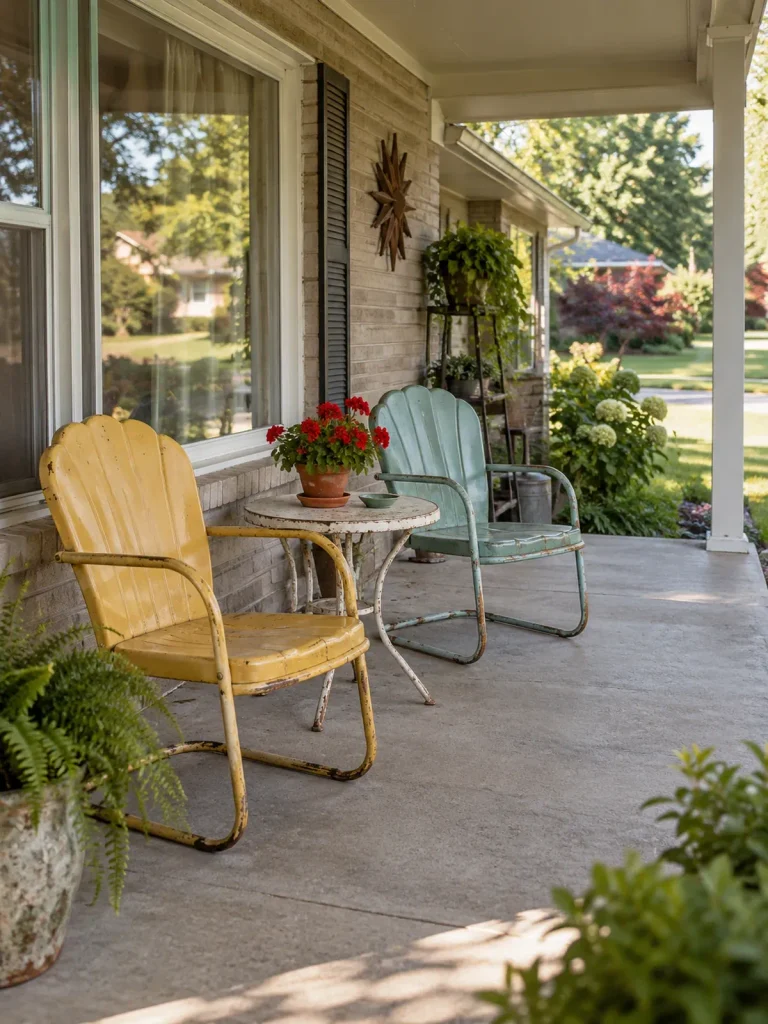
Two old metal lawn chairs in different muted colors bring a cheerful, slightly retro feel to a simple ranch porch. Mustard and pale teal work together when a small neutral table sits between them. A single flowering pot adds softness without turning the seating area into a crowded plant collection.
Inspect the seats, legs, and welded connections carefully; attractive surface wear shouldn’t hide serious deterioration. Choose furniture that’s sound enough for actual use, and address rough or damaged surfaces before setting it out. Place all legs on a firm, level surface. Let the chairs supply the color, keeping nearby accessories quiet so their different silhouettes remain the focal point.
8. Warm a Covered Porch with Secondhand Textiles
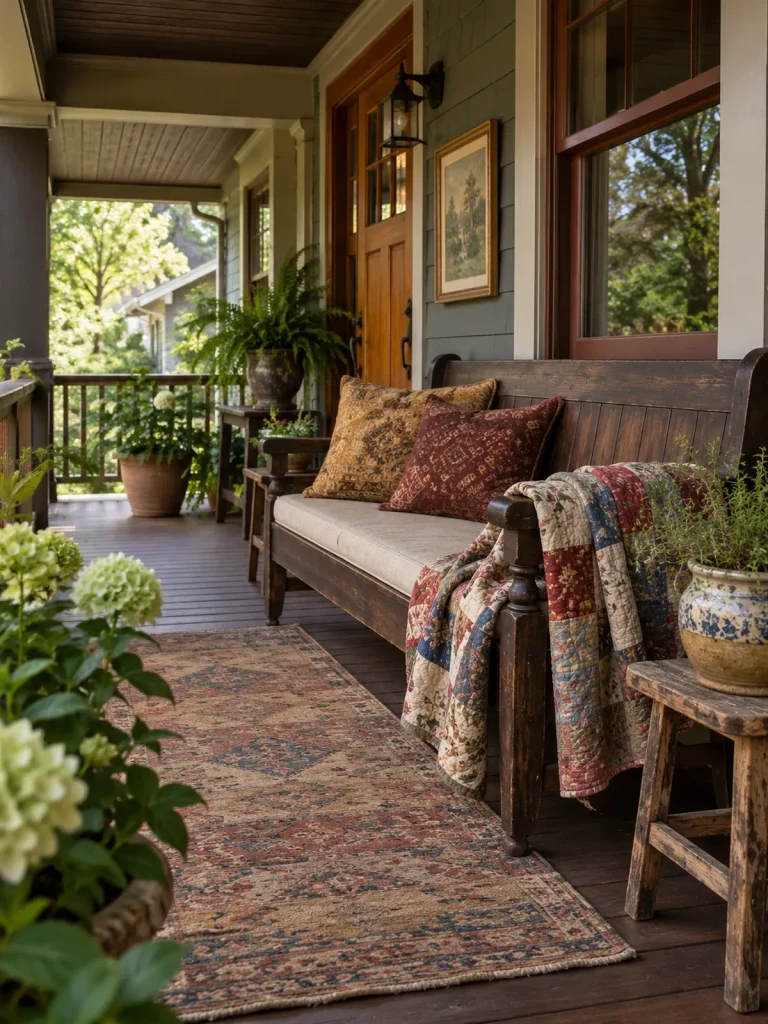
A plain wooden settee becomes much more inviting with a folded patchwork quilt, woven cushions, and a faded rug. Mixing patterns works best when they share a couple of colors, such as burgundy and ochre. Fold the quilt over one arm so it reads as an accent rather than covering the furniture completely.
Wash washable secondhand textiles according to their care instructions and check seams before use. These indoor layers are best brought out for dry-weather sitting and returned inside afterward. Make sure a rug lies flat and doesn’t catch the door or slide underfoot. On a very small porch, skip the rug and let the cushions carry the pattern.
9. Arrange Vintage Crocks in a Quiet Earthy Palette
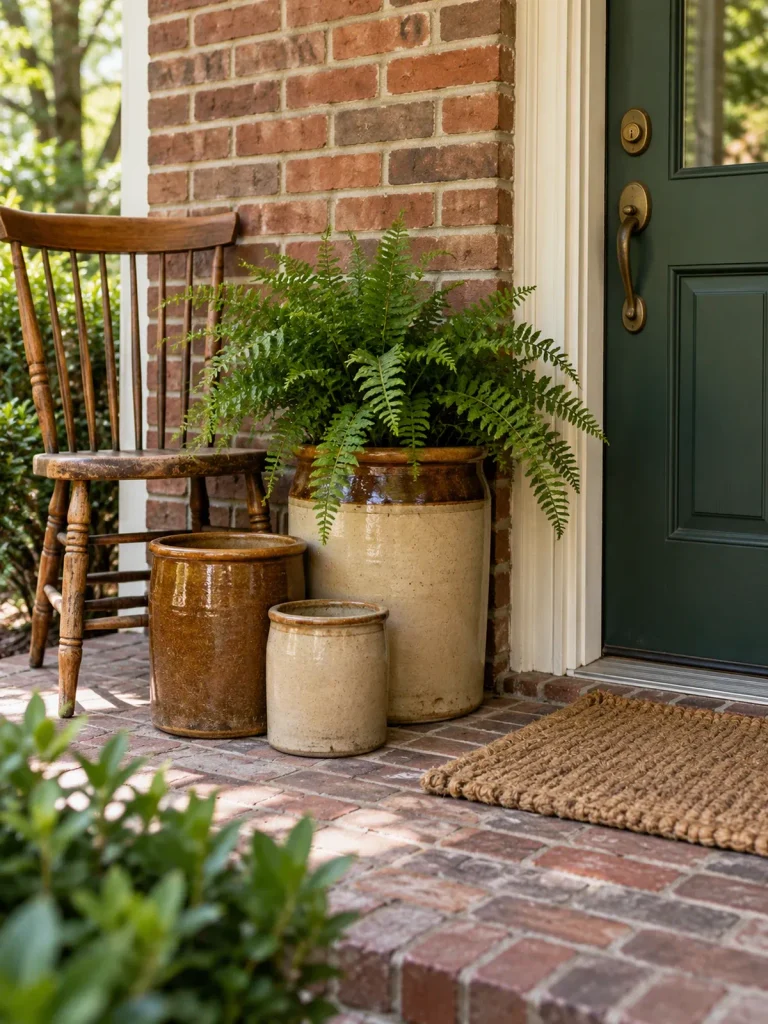
Eclectic porch decor doesn’t have to be brightly colored. A few stoneware crocks in tan, cream, and brown create a calmer version of the collected look. Set a leafy fern inside the largest one and leave smaller vessels unfilled so the shapes remain easy to appreciate.
A worn spindle chair gives the grouping some height without adding another container. Check crocks for cracks and unstable bases, particularly if they will hold heavy plants. Use a removable nursery pot and keep water from accumulating inside the stoneware. Position the arrangement beside the door, outside the path, and bring vulnerable pottery indoors before freezing weather. Three contrasting sizes provide plenty of variety.
10. Brighten a Sheltered Wall with a Vintage Mirror
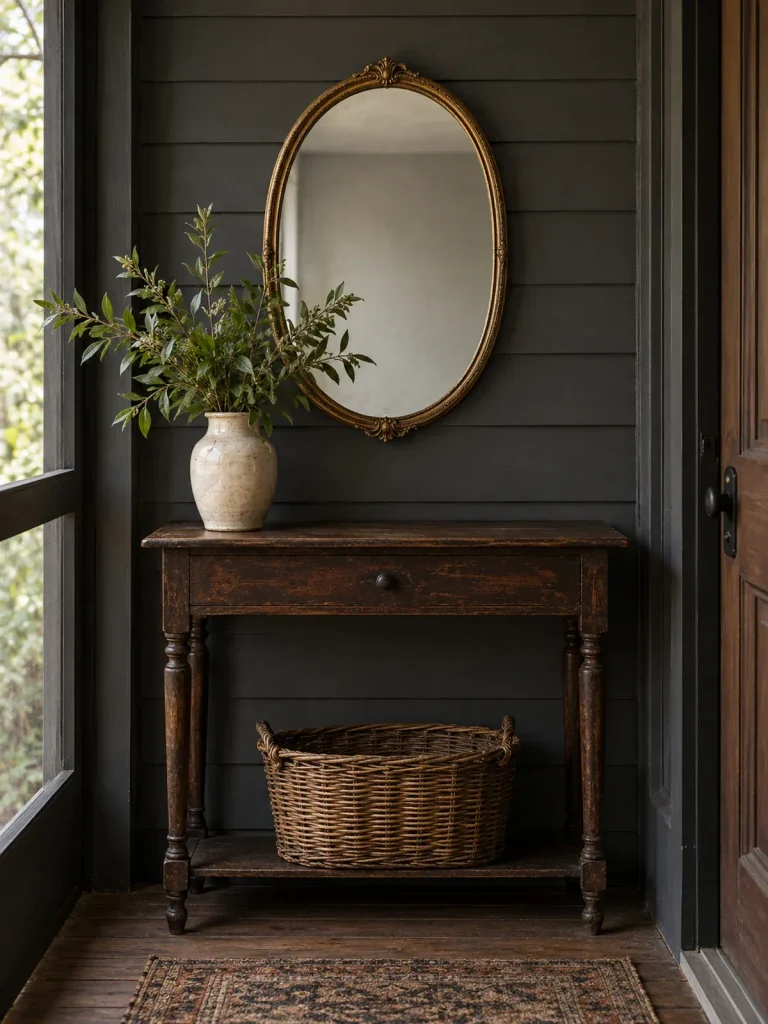
A small brass-framed mirror gives a dim porch wall a decorative focal point and reflects a little of the surrounding space. Above a slim secondhand console, its curved outline breaks up straight siding and table legs. A plain vase with leafy stems is enough to finish the surface.
Choose the location by checking the reflection from both the entry and the seating area. Aim for a quiet wall or pleasant porch detail, and keep the mirror out of direct sun. Mount it securely on a sheltered wall with hardware suited to its weight. Indoor backing can deteriorate outdoors, so inspect it periodically and move it inside when conditions turn damp.
11. Layer Secondhand Baskets Around Potted Plants
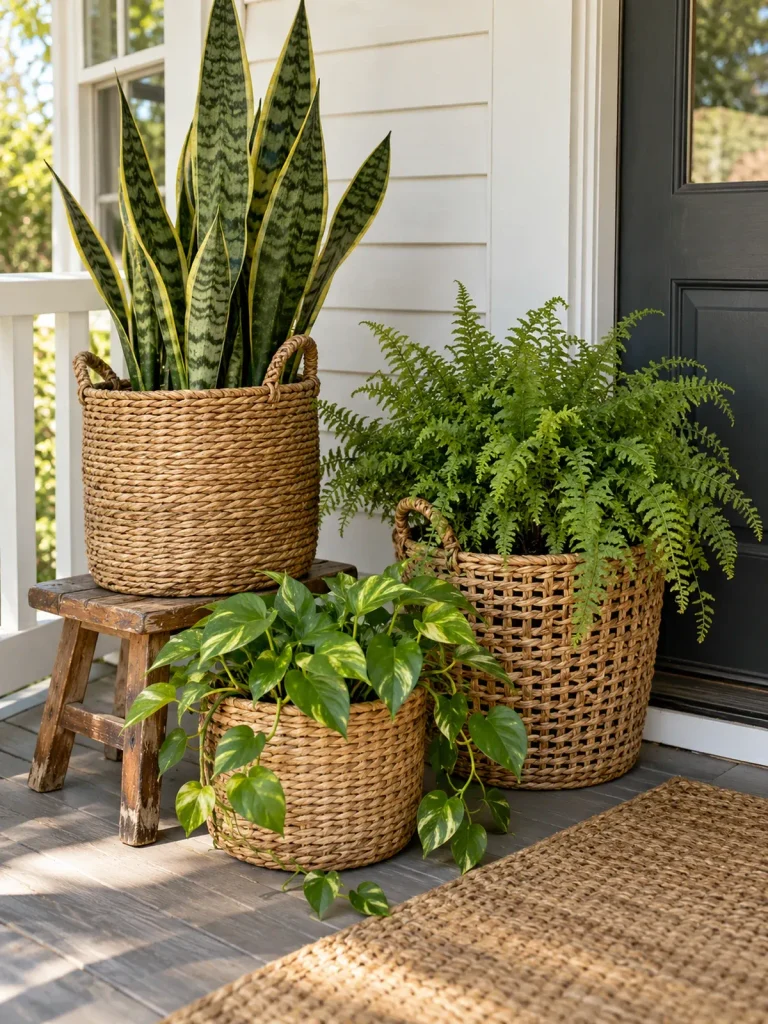
Woven baskets bring softer texture to a porch full of painted wood or brick. Combine a tall basket, a round handled one, and a smaller squat shape around plants with different leaf forms. A low wooden stool can raise one pot, keeping the grouping from looking like a row on the floor.
Place plants in removable pots with waterproof trays inside the baskets, checking that no water reaches the weave. Take them out to water and let them drain before returning them. Keep the baskets sheltered and lift them occasionally to check the floor underneath. Leave breathing room between leaves so each plant and basket has a visible outline.
12. Create a Small Breakfast Spot from Vintage Dining Finds
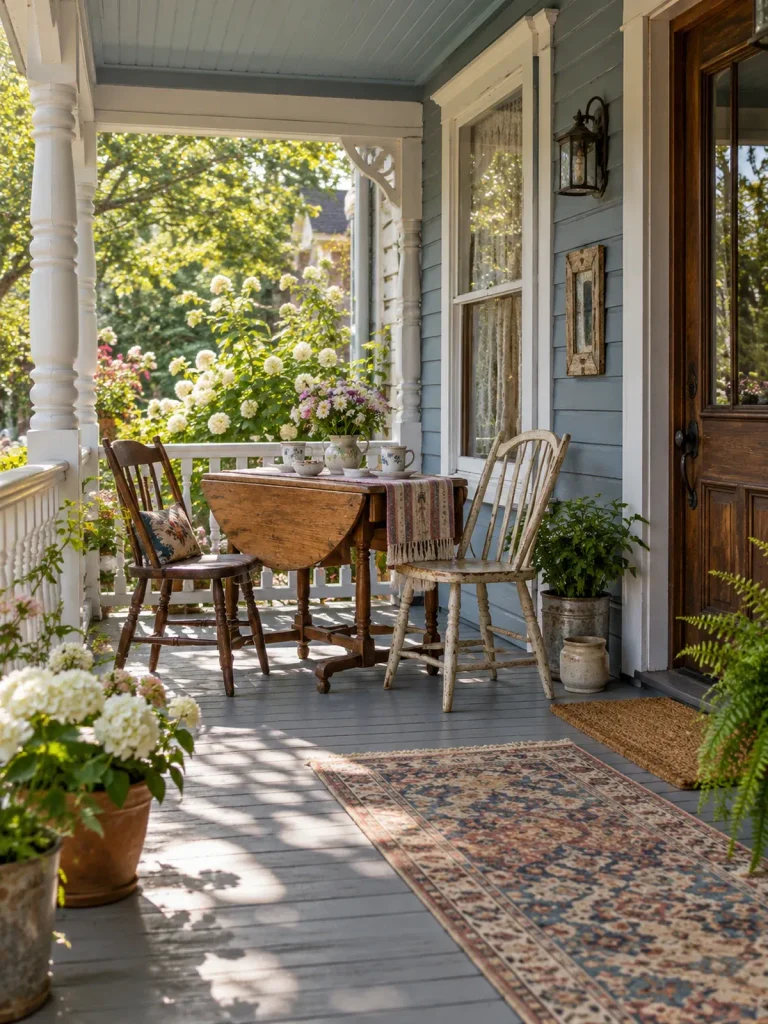
A secondhand drop-leaf table and two spindle chairs can make a roomy covered porch useful for morning coffee. Different chair backs add character, while a faded runner and simple thrifted cups help the table feel settled. Keep the setting small enough that it can be cleared in one trip.
Measure with the chairs pulled out, not just pushed underneath the tabletop. The entry still needs an easy route past someone who’s seated. Indoor dining furniture requires a protected spot and may need to come inside seasonally. Check that the table’s leaf supports lock into place and that chair joints are firm. Fold down a leaf when you need more passing space.
13. Use an Old Suitcase for a Seasonal Still Life
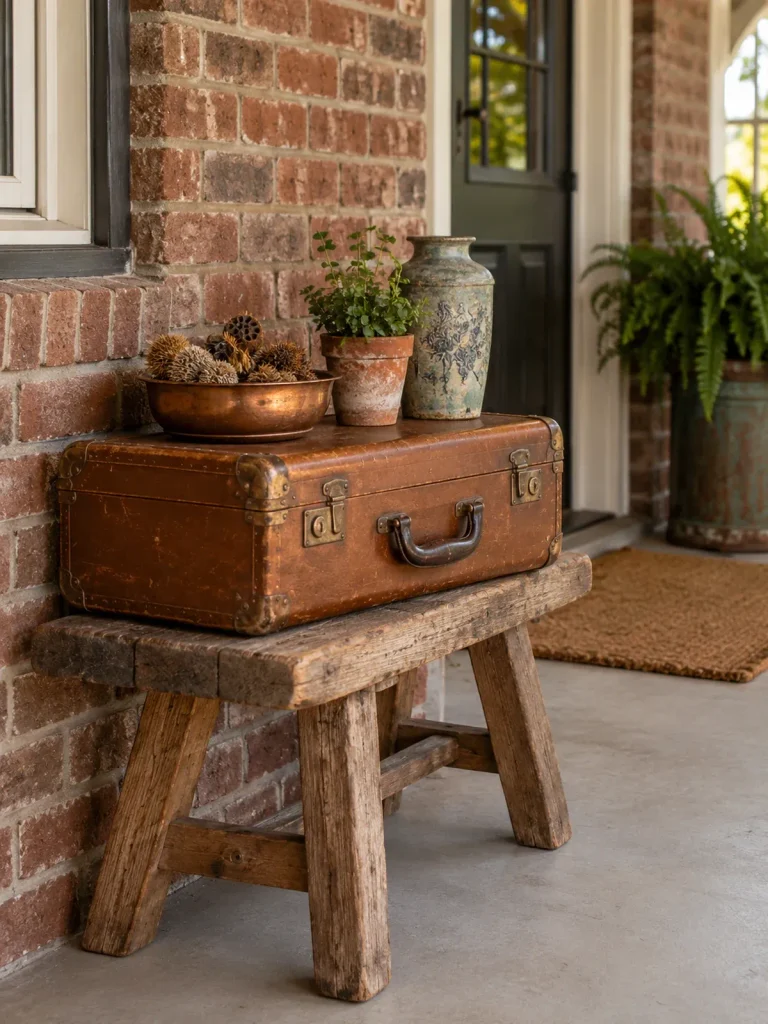
A scuffed suitcase can become a charming display base in a dry porch corner. Set one closed case on a broad, sturdy stool and add a small copper bowl of seedpods. Nearby pottery gives the arrangement a few contrasting shapes without needing an elaborate seasonal haul.
Keep this vignette decorative and low, rather than building a tall tower of luggage. Check the stool’s stability and the suitcase’s condition before placing anything on top; fragile lids aren’t dependable shelves. Leather, fabric, and paper linings need shelter from dampness. Choose a side wall where the display won’t be kicked or brushed by bags, and change one natural detail as the seasons shift.
14. Build a Useful Landing Spot Around a Vintage Bench
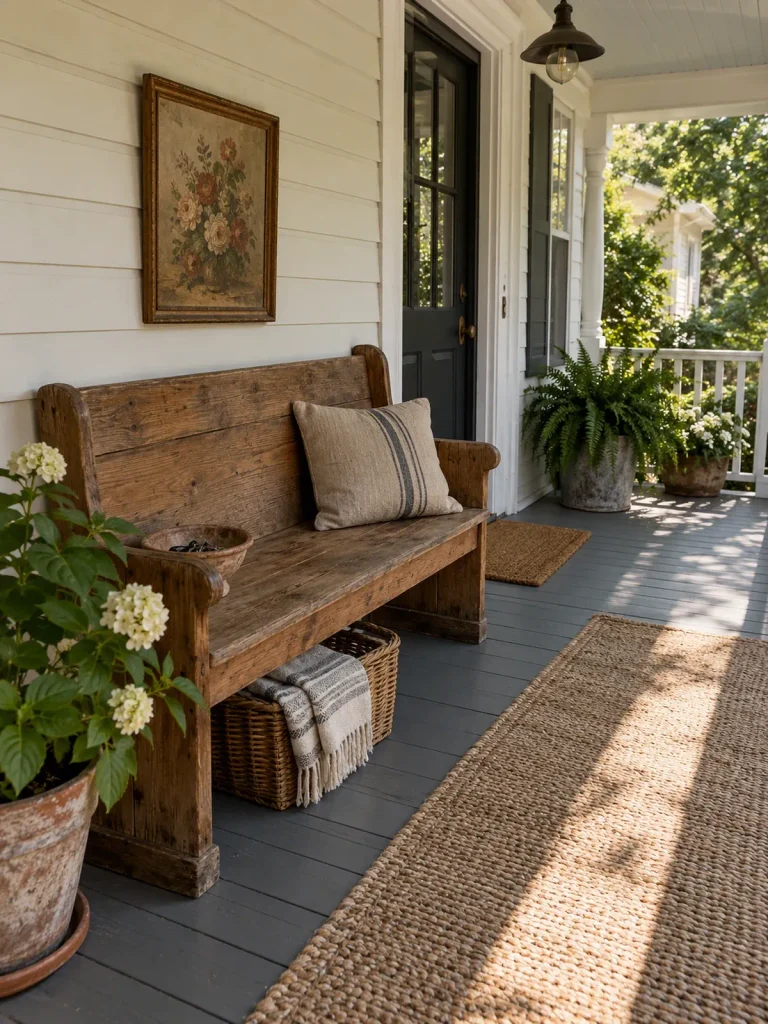
A sturdy pine bench offers a simple place to pause with shopping bags or sit while adjusting shoes. A secondhand basket underneath holds a folded throw, while a small pottery bowl at one end provides a temporary spot for keys when you’re outside. A modest floral print adds a decorative layer above it.
Choose a bench with a depth that suits the porch, allowing the door to open fully. Test its stability and inspect the underside before treating it as seating. Keep the bowl away from the edge and bring keys indoors afterward. Leave most of the seat clear so the bench earns its space instead of becoming another display shelf.
15. Give Collected Copper and Brass a Garden Role
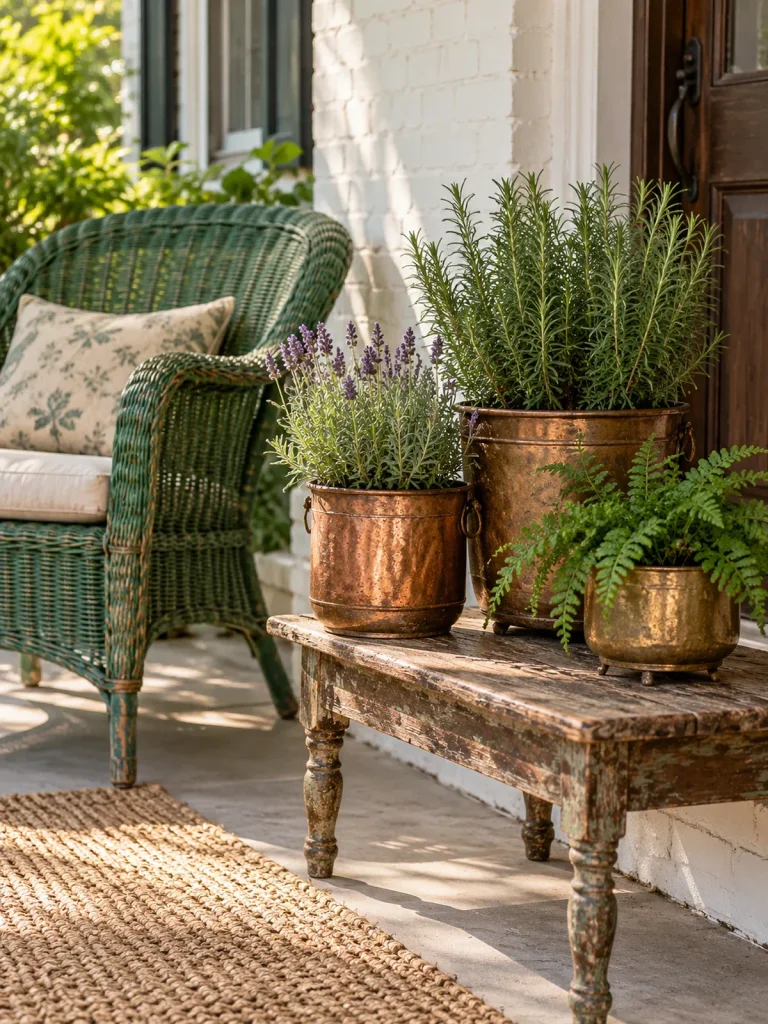
Old copper and brass vessels add warm highlights among porch plants. A mixed group on a low secondhand wooden table looks richer when the finishes vary slightly, with darkened handles and patches of patina left visible. Herbs and a fern soften the metal without hiding it completely.
Use the vessels as decorative outer pots rather than planting directly into unknown containers. Remove nursery pots for watering and empty the vessels before returning them. Match each plant to the porch’s actual light, even if that means choosing different greenery from the inspiration. Keep the table stable and the collection small enough to move easily when weather or cleaning requires it.
Make Unrelated Finds Look Like They Belong Together
Choose one anchor piece before adding smaller treasures. A bench, a pair of chairs, or a little table tells you how much space is left and what the porch will actually do.
Then repeat two or three elements across the arrangement. Blue stripes can echo blue shutters; warm wood can connect a trunk with a chair; woven baskets can relate to a wicker seat. Repetition gives the eye a path through pieces from different eras.
Before bringing home another find, check three things:
- Fit: Measure the object, the doorway, and the space needed to use it comfortably.
- Condition: Look underneath furniture and inside containers. Pass on unstable pieces or items with badly deteriorating surfaces.
- Exposure: A roof helps, but wind, humidity, and temperature changes still reach a porch. Choose pieces you can maintain and move when needed.
The furniture and decorative pieces can all come secondhand. Allow for practical supplies such as secure fasteners, plant trays, or cleaning materials, and include those needs when deciding whether a find is worth bringing home.
Frequently Asked Questions
How do I keep a thrifted porch from looking cluttered?
Create one main arrangement and leave open floor around it. Repeat a few colors or materials, then remove anything that competes with the main furniture. Empty space helps the interesting finds stand out.
Can vintage indoor furniture stay on a covered porch?
Some pieces can be used temporarily in a protected spot, but a roof doesn’t make indoor furniture weatherproof. Consider the material, local conditions, and your ability to move it inside. Keep valuable or delicate pieces indoors.
What should I thrift first for a tiny front porch?
Start with one useful, properly sized piece, such as a shallow bench or a single chair. Add a small container or wall accent only after checking door clearance and the route to the steps.
Do all my vintage finds need to be from the same era?
No. Similar colors, proportions, or textures can connect pieces from different decades. A wicker chair, metal table, and ceramic planter can work together when each has a clear place and purpose.
Can I decorate this way without repainting every find?
Yes. Clean, sound pieces can keep their existing finishes. Use repeated textiles, pottery colors, or natural materials to connect them. Avoid treating peeling or damaged surfaces as a necessary part of the vintage look.
Start with One Find You Can Actually Use
Choose the idea that fits your porch’s space and weather exposure, then build around one secondhand piece you already like. A comfortable chair, a useful bench, or a compact plant display gives the porch a purpose. Add the smaller vintage details slowly, keeping the entrance clear and leaving enough room to enjoy what you’ve collected.