
You pull a chair onto the porch, and your dog follows you outside, only to pace by the door or squeeze onto your feet. The space looks inviting to people, but there may be nowhere comfortable for a dog to settle, get a drink, or watch the neighborhood without getting overwhelmed.
A useful dog-friendly porch starts with those everyday habits. Some dogs want a shaded bed beside your chair. Others need better footing on the steps, a quieter corner, or a place to pause after a muddy walk. You do not need to turn the whole entrance into a pet room to make it work.
These pet-friendly front porch ideas pair practical dog comforts with approachable decorating choices. Pick the features that suit your dog’s size, behavior, and mobility, then leave enough open space for people and paws. Think of the porch as a place for supervised time together, with an easy return indoors whenever your dog needs it.
1. Give Your Dog a Shaded Bed Beside Your Chair
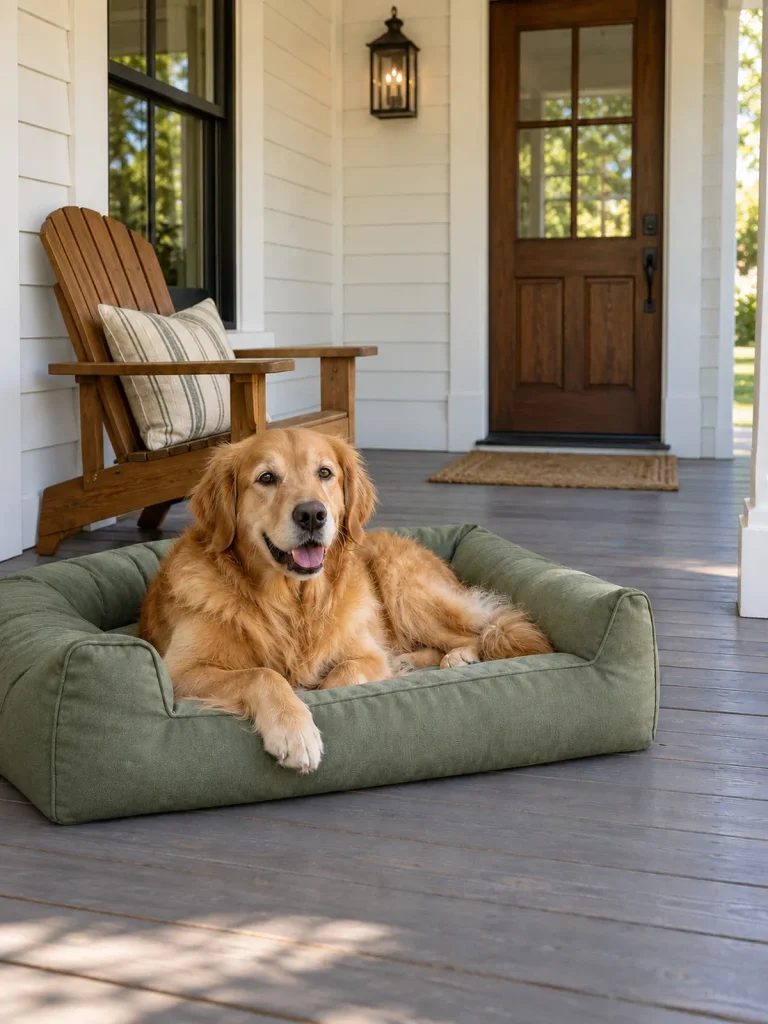
A low bolster bed next to your favorite porch chair gives your dog a place to join you without taking over the doorway. Choose a removable, washable cover in sage, charcoal, or another color that works with your outdoor cushions. Position it where your dog can stretch out rather than curl around chair legs.
Check the shade at the time you actually use the porch, since a roof does not block every angle of sunlight. Bring the bed inside before rain and let it dry fully after cleaning. Shade and fresh water matter, but they do not make extreme heat appropriate for porch lounging. ASPCA
2. Try a Low Mesh Cot on a Covered Porch
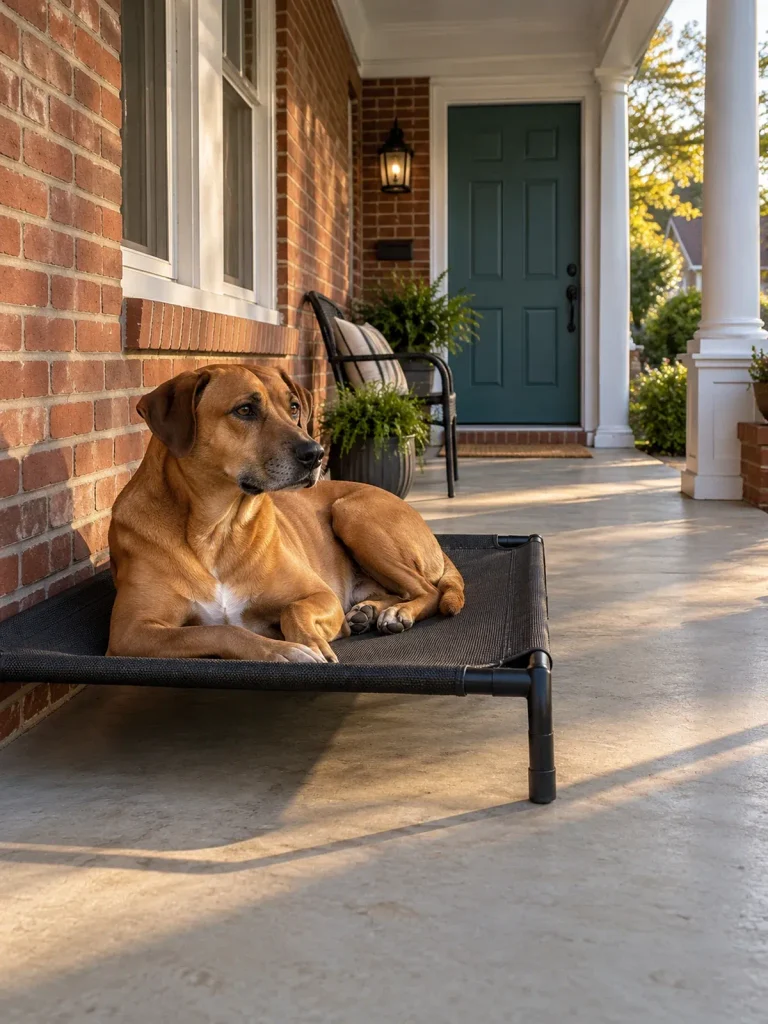
An elevated dog bed creates a different kind of lounging spot: a taut mesh surface with open space underneath. The simple frame fits especially well on brick bungalows, concrete porches, and other spaces where a bulky cushion would feel crowded. Leave room around the cot so your dog can step on from the side they prefer.
Choose a stable model rated for your dog’s weight, with a height they can manage comfortably. Check the mesh and frame regularly for wear, and follow the manufacturer’s outdoor-use guidance. A cot is a seating option, not a cooling guarantee, so keep it in shade and head indoors when conditions become uncomfortable.
3. Tuck a Water Station Away From Foot Traffic
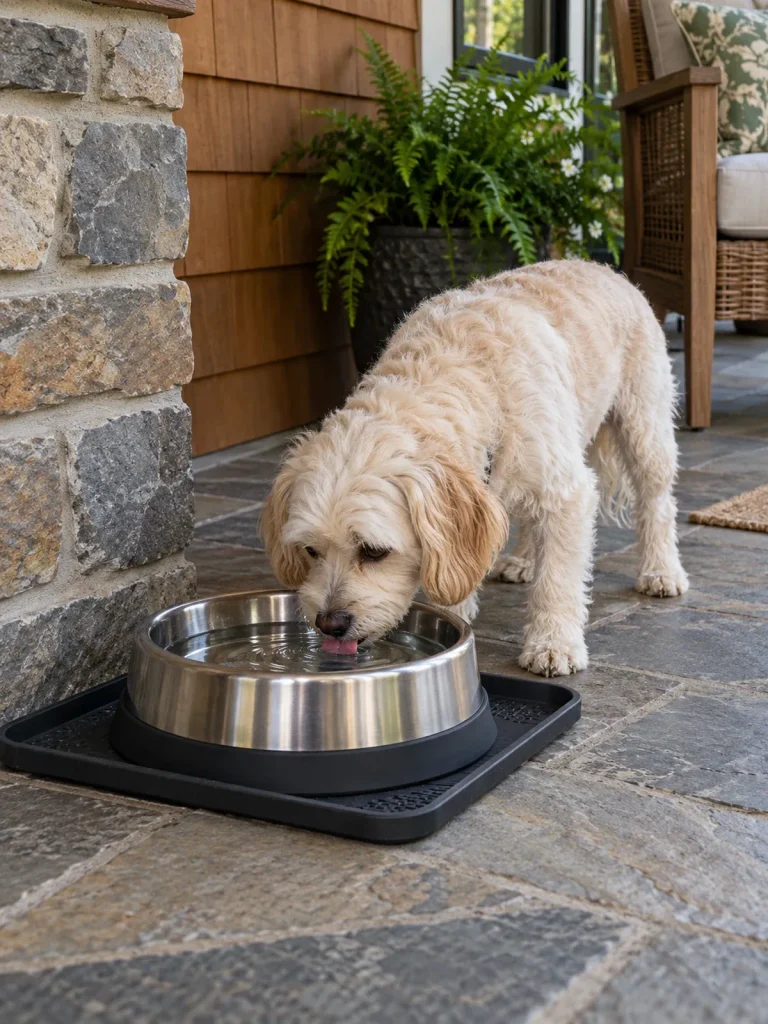
A broad water bowl on a low, washable tray makes the porch more useful after walks and during short outdoor breaks. Stainless steel keeps the look simple, while a nonslip base helps limit sliding. Place the station against a wall where your dog can reach it without standing in the front door’s swing.
Keep the bowl shaded and refill it with fresh water rather than letting yesterday’s water sit outside. Wash both bowl and tray frequently, and empty any trapped water underneath. A tidy drinking corner works on even a small front porch, provided it does not narrow the walking route or leave a slippery puddle.
4. Add a Properly Fitted Porch Gate
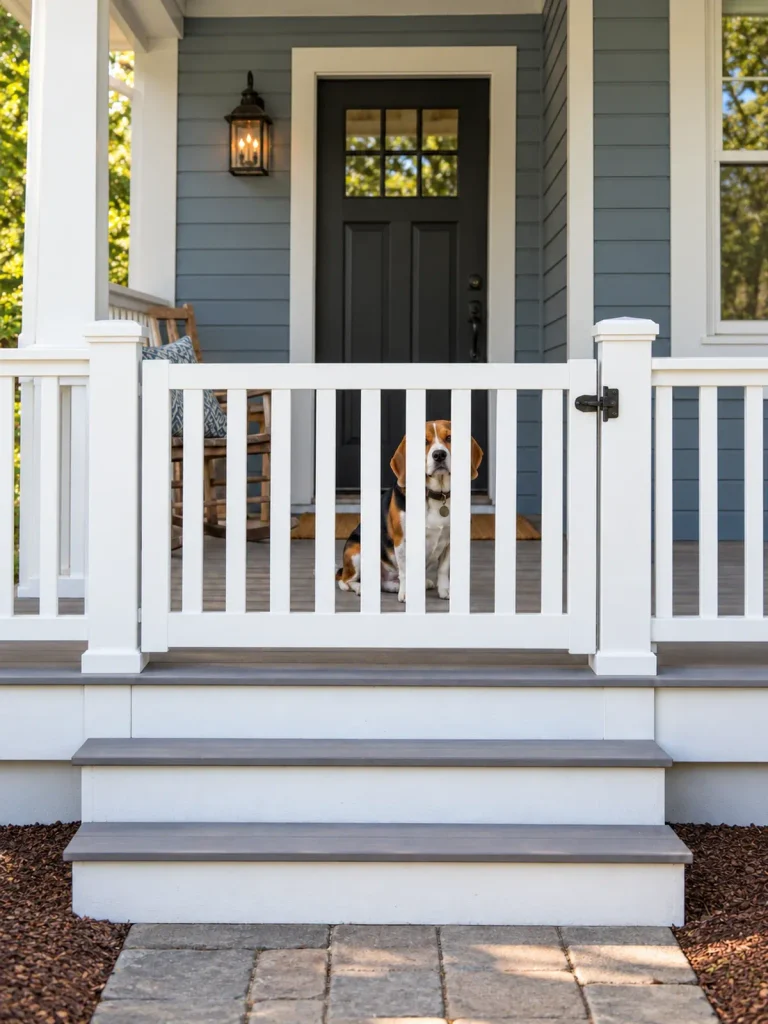
A gate that coordinates with the existing railing can make supervised porch time easier for a dog who might otherwise head straight down the steps. White vertical pickets suit a cottage; a simple dark metal design can blend with more modern railings. The important part is how the gate fits, not how decorative it looks.
Choose outdoor-rated hardware and a closure appropriate for your dog’s size, strength, and escape habits. Check the bottom gap as carefully as the spaces between uprights. Have an appropriate installer assess attachment points when needed, especially near stairs. A gate cannot replace supervision, and a dog who jumps or climbs may need a different arrangement.
5. Close Off Dog-Sized Gaps in the Railing
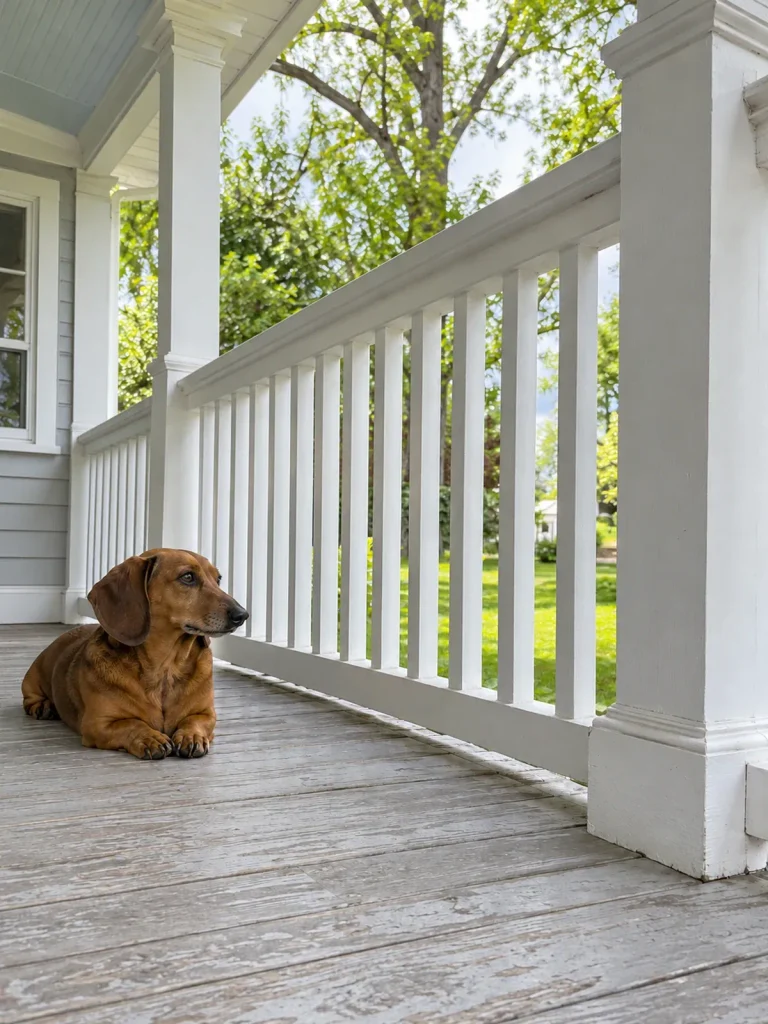
Small dogs can find openings that barely register from a standing person’s viewpoint. Coordinated vertical infill can make a porch boundary feel more complete without turning the space into a solid box. Match the finish to the existing railing so the addition reads as part of the house.
Assess the entire perimeter at your dog’s level, including spaces beneath rails and beside posts. Select a durable, smooth solution without sharp wire edges, loose ties, or footholds. Railing changes should preserve the structure’s required protective function, so get qualified help for modifications. Even closely spaced infill is not a reason to leave a determined escape artist unattended.
6. Lay a Flat Runner Along the Walking Route
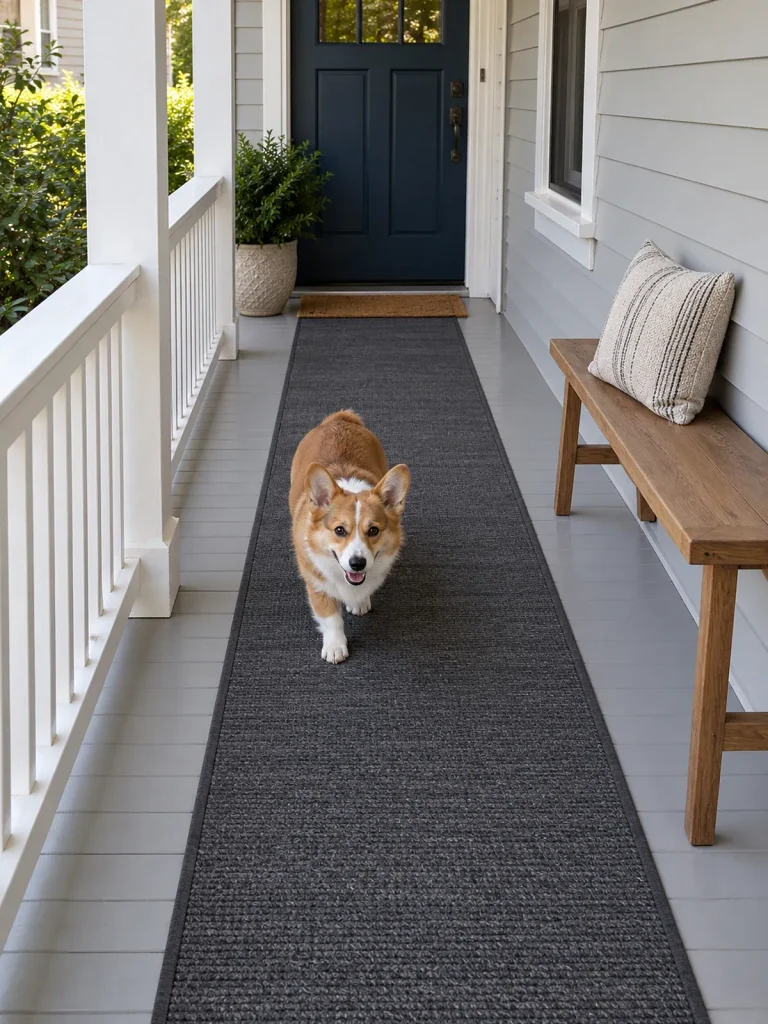
A low-profile runner can define a clear route between the porch steps and front door while giving paws an alternative to a slick-looking floor. On a narrow porch, a simple charcoal or muted striped design adds warmth without the visual clutter of several small mats. Keep benches and planters outside its edges.
Look for outdoor suitability, secure backing compatible with your flooring, and edges that stay flat. Test the runner for movement before inviting your dog onto it, then check again after rain. Remove it if it slides, bunches, or traps moisture. Skip fringe and loose loops for dogs who like to pull at fabric.
7. Make Existing Steps Easier to See and Grip
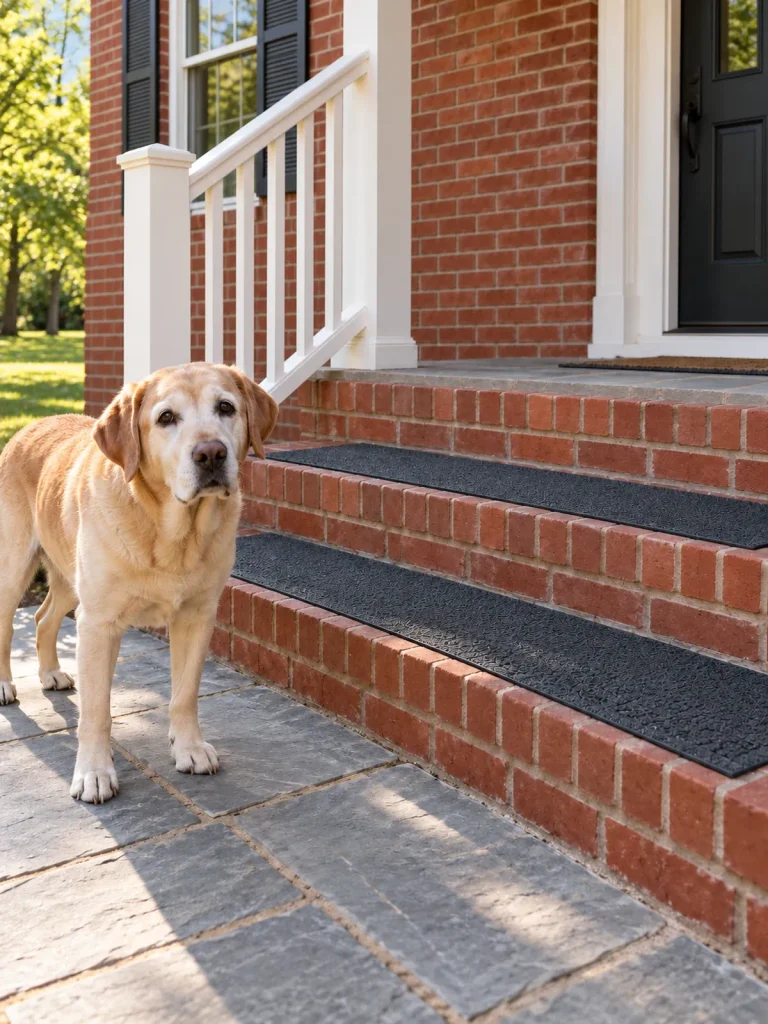
Broad, securely installed outdoor stair treads can give each step a more visible walking surface. Dark textured treads against light wood or warm brick create a clear visual rhythm, while a restrained color keeps the entrance looking residential. Keep the landing open so your dog does not have to turn around a planter before climbing.
Use products designed for the step material and weather exposure, and follow their installation instructions. Lifted corners, worn surfaces, and trapped debris need attention. Better traction does not make stairs suitable for every dog. If your dog hesitates, slips, or seems uncomfortable, ask your veterinarian about an appropriate access option instead of urging them onward.
8. Provide a Gentle Ramp for a Low Porch
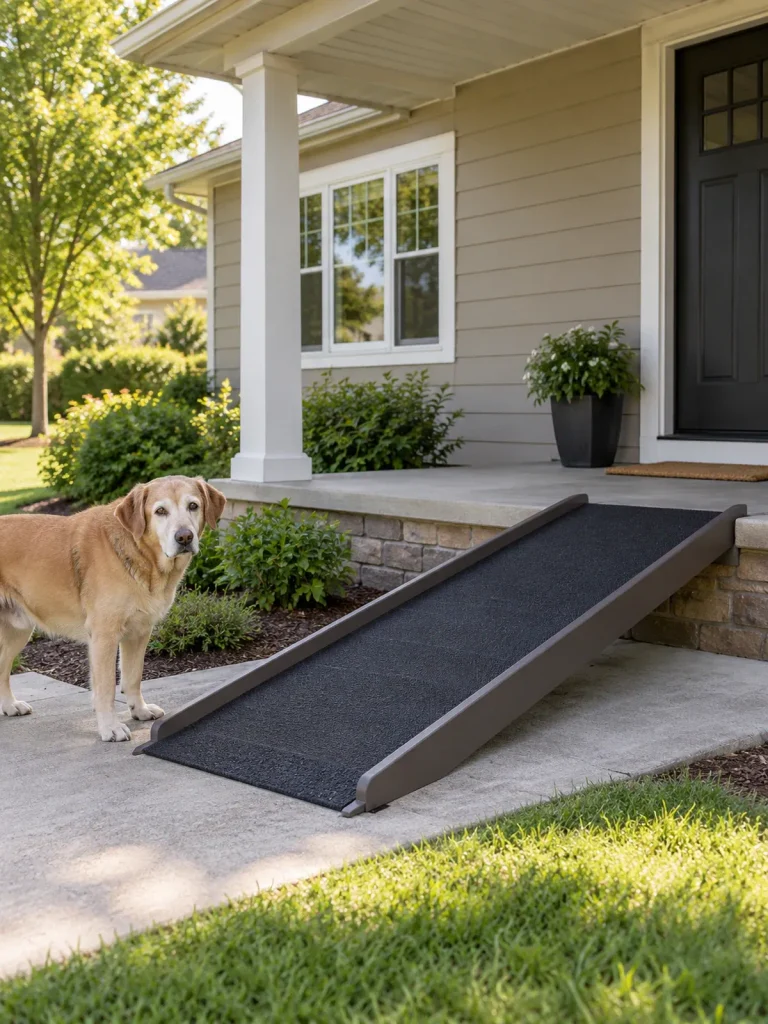
A dog ramp can make a low porch more approachable for a dog who struggles with steps. Visually, it works best when the surface, side edging, and placement relate to the house rather than looking like an afterthought. Keep the approach and upper landing clear, with enough room for a calm turn.
The ramp needs suitable width, traction, load capacity, and a manageable incline for your particular dog. A short board over a tall staircase is not an equivalent solution. Consult your veterinarian about mobility needs and a qualified installer for fixed work. Introduce the ramp gradually without pulling or pushing your dog onto it. akc.org
9. Create a Small Paw-Cleanup Landing
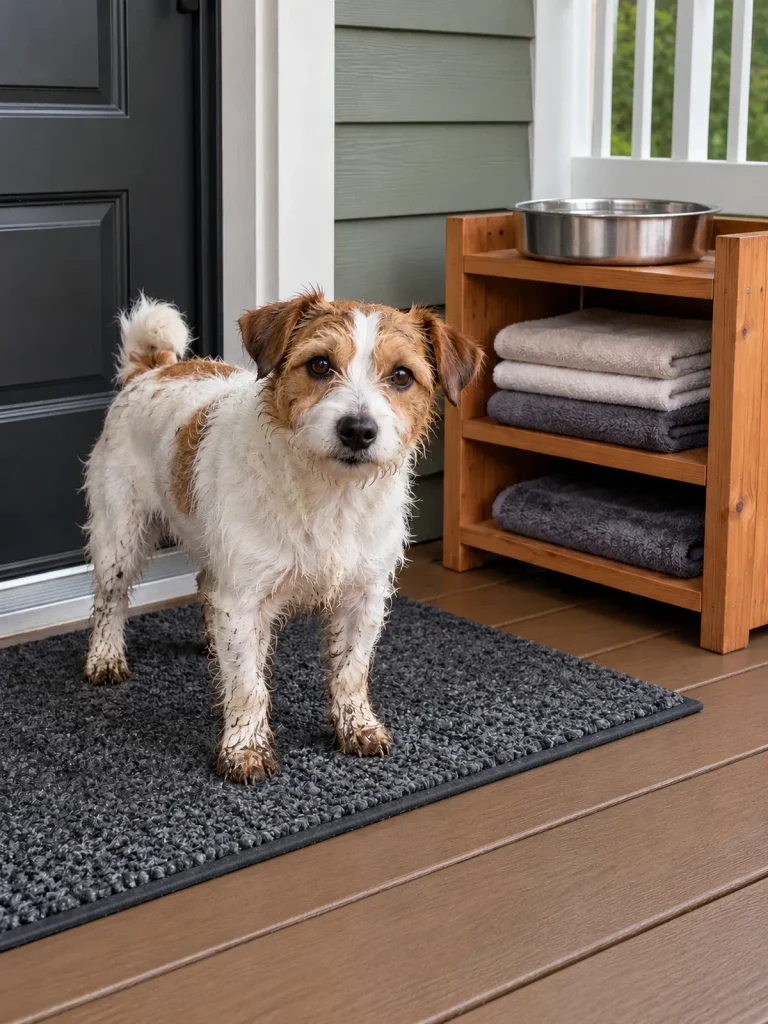
A washable landing mat, a few clean towels, and a shallow basin can turn the sheltered side of your entrance into a useful pause after wet walks. Keep the arrangement compact, with supplies on a narrow shelf rather than scattered across the floor. Your dog should be able to stand comfortably while you clean their paws.
Use plain water or a cleaning product specifically suitable for dogs, following its directions. Do not leave cleaning supplies within chewing reach. Empty the basin afterward and hang damp towels somewhere they can dry. This is a quick cleanup station, so it does not need plumbing, a large tub, or a permanent puddle by the door.
10. Use a Storage Bench With an Accessible Toy Cubby
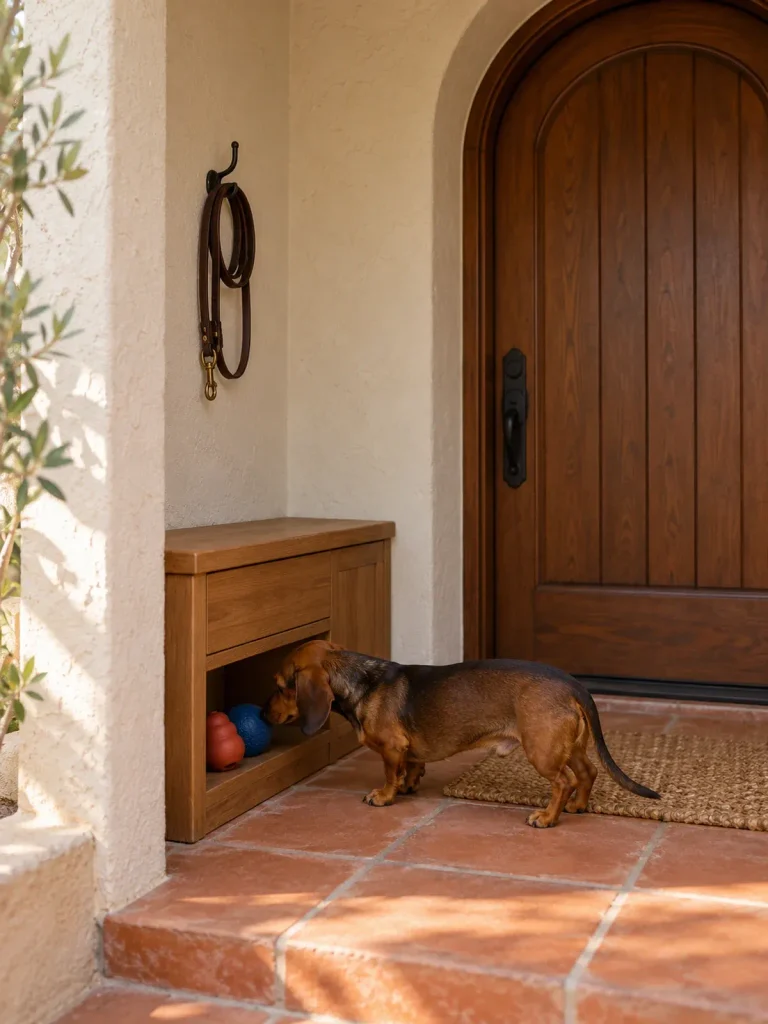
A slim bench can hide the practical supplies that make dog walks easier while keeping one or two familiar toys close at hand. A low open cubby lets your dog investigate an approved toy without rummaging through a basket full of leashes, towels, and packaging. Natural wood looks warm against painted siding or stucco.
Choose a stable bench with smooth edges and keep the top clear enough for sitting. Store treats, waste bags, and spare gear in a separate secured compartment or indoors. Remove toys with loose pieces and bring them inside after use. A small selection is easier to clean and less likely to spread across the entrance.
11. Pair a Compact Loveseat With a Floor-Level Dog Spot
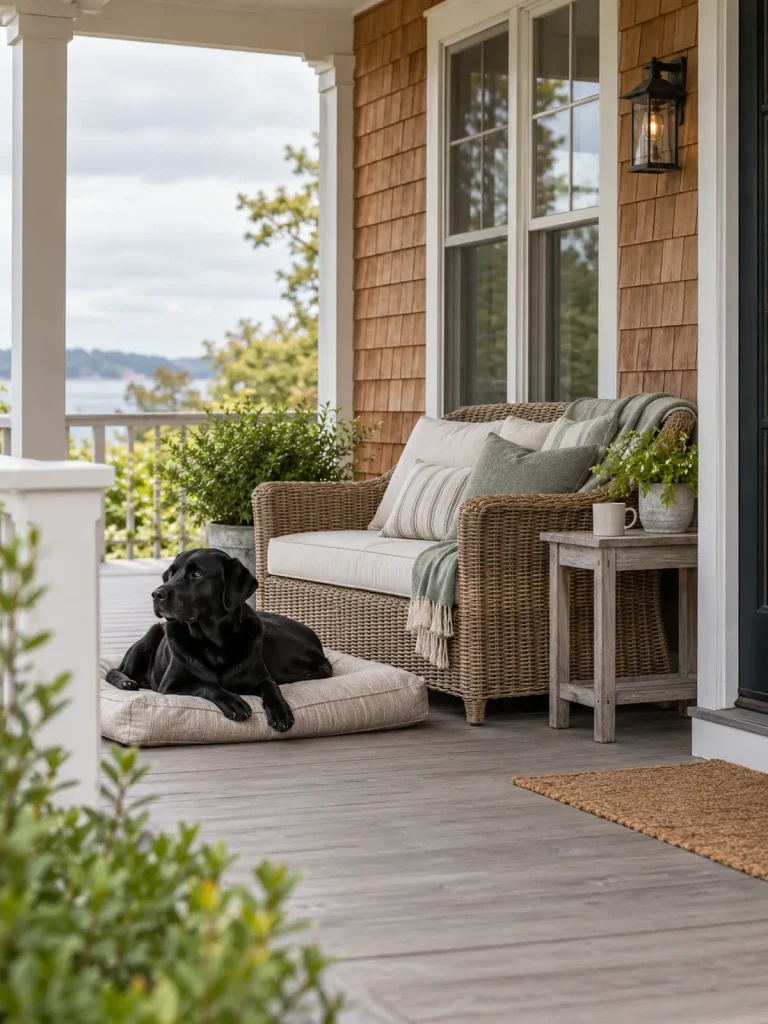
Dogs who follow their people may care more about proximity than elaborate pet furniture. A stationary porch loveseat with a comfortable mat beside it creates a shared sitting area while giving your dog their own space. Repeat one cushion color in the mat to make the arrangement feel intentional.
Place the dog spot beside the seating rather than beneath moving furniture or in the route to the door. A stationary seat avoids the shifting footprint of a rocker or swing in a tight layout. Check that your dog can rise and turn without bumping the side table. Washable covers make this setup easier to maintain through shedding season and muddy afternoons.
12. Screen a Quiet Corner From Street-Level Activity
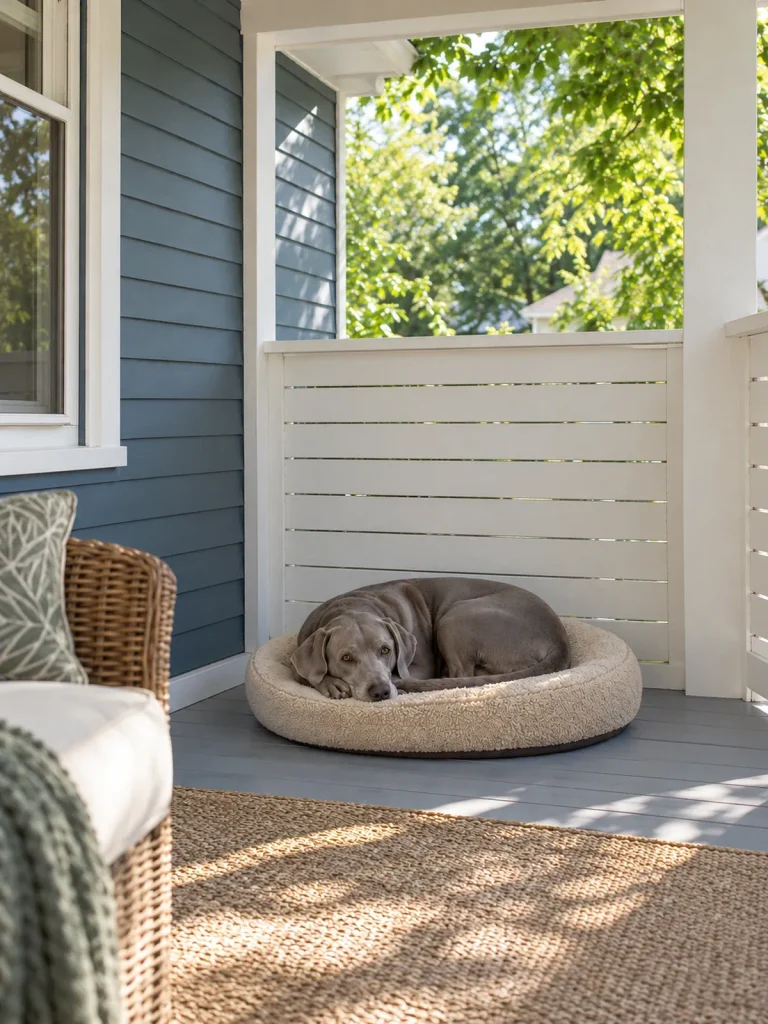
A secured privacy panel along one side of the porch can create a retreat for a dog who struggles to settle while watching every passerby. An opaque lower section blocks some direct sightlines, while open space above keeps the corner connected to the rest of the porch. Soft gray bedding and simple white slats keep the effect calm.
Place the resting spot behind the panel, away from the stair opening. Preserve airflow, clear exits, and the function of existing railings. Avoid dangling curtain cords or panels a dog could knock over. Reducing the view may help some dogs, but it is not a treatment for distress; move indoors if your dog remains unsettled.
13. Reserve a Ground-Level Neighborhood Lookout
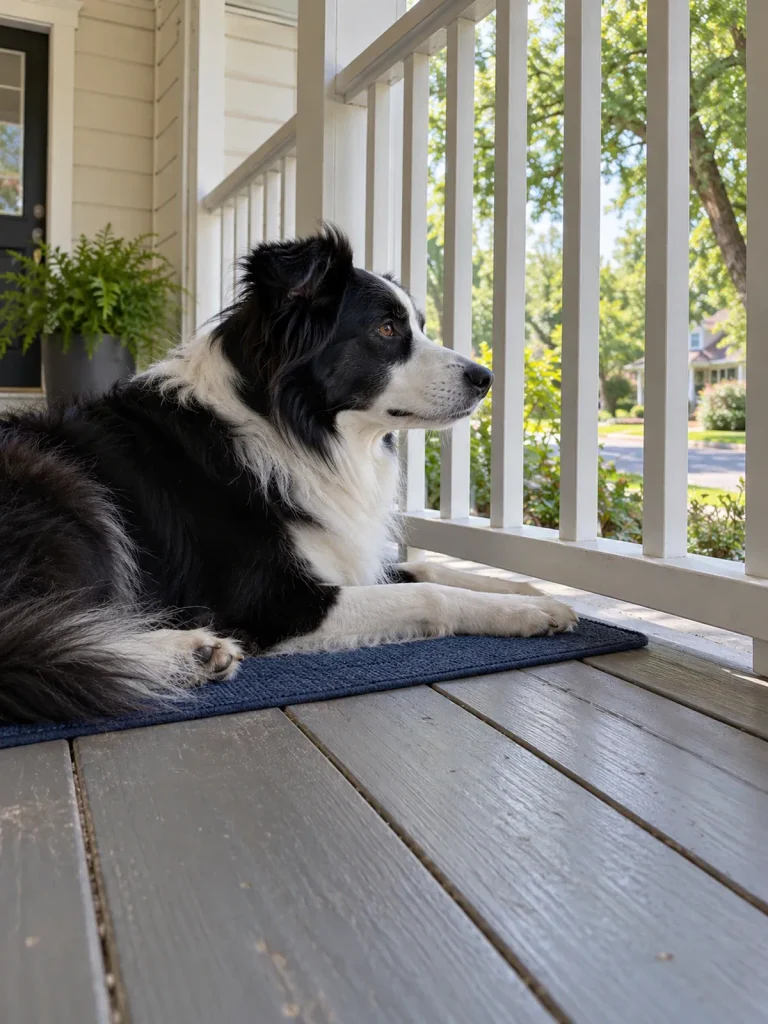
For a relaxed dog who enjoys watching outside activity, leave a comfortable floor-level spot near the railing. A thin mat can mark the place without raising your dog toward the top rail. The look is pleasantly simple: an open view, a little shade, and enough space to lie down rather than pace.
Choose a position away from the gate and evaluate the railing for your dog’s size. Do not add a bench, platform, or stacked cushions against the boundary to improve the view. Watch your dog’s response to pedestrians and other animals. If looking out leads to repeated barking or tense behavior, choose a quieter resting spot instead.
14. Soften the Porch With Carefully Chosen Plants
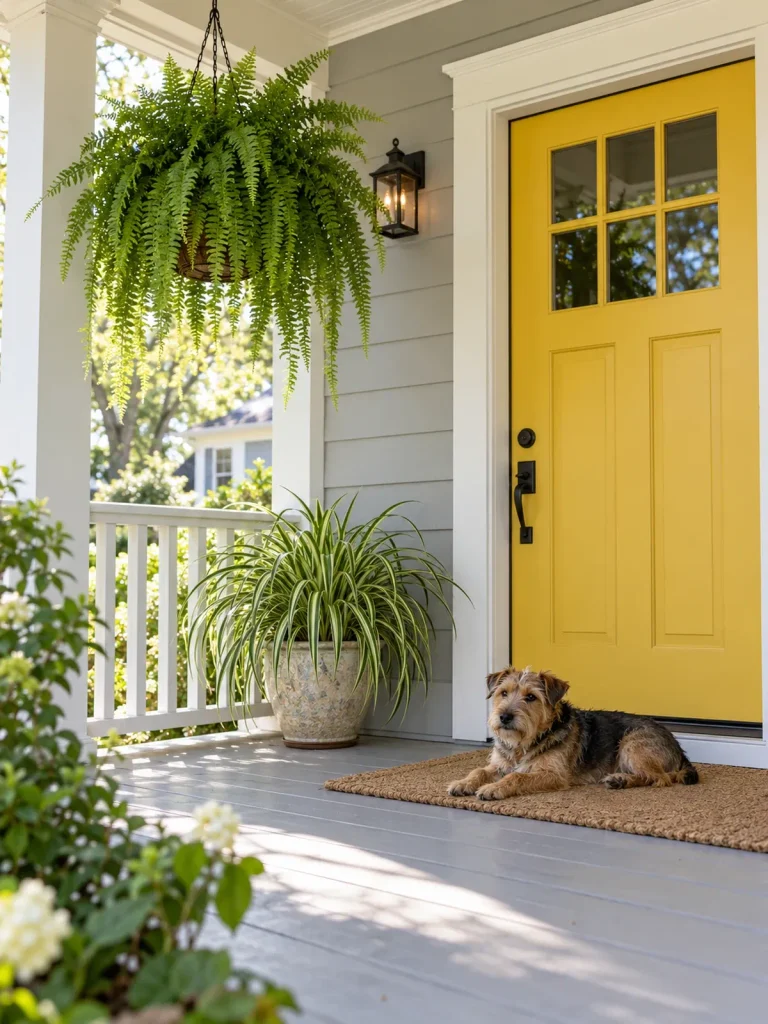
Greenery can make a dog-friendly porch feel finished without filling the floor with fragile pots. Boston ferns and spider plants offer soft foliage; the ASPCA lists both as non-toxic to dogs. Use their botanical names when shopping, since common names can cause confusion. A high hanging fern or sturdy planter outside the walking route adds texture without crowding the dog bed. ASPCA
Non-toxic does not mean intended for chewing. Keep plants, potting mix, fertilizer, and fallen leaves away from curious mouths, and discourage digging. Select plants that suit your porch’s light and climate. Skip cocoa mulch and leave enough distance between containers and furniture to prevent accidental tipping.
15. Make a Screened Front Porch Into a Shared Lounge
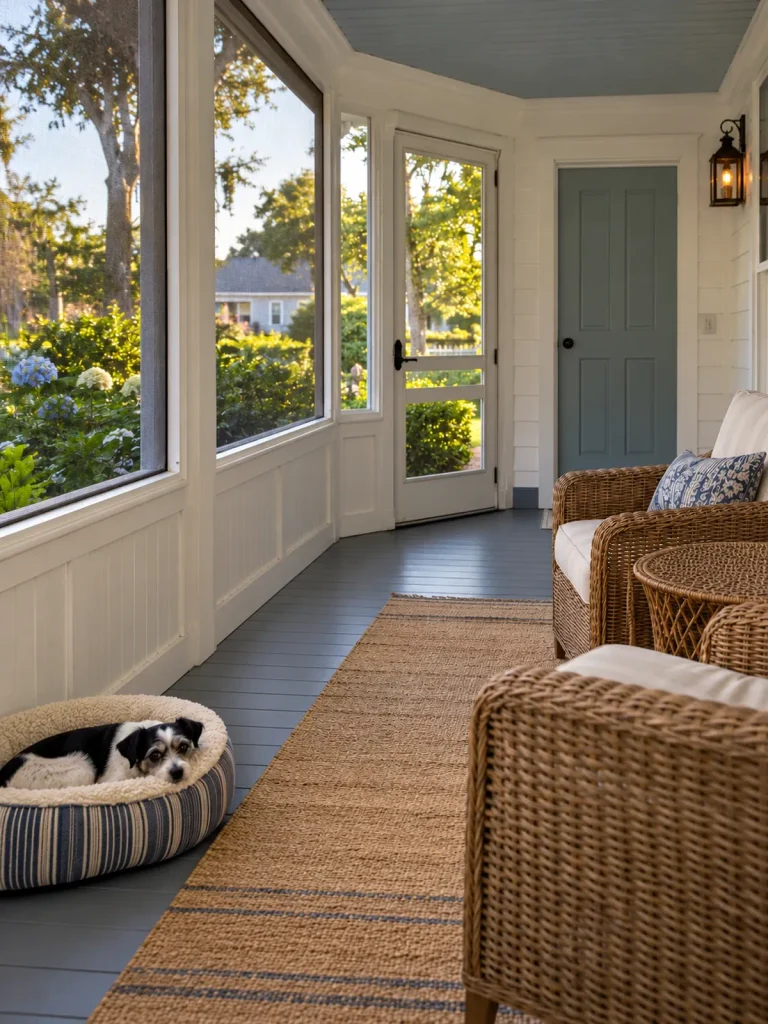
An existing screened front porch offers a useful starting point for a dog who likes outdoor smells but benefits from a defined room. Keep the layout airy, with a dog bed beside the seating and a clear route back inside. A solid lower wall or professionally fitted protective panel can reduce direct contact with the screen.
Inspect door closures, screen attachments, and any low damaged areas before using the space. Standard insect mesh should not be treated as a dog-containment barrier, even when it looks intact. Choose materials and framing suited to your dog’s behavior. Screens also do not control the temperature, so check conditions rather than assuming an enclosed porch stays comfortable.
16. Give Two Dogs Separate Places to Settle
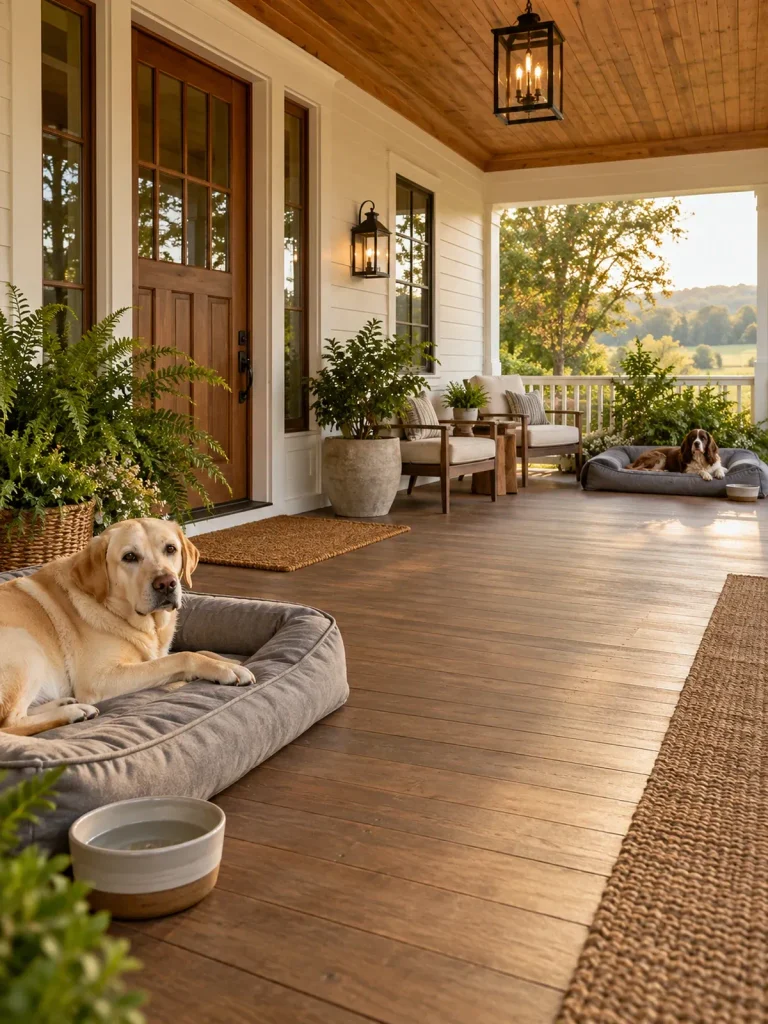
Two dogs do not necessarily want to share a bed, even when they usually get along. Separate resting stations let each dog stretch out without competing for the one comfortable corner. On a wide porch, place beds at opposite ends of the seating area and repeat their fabric color for a coordinated look.
Leave independent routes to the door so neither dog has to step over the other. Add separate water bowls when that helps avoid crowding. Keep food and high-value chews out of a shared lounging setup if either dog guards resources. Watch how the arrangement works in practice, and use separate porch sessions when that is the calmer option.
17. Set Aside a Washable Enrichment Spot
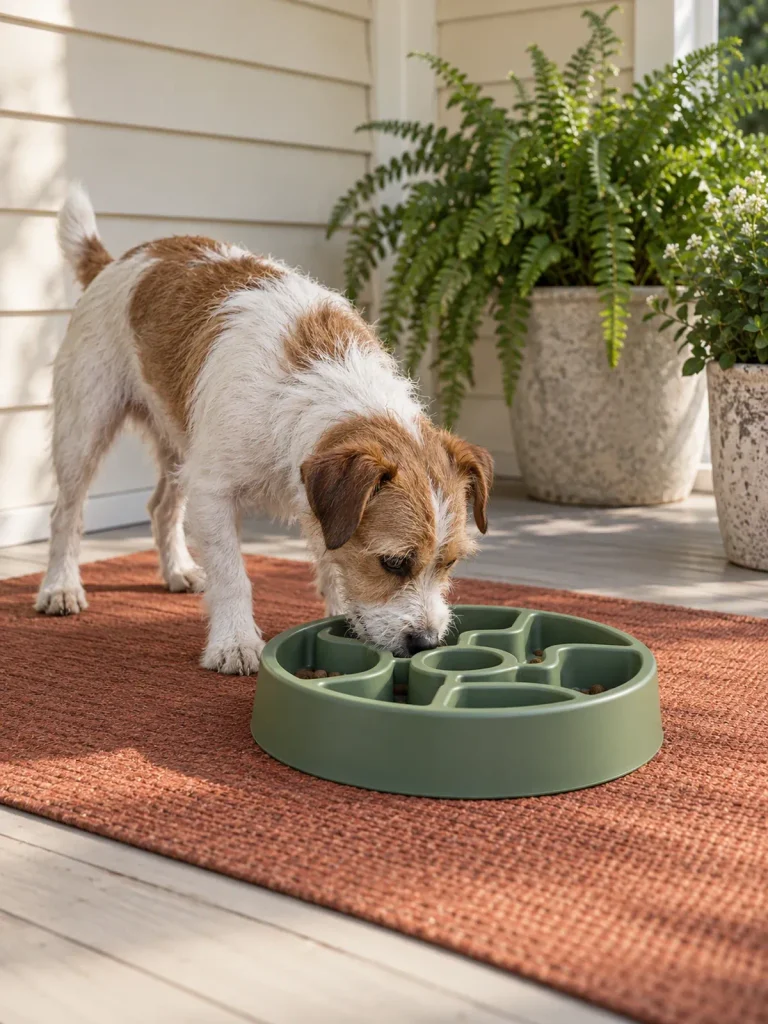
A flat washable mat and one appropriately sized food puzzle can create a short, supervised porch activity without turning the space into a playroom. Set it in a quiet corner away from the steps and water station. Muted green or rust-colored accessories look at home beside ordinary outdoor furniture.
Choose an enrichment toy suited to your dog’s chewing style and use only food they can safely eat within their usual diet. Stay close enough to notice damaged pieces or frustration. Clear away leftovers and wash the toy after the session so food does not attract pests. Keep this as an occasional activity zone, with a separate clean place for resting.
18. Light the Porch for Calm Evening Visits
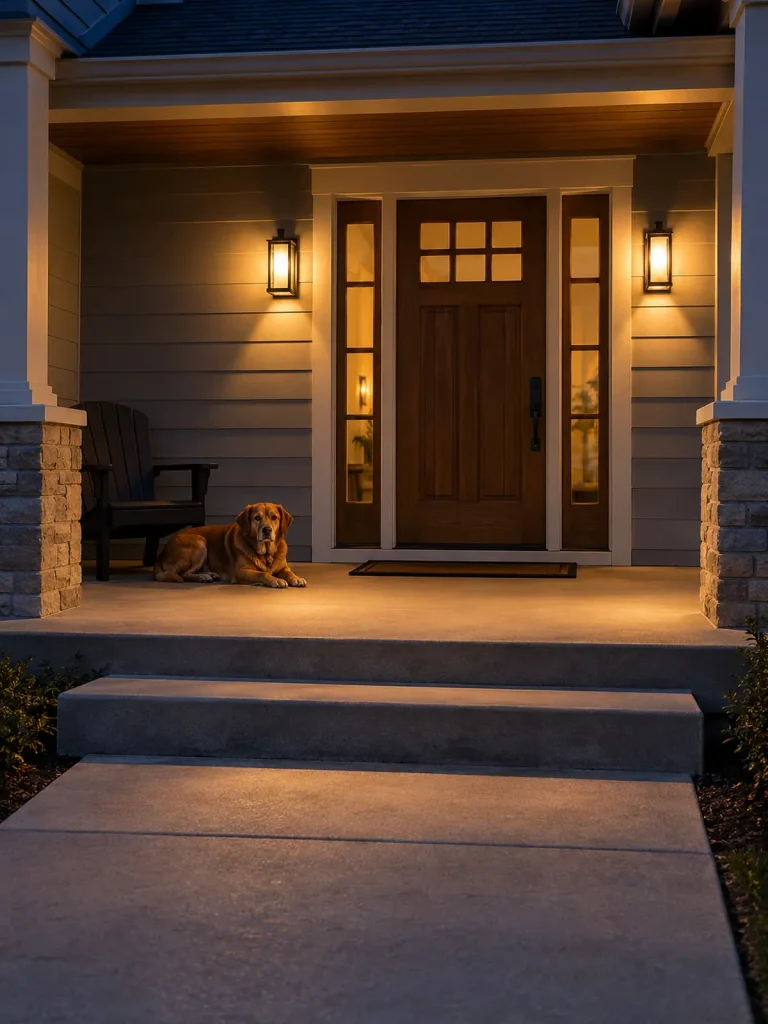
Soft, even lighting makes the porch easier to use when your last dog walk ends after sunset. A shielded wall fixture near the door and appropriate lighting at changes in level can reveal the route without turning the whole porch into a spotlight. Keep the dog bed outside the immediate traffic line.
Choose outdoor-rated fixtures and have new electrical work handled by a qualified electrician. Avoid trailing extension cords, floor lanterns, and open flames where paws or tails could reach them. Check the view from your dog’s height for harsh glare and dark patches. A well-lit porch still needs supervision, particularly when neighborhood wildlife becomes active after dusk.
Choose a Setup Around Your Dog’s Existing Habits
Watch where your dog naturally settles during a short porch visit before buying anything. A dog who stays close to your chair may only need a washable bed and nearby water. A dog who hesitates at the steps needs an access assessment before decorative changes. One who constantly watches the street may benefit more from a sheltered corner than an open lookout.
Start with one resting place, one drinking spot, and a clear path indoors. Add storage or enrichment only after that basic layout works. Recheck the space after rain and at different times of day, since traction, shade, and surface temperature change. Keep porch sessions supervised and bring your dog inside in uncomfortable weather; outdoor furniture is not a substitute for a suitable indoor resting place.
Frequently Asked Questions
How can I make a tiny front porch dog-friendly?
Choose a compact washable mat beside one stationary chair and place a water bowl against the wall. Keep the door swing and walking route fully open. If your dog cannot turn or lie down comfortably, use the porch for brief arrivals and departures rather than trying to fit a lounge into it.
Can my dog stay on the porch while I am away?
These arrangements are intended for supervised use. Gates, screens, and railings can fail or be unsuitable for an individual dog’s escape behavior. Weather and surface temperatures also change. Use an appropriate indoor setup when you are away rather than treating the porch as unattended housing.
What should I look for in a porch dog bed?
Look for enough room to stretch out, easy entry, washable components, and materials suitable for the location. Follow care instructions and inspect for chewing damage. Water-resistant fabric does not mean a bed can remain wet or exposed indefinitely, so store it dry when it is not in use.
Will a ramp help a dog who avoids the porch steps?
A suitable ramp may help, but reluctance can also reflect pain, fear, or poor traction. Ask your veterinarian about new hesitation or mobility changes. Choose stable equipment with appropriate width, traction, weight capacity, and incline, then introduce it slowly with positive reinforcement.
How do I stop the porch from smelling like wet dog?
Remove damp bedding promptly, wash removable covers as directed, and let towels dry completely. Clean bowls and toys rather than leaving them outside between visits. Sweep up fur and check beneath mats for trapped moisture. Avoid masking odors with products your dog may lick or chew.
Start With the Place Your Dog Wants to Be
The most useful pet-friendly front porch is one your dog can navigate and enjoy beside you. Begin with a shaded resting spot, fresh water, and an uncluttered route, then choose the gate, cleanup station, or access improvement your dog actually needs. Let their comfort guide the layout, and keep the decorating simple enough that everyday use stays easy.