
Driveways take up a large part of many front yards, yet the surrounding space is often left as plain lawn or a narrow strip of mulch.
The right driveway landscaping ideas can soften hard pavement, improve drainage, guide visitors, and make the approach to your home feel more intentional.
Whether you have a short concrete drive, a long gravel lane, or limited planting space, these examples will help you compare borders, entrance gardens, lighting, permeable surfaces, and low-maintenance planting combinations.
1. Curved Flower Bed Along a Blacktop Driveway
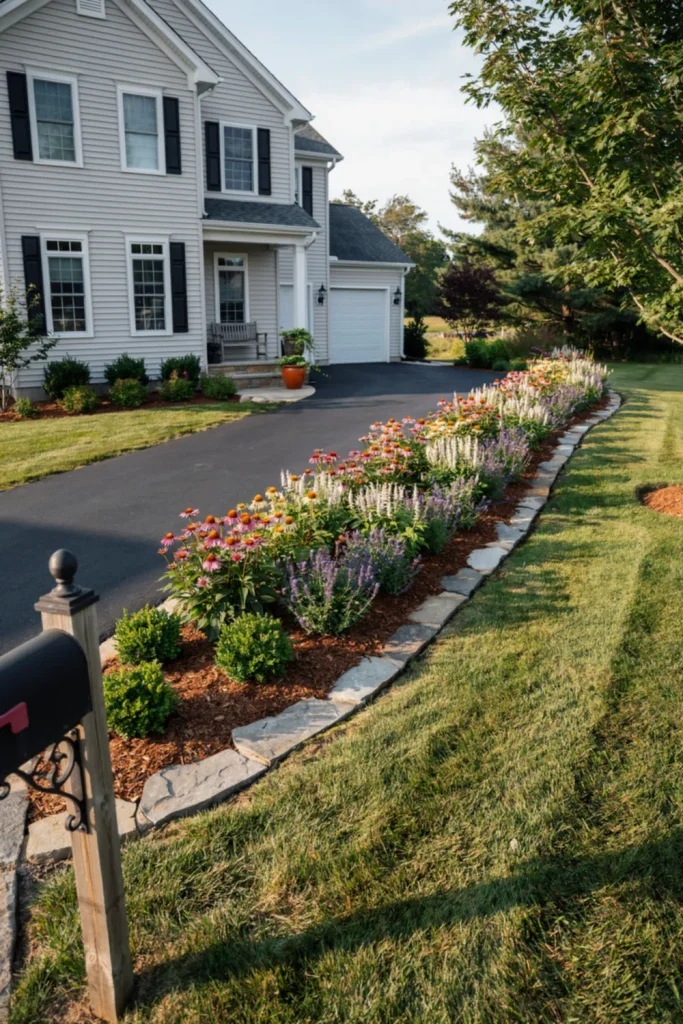
Straight pavement often looks harsh against an open lawn, so a curved flower bed helps soften the transition.
Layer compact boxwoods behind coneflowers, salvia, and lavender to provide structure as seasonal color changes.
Natural stone makes durable blacktop driveway edging and keeps mulch away from tires.
Leave at least 12 inches of clear space beside the asphalt so mature plants do not lean into passing vehicles.
2. White Hydrangea Hedge Along the Driveway
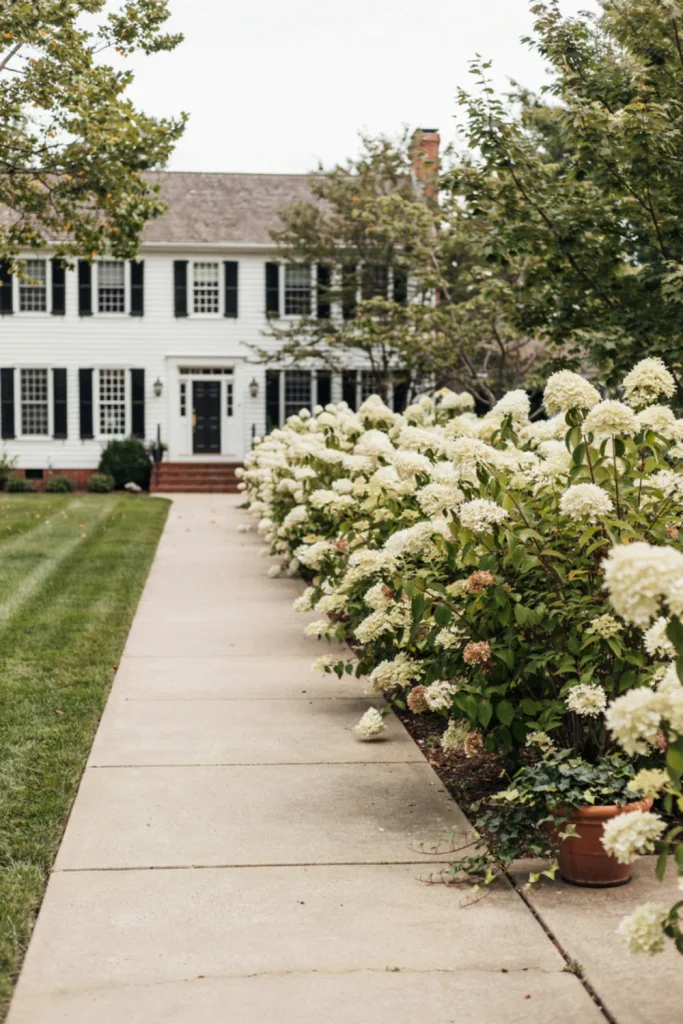
Few plants frame a long driveway as clearly as a repeating row of white hydrangeas.
Their rounded blooms balance the hard pavement while giving front driveway landscaping a consistent rhythm from the street to the house.
Choose a variety suited to the available sunlight, and check its mature width before planting.
Set the hedge far enough back that wet branches will not brush against vehicles after rain.
3. Modern Driveway With Grass Paver Accents
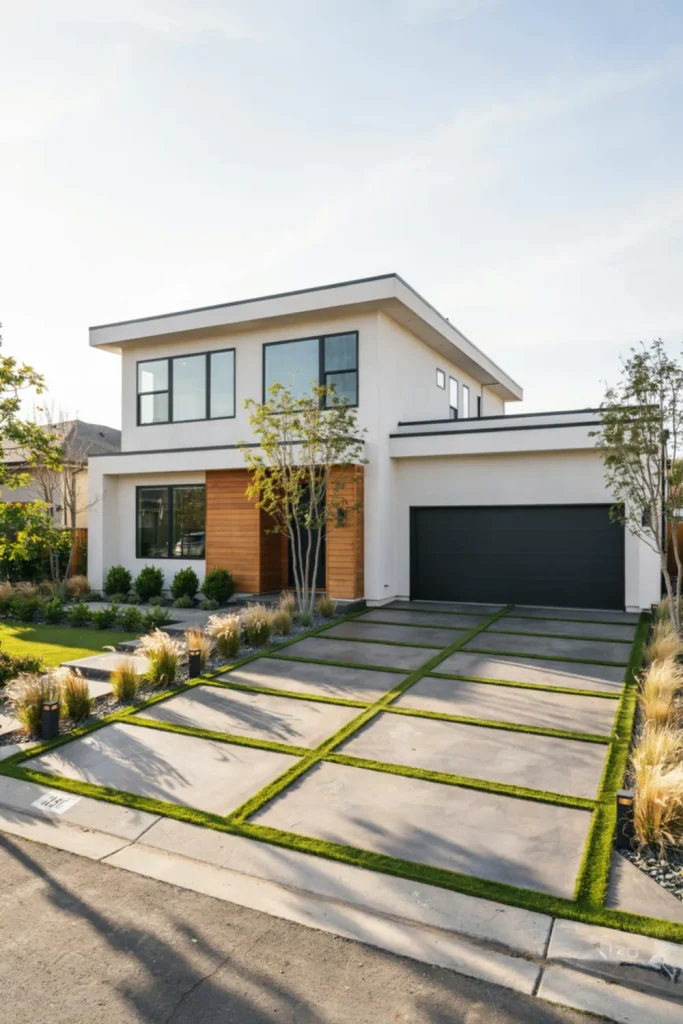
Wide concrete surfaces feel less dominant when narrow bands of green grass interrupt the paving.
Large rectangular slabs and clean turf joints suit modern driveway landscaping, especially when paired with ornamental grasses and sculptural evergreens.
Good drainage matters more than appearance here because standing water can weaken the grass and paving base.
Use a slow-growing turf variety and plan for regular trimming along every concrete edge.
4. Gravel Driveway With Natural Stone Edging
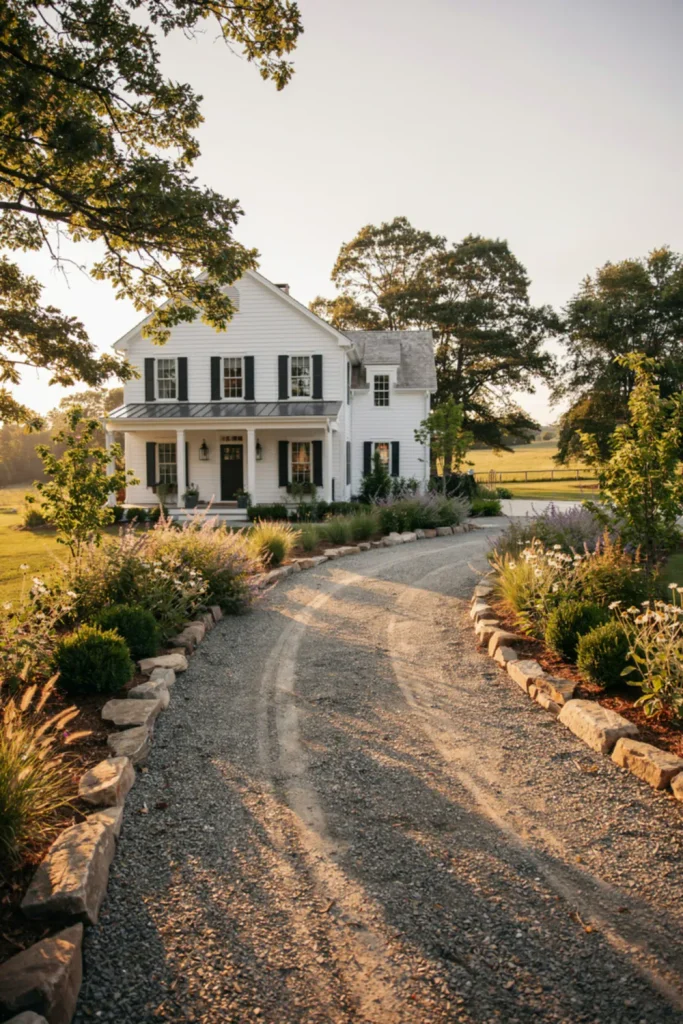
Loose gravel needs a firm boundary or it will gradually spread into nearby beds and lawn.
Irregular fieldstone gives gravel driveway landscaping a relaxed, established look while keeping the driving surface contained.
Catmint, daisies, and compact shrubs can fill the outer border without requiring formal symmetry.
Install the stones over a stable base, and keep their upper edges low enough that they do not catch tires or snow-removal equipment.
5. Simple Driveway Entrance With Matching Planters
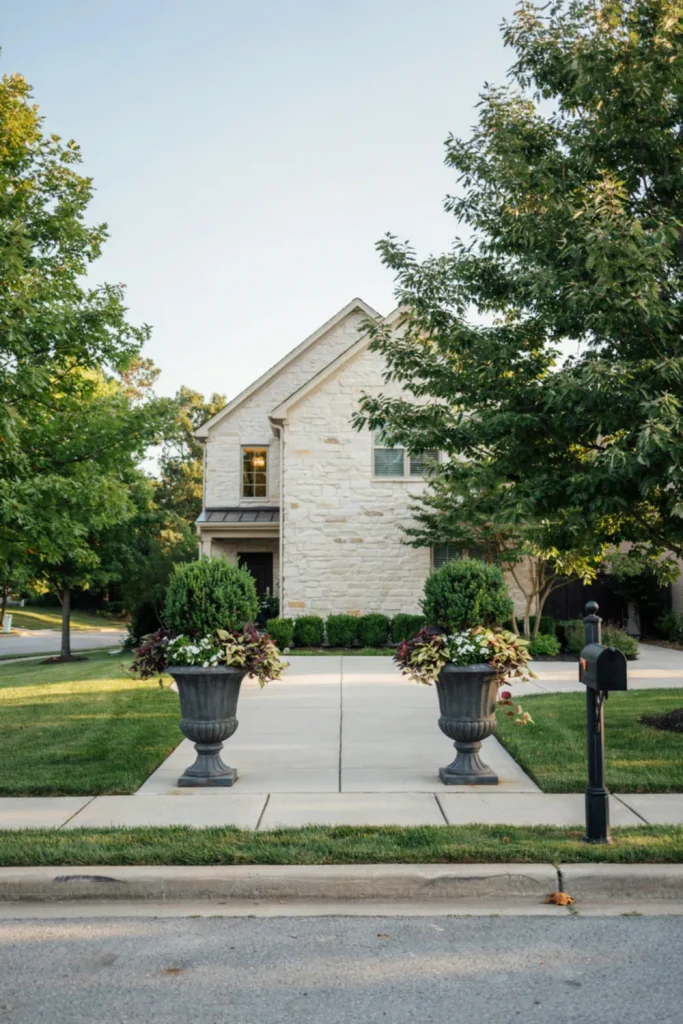
At the street, matching planters can define a driveway entrance without the cost of permanent columns or masonry.
Tall evergreens provide year-round structure, while trailing foliage and seasonal flowers make the arrangement easy to refresh.
Choose heavy, frost-resistant containers that will not tip in wind or crack during winter.
Place them outside the vehicle turning path and far enough apart to preserve a clear view of pedestrians and traffic.
6. Low-Maintenance Ornamental Grass Driveway Border
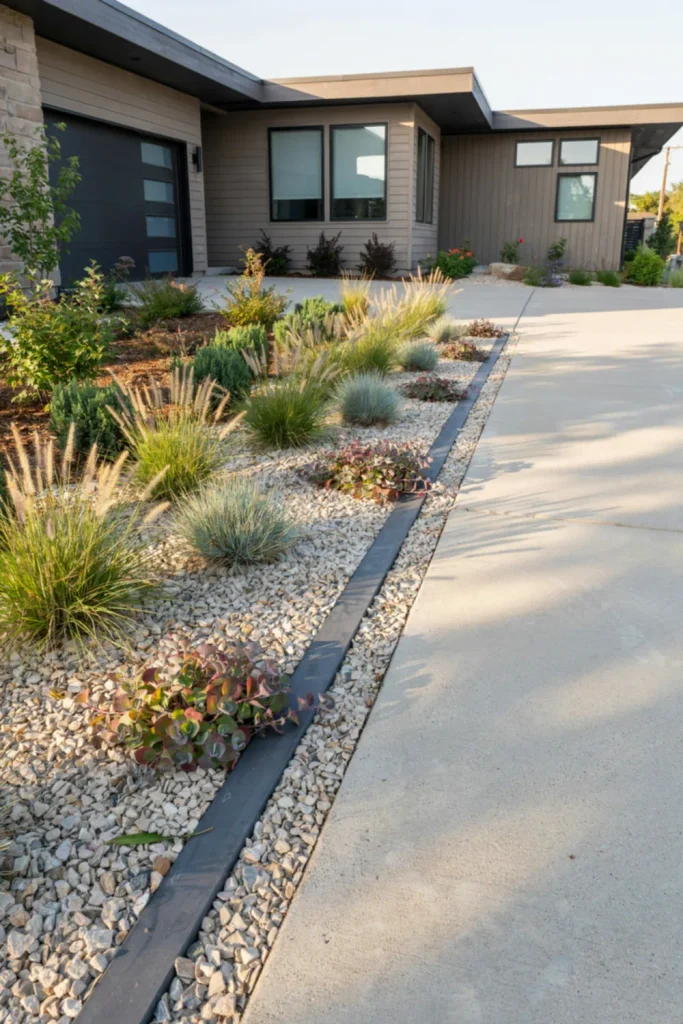
Repeating just four or five dependable plants keeps a long driveway border orderly without making it look sparse.
Feather reed grass, blue fescue, sedum, and compact juniper provide contrasting shapes with limited seasonal upkeep.
Gravel mulch can reduce weeds and prevent soil from washing onto the pavement.
Avoid grasses that flop outward after rain; upright varieties are safer beside cars and easier to maintain along driveway edges.
7. Budget Driveway Border With Mulch and Solar Lights
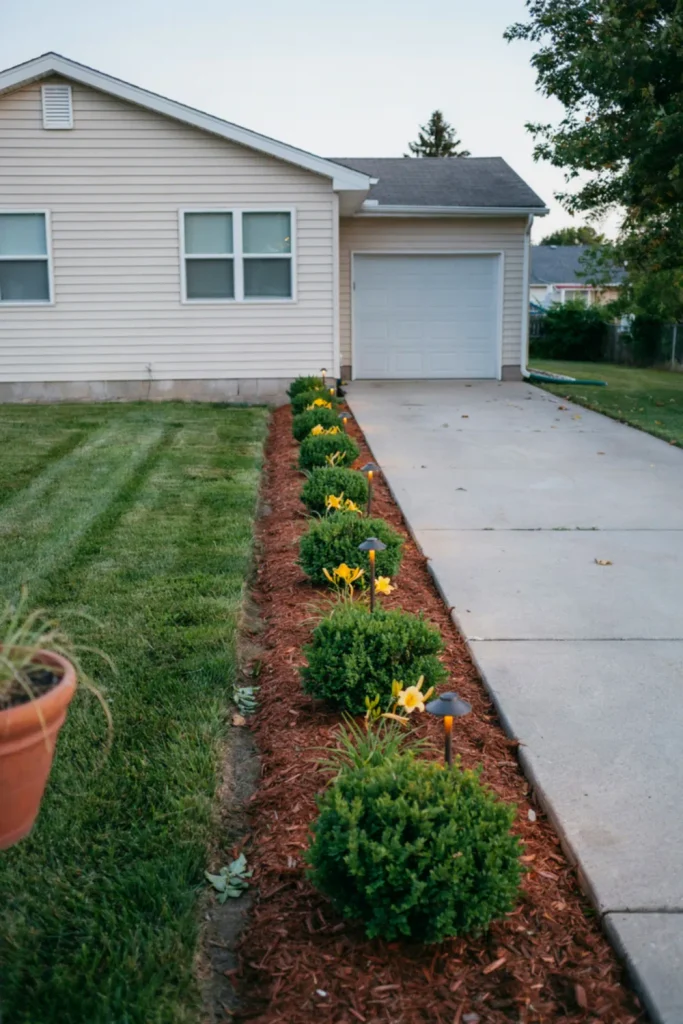
Budget-friendly driveway landscaping works best when a few affordable materials repeat across the full length.
A clean mulch bed, evenly spaced shrubs, daylilies, and simple solar lights can make plain concrete feel more intentional.
Begin with smaller plants and allow room for growth rather than filling every gap immediately.
Test the lights after sunset before installing them permanently, since nearby trees or rooflines may limit their daily solar exposure.
8. Driveway Corner Garden Around a Mailbox
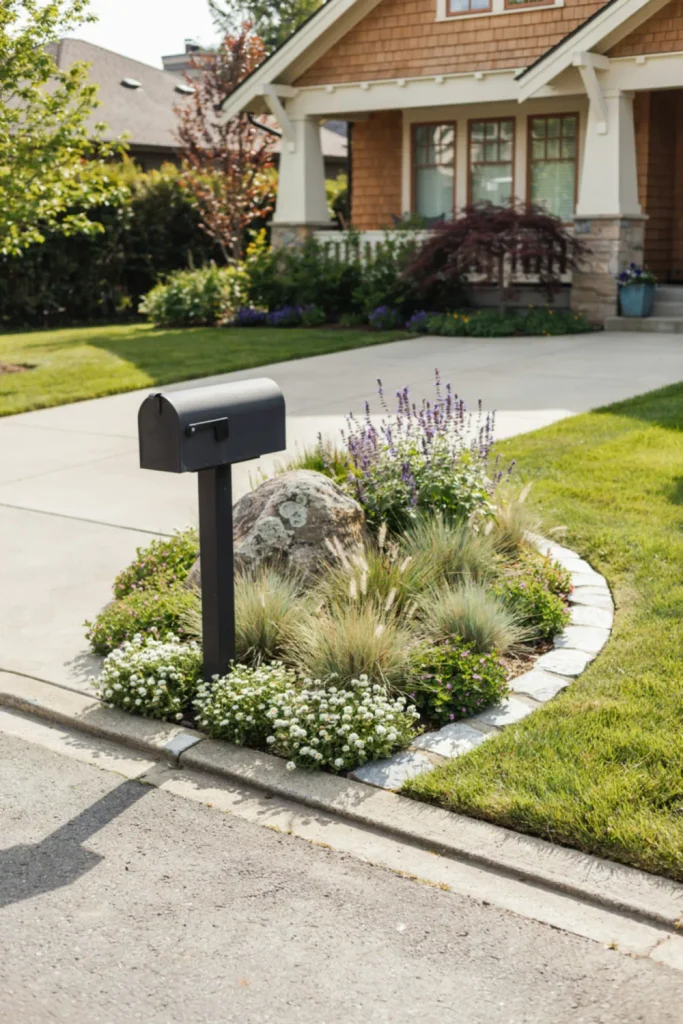
Where the driveway meets the street, a small mailbox garden can provide color without taking over the front yard.
Fountain grass, salvia, alyssum, and creeping thyme offer varied heights while a decorative boulder gives the bed a permanent anchor.
Keep taller plants behind the mailbox and low flowers near the curb.
Clear sightlines are essential, so avoid anything that could hide approaching cars, cyclists, or pedestrians.
9. Narrow Side-of-Driveway Garden for a Small Yard
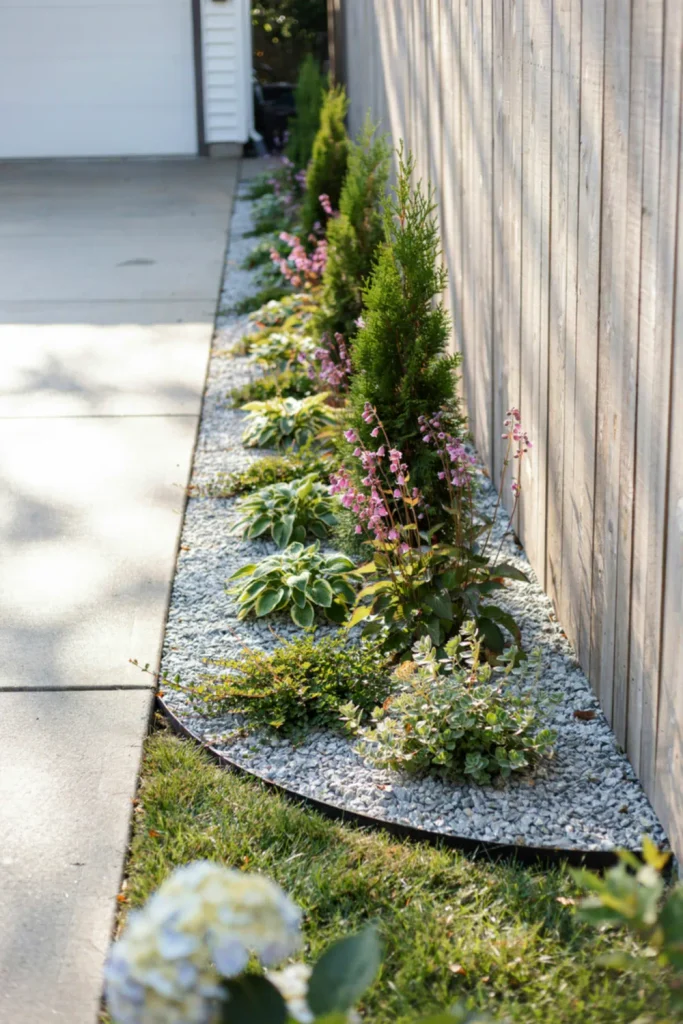
Narrow planting strips demand more restraint than large garden beds.
Upright evergreens, compact hostas, coral bells, and low groundcover make good side-of-driveway landscape choices because they add layers without spreading across the pavement.
Gravel mulch also keeps loose soil from splashing onto parked cars.
Check mature plant widths carefully, and leave enough clearance for passengers to open doors and step out without damaging the garden.
10. Boulder and River Rock Driveway Landscaping
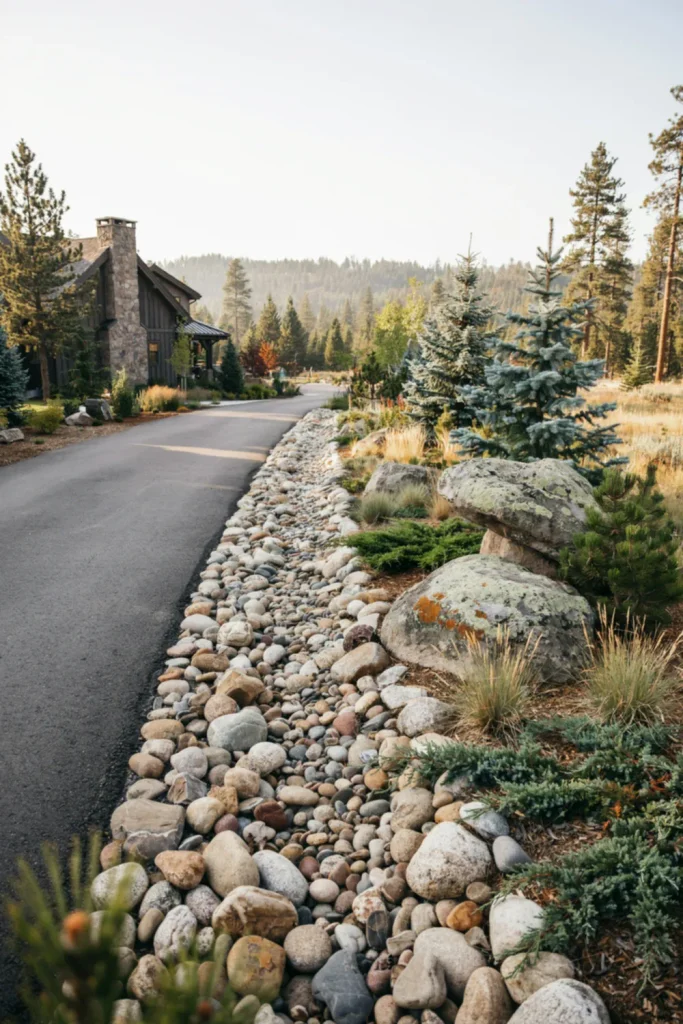
River rock and weathered boulders give a driveway border structure even when flowers are out of season.
Combine them with dwarf conifers, creeping juniper, and native grasses for a durable landscape that suits wooded or sloped properties.
The rocks should look partly settled into the ground rather than placed on top.
Where runoff is an issue, shape the stone channel to direct water safely instead of letting it erode the driveway base.
11. Rain Garden Beside a Sloped Driveway
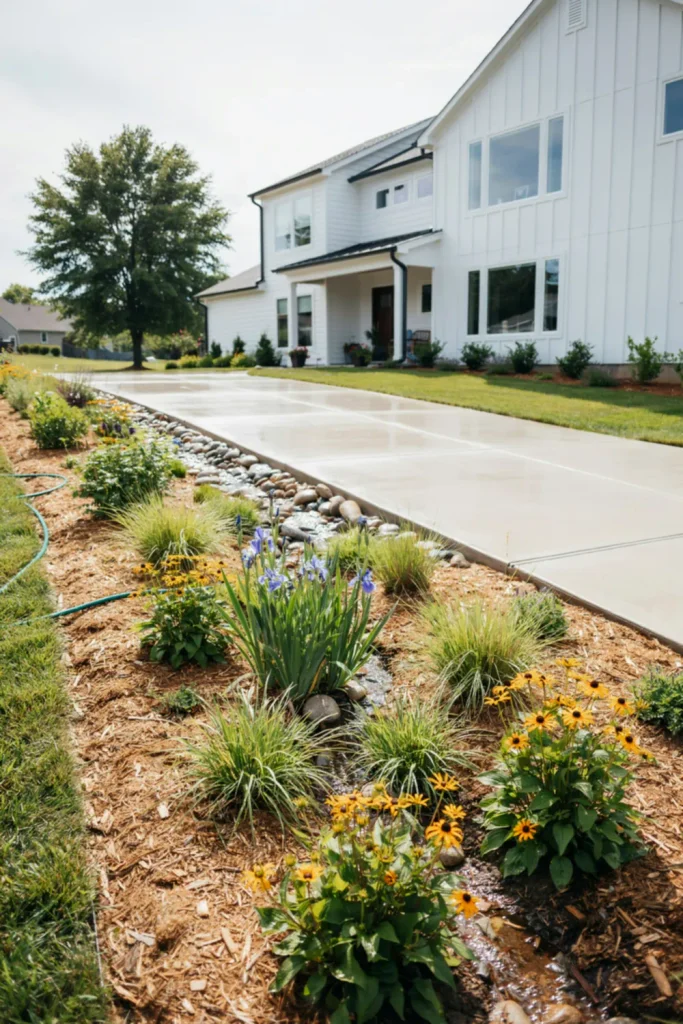
After heavy rain, runoff from a sloped driveway often collects at the curb or washes soil out of nearby beds.
A shallow rain garden can intercept that water using river rock, sedges, switchgrass, iris, and other moisture-tolerant plants.
Position the basin away from the foundation and verify how quickly the soil drains.
It should hold stormwater temporarily, not remain wet long enough to become a stagnant pond.
12. Raised Driveway Garden Behind a Stone Retaining Wall
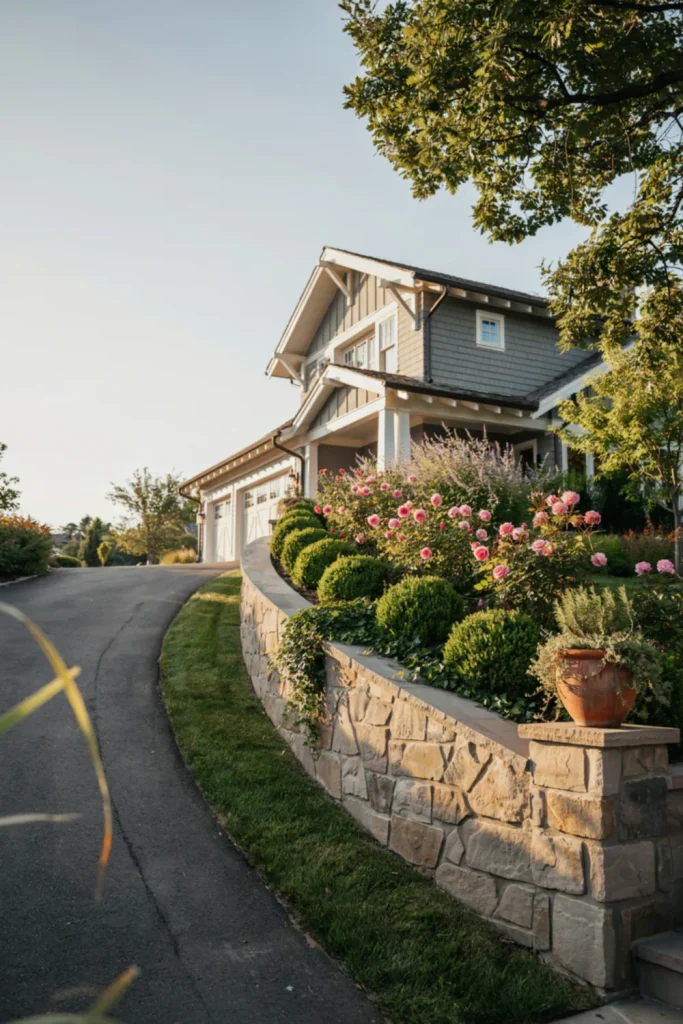
Sloped front yards become easier to plant when a low retaining wall creates a level bed beside the driveway.
Natural stone pairs well with layered evergreens, roses, lavender, and cascading groundcover that soften the top edge.
Proper drainage behind the wall is critical because trapped water can push stones outward over time.
Keep the wall height modest unless the design has been reviewed for structural requirements and local codes.
13. Mediterranean Driveway With Lavender and Olive Trees
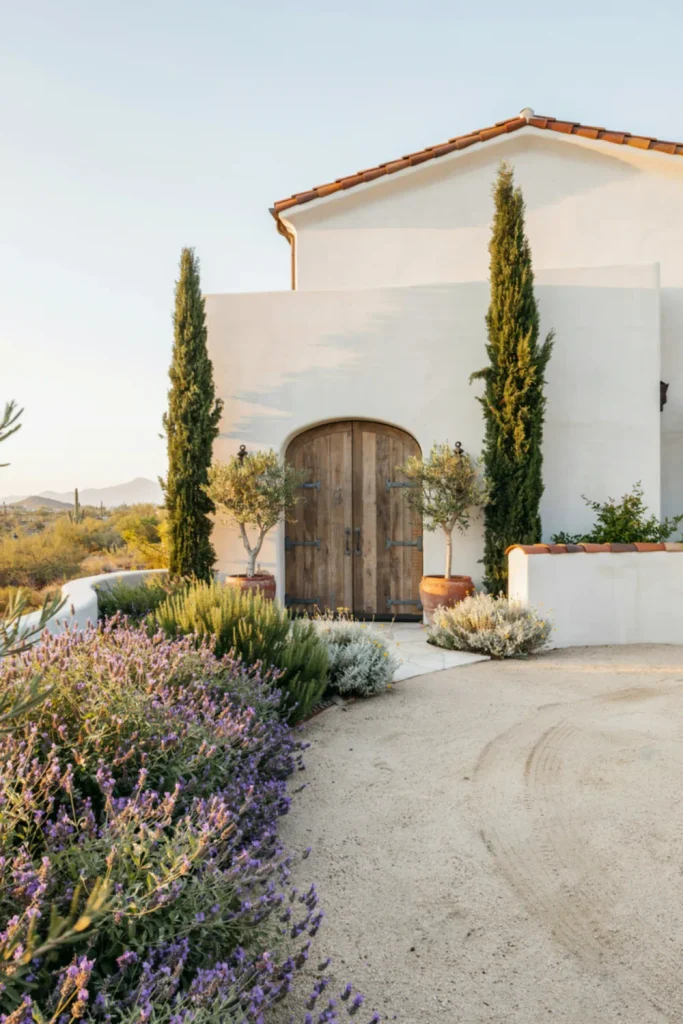
Sun-washed gravel, silvery foliage, and terracotta accents give Mediterranean driveway landscaping its distinct character.
Lavender, rosemary, santolina, cypress, and small olive trees offer strong shape without relying on thirsty lawn.
Group plants in broad drifts rather than scattering individual specimens along the driveway.
Before planting, confirm that each species can tolerate local winter temperatures, since some Mediterranean plants need warmer climates or protected positions.
14. Cottage Driveway Lined With Mixed Perennials
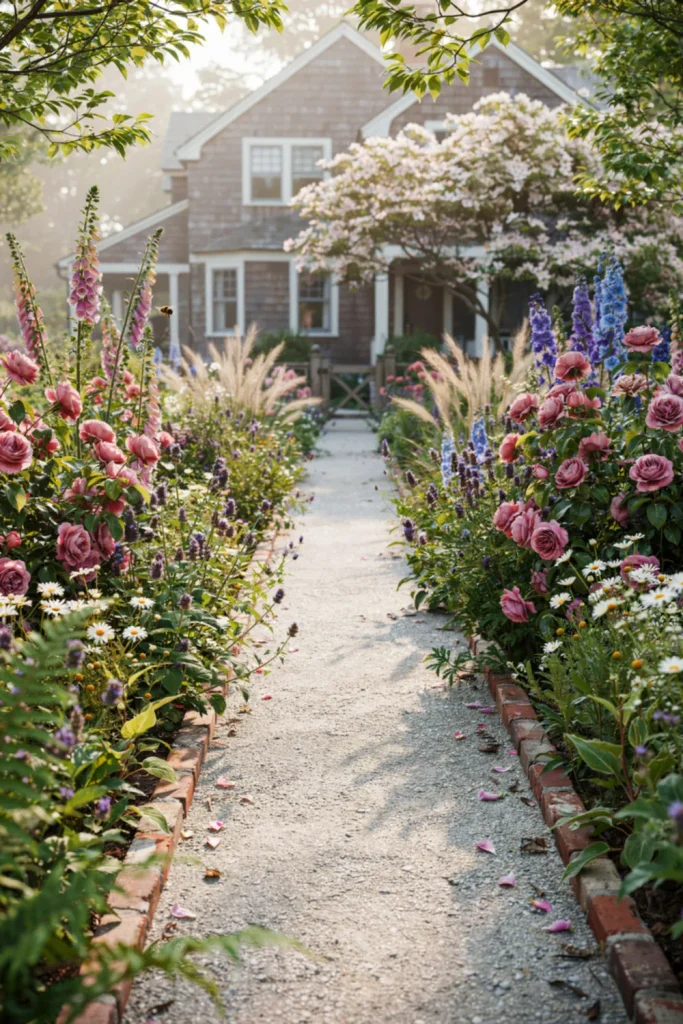
Compared with clipped formal borders, a cottage planting feels softer because flowers overlap and heights change throughout the season.
Roses, catmint, daisies, foxgloves, and ornamental grasses can line a gravel driveway without hiding its edges.
Place low, sturdy plants closest to vehicles and reserve tall or delicate flowers for the back.
Reclaimed brick edging helps contain the bed, but it should sit nearly flush to avoid becoming a trip or tire hazard.
15. Desert Driveway Border With Agave and Gravel
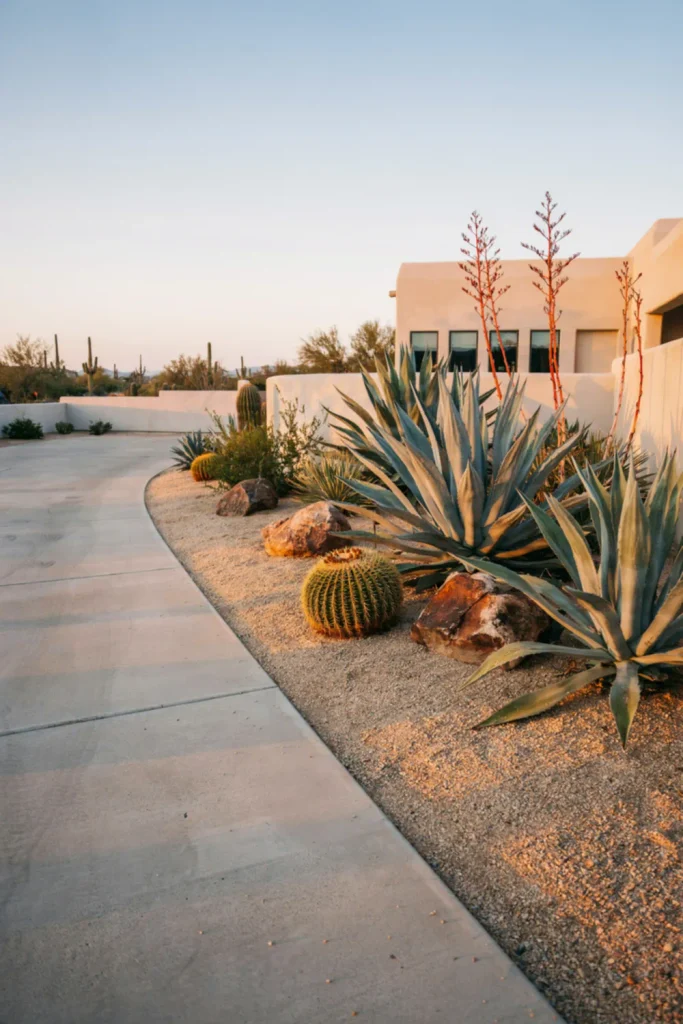
In hot, dry regions, sculptural plants can carry the design without dense foliage or frequent irrigation.
Agaves, red yucca, desert spoon, and golden barrel cactus stand out against decomposed granite and rust-colored boulders.
Group plants asymmetrically so the driveway border feels natural rather than evenly dotted.
Keep thorny or sharply pointed varieties well away from sidewalks, vehicle doors, and the areas where passengers commonly step out.
16. Modern Blacktop Driveway With Steel Edging
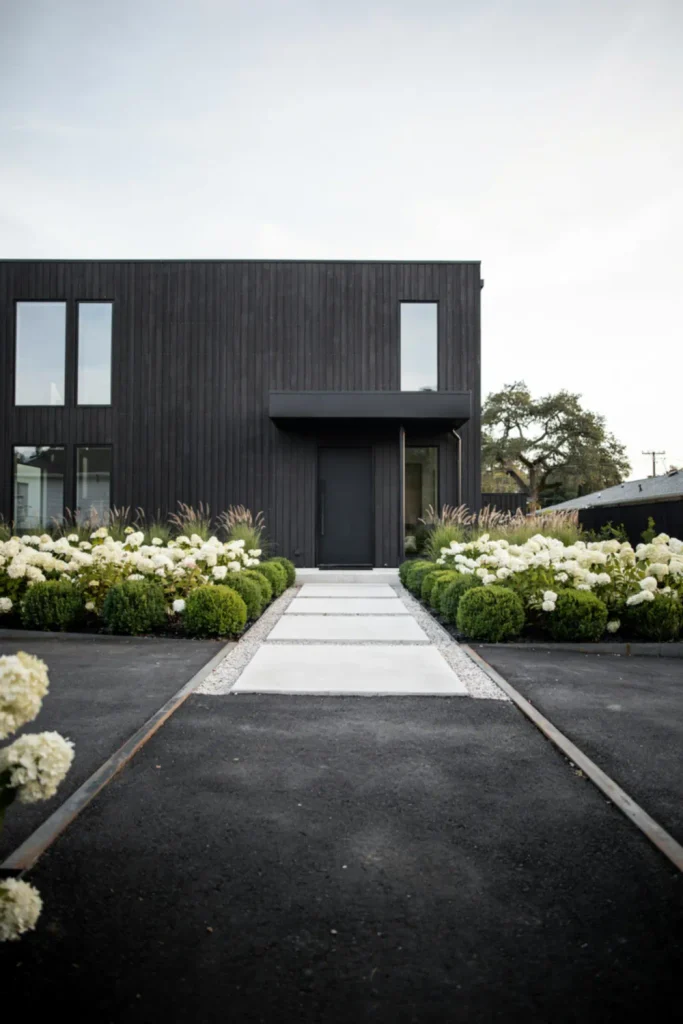
Crisp steel edging makes the contrast between black asphalt, pale gravel, and green planting especially clear.
White hydrangeas, clipped boxwood, and upright grasses continue the controlled geometry without making the border feel empty.
Use weathered or powder-coated steel rated for landscape installation, and secure it firmly enough to resist frost movement.
The top edge should remain visible but low, reducing the chance of damage to tires or garden equipment.
17. Circular Driveway Island With a Multi-Stem Tree
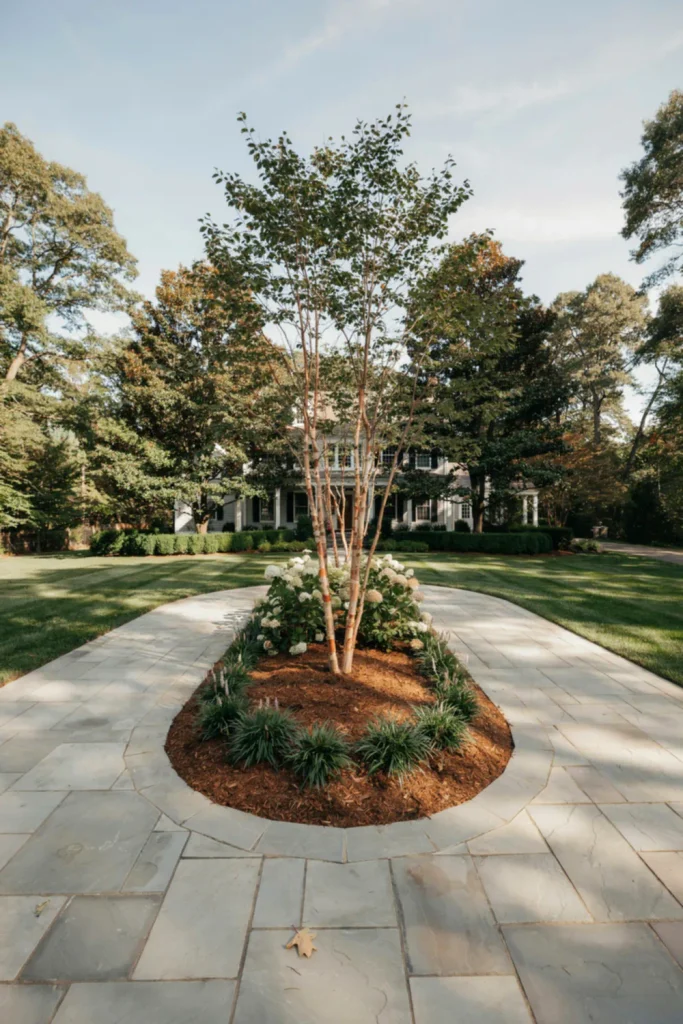
Rather than leaving the center of a circular driveway as plain lawn, use it as a focal garden visible from several directions.
A multi-stem river birch surrounded by hydrangeas, liriope, and dark mulch gives the island height without forming a solid visual barrier.
Keep the understory low near turning lanes.
Tree placement should also account for mature canopy spread, root growth, overhead wires, and access for larger vehicles.
18. Shared Driveway Divider With Evergreen Screening
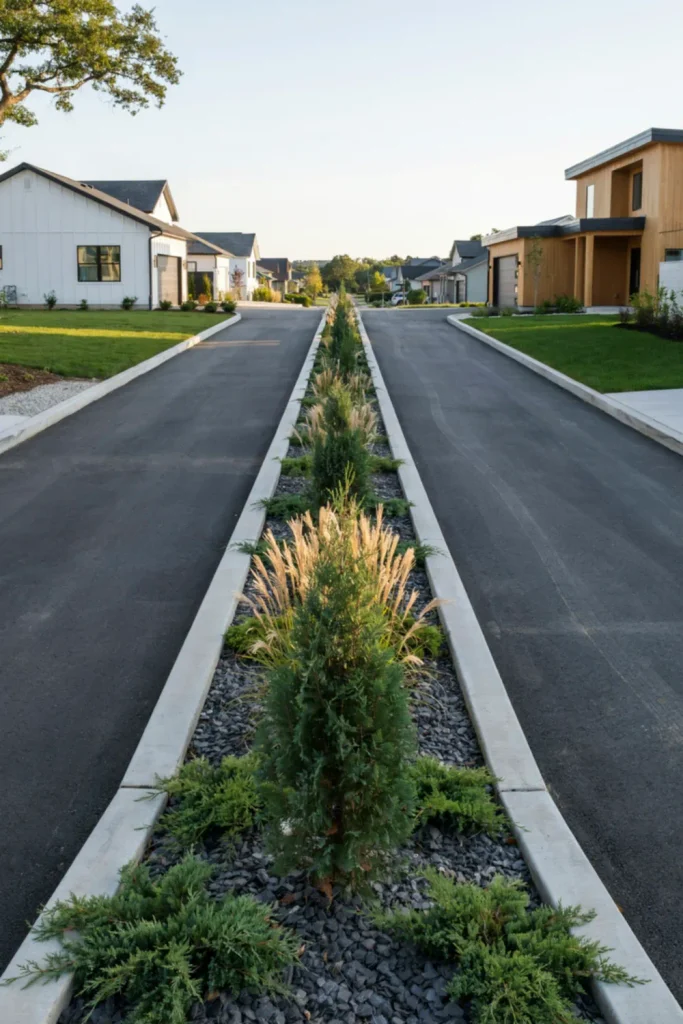
Privacy gets complicated along a shared driveway because a solid fence may make both sides feel narrow.
Columnar evergreens, feather reed grass, and spreading juniper can form a planted divider while preserving light and visibility.
A gravel-mulched strip keeps maintenance manageable and clearly marks the boundary.
Confirm the property line before planting, and select narrow varieties that will not reduce turning space as they reach maturity.
19. Curved Driveway Framed by Layered Evergreen Beds
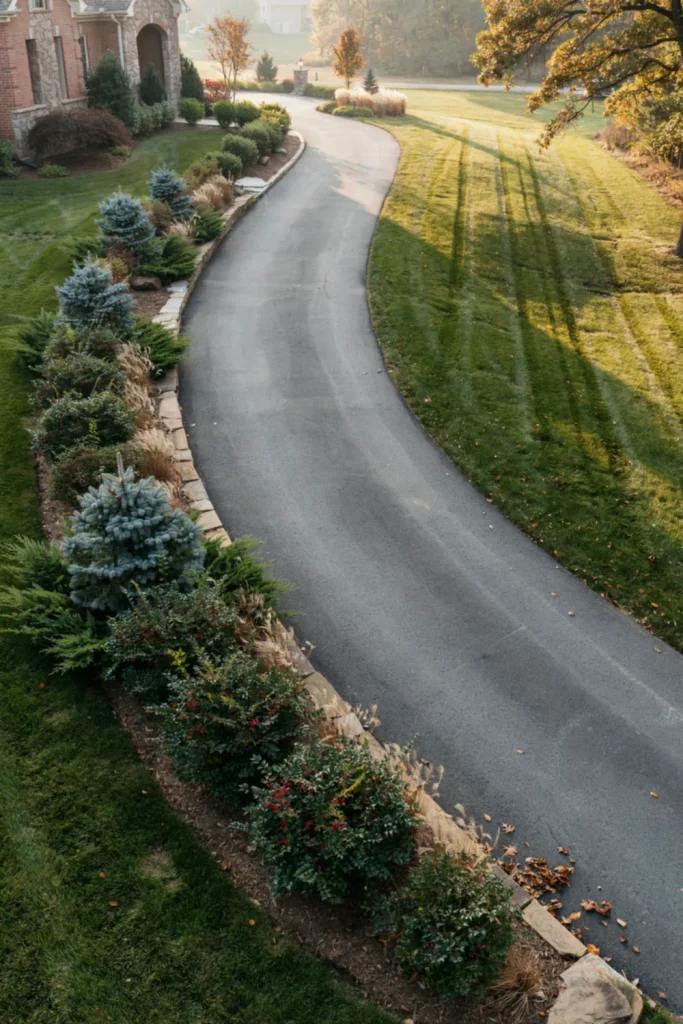
Following the curve with repeated evergreens makes a long driveway feel connected to the house rather than simply paved through the lawn.
Dwarf spruce, mounded juniper, inkberry, and ornamental grass provide varied heights while maintaining color through winter.
Arrange plants in staggered groups instead of a rigid line.
Protect visibility around the bend by keeping the inside edge lower than the outer beds, especially near the driveway entrance.
20. Short Driveway Landscaping With One Statement Tree
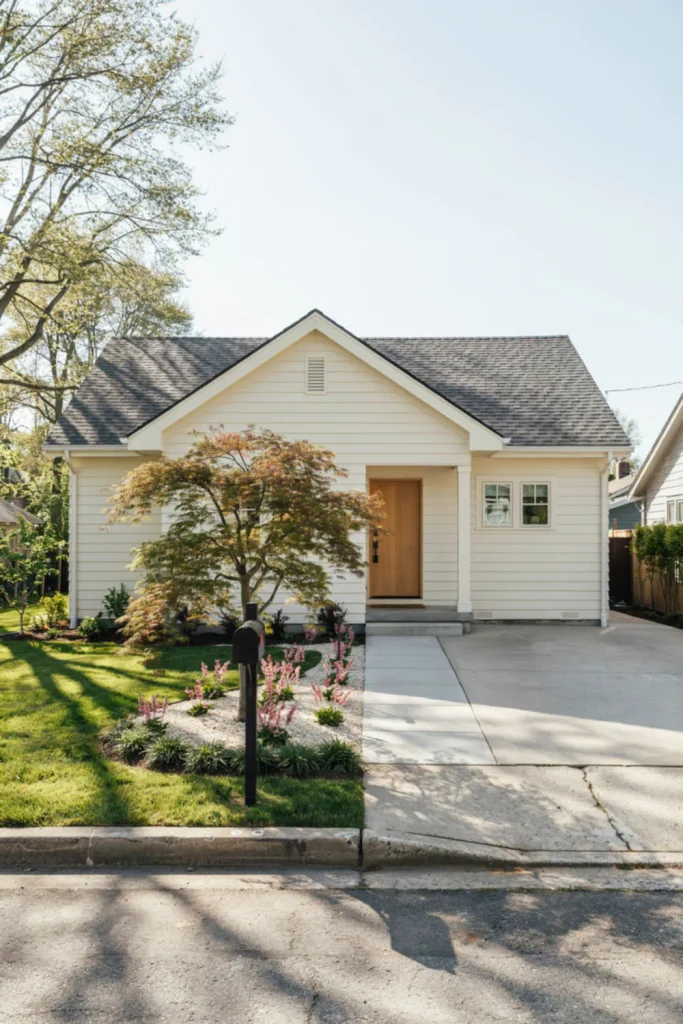
One well-placed ornamental tree often does more for a short driveway than several small, unrelated beds.
A Japanese maple or serviceberry can anchor the space between the driveway and front walk, with coral bells and low grasses covering the ground beneath it.
Choose a species with nonaggressive roots and a canopy suited to the available width.
Measure clearance from the house, pavement, and parked vehicles before deciding where it belongs.
21. Driveway Walkway With a Planted Separation Strip
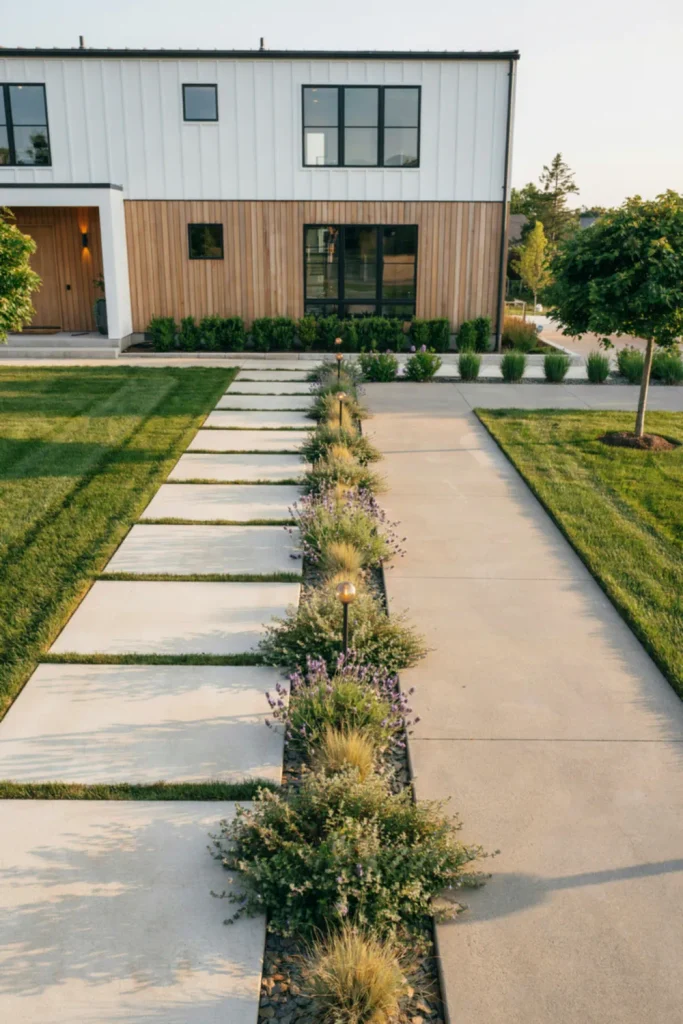
Separating foot traffic from parked cars makes a front entrance easier and safer to use.
A slim planting strip between the driveway and walkway can hold lavender, sedge, creeping thyme, and shielded path lights without blocking movement.
Keep the plants low enough that passengers can see the walkway when exiting a vehicle.
Before digging, check door-swing clearance and place lighting where it will not be crushed by tires or maintenance equipment.
22. Driveway Entrance Framed by Stone Columns and Native Plants
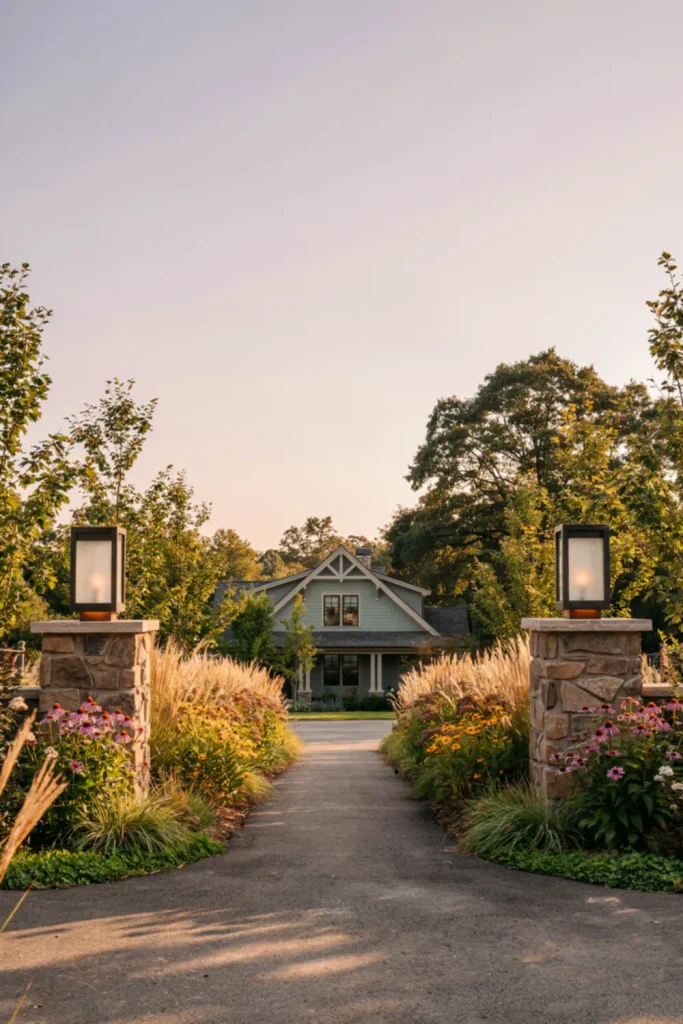
Stone entrance columns feel less imposing when broad groups of native plants connect them to the surrounding yard.
Switchgrass, coneflowers, coreopsis, and compact ninebark provide movement and seasonal color while requiring less intervention once established.
Match the stone to materials already used on the house for a cohesive result.
Columns, lanterns, and taller plants must stay outside local road setbacks and driver sight triangles.
23. Permeable Ribbon Driveway With a Planted Center
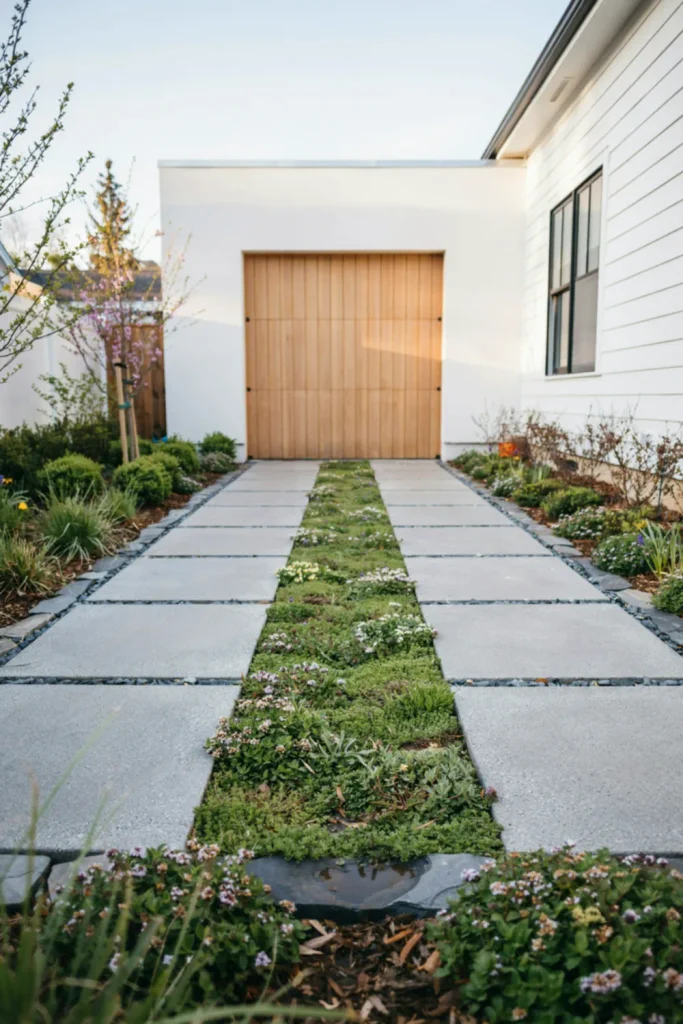
Two paved wheel tracks use less hard surface than a conventional full-width driveway.
Filling the center with durable turf or creeping thyme gives a ribbon driveway its green character while allowing more rainwater to enter the ground.
A stable, well-drained base is still necessary beneath the pavers.
Choose low-growing plants that tolerate occasional traffic, and confirm that the track spacing matches the vehicles that regularly use the property.
24. Driveway Garage Landscaping With Symmetrical Beds
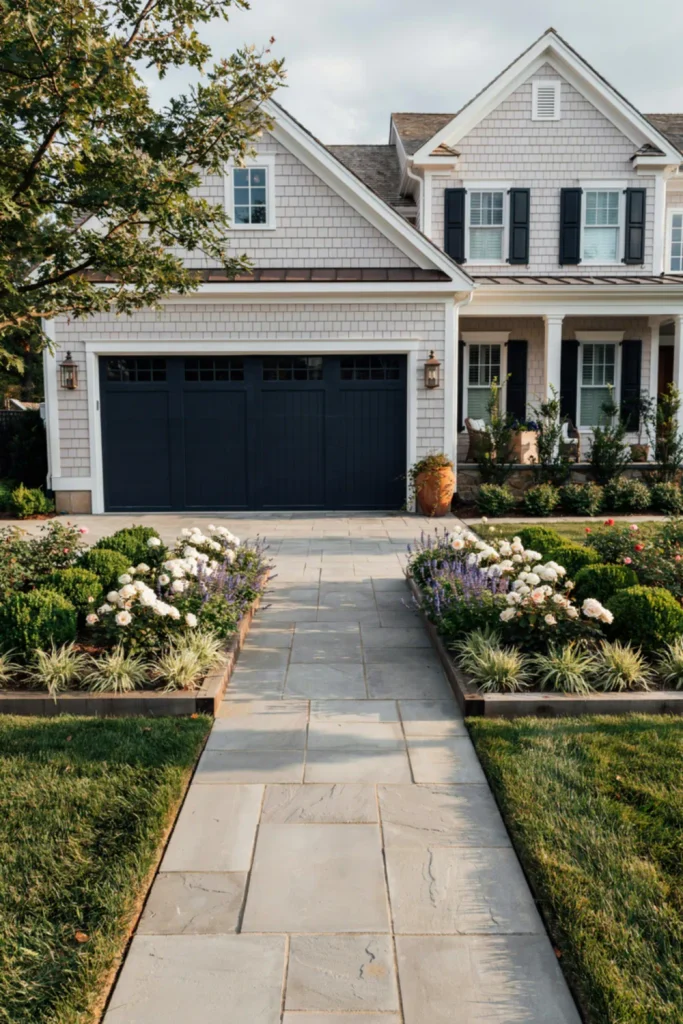
Because garage doors occupy so much of the front elevation, matching beds can help the area feel balanced.
Compact boxwood, white roses, salvia, and low grasses provide structure without interfering with the doors or driveway apron.
Repeat materials used near the front entrance to connect both areas visually.
Allow extra room beside the garage for trash bins, hose access, snow storage, and passengers moving around parked vehicles.
25. Driveway Border Lighting Beneath Ornamental Trees
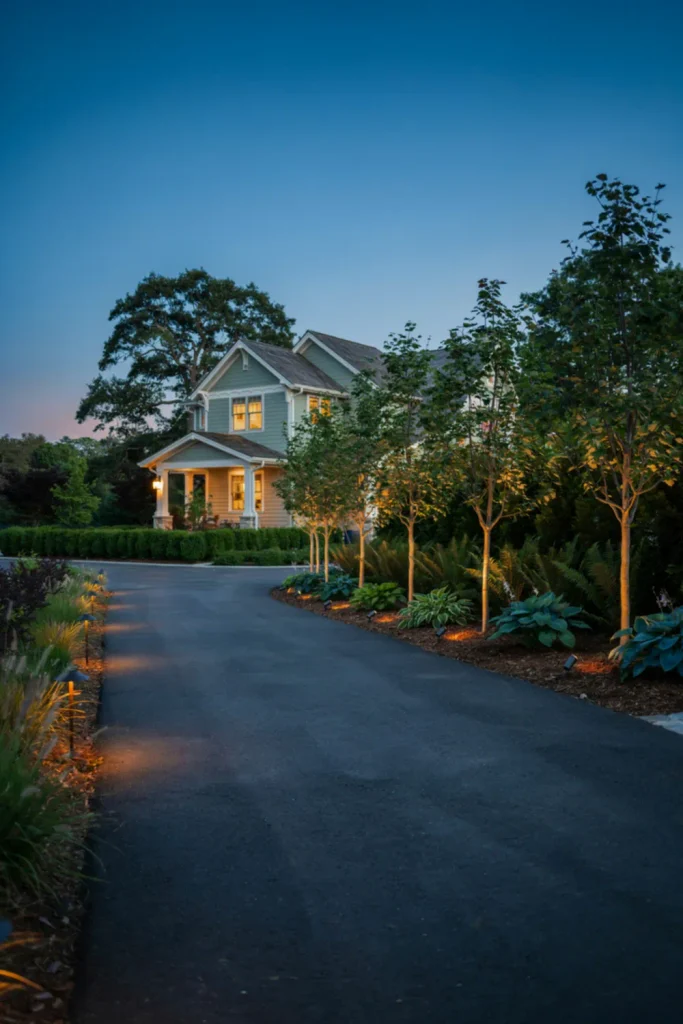
Once daylight fades, layered landscape lighting can reveal the driveway edge without producing harsh glare.
Soft uplights beneath multi-stem serviceberries highlight their trunks, while shielded path fixtures mark the pavement at a lower level.
Space the lights according to the effect they produce rather than creating an airport-style row.
Aim every fixture away from drivers, neighboring windows, and the street, then review the complete arrangement from inside a vehicle.
How to Choose the Best Idea for Your Space
Let the driveway’s size and existing surface guide the decision.
Narrow areas work better with columnar shrubs, compact perennials, low groundcover, or a simple gravel strip.
Wider front yards can support layered borders, flowering hedges, ornamental trees, or a landscaped circular island.
If water regularly runs off the pavement, consider a rain garden, rock channel, or permeable paving before adding decorative plants.
Maintenance should also shape the plan.
Mulch beds and mixed flowers need more attention than gravel, evergreens, and ornamental grasses.
For a smaller budget, improve one visible section first, such as the mailbox corner or driveway entrance, then extend the planting later.
Whatever style you choose, check mature plant sizes and underground utilities before digging.
Leaving enough vehicle clearance from the beginning will prevent repeated pruning and damaged plants.
FAQ
What is the most affordable way to landscape along a driveway?
Create a defined bed with trench edging, mulch, and a small number of repeated plants.
Start with younger shrubs or divide perennials from another garden area.
Concentrating the first phase near the entrance or garage gives the project a noticeable effect without landscaping the entire driveway at once.
Which plants handle driveway conditions well?
Look for plants suited to reflected heat, occasional drought, and your local growing zone.
Ornamental grasses, sedum, catmint, juniper, daylilies, and compact native shrubs are often dependable choices.
In cold regions, place salt-sensitive plants farther from pavement where winter runoff and snow piles are less likely to reach them.
How much space should plants have from the driveway edge?
The required setback depends on mature plant width and how the driveway is used.
Low groundcover may sit fairly close, while shrubs often need several feet.
Include room for car doors, passengers, mirrors, and maintenance equipment.
At entrances and curves, keep planting low enough to maintain clear sightlines.
Conclusion
Choose driveway landscaping ideas according to the problem you need to solve first, whether that is bare pavement, poor drainage, limited privacy, or an undefined entrance.
A narrow border may only need edging and repeated plants, while a larger property can support trees or layered beds.
Before buying materials, mark the proposed layout on the ground and test vehicle clearance from several angles.