
Your porch can feel inviting all afternoon, then turn into a dark patch as soon as the sun goes down. Maybe the existing fixture leaves your steps in shadow, or the only light is too harsh for sitting outside. Adding another wired fixture can turn a small decorating project into a much bigger job.
These DIY front porch lighting ideas work with solar, battery-operated, rechargeable, or ready-made plug-in lights. The DIY part is choosing the location, arranging the pieces, and mounting them according to their instructions. You won’t need to open an electrical box or alter your home’s wiring.
Some options help you see the door and approach more clearly; others bring a gentle glow to a chair, planter, or quiet corner. Start with the area that bothers you most, then add decorative light where you’ll enjoy it. Every setup should keep the doorway clear and use equipment rated for its actual outdoor exposure. Decorative lighting supplements, rather than replaces, dependable entry and step lighting.
1. String a Warm Canopy Beneath the Porch Roof
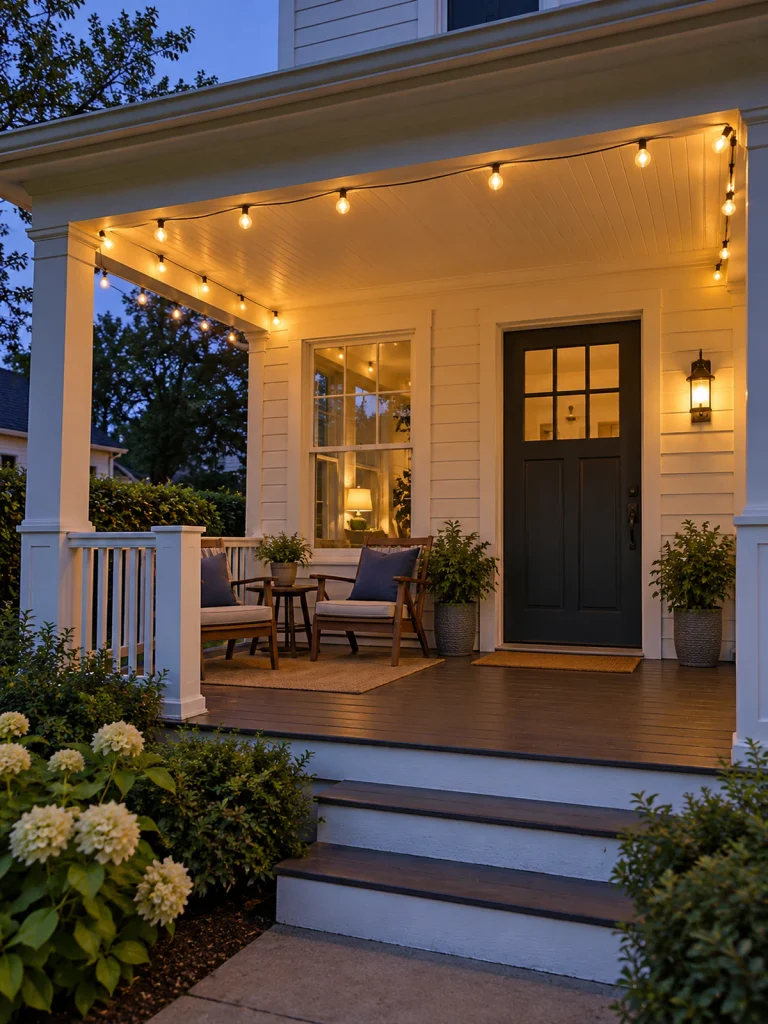
A simple line of outdoor string lights can make a covered porch feel like a small evening retreat. Follow the ceiling perimeter with a few shallow swags rather than stretching bulbs across the middle of the entrance. Warm light brings out wood furniture, woven cushions, and painted siding without requiring an elaborate decorating scheme.
Choose a ready-made plug-in set only when an existing outdoor GFCI-protected receptacle is within reach of its intended cord route. Use manufacturer-approved supports, keep bulbs clear of combustible materials, and never staple through the cable. Check the set’s mounting and connection limits. Without a suitable outlet, choose a solar version with a separate panel positioned in sunlight.
2. Set Battery Candle Lanterns Beside the Door
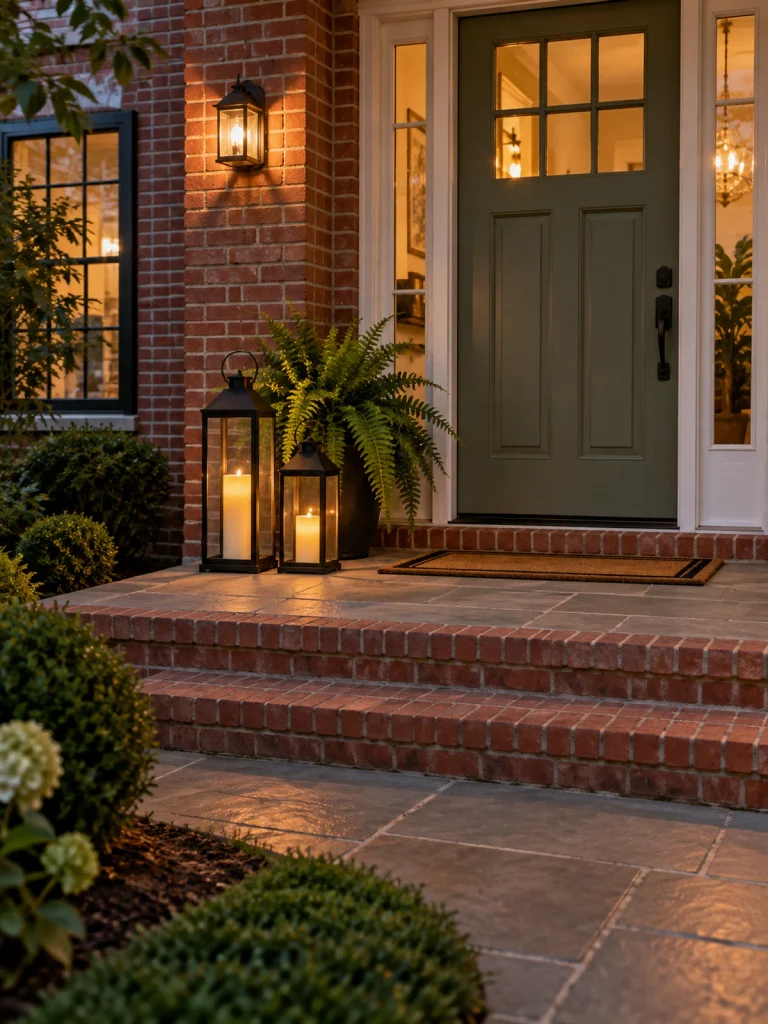
Two lanterns grouped beside the door give a plain landing a welcoming focal point. Vary their heights, but keep the finishes consistent so the arrangement feels collected rather than cluttered. Black metal suits brick and traditional siding, while lighter finishes can soften a coastal-style entry.
Use outdoor-rated flameless LED candles and lanterns suitable for the location. A timer makes the evening routine easier, although you’ll still need to check batteries. Place the group outside the door swing and away from the walking line, especially on a narrow landing. Glass lanterns need a stable surface and protection from being knocked over; move them during severe weather when appropriate.
3. Give a Porch Table Its Own Rechargeable Lamp

A cordless table lamp creates a pool of light right where you sit. Try a compact mushroom shade or a simple shaded cylinder on the table between two porch chairs. The smaller scale makes an ordinary seating corner feel intentional without filling the whole porch with brightness.
Look for a rechargeable outdoor table lamp with a stable base and a dimming option. Check the stated runtime at the brightness you expect to use, since maximum-output runtime may be much shorter. Recharge it indoors or exactly as the manufacturer directs, then return it outside for the evening. A roof overhead does not make an indoor lamp suitable for outdoor humidity or wind-driven rain.
4. Stake Solar Lights Along the Front Approach
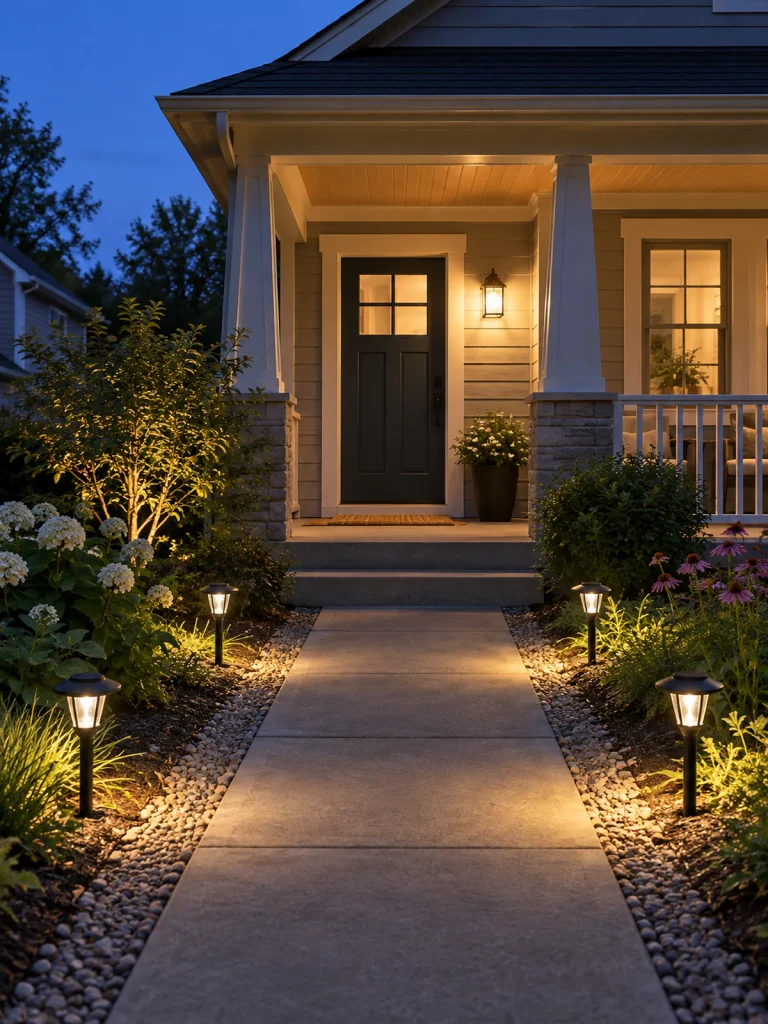
Low solar path lights can connect the porch visually to the walkway leading toward it. Space them along planting beds or lawn edges so their light falls onto the approach without putting stakes underfoot. A restrained row of matching fixtures usually looks calmer than a mixture of shapes and colors.
Before purchasing, watch where sunlight reaches the proposed locations during the day. A fixture beside a shaded foundation may not charge well, even when the front yard seems sunny. Follow the recommended spacing and keep mower access in mind. Check the result after dark: decorative stakes may outline the path without providing enough light to reveal every uneven surface.
5. Clip Solar Lights Onto Existing Railing Posts
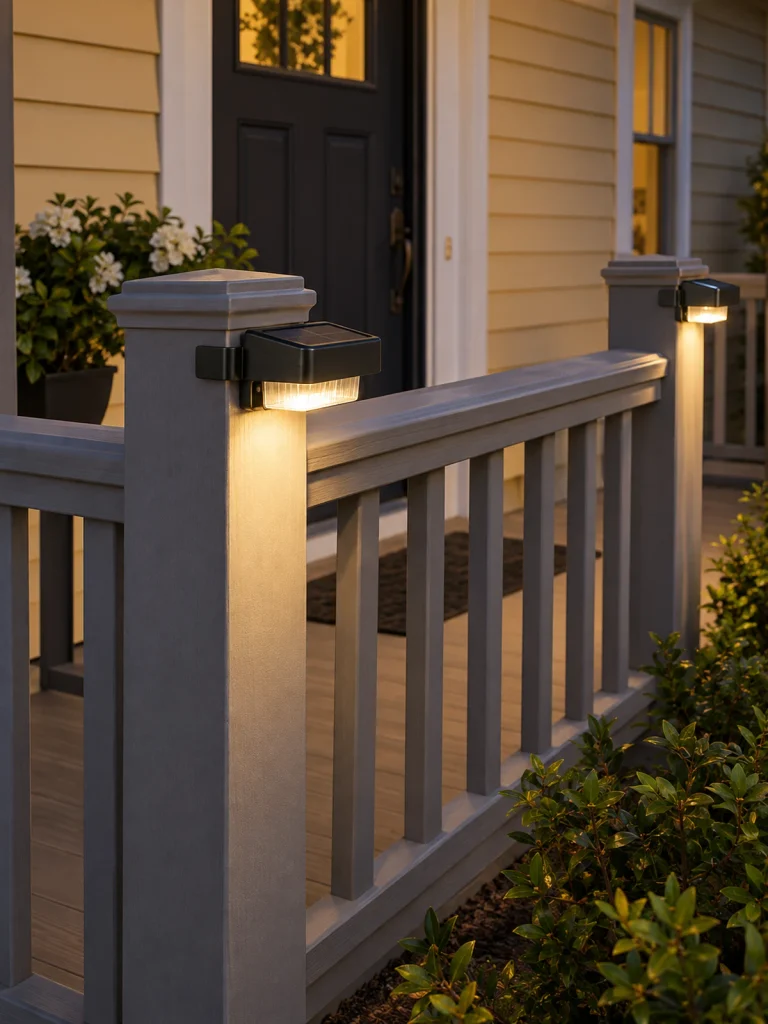
Small railing lights add a tidy downward glow without taking up floor space. Use a matching pair near the entrance or repeat the same fixture along a longer porch. Simple black housings can blend into dark hardware, while compact shapes look less bulky on slim railings.
Choose fixtures supplied with clamps or mounting systems compatible with your actual posts. Don’t assume a generic clip will fit wood, metal, and vinyl equally well. Keep the handrail comfortable to grip and avoid drilling into unfamiliar hollow components. The solar tops need useful sun exposure, so a deeply covered railing may be a poor candidate. Confirm the fit and charging location before buying several lights.
6. Light the Steps With Solar Riser Fixtures
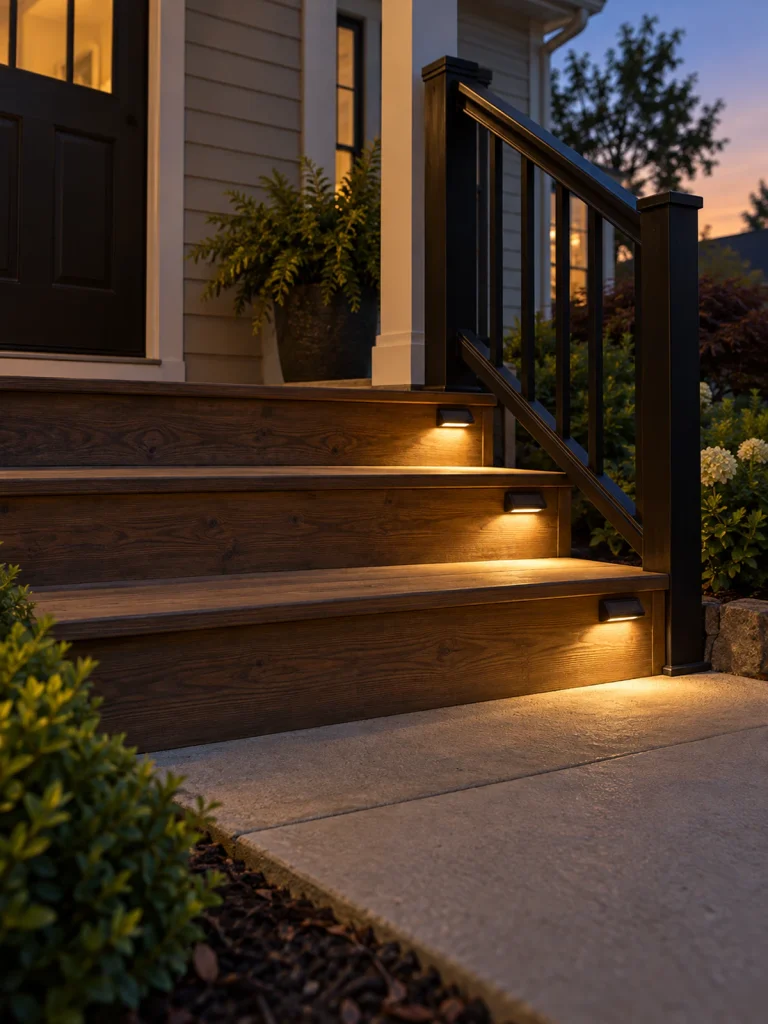
Compact solar step lights can help distinguish the change in level between the walkway and porch. Their low profile keeps the focus on the stairs, especially against simple wood treads or a painted riser. Use a consistent arrangement so the steps read clearly after sunset.
Select purpose-made fixtures with mounting instructions suited to the stair material, and position them where they won’t reduce usable tread space or catch a shoe. Keep the handrail accessible. Check that nearby plants and the roof do not shade the solar collectors all day. Test visibility from both directions, and retain dependable primary stair lighting: solar output and runtime can vary with weather, season, and battery condition.
7. Use a Battery Motion Light Near the Lock
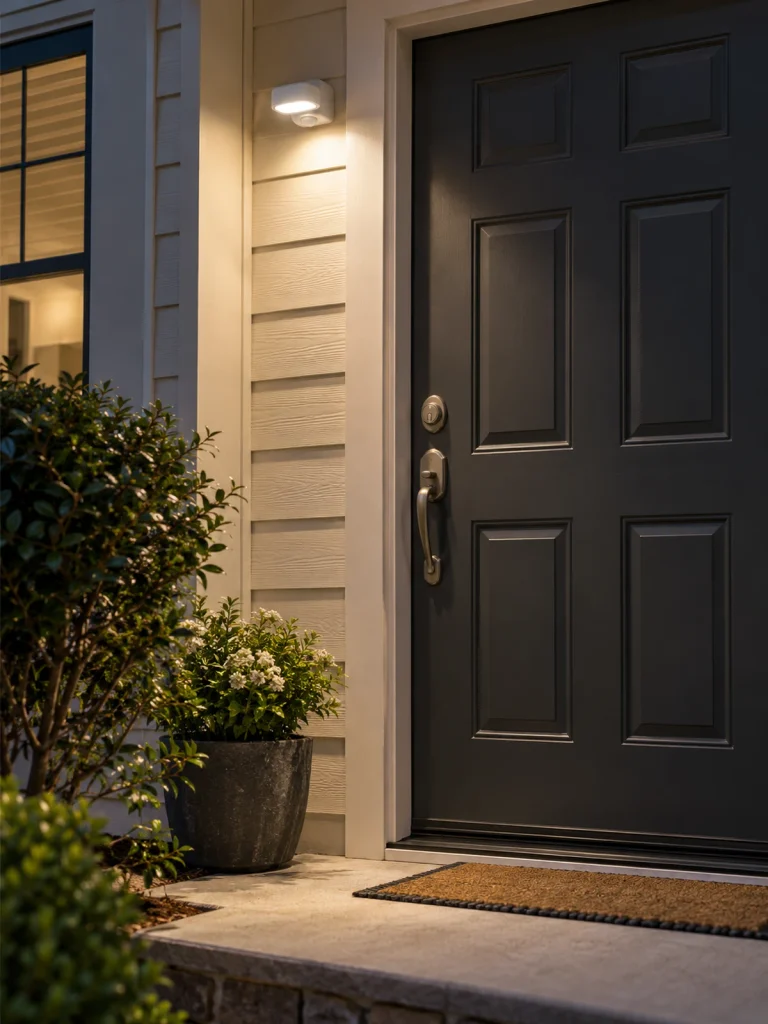
Finding your keys is less frustrating when light reaches the handle instead of shining into your eyes. A compact battery motion light near the latch side of the door can fill a small shadowed area without adding a wired fixture. A plain housing looks unobtrusive beside everyday door hardware.
Choose an outdoor-rated model and follow its specified mounting height and detection range. Aim the sensor toward your approach rather than passing traffic, and check that the beam doesn’t bother a neighbor’s window. Screws or supplied mounting hardware must suit the surface; removable mounting requires a compatible product and permission when relevant. Keep spare batteries available, and don’t treat this supplemental light as your only dependable entry illumination.
8. Hang a Solar Pendant Over the Sitting Area

A solar pendant gives a covered porch the feeling of an outdoor room. Center it over a side table or compact seating group, leaving the main entrance visually and physically open. A simple shade makes the fixture feel more like furniture than garden equipment.
Use a purpose-built solar pendant with a separate panel, rather than adapting an indoor shade or making electrical connections yourself. Attach the supplied hanger to a suitable support and route the panel cable along the structure according to the instructions. Keep it clear of doors, sharp edges, and walking areas. Position the panel where it receives the required sun, and confirm that the cable reaches before installing anything.
9. Wrap a Porch Column With Battery Fairy Lights
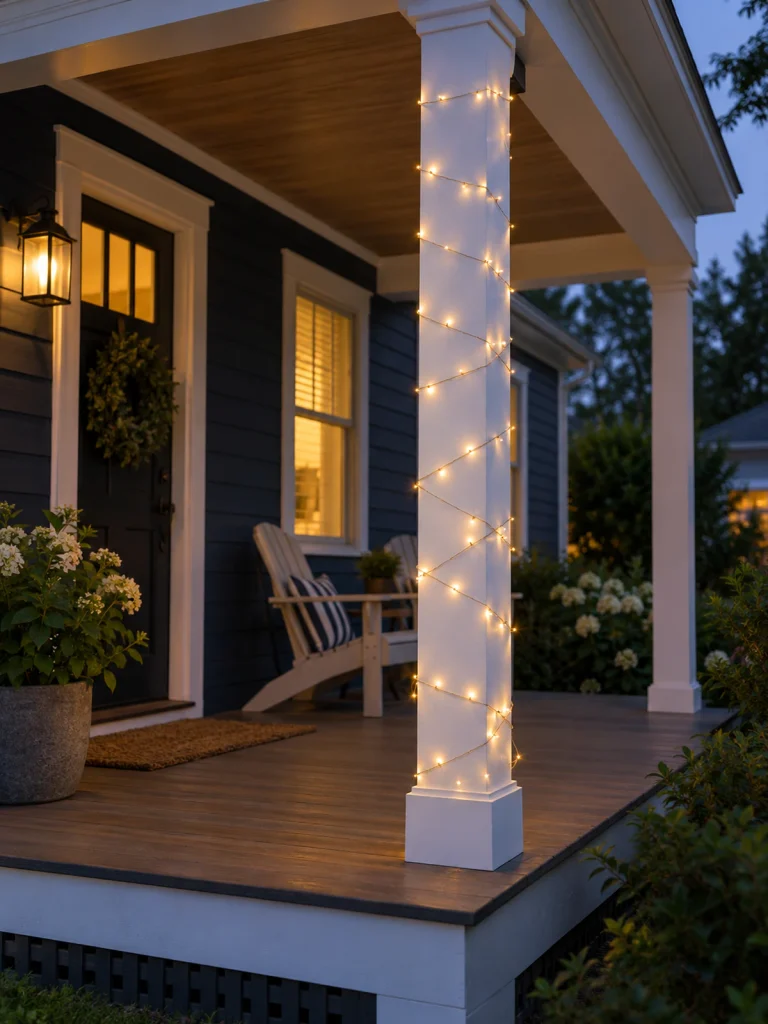
A loose spiral of tiny lights can draw attention to one porch column without covering the house in seasonal decorations. Warm white looks understated against painted posts, especially when the rest of the porch stays simple. Keep the spacing reasonably even so the column’s shape remains easy to see.
Choose outdoor fairy lights with an appropriately rated battery compartment. Secure the pack where it remains accessible for battery changes and protected as its instructions require. Use surface-compatible clips, not staples through wires, and avoid attaching anything to loose paint or deteriorated trim. Leave room around rail connections and don’t wrap the strand so tightly that it strains the cable or damages the finish.
10. Turn Mason Jars Into Solar Table Lights
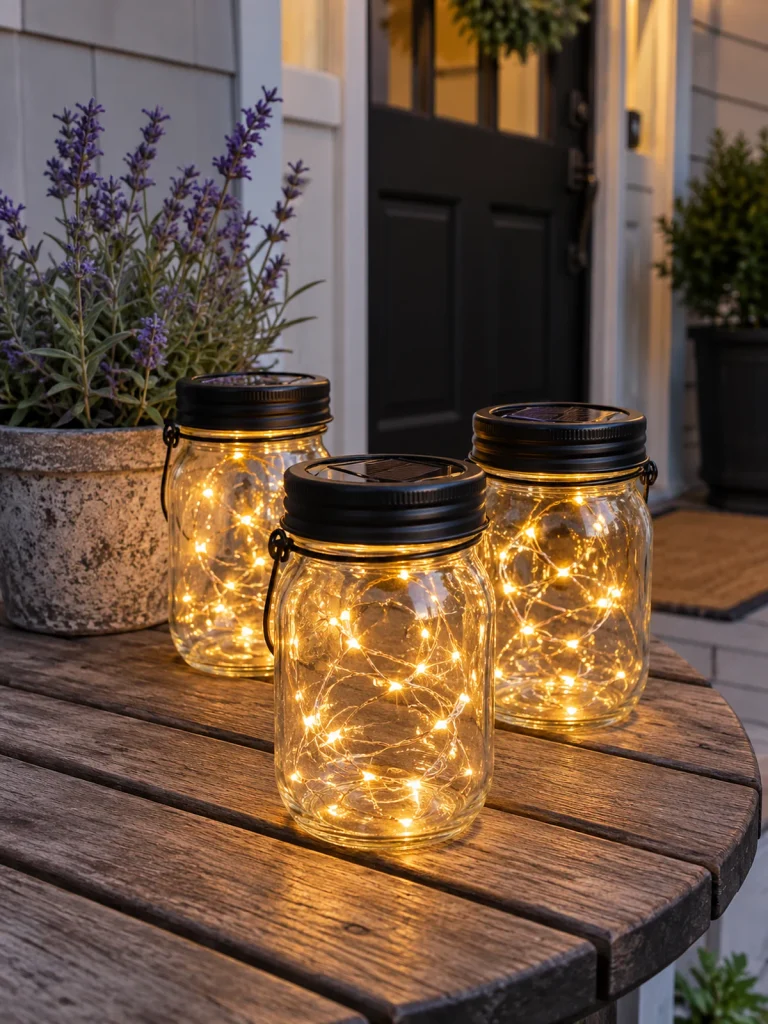
Clear mason jars fitted with purpose-made solar light lids bring a relaxed, handmade look to a porch table. A small group works well beside a plant or on an outdoor console, where the tiny points of light remain visible through the glass. Use different jar heights for variation without mixing too many materials.
Buy lids designed for compatible jars and the expected outdoor conditions. This project is assembly, not a homemade electrical build: avoid drilling battery packs or modifying wiring. The solar lids need daylight, so move the jars to a sunny spot for charging when necessary. Keep them off steps and rail edges, and follow the product’s guidance about moisture and cold-weather storage.
11. Add Solar Stakes to Your Porch Planters

A glowing globe rising above a planter gives your greenery an evening presence. Use one stake per generously sized pot so the light feels deliberate rather than crowded. Matching planters on either side of a door can provide a balanced composition while leaving the middle of the landing open.
Choose compact solar garden lights whose stakes fit the soil depth without forcing them through roots. Set each one securely, keeping the solar collector above foliage and exposed to useful sunlight. Water the plants without directing a stream into the light housing. On a shaded porch, charging may be unreliable; don’t repeatedly disturb established plants just to move the lights into the sun every day.
12. Aim a Solar Spotlight at One Porch Feature
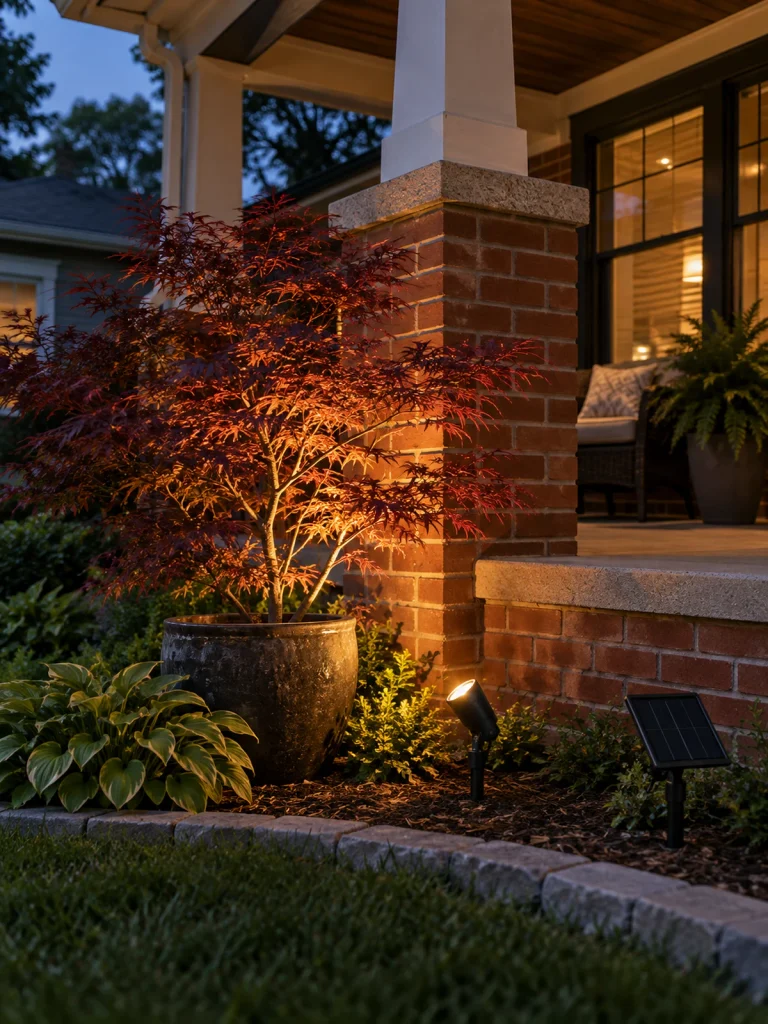
A small spotlight can make a potted tree, textured brick corner, or substantial planter stand out after dark. Pick one feature instead of lighting every surface. The contrast gives an ordinary front porch depth while keeping the overall mood quiet.
Look for a complete solar spotlight kit with an adjustable head and, when needed, a separate panel. Stake it in a bed outside the walking route and aim the beam at the chosen feature, keeping spill away from windows and the street. Route any supplied cable away from feet and yard tools without modifying it. Leaves and stems move as plants grow, so check the aim occasionally and clean the panel as directed.
13. Suspend Solar Lanterns From a Freestanding Hook
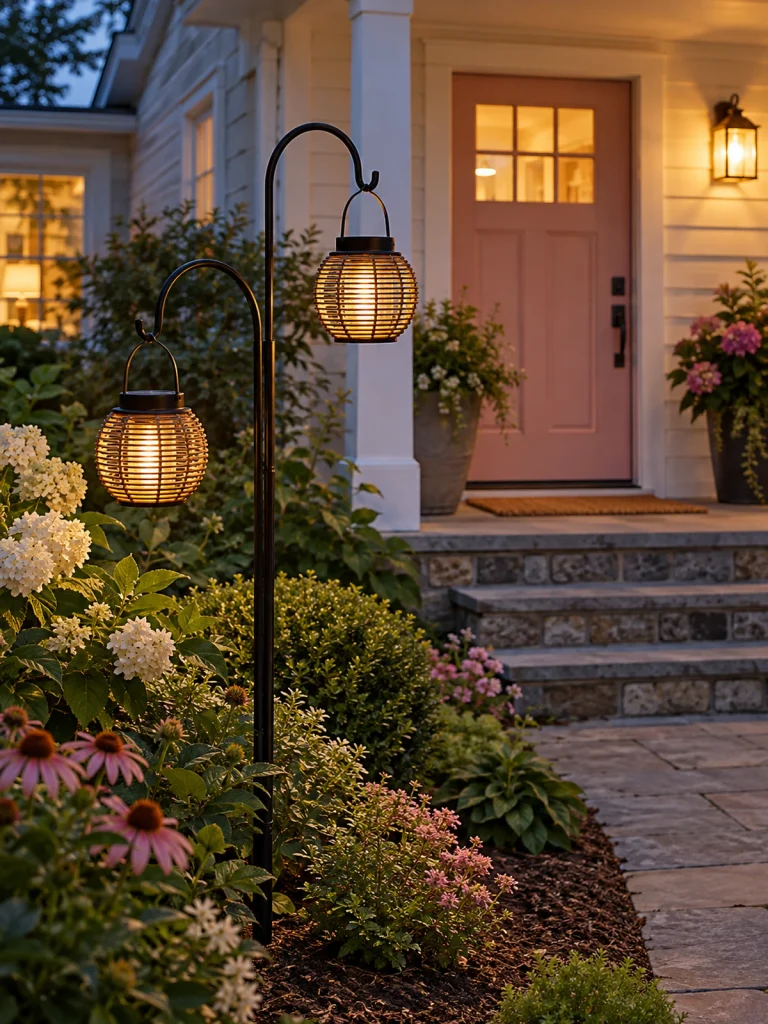
Hanging lanterns bring light to a porch-side garden without using the ceiling. A double shepherd’s hook can hold a balanced pair near the approach, giving a cottage-style entry height and movement. Keep the arrangement beside the porch rather than directly above the path.
Use a hook rated for the combined lantern weight and install it in firm ground according to its instructions. Check for buried utilities before driving stakes where required. The lanterns need outdoor ratings, enough sunlight for their panels, and clearance from branches. Wind can swing hanging fixtures, so avoid placing them beside glass, parked cars, or seating. Bring them in when conditions exceed what the products are designed to handle.
14. Tuck Outdoor LED Tape Beneath a Porch Bench
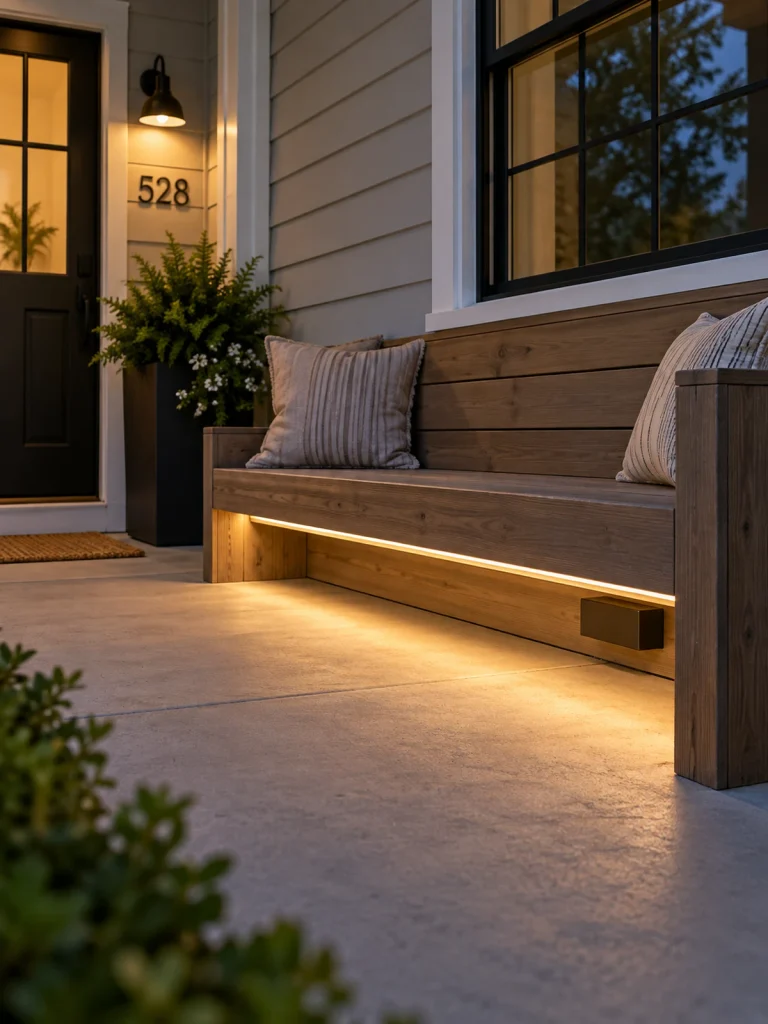
A hidden light line beneath a bench gives a seating corner a softer, more contemporary look. The source stays out of direct view while a low wash of light reveals the floor below. It works especially well with a simple wooden bench against the wall, away from the door swing.
Choose a complete outdoor-rated battery LED strip kit whose instructions permit the intended under-bench installation. Don’t improvise waterproofing with household tape or seal an unsuitable battery box inside a container. Follow directions for mounting, ventilation, and any allowed cutting; an uncut compatible kit is simpler. Secure every cable, keep the pack accessible, and check that cleaning or moving the bench won’t pull the connections.
15. Make a Freestanding Trellis Glow
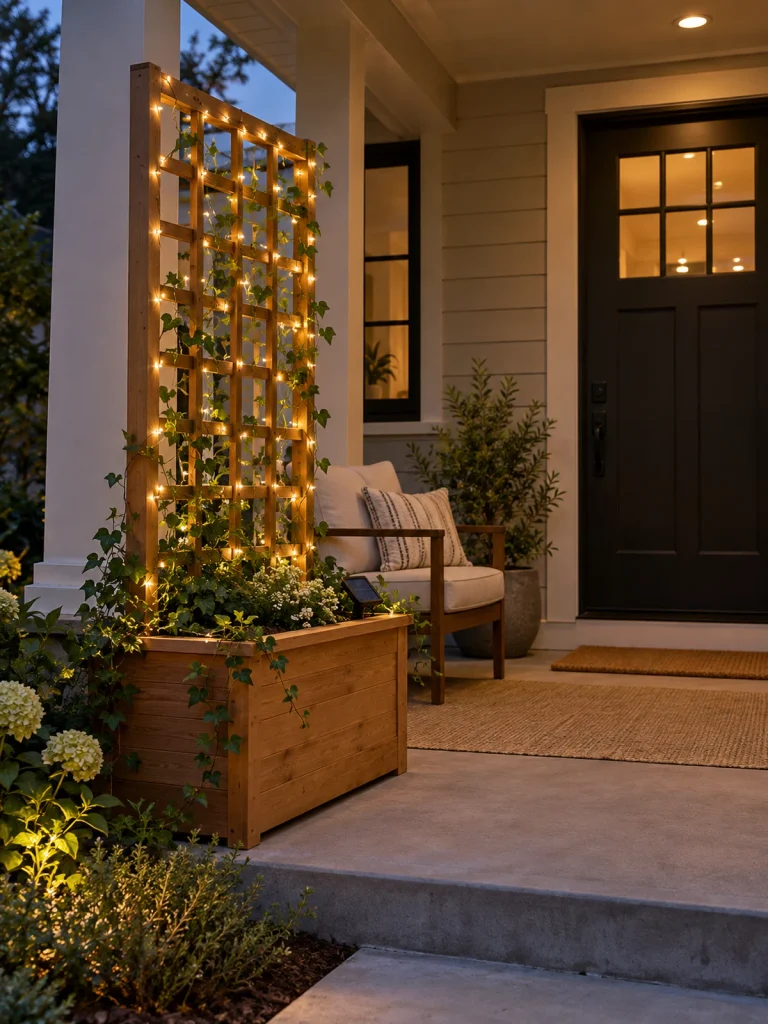
A lighted trellis creates a vertical focal point beside a porch chair without attaching a new fixture to the house. A simple cedar grid in a substantial planter feels relaxed and works with sparse climbing greenery. Trace selected lines with tiny lights rather than filling every square.
Use an outdoor solar light string and secure it gently with suitable clips or ties, leaving the plant room to grow. Position the panel beyond the leaves where it can charge. The trellis and planter must be designed or anchored to remain stable in the site’s wind conditions; a decorative lightweight pot may not provide enough support. Keep the whole arrangement outside the entrance route and trim growth away from the wiring.
16. Illuminate an Address Planter With Solar Numbers
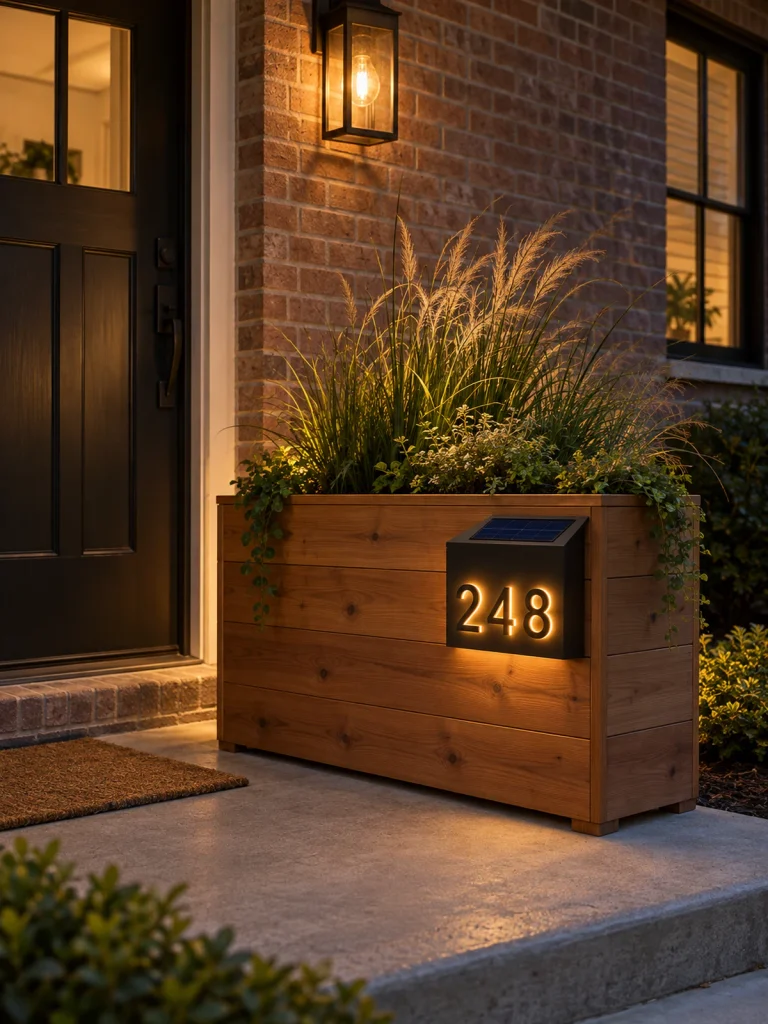
A freestanding address planter combines a practical detail with a small decorating project. Mount a purpose-made solar address plaque to a suitable planter face or support, following the plaque’s instructions. Simple illuminated numbers against cedar or a dark painted surface can look crisp without adding another ornament near the door.
Place the planter where the address faces the approach and the solar collector receives sunlight. Keep foliage below the numbers, and confirm that the address is readable from the location where visitors need it. Local address-display rules may specify size, placement, or visibility, so check those before relying on the planter alone. Leave existing required identification in place unless the replacement meets those requirements.
17. Fill a Decorative Lantern With a Battery Light Bundle
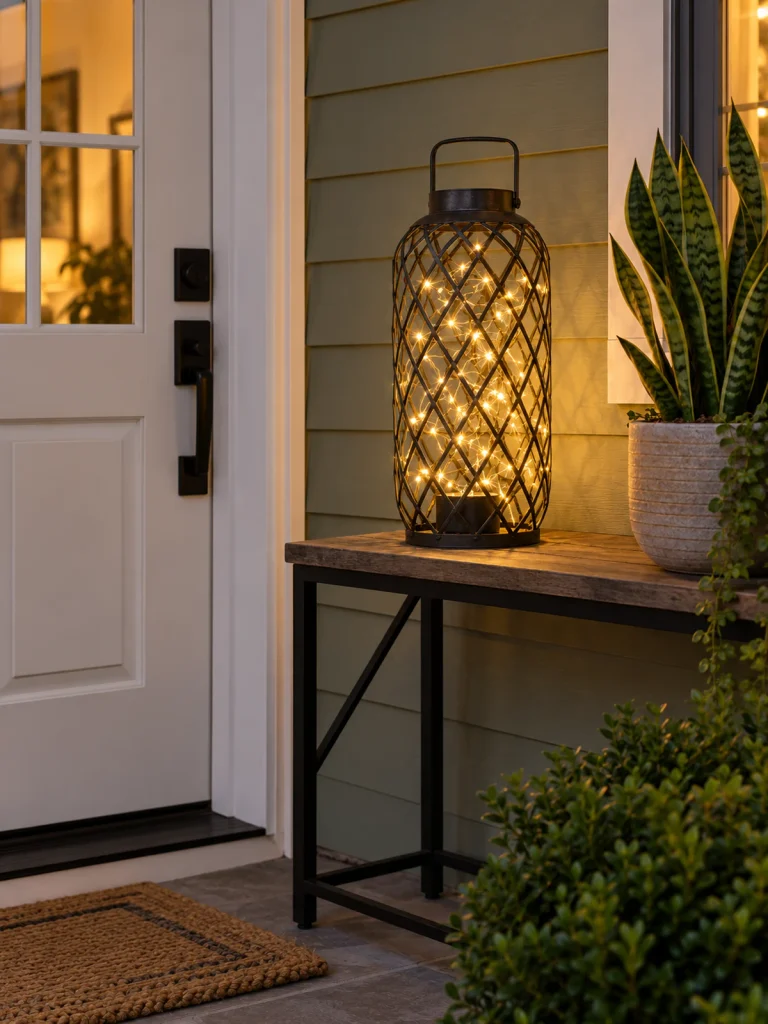
A lantern filled with fairy lights makes a compact accent for an outdoor console or sheltered side table. Unlike a candle lantern, the interest comes from scattered points of light inside the open frame. Choose a loose metal weave that shows the glow and leaves the light string easy to remove.
Use a complete outdoor-rated battery light set and a lantern with no sharp edges that could damage its wire. Arrange the strand loosely without crushing it beneath the base, and keep the battery compartment accessible. Follow the product’s exposure requirements even beneath a porch roof. This is a decorative tabletop accent, so pair it with separate entry lighting rather than expecting it to illuminate the landing.
Choose the Power Source Before You Choose the Look
Start by checking the porch in daylight and after dark. Notice where you need usable light, where sunlight reaches a solar panel, and whether an existing outdoor receptacle is close enough for a ready-made plug-in fixture.
- Solar: Suits sunny locations or kits with a separate panel. Output depends on charging conditions, so check the manufacturer’s sun requirements and expected runtime.
- Replaceable batteries: Useful in shaded corners, but include battery access and replacement in your plan.
- Rechargeable lights: Convenient for a seating area when you’re willing to bring them in for charging as directed.
- Plug-in lights: Use an existing suitable GFCI-protected outdoor supply. Keep connections protected from water according to the equipment instructions. Use only outdoor-rated extension cords when needed temporarily; don’t turn one into permanent wiring.
Select equipment rated for the actual damp or wet exposure, including the power pack and connections. Start with one functional light and one decorative accent. Leave space for doors, handrails, deliveries, and people to move comfortably. New outlets, altered wiring, and repairs to existing fixtures belong with a qualified electrician.
FAQ
Can I add front porch lighting without an outdoor outlet?
Yes. Solar fixtures, replaceable-battery lights, and rechargeable outdoor lamps don’t need an outdoor outlet during use. Rechargeable products still need charging according to their instructions. Choose the power source around the available sunlight and maintenance you’re willing to do.
Will solar lights work beneath a covered porch?
Only if their panels receive enough light for the particular product. A separate panel may let you place the fixture under cover while charging outside the roof’s shade. Deep shade, short winter days, and cloudy weather can reduce runtime.
Can I leave battery lights outside in the rain?
Only when the complete product is rated for that exposure. Check the fixture, battery compartment, charging port, and mounting instructions. An indoor battery light does not become outdoor-safe because it sits inside a decorative lantern.
Are adhesive hooks enough for outdoor string lights?
That depends on the hook’s outdoor rating, surface compatibility, load limit, and the light manufacturer’s installation requirements. Heat, moisture, rough surfaces, and failing paint can affect adhesion. Use the specified supports, and don’t rely on adhesive hooks for heavy overhead fixtures unless the entire arrangement is approved for that use.
What light color makes a porch feel welcoming?
Warm white around 2700–3000K is a useful starting point for a relaxed residential porch. Match nearby lights where possible, then check the actual result outside. Brightness, shielding, and placement matter as much as color, particularly near steps and neighboring windows.
A Brighter Porch Can Start With One Small Change
Choose the spot that needs attention first: the lock, the steps, or the chair where you like to sit. Add one suitable ready-made light, check it after dark, and adjust the placement before buying more. A few well-chosen pieces can make the porch easier to use and more pleasant in the evening without turning the project into an electrical renovation.