
You want your porch to feel like fall, but another row of orange pumpkins does not quite match the look you have in mind. Maybe your entry is too small for a big harvest display, or you would rather work with soft colors, interesting textures, and pieces you can use again. A seasonal porch can feel warm and inviting through leaves, lanterns, woven baskets, faded flowers, and a few well-chosen textiles.
These aesthetic fall front porch ideas put those details at the center. Some suit a narrow stoop with room for just one container; others make use of a covered bench, swing, or seating corner. You will find earthy neutrals, moody burgundy, gentle mauve, and warm copper, along with practical ways to keep the entrance usable.
Choose a look that fits your home’s colors and the weather your porch actually receives. You can start with one focal point and build from there.
1. Airy Autumn Leaves Around a Simple Wreath
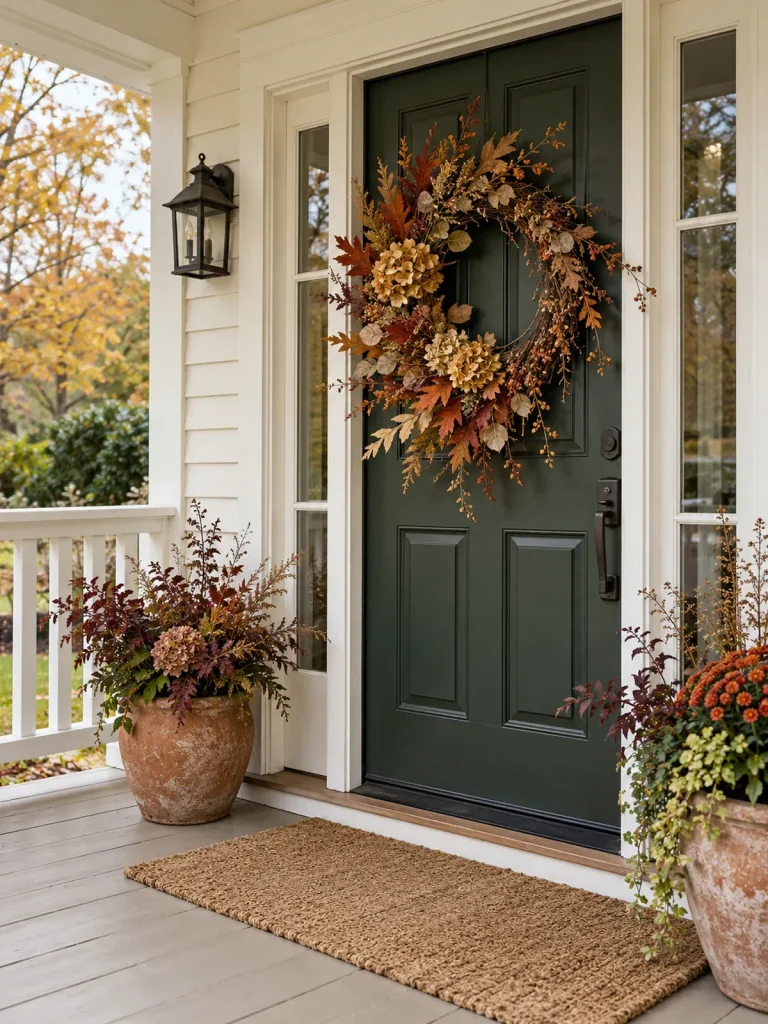
An airy leaf wreath gives the front door a seasonal outline without covering it in bulky decorations. Choose a loose mix of copper, ochre, and muted red leaves, with some of the twig base showing through. That open shape feels softer than a tightly packed orange ring.
Repeat one leaf color in a nearby planter to make the entry feel connected. A dark door provides contrast, while cream siding keeps the whole arrangement light. Use a hanger suited to your door and check that the wreath stays clear of the handle. Under a shallow overhang, weather-resistant faux foliage is easier to manage than delicate dried leaves.
2. A Bronze-and-Burgundy Container Garden
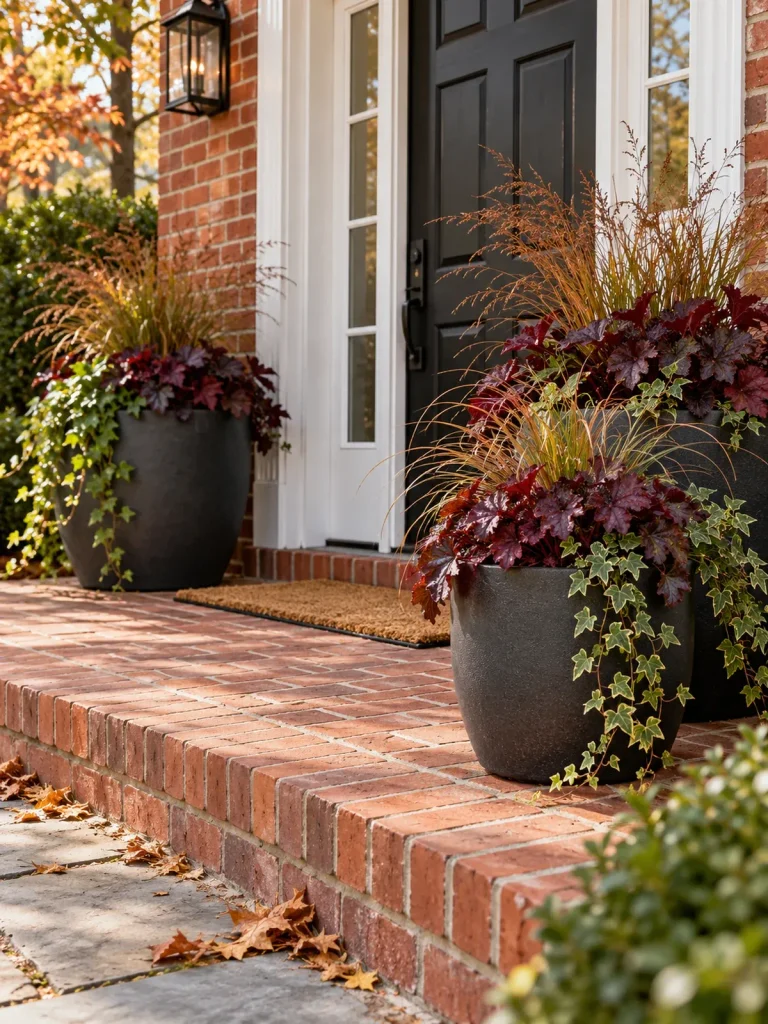
Burgundy leaves and bronze grasses bring autumn color to a porch even before you add flowers. Group containers in different heights, keeping their finishes similar so the planting remains the focus. Heuchera can supply broad, dark foliage, while sedge adds finer texture and movement. A trailing plant softens the rim.
Check the light and growing requirements of your selections rather than assuming every fall plant belongs in the same pot. On a small stoop, place the tallest container toward the wall and keep the front edge open. Water according to soil moisture, since cooler weather does not mean containers never dry out.
3. Lantern Clusters That Warm Up the Steps
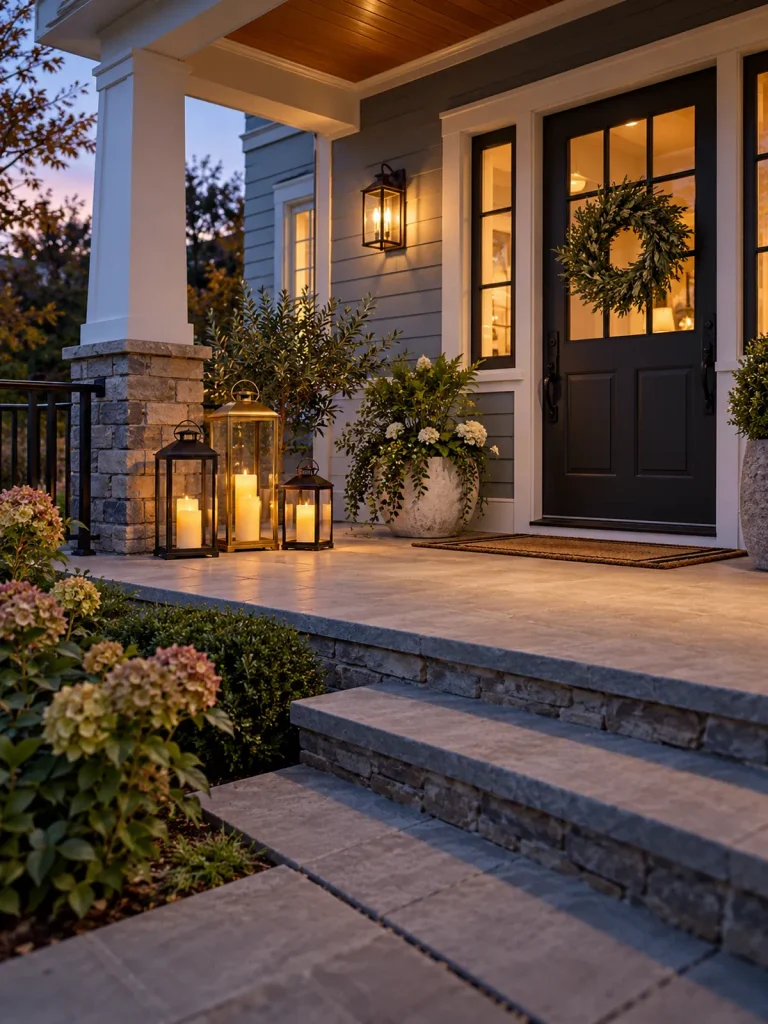
Warm lantern light can carry a fall porch after the flowers fade. Combine two or three lanterns in different heights on a broad landing, using black metal and aged brass for a collected look. The glow works especially well against blue-gray siding or dark doors.
Keep every lantern off the walking portion of the stairs; the arrangement should frame the entrance without narrowing it. Flameless candles avoid an exposed flame near leaves and fabric, but the candles and lanterns still need to suit their location.
Choose products rated for the exposure they will receive, and move indoor-only pieces into a protected spot.
4. A Vintage Bench with Plaid and Rust Textiles
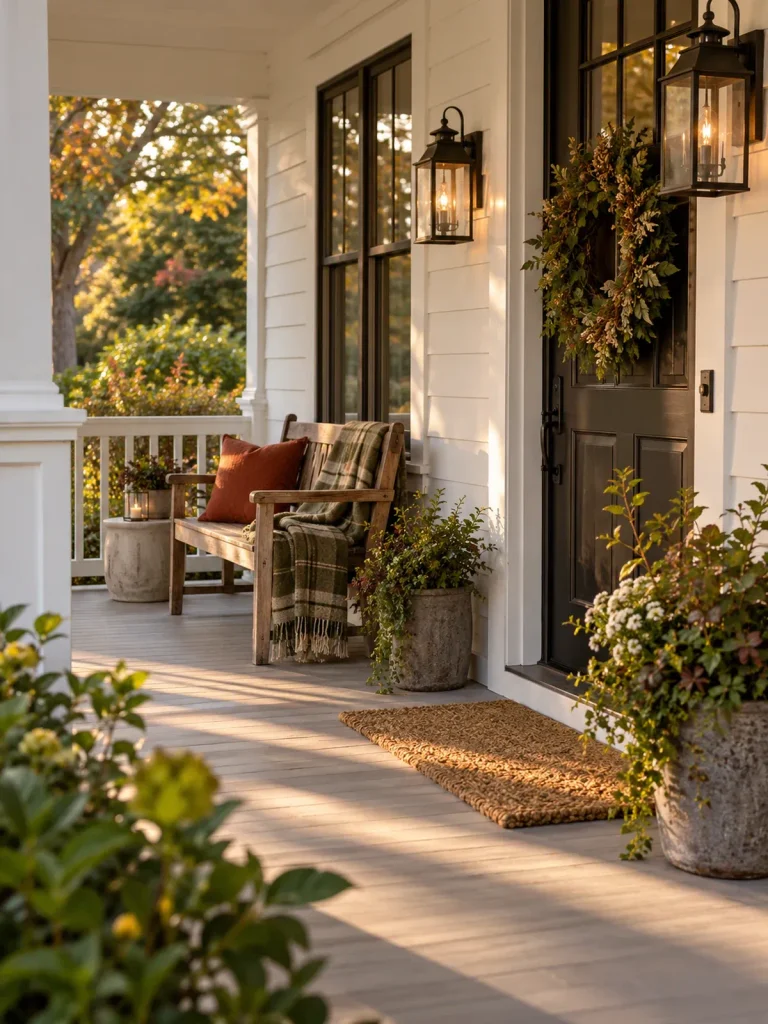
A weathered bench becomes a fall focal point with a rust cushion and a folded plaid throw. Olive, tobacco, and muted cream keep the combination grounded, especially on a white or pale-gray porch. Let the bench’s worn wood show instead of covering every surface with pillows. One cushion and one throw usually give a small seat enough softness.
This approach suits a covered porch where you actually sit to remove shoes or enjoy a cool afternoon. Use outdoor-suitable cushions where needed, and bring ordinary blankets inside between uses. Leave enough room beside the bench for bags and an easy approach to the door.
5. A Corn-Husk Wreath on a Moody Door
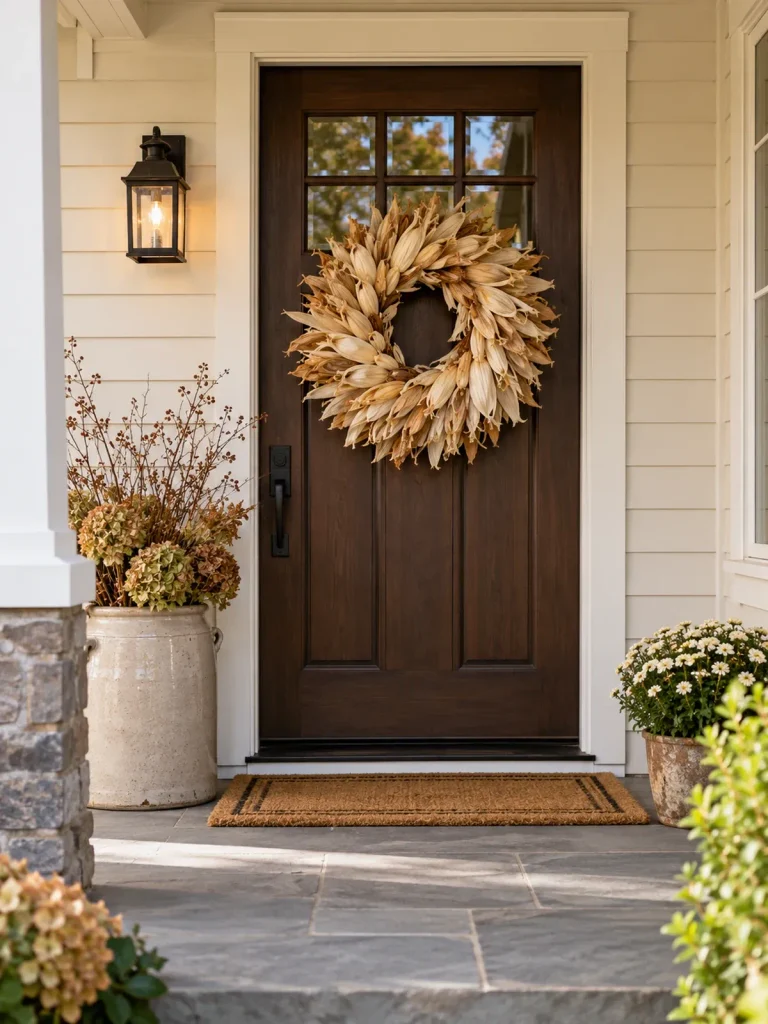
Pale corn husks create a sculptural wreath that reads as fall without relying on bright orange. Their pointed ends make a sunburst shape against a chocolate, charcoal, or deep olive door. Keep the rest of the entry quiet: a stoneware crock or a single neutral planter is enough. The appeal comes from texture and the contrast between light husks and a dark background.
Buy a finished wreath or attach fully dried husks to a suitable wreath base, following the base’s instructions. Display it under cover, away from flame and persistent dampness. Check the attachment regularly because lightweight natural pieces can loosen in windy weather.
6. A Harvest Basket Filled with Dried Stems
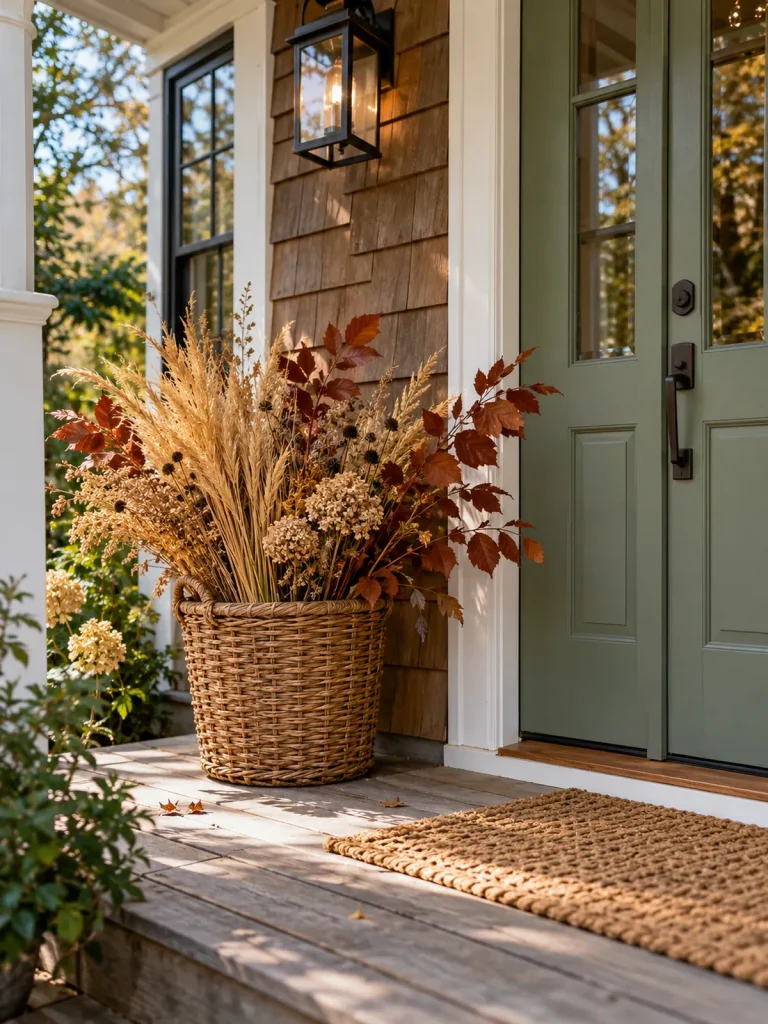
A substantial basket filled with dried stems makes a narrow porch feel dressed without needing a furniture arrangement. Mix wheat-like stems, seed heads, and a few copper-colored branches, leaving spaces between them so the bundle does not look solid. Set the basket beside the door rather than directly in front of it.
A concealed, stable inner vessel helps support the stems and separates them from the basket itself. This look belongs in a sheltered spot; wind and driving rain can quickly spoil dried material. For an exposed entry, use convincing outdoor-rated stems and a container that will not tip easily when the weather changes.
7. An Autumn Branch Arch with Room to Walk
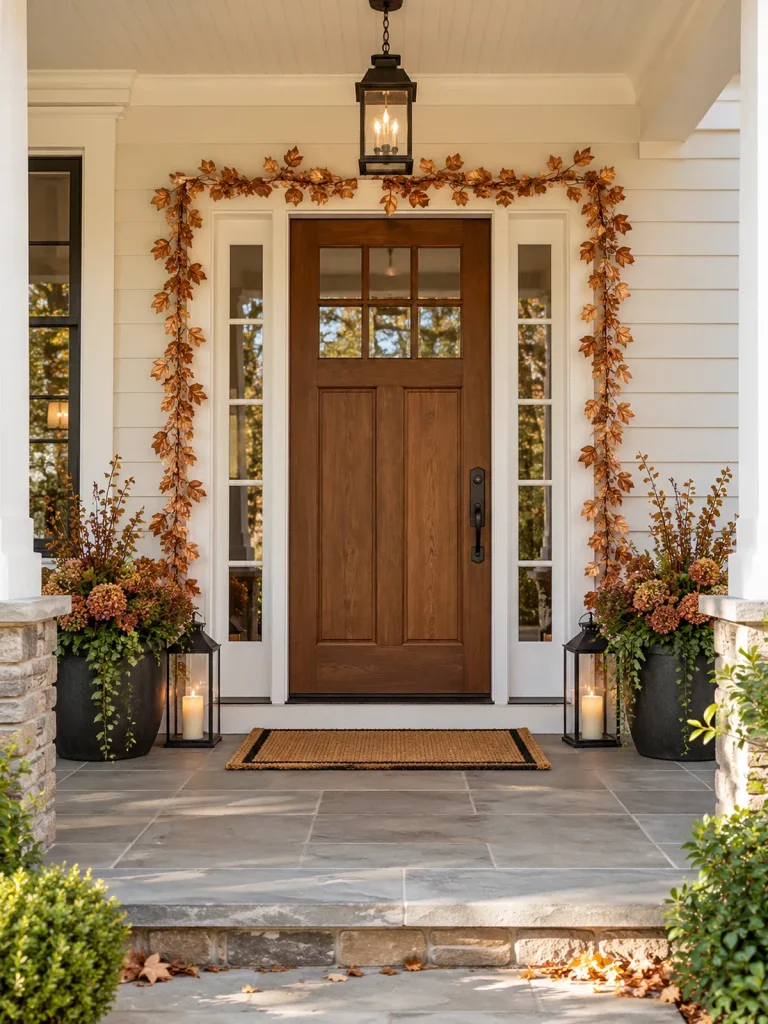
An autumn branch arch draws the eye up and lets the floor stay mostly clear. Trace the door trim with a loose garland of copper and brown leaves, allowing a few small branches to extend outward. Avoid building a thick tunnel around the opening.
On a modest suburban porch, the lighter outline feels intentional without competing with the house. Use fasteners appropriate for the surface and the garland’s weight, and follow their installation directions.
Keep all foliage outside the moving door, away from hardware and existing lights. Outdoor-rated faux branches are useful here because real cut branches can become brittle and shed across the threshold.
8. Muted Mums in Weathered Terracotta
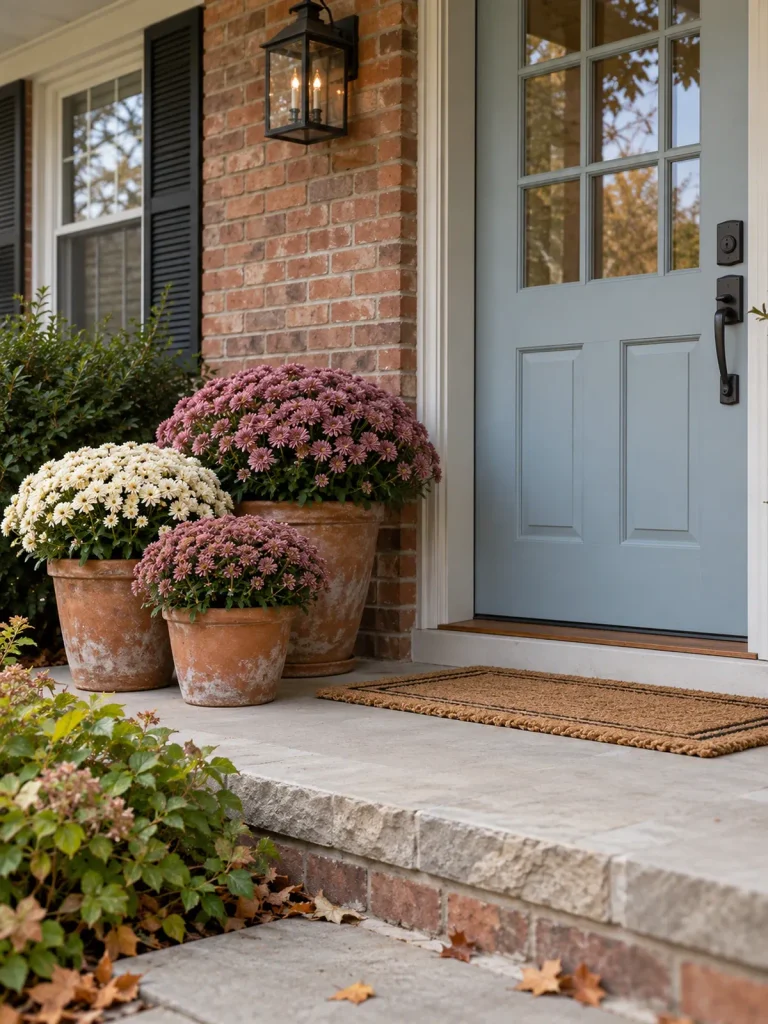
Dusty mauve and cream mums look especially soft in weathered terracotta. Rather than lining every stair with matching pots, make a small cluster on one side of the landing. The mix of faded clay and gentle flower colors works with brick, pale blue doors, and older cottage details.
Choose plants with healthy foliage and plenty of buds beginning to open. Check the soil frequently and water the root zone when needed, avoiding a constantly soggy container.
Pots should drain without leaving standing water in the walking area. In places with freezing weather, move vulnerable terracotta into protected storage before repeated freeze-thaw cycles damage it. libguides.nybg.org
9. A Cozy Porch Swing in Tobacco and Olive
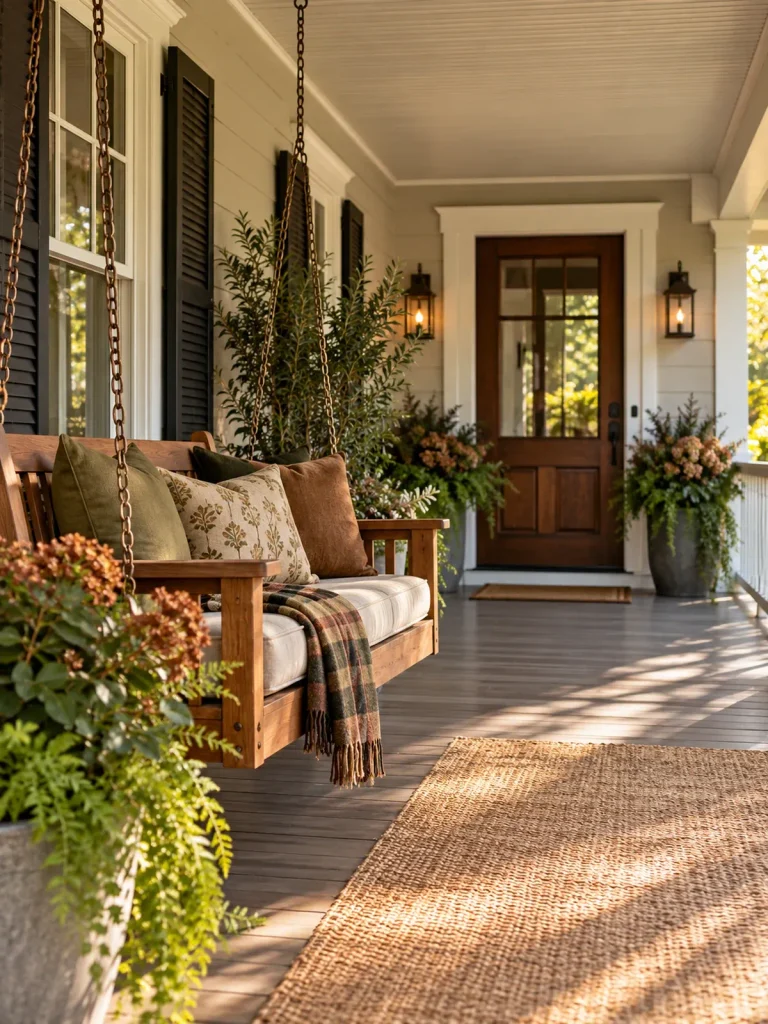
A porch swing can carry the season through color alone. Tobacco brown, olive, and a little cream echo fallen leaves without making the seating area feel like a holiday display. Keep cushions low enough that the wood frame and suspension remain visible.
A neatly folded plaid throw adds another texture without crowding the seat. Work with an existing properly installed swing rather than treating this styling idea as an installation guide. Leave its full movement area clear of planters, tables, and railings.
On a covered porch, bring regular textiles inside after use and choose outdoor-suitable cushion covers where wind can blow rain into the seating area.
10. A Simple Bundle of Ornamental Corn
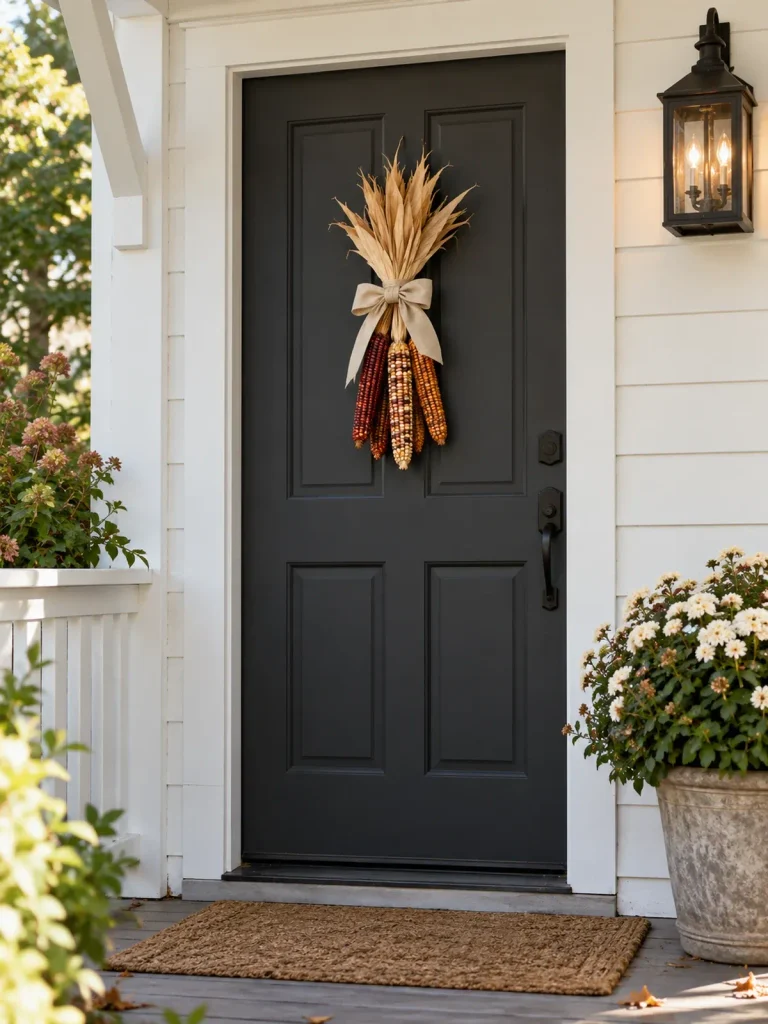
A small bundle of ornamental corn brings a harvest reference to the door with very little floor space. Look for ears with mixed burgundy, gold, and cream kernels, then tie the dry husks together with a plain linen ribbon.
The uneven colors provide plenty of detail, so a large bow is unnecessary. Hang the bundle where it will not hit a glass pane or cover the lock. Natural corn is most manageable beneath a deep overhang and may attract wildlife, so inspect it regularly and remove it if pests appear.
A reusable imitation bundle gives an exposed entry a similar look with less seasonal cleanup.
11. A Copper-and-Stoneware Side Table
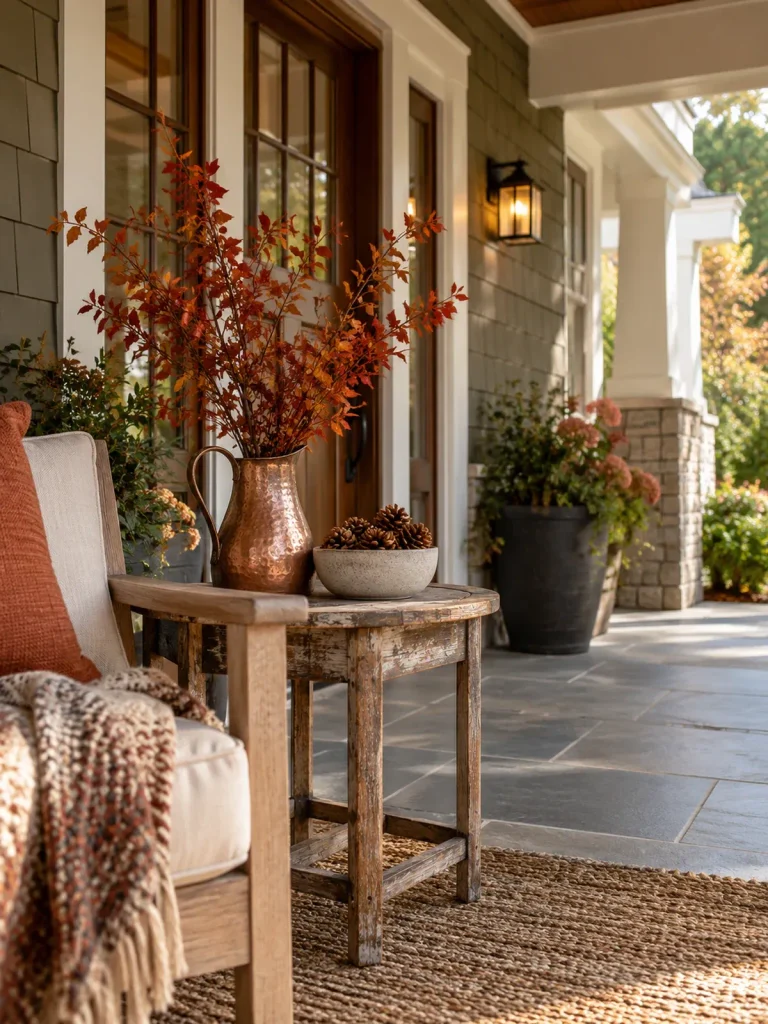
Copper warms up an autumn seating corner without adding another wreath or planter. Place a single pitcher on a small wooden side table and fill it with a modest arrangement of rust-colored branches.
A plain stoneware bowl keeps the metal from feeling too formal. This detail works well beside a chair where the arrangement can be seen at sitting height, especially under a porch roof. Keep the table useful by leaving space for a cup.
Use a stable vessel and avoid overlong branches that catch sleeves or lean into the path. Bring decorative indoor metalware inside when damp weather could affect its finish.
12. Layered Rugs in Soft Autumn Colors
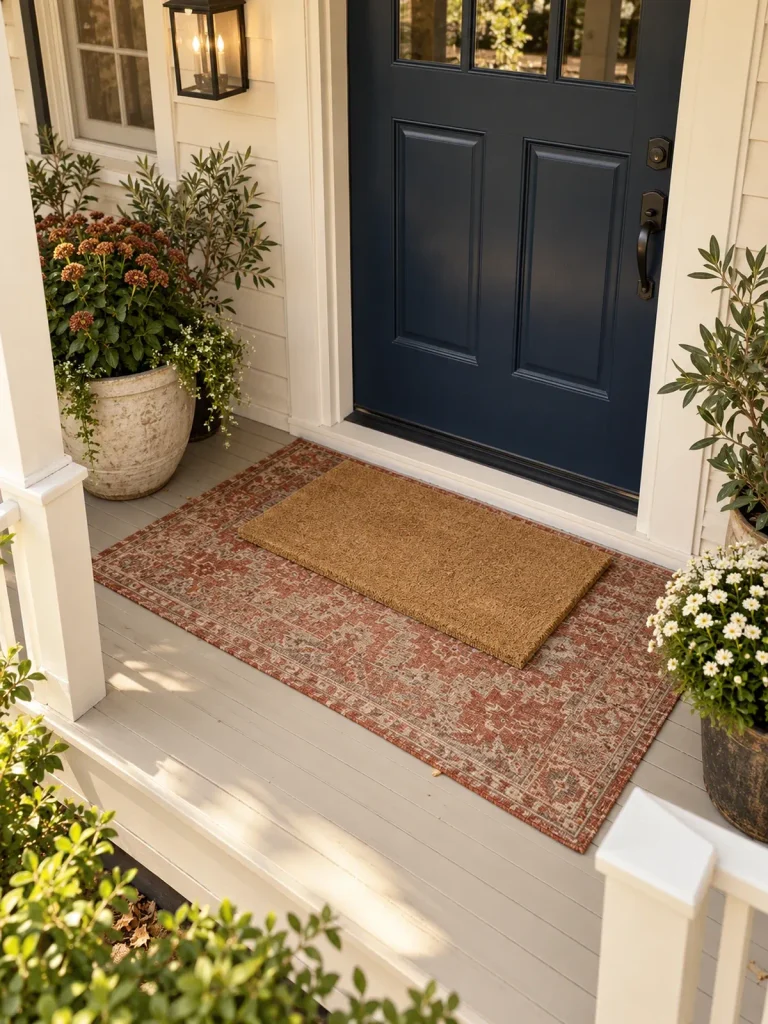
Layered rugs can add fall color to an otherwise undecorated entrance. Start with a thin, outdoor-suitable patterned rug in muted rust, then place a smaller plain coir mat above it. A restrained pattern works better than lettering when the door and surrounding planters already have plenty of detail.
Measure the landing before buying anything: both layers need to sit flat and remain clear of the door’s movement. Check that the stack does not create a raised edge or slide underfoot. In rainy locations, one low-profile outdoor mat may be the more practical choice. Lift the layers periodically so trapped moisture and debris can dry out.
13. A Tidy Stack of Firewood Beside the Entry
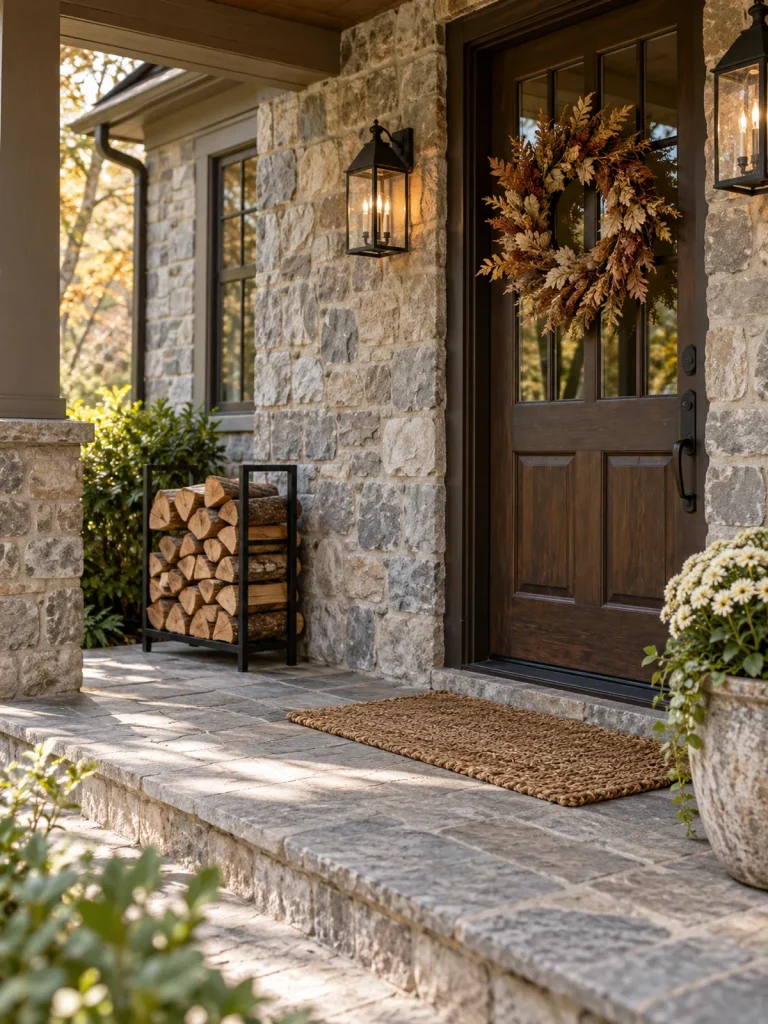
A small rack of neatly split wood adds earthy color and a cabin-like feel beside a stone entry. The cut ends supply their own pattern, so you can skip extra ornaments around the rack. Choose a compact, freestanding holder and keep its footprint separate from the route to the door.
Treat this as a small display or short-term supply rather than moving your entire woodpile onto the porch. Store the main supply elsewhere, keep wood from touching siding, and check for insects before bringing any indoors. Skip the look where local pest guidance or building conditions make wood near the house unsuitable for your home. UMN Extension
14. Amber Glass on a Sheltered Shelf
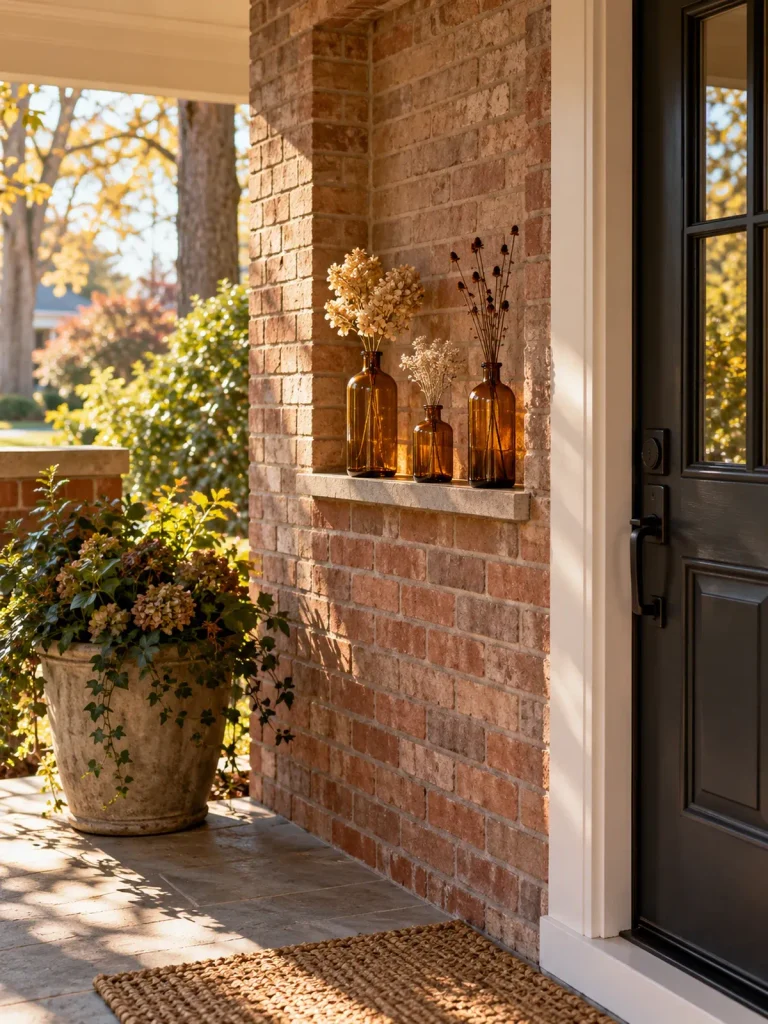
Amber glass catches low autumn light beautifully on a sheltered porch shelf. Group three bottles with different silhouettes on a shallow, secure shelf, adding only a few dry stems. Their honey tones feel seasonal even when the rest of the porch is neutral.
A recessed brick alcove or protected side wall gives this arrangement a defined place without using the floor. Glass should sit well back from the edge and outside any active walking or seating area.
Skip the display where wind, children, or pets could knock it over. Outdoor-suitable amber-toned vessels offer another option when delicate thrifted bottles would be too vulnerable in the location.
15. Dried Hydrangeas in an Oversized Crock
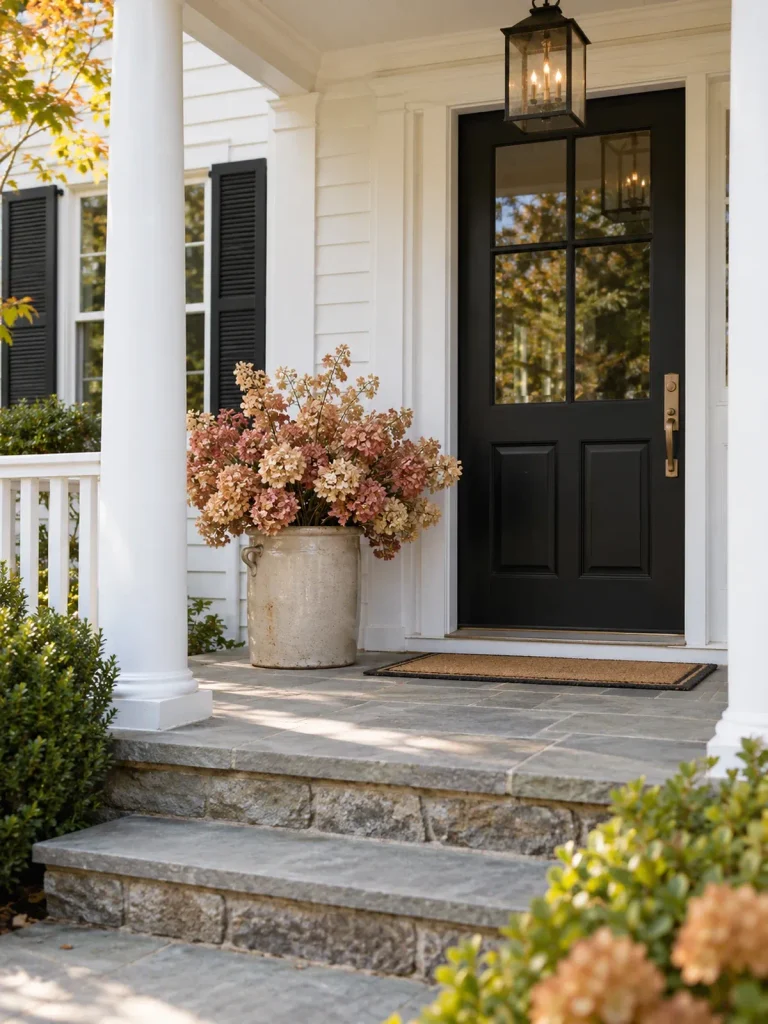
Dried hydrangeas give a porch a softer autumn palette than bright leaves. Gather parchment, dusty rose, and faded tan blooms in a heavy stoneware crock, letting the rounded flower heads form one loose mound.
A large container can look calm beside a dark door, especially when the surrounding floor stays bare. Keep the stems proportionate to the vessel so the arrangement does not become top-heavy.
This is a good use for already dried flowers, but they belong beneath cover rather than in wind-driven rain. Handle the heads gently, remove crumbling pieces, and move the display inside when prolonged damp weather starts to affect the blooms.
16. A Forest-Floor Arrangement of Cones and Acorns
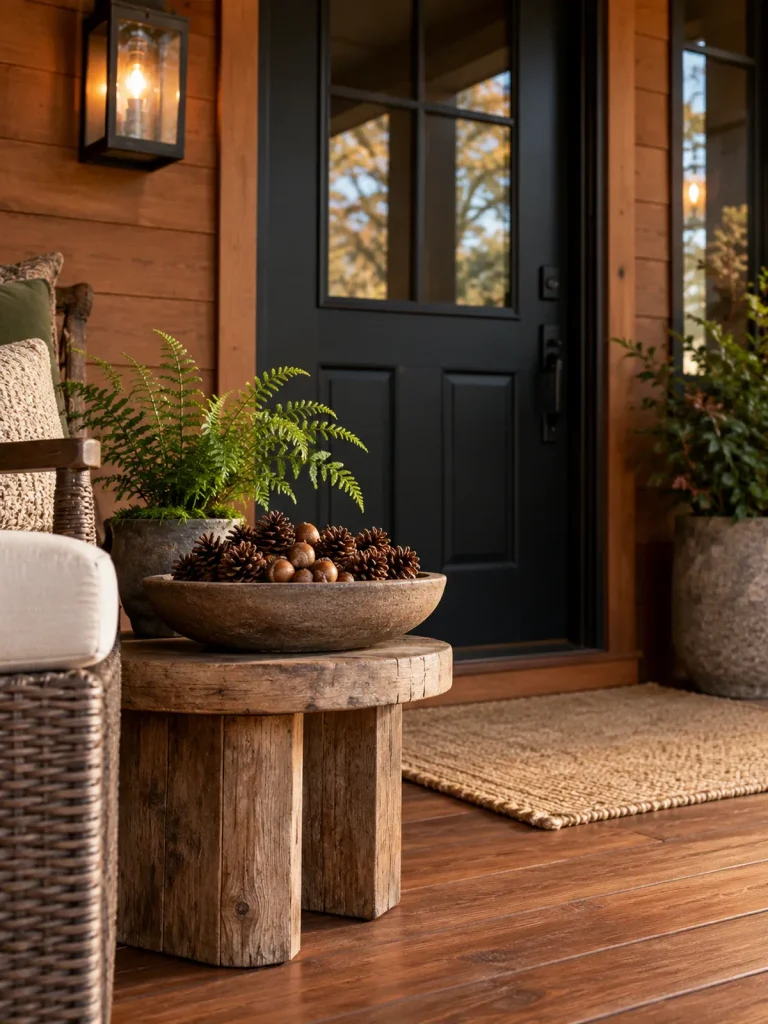
A shallow bowl of pinecones and acorns brings the woodland part of fall to a small porch table. Choose one substantial earthenware bowl so the natural pieces read as a contained arrangement rather than scattered debris. A small fern nearby adds living green against the brown textures.
The effect suits cedar siding, brick, and other warm materials without needing a large seasonal display. Use clean, dry materials and check them before bringing them into a sheltered seating area.
Keep small loose pieces away from young children and pets. If wildlife repeatedly empties the bowl, switch to a reusable decorative version or move the arrangement indoors.
17. A Golden Fern Corner for Early Fall
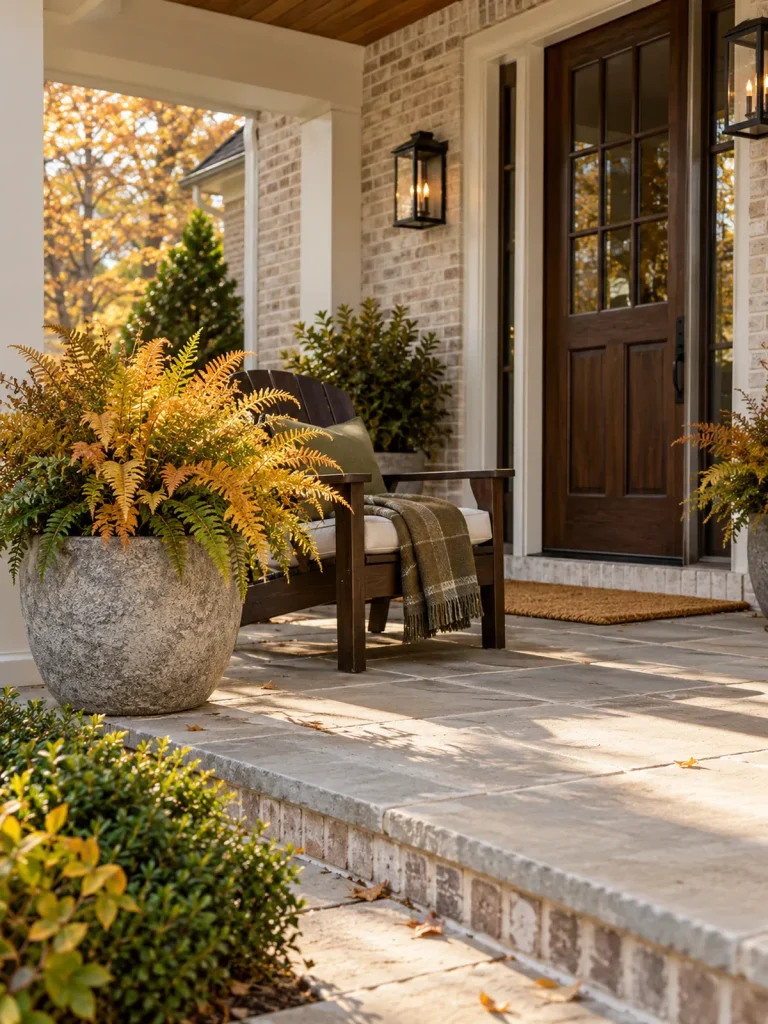
Golden foliage gives early fall decorating a gentler direction, especially while the weather still feels mild. Set an autumn fern in a broad stone-look planter beside a wooden chair, then echo its tones with a small ochre cushion.
Look for a plant with the color and growing conditions you need; autumn fern has coppery new growth that turns green as it matures. Check its botanical label and your local conditions before leaving it outdoors through cold weather.
A sheltered corner with suitable light keeps the scene believable and useful. Leave room around the pot for watering, and avoid letting drainage collect where people step or sit. North Carolina Extension Gardener Plant Toolbox
18. A Vintage Ladder for Folded Fall Throws
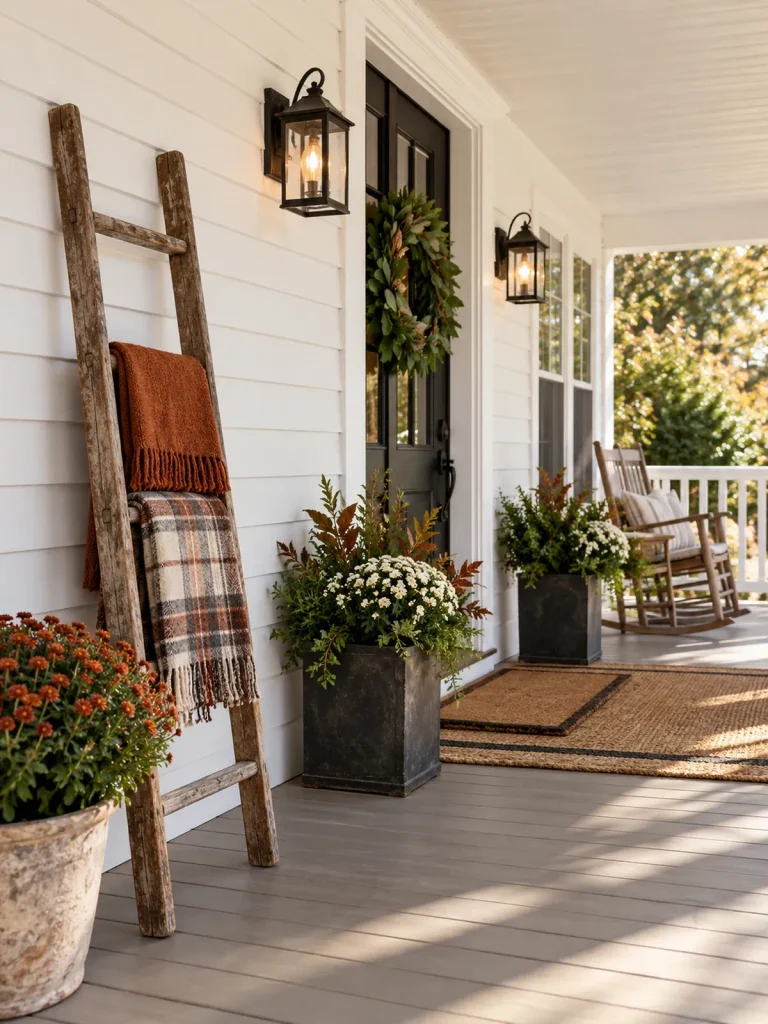
A short decorative ladder can display two folded throws without taking over a covered porch. Lean it along a side wall, then alternate a solid rust blanket with a quiet check pattern. The vertical shape adds interest above a bench or chair while leaving the seat itself uncluttered.
Use a stable display piece and secure it appropriately so it cannot slide or fall. It should never block an exit, invite climbing, or sit beside a railing where it could create a hazard. This arrangement is for dry, sheltered spaces and calm conditions. Bring the throws indoors between uses rather than leaving absorbent fabric outside through wet weather.
19. A Dried-Flower Wall Basket
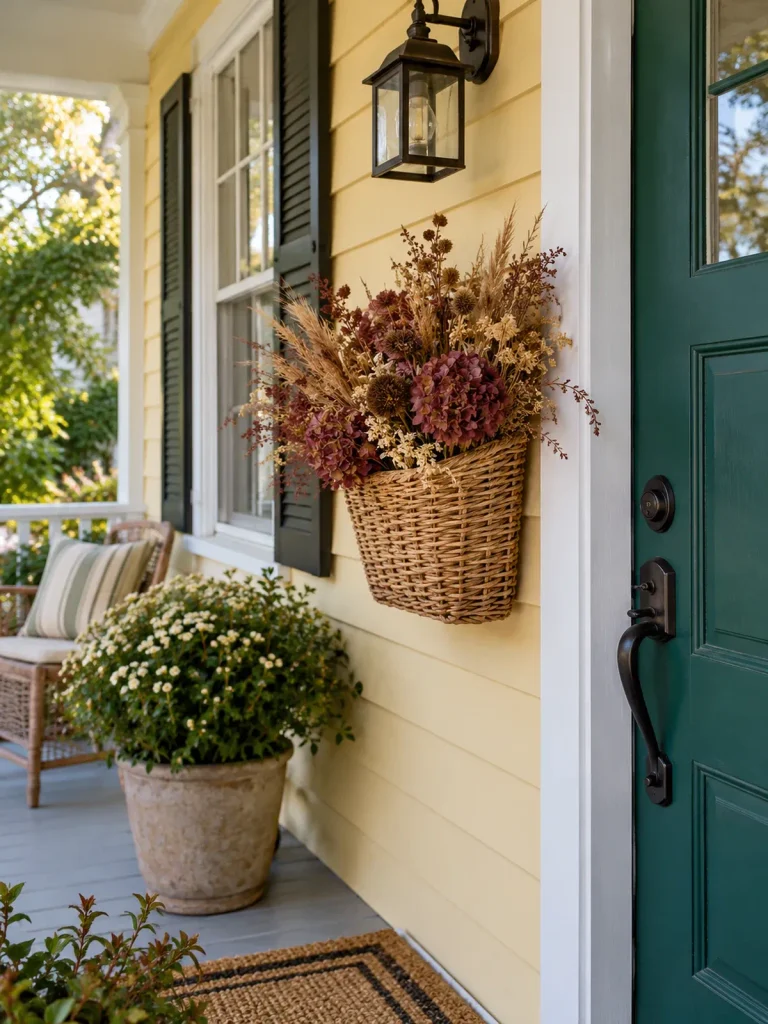
A flat-backed wall basket moves fall decor off the floor, making it useful for a tiny entry. Fill it with muted burgundy flowers, straw-colored grasses, and a few interesting seed pods. Keep the outline slightly uneven, with shorter stems around the edges and one taller accent near the middle.
Unlike a large doorway garland, this detail occupies just one patch of wall. Hang it with hardware suited to the surface and total weight. Natural dried flowers need protection from dampness, so use a covered side wall or choose outdoor-rated alternatives. Check that projecting stems cannot brush anyone’s face as they approach the door or reach the bell.
20. A Bistro Corner in Cinnamon and Cream
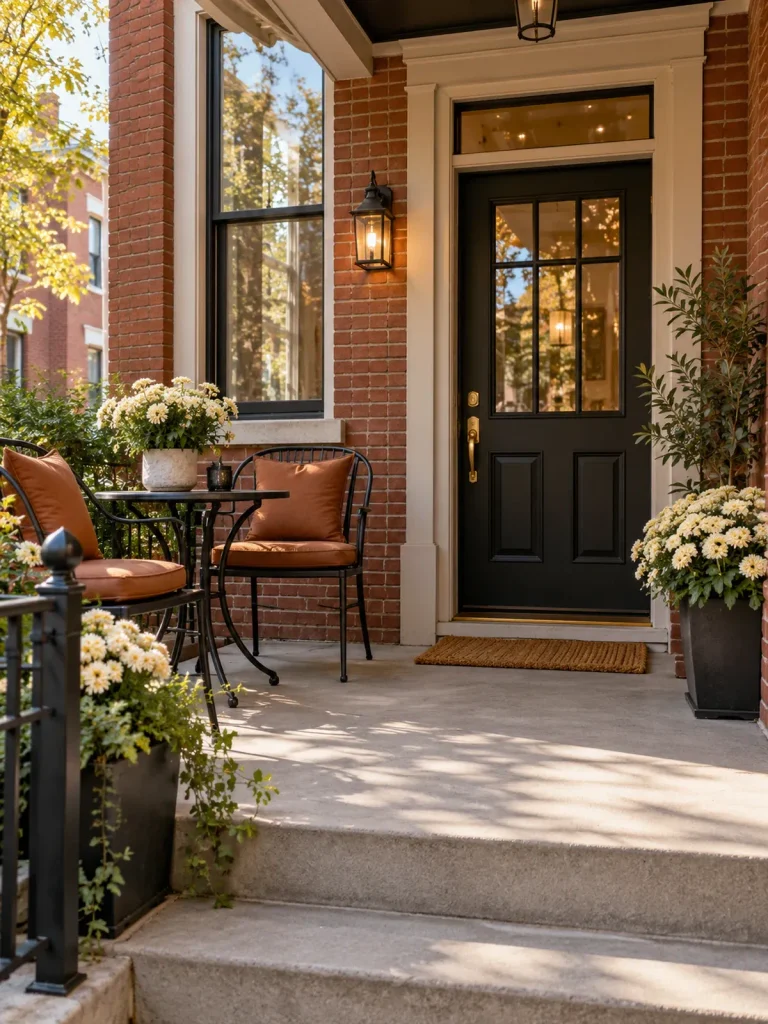
Cinnamon cushions and cream flowers can make an existing bistro set feel ready for fall. A small round metal table is useful on an urban porch because its curved edge helps the seating corner feel less boxed in. Keep accessories minimal so there is still room to set down breakfast or a mug.
Before adding chairs, check that someone can pass comfortably while another person is seated and the door is open. On very narrow porches, use one chair or skip the table entirely. Bring standard cushions inside after use, and choose a pot with drainage that will not leave water under the chair legs.
21. A Pair of Fall Window Boxes
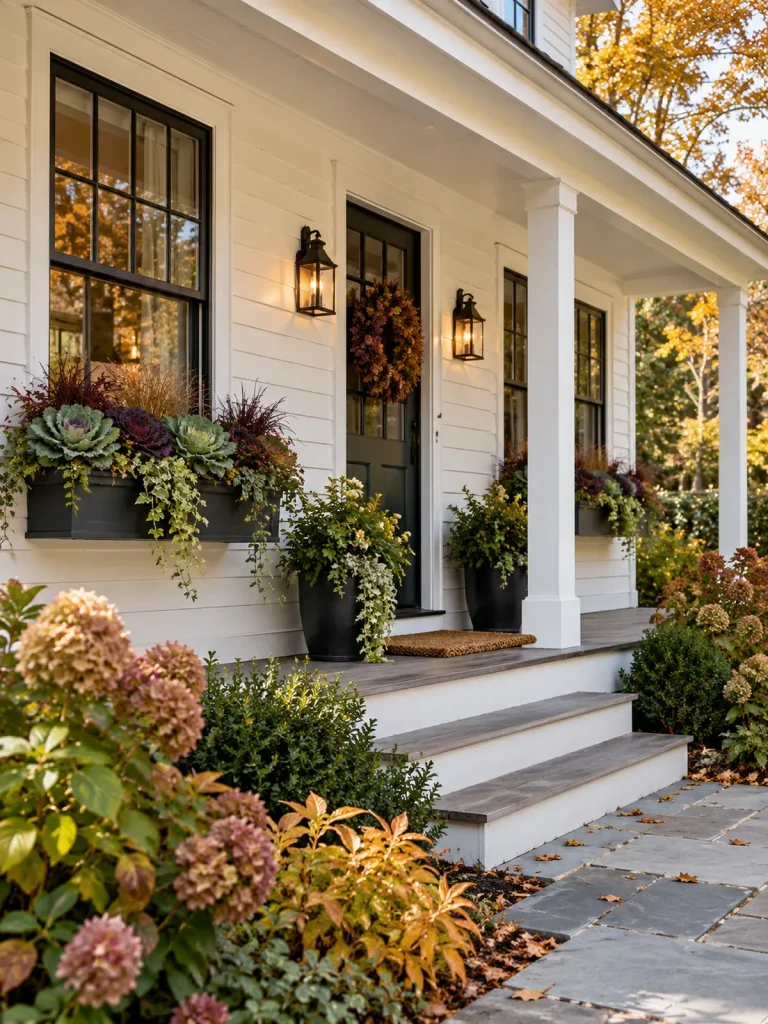
Window boxes can provide the seasonal color when a porch floor needs to stay empty. Combine compact ornamental kale, bronze sedge, and a trailing accent for a mix of broad leaves and fine texture.
Repeating the planting under two windows helps a modest cottage facade feel coordinated. Match the plants to the actual light and climate rather than copying a combination that cannot share the same conditions.
Use properly supported boxes with drainage and follow the mounting system’s requirements. Water can still be needed in cool weather, especially beneath a roof. Keep runoff away from vulnerable siding, and remove tired plants before they make the entry look neglected.
22. A Restrained Black-and-Tan Porch
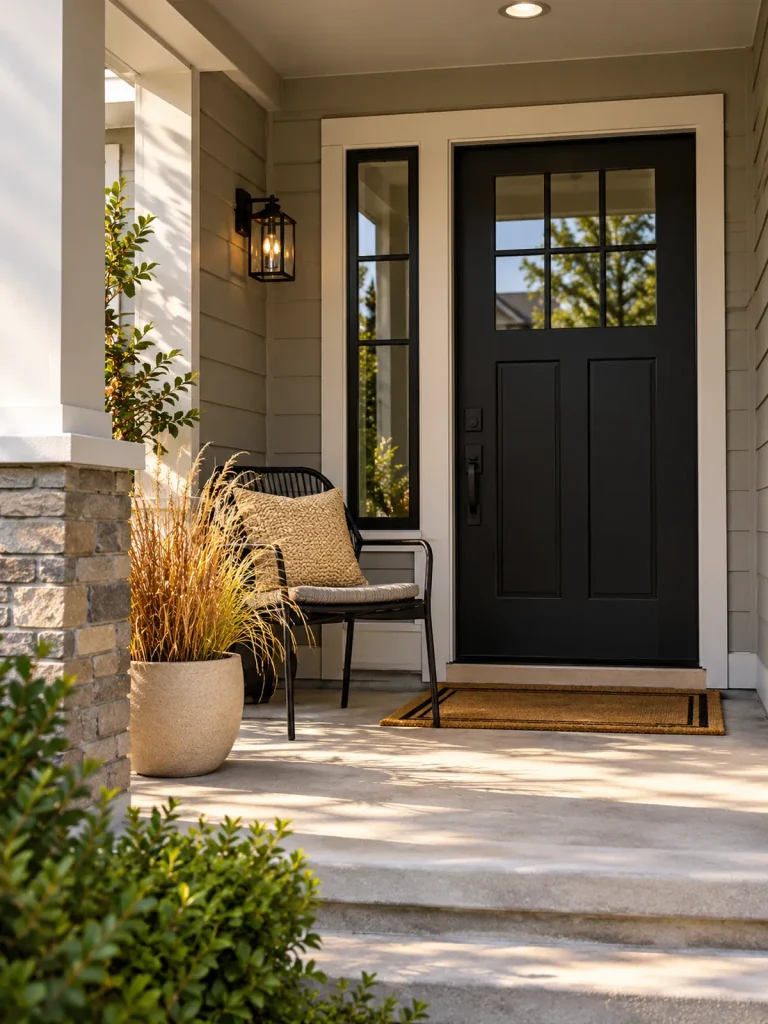
Black and tan create a quiet autumn porch for readers who prefer fewer colors. Start with the existing dark door, add a black chair if space allows, and soften it with a woven tan cushion. A sand-colored pot of golden grasses supplies the seasonal note.
The shape of each piece matters here because there are few accessories to distract the eye. Choose one substantial planter instead of several small ones and let some bare floor remain visible.
Use materials suitable for the exposure, including the cushion and grasses. This approach works particularly well on compact modern entries where a busy harvest display would overwhelm the architecture.
23. An Apple Basket with a Market-Day Feel
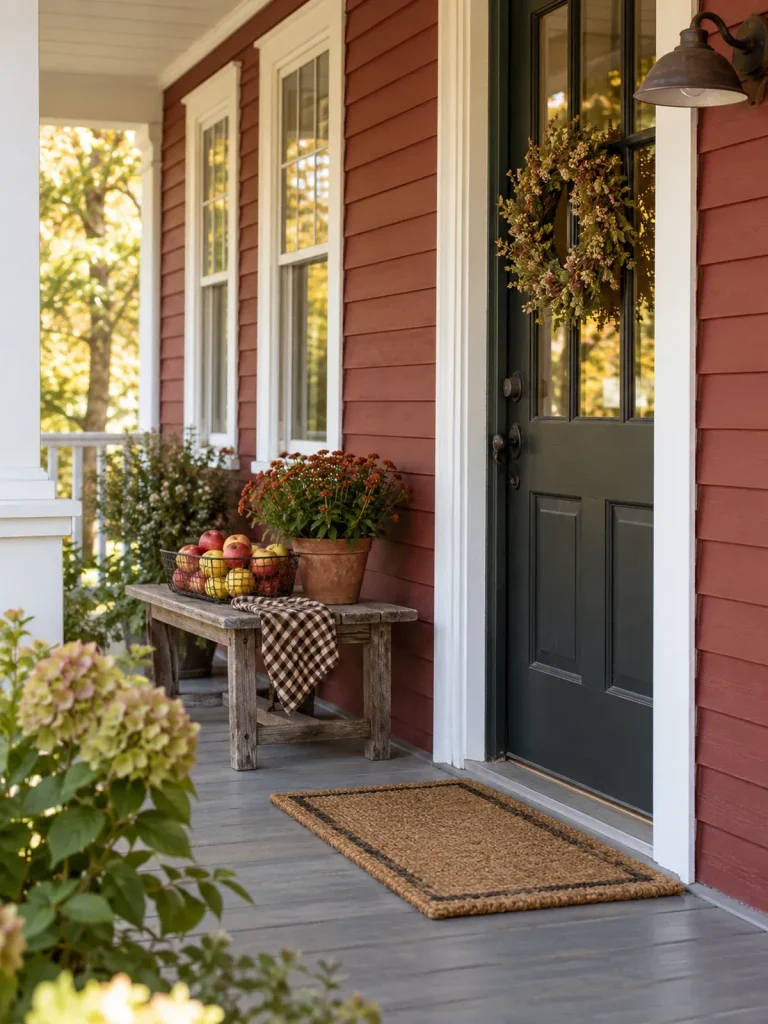
A small basket of apples gives a sheltered porch a market-day feeling. Set a shallow wire basket on a low bench with a folded gingham cloth, keeping the fruit visible rather than burying it beneath other decorations. Red and yellow apples add color that works naturally with weathered wood and terracotta.
Real fruit needs frequent checking and should not remain outside after it softens, becomes damaged, or attracts animals. A porch display is not a substitute for appropriate food storage.
Use convincing decorative apples for a longer-lasting arrangement, especially in warm climates. Leave the rest of the bench free if it also serves as a place to sit.
24. A Burgundy Ribbon Doorway
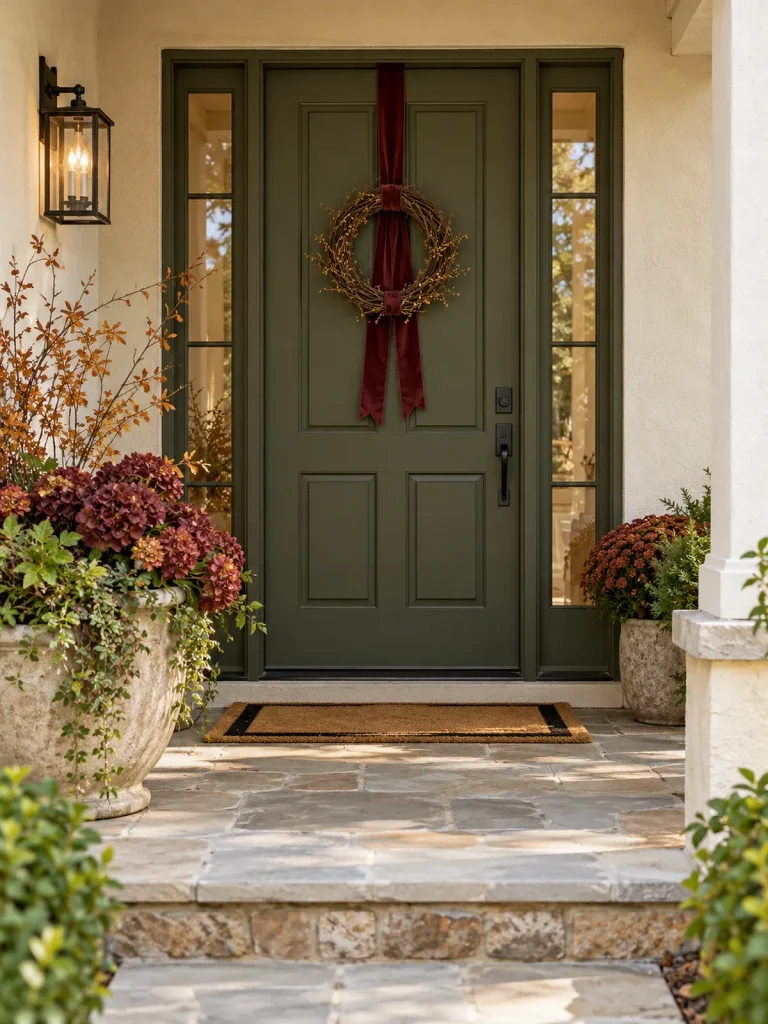
A long burgundy ribbon gives a plain twig wreath a more tailored autumn look. Against an olive or cream door, the deep fabric color adds richness without needing flowers or a bulky bow.
Keep the wreath modest and allow the ribbon to form a clean vertical line. The result suits a narrow doorway where floor decorations would feel crowded. Use a door-safe hanging method and position the ribbon so it stays clear of the latch, hinges, and weather stripping.
Fabric can absorb moisture and fade, so choose material appropriate for the exposure and inspect it after rain. Trim loose ends before they become tangled or ragged.
25. A Reading Chair with a Sunset Palette
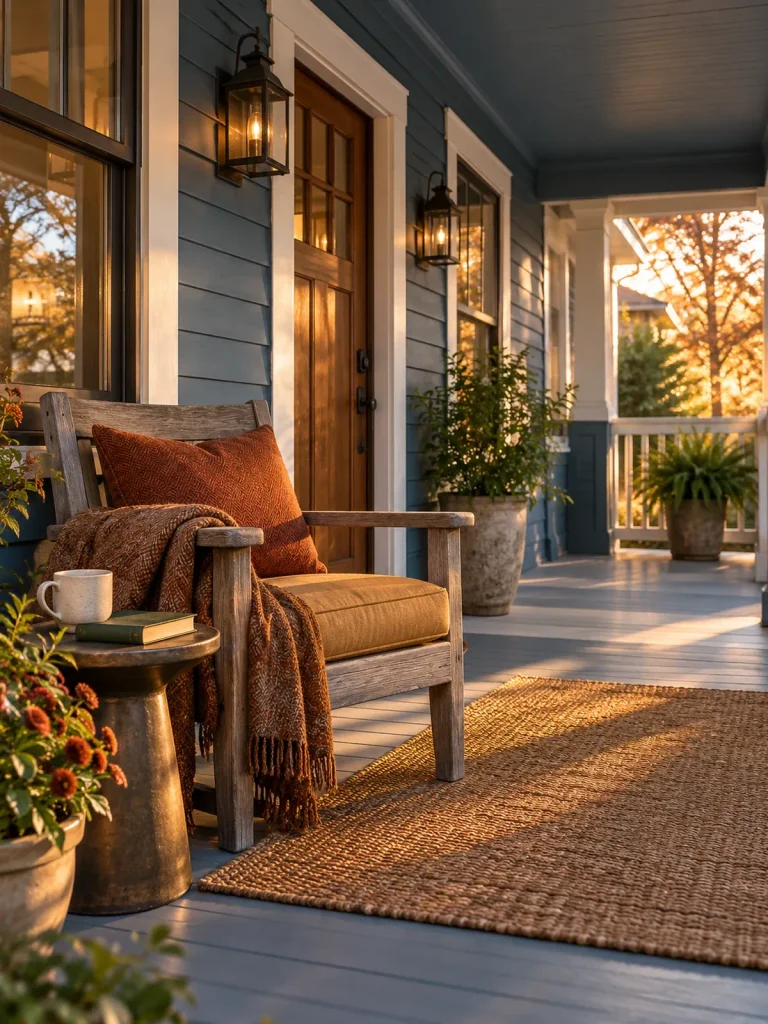
An ochre cushion, a brick-red pillow, and a brown throw can turn an existing porch chair into a small autumn retreat. Place a stable side table within comfortable reach, leaving enough surface for a mug and a book.
Warm late-day light adds to the feeling, but the corner should still function when the sun moves. Choose a seat where the doorway and walking route remain clear, especially on a long, narrow porch.
A covered location helps, although ordinary textiles still need to come inside after use. Start with what you already own and repeat just two warm colors to keep the small arrangement from feeling busy.
Build a Fall Porch Around Three Simple Layers
For fall porch decorating, choose one focal point first: a door arrangement, a planted container, or a seat. Add a different texture, such as woven fiber beside metal or soft fabric against wood. Finish by repeating one accent color in a smaller detail. Burgundy foliage and a burgundy ribbon can connect two areas without making every object match.
Keep the scale tied to your porch. A narrow stoop may only need a wreath and one pot, while a covered seating area can handle a bench, side table, and lantern. Leave visible empty space between groups so the materials have room to stand out.
Before buying anything, decide what can stay outside. Reserve dried flowers, delicate glass, and ordinary blankets for protected locations or brief use. Put the most weather-suitable pieces where rain reaches the porch, and check the open door and walking route after arranging everything.
Frequently Asked Questions
How can I decorate a very small front porch for fall?
Use the door or a side wall as your main decorating surface. Add one compact planter only if it fits outside the door’s swing and walking route. A wall basket or ribbon-hung wreath gives you seasonal color without filling the landing.
What colors feel like fall besides orange?
Try burgundy and olive, dusty mauve and cream, or copper with tobacco brown. Tan and black work for a more restrained look. Repeat a color already present in your door, brick, or siding so the seasonal additions feel connected.
Can dried flowers stay outside on a porch?
They are most practical beneath a deep roof where they avoid direct rain and persistent dampness. Even sheltered dried stems can fade, shed, or become brittle. Check them regularly and bring them inside when conditions turn wet or windy.
How do I decorate for fall without buying a whole new set of decor?
Use a bench, basket, lantern, or planter you already own, then add one seasonal element. A different cushion cover or a small bundle of stems can change the palette. Check that reused indoor items suit the porch’s exposure before leaving them outside.
When should I put out fall porch decorations?
Start when the look suits your local season and routine. Early fall can be as simple as a color change in cushions or foliage. Add cool-season plants when your conditions suit them, and remove fragile decor before weather damages it.
Choose One Fall Detail to Start With
A fall porch can feel seasonal through color, texture, and a few useful pieces. Start with the area you notice most: the door, one planting corner, or your favorite seat. Choose one idea that fits that spot, repeat a color once, and leave the entrance easy to use. A thoughtful arrangement you can maintain will serve you better than filling every available surface.