
A backyard hill can make everyday decisions surprisingly tricky. Where should the chairs go? How do you reach the upper garden? And what can replace that awkward strip of grass?
Good sloped backyard landscaping starts by deciding which areas need to be level and which can follow the existing ground.
These ideas cover terraces, decks, garden routes, and planting schemes for different kinds of slopes. Some involve substantial construction; others work with the hillside you already have.
Use them to narrow down a layout that suits your yard, your maintenance routine, and the way you want to spend time outside.
1. Three Broad Terraces with Stone Retaining Walls
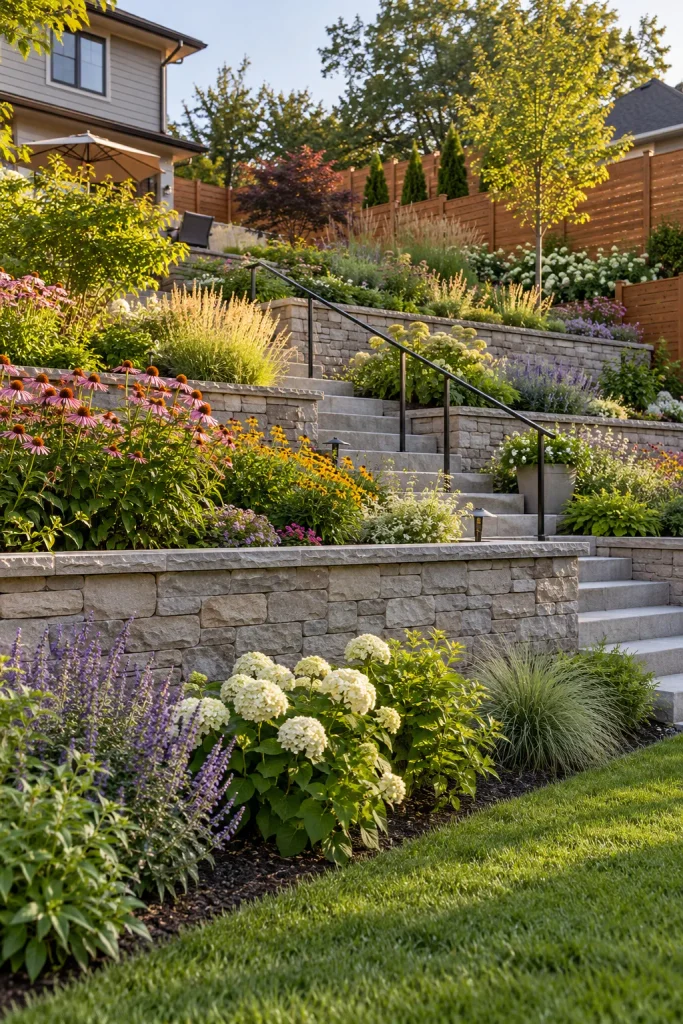
A series of broad terraces gives a terraced backyard several usable planting levels rather than one uninterrupted incline. Repeating the same stone across the retaining walls helps the different levels read as one garden, while generous beds leave room for shrubs and perennials to mature.
Plan the connection between levels before choosing plants. A clear stair route is more useful than narrow beds squeezed around awkward steps. Have the walls, foundations, and drainage designed for your site, including how adjacent terraces affect one another. Several short walls should not be assumed to be a simple DIY substitute for one tall wall.
2. A Raised Deck Above the Slope
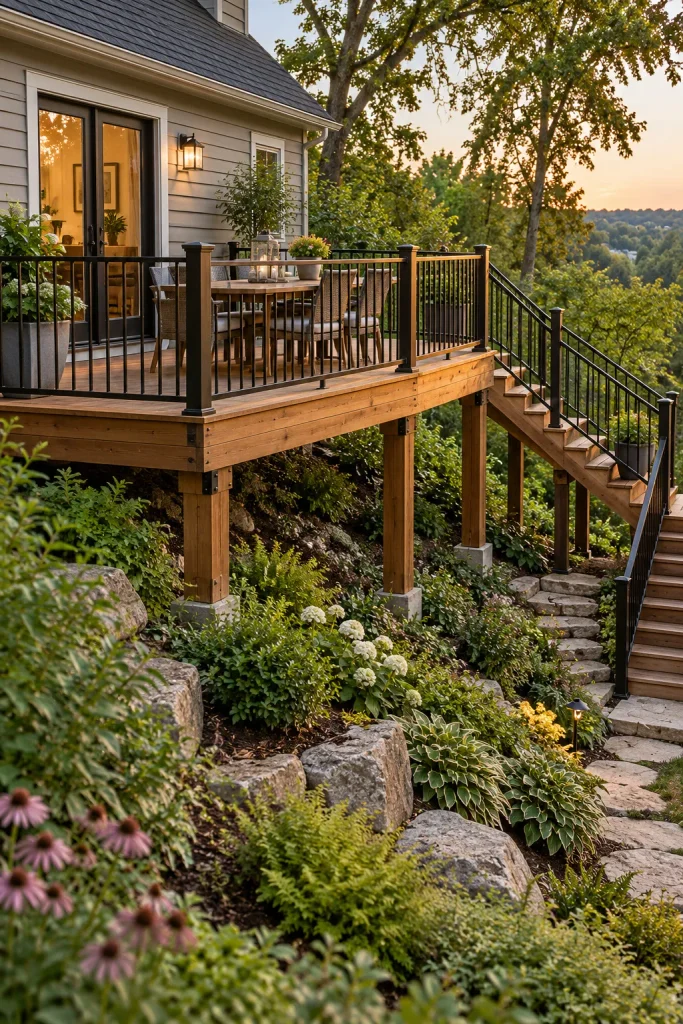
When the ground drops away from the back door, a raised deck can provide an outdoor living surface without leveling the entire yard. Keep the footprint focused on what you will actually use, such as a dining table with enough space to pull out chairs.
A side view matters as much as the view from the house. Coordinate the posts, railings, and planting beneath the deck so the structure looks connected to the garden. Ask a qualified deck professional to assess footings, soil, lateral support, guards, and permits. Preserve access underneath for inspection rather than enclosing every support behind dense vegetation.
3. A Patio at the Bottom of the Hill
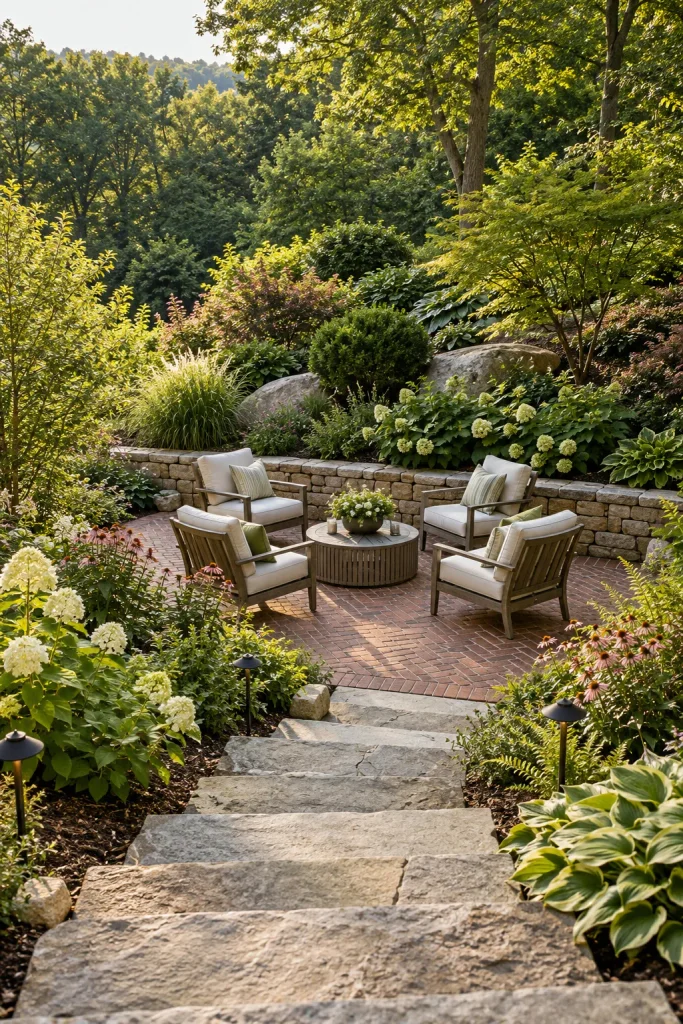
A lower patio creates a destination that draws you into the garden instead of keeping all outdoor activity beside the house. Brick or textured pavers can define a compact seating area at the bottom of the hill, with planting wrapping around its uphill side.
Check what happens there after rain before committing to the location. The low point may collect runoff, and adding paving alone will not solve that problem. Plan drainage and retaining edges with the patio layout. Leave room for chairs, circulation, and a practical route back uphill, then use taller planting selectively to frame the space without hiding the entrance.
4. A Direct Staircase Through the Garden
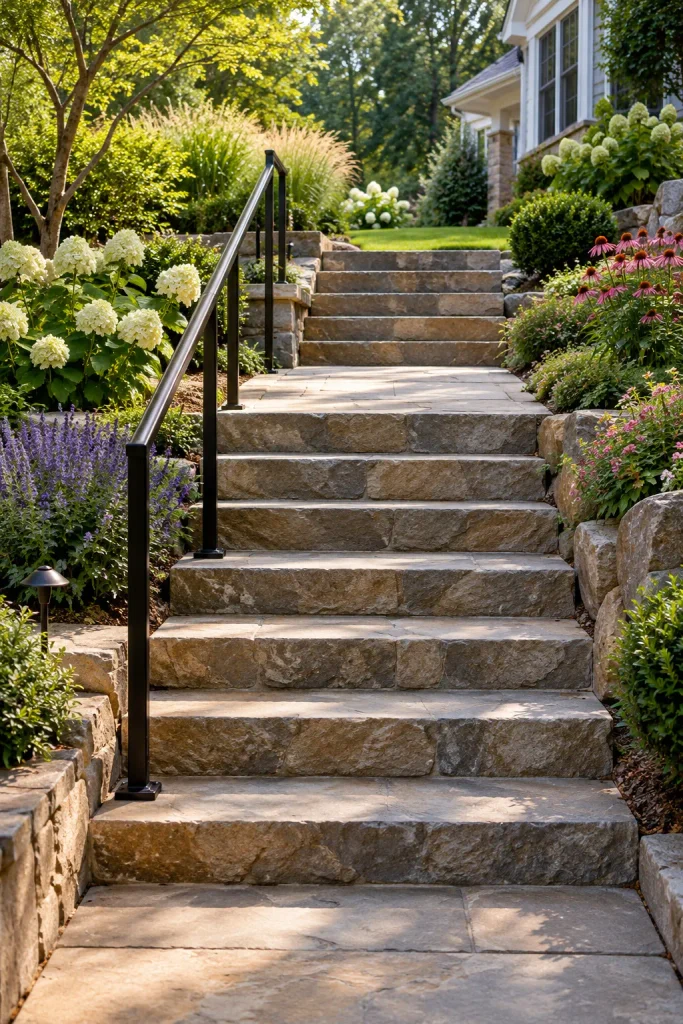
A direct staircase makes sense when you repeatedly travel between the same two places, such as the back patio and an upper garden. Broad, textured treads give the route a deliberate presence, while planting on both sides softens the view uphill.
Keep the route legible from both ends and allow landing space where the layout needs it. Consistent step dimensions, slip resistance, handrails, and lighting belong in the plan from the start. Have the details checked against applicable requirements. Avoid letting trailing plants spill onto the walking surface, and choose edging plants that will not force you to squeeze past them once mature.
5. A Switchback Path for a Longer Garden Walk
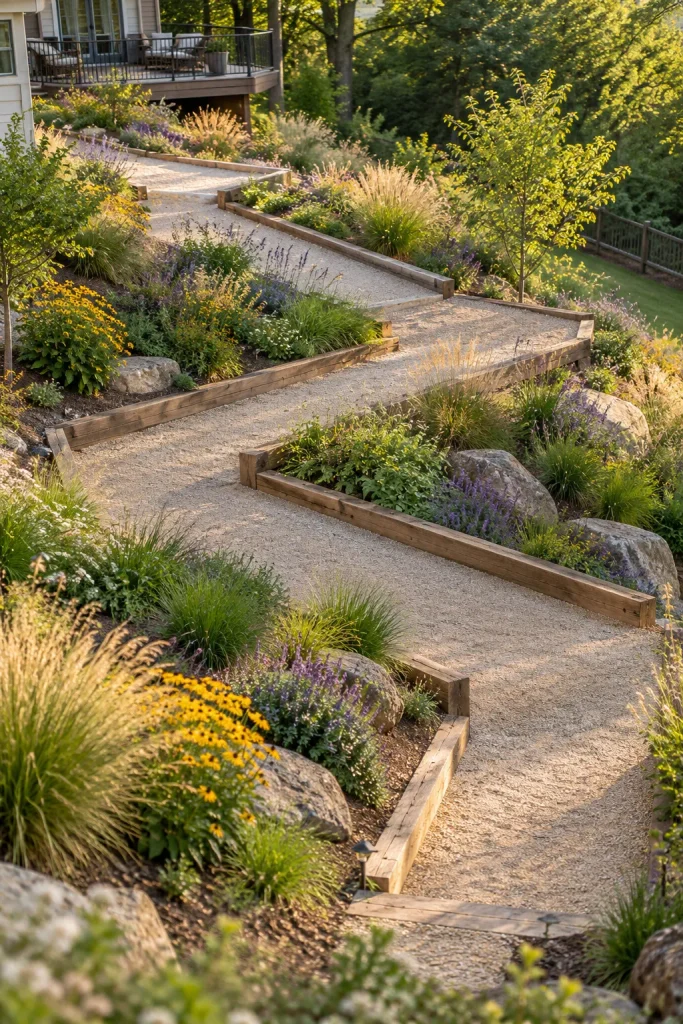
Instead of going straight uphill, a switchback path crosses the slope and changes direction at wider turns. This can make a larger hillside feel like a garden to explore, with different views appearing as you move between planting areas.
The route needs enough space for its turns, stable surfacing, and secure downhill edges. Loose gravel can migrate, so discuss a compacted surface or another suitable material with your installer. Plan how water crosses or leaves the route without cutting channels. A switchback is not automatically wheelchair accessible; an accessible route requires its own assessment of grades, width, landings, and surface conditions.
6. A Groundcover Carpet Instead of Steep Turf
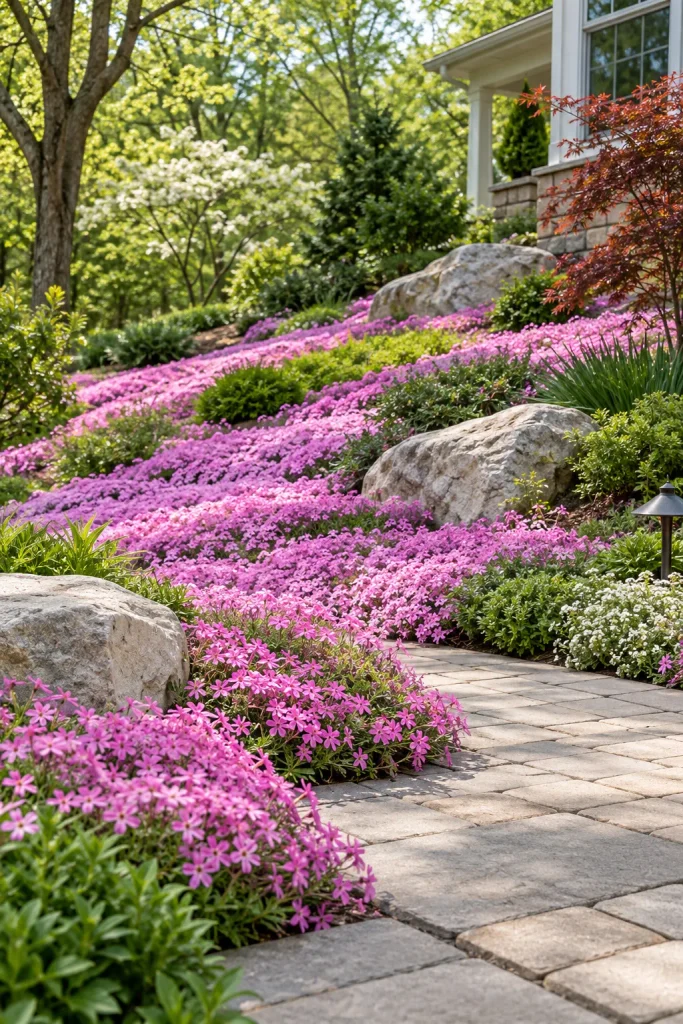
Replacing a difficult strip of turf with low groundcover can give the hillside a softer, more continuous appearance. On a sunny site with suitable drainage, creeping phlox is one flowering possibility; other locations call for different plants. Match the selection to your climate, soil, and light rather than copying a photograph alone.
Plant in repeating groups and allow for mature spread, while keeping a reachable maintenance edge. The University of Maryland Extension notes that exposed soil remains vulnerable to erosion while groundcovers establish. Ask about suitable temporary soil protection, and budget time for watering and weeding during establishment. Planting does not repair an unstable slope.
7. A Meadow of Grasses and Flowering Perennials
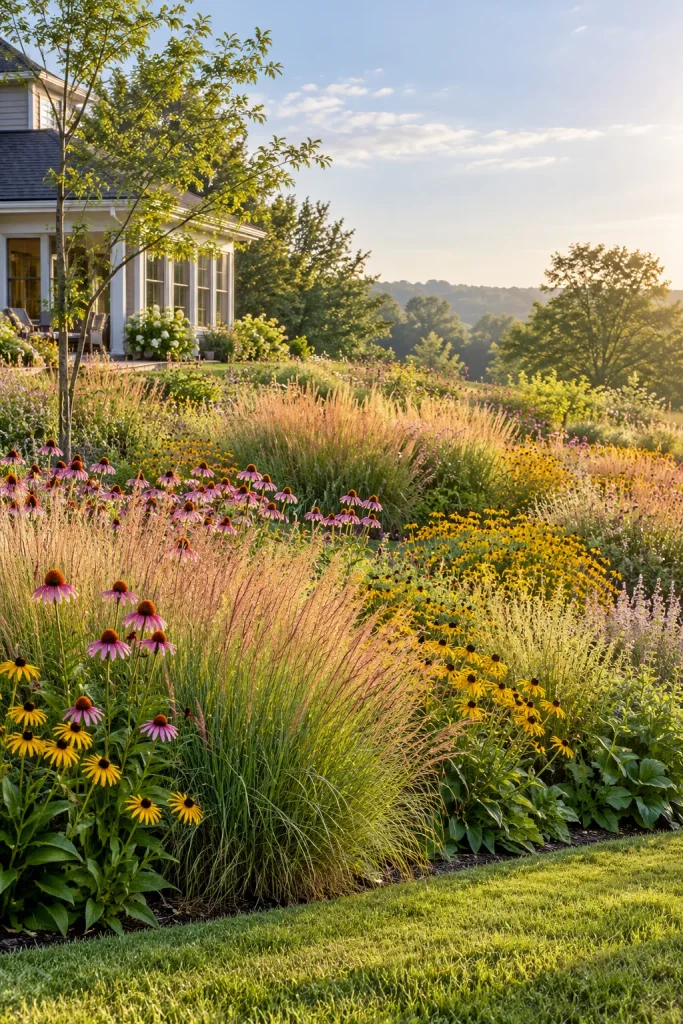
A meadow-style planting lets a sunny slope become the main visual feature instead of a mowing chore. Mix regionally appropriate grasses with flowering perennials in broad drifts, then use a neat edge along the lower lawn or path to make the planting look intentional.
Little bluestem, coneflowers, and black-eyed Susans illustrate the look, but suitability and native status vary by location and species. Check local recommendations before buying. Start with a manageable section if you are testing the approach. Meadows still need establishment watering, weed control, and periodic maintenance, so include an access route rather than planting every inch of the hillside.
8. A Boulder Garden with Low Planting Pockets
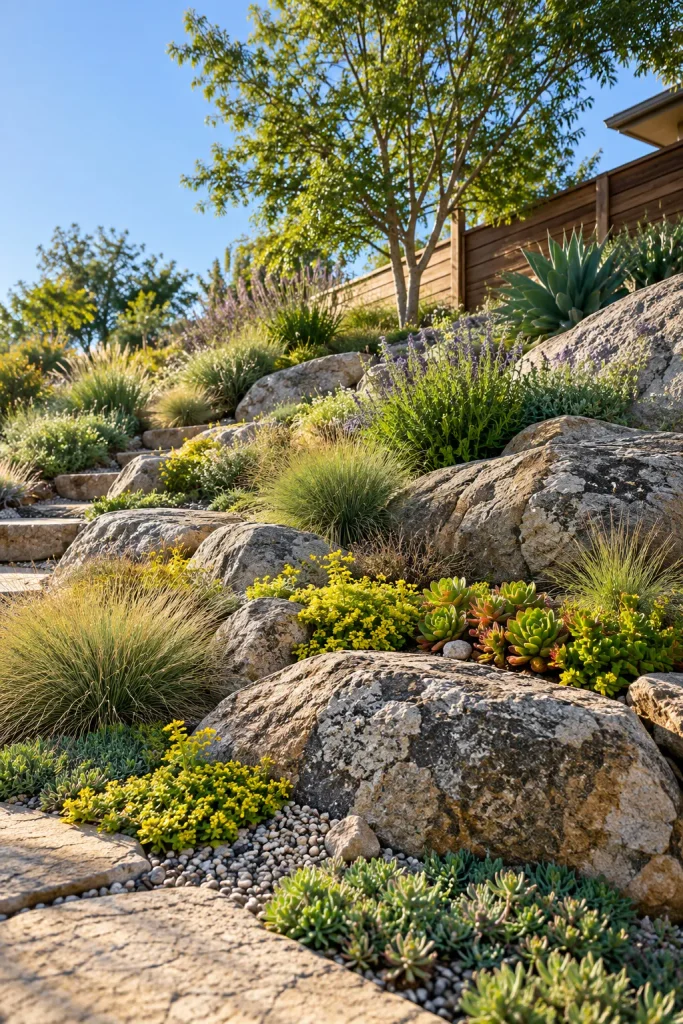
Boulders can give an exposed slope a strong, natural-looking structure, especially where a dry, sunny garden fits the site. Group stones of different sizes and settle them into the ground visually, with low planting pockets between them rather than a scattered collection sitting on top of the soil.
Keep the plant palette compact so the rock shapes remain visible. Stonecrop and small grasses are possibilities where growing conditions suit them. Heavy rocks require suitable equipment and secure placement; decorative boulders are not a substitute for an engineered retaining system. Avoid covering the entire bank with loose gravel that could wash or roll downhill.
9. Layered Shrubs for a Fuller Hillside Border
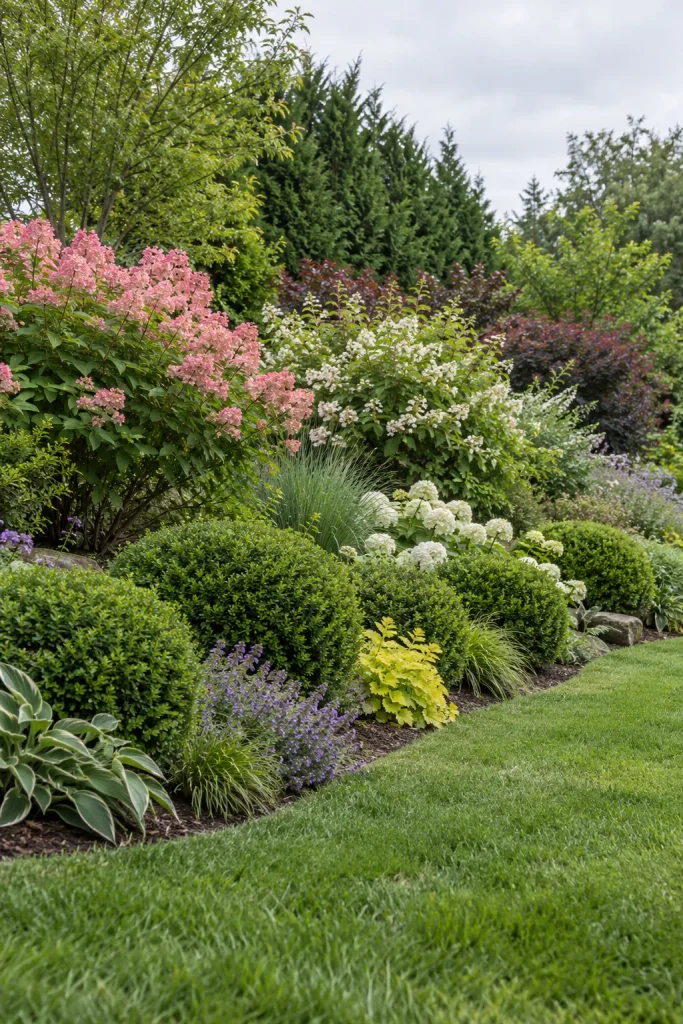
Repeating groups of shrubs can make a broad backyard hill feel cohesive without requiring a wall at every change in level. Arrange lower plants near the viewing area, medium shrubs through the middle, and taller screening plants only where they will not block valued views.
Choose plants by mature width as well as height. A compact nursery plant may eventually cover the route you need for pruning or fence repairs. Mix a few compatible forms rather than collecting one of everything, and include a low planted layer between shrubs. This approach can reduce exposed soil, but it still needs establishment care and does not solve deep-seated ground movement.
10. A Woodland Garden Beneath Existing Trees
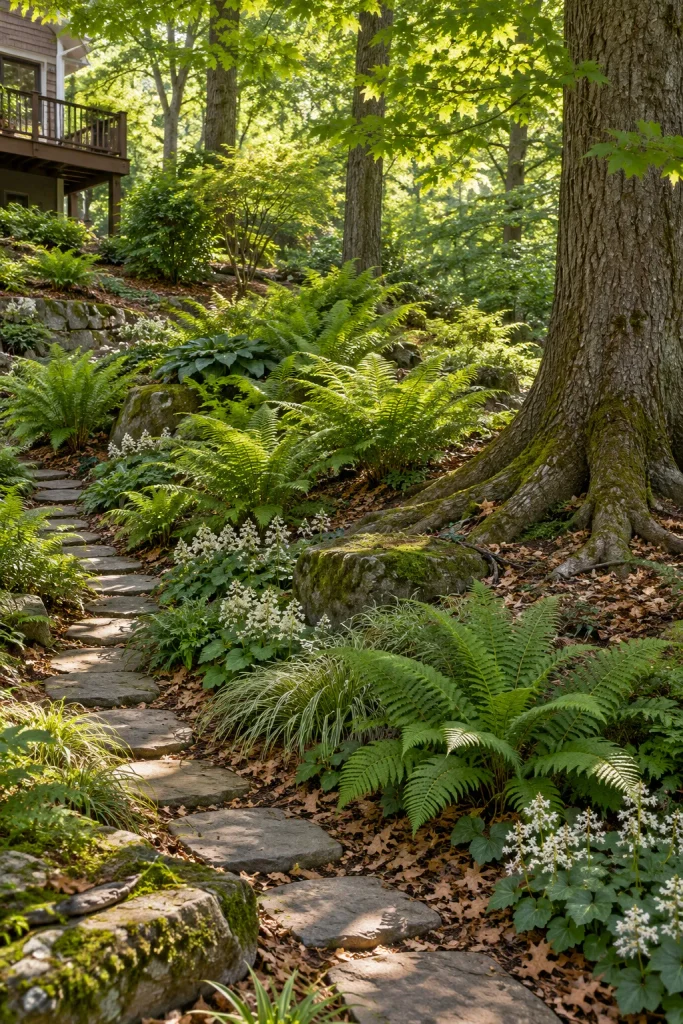
A shaded slope beneath established trees often looks more convincing as a woodland garden than as struggling lawn. Ferns, sedges, and shade-tolerant flowering groundcovers can create texture close to the ground, with existing trunks providing the larger structure.
Work around roots rather than cutting broad planting trenches or raising the soil level against trunks. Keep natural leaf litter where appropriate and use small planting pockets selected for the site’s moisture and light. Maryland Extension explains that tree canopy, fallen leaves, and roots all contribute to erosion protection on wooded slopes. Preserve those existing layers while adding plants gradually and maintaining a clear route for garden care.
11. Vegetable Beds on Level Garden Terraces
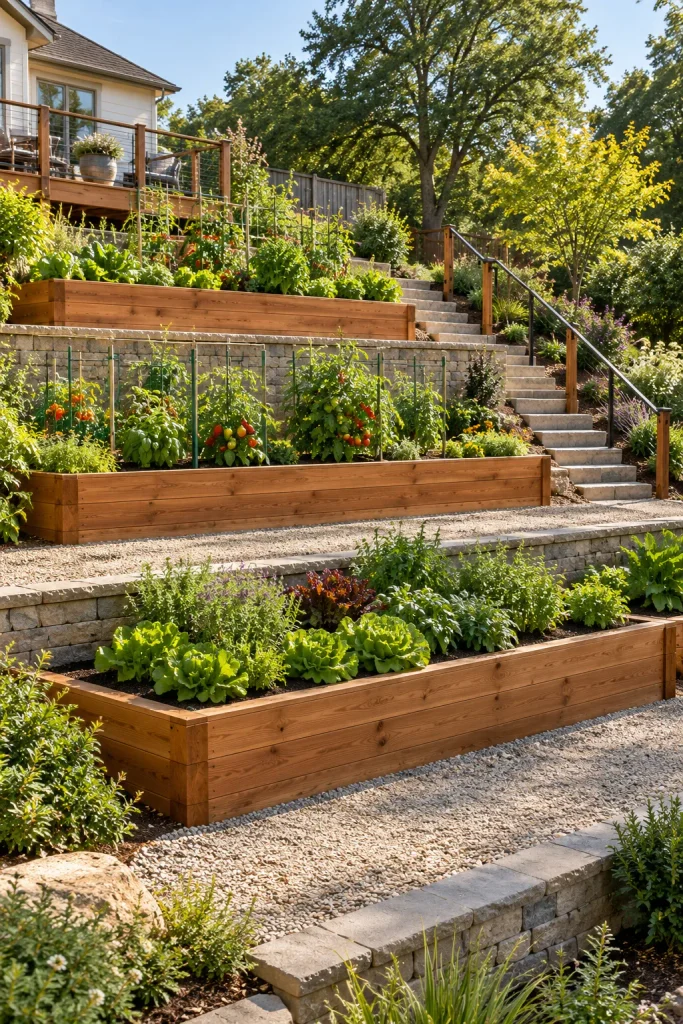
A terraced vegetable garden separates the growing space into level beds instead of asking soil and irrigation water to stay on an open incline. Cedar raised beds can sit on broad, stable terraces, with paths that let you reach the crops without stepping into the soil.
Check sun exposure before choosing the location, and plan a hose route that will not cross every walkway. Beds, paths, and supporting walls need coordinated drainage. A raised bed frame should not be expected to retain the hillside behind it. Include comfortable access for carrying compost and harvest baskets, and locate frequent-picking crops on the easiest level to reach.
12. A Fruit Garden with an Accessible Harvest Route
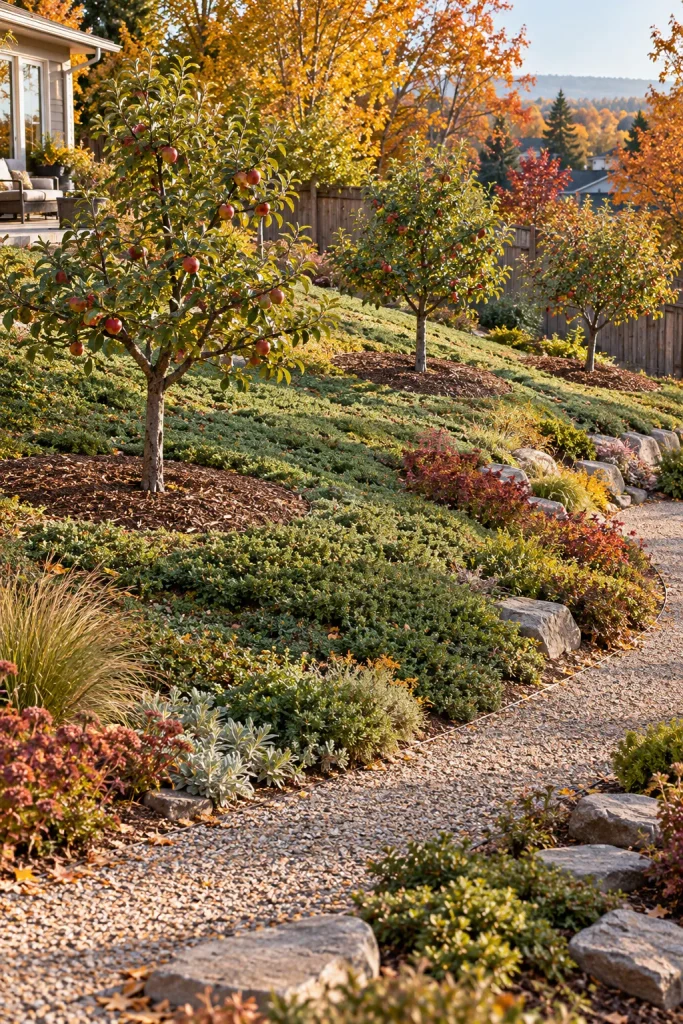
On a manageable, gentle slope, a small fruit garden can use vertical space while leaving much of the ground planted. A few appropriately sized fruit trees arranged along the contour can create rhythm across the hill without turning the yard into a dense orchard.
Select varieties and rootstocks for your climate, available space, and pollination needs. Keep a stable route for pruning and harvest, and avoid locations where you would need to balance a ladder on uneven ground. Protect trunks from maintenance equipment and keep mulch away from bark. Ask a local extension office about drainage and frost pockets before choosing the lowest planting positions.
13. A Small Bench Nook Set into the Hillside
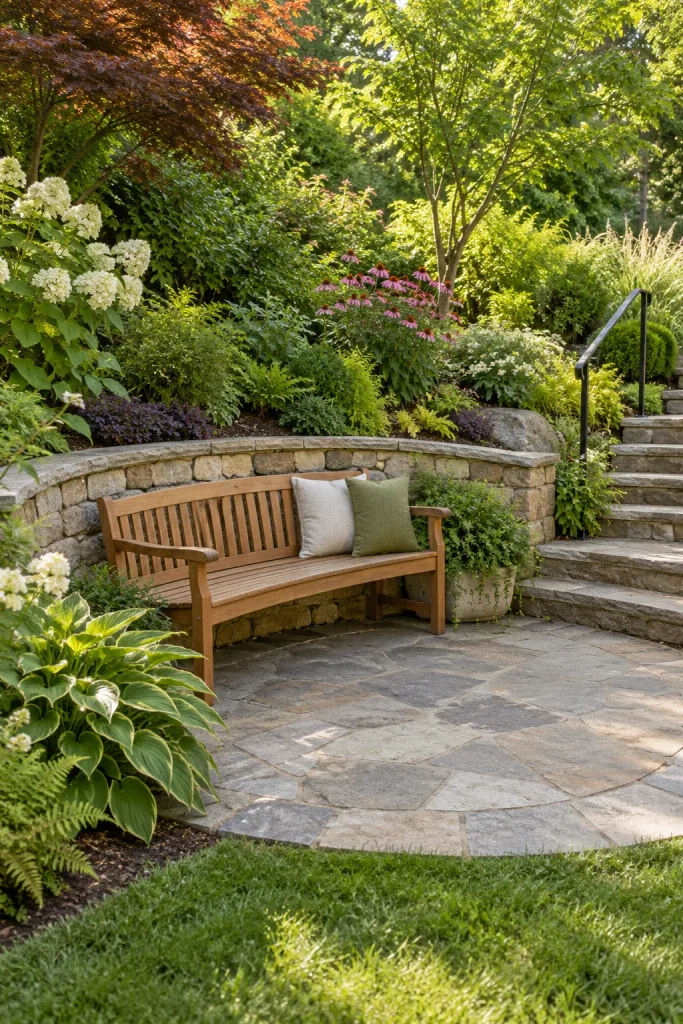
A bench nook offers a place to pause without building a full-size patio. Set one bench on a small level landing, with a curved retaining edge behind it and planting close enough to make the space feel tucked into the hill.
Size the landing for feet, movement, and access rather than fitting the bench as tightly as possible. A stable, drained base matters even when the paved area is small. Have any retaining work assessed for the site, and connect the nook to a dependable route. Keep prickly or oversized plants away from the seat so the garden stays comfortable as it fills in.
14. An Open Lawn That Keeps a Gentle Slope
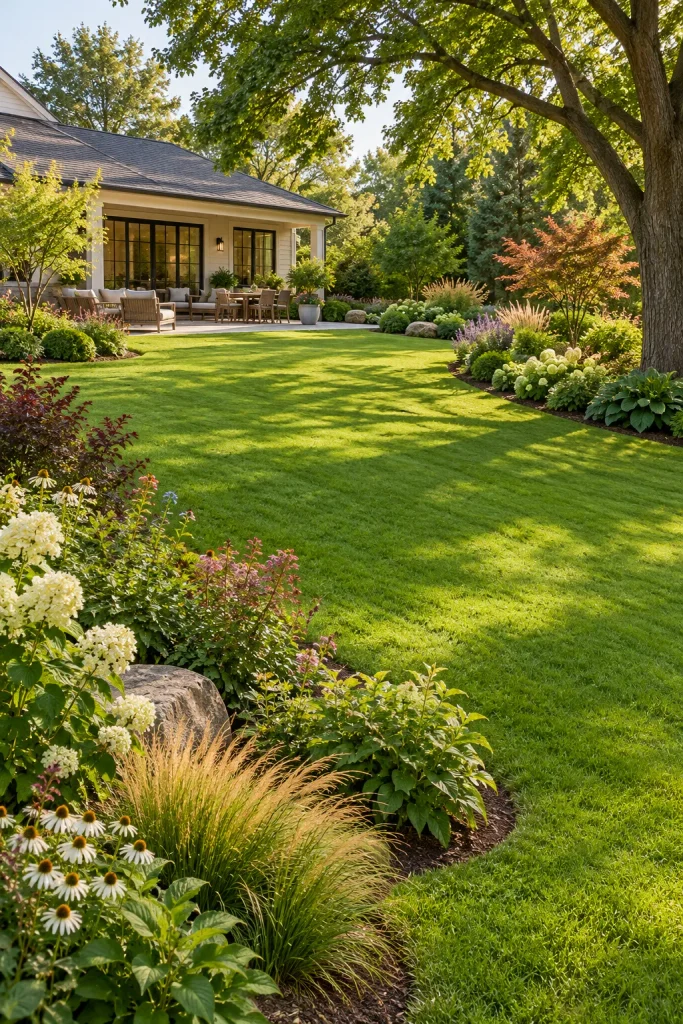
Not every slope needs terracing. Where the grade is gentle and turf maintenance can be done safely, keeping an open lawn may preserve the most useful space for informal play or simply looking out across the yard. Curved planting borders can follow the contours without breaking the center into separate pieces.
Use beds to absorb awkward corners and areas where mowing is difficult, rather than forcing grass into every edge. Follow your mower manufacturer’s slope limits and choose another treatment where conditions exceed them. Keep runoff behavior in mind before changing grades. This approach suits modest inclines, not a steep bank that is already difficult to walk.
Before You Choose a Layout
Watch the yard during and after rain, note sunny and shaded areas, and mark the routes you use most. Decide which activities truly need level ground. Keeping some of the existing slope may avoid unnecessary excavation, but the right choice depends on soil, drainage, access, and the size of the project.
For retaining walls, decks, major grading, or signs of instability such as new cracks, bulging ground, or leaning structures, involve a qualified local professional. Confirm permit requirements, property boundaries, and underground utilities before excavation. Keep drainage planning site-specific rather than directing water toward a neighbor or assuming a gravel strip will handle it.
Can You Landscape a Sloped Backyard in Stages?
Yes. Start with a whole-yard layout so early planting does not occupy the route needed for later construction. Address existing erosion or drainage problems first, then establish dependable access. After that, complete one planting area or outdoor living zone at a time. Stabilize exposed soil between phases rather than leaving cleared ground bare.
Do You Need to Level the Entire Backyard?
Often, the goal is to create a few useful level surfaces while retaining planted slopes between them. A dining area needs a stable surface; a shrub border may not need a terrace. Whether selective grading is feasible depends on the property, so assess the ground and drainage before deciding how much earth to move.
Choose a Starting Point
Choose the idea that addresses your biggest obstacle first, whether that is access, an unusable seating area, or a difficult planting bank. Then let the rest of the design support it. Save your favorite sloped backyard landscaping ideas, compare them with your yard’s actual conditions, and build a plan you can maintain.