
A pile of smooth stones can look lovely at the landscape supplier and surprisingly unfinished once it lands in your yard. The difference usually comes down to placement: a clear edge, a shape that belongs in the space, and enough greenery to balance the rock.
These river rock landscaping ideas show several ways to work with that texture, from a winding dry creek bed to a small entrance mosaic.
You’ll find options for front yards, side passages, and backyard gathering spaces, along with practical details to consider before choosing stones or changing an existing bed.
1. Curving Dry Creek Bed
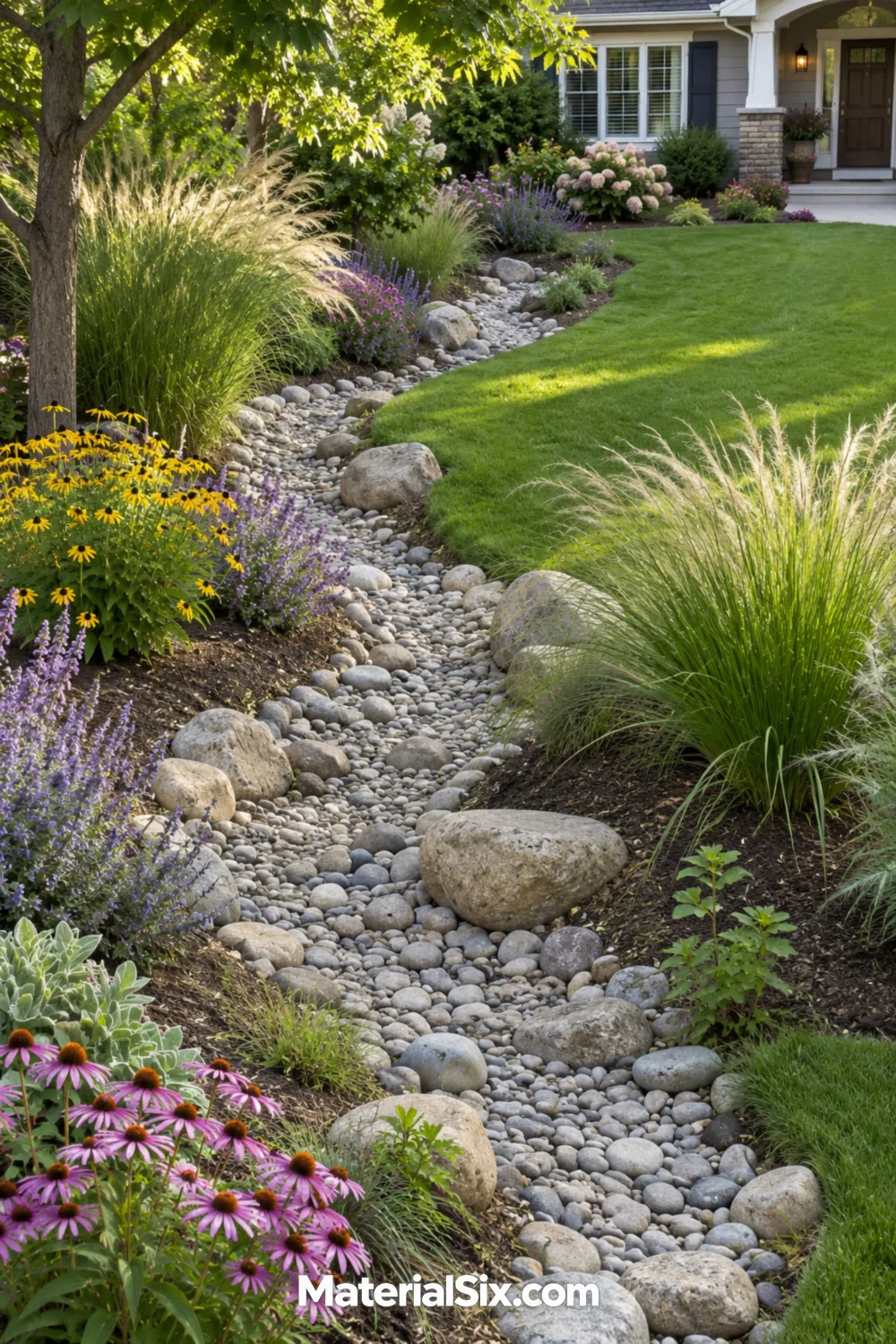
Give your front yard a flowing focal point with a dry creek bed that curves through the planting. Use a mix of rounded stone sizes, with a few larger pieces breaking up the edges, rather than arranging every rock in a straight line. Let nearby grasses and flowers soften the banks without covering the channel.
Sketch the shape with a garden hose before buying material so you can judge it from the street and your windows. A decorative creek can simply suggest moving water. If you want it to carry runoff, have its grade, capacity, and outlet evaluated for your site rather than assuming the stones will solve drainage problems.
2. River Rock Foundation Strip
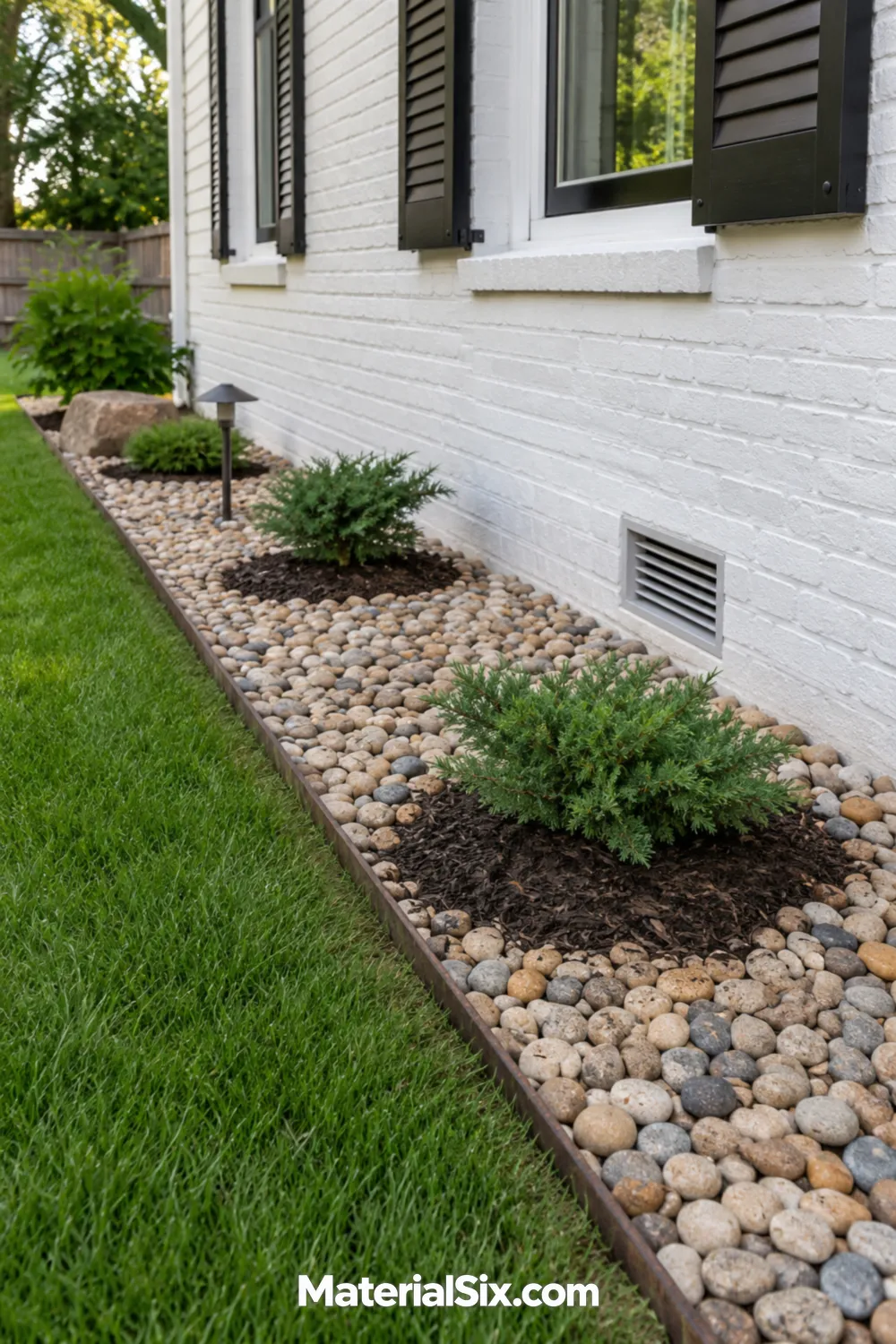
A river rock strip can give the space along your house a defined, orderly finish. Keep the shape simple and choose stone colors that relate to your siding, brick, or walkway. A restrained mix of gray and tan often feels more connected to the building than several competing colors.
Separate the rock from the lawn with a durable edge and leave access to utilities, vents, and service points. Keep finished material below siding and follow the clearances required for your home. Use separate soil or organic-mulch pockets for shrubs where appropriate. Treat the rock as a surface detail, while preserving the grading and drainage your foundation needs.
3. Flower Bed With a River Rock Ribbon
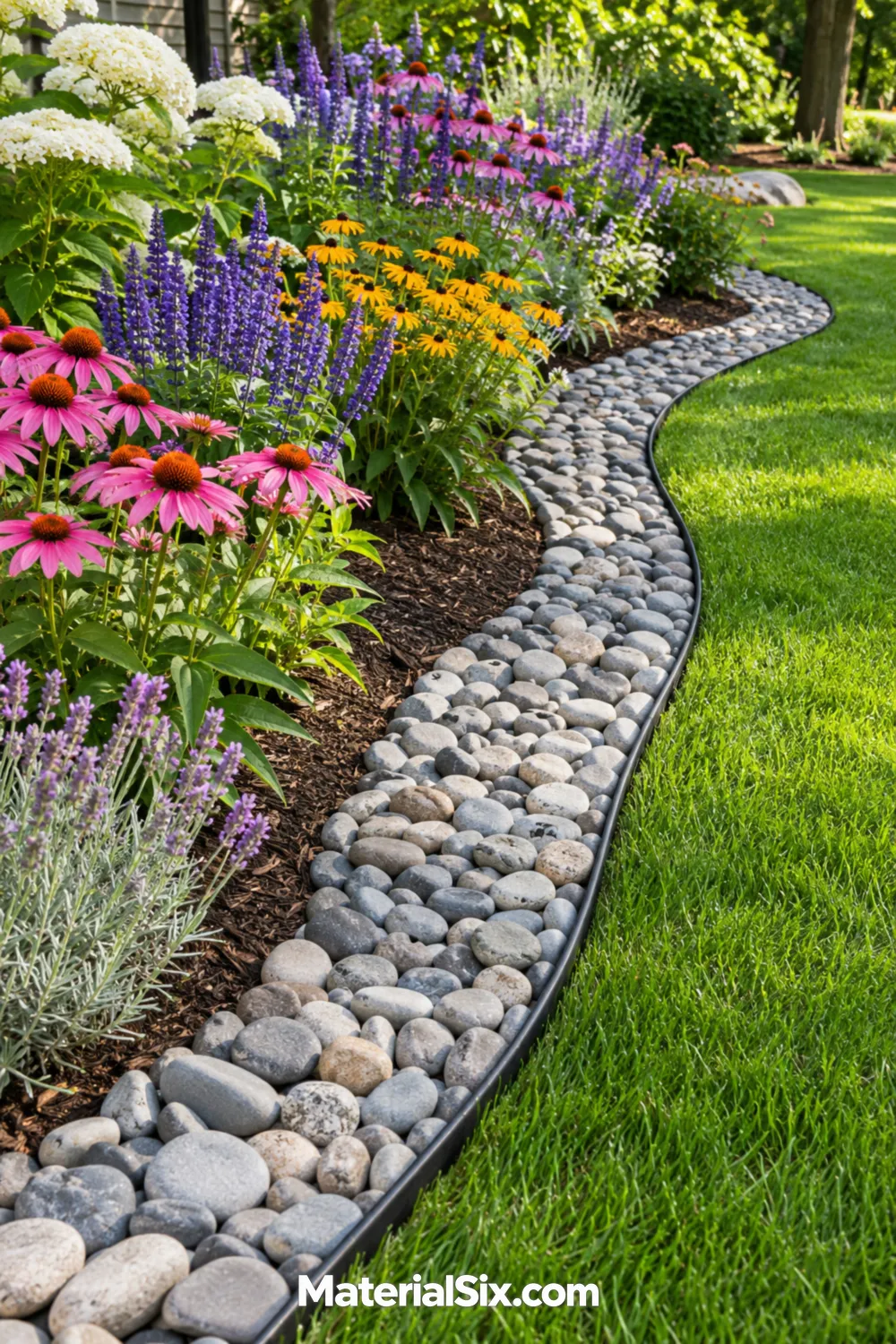
Run a broad ribbon of river rock along the outer curve of a flower bed instead of covering the entire planted area. The band gives bright blooms a quiet foreground while the plants keep their own soil and mulch zone behind it. It’s a useful way to try rock flower beds without committing every square foot to stone.
Make the ribbon wide enough to read as an intentional feature from your main viewing point. Install a suitable separator between materials so the line stays recognizable. Leave space for mature foliage, and check that the lawn edge can be maintained without sending loose rocks into the grass.
4. Stepping Stones Through River Pebbles
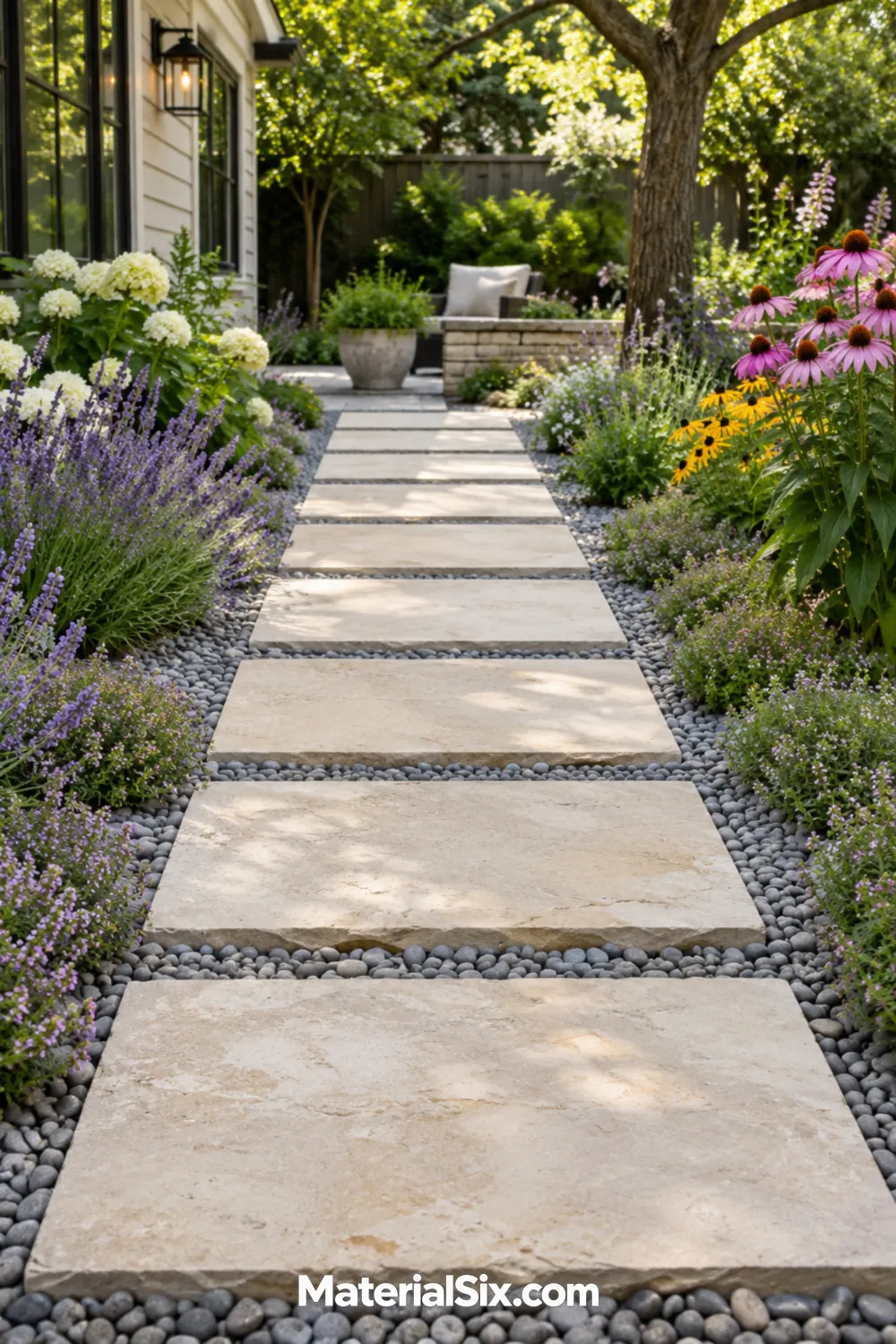
Pair flat stepping stones with river pebbles when you want two contrasting textures along a garden route. Large slabs provide the walking surfaces, while the smaller rounded stones fill the spaces around them. Repeating the same slab shape can bring a calm rhythm to a flower-filled yard.
Lay out the route around your natural stride before setting the stones, and prepare a stable base suited to your soil and chosen paving. Keep walking surfaces level and avoid awkward gaps. For frequent use, wheelchairs, or rolling equipment, consider a continuous firm path instead. Use the pebbles as surrounding texture rather than asking loose rounded rock to do every job.
5. Downspout Outlet With a Stone Apron
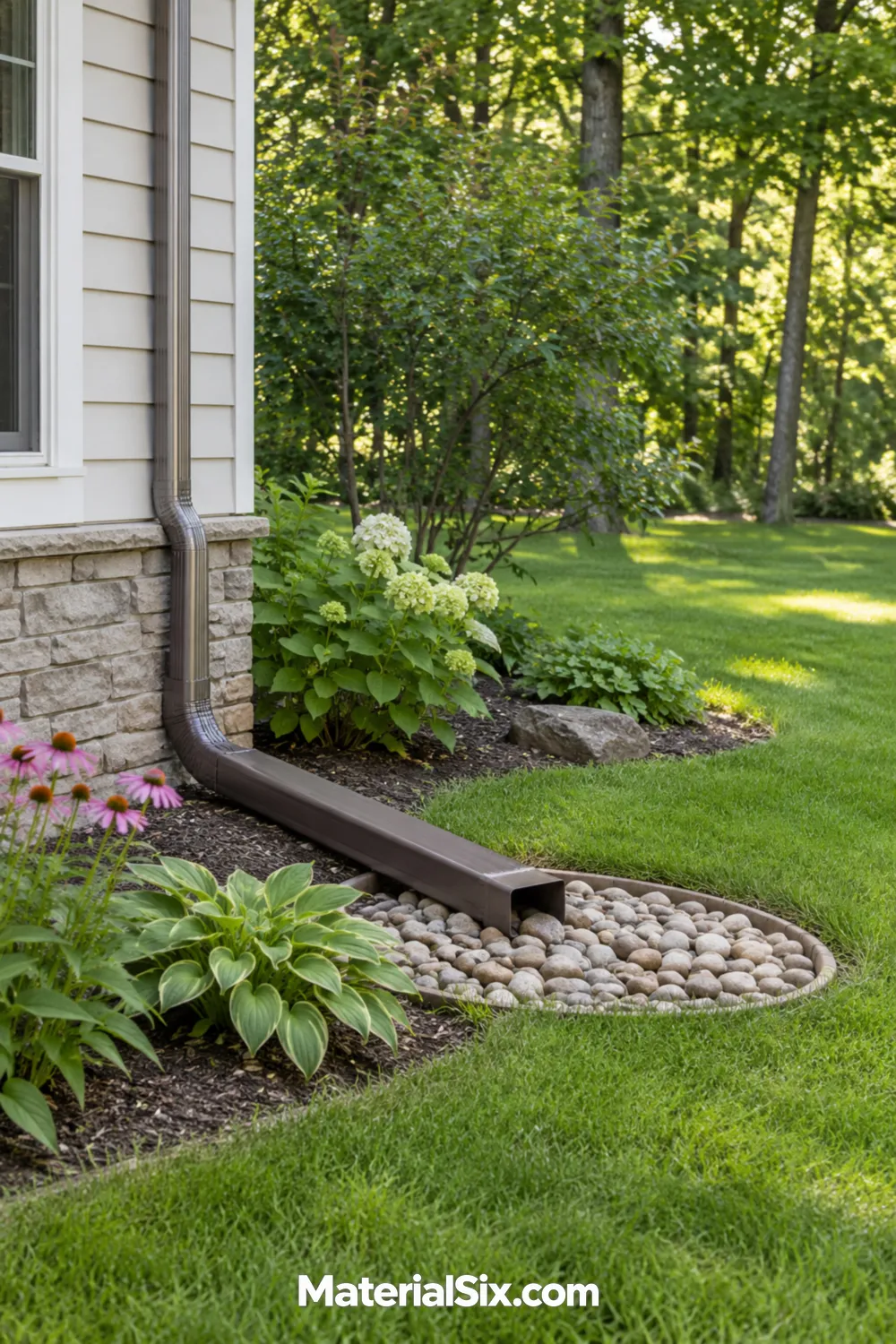
Finish the visible end of a downspout extension with a shaped stone apron that looks connected to the surrounding landscape. Rounded gray and brown rocks can make this utility area feel intentional, especially when nearby lawn and planting have clear boundaries. Keep the outlet visible enough to inspect and clear.
First make sure the extension carries water to an appropriate location away from the house. The apron is a finishing element, not a substitute for planning where runoff goes. Its size, stone selection, and underlying preparation depend on the site. If water pools, crosses a walking route, or heads toward neighboring property, address that routing before adding decorative rock.
6. Boulders and Ornamental Grass Island
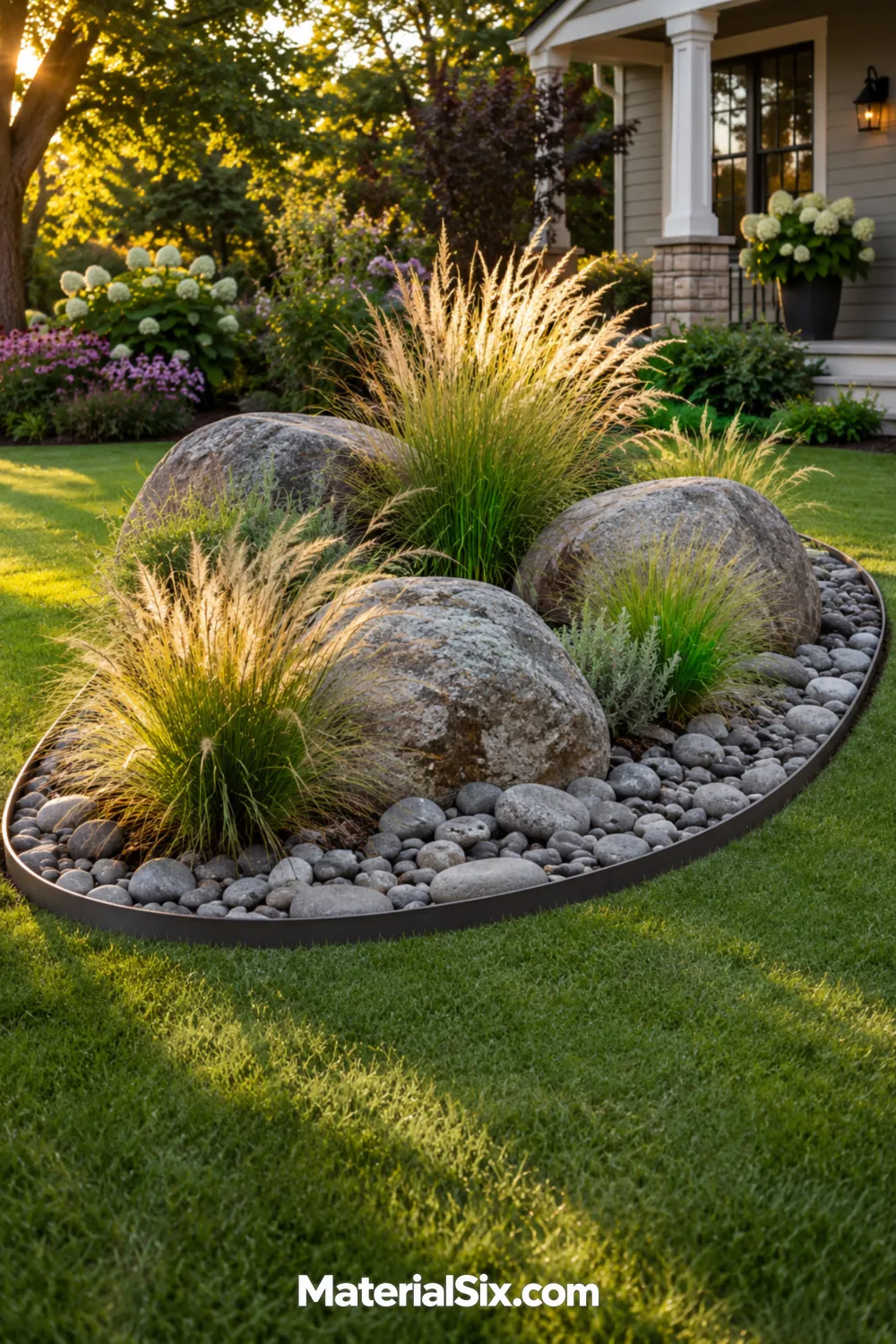
Create a freestanding island with a few substantial boulders, a river rock ground layer, and generous clumps of ornamental grass. The difference in scale gives the bed a clear center, while fine foliage breaks up the heavy stone texture. An oval or loose kidney shape works well when the feature will be viewed from several sides.
Choose the boulders first so the smaller rock supports their colors. Leave real planting pockets and enough space for the grasses at maturity. Select locally appropriate, noninvasive grasses for your climate. Keep stone away from crowns, and use qualified help to place heavy boulders securely rather than treating them like movable garden accessories.
7. River Rock Band Around a Patio
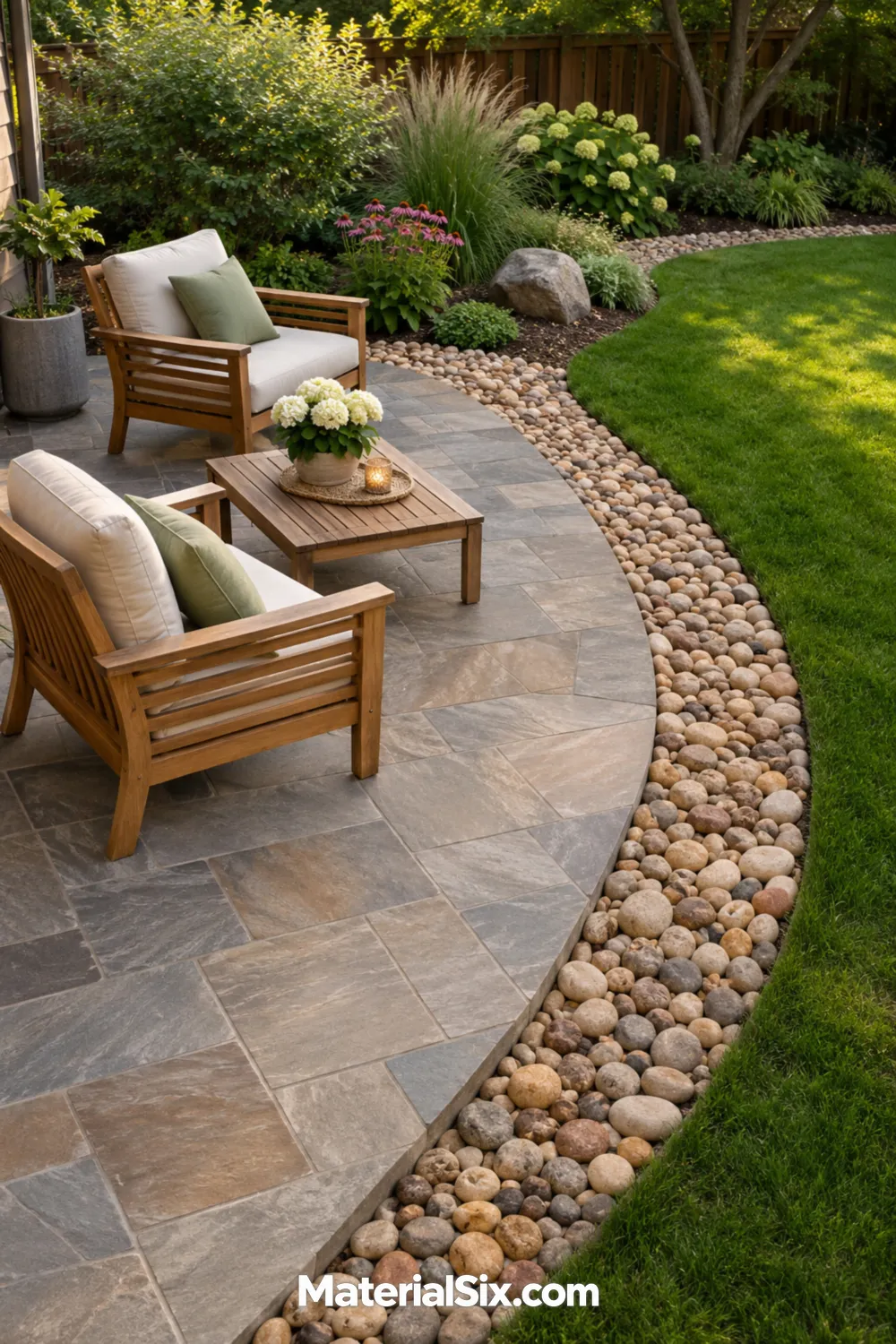
Use a river rock band to define the transition between a patio and the lawn. It can echo the curve of the paving, link nearby planting areas, or frame one side of a seating space. Warm tan stones beside neutral pavers give a different mood than cool gray rock against dark concrete.
Keep chairs, table legs, and the main walking route on the firm patio surface. Position a suitable edge where loose stones meet grass so the band stays separate during routine care. Before choosing the width, check where people step off the patio. Leave clear paved connections where you need them instead of wrapping every entrance in loose rock.
8. Succulent Rock Garden With Open Spacing
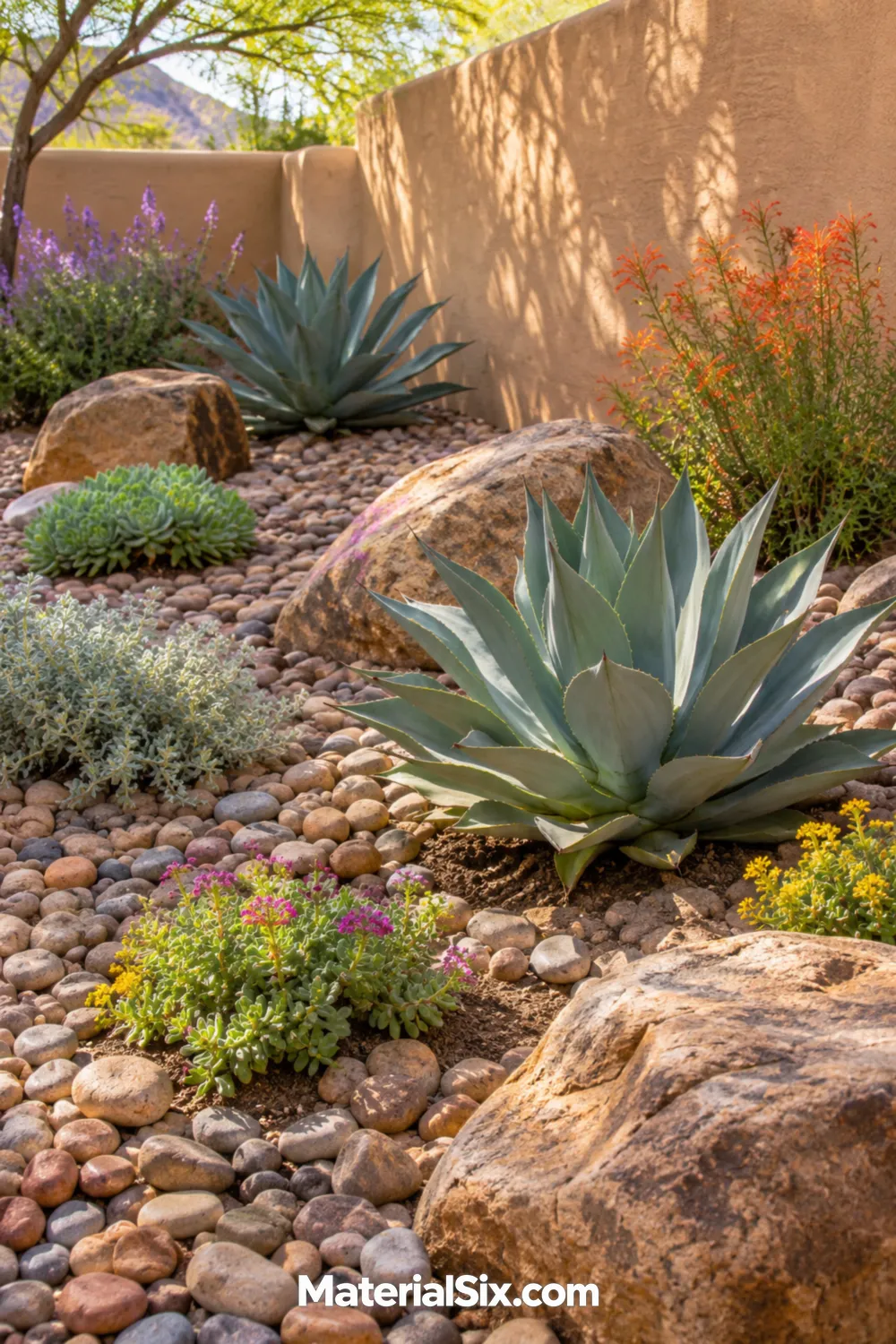
Build a loosely spaced rock garden around sculptural succulents if your climate and exposure suit those plants. Rounded river rock provides a soft visual contrast to pointed leaves, while a few larger stones keep the bed from looking like a flat sheet of gravel. Leave enough open area for each plant’s shape to stand out.
Choose plants for your local winter temperatures, rainfall, and soil conditions rather than copying a desert palette everywhere. Keep their growing medium appropriate and avoid burying crowns in stone. Rock can increase soil temperatures, so assess the exposure carefully. A related color palette looks cohesive without requiring every stone to match.
9. Pond Edge With Layered River Stones
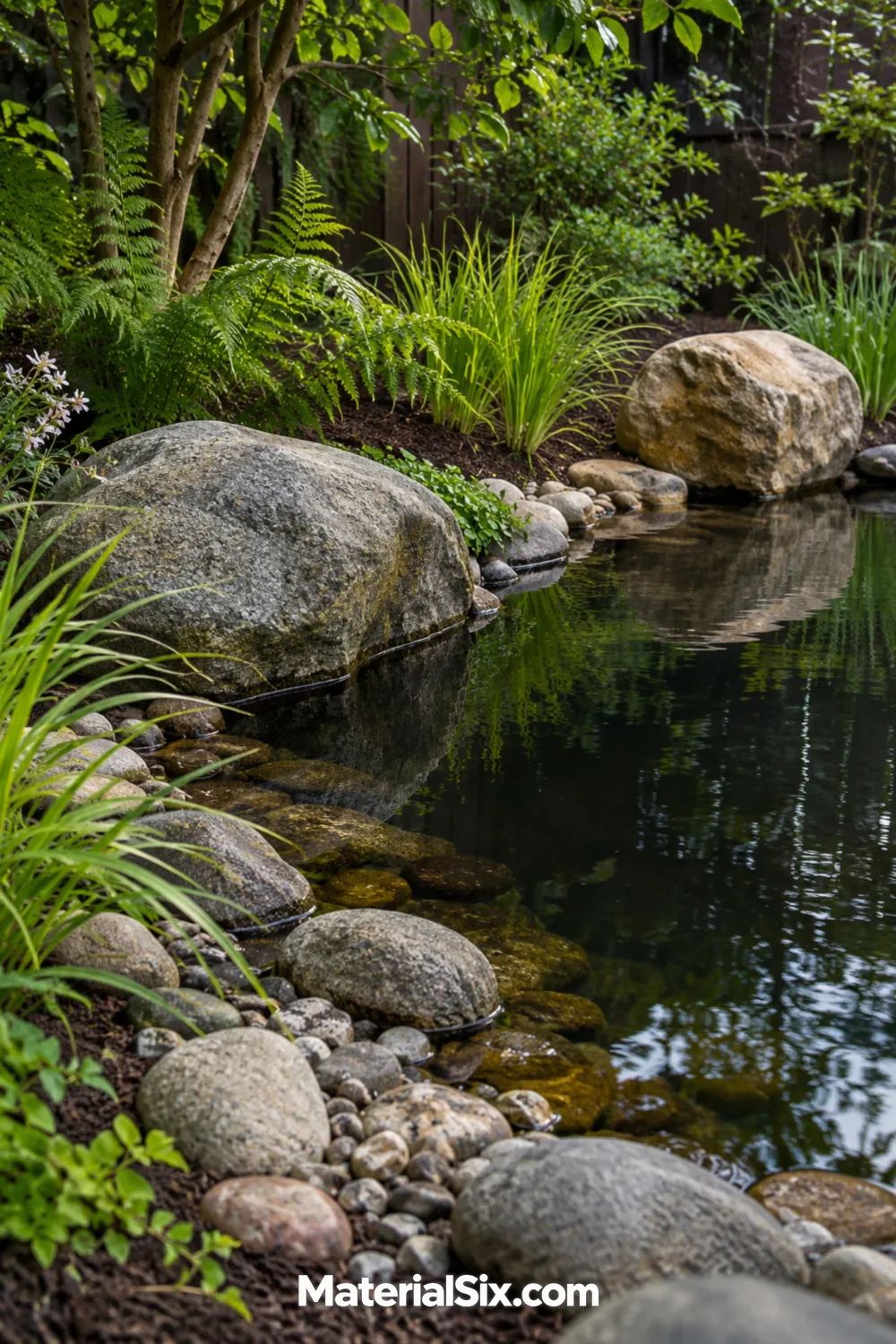
Soften the outline of a backyard pond with river stones that vary in size. Smaller pieces can fill visual gaps between larger shoreline rocks, while a few substantial boulders anchor the composition. Keep the shape irregular enough to feel connected to the surrounding garden rather than like a ring of matching beads.
Plan the edging with the pond system so the liner, water level, and maintenance access work together. Don’t place loose stones where they could fall into walking areas or create an unstable standing spot. Use plants suited to their actual moisture conditions beyond the edge. The rock frames the water; it doesn’t replace proper pond construction.
10. Narrow Side Yard With a Pebble Border
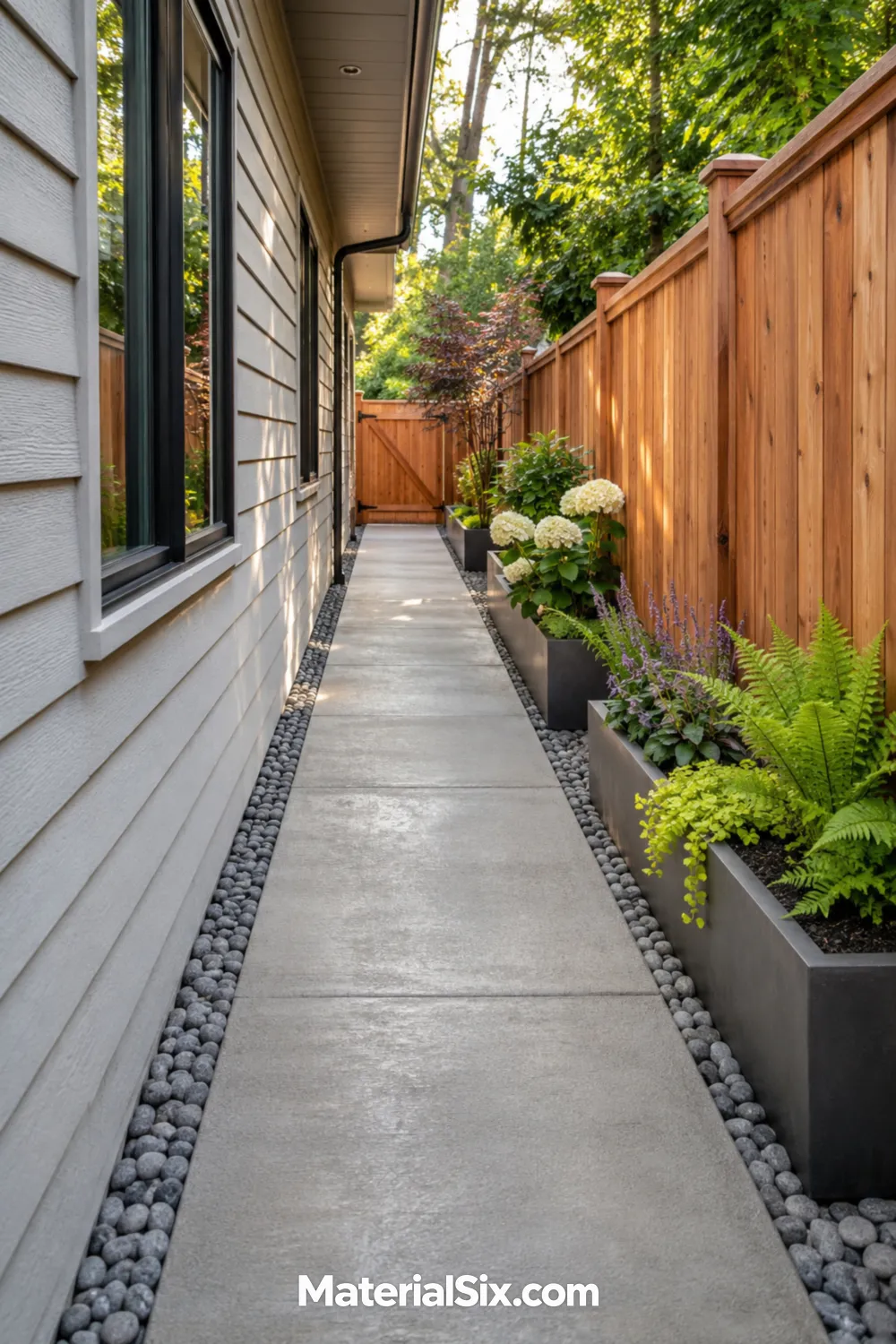
A narrow side yard often benefits from a clear central route with decorative texture pushed to the edges. Border a continuous walkway with river pebbles, then keep planters and other accents outside the travel space. The repeated stone strips can connect the house and fence visually without adding bulky furniture.
Measure the usable passage after allowing for gates, bins, hose access, and mature plants. Keep the walking surface firm and unobstructed, and choose edging that contains the loose rock. A consistent pebble color helps the long space feel coherent. Where leaves collect, leave room to reach the strips with simple hand tools rather than filling every inch with pots.
11. River Rock Infill Between Raised Beds
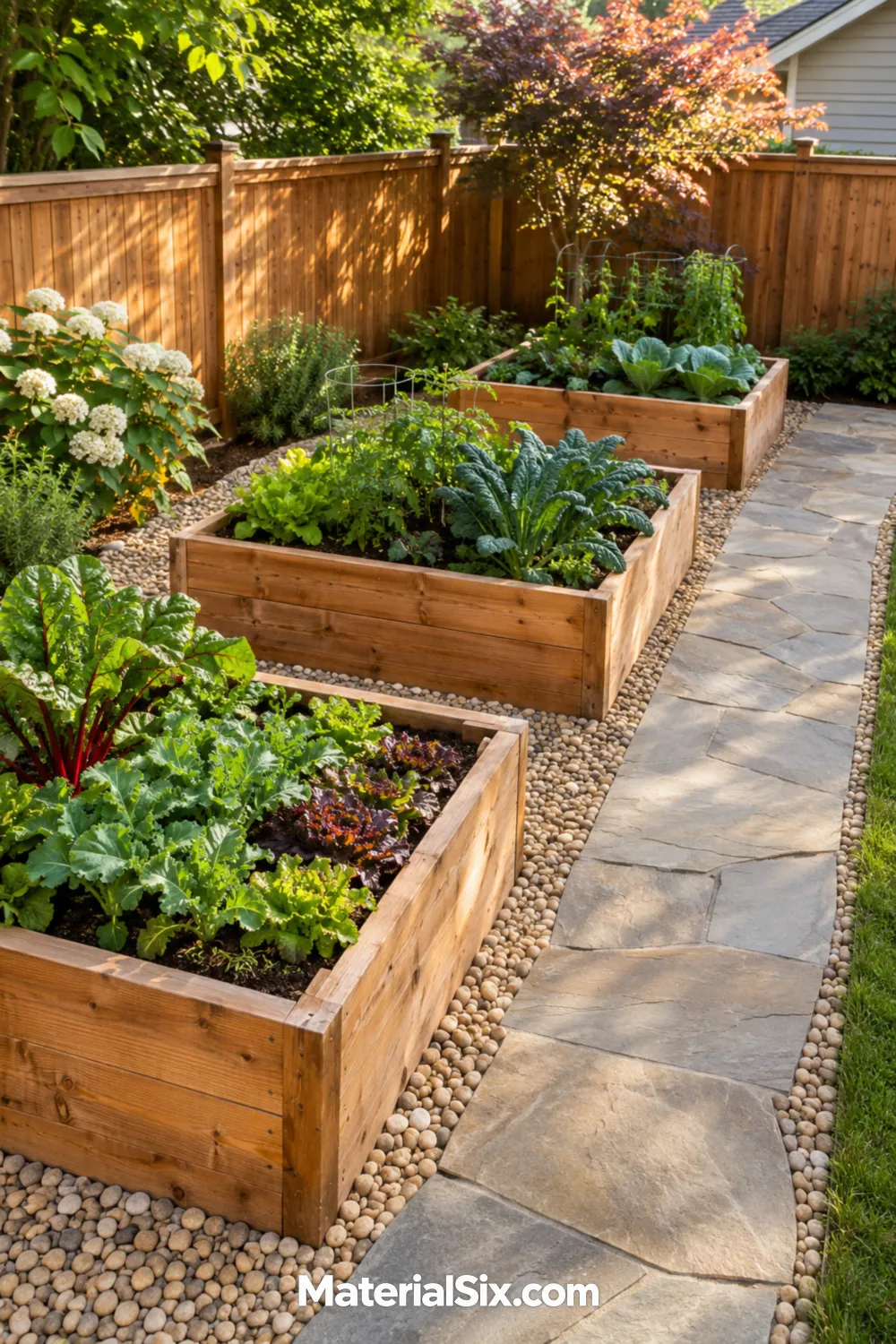
Give a raised-bed garden a more finished setting by using river rock in the spaces around the wooden frames. The contrast between warm cedar, green leaves, and pale pebbles makes the vegetable beds stand out. A defined stone-paver route can organize the layout while leaving the rock as decorative infill.
Keep the growing soil inside the beds and plan how you’ll reach each side for planting and harvesting. Test access with a watering can or garden cart before committing to the arrangement. Avoid filling necessary work routes with large rounded stones. Leave enough room to maintain the bed frames, and remove fallen plant debris before it builds up between pebbles.
12. Pebble Mosaic at a Garden Entrance
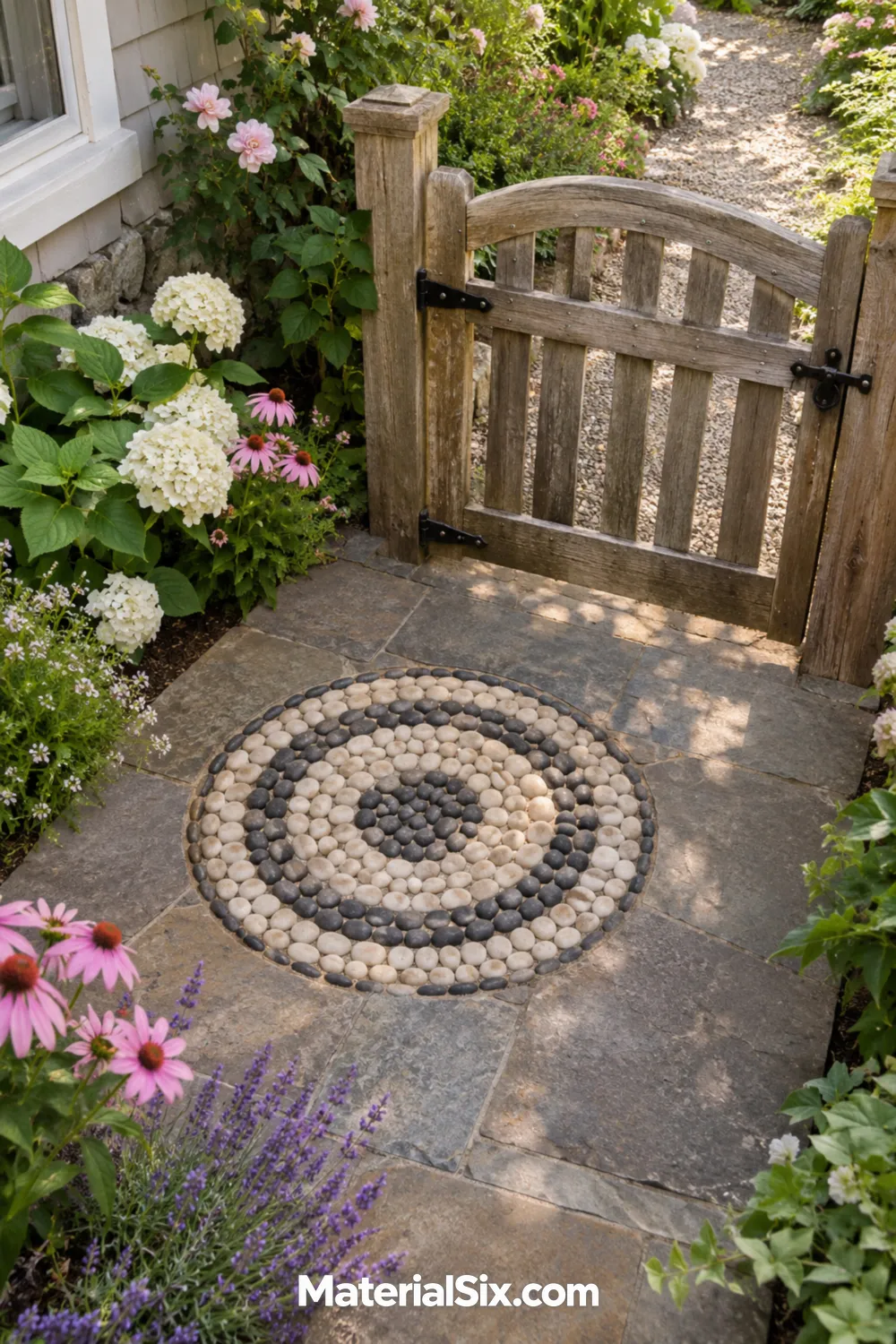
Turn a small garden entrance into a focal point with a pebble mosaic set into a paved landing. Concentric rings or a simple curved motif can showcase the natural contrast between pale and charcoal river stones. Keeping the pattern contained makes it easier to read than scattering several competing motifs across the yard.
Treat this as a decorative paving detail rather than a pile of loose pebbles in the doorway. The finished surface needs suitable support, secure stone placement, and a flush transition to adjacent paving. Consider traction when wet and the needs of anyone using the entrance. A specialist can help plan a durable installation for your conditions.
13. River Rock Border Along a Retaining Wall
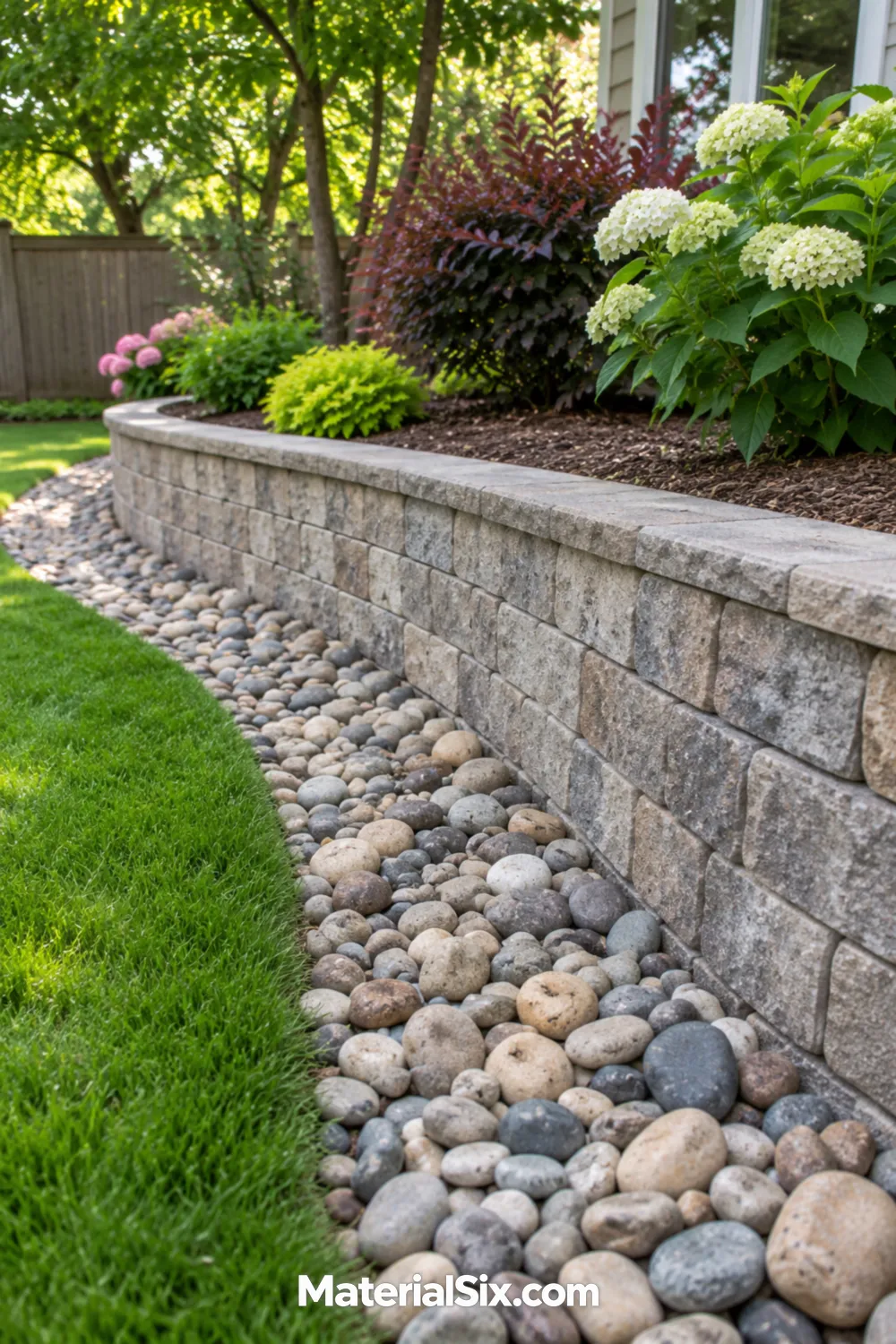
Add a river rock ribbon along the foot of an existing retaining wall to connect the wall’s straight lines with the softer lawn. Mixed rounded stones offer a distinct contrast to stacked blocks, especially when shrubs or grasses spill visually from the terrace above. Keep the band broad enough to look intentional beside the wall.
Use this as a surface-design decision after the retaining structure has been properly planned and built. Keep drain outlets visible and accessible, and don’t assume decorative rock replaces the wall’s drainage system. Match stone colors to the wall cap or nearby paving for continuity. Maintain a defined lawn edge so stray rocks don’t migrate into mowing areas.
Before You Order River Rock
Bring home samples and view them beside your house and paving in both dry and wet conditions. Decide whether you need decorative ground cover, a walking surface, or a drainage feature before choosing the material. Those jobs call for different preparation. Rock does not add organic matter to soil, and debris or weeds can still need attention. Keep planted zones accessible, and buy from a landscape supplier rather than collecting stones from waterways.
Start with the place where a stone detail would make the biggest difference: a blurred bed edge, an unfinished patio boundary, or a garden route that needs definition. Choose one layout that fits how you use the yard, then carry its stone palette into any later additions. Save your favorite ideas and compare them with your site’s light, plants, access, and drainage before ordering materials.