
Your back porch may be small, but it probably has more than one job. It is the route to the yard, a place to leave garden shoes, and sometimes the only spot where you can enjoy coffee outside.
The challenge is giving it a purpose without crowding the door or steps. These small back porch ideas cover seating arrangements, dining spots, privacy treatments, plants, lighting, and decorative finishes.
You will find options for covered, screened, and uncovered spaces, with practical details to help you decide what belongs on your porch and what can stay off the floor.
1. Make Room for a Two-Person Bistro Set
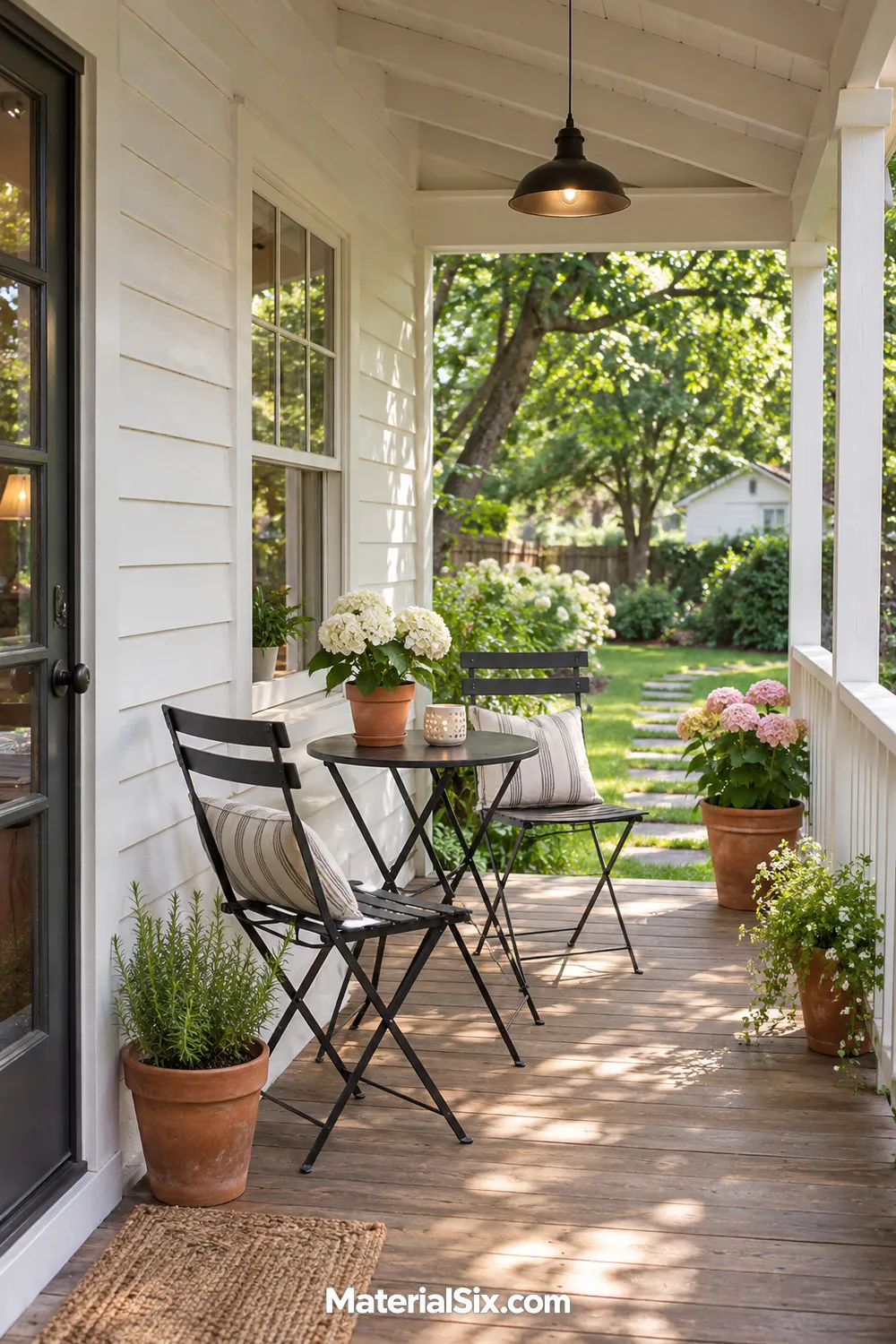
Breakfast outside does not require a full dining area. A small round bistro table gives you a spot for coffee and a plate while leaving the corners available for plants. Pair it with slim folding chairs rather than wide armchairs, especially when your back door opens onto the same porch.
Before buying, mark the table and chair footprints with painter’s tape. Pull the chairs out as though someone were sitting down, then check the route to the steps. Keeping that everyday path comfortable matters more than squeezing in an extra seat.
2. Build Seating Around a Storage Bench
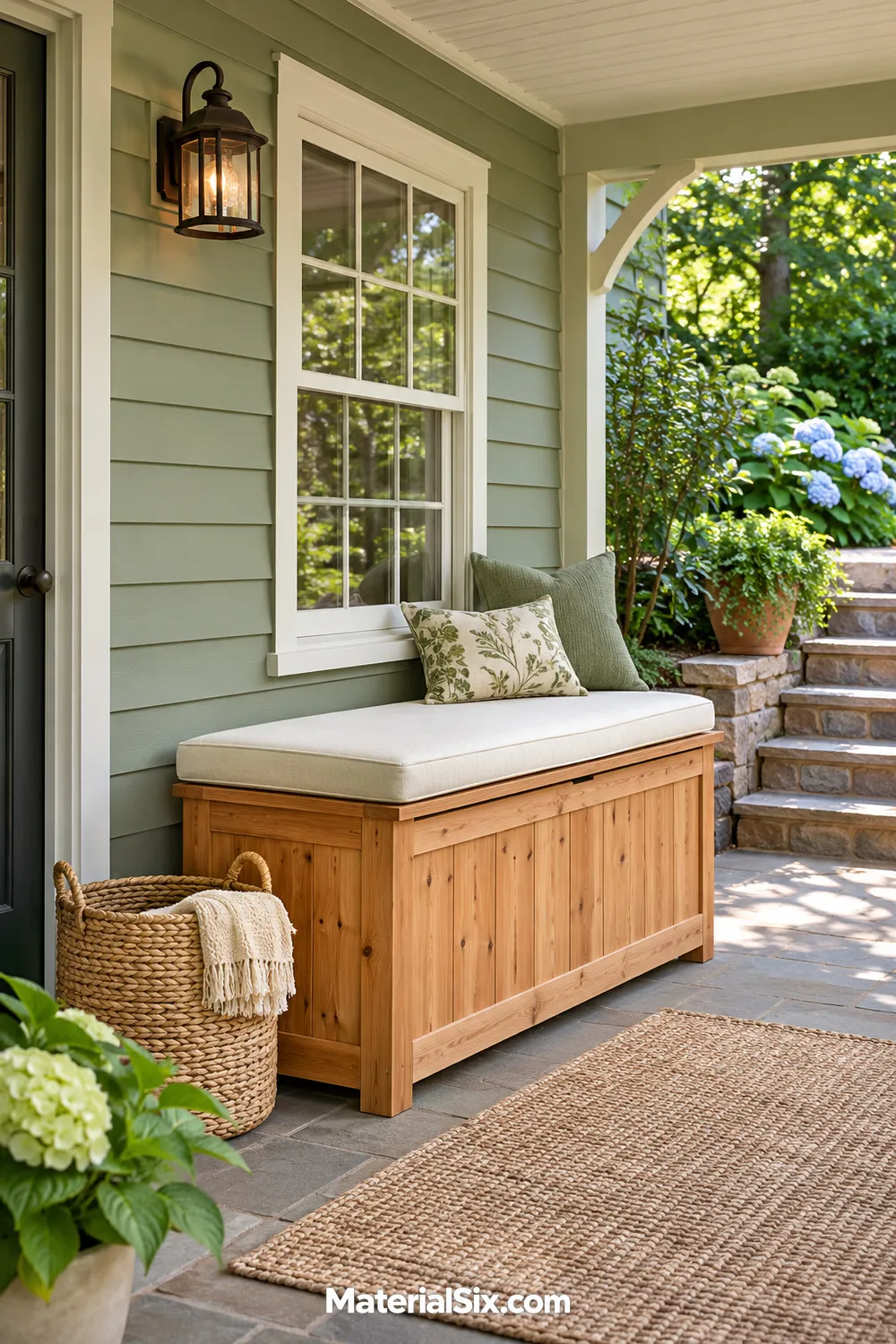
Let one substantial piece handle both seating and the things you carry outside. A storage bench can hold cushions, gardening gloves, or outdoor toys without adding another cabinet to a small porch. Choose a model intended for outdoor use, and check whether its compartment needs a separate weather-resistant container inside.
Position the bench against the house where its lid can open freely. A thin seat cushion and one lumbar pillow keep the surface useful without burying it in accessories. Leave frequently used shoes near the door instead of underneath a lid you must lift every day.
3. Tuck an L-Shaped Bench Into a Corner
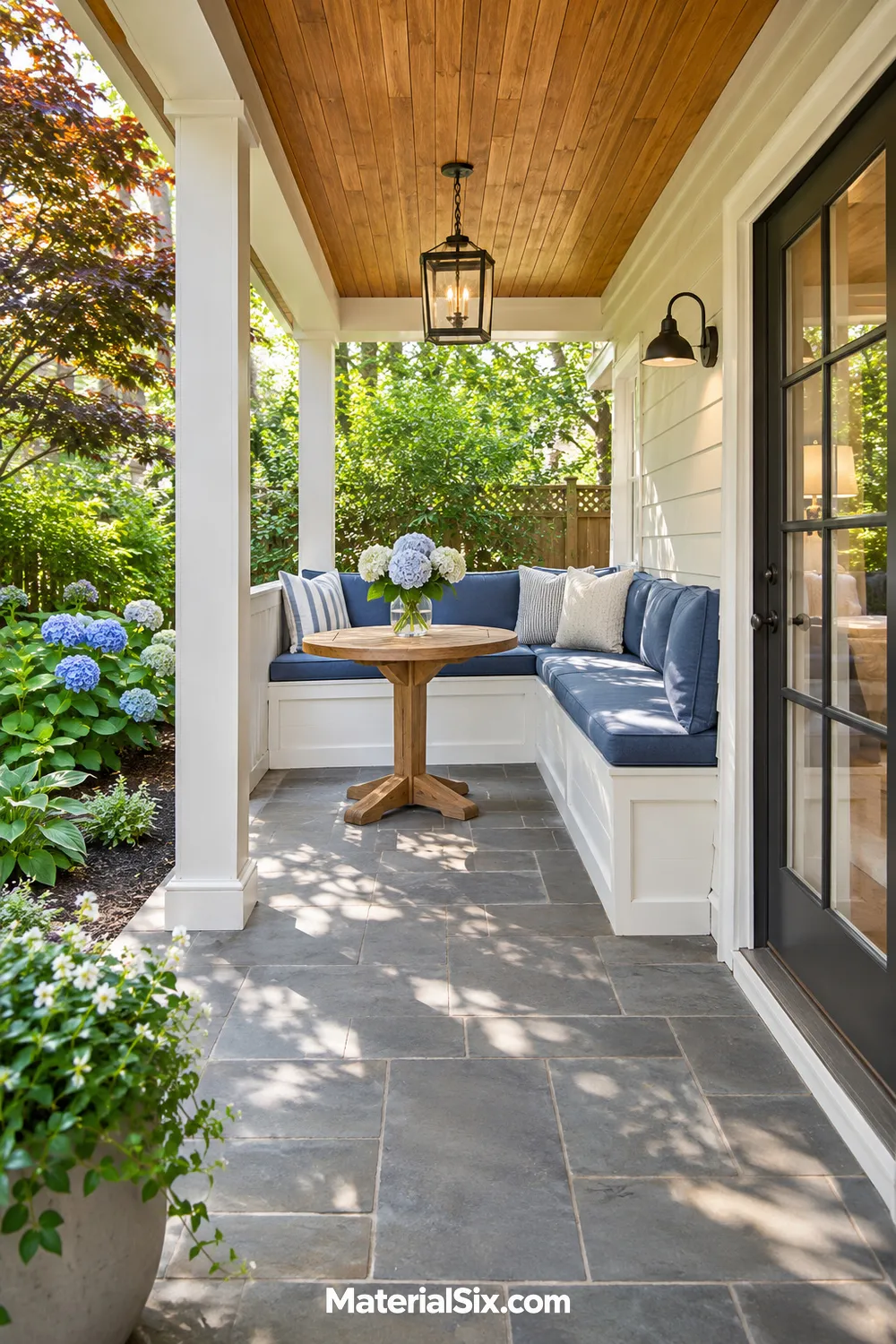
A corner bench uses two adjoining edges that might otherwise collect empty planters. An L-shaped arrangement also makes conversation easier because people can sit facing into the porch rather than in a single row. Keep the center table small enough that knees and feet still have room.
Treat built-in seating as a planned project, with dimensions based on your porch and the people using it. A freestanding modular bench offers a less permanent alternative. Start with the shorter return so the seating does not swallow the route between the back door and the yard.
4. Choose a Loveseat Instead of a Full Sofa
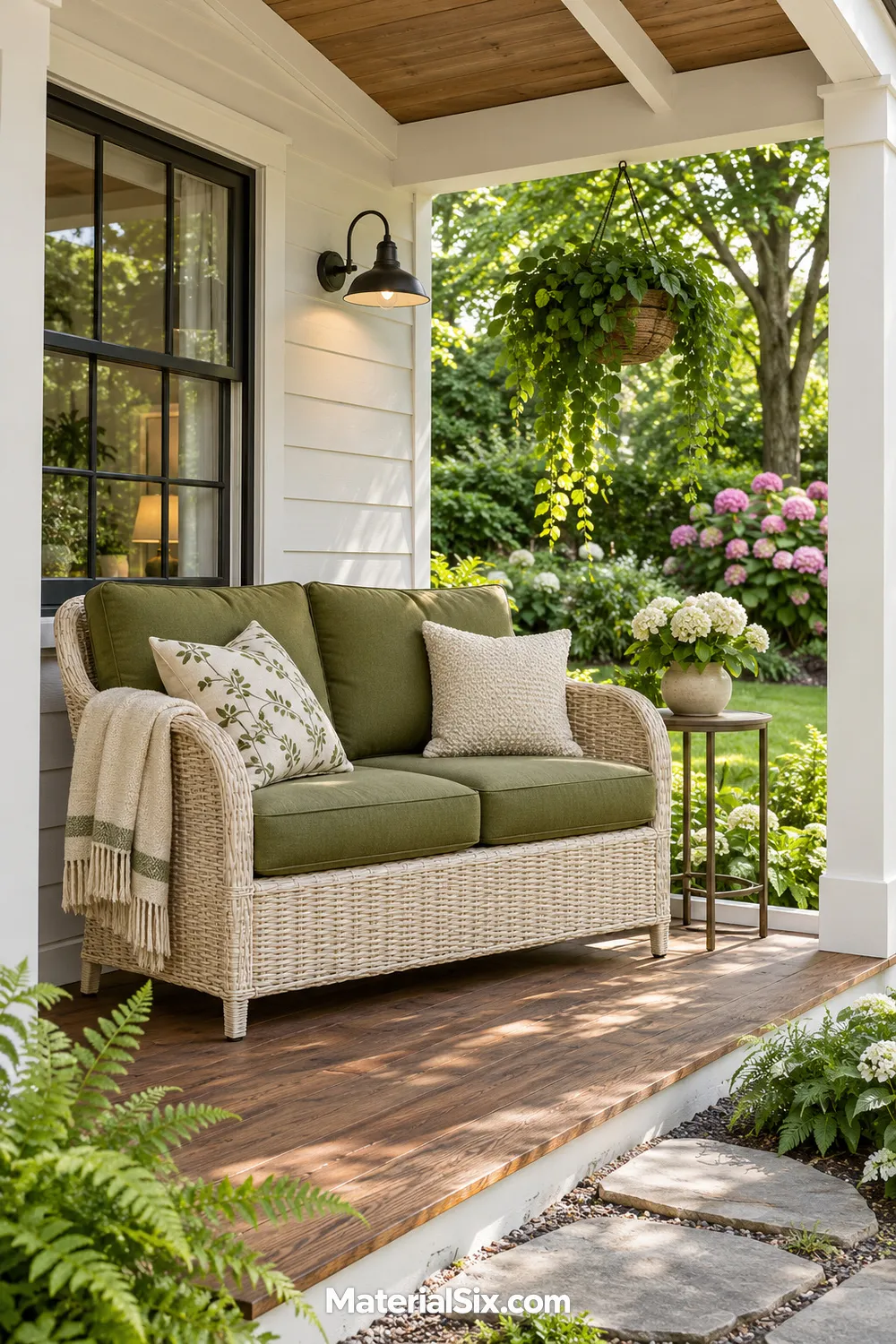
A compact loveseat can make a back porch feel like an outdoor sitting room without filling it with a full furniture set. Look beyond the seat count and compare overall depth, arm width, and the space needed to walk around it. Chunky arms can use room that a narrow porch cannot spare.
Place a small side table beside the loveseat instead of a coffee table in front. You still have somewhere for a drink, but the center stays open. Keep a throw indoors between uses unless its care instructions and your porch exposure support leaving it outside.
5. Add a Narrow Counter Along the Railing
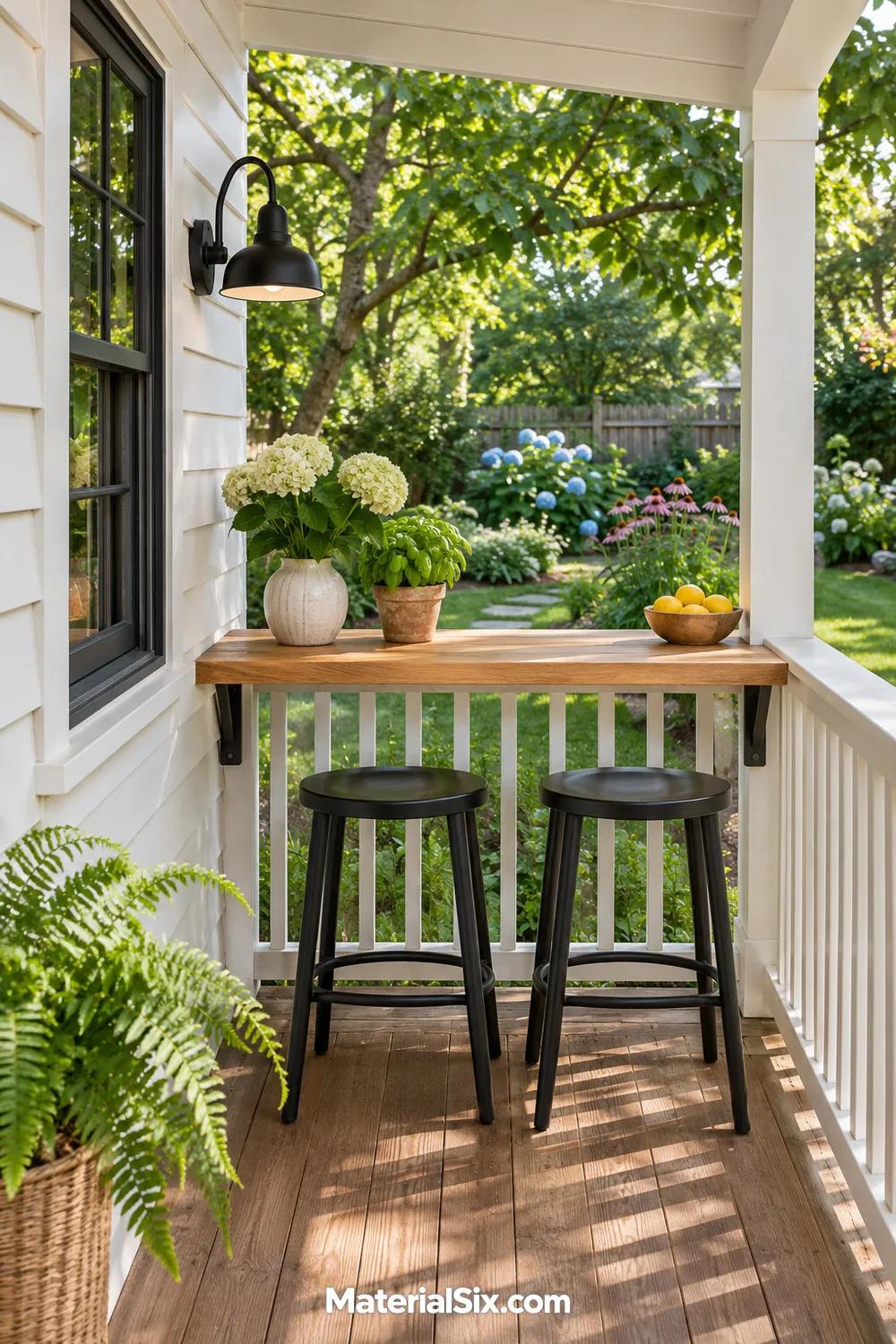
A slim railing-side counter creates a garden-facing perch when a conventional table would block the floor. Two stools tucked underneath make the arrangement feel lighter, and the counter can serve as a place to set down snacks when you entertain. Keep its depth modest so it remains a narrow ledge rather than a second dining table.
Have any permanent installation checked for suitable support instead of assuming the railing can carry it. Preserve the railing’s protective function and keep furniture from creating a climbing opportunity. Test stool placement before deciding how long the counter should be.
6. Use a Wall-Mounted Drop-Leaf Table
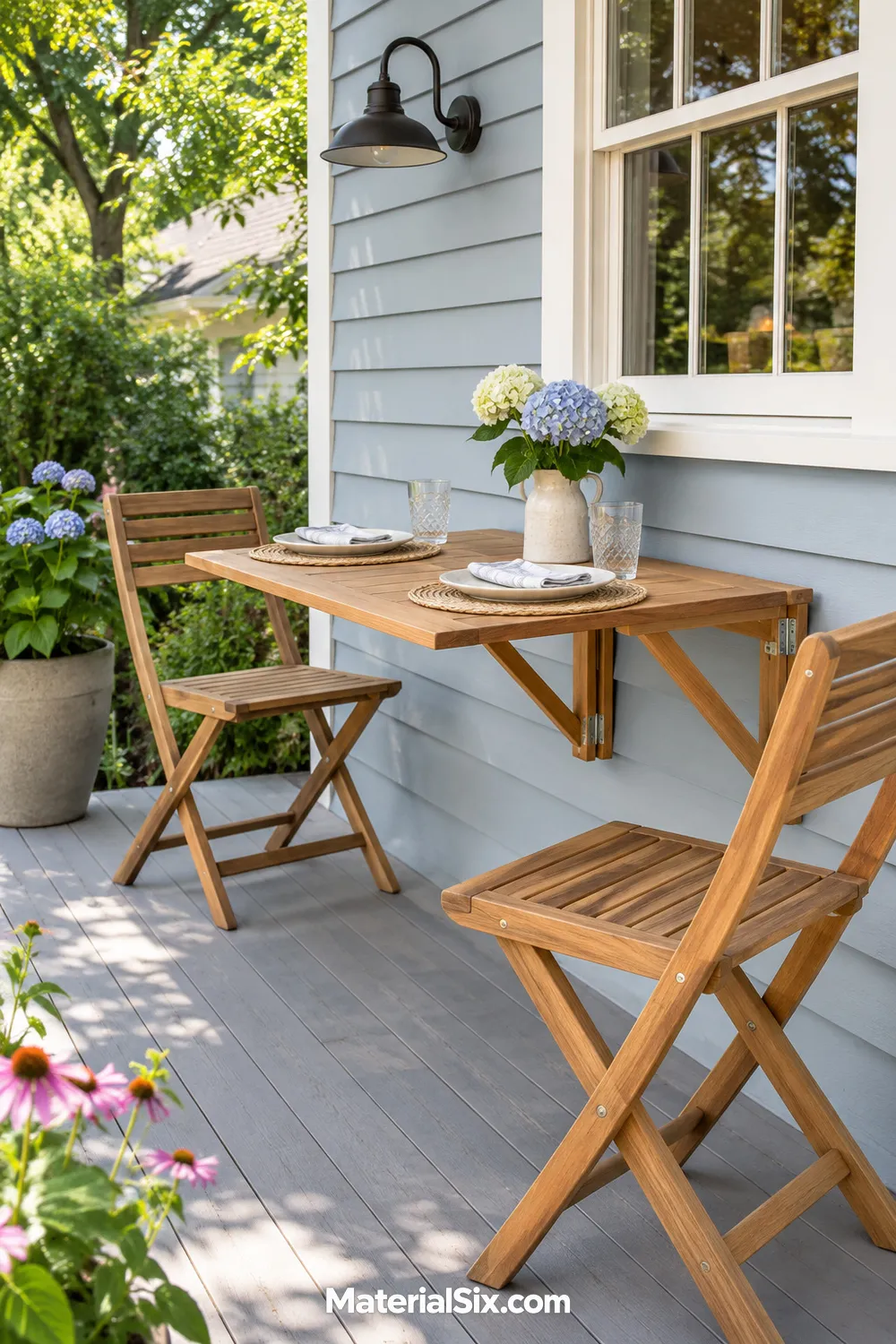
A drop-leaf table gives you a larger surface only when you need it. Open it for lunch, potting a few containers, or a board game, then fold it down to reclaim the porch. Folding chairs make the arrangement easier to put away as a complete set.
Choose hardware and a table suited to the outdoor conditions, and plan secure attachment to an appropriate wall structure. Siding alone should not be treated as the support. Check that the lowered tabletop will not cover a vent or interfere with the door, and store chairs where they stay out of the exit path.
7. Create a One-Chair Reading Nook
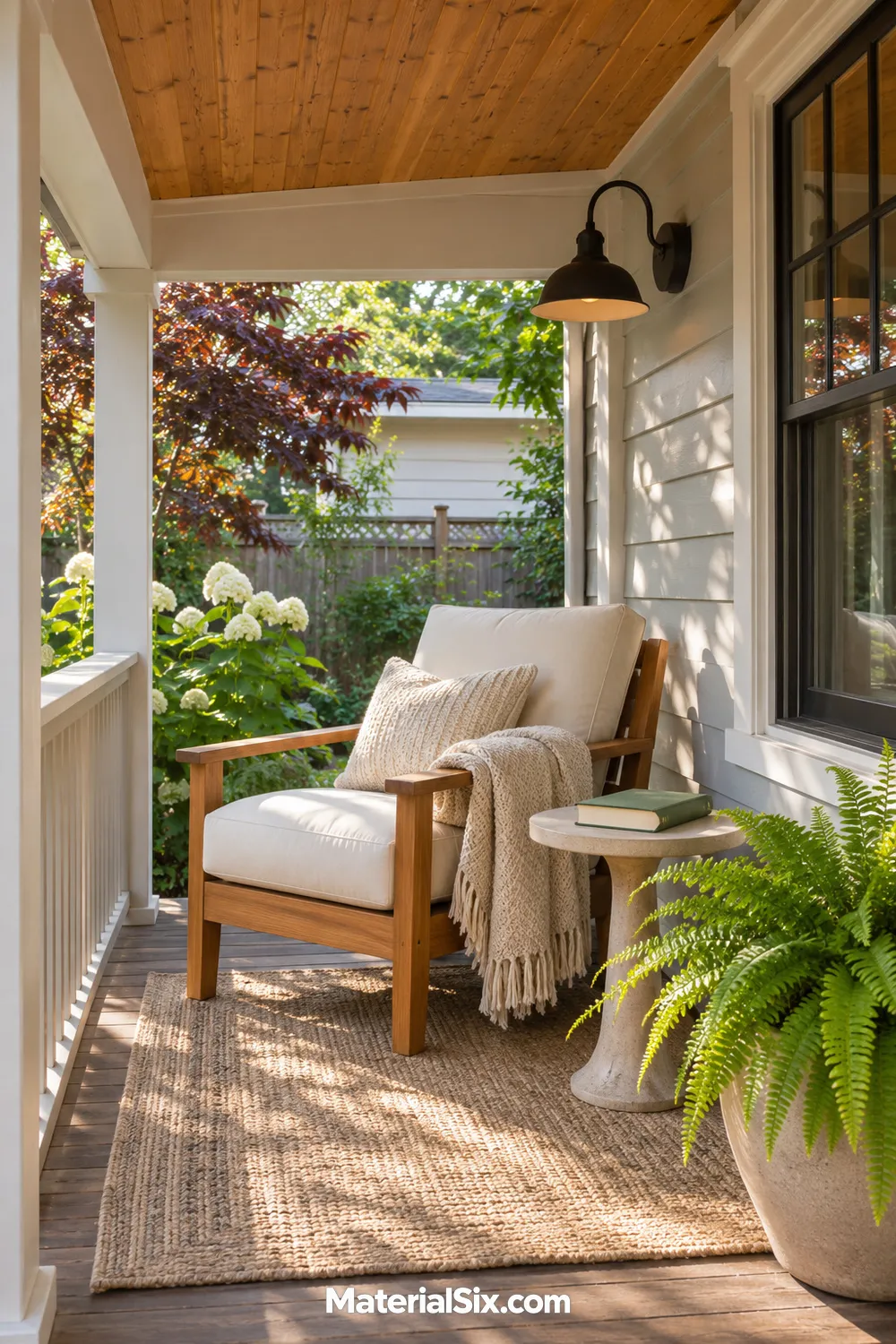
Sometimes a porch works better as a retreat for one than a crowded gathering area. Give a comfortable outdoor chair the best garden view, then add a small surface for a book or mug. An angled chair can feel welcoming, but check its full footprint before committing to the layout.
Choose comfort with the way you actually sit in mind. A low lounging chair needs more legroom than an upright seat. Keep the surrounding decor restrained so the chair remains the focal point, and use a removable cushion that you can bring inside when rain blows under the roof.
8. Screen One Side With Wood Slats
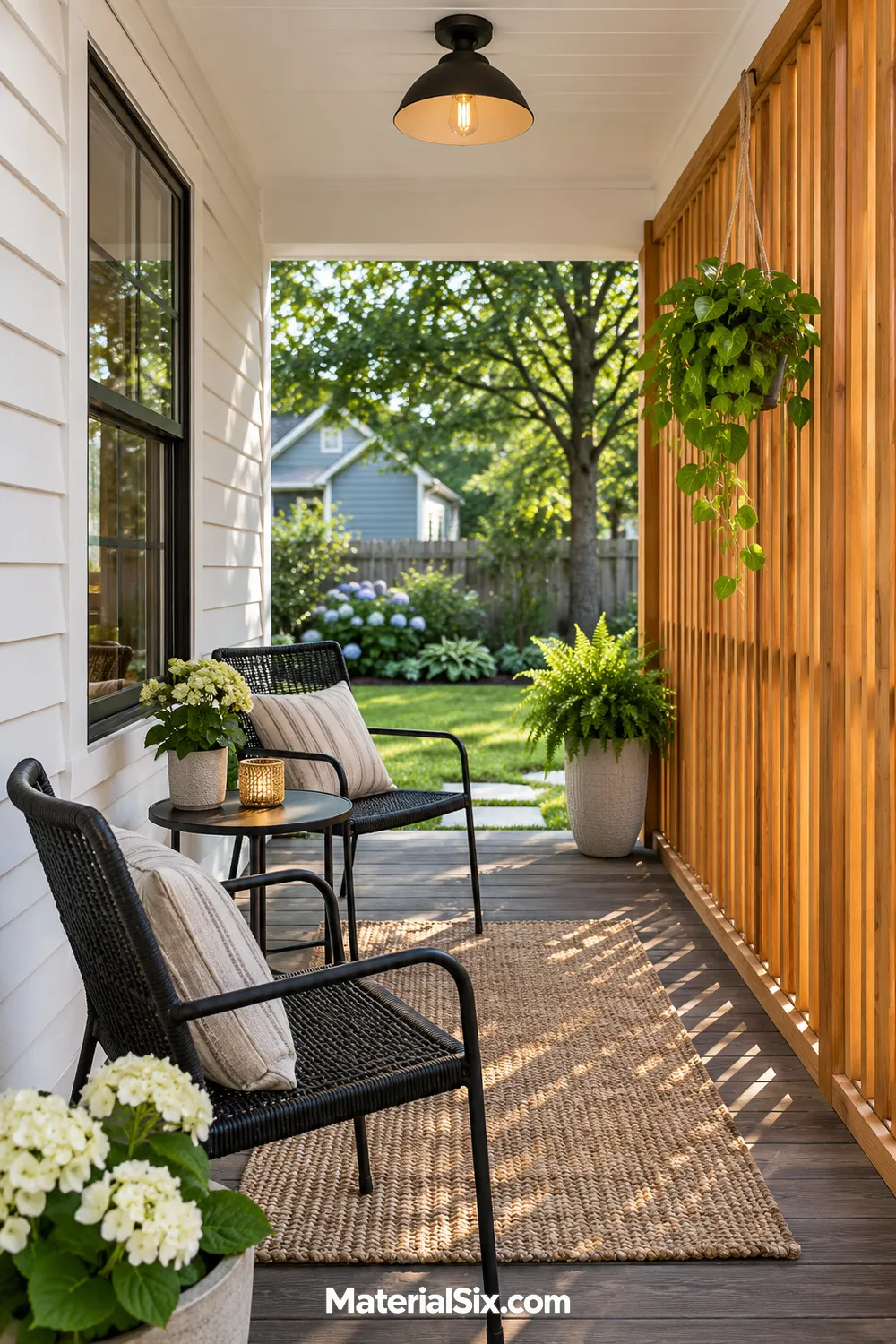
A partial slat screen can make a porch feel more settled when a neighboring window or driveway sits close by. Cover the side that needs privacy instead of closing every edge. The remaining openings preserve a connection to the yard and help the space feel less boxed in.
Decide whether you want filtered views or more coverage before choosing the spacing. Permanent screens need appropriate attachment and a check of local requirements where relevant. Repeat the wood tone in a small table or planter so the screen feels like part of the porch rather than an unrelated wall.
9. Soften an Open Edge With Outdoor Curtains
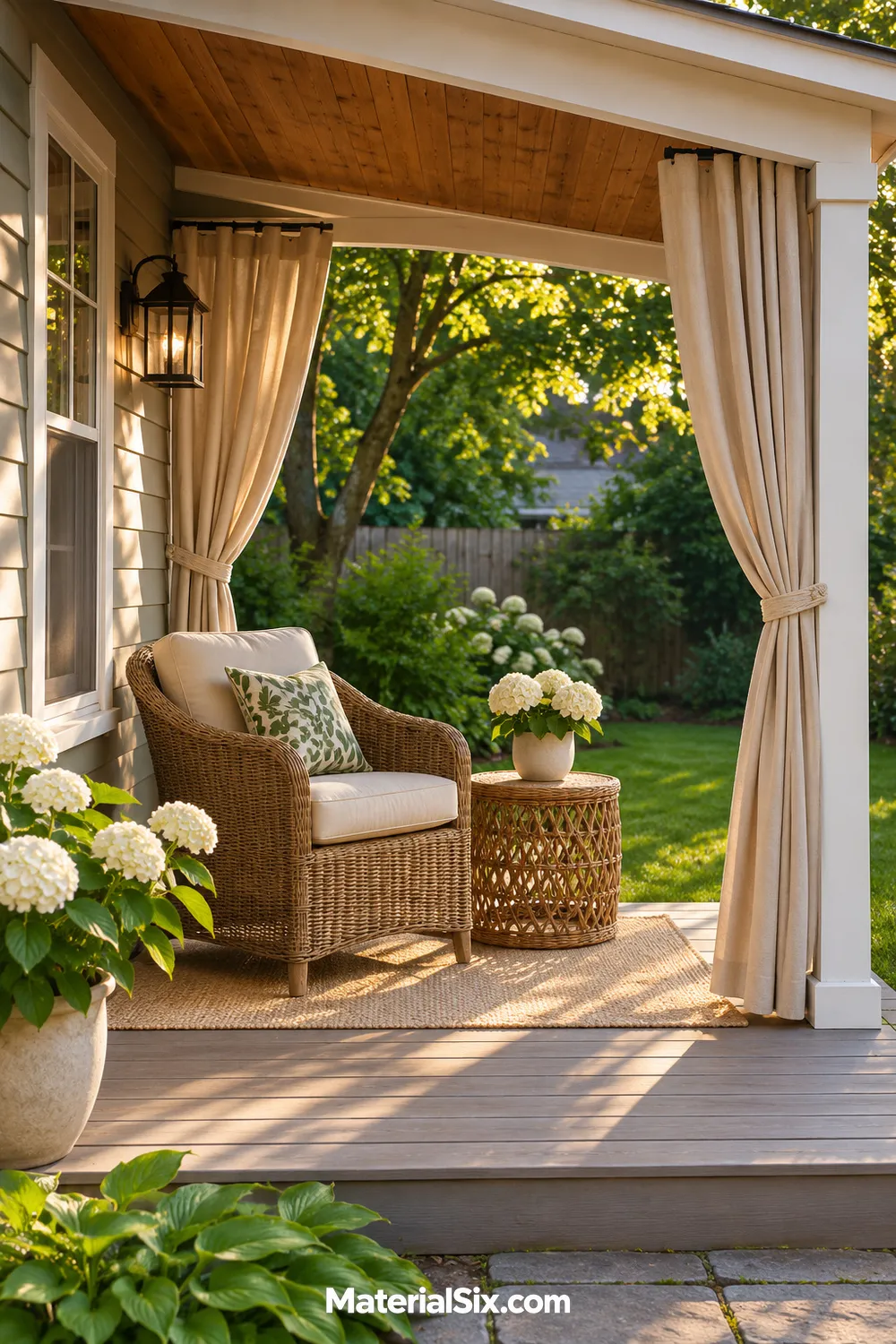
Curtain panels add softness to a covered porch and let you change how enclosed it feels. Tie them back during the day, then draw a panel across the side where you want more visual privacy. A light neutral fabric keeps the treatment from dominating a compact space.
Use outdoor-rated fabric and hardware, and plan for the wind your porch actually receives. Panels should not trail across a walkway or hang against a light fixture. Check care instructions before washing, and take them down when conditions call for it rather than expecting fabric to behave like a permanent wall.
10. Make a Small Screened Porch Feel Airy
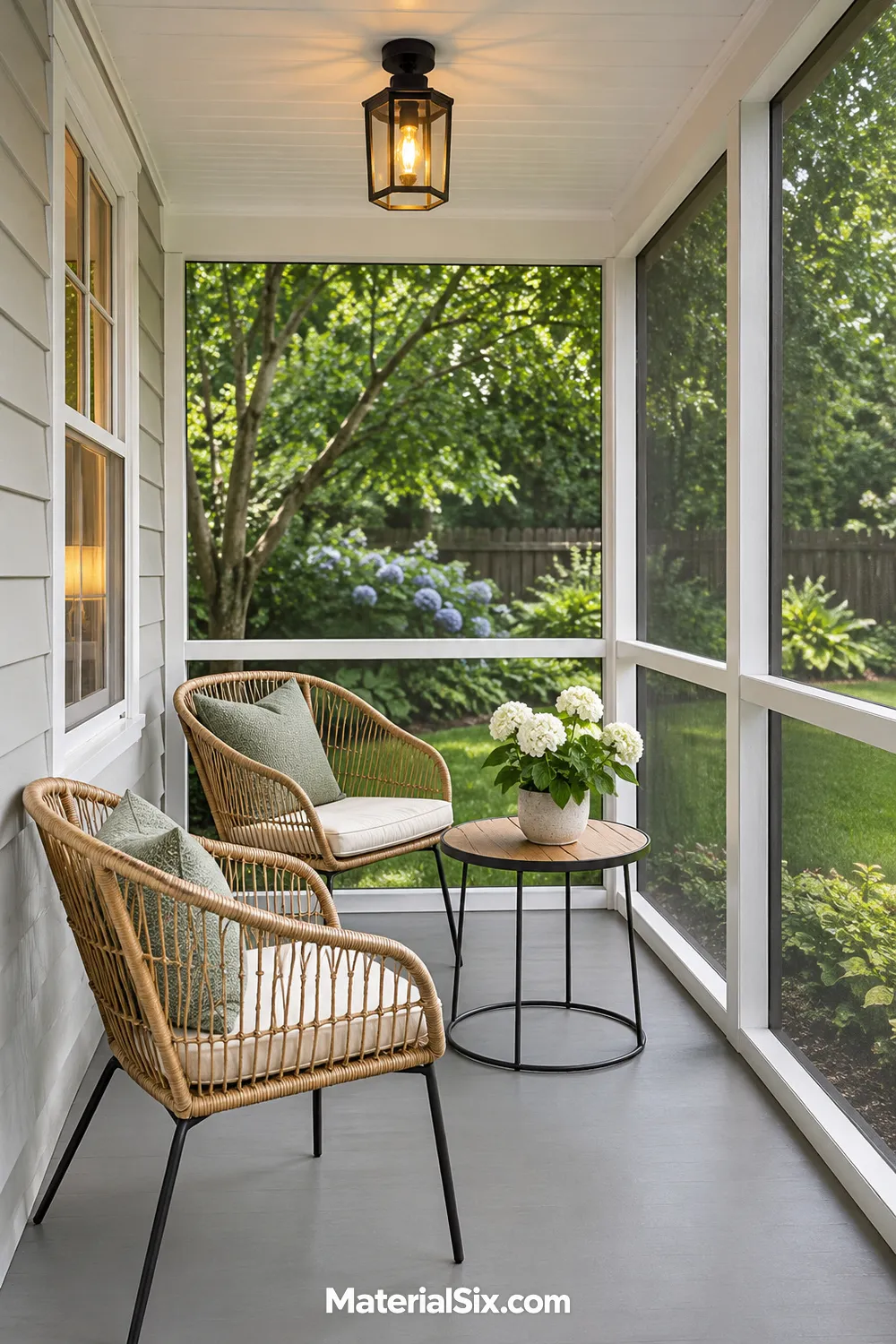
A screened enclosure changes the feel of a back porch, so keep the interior furnishings visually light. Slim chairs, a compact table, and a restrained color palette leave the garden visible through the screens. Avoid lining every screen panel with furniture or tall decor.
Existing screens deserve a check for loose edges and tears before you decorate around them. If you are considering a new enclosure, treat it as a construction project that may need professional advice and local approvals. Within the finished space, choose furniture that tolerates outdoor humidity and occasional wind-driven moisture rather than assuming it functions like an indoor room.
11. Move Planters Onto the Railing
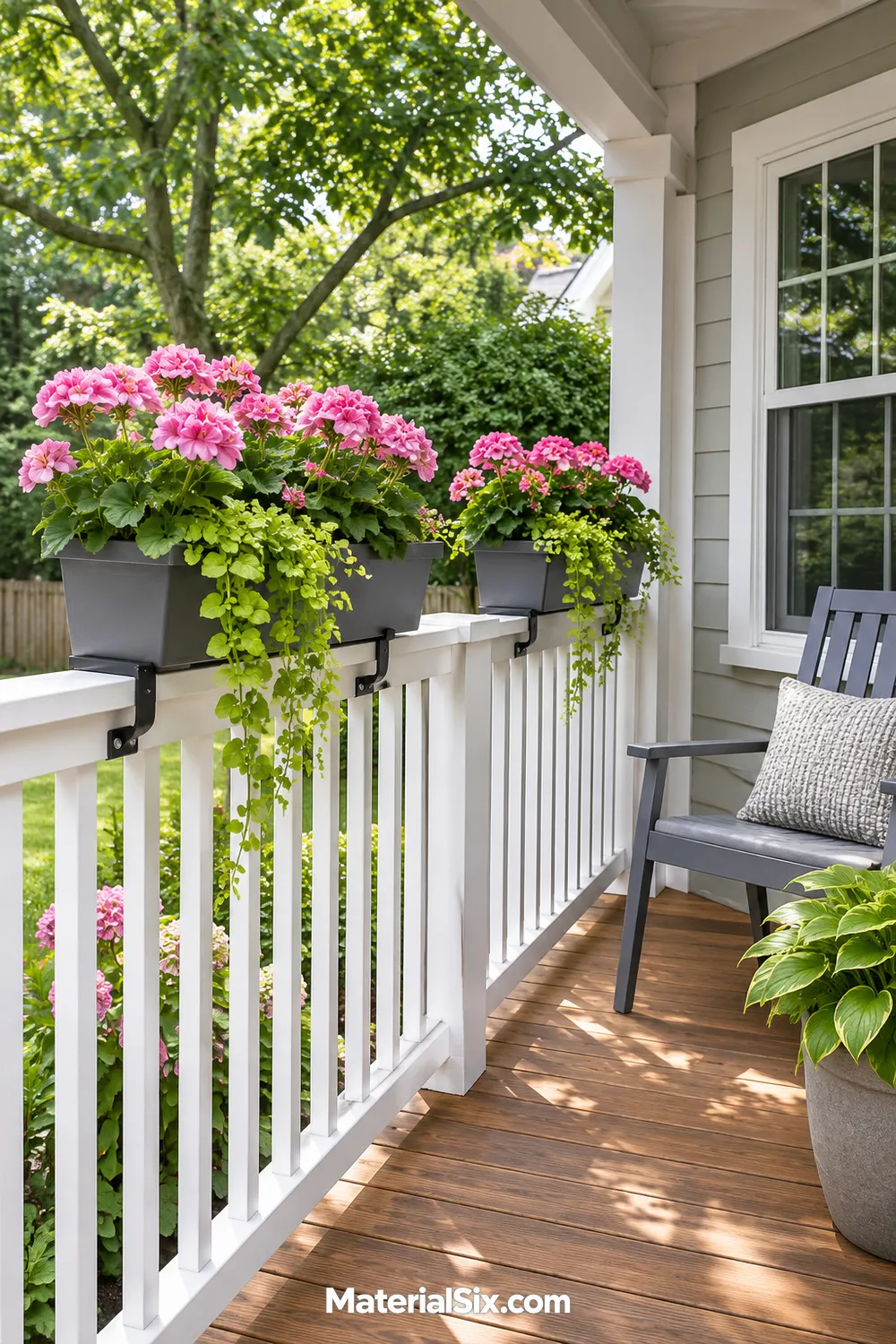
Railing planters bring flowers to eye level while freeing up space beside your feet. Repeat a few containers for a tidy rhythm instead of mixing many sizes along a short railing. Keep planting combinations simple so the display reads clearly from both the porch and the yard.
Check that brackets fit the railing and can handle the filled container’s weight. Think about where water will drain before placing furniture underneath. Select plants for the actual light at that edge of the house, and keep foliage trimmed where it begins to crowd the handrail or the approach to the steps.
12. Grow a Vertical Garden Against a Blank Wall
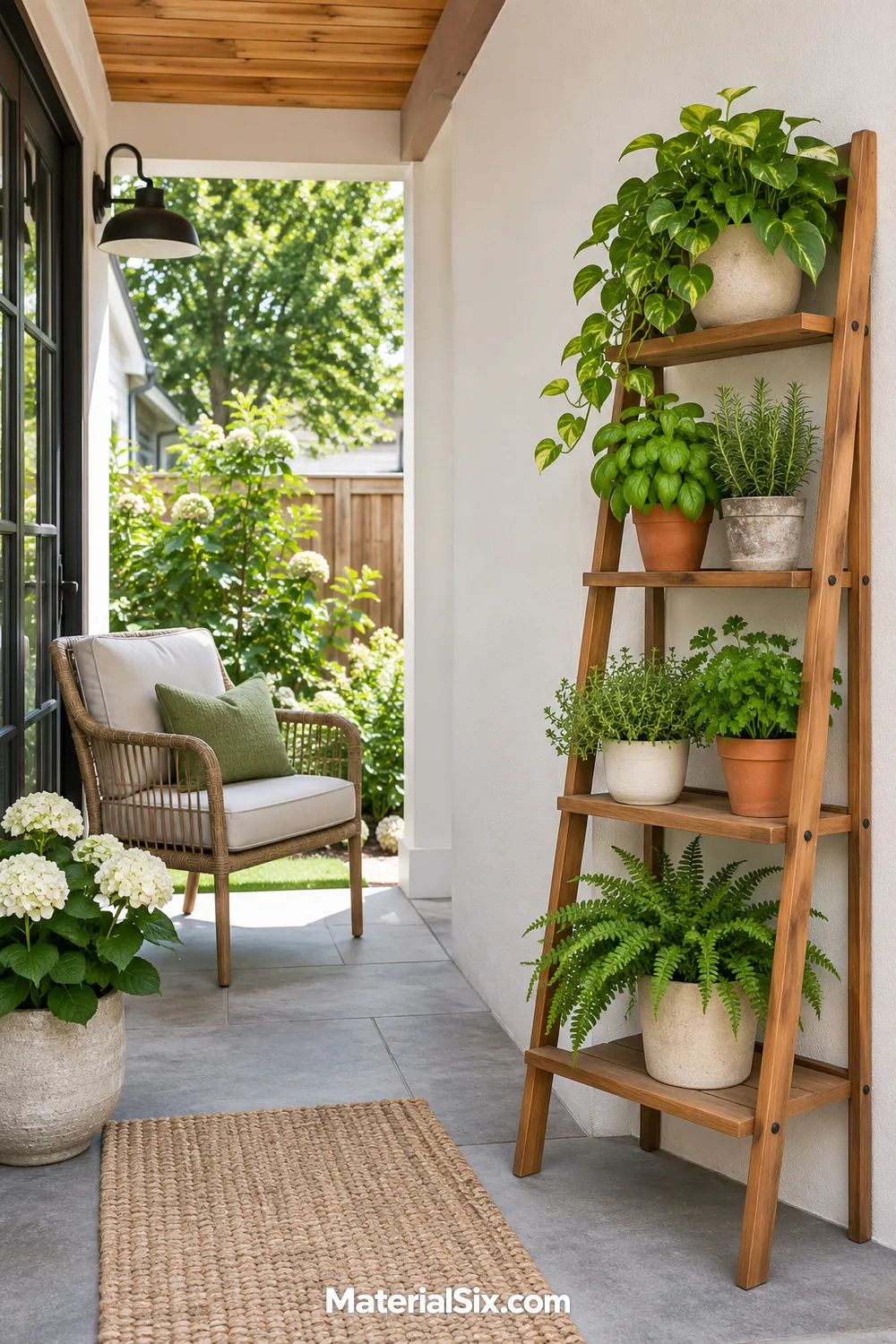
A narrow plant ladder or vertical stand gives a blank wall a purpose without spreading containers across the floor. Grouping pots at several heights adds a garden feeling even when the porch has room for only one chair. Use individual pots that you can lift out for watering and seasonal changes.
Choose a stable stand intended for the setting, and secure it as the manufacturer directs. Put heavier pots lower down and protect nearby surfaces from repeated water exposure. Leave space around the plants for air and access, rather than filling every shelf until maintenance becomes awkward.
13. Layer Warm Light Under the Roof
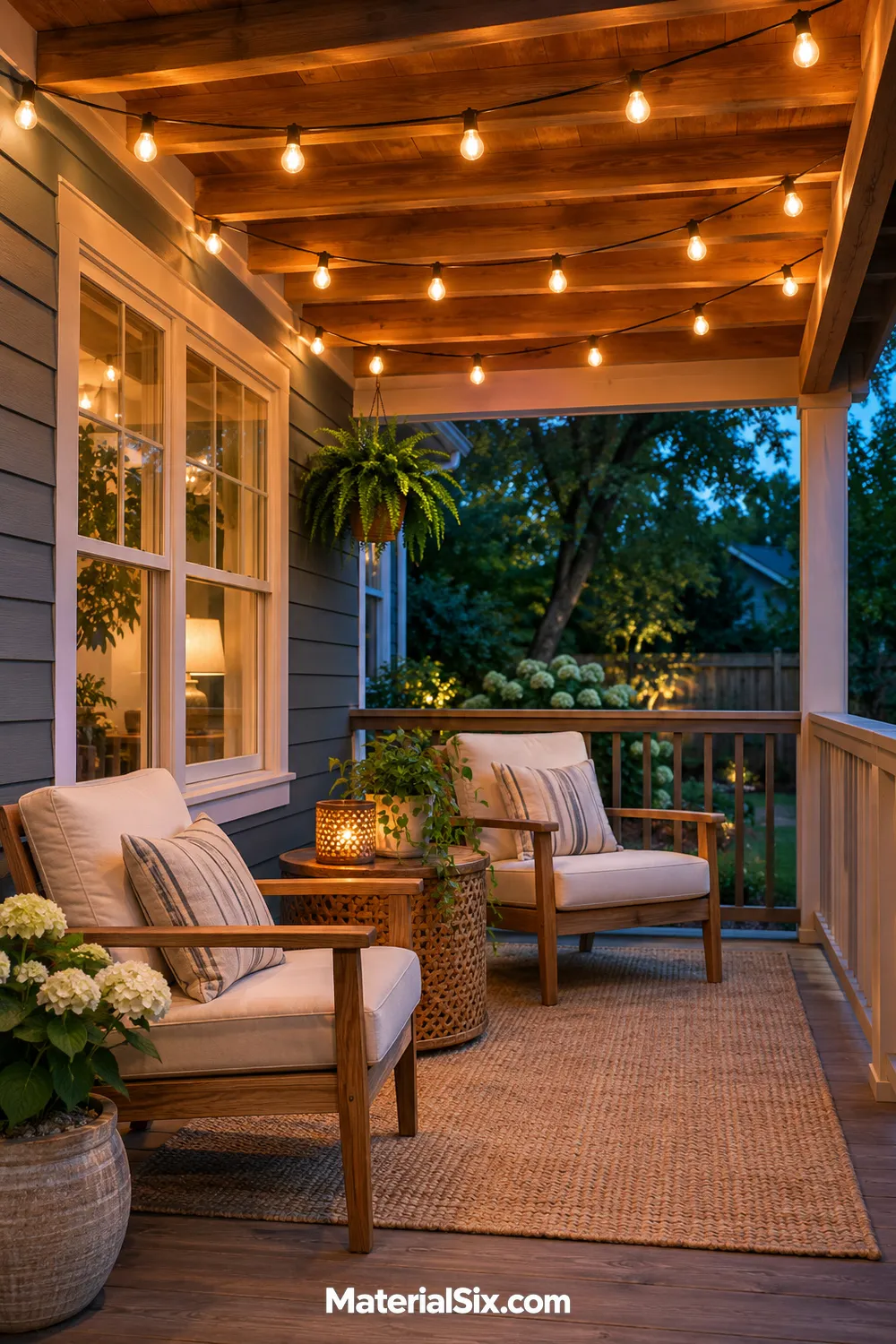
Lighting helps a small back porch remain inviting after the garden darkens. A simple line of warm string lights beneath the roof can define the seating area without using floor space. Keep the pattern deliberate so the ceiling does not become a tangle of crossing cords.
Choose lighting rated for its intended outdoor exposure and follow the installation instructions. Keep cords away from the doorway and walking route, and have electrical questions checked by a qualified professional. Combine decorative light with suitable existing task lighting where needed, rather than relying on a soft glow to illuminate steps or changes in level.
14. Give the Floor a Painted Pattern
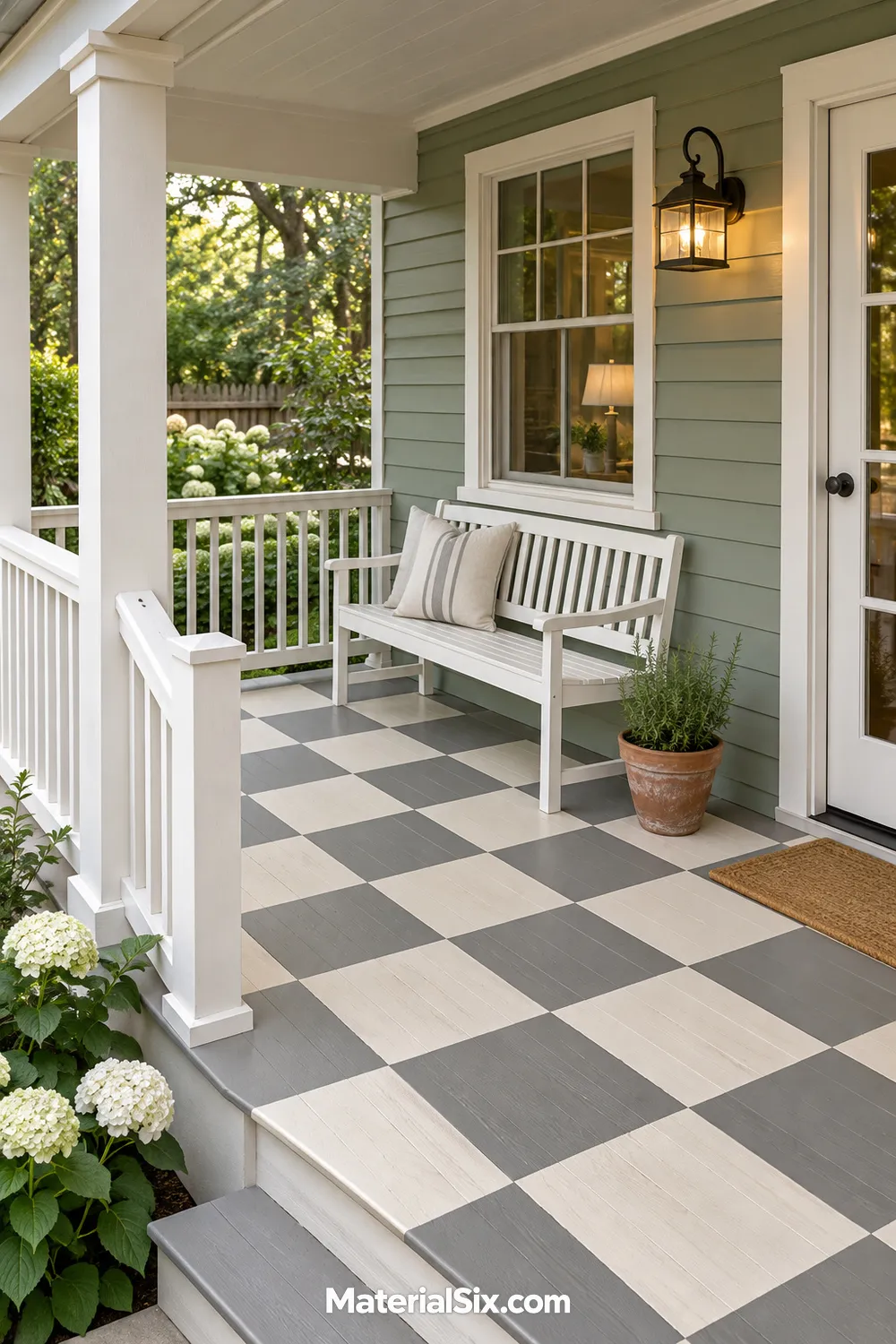
A painted floor can give a plain porch a stronger identity without adding objects to a tight footprint. A broad checkerboard or restrained stripe creates a clear pattern beneath simple furniture. Keep the furniture palette quiet so the floor has room to be the main decorative feature.
Start by checking the condition and material of the existing surface. Preparation, coating choice, drying time, and traction all depend on that surface and its exposure. Follow the product directions instead of treating every porch floor the same. A sample area can help you judge the color before committing to the whole space.
15. Define the Seating Area With an Outdoor Rug
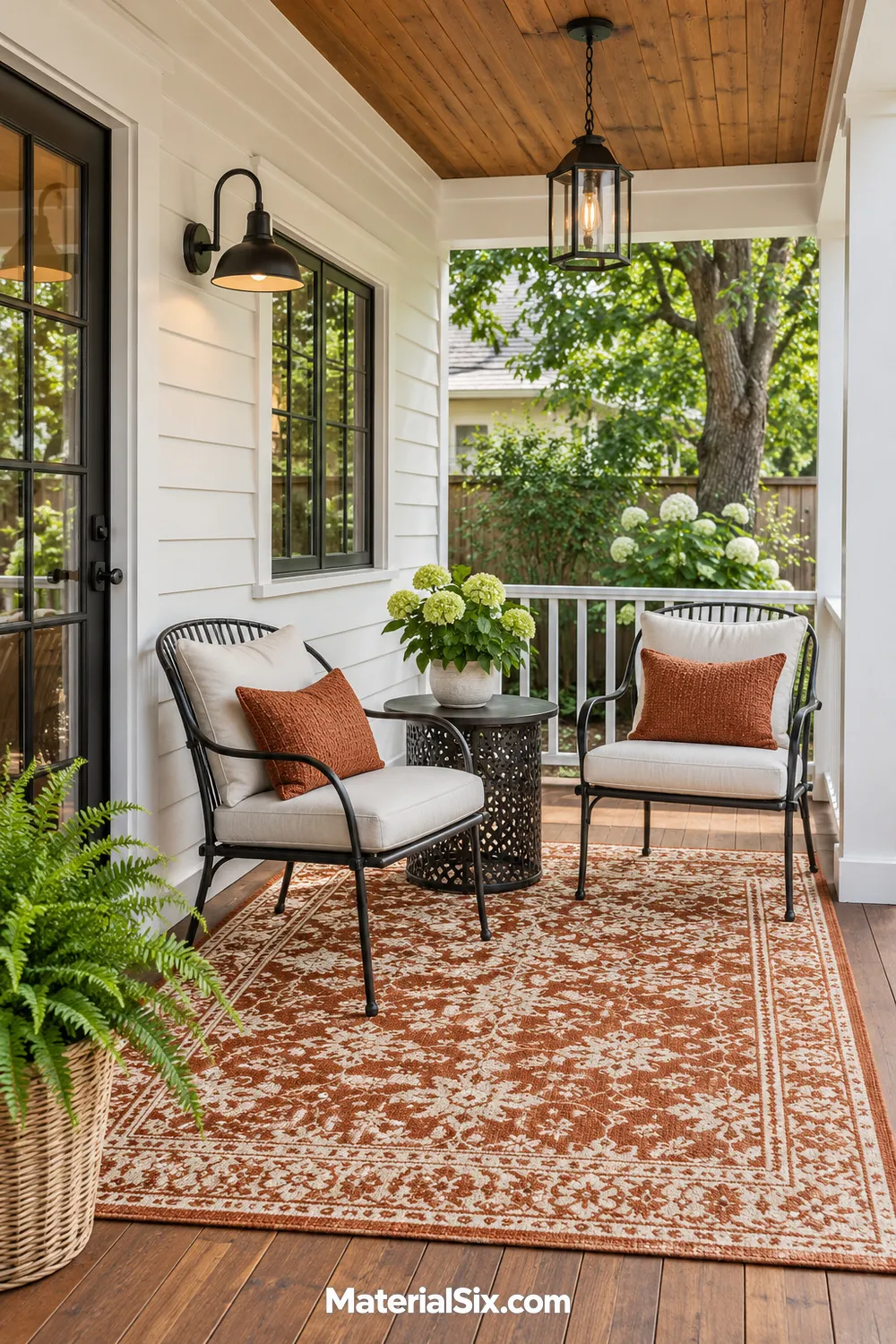
An outdoor rug draws a small seating group together, especially when the floor otherwise feels visually disconnected from the furniture. Choose a size that relates to the chairs rather than a tiny mat floating between them. A simple pattern can add color without requiring lots of pillows or accessories.
Check the rug’s care guidance and whether it suits the porch surface underneath. Lift it periodically to clean and allow trapped moisture to dry. Keep edges flat and away from the door swing. If the available area is very narrow, a runner may define the seating zone more neatly than a larger rectangle.
16. Turn the Back Door Into an Organized Landing
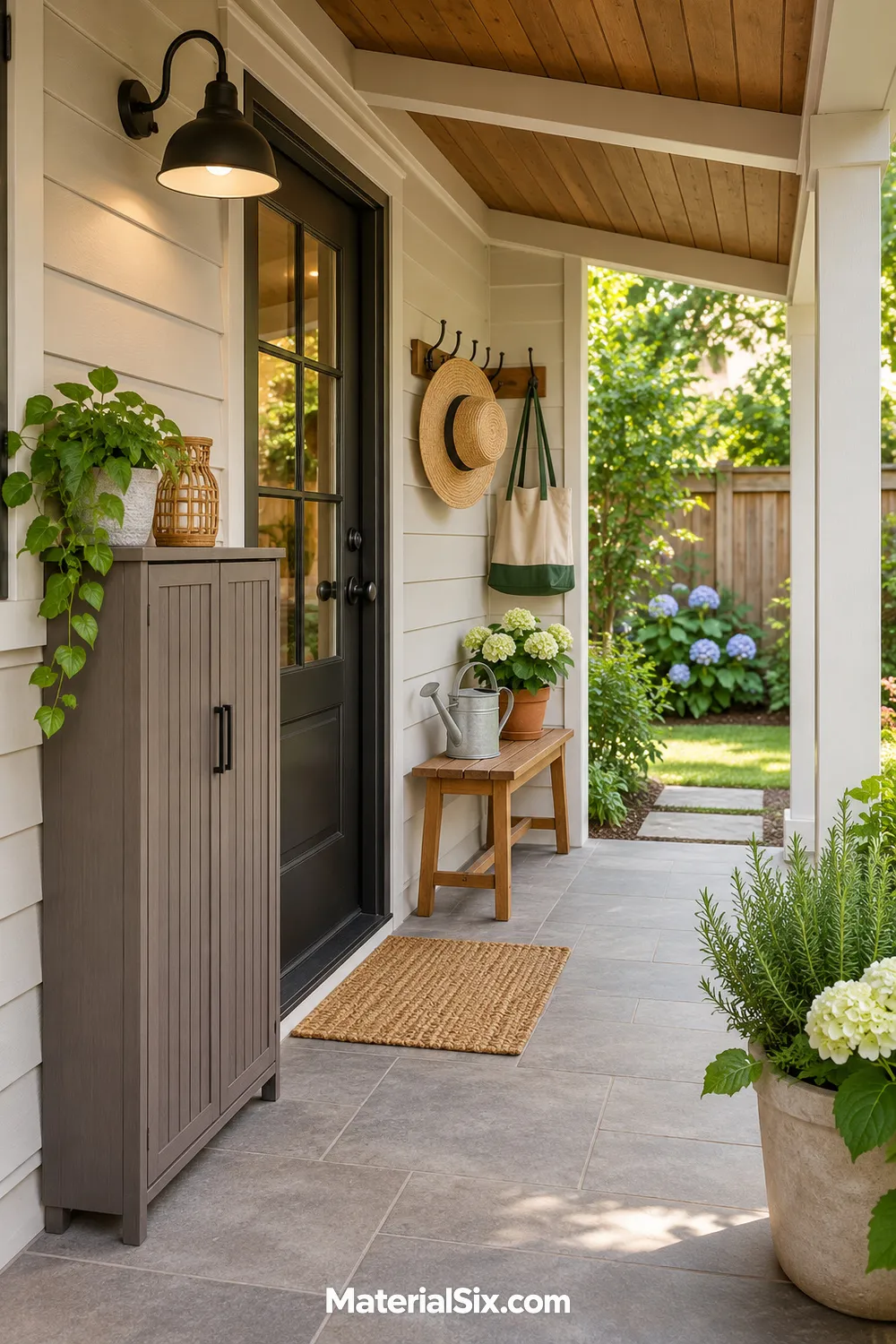
A back porch often handles shoes, garden gear, and grocery bags before it ever becomes a sitting area. Give those everyday arrivals a defined landing spot. A slim outdoor cabinet, a short perch, and a few appropriately mounted hooks can keep the doorway usable without filling the entire porch with storage.
Start with the items you regularly carry through this door, then size the storage around them. Keep the floor clear where the door opens and where people step down. Store anything sensitive to dampness indoors, and avoid treating a sheltered corner as dry storage without checking it after rain.
17. Give an Uncovered Porch a Movable Shade Spot
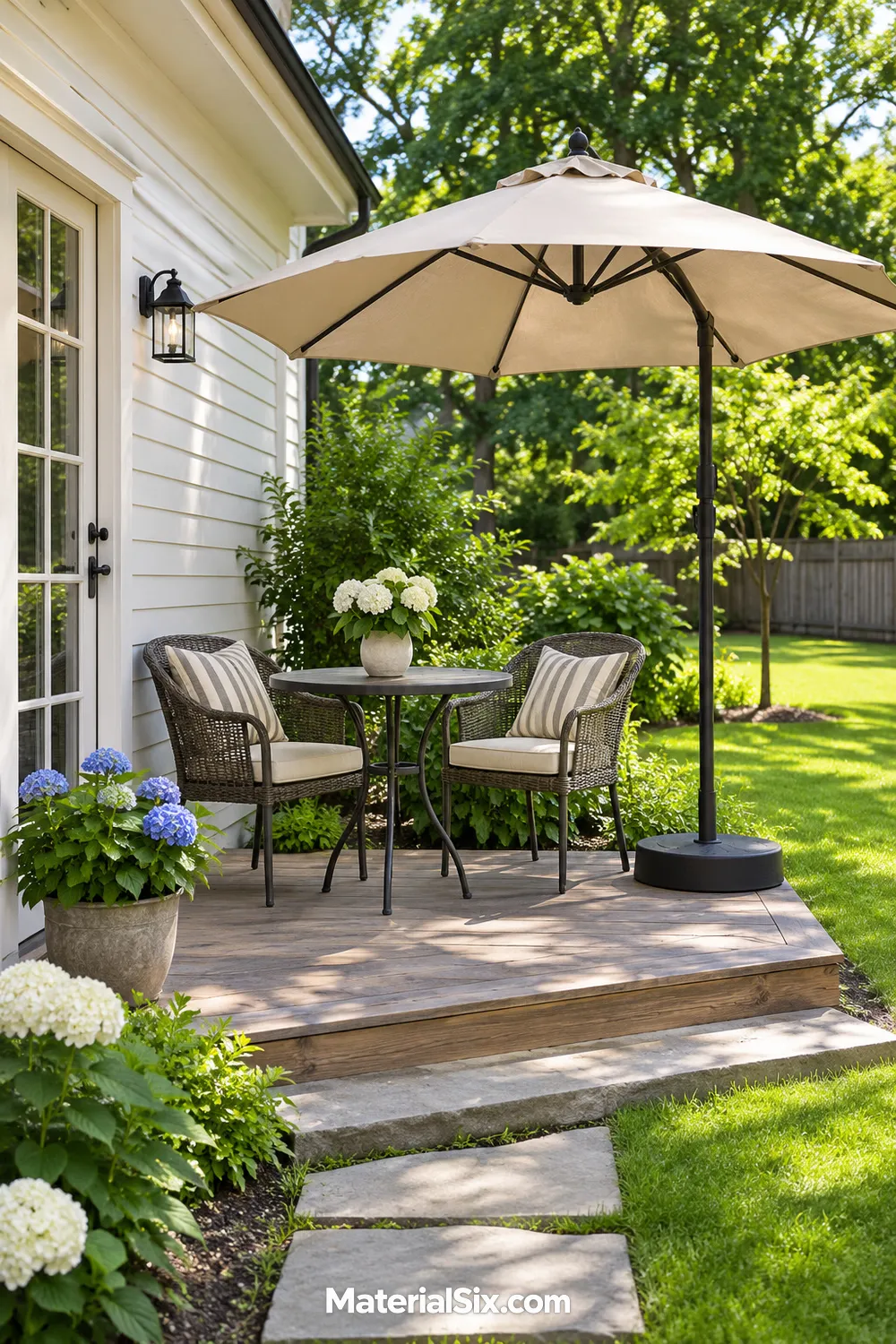
An uncovered porch can still have a defined place to sit. A compact patio umbrella creates a shaded spot over a small table or pair of chairs without turning the whole area into an enclosed room. Choose the canopy around the seating footprint and the space available for its base.
Follow the umbrella’s instructions for its base, placement, and wind limits. Keep the base out of the doorway and walking route, and close the canopy when conditions require it. Furniture that is easy to move lets you adjust the arrangement as the sun shifts instead of crowding the porch with several fixed shade solutions.
Choose What Your Porch Needs Most
Start with the way you want to use your porch most often, then choose one main feature to support it. A comfortable chair, a useful table, or an organized landing may do more for the space than several small accessories.
Measure the walking route before adding furniture, and build the decorative layers around what fits. Save a few favorite ideas, compare them with your porch’s exposure and dimensions, and make the next change with your daily routine in mind.