
The part of a backyard shed you notice last can be the part that makes it look unfinished. A tipped-up view of the floor framing, bare blocks, or a dark gap along the lawn can draw your eye away from the siding and doors you chose. Skirting gives that lower edge a deliberate finish, and the right design depends on what happens around it. A potting shed beside a wet planting bed calls for different details than a workshop where you need to reach under the floor. Here are 13 shed skirting ideas, from quiet paint-matched panels to open screens and stone-look finishes.
1. Paint plywood panels to match the siding
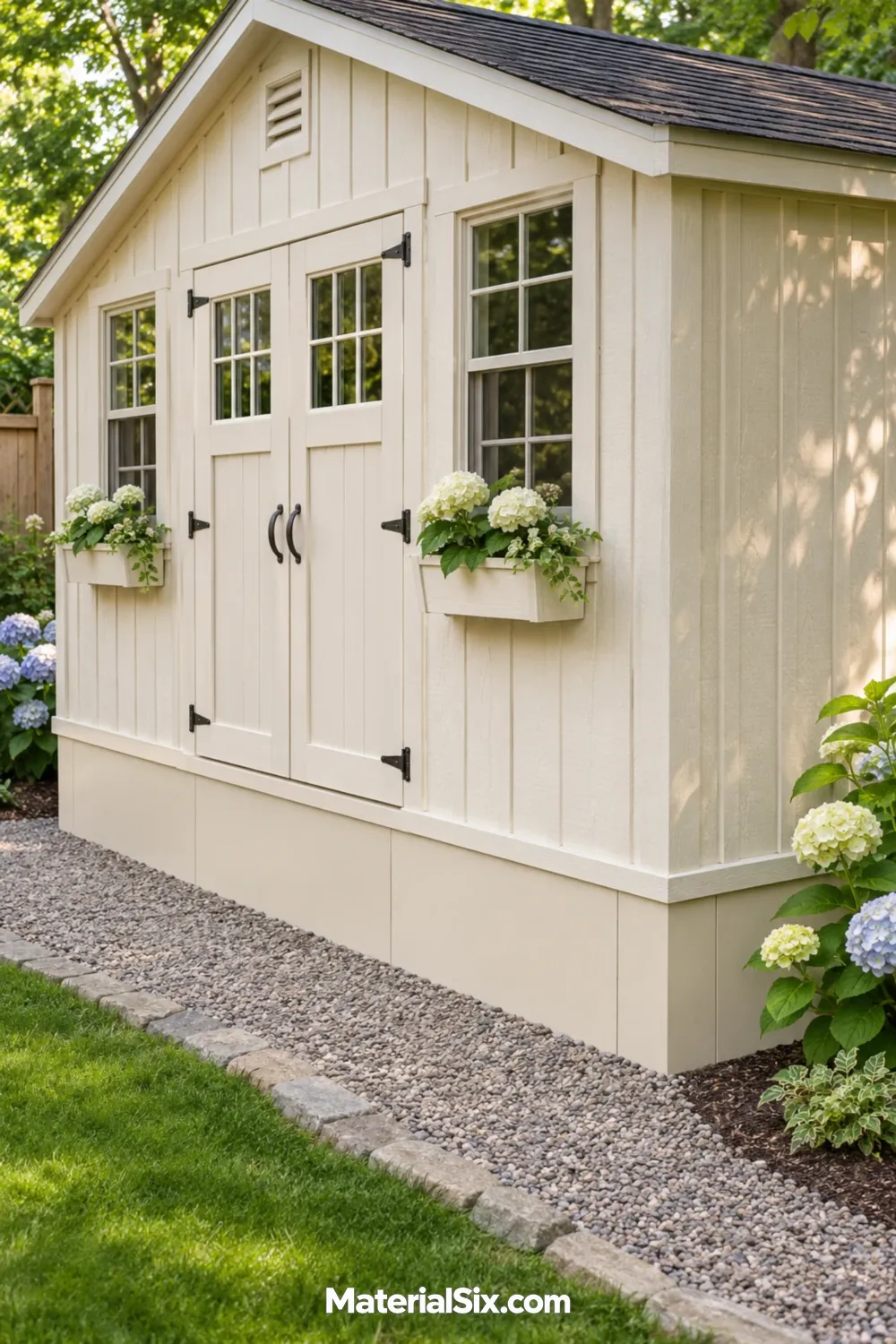
If you want the eye to go straight to the doors and trim, carry the siding color down to smooth exterior-rated plywood panels. A small reveal between sections makes the seams look deliberate. Follow the panel and finish manufacturers’ guidance for sealing cut edges, and plan for splashback where the shed faces a gravel path or planting bed.
2. Run cedar slats horizontally for a modern base
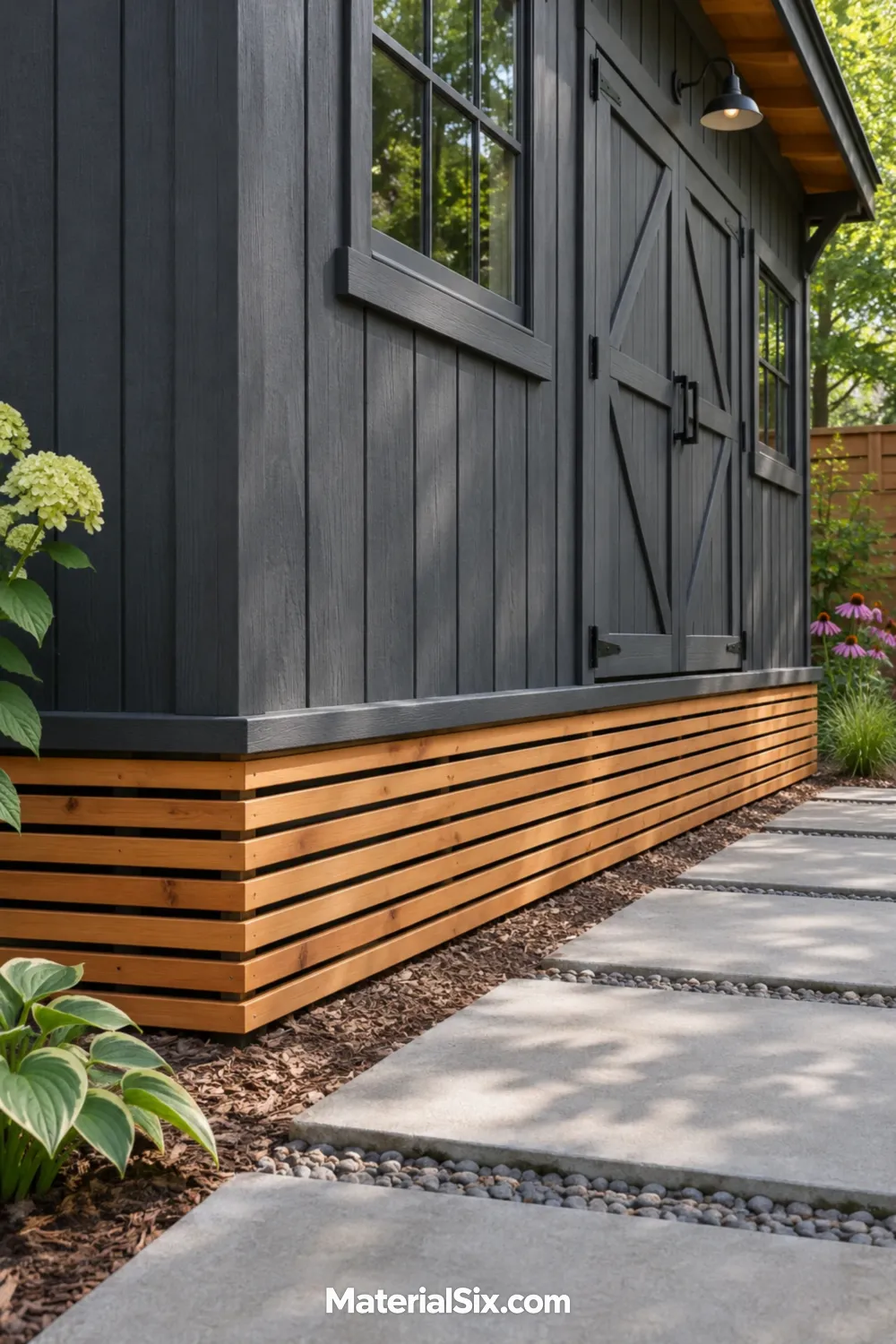
Horizontal cedar slats give a plain shed a strong bottom line. On dark siding, the warm wood stands out without adding another color to the trim. Lay out the rows from a level reference so the slats read straight even if the ground rises along one side. If the last row would almost touch the soil, adjust the layout before cutting the boards.
3. Use diamond lattice where a solid base feels heavy
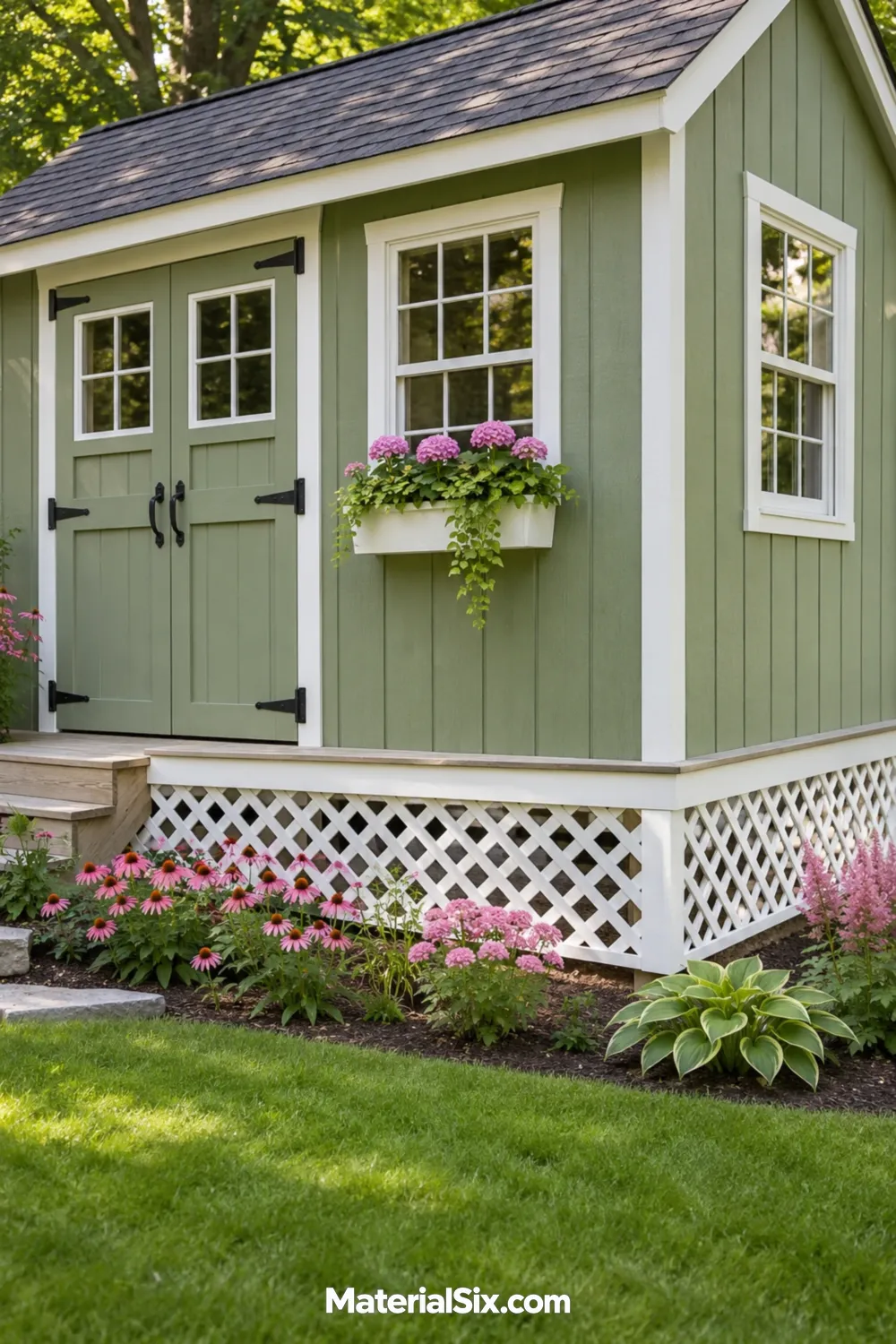
White diamond lattice suits a shed with cottage-style trim, especially where a tall opaque base would look bulky. A simple rectangular frame gives each lattice sheet a clean edge and keeps the cut diamonds from looking ragged at the corners.
4. Give the skirt a vertical board-and-batten finish
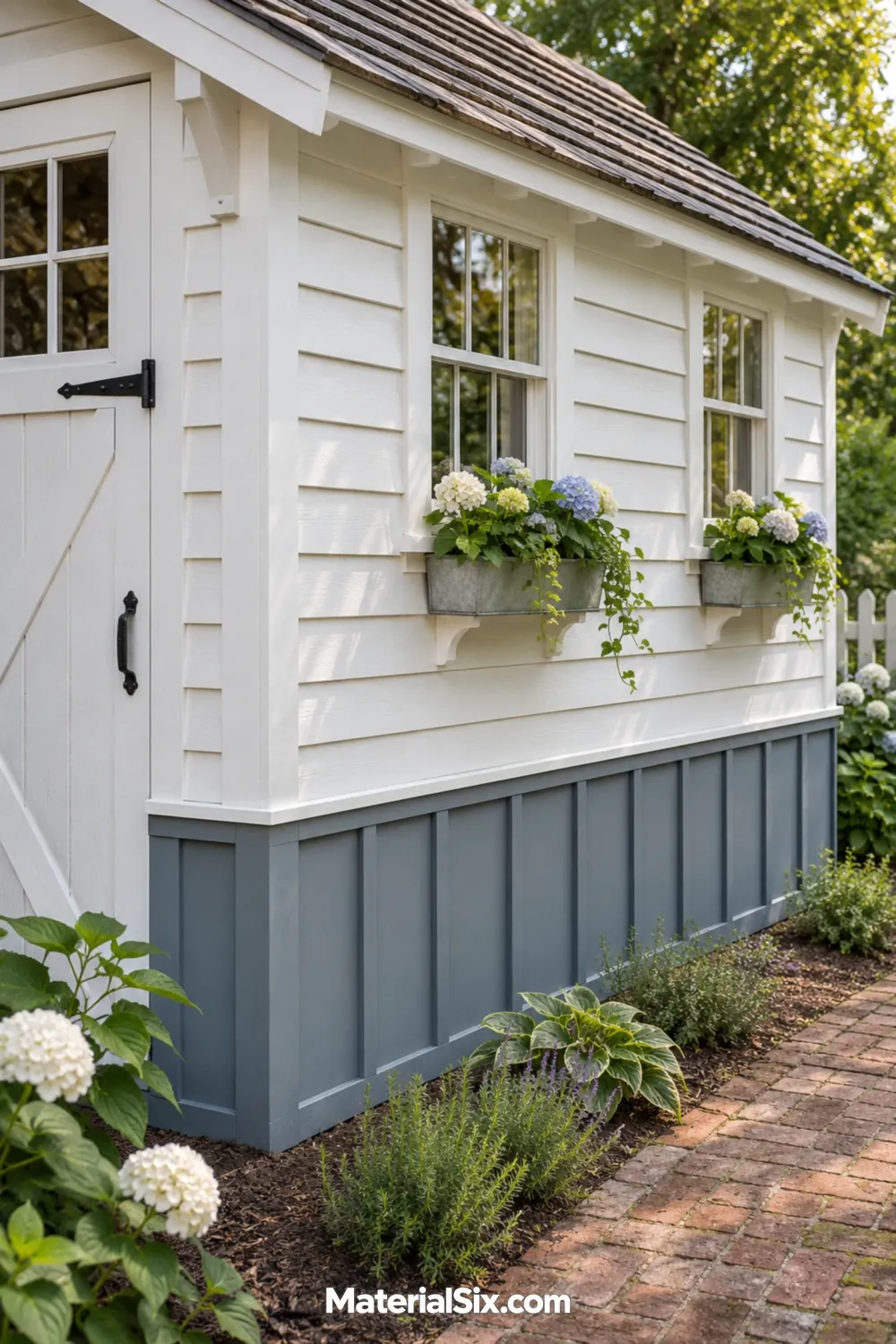
Use broad vertical panels with narrow battens over the joints to echo the proportions of a farmhouse shed. You can make the base read as a distinct band by painting it a muted shade used elsewhere in the yard, such as the blue-gray of a gate or a bench. Keep the spacing consistent where the battens turn the corner, since an unusually narrow last panel will stand out.
5. Frame perforated metal for an airy workshop look
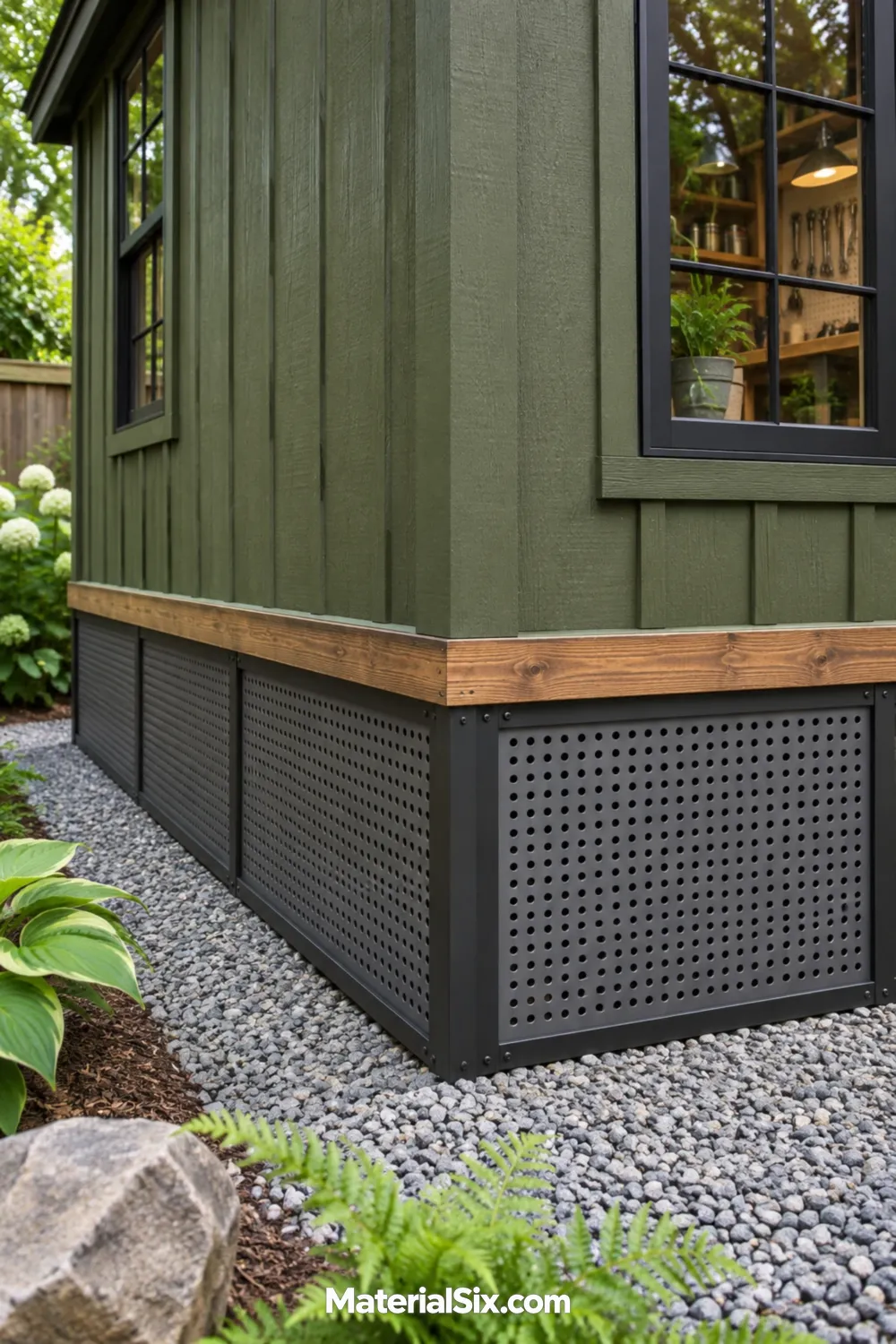
If you like the crisp edge of a metal panel and want an open screen, look at perforated sheet metal. Small round holes read as texture from across the yard, while a dark frame ties the panels to black door hardware. Use outdoor-suitable sheet and fasteners and choose a frame detail that covers the cut edges. The open area varies by panel, so check it against the airflow your shed needs.
6. Wrap the base in corrugated galvanized steel
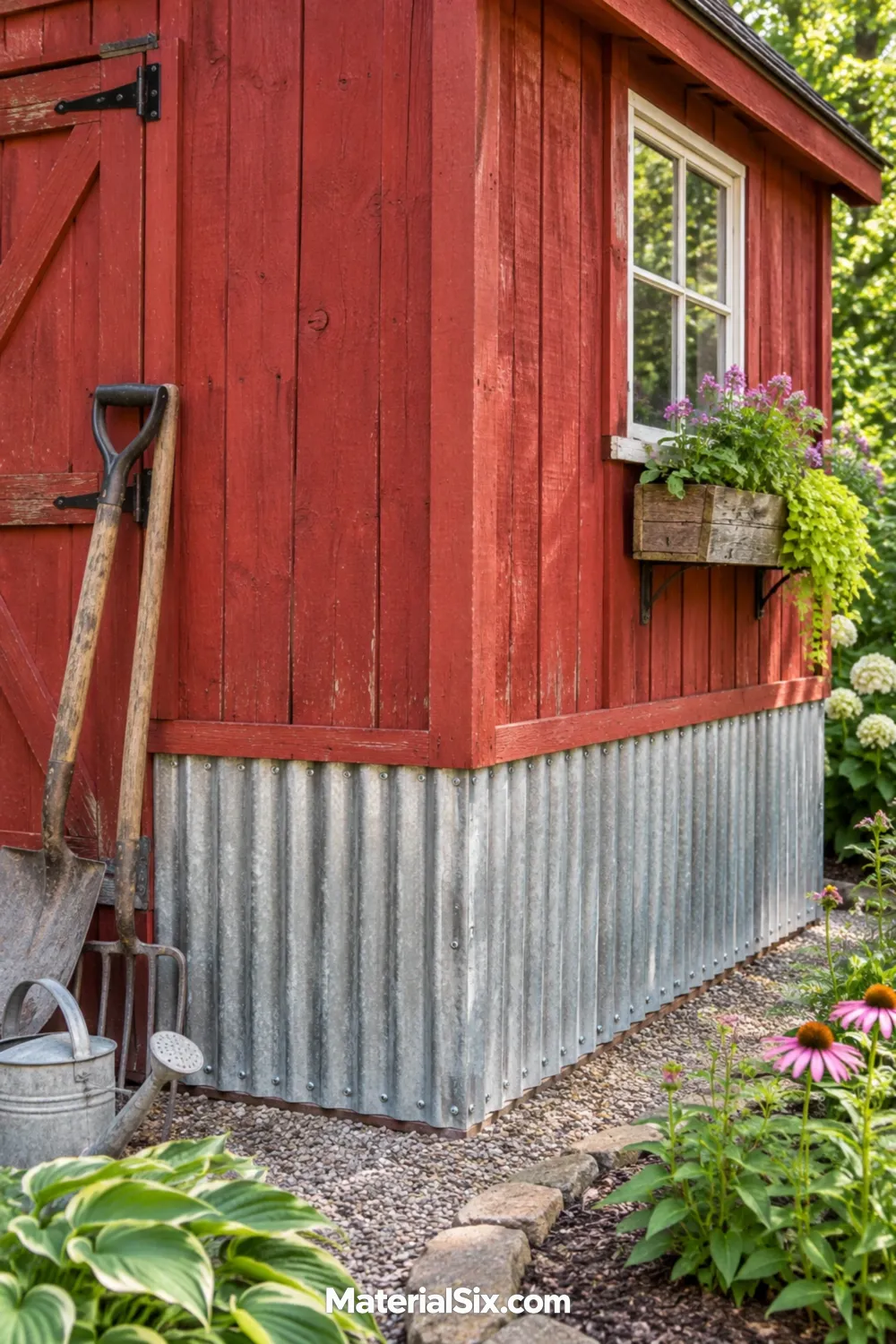
Galvanized corrugated steel is a good visual partner for weathered barn-red siding. Run the ribs vertically to emphasize the break between the wall and the base. Plan the corner and top trim before ordering the sheet so the cuts and raw edges can be covered.
7. Use vented vinyl panels to follow a sloping lawn
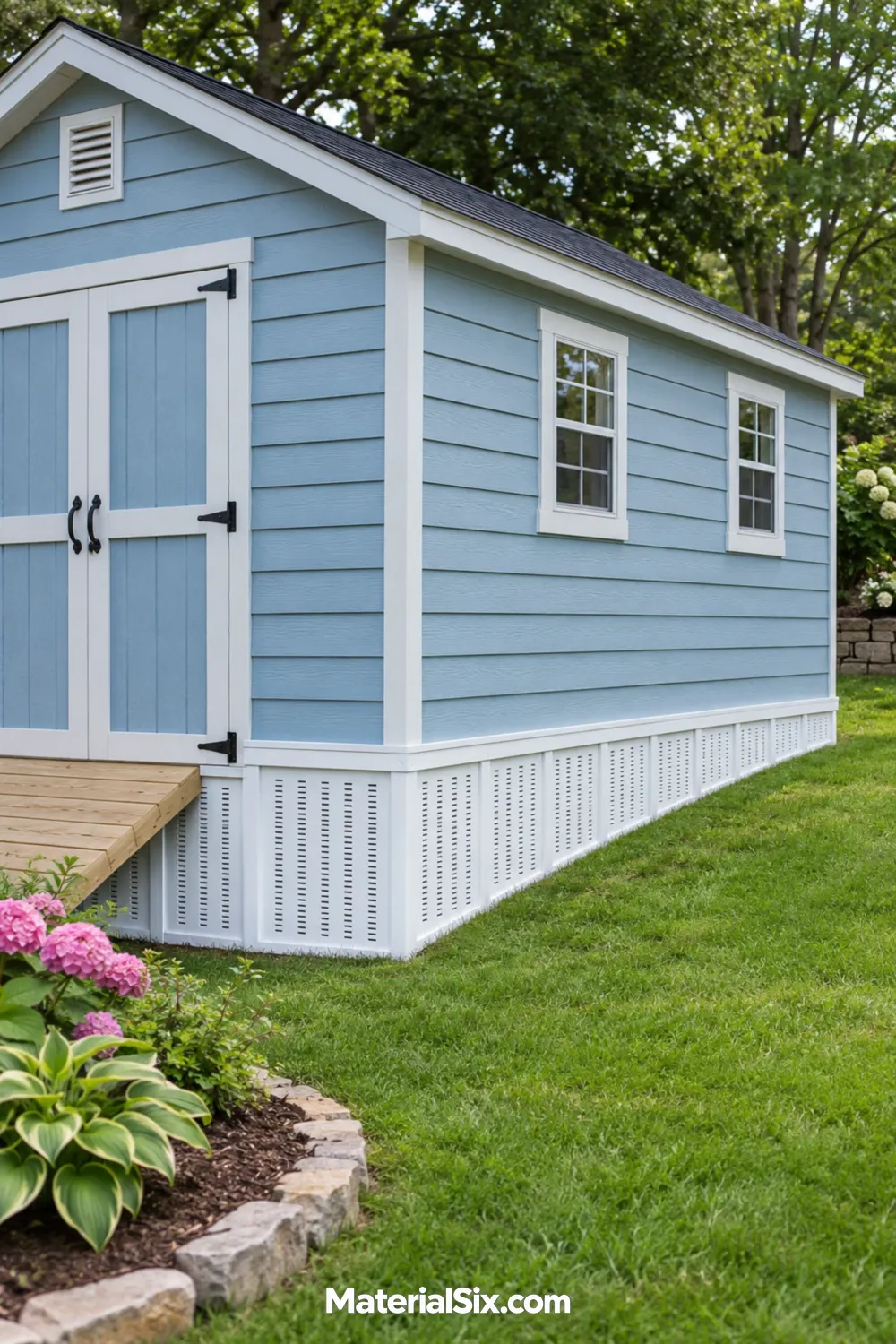
On a slope, the gap below a level shed may be barely visible at one end and prominent at the other. Vented vinyl skirting can give that changing height a continuous look. Use a system whose channels and panels are designed for your site and follow its instructions for movement, fastening, and clearance. Check the tallest end first to see whether the system can span it.
8. Pair composite planks with the shed landing
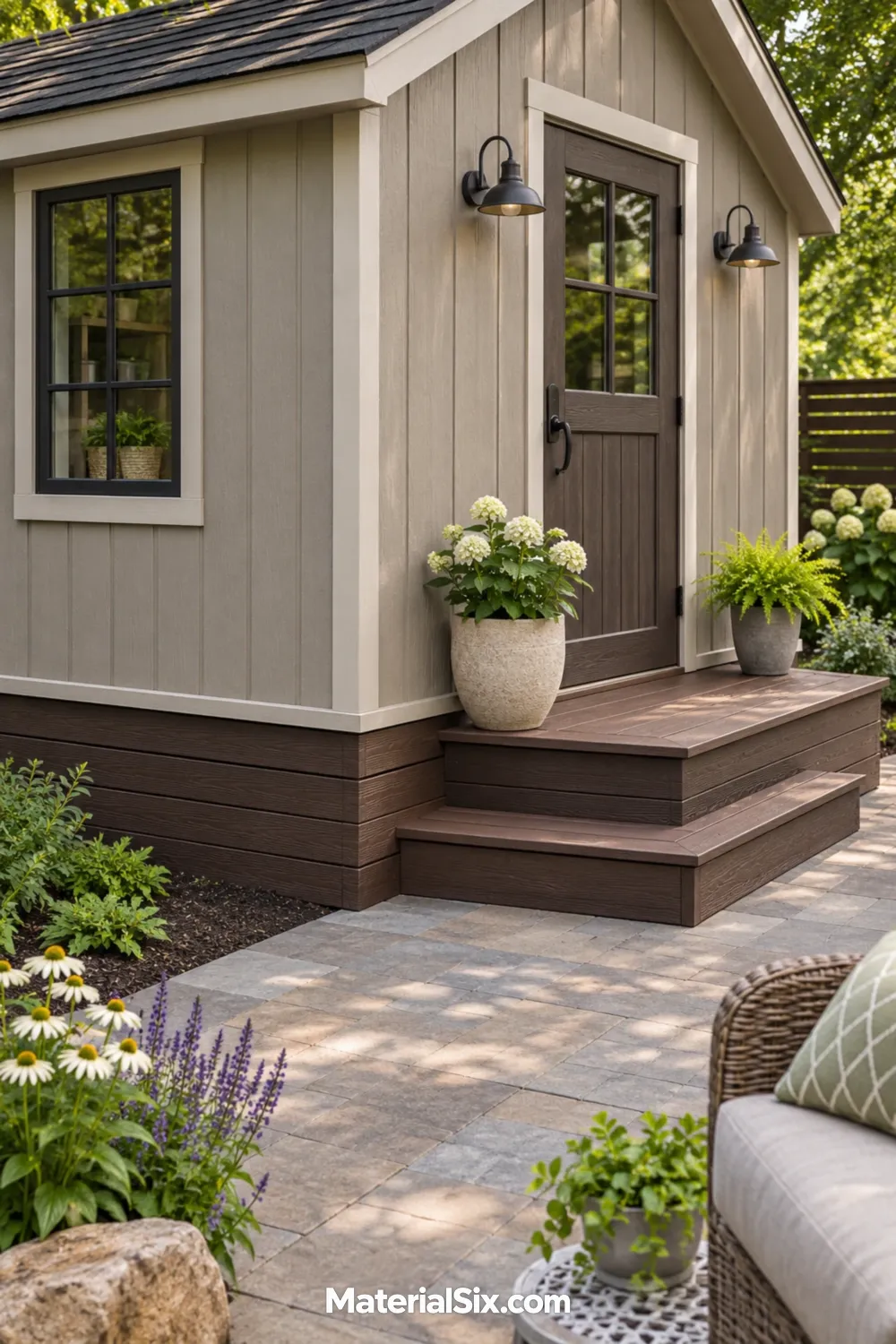
When you’re already building a small landing, use the same composite color on the skirt to connect the two visually. The repeated board profile works especially well when the steps sit off center and you want the front to feel more balanced. Check that the manufacturer permits the boards for vertical cladding and use its specified support and spacing.
9. Add a fieldstone-look veneer to the base
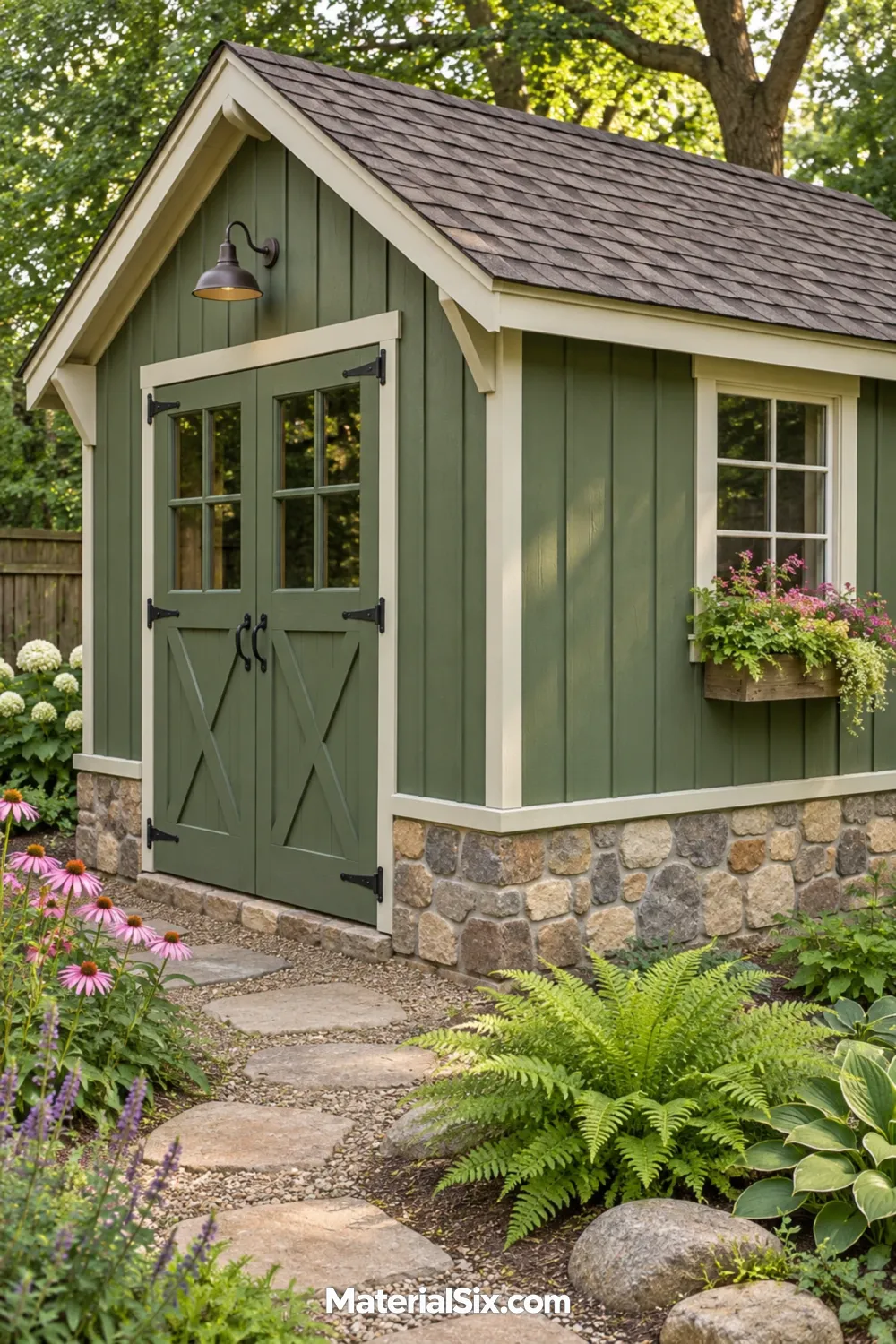
An irregular fieldstone-look band makes a green or tan garden shed feel more connected to a stone path. Give the skirting a distinct top edge so the visual weight stays near the ground. If you choose adhered veneer, pick an exterior system with a compatible backing and drainage details. The veneer is a finish, so the shed still needs its own support.
10. Line up dry-stacked landscape blocks on a gravel bed
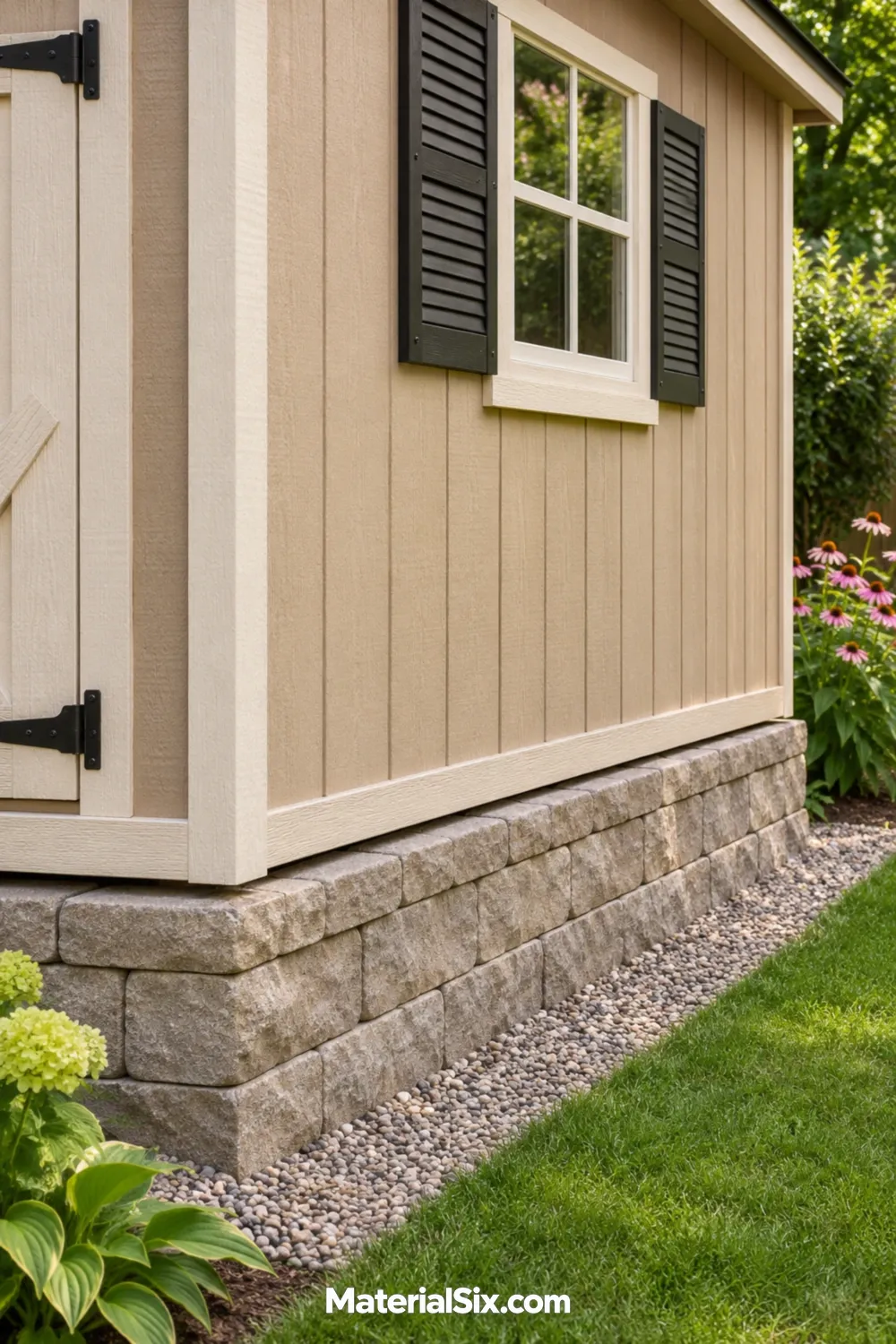
A low screen of split-face landscape blocks suits a utility shed where you want a straight, substantial edge. Leaving a shadow line below the shed makes the two parts easy to read. Use blocks designed for freestanding use, follow their base and height requirements, and keep the screen independent of the shed supports. This idea works best where you have room for the depth of the blocks and their base.
11. Hide a hinged access panel in the skirt
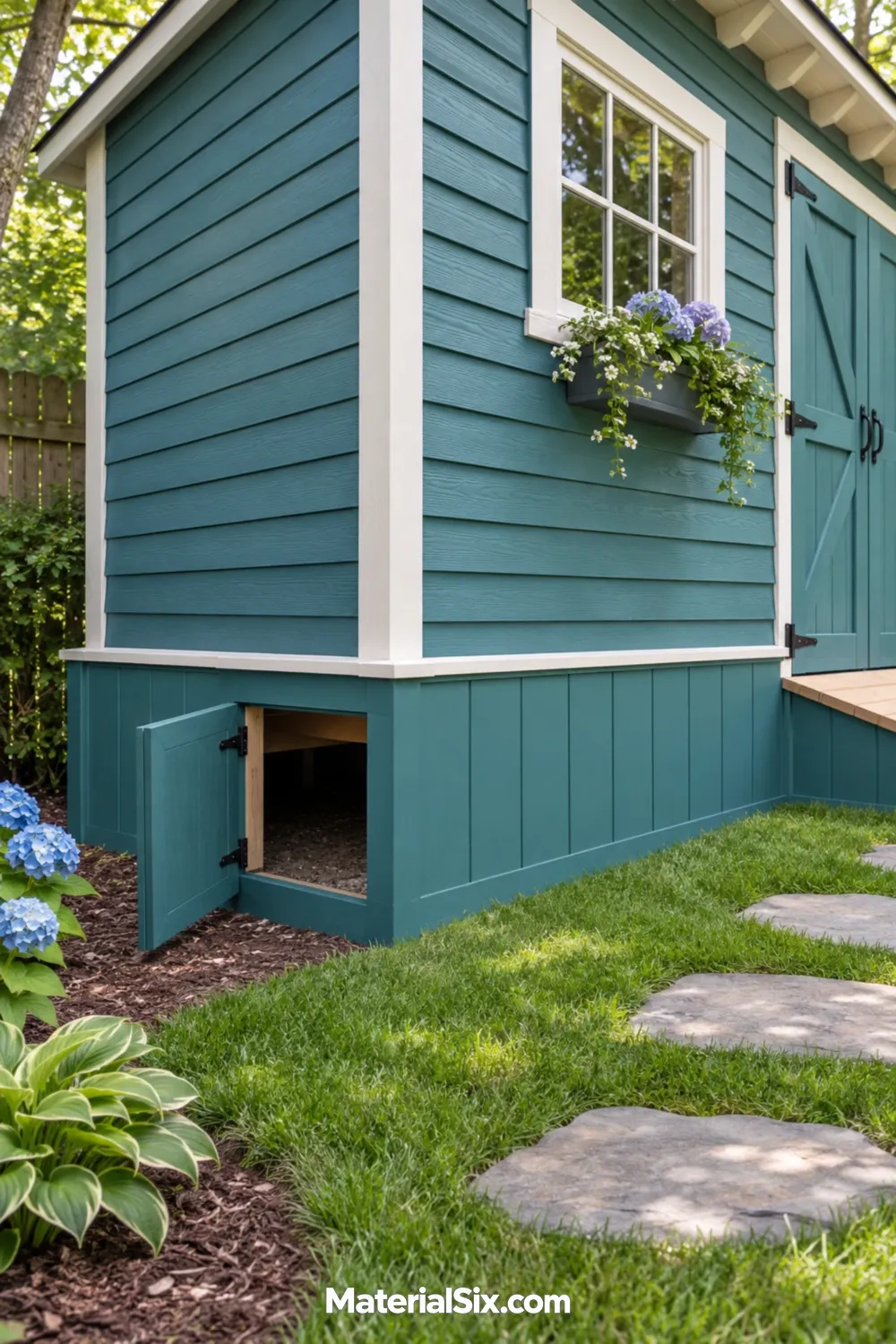
A small hinged hatch makes sense where you expect to reach an inspection point regularly. Put it on the side you can get to without stepping into a bed, and leave enough room for it to swing fully open. Matching the finish to the surrounding skirt keeps the hatch discreet. If the hardware sits close to a path, choose a low-profile latch that won’t catch passing clothes or tools.
12. Screen the opening with framed hardware cloth
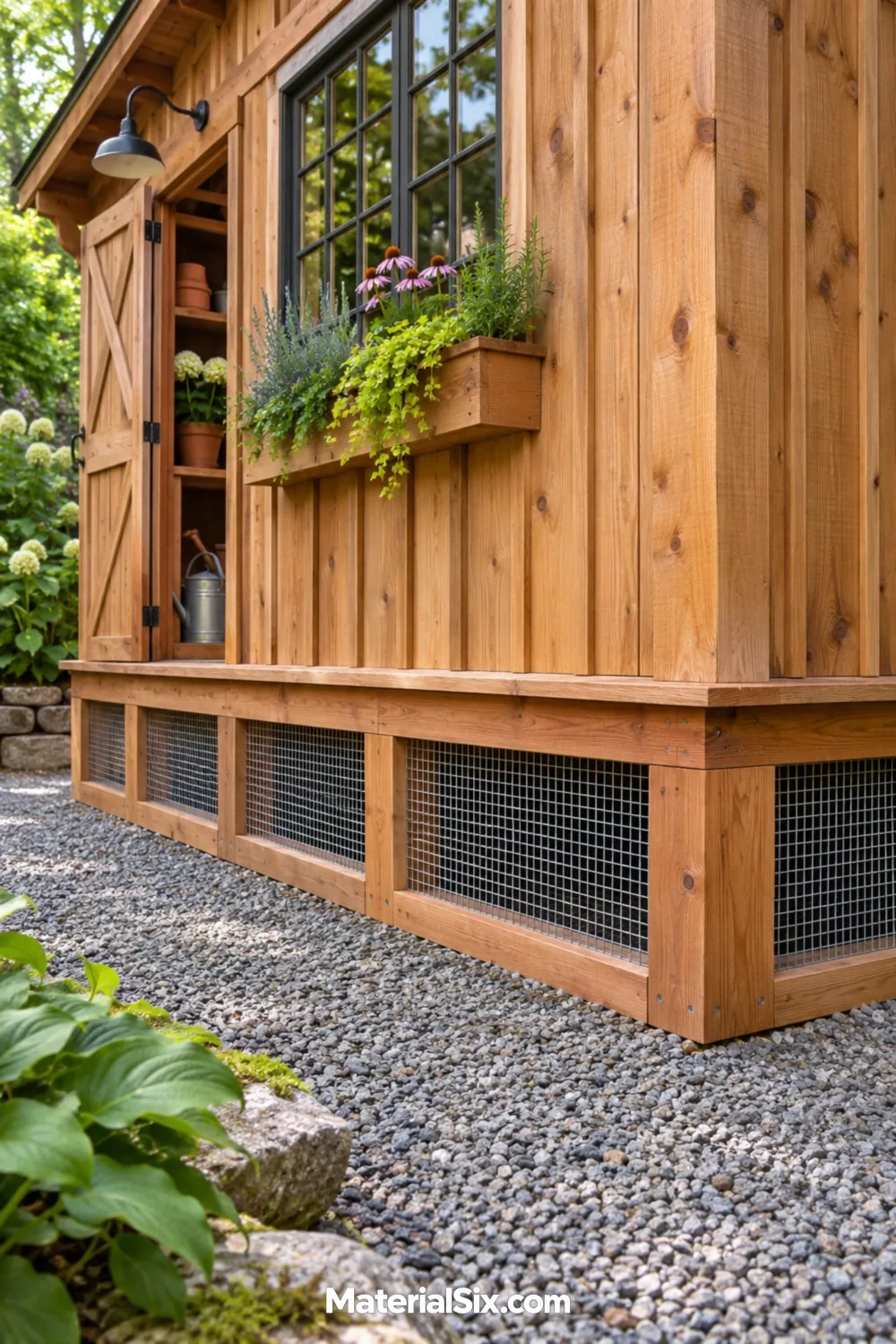
Framed hardware cloth gives you a finer, more utilitarian screen than decorative lattice. It fits a potting shed where you want light and air to pass through the opening, and the wood frame keeps the mesh edge out of sight. If screening animals is part of the job, choose the opening size with the actual animal in mind and consider gaps at the corners and ground line as well.
13. Fit removable panels between the shed supports
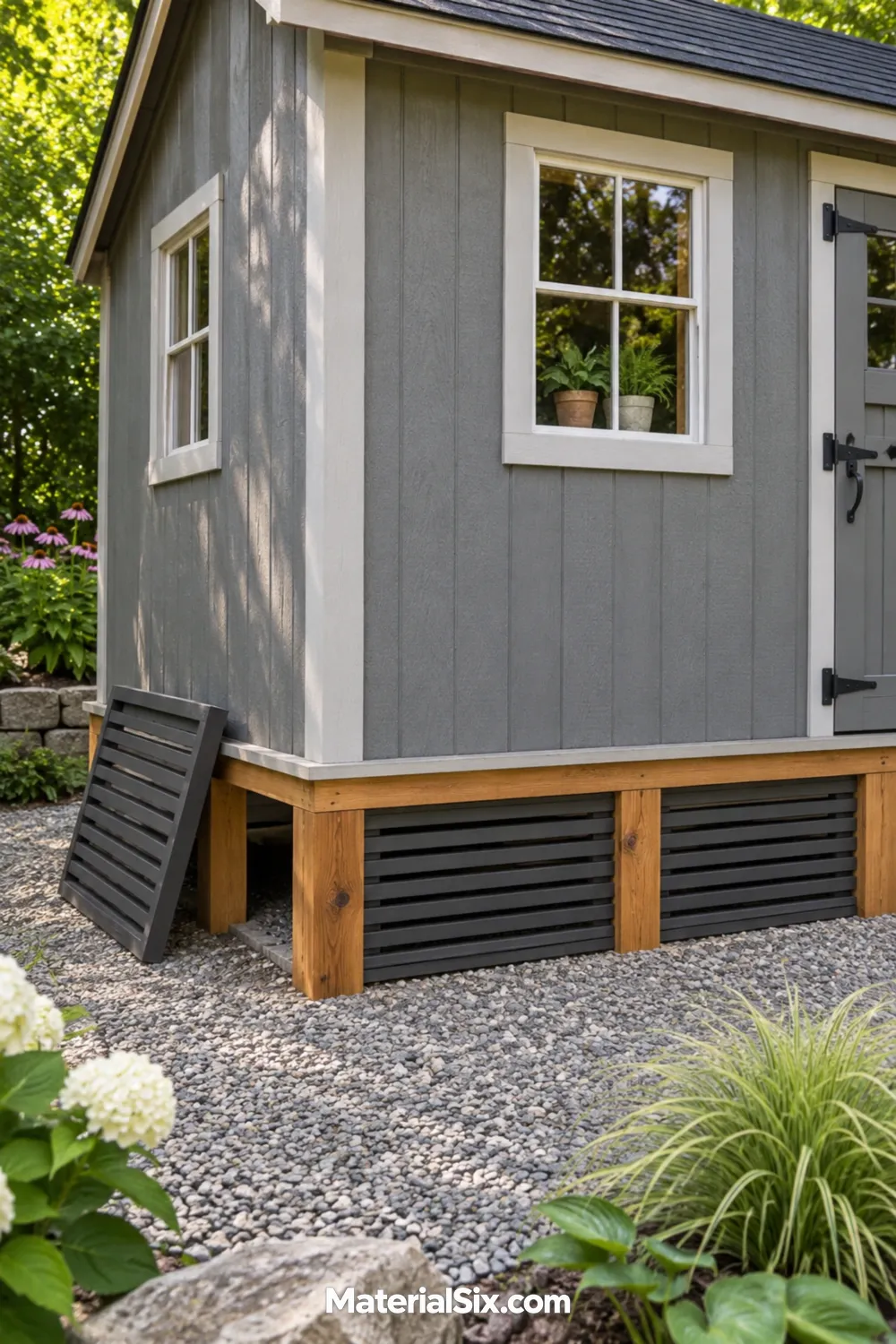
If the supports are worth showing, fit individual skirt panels between them and let the posts interrupt the base. Removable panels make sense where you only need access occasionally or expect to service more than one section. Before committing to the width, check that you can lift a panel out without hitting a step, a planter, or the next post.
Check the gap before you choose a skirt
- Measure at the corners and between supports. Note the tallest and shortest points, plus any section where raised soil or paving will limit your fastener or trim access.
- Trace water after a rain. Notice where the roof drips and where water runs across the ground. Keep the proposed skirt clear of drainage routes and allow the clearances required by the materials you choose.
- Identify access and airflow needs. Check the shed manufacturer’s requirements before closing any part of the opening. Mark the places you’ll need to inspect or reach and decide whether a hatch or a removable section would be easier to use.
Give the base a purpose
Think of skirting as a finish you’ll live with each time you mow, sweep the landing, or check the shed supports. Once you know what the base has to do, take a sample of the material outside and hold it against the siding at ground level. Seeing it next to the path, grass, and trim can make the choice much easier.