
You have a front porch, a few saved inspiration photos, and a lease that makes paint, drilling, and big upgrades feel off-limits. The space may be plain, but buying a house is not a prerequisite for having somewhere pleasant to come home to. The most useful changes are often pieces you can set down, rearrange, and take along when you move.
These renter-friendly front porch ideas focus on that kind of flexibility. You will find options for tiny doorsteps, narrow covered porches, and sitting areas that need a little privacy or warmth. None depends on repainting the building, attaching structures to the house, or replacing the existing floor.
Start with your porch’s actual dimensions, sun exposure, and everyday traffic. Review any lease or community rules that apply to exterior decor, especially in shared spaces. Then choose one or two updates that solve a real annoyance, whether that is bare concrete, nowhere to sit, or shoes gathering by the door.
1. Define a Seating Area with an Outdoor Rug
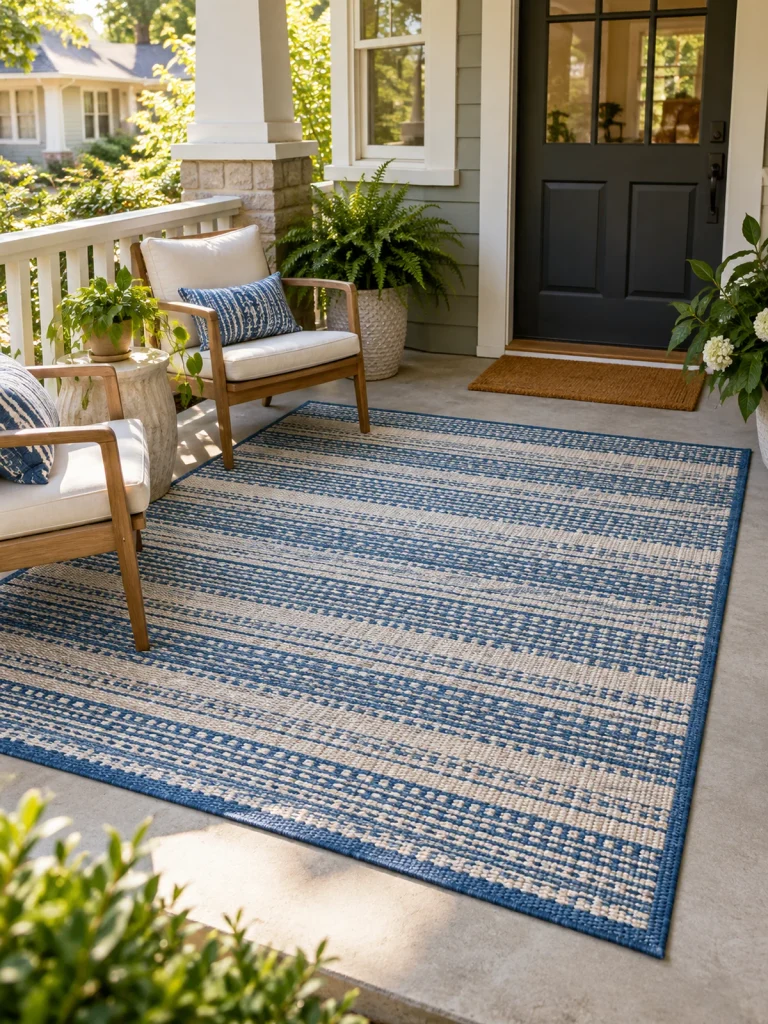
A blue-and-ivory outdoor rug gives a plain concrete porch a softer, more furnished look without changing the slab underneath. Use it to mark out a sitting area, with the front legs of your chairs resting on the rug so the arrangement feels connected.
Choose a low-profile outdoor weave that suits your porch’s exposure, and leave room around the door’s swing. Check that the backing is compatible with the existing floor finish. Lift the rug regularly to sweep underneath and let damp surfaces dry. A rug can disguise a dull-looking floor, but it should never conceal a damaged or uneven walking surface.
2. Give the Doorway Personality with Layered Mats
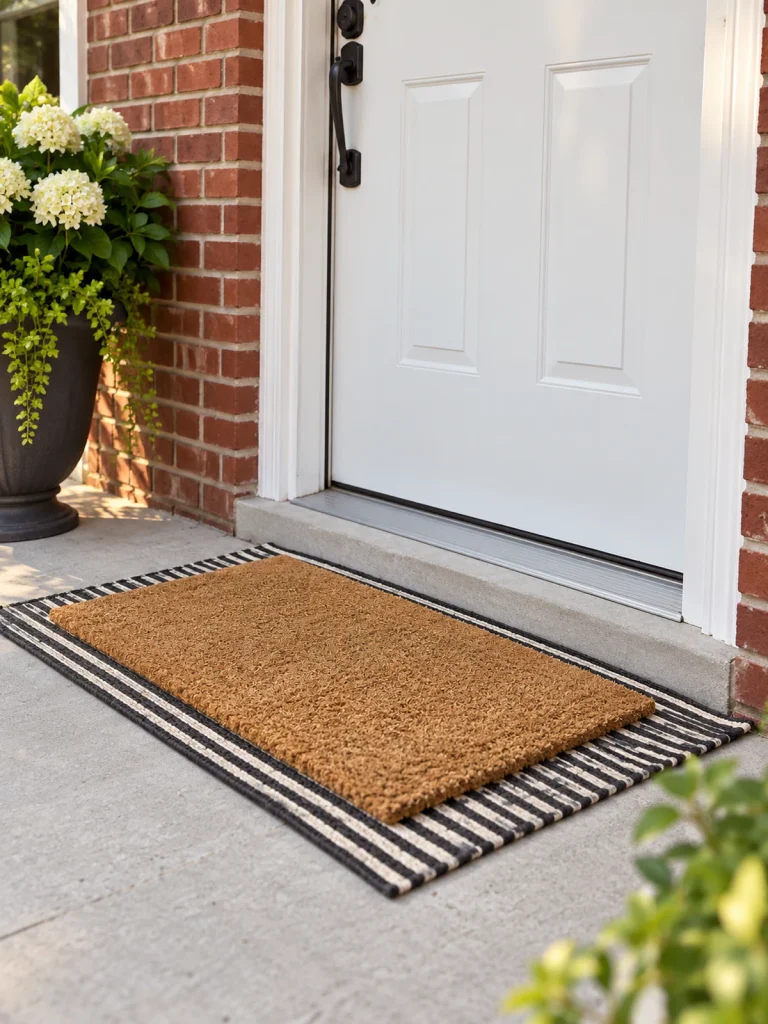
A plain coir doormat layered over a thin striped mat creates a finished little entry even when there is no room for furniture. Black and cream stripes add definition against brick, while the natural coir keeps the combination relaxed.
Keep the lower mat only slightly larger than the upper one so the layers look intentional rather than sprawling. Both pieces should lie flat, stay in place, and clear the door. Skip the second layer if it creates a raised edge or makes a narrow landing crowded. On an exposed porch, choose materials intended for the conditions and bring the mats up periodically to dry underneath.
3. Build a Green Corner with Grouped Pots
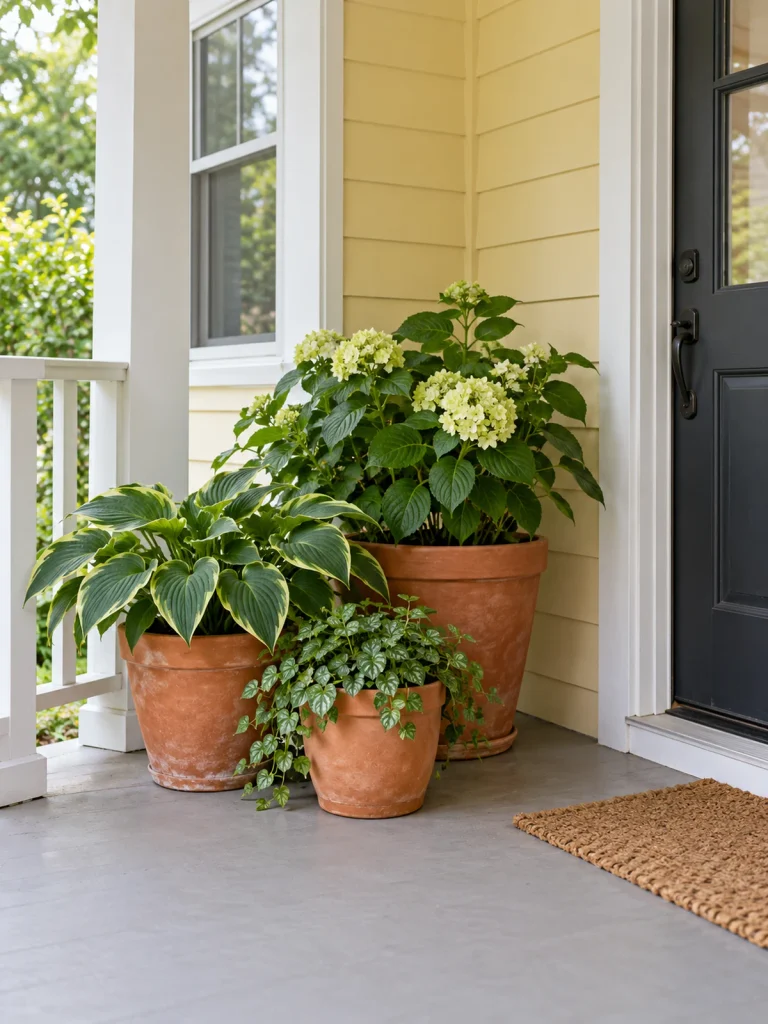
Three pots in different sizes can turn an empty corner into a small container garden. Group a taller flowering plant at the back, broad foliage to one side, and a lower trailing plant in front. Repeating terracotta keeps the display cohesive without requiring matching plants.
Select plants for the light that actually reaches the porch, rather than the brightness of the yard beyond it. Keep every container within your own porch area and away from the door’s opening. Use drainage arrangements that protect the surface below, empty standing water, and check beneath pots regularly. Smaller individual containers are also easier to move when your lease ends.
4. Use a Slim Plant Stand Instead of Wall Shelves
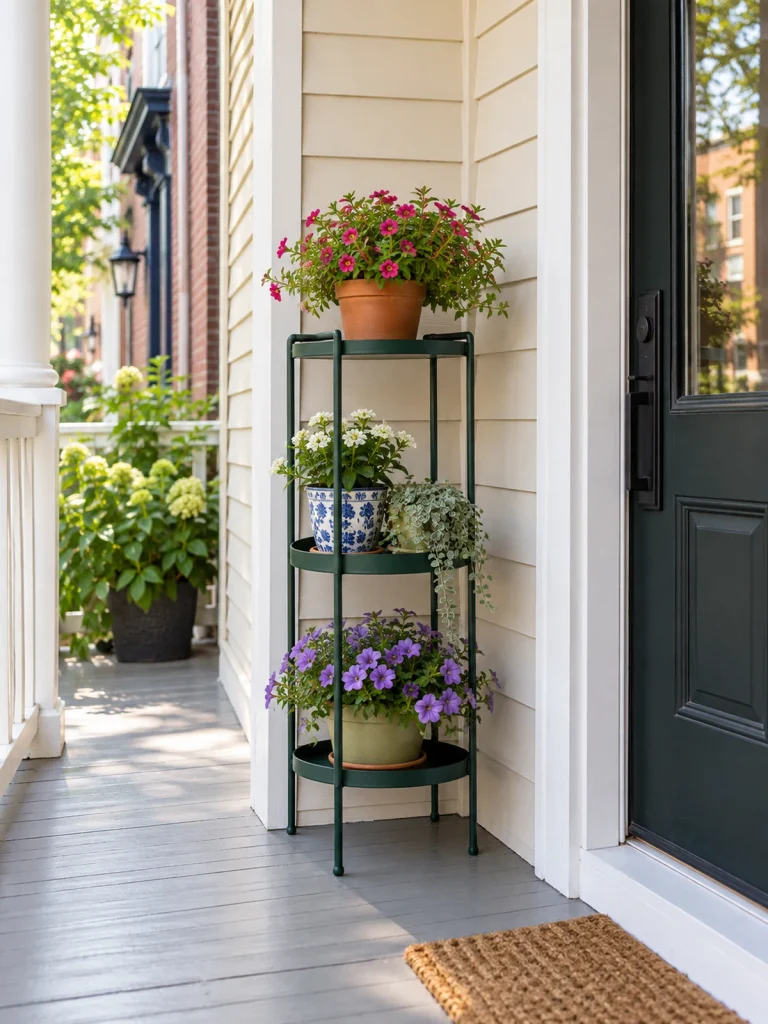
A narrow metal plant stand adds height beside the door without a single wall-mounted shelf. Small pots on separate tiers bring color up toward eye level, making this a useful option for an otherwise bare stretch of siding.
Choose a stand designed to remain stable without wall anchoring, and follow its shelf load limits. Put heavier pots low and leave a little space between foliage and the house. Measure the base before buying: a stand that looks slim in a photo can still intrude into a walkway. Use outdoor-suitable finishes and containers, and collect or redirect drainage so watering does not leave puddles below.
5. Screen a Sitting Spot with Tall Planters
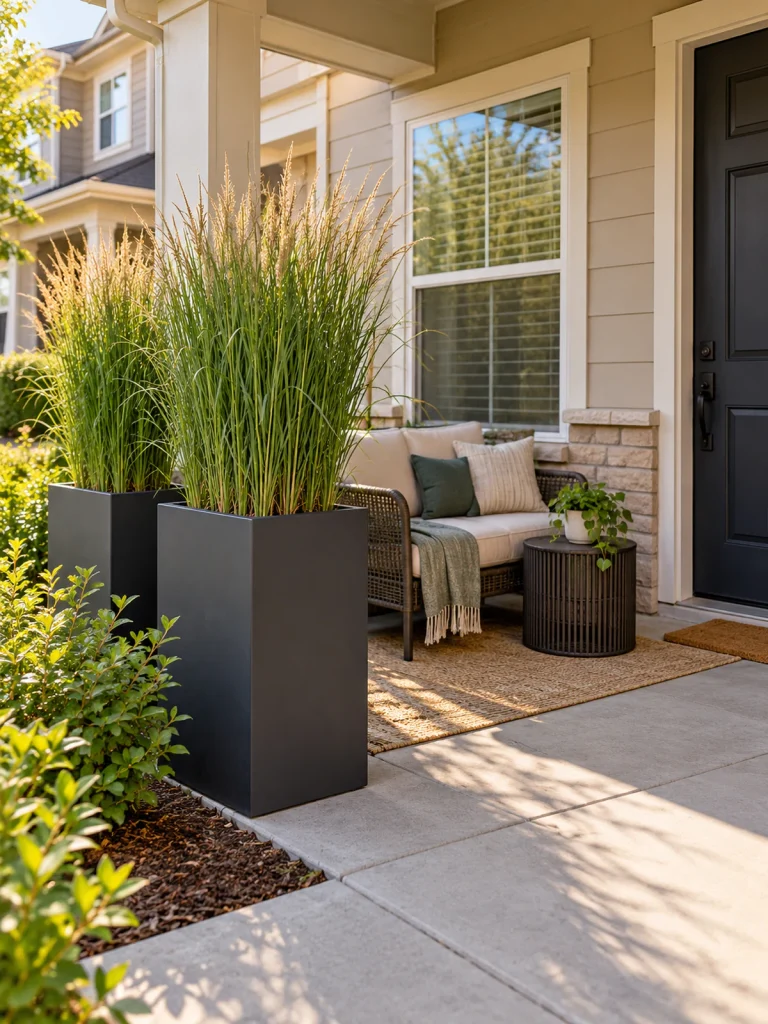
Tall planters filled with upright ornamental grasses can soften the view from a nearby sidewalk. Position them along the side of a seating area, leaving the front approach open. Charcoal containers give the planting a tidy outline against lighter siding.
Think of this as partial screening rather than a solid privacy wall. Choose grasses suited to your local climate, available sunlight, and container size, and allow for their mature spread. Tall containers and foliage can catch wind, so use broad, stable outdoor planters and reassess the location during gusty weather. Avoid packing heavy containers onto an elevated porch without checking what the structure can accommodate.
6. Keep Climbing Plants on a Self-Contained Trellis
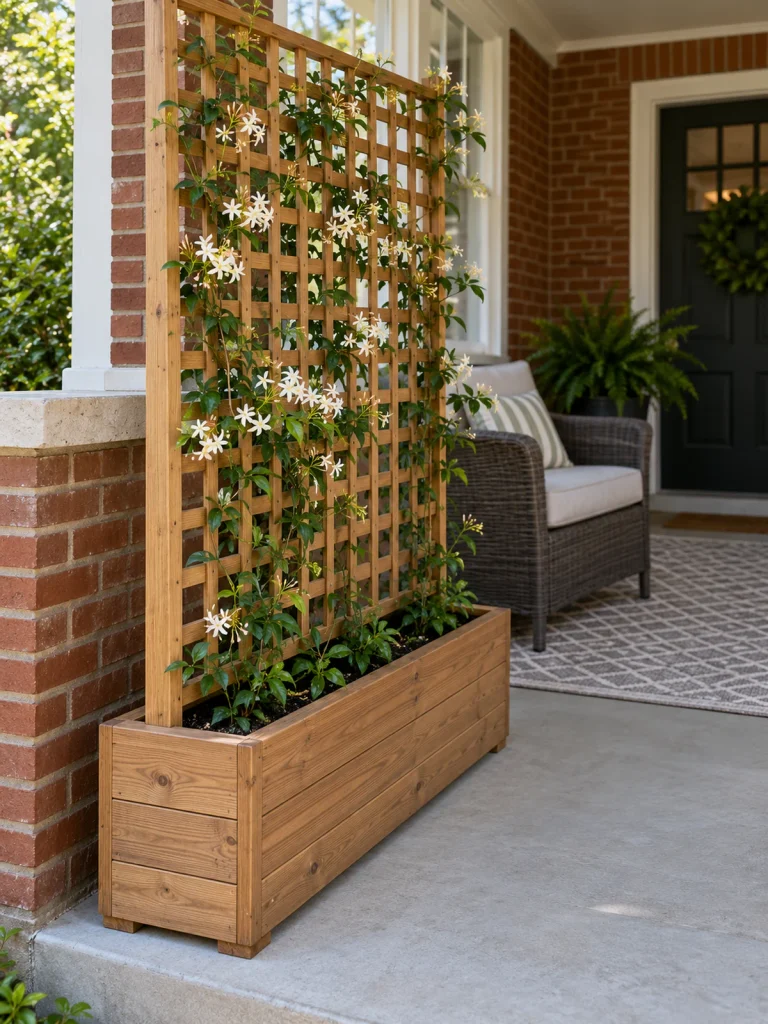
A planter with its own trellis brings the look of a planted garden wall to a rental porch. The lattice supplies a vertical focal point, while the container keeps the entire arrangement separate from the house. A lightly trained flowering vine leaves the wood pattern visible.
Choose an outdoor unit with a stable base that does not depend on attaching the trellis to the building. Guide growth onto the lattice and trim shoots before they reach siding, gutters, or railings. Match the plant to your climate and sunlight. Because tall planted screens can become heavy and catch wind, use this approach only where the placement and product requirements suit the space.
7. Make Room for Coffee with a Folding Bistro Set
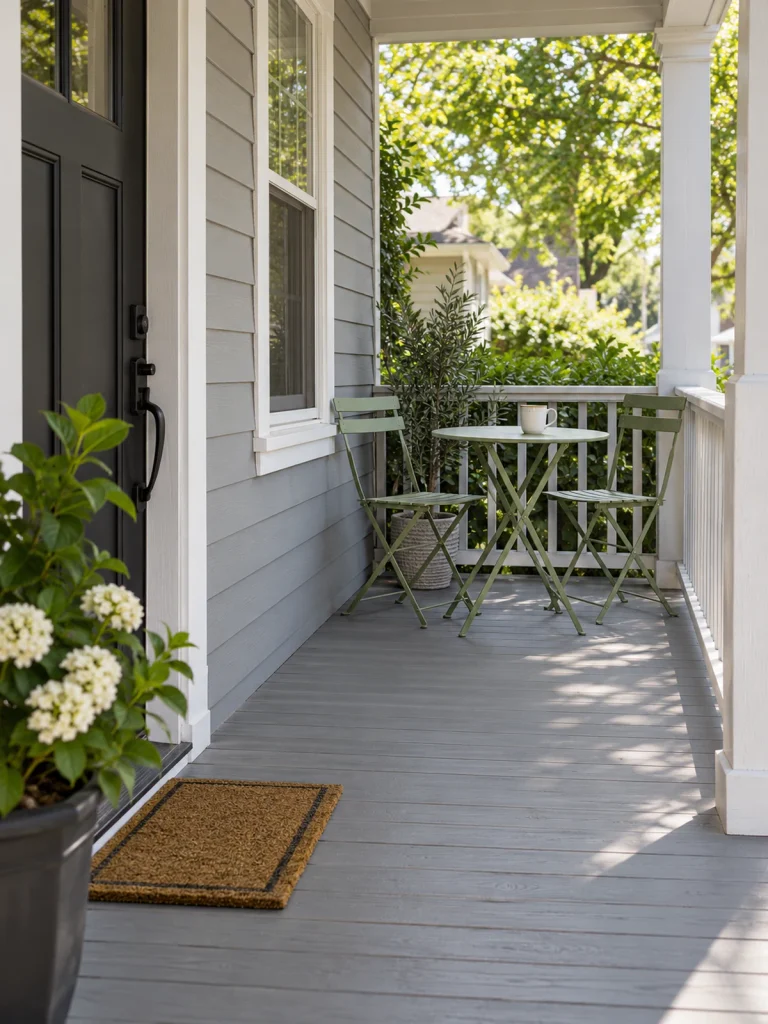
A folding bistro set turns the far end of a porch into a place for morning coffee. A small round table softens a narrow layout, and muted green metal brings color without competing with the exterior. Folding pieces are especially useful when the porch needs to serve several purposes.
Measure the setup with both chairs pulled out, not just tucked under the table. The entrance must remain easy to use while someone is seated. Look for furniture intended for outdoor use, with folding mechanisms that lock as directed. Store the set when strong weather arrives, and use floor-compatible feet to help prevent scratches as you rearrange it.
8. Fit a Slim Bench Along an Empty Wall
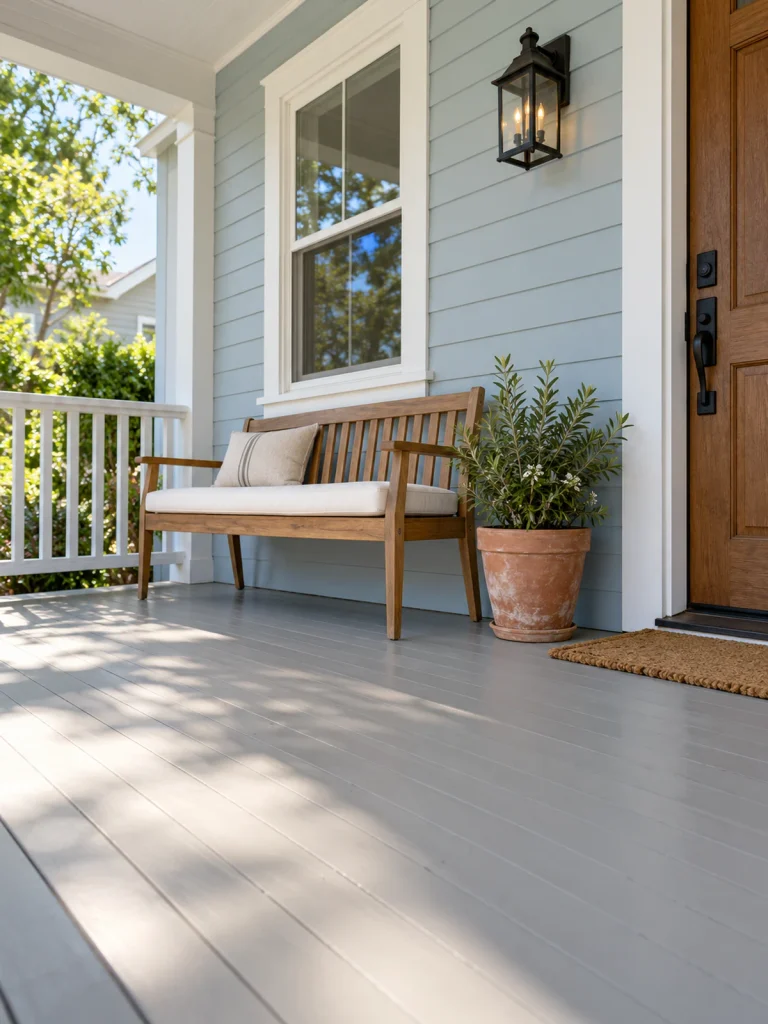
A slim freestanding bench makes a shallow porch feel welcoming without the depth of a lounge chair. Natural wood works particularly well against pale siding, and a simple seat pad adds softness while keeping the outline clean. Place it along an empty wall, away from the door swing.
Check seat depth and overall depth separately; arms and a tilted back can add more bulk than expected. Choose an outdoor bench that can stand securely on its own. Leave access to nearby windows, vents, and utility equipment. On a small rental porch, this can be a useful spot for putting on shoes rather than a full outdoor living area.
9. Refresh Existing Chairs with Outdoor Cushions
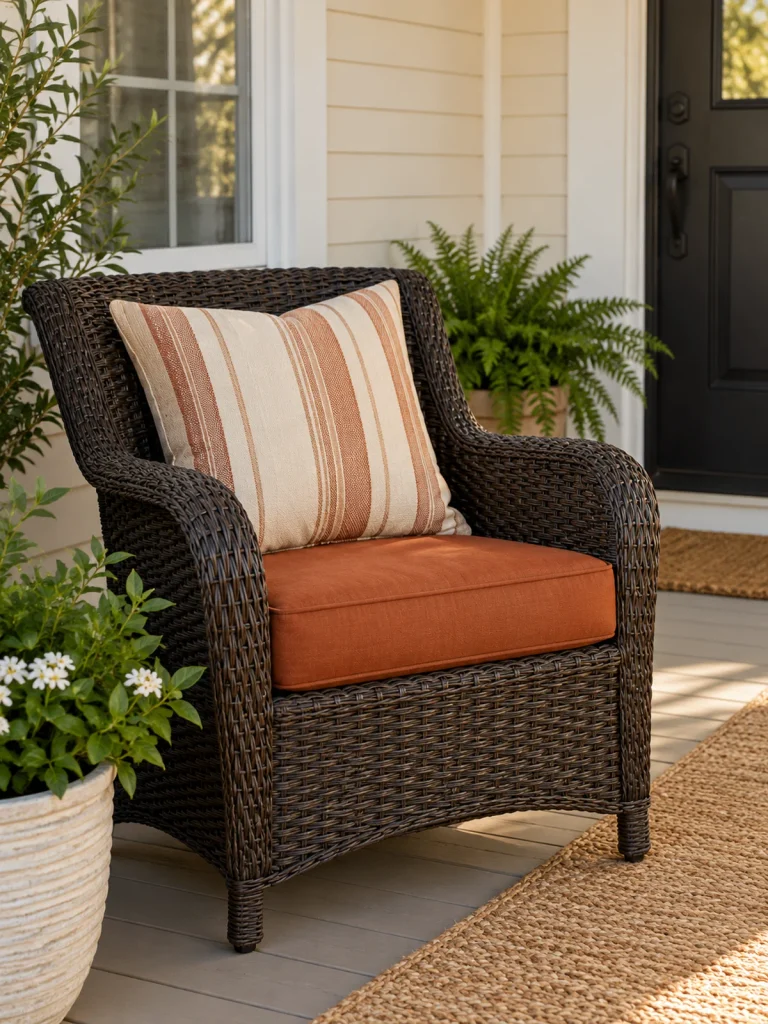
A rust-colored seat cushion and a striped pillow can make an existing brown wicker chair feel deliberately styled. This is a practical starting point when your furniture works well but the porch looks tired. Choose one main color and repeat it sparingly elsewhere.
Measure the chair before ordering replacement pads, including the seat shape and back height. Outdoor fabric still needs care, and covered porches can receive windblown rain. Bring cushions into dry storage as conditions require and follow their cleaning directions. Use the chair’s existing cushion ties where appropriate, keeping loose ends contained. Avoid overfilling a small seat with pillows that make it uncomfortable to use.
10. Let a Colorful Side Table Do the Decorating
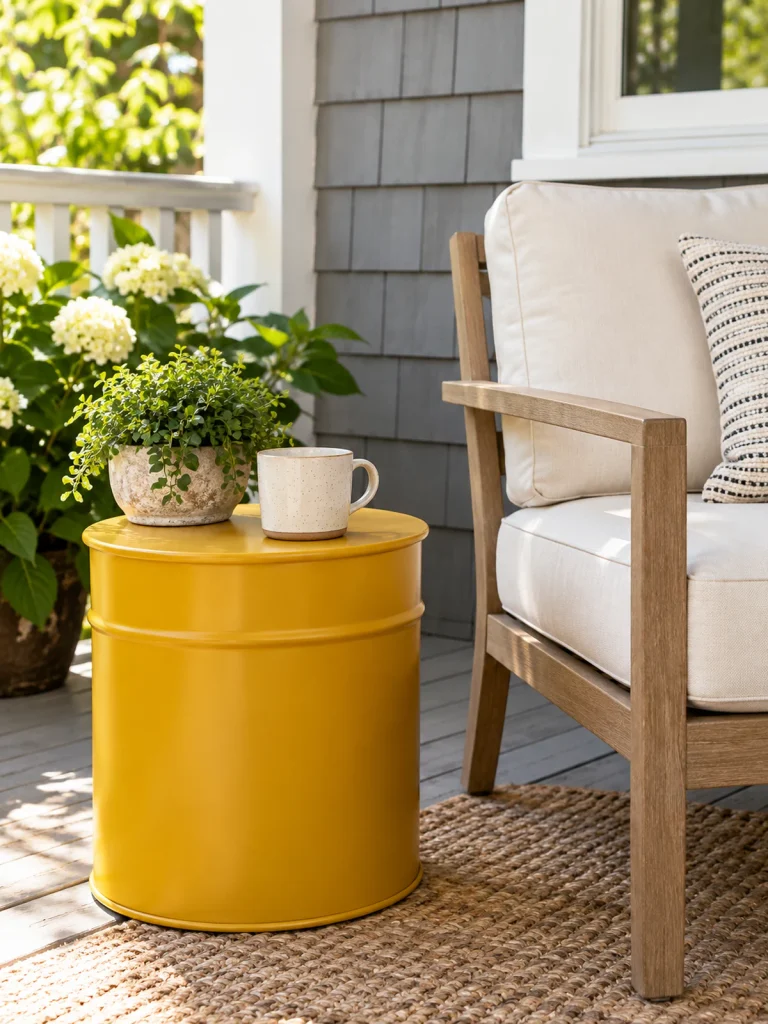
A mustard-yellow side table adds a strong color accent without repainting the door or replacing a larger piece of furniture. Against gray shingles or neutral siding, one compact table can carry most of the porch’s personality. It also gives a chair a useful landing spot for a drink.
Look for a stable outdoor table with a surface large enough for everyday use. Position it within comfortable reach, but outside the path between the door and steps. Keep styling light so the tabletop remains functional. Check that its feet suit the porch floor, and choose a size you could easily reuse on a balcony or inside a future home.
11. Hide Small Supplies in an Outdoor Storage Bench
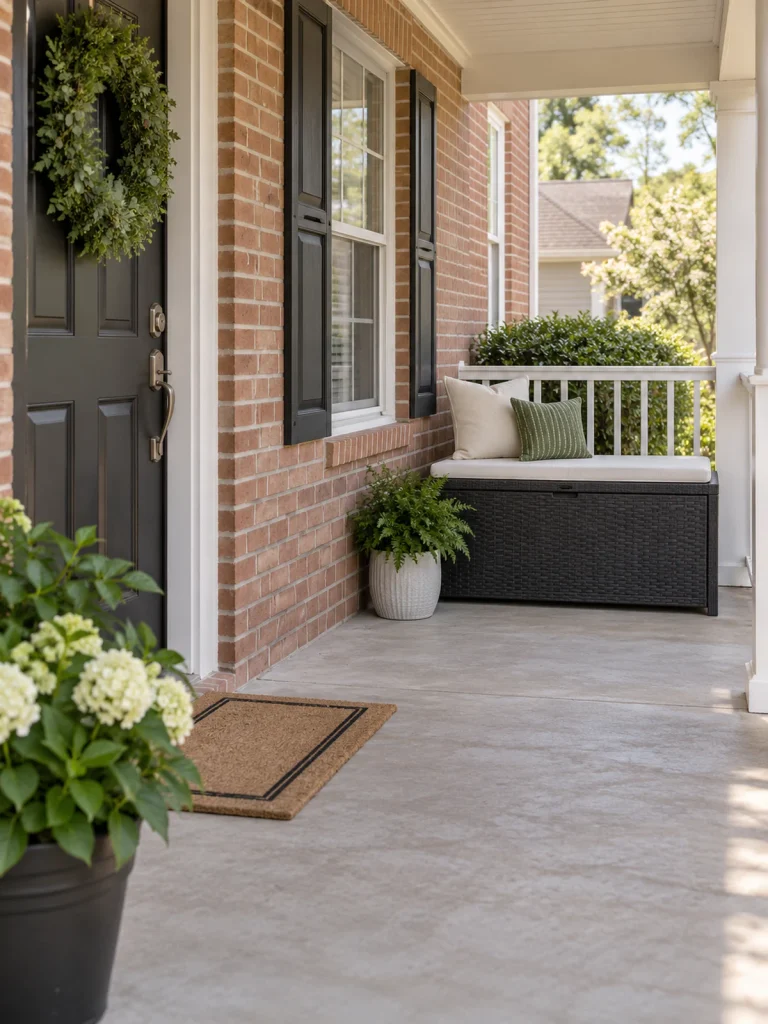
An outdoor storage bench helps contain the small items that make an entry feel cluttered. A charcoal woven-look finish can blend with existing furniture, while the closed lid keeps the arrangement visually quiet. Tuck it at the end of the porch where it will not interrupt the approach.
Choose a model explicitly rated for sitting if you plan to use it as a seat. Check the interior dimensions, lid mechanism, and weather guidance before deciding what to store. Water-resistant storage is not automatically watertight.
Keep delicate belongings indoors, avoid storing damp textiles, and leave enough space above and around the lid to open it without scraping the house.
12. Create Evening Atmosphere with Battery Lanterns
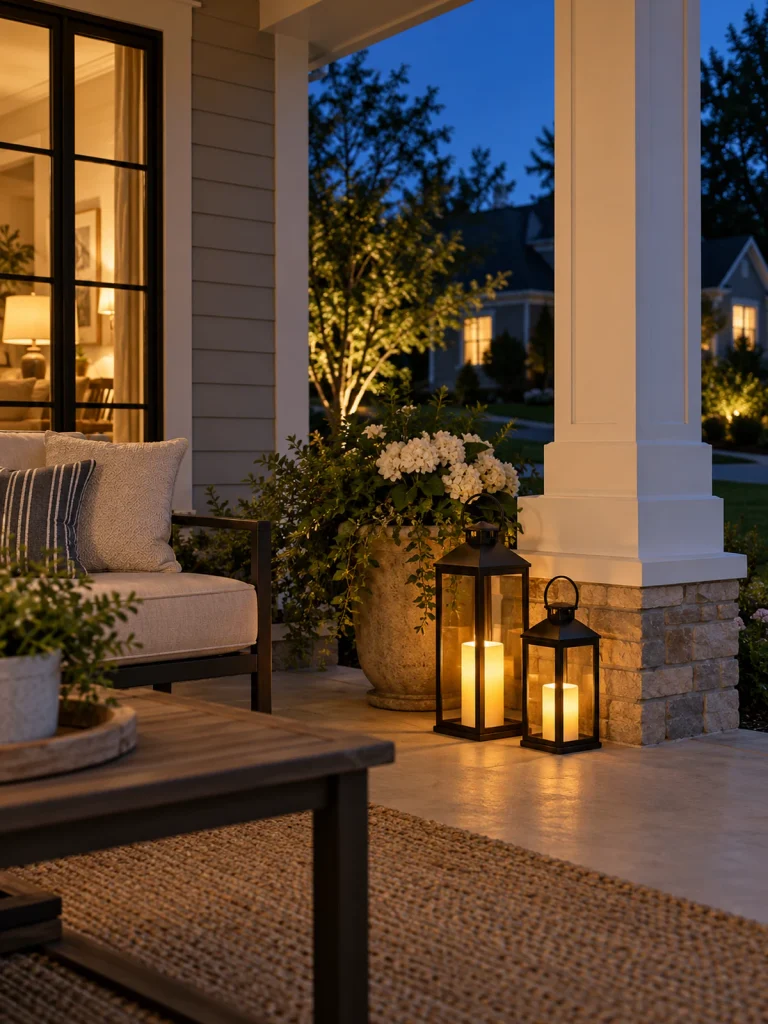
Two lanterns grouped beside a porch column create a gentle evening glow without hanging fixtures or running cords. Different heights make a simple pair feel composed. Black metal frames look crisp against pale siding and remain decorative during the day.
Use battery-powered LED candles suited to the lanterns and their exposure, rather than an open flame. Place the group on a broad, level surface outside the walking route, away from steps where someone might mistake a decorative glow for useful path lighting.
Follow the products’ weather and battery instructions. These lanterns add atmosphere; keep existing entry and stair lighting available for seeing where you are walking.
13. Put Solar Accent Lights in Flowerpots
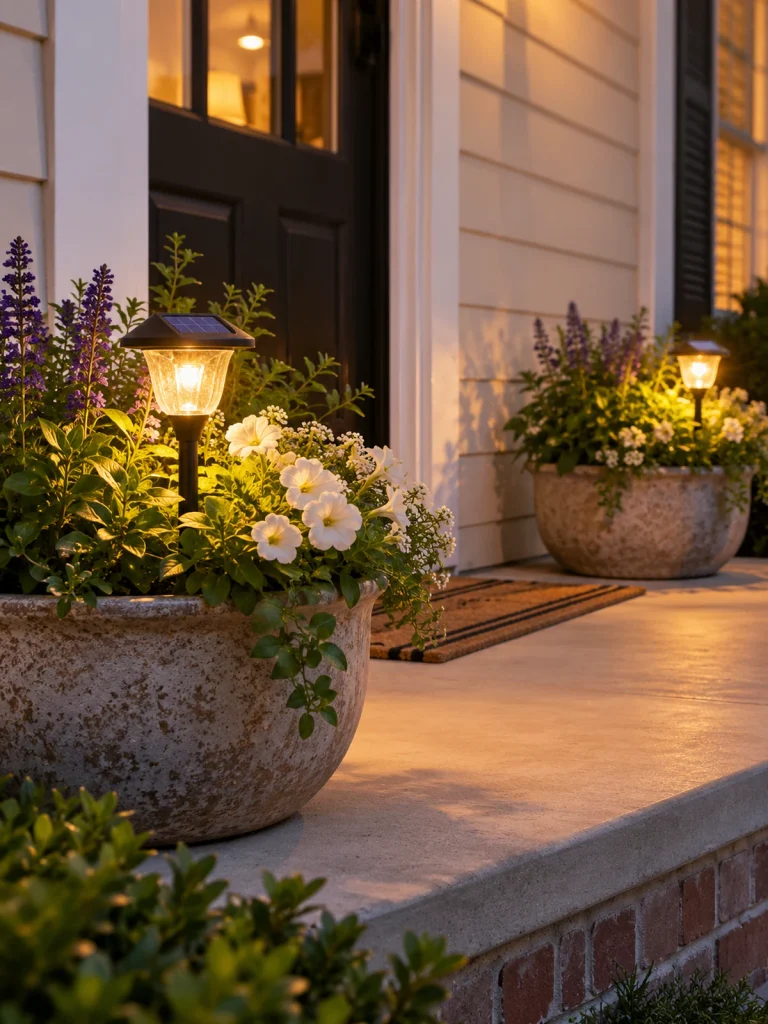
Solar stake lights can sit in your own flowerpots instead of requiring holes in the yard. Nestle a small light among low flowers, keeping its panel exposed and its shape visible above the planting. The result is a soft accent around the containers after sunset.
Check how much direct sunlight the panel receives in its actual position. A deep roof can limit charging even when the porch seems bright. Insert stakes carefully without damaging roots, and choose lights sized for the pots rather than heavy fixtures that could tip them. Treat the glow as decoration, not a substitute for reliable entry lighting, and maintain the lights according to their instructions.
14. Hang a Wreath with a Properly Fitted Door Hanger
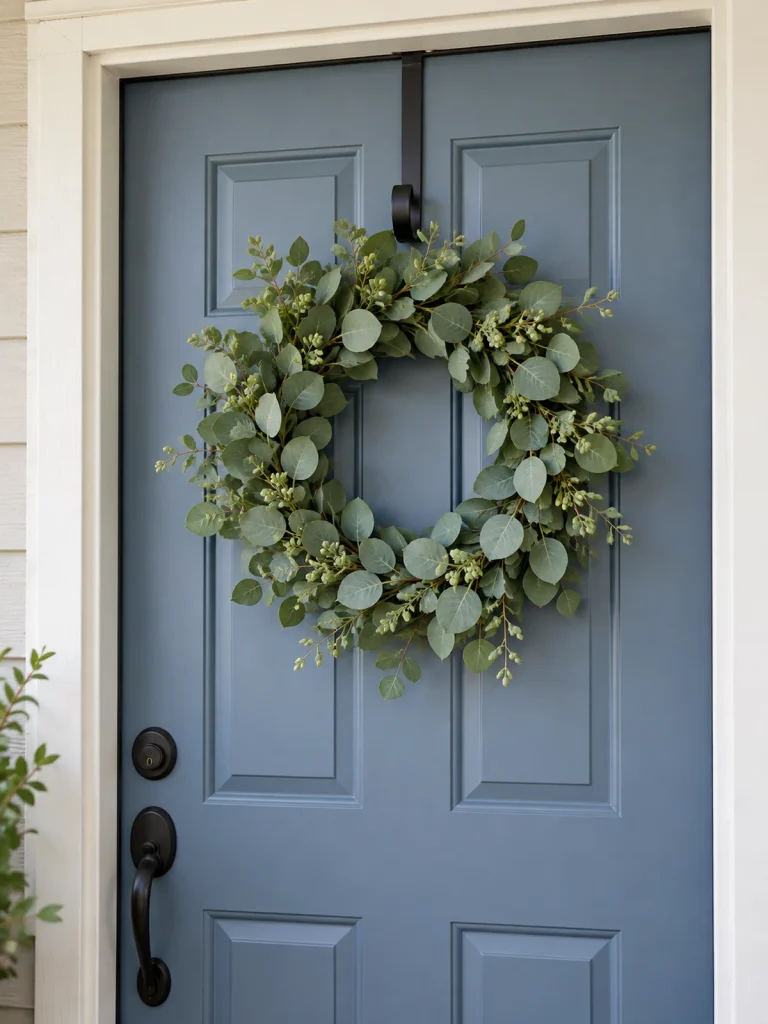
A simple leafy wreath adds personality at eye level while leaving the door’s paint color unchanged. Eucalyptus-style greenery looks restrained against a muted blue or dark door, making it easy to keep the surrounding porch simple. An over-door hanger avoids adding a nail hole.
Choose a hanger compatible with the door’s thickness and available top clearance. Check its contact points, then gently test that the door closes and latches normally without rubbing or compressing seals. Do not force a tight fit. Keep the wreath clear of the peephole, handle, and lock, and account for any storm door. If the hanger interferes with operation, choose freestanding decor instead.
15. Grow a Small Herb Garden on a Rolling Cart
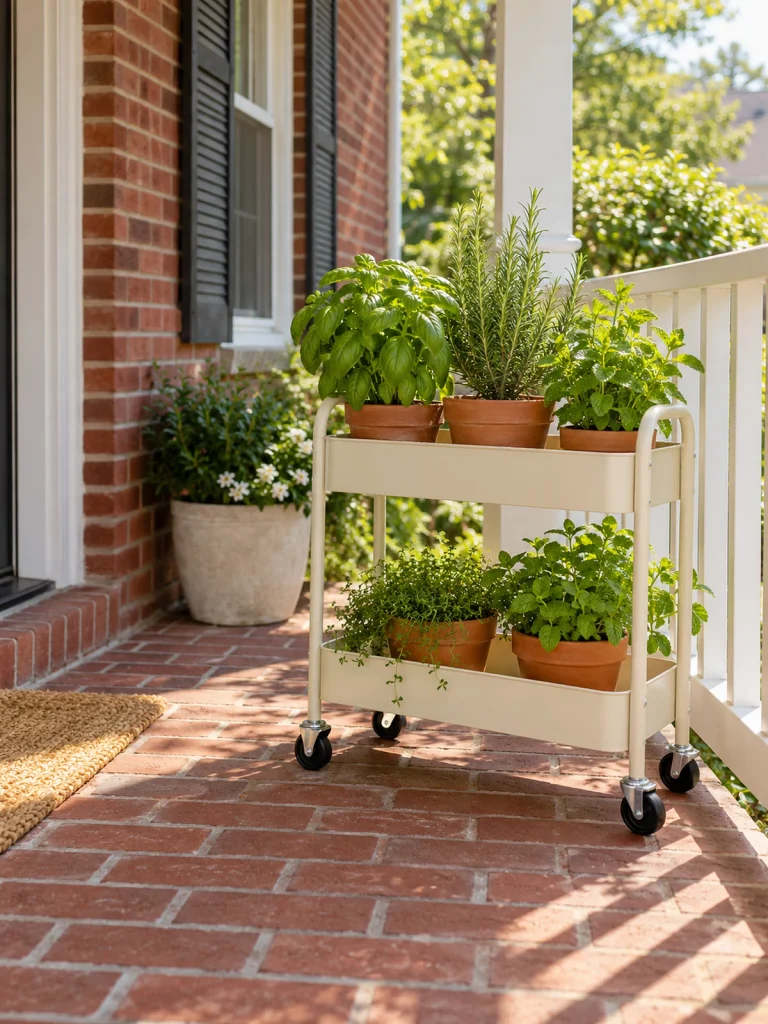
A rolling cart makes a sunny porch useful for more than decoration. Separate pots of herbs turn its shelves into a compact kitchen garden, and the cart can move when you need to clean underneath. A cream metal frame keeps the collection feeling light rather than crowded.
Choose herbs for the available sun, and keep plants with different watering needs in separate containers. Use an outdoor-suitable cart, respect its load rating, and lock the casters when parked on a level surface. Place saucers or suitable trays beneath pots and empty excess water. Keep foliage inside the cart’s footprint so it does not brush across the entrance or catch on clothing.
16. Use a Folding Screen for a Sheltered Privacy Nook
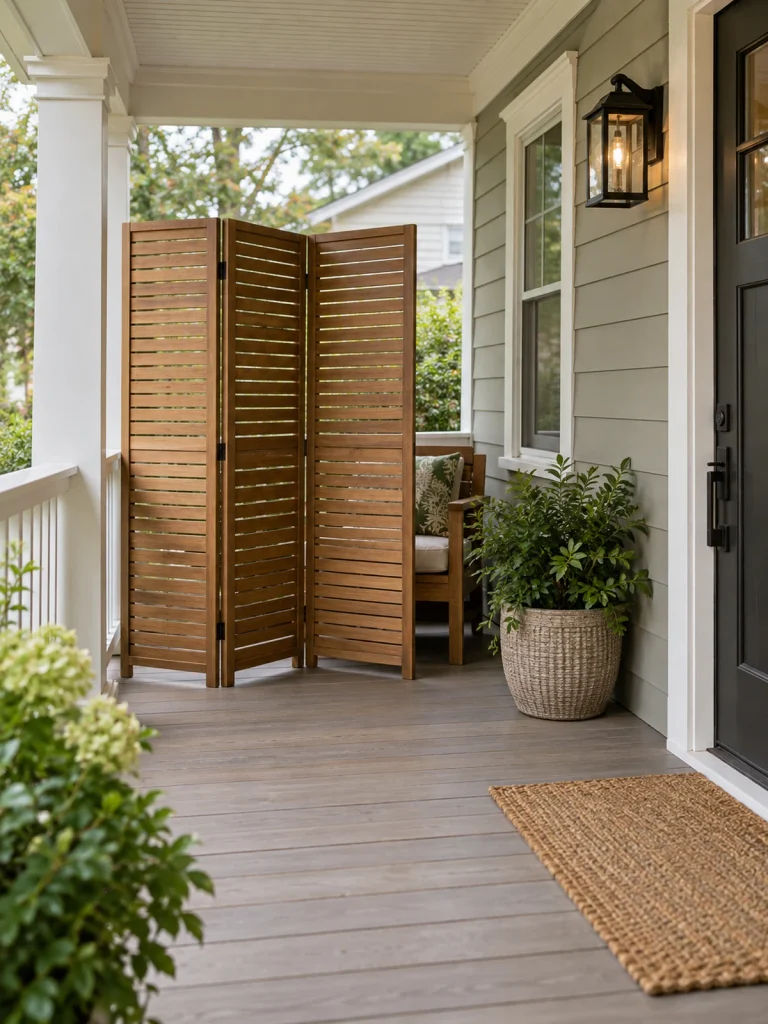
A folding outdoor screen can make one corner feel less exposed without adding a fence. Slatted wood allows glimpses of light through the panels while screening a seated view. Open it in a stable zigzag beside the sitting area rather than stretching it across the porch entrance.
This option suits a sheltered location and temporary use. Follow the manufacturer’s stability requirements; if the screen requires permanent anchoring, choose another model or another idea. Do not rely on a lightweight indoor room divider outdoors. Fold and store the screen before windy conditions, and leave windows, exits, and shared routes accessible. A screen provides visual separation, not a security barrier.
17. Add Character with One Freestanding Garden Sculpture
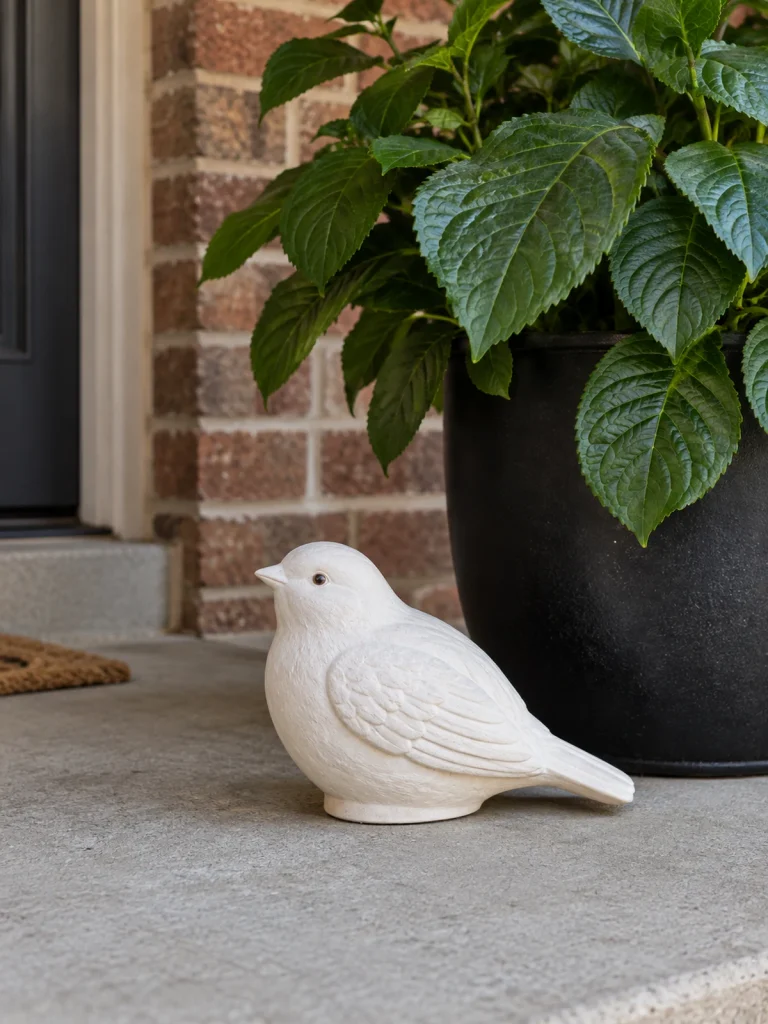
A small bird sculpture adds a playful detail to a porch without requiring wall art. Place one beside a leafy planter so its shape stands out against the foliage. A restrained finish, such as matte white, makes the arrangement feel collected rather than busy.
Choose a piece intended for the conditions and check whether it needs protection from freezing temperatures. A broad, stable base matters more than height, especially near an entry. Keep it away from the walking route and avoid placing fragile decor where bags or delivery boxes might knock it over. One visible accent usually works better on a rental porch than several small objects scattered around the floor.
18. Keep Seasonal Decorating in One Movable Group
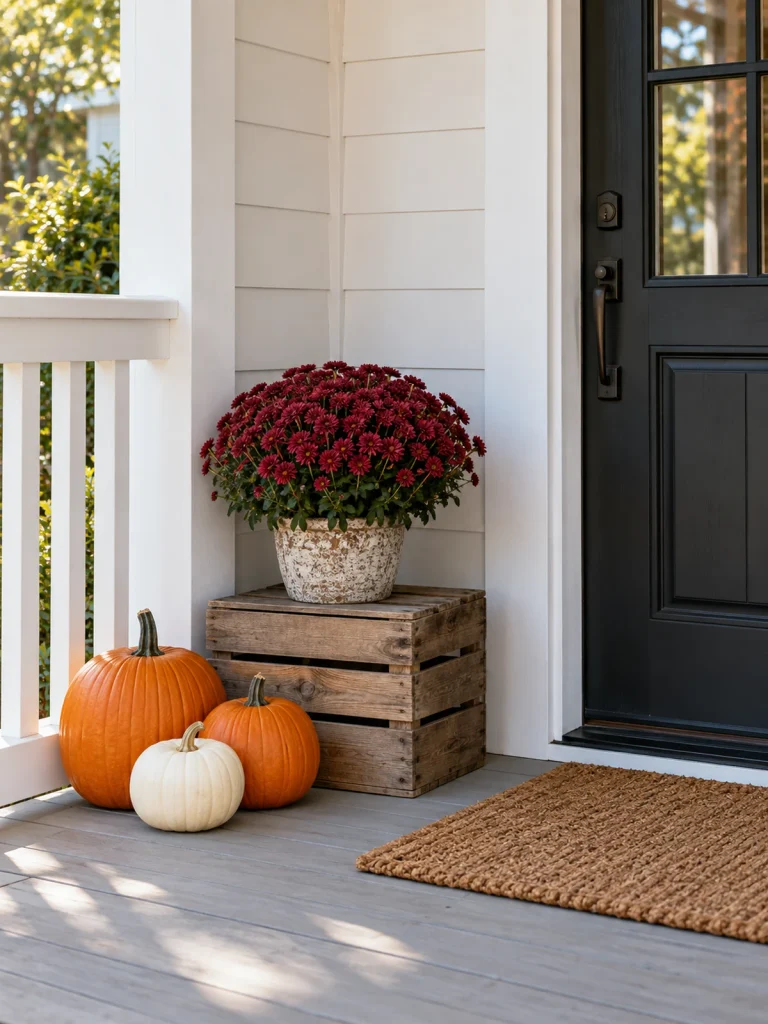
A compact seasonal display changes the mood without changing the house. For fall, group a few pumpkins beside a low crate topped with potted mums. Keeping everything in one corner makes the porch look intentional and leaves the entry useful for daily arrivals.
Start with one sturdy base and a limited color palette. Use a crate in sound condition, with a stable surface for the pot, and do not treat it as seating. Check beneath natural pumpkins regularly for moisture or decay that could mark the floor. Replace the seasonal pieces when needed while keeping the reusable pot and crate, rather than collecting more decorations than the porch can comfortably hold.
19. Create a Tidy Drop Zone with a Boot Tray
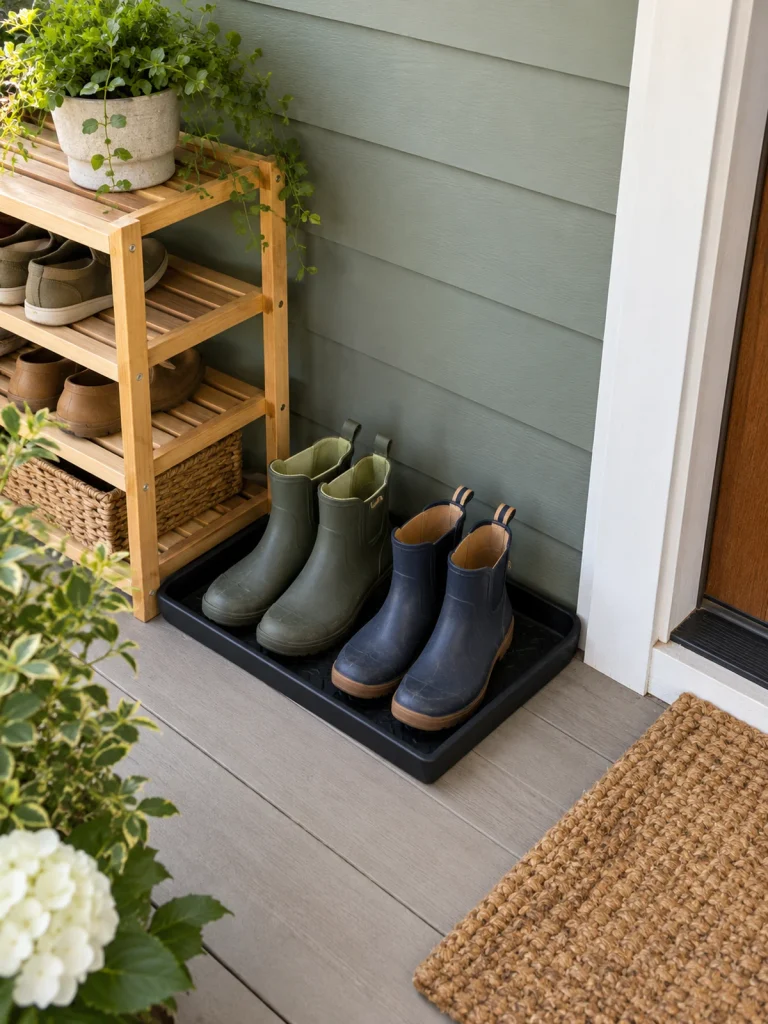
A boot tray beside a small shoe rack makes a working porch feel more organized. Dark rubber gives muddy footwear a defined home, while a simple wood rack separates everyday shoes from the floor. Keep the arrangement tucked against a sheltered wall rather than directly in front of the door.
Choose a tray with a low rim that contains dirt without becoming a trip hazard. Empty water and debris instead of letting them accumulate. Use a rack suitable for outdoor exposure and avoid leaving leather shoes or other vulnerable items outside in damp weather. On a shared porch, confirm that personal storage is allowed before setting up the station.
20. Bring Out a Cordless Table Lamp for Quiet Evenings
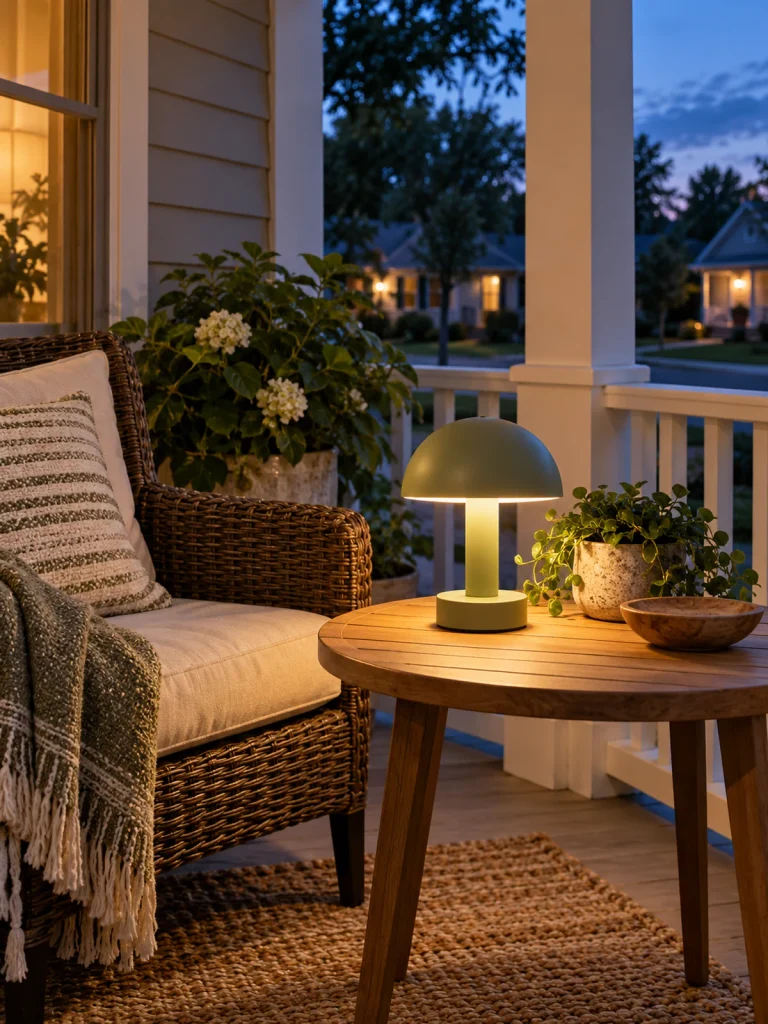
A cordless outdoor table lamp makes a porch chair feel like a place to settle in after dinner. A small shaded design directs a pool of light toward the table and adds a living-room detail without replacing the house’s fixtures. Sage green pairs easily with wood and woven furniture.
Choose a lamp rated for the exposure where you will use it, and follow its charging and storage instructions. Place it on a steady table away from the edge, and bring it indoors when required. Check brightness before expecting it to support reading. It is a portable companion to your porch setup, while existing lighting should still provide a clearly visible entrance.
Choose a Combination That Leaves the Porch Easy to Use
Build around one main function: a welcoming doorstep, a coffee spot, or a more private seat. For a tiny entrance, a mat and one container may be enough. A longer porch can support a bench and side table, while a deeper sheltered corner may accommodate a screen.
Before shopping, mark furniture footprints with paper or cardboard and open the door fully. Allow for someone sitting down, carrying groceries, or receiving a delivery. Keep access to handrails and steps clear.
Treat “removable” as a starting point, not a promise that an item cannot leave a mark. Check beneath rugs, pots, and furniture, and follow care instructions for both the accessories and existing surfaces. Skip adhesive tiles, films, or hooks when their compatibility and removal method are uncertain. A small collection of genuinely portable pieces makes moving day simpler.
FAQ
Do I need permission for freestanding porch decor?
Check your lease and any applicable community rules. Restrictions can cover exterior appearance, shared spaces, storage, and plants even when nothing is attached. Ask the property manager if the wording is unclear.
How can I improve an unattractive porch floor without altering it?
Use a low-profile outdoor rug on a sound, level surface, or place a small seating group to draw attention elsewhere. Keep drainage and drying in mind. Report loose boards, cracks that create trip hazards, or other damage rather than covering it.
Are removable adhesive hooks a good choice for exterior walls?
They are not automatically suitable. Adhesion and removal depend on the product, surface finish, temperature, and exposure. For an approach that avoids that uncertainty, use freestanding displays or a compatible over-door hanger that does not interfere with operation.
What should I choose for a very small front porch?
Start with a single mat and one appropriately sized planter. Add furniture only if there is room to use it while preserving the door swing and clear passage. A porch can look finished without seating.
How do I make the porch look coordinated on a limited budget?
Keep existing usable furniture and repeat two or three colors through a cushion, pot, or mat. Choose the update that fixes your biggest frustration first. Add another piece only after living with the arrangement for a while.
Make the Porch Feel Like Yours, One Piece at a Time
A rental porch does not need permanent changes to become more comfortable and personal. Begin with a clear entrance, then choose one useful addition: a rug for a bare floor, a chair for an unused corner, or a tray for scattered boots. Add greenery or lighting once the layout works. The result should fit your daily routine and be easy to take with you when it is time to move.