
A backyard can look beautiful and still feel too exposed to enjoy. When neighboring windows overlook your chair or the side gate opens straight onto your patio, stepping outside may not feel like much of a break.
These private modern backyard ideas focus on creating somewhere you can actually unwind: a sheltered reading corner, a quiet coffee spot, or a small garden that feels comfortably separate from the world. Think warm wood, simple furniture, layered greenery, and privacy placed where it matters most.
You do not need to hide every inch of your yard. Start with the place you want to sit, then build a little breathing room around it.
Before You Plan Your Backyard Retreat
Take a chair outside and sit in your proposed relaxation spot. Notice which windows, walkways, and neighboring seating areas have a direct view. Check again while standing, and consider views from above. This simple exercise helps you position a screen where it will make a difference.
Visual privacy and sound control are different goals. A planted border can hide a view, but a typical backyard hedge will not eliminate neighborhood noise. Treat the ideas below as ways to create enclosure, comfort, and a calmer setting rather than a promise of silence.
1. Frame a Reading Corner With Cedar Privacy Screens
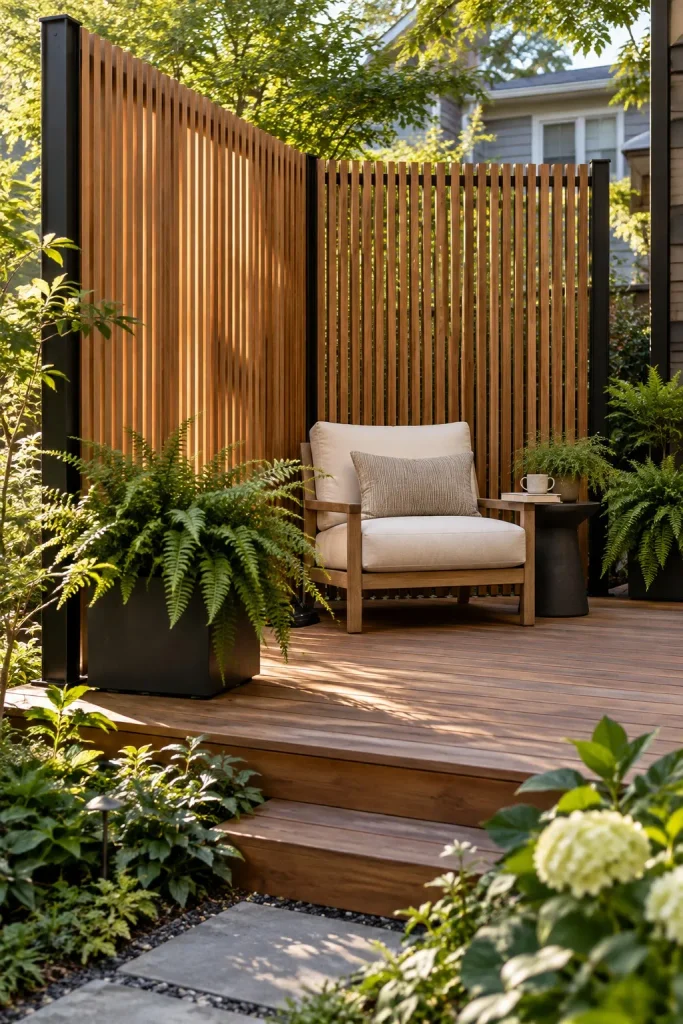
Give your reading chair its own sheltered corner with cedar screens on two sides. The warm wood keeps the space inviting, while straight vertical lines create a clean, modern backdrop. A deep cushion, a small table, and a place to rest your feet are enough to make this a spot you will use.
Position the screens between your chair and the most exposed neighboring view. Slat gaps affect privacy, so check the view straight through them and from an angle. If you need stronger coverage, choose overlapping boards or a solid backing. Keep the front open toward your own garden.
2. Use a Pergola With Adjustable Privacy Louvers
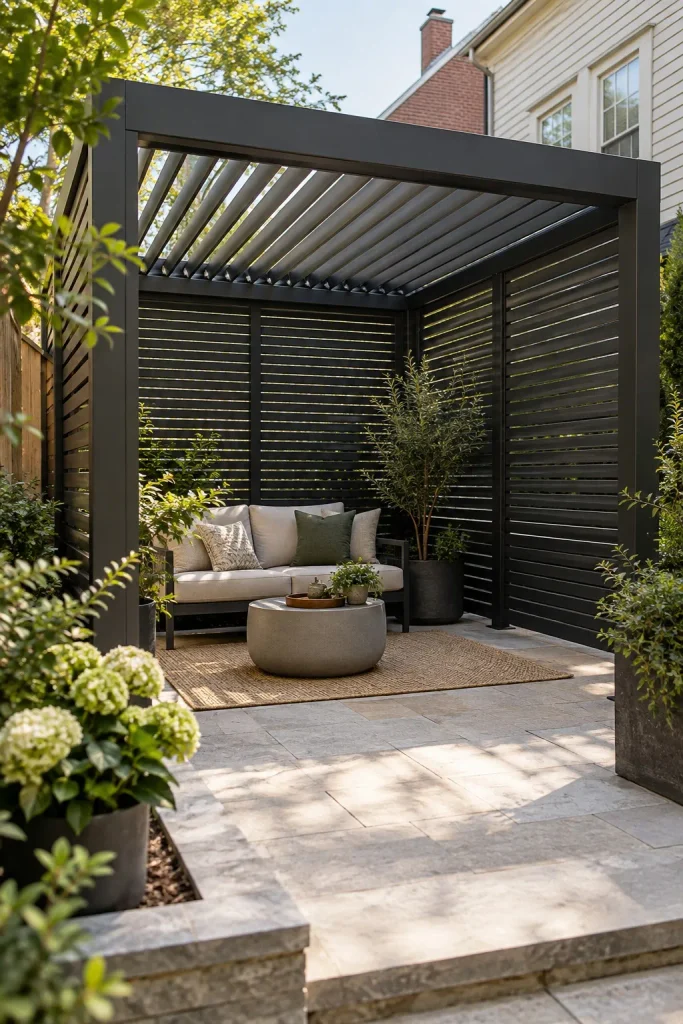
An adjustable pergola lets you change how enclosed your patio feels throughout the day. Close the side louvers when nearby outdoor spaces are busy, then open them when you want more light and airflow. A charcoal frame paired with cream cushions gives the structure a restrained, contemporary look.
Overhead louvers can also interrupt some views from upstairs windows, depending on their angle and the surrounding buildings. Check those sightlines before choosing a layout. Keep furniture simple underneath: one loveseat and a low table can make a compact pergola feel like an outdoor room without crowding it.
3. Soften the Boundary With Layered Evergreens
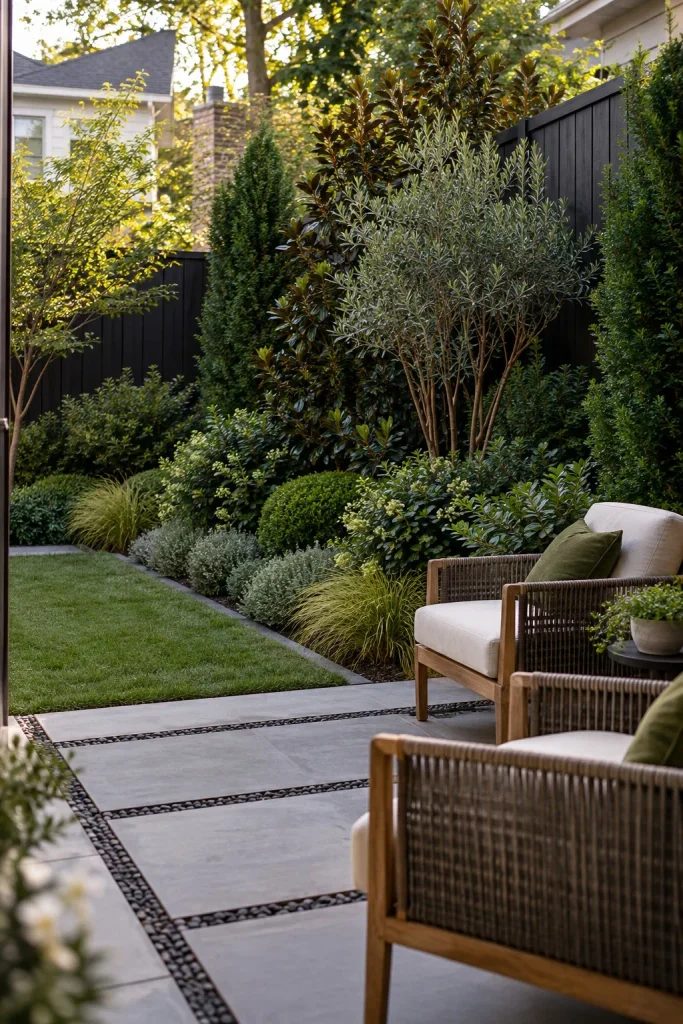
A planted boundary can make a fenced yard feel more like a garden and less like an enclosure. Layer taller evergreen shrubs toward the back, medium plants in front, and lower foliage near the patio. Repeating a few shapes and leaf colors keeps the result compatible with a modern backyard design.
Choose plants for your climate, sunlight, soil, and available space at maturity. A mixed screen also avoids relying on one type of plant for the entire boundary. Leave room for growth and maintenance instead of squeezing large shrubs into a narrow strip. An existing fence can provide coverage while plants establish.
4. Hide the Patio Behind an Offset Entrance
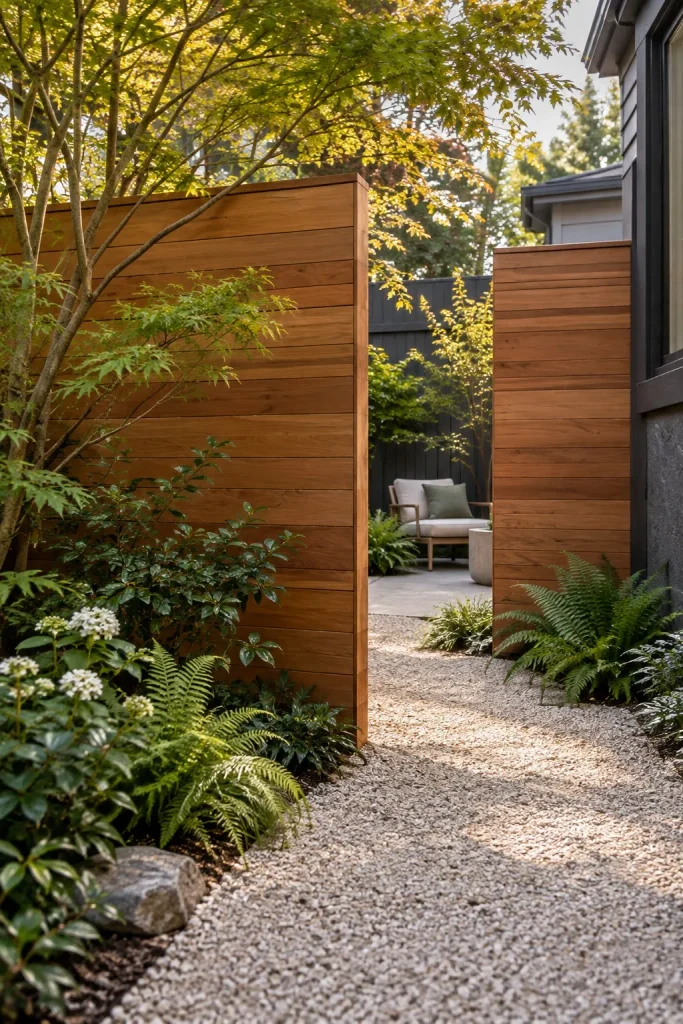
A straight path from the gate to your chair can leave a relaxing area feeling surprisingly exposed. Introduce a turn with two staggered screens so visitors enter around a corner before reaching the patio. This creates a small transition between the outside world and your private space.
Use matching timber or dark panels to make the screens feel intentional. Their overlap matters more than decoration: test the view through the opening from the approach path. Keep the passage comfortable and clear, with enough room to carry furniture or garden supplies. A planted edge softens the entrance without blocking movement.
5. Create a Courtyard With Warm White Walls
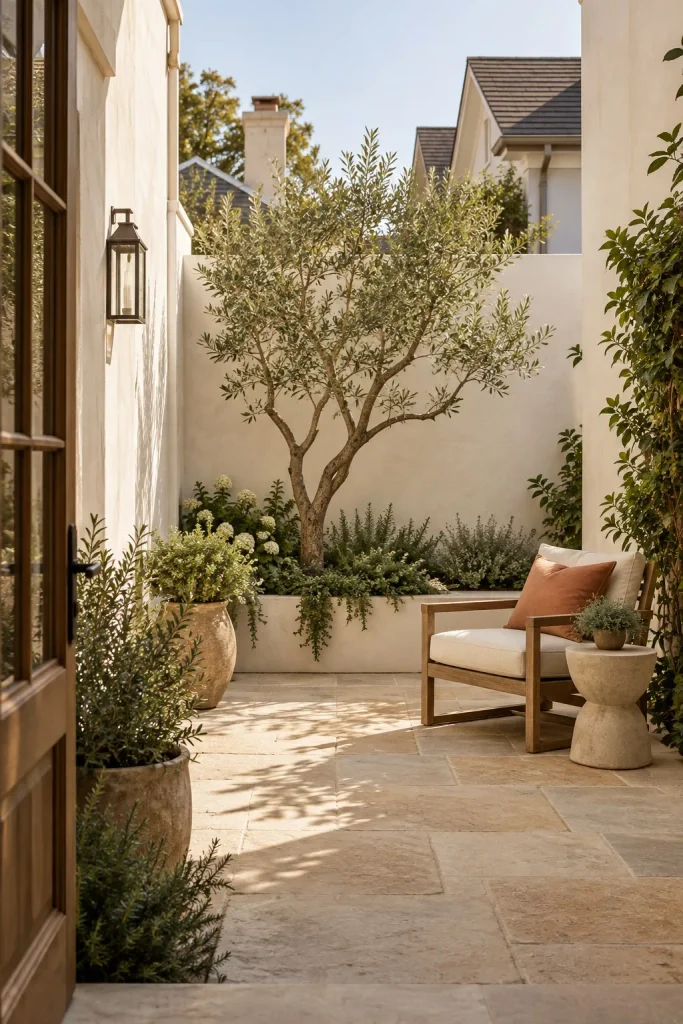
Warm white walls can give a small backyard courtyard a bright, sheltered atmosphere. Pair them with pale paving, a wood chair, and one sculptural tree or large planter. The limited palette makes the garden feel settled, while the surrounding walls provide a clear sense of separation.
This approach works especially well when you already have an enclosed space to update. Rather than filling every corner, leave some open floor area around the furniture. Check how the courtyard feels in afternoon sun, since pale surfaces can produce glare. Soft planting and a shaded seat help balance all those crisp architectural lines.
6. Place Tall Planters Beside a Compact Lounge
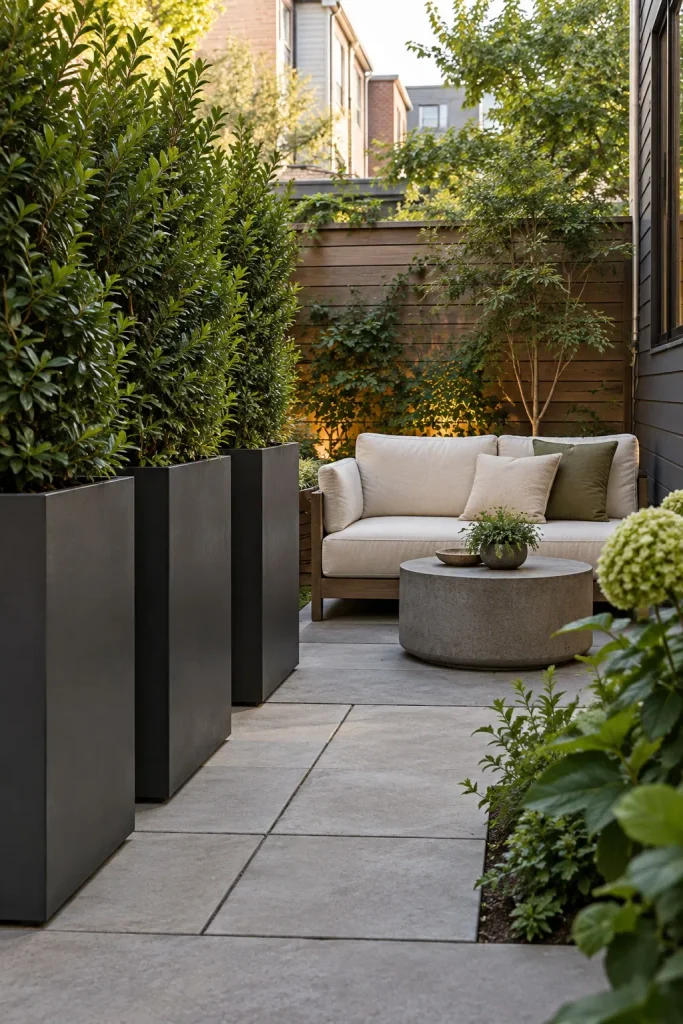
Tall planters can bring screening close to where you sit without redesigning the whole backyard. Arrange substantial rectangular containers along the exposed side of a small loveseat, then fill them with plants that suit container life in your climate. Dark planters, green foliage, and light cushions make a simple modern combination.
Measure the combined planter and foliage height from your seated position. A tall pot alone may still leave your face visible to the neighboring patio. Allow for watering, drainage, and mature growth, and keep access routes open. Filled planters are heavy, so settle their location before planting them.
7. Tuck a Daybed Behind Outdoor Curtains
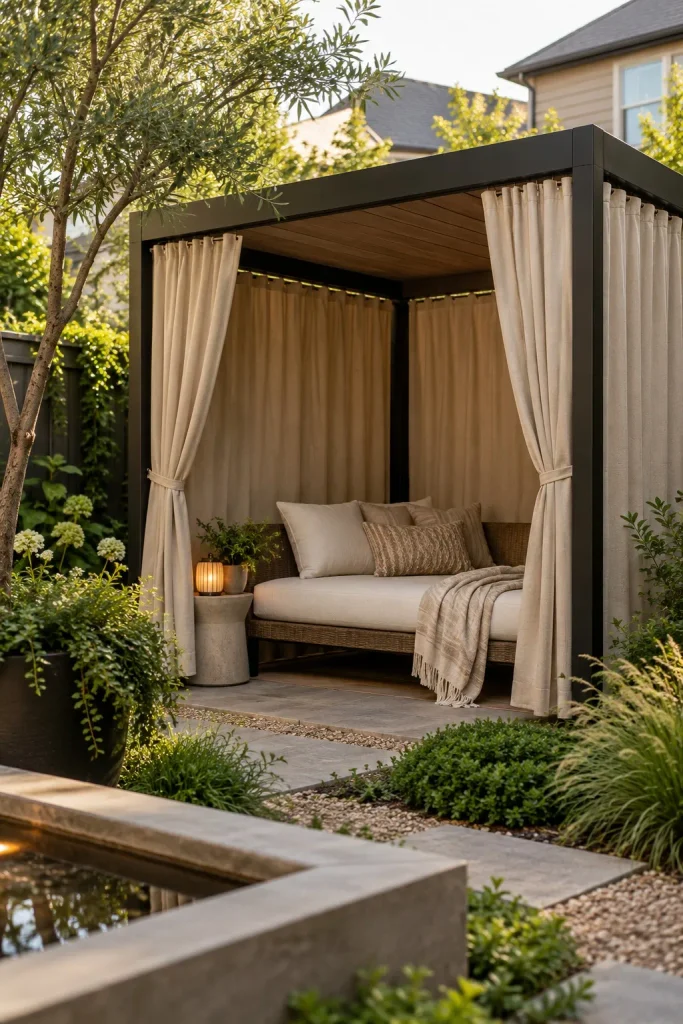
Outdoor curtains bring softness to a modern backyard without adding lots of decorative objects. Hang opaque outdoor fabric around a properly supported cabana or covered structure, then place a daybed inside. Close the sides that face neighbors and leave the garden-facing opening clear.
Sand, cream, or muted gray fabric works well with a slim black frame and simple cushions. Choose a setup that lets you secure the curtains when the wind picks up, and allow damp fabric to dry. This is a flexible way to create a secluded lounging spot, although curtains will not provide meaningful soundproofing.
8. Build an L-Shaped Bench With a Tall Privacy Back
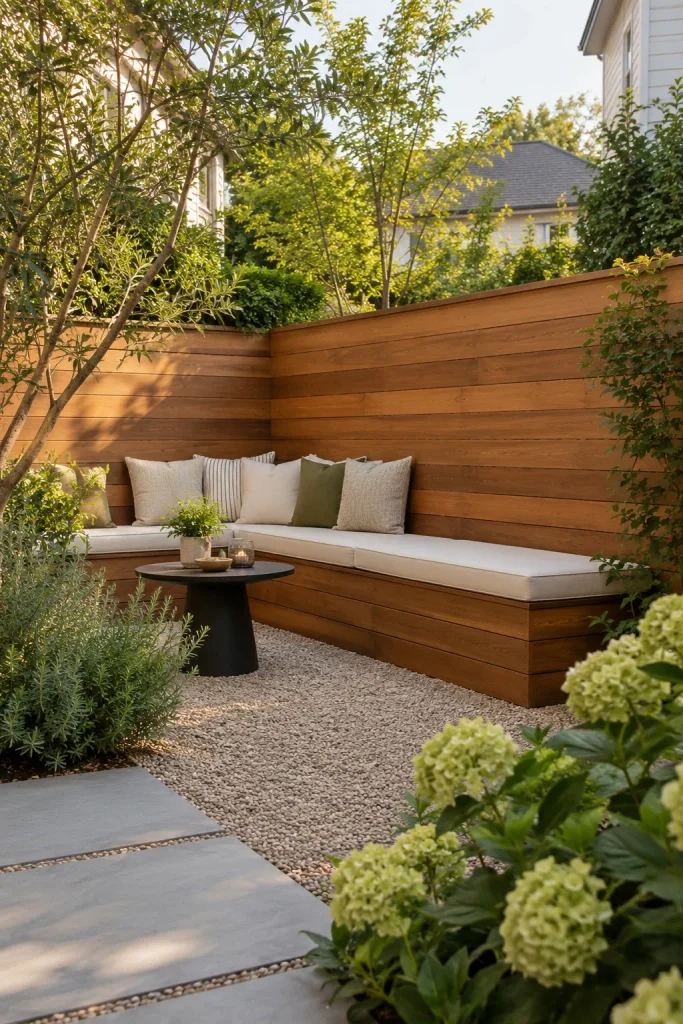
A corner bench can combine seating and screening in one compact feature. Extend a solid timber back above the cushions to shelter the people sitting there, then repeat the same material along the adjoining side. The result feels cohesive and leaves more of the patio floor open.
Keep the seat deep enough for comfortable lounging, with supportive cushions and a small movable table. Before finalizing the back height, check the view from the neighboring side as well as from the bench. Add planting around the outer edges to soften the structure, leaving space to inspect and maintain the timber.
9. Layer a Vine-Covered Trellis Over a Solid Screen
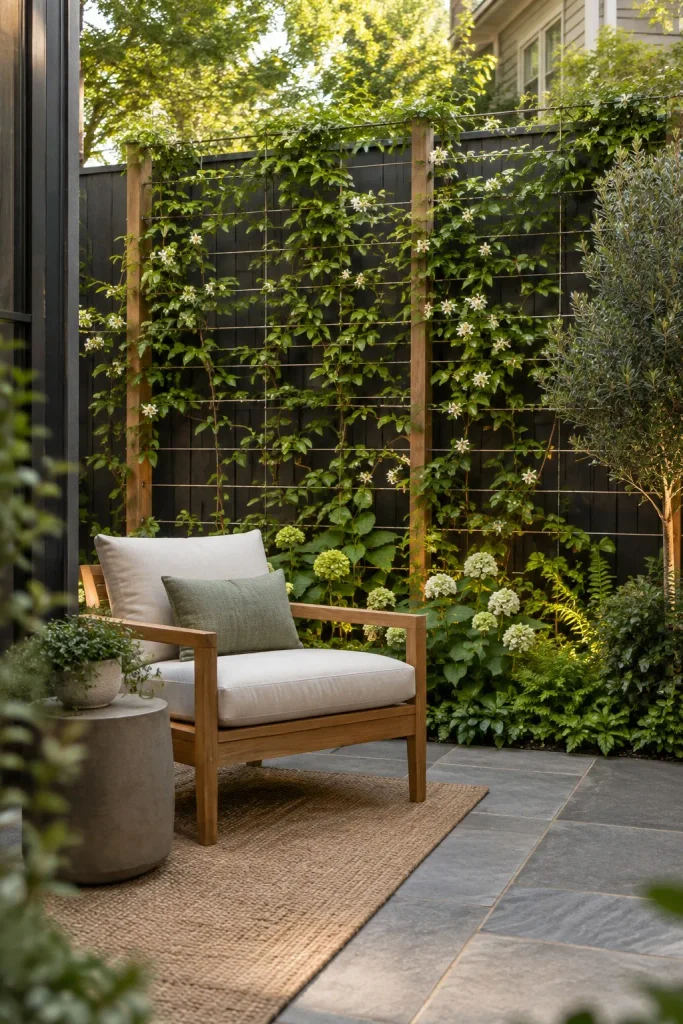
A climbing vine adds a softer foreground to a plain privacy fence. Install a suitable trellis in front of a solid screen, then let foliage bring texture to the boundary while the backing provides more dependable visual coverage. A single teak chair and simple paving keep the garden from looking busy.
Choose a climber suited to your region and the support available, and avoid locally invasive species. Leave access for pruning and fence maintenance. Deciduous vines lose their leaves seasonally, which is another reason to keep the solid screen behind them when year-round privacy is a priority.
10. Turn a Narrow Side Yard Into a Personal Escape
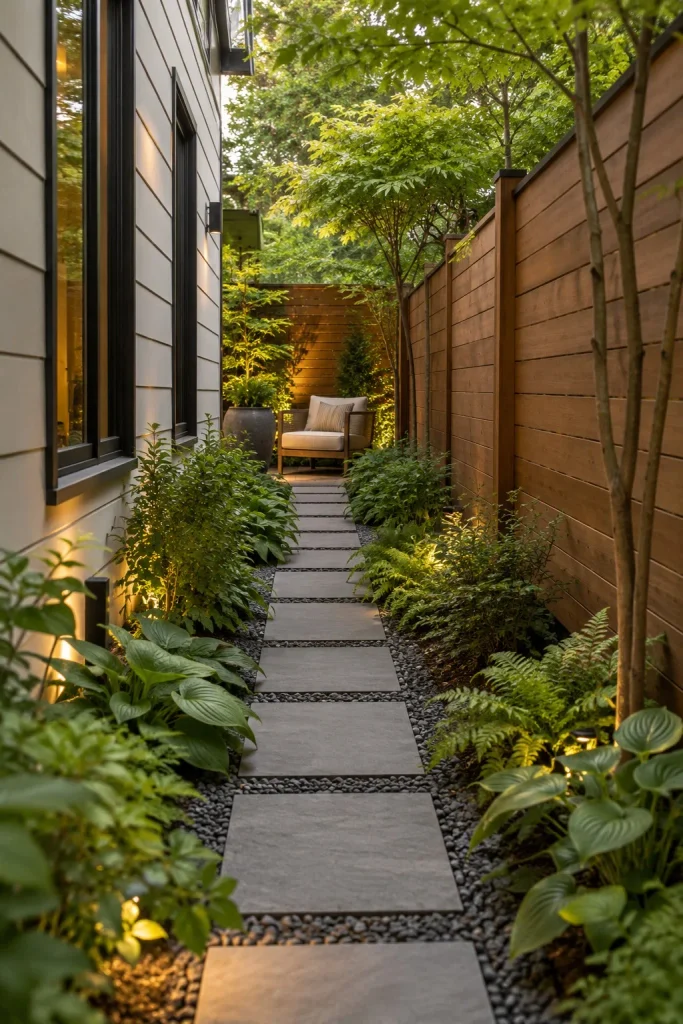
A narrow side yard can become a peaceful backyard retreat when it has a clear destination. Use a simple path to lead toward one comfortable chair at the far end, then screen the view from the entrance if needed. A fence and house wall already provide two strong edges to work with.
Keep planting slim enough that it will not swallow the walkway as it matures. Use furniture sized for the actual space, and preserve access to utilities, gates, and maintenance areas. One well-placed seat often works better here than trying to fit a complete outdoor living set.
11. Shelter a Coffee Nook Behind the House Corner
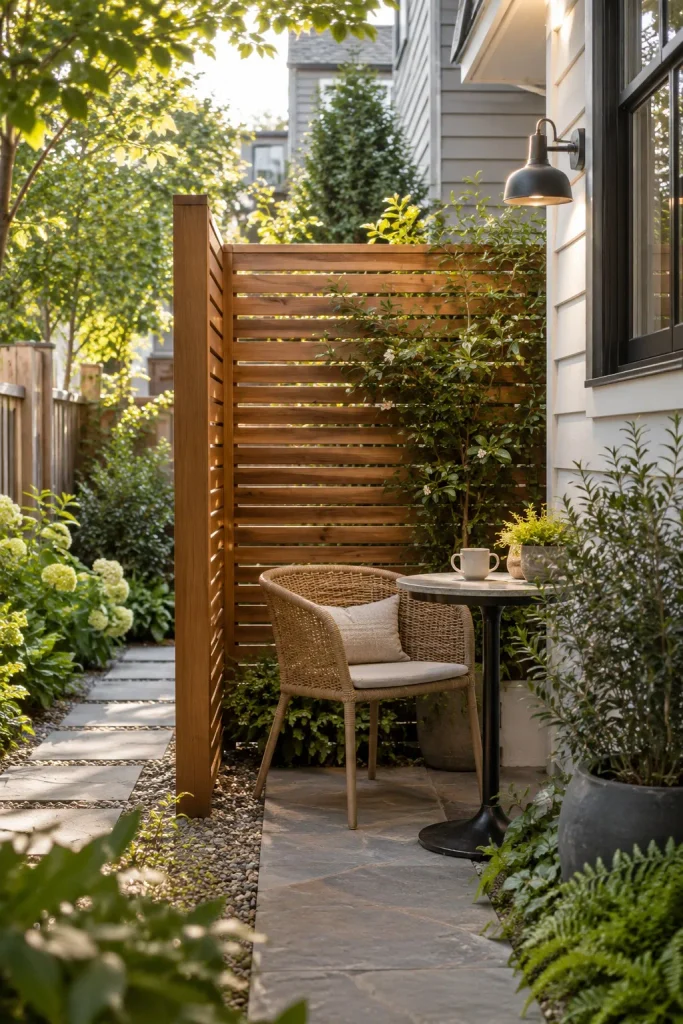
Sometimes the house itself provides the most useful privacy screen. Look for a recessed patio or a corner that sits outside the direct view of nearby windows. Add a small cafe table, one comfortable chair, and a narrow screen only where the remaining sightline needs attention.
This idea suits anyone who wants a quiet outdoor ritual without a large renovation. Choose the location around the time you actually drink your coffee, since morning shade and afternoon heat can feel very different. Keep the tabletop uncluttered and leave enough room to sit down easily without moving the furniture each time.
12. Set Aside a Small Meditation Platform
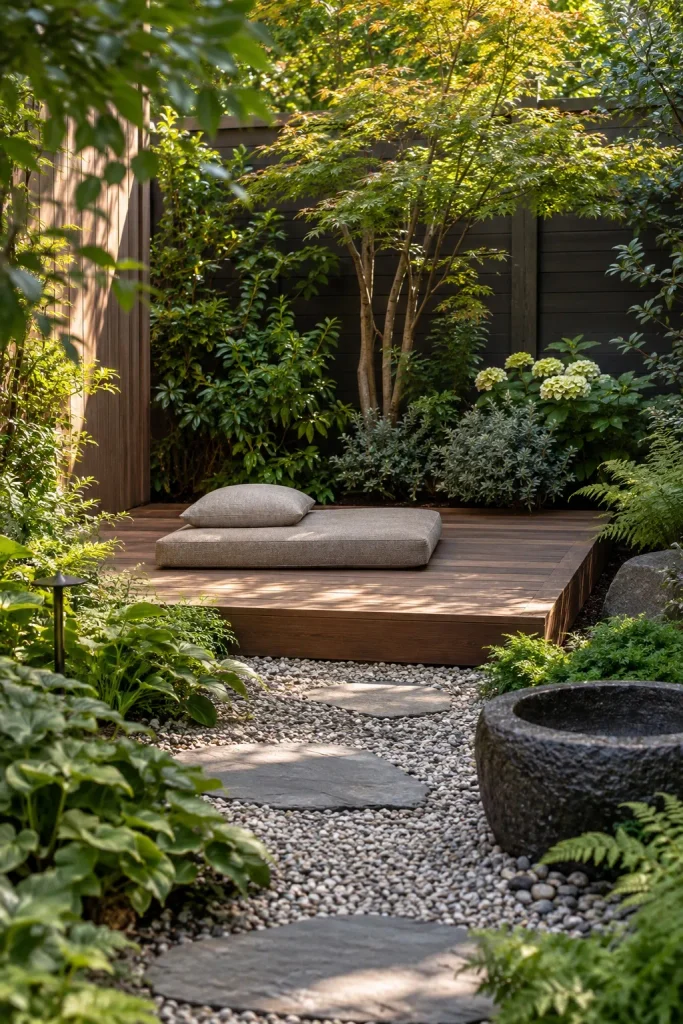
A simple timber platform can give your garden a dedicated place for stretching, breathing, or sitting quietly. Position it behind planting or a solid screen, with the open side facing a calm section of the yard. A neutral cushion and an uncluttered view help distinguish it from the everyday patio.
Keep the platform low and its edges easy to see, and plan for drainage and a suitable outdoor surface. Avoid squeezing it against dense plants that will brush against you as they grow. Store cushions somewhere dry, so the space stays easy to use whenever you want a few minutes outside.
13. Add a Gentle Fountain Near Your Seat
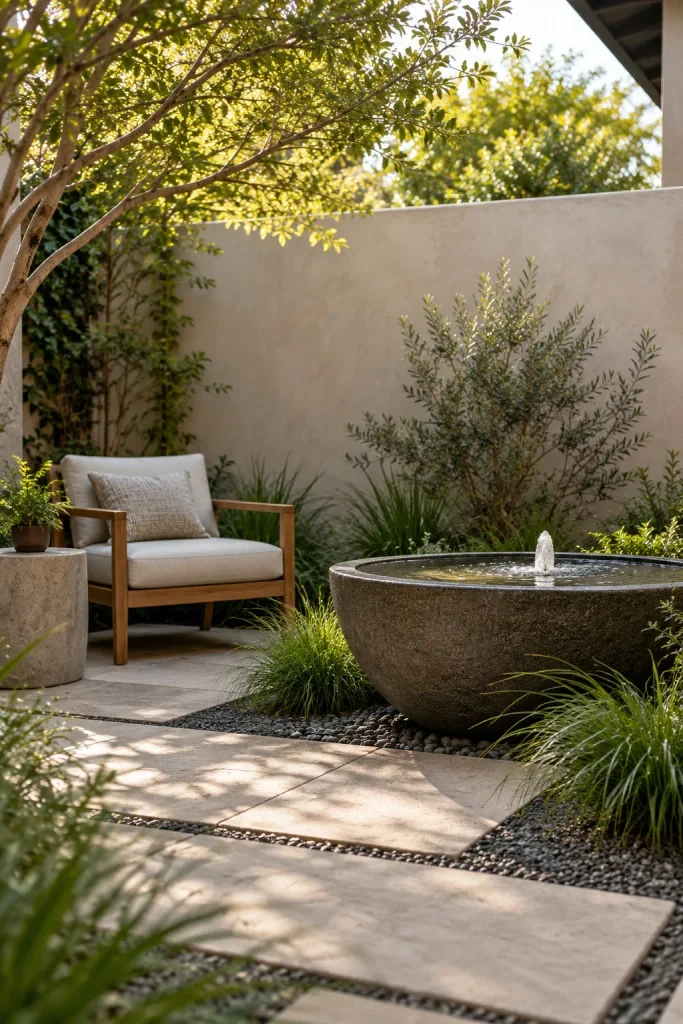
A small recirculating fountain can give your attention something pleasant to settle on. Place a low stone bowl or restrained water feature close to your chair, inside an already screened corner. The sound should suit the space, with a gentle flow rather than a splash that becomes another distraction.
Water sound may make some background noise less noticeable, but it does not remove it. Listen to the fountain at the position where you will sit before committing to the setup. Allow room for cleaning and maintenance, and use equipment and electrical connections intended for outdoor water features.
14. Interrupt Upstairs Views With an Angled Canopy
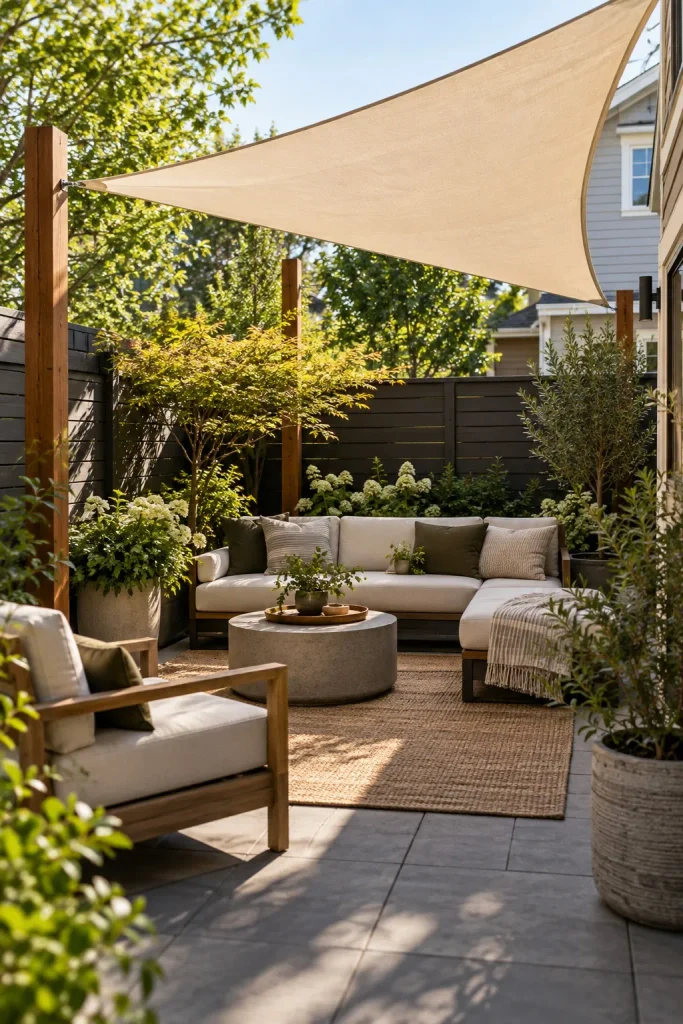
If the main privacy problem comes from above, a taller fence may not address it. A carefully positioned canopy or shade sail can interrupt a specific view from an upstairs window while keeping the sides of the patio relatively open. Pair a light fabric canopy with simple seating and an existing boundary screen.
Map the view before choosing the shape and attachment points. Coverage changes with the canopy’s height and angle, so a decorative sail placed at random may provide shade without much privacy. Have the anchors and supporting structure assessed for the installation, including wind loads and drainage where relevant.
15. Bring in Light With Frosted Privacy Panels
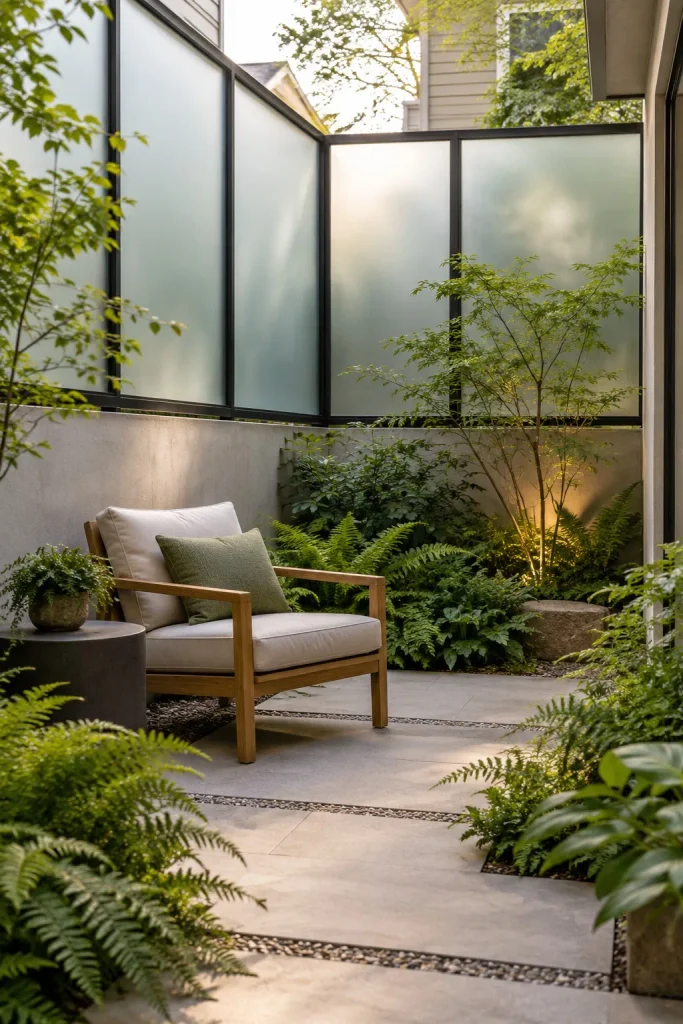
Frosted architectural panels offer a contemporary way to screen a close neighboring view without creating a fully opaque wall. Set them in a simple frame and soften the base with leafy planting. This combination works well in a compact courtyard where daylight is valuable and dark fencing might feel heavy.
Choose panels intended for the outdoor application and have them installed appropriately. Translucent does not always mean completely private: silhouettes can remain visible, especially when one side is brighter. Test a sample under evening lighting, and position the seating away from the panel if that improves the effect.
16. Carve Out a Screened Pocket Garden
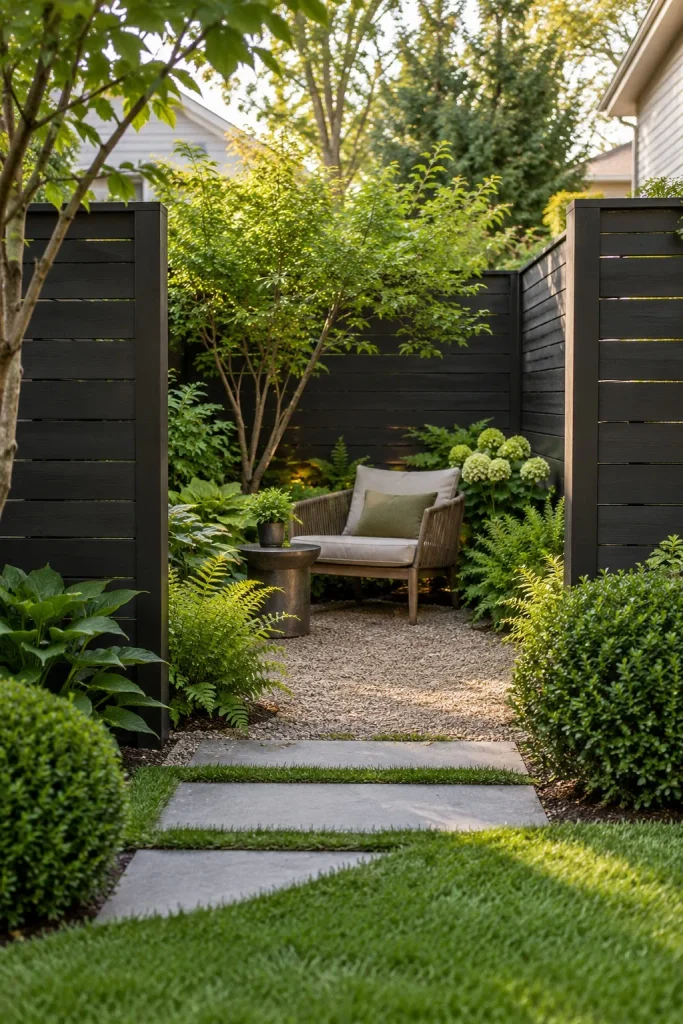
You can create a secluded garden room inside a larger yard by screening just one small area. Use three sides of fencing, planting, or a combination of both, and leave an opening toward the garden. Inside, add a chair and a small patch of paving with greenery around the edges.
Place the opening so it does not line up directly with a neighbor’s window or a busy walkway. This lets the rest of the yard stay open while giving you a place that feels separate. Repeat materials from the main patio so the pocket garden belongs to the same overall design.
17. Keep It Simple With Gravel and One Statement Chair
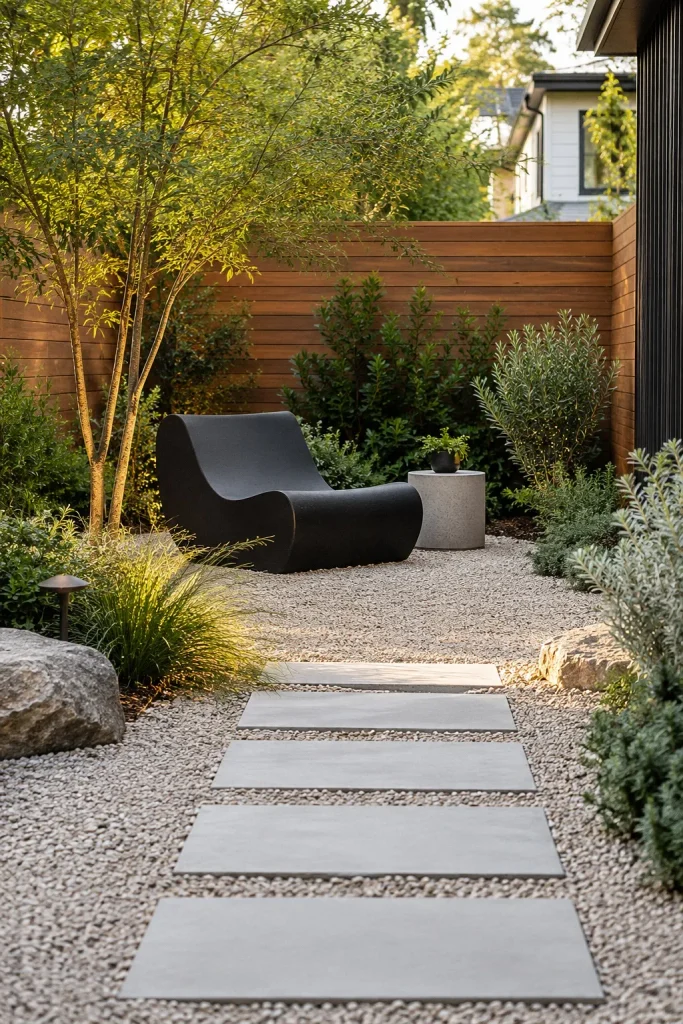
A peaceful outdoor space does not need a full furniture collection. A single sculptural chair can become the focal point of a gravel retreat, especially when backed by a solid wood fence and restrained planting. Large stepping stones bring a clear route through the area and keep the layout visually simple.
Set the chair on a firm, level surface so its legs do not sink or wobble. Use well-defined edging to keep gravel where it belongs, and choose the surface around your mobility and maintenance needs. A small side table completes the setup without turning it into another space to tidy constantly.
18. Design a Private Spa-Inspired Lounging Corner
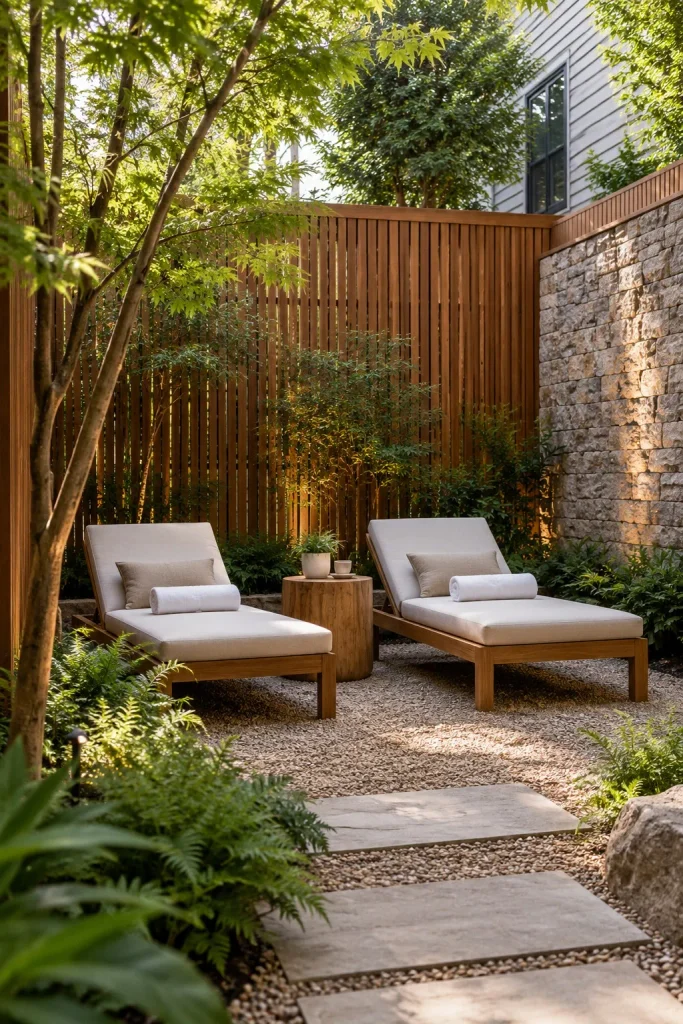
Borrow the calm feeling of a spa with timber loungers, soft towels, textured stone, and full-height screening around the exposed sides. You do not need a hot tub or outdoor bath to create that atmosphere. A dry lounging area can offer a similarly inviting place to pause with far less equipment.
Keep the material palette limited and make room to walk around the loungers comfortably. Store towels and cushions indoors or in suitable dry storage between uses. For stronger privacy, check the screen at standing height as well as from the reclined position, particularly if the seating sits on a raised patio.
19. Make a Secluded Dining Spot for Two
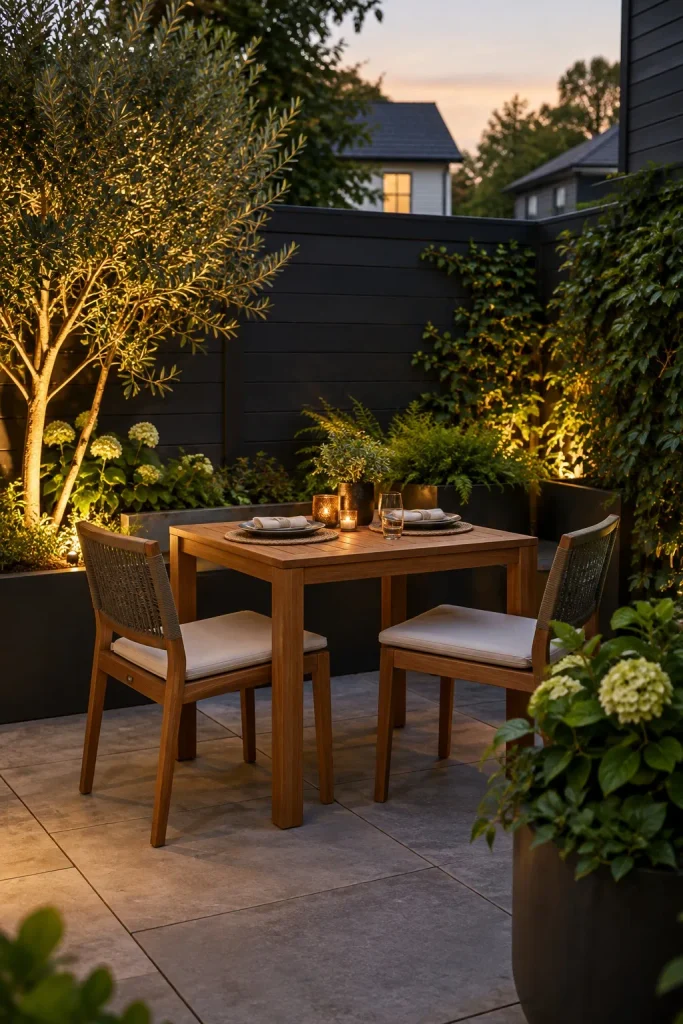
A private backyard can still have space for company on your terms. Place a small table for two behind a screen or in a sheltered corner, rather than planning the whole patio around a large gathering. Simple teak furniture, leafy containers, and a restrained color scheme keep the setting relaxed.
Allow enough space to pull out both chairs without hitting a planter or wall. If the table is close to the boundary, angle the opening toward your own garden. This creates an intimate place for dinner, journaling, or a quiet conversation while keeping the rest of the layout easy to manage.
20. Finish With Soft, Shielded Evening Lighting
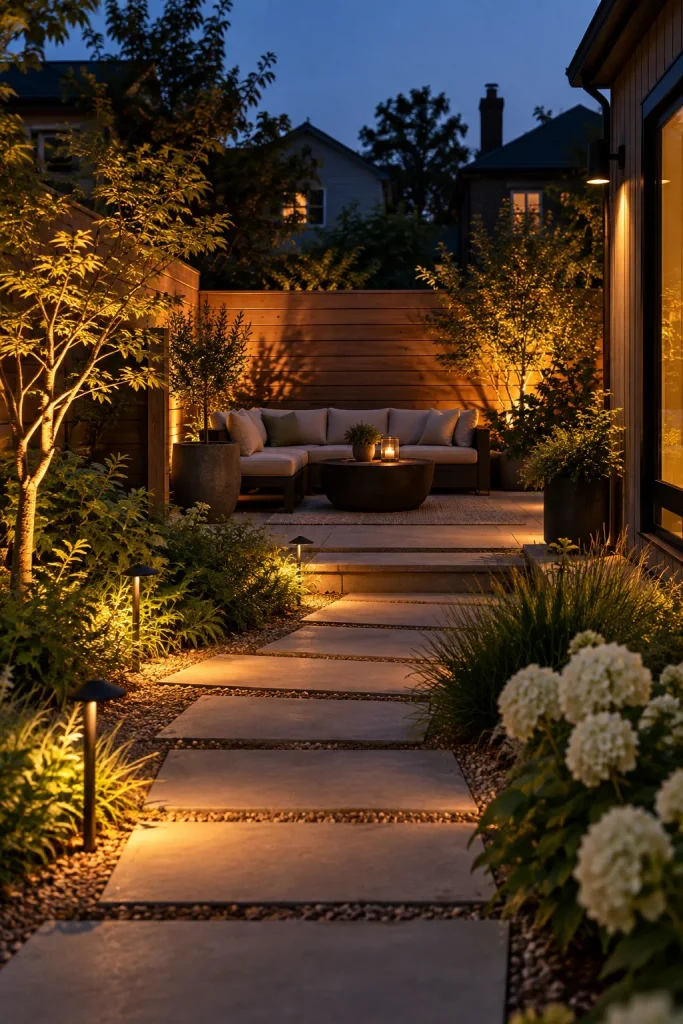
A backyard that feels private during the day can feel exposed after dark when bright lights illuminate the seating area. Use modest, shielded lighting to guide the path and gently light the space around your chair. Aim fixtures downward and keep strong light sources out of your direct view.
Check the result from inside the house and from the permitted edges of your own property. Look for gaps that become more obvious when the garden is lit. Solid screening and subtle planting shadows can help the space feel enclosed, while a separate task light can provide enough brightness for reading when needed.
Which Private Backyard Idea Should You Start With?
Choose the problem before choosing the feature. For a direct view from the neighboring patio, start with a screen near your seat. For upstairs windows, investigate overhead coverage. If the yard already feels enclosed but uncomfortable, spend your effort on a better chair, softer planting, and useful shade.
You can also begin with one finished corner. Put your seating in place, test the sightlines, and make that small area comfortable before extending the design across the yard. This keeps the project focused on how you want to spend time outdoors.
Frequently Asked Questions
How can I make a small modern backyard feel private without making it dark?
Screen the specific view that bothers you instead of enclosing every side equally. Light-colored surfaces, an open garden-facing side, and carefully selected translucent panels can preserve a brighter feeling. Check privacy from the position where you will actually sit.
Do privacy plants block neighborhood noise?
Typical residential planting is more useful for screening views than for substantially reducing noise. Meaningful sound control depends on factors such as the source, distance, barrier design, and gaps. Use planting to make the setting feel calmer, without expecting a narrow hedge to soundproof the yard.
Can I create a private retreat without replacing my fence?
Yes. Consider a localized screen, an opaque outdoor curtain on a suitable structure, or substantial planters beside your seating. The best choice depends on the sightline you need to block. Check property boundaries and applicable requirements before adding fixed structures.
What keeps a private backyard looking modern?
Repeat a small selection of materials, use clear shapes, and leave enough open space around the furniture. Warm timber, simple paving, and green foliage can feel contemporary without making the garden cold or bare. Give each added feature a clear purpose.
Give Yourself Somewhere to Unwind
The most useful private modern backyard ideas start with your everyday life. Maybe you want ten quiet minutes with coffee, a place to read after work, or somewhere to sit without feeling on display.
Choose one corner, block the most distracting view, and make the seating comfortable. Add greenery and the right amount of shade, then let the space stay simple. Save the ideas that match your yard so you can return to them when you are ready to create your own outdoor sanctuary.